




Abstract
This study examined the mediating role of self-serving cognitive distortions in the relationship between adverse childhood experiences (ACEs) and delinquent behavior. A cross-sectional design was employed, involving 217 participants aged 16 to 22, recruited from diverse settings, including schools, workplaces, and recreational institutions. Participants completed a questionnaire assessing ACEs, delinquent behavior, and self-serving cognitive distortions. The findings revealed that self-serving cognitive distortions significantly mediated the relationship between ACEs and delinquent behavior, across both violent and non-violent offenses. These results underscore the importance of addressing self-serving cognitive distortions within interventions and prevention programs targeting youth with histories of childhood victimization.
Keywords
Introduction
Adverse Childhood Experiences and Delinquency
A substantial body of research demonstrates a strong association between juvenile delinquency and adverse childhood experiences (ACEs). Felitti et al.’s (1998) pioneering ACE Study revealed that 52.1% of participants reported at least one ACE. Likewise, in the Cambridge Study in Delinquent Development, Craig et al. (2017) reported that 75% of their sample experienced at least one ACE, with 50% encountering two or more by age ten. More recent research, such as Malvaso et al. (2022) also found a high prevalence of ACEs among justice-involved youth, with nearly 87% having experienced at least one traumatic event. Moreover, the literature indicates that the negative effects of ACEs also have a cumulative nature (Jackson et al., 2023). The results of a recent longitudinal study by Jackson et al. (2023), including more than 18.000 children, indicated that early ACEs are significantly associated with adolescent delinquency, with effects becoming significantly larger as ACEs accumulate. Within the Portuguese context, a survey also corroborated this link, reporting that 50% of individuals aged 12–21 had experienced victimization (P. C. Martins et al., 2019).
Despite the well-established links between exposure to ACEs and negative mental health outcomes, literature also points to a higher prevalence of delinquent behaviors perpetrated by people who experienced ACEs (Yohros, 2023). Widom’s (1989a) comparative study found that individuals with histories of childhood abuse and neglect were significantly more likely to engage in criminal behavior as adults. As for more recent literature, this link between ACEs and delinquency is still corroborated across different age groups and settings (Astridge et al., 2023; Malvaso et al., 2022; Yohros, 2023). Brown and Shillington (2017) observed an increased risk of delinquent behavior among youth aged 11–17 with ACEs, while meta-analytic work further strengthens this evidence, with Braga et al. (2017, 2018) reporting that maltreated youth had twice the likelihood of engaging in antisocial behavior. The Cycle of Violence hypothesis supports these findings, suggesting childhood abuse or neglect increases the risk of later criminality (Cinini & Mkhize, 2023; Hesselink, 2023; Widom, 1989a, 1989b; Widom & Maxfield, 2001; Wright et al., 2019). This hypothesis suggests that individuals who experience abuse or neglect during childhood are at heightened risk of engaging in criminal behavior later in life, as early exposure to violence can disrupt healthy psychological and emotional development. This disruption often manifests as maladaptive coping strategies, difficulties in regulating emotions, and an increased likelihood of adopting aggressive or antisocial behaviors as learned responses to conflict (Widom, 1989a, 1989b; Widom & Maxfield, 2001). Moreover, these individuals may struggle with forming secure attachments and may perpetuate the cycle of violence in their own relationships or communities, reinforcing the link between early victimization and future offending (Basto-Pereira et al., 2016; Widom, 1989a, 1989b; Widom & Maxfield, 2001).
Additionally, ACEs have been found to predict chronic offending, a pattern marked by persistent criminal behavior over time (Jackson et al., 2023; Novak, 2024). Baglivio et al. (2015) and Björkenstam et al. (2019) highlighted ACEs as key determinants in the development of chronic and violent offending, while Widom’s (1989a) research reported that severe abuse histories further heightened the risk of violent criminal records. Similarly, a meta-analysis by Fitton et al. (2018) demonstrated that childhood maltreatment significantly increases the likelihood of future violence, with Fox et al. (2015) finding that young offenders engaged in violent acts reported significantly higher ACE rates than those involved in non-violent offenses. Mersky et al. (2012) emphasized that future research should distinguish between violent and non-violent behavior, given the differential impact of ACEs on these types of offending.
Delinquency and Self-serving Cognitive Distortions
Given the established link between ACEs and delinquency, recent research has highlighted the role of self-serving cognitive distortions as potential mediators in this relationship (Braga et al., 2018; Fitton et al., 2018; J. Martins et al., 2021). These distortions, including justifications for wrongdoing, are crucial in understanding and addressing delinquent behavior (Lardén et al., 2006; Crick & Dodge, 1994). Barriga et al. (2000) identified these distortions as predictors of externalizing behaviors, such as aggression and delinquency. Barriga and Gibbs (1996) state that cognitive distortions can be categorized as primary or secondary. Primary distortions involve self-centered attitudes, including ways of thinking that place one’s needs, desires, and perspectives above those of others. This cognitive bias may lead individuals to prioritize their interests, disregarding the potential harm or impact on others (Barriga & Gibbs, 1996). Conversely, secondary distortions involve rationalizations that justify wrongdoing and neutralize guilt, including blaming others, minimizing/mislabeling antisocial behavior, and assuming the worst in others. Each of these patterns serves to rationalize antisocial behavior, reinforcing delinquent actions (Barriga & Gibbs, 1996).
Furthermore, research shows a strong association between self-serving cognitive distortions and delinquency. Studies by Liau et al. (2002) and Wallinius et al. (2011) demonstrate a link between cognitive distortions and delinquent behaviors, while Barriga et al. (2000, 2008) found that individuals with high levels of cognitive distortions were more likely to exhibit aggression and antisocial behavior. A meta-analysis of 71 studies by Helmond et al. (2014) confirmed that self-serving cognitive distortions correlate with increased externalizing behaviors, particularly with less severe forms of delinquency.
Adverse Childhood Experiences and Cognitive Distortions
From a neurobiological standpoint, childhood exposure to prolonged stress can disrupt brain development, particularly in areas linked to cognitive processing and stress response (Cicchetti & Toth, 2005; Ozturk, 2023). The 2023 study by Wang et al. examined how early life stress interacts with genetic predispositions to influence brain structure and cognitive outcomes in children. Specifically, the research found that ACEs, including abuse, moderate the relationship between genetic factors and brain development, contributing to cognitive distortions and disrupted cognitive performance (Wang et al., 2023). This disruption can promote biased social information-processing patterns, often seen in children who have experienced abuse or neglect (Ozturk, 2023; Wang et al., 2023).
For instance, Dodge et al. (1990, 1995) found that abused children tend to develop adaptative, but inadequate, ways of interpreting social cues, which may lead to aggressive or antisocial reactions, especially when they perceive others’ intentions as hostile. Further research by Toth et al. (2011) reinforces these findings. In a study comparing victimized and non-victimized children, they noted that children exposed to adversity were more prone to illogical or distorted thinking. This thinking pattern can distort how they view social interactions, increasing their likelihood of engaging in maladaptive behaviors. Moreover, the impact of ACEs on cognitive processing appears to endure into adulthood. Ponce et al. (2005) observed that adults with a history of childhood maltreatment displayed significant cognitive distortions compared to those without such backgrounds. These findings suggest that the effects of early trauma on cognitive patterns are long-lasting, shaping both how individuals process information and their likelihood of developing antisocial tendencies well beyond childhood.
Adverse Childhood Experiences, Cognitive Distortions, and Delinquency
The connection between ACEs, cognitive distortions, and delinquency shows how early trauma can influence thought patterns that may contribute to individuals’ antisocial behavior (J. Martins et al., 2021). In the 1990s, longitudinal evidence demonstrated that children who experience abuse often develop a biased way of interpreting social cues, encouraging aggressive behavior (Dodge et al., 1990, 1995). They may become susceptible to perceived threats and tend to view others’ actions as hostile, which can lead to aggression or rule-breaking as a form of self-defense (Dodge, 2006). Ford et al.’s (2006) Trauma Coping Model supports these findings, suggesting that early trauma can disrupt executive functioning, promoting emotions like anger or detachment, and contributing to aggressive responses, as part of a broader post-trauma adaptation. According to this model, childhood adversity leads to changes in executive functioning, including impaired information processing, resulting in heightened levels of anger, defiance, emotional insensitivity, and aggressiveness. These cognitive and emotional shifts increase the likelihood of risky behaviors, rule-breaking, and violence toward peers, authority figures, and others (Ford et al., 2006).
Objectives of the Study
The primary objective of this study is to examine the relationship between ACEs and delinquent behavior in a Portuguese sample, with a specific focus on the potential mediating role of self-serving cognitive distortions. This study aims to explore how these cognitive distortions might mediate the link between ACEs and both violent and non-violent delinquency, considering the differential impact of ACEs on these types of behavior. Additionally, the study seeks to assess how well this mediation model predicts violent and non-violent delinquent behavior, helping to better understand the mechanisms that contribute to different forms of offending. This exploration will not only contribute to filling the gaps in the existing literature on juvenile delinquency, regarding violent and non-violent offending, but also to inform targeted interventions that consider the specific needs and circumstances of Portuguese youth.
Method
Participants
A total of 232 participants were evaluated in this study. Out of the total 232 participants, 15 were removed, taking into consideration the Anomalous Response cutoff of the HIT (Gomes et al., 2022). The final sample was composed of 217 participants, 132 (60.8%) females and 85 (39.2%) males aged between 16 and 22 (M = 17.58, SD = 0.80). Mostly Portuguese nationals (n = 208, 95.9%). Most of our sample were students (n = 191, 91.4%) while the remaining participants reported studying and working (n = 18, 8.6%). Regarding academic success, 2 participants reported no academic success (1.0%), 1 participant completed primary school (0.5%), 141 completed the 9th grade (68.4%), and 62 reported having completed high school (30.1%).
Measures
Sociodemographic Questionnaire
A sociodemographic questionnaire was used to collect sociodemographic information, including age (in years), sex (female/male), nationality (Portuguese/other), current occupation (student; student and employed), academic achievement (highest level of schooling completed: no academic success; primary education; 9th grade; high school), and place of residence. All variables were assessed using closed-ended response options.
Adverse Childhood Experiences (ACEs) Study Questionnaire
This self-report questionnaire comprises 77 items that evaluate the occurrence of ten types of adverse experiences in the first 18 years of life (Felitti et al., 1998; Portuguese version Silva & Maia, 2008). The ACEs questionnaire includes dichotomous items (i.e., yes or no), short answer questions, and 5-point Likert scale items (i.e., 1. “never”; 5. “very often”). The adverse experiences are organized in two areas: experiences against the individual (i.e., physical abuse, emotional abuse, sexual abuse, emotional neglect, and physical neglect) and household dysfunction (i.e., exposure to domestic violence, divorce or parental separation, household substance abuse, mental illness or suicide, and household incarceration). To facilitate the analysis of cumulative adverse experiences, we created a composite variable, Total Adversity, by summing the scores from each dichotomized adverse experience. This approach is consistent with previous research using the ACEs questionnaire (Dube et al., 2004; Felitti et al., 1998) and provides a straightforward measure of the cumulative burden of adversity. The Total Adversity variable ranged from 0 (indicating no reported adversity) to 10 (indicating exposure to all types of adversity). The questionnaire demonstrated good internal consistency in this study (α = .80).
Self-report Questionnaire for Measuring Delinquency and Crime (D-CRIM)
This self-report questionnaire consists of 12 items assessing the prevalence of 12 types of criminal and delinquent behaviors (i.e., theft, robbery, driving without a license, intimate partner violence, family violence, aggression, rape, drug trafficking, illegal arm, homicide, blackmail, and vandalism) (Basto-Pereira et al., 2015). This instrument allows obtaining two indexes: DCRIM-overlife Index, the prevalence of 12 types of offending behaviors throughout life; and DCRIM-12M Index, the prevalence of the 12 types of behaviors over the past 12 months. In this study, we analyzed the DCRIM-overlife and past-year Index was analyzed. Additionally, consistent with the World Health Organization’s definition of violence as “the intentional use of physical force or power, threatened or actual, against oneself, another person, or against a group or community, that results in or has a high likelihood of resulting in injury, death, psychological harm, maldevelopment, or deprivation” (Krug et al., 2002), we classified lifetime and past-year delinquent behaviors into two categories based on their degree of interpersonal harm. The Violent Behavior Index (VBI) included offenses typically involving direct physical or psychological aggression toward others (e.g., robbery, physical assault, homicide, intimate partner violence, family violence, sexual assault, and extortion/blackmail). The Non-violent Behavior Index (NVBI) comprised offenses generally characterized by property, regulatory, or substance-related violations without direct interpersonal aggression (e.g., theft, unlicensed driving, drug trafficking, carrying an illegal weapon, and vandalism). The lifetime index demonstrated acceptable internal consistency (α = .62), whereas the past-year index showed lower internal consistency (α = .59). Although some offenses assessed by the D-CRIM represent low-frequency behaviors in community-based youth samples, the instrument was designed to capture lifetime and past-year involvement across the full spectrum of delinquent and criminal acts and has been validated for use with adolescent and young adult populations.
How I Think Questionnaire
This self-report questionnaire is comprised of 54 items that evaluate self-serving cognitive distortions (Barriga et al., 2001; Translation by: Veloso, 2013). Responses are provided on a 6-point Likert scale ranging from “strongly disagree” to “strongly agree.” The HIT includes four subscales of self-serving cognitive distortions: self-centered, blaming others, minimizing/mislabeling, and assuming the worst. In addition to these cognitive distortion subscales, the HIT also includes subscales for antisocial behavior, anomalous responding, and positive filter. However, only the cognitive distortion subscales were used for the present study.
To assess overall self-serving cognitive distortions, we used the Total Self-Serving Cognitive Distortions score, as proposed by the original authors (Barriga et al., 2001). This score represents the mean of the four cognitive distortion subscales, providing a composite measure of overall cognitive distortions. The HIT questionnaire has demonstrated good psychometric properties in its original version (Barriga et al., 2001). A Portuguese validation study further confirmed the reliability and validity of the instrument among Portuguese adolescents (Gomes et al., 2022). In this study, the instrument showed strong internal consistency for the Total Self-Serving Cognitive Distortions score (α = .91). The subscales also demonstrated satisfactory internal consistency: self-centered (α = .73), blaming others (α = .74), minimizing/mislabeling (α = .71), and assuming the worst (α = .75).
The construct validity of these instruments has been established in prior validation studies, including research conducted with Portuguese samples. In the present study, internal consistency coefficients were reported to document their reliability within the current sample.
Procedure
Based on a convenient sampling, participants were recruited at universities and professional schools, at multiple workplaces, and at institutions with recreational activities. The snowball method was also used to evaluate those who neither study nor work. Before the data collection, the representatives of the institutions that agreed to collaborate with this study were given the task of advancing the informed consent to the participants or their parents, when necessary. This study was authorized by the Ethics Committee of the University of Minho.
Data Analysis Strategy
All analyses were conducted using IBM SPSS Statistics (version 29). Descriptive statistics were used to characterize the sample and examine the prevalence of adverse childhood experiences and delinquent behavior. Given the non-normal distribution of several variables, Spearman correlation analyses were performed to assess associations among the study variables.
Mediation analyses were conducted using the PROCESS macro for SPSS (Model 4), with bootstrap confidence intervals based on 5,000 resamples (Field, 2018). Total Adversity was specified as the predictor, Total Self-Serving Cognitive Distortions as the mediator, and delinquent behavior indices as the dependent variables. Given the low base rates and expected skewness of self-reported offending in community samples, indirect effects were evaluated using bootstrap inference. Age and sex were included as covariates in all models.
Results
Descriptive Analysis
Regarding sociodemographic characteristics, most participants reported being single (73.1%, n = 147), followed by those reporting other marital statuses, such as dating (27.2%, n = 55) or being married (0.9%, n = 2), 15 participants did not respond to this question. Concerning the place of residence, 56.7% (n = 123) of participants reported living in urban areas, followed by rural contexts (41.0%, n = 89), 5 participants did not reply to this question.
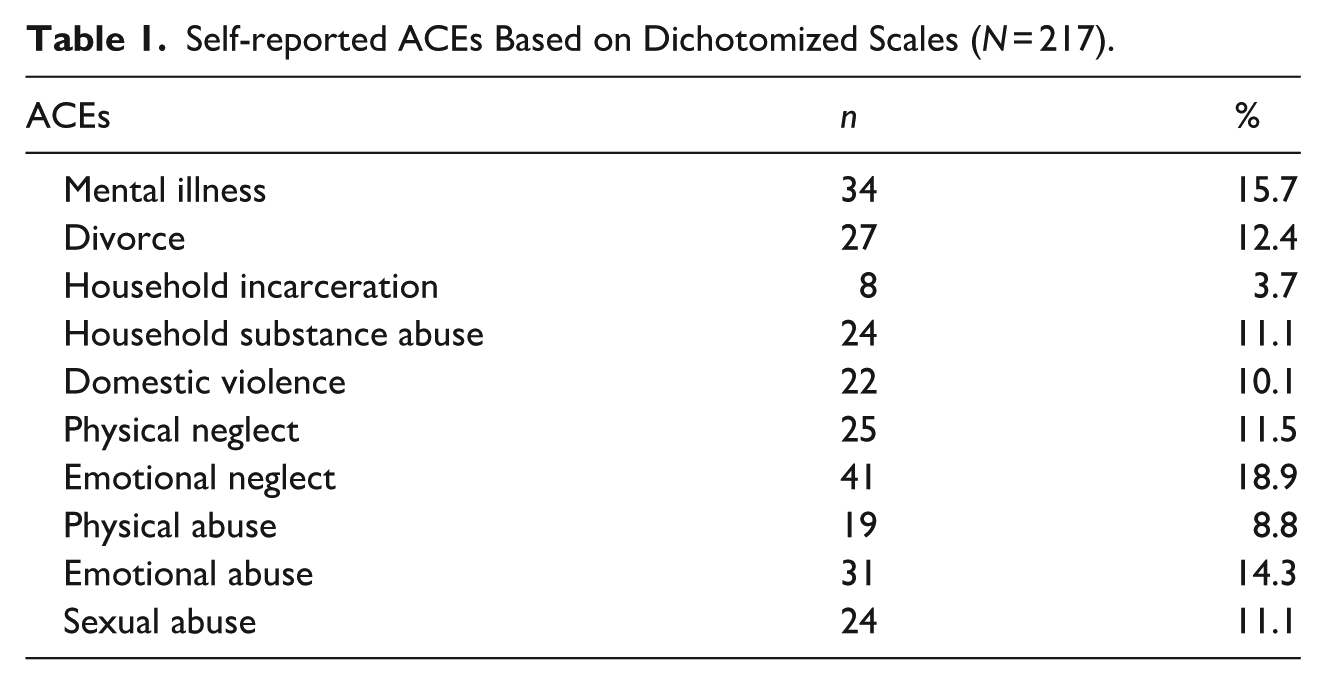
About 57.1% (n = 124) of participants reported at least one type of ACEs. According to Table 1, the most reported experience was emotional neglect (18.9%, n = 41), followed by mental illness (15.7%, n = 34), and emotional abuse (14.3%, n = 31). Total Adversity (M = 1.18, SD = 1.56) ranged from 0 (42.9%, n = 93) to 10 (0.5%, n = 1).
Self-reported ACEs Based on Dichotomized Scales (N = 217).
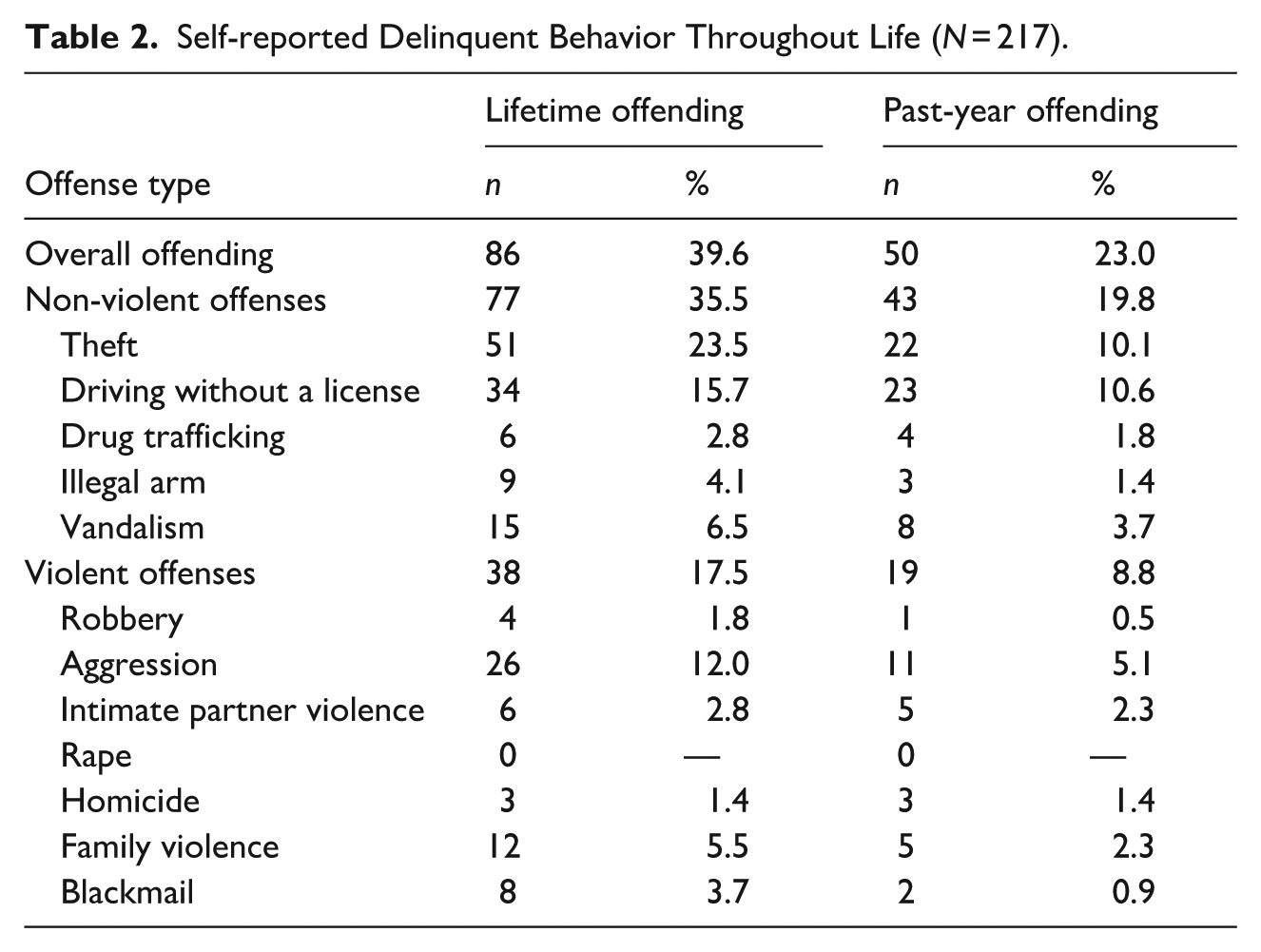
Regarding delinquent behavior, 39.6% (n = 86) of participants reported at least one of these behaviors during their lifetime, while 23.0% (n = 50) of participants reported at least one offense during the past year. A total of 17.5% (n = 38) reported at least one lifetime violent behavior and 35.5% (n = 77) reported at least one lifetime non-violent behavior during the life course. Regarding past year prevalences, 8.8% (n = 19) reported violent and 19.8% (n = 43) non-violent behaviors during the past year. As can be seen from Table 2, the most reported offenses were: theft (23.5%, n = 51), driving without a license (15.7%, n = 34), and assault (12.0%, n = 26).
Self-reported Delinquent Behavior Throughout Life (N = 217).
Correlational Analysis
Spearman correlation analyses revealed significant associations between ACEs, cognitive distortions, and delinquent behaviors (see Table 3). ACEs were significantly associated with cognitive distortions (rs = .40, p < .001), as well as with all lifetime delinquency indices, including overall offending (rs = .27, p < .001), violent behavior (rs = .20, p < .01), and non-violent behavior (rs = .25, p < .001). Similarly, ACEs were positively related to past-year offending, although the effect sizes were smaller: overall (rs = .18, p < .01), non-violent (rs = .16, p < .05), and violent (rs = .15, p < .05). Cognitive distortions were also positively correlated with lifetime offending (rs = .42, p < .001), violent behavior (rs = .34, p < .001), and non-violent behavior (rs = .37, p < .001), as well as with past-year indices: overall (rs = .33, p < .001), non-violent (rs = .28, p < .001), and violent (rs = .27, p < .001).
Correlations.
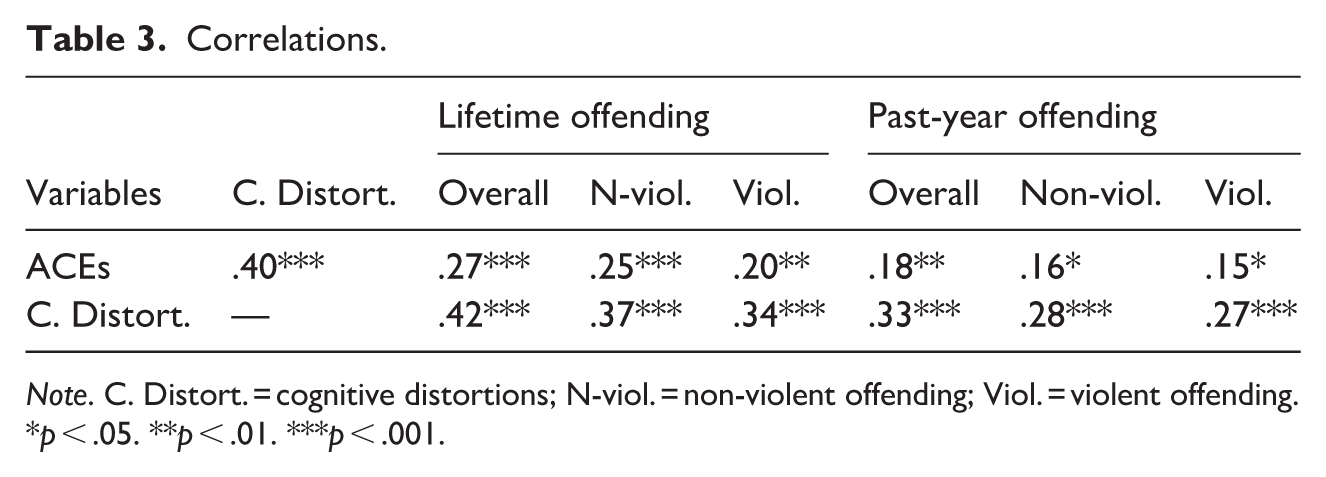
Note. C. Distort. = cognitive distortions; N-viol. = non-violent offending; Viol. = violent offending.
p < .05. **p < .01. ***p < .001.
Mediation Analysis
The mediation models demonstrated that self-serving cognitive distortions fully mediated the relationship between ACEs and delinquent behaviors.
Lifetime Delinquent Behavior
Regarding the mediating role of self-serving cognitive distortions in the relationship between ACEs and lifetime delinquent behavior, findings showed that ACEs significantly predicted total delinquency (b = 0.21, 95% CI [0.103, 0.313], p < .001). Further, when cognitive distortions were included as a mediator, the direct effect became statistically non-significant (b = 0.10, 95% CI [−0.005, 0.213 ]), indicating the presence of a full mediation effect (indirect effect: b = 0.10, 95% CI [0.052, 0.169]).
A similar patterns emerged for both violent and non-violent delinquency. ACEs significantly predicted violent delinquent behavior (b = 0.06, 95% CI [0.004, 0.110], p < .05), though the direct effect became statistically non-significant after accounting for the mediation role of cognitive distortions (b = 0.03, 95% CI [−0.031, 0.082 ]). The indirect effect confirming mediation (b = 0.03, 95% CI [0.007, 0.063]). Regarding non-violent delinquency, ACEs significantly predicted offending (b = 0.12, 95% CI [0.053, 0.188], p < .01), with the direct effect becoming statistically non-significant after accounting for cognitive distortions (b = 0.07, 95% CI [−0.004, 0.138]), and the indirect effect supporting full mediation (b = 0.05, 95% CI [0.021; 0.093] (Table 4, Figures 1–3).
Mediation Models for Lifetime Offending.
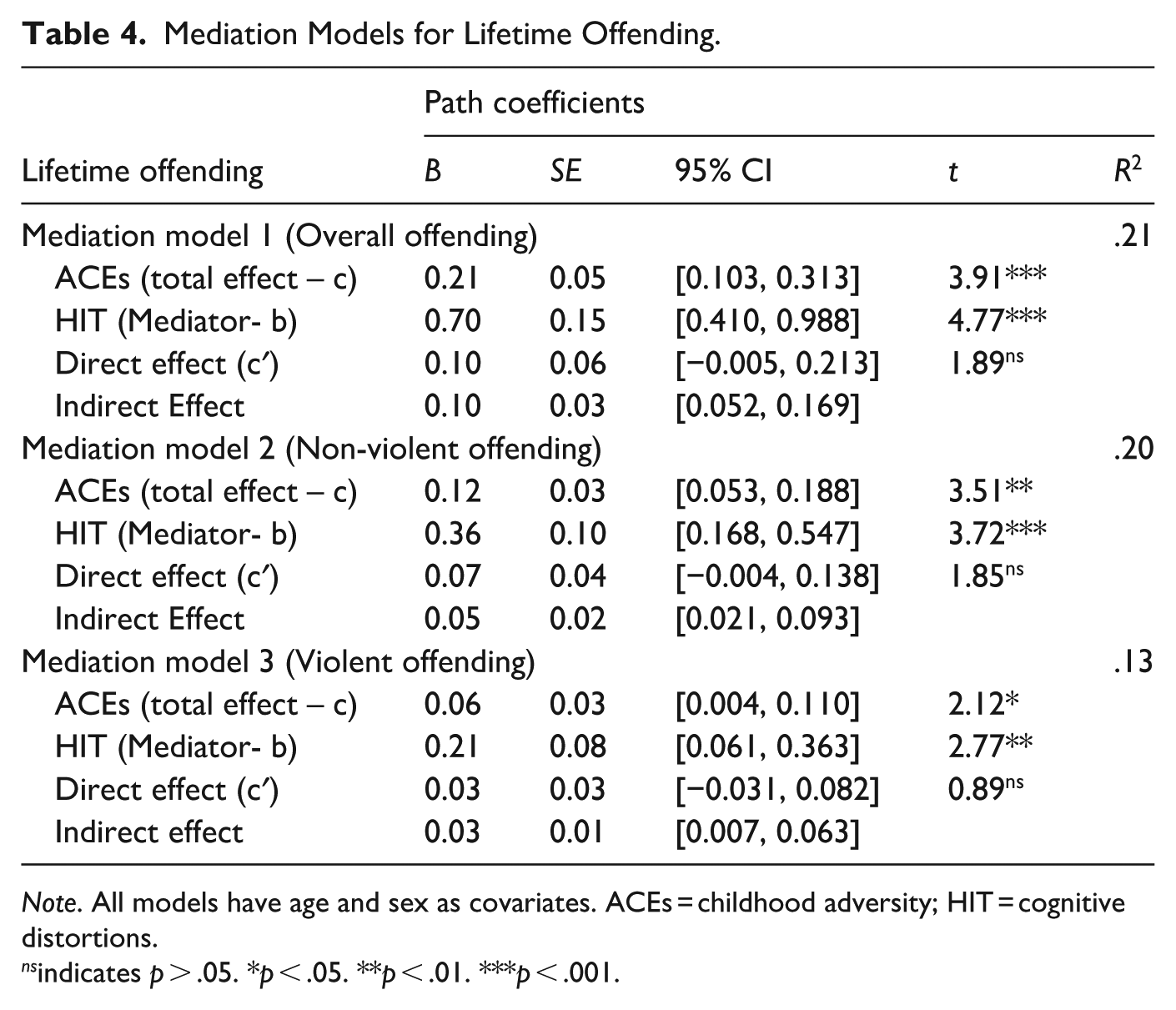
Note. All models have age and sex as covariates. ACEs = childhood adversity; HIT = cognitive distortions.
indicates p > .05. *p < .05. **p < .01. ***p < .001.
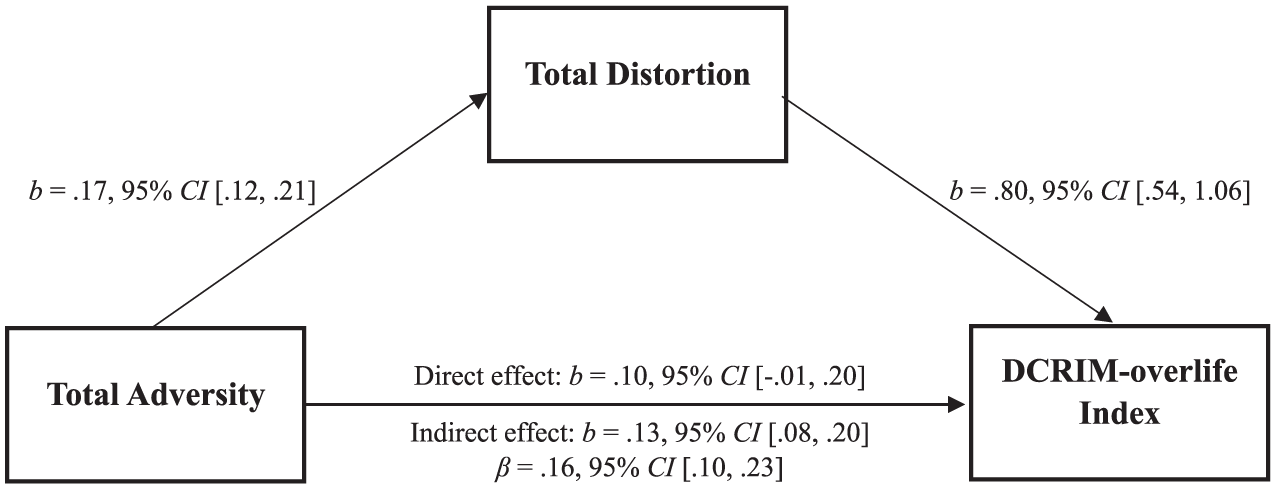
Model of Total Adversity as a predictor of total delinquency, mediated by Total Distortion.
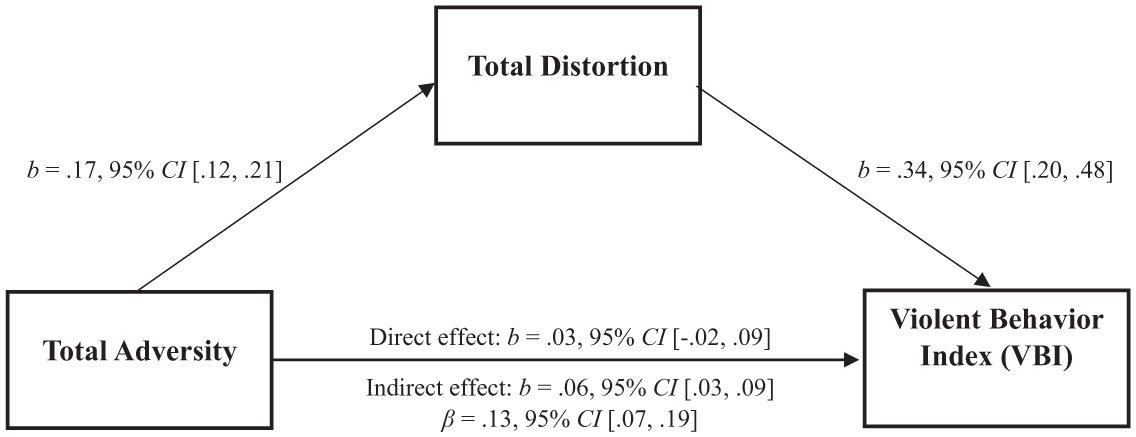
Model of Total Adversity as a predictor of violent delinquent behavior, mediated by Total Distortion.
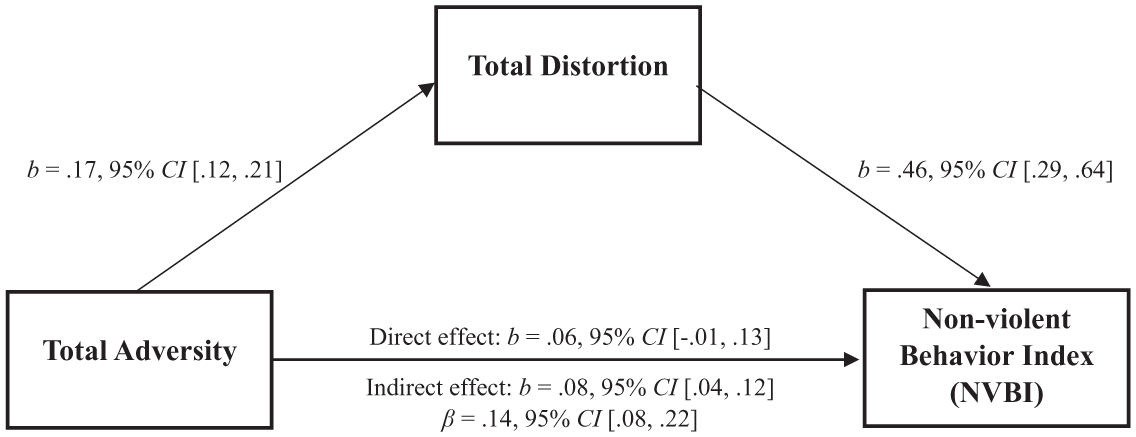
Model of Total Adversity as a predictor of non-violent delinquent behavior, mediated by Total Distortion.
Past-year Delinquent Behavior
For past-year delinquent behavior, ACEs significantly predicted total delinquency (b = 0.10, 95% CI [0.024, 0.177], p < .05), which was fully mediated by cognitive distortions (direct effect: b = 0.04, 95% CI [−0.039, 0.123]; indirect effect: b = 0.06, 95% CI [0.023, 0.107]). In the case of violent delinquency, ACEs had a significant total effect (b = 0.04, 95% CI [0.006, 0.082], p < .05), which was fully mediated by cognitive distortions (direct effect: b = 0.02, 95% CI [−0.024, 0.057]; indirect effect: b = 0.03, 95% CI [0.008, 0.054]). For non-violent delinquency, ACEs significantly predicted past-year non-violent delinquent behavior (b = 0.06, 95% CI [0.004, 0.110], p < .05), with the direct effect becoming statistically non-significant after accounting for cognitive distortions (b = 0 .03, 95% CI [−0.031, 0.082]) represents a fully mediation model (indirect effect: b = 0.03, 95% CI [0.007; 0.054]) (Table 5).
Mediation Models for Past-year Offending.
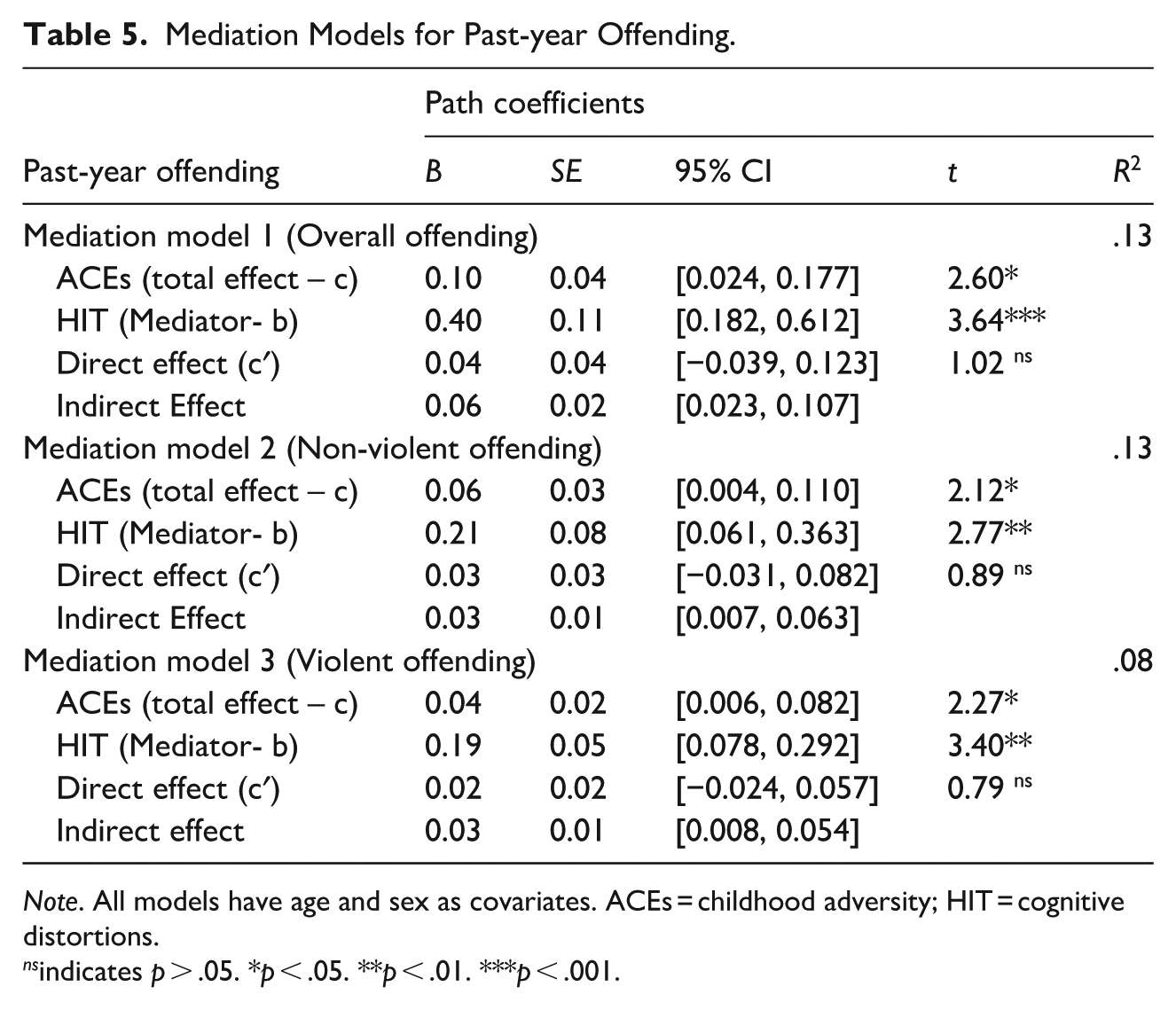
Note. All models have age and sex as covariates. ACEs = childhood adversity; HIT = cognitive distortions.
indicates p > .05. *p < .05. **p < .01. ***p < .001.
Discussion
This study aimed to investigate the relationship between ACEs and delinquency, focusing on the mediating role of self-serving cognitive distortions. Additionally, it examined whether these relationships differed for violent and non-violent delinquent behaviors and across lifetime and past-year offending. Our findings align with existing literature, further corroborating the existing link between ACEs and delinquent behaviors, particularly when mediated by cognitive distortions.
The findings revealed that 57.1% of participants reported at least one ACE, with emotional neglect being the most prevalent. This aligns with previous research indicating the high prevalence of emotional neglect among youth with delinquent behaviors (Malvaso et al., 2022). Interestingly, emotional neglect was the most frequently reported experience, followed by mental illness and emotional abuse. Household incarceration was the least reported, a finding consistent with Portuguese studies suggesting lower rates of parental incarceration compared to other adversities (P. C. Martins et al., 2019).
Regarding delinquent behaviors, 39.6% of participants reported engaging in at least one delinquent act during their lifetime, with non-violent offenses being more prevalent than violent ones. Theft and driving without a license were the most reported non-violent offenses, while aggression was the most common violent behavior. These findings are consistent with the Developmental Pathways Model (Loeber et al., 1993), which suggests that non-violent behaviors often precede violent offending in the trajectory of delinquency.
Statistically significant correlations between ACEs, cognitive distortions, and delinquent behaviors were observed. Total Adversity was positively associated with cognitive distortions and all delinquency indices, supporting the Cycle of Violence Hypothesis (Widom, 1989a), by reinforcing the idea that early trauma can create a cycle that perpetuates maladaptive behaviors across the lifespan. In this study, the positive association between ACEs and cognitive distortions suggests that individuals with a higher history of trauma are more likely to develop cognitive distortions, such as justifying harmful behavior or viewing social interactions through a biased lens (Widom, 1989a, 1989b). These cognitive distortions then become mechanisms through which trauma is internalized and acted upon, increasing the likelihood of engaging in delinquent behaviors (Widom, 1989a, 1989b). Recent findings corroborate this, showing that ACEs disrupt cognitive development, promoting maladaptive thought patterns that increase the risk of externalizing problems in childhood and adolescence (Jackson et al., 2023; Meldrum et al., 2020). These patterns are particularly evident in environments where protective factors, such as effective parenting, are scarce (Stritzel & Crosnoe, 2023).
The significant association between cognitive distortions and delinquent behavior aligns with prior research (Barriga et al., 2000; Helmond et al., 2014). Cognitive distortions, such as minimizing/mislabeling and blaming others, may serve as mechanisms to rationalize or justify delinquent actions, thereby perpetuating antisocial behavior (Fava et al., 2023).
The mediation analyses demonstrated that self-serving cognitive distortions fully mediated the relationship between ACEs and delinquent behaviors across all six models. For lifetime total delinquency, the total effect of ACEs was significant, but the direct effect became non-significant when cognitive distortions were included as a mediator. This pattern was consistent for both violent and non-violent behaviors, suggesting that cognitive distortions act as a central mechanism linking early adversity to delinquent outcomes, which is a finding congruent with the existing literature (Helmond et al., 2014; Stritzel et al., 2023).
Interestingly, the indirect effect of cognitive distortions was slightly stronger for non-violent delinquency compared to violent delinquency. This may reflect the role of cognitive distortions in justifying behaviors that are more socially incongruent, such as theft or vandalism, as opposed to violent offenses, which might be influenced by other factors like emotional dysregulation or impulsivity (Banse et al., 2013). For past-year offending, similar mediation patterns emerged. These findings are consistent with longitudinal research showing that early ACEs promote patterns of delinquent behavior by establishing cognitive distortions that persist over time (Cicchetti & Toth, 2005; Meldrum et al., 2020). This highlights the need for interventions targeting cognitive processes to reduce the long-term impact of ACEs.
Limitations and Future Research
The findings of the present study should be interpreted in light of some limitations. First, the community sample was obtained through a convenience-based snowball sampling strategy, which limits the generalizability of the results. Although participants were recruited from diverse socio-cultural contexts, this non-probabilistic approach may have introduced self-selection bias and an overrepresentation of individuals sharing similar social, educational, or institutional backgrounds. Future studies should replicate these findings using representative samples, including populations with documented involvement in the juvenile or criminal justice systems.
Second, because participants were recruited from common community settings (e.g., schools, workplaces, and recreational institutions), the data may be subject to unmodeled clustering effects, whereby individuals within the same contexts are more similar to one another than to those from different contexts. However, insufficient contextual identifiers were available to estimate intraclass correlation coefficients or to apply multilevel or design-based adjustments. As a result, potential clustering effects could not be statistically examined, which may have affected the precision of the estimates. Future research should employ sampling designs that allow for explicit modeling of cluster-level variance.
Third, the sensitive nature of several variables, particularly those related to adverse childhood experiences and delinquent behaviors, may have contributed to underreporting (Gomes et al., 2018, 2019; R. J. Pinto & Maia, 2013). The reliance on retrospective self-report measures also introduces the possibility of recall bias, requiring caution in the interpretation of the findings (Gomes, 2025). Such biases may have resulted in conservative estimates of prevalence and attenuated associations among key variables.
Fourth, although validated instruments were used, certain measurement-related limitations should be acknowledged. For instance, the ACE questionnaire captures exposure to ten categories of adversity but does not account for important dimensions such as severity, chronicity, or developmental timing. In addition, offending behaviors were assessed using composite indices derived from a validated self-report measure designed to capture a broad spectrum of delinquent acts. While some behaviors are relatively rare in community samples, the resulting skewed distributions reflect low base rates rather than measurement inadequacy and are typical of self-reported offending data.
Finally, the cross-sectional design of the study precludes causal inferences. Although the mediation analyses identified significant indirect effects, longitudinal research is needed to establish temporal ordering and to better understand the developmental pathways linking adverse childhood experiences, cognitive distortions, and delinquent behavior.
Implications for Future Research
To build upon these findings, future research should explore the mediating role of self-serving cognitive distortions in different populations, such as legally identified offenders or individuals with varying levels of exposure to ACEs. Longitudinal designs could provide important information on how these cognitive distortions develop over time and their impact on delinquent trajectories. Moreover, examining the interaction of ACEs with other variables, such as gender or socioeconomic status, may contribute to a clearer understanding of the pathways to delinquency. Finally, the use of alternative measures that assess the quantity, severity, and duration of adversity could enhance the understanding of how ACEs influence cognitive distortions and delinquent behaviors. Expanding the scope of cognitive distortions examined to include specific subtypes (e.g., self-centered or assuming the worst) may also reveal differential effects on violent and non-violent behaviors.
Practical Implications
The findings of this study hold significant practical implications for interventions targeting delinquent behaviors, particularly among individuals exposed to ACEs. Given the mediating role of self-serving cognitive distortions, programs addressing these maladaptive cognitive patterns could be effective in preventing or reducing delinquent behaviors. Early interventions, such as trauma-informed care, could mitigate the development of these distortions by providing healthier coping mechanisms to individuals. This is particularly important for youth identified as victims of ACEs by child protective services, as they are at heightened risk for developing distorted thought patterns that rationalize or justify antisocial actions.
Furthermore, integrating cognitive-behavioral strategies into correctional and educational settings could help address existing cognitive distortions in at-risk populations. For instance, interventions could focus on the deconstruction of specific distortions such as blaming others or minimizing/mislabeling behaviors, which are closely linked to non-violent offenses. Providing justice system professionals with training on these cognitive mechanisms could improve the effectiveness of intervention programs, as supported by the principles of effective prevention programs (Nation et al., 2003).
Policy Implications
The findings of this study have clear implications for public policy aimed at preventing delinquent behavior among youth exposed to ACEs. The mediating role of self-serving cognitive distortions suggests that policies should move beyond punitive approaches and prioritize early, trauma-informed prevention strategies that address both exposure to adversity and maladaptive cognitive processes.
Policies supporting the implementation of evidence-based, cognitively focused and trauma-informed interventions, particularly within schools, community youth services, and juvenile justice settings, may help disrupt pathways from childhood adversity to delinquent behavior (Ford & Courtois, 2020; Helmond et al., 2014). Screening for ACEs within educational and social service systems, combined with timely access to psychosocial support, may further reduce the long-term risk of both violent and non-violent offending (Braga et al., 2018).
More broadly, the results underscore the importance of integrated policy responses that promote collaboration across child protection, mental health, education, and justice sectors, emphasizing early prevention and cognitive-behavioral rehabilitation rather than reactive sanctioning.
Footnotes
Acknowledgements
The authors would like to thank all participants and collaborating institutions that made this study possible.
Declaration of Conflicting Interests
The authors declared no potential conflicts of interest with respect to the research, authorship, and/or publication of this article.
Funding
The authors disclosed receipt of the following financial support for the research, authorship, and/or publication of this article: This study was conducted at the Psychology Research Centre (CIPsi/UM), School of Psychology, University of Minho, supported by the Foundation for Science and Technology (FCT) through the Portuguese State Budget (UIDB/01662/2020).

Ethical Considerations
The study received approval from the Ethics Committee of the University of Minho.
Consent to Participate
Informed consent was obtained from all individual participants included in the study.