



Abstract
This article addresses the proliferation of definitions and approaches used to characterize the hate element in behaviors motivated by hate, including hate crimes, hate speech, and behaviors motivated by prejudice against specific identities (e.g., homophobia, anti-Semitism, Islamophobia), and investigates whether these definitions cluster into distinct types. Using machine learning, we clustered 423 definitions from academic and gray literature in five languages between 1990 and 2021, based on 16 theoretically derived categories. The resulting typology captures the diversity of definitions from ten countries in North America, Europe, and Oceania, providing a comprehensive framework for understanding how the hate element is conceptualized in these contexts. The findings offer a basis for future research and may help inform policy responses to hate-motivated behaviors.
Introduction
Although there is no global consensus among scholars and policymakers on how to define behaviors motivated by hate, such as hate crime and hate speech, consistent patterns exist in the approaches used to conceptualize these terms (Vergani et al., 2024). These patterns highlight the potential value of a guiding typology for defining hate behaviors and indicate a loose, perhaps unintended concurrence around broad templates to understand the hate element of a crime, and the fundamental characteristics of hate behaviors. For instance, while some definitions include a description of the target identities of hate crime (i.e., to be classified as hate crime, a crime must target certain identities), the characterization of these identities varies significantly across scholarly and gray literature. No empirical study has attempted to synthesize the diverse approaches to defining the hate element of a behavior in academic and gray literature, and to clarify whether specific and identifiable types can be discerned.
Previous work has synthesized different approaches to defining hate behaviors, relying solely on theoretical discussions without testing whether these proposed approaches empirically represent the diversity of definitions found in academic and gray literature. For example, hate crime scholars frequently reference Lawrence’s (1999) typology to understand approaches to defining the hate motivation in hate crimes. They proffered two distinct models of legislative definitions hate crime. The “discriminatory selection model” (or “group selection”) demands only that the victim was intentionally selected because of their group membership. In contrast, the “animus model” (or “hatred motivation”) requires that the offender specifically acted on hate or hostility toward the relevant group. The fundamental difference lies in the need for an explicit motivation grounded in hate, prejudice, or bias. Although widely cited, this typology is reductive and outdated, primarily reflecting definitions adopted in the United States during that period.
In the field of hate speech research, more recent efforts have been made to develop typologies that define the hate motivation underlying speech. For example, Hietanen and Eddebo (2023) identified four models: teleological, consequentialist, formal, and consensus. Teleological models focus on the intent and potential impacts of the act, consequentialist models on the actual or perceived effects, formal models on the unethical, immoral, or derogatory nature of the act, and consensus models on a general agreement about what constitutes hate speech. Barth et al. (2023) further categorized approaches to understanding the hate element in hate speech into intentionalist, which considers the motives; consequentialist, which looks at the impact on victims; and normative, which assesses violations of societal norms, legal standards, and ethical considerations.
Although useful in providing initial approaches to understand the hate element of behaviors, these typologies (Barth et al., 2023; Hietanen & Eddebo, 2022; Lawrence, 1999) focus solely on one type of hate behavior—for example, either hate crime or hate speech—and are not tested empirically. Do the proposed types capture the full range, or nearly all, of the different definitional approaches in the field? What are the similarities and differences in the approaches to defining the hate element across hate crime, hate speech, and the various surrogate terms found in the literature?
Our article contributes to these discussions by applying a data-driven approach to clarify how hate behaviors are defined across a broad range of contexts. We develop our proposed typology using the first comprehensive dataset of definitions of hate behaviors proposed by scholars and policymakers across ten countries (the US, Canada, UK, Ireland, Germany, France, Spain, Italy, Australia, and New Zealand) between 1990 and 2021 (Vergani et al., 2024).
This article aims to improve conceptual clarity by organizing definitional approaches in a way that may support reflection and application across different contexts. In the adjacent research area of terrorism studies, similar conceptualization efforts of definitional approaches (e.g., Schmid, 1984, 2011; Silke, 1996) have had a major impact on theory, law, and practice, which we aim to achieve with this work. Clarity in definitional approaches advances the field and sharpens the understanding of what constitutes hate crimes, incidents, or speech, thus guiding legal responses and enforcement strategies.
Precise and standardized definitions are crucial as they ensure legislation provides adequate protection for targeted groups and allows for consistent laws across jurisdictions. Moreover, well-defined terms enable researchers to systematically collect data, analyze trends, and assess the scope and impact of hate-driven behaviors. Precise and standardized definitions are also essential for crime measurement. Variations in definitions across jurisdictions hinder reliable data collection and cross-national comparisons, limiting the ability to monitor trends and evaluate policy effectiveness. Clear definitions also assist policymakers in developing targeted interventions to prevent and address hate crimes, incidents, and speech, and help educate the public about the nature of hateful behaviors and their legal consequences.
Key Conceptual Features for Defining the Hate Element
We define the hate element as the critical component that, when present in criminal acts, classifies them as hate crimes, often leading to harsher sentencing, and can also turn communicative expressions into criminal offenses in regions where hate speech is penalized. Defining the hate element of a behavior presents well-documented challenges, as the term is inherently vague and subjective, hindering the development of universally accepted definitions (Hall, 2013). Like terrorism and extremism, hate is often used normatively to stigmatize ideological opponents and as a political tool.
Perceptions and thresholds of what constitutes hate vary widely among individuals and across cultural and historical contexts, making international consensus difficult (Schweppe, 2021). For instance, Germany and Italy have laws against hate speech and crimes related to Nazi and Fascist ideologies, including bans on Nazi symbols. By contrast, in the United States, where freedom of speech is a core value protected by the First Amendment, Nazi and Fascist symbols are not criminalized, together with many expressions that constitute a crime in many European states (Strossen, 2018).
To date, there have been limited efforts to define the essential features of hate behaviors, such as hate crimes and hate speech. Based on an analysis of relevant theoretical work on the constitutive features of hate crimes (Brudholm, 2016; Schweppe, 2021) and systematic reviews of definitions of hate crimes and hate speech (Vergani et al., 2024), we propose five main conceptual features for defining the hate element of a behavior.
The first is the nature of the act, specifically whether the act is criminal (a constitutive feature of a hate crime, as without a crime, there can be no hate crime; see Brudholm, 2016; Schweppe, 2021). This distinction is critical, given the absence of a uniform definition of hate crime across jurisdictions, which leads to significant variability in the behaviors classified as hate crimes. Some frameworks consider hate crimes narrowly as criminal acts, while others include a broader spectrum of behaviors, such as discrimination, hate speech, or microaggressions, under the umbrella of hate (Chakraborti & Garland, 2015).
The second feature is the perpetrator’s motives (e.g., prejudice, hostility, bias, ideology), specifically why the crime was committed (Brudholm, 2016). Hate is an ambiguous term that many hate crime scholars reject, instead opting for broader notions such as prejudice, hostility, or bias (Schweppe, 2021). While widely used, the terms hate crime and hate speech have been criticized as potentially misleading, with scholars noting that many acts driven by hate—such as intimate partner violence—are not classified as hate crimes because they do not involve bias against a socially defined group (Perry, 2003). As a result, alternative terms such as bias crime or prejudice-motivated crime have been proposed as more precise descriptors (Wickes et al., 2016). This broader framing allows for the inclusion of various motivations behind hate crimes, such as the intent to intimidate, subordinate, or exclude victims based on their perceived difference or identity (Perry, 2001).
The third feature is the target’s identity (e.g., group identity defined by protected characteristics), meaning that the hate must be directed at categories of group identity specified through a list of protected characteristics (Brudholm, 2016). Schweppe (2021) more generally suggests that there should be a connection between the commission of the offense and the presumed characteristics of the victim. Perry (2001) emphasizes that these characteristics are often linked to broader social hierarchies, reflecting historical and cultural contexts that contribute to the marginalization of certain groups.
The fourth feature is the impact of the act, which has long been the rationale for giving special consideration to hate-motivated incidents—namely, that they fundamentally differ in their effects (Iganski, 2001). Research suggests that, foremost among the impacts on the individual, is physical harm: bias-motivated crimes are often characterized by extreme brutality (McDevitt et al., 2002). Violent personal crimes motivated by bias are more likely to involve extraordinary levels of violence. Additionally, empirical studies on the emotional, psychological, and behavioral impact of hate crimes consistently show a more severe impact on bias crime victims compared to non-bias victims (Holder, 2024).
Beyond these immediate individual effects, hate crimes are also “message crimes” that send a distinct warning to all members of the victim’s community: “step out of line, cross invisible boundaries, and you too could be lying on the ground, beaten and bloodied” (Iganski, 2001). Consequently, the individual fear noted above can be accompanied by the collective fear experienced by the victim’s cultural group, and possibly by other minority groups that are also likely targets. Weinstein (cited by Iganski, 2001) refers to this as an in terrorem effect: the intimidation of a group through the victimization of one or a few of its members.
Hate crimes have the potential to create communities of victims. While a hate-motivated crime committed against a single individual may directly harm that person, it can also create scores of secondary victims which may include family, friends, or others who identify with the group to which the victim belonged. In this way, hate crimes foster fear and insecurity among minority communities, whether the crimes are based on skin color, race, religion, ethnic origin, or sexual orientation (Freilich & Chermak, 2013; Perry & Alvi, 2012).
The fifth feature is the societal or legal context of the act, which is a fundamental element in many hate crime definitions. Perry (2001; Perry & Scrivens, 2018; Schweppe & Perry, 2022) has long argued that hate crime is normative; it is endemic in a broader culture that maligns and stigmatizes the other. Acts of violence, such as those motivated by race, gender, or anti-immigrant sentiment, are embedded in a structural complex of power relations often grounded simultaneously in intersecting identities.
The interactions between subordinate and dominant groups provide contexts in which both compete for the privilege to define difference in ways that either perpetuate or reconfigure hierarchies of social power. Such confrontations—including violent ones—are inevitably shaped by the broader cultural and political arrangements that define place, worth, and belonging in society. The oppression that includes racial violence is more than the outcome of the conscious actions of bigoted individuals. It represents a network of norms, assumptions, behaviors, and policies structurally interconnected to reproduce the racialized and gendered hierarchies that characterize a given society. This represents a will to power by which the very threat of otherwise unprovoked violence “deprives the oppressed of freedom and dignity” (p. 83). In other words, it deprives them of their human rights.
Importantly, the first three features are more extensively discussed and acknowledged in the hate crime literature (Brudholm, 2016; Schweppe, 2021), while the fourth and fifth features are often emphasized in hate speech definitions (Barth et al., 2023; Hietanen & Eddebo, 2022) and receive less attention in hate crime policy and scholarship.
The Current Study
This study combines deductive and inductive methods to synthetize the different approaches to define the hate element of a behavior in definitions from academic and gray literature adopted in ten countries in North America, Europe and Oceania between 1990 and 2021 (Vergani et al., 2024). Deductively, we begin by applying five key domains identified from the existing literature as critical for understanding and defining hate behaviors. Inductively, we complement this by analyzing a large dataset of definitions proposed by scholars and policy makers, using systematic coding to refine and adapt these categories based on the patterns and nuances emerging from the data. Unlike previous models, such as Lawrence’s (1999) typology of hate crimes or Hietanen and Eddebo’s (2022) models of hate speech, we examine patterns and variations across definitions of multiple hate behaviors, ensuring that the typology reflects the data accurately. This method allows us to test whether the proposed categories align with the empirical diversity of definitions, addressing fragmentation and providing a robust, evidence-based framework for defining hate behaviors in future scholarly and policy work.
Data and Methods
To develop and test our data-driven typology, we utilized a dataset containing 423 definitions developed by Vergani et al. (2024) using a systematic review process from academic and gray literature. This process involved screening documents in multiple languages (English, French, German, Italian, and Spanish) and across 10 countries to capture diverse socio-political contexts, legal frameworks, and approaches to regulating hate behaviors. The 10 countries were chosen for their comparability in democratic institutions and relevance to the study’s objectives. Definitions were included based on their originality, relevance, and transparency. About 56% (N = 237) of the definitions in the dataset are found in the academic literature and 44% (N = 186) in the gray literature. Approximately 38% of the definitions (N = 159) focused on hate crime, 27% (N = 116) addressed hate speech, 30% (N = 127) referred to related terms such as anti-Semitism or homophobia, and 5% (N = 21) described hate incidents, typically understood as non-criminal occurrences. Around one-third of the definitions (33%, N = 138) came from documents primarily centered on, and largely originating in, North America (i.e., the United States or Canada). The majority of the definitions were sourced from documents written in English (approximately 83%, N = 349). All non-English definitions were translated into English using ChatGPT and were then cross-checked by subject matter experts.
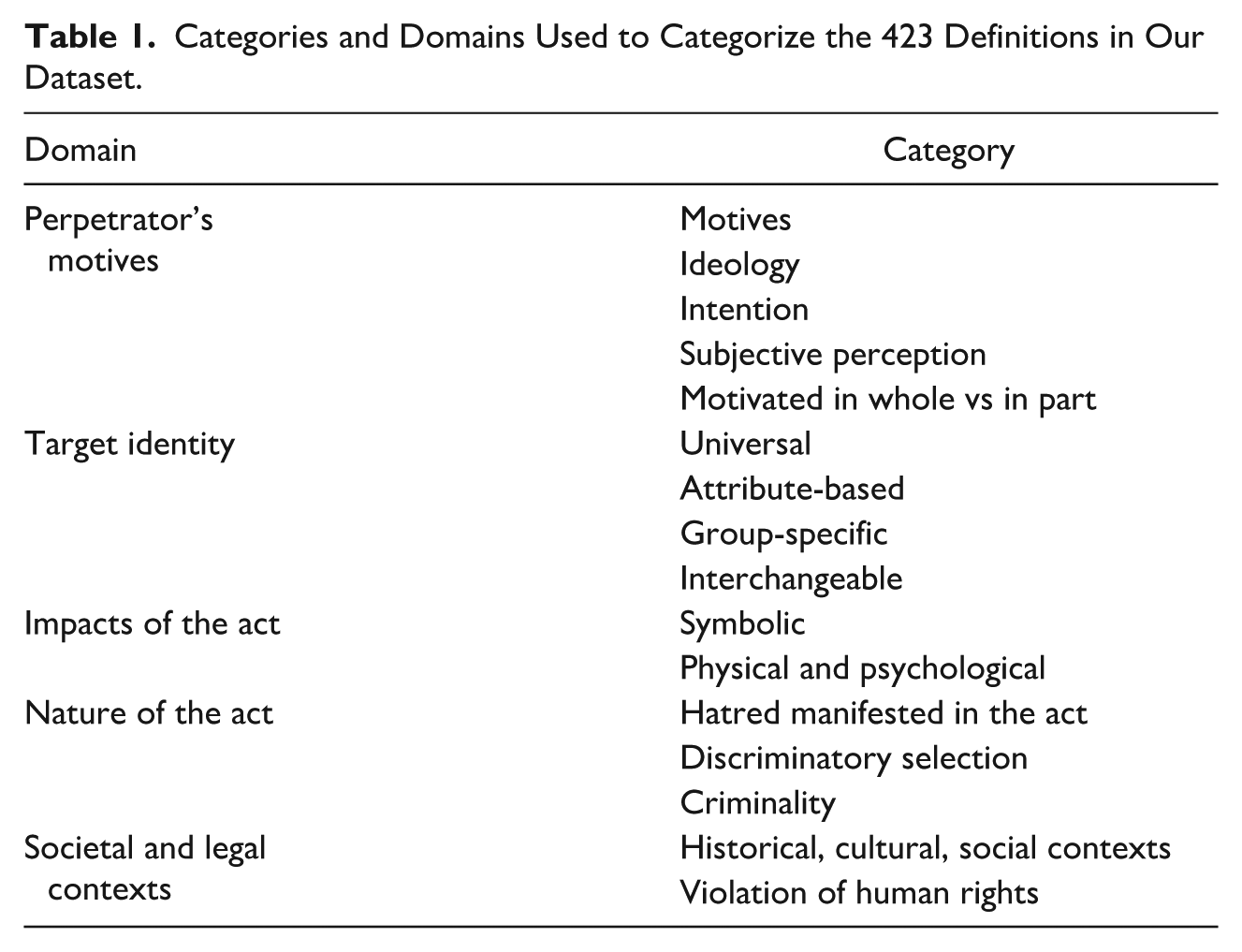
Starting from the five domains discussed in the previous section (nature of the act, perpetrator’s motives, target identity, impacts of the act, and societal and legal contexts), we developed 16 categories using a combination of deductive and inductive approaches. Deductively, these domains were derived from existing literature and conceptual frameworks on hate-related behaviors, providing a broad theoretical structure for coding. Inductively, as we coded the data, new patterns and themes emerged, clustering naturally within these overarching domains. For example, within perpetrator motives, categories such as “ideology” and “subjective perception” were identified as recurring elements that enriched the domain. The coding process was iterative, with categories continuously refined and merged until saturation was reached, that is, the point at which no new meaningful categories emerged. This approach ensured that the final 16 characteristics were comprehensive and empirically grounded, fitting within and enhancing the initial deductive framework. By blending deductive with inductive approaches, we developed a robust analytical framework that captures the complexity and nuance of the approaches to define hate behaviors in the dataset. Table 1 summarizes the 16 categories, and the corresponding five domains used in the manual categorization process.
Categories and Domains Used to Categorize the 423 Definitions in Our Dataset.
No pre-processing of the recoded definitions was required since these were already in a vectorized form, using a binary encoding, to represent which of each of the 16 theoretically defined categories. A brief extract of the encoded definitions and categories prepared for clustering is shown in Figure 1 below.

Extract of matrix used for clustering based on theoretically defined categories showing the encoding used.
Clustering is an unsupervised machine learning method, that creates subsets of a given data set with the objectives of maximizing the similarity of the data within each subset group, as well as maximizing the difference between data in different subsets based on a given metric (G. James et al., 2013). The similarity between each pair of documents was determined by cosine distance. The idea here is that similar definitions (comprised of similar mapped categories) will only have a small angle between them.
For a pair of definitions
Agglomerative hierarchical clustering of the definitions was then performed (G. James et al., 2013). The first cluster was created from the pair having the smallest dissimilarity. The distance between this cluster and the remaining definitions was then recalculated. The next cluster was created from the pair of definitions (or definition and cluster) having the next smallest dissimilarity, and the distance matrix was updated. This process continued until all definitions had been incorporated. The dissimilarity at the formation of each new cluster was recorded, which enabled the clustering to be represented as an inverted tree (referred to as a dendrogram), showing the dissimilarity when each new cluster is formed or updated. The resulting dendrogram is shown in Figure 2.
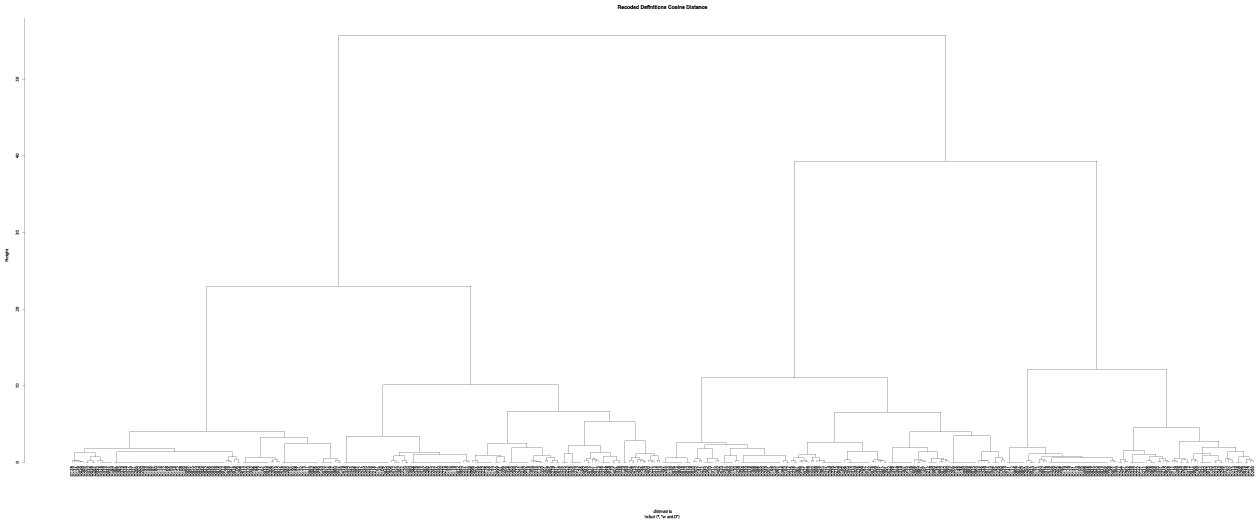
Hierarchical clustering based on categories.
To identify the optimal number of clusters, we used the elbow method, which detects the point where increasing the number of clusters leads to only a marginal decrease in explained variance. This point is determined through visual inspection since there is no definitive rule for choosing the optimal number of clusters. We computed the sum of squared errors within each cluster as we varied the number of clusters from 1 to 20. The plot in Figure 3 demonstrates that beyond six clusters, the benefit of additional clusters in terms of reduced variance becomes negligible.
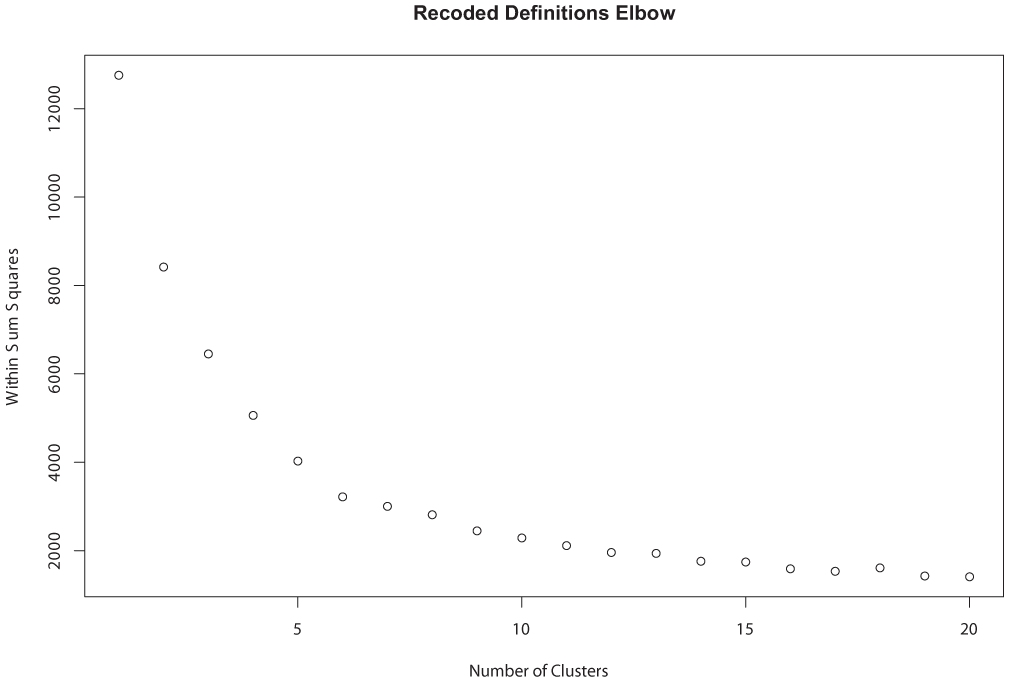
Explained variance in the k-means clustering model as a function of the number of clusters.
Results
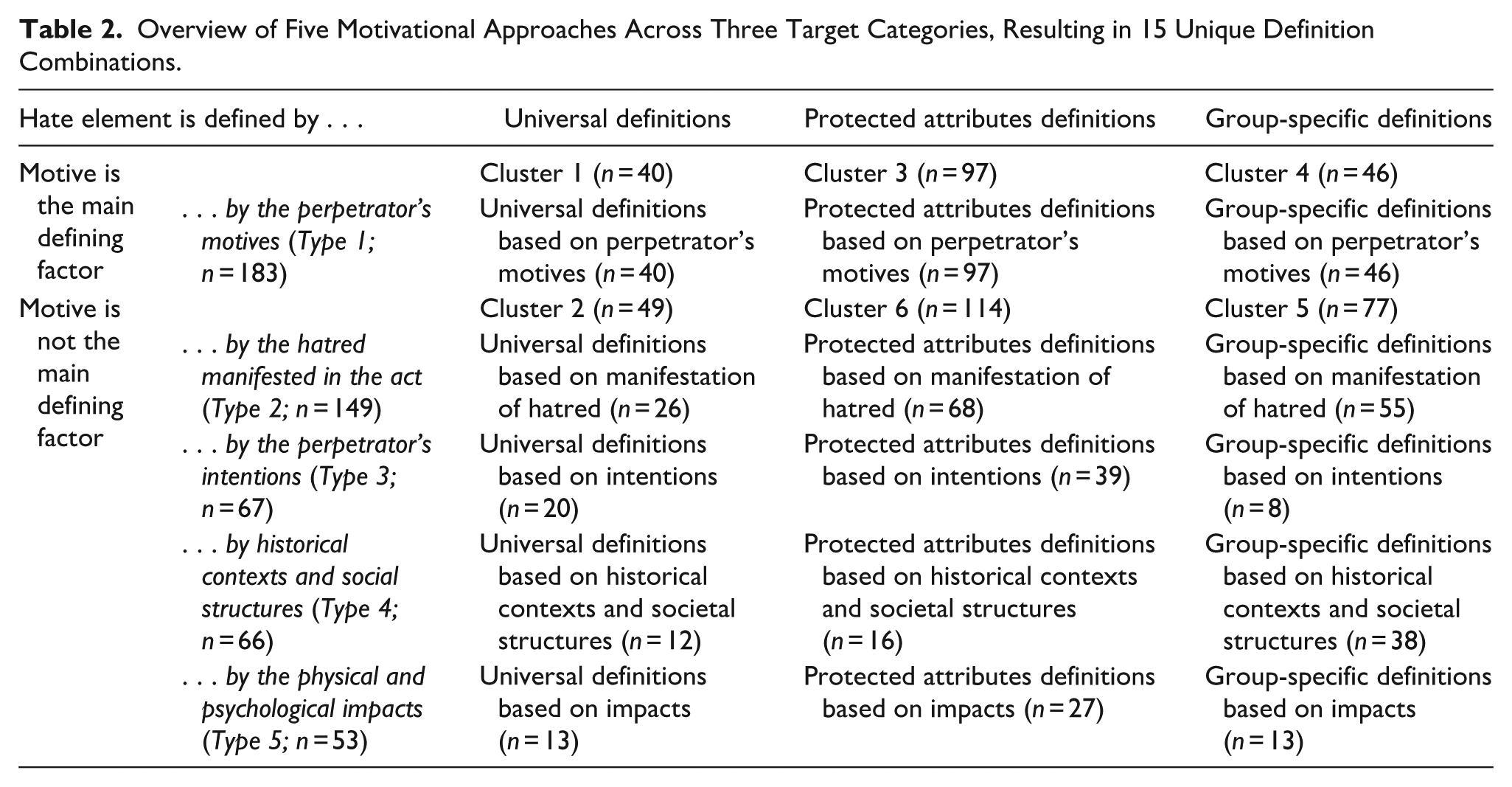
Our clustering identified five types of approaches to defining the hate element of a behavior, each applicable to three classifications of target groups: universal, attribute-based, or group-specific. This framework produced 15 unique combinations presented in Table 2. In this section, we discuss the data and reasoning that informed the definition of the three target group classifications and the five types of approaches that inform our typology.
Overview of Five Motivational Approaches Across Three Target Categories, Resulting in 15 Unique Definition Combinations.
Three Target Group Classifications
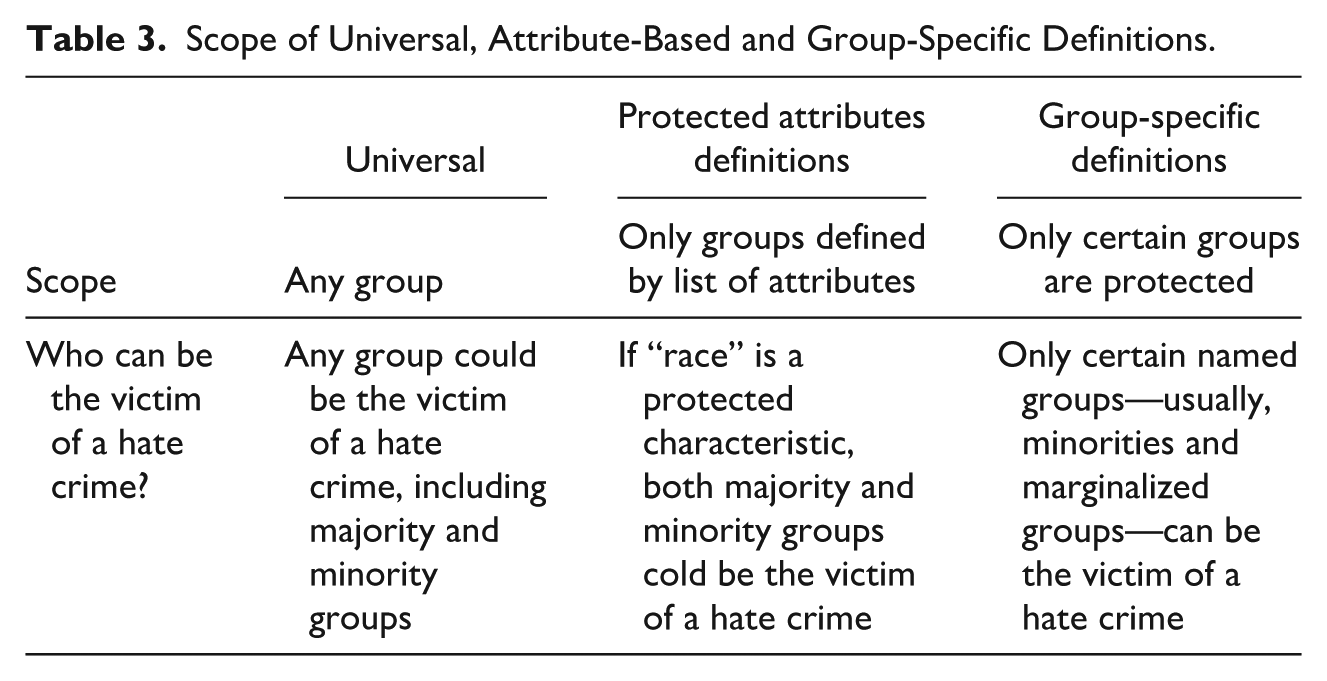
The cluster means heatmap in Figure 4 illustrates that the six clusters are predominantly characterized by the presence or absence of three variables related to the specification of target groups within the definitions. Clusters 1 and 2 feature “universal definitions” where hate can target any group identity without further specification. Clusters 4 and 5 encompass group-specific definitions that focus on single target groups, such as antisemitic, disablist, or homophobic hate crimes, targeting Jewish, disabled, and gay identities respectively. Clusters 3 and 6 include definitions that specify protected attributes (also known as “protected characteristics”), listing one or more attributes like gender, race, or religion. These clusters do not specify particular groups, implying that theoretically, any race, religion, or gender could be targeted by hate, unlike Clusters 4 and 5, which protect only specific groups defined by these attributes. Table 3 exemplifies the scope of universal, attribute-based and group-specific definitions.
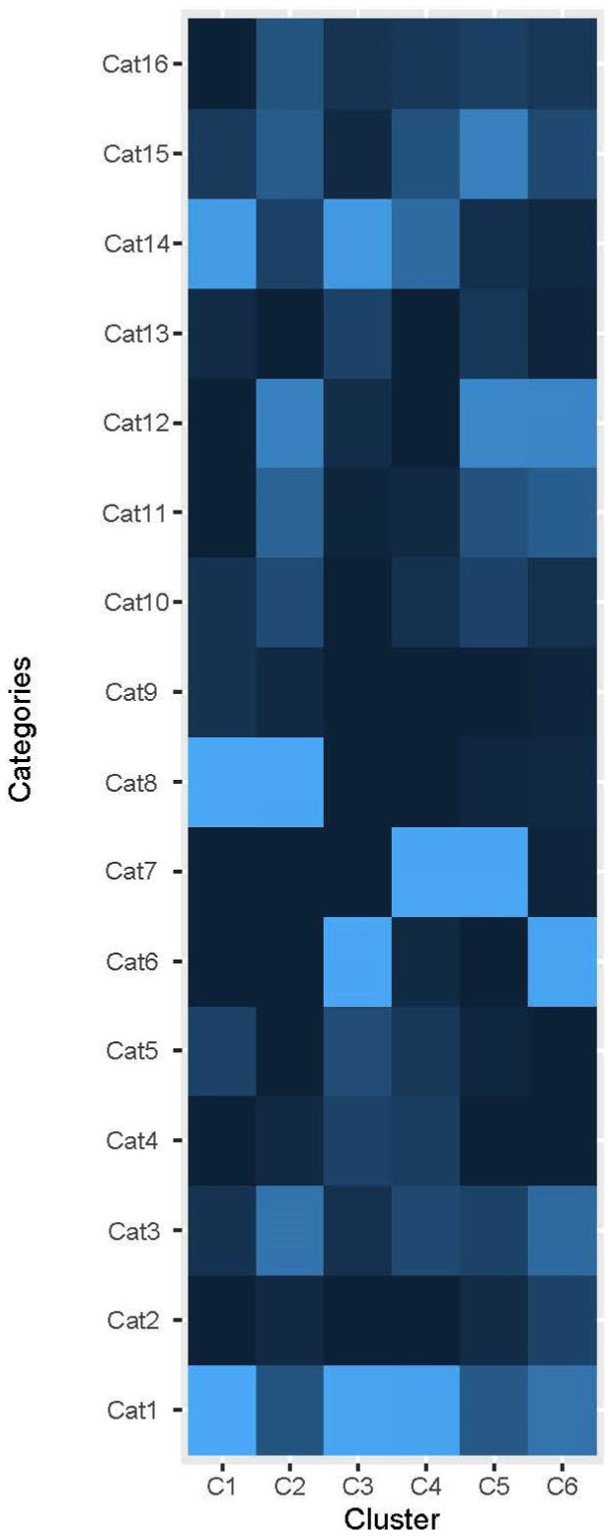
Heatmap of cluster means based on theoretically-defined 16 categories. Values range from 0 in black to 1 as light blue.
Scope of Universal, Attribute-Based and Group-Specific Definitions.
Five Types of Approaches
The five types of approaches broadly reflect the five domain that we presented in the background section of this article (see Table 1).
Type 1. Definitions Based on Perpetrator’s Motives
Definitions based on perpetrator’s motives focus on motivation as the primary defining element for hate, representing approximately 43% of our definitions sample, found within clusters 1 (n = 40), 3 (n = 97), and 4 (n = 46). These definitions are typically succinct and are widely adopted by various governmental, non-governmental, and multinational organizations. They primarily categorize criminal behaviors as hate crimes or under surrogate terms like bias crime and prejudice-motivated crime. An example of a universal definition of this type is: “Hate crime refers to any criminal offence motivated by bias towards an out-group” (Vergani & Navarro, 2023). Many definitions in this type also integrate other methods for defining the hate element alongside motivation, such as discriminatory selection: “A hate crime, or bias-motivated crime, is a crime perpetrated against a victim because of perceived characteristics of that individual which may associate him or her with a social group. Hate crimes are activities already prohibited by criminal law that are distinguished from similar criminal activities because of the perpetrator’s biased motivation. The perpetrator of the criminal act purposefully selects the victim because of the victim’s actual or perceived race, color, religion, national origin, ethnicity, disability, gender, or sexual orientation” (Gentile, 2007). It is notable that, although most definitions of this type capture hate crime, occasionally, definitions of hate speech also fall into this category, such as: “Hate speech refers to communicative attacks on members of certain social groups that are motivated by the perpetrators’ distorted attitude toward these groups, for example by racist, Islamophobic, anti-Semitic or sexist prejudices” (Rieger et al., 2020).
Type 2. Definitions Based on Manifestation of Hatred
The second most prevalent approach to defining the hate element, present in Clusters 2, 5, and 6, accounts for about 35% of definitions in our sample. This approach identifies definitions that emphasize the expression of hatred, primarily encapsulated by the term hate speech and extending to related expressions such as hateful extremism, inflammatory comments, hate propaganda, cyberhate, abusive language, and group-specific terms like antisemitic discourse, sexist hate speech, and anti-Roma hate. An example of a universal definition of this type is: “Hate speech consists in symbolism, linguistic or otherwise, that expresses intense antipathy toward some group or an individual based on membership in some group” (Corlett & Francescotti, 2002). Often, this manifestation approach is combined with other methods to define hate such as the ideology of the perpetrator, as seen in: “Hate speech is an offensive kind of communication mechanism that expresses an ideology of hate using stereotypes. Hate speech targets different protected characteristics such as gender, religion, race, and disability” (Chetty & Alathur, 2018). Type 2 often encompasses definitions that offer a normative or prescriptive view of hate. For example, a group-specific definition under this category is: “Antisemitic discourse is language, themes or imagery that use or evoke malicious ideas about Jews and Jewish-related issues” (Poulton, 2016). Although Type 2 mostly captures hate speech definitions, some hate crime definitions also define the hate element through its manifestation during the act as in the following definition: “Although the term hate crime is not used in British legislation, for practical purposes of recognition, the concept can be divided into two categories. The first is that group of offences existing in current legislation and which specifically refer to a prejudicial motivation based upon one or more dimensions of diversity. The second group is those cases in which the ‘standard’ crime is reported, such as ‘Threatening behavior’ or ‘Assault occasioning actual bodily harm’, but in which the requisite prejudice or ‘hate’ motive is present and demonstrated by the offender at the time or immediately before or after the commission of the offence. Scholars refer variously to this category as ‘predicate offences’, ‘generic offences’, or ‘parallel’ or ‘underlying offences’. The recording of these offences as hate crimes is left to the police, though courts are given powers to treat some cases with greater severity where the hatred motive is proven” (Mellors, 2009).
Type 3. Definitions Based on Intentions
Definitions that classify the hate element by the perpetrator’s intentions constitute approximately 15% of the definitions in our sample and are found within Clusters 2, 5, and 6. This approach is predominantly used to define hate speech and related terms such as cyberhate, abusive language, and incitement to hatred. Additionally, it applies to group-specific types of violence that encompass both hate crime and hate speech, including anti-Muslim hate and anti-Roma hate. In some instances, this method is also employed in defining hate crimes. An example of a universal definition of Type 3 is: “I define user-generated hate speech (UGHS) as content created by non-professional, usually anonymous users; aimed at intimidating or verbally harming particular minority groups; taking advantage of the interactive features of websites and of gaps in media regulation; and intended to be published and reach its target audience” (Janto-Petnehazi, 2018). A conceptually similar Type 3 group-specific definition focusing on speech acts is: “Islamophobic media content will be deliberate attempts by media practitioners to demonize Muslims due to their Islamic faith” (Al-Azami, 2021). A Type 3 definition that focuses on hate crime—although using a group-specific surrogate term—is: “Ethnoviolence is an act or attempted act motivated by group prejudice to cause physical or psychological injury” (Bahl, 2010).
Type 4. Definitions Based on Historical Contexts and Societal Structures
Definitions that identify the hate element through the historical contexts and societal structures of the acts account for about 16% of our total sample and are located in Clusters 2, 5, and 6. These definitions typically emphasize the connections between historical, systemic, and cultural elements and individual hateful behaviors, and are more commonly found in the academic literature. They encompass a broad spectrum of terms, including hate crime, hate incidents, and hate speech, as well as a variety of group-specific terms that address both criminal and speech acts, such as institutional racism, racism, gender-based violence, homophobia, gendered harassment, anti-gypsyism, transphobia, and violence against women. An example of a Type 4 universal definition of hate incidents is: “Hate incidents are an encounter in which difference is perceived but is responded to with violence rather than care. Hate incidents are rooted in a confrontation with another that seeks to violently reaffirm boundaries and identities through a refusal to become with and respond to that other’s alterity” (Gatehouse, 2020). An example of a Type 4 group-specific definition is: “This article puts forward the definition of anti-gypsyism as a complex code of social behavior used to justify and perpetrate the exclusion and supposed inferiority of Roma. It is based on historical persecution and negative stereotypes, and in its current forms continues to strongly hinder Roma from reaching the status of equal citizens. Anti-gypsyism can be defined as a form of dehumanization, because prejudice against the Roma clearly goes beyond racist stereotyping, whereby the Roma are associated with negative traits and behavior. By being dehumanized, the Roma are viewed as being less than human; and being less than human, they are perceived as not morally entitled to human rights equal to those of the rest of the population. In other words, the Roma are delegitimized” (Organization for Security and Co-operation in Europe, Office for Democratic Institutions and Human Rights, 2005).
Type 5. Definitions Based on Impacts
Definitions that categorize the hate element by the physical and psychological impacts of the act comprise about 12% of the total sample and are found in Clusters 2, 5, and 6. These definitions are primarily used for hate speech and surrogate terms such as digital harassment, hostility, antisemitic discourse, racist populist manipulation, and racial harassment. An example of a Type 5 universal definition of hate speech is: “Hate speech can be defined, then, as speech that enacts harms that imperil the realization of central human functional capabilities by, among other things, disempowering, marginalizing, and silencing” (Gelber, 2012). Some of the definitions captures in Type 5 also focus on terms that identify broad hate behaviors, including criminal and non-criminal acts, for example: “Racial harassment: an incident or a series of incidents having the effect of intimidating, offending or harming an individual or group because of their perceived ethnic origin, race or nationality” (Equality and Human Rights Commission, 2019). Importantly, Type 5 definitions can include states—not just individuals—as perpetrators: “Thus, we regard Islamophobia as the racialization of Muslims facilitated by state-level actions that marginalize individuals racialized as Muslims in Western societies in particular” (Romero & Zarrugh, 2020).
Residual Definitions
Our proposed types encompass almost all the definitions in our sample. However, a small residual group of definitions (n = 5) do not fit in our typology. For two of these definitions, the main approach to define the hate element is discriminatory selection, as in the following example: “Violence is anti-gay when its victims are chosen because they are believed to be homosexual. This definition excludes common crimes committed against gay males or lesbians when the homosexuality of the victim is unknown or irrelevant to the choice of the victim” (Herek et al., 1992). This illustrates that while discriminatory selection typically appears in conjunction with motives or other primary approaches to define the hate element, it occasionally serves as the sole principle in a definition. Similarly, ideology usually coexists with other main approaches, but in two instances, it is the sole defining principle, for example: “Extreme acts of bias-motivated offending are explained as individuals in search of an ordering mechanism in their lives embrace religious dogma, ideological systems based on hierarchical notions of race, gender, sexuality and/or other defined ideologies” (Z. James, 2020). Finally, the symbolic message of the act is the only and key approach to define the hate element in one definition found in Cluster 2: “Hate crimes are characterized by the symbolic status of the victim. The victim belongs to an ‘outgroup’ which symbolizes what the in-group—to whom which the delinquents belong—does not want to be” (Schneider, 1994).
This residual group of definitions that do not fit our typology underscores the extreme diversity of this field, demonstrating that while our typology encompasses 418 out of 423 definitions in our dataset, there will always be unique combinations of definitional approaches that fall outside our typology. Given the current landscape spanning from 1990 to 2021 across countries such as the USA, Canada, UK, Ireland, France, Italy, Germany, Spain, Australia, and New Zealand, these occurrences are likely to be exceptionally rare.
As the process of developing our typology started with 16 theoretically derived categories (which could result in 216 unique combinations that—theoretically—could be found in the definitions), we needed to select the most important categories to distinguish between and within clusters, to simplify complexity and to create meaningful types. As a result, our typology excludes seven categories initially identified due to their minimal representation in the data (appearing in 7% or fewer of definitions) and their lack of distinction as key defining factors. These categories, which include the perpetrator’s ideology (Cat2), the subjective perception of bias motivation (Cat4), the distinction between partly versus wholly motivated actions (Cat5), the interchangeability of the target (Cat9), the symbolic impact on broader communities (Cat10), the discriminatory selection of the target (Cat13), and the violation of human rights (Cat16), often co-occur with more dominant categories. This overlap diminishes their individual significance. For example, the perpetrator’s motivation is a prevalent factor, but its presence alongside discriminatory selection in nearly all relevant definitions prevents discriminatory selection from emerging as a distinct category.
Some overlap between categories is inevitable, as definitional elements often co-occur within the same text. For example, in Cluster 3 (Protected attributes definitions based on perpetrator’s motives), “Motive-Based” and “Attribute-Based” appeared together in 92 cases, while “Motive-Based” and “Criminality” co-occurred in 71. Similarly, in Cluster 5 (Group-specific definitions not based on perpetrator motives), “Group-Based” and “Nature of the Act” co-occurred 41 times, and “Group-Based” and “Historical Context” 36 times. These patterns also emerged in Cluster 6, where “Attribute-Based” definitions frequently combined with “Nature of the Act” (62 co-occurrences) and “Impacts” (25 co-occurrences), demonstrating how definitions often bundle multiple attributes. Even across clusters with different structural logics, overlaps such as “Motive-Based” and “Unspecified Group” (40 co-occurrences in Cluster 1; 9 in Cluster 2) reflect recurring conceptual pairings across definitional types. Rather than a flaw, this overlap illustrates the empirical complexity of definitional practices and reinforces the need for a typology that can accommodate recurring combinations without rigidly separating them.
Main Groupings of Definitions Based on the Clustering
The cluster means heatmap in Figure 4 indicates that the perpetrator’s motives (as captured in Q1) are a dominant element in Clusters 1, 3, and 4, though less pronounced in Clusters 2, 5, and 6, where motives are combined with other elements to establish the hate element. Notably, criminality is a key component in Clusters 1, 3, and 4, but absent in Clusters 2, 5, and 6. This difference highlights the nature of the clusters: Clusters 1, 3, and 4 predominantly contain definitions of hate crimes, while Clusters 2, 5, and 6 primarily consist of hate speech definitions. We also observed a few instances of hate speech definitions characterized by perpetrator motives and hate crime definitions that do not center on perpetrator motives.
Our analysis identified two primary clusters of definitions: those based on motives, predominantly but not exclusively associated with hate crime definitions, and those not based on motives, typically but not exclusively linked to hate speech and surrogate terms. This bifurcation highlights varied methodologies for conceptualizing the “hate” element in both hate crime and hate speech definitions. Within the non-motive-based cluster, we delineated four principal approaches for ascertaining hate motivation across three categories: universal, attribute-based, and group-specific. These approaches are the perpetrator’s intentions, the physical and psychological impacts of the act, the explicit hatred displayed, and the historical and social contexts (see Table 2). A single definition may correspond to multiple types within the same cluster, with noticeable variations within the same type and cluster, although they maintain shared structural elements.
Differences Between Definitions Found in Gray Versus Academic Literature
Our analyses revealed differences between definitions proposed in the academic literature, mostly by academics, and those put forward in the gray literature, mostly by policy makers. We found that 56% (N = 89) of hate crime definitions originate from grey literature, whereas only 25% (N = 29) of hate speech definitions are found in this category. This discrepancy likely highlights the focus of government organisations, such as law enforcement agencies, on hate crime, which constitutes a substantial portion of grey literature. Definitions in gray literature tend to list more protected characteristics than those in academic literature, averaging 3.5 compared to 2.5. Despite this, 26% (N = 49) of gray literature definitions and 30% (N = 72) of academic definitions do not specify any protected characteristics. Definitions based on perpetrator’s motives (Type 1), which focuses on the offender’s malicious intent, are more prevalent in grey literature (80%, N = 71) compared to academic literature (66%, N = 46). This may reflect a tendency in government and non-government organizations to rely on motivation to define the hate element, often relying on bias indicators and victims’ perceptions.
Discussion
This article synthesizes how definitions of hate crime and hate speech align and diverge in capturing the hate element, and presents a data-driven framework to understand these variations. We propose five types of approaches to define the hate element: based on the perpetrator’s motives, based on the manifestation of hatred, based on intentions, based on historical contexts and societal structures, based on impacts. Each of these five types is adaptable to three target group classifications: universal, defined by protected attributes, or group-specific. This framework results in 15 unique combinations. Definitions may fall into multiple types, and there are noticeable variations among definitions found in each type, despite sharing common structural elements.
Based on this framework, we outline the following key points for discussion.
First, hate crime and hate speech definitions tend to cluster separately: hate crime definitions mostly rely on the perpetrator’s motives to define the hate element, while hate speech definitions primarily use other features. This separation reflects the distinct purposes served by hate crime and hate speech definitions. Hate crime definitions generally aim to identify elements within a criminal act (often conceptualized as a proof of motivation) that allow judges to recognize and address the presence of hatred. In contrast, hate speech definitions aim to justify the transformation of a non-criminal act (i.e., speech) into a criminal one (i.e., hate speech). Therefore, with hate speech, higher thresholds are required to justify its criminalization—such as proving its detrimental impacts on victims and communities. Because hate crimes involve actions that are already criminal offenses, there is less need to establish their harmful impact; the criminality and inherent harm of the act are already recognized. Importantly, the clustering of hate crime and hate speech definitions into different types is not clear cut. Some definitions blur the line between the two, using motivation as a defining factor for hate speech or non-motivational elements for hate crime. This demonstrates the existence of a conceptual overlap between hate speech, hate crime, and the various surrogate terms included in our dataset. This typology also partially reflects differences between academic and policy-oriented definitions. Academic definitions tend to be more focused on understanding the historical and social contexts of hate elements, emphasizing theoretical frameworks and broader societal implications. In contrast, policy-oriented definitions tend to aim to provide operationalizations that can be consistently applied within a specific jurisdiction for legislative purposes, focusing on practicality and enforceability.
Second, each of the five main types of approaches has significant implications for policy and research that warrant further investigation. Definitions that rely on the perpetrator’s motives (Type 1) and intentions (Type 3) are widely adopted because of their definitional clarity but pose enforcement challenges in legal settings. Ascertaining the mens rea, or mental state, of criminal offending is difficult and can sometimes devolve into motive mongering, often overlooking the complexity of motives and the societal influences on the perpetrator. A recurring challenge in defining hate crime is the presence of multiple offender motivations (Andersson et al., 2018). For example, an individual may commit theft against someone they perceive to be undocumented, driven both by economic incentive and by a belief that the victim is unlikely to report the crime due to their immigration status. These mixed-motive offenses raise questions about the threshold for classifying a crime as hate-motivated. Our typology accommodates such complexity, particularly in Type 1 definitions, where motivation is central but not necessarily exclusive. One of our 16 foundational attributes captured whether definitions specified that a hate behavior is “wholly or partly” motivated by bias (see Table 1), allowing for intersecting motivations alongside prejudice.
Jurisdictions such as the United Kingdom, Malta, and Singapore adopted definitions based on either a hateful motive or an overt demonstration of hatred (Type 2). These definitions, however, may become tautological if not accompanied by operational criteria, such as bias indicators—observable signs that hatred is present in a crime. Type 2 definitions based solely on manifestations may normalize subtler forms of hate, potentially overlooking hidden biases. Another dimension that influences how definitions are applied in practice is the identity of the actor who operationalizes the definition. In many jurisdictions, such as the United States, this role is typically held by police or legal authorities, whereas in others—like England—it is the victim’s perception that determines whether an incident is considered bias-motivated (Myers & Lantz, 2020). This distinction has important implications for data collection, trust in the system, and the application of the definitional types we identify. We recommend that definitions—especially those used by practitioners and policy makers—should be accompanied by lists of bias indicators that allow for the operationalization of thresholds and the identification of the hate element.
Bias indicators have been developed in previous reports (Vergani et al., 2022), and include for example: (1) the use of slurs, epithets, or hate symbols during the incident; (2) statements made by the perpetrator before, during, or after the act that express prejudice or hostility toward a group; (3) the selection of the victim based on their perceived membership in a protected or targeted group; (4) the timing or location of the incident (e.g., near religious institutions, cultural events, or on significant dates); and (5) prior history of similar behavior by the perpetrator. These indicators do not operate as definitive proof but serve as evidence that can support classifications of hate crime and hate speech. Integrating these bias indicators into policy and practice would enhance the operationalization of the typology and assist practitioners in identifying the hate element in ambiguous or mixed-motive cases.
Approaches that emphasize historical contexts and societal structures help illuminate long-term societal changes and guide policies addressing the systemic roots of hate. Incorporating these structural elements into hate crime definitions counters what Perry (2001) describes as the disingenuous use of hate that reduces it to personal animosity, thereby obscuring its sociological significance. Wang (2002, p. 5) has criticized this oversimplification, arguing that it distorts the reality of hate-related violence. Goldberg (1995, pp. 269–270) argues this violence is not merely driven by emotional hostility but reflects a rational assertion of power and identity, particularly within institutionalized systems of exclusion. In these contexts, violence is not irrational but rather a reflection of broader power dynamics. Thus, to fully capture the severity of hate crime, definitions must account for its role as a mechanism of empowerment and disempowerment.
However, approaches that focus predominantly on societal structures risk diminishing individual accountability, overlooking the complexity of human behavior—such as when individuals act on multiple, sometimes conflicting, motives—and complicating the legal framework for responding to hate incidents. Additionally, while definitions that emphasize the impacts of hate crime highlight the long-term psychological and social effects on victims and the wider community, encouraging more holistic support systems, accurately measuring these impacts remains challenging. This can lead to inconsistencies in how cases are addressed and understood.
Two limitations of our dataset should be noted. First, we did not assess which definitions have been officially adopted in policy versus those proposed in academic literature, as this information is often not clearly stated in source documents and would require an extensive, targeted search beyond the scope of this article. Second, while our dataset includes only original definitions, we did not measure the degree of similarity between them—such as clustering or definitional archetypes—which could be examined in future work. Building on our typology, future research can empirically test the effectiveness of each proposed type in different contexts. For example, researchers could assess the perceived legitimacy of each definitional approach among various populations through surveys or focus groups, exploring how different communities understand and accept these definitions. Comparative legal studies might examine how legislation embodying different types influences prosecution and conviction rates, providing quantitative data on enforcement efficacy. Longitudinal studies could track the impact of specific definitions on hate crime trends over time, while experimental designs might evaluate the deterrent effects of certain definitional elements. Additionally, interdisciplinary methodologies incorporating sociological and psychological perspectives could deepen our understanding of how these definitions affect both perpetrators and victims, informing more nuanced policy interventions.
In conclusion, our typology offers a new tool for educators, legislators, policymakers, and researchers by providing a clear list of approaches to defining hate behaviors. For policymakers, clarity in definitional approaches facilitates the development of targeted interventions to prevent and address hate crimes, incidents, and speech. For educators and researchers, well-defined terms enable effective communication and systematic data collection, trend analysis, and assessment of the scope and impact of hate-driven behaviors. Clear definitions also assist in educating the public about the nature of hateful behaviors and their legal consequences, ultimately enhancing enforcement strategies and promoting social cohesion. By organizing the variety of definitional approaches found in the literature, our typology may help clarify conceptual choices in legislative, research, and applied contexts. An additional benefit of this typology is its potential to support services for victims of lower-level bias-motivated incidents, such as microaggressions. By distinguishing between definitional types, the typology helps to identify and validate the harm caused by non-violent but targeted behaviors that are often dismissed as trivial or accidental. This broader applicability reinforces its usefulness for research, victim services, prevention strategies, and public education.
Footnotes
Declaration of Conflicting Interests
The authors declared no potential conflicts of interest with respect to the research, authorship, and/or publication of this article.
Funding
The authors disclosed receipt of the following financial support for the research, authorship, and/or publication of this article: The research was funded by Public Safety Canada.
