




Abstract
Despite the positive benefits of maintaining pro-social connections during incarceration, individuals who are incarcerated often experience extensive external barriers that inhibit their ability to develop and nurture their connections with others. Drawing on Social Bond Theory, the present study analyzed seven years of prison newsletters to explore how incarcerated individuals describe their experiences with interpersonal relationships. Results noted various challenges in developing and maintaining connections during incarceration. Findings also highlighted the vital role of interpersonal connection in facilitating positive life improvements and providing motivation for desistance from crime. Contributing to a stronger understanding of the complexities experienced by incarcerated individuals, results from the present study hope to inform policies, programming, and resources advocating for greater opportunities for connection within prison.
Contributing to well-being and reduced recidivism, developing and maintaining healthy relationships and positive connections during incarceration can benefit incarcerated individuals, correctional staff, the government, and society (Best et al., 2018; Otsu, 2024). Although previous research has explored the positive implications of developing and maintaining relationships during incarceration (Folk et al., 2019; Liu et al., 2016), research focusing on the challenges of navigating relationships from the perspectives of those experiencing incarceration is limited. By highlighting the emotional and social complexities of maintaining and developing connections while incarcerated, the associated challenges and strengths can be better understood and addressed in correctional settings.
To explore this, the present study draws on Social Bond Theory (Hirschi, 1969), which assumes that humans have a natural tendency for delinquency and that socialization and social learning build self-control and reduce the inclination to engage in antisocial behavior. The social bonds described by Hirschi (1969) include: (a) attachment to loved ones, especially family; (b) commitment to prosocial norms; (c) involvement in positive activities; and (d) belief in the importance of the previous three social bonds. Attachment reflects the strength of relationships within an individual’s social environment (e.g., parents, family, friends), which can help to prevent deviance if the social circle upholds prosocial norms. Next, commitment describes the dedication to engagement in prosocial standards and goals, suggesting that those who have spent more time, resources and energy committed to prosocial behavior will have “more to lose” through deviant behavior than those without such commitment. Furthermore, involvement in structured, prosocial activities reduces opportunities for deviant behavior while fostering prosocial skills and self-discipline. Lastly, belief in societal values and norms strengthens adherence to prosocial behavior, suggesting that the more these values are internalized, the more difficult it may be to violate them through antisocial behavior.
Social Bond Theory (Hirschi, 1969) helps illustrate the long-term benefits of maintaining connections throughout incarceration, given that social bonds are an integral element of socialization that can impact the trajectory of one’s life (Best et al., 2018). These bonds can provide extensive positive outcomes for incarcerated individuals, including desistance from crime and commitment to a prosocial life (Folk et al., 2019; Otsu, 2024). As a result, the present study sought to expand the extant literature by analyzing incarcerated individuals’ submissions to a prison newsletter to better understand their perspectives and experiences of connectedness.
Interpersonal Social Connectedness
Humans’ innate desire for connection has been explored for centuries (Folk et al., 2019; James, 1890), with social exclusion being described as one of the most severe punishments one can receive (Narayanan et al., 2013). Interpersonal connection is an ever-present aspect of our lives, and the negative consequences of social exclusion and alienation can be detrimental to an individual’s physiological health, emotional well-being, and overall life satisfaction (Laing, 2023; Pietromonaco & Collins, 2017). While interpersonal connection may look different for everyone, closeness with others, communication (both verbal and nonverbal), sharing ideas, collaborating, and having a sense of belonging and safety are often cited (Laing, 2023). Previous research has found that interpersonal connectedness is inversely related to loneliness and hopelessness (Asghar & Iqbal, 2021) and may impact physiological health (Pietromonaco & Collins, 2017). Specifically, findings from Pietromonaco and Collins (2017) indicated an association between relationship quality and decreased stress levels, increased cardiovascular health, increased ability to overcome disease and illness, and decreased chance of early mortality.
Additionally, interpersonal connection with loved ones has been found to contribute to increased resilience in navigating adversities (Arewasikporn et al., 2019). With increased resilience, individuals may feel better equipped to adapt to various challenges in life and have an increased capacity to withstand and recover from difficult experiences (American Psychological Association, 2020). Similarly, with connection comes increased levels of perceived support, providing individuals with reassurance, reliance, and trust among peers (Asghar & Iqbal, 2021). While substantial research exists concerning the importance of connection across various populations (i.e., high-school-aged youth; Hayes & Chodkiewicz, 2006, and sports teams; Misener & Doherty, 2012), further research is needed to understand the value of connection for those incarcerated, especially from their perspective (Folk et al., 2019).
Connection During Incarceration
Prosocial interpersonal connectedness between incarcerated peers and non-incarcerated family members can substantially influence the lives of those facing incarceration (Folk et al., 2019). Overall, the extant literature suggests that developing and maintaining prosocial relationships while incarcerated can influence desistance from crime and predict greater success rates of community reintegration (Best et al., 2018; Folk et al., 2019). Notably, as feelings of loneliness and isolation are increased by feeling separated from a support system (Asghar & Iqbal, 2021), Williams and colleagues (2012) found that 36% of their sample of incarcerated individuals reported that spending time with their children during incarceration was critical for motivating desistance from crime. Additionally, Otsu (2024) found that having one familial visit per month reduced reincarceration rates by eight percentage points, with another study finding that having at least one visitation per year reduced recidivism by 30.7% compared to those not visited (Bales & Mears, 2008).
The reduced likelihood of reincarceration can be attributed partly to the essential skills gained through having strong relationships with prosocial individuals (Asghar & Iqbal, 2021). For example, increased chances of employment, development of relational and coping skills, self-improvement, and resilience have all been shown to be associated with strong interpersonal connections (Best et al., 2018; Folk et al., 2019). These skills and experiences are crucial to the reintegration process, given that they are often necessary steps to ensure that previously incarcerated individuals can live a law-abiding, prosocial, and stable life (Folk et al., 2019). With employment being a crucial element of social capital, maintaining a job can facilitate prosocial reentry and desistence from survival-based criminal activity (Folk et al., 2019; Liu et al., 2016). In a study of 414 incarcerated males, those who had frequent visitations from their loved ones were more likely to successfully obtain employment after being released, likely due to employment acting as a motivator to financially contribute to the family (Liu et al., 2016). Overall, the benefits of connection during incarceration are evident. By maintaining relationships, people who are incarcerated can feel supported and empowered through the future barriers that they may face (Folk et al., 2019; Nutbrown et al., 2019; Williams et al., 2012).
Barriers to Connection During Incarceration
Despite the benefits of connectedness throughout one’s sentence, relationships with loved ones can be difficult to maintain given the extensive challenges and barriers that persist (Arditti, 2003). Incarceration separates individuals from their loved ones and their community by controlling, monitoring, and limiting interpersonal contact with social networks (Folk et al., 2019), which can have detrimental influences on one’s ability to maintain connections.
Specifically, challenges with receiving visitation rights, physical distance, and socioeconomic disadvantages can limit an incarcerated individual’s ability to connect with their loved ones (Liu et al., 2016). The limited control incarcerated individuals have over their relationships can contribute to feeling a lack of intimacy, privacy, and communication with their loved ones (Beckmeyer & Arditti, 2014). Withers and Folsom (2007) conducted a study alongside the Correctional Service of Canada with 534 incarcerated men in a Canadian federal prison. The researchers found that 31.6% of the sample had children, which accounted for 595 children across the sample (Withers & Folsom, 2007). Despite this high prevalence of incarcerated men having children, 38.7% of the sample indicated that they had never been visited by their children. Based on this data, Withers and Folsom (2007) estimated that approximately 357,604 Canadian children are impacted by paternal incarceration, equating to approximately five percent of the total Canadian population. While the child’s best interests and parental attachment can impact visitation with an incarcerated parent (McCormick et al., 2014), it is evident that barriers persist for children who wish to remain in contact (Liu et al., 2016). Further, children with fathers who have been federally sentenced are two to four times more likely to be in conflict with the law compared to those who do not experience parental incarceration, thus demonstrating the need for preventative approaches such as increasing opportunities for connection with children, parents, and extended family (Nutbrown et al., 2019; Withers & Folsom, 2007).
With incarceration inhibiting many individuals’ potential for connection, maintaining a relationship with loved ones can prove difficult (Folk et al., 2019). For example, when loved ones visit an incarcerated family member, they must undergo substantial paperwork, screening, and safety procedures, which can impact families’ willingness to visit (Arditti, 2003). Furthermore, restrictions on physical touch and the short duration of visitation can impede the ability to maintain relationships (Beckmeyer & Arditti, 2014). Notably, information regarding these various restrictions is often not readily accessible to the public, creating increased barriers to knowing when, where, and how to visit a loved one in prison (Withers & Folsom, 2007).
Finally, additional resources are needed to ensure that contact with incarcerated loved ones is feasible regardless of literacy levels, income and socioeconomic status, and physical distance. Literacy levels of incarcerated individuals and their family members can impede communication through letters and the completion and comprehension of visitation documents (Folk et al., 2019). In addition to these practicalities, socioeconomic status can substantially impact visitation abilities (Rubenstein et al., 2019). Given various contributors, such as public stigma and the limited number of federal prisons in each Canadian province, institutions are often in rural and isolated locations, making visitation and long-distance phone calls less viable for families with limited financial resources (McCormick et al., 2014; Poehlmann-Tynan et al., 2017). As a result, there may be fewer visits from family members, which may not reflect one’s connection with family, but whether the family has the resources (e.g., transportation, childcare, schedule flexibility) to make the trip to the prison (Folk et al., 2019). In fact, Rubenstein et al. (2019) found that family members of those incarcerated with a lower income are less likely to visit their loved ones (25%) compared to individuals with a high income (40%).
By recognizing the barriers and benefits to maintaining connections with loved ones behind bars, practices and policies may be modified to provide incarcerated individuals with greater opportunities for connection and, ultimately, increase opportunities for desistance and successful community reintegration.
Present Study
Drawing on Social Bond Theory, the present study aimed to fill a gap in the literature by exploring interpersonal connection among incarcerated individuals. Given that the voices of those currently incarcerated are commonly excluded from research, the present study sought to amplify those voices. Therefore, the present study aims to answer the following research question: How do incarcerated individuals within Canadian prisons describe their experiences of developing and maintaining interpersonal connections? To answer this question, the present study used reflexive thematic analysis to examine written work in newsletters published by incarcerated individuals in Canadian prisons from 2016 to 2023.
Method
Research Approach and Positionality
This narrative research study was led by authors who upheld an interpretivist/constructivist approach to the research process. The research team recognizes that although one shared reality exists within a group, it differs across groups, which is especially important given the need to acknowledge the existence of organizational culture and power dynamics impacting the relationship between those incarcerated, correctional staff, and the general public (Moon & Blackman, 2014; Patton, 2002). Underlying the reflexive relationship between knowledge and the process of producing knowledge, the implications of social contexts, such as incarceration, were considered by the authors.
Furthermore, how our identities intersect can shape how we engage with and understand the world. Therefore, it is important to acknowledge one’s positionality within research with transparency and reflexivity. Both researchers have experience conducting qualitative research and practical experience working within the criminal justice system. Despite the authors’ professional and academic experience, neither author has personally experienced incarceration, which comes with certain privileges, allowing them to navigate society with a level of safety, autonomy, and opportunity that is often not equally accessible to those whose stories are explored in the present study.
Sample and Procedure
Data for the present study was collected from Out of Bounds, a quarterly newsletter produced and distributed by individuals incarcerated at William Head Institution in Victoria, British Columbia, featuring writing and artwork from those incarcerated in Canadian prisons. The newsletters are publicly available through the Gaucher/Munn Penal Press Collection (Penal Press, n.d.), an online archive of Canadian prison-published newsletters and magazines. Out of Bounds provides a platform for incarcerated individuals to share their thoughts, feelings, beliefs, and opinions with others through storytelling, poetry, artwork, and advocacy.
A total of 29 Out of Bounds newsletters published between 2016 and 2023 were collected from the Penal Press online archives for the present study. The research team reviewed newsletters published between 2016 and 2023 to ensure the dataset was appropriate in scope and manageable in size. Furthermore, to support the generalizability of the data, the research team intentionally examined newsletters published before, during, and after the COVID-19 pandemic. This allowed the research team to capture experiences that were recent yet not situated strictly during a period when pandemic-related restrictions impacted opportunities for physical connections within prison settings.
During the data collection phase, textual content within each newsletter was reviewed to determine whether it contained storytelling, advocacy writing, or poetry regarding connection, relationships, or other similar social factors. Only textual data within the newsletters were analyzed for the present study; illustrations were not considered. Following initial data collection, seven Out of Bounds newsletters were eliminated from the sample due to written submissions failing to be relevant to the research question of the present study. As a result, the final sample contained 22 Out of Bounds newsletters published between 2016 and 2023. Upon reviewing the 22 Out of Bounds newsletters, 44 individual submissions (i.e., stories, poems; described as “items” for the remainder of this paper) met the inclusion criteria of being relevant to the research question. The average page length for the collected sample of Out of Bounds newsletters was 59.2 pages, and the average length of an item was 1.8 pages. Minimal demographic information was collected for the present study, given the nature of the newsletters. While some items indicated the author’s name, others remained anonymous or used a pseudonym. Notably, the Penal Press recommends identifying the authors of newsletter items when possible to provide recognition, credit, and appreciation for their work and vulnerability. Therefore, the present study identifies the item authors by name when applicable.
Analysis
Data analysis was conducted using reflexive thematic analysis, allowing for the data to be analyzed through a contextual understanding to recognize meaning within the data. Throughout the research process the researchers reflected on their assumptions and practices and how this may influence data analysis. As recommended by Braun and Clarke (2021), the authors’ previous substantive and theoretical knowledge was drawn upon to enrich the interpretation of the data to extend beyond a semantic reading.
An inductive approach to thematic analysis was performed to find commonalities in the data without determining a priori themes. The approach to analysis was guided by Braun and Clarke’s (2006, 2021) six-phase thematic analysis, where codes and themes were developed and revised by both members of the research team through a continuous process of reviewing the data. The research team first immersed themselves in the Out of Bounds newsletter database to become acquainted with the data and gain a stronger understanding of the perspectives of those incarcerated. In this stage, each member of the research team developed a research journal that included brief notes on any analytic ideas or relevant insights.
In the second phase, the research team systematically identified portions of data conducive to the initial research questions, applying code labels to the identified sections. During this stage, the team determined paragraphs as the unit of code, given the nature of the newsletter items. Initial codes were developed and analyzed using NVivo12. A complete coding method was used, rather than a selective coding method, allowing for the inclusion of all relevant information in the sample. Using this method, multiple codes could have been applied to a single unit of data, if appropriate. Considering that some codes were easily distinguishable from the data, whereas other codes involved interpreting the latent content of the newsletter writing, both latent and semantic codes were used throughout the coding process. Themes were then constructed, and after forming each candidate theme, the research team reviewed, revised, and named the themes to ensure the themes accurately described the patterns of meaning within the dataset.
Results
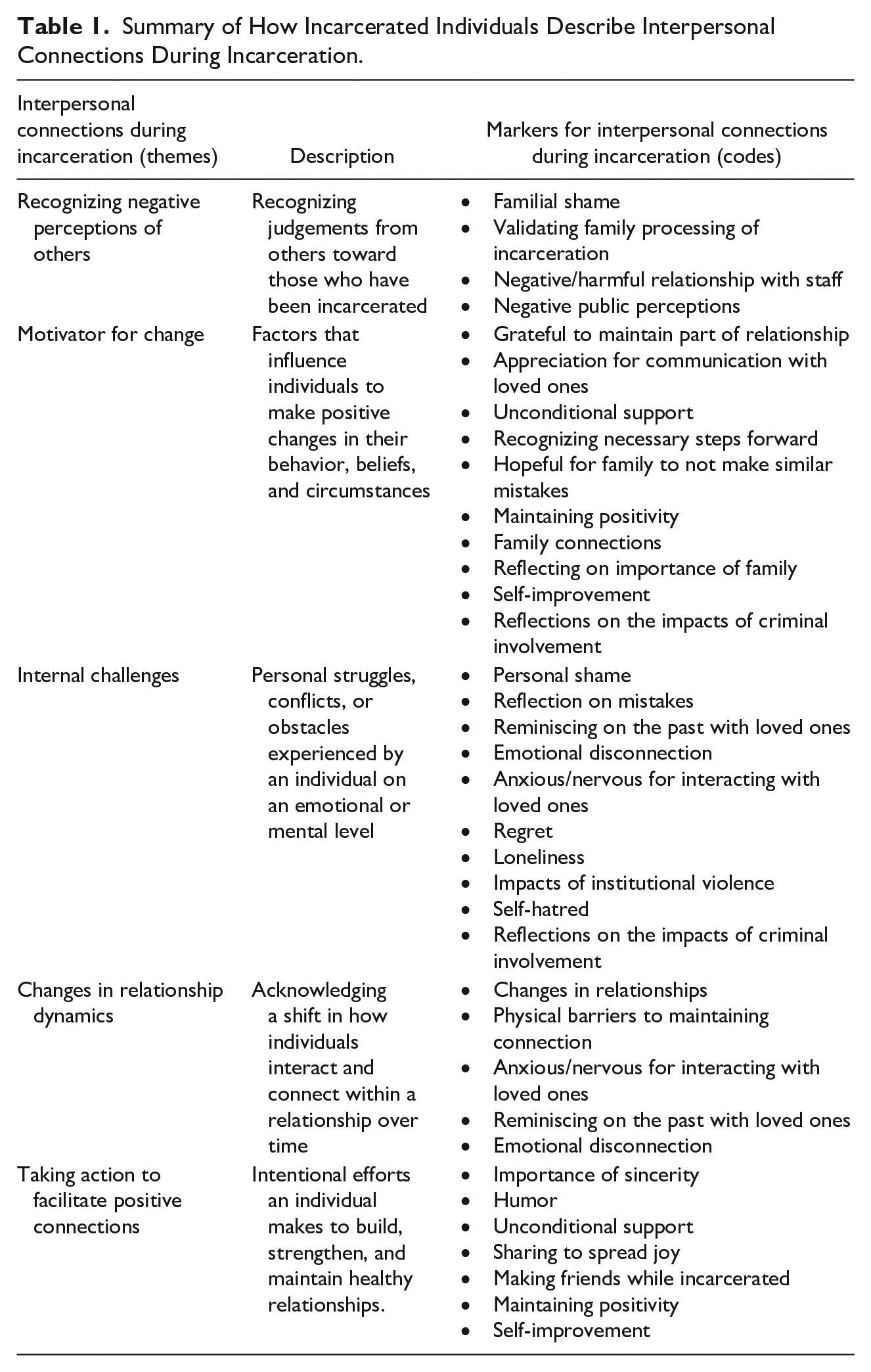
The purpose of the present study was to explore the following research question: How do incarcerated individuals within Canadian prisons describe their experiences of developing and maintaining interpersonal connections? Upon analyzing the data from the Out of Bounds newsletters, five distinct but overlapping themes were identified by the research team: (a) Recognizing Negative Perceptions of Others; (b) Motivator for Change; (c) Internal Challenges; (d) Changes in Relationship Dynamics; and (e) Taking Action to Facilitate Positive Connections. The identified themes are described below, including excerpts from selected items which illustrate the rich essence of each theme. Table 1 provides additional information on the identified codes and finalized themes.
Summary of How Incarcerated Individuals Describe Interpersonal Connections During Incarceration.
Theme 1: Recognizing Negative Perceptions of Others
Items within the dataset which reflected narratives detailing the challenges of interpersonal connection due to negative perceptions from others were collected for the present theme. Written work within this theme described various difficulties that can arise from the perceived and anticipated stigma held by community members and correctional staff. As described in the quote below, items noted the difficult balance between maintaining a connection with family members and having to understand and acknowledge the shame that family members may feel: “The harsh reality for most imprisoned parents, men and women alike, is the fact that many children become ashamed of their imprisoned mothers and fathers” (Lewis, 2022, pp. 20–21).
Similarly, items focused on the impact that negative perceptions and stereotypes from the public may have on incarcerated individuals’ perception of themselves and, therefore, the difficulties in gaining fruitful relationships. Importantly, many items discussed the experiences of hearing, internalizing, and accepting negative perceptions that others attribute to them. For example, one article noted: “When I entered prison, I realized that many people suddenly saw me as trash. Every day we hear continual pages over the loudspeaker like ‘offender so and so to their P.O.’ Offender this and offender that.” (Reid, 2020b, pp. 9–11).
Within this theme, it was evident that family members often experience high levels of distress as a result of familial incarceration, and a common challenge described in the items involved difficulties with understanding and accepting their loved ones’ imprisonment. Furthermore, some items described the necessity of developing an understanding that family members may navigate a loved one’s incarceration differently and may require additional time, support, and patience prior to continuing with the relationship. Discussions of the need for incarcerated individuals to validate and understand the unique pathways that each loved one may follow, despite the difficulties, hurt, and sadness that this may cause were prominent: “. . . However, after much ruminating on the subject, I was able to humble myself and realize that she has all rights to feel the way she does” (Lewis, 2022, pp. 20–21).
Theme 2: Motivator for Change
The second theme encompassed narratives from incarcerated individuals describing connection and relationships as being an influential motivator in their pursuit of a changed prosocial life. The included items noted how being surrounded by an emotionally stable adult attuned to their needs and with whom they share a strong bond can increase their drive for change. Items discussed the importance of family, being appreciative of all maintained connections, and being grateful to be involved in their loved one’s lives. In addition, the present theme illustrated how connections with others can be the main driving force behind the desire for rehabilitation. In the poem “Desire, Desire,” Reid (2016, p. 46) described how connection with others and feeling a sense of purpose motivated them to change: Desire, Desire, what happened I cannot pretend Together as community, in love, is the only way to mend. A child of God, a husband, father, son, neighbour, and brother Is what I am and not any other. To desire and to be desired Is what burns my heart’s fire While to be free and useful once again Is what drives me to mend
In addition, some items described how one’s outlook and perspectives on relationships and life can change due to institutionalization. Evidently, some incarcerated individuals felt as though incarceration provided them with opportunities and experiences that directly contributed to their ability to foster more authentic and honest connections with others. In the present study, items discussed how the time spent incarcerated allowed for room to grow, learn, and improve their understanding of relationships.
Learning to communicate, to really listen to your friends and others can strengthen bonds and help you meet your needs, and theirs. Helping yourself by attending NVC [Non-Violent Communication], gaining personal insights and growing as a person will make you a better friend. I feel I have more to offer any relationship, personal or professional now than I ever did on the outside. (Anonymous, 2019a, pp. 25–26)
Lastly, it was evident from the data that experiencing incarceration can instill hope that family members and friends may learn from the mistakes they have made. Individuals’ written work suggested that incarceration may provide an opportunity for stability and reparation of familial relationships, contributing to a recognition of the importance of learning from past mistakes and preventing similar patterns in future generations. Reflecting on visitations with her sons while incarcerated, Bird (2018, pp. 45–46) wrote the poem entitled “60 Minute Visits”: But ‘ And no matter what feelings, this day we’ll get through I know it is shameful to have to come to this place But just maybe this visit will teach you not to repeat mom’s mistakes Know this experience has taught me, mistakes come with a cost Many people get hurt, and many relationships lost As much as I regret mine, all I can do Is learn from my failures, and I hope you do too.
Theme 3: Internal Challenges
The third theme focused on the emotional, mental, and internal challenges that can shape the ability of incarcerated individuals to develop and maintain connections with others. This theme noted that, despite the various physical barriers to connection, incarcerated individuals can also experience an internal battle that may impact relationships. For example, regret, shame, and emotional disconnection were factors found to be involved in incarcerated individuals’ relational experiences with others. Notably, many items within this theme described feelings of loneliness and isolation due to incarceration, which created challenges with connection. The following quote helps to showcase the influence of loneliness on family relationships: As Christmas drew near, the loneliness and depression grew. This year, there were three phone calls (to Mom, Dad, and my brother), very few pictures, no text messages (just Christmas cards), no bowls to smoke, no family gathering, no hometown friends to visit, and no affection from my pets. This year, my freedom to experience these things was forfeited. I was left with reminiscences and dreams. (Michael, 2016, pp. 29–13)
A prominent feature within this theme involved discussions of institutional violence and how these experiences can alter relationships. In many prisons, violence, aggression, and intentional harm to others can be a constant factor that incarcerated individuals experience (Sapers et al., 2018). While these experiences can cause lasting effects on an individual’s mental health, physical health, and well-being (Folk et al., 2019), several items demonstrated how institutional violence can negatively impact relationships with others, specifically when a close other is victimized by such violence: Apparently, he wanted to return to the maximum, where he thought there was more structure, and decided it would be more favourable to him to stab and almost kill my cellmate than to cope with his—then-current circumstances. . .I was diagnosed with PTSD. (Gottlieb-Rosenwasser, 2023, pp. 8–11)
Despite these challenges, items also described the importance of reminiscing on the past and the benefits that can be drawn from this. Some incarcerated individuals reflected on positive and happier times that brought peace, which acted as an indirect method to maintain connections. In the following quote, the author describes his ability to reflect on his past as being akin to a superpower: My days are generally spent reflecting on the life I’ve lived. Where and when things went wrong and how I got myself so dispositioned? I’m luckier than most, though, because I’ve discovered that my mind is a time machine. Even though it’s very hard to control, it usually takes me back to when, and wherever it wants, I’m happy to have it. (B, 2018, pp. 28–31)
Theme 4: Changes in Relationship Dynamics
The fourth theme encompassed written work which described how limited opportunities for connection with loved ones may impact relationship dynamics with those who remain in the community. Illustrating these challenges, this theme described how incarcerated individuals may struggle to come to terms with the immanent changes within their relationships. For example, when discussing the relationship with their daughter, Lewis (2022, pp. 20–21) shared: I have come to understand and accept that my daughter is entitled to form her own opinions surrounding mine and her relationship. This was difficult for me to fathom in real time-partly due to the pre-carceral relationship we had.
Moreover, the decreased opportunity for connection is further inhibited due to the physical barriers that are in place, such as the cost of phone calls, the challenges with receiving visitation rights, and low literacy levels that can limit one’s ability to write letters to loved ones. The collected items identified an array of barriers that both the incarcerated individual and their loved ones must navigate to maintain connection. An excerpt from one item illustrates these extensive hurdles that must be overcome: . . . the constant scrutiny from staff when they come to visit, ion scan testing positive because your visitor touched money or smoked a little weed, the constant resending documents to upkeep visitor applications, the attitude/ disrespect given to visitors when they call to book visits or when they arrive for one, the “lost” letters sent by friends and family, the abuse family members have to endure vicariously through the imprisoned whether physical, verbal or mental, the tactical “administrative” delays. . . and the long list of feelings of resentment that families feel towards their imprisoned loved ones for not being there in the physical to help with everyday life problems. (Lewis, 2022, pp. 20–21).
Lastly, as a result of having limited contact with loved ones, incarcerated individuals can experience strain on their pre-carceral relationships. Items identified that this strain might develop from the actions that led to their imprisonment, as family members may struggle to accept the complex history of criminal involvement. In addition, relationship strain may also develop from the often-extensive amount of lost time, therefore impeding opportunities for bonding and connection. As a result, items identified that visitation with loved ones can result in feelings of anxiety and nervousness. These challenges can be summarized by the following excerpt by Bird (2018, pp. 45–46) collected within the sample: The years that have passed, I cannot replace But, this “Hour” I have, I will fully embrace I don’t know how it will go? Will it be awkward, or fun? Or will you be sitting there wondering when the visits are done? I’m not sure how you’ll feel? I’m not sure I should ask I’m not sure how l’ll act, now that so much time has passed I know you’ll wish I were different, like the other kid’s moms And inside your both angry for the things I have done.
Theme 5: Taking Action to Facilitate Positive Connections
Finally, the fifth theme encompassed the idea of taking action to connect with others and recognizing one’s responsibility and role in developing and maintaining fruitful relationships. While the previous themes described the challenges and motivators of connection, the present theme details instances of taking action to facilitate connection through sincerity, humor, sharing, unconditional support, and positivity. When detailing how humor can facilitate a connection that is sincere and meaningful, one item noted: The reason I choose to insert humor. . . is to take the interaction to the next level. . . I would rather say “Hey, did you hear that one about. . .” and have a sincere response. . . as I can use this to have a more sincere relationship than empty conversation. (Reid, 2020a, p. 44)
Similarly, a prominent feature of this theme involved discussions of striving for self-improvement to directly increase one’s ability to engage in positive relationships. Written work within this theme articulated the importance of social connection to promote desistence from crime, with some items demonstrating the value of taking action to ensure that one can be better equipped to approach relationships in the future: Like a tree with no fruit, I needed to show everyone around me that I am not a piece of trash. . . I am not the man I want to be but thank God I am not the man I used to be. After seeing the undeniable proof that I was on the right track and that I was bearing fruit I had the opportunity to build trust and my relationships with my new institution.. I joined the Inmate Committee. . . I participate in and lead many groups. I hold positions of trust. I help out when I can and where I can. (Reid, 2020b, pp. 9–11).
Finally, an overall appreciation for friendships and peer connection within prison was noted throughout the analyses. Given that communication and connection with loved ones outside of the prison can be challenging, there is a need for incarcerated individuals to build connections with others who reside in the prison to alleviate feelings of loneliness and isolation. Despite the various challenges identified in the previous themes, items within this theme acknowledged the existence and power of relationships while incarcerated. The following item summarizes these concepts in rich detail: Relating to each other in such a way builds trust and a supportive atmosphere. Only a few months ago we were strangers and now we encourage one another. And as we relay what that dark past was like we no longer allow it to consume us. We now look to the future. (Anonymous, 2019b, p. 30)
Discussion
The present paper explored how incarcerated individuals experience interpersonal connection throughout their prison sentences. While extant literature has explored connections and relationships within prison (i.e., Apel et al., 2010; Otsu, 2024), limited research exists on the challenges of navigating relationships from the perspective of those who are incarcerated. Hearing from those whose voices often remain unheard is crucial in expanding research to be inclusive, accessible, and equitable. Through a newsletter platform, incarcerated individuals shared stories and poetry to voice their perspectives and provide much-needed insight into the challenges and barriers during incarceration. By analyzing the newsletter publications, results from the present study allowed for a better understanding of the factors which may impede the development and maintenance of interpersonal connections for incarcerated individuals.
Notably, results from the present study echo previous research describing various challenges to maintaining interpersonal connection during incarceration, such as family members’ physical distance from prison, having limited time for visitation, administrative delays for documentation, and/or limited financial resources (Folk et al., 2019; Otsu, 2024). With interpersonal connection being an ever-present aspect of most people’s lives (Laing, 2023), having limited opportunities for connection during incarceration can alter relationship dynamics and impact desistance from crime upon release (Aresti et al., 2010; Otsu, 2024). In addition, social exclusion and the elimination of relationships can be among the most devastating experiences one can endure (James, 1890; Narayanan et al., 2013). As reflected in our findings, both emotional and physical challenges can arise for incarcerated individuals as a result of negative attitudes and perceptions from others (Moore et al., 2016; Narayanan et al., 2013). Within the newsletters, incarcerated individuals shared how their loved ones were “ashamed,” they were perceived as “trash,” and were continuously referred to as an “offender” which impacted their relationships and increased internalized self-stigma.
Despite the abundance of challenges identified within the present study, our analyses also highlighted the vital role of interpersonal connections in facilitating positive life improvements and providing motivation for desistance from crime. Interpersonal connection increases protective factors that support and motivate individuals through adversities such as incarceration (American Psychological Association, 2020). For an individual experiencing incarceration, cultivating social connections can normalize and validate the complex feelings that may be present in times of adversity (Folk et al., 2019). Family, community members, and peers can contribute to developing problem-solving skills, motivation, and relational skills, allowing those experiencing incarceration to adapt to, and follow, a prosocial life with prosocial relationships (Liu et al., 2016). By better understanding how individuals navigate connections during incarceration, we can recognize the need for attachment, involvement, and commitment to relational success, contributing to their belief in the value of a pro-social lifestyle during and after incarceration, as noted in Social Bond Theory (Hirschi, 1969). The importance of social bonds was directly illustrated by two themes within the present study, Motivator for Change and Taking Action to Facilitate Positive Connections. For prosocial attachments to continue during incarceration, an individual must be committed to relationship maintenance through consistent communication, visitation, and/or writing. In addition, social support can further encourage involvement in prosocial activities and pro-social beliefs, which help develop and build upon skills necessary for successful community reintegration.
Recommendations for Practice
Findings from the present study provide valuable implications for correctional practices to improve social interactions, foster positive connections, promote positive self-perception, and contribute to desistance upon reintegration. For example, reducing stigmatization through the implementation of educational training, specifically directed at individuals in frequent contact with those incarcerated (i.e., correctional staff), may strengthen motivation to facilitate positive connections and opportunities for prosocial change. Additionally, as indicated in our findings and aligning with previous research (Otsu, 2024), social ties and visitations from family members affect motivation for desistance and recidivism outcomes both directly and indirectly (i.e., increase in employment and housing security). As a result, implementing supportive and educational programming for family members may assist in navigating a loved one’s imprisonment and contribute to the reduction of barriers to visitation.
Furthermore, implementing structured programming within prison settings focused on relationship-building/re-building, communication skills, and self-improvement could be beneficial to the development of skills related to maintaining healthy relationships, promoting mental wellness, and continuing on a prosocial trajectory (Asghar & Iqbal, 2021; Diener & Diener McGavran, 2008). Overall, it was evident in our findings that mental health, isolation, and loneliness are obstacles often faced by incarcerated individuals. Ensuring mental health services are accessible and that strategies are in place to mitigate loneliness during incarceration (e.g., group activities, creative arts, peer mentorship, responsibility initiatives) could effectively increase connection among those incarcerated. Providing incentives and recognition for those who choose to engage in such programming, as well as for those who take on leadership roles, could increase participation and promote commitment to long-term achievements.
Limitations
Despite the various implications for research and practice within the present study, several limitations exist. First, the present study only analyzed newsletters published by a single Canadian institution. Although Out of Bounds remains the most prominent and consistent penal newsletter to date, the results of the present study may not be generalizable to all correctional institutions and incarcerated individuals. In addition, the Correctional Service of Canada must review and restrict what can be shared within the Out of Bounds newsletters, potentially inhibiting raw, realistic, and honest accounts of their experiences. Specifically, it can be assumed that written work discussing negative experiences with staff and/or negative perceptions of the Correctional Service of Canada were excluded from publication. Lastly, incarcerated individuals may face extensive barriers in contributing to the newsletters, such as literacy levels, challenges in showcasing vulnerability on a public platform, willingness and drive to contribute, and overall interest in sharing their experiences with others. As a result, the present study likely did not capture all perspectives of incarcerated individuals at Canadian correctional institutions.
Future Directions
The present study represents a unique and emerging avenue for research that future studies may explore. Using penal newsletters to understand the experiences of incarcerated individuals has provided a fruitful method of research. However, given that the present study only explored textual data within the Out of Bounds newsletters, future research may explore the meanings and messages behind the artwork included within penal newsletters to gain a richer and more robust understanding of the experiences of incarcerated individuals. In addition, broadening the scope of the present study could provide insightful conclusions. While the present study used publicly accessible data, in-depth interviews may provide a greater understanding of the experiences of incarcerated individuals. Similarly, the current study could be expanded to explore how loved ones navigate developing and maintaining their relationship with their incarcerated family member. Providing an account of either narrative could give a holistic understanding of the value of interpersonal connections. Finally, future research may seek to explore the feasibility and effectiveness of the previously discussed practice recommendations to strengthen interpersonal connectedness within correctional institutions.
Conclusion
The present study explored how incarcerated individuals at Canadian prisons describe navigating relationships and connectedness throughout their imprisonment. Altogether, by examining how interpersonal connection is developed and maintained during incarceration, we found that minimal opportunities and extensive barriers exist, thus negatively impacting the mental well-being of those incarcerated. Without strong prosocial connections, a cyclical process may occur where individuals become less willing and able to develop relational skills and connections with others, leading to decreased well-being and further inhibiting opportunities for community success and desistance. Aiming to contribute to a stronger understanding of the complexities in navigating interpersonal connections and the value of relationships during incarceration, results from this study hope to inform policies, programming, and resources on the need for additional support to advocate for greater opportunities for connection within prison.
Footnotes
Acknowledgements
The authors would like to thank the individuals who submitted their written work to the Out of Bounds newsletters and the staff members of the Gaucher/Munn Penal Press for providing an open-access archive for the newsletters to be accessible. The authors also thank Dr. Eden-Raye Lukacik for overseeing the development of this research.
Declaration of Conflicting Interests
The author(s) declared no potential conflicts of interest with respect to the research, authorship, and/or publication of this article.
Funding
The author(s) received no financial support for the research, authorship, and/or publication of this article.
Ethics Approval Statement
According to the Tri-Council Policy Statement (2022), given that the data was publicly available, research ethics approval and participant consent to collect, analyze, and publish the data was not required.
Consent to Participate
Not applicable.
Consent for Publication
The Gaucher/Munn Penal Press provided consent for the publication of the names of the article authors.
Data Availability Statement
The raw data analyzed for the current study may be accessed through the Gaucher/Munn Penal Press online database. The specific data collected and analyzed during the current study may be available from the corresponding author upon reasonable request.
