




Abstract
Justice-involved adolescents are at increased risk for poor academic outcomes and reoffending. However, strong bonds with teachers have been shown to promote academic success and encourage desistance. The current study examined whether more hopeful future expectations mediated the association between student-teacher relationships and justice-involved adolescents’ offending and grades, respectively, using data from a longitudinal study of male youth recruited after their first arrest. Findings revealed that stronger student-teacher relationships predicted more positive future expectations which, indirectly, predicted better grades and less offending. These findings underscore the mechanism by which justice-involved adolescents’ school connectedness cultivates hopeful expectancies for the future, which can deter delinquency and promote academic success. Implications for fostering these relationships during re-entry for justice-involved adolescents are discussed.
Introduction
Adolescents’ first arrest can have lasting consequences on their well-being (Cauffman et al., 2023). Entering the system often perpetuates a cycle of reoffending that can persist well into adulthood (Beardslee et al., 2019; Bersani et al., 2022; Liberman et al., 2014). Furthermore, the disruptive nature of arrest can also yield collateral consequences for adolescents’ academic performance, one of the most salient goals of this developmental period. Justice-involved adolescents are at heightened risk for lower academic achievement (Brown et al., 2008; Gertseva & McCurley, 2019; X. Wang et al., 2005) and dropping out of school entirely (Hirschfield, 2009; Kirk & Sampson, 2012). Importantly for justice-involved populations, poorer academic performance is associated with greater delinquency. These youth seem to disengage from their academics, as research suggests that justice-involved youth report lower expectations for success in the future relative to uninvolved youth (Oyserman & Markus 1990; Wilson & Daly, 2006). Holding these low expectations has been linked to reoffending and poorer grades for up to 3 years following youths’ first arrest (Mahler et al., 2017). The pivotal role that these expectations play in the lives of youth both immediately and in the long-term following their first arrest necessitates the exploration of factors that may cultivate more positive expectations that then, indirectly, promote desistance from criminal behavior and academic success.
Decades of research have identified teachers as influential figures in the lives of students. Lerner et al. (2005) describe positive student-teacher relationships (STRs) as important sources of support for adolescents. Indeed, adolescents who feel more connected to their teachers perform better academically (Quin, 2016) and are less likely to engage in criminal behavior (Obsuth et al., 2021). Students’ views of their own potential (e.g., self-efficacy) are largely impacted by their teachers (Jederlund & von Rosen, 2022; Mitchell & DellaMattera, 2011). These relationships seem to motivate youth to desist from crime and allow for greater academic performance in school. Students’ greater expectancies for success that positive student-teacher relationships encourage may be the mechanism through which these benefits are observed. These relationships may serve as important pathways for positively reengaging youth after their initial contact with the justice system by cultivating optimistic expectations for the future, although this has not been directly tested in past research. Therefore, the current study examines whether future expectations mediate the association between student-teacher relationships and both offending and grades, respectively.
The Importance of Expectations
While not directly tested by past research, Snyder’s Hope Theory supports the potential role of STR in promoting hopeful expectancies for the future, which then promote self-efficacy, determination, and, ultimately, achievement (Snyder, 2002). This theory posits that youth with more optimistic expectations are more likely to successfully pursue their goals. These expectations encompass success in academic performance, occupational attainment, crime desistance, or interpersonal bonds (Nurmi, 1991). Adolescents often adjust their behaviors to match these beliefs (Andre et al., 2018; Sipsma et al., 2011). For example, justice-involved youth engage in behaviors that are consistent with the expectations they have for themselves such that those with greater expectations for the future engage in less offending (Iselin et al., 2011; Na & Jang, 2019). Mahler et al. (2017) observed a similar pattern in the academic performance of justice-involved youth, with greater expectations predicting better grades across a 3-year span. Thus, cultivating these expectations is critical to setting justice-involved youth on more positive trajectories.
Student-Teacher Relationships and Justice-Involved Youth
Retrospective accounts from justice-involved youth suggest that negative relationships with their teachers were particularly salient contributors to their poor academic performance and their offending behavior. For example, Reed and Wexler (2014) conducted a series of focus groups and surveys with justice-involved youth to gauge their recollection of their educational experiences. Participants often reported that their teachers did not care about them, which, in some accounts, was cited as the reason they gave up in school. Another participant expressed feeling that no one had hope for them upon re-entering public schooling which contributed to their decision to ultimately stop trying. Interestingly, Sander et al. (2010) found that STRs impact youth for better or worse, with justice-involved youth seeming to internalize both negative and positive interactions in their recounts. In addition to moments where they felt disregarded by teachers, youth also expressed appreciation for teachers who were attentive and helpful. When reflecting on past experiences that could have promoted their desistance, justice-involved youth identified teachers as some of the most important figures who could have helped them desist from future offending (Barnert et al., 2015). Taken together, justice-involved youth perceive their teachers as important figures that they believe can make a difference in both their grades and the offending they engage in, which extant literature supports.
Student-Teacher Relationships, Outcomes, and Expectations
Youth with more positive social connections tend to fare better behaviorally in terms of both grades and behavior, whether that is connections with peers (Shao et al., 2024; van Hoorn et al., 2014) or parents (Boonk et al., 2018; Hoeve et al., 2009). Similarly, youth that feel more connected to their teachers perform better academically (Ansari et al., 2020; Klem & Connell, 2004; Roorda et al., 2011). A systematic review of extant literature concerning STRs and academic performance observed these same patterns in both cross-sectional and longitudinal studies (Quin, 2016). More positive STRs also have been shown to deter delinquent behavior in adolescence (Rudasill et al., 2010; Stracuzzi & Mills, 2010; Theimann, 2015; Tiet et al., 2009; M.-T.Wang et al., 2013). These desistance-promoting effects appear stable over time. Obsuth et al. (2021) observed that youth who reported better quality STRs in childhood reported subsequently engaging in fewer delinquent acts at ages 13, 15, and 17 years. Altogether, teachers play a significant role in the behaviors of adolescents, warranting further understanding of how these bonds affect youths’ orientations toward the future and their goals which then leads to these outcomes.
Snyder’s (2005) Hope Theory emphasizes the role of caring teachers in enhancing students’ expectations for success in the future. In this framework, students who learn in environments where they feel invested or connected to their teachers are more likely to believe that they can achieve their goals. Indeed, several investigations have identified significant associations between stronger student-teacher relationships and greater hope in students (Bryce et al., 2022; Quin, 2016; Van Ryzin, 2011). Positive STRs have the potential to indoctrinate more hopeful beliefs in youth, which facilitates healthy transitions and adaptation across the lifespan (Morton et al., 2013; Perera & McIlveen, 2014). Perhaps, these resulting expectations are responsible for the academic achievement and desistance observed among youth with stronger STRs. As suggested by Hope Theory, stronger teacher bonds may engender greater hope among youth which, in turn, promotes academic achievement and reduces the likelihood of offending. Overall, these relationships may promote youth development through these greater expectations.
The Current Study
Based on this past research, the present study tests a key assumption of Snyder’s Hope Theory by testing whether future expectations are the mechanism by which the relationship between teacher-student relationships and both offending and academic performance within a sample of adolescents arrested for the first time. Specifically, we hypothesized that more positive STRs would be associated with greater future expectations, which would, in turn, subsequently predict less offending and better grades, respectively, over the year following a youth’s first arrest.
Methods
Sample
Participants in the current study were 1,216 male adolescents (age 13–17 years; Mage = 15.28) enrolled in the longitudinal Crossroads Study (Cauffman et al., 2021). These participants were recruited after their first arrest from three locations: Jefferson Parish, Louisiana (n = 151), Orange County, California (n = 532), and Philadelphia, Pennsylvania (n = 533). The sample was racially and ethnically diverse (47% identifying as Latino, 38% identifying as Black/African American, and 15% as White). Youth were interviewed immediately after their first arrest (within 6 weeks of the disposition from their first arrest) and then 6- and 12-month later. Retention at these interviews was excellent with 95.6% of participants completing the 6-month interview and 93.8% of participants completing the 12-month interview. This design allowed us to test whether youths’ relationships with teachers after their first arrest experience (baseline) would then influence their expectations for success 6 months later and their subsequent academic achievement and offending 12-months later.
Procedure
All study procedures were approved by the Institutional Review Board (IRB) at each of the three study sites. To protect participants’ identities and ensure confidentiality, a Privacy Certificate issued by the Department of Justice was obtained to prevent any involuntary disclosure (e.g., subpoenas or court orders) of research information. Research personnel were given contact information for youth who were arrested for mid-level offenses by the courts in each jurisdiction. Signed parental consent and youth assent were obtained from each participant before conducting interviews. Participants were informed of the voluntary nature of their participation (i.e., participation would not influence their treatment by the justice system) and were informed of all procedures, including the follow-up interviews. These 2 to 3 hour interviews were conducted in-person or virtually using a secure, computer-administered program. Participants were compensated for each interview, with payment amounts increasing with each subsequent interview to promote study retention (see Cauffman et al., 2021 for a detailed description of study protocol and procedures).
Measures: Primary
Student-Teacher Relationships
Teacher bonds at baseline were measured using the School Experiences Scale (adapted from Cernkovich & Giordano, 1992) where youth respond from 1 “strongly disagree” to 5 “strongly agree” regarding several statements about their teachers such as “I like my teachers” and “most of my teachers treat me fairly.” A mean of these items is calculated, with higher scores indicating more positive relationships with teachers. The internal consistency of these items in the current sample was modest (α = .67).
Future Expectations
Youths’ expectations at the 6-month follow-up were assessed using the 7-item expectation subscale of the Perceptions of Opportunities scale (adapted from Menard & Elliott, 1996). Participants responded on 5-point scales ranging from “Poor” to “Excellent” to questions asking what they believe their chances are of succeeding in multiple domains (e.g., graduating from college or staying out of trouble with the law). A mean score was calculated to create an overall future expectations score with higher scores indicative of a more positive outlook. The internal consistency of these items in the current sample was excellent (α = .91).
Grades
Youth self-reported their grades during school at the 12-month follow-up on an 8 point scale from 1 “mostly below Ds,” 2 “mostly Ds,” 3 “about half Cs and half Ds,” 4 “mostly Cs,” 5 “about half Bs and half Cs,” 6 “mostly Bs,” 7 “about half As and half Bs,” and 8 “mostly As.” Students’ subjective reports of their grades has been shown to be highly correlated and consistent with objective measures as well (Sticca et al., 2017).
Offending
To measure offending, we used youth self-report of offending (SRO; Huizinga et al., 1991) whether they engaged in 24 different illegal behaviors at the 12-month follow-up such as fighting, assault, gang violence, or carjacking. The measure assessed whether they had engaged in any of these offenses during the 6-month period prior to the follow-up interview. The frequency of endorsed offenses was highly skewed, with most participants reporting committing no or few offenses. Thus, a binary score was calculated indicating whether or not a participant had engaged in offending.
Measures: Baseline Covariates
Demographics
Demographic characteristics such as participants’ race/ethnicity, age, intelligence quotient (IQ), processing type, and their parents’ highest level of education were used as covariates.
Prior Grades
In the model examining grades as the outcome, participants’ grades at baseline were included to account for their prior grades.
Prior Offending
In the model examining offending as the outcome, participants’ self-reported offending at baseline was included to account for their prior levels of offending.
Truancy
Youth who are truant have greater opportunities to offend and typically perform worse in school due to their absence (Rocque et al., 2016). A five-item scale was used to measure school truancy at baseline such as “cut or skipped school” or “in trouble for missing too many days” (Cernkovich & Giordano, 1992). Participants responded on a 5-point scale (0 “never” to 10 “10 or more times”) regarding how frequently these items occurred. Higher scores were indicative of greater school truancy. The internal consistency of these items in the current sample was modest (α = .69).
Parental Monitoring
Youth who are more closely monitored by their caregivers have less opportunity to offend (Flanagan et al., 2019) and are more school-oriented (Castro et al., 2015). Parental monitoring at baseline was measured using the Parental Monitoring Inventory (Steinberg et al., 1992) which assesses the extent to which parents know who adolescents spend time with or where adolescents go. Higher scores indicate greater parental monitoring. The internal consistency of these items in the current sample was excellent (α = .84).
Peer Delinquency
Adolescents are especially susceptible to peer influence and are more likely to engage in delinquency if their peers do (Gallupe et al., 2018) and disengage from school (Ahn & Trogdon, 2017). The Association with Deviant Peers scale was used to measure participants’ affiliation with peers who engage in delinquency at baseline (Thornberry et al., 1994). Participants state the proportion of their friends that engage in delinquent behaviors such as carrying a gun or fighting. Higher scores were indicative of greater affiliation with peers who engage in delinquency. The internal consistency of these items in the current sample was modest (α = .92).
Neighborhood Disorder
Adolescents from more disorganized neighborhoods are more likely to perform worse in school (Woolley et al., 2008) and are at greater risk of offending (Wojciechowski, 2020). The physical and social composition of participants’ neighborhoods were measured using a 21-item scale. Higher scores were indicative of greater neighborhood disorder. The internal consistency of these items in the current sample was excellent (α = .93).
Analysis Plan
To test whether future expectations mediate the relationship between teacher bonds and both offending and grades, indirect effects models were estimated using Mplus 8.6 (Muthén & Muthén, 1998) for each outcome within a structural equation modeling framework. In all models, teacher relationships at baseline were used as the predictor and future expectations at 6 months were the mediator. The significance of direct and indirect effects of future expectations on each outcome was determined through bias-corrected bootstrapping (n = 5,000) at the 95% confidence interval (see Figure 1). To maximize available data, full information maximum likelihood estimation was used.
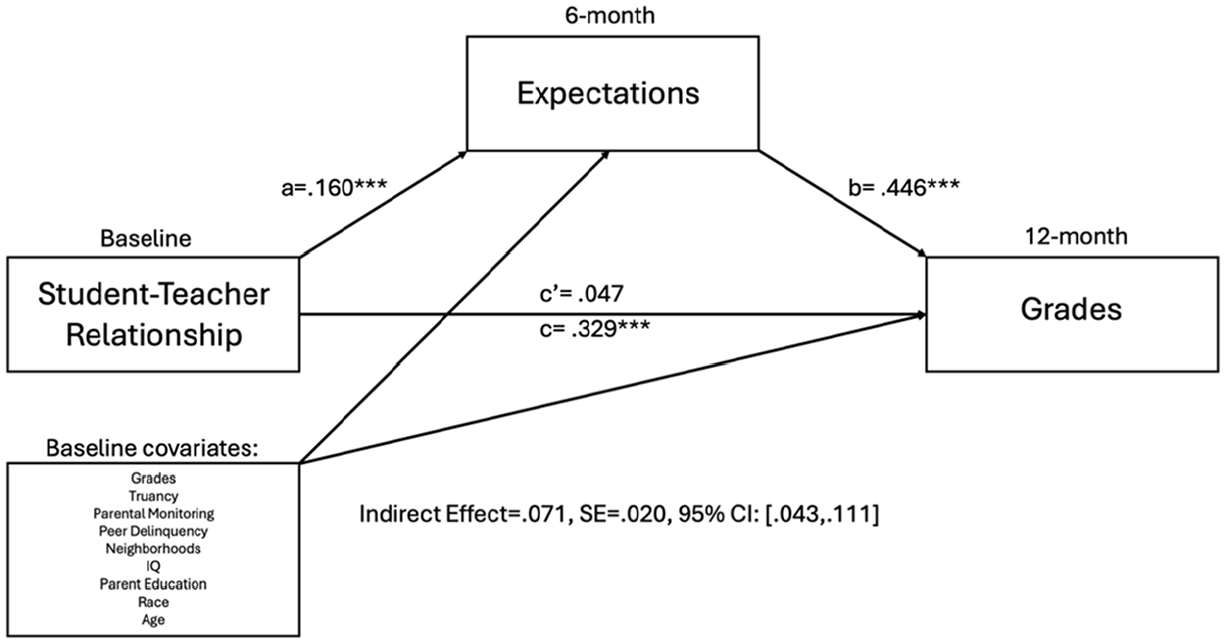
Mediation model with student-teacher relationships predicting grades. Path a represents the effect of student-teacher relationships at baseline on expectations at the 6-month follow-up. Path b represents the effect of expectations at the 6-month follow-up on grades at the 12-month follow-up. Path c’ represents the direct effect of student-teacher relationships at baseline on grades at the 12-month follow-up while controlling for expectations at the 6-month follow-up. Path c represents the total effect (both direct and indirect effects) of student-teacher relationships at baseline on grades at the 12-month follow-up. Through bias-corrected bootstrapping (n = 5,000) at the 95% confidence interval, the indirect effect of expectations at the 6-month follow-up on the association between student-teacher relationships at baseline on grades at the 12-month follow-up was significant.
Attrition Analyses
Attrition-specific analyses indicated that those who did not complete interviews at the 6 (n = 54) or 12-month follow-ups (n = 75) had lower grades (b = −0.012, p = .006) at baseline and lower student-teacher relationships (b = −0.019, p = .041). No other significant associations were observed.
Results
Descriptive Statistics
Table 1 includes descriptive statistics on all variables included in analyses. At baseline, the average of student-teacher relationships was 3.45 (i.e., “neither agree or disagree”) indicating fairly neutral relationships between students and teachers. Youths’ expectations, on average, were 3.82 corresponding to “good” expectations for the future. At the 12-month follow-up, youths’ average reported grades was 5.03, which corresponds to about half B’s and half C’s. At the 12-month follow-up, 41% of youth reported having engaged in offending.
Descriptive Statistics of Study Variables.
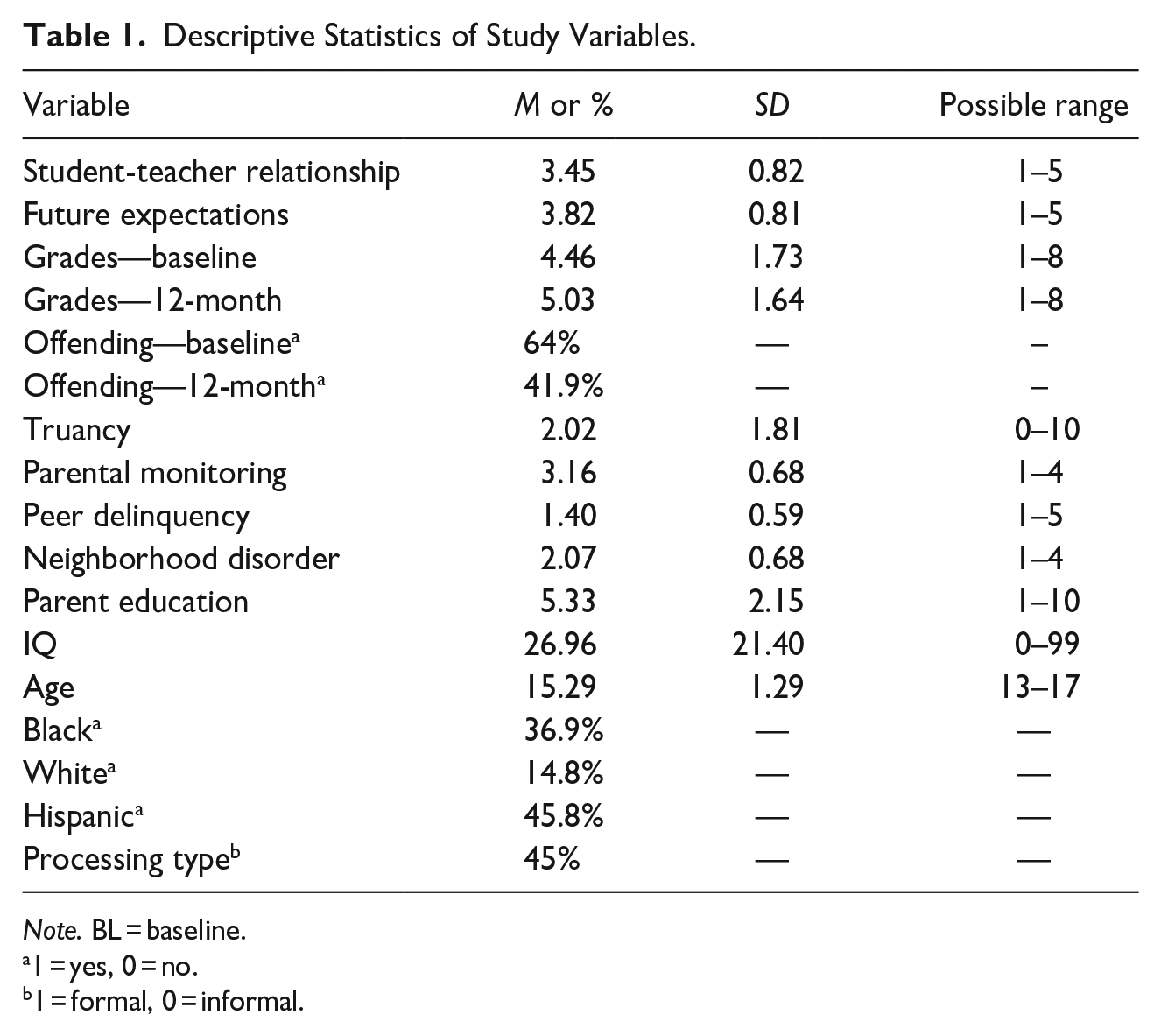
Note. BL = baseline.
1 = yes, 0 = no.
1 = formal, 0 = informal.
Correlations between study variables are presented in Table 2. Student-teacher relationships at baseline were positively associated with grades at 12 months such that greater STRs corresponded to higher grades. Student-teacher relationships at baseline were negatively associated with offending at 12 months such that greater STRs corresponded to less offending. STRs at baseline were positively correlated with future expectations at 6 months such that greater STRs corresponded to greater future expectations. Future expectations at 6 months were also significantly correlated with grades at 12 months, such that greater expectations corresponded to higher grades. Future expectations at 6 months were also negatively correlated with offending at 12 months such that greater future expectations correspond to less offending.
Correlations Between Main Study Variables.
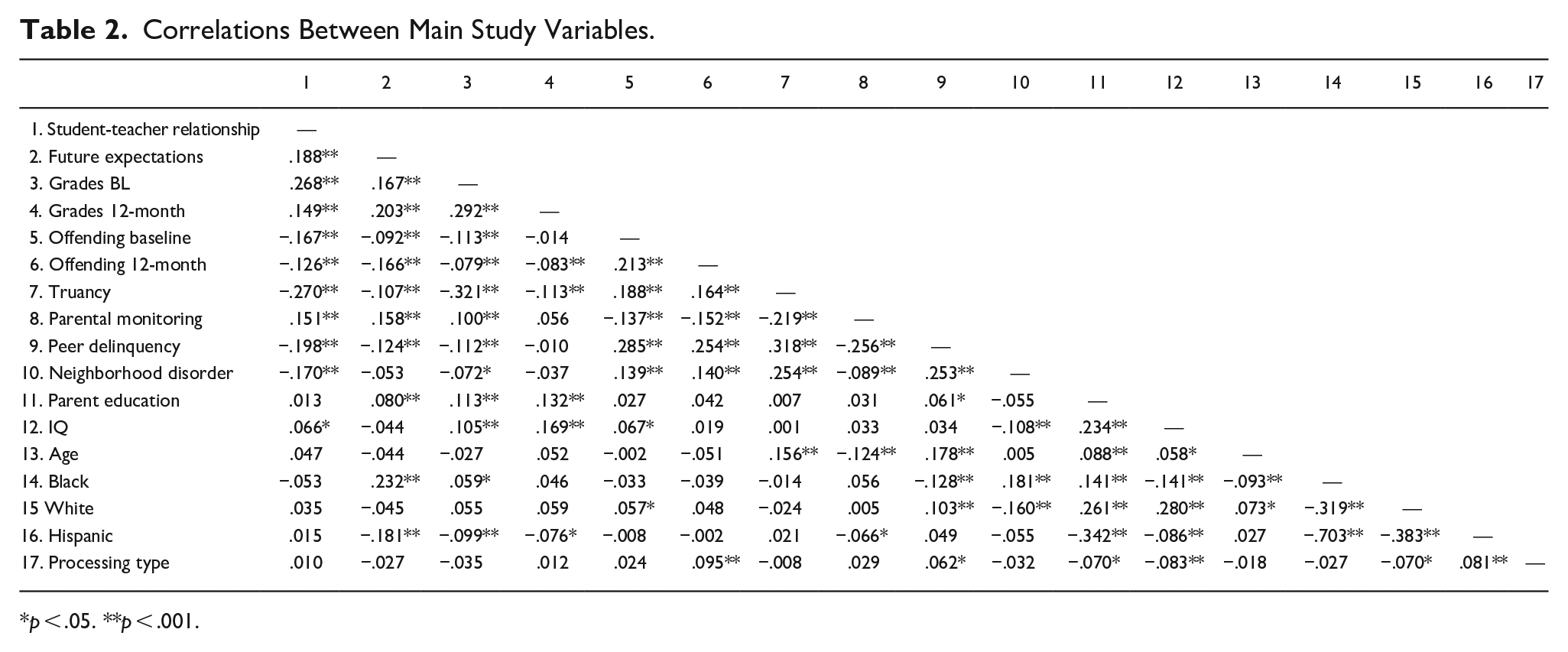
p < .05. **p < .001.
Grades
We examined whether the association between student-teacher relationships (STRs) at baseline and grades a year later was mediated by future expectations at 6 months. Prior to the inclusion of future expectations, the direct effect of student-teacher relationships on grades was significant such that more positive STRs were associated with better grades. Next, we examined the extent to which the direct association between STRs and grades was due to youths’ future expectations. Specifically, we tested whether more positive STRs were related to more positive future expectations and whether future expectations, in turn, were related to more positive grades. The indirect effect of STRs on grades through future expectations was estimated using bootstrapping with 5,000 samples. The analysis revealed that the mediating effect was significant, indicating that future expectations partially mediated the relationship between STRs and grades (see Figure 1, Table 3). These findings suggest that greater student-teacher relationships were related to greater future expectations which, was subsequently related to better grades.
Student-Teacher Relationship, Future Expectations, and Outcome Mediation Models.
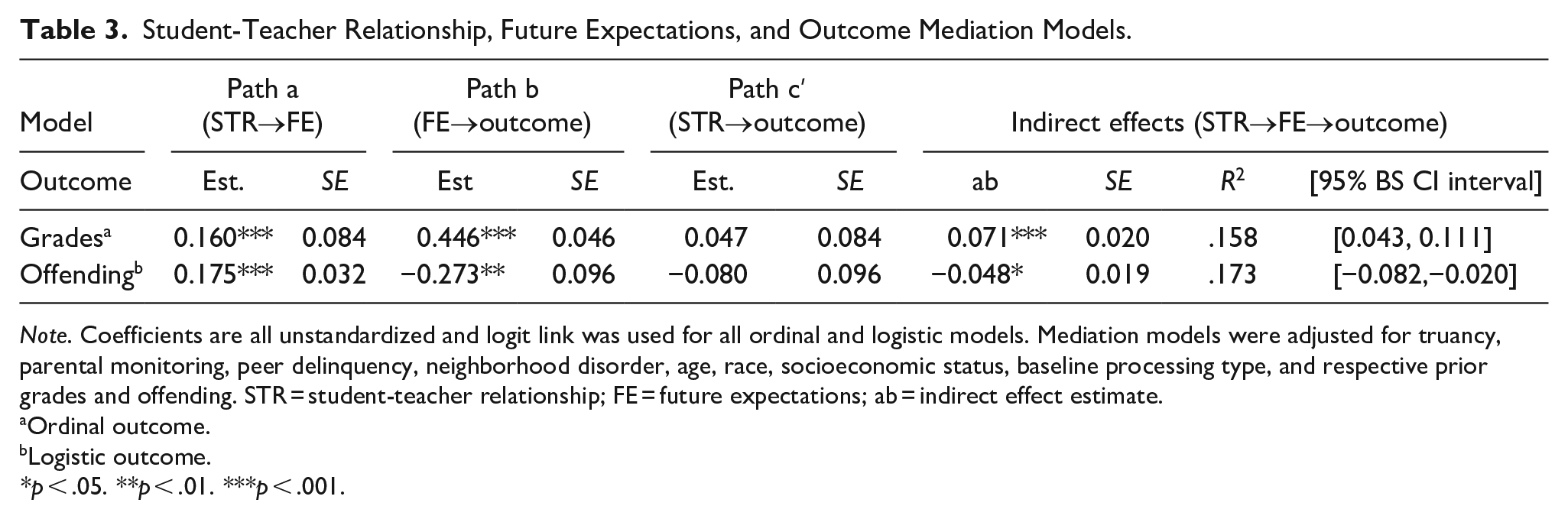
Note. Coefficients are all unstandardized and logit link was used for all ordinal and logistic models. Mediation models were adjusted for truancy, parental monitoring, peer delinquency, neighborhood disorder, age, race, socioeconomic status, baseline processing type, and respective prior grades and offending. STR = student-teacher relationship; FE = future expectations; ab = indirect effect estimate.
Ordinal outcome.
Logistic outcome.
p < .05. **p < .01. ***p < .001.
Offending
We also examined whether the association between student-teacher relationships (STRs) at baseline and offending a year later was mediated by future expectations at 6 months. Without including the mediating pathway through future expectations, the direct effect of student-teacher relationships was significant such that more positive STRs at baseline were associated with less offending 1 year later. The indirect effect of STRs on grades through future expectations was estimated using bootstrapping with 5,000 samples. The mediating effect was significant, indicating that future expectations partially mediate the relationship between STRs and offending (see Figure 2, Table 3). These findings suggest that greater student-teacher relationships were related to greater future expectations 6 months later, which, was subsequently related to less offending.
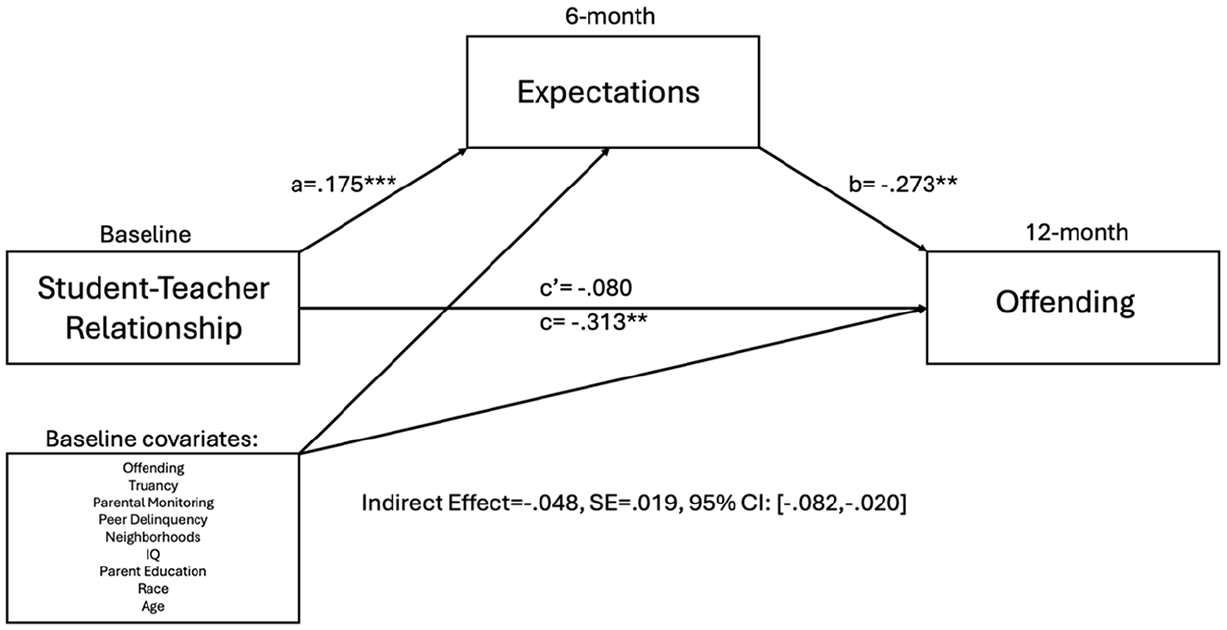
Mediation model with student-teacher relationships predicting offending. Path a represents the effect of student-teacher relationships at baseline on expectations at the 6-month follow-up. Path b represents the effect of expectations at the 6-month follow-up on offending at the 12-month follow-up. Path c′ represents the direct effect of student-teacher relationships at baseline on offending at the 12-month follow-up while controlling for expectations at the 6-month follow-up. Path c represents the total effect (both direct and indirect effects) of student-teacher relationships at baseline on offending at the 12-month follow-up. Through bias-corrected bootstrapping (n = 5,000) at the 95% confidence interval, the indirect effect of expectations at the 6-month follow-up on the association between student-teacher relationships at baseline on offending at the 12-month follow-up was significant.
Discussion
Prior research suggests that justice-involved youth who have stronger relationships with teachers are more likely to desist from crime (Obsuth et al., 2021; Theimann, 2015) and perform better academically (Ansari et al., 2020; Quin, 2016). The results of the current study not only affirm these findings but indicate that increased expectations for success in the future at least partially help to explain (i.e., mediate) these associations. In support of our hypothesis, youth who reported stronger bonds with their teachers at baseline reported greater future expectations 6 months later and, in turn, better grades and less offending 1 year later. These findings are in line with Snyder’s Hope Theory (Snyder, 2005), which proposes that youth who feel more connected with their teachers have more hopeful expectations for their future, perceiving themselves as more likely to succeed. As a result, they may invest more time and effort in their schoolwork in pursuit of success, while disengaging from offending, which could jeopardize their future.
Importantly, the justice-involved youth in the current sample were recruited after their first arrest. Their experiences with their teachers at baseline provide insight into how meaningful these relationships can be after having such a potentially traumatic and developmentally consequential experience. Entering the justice system can be a turning point for youth that may result in cycles of recidivism and dropout. However, the current study suggests that wraparound justice system interventions that encourage youth to engage with their teachers can facilitate pathways to desistance and academic success by cultivating greater hope for the future. In other words, while these teacher-student relationships reduced offending and led to better grades, changes in the youths’ expectations for the future appear to be the mechanism that helps to explain these positive outcomes.
Hopeful future expectations are one of the greatest assets for positive outcomes among justice-involved youth. Having a more optimistic outlook encourages youth to focus on prosocial opportunities rather than antisocial ones. In fact, as Mahler et al. (2017) observed, not only do positive future expectations reduce offending and improve grades, the reverse pathways are also true: youth who reduce their offending and improve their academic performance have more positive future expectations. Arming youth with these more hopeful expectancies establishes a pattern of positive behaviors that can lead to even greater hope and optimism in the future (Iselin et al., 2011). Given the significance of teachers in shaping these beliefs, as the current study finds, ensuring that youth can able to successfully re-enroll and re-engage in school upon re-entry is critical.
School Re-entry
Kubek et al. (2020) conducted a systematic review of justice-involved youths’ school experiences, highlighting key barriers to re-enrollment and challenges in fostering relationships with their teachers. Justice-involved youth attempting to re-enroll often report feeling unwelcomed (Sullivan, 2004). In other instances, they report being discouraged from re-enrolling or being told that they could not re-enroll by school officials due to issues such as inconsistent record-keeping or missed enrollment deadlines that led to students disengaging from school altogether (Gardner et al., 2022). Some of these challenges may be mitigated through transition specialists, as J. Sinclair et al. (2020) discuss, whose purpose is to help facilitate youths’ re-engagement in schools. These specialists serve as a resource for helping students get back on track within their communities. Furthermore, they also express the importance of having knowledgeable personnel (e.g., specially trained teachers) within schools who can help adolescents integrate back into the learning environment. By cultivating this pipeline from system involvement to school, students may be more readily accepting of and accepted by their teachers. A relationship that can, ultimately, foster more positive expectations and, in turn, chart a path for their success.
However, Kubek et al. (2020) observed youth often feel stigmatized by their teachers and receive more punitive disciplinary actions as a result of justice involvement (Cole & Cohen, 2013; Sander et al., 2011). In addition to these biases, teachers are often not trained or informed about the needs of justice-involved students leaving them ill-equipped to support them (J. S. Sinclair et al., 2016). Thus, Walton et al. (2021) examined the effectiveness of a relationship-orienting intervention that fosters more transparent, intentional connections for students re-entering schools following justice-system involvement and their teachers in a randomized control experiment. Students in the treatment condition were asked to write a letter outlining their experiences, goals, fears, and expectations as it relates to returning to school. They were then asked to share their letters with their teacher to introduce themselves and also their needs. Among those in the treatment condition, researchers selected a random half and delivered the letter to the students’ selected teacher. Significant reductions in recidivism were only observed for the group of students whose teachers received the letter, suggesting that orienting both students and teachers to one another helped facilitate these positive outcomes for students. In study 2, Walton et al. (2021) examined teachers’ responses to receiving these letters. Teachers who had received these letters were more hopeful for students’ success and were more committed to helping the student realize their goals. Furthermore, destigmatizing benefits were also observed, with teachers exhibiting less preoccupation with details of the crimes the youth was arrested for and less negative judgment for student misconduct. Overall, this relationship-orienting intervention outlines a promising approach toward re-engaging justice-involved youth in their schools by initiating positive relationships with their teachers, which is crucial for fostering these more positive expectations that encourage them to desist from crime and thrive academically (Snodgrass Rangel et al., 2020).
Limitations
The current results should be interpreted in light of several limitations. Our measures were based on self-report, which could have inflated our correlations due to shared method variance. Also, given that it was self-report, our measure of student-teacher relationships solely gauges the students’ perception of this relationship. Integrating the teachers’ perspective may offer a more dyadic approach to understanding this relationship and the degree to which congruence may, or may not, be relevant. Existing research, however, continues to center students’ perceptions given its associations with engagement, performance, and behavior (Amerstorfer & Freiin von Münster-Kistner, 2021; Havik & Westergård, 2019). Furthermore, understanding the characteristics of teachers that positively resonate with students, whether that be personality characteristics (Kim et al., 2018) or teaching practices (Lekwa et al., 2019), would offer more direct guidance for future educators working with justice-involved youth to cultivate these more optimistic expectations for these students. This sample is also entirely male, limiting the generalizability of these findings. Males, however, are much more likely to receive more punitive disciplinary actions in school (Ispa-Landa, 2017; Skiba et al., 2002) and be arrested than females (Puzzanchera, 2022), placing them at much greater risk of being disengaged from school and reoffending. Additionally, the youth in this sample were arrested for moderate-level offenses, potentially limiting generalizability to those who commit minor offenses rather than youth who do not engage in offending or those who commit more serious crimes.
Conclusion
Despite these limitations, this study provides important insight into the importance of the student-teacher relationship for justice-involved youth. Overall, the present study suggests that teachers play a role in redirecting youth toward positive outcomes following their first arrest. Fostering these bonds appears to deter students from engaging in future offending and encourages them to perform better academically. The findings from the current study indicate that this is, in part, due to youth developing more positive expectations for success in the future from these bonds. Understanding why student-teacher relationships are related to better outcomes for youth is critical. That is, our findings suggest that an important way to promote hopeful views of the future for justice-involved youth is by giving youth opportunities to create and nurture positive relationships with their teachers. Justice system interventions may be more effective if practitioners and policymakers include more intentional ways for youth to develop strong connections with their teachers, particularly after youths’ first arrest. These opportunities for connection can include a variety of relationship-orienting activities such as that described in Walton and colleagues’ (2021) intervention allowing students to express their needs and concerns to their teachers upon their return. Another approach could involve justice system practitioners, such as transition specialists, collaborating with intermediaries, such as counselors or teachers, to bridge the justice system with schools to ensure adequate support and services are provided to youth. It will be important to ensure youth are not stigmatized while trying to engage with their school, as schools are a critical window of opportunity for future desistance and other positive outcomes. Importantly, given the findings from the present study, fostering a positive relationship between justice system-involved youth and their teachers may allow youth to develop more positive views about their future, which ultimately may encourage better academic performance and future desistance. By prioritizing these connections and implementing proper support, justice-involved youth may become more hopeful for their futures and, consequently, more likely to succeed.
Footnotes
Declaration of Conflicting Interests
The author(s) declared no potential conflicts of interest with respect to the research, authorship, and/or publication of this article.
Funding
The author(s) disclosed receipt of the following financial support for the research, authorship, and/or publication of this article: This work was supported by the County of Orange, the Fudge Family Foundation, the John D. and Catherine T. MacArthur Foundation, the Office of Juvenile Justice and Delinquency Prevention, and the William T. Grant Foundation.
Author Biographies
 ) at UCI.