




Abstract
This study builds on previous works that ties perceptions of white “victimhood” to affiliations with extremist movements to assess the links between such feelings and online aggression. We further investigate the conditioning effects of dark triad traits, or the overlapping personality characteristics of Machiavellianism, narcissism, and psychopathy, on the associations between “victim” ideology and online aggression, generally and between white women and men. Utilizing secondary survey data, we find white “victim” ideology is significantly associated with online aggression and is conditioned by dark triad traits, though vary in gendered and nuanced ways. This study adds depth to our understanding of the complexities of white “victim” ideology. Policy and social implications are discussed.
Keywords
From the 2017 “Unite the Right” rally in Charlottesville, Virginia (Heim, 2017) to the January 6, 2021 Insurrection on the United State Capitol (Select Committee to Investigate the January 6th Attack on the United States Capitol, 2022), and beyond, the US has witnessed a substantial increase in hate crimes over the last decade, especially in the wake of the 2016 presidential election (Bump, 2023). We have also witnessed a substantial increase in known hate and far-right extremist groups and ideologies (Southern Poverty Law Center [SPLC], n.d.a.), from organizations such as the Proud Boys (Campbell, 2022) to more disjointed movements, like the Alt-Right (Lyons, 2017),—many of whom which share underlying racist, sexist, and homophobic beliefs largely rooted in the myths of white supremacy (see DeKeseredy, 2022; Halpin, 2022; Isom, 2024; Nagle, 2017; for examples). Furthermore, particularly within the Trump era, such ideologies have become ever more mainstream, touted by polarized political media (Klein, 2020) and exaggerated, often with falsehoods, in online spaces (e.g., QAnon rhetoric on platforms such as 8chan, 4chan, and Discord) (Gonzalez, 2019; Nance, 2022). The “normalizing” of these beliefs and rhetoric has emboldened many to act—in reality as well as through a keyboard.
This study builds on previous works that ties perceptions of white 1 “victimhood” to affiliations with extremist movements (Boehme & Isom, 2020; Isom, Boehme, et al., 2021; Isom, Mikell, et al., 2021, Isom et al., 2022) to assess the links between such feelings and online aggression. Additionally, extant literature finds variations in these associations between white women and men, with such being conditioned by normative gendered beliefs (Boehme & Isom, 2020; Isom et al., 2022). We explore such variations further by investigating the conditioning effects of dark triad traits, or the overlapping personality characteristics of Machiavellianism, narcissism, and psychopathy (Paulhus & Williams, 2002), on the associations between “victim” ideologies and online aggression, generally and between white women and men. Employing a secondary data analysis of survey data from Forscher and Kteily’s (2017) psychological profile of the Alt-Right, we address the following research questions: (1) Is white “victim” ideology associated with aggressive and violent online behaviors? (2) Are these associations conditioned by dark triad traits? And, (3) Do these associations and conditioning effects vary between white men and women? Results suggest intricate and nuanced associations exist between feelings of white “victim” ideology and online aggression between men and women as well as that dark triad traits likely predispose white people to certain beliefs about society. This study furthers our knowledge on the range of negative outcomes associated with perceptions of white victimhood as well as adds depth to our understanding of gendered variations in the pathways to these outcomes. We begin with an overview of white “victim” ideology and its associations with violence and aggression. We then explore the impacts of gender on perceptions of white victimhood and how dark triad traits may add depth to our understanding of variations in online aggression between white men and women.
Perceptions of White Victimhood
Given the racialized history of the US, all Americans are socialized into a racially stratified society guided by hegemonic ideologies informed by a white racial lens (Isom, 2024). These normative ideals—such as the American Dream (Madriaga, 2005), orthodox standards of gender (Messerschmidt, 2000; Ridgeway, 2011), and who is a criminal (Russell-Brown, 2009)—are embedded and reinforced throughout American culture. Thus, all Americans, but particularly white citizens, internalize ideas about self, culture, and society (i.e., habitus [Bourdieu, 1977]) that are rooted in historical myths surrounding white superiority (Isom, 2024). Bourdieu (1977) developed the concept of habitus as a bridge between the structured systems of society and individuals’ ideas and actions. Habitus outlines the norms of society across all levels of social interaction that define what is ideal and acceptable (as well as what is not) within a culture (see Lizardo [2004] for a fuller discussion habitus). Applying a racialized lens of Bourdieu’s concept, Bonilla-Silva (2018) argues the racialized socialization process that “conditions and creates whites’ racial taste, perceptions, feelings, and emotions and their views of racial matters” produces a white habitus (p. 121), particularly in America.
Since white habitus creates internalized ideals about society and white superiority, many whites in turn believe their status in society has been threatened by policies that have been implemented to create more equitable opportunities for marginalized groups, such as affirmative action (Berbrier, 2000; Hammon, 2013). Many white Americans also feel there is a “double standard” such that other races and ethnic groups can openly express racial and cultural pride, while whites feel ridiculed by society for engaging in similar behaviors (Berbrier, 2000; Isom, 2024). Furthermore, many whites fear bias, devaluation, and stigma that are interpreted as assaults on one’s identity (Boehme & Isom, 2020). As such, they believe there is a dire need to preserve the survival and future of the white race (Berbrier, 2000). These narratives exploit the fears and insecurities of individuals to shape a “victim” ideology. In fact, upwards of 40% of white Americans hold some form of racial animus beliefs, such as those above, making such perceptions more prominent than many want to admit (see Isom, 2024). These negative feelings, resulting from changes to the traditional status quo, are what Isom (2024) dubbed habitus angst (Isom, 2024). Thus, habitus angst—ranging from fear, anxiety, uncertainty and often expressed as anger—emerges from those that have internalized the white habitus (which reinforces the (racialized) stratified status quo) when they perceive such norms are shifting or under “threat.” And, these feelings of habitus angst may lead to range of negative outcomes.
Perceived “victimhood” by whites is a central form of habitus angst (Isom, 2024) and has long been tied to extremist beliefs and violent behaviors. According to Berbrier (2000), white “victim” ideology has five interrelated components—beliefs that: (1) whites face racial discrimination; (2) whites’ rights, particularly to their own culture, are being denied; (3) whites are stigmatized for expressing racial “pride”; (4) believed discrimination, loss of rights, and stigmatization lead to a loss of self-esteem and other psychological distress; and that (5) these believed attacks are a threat to the existence of the white race. Such sentiments are often patriarchal and largely misogynistic, thus they manifest in highly gendered ways as well as differentially between women and men (e.g., Blee & Creasap, 2010; Ferber, 1998). Research suggests these “victimhood” ideologies often underly the initial creation of white supremist groups (Durso & Jacobs, 2013). Having a victim mindset allows white supremacists to counteract the racist labels placed upon them by positioning themselves as victims instead of perpetrators (Bloch, 2016; Ferber, 1998; Rauch & Schanz, 2013). And, such messaging is often utilized in their recruitment strategies, as exemplified by the Tea Party and white power movements (Dobratz & Waldner, 2016; Simi & Futrell, 2015).
“Victimhood,” Extremism, and Violence
Recent research (Boehme & Isom, 2020) has found white “victimhood” is associated with affiliation with the Alt-Right, or “a set of far-right ideologies, groups, and individuals whose core belief is that ‘white identity’ is under attack by multicultural forces using ‘political correctness’ and ‘social justice’ to undermine white people and ‘their’ civilization” (SPLC, n.d.b.). The increase in the number of far-right extremist groups, particularly following the 2016 presidential election (SPLC, n.d.a.), has also led to a rise in the prevalence of their ideologies. Specifically, the Alt-Right and other far-right groups hold such similar extremist beliefs to white supremacist groups that it often becomes difficult to decipher the difference (Lyons, 2017). They share racist sentiments that have been present in society throughout history, particularly in groups such as the Klu Klux Klan (Anderson, 2016; Perlstein, 2017), and were normalized in modern times during Donald Trump’s presidency (Gantt Shafer, 2017). Members also hold traditional patriarchal and hyper-masculinized ideologies that lead them to view women in subordinate ways (Blee & Creasap, 2010; Ferber, 1998). Additionally, far-right ideologies commonly embrace beliefs that oppose immigration, exhibit anti-Semitism, reject feminism, denounce multi-culturalism, oppose LGBTQ+ rights, and criticize affirmative action (Blodgett & Salter, 2018; Giroux, 2017; Hartzell, 2018; Michael, 2017).
Many whites that embrace “victim” ideologies harbor negative feelings about the progression of society that they believe diminishes their white status. Such feelings of habitus angst may incline these individuals to react in hostile ways to rectify these emotions (Isom, 2024; Kaufman, 2022). Specifically, in a survey of far-right leaning Americans, half of the participants agreed the traditional way of life in America is rapidly disappearing and that violent force may be necessary to preserve it; and, approximately 40% believed there will be a time when “patriotic Americans” will have to enforce the law themselves (Bartels, 2020). Furthermore, it is argued people have become desensitized to violence as it has become normalized within the far-right, largely due to the hateful rhetoric Donald Trump continuously displays (Giroux, 2017). For example, at a rally during his first presidential run in Iowa, Trump stated he “could stand in the middle of Fifth Avenue and shoot someone and not lose any voters.” This statement, along with the many other examples that could be given, displays extreme levels of narcissism and ruthlessness as well as indicates violence is permissible if it helps obtain power and dominance (Giroux, 2017). And, the internet only exacerbates the reach of such rhetoric and ideologies.
The “Far” Reach of the Internet
Extensive research finds extremist beliefs are spread and reinforced often online in this modern age, leading to a growing polarization in society (Klein, 2020). As online spaces allow individuals to stay anonymous, it provides a place for individuals to express their extreme ideologies, such as the Alt-Right (Lyons, 2017), and promote hate narratives (Kaufman, 2022), creating a breading ground for violence and aggression. Much like the Alt-Right, “incels” (or “involuntary celibates”) are largely a disjointed online network that generally believe women, and particularly feminism, is to blame for their celibacy; they blame gender equity policies for many of the world’s problems; and, they yearn for a time when orthodox patriarchy ruled society and men had more control over women (Daly & Reed, 2022; Ging, 2019; Hoffman et al., 2020). These groups have strong connections to extremist right-wing movements (DeKeseredy, 2022); and many often engage in online harassment and violence to terrorize women and other marginalized groups (Barker & Jurasz, 2019). Applying incel ideologies to broader samples of men, researchers have found those that hold firm hegemonic masculinity ideals are more likely to disclose fantasies about rape and mass violence as well as promote rape myths (DeKeseredy et al., 2019; Scaptura & Boyle, 2020). Thus, besides being their own form of terrorism, online violence and aggression are steppingstones toward physical terror and violence, particularly for many (white) men.
The Gendered Divide
White supremacist ideologies focus on protecting the power of white men over non-whites and even white women (Ferber, 1998). As such, far-right ideologies, such as the Alt-Right, like other white supremist movements, are grounded not only in racial stratification but also in patriarchal gender norms that view women as nonpolitical caretakers of the family and home (Blee & Creasap, 2010; Ferber, 1998; Frankenberg, 1993). Nevertheless, shared belief in these patriarchal gender normative views is one of the reasons many white women feel habitus angst and may internalize feelings of victimhood when they perceive their caregiver status as being under attack (Boehme & Isom, 2020; Isom, Boehme, et al., 2021; Isom et al., 2022). Furthermore, while white women know society does not value them as they do white men, they also know it values them more than people of Color (Collins, 2019; Isom, 2018). Thus, white women fearing people of Color overtaking their own perceived value in society due to the traditional racial hierarchy breaking down may evoke habitus angst and the internalization of white victim ideologies (Ferber, 1998; Isom, 2024).
Current literature has established the importance of gender in far-right extremist ideologies. As such, a significant portion of far-right extremists, like the Alt-Right, are women (Scrinzi, 2014). These women are found to be less likely than their male counterparts to disaffiliate from such groups and ideologies when they have been disappointed (Latif et al., 2018). This indicates a significant tie to these ideologies that reaches beyond men’s impact on women’s association. More specifically, Blee (2003) interviewed women in extremist groups and found they actively chose to participate in racist movements and were not coerced into such activities by men.
While patriarchal gender normative beliefs provide insight into the gendered variations in association with extremist ideologies (and the associated negative outcomes), additional gendered factors may also be at play. Specifically, research on the dark triad traits (Paulhus & Williams, 2002) adds depth to our understanding of the differences between men’s and women’s aggressive behaviors; thus, may also broaden our knowledge of the variations in far-right extremist ideologies.
More Than Patriarchy: The Dark Triad
Literature surrounding three “dark” personalities—Machiavellianism, narcissism, and psychopathy—is quite expansive. This has resulted in researchers using these terms interchangeably and blurring their distinct differences, later calling them “The Dark Triad” (Jones & Paulhus, 2014; Paulhus & Williams, 2002). All three personality characteristics include manipulativeness and callousness, but each personality component also possesses distinguishing characteristics. Machiavellianism is characterized by strategic calculations (Jones & Paulhus, 2009), narcissism is illustrated by a conflict between underlying insecurities and grandiose identity (Kernberg, 1975), and psychopathy is depicted by impulsivity (Hare, 1970).
The dark triad traits have been linked to an acceptance of violence (Andersen, 2022) and are related to political hostility and extremists beliefs and behaviors (Gøtzsche-Astrup, 2021), including the Alt-Right (Moss & O’Connor, 2020). The association between violence and aggression and the dark triad extends into the online sphere as well. For example, college students who scored higher on the dark triad characteristics also reported higher rates of online aggression or cyber-bullying (Nocera & Dahlen, 2020). More recently, Foster and Cross (2024) found all three dark triad traits were significantly associated with support for doxing behaviors, or the exposure of personal information online as a form of harassment meant to invoke fear (Eckert & Metzger-Riftkin, 2020), and a common practice among far-right extremists (e.g., Makuch, 2022).
Research also finds that dark triad traits are associated with, but distinct from, hegemonic masculinity notions (Waddell et al., 2020) and misogynistic views (Selmer et al., 2023). Holding these hegemonic masculinity ideologies demonstrates an ability to marginalize and dominate others as well as the propensity for aggressive behavior (Connell, 2000; Parent et al., 2018). Kupers (2005) specifically related hegemonic masculinity with emotional manipulation (i.e., a central factor of all three dark triad traits). In tandem with hegemonic masculinity ideologies, in their sample of American men, Selmer et al. (2023) found when participants held extreme misogynistic views, they also reported significantly more dark triad traits. Thus, dark triad traits may exacerbate the habitus angst felt by whites, even above and beyond patriarchal gender norms, further amplifying the associations between extremist ideologies and negative outcomes, such as online aggression.
The Current Study
The present study incorporates the dark triad traits as an additional way of parsing out the varied links between white “victim” ideology and online aggression beyond affiliation with far-right groups. Furthermore, we explore the distinct gendered pathways of these associations for men and women beyond holding patriarchal gender normative beliefs. Specifically, we ask the following research questions: (1) Is white ‘victim’ ideology associated with aggressive and violent online behaviors? (2) Are these associations conditioned by dark triad traits? And, (3) Do these associations and conditioning effects vary between white men and women? We utilize quantitative data to address theses questions to empirically determine links between personality traits, perceptions, and behaviors. Understanding these associations provides insight into how patterns and pathways may emerge within and between various groups on an aggregate scale as well as provide further guidance for deeper exploration into differences at a more micro-level with qualitative data in the future. The answers to our research questions provide nuance to our understandings of why some white people engage in these negative behaviors as well as offer empirical support for the integration of dark triad traits into additional studies of whiteness, extremism, aggression, and violence.
Method
Data
We employed data collected by Forscher and Kteily (2017), originally gathered to construct a psychological profile of Alt-Right members. Forscher and Kteily (2017) utilized two convenience samples obtained through Amazon’s Mechanical Turk (MTurk), an online platform connecting researchers (requesters) with a pool of volunteer workers (registered survey respondents). These workers serve as study participants, with requesters having the flexibility to set eligibility criteria to manage the resulting sample (see https://www.mturk.com/product-details).
The initial data collection round purposefully targeted a sample of Alt-Right members 2 with a second round of data collection of a non-Alt-Right comparison sample. Forscher and Kteily (2017) deposited their data online (https://osf.io/xge8q/), making it accessible for use in the present study. In the current study, we combined the Alt-Right (n = 978) and comparison group (n = 513) samples, resulting in an initial sample size of 1,491. Due to our focus on white Americans, all self-identified non-white respondents were excluded from the initial dataset, reducing the sample size to 1,058. Subsequently, listwise deletion was applied for non-response to the demographic items (i.e., missing over 70% of responses) and for non-response on key variables of interest (i.e., “victim” ideology and online aggression questions). This process yielded a final sample of 753 white Americans, with 39.8% being women. 3
Measures
Dependent Variable
Online aggressive and violent behaviors are measured by the mean of six items. Participants were asked, “In the past month, how frequently have you. . .” engaged in online behaviors such as threatening others, doxing, or posting intentionally offensive materials, with responses ranging from 1 = not at all to 7 = very frequently (α = .925). Higher scores indicate more engagement in online aggressive behaviors.
Independent Variables
We constructed measures to align with Berbrier’s (2000) five components of white victim ideology utilizing the same methods and items as Boehme and Isom (2020). Discrimination against whites is measured by the question, “(R)ate the extent to which you consider each one an issue in the United States: Discrimination against white people” (1 = not at all a problem to 7 = a big problem). Fear of loss of rights is gauged by a principal components factor score (Bryant & Yarnold, 1995) combining six items, such as “If Black Americans got to the top of the social hierarchy, they would want to keep a greater share of the power for their group at the expense of other groups” (α = .908). Stigma for racial pride is measured by the question, “Because of today’s PC (politically correct) standards, I try to appear non-prejudiced toward Black people” (1 = strongly disagree to 7 = strongly agree). Loss of racial self-esteem is captured by the factor of two items: “Our customs and national heritage are the things that have made us great, and certain people should be made to show greater respect for them” (1 = strongly disagree to 7 = strongly agree); and “More needs to be done so that people remember that ‘White Lives’ also matter” (1 = strongly disagree to 7 = strongly agree) (α = .722). Finally, fear of racial elimination is measured by the factor of three items, such as “If Black Americans were on top, they would want the groups currently dominating to suffer” (α = .863).
Conditioning Variable
To measure the dark triad traits, we employ the 12-item Dirty Dozen scale (Jones & Paulhus, 2014). Participants were asked how much they agreed or disagreed with a range of statements, such as, “Many group activities tend to be dull without me”; “Payback needs to be quick and nasty”; and, “I’ll say anything to get what I want” (1 = strongly disagree to 7 = strongly agree). The mean of all twelve items serves as a measure of dark triad traits (α = .867).
Control Variables
We included two theoretical controls to disentangle the impact of dark triad traits from other known correlates of white “victim” ideologies and negative outcomes. First, all participants in both samples were asked at the end of the survey, “Do you identify with the Alt-Right movement?” (1 = yes). The response serves as our indicator of Alt-Right affiliation. 4 Second, patriarchal gender normative beliefs were captured by a factor of two items: “Men and women each have different roles to play in society” (0 = strongly disagree to 5 = strongly agree); and “A woman’s place should be wherever she wants to be. The days when women are submissive to their husbands and social conventions belong strictly in the past” (1 = strongly agree to 7 = strongly disagree, reverse coded from original) (α = .650).
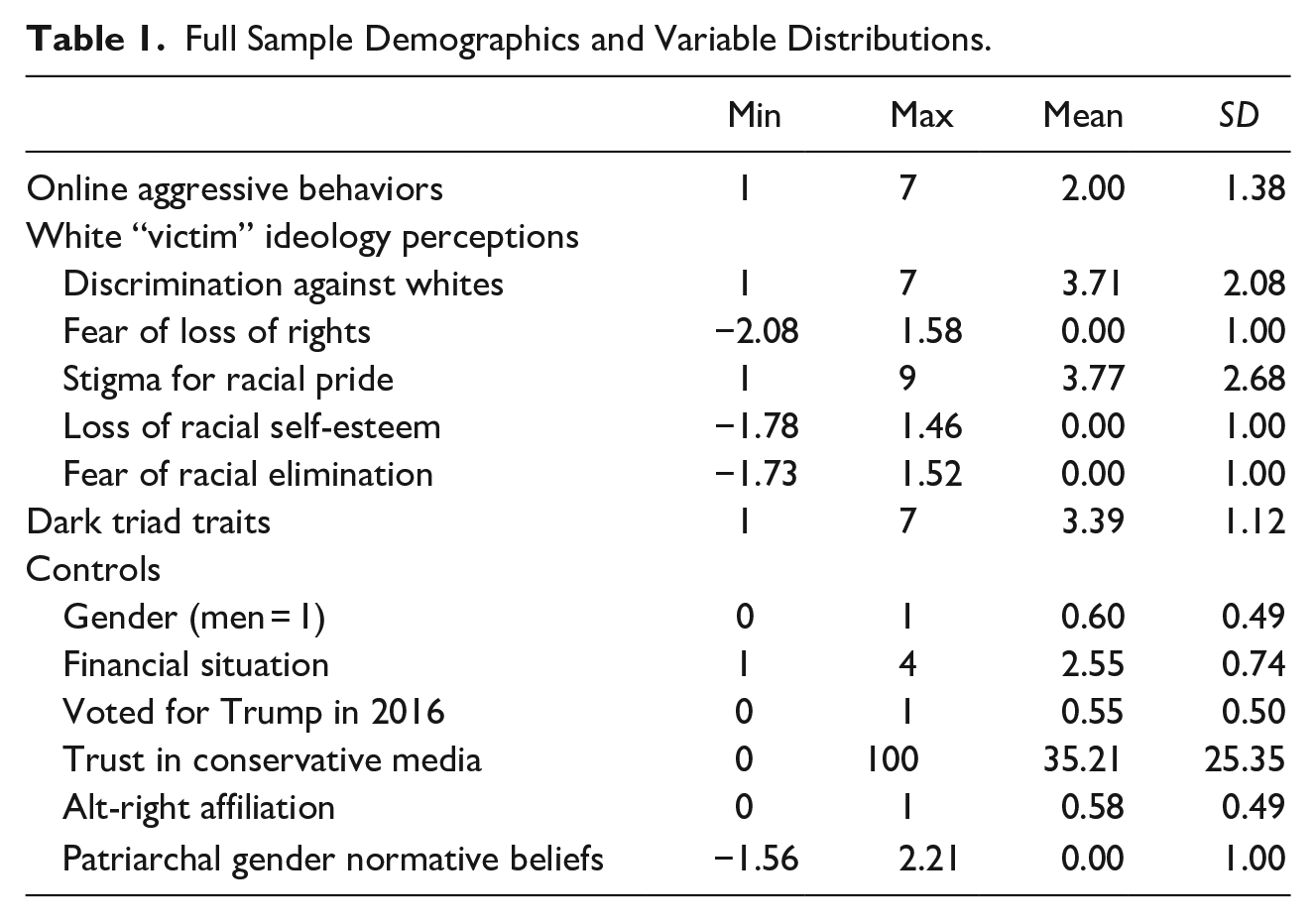
Furthermore, gender is a self-reported dichotomous variable (1 = men). As proxy for subjective social class, participant’s financial situation is controlled for by the question, “How would you describe your own current economic situation—is it very bad, somewhat bad, somewhat good, or very good?” (1 = very good to 4 = very bad, reverse coded from original). Research suggests perceived threats to whites’ social status are associated with more conservative political ideologies (Mayrl & Saperstein, 2013). Furthermore, research finds a strong association between support for Donald Trump and affiliation with the Alt-Right (Forscher & Kteily, 2017; Isom, Boehme, et al., 2021). Such are controlled for by the question, “Which presidential candidate did you vote for in the 2016 election?” Responses were recoded to 1 = vote for Trump and 0 = any other candidate/did not vote. Finally, research also consistently demonstrates the impact of media on ideologies (Klein, 2020; Martin & Yurukoglu, 2017). To measure trust in conservative media, respondents were presented the following prompt: “We’d like you to think about your perceptions of outlets for the news. You may view some outlets as trustworthy and some as not trustworthy, or even fake. Please rate the news outlets below as to how trustworthy or untrustworthy you perceive them to be” (0 = completely untrustworthy to 100 = completely trustworthy), and then provided a list of 22 news outlets including CNN, ABC News, and The Huffington Post. From the list, the mean of the seven most conservative outlets—Fox News, Breitbart, The Rush Limbaugh Show, The Sean Hannity Show, The Glenn Beck Show, InfoWars, and The Daily Caller (see Faris et al., 2017)—serves as a control for trust in conservative media. Table 1 presents the descriptive statistics for all variables of interest.
Full Sample Demographics and Variable Distributions.
Analytical Strategy
The current study utilizes a series of stepwise ordinary least squares (OLS) regressions. Standardized coefficients are presented for ease of interpretation. Beta coefficients (β) provide the change in online aggressive behaviors given a one standard deviation increase in the predictor variable with other factors held constant. To gauge the conditioning effects of dark triad traits, interaction terms were created by taking the product of each element of white “victim” ideological perceptions independently with the measure of dark triad traits. To provide a more nuanced gendered assessment between men and women, these models were repeated on subsamples separated by gender. Variance inflation factors suggest none of the present measures suffer from multicollinearity. Data were cleaned and analyzed in SPSS24.
Results
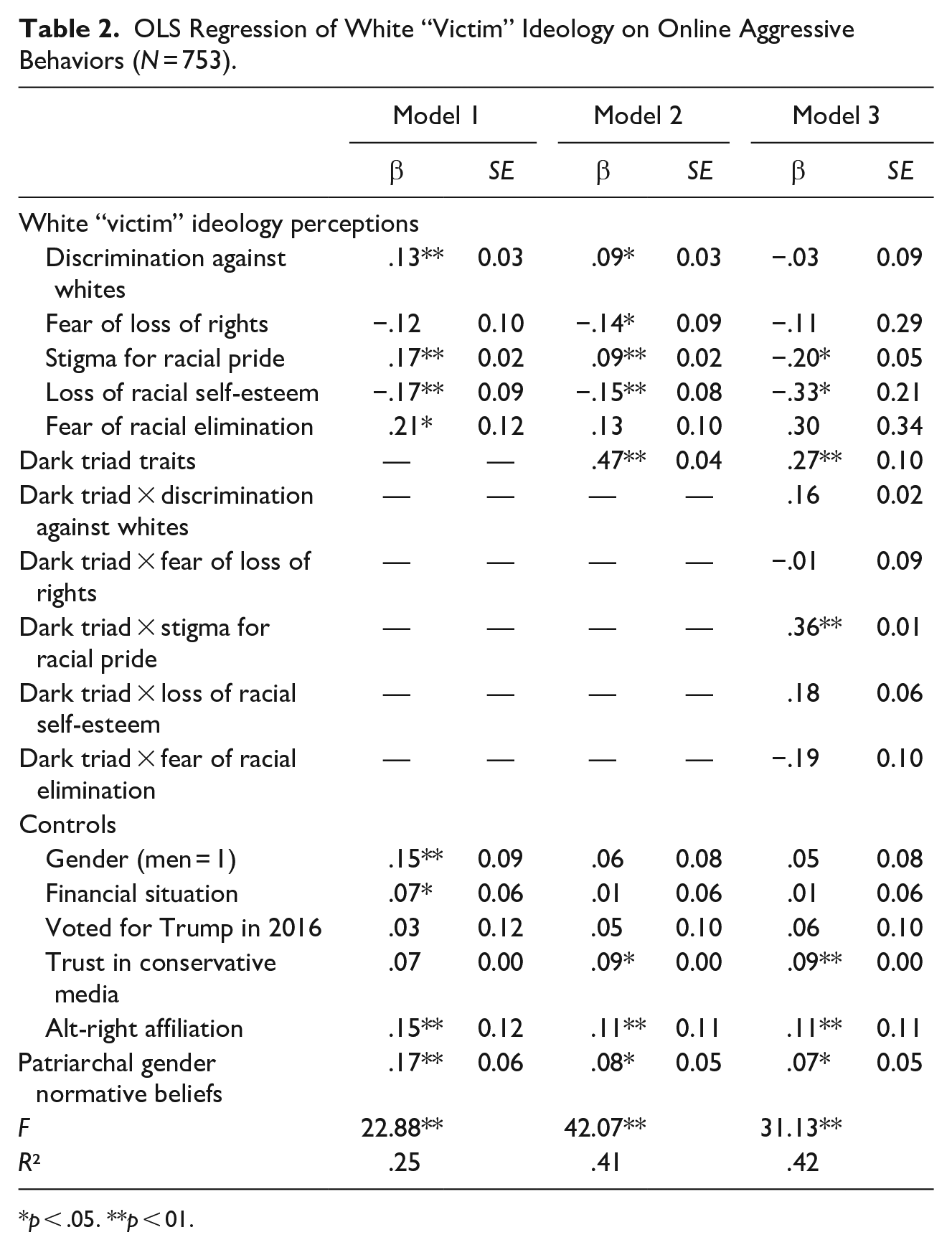
Our first research question asks if white “victim” ideology is associated with aggressive and violent online behaviors? Table 2 Model 1 presents the OLS regression of white “victim” ideology components on online aggressive behaviors and reveals perceptions of discrimination against whites, feeling stigma for having racial pride, and fear of racial elimination are significantly positively associated in online aggressive behaviors (β = .13, .17, and .21, respectively). Additionally, counter to predictions, feeling a loss in racial self-esteem is significantly negatively associated with online aggression (β = −.17). Furthermore, we find being a man, having a worse financial situation, holding patriarchal gender normative beliefs, and affiliating with the Alt-Right are positively associated with engaging in online aggression for our sample of white Americans (β = .15, .07, .17, .15, respectively). Finally, we find this combination of variables accounts for 25% of the variance in aggressive online behaviors (R2 = .25). Thus, overall we find strong associations between white “victim” ideological components and online violence and aggression.
OLS Regression of White “Victim” Ideology on Online Aggressive Behaviors (N = 753).
p < .05. **p < 01.
The second research question asks if the associations between white “victim” ideology and online aggression are conditioned by dark triad traits? Table 2 Model 2 first assesses the direct association between dark triad traits and online aggressive behaviors. We find the likelihood of online aggression increases by 47% for every standard deviation increase in dark triad traits holding other factors constant. Furthermore, associations between “victim” ideologies and online aggression remain strong, but vary, for our sample of white Americans when dark triad traits are included in the model. Specifically, perceptions of discrimination against whites and stigma for racial pride remain positively associated with online aggression, though the effect sizes are smaller (β = .09 and .09, respectively). The association between loss of racial self-esteem and online aggression remains essentially unchanged (β = −.15); however, fear of racial elimination is no longer significantly associated with online aggression when dark triad traits are considered. Yet, perceptions of a fear of loss of rights are now significantly negatively associated with online aggressive behaviors (β = −.14). Furthermore, affiliation with the Alt-Right and holding patriarchal gender normative beliefs remain positively associated with online aggression when taking dark triad traits into account, though the effect sizes are reduced (β = .11 and .08, respectively). But, gender and one’s financial situation are no longer significant. However, trust in conservative media becomes positively associated with online aggression when dark triad traits are accounted for (β = .09). Moreover, the model R² increases to .41 when dark triad traits are added to the model. Thus, dark triad personality traits have a significant direct association with online aggression, but also seem to impact the associations of other correlated factors between white “victim” ideology and online aggression.
We assess the conditioning effect of dark triad traits on the associations between white “victim” ideology and online aggression in Table 2 Model 3. Here we find dark triad traits significantly condition perceptions of stigma for racial pride (β = .36). This significant association is graphed in Figure 1, which reveals having high dark triad traits significantly increases the likelihood one will respond to perceiving stigma for racial pride with online aggressive behaviors. Thus, dark triad traits do condition at least some elements of white “victim” ideology.
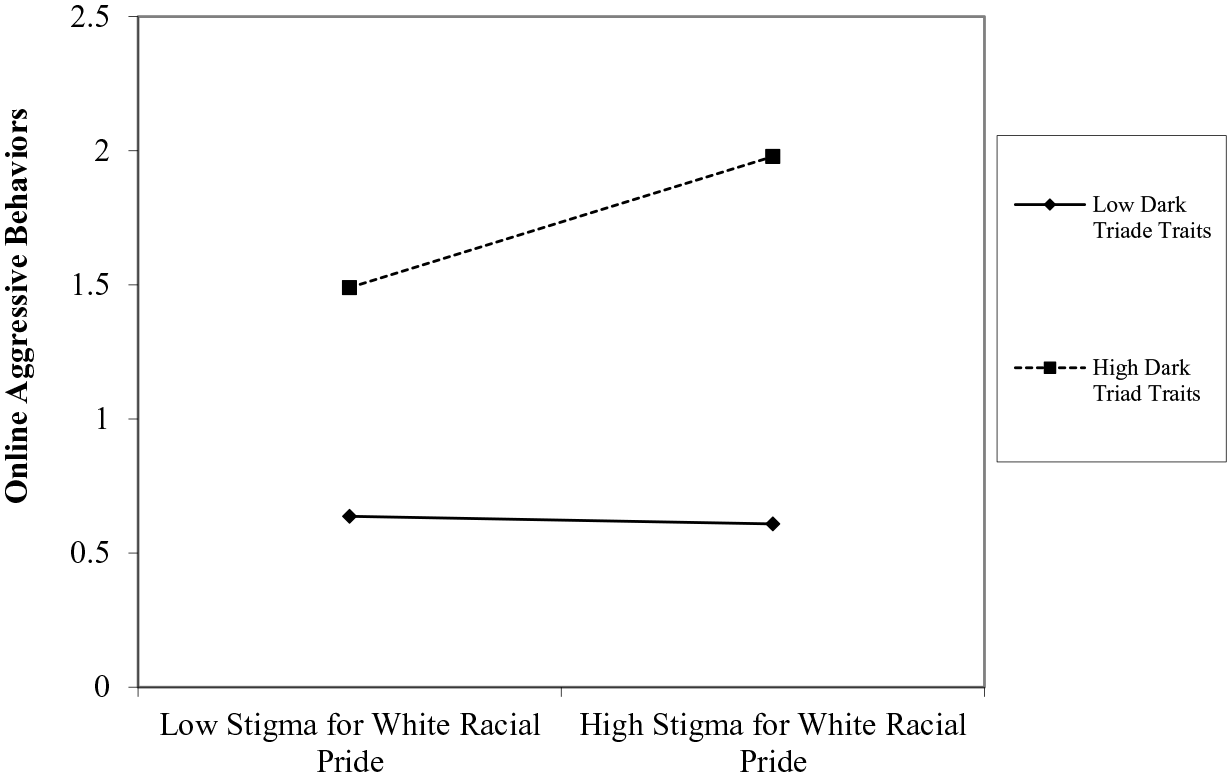
Conditioning effects of dark triad traits for full sample.
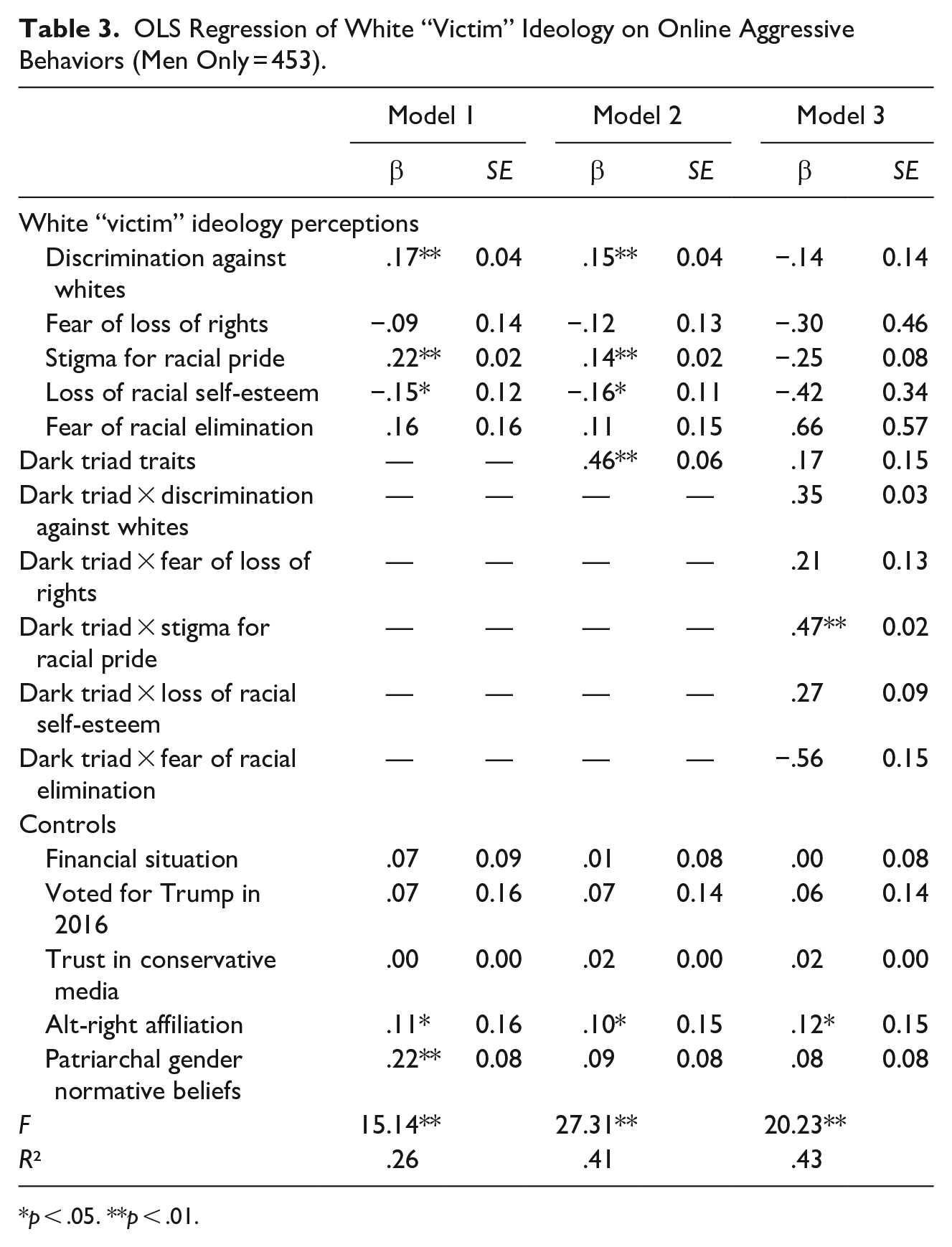
Our final research question asks do these associations and conditioning effects vary between white men and women? To answer this question, we split our sample by gender and repeated the above stepwise regression analyses. Table 3 presents the models for the white men only sample and demonstrates a similar pattern to the overall sample models. Table 3 Model 1 reveals perceiving discrimination against whites and stigma for racial pride are significantly positively associated with online aggression for the white men in our sample (β = .17 and .22, respectively), and feeling a loss of racial self-esteem is significantly negatively associated with online aggression (β = −.15). Furthermore, affiliating with the Alt-Right as well as holding patriarchal gender normative beliefs increase the likelihood of engaging in online aggressive behaviors (β = .11 and .22, respectively); but, no other assessed factors are significantly associated with online aggression for our sample of white men. Model 1, however, still accounts for 26% of the variance in online aggression, lending credence to the importance of the overall model.
OLS Regression of White “Victim” Ideology on Online Aggressive Behaviors (Men Only = 453).
p < .05. **p < .01.
We assess the direct associations of dark triad traits with online aggression for white men in Model 2 of Table 3. We find having dark triad traits accounts for a 46% increase (β = .46) in the likelihood of online aggression when added to the model while other factors remain generally unchanged. The association between patriarchal gender normative beliefs and online aggression, however, was mitigated with the inclusion of dark triad traits to the model. Furthermore, the model explained variance increased to 41% (R2 = .41) with the addition of dark triad traits, speaking to their significance within these nuanced relationships.
Next, we assessed the conditioning effects of dark triad traits for white men. Model 3 of Table 3 reveals, like the full sample, dark triad traits significantly condition the association between perceived stigma for racial pride and online aggression for white men. The conditioning effects are graphed in Figure 2. Paralleling the overall sample, we find those having high dark triad traits are significantly more likely to respond to perceived stigma for racial pride with online violence and aggression.
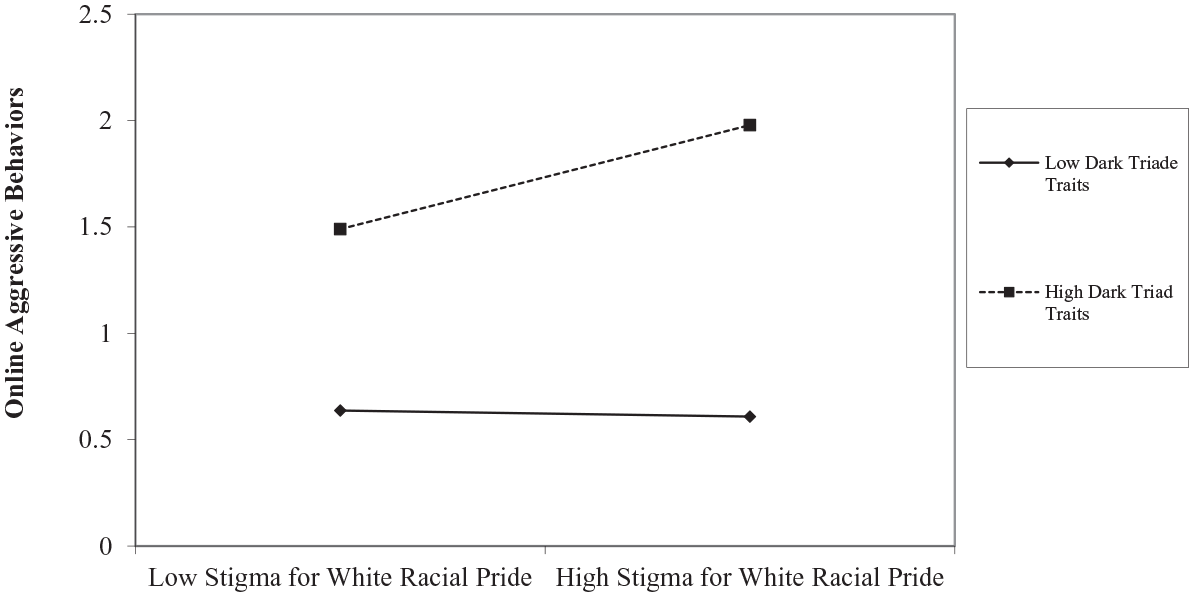
Conditioning effects of dark triad traits for white men.
Table 4 repeats the above analyses on the white women subsample. Varied patterns emerge for the white women. Model 1 of Table 4 reveals different associations between white “victim” ideology and online aggression for women compared to men. Specifically, fear of racial elimination significantly increases women’s likelihood of online aggression whereas perceived loss of racial self-esteem reduces one’s likelihood (β = .29 and −.21, respectively). Furthermore, while Alt-Right affiliation is positively associated with online aggression (β = .28), patriarchal gender normative beliefs are not significantly associated with online aggression for our sample of white women, unlike their male counterparts. Additionally, we find trust in conservative media to be a significant factor for white women (β = .24), which is not the case for white men. Model 2 of Table 4 adds dark triad traits to the model. Unlike for their male counterparts, the associations between white “victim” ideological components and online aggression are mitigated when dark triad traits are considered. Furthermore, dark triad traits increase white women’s likelihood of online aggression by 47% holding other factors constant (β = .47). Also, the effects of trust in conservative media and Alt-Right affiliation remain, speaking to the likely independence of these factors. Moreover, while none of the white “victim” ideological factors remained significant in Model 2, when dark triad traits were considered, the model explained variance in women’s online aggression increased to 38% (R2 = .38). Finally, the conditioning effects of dark triad traits were assessed in Table 4 Model 3, revealing no significant associations for our sample of white women. Therefore, these assessed factors are important, but vary in how they impact men and women.
OLS Regression of White “Victim” Ideology on Online Aggressive Behaviors (Women Only = 300).
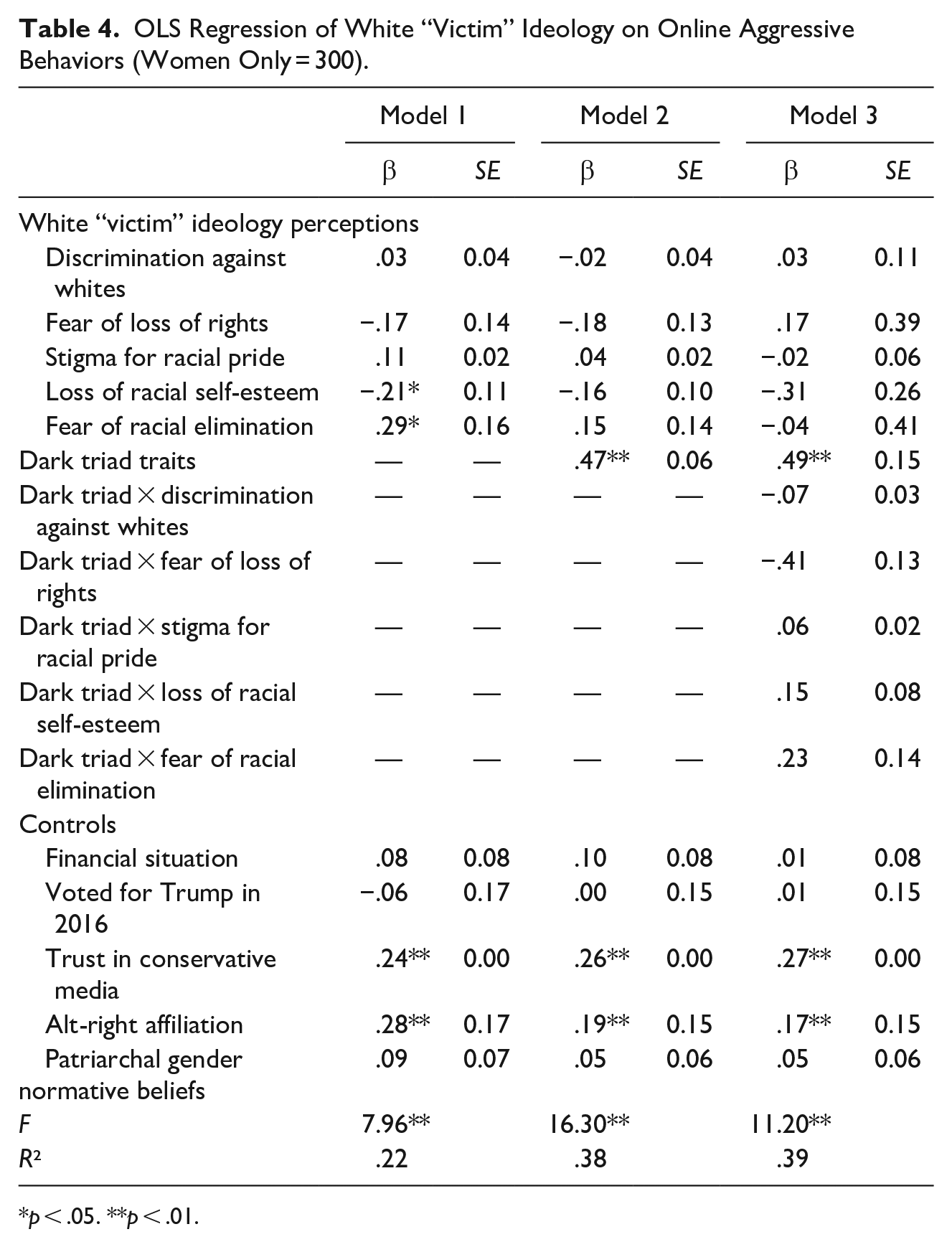
p < .05. **p < .01.
Discussion
This study aimed to integrate and build upon the gendered examinations of far-right extremism and white “victimhood” literature to assess the links between white “victim” ideology, dark triad traits, and online violent and aggressive behaviors between white men and women. Intricate and nuanced associations were revealed. As would be expected based on extant literature, elements of white “victimhood” and Alt-Right affiliation are significantly associated with online aggression; specifically, perceiving discrimination against whites, feeling stigma for having racial pride, and fearing racial elimination significantly increase one’s likelihood of engaging in aggressive online behavior for our sample of white Americans. Surprisingly, however, was the significant negative association found between perceptions of loss of racial self-esteem and online aggression. Previous research revealed strong positive associations between perceived loss of racial self-esteem and Alt-Right affiliation (Boehme & Isom, 2020), so finding those that think “white lives matter” are less likely to engage in online aggression is surprising. Understanding why this sentiment may drive whites to different types of behaviors in response to their angst is beyond the present scope but warrants additional inquiry. Furthermore, given that significant qualitative literature suggests whites’ fear of losing their “rights and freedoms,” and thus their normative way of life (e.g., Hochschild, 2016; Isom, Mikell, et al., 2021; Wuthnow, 2018), the essential lack of association between fear of losing rights and online aggression was also enlightening. Together the varied associations between different perceptions of white “victimhood” speak to the complexity of these sentiments as well as the overall habitus angst felt by many white Americans (Isom, 2024). The present findings add to the growing knowledge of the nuance of these associations and support the need for additional investigations into their causes and implications.
One of the central contributions of the present work is the integration of dark triad traits into the gendered investigations of white “victimhood.” Based on the substantial increase in overall variance accounted for as well as the significant direct effects revealed, dark triad traits are a significant factor in understanding online aggressive behaviors as well as its nuanced associations with white “victim” ideology, Alt-Right affiliation, and patriarchal gender normative beliefs, especially between white men and women. When considering the full sample, the associations between white “victimhood,” Alt-Right affiliation, and patriarchal gender norms weakened and/or shifted when dark triad traits were added to the model. Furthermore, the significant associations between gender and the proxy for social class were completely mitigated by dark triad traits. And, trust in conservative media became positively associated with online aggression when dark triad traits were considered. We also found dark triad traits did significantly amplify the experiences of stigma for racial pride, further increasing the likelihood whites responded to such with online aggression. What these overall results suggest is that dark triad traits may predispose whites to certain beliefs and perceptions. In particular, our findings suggest an association between these personality components and trust in conservative media, which is known to increase whites’ feelings of habitus angst (Isom, Boehme, et al., 2021) and increase political divides (Klein, 2020). Such personality traits may also increase the likelihood of feeling various forms of angst, lending insight into differences between white people with these perceptions.
The potential influence of dark triad traits within these intricate relationships is further supported when our sample was split by gender. Very similar associations to the full model were revealed for the men only sample; however, very distinct associations emerged for white women. Beyond the varied significant associations between different elements of white “victimhood” and online aggression between white men and women, the substantial mitigating effects of dark triad traits for white women is of particular interest. When dark triad traits were included in the model for white women, all significant associations between white “victimhood” disappeared. The dark triad traits themselves, however, greatly increased the odds of white women engaging in online aggression. Furthermore, dark triad traits did not condition the influence of white “victimhood” components on online aggression for our sample of white women. Of additional interest, patriarchal gender normative beliefs were not significantly associated with online aggression for white women. And, unlike their male counterpart, trust in conservative media is a substantial driver of white women’s online aggressive behaviors. The varied results between the men’s and women’s samples further suggest the predispositional influence dark triad traits may play in the intricate associations between habitus angst (such as white victim ideology), far-right extremist beliefs, media, orthodox norms (such as patriarchal gender normative beliefs), and negative outcomes, including online aggressive behaviors. The current results suggest dark triad traits play a substantial, though varied, role within these complex relationships. Future research is warranted to explore these nuanced associations and pathways further within and between races, genders, and other social factors that compose intersectional identities.
The present study builds on the growing literature around white people’s distinct pathways to crime (Isom, 2024); yet, as with all research, this study has some limitations. While the dataset included well-constructed measures, there were notable gaps in crucial demographic information. Specifically, the dataset lacked data on age, class, geographic location, marital status, and religious beliefs—key sociodemographic variables often linked to cultural, social, and political ideology (Jost et al., 2009). Furthermore, the survey data were obtained through MTurk, a platform with specific limitations. Despite widespread support and increasing utilization (Landers & Behrend, 2015; Smith et al., 2015), MTurk shares similar drawbacks with other internet-based surveys, such as concerns about respondents’ honesty, sample representativeness, and internet accessibility issues (Chandler & Paolacci, 2017; Sharpe Wessling et al., 2017). Alternative data sources should be utilized in future assessments. Additionally, it’s essential to acknowledge that the survey was conducted early in Trump’s presidential term, and considerable social and political changes have occurred since 2016, leading to heightened divisions (Dimock & Wike, 2020). Researchers should routinely collect this type of data to capture evolving public sentiment within a rapidly changing social and political landscape. And finally, as previously mentioned, further intersectional analyses are necessary to fully grasp the complex differences among individuals with various intersecting identities. Future research should incorporate qualitative methodologies alongside quantitative inquiries to explore not just whether differences exist, but also how and why they occur, drawing insights from individuals to best understand variations in experiences and responses to various forms of habitus angst as well as personality traits.
Conclusion
As FBI director Christopher Wray testified to the January 6th Committee, the attack on the US Capitol “was not an isolated event” (Tucker & Jalonick, 2021). As he stated in previous testimony to Congress, “Within the domestic terrorism bucket, the category as a whole, racially motivated violent extremism is, I think, the biggest bucket within that larger group. And within the racially motivated violent extremist bucket, people subscribing to some kind of white supremist-type ideology is certainly the biggest chunk of that” (Beavers, 2020). To best understand what is happening presently in America, a critical whiteness lens is needed to understand broader negative behaviors that could lead to violence and terrorism, particularly by white people (Isom, 2024). This kind of work represents one such step. By understanding the intricate nature of how ideologies are tied to behaviors and who is most prone to hold them, we can find better ways to counteract such notions.
The current findings yield additional breadth and depth to the understanding of extremist beliefs and resultant behaviors. As Ferber (1998) states, “(T)he narrow attention to organized hate groups is insufficient. They are clearly simply one manifestation of a more widespread problem. Focusing on only one small segment of the continuum, and treating it as an isolated, exceptional movement, distorts the problem, erases from view the rest of the continuum, and hinders our understanding of the organized hate movement itself. . .White supremacist discourse gains power precisely because it rearticulates mainstream racial and gender narratives once taken for granted” (p. 149–150). By drawing attention to and unpacking the links between ideologies, extremist affiliations, and aggressive actions, particularly online, we expand the definition of terror and expose its broad reaching impacts. Until such work is done, real solutions to counter this growing movement cannot be reached.
Footnotes
Declaration of Conflicting Interests
The author(s) declared no potential conflicts of interest with respect to the research, authorship, and/or publication of this article.
Funding
The author(s) received no financial support for the research, authorship, and/or publication of this article.
