



Abstract
This paper introduces intra-community brakes on domestic violent extremism within the Czech Romani minority. We discuss how the community’s ties to nonviolent networks, approach to ideology, and family attachment worked against manifestations of violent extremism during three major episodes of political violence affecting the Romani in Czechia. The study draws on extensive empirical data gathered through ethnographic and netnographic methods and analytical tools provided by constructivist grounded theory for data analysis. Our work aims to contribute to the growing body of scholarship on the role of protective factors in preventing engagement in extreme forms of political violence. It would also like to encourage scholarly debate on the notion of marginalized groups as active agents maintaining security within their own communities.
Keywords
Introduction
In the recent decade, criminology and radicalization studies have been gradually converging as a reaction to newly emerging global threats and an evolving contemporary landscape (LaFree & Yanez, 2023). A variety of criminological theories have been used to get a better understanding of radicalization and to expand its etiology with the aim of addressing widespread issues, such as empirically frail causal explanations, prioritization of beliefs above actual violent actions, or the dilemma of seeing radicalization as an individual or group process (Ahmad & Monaghan, 2019). Despite lively and productive cross-fertilization between the fields (LaFree & Freilich, 2017), both disciplines are still characterized by a greater focus on the risk-factor approach to investigating the subject of their study. In radicalization studies, scholars recognize the need to study cases where political violence is absent and no signs of radicalization are reported (e.g., Cragin, 2014; Malkki, 2020; Schuurman & Carthy, 2024), including the importance of investigating protective factors that are necessary for adaptive and coping processes in risk situations that may lead to political violence (Lösel et al., 2020). In criminology, researchers also emphasize the necessity of replacing the deficit-based framework of inquiry with more pro-social, strength-based approaches to uncover factors that mitigate the risk of criminal behavior (Kewley, 2017; Serin et al., 2015).
In our contribution we aim to address the gap identified in both fields by presenting an empirically rich case of such protective mechanisms working against the manifestation of domestic violent extremism (DVE). The current study focuses on three intra-community brakes: ties to nonviolent networks, approach to ideology, and family attachment that prevented the Romani ethnic minority in Czechia from radicalizing into DVE. We aimed to identify what protective factors were activated within the community to shun violent escalation during three major episodes of political violence in the country. When seeking to provide a nuanced understanding of the internal resources that vulnerable communities mobilize to resist behavioral radicalization, the Czech Romani community can serve as a useful empirical case in several respects. It is a marginalized group affected by a variety of negative socioeconomic and cultural effects; however, unlike other ethnic minorities in Europe, reports on extremist or terrorist violence remain very scarce (Kocmanová, 2023a). A solid empirical grounding of our paper based on extensive qualitative data combining the methods of ethnography and netnography enables us to respond to the demands for a richer diversity of methodological approaches in broader terrorism studies (Malkki, 2020) and also tackle the issue of empirical scarcity in the field (Ahmad & Monaghan, 2019). Furthermore, first-hand empirical evidence on protective factors is sorely needed to understand the agency communities at risk themselves exert (Serin et al., 2015) to resist the lures of violent extremism. By introducing such real-world intra-community resources, we also hope to make useful practical recommendations for stakeholders in the area of homeland security.
The empirical and theoretical perspectives presented in our study follow the recent line of scholarship shifting from risk-oriented approaches to the study of behavioral radicalization in favor of the pro-social lens. In their efforts to understand the dynamics of why an individual or a group does not resort to political violence, Busher et al. (2019) identify a set of internal mechanisms and practices that limit political violence and present a typology of internal brakes on violent escalation. They understand these brakes as the practices adopted by group members to either directly hinder the adoption or proliferation of more violent tactics by other group members or to encourage strategic decisions and (sub)cultural practices that impede the acceptance or spread of aggressive behavior (Busher et al., 2019). Other authors follow Busher et al.’s (2019) research and explore specific cases where internal brakes were present and played an essential role in restraining individuals from committing politically motivated violence (Copsey & Merrill, 2020; Dowling, 2023; Macklin, 2020).
When analyzing sources of protection from violent radicalization on an individual or community level, numerous studies highlight shared values within a community as possible protective factors, such as ideology (Laor et al., 2006) or internal culture (Copsey & Merrill, 2020). Multiple authors point out the importance of nonviolent social networks that include kinship, friendship, and other interpersonal ties based on mutual trust, for example, local communities, schools, youth clubs, or grassroots organizations (Aiello et al., 2018; Dalgaard-Nielsen & Schack, 2016; Jasko et al., 2017; Puigvert et al., 2020; van Bergen et al., 2015; Wimelius et al., 2018). As the existing research shows, enhancing social connections at the community level has a significant psychological impact on an individual and strengthens their resilience to radicalization. From among social networks, the significance of family shows as one of the most important protective factors. The essential role of family as a source of protection in the radicalization process is pointed out by a variety of researchers (Cragin, 2014; Dalgaard-Nielsen & Schack, 2016; Laor et al., 2006; Spalek, 2016; Wolfowicz et al., 2021; Zych & Nasaescu, 2022), who recognize the relevance of family in providing a supportive environment, nurturing emotional health, and developing coping skills. Additionally, as Zych and Nasaescu (2022) state, the capacity of parents to instill a sense of belonging in their children might contribute to a potential reduction in the likelihood of radicalization.
From the perspective of criminological theories, our contribution reflects some of the central tenets of social control theory. Hirschi (1969), in his book Causes of Delinquency, proposes the theory that strong social bonds between individuals and society serve as a protective factor against delinquency and criminal behavior. According to Hirschi (1969), these social bonds include attachment (to the family and friends), commitment (to societal norms and institutions), involvement (in conventional activities), and belief (in societal norms, values, and moral standards). The stronger these bonds are, meaning that individuals are more constrained by social forces and mechanisms, the less likely they are to engage in deviant or criminal behavior. Several criminologists, such as Gibbs (1989), Liska (1992), and Sampson and Laub (1990, 1992), later developed the concept of social control. With an urging need for countering and preventing newly emerged threats of extremism, researchers make use of the social control theory in radicalization studies. Findings provided by authors such as Ahmad and Monaghan (2019), Becker (2019), Cherney et al. (2021), Fisher et al. (2023), or Holt et al. (2018) conclude that limited social controls from family or peers and a lack of prosocial bonds can facilitate an individual’s radicalization process and lead to their involvement in criminal activities. Alternatively, strong prosocial bonds can serve as a significant factor in preventing an individual from radicalizing and resorting to violence. The use of social control concepts in research on radicalization shows that this major criminological theory could be applied in the study of political violence, though the impact of social control on common or political crime should be judged on a case-by-case basis.
Empirical Background: Three Major Episodes of Political Violence in Czechia
The Romani community, the largest ethnic minority in Europe with a potential population of up to 12 million, has consistently suffered from social prejudice, discrimination, poverty, marginalization, and instances of hate crime and hate speech (European Union Agency for Fundamental Rights, 2023). Since the independence of Czechia in 1993, the local Romani minority has been the target of politically motivated violent attacks (Fawn, 2001). The current study maps community-driven brakes on violent radicalization within the Romani community on the background of three major episodes of political violence in Czechia: the 2008 to 2014 Anti-Romani Riots; the 2021 Romani protests against police violence; and the 2023 tensions between Romani and Ukrainian communities.
The Anti-Romani Riots is a term used to describe a series of riots and rallies that sparked across several regions in Czechia between the years 2008 and 2014. Far-right political parties, movements, and extremist groups were primarily responsible for organizing the protests, but in many cases, locals from the majority population joined the marches and made up a sizable portion of the protesters (Mareš, 2015). The cause of the events was of a complex nature; nevertheless, the racist motive was not insignificant. The protests created a hostile atmosphere that eventually escalated into several violent attacks on the Romani minority, one of the most significant of which was the 2009 arson attack in the town of Vítkov, during which a young Romani girl suffered life-threatening burns (Mareš, 2015). The Romani community perceived these riots, including the incursions of vigilante patrols of right-wing paramilitary groups (Mareš, 2018), as an immense threat to their safety and considered this period a traumatic experience since it exacerbated a variety of socioeconomic, political, cultural, and personal grievances pre-existing within the minority.
The 2021 Romani protests against police violence were sparked after the death of Stanislav Tomáš, a Romani man who died after being restrained by police officers using the knee-on-neck technique (Brablec, 2021). Even though the police later stated that the cause of death was a drug overdose (The Police of the Czech Republic, 2021), the incident was framed on the background of the police’s killing of George Floyd in May 2020, which led to the global rise of the Black Lives Matter movement (Kola et al., 2022). The video footage showing the incident went viral and mobilized the Romani community on social media, opening the floodgates of anger within the community. Numerous commemorations and nonviolent demonstrations against racial profiling, structural racism, and especially racial violence by law enforcement agencies, followed it. The Romani protesters emphasized long-term issues that the state ignores that negatively affect the Romani minority in order to demand justice and an investigation into the incident (Brablec, 2021). During this period, slogans like Roma Lives Matter or Romaňi Zor (Romani Power) were widely used to reflect the community’s feelings of injustice, anger, and deep-rooted grievances.
In the so-called “Hot Summer of 2023,” Czechia was marked by a series of clashes between some members of the Romani minority and the Ukrainian community, composed primarily of war refugees. Rising tensions escalated in June 2023 after the death of a Romani youth in the city of Brno caused by a man of Ukrainian nationality (Hajdari, 2023). The incident sparked a sequence of rallies to protest against violence directed at the Romani community. The increased presence of Ukrainian refugees—another group that relies on institutional support in the country—deepened the feeling of insecurity of the Romani while pushing the intensity of perceived relative deprivation to the limits (Kocmanová, 2023b). The period was characterized by the growing popularity of Romani live streamers on social platforms who commented on ongoing events, presenting themselves as representatives of the marginalized Romani minority who do not benefit from any support from the state. The live streamers, often adopting radical rhetoric, successfully mobilized an alarming number of Romani community members, encouraging them to actively participate in public rallies and marches.
Data, Methods, and Ethics
To investigate the mechanisms restraining violent radicalization, we employ an integrated methodological approach that encompasses a diverse array of data collection and analysis techniques. Our data collection method draws from ethnography, which facilitates an unobtrusive examination of individuals and their interactions in real-world settings (Brewer, 2004), and netnography, which extends this approach to online spaces (Conway, 2017), thereby allowing us to delve into the digital landscape and its influence on the everyday experiences and emotions of the target community (Macdonald et al., 2023). Employing both methodological approaches and various data collection methods allowed us to triangulate empirical reliability and bolster the credibility of our findings efficiently.
In the ethnographic phase of our research, we gathered data through 56 in-depth interviews and engaged in participant observation at rallies as well as non-participant observation in multiple Romani communities across Czechia. We selected the interviewees through the purposive snowball sampling technique. To gain access to a hard-to-reach community, we used gatekeepers to introduce us to the research participants, such as community health workers or workers in NGOs involved in providing assistance to local Romani communities. In this way, we established close personal contact with several influential and authoritative members of the Romani community, who had significant community outreach and helped us make further contacts through a referral technique. Among the interviewees, 20 core informants directly participated in at least one of the three waves of unrest. Additional interviews were conducted with other Romani community members to further explore the protective mechanisms identified during the analysis of core informant transcripts. Our sample included respondents residing in Czechia or Slovakia, given the fluid movement across the border dividing the two countries and the shared origins of most Romani in Czechia (Bancroft, 1999).
The netnographic component involved gathering data from audiovisual content, textual posts, and non-participant observation on Facebook, the primary social media platform within the Romani community. We examined the direct responses of community members to live videos shared by influential leaders, referred to as live streamers, who played a pivotal role in mobilizing the Romani community during the events of 2021 and 2023. Our online dataset consisted of 49 live-streamed videos from eight participants, capturing rallies, incident commentary, and mobilization efforts. Additionally, we analyzed 4,214 Facebook posts directly engaging with the live-streamed videos, selected from a larger pool of comments (dozens of thousands). To deductively reinforce evidence on the three restraining factors identified in interviews, we excluded the majority of posts that did not align with our study’s objectives. This means that we did not include thousands of posts where the participants, for example, said “hello” or “thank you” or were expressing thankfulness and support for the live-streamed videos through various emoticons.
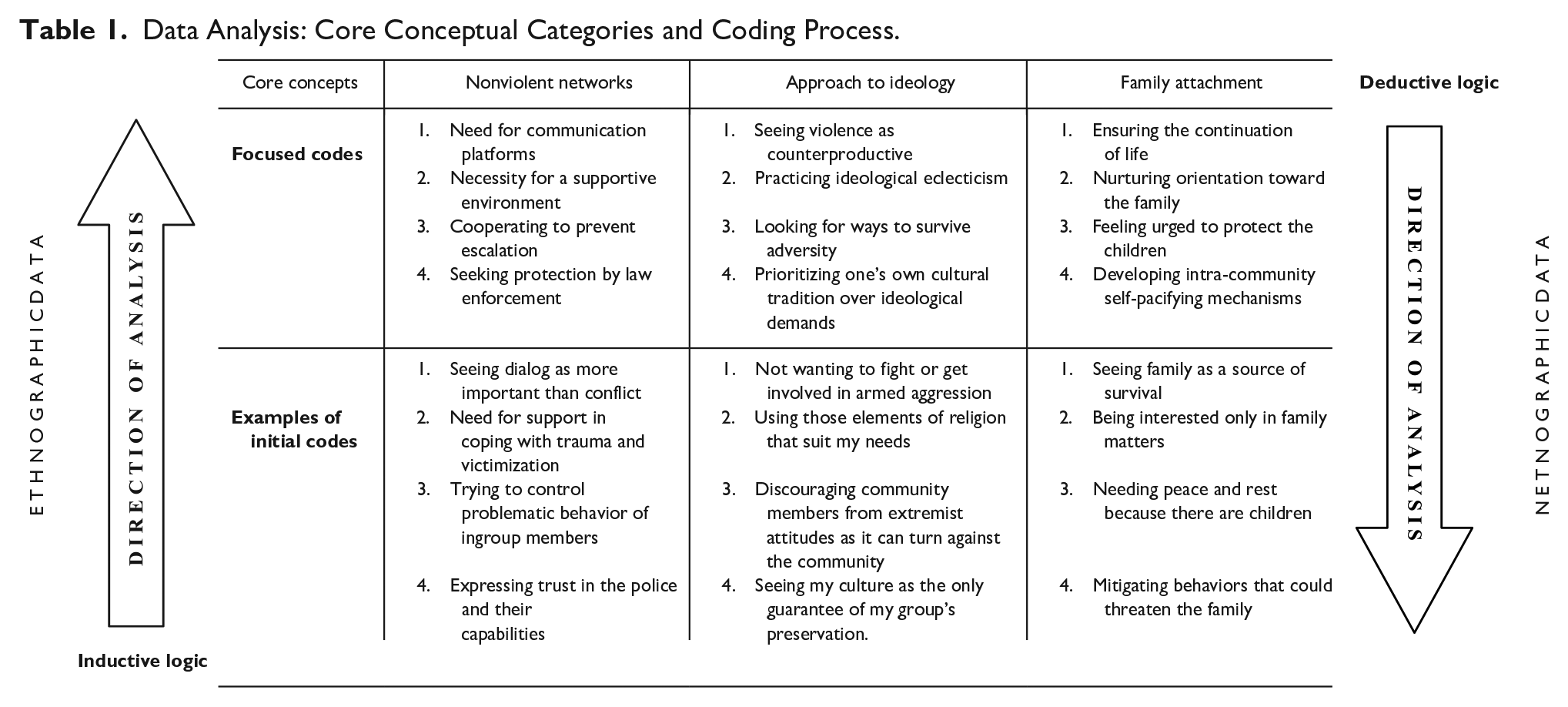
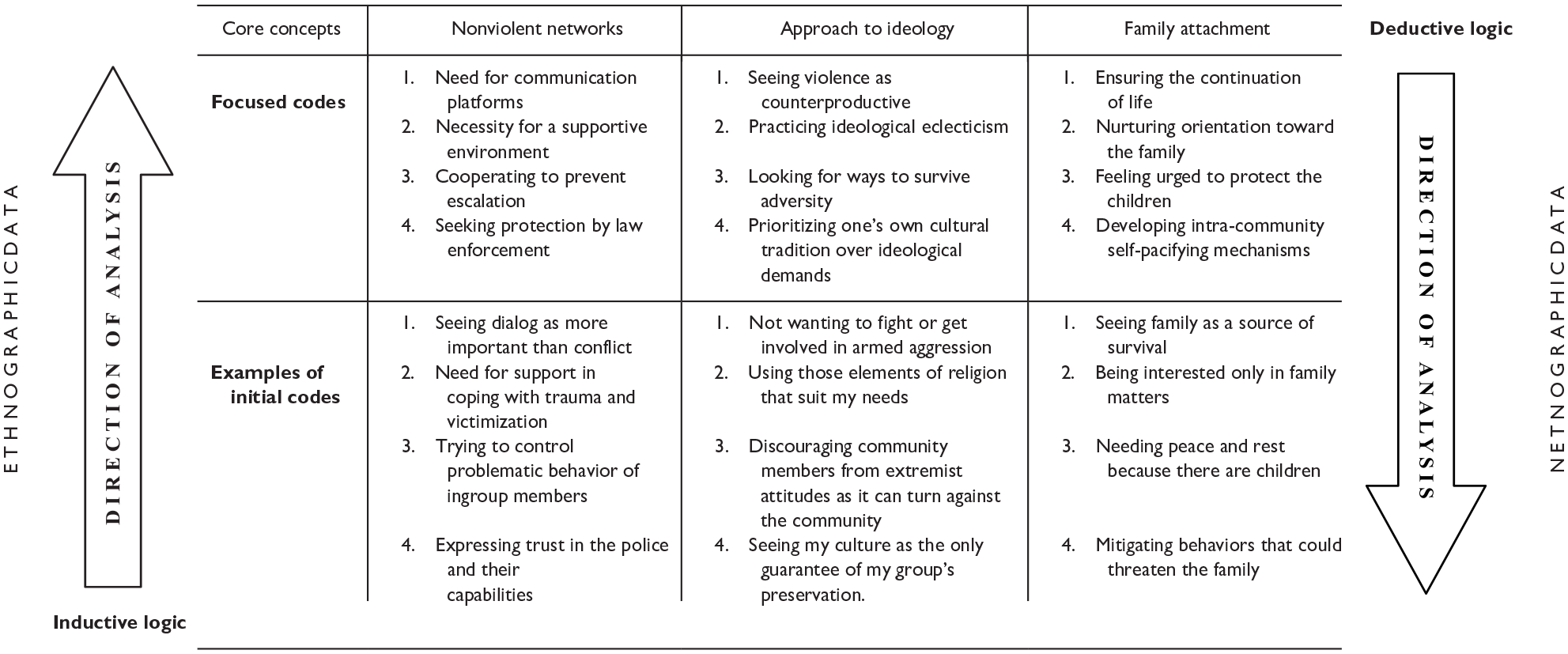
Our data analysis method borrowed analytical tools provided by constructivist grounded theory (Charmaz, 2009). We used initial and focused coding to do a manual content analysis of all the collected data. This traditional and time-consuming approach to data analysis was driven mainly by the inductive character of the research, the imperative of maintaining data sensitivity, and the very diverse and individualized accounts of the research participants, making it unsuitable for performing software-aided coding. We opted for coding the relevant portions of text by gerunds, such as “discouraging community members from extremist attitudes as it can turn against the community,” which helped discern the implicit processes and observe their analytical connections across the interview dataset (Charmaz, 2009; Kenny & Fourie, 2015). First, we inductively coded the interview transcripts, searching for initial codes such as “not wanting to fight or get involved in armed aggression” or “seeing dialogue as more important than conflict.” Subsequently, focused coding was performed with the aim of grouping dozens of initial codes into more clear-cut analytical categories that closely corresponded with the three core conceptual categories of restraint factors militating against violent radicalization. The netnographic data was then perused deductively in order to seek corroborative evidence for the core concepts of nonviolent networks, approach to ideology, and family attachment as the three major brakes on DVE. The process of data analysis is summarized in Table 1. It shows four focused codes for each of the three conceptual categories and a sample of one initial code for each of the four focused codes to document how we proceeded in the analysis of the raw data. Additionally, it depicts the direction of the logical inference for the two types of data we analyzed.
Data Analysis: Core Conceptual Categories and Coding Process.
Given the involvement of marginalized participants, ethical considerations were paramount in our research. The data was mainly collected from private conversations, with some information gathered from limited public encounters. Participants were fully apprised of the research topic and objectives, including the fact that data gathered from interviews would be anonymized. At the outset of each session, participants were requested to provide consent for recording; those declining to be recorded had their interview notes documented instead. However, due to the specific nature of the studied community, written consent was not sought, as this might arouse suspicion, potentially challenge their willingness to participate, and ultimately undermine the essential personal rapport. The decision to opt for orally obtained informed consent, as opposed to the conventional written form, was further reinforced by the community’s experience with sociopolitical oppression and their skepticism toward formal institutional practices like signing written documents. Debates persist over the ethics of online research, especially when utilizing netnographic methodologies (Mahlouly, 2019). Romani online behavior leans toward public sharing, so we opted for full anonymization of the online data. The video and textual information were paraphrased rather than directly quoted. Numerical identifiers were allocated to community figures to ensure participant anonymity and prevent stigmatization. The netnographic material is referred to as Videos 1 to 49 or Posts 1 to 4,214 for deidentification purposes.
Three Community-Driven Brakes on Violent Extremism
What factors serve as brakes on violent extremism within the community, effectively reversing the process of behavioral radicalization? Our n/ethnographic research has identified three primary categories of restraining factors: ties to nonviolent social networks, approach toward ideology, and family attachment. The interplay of these categories influences Romani individuals’ decision-making, preventing them from radicalizing into action. We conceptualize radicalization as “the social and psychological process of incrementally experienced commitment to extremist political or religious ideology” (Horgan, 2009, p. 152), which may culminate in domestic violent extremism as its natural consequence. Building upon Berger’s (2017) definition, we define violent extremism as “the belief that an in-group’s success or survival can never be separated from the need for violent action against an out-group” (Berger, 2017, p. 8).
Nonviolent Networks
Our findings indicate that the Romani’s connections to nonviolent allies effectively prevent extremism, as supported by various studies (Aiello et al., 2018; Jasko et al., 2017; Puigvert et al., 2020; Wimelius et al., 2018). In general, we found important connections to a number of actors that prevented further escalation of political violence. Local governments, neighborhood communities, religious organizations, the police, grassroots NGOs, journalists, artists, human rights activists, and specialized government organizations were involved. These actors supported the affected Romani communities and engaged in mutual activities as equal partners to ease tensions.
Local governments were instrumental in coordinating activities with stakeholders from affected communities. Three instances of political violence prompted local governments to act swiftly to ensure public safety and prevent further escalation. Several research participants highlighted the significance of round table discussions to initiate dialog (Participants 3–4, 7–8, 10–12, 20, and 25 and Videos 1 and 42). These meetings involved the local Romani community, non-Romani residents, city representatives, and police officers. The primary aim was to create communication channels, hear out the concerns and perspectives of the conflicting parties, foster mutual understanding, and suggest solutions to underlying issues that sparked the protests (Participants 3, 10–11, 18, and 23–25). The stakeholders had a chance to meet in a safe space to discuss security issues in protest-affected areas. Aside from rallies against police violence, round-table discussions always included representatives from all groups involved in the conflict (Participants 5, 25) to avoid anyone feeling excluded.
Respected local Romani elites became important and active agents of de-escalation efforts. They were aware of problematic behavior among certain members of the Romani community (Participants 1, 10–11, 16, and 19–20 and Videos 42 and 45–46). Respondent 1 cited an incident from April 2012 in the city of Břeclav where a teenage boy was reportedly attacked by a group of Romani youths. Before the accusation proved to be false, the local Romani community had begun their own investigation within the community in order to find the culprit. They collaborated with city representatives, issued a statement denouncing the violent act, and declared their intention to disassociate from any community member found guilty.
The Police of the Czech Republic played a significant role in moderating the Anti-Romani Riots and Romani-Ukrainian clashes. Romani participants experienced fear, anxiety, and uncertainty in both situations (e.g., Participants 1, 3–5, 10–13, and 20, Video 44, and Posts 38 and 1235). Many core respondents expressed hope in the police’s ability to protect them and trust from the community toward the police (Participants 2–3, 6–8, 9–13, and 19–20). They often emphasized the collaboration with police liaison officers and crime prevention assistants, which helped decrease the chances of Romani’s behavioral radicalization. However, some respondents still view the capacity of these forces as insufficient (Respondents 3, 10, 25). The trust was significantly damaged during the 2021 series of rallies because of the ineffective strategic communication of the Czech Police and Interior Ministry leadership. They failed to communicate remorse over the death of a Romani man during the intervention. However, a key informant and influential Romani leader (Participant 8) in North Bohemia highlighted that closer cooperation was maintained at a grassroots level when a high-ranking regional police officer showed genuine sympathy for a lost Romani life. This community-level initiative helped maintain established connections among law enforcement and the minority, which substantially contributed to the de-escalation of political violence during the 2021 protests.
As religious faith plays an important role in Romani’s lives, church organizations are a traditionally powerful actor in the community. The field research revealed that these social networks not only promoted de-escalation but also mitigated the impact of Romani’s victimization and trauma (Participants 4, 7–8, 10–12, 16, 20, 22, and 31–32). Most prominently, the Salesians of Don Bosco actively sought out members of the Romani community with offers of help during the Anti-Romani Riots. They organized discussions, attended by representatives of the Romani community as well as representatives of the majority society, with the aim of improving mutual relations and putting pressure on the city representatives to solve long-standing problems. The Salesians also developed social programs, leisure, and educational activities, which were largely aimed at children, connecting Romani and non-Romani children, thereby improving coexistence in local communities. The Salesians were very important also because they provided spiritual and religious support and helped the Romani community cope with the traumatic experience (Participants 11–12). Similarly, the representatives of the Evangelical Church openly manifested their solidarity and sense of belonging with the Romani community (Participants 3 and 7–8). In order to prevent an outbreak of violence, the organizers of the 2021 rally in the city of Teplice connected the event with religious purposes. Therefore, the strongest protest to demand an unbiased investigation into the death of “Czech Floyd” was deliberately staged as a religious memorial to commemorate the loss of human life.
Our investigation found that the protests sparked a significant mobilization of human rights activists and non-Romani intellectuals. The stakeholders offered support in various dimensions, including psychosocial, psychological, spiritual, media, communication, and security (Participants 4, 7, 13). An interdisciplinary volunteer team included a psychologist, child psychologist, social worker, pastor, photographer, person with security training, and a member of the Romani community who had prior protest experience (Participant 1). Human rights activists held cultural events and activities in front of Romani minority buildings, sometimes with musical accompaniment to minimize protester noise (Participants 1, 4, and 13). Participant 4 mentioned efforts to support the Romani community, particularly the children, during the protests to provide temporary relief. Interviewee 13 highlighted the assistance of human rights activists from Germany and Norway who acted as mentors, assisted in event organization, and provided guidance on working with children during protests. In addition, the ethnic minority received support from domestic and foreign journalists, including those from left-leaning media (Participants 1, 6, 8, 13, 19, and 25).
Approach to Ideology
“We want the mainstream society to know that we as the Romani do not want to fight, that we do not want to arm ourselves” (Video 47)—these were the words of one of the speakers at the rally in the city of Pardubice uttered in the aftermath of a street brawl between several Romani and Ukrainian men in July 2023 (Hajdari, 2023). It succinctly captures another dominant protective factor constraining violent radicalization, that of a culturally formed approach to ideology. Ideology is seen as a political or religious belief system that helps reduce ambiguity by simplifying the world around us (Jost & Amodio, 2012). In the study of radicalization, ideology represents a tool for justifying political violence (McCauley & Moskalenko, 2011). It utilizes outgroup prejudices that are part of the wider culture and weaponizes them into a more or less systematic program of violent action against relevant outgroups (Ramakrishna, 2023). Our field research shows that the Romani lack such an approach to ideology as it is not systematic and rigid but rather flexible, and it lacks emphasis on the component of political violence in favor of nonviolence.
Political violence is not a common method for addressing political grievances in the Czech Romani community due to their limited involvement in politics. Most respondents showed little interest in ideological constructs, while a small number engaged in politics view it as a pragmatic tool rather than a source of dogmatism (e.g., Participants 3, 10–17, 22–24, and 33–56 and Videos 42 and 45–46). The community’s lack of interest in political ideologies may be attributed to Romani unique characteristics as an ethnic group with a distinct culture. Participant 7 noted that Romani people, as a discriminated nation, prioritize their families and relationships over politics, feeling they have little influence in that realm. There is a lack of belief in the Romani people’s ability to impact political matters due to general distrust in political parties, including those led by Romani individuals, and government authorities (e.g., Participants 4, 6–8, 9–13, and 23–25, Videos 8–15 and 42, and Posts 328, 1452, and 2503). In addition to the limited opportunities to participate in the policymaking process and administration of a particular state, a lengthy history of oppression and discrimination has led to a widespread feeling of exclusion and marginalization in the community (e.g., Participants 1–2, 4, 7, 11, 14–21, 31–32, and 50–54 and Posts 24, 312, and 1685). As a result, the Romani, as a marginalized group, have had to adapt to survive under permanent conditions of adversity within their mainstream societies (Fraser, 1995; Mišina & Cruickshank, 2020).
All Romani primarily adhere to religion as their distinct ideational framework. It is characteristic of the Romani to adapt to different religions based on their location (Fraser, 1995). In the Czech Republic, most Romani people practice various forms of Christianity. The majority of respondents highlighted the significance of faith or religion. Although they believe in God, their faith is expressed differently, focusing more on superstitions than religious dogma and sacred texts (Participants 2–9, 11–12, 16–20, 26–30, and 33–56). Interviewee 7 explained that the Romani people tend to have a more internal relationship with faith rather than expressing it publicly, such as by attending church. Their religious beliefs are kept within the family. Romani people frequently display religious images, crosses, and decorations at home to reflect on their faith, dreams, and connection to their ancestors. Interviewees highlighted that the Romani select ceremonial elements in line with their cultural traditions, confirming the ritual nature of their approach to religious doctrines (Participants 5–9, 31–32, and 46–56). Interviewee 6, who was Christian but recently converted to Islam upon moving to the United Kingdom, emphasized the importance of having someone to fear and rely on during times of crisis, regardless of religious affiliation. Throughout the three protest waves, faith did not serve as a mobilization tool for any specific ideology but rather as a personal source of comfort. Several participants linked the Romani people’s nonviolent behavior to their strong faith, stating that faith deters the community from endorsing or engaging in violence (Participants 2, 4, 12).
The absence of political violence and conflict avoidance are essential aspects of Romani values, beliefs, and cultural traditions. Respondents emphasized that a nonviolent approach is a natural personality trait and stems from a long-standing Romani tradition of survival. Respondents stated that engaging in political violence, such as waging war, is not inherent to the Romani people and is not their typical approach to life (e.g., Participants 1–4, 7–13, 19–22, 25, 41, and 45, Videos 1, 42, and Posts 78 and 3002). Respondent 10 pointed out that this perspective is unimaginable for the community. Others added that nonviolent way of behaving is a natural reaction to oppression, persecution, and discrimination to which the Romani people had been exposed for centuries and that this experience is still deeply embedded in their minds (Participants 1, 2, 4, 7, 11, and 31–32 and Posts 702 and 1398). Respondent 2 mentioned that historical violence against the Romani community has led to trauma and existential anxieties. As a result, avoiding violence has become a key aspect of Romani identity, with nonviolent behavior being a natural tendency for Romani people.
Family Attachment
The Czech Romani community’s nonviolent ideology and value system is closely related to their strong attachment to family. Our empirical evidence shows that the Romani community values family and children the most. Interviewee 11 demonstrated this fact by stating: “Your [majority population’s] priorities are education and work. Having a family and children is a priority for us [the Romani people].” Participant 5 mentioned the strong familial relationships in the Romani community, adding that Romani people prioritize their family above anything else. They stressed the family-oriented aspect of Romani culture, implying that matters outside the family sphere are irrelevant to them.
Children, specifically their protection, appear to be a crucial component of the Romani value system. It was also one of the factors that had a substantial impact on the Romani people’s attitude and behavior patterns during the three episodes of political violence referred to in our study. Children constitute a large proportion of the Romani community (Selická, 2019). As one of our key informants explained, this feature might be of considerable significance from a security standpoint. They claimed that the presence of so many children within the group creates a greater need for peace, relaxation, and sustaining a sense of calm and tranquility (Participant 4).
To protect their children, self-pacifying mechanisms developed in the Czech Romani community. When discussing community reactions to the largest protests, participants 3, 12, and 13 noted that the Romani community made efforts to prevent violence and quickly addressed any behaviors that could incite a violent retaliatory response. They stressed that they would not do anything to harm their family and children, with children’s safety being a key driver influencing the Romani’s behavior during the protests. Respondents 3, 6, 8, 10, 11, and 12 described their efforts to de-escalate the situation by calming community members and pacifying “hotheads” in tense moments. Participant 12 mentioned that they would visit Romani families before each rally and reassure them by saying, “We know what to do. Avoid escalating the situation” and added, “I tried to calm them down.” Respondent 6 confirmed that without these efforts, the situation could have escalated, leading to potential violent clashes between the Romani people, protesters, or the police.
The Romani nonviolent approach can stem not only from the historical tradition of the Romani people but also from priorities that are part of their value system. Being intrinsically linked to the central importance of family, health, and life itself belong to the highest values for the Romani people, while death is perceived as a traumatic experience, as something dangerous and insecure (Participants 9, 12, 16, 19, 21, and 28–36). Accordingly, things related to birth, preservation, and continuation of life are some of the most important priorities in Romani lives. These priorities were implicitly or explicitly mentioned by every one of our interviewees and frequently referred to by the majority of our netnographic participants. It also relates to the fear of someone from the community, especially children, being harmed, as described above (e.g., Participants 1, 3, 5–6, 8, and 13, Videos 4, 15, and 44, and Posts 63, 652, and 3852). In other words, the nonviolent approach and absence of political violence among the Czech Romani community could be explained in connection with priorities of life and protection of life, which are the highest values for the Romani people.
Discussion and Implications
The role of nonviolent networks, character and approach to ideology, and family attachment had a decisive impact on de-escalation during the three major episodes of political violence related to the Romani community in the Czech Republic. The exploration of ethnographic experiences and netnographic accounts demonstrated how these factors influenced the decision-making of the Romani to shun escalation into acts of extremist violence. Each of them worked synergistically as brakes that prevented the Romani from progressing on the path toward behavioral radicalization of the community in the long term.
Firstly, moderate, nonviolent networks connected to the Czech Romani community acted as a key protective factor, facilitating the de-escalation of violence and the radicalization of the minority. These trust-based entities worked as platforms to establish communication and mutual understanding among the stakeholders involved, to reflect on problematic behavior, exchange mutual feedback, and conduct efficient community policing. Importantly, extensive networks of human rights activists, intellectuals, nonprofit organizations, and Christian churches provided the Romani community with psychological, social, media, security, and organizational support during the waves of protests. Especially the religious organizations played a unique role because of their spiritual and moral support, which enabled the community to cope with the trauma related to violence. Psychosocial interventions proved essential in mitigating the consequences of trauma related to systematic and persistent racial discrimination that is coupled with violence against the community. This type of trauma features as a prominent radicalization risk factor for specific Romani communities in the Western Balkans (Kocmanová & Földes, 2024). These safety nets connected to the Czech Romani community substantially reduced feelings of anxiety, uncertainty, non-belonging, and exclusion as widely acknowledged risk factors (see, e.g., Al Raffie, 2013; Ferguson & McAuley, 2021; M. A. Hogg, 2004; M. Hogg, 2016). On top of that, the trusted networks seemed to reinforce the moderate, nonviolent belief system that the Romani community did not need to abandon in favor of more radical ideologies as an alternative support system.
Secondly, the Romani’s flexible approach to ideological frameworks and their belief in the value of nonviolence also appear to avert behavioral radicalization. Upon closer inspection of how their belief system formed their potential readiness to use violent means during the protests, we discovered that our Romani research participants were guided by principles of nonviolence that are deeply rooted in their culture. The Romani’s long history of oppression, persecution, and discrimination heavily influences their view of violence as being incompatible with their identity. They simply do not see violence as a viable option for the community to oppose evil. Our empirical evidence corroborates the line of terrorism scholarship, which contends that ideology is faithful to cultural identity as a shaping force (Glazzard, 2023; Ramakrishna, 2023; Wiktorowicz, 2005). Romani’s flexible attitude toward ideology is characterized by eclecticism, especially with regard to religious doctrines (Casler & Kelemen, 2008; Djorić, 2021), as religion, unlike politics, is an integral part of the minority’s life. They flexibly choose those elements that satisfy their individual and cultural needs without having to abandon their cultural identity. This approach can be contrasted with the way racially discriminated Muslims are thought to use radical Islamism as a cure to cope with their sense of discrimination and alienation in Western societies (Orsini, 2023; Roy, 2006; Wiktorowicz, 2005).
Both deliberately choosing nonviolence in response to extremism and religious eclecticism attest to the cognitive flexibility of the Romani. The protective effect of the aptitude to choose those ideological elements that benefit the group’s cultural identity can be contrasted with cognitive rigidity, which has recently been considered a major risk factor for radicalization (Cherney & Koehler, 2023; Jugl, 2022; Koehler, 2022; Schumann et al., 2021; Zmigrod, 2022; Zmigrod et al., 2019). This cognitive style has been found to be significantly associated with a propensity to extremist attitudes in that it intensifies an individual’s willingness to support violence, harm others to advance an ideological cause, or even die for a group (Little et al., 2021; Zmigrod, 2022; Zmigrod et al., 2019). In contrast, cognitive flexibility is characterized as the ability to shift from one idea to another and replace old concepts with new ways of thinking (Little et al., 2021). Also, the decision of the Romani to opt for nonviolence can be seen as a form of flexibility; the oppressed minority shuns using violent means to address their grievances as they deem it counterproductive. Over the centuries of living under permanent conditions of adversity, they have learned to adapt to the societal conditions in order to survive. It seems that the community intuitively senses that the strategy of political violence is ineffective, as a number of scholars conclude (e.g., Chenoweth & Cunningham, 2013; Moghaddam, 2005).
Thirdly, the central value attached to family ties substantially impacts the Romani’s decision to resist the lures of violent radicalization. It can be argued that the Romani are a selfless community that is not egoistically oriented toward individual performance and success but prioritizes togetherness instead. The prime focus on belonging to a community and especially children, their safety and wellbeing prevent the Romani from resorting to violence (Participant 4), which is not seen as a sound survival strategy for the group. While the influence of families on the process of radicalization or deradicalization is relatively well documented in the literature (e.g., Carson et al., 2019; Duriez & Soenens, 2009; Koehler, 2015; Sageman, 2004; Scremin, 2020; Sikkens et al., 2017), the importance of their active role in prevention has received limited attention (Dalgaard-Nielsen & Schack, 2016; Ellefsen & Sandberg, 2022). Ellefsen and Sandberg (2022) highlighted the protective potential of families when they act independently of the state-initiated activities within P/CVE policies. Their findings indicate that by exercising social control on an everyday basis, these informal civilian interventions interrupt radicalization from the outset. Parental social control also serves as a preventive measure for promoting personal resilience, which involves developing the ability to cope with adversity (Laor et al., 2006). Additionally, parents play a crucial role in instilling a sense of belonging in their children (Zych & Nasaescu, 2022), which is particularly important in contemporary societies characterized by individualism and feelings of disconnection. Through their active engagement, cohesive Romani families also stimulate the development of relational skills that prevent the formation of insecure life attachment investigated as a possible root cause of radicalization (Ozer & Bertelsen, 2019).
What practical implications can be drawn for the prevention of domestic violent extremism? The most important message for security practitioners and policymakers is the contribution of the assets communities themselves possess and that prevent behavioral radicalization. In practice, the three brakes on violent radicalization we identified within the Romani community could be used for the prevention of DVE and de-escalation in the early stages of a violent outbreak. The findings can inform imminent case planning and risk management, aligning with the applied criminology trend of “new dynamic risk measures intended to assess idiographic (acute) changes in risk” (Serin et al., 2015). The presented empirical evidence on the moderating and preventative role of nonviolent networks supports the findings of other scholars (e.g., Aiello et al., 2018; Ellefsen & Sandberg, 2022; Jasko et al., 2017; Puigvert et al., 2020; van Bergen et al., 2015) that it is important to maintain and initiate functional connections of vulnerable individuals and groups to social networks that adhere to moderate or nonviolent ideologies. Fostering support networks with nonviolent allies may prove especially effective for marginalized communities as it helps reduce feelings of collective victimization, which, when unattended, could lead to participation in retaliatory violent action (Argomaniz & Lynch, 2017).
At the same time, a sense of inclusion developed through active engagement with local actors diminishes the negative impact of exclusion and the related feelings of anxiety, alienation, and non-belonging that are recognized as a dominant risk factor driving radicalization in offline as well as online spaces (Roberts-Ingleson & McCann, 2023). Efforts by grassroots organizations and local police to communicate and engage groups at risk in various activities can give a community a sense of social worth and belonging (Jasko et al., 2017; Kruglanski et al., 2022), thus preventing aggrieved populations from seeking alternative support from extremist or terrorist groups. Such tools combining the concerted efforts of local police, municipalities, and other grassroots stakeholders have been effectively used, for instance, within the Danish counter-radicalization program (Hemmingsen, 2015; Koehler, 2015).
As an ideological component, the second brake on violent radicalization related to the Romani’s approach to ideology could be used to design efficient strategic communication from the government and relevant security forces. The realization that the ethnic group’s dominant ideology is nonviolence should aid in developing narratives that would appeal to the deeply held conviction of the Romani that violence is not a viable strategy that would serve the interests of the minority. Such an intervention supports assertions that group narratives emphasizing nonviolence represent an efficient brake on violent escalation for the groups who have traditionally identified as nonviolent (Busher et al., 2019). Furthermore, such messaging can strengthen the benevolent self-identification of the group and implicitly render potential involvement in violent extremism cognitively dissonant.
In their practical implications, the culturally determined approach to ideology is intertwined with the role of family attachment. In line with social learning theories in criminology (e.g., Holt et al., 2018; Mills et al., 2019), the cognitive flexibility of the Romani indicates that they have learned to adapt to adverse societal conditions. This flexibility seems to be primarily driven by the need to protect the family, which guarantees the continuation and preservation of life. The design of prevention and early intervention should take these concerns into consideration. Especially for marginalized and culturally distinct communities, dominant values may be different from those cherished by mainstream society. Therefore, law enforcement agencies should consult experts qualified to identify relevant central values of the group at risk of radicalization so that efficient evidence-based de-escalation tools can be developed in specific cases. As our research shows, a perceived threat of death and compromised safety stemming from, for example, the deaths resulting from problematic police interventions or violent incidents with a group competing for the same domestic resources can heighten the sense of community victimization. In combination with other factors, such as discrimination and the psychological vulnerabilities of individuals, community victimization drives shifts to violent radicalization (Jensen et al., 2020).
Concluding Remarks
We have presented an empirically rich and theoretically informed qualitative study on protective mechanisms working against the manifestation of DVE. By bringing in a case about how brakes on violent radicalization work preventatively for a marginalized group, it addresses the disciplinary demands for greater attention to researching protective factors in the study of crime, radicalization, and different forms of extreme political violence. Our discussion of intra-community resources that marginalized people actively mobilize to stay resilient against violent extremism aims to refocus the disciplinary discourse from seeing discriminated groups only as victims of extremist violence. This is where the implications of our research on an empirically distinct group may extend to other disempowered communities globally. For instance, we could study the resilience factors in African American movements in the United States or other minority populations in the Western world, whose common denominator is systematic marginalization. Due to ethical concerns, researchers have mostly studied these groups as passive victims of political violence or in relation to intra-community violence, particularly domestic violence. Although such research requires increased ethical considerations, it might be helpful to study marginalized communities as active agents of security who are able to avert violent radicalization by actively drawing on their own indigenous resources. Our study of the largest ethnic minority in Europe, the Romani, can pave the way for future research on similar protective mechanisms that diverse marginalized communities in the Western world possess as strengths that shield them from engagement in terrorism and violent extremism.
Footnotes
Declaration of Conflicting Interests
The author(s) declared no potential conflicts of interest with respect to the research, authorship, and/or publication of this article.
Funding
The author(s) disclosed receipt of the following financial support for the research, authorship, and/or publication of this article: Open access publishing supported by the CzechELib Consortium and the Department of Security Studies, Faculty of Social Sciences, Charles University, Prague, Czechia. This work was supported by Charles University’s Cooperation Program, research area POLS.
