



Abstract
In the identity theory of desistance, optimism is important to individual transformation. Yet unfounded optimism could be detrimental in reentry. This study developed and tested a typology of the direction and accuracy of pre-release expectations. Using longitudinal data collected pre- and post-release from 369 men and women released from prison or jail in six states, we assessed which patterns (realistic optimism, unrealistic optimism, realistic pessimism, unrealistic pessimism) predict reentry success at 6- and 12-months post-release, including finding employment and housing and avoiding criminal behavior, rearrest, and illicit drug use. Realistic optimism was found to be positively associated with reentry success in some domains. Implications for reentry practitioners are discussed.
Introduction
More effective strategies are needed to facilitate successful outcomes for people reentering their communities after incarceration. This population has well-documented criminogenic risks and needs (e.g., substance use, educational needs), as well as other personal service needs (e.g., housing, healthcare for chronic conditions) or responsivity factors that make successful reentry extremely difficult (Bonta & Andrews, 2017; Lattimore & Visher, 2021; Link et al., 2019; Western & Smith, 2018). Upon release, structural barriers (e.g., systemic racism, lack of affordable housing) and enduring collateral consequences of incarceration (e.g., inability to find employment, ineligibility for housing) present major challenges to successful reintegration for formerly incarcerated people, particularly people of color and those returning to under resourced communities (Uggen et al., 2020; Williams et al., 2019). Although protective factors such as family support have been found to facilitate successful reentry (Liu & Visher, 2021), given the many individual and structural challenges to reentry, it is not surprising that recidivism rates for reentering populations are high. Based on Bureau of Justice Statistics data from a large 2012 release cohort, nearly half (46%) ended up with an arrest or technical violation that led to imprisonment within 5 years (Durose & Antenangeli, 2021). Therefore, a critical step for the field is identifying factors that can help reentering people succeed, particularly factors amenable to intervention by reentry practitioners.
The identity theory of desistance (Paternoster & Bushway, 2009) is a framework that offers promise for achieving this goal. Subjective factors, or one’s conceptions of oneself, are very important in this perspective, with the concept of optimism receiving substantial empirical attention. To transition away from criminal behavior, one must not only be motivated to change but believe in their ability to bring about change. In recognition of the important role of individual transformation, many reentry programs include components or services that focus on subjective factors, such as cognitive behavioral programming, in addition to providing tangible services to help with the reentry challenges discussed above. However, given the major structural challenges facing people upon release, simply being confident in one’s ability to succeed is insufficient. Indeed, optimism could be detrimental if it is unfounded or based solely on wishful thinking. It could also be detrimental if it is based on a lack of understanding of what one needs to succeed or leads to overconfidence and lack of engagement in reentry planning. In contrast, realistic optimism (Schneider, 2001) reflects a future outlook that accepts uncertainty and is associated with setting achievable goals and working towards positive outcomes.
Realistic optimism has received very little empirical attention but may be important for reentry success. Further, it has direct applications for reentry practitioners. Within the Risk-Need-Responsivity (RNR) model, the principle of specific responsivity, or the matching of the person’s personality and learning style with appropriate program settings and approaches, is relevant. This principle suggests that cognitive behavioral interventions should be tailored for participants based on their individual motivation, personality, and other personal characteristics (e.g., strengths, learning style, personality) to maximize their ability to learn (Bonta & Andrews, 2017). Accordingly, we posit that realistic optimism is a specific responsivity consideration that reentry programs could assess and use to tailor the interventions provided to participants to make them more effective.
The current study advances our understanding of the role of subjective factors in reentry success by developing and testing a typology of the direction (optimistic vs. pessimistic) and accuracy (realistic vs. unrealistic) of pre-release expectations. It leverages longitudinal data collected from 369 men and women reentering from state prisons and local jails in six states, in which they were asked their pre-release expectations about how easy several aspects of reentry life will be and their post-release perceptions of how easy those same aspects of reentry life were. These data provide an opportunity to assess whether pre-release optimism was “realized” or not. We then assess which patterns (realistic optimism, unrealistic optimism, realistic pessimism, unrealistic pessimism) are associated with objective indicators of reentry success based on a holistic set of reentry outcomes collected at multiple points after release, including finding employment and housing and avoiding criminal behavior, rearrest, and illicit drug use.
Background
Identity Theory of Desistance
Theoretical perspectives of criminal desistance, or the process of transitioning away from criminal behavior, have generally focused on the role of social/environmental factors (e.g., employment, marriage) and subjective/agency factors (e.g., self-identity, expectations) (Giordano et al., 2007; Laub & Sampson, 2003; LeBel et al., 2008; Maruna, 2001; Paternoster & Bushway, 2009). Subjective factors have received growing attention, with the identity theory of desistance (Paternoster & Bushway, 2009) positing that self-perceptions are critical in that one must be able to imagine a future, positive self that is not involved in criminal activity for an identity shift to be possible. This positive self serves as a motivating alternative to the “feared self” and its associated negative outcomes of a criminal lifestyle. Within the RNR framework, which is based on cognitive social learning theory, criminal identity is considered a dynamic risk factor, such that interventions can help build a prosocial identity for participants (Bonta & Andrews, 2017).
Importantly, in addition to being motivated to change and able to imagine a future, positive self, individuals must believe that they can achieve this new identity and perceive themselves as being in control of their future (LeBel et al., 2008; Maruna, 2001). The concept of agency is typically used to reflect the belief in one’s ability to influence one’s environment (Bandura, 1989; France & Homel, 2006), with self-efficacy, hope, and optimism regarding desistance often used to operationalize the construct of agency. For the last three decades, scholars have sought to empirically assess these concepts.
Empirical Support for the Role of Optimism in Desistance
The empirical association between an “optimistic sense of personal control” and desistance was first documented in a retrospective study involving life course histories with people with long and serious records of criminal involvement (Maruna, 2001). Several subsequent studies documented the prospective association between optimism and desistance. Of most relevance to reentry research are the few studies that have examined the relationship between pre-release optimism and post-release desistance. Burnett and Maruna (2004) found that participants in the Oxford University Dynamics of Recidivism study (Burnett, 1992) who had expressed optimism about their likelihood of “going straight” were less likely to be reincarcerated within ten years than those who had been less optimistic. The Returning Home study, which operationalized optimism in terms of how easy or difficult people thought various aspects of their post-release life would be (using similar measures as the current study), found that people who felt it would be easy to stay out of prison after release were less likely to report committing a new crime, being arrested, or violating a condition of supervision after release (Visher & Courtney, 2007; Visher & O’Connell, 2012). Finally, a qualitative study of men interviewed at the end of their sentence and 3 months after release found that those who expected to engage in noncriminal behavior prior to release did report refraining from crime after release (Doekhie et al., 2017). Thus, scholarship on optimism has provided general support for the role of optimism in desistance. However, less is known about how optimism fosters desistance.
Mechanisms for the Role of Optimism
Optimism is thought to promote desistance because it allows people to better cope with stressors and leverage beneficial opportunities. In unpacking the positive association between optimism and desistance found in the Dynamics of Recidivism study, an analysis by LeBel et al. (2008) found that a positive mindset pre-release was associated with experiencing fewer reentry problems (e.g., housing, employment, finances, relationships, alcohol, and drugs) 4 to 6 months after release. In turn, having fewer reentry problems was associated with decreased likelihood of recidivism, measured as reconviction or reimprisonment over a 10-year period, and mediated the impact of pre-release optimism on recidivism. The authors concluded that optimism may allow people to find and leverage positive social opportunities (e.g., family relationships, which are crucial to successful reintegration) and be in a better position to weather setbacks they experience (LeBel et al., 2008). Yet many gaps in our understanding of the mechanics between optimism and desistance remain.
Gaps in Our Understanding of the Role of Optimism
Despite a plausible mechanism to explain the role of optimism in promoting desistance, optimism cannot prevent reentry problems and challenges that may thwart success. Many studies conducted in diverse contexts have shown that most people with criminal histories, including those who are incarcerated, are extremely optimistic about their chances of desisting from crime and avoiding subsequent incarceration (Chapin & Pierce, 2015; Lloyd & Serin, 2012; O’Sullivan et al., 2018; Villman, 2021). People planning for reentry are similarly optimistic about how easy other aspects of post-release life will be, with the Returning Home study finding that most expected it would be easy not only to stay out of prison and avoid a parole violation, but also to obtain housing, reunite with family, receive support from family, and stay in good health (Visher et al., 2003). Yet well-established reentry barriers and consistently high recidivism rates among release cohorts call into question the degree of influence that optimism can have on desistance.
One factor that may be relevant in understanding the relationship between pre-release optimism and desistance is the extent to which it is grounded or whether it merely represents wishful thinking. One conclusion from the Returning Home study, after examining post-release experiences with the same aspects of life that people were asked their expectations of prior to release and finding that some areas they anticipated would be easy ended up being difficult (La Vigne et al., 2004; Visher & Courtney, 2007; Visher et al., 2004), was that “prisoners’ attitudes toward themselves might have been overly optimistic” (Visher et al., 2004, p. 161). Optimism bias, or the underestimation of the likelihood of experiencing negative events (Weinstein & Klein, 1996), has been found to exist among incarcerated people regarding their perceived likelihood of getting reincarcerated (Chapin & Pierce, 2015). Similarly, “superoptimism,” or the propensity to view a possibility as an accomplished fact, has been identified as a criminal thinking error (Yochelson & Samenow, 1976). Some scholars downplay the consequences of unrealistic optimism, with Maruna (2001) noting that an overly optimistic perception about one’s level of control over their lives might encourage and sustain motivation to change. However, unrealistic optimism could be problematic in a reentry context, where structural factors often pose very difficult challenges to success. A realistic view of one’s skills and capabilities relative to objective conditions and likely areas of difficulty can be constructive if it leads to appropriate actions to avoid risk, such as seeking services or developing concrete goals and plans for reentry. Indeed, as noted earlier, realistic optimism could be used as a specific responsivity factor in reentry programs that employ an RNR approach toward supervision (Bonta & Andrews, 2017), with a reentry intervention being tailored based on whether participants’ optimism appears to be grounded to achieve better results. The idea of realistic optimism (Schneider, 2001) ties back to the concept of agentic power, or one’s ability to act independently of social structure constraints (see Brezina, 2020) and the identity capital model, which posits that agentic individuals have personality traits that, when accompanied by tangible resources, allow them to interact agentically with their environment (Côté, 1997). In short, people with higher agency may be better able to anticipate and overcome potential barriers or challenges they may face and use their agency to achieve successful outcomes.
Despite the logical influence of realistic optimism on desistance, very few studies have measured whether pre-release optimism among reentry populations is realistic. Conducting research on this topic is difficult as it requires measuring an individual’s subjective perceptions of reentry both pre- and post-release and comparing the agreement. One example of scholarship in this area is Souza et al. (2015)’s paper that sought to integrate the “positive mindset” and “realistic view” hypotheses by measuring men’s pre-release expectations of difficulties after release and their subjective experiences of the same difficulties at a post-release interview, at which time objective reentry outcomes were also measured. This study found significant correlations between subjective assessments of expected difficulties and subjective assessments of actual difficulties for some dimensions of reentry, such as finding housing and avoiding criminal activity. However, to our knowledge, no studies, including Souza et al. (2015), have examined whether this agreement is associated with objective indicators of reentry success including avoiding criminal activity, abstaining from drug use, and finding housing and employment. As such, the extent to which realistic optimism is associated with positive post-release reentry outcomes remains untested and in need of empirical evaluation.
The Current Study
This study addresses several research gaps in the optimism and desistance literature and has direct applications for reentry planning and service delivery within the RNR framework. First, we advance the literature on optimism by examining its association with not only avoidance of criminal activity but other objective aspects of reentry success, such as getting a job, being housing independent, and avoiding illicit drug use. Given growing recognition of the need to examine holistic dimensions of reentry that capture aspects of post-release life that are important to formerly incarcerated people beyond the system response (Lindquist et al., 2020; McKay et al., 2019; National Academies of Sciences, Engineering, and Medicine, 2022), this objective is an important contribution to the literature. Further, examining outcomes at 6- and 12-months post-release provides a more complete picture of both short and longer-term reentry experiences.
RQ1: Is pre-release optimism, operationalized as perceptions that various aspects of post-release life will be easy, associated with positive reentry outcomes at 6- and 12-months after release, including getting a job, being housing independent, and avoiding criminal activity and drug use?
Second, we assess whether pre-release expectations (whether optimistic or pessimistic) turned out to be realistic or unrealistic, based on the agreement between pre-release expectations about how easy various aspects of post-release life would be and post-release perceptions of how easy those same aspects of life were at 6-months post-release. In comparing these two sets of perceptions, we create a typology that reflects both the direction of one’s expectations (optimistic vs. pessimistic) and the accuracy of such expectations (realistic vs. unrealistic).
RQ2: What level of agreement is there between pre-release expectations about, and post-release perceptions of, reentry life? How common are the following combinations: realistic optimism, unrealistic optimism, realistic pessimism, and unrealistic pessimism?
Finally, we use this typology to explore which pattern is most predictive of successful reentry outcomes at 6- and 12-months post-release.
RQ3: Are realistic optimism, unrealistic optimism, and unrealistic pessimism associated with more successful reentry outcomes at 6- and 12-months, compared to unrealistic pessimism?
Method
Study Sample and Data Collection Procedures
This study uses data from the Evaluation of FY2011 Second Chance Act Adult Offender Reentry Demonstration Programs (AORDP) (Lattimore & Rossman, 2021). The dataset includes three waves of interview data obtained at baseline (at 1 month pre-release, n = 516), 6-months post-release (with 60% of the baseline sample interviewed), and 12-months post-release (with 62% of the baseline sample interviewed). The sample includes men and women reentering their communities after an incarceration in a state prison or county jail between June and December 2014 in six states: California, Connecticut, Florida, Minnesota, New Jersey, and Pennsylvania. The interviews were conducted in-person using computer-assisted personal interviewing. For particularly sensitive topics (e.g., criminal behavior, attitudes, and substance abuse), audio computer-assisted self-interviewing (ACASI) was used to reduce social desirability bias, or the tendency to give an answer that will be approved. The dataset also includes (1) oral swab drug test data obtained at the 6- and 12-month interviews, with drug testing analysis done by an independent laboratory, and (2) administrative data on rearrest obtained for the full baseline sample, which was used to create a standard set of derived variables (Lindquist et al., 2020).
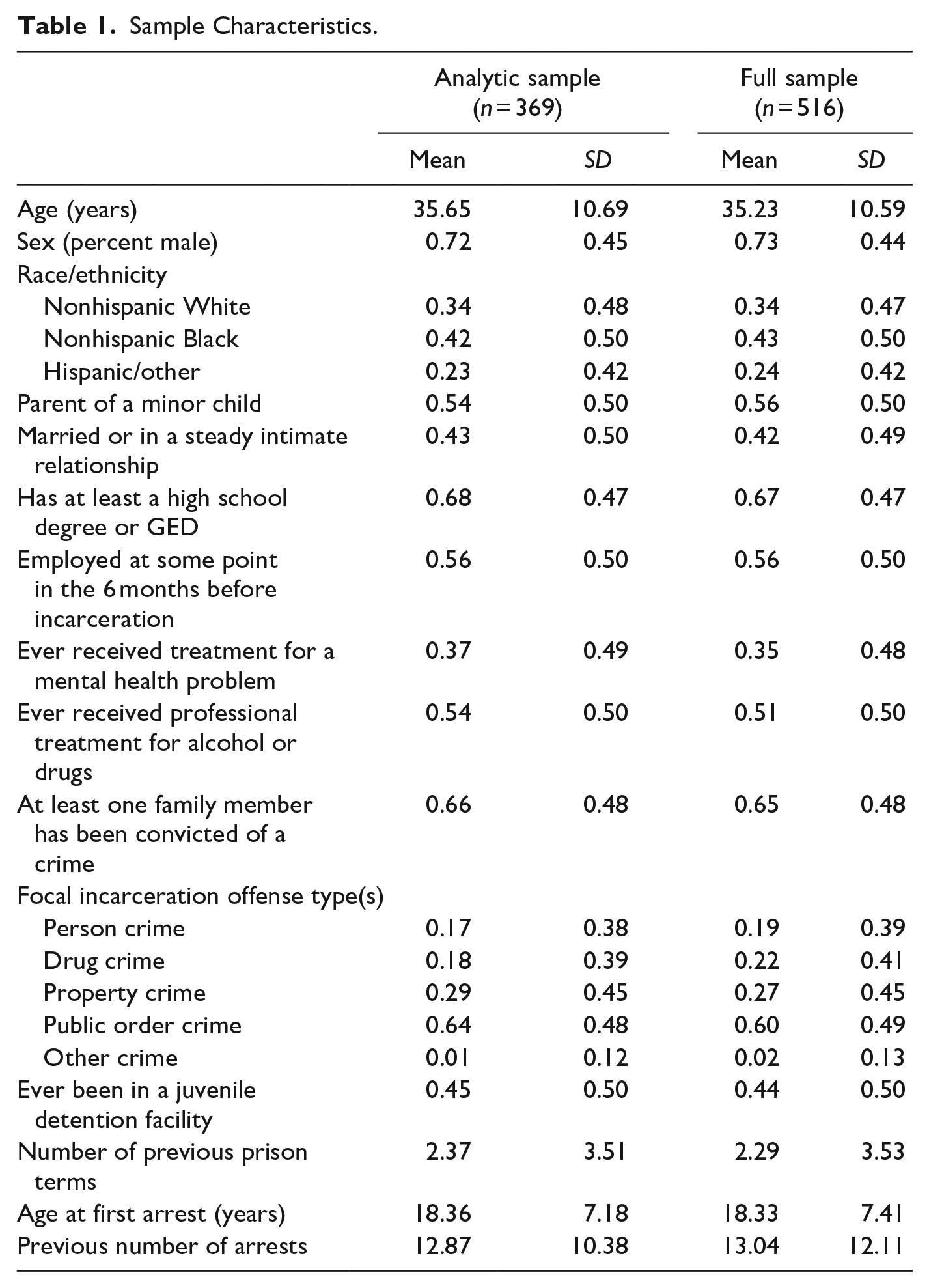
Because the data were originally collected for an evaluation of six AORDP sites, about half of the sample (approximately 45%) received enhanced reentry programming, which included case management, education, employment, housing, and behavioral health services. The remainder received regular reentry services. To address the research aims, the analytic sample is limited to study participants who completed at least one post-release interview (n = 369). Characteristics for this sample and, to assess attrition bias, for the full baseline sample, are shown in Table 1. On average, sample members reported being in their mid-thirties at the time of enrollment into the study. About 28% of the sample was female. Just over one-third was white, with 42% Black and about 23% Hispanic/Other. Over half of sample members were parents, and about 43% were either married or in a steady intimate relationship. Around 68% of sample members had at least a high school diploma or GED, and just over half were employed prior to incarceration. Over a third had received treatment for a mental health problem at some point before incarceration, and about half had ever received professional treatment for drugs or alcohol. Sample members had extensive criminal histories, with an average age of first arrest at 18 years and an average of 13 previous arrests and just over 2 previous prison terms. The most common offense type for the focal incarceration was public order crimes (64%), which is likely due to the Minnesota program’s exclusive focus on release violators, followed by property (29%), drug (18%), and person (17%) crimes. The analytic sample was statistically similar to the full sample on most covariates, suggesting that attrition bias was minimal.
Sample Characteristics.
Measures
Pre-Release Expectations
In this study, optimism is conceptualized as a “composite of situational domains relating to respondent’s perceptions of the living, working, familial and criminal justice related aspects of their lives that may facilitate or create obstacles to their successful reentry upon release” (Visher & O’Connell, 2012, pp. 388–389). Our operationalization of optimism is similar to that of several previous studies (Cid et al., 2021; Souza et al., 2015; Visher & O’Connell, 2012); and reflects the notion of an “optimistic sense of personal control” conceptualized by Maruna (2001). Specifically, at the pre-release interview, study participants were asked about their ability to navigate 16 aspects of post-release life. These items were based on those used in the Returning Home study (Visher et al., 2004), with additions including programs and services and more specificity regarding housing arrangements. The items assessed sample members’ perceptions about what their lives will be like regarding employment, housing, transportation, abstaining from illegal drug use, and other aspects of life (see Table 2). Respondents were asked how easy or hard they felt each aspect of life would be, using four-category response options: very easy = 4, easy = 3, hard = 2, very hard = 1. The optimism items were covered in the ACASI portion of the interview to avoid social desirability bias. For simplicity, Table 2 shows the distributions for the binary versions of each variable.
Descriptive Findings on Pre-Release Optimism and Post-Release Perceptions.
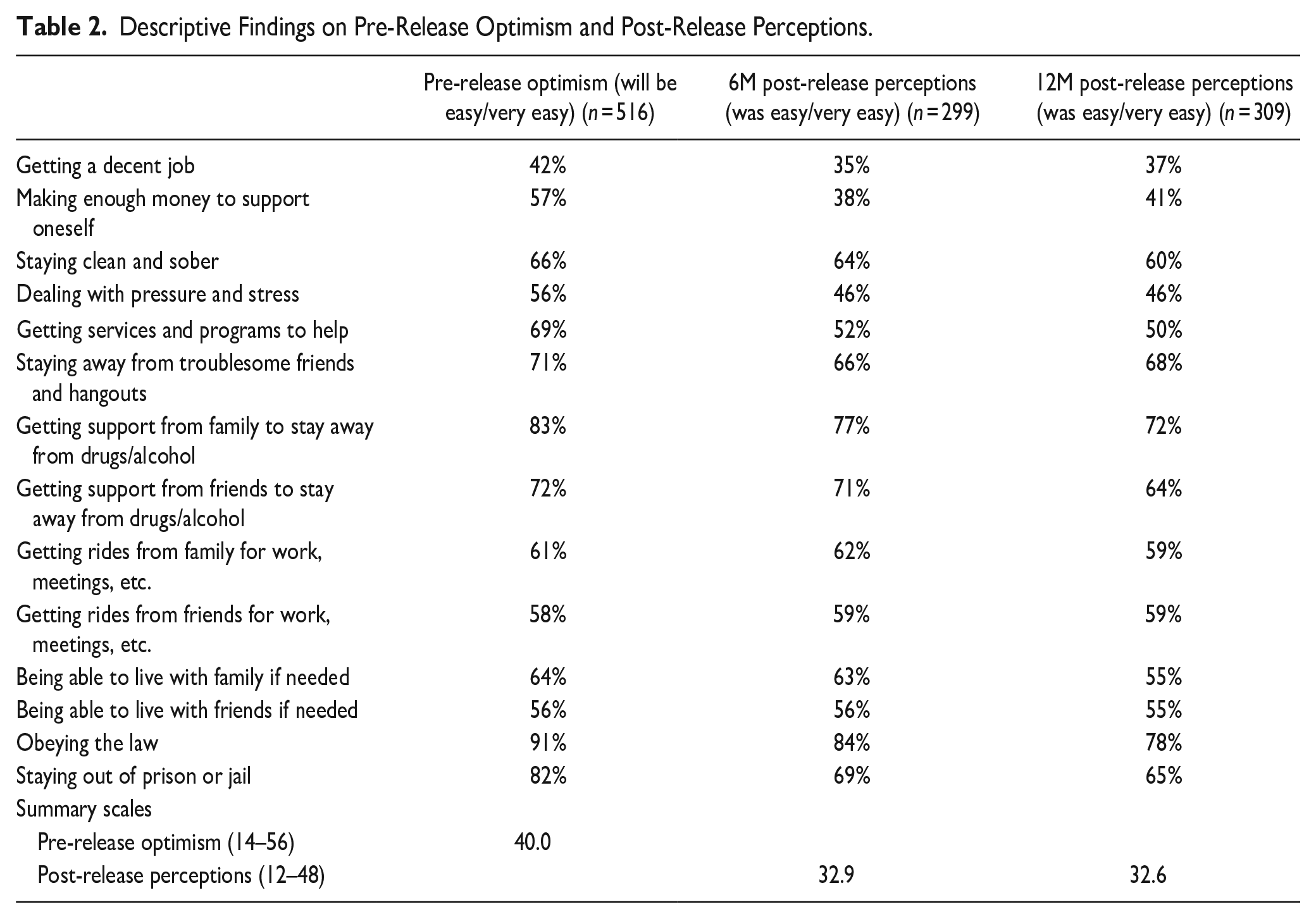
To create an optimism scale for use in the multivariate models addressing RQ1, we followed procedures used in several previous studies (Cid et al., 2021; Souza et al., 2015; C. A. Visher & O’Connell, 2012). This included creating a composite scale by summing the individual items, excluding 2 items that were skipped for some respondents based on prior responses: keeping a job and complying with supervision conditions. This score summed the four-category response options across the 14 items, with possible values ranging from 14 to 56 (mean = 40.00; scale alpha = 0.88). Higher scores indicate greater overall optimism about life circumstances upon release.
Finally, to create the typology described below, each sample member was classified as being “optimistic” or “pessimistic” at the pre-release interview based on their scale score. Those with scores from 36 to 56 were classified as “optimistic” (71.51% of the sample) because they generally felt that post-release life would be very easy or easy, and those with scores from 14 to 35 were classified as “pessimistic” (28.49% of the sample) because they generally felt that post-release life would be hard or very hard. The cutoff represents whether an individual’s average item score was optimistic (e.g., above a value of 2.5) or pessimistic (i.e., 2.5 or lower).
Post-Release Perceptions
Perceptions about the same 16 aspects of reentry were measured at the 6- and 12-month post-release interviews using the same question wording and response options but framed as “How easy or hard has it been for you to. . ..” The items used a “since release” reference period for the 6-month interview and “within the past 6 months” for the 12-month. As with the other attitudinal questions, these questions were asked via ACASI to avoid social desirability bias. Distributions for the binary versions of these variables are also shown in Table 2.
To create the typology described below, the 6-month perceptions variables were used to classify each sample member as generally perceiving their post-release experiences to be very easy or easy (positive perceptions), or hard or very hard (negative perceptions). For the typology, we focused on the 6-month (as opposed to 12-month) perceptions because this time period captures perceptions of reentry closer to the actual reentry period and minimizes issues with endogeneity with the indicators of reentry success at 6- and 12-months that were explored as outcomes. In other words, this mitigates against the possibility that perceptions of reentry success could have been influenced by whether a particular outcome was achieved. We classified sample members as generally having positive or negative post-release perceptions by first creating an aggregate score summing the four-category response options across 12 items that were asked of everyone. This excluded 2 items that were dependent on skip patterns and two additional items that allowed for a “not applicable” response option. The range for this scale was 12 to 48 (mean = 32.92; scale alpha = 0.89). This scoring follows procedures used in the Returning Home study to create post-release perceptions scales and in Souza et al.’s (2015) “experiences of difficulties after release” scale, which created a composite indicator of seven aspects of post-release circumstances. Sample members with scores from 31 to 48 were classified as having positive post-release perceptions (61.51%) and those with scores from 12 to 30 were classified as having negative perceptions (38.49%). Again, this cutoff reflected whether a respondent’s average item score was generally positive (above 2.5) or negative (2.5 or lower).
Typologies of Optimism
To answer RQ2 and for use in addressing RQ3, each sample member was categorized into one of four categories based on the extent to which their 6-month post-release perceptions were consistent with their pre-release expectations: realistic optimism, unrealistic optimism, realistic pessimism, and unrealistic pessimism. This categorization used the two binary indicators described above. Among sample members classified as optimistic pre-release, those who reported positive post-release perceptions were classified into the “realistic optimism” category (51.1%), which means they expected that post-release life would be easy and indeed perceived it to be easy, while those who had negative perceptions were classified into the “unrealistic optimism” category (22.0%), which means they expected things would be easy but instead perceived post-release life to be hard. Similarly, among those classified as pessimistic pre-release, their 6-month post-release classification was used to further categorize them into the realistic pessimism category (17.0%), which means they expected that post-release life would be hard and indeed perceived it to be hard, and unrealistic pessimism category (9.9%), which means they expected post-release life would be hard but instead perceived it to be easy.
Reentry Outcomes
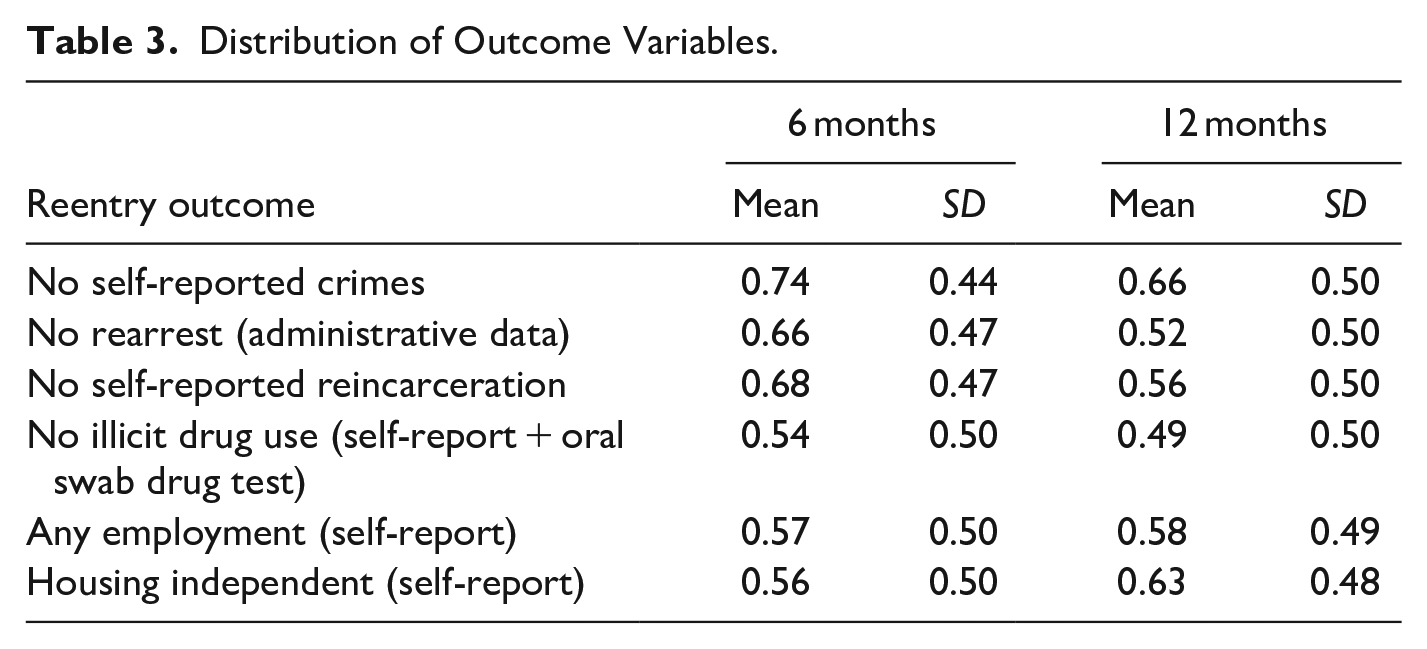
To explore the association between subjective perceptions of reentry (based on the optimism typology) and objective reentry outcomes, we developed several key indicators of reentry success at 6- and 12-months post-release. Each outcome variable is coded in a binary manner with higher values indicating positive outcomes. Any employment reflects that the respondent reported having any employment since release/within the past 6 months. Housing independence reflects that the respondent reported living in their own place or contributing to the costs of housing, as of the time of their interview. No self-reported criminal behavior reflects the respondent reporting no violent crimes, other crimes against people, drug sales, prescription drug crimes, other drug crimes, DUI, property crimes, or public order crimes during the reference period. These interview questions used behaviorally specific, rather than legal, language, and were asked during the ACASI portion of the interview to encourage honest reporting. No rearrests is based on data provided by state arrest agencies in the six states. No self-reported reincarceration is a dichotomous variable reflecting that the respondent reported no reincarceration in a jail or prison during the reference period. A combination of self-report and oral swab drug test data was used to create the no illicit drug use outcome, which reflects that the respondent did not report using any of the following drugs during the reference period and did not test positive to any drugs in the oral swab drug test: powder cocaine, crack cocaine, heroin, methamphetamine, other amphetamines, hallucinogens or designer drugs, prescription medications, or methadone. These items were also covered using ACASI to improve the accuracy of reporting. The distribution of these outcomes is shown in Table 3.
Distribution of Outcome Variables.
Control Variables
Several variables widely used in reentry outcome studies (Goodley et al., 2022; Ropes Berry et al., 2020) were included as control variables. These variables were measured via self-report at the pre-release interview and include: age, gender, race/ethnicity (using a dichotomous indicator of non Hispanic Black vs. other), married or intimate partnership, parent of a minor child, had at least a high school degree or GED at the pre-release interview, employed 6-months prior to incarceration, offense type for instant offense (person, property, drug, public order, or other), age at first arrest, and number of previous arrests.
Analysis
Two sets of analyses were employed. First, frequencies were used to show the distribution of the sample on each binary indicator of pre-release expectations along each aspect of reentry life, along with the same indicators reflecting perceptions of reentry life at 6- and 12-month post-release. Second, binary logistic regression was used to model reentry success outcomes at 6- and 12-months post release. We first explored outcomes (at 6- and 12-months) as a function of optimism, using the continuous pre-release optimism score as an independent variable. Then we assessed the association of each pattern (realistic optimism, unrealistic optimism, realistic pessimism, unrealistic pessimism) with objective indicators of reentry success at the two time periods. Specifically, we created three dummy variables and included them as independent variables in logistic regression models for each outcome. Each category was compared to realistic pessimism as the reference category, selected because identity theory suggests that this group would have the worst outcomes. The same set of control variables was used in all models.
Results
Pre-Release Expectations
Overall, pre-release expectations about post-release life were very optimistic (Table 2). Over half the sample felt it would be very easy/easy for them to succeed in all the aspects of post-release life except getting a job, for which only 42% felt it would be easy or very easy. In addition to getting a job, the aspects associated with the least optimism among the study sample were dealing with the pressure and stress they would face (56%), being able to live with friends if needed (56%) and making enough money to support themselves (57%). Sample members were the most optimistic about how easy it would be to obey the law (91%), get support from family to stay away from drugs or alcohol (83%), and stay out of prison or jail (82%).
Post-Release Perceptions
During the first 6 months after release, over half of the study sample found it to be easy or very easy to navigate almost all aspects of reentry life (Table 2). The exceptions were getting a decent job (which only 35% found to be easy), making enough money to support oneself (38%), and dealing with the pressure and stress faced (46%). At the 6-month interview, sample members reported the easiest time obeying the law (which 84% found to be easy) and getting support from family to stay away from drugs or alcohol (77%). Additionally, for most aspects of post-release life, aggregate perceptions at 6-months were less positive than pre-release perceptions. The most notable differences were making enough money to support oneself, for which the percentage of respondents who felt that this would be very easy/easy decreased by 19% percentage points (57% at pre-release and 38% at 6-month post-release) and getting services and programs to help, which decreased by 17 percentage points (69% at pre-release and 52% at 6-month post-release).
At 12-months post-release, the findings were similar. The only aspects of reentry life that less than half the sample found to be easy were getting a decent job (37%), making enough money to support themselves (41%), and dealing with pressure and stress (46%). As with the 6-month findings, the sample members reported the easiest time obeying the law (78%) and getting support from family to stay away from drugs or alcohol (72%). At the aggregate level, sample members’ perceptions were a bit less positive at 12-months than 6-months for some items, but these differences were smaller than the comparisons to pre-release responses.
Multivariate Association Between Optimism and Reentry Outcomes
The results of the logistic regression models examining the relationship between pre-release optimism (continuous scale) and reentry outcomes, which address RQ1, are shown in Tables 4 (6-month findings) and 5 (12-month findings). The findings indicated that greater pre-release optimism was positively associated with some reentry outcomes, but not consistently across the 6- and 12-month models. Specifically, the 6-month models indicated that every one-unit increase in pre-release optimism was associated with 5% higher odds of avoiding illicit drug use (odds ratio [OR] = 1.05; p < .01) and 3.6% higher odds of being housing independent (OR = 1.04; p < .05). However, optimism was not significantly associated with avoiding engaging in crimes, avoiding arrest, or being employed in the 6-month models. For the 12-month models, pre-release optimism was not significantly associated with any of the outcomes explored.
Multivariate Results for Pre-Release Optimism and 6-Month Reentry Outcomes.
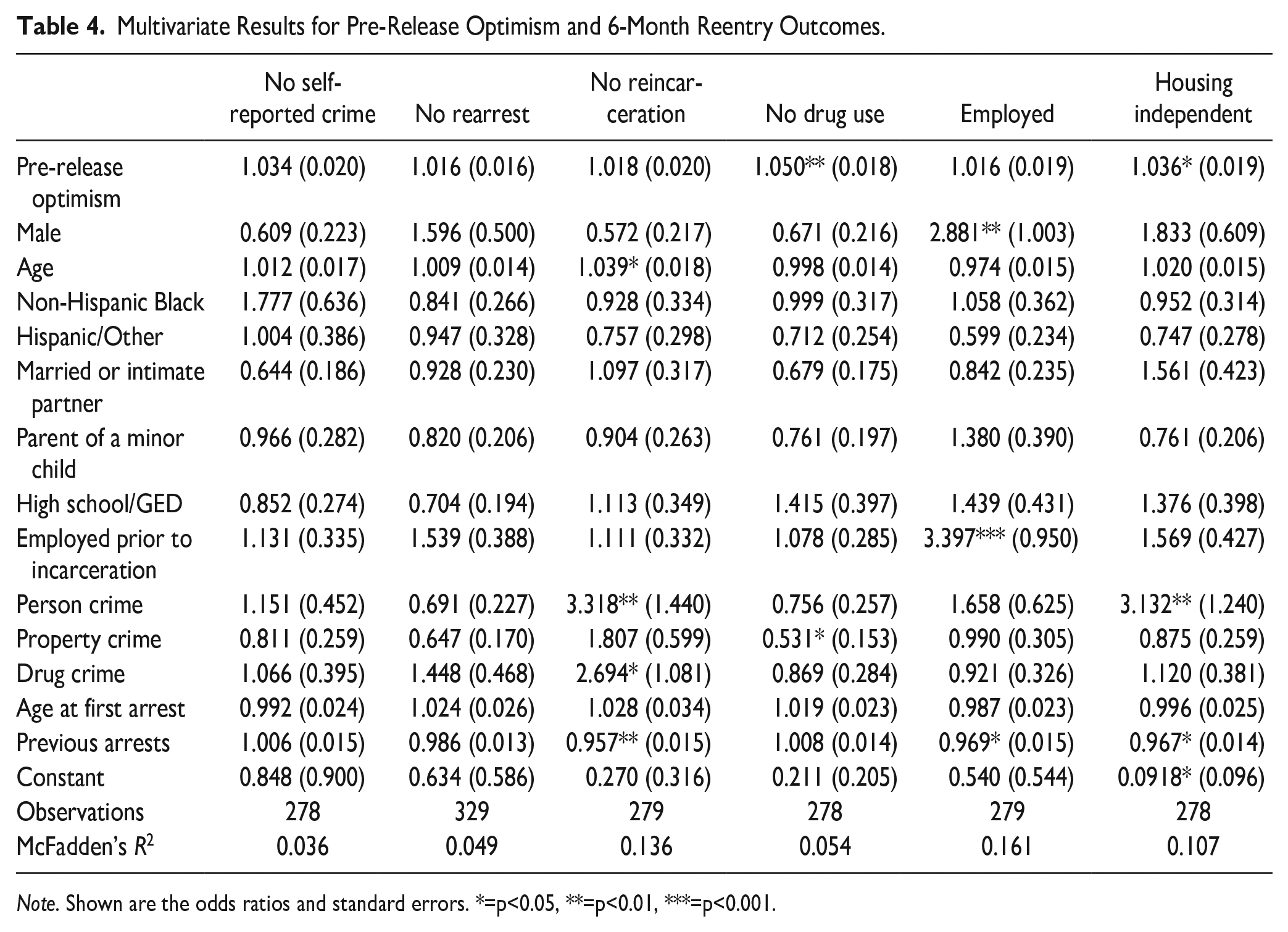
Note. Shown are the odds ratios and standard errors. *=p<0.05, **=p<0.01, ***=p<0.001.
Multivariate Results for Pre-Release Optimism and 12-Month Reentry Outcomes.
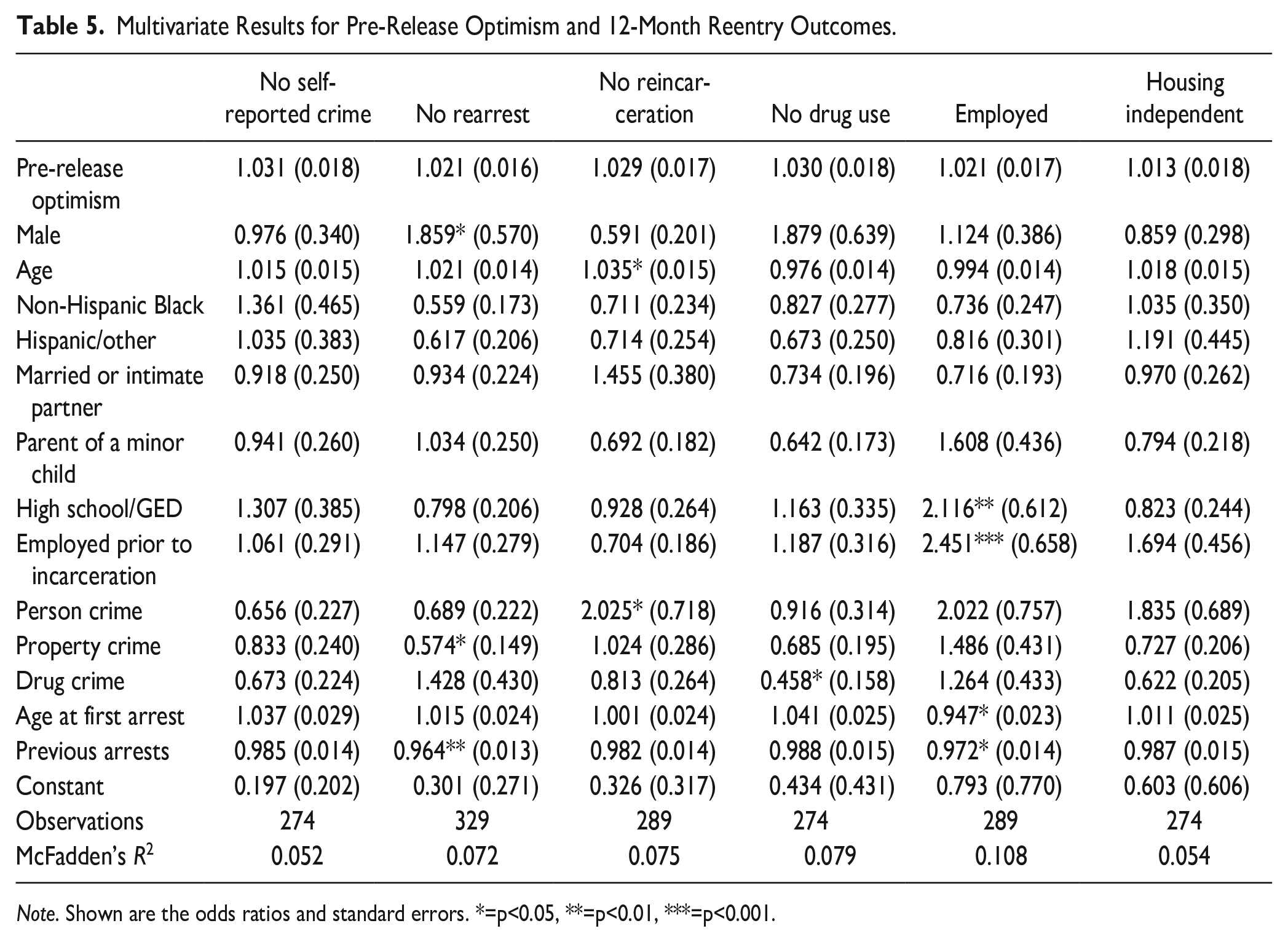
Note. Shown are the odds ratios and standard errors. *=p<0.05, **=p<0.01, ***=p<0.001.
Multivariate Examination Based on Optimism Typology
Next, we present the results of analyses that incorporate the typology of the direction and accuracy of pre-release expectations. As previously discussed, the distribution of sample members along the typology (RQ2) suggests that the predominant pattern is realistic optimism (51%), followed by unrealistic optimism (22%), realistic pessimism (17%), and unrealistic pessimism (10%). Thus, for over two-thirds of the sample, people’s pre-release expectations were “realized,” meaning that they aligned with post-release realities within the first 6 months of release. For 51% of the sample, the alignment was positive, such that they expected post-release life to be easy and indeed perceived it to be easy. For 17%, the alignment was negative (17%), such that they expected post-release life to be hard and indeed perceived it to be hard. For the remaining 32%, pre-release expectations were not accurate, with post-release perceptions being either worse (22%) or better (10%) than expected.
The results of the multivariate models examining which patterns are associated with objective indicators of reentry success, which addresses RQ3, are shown in Tables 6 (6-month findings) and 7 (12-month findings). The results show that sample members in the realistic optimism group had several significantly better outcomes than the reference category of realistic pessimism. Additionally, those in the unrealistic pessimism group—the group that perceived reentry life to be more positive than they expected it to be—also had some significantly better outcomes than the reference category. For one outcome, those in the unrealistic optimism group did significantly worse than the reference category, from whom we would have expected the worst outcomes.
Multivariate Results for Optimism Typologies and 6-Month Reentry Outcomes.
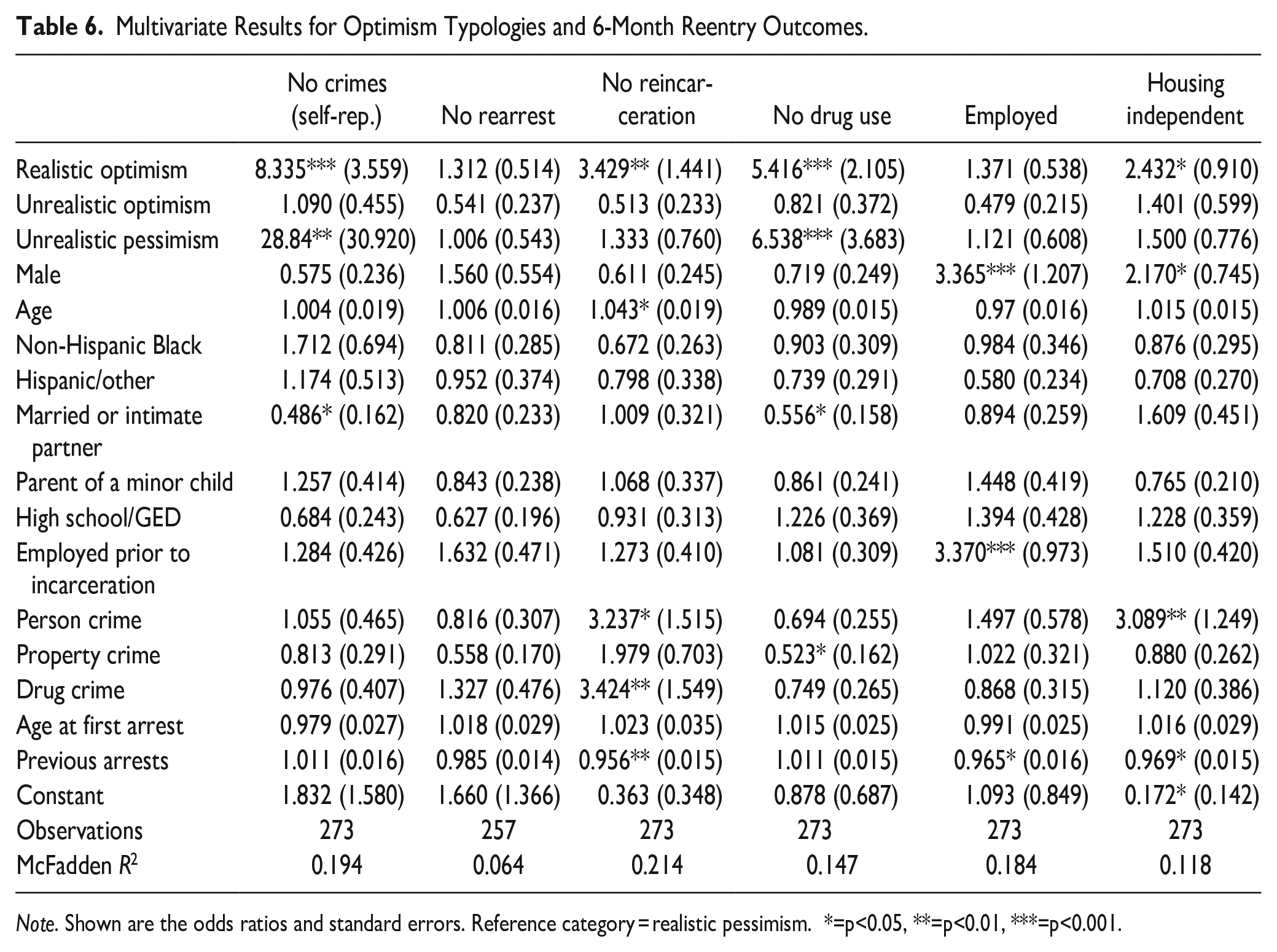
Note. Shown are the odds ratios and standard errors. Reference category = realistic pessimism. *=p<0.05, **=p<0.01, ***=p<0.001.
Multivariate Results for Optimism Typologies and 12-Month Reentry Outcomes.
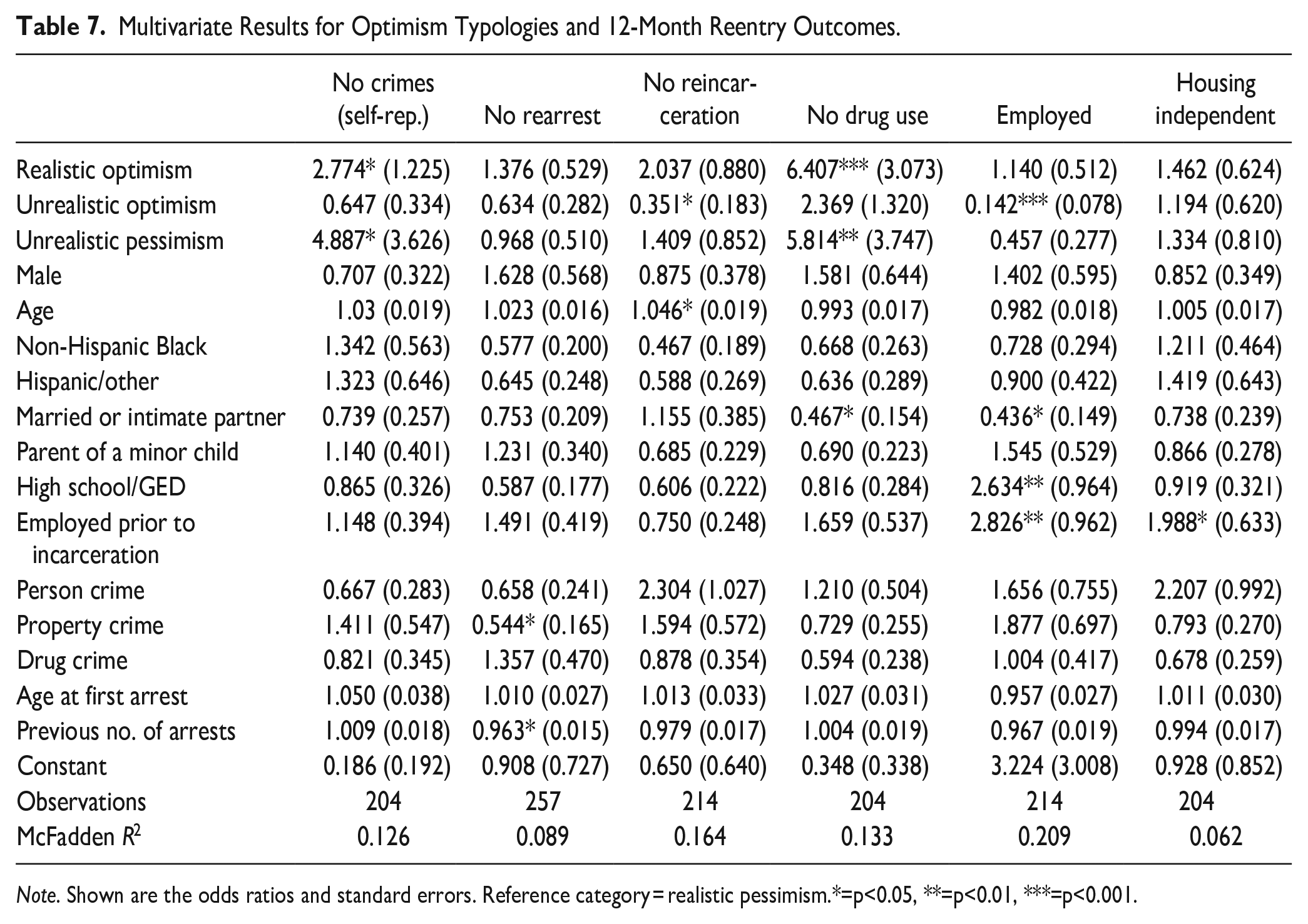
Note. Shown are the odds ratios and standard errors. Reference category = realistic pessimism.*=p<0.05, **=p<0.01, ***=p<0.001.
Specifically, the 6-month findings showed that sample members classified as having realistic optimism had higher odds of avoiding criminal behavior (OR = 8.34; p < .001), avoiding reincarceration (OR = 3.43; p < .01), avoiding illegal drug use (OR = 5.42; p < .001), and being housing independent (OR = 2.43; p < .05). Additionally, sample members classified as having unrealistic pessimism had higher odds of avoiding criminal behavior (OR = 28.84; p < .01) 1 and avoiding illicit drug use (OR = 6.54; p < .001).
The 12-month findings showed that the realistic optimism group had higher odds of avoiding criminal behavior (OR = 2.77; p < .05) and avoiding illicit drug use (OR = 6.41; p < .001). Additionally, sample members classified as having unrealistic pessimism had higher odds of avoiding criminal behavior (OR = 4.89; p < .05) and higher odds of avoiding illicit drug use (OR = 5.81; p < .01). Individuals classified in the unrealistic optimism group were significantly less successful than the reference category on two outcomes at 12-months: they were less likely to avoid reincarceration (OR = 0.35; p < .05) and to be employed (OR = 0.14; p < .001).
Discussion
A growing body of scholarship suggests that optimism plays an important role in the process of desistance (Paternoster & Bushway, 2009). It is also possible, however, that a strong sense of optimism during reentry may be detrimental if it is unfounded or leads to a lack of preparation. In the current study, we sought to advance understanding of the role that optimism has in one’s reentry success by developing and testing a typology of the direction (optimistic vs. pessimistic) and accuracy (realistic vs. unrealistic) of pre-release expectations on a holistic set of reentry outcomes. The current study findings contribute to the knowledge base on optimism and reentry success in three important ways. First, as with prior research (Chapin & Pierce, 2015; Lloyd & Serin, 2012; Villman, 2021; Visher et al., 2003), we found high levels of pre-release optimism among our sample on nearly every aspect of post-release life. We also found that optimism was associated with some statistically significantly better outcomes at 6-months, including avoiding illicit drug use and being housing independent. These findings may reflect the ability of people with high optimism to cope with stressors (e.g., through strategies other than drug use) and leverage positive social opportunities (e.g., those that could lead to housing), as suggested by LeBel et al., 2008. However, unlike previous studies (Burnett & Maruna, 2004; Doekhie et al., 2017), we did not find that pre-release optimism predicted avoiding criminal behavior, rearrest, or reincarceration at either follow-up period.
Second, the longitudinal nature of our dataset, which included pre-release as well as short- and long-term post-release periods, provided us with the unique opportunity to retrospectively assess whether pre-release expectations were realized post-release. In so doing, this study has helped advance the optimism literature generally and the identity theory of desistance more specifically by examining not only the direction of pre-release expectations, in terms of whether they were optimistic or pessimistic, but also the accuracy of such expectations. Aggregate data showed that most sample members felt it would be easy to succeed in various aspects of post-release life and in fact reported that it was not difficult to succeed in these areas after release. Further, the areas where sample members anticipated the most difficulty, such as in getting a decent job, making enough money to support themselves, and dealing with pressures they would face, were indeed those where they experienced the most actual post-release difficulty. Based on the typology we applied to understand the agreement between pre-release attitudes and immediate post-release perceptions at the individual level, we found that for just over half of the sample, their pre-release optimism was grounded in post-release reality.
Third, when analyzed by optimism typology, which used the 6-month interview data to reflect the time point as close to release as possible and minimize the likelihood of perceptions being confounded by actual outcomes experienced, those with realistic optimism had statistically significant better objective outcomes at post-release than the reference category (realistic pessimism) on four of the six reentry outcomes at 6-months and two of the six outcomes at 12-months. In contrast, those for whom optimism was unfounded (unrealistic optimism) generally maintained statistically similar outcomes to the reference group and, in fact, had worse outcomes for reincarceration and employment at the 12-month follow-up period. Interestingly, those for whom post-release reality was better than their pre-release expectations (unrealistic pessimism) held a statistically significant advantage over the reference group on the objective outcomes of self-reported crime and drug use at both the 6- and 12-month follow-up periods. Although this suggests that actual perceptions of ease in post-release life may contribute to success in the community even if one holds pessimistic views about reentry prior to release, the small sample size of this group (n = 28) requires caution in interpreting the findings.
Limitations and Future Directions
Although this study helps advance knowledge about optimism and reentry success, there are several limitations that should be kept in mind when interpreting the findings. First, this study involved a fairly small sample (n = 369) of medium- to high-risk adult men and women released from correctional institutions in six states and reflected state-specific eligibility criteria for reentry programming in those states, which could have included crime types or special programming needs. Thus, the sample was not representative of the included states or reentry populations nationally. Future scholarship should seek to evaluate the role that optimism plays in reentry success across more diverse and nationally representative samples. Furthermore, to better understand differences between jail and prison populations’ reentry expectations and outcomes, larger studies powered to assess these differences are needed. The many contextual differences between jails and prisons, such as the time spent incarcerated, distance of the correctional facility from one’s home, and access to reentry services and programs during incarceration undoubtedly shape reentry expectations. The current study had insufficient statistical power to compare optimism trajectories and their impact on reentry outcomes between those returning from jails versus prisons. Future research with larger samples is needed to overcome this limitation.
Second, about half of the study respondents received enhanced reentry programming as part of the Second Chance Act. Although prior examinations of this data did not detect statistically significant differences in outcomes and found only modest differences in service receipt for those who received enhanced programming relative to those who received the standard reentry services (Lindquist et al., 2020), future research should explore what impact correctional interventions have in mediating the effects of optimism on reentry success. In addition, depending on the nature of the intervention, the exploration of additional relevant outcomes such as education, family reunification, civic engagement, and behavioral health treatment could generate a more complete measure of reentry success.
Third, future research on the topic of optimism could continue to refine how this construct is operationalized and validly measured. Although this study measured optimism in a manner consistent with several previous research studies (Cid et al., 2021; Souza et al., 2015; Visher & O’Connell, 2012)—a decision based on available data on perceptions of how easy or difficult various aspects of post-release life would be—it is possible that one’s perceived ability to be successful in those aspects of life could be a stronger indicator of optimism. Such a measure would reflect one’s perceived ability to overcome potential hardships rather than perceptions about whether the hardships are likely to exist. More nuanced wording, tested through cognitive interviewing techniques with reentering citizens themselves, might help advance the measurement of optimism. Importantly, however, future efforts to collect data on this construct should be mindful that incarcerated people may perceive risks from their honest disclosure of potential challenges or areas where they may not be successful. They may be concerned that reporting potential “red flags” might harm their chances of release or affect their supervision conditions. A strength of this study’s methodology was the use of professional field interviewers who were not affiliated with the correctional system or reentry organizations, which ensured the confidentiality of participant responses and likely resulted in more honest responses. Furthermore, ACASI techniques were used for all potentially sensitive questions, including the attitudinal questions and those about criminal activity. This prevented the respondents from having to disclose their answers to an interviewer, further increasing the likelihood of truthful responses. Similar techniques should be employed in future research on this topic.
Fourth, as is common in longitudinal investigations of justice-involved persons (Lindquist et al., 2018; Visher & La Vigne, 2020), the current study suffered some attrition in the sample during the post-release interview period. Although 71.5% of the initial respondents were successfully interviewed during the follow-up period, it is possible that those who were interviewed were doing better in the community than those who could not be found or refused to participate. Comparisons of baseline characteristics between the included and excluded sample did not reveal any major biases. 2 Nevertheless, future research should strive to develop strategies that can minimize attrition in longitudinal reentry studies.
Finally, study data were collected from 2014 to 2015, which may not accurately reflect the current pre- and post-release contexts. Economic conditions, such as the job market and cost of living, fluctuate over time. In addition, the nature of substance use (e.g., synthetic opioids and associated overdose deaths) has changed substantially since this time period and has had a major impact on the criminal legal system. While it is unclear exactly how these changes affect reentry experiences and outcomes, research should seek to test the influence of optimism in reentry success using a more recently released sample. Also, given the lingering effects of COVID-19 on correctional programming and reentry (see Abrams et al., 2023; O’Hanlon & Broome, 2022), studies focusing on a post COVID-19 time period are particularly needed. Although the relationship between optimism and outcomes is unlikely to be affected by various social and economic conditions, replicating this study using more current data would be valuable, particularly data including representation from those confined and released during the height of the pandemic.
Implications for Policy and Practice
With these limitations in mind, this analysis offers several implications for policy and practice. First, several areas where respondents anticipated difficulty and experienced trouble, such as getting a decent job and making enough money to support themselves, can be influenced by policy actions. Efforts to remove barriers to employment for people with criminal records and promote living wages and sustainable, career-focused pathways, which are underway in many jurisdictions, could be promoted as a strategy for improving reentry outcomes (Baier, 2020; Crampton, 2022; Link & Ward, 2022).
Additionally, one of the biggest areas of disagreement between pre-release expectations and post-release reality was people’s ability to access programs and services, which proved to be much more difficult in the community than respondents anticipated prior to release. Previous studies have found that people reentering communities after an incarceration are aware of their needs for services such as accessing health care, counseling, mental health treatment, job training services, education, financial assistance, and transportation, and that many are open to receiving assistance (Kaplowitz et al., 2022; Nordberg et al., 2021; Visher, 2007). Policies that improve access to services would help ensure that reentering people get the services they need (Cox et al., 2021; Lindquist et al., 2020; Visher, 2007). Consideration should be given to the expanded use of furlough leave, which has traditionally been used in a very limited manner for work release programs or access to healthcare services not available in prisons. Furlough leave for the purpose of establishing access to community-based services and programs during incarceration might help not only improve access to services but also provide community exposure that could help people gain a more realistic understanding of what their official reentry period will be like and develop reentry plans to address likely challenges and deficits.
From a more practical perspective, the results of this study suggest that most, but not all, reentering people have an accurate sense of their post-release situations, whether anticipated to be easy or difficult. While many reentry programs implement risk and needs instruments to identify people and service areas for intervention, most assessments do not include self-reported expectations about what specific aspects of post-release life people believe will be easy or difficult. These types of items could be added to assessments, along with detailed questions that assess validity—in other words, the person’s understanding of what they need to be successful and the extent to which their expectations and capabilities match up with their goals. If someone’s expectations do not appear realistic, such information could serve as a responsivity factor to inform a tailored intervention strategy that builds on the person’s motivation and goals. For example, if someone with a sixth-grade education and no work history feels it will be easy to find a job, a case manager could work with them to make sure they understand the requirements that must be met and help develop a realistic strategy for gaining employment upon release. Additionally, simply improving an individual’s understanding of where they will likely struggle upon release could help increase their engagement with pre-release planning and their likelihood of participating in post-release services. For pessimists, showing them the potential pathways to overcoming the barriers they envision (such as through motivational interviewing) might help them see that there may be a reason for optimism and foster a desire for change.
In conclusion, this study adds to prior research in finding that pre-release optimism is positively associated with some aspects of reentry success but makes a unique contribution by empirically demonstrating the importance of realistic optimism. The results suggest that efforts invested to promote realistic optimism during the reentry planning process could be critical for post-release success. Helping identify potential reentry pitfalls and actively developing plans to avoid or overcome them should contribute to optimism that is better grounded. Developing such skills may further result in a greater feeling of control of one’s post-release environment, which, in an identity theory framework, is critical for personal transformation.
Footnotes
Declaration of Conflicting Interests
The author(s) declared no potential conflicts of interest with respect to the research, authorship, and/or publication of this article.
Funding
The author(s) received no financial support for the research, authorship, and/or publication of this article.
