



Abstract
Participation in prison-based religious programs has received a wealth of scholarly attention. Evidence shows that participation can provide critical coping mechanisms and access to a social support network. But despite a wealth of research, less work explores the pre-prison and in-prison attributes and experiences that may increase overall religious activity while in prison. We use data from the 2004 Survey of Inmates in State and Federal Correctional Facilities to explore the covariates of religious engagement, uncovering the critical role of adverse experiences including pre-prison physical abuse and in-prison depression. Our findings highlight the need to further explore the influence of extra religious attributes and contribute to scholarship on the role of faith based prison programing in the lives of incarcerated individuals.
Introduction
In January 2001, then-President George W. Bush issued an executive order creating a White House Office of Faith-Based and Community Initiatives, designed to improve the participation of faith-based organizations in delivering a variety of social services (USDOJ, n.d.a). A second executive order established specific teams at several federal agencies to carry out this mission; at the Department of Justice, this was the Task-Force for Faith-Based and Community Initiatives, which focused particularly on the needs of incarcerated peoples. Among their many programs was a reentry toolkit for faith-based organizations to use to design prisoner reentry programs, a guide to ethical prison ministry, lucrative federal grant opportunities, and workshops guiding faith-based groups through the grant application process (USDOJ, n.d.b). Aside from simple policy, President Bush took pains to highlight the work faith-based organizations accomplished in disadvantaged communities (Carlson, 2009). This policy was so popular that under President Obama, the initiative was renamed and expanded. As the Office of Faith-Based and Neighborhood Partnerships, the role of faith-based groups in supporting social service provision has grown to encompass a variety of needs driven by input from an Advisory Council of religious and humanitarian leaders.
While religious groups have operated within the prison system for far longer, these initiatives represent the transition of faith-based programs from individual grassroots initiatives into mainstream public policy, backed by millions of dollars in state and federal funding. Today, religious programing is present in some form in nearly every correctional setting (Schroeder & Frana, 2009). These programs are often cheaper than other prison programs and align neatly with preconceived notions of redemption and rehabilitation, making them extremely popular with prison administrators (Baier & Wright, 2001). But despite widespread scholarly attention to the efficacy of such programs, it is still unclear what factors contribute to participation in religious programs.
Theories of religious conversion and intensification prioritize the notion of a “crisis point” in driving participation in religious activities (Rambo, 1993). Individuals embrace religion when they experience an event that effectively shatters their worldview or when the cumulative experience of multiple small events leads one to feel they have reached “rock bottom” and must rebuild their lives. Arrival at prison combined with the initial indignities of prison entry, such as losing a sense of identity and access to the outside world, could be a “crisis point” that encourages religious engagement. This would align with theories of religion as a mechanisms of identity transformation—an individual arrives at prison, desperate to rediscover their good self, and turns to religion to find a path forward (Maruna et al., 2006). Similarly, individuals may view religion as a means of coping with the day-to-day struggles of prison life, as a source of community and peer support, or as a means of accessing reentry services. But prison-specific experiences may not be the sole catalysts for religious participation; in this study, we explore emerging covariates of religious engagement to identify characteristics that may distinguish those more likely to seek religion while in prison.
We use data from a nationally representative sample of incarcerated individuals, the 2004 Survey of Inmates in State and Federal Correctional Facilities, to explore the pre and in-prison experiences that may influence individuals’ engagement in religious activities. We use logistic and negative binomial regressions to examine the association between a variety of attributes—including pre-prison employment and mental health, time served, type of commitment offense, and adverse experiences—and the likelihood of religious engagement. Our findings have important implications for understanding how incarcerated individuals may perceive of religious programs, contributing to existing literature on the utility of religion in the prison context.
Faith-Based Prison Programs
Research on the links between religion and criminality can be traced back to the work of Durkheim ([1897] 1951)) who argued that religion is a basic integrative mechanism for social order that creates common beliefs and values that subsequently shape behavior. The stunning finding that religion is unrelated to crime (Hirschi & Stark, 1969) sparked a rich literature on the role of religious identity and practice on both initiation and continuation of criminal behavior. It is only natural, then, that religion would find its way into the prison system as a form of rehabilitating incarcerated persons.
Extant work on religion’s role in the prison environment has explored correlates of initiation into religion or on the efficacy of religion in reducing incidences of misconduct and disorderly behavior (Jang et al., 2018; O’Connor & Perreyclear, 2008). Individuals who engage with religion either through formal or informal means report stronger levels of adjustment to life in prison and improved mental health, including lower levels of depression and anxiety (Dye et al., 2014; Schneider & Feltey, 2009). Religion can, in fact, support positive emotion during prison especially among individuals serving a life sentence, who report finding a sense of hope and meaning in their religious belief (Aday, 2003; Hoskins & Cobbina, 2020; Kerley & Copes, 2009). Similarly, through interviews with prison chaplains, Denney (2018) reports that the contribution of religious programing is in changing a pattern of criminal thinking, generating a strong social support system, and emphasizing moral teachings. It imbues incarcerated persons with a sense of purpose and community that becomes necessary for desistance.
For practitioners and scholars alike, the key question in considering the utility of faith-based prison programing is understanding whether participation reduces recidivism post-release. On this, the evidence is mixed but generally supportive. Religious programs that mirror the tenets of successful secular programs by tackling a particular issue, focusing on the development of reentry skills (e.g., resume and interview skills, opening a bank account, family counseling), and utilizing risk-need based supervision can have positive outcomes (Morag & Teman, 2018; Seiter & Kadela, 2003). Individuals who describe engagement with religious others, as opposed to simply affiliating with a religious identity, report lower rates of recidivism (Mowen et al., 2018). Those who describe themselves as “religious and spiritual” are less likely to offend than those who identify as “spiritual but not religious,” suggesting that active participation in religious services or activities is the critical connection between religiosity and reduced recidivism (Stansfield et al., 2019; but see Bakken et al., 2014).
While the overall effect of religion on in-prison and post-prison behavior is seemingly protective, there is not yet clarity on the pre-prison and in-prison attributes that may influence individuals’ openness to religious engagement. Existing theoretical work examining religion in prison has documented that some turn to religion as a path to develop a new positive self-identity (Asencio & Burke, 2011; Giordano et al., 2008; Maruna, 2001; Paternoster & Bushway, 2009) while others point to the social support and control generated by involvement with religious others to explain the religion—desistance link (Hirschi, 2002; Stark, 1984; Stark & Bainbridge, 1996). Individuals may view engagement with faith-based prison programs as an entry to a bevy of religious social supports outside of prison. But these theories do not yet identify how characteristics such as age, incarceration history, prison experience, and more may differentially influence how an individual perceives of religion and religious groups.
Religion and Identity Transformation
Incarcerated individuals may turn to religious programs if their arrival at prison triggers feelings of crisis, pushing individuals to pursue religion in a quest to rediscover their “true” identity and begin to restore a sense of self (Maruna, 2001; Rambo, 1993). Using life history interviews with desisting individuals in the United Kingdom, Maruna et al. (2006) describe prison as a unique setting where assumptions about life are challenged. Hitting rock bottom in your self-identity creates an unbearable tension between who you wish you were and who you know yourself to be based on your previous pattern of behavior (Maruna, 2001). Religion, according to their argument, provides a mechanism for rebuilding their social identity and framing the prison experience as an opportunity for growth.
Indeed, popular sentiment supports the idea that religion can serve as a pathway to forming a new self-identity rooted in pro-social beliefs. Individuals undergo a cognitive shift from an individual’s present self-perception to an idealized future self, reconciling their past behavior with their aspired self (Maruna, 2001). The positive outlook encouraged by their new identity allowed individuals to cope with their prison life and look forward to reentering the community with hope. Conversion to a new religion, participation in a religious group, and personal religious practice all support this transformative practice, ultimately reducing misconduct through fostering pro-social identities (Jang et al., 2018).
Theories of identity transformation depart from central criminological tenets by arguing that shifts in behavior must begin first with the development of a new sense of self. One take on this path suggests that individuals “make good” on their identity by believing that they have always been a good person—that their criminal behavior reflects unsavory circumstances or poor choices not who they are (Maruna et al., 2006). Individuals create a new life history that unites their criminal past, their current incarceration, and their future hopes into a unified and positive narrative. Religious engagement provides a useful script to create this new self-narrative. A second take suggests religion serves as a “hook for change” for the motivated desister (Giordano et al., 2002, 2008). Individuals select into religious engagement after their initial decision to change, choosing religion as a source of instruction related to coping mechanisms, positive emotions, and connection with other religious individuals. A third approach rejects wholesale the notion that individuals discover, create, or select into a “good person” identity: instead, individuals transform their identity because they come to view the future afraid that they will slowly age into their anti-social “feared self” (Paternoster & Bushway, 2009). Individuals would turn to religion to alleviate the stress of this emotional crisis and delineate a path to avoiding the “feared self.” Despite their differences, each of these theories are united on the importance of an identity crisis in motivating engagement with religion.
Religion and Social Support
A parallel view of the role of religion in prison views religious programing as a source of social support and access to resources. By joining a community of similarly minded peers, individuals can establish a positive reputation among their fellow incarcerated persons, develop bonds that can support the monotony of day-to-day prison life, gain access to volunteers and ministers from outside the prison, and perhaps receive access to reentry support (Clear et al., 2000; Thomas & Zaitzow, 2006). Participation in these programs may provide a positive signal to parole officers, family members, and other loved ones that the individual has changed their ways and is prepared to return to the community
Religious programs can provide useful distraction during monotonous and repetitive days in prison. In a study of youth offenders, Cope (2003) describes how prison time is perceived differently than time outside. Individuals before prison had open unstructured time to fill with pleasurable activities but prison introduced highly structured routines and control over time and behavior. The boredom generated by this control could encourage individuals to seek out new social activities and peer groups to pass the time. Religious engagement, which might include participation in structured services, Bible studies, informal prisoner-led study groups, and private spiritual practice, provides order throughout day, mental stimulation, and an outlet for social interaction (Clear & Sumter, 2002).
Individuals could also turn to religion later in their sentence as they begin to eye their eventual exit from the institution and return to the community. Knowing that faith-based programs often offer employment support, housing assistance, access to Alcoholics Anonymous or Narcotics Anonymous meetings, pro-social peer groups, and other benefits that may ease the barriers to successful reentry, individuals may suddenly turn to in-prison religious groups to begin to access these key supports (Johnson, 2007; Mowen et al., 2018). Individuals may view religion not as a catalyst for identity transformation but as a source of practical resources that will encourage their return (Thomas & Zaitzow, 2006).
For those serving especially long or life sentences, their renewed religious engagement may reflect a desire to structure their days and build a life and routine while in prison. In a study of redemption scripts among long term prisoners, Bullock et al. (2019) describe how incarcerated persons turn to positive social groups to feel that they are making a positive difference in the lives of others. Individuals serving long sentences experience extreme mental anguish and despair, struggling to envision their life in prison in the coming decades (Cohen & Taylor, 1972; O’Donnell, 2014). Their early years are marked by high rates of depression, hopelessness, despair, and other negative emotions that may delay discovery of coping mechanisms, positive activities, and new identities (Crewe et al., 2017; Flanagan, 1980). Those with long sentences may also engage in identity transformation but this process may occur later as they seek to adapt to the particular strains of their undefined future in prison (Hulley et al., 2016).
The Role of Personal Attributes
Despite the wealth of evidence supporting the link between each of these theories and both in-prison negative behaviors and post-prison success, there remains little identifying the role of pre-prison individual attributes in shaping openness to religious practice (Meade, 2012; Meade & Steiner, 2013). Personal characteristics, such as age or number of prior incarcerations, might influence an individual’s onset into religion by affecting their view of the pains of imprisonment (Sykes, 1958). Onset could also be influenced by broader lifecourse attributes including childhood exposure to religion, neighborhood subculture, financial resources, and social support from family and loved ones which would alter an individual’s ability to cope with prison entry and develop peer support networks (Camp et al., 2006). In critical work examining the relationship between religiosity and inmate misconduct, Meade (2012) discusses the potential for individual characteristics to predispose some individuals to seek religion. However, little work has set out to explore what individual traits might matter when considering selection into religion in prison.
In-prison experiences could also lead to variation in individual participation in religious activities. Victimization, experiences with restrictive confinement, visits from family members and loved ones, and attitudes toward corrections officers have all been found to have varying influence on adjustment to prison depending on how long the individual has resided in the facility (Butler, 2019). For example, some research has shown that prison environments, particularly those that are more violent, may influence the ability of incarcerated individuals to adjust to life in prison (Steiner & Meade, 2016). These extra-religious prison experiences and attitudes could affect openness to religious programs, trust in peer groups, cynicism toward religion’s ability to support prison adjustment, or otherwise influence motivation such that onset to religion is not systematic across a group of incarcerated persons.
Extant research identifies two attributes that may particularly influence the likelihood of religious engagement: age and number of prior incarcerations. Older individuals may be quick to view their prison sentence as a crisis point due to increased awareness of limited time to connect with their children, parents, and other loved ones. They may turn to religious programs to attend to this emotional distress or to channel their desire for meaning and purpose into mentoring younger prisoners (Aday et al., 2014; Koenig, 1995). Similarly, older individuals may be more likely than younger to approach their reentry process particularly bleakly, viewing their return to community in light of severed ties with family members, older children, diminished employment prospects, and a rapidly changing society.
Individuals with fewer prior incarcerations may begin their prison sentence unprepared for either the challenges or opportunities in prison and may require more time to adjust sufficiently to life in prison before seeking out additional activities than their peers with more prior incarcerations. They may be especially motivated to improve themselves so that they do not return to prison at the end of their sentence (Camp et al., 2006). Individuals with multiple prior sentences may feel capable of coping with prison life and may not feel the need to engage with religion, regardless of their time spent on the current sentence, their age, motivation, or desire for reentry support. Those who are embarking on their first incarceration period may immediately turn to religion for access to special privileges, such as contact with a volunteer chaplain from outside the prison setting who may serve as a reminder of pre-prison life. First incarceration may exacerbate the pains of imprisonment, requiring a longer adjustment period before an individual may seek out other groups. Despite these potential lines of inquiry, there appears to be little research examining the role of these, and other, important covariates in identifying those who may be most likely to turn to religion while in prison.
Current Study
Extant work on the role of religion in the lives of incarcerated persons, and particularly around desistance from criminal behavior, has examined the many ways religious engagement can support a renewed identity and encourage self-transformation. Enmeshed within this perspective is the view that while religion may encourage identity change, the primary use of religion is in encouraging access to a peer network, stimulating activities, and resources that may support the reentry process. We build upon these theoretical lines to explore how personal attributes, pre-prison life experiences, and in-prison experiences shape patterns of religious activity. We contribute to existing scholarship on faith-based prison programing and incarceration experiences by addressing this gap. Specifically, we examine:
(1) What pre-prison attributes and experiences, such as prior incarceration, are related to in-prison religious activity?
(2) What in-prison attributes and experiences, such as time served, are related to in-prison religious activity?
Data and Methods
The data used for this study come from the 2004 (ICPSR 4572) Survey of Inmates Confined in State and Federal Correctional Facilities (SISFCF) that were collected by the United States Bureau of the Census for the Bureau of Justice Statistics. These data are representative of the incarcerated population confined in state prisons. The self-report data provide comprehensive information on individuals’ pre- and in-prison experiences, such as criminal history, commitment offense, substance abuse, pre-prison employment, mental health, prison programing, prison misconduct, and involvement in religious activities while incarcerated. The representativeness of respondents in addition to the depth and quality of measures contained in the survey make this an ideal dataset to examine the proposed hypotheses.
The sampling strategy for the 2004 SISFCF proceeded in several stages. First, the 2000 Census of State and Federal Correctional Facilities (ICPSR 4021) served as the sampling frame for the 2004 SISFCF surveys. In other words, the 2000 Census of State and Federal Correctional Facilities provided the population of prisons in the United States, and this population was used for selection into the 2004 SISFCF. State prisons with the largest prison populations were selected with certainty, and other prisons were separated into strata by census region and ordered by size of the prison population. This was done to ensure adequate representation by prison size and region. Next, systematic sampling was used to select prisons that led to the inclusion of 269 prisons for the 2004 SISFCF. The second stage of sample selection included the recruitment of participants to complete the self-report surveys. Individuals who occupied a bed the previous night were randomly selected from a list of all individuals confined in the prison to participate in the survey. In total, 14,499 individuals were selected to participate in the 2004 SISFCF.
The target population for this study includes all incarcerated persons confined in state-operated prisons in the United States. As such, individuals housed in community facilities, boot camps, or federal prisons were removed as there are unmeasured differences in the function and purpose of these prisons as compared to state-operated prisons (e.g., amenities and security) (Steiner & Wooldredge, 2008, 2013). After removing these facilities, there were 12,185 individuals confined in 242 state-operated confinement facilities in the sample. Listwise deletion was used for individuals with missing data (n = 444), which left a final sample of 11,741 individuals confined in 242 state-operated confinement facilities. In an effort to determine whether there are differences between missing and non-missing cases, difference of means tests were computed and no significant differences were found between missing and non-missing cases. A second target population for this study includes individuals who self-reported engaging in a religious activity in the past week of confinement (n = 6,731). This sample is needed to examine the amount of time individuals spend engaging in religious activities.
Measures
The outcomes for this study include religious engagement past week and # of hours in religious engagement past week that are available in Table 1. The first outcome, religious engagement past week, is a dichotomous indicator of whether a respondent did the following in the past week, “engaged in any religious activities, such as religious services, private prayer or meditation, or Bible reading or studying?” (2004 SISFCF, p. 772). The second outcome, # of hours in religious engagement past week, asks respondents to provide the number of hours they spent engaging in any religious activities with zero indicating no engagement in religious activities. 1 These outcome measures are ideal for the current study because the survey questions focus on the past week rather than the entirety of someone’s prison sentence. This reduces concerns for memory recall in addition to reducing concerns for causality for the independent variables included in this study.
Weighted Descriptives of Full Sample.
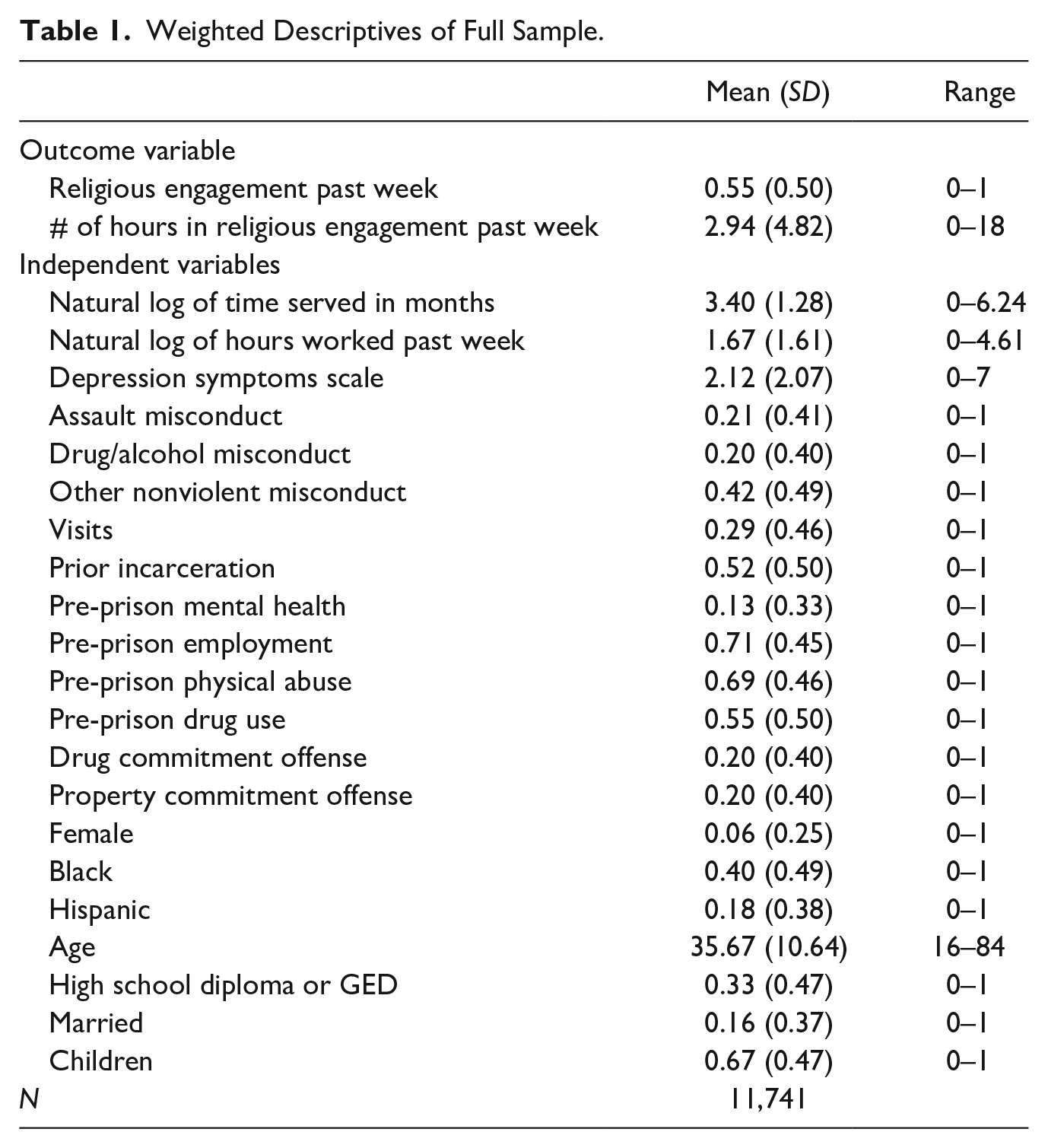
There are several pre-prison and in-prison experiences that merit consideration when examining religious engagement. Many of these measures are used to understand the adjustment process to prison (Steiner et al., 2014), and these experiences may also explain someone’s willingness to engage in religious activities.
Pre-prison experiences included in the statistical models presented below include prior incarceration, pre-prison mental health, pre-prison employment, pre-prison physical abuse, pre-prison drug use, drug commitment offense, and property commitment offense. Prior incarceration is a dichotomous measure of whether someone previously served time in prison. Pre-prison mental health is a dichotomous measure that indicates whether someone was ever admitted to a mental health hospital, taken medication for a mental illness, or received mental health counseling in the year prior to their arrest (James & Glaze, 2006 and Cain et al., 2016 used a similar measure to capture mental health). Pre-prison employment, physical abuse, and drug use are dichotomous indicators that capture whether someone maintained employment in the month before their arrest, reported ever being the victim of physical abuse prior to the current prison sentence, and used drugs in the month before their arrest for the current incarceration. Finally, drug commitment offense and property commitment offense capture whether someone’s primary commitment offense was a drug or property offense as compared to all other offense categories (e.g., violence).
In regard to in-prison experiences, natural log of time served in months, natural log of hours worked past week, depression symptoms scale, assault misconduct, drug/alcohol misconduct, other nonviolent misconduct, and visits may be associated with religious engagement. Time served in months and hours worked past week are continuous measures that are positively skewed, and the natural log of both measures was taken to constrain this skewness. Depression symptoms scale is a seven-item additive scale of dichotomous measures that was previously used by Cain et al. (2016) to understand victimization and maladjustment using this same dataset. As such, we adopt an identical measure for purposes of this study. The scale ranges from 0 to 7 and includes the following symptoms that individuals reported experiencing in the past year: (1) change in appetite, (2) sleep disturbance, (3) feeling that no one cares, (4) interests in pleasure changed (i.e., sex), (5) inability to sit still and focus, (6) feelings of worthlessness and guilt, and (7) suicidal attempt or ideation (α = .77; this is nearly identical to the α reported by Cain et al., 2016). The final three measures that capture in-prison experiences include rule violations or prison misconduct. Each of these measures, assault misconduct, drug/alcohol misconduct, and other nonviolent misconduct, are dichotomous indicators of whether someone self-reported receiving an official write-up for the rule violation since admission to prison for the current sentence. It is important to note that these measures are self-reported instances of official misconduct (e.g., the respondent received an official infraction or write-up). Finally, visits captures whether the respondent received a visit from family in the past month of incarceration.
Demographic and background characteristics include Female, Black, Hispanic, age, high school diploma or GED, married, and children. Female is a dichotomous self-report measure of the respondent’s sex as compared to male. Black and Hispanic are self-report measures of race/ethnicity with white serving as the reference category. High school diploma or GED, married, and children are dichotomous measures with the reference categories being not having a high school diploma or GED, being married, or having children.
Analytical strategy
The outcome measures examined in this study include a dichotomous measure of religious engagement in the past week and a count measure of the number of hours engaged in religious activities during the past week of confinement. Several factors may influence religious engagement, and it is necessary to include pre- and in-prison experiences that influence religious engagement in the same statistical models. The structure of the data allows us to adjust for the effect of having individuals nested within prisons. In other words, the multivariable models examined in this study account for the clustering of individuals within prisons through the use of Stata’s cluster command. However, prior to making this decision, we examined whether the outcome measure, religious engagement, varied across facilities that would support the use of multilevel modeling. We calculated the intraclass correlation coefficient (ICC) to determine how much of the variance in religious engagement is within facilities as compared to between facilities. The ICC varies from 0 to 1 and a higher score indicates that the outcome varies across facilities. We used the HLM Program Version 7.0 to first estimate an unconditional model that provides the information necessary to calculate the ICC. The ICC for the religious engagement measure was less than 1%, and so most of the variation in the outcome measure occurs within facilities as compared to between facilities. This finding indicates that multilevel modeling is not necessary for purposes of our study.
Given that the outcome measure does not vary substantively between facilities, we use multivariable logistic regression with the full sample to understand who engages in religious engagement. Next, we examine how much time individuals dedicate to religious activities with the sample of individuals who self-reported engaging in any type of religious activity. We include a negative binomial regression model as the majority of respondents indicated very little involvement in religious activities, which leads to over dispersion in the amount of hours dedicated to religious engagement. We use the sampling weights provided by the Bureau of Justice Statistics in these analyses, and the weights are normalized to account for the targeted population examined in this study.
In addition to examining the multivariable models, we also examine whether the predicted probability (logistic regression) of religious engagement differs across categories of time served. Prior research by Butler (2019) examined whether the correlates of prison adjustment vary across categories of time served. In that study, Butler (2019) used three categories to capture different lengths of time served, which include less than 1 year served in a facility, between 1 and 5 years served in a facility, and more than 5 years served in a facility. Although we include a continuous measure of time served in the regression models presented below, we also estimate the same regression models with the above categories of time served in prison. We estimate predicted probabilities and predicted counts to provide additional context as to the magnitude of their effects on religious engagement. If a predicted probability or count is higher for a specific category than others it may indicate that those with a certain category of time served are more likely to engage in religious activities.
Results
The descriptive statistics presented in Table 1 reveal that slightly more than half of respondents engaged in religious activities in the past week of confinement. Approximately 20% of the sample engaged in assault and drug/alcohol rule violations and 42% engaged in other nonviolent misconducts. Most respondents indicated experiencing some type of physical abuse prior to the current incarceration (69%). The majority of respondents are male with only 6% indicating they are female, and the average age of the sample is 36 years old.
The findings for the multivariable logistic regression model examining religious engagement are presented in Table 2. Pre-prison experiences that increased the odds of religious engagement include pre-prison employment (1.38) and pre-prison physical abuse (1.24), whereas prior incarcerated decreased the odds religious engagement (OR = 0.83). In regard to in-prison experiences, time served in months (OR = 0.93) and assault misconduct (OR = 0.85) decreased the odds someone engaged in religious activities the past week. Hours worked the past week (OR = 1.04), depression symptoms scale (OR = 1.06), and visits (OR = 1.16) increased the odds of religious engagement the past week. Incarcerated individuals who are female (OR = 1.99), Black (OR = 1.82), or Hispanic (OR = 1.47) reported increased odds of engaging in religious activity in the past week of confinement than males or White incarcerated individuals. Individuals who are older (OR = 1.03), have a high school diploma or GED (OR = 1.27), or who are married (OR = 1.31) also reported increased odds of religious engagement.
Logistic Regression Examining Engagement in Religious Activity Past Week.
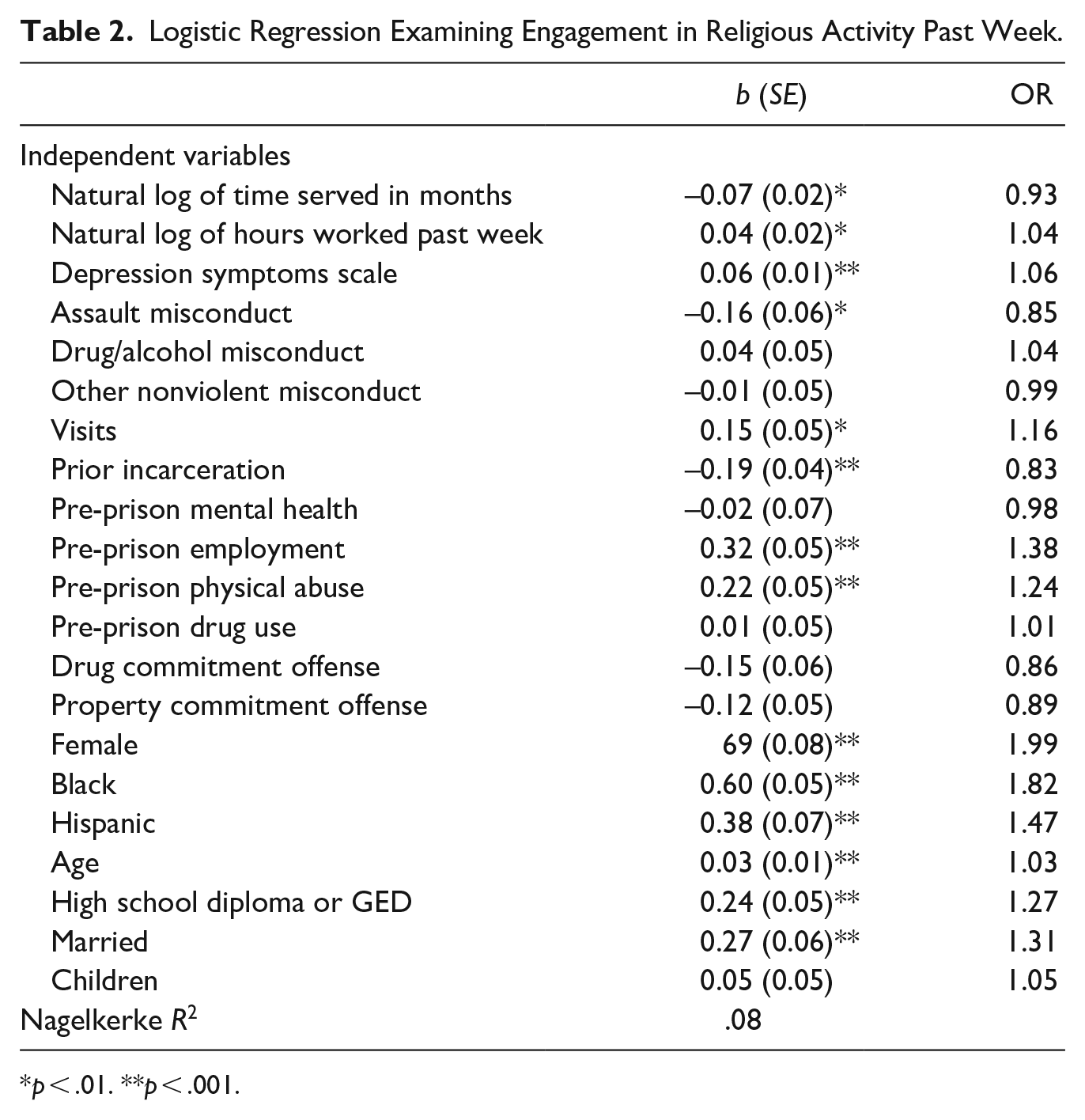
p < .01. **p < .001.
Next, we examined the reduced sample of individuals who reported engaging in any religious activity in the past week (N = 6,731). Table 3 provides the descriptive statistics, and individuals self-reported approximately five and a half hours engaged in religious activities in the past week. The other descriptive statistics are largely similar to those presented in Table 1 with the exception that the proportion of females (8%) increased and so too did the individuals self-reporting pre-prison physical abuse (71%).
Weighted Descriptives of Sample Who Engaged in Religious Activity (Past Week).
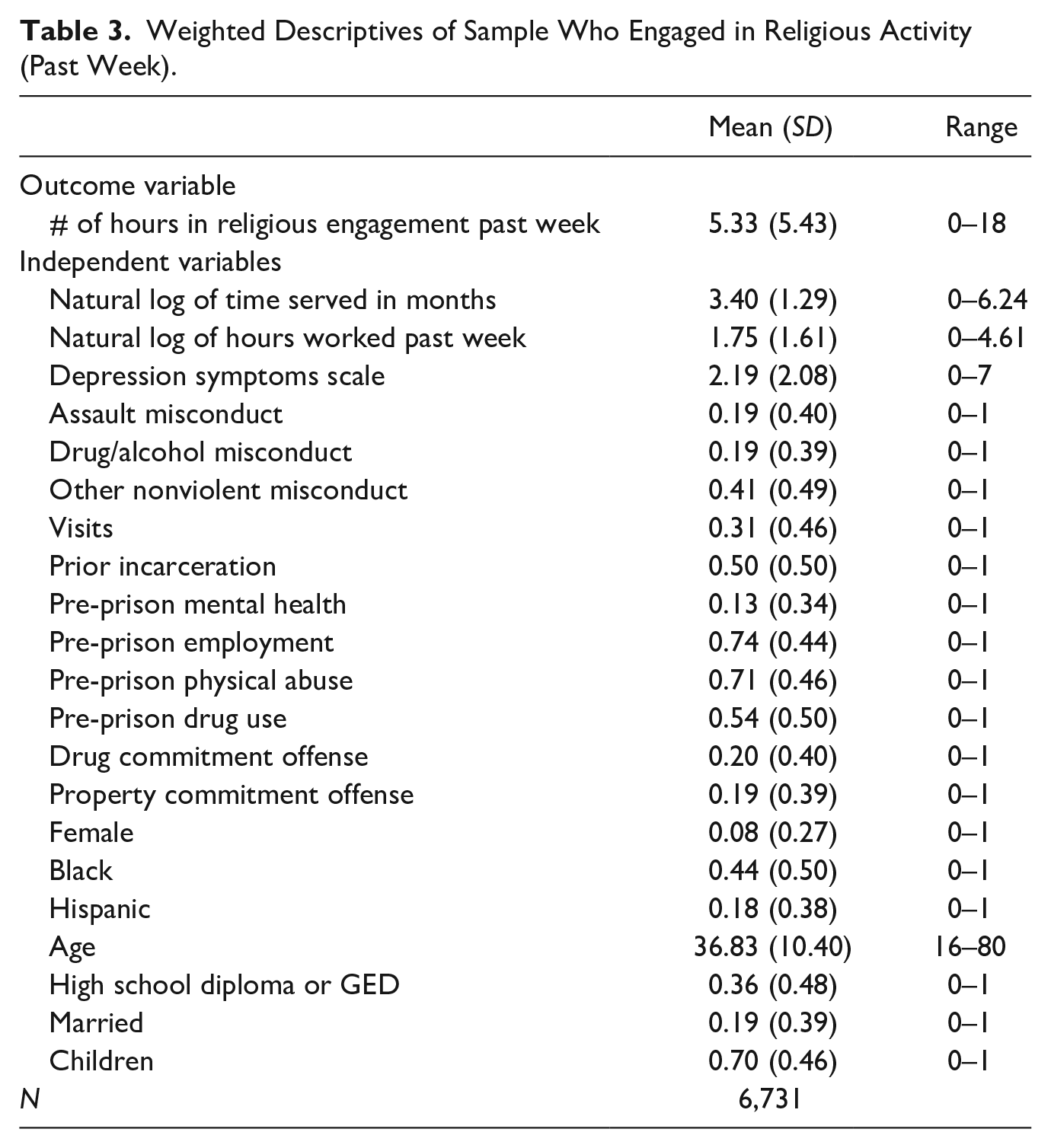
Table 4 includes findings for the multivariable negative binomial model examining the number of hours individuals spent engaging in religious activities. Drug commitment offense (IRR = 0.87) and property commitment offense (IRR = 0.90) were associated with decreases in the number of hours engaged in religious activities as compared to individuals with no prior incarceration and other commitment offenses such as a violent commitment offense. Pre-prison physical abuse (IRR = 1.09) was associated with increases in the number of hours spent in religious engagement. The findings related to individual demographic attributes are largely identical to those of the multivariable logistic regression analysis that finds females, Blacks, older persons, individuals who possess a high school diploma or GED, and who are married reported more hours engaged in religious activities in the past week of confinement. However, Hispanics reported fewer hours engaged in religious activities in the past week compared to Whites (IRR = 0.89).
Negative Binomial Regression Examining Hours of Engagement in Religious Activity Past Week.
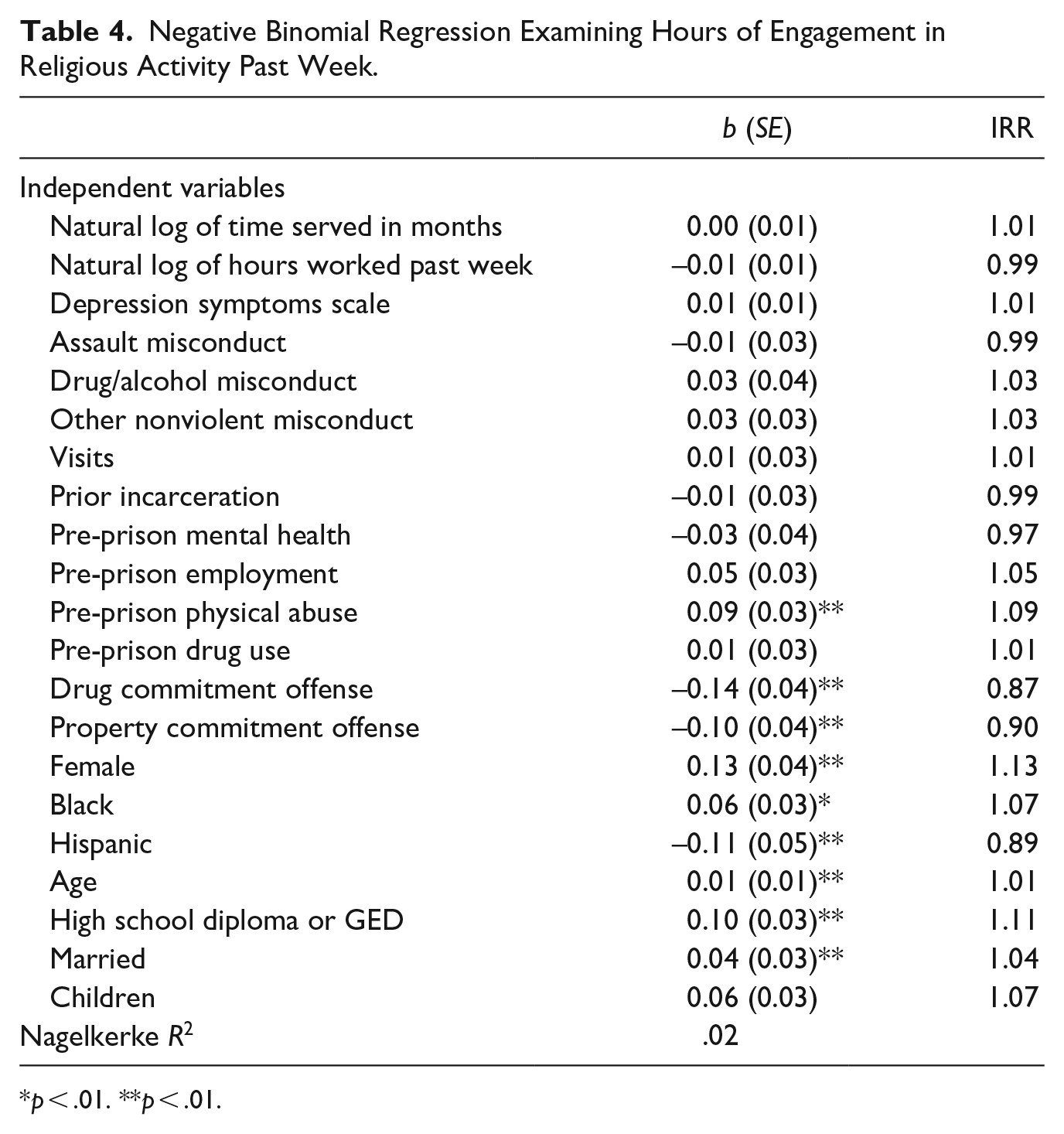
p < .01. **p < .01.
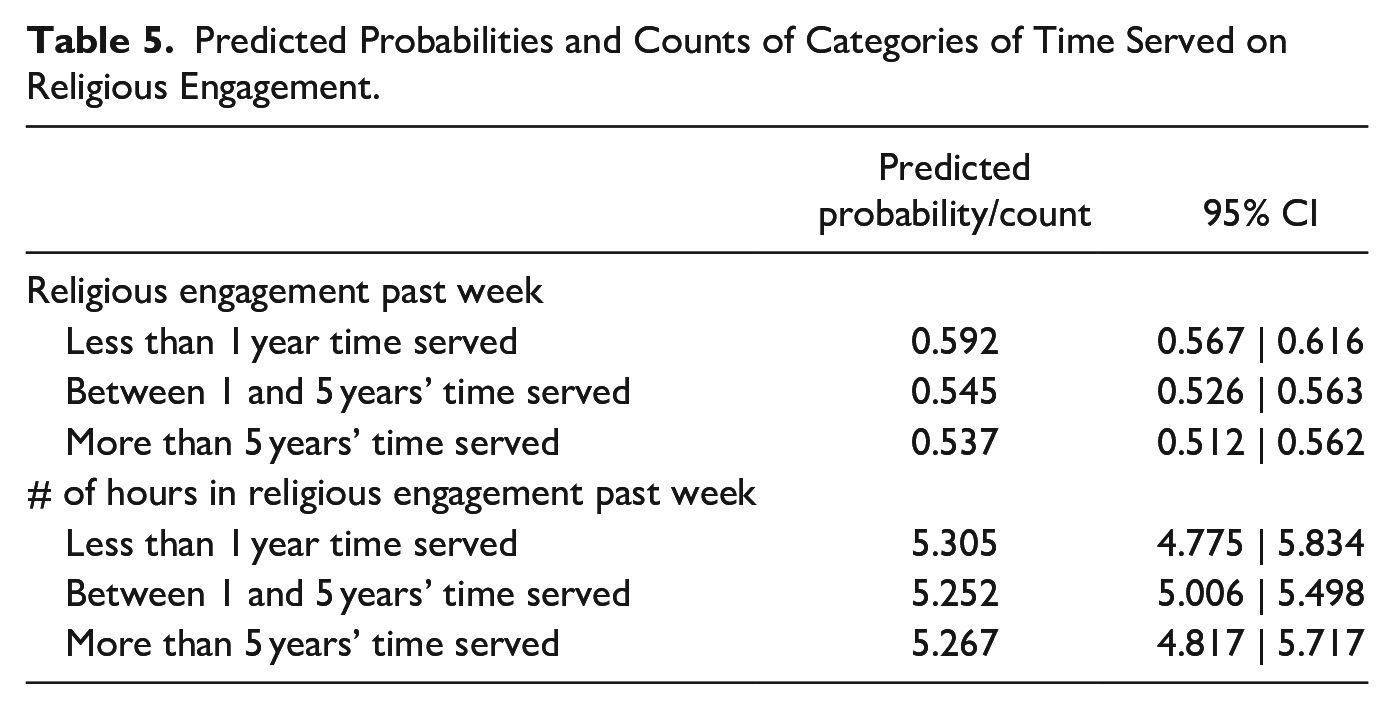
Table 5 presents predicted probabilities of time served in prison on religious engagement and hours engaged in religious activities. The findings for any religious engagement in the past week of confinement revealed that individuals with less than 1 year time served in prison have the highest odds to engage in religious activities (PR = 0.59), whereas the odds for religious engagement are lowest for those who have more than 5 years’ time served in prison (PR = 0.54). However, it is important to note that the difference between the two predicted probabilities is small (0.05). Similarly, we find that individuals with less time served in prison report slightly higher predicted counts of hours engaged in religious activities than those with more time served, but again this difference is small (0.05).
Predicted Probabilities and Counts of Categories of Time Served on Religious Engagement.
Conclusion and Discussion
The link between religion and crime has long captured the imagination of policymakers, prison practitioners, and scholars alike. The lower cost of such programs and connection to virtuous ideals appeals to lawmakers and correctional departments, resulting in the distribution of millions of dollars in federal and state funding for organizations that provide faith-based prison programs. Faith-based programs are often available through volunteer-based services who partner with local religious leaders to provide services, lead group studies, or share religious texts for self-study; this kind of program may be particularly appealing to correctional departments as it requires lower financial investment on the part of the department. Even those programs administered by the department itself can be attractive. Religious services can cost between $150 − $250 per person, a significant cost-saving compared to other programs that may cost several thousand dollars per person (O’Connor & Perreyclear, 2008).
In light of these appeals, research has outlined several theories accounting for the link between religion and crime. We highlight two prominent lines of thought relating specifically to religion and prison: some scholars argue that religious practices encourage a transformation of self-identity that encourages individuals to come to terms with their prior criminal self and envision a positive future self. Others argue that while this transformation is important, it is the social support provided by engagement with religious groups that is most critical for changing behavior. Despite the wealth of literature assessing how religion is used by individuals in prison, researchers have paid less attention to who turns to religion in the first place. We contribute to this gap by exploring what pre- and in-prison attributes and experiences are related to overall religious activity including the amount of time spent engaging in religion activities.
We use data from the 2004 Survey of Inmates Confined in State and Federal Correctional Facilities (SISFCF), which is nationally representative of the population of state prisoners. The self-report measures included in this study allow us to explore a wide variety of pre-prison attributes (including a spate of adverse experiences such as drug use, physical abuse, and poor mental health), in-prison experiences (such as level of depression, number of hours worked, and violent/nonviolent misconducts), and religious activity (measured as the number of hours the respondent spent on religious activities in the prior week) alongside a number of demographic measures. One interesting finding is that religious engagement did not vary substantively between facilities; such variation typically supports the use of multilevel modeling to understand facility effects on religious engagement. One explanation for the lack of between-facility variation is that religious protections serve as one of the most fundamental rights afforded to incarcerated persons (Cooper v. Pate, 1964). A landmark United States Supreme Court case, Cooper v. Pate (1964), served as a catalyst for intervention into the proceedings of state prisons by the federal government. This particular case involved access to religious materials by incarcerated persons, a religious protection provided by the United States Supreme Court. Applied to the current study, individuals who want to partake in religious activities may not be impeded by the prison environment, though we note that access does not guarantee that the quality of this engagement is worthwhile or beneficial. Future research needs to examine the types of religious engagement that might vary across facilities, such as peer involvement, ceremonial gatherings, etc.
Overall, the most influential attributes influencing religious activity are those capturing adverse experiences. Pre-prison experiences with physical abuse and in-prison levels of depression, as captured by the depression symptoms scale, increase both the odds of engaging in religious activity and the number of hours of activity reported by the respondent. Interestingly, other attributes that increased religious activity include positive behaviors such as pre- and in-prison employment and visits from family or friends. In contrast, violent misconducts, prior incarcerations, and increased amount of time served reduced overall religious activity.
It may be that those with particularly difficult experiences turn to all manner of positive activity to restore a sense of self, cope with the pains of imprisonment, or make plans for the future. Religion may be but one tool in a broader collection of coping mechanisms that includes work and family support. Perhaps suffering from depression encourages individuals to seek out a coping strategy that can be practiced independently, increasing the appeal of religious activity. Some research on non-prison populations has explored the interaction between experiences with trauma, feelings of depression, and religious activity (for a review, see George et al., 2000) but has yet to elucidate how or why religion may be appealing to those with histories of trauma, especially for prison populations.
Those who have just begun their prison sentence, serving under a year of their sentence, are more likely to engage in religious activity. Perhaps the disjuncture between the respondents’ self-identity and present circumstance is stronger in the early months of a prison sentence, providing a greater push toward religion. Additionally, the early months or years of a prison sentence requires individuals navigate and learn the norms of prison (Thomas et al., 1978), and these individuals may engage in religious activities to cope with this uncertainty and stress. We encourage scholars to further explore these links with contemporary and qualitative data.
Although the data are nationally representative of incarcerated individuals, there are limitations that merit discussion. First, the outcome measures examined in this study do not include the type of religious activity individuals engaged in, such as reading, praying, or engaging in congregational worship. However, it is worth noting that the outcome measures include engagement in religious activities in the past week of confinement, and so the association between many of the correlates and religious engagement are temporally ordered. We acknowledge that the cross-sectional design of the dataset introduces problems related to the timing of religious engagement in prison, and whether the recency of certain experiences influence subsequent activity. A longitudinal study design would provide greater insight into the various experiences people have and whether certain behaviors have prolonged or short-term effects on religious engagement. Next, we are unable to capture pre-prison religious activities that may inform in-prison religious engagement, such as whether religious engagement increased during incarceration. Also, the 2004 SISFCF was collected almost two decades ago, but the data are ideal to answer the research questions posed in this study because it includes a variety of pre- and in-prison experiences that are associated with religious engagement as illustrated in our multivariable models. Additionally, the data were collected during a time when the acting U.S. President George W. Bush advocated for greater religious programing across prisons. Therefore, future research should examine whether the correlates of religious engagement are applicable to more recently incarcerated individuals.
These findings are tempered by their cross-sectional nature, reducing ability to form any causal arguments, and the lack of more detailed measures that might allow for an exploration of the mechanisms underlying some of the highlighted relationships. However, they provide a useful catalyst for future research that seeks to understand why an individual might turn to religion while in prison and how faith-based prison programs might better identify those who would be amenable to religious activities. Addressing this gap would allow for a more robust understanding of the full process of religious engagement and lead to more effective faith-based programing.
Footnotes
Declaration of Conflicting Interests
The author(s) declared no potential conflicts of interest with respect to the research, authorship, and/or publication of this article.
Funding
The author(s) received no financial support for the research, authorship, and/or publication of this article.
