



Abstract
The nature of prison visits is likely to explain differences in visitation effects, but has received little research attention. Unique survey data of the Dutch Prison Visitation Study enable us to provide a first systematic account of the nature of visits, by describing the topics of conversation and experienced feelings of both incarcerated individuals (n = 787) and visitors (n = 662). Results indicate much variation in feelings (positive and negative) and topics of conversation (emotional and problem-solving topics), a strong link between topics and feelings, and show that visitors have more negative visitation experiences than incarcerated individuals. These insights into the nature of visits help to uncover the black box of prison visitation and provide directions for future research.
Introduction
Receiving visits while incarcerated is part of a humane detention regime and a fundamental right of incarcerated individuals (e.g., Coyle & Fair, 2018). Moreover, it is seen as a promising intervention, which may strengthen social bonds, provide social support, and reduce feelings of strain (Cochran & Mears, 2013). Although empirical studies on the effects of prison visitation generally show small beneficial effects (e.g., Cochran, 2012; De Claire & Dixon, 2017; Mitchell et al., 2016; Monahan et al., 2011; Reidy & Sorensen, 2020), not all studies have been able to replicate these findings (e.g., Atkin-Plunk & Armstrong, 2018; Clark, 2001), with some even showing negative effects (Benning & Lahm, 2016; Casey-Acevedo et al., 2004; Jiang et al., 2005; Lindsey et al., 2017; Siennick et al., 2013).
To explain these contrasting findings, scholars increasingly point to the heterogeneity of the visitation experience (e.g., Tasca, Wright, et al., 2016). As a result, recent work on prison visitation examines effects of visitation depending on, for instance, different type of visitors, frequency, timing and patterns of visitation (e.g., Atkin-Plunk & Armstrong, 2018; Berghuis et al., 2021; Brunton-Smith & McCarthy, 2017; Casey-Acevedo et al., 2004; Cochran et al., 2020; Duwe & Clark, 2013). This focus on the heterogeneity of the visitation experience is a promising avenue in increasing our understanding about the conditions under which visitation might be beneficial for incarcerated individuals’ well-being, behavior, and post-release outcomes.
Although research into the heterogeneity of prison visitation has developed rapidly over the last decade, there are two sources of heterogeneity that have not received a lot of research attention yet. Firstly, we know little about what actually happens during the visitation hour (Cochran & Mears, 2013). This is a crucial element in understanding the impact and consequences (e.g., well-being and behavior) of prison visitation for incarcerated individuals and their visitors. What incarcerated individuals and visitors talk about, likely impacts the way they feel after a visit, and most likely has consequences for their state of mind on the prison unit after visitation hour. Indeed, there is evidence that misconduct levels peak just after visitation hour (Siennick et al., 2013). It is less evident, however, how exactly to interpret such an increase. Therefore, more knowledge is needed on what happens during visitation hour. Knowing what characterizes a positive or negative visit experience, is a first crucial step toward determining under what conditions prison visitation has beneficial effects or not.
Secondly, we know little about the visitation experience of visitors, which might differ from incarcerated individuals’ experience. Indeed, Dixey and Woodall (2012) described that incarcerated individuals viewed the visit “as the highlight of their time in prison” (p. 29), whereas visitors’ experiences were more negative, both emotionally (for instance, causing anxiety, stress and worry) and practically (for instance, because visiting was often time consuming, physically tiring, and expensive). It is important to increase our knowledge on visitation experiences of visitors. Besides the well-being of visitors themselves, positive visit experiences for visitors may increase the likelihood of visiting their loved ones, and thereby stimulate contact between incarcerated individuals and their social network, which we know to be important for life in prison and after release (Brunton-Smith & McCarthy, 2017; Hickert et al., 2019).
The current study therefore expands previous work by further unraveling the heterogeneity of the prison visitation experience by giving a large-scale systematic account of how incarcerated individuals and visitors experience the visitation hour. More specific, using data from the Dutch Prison Visitation Study (DPVS), we examine what feelings are experienced by incarcerated individuals and visitors during the visitation hour (RQ1), what incarcerated individuals and visitors talk about during the visitation hour (RQ2), and how this conversation content is related to experienced feelings of incarcerated individuals and visitors (RQ3). As such, we attempt to fill in some important gaps in prior research: (1) most prior studies are exploratory and this limits the conclusions that can be drawn about patterns of experiences as well as their generalizability; (2) past research focused almost exclusively on the perspectives of families, more specifically partners and children. Therefore, what feelings are experienced, and what topics are discussed, during visits with other family members and friends remains largely unknown, and (3) while prison visitation is an interaction between incarcerated individuals and visitors, previous studies typically investigated experiences of incarcerated individuals or visitors separately. Combining both perspectives in one study is the valid way to compare visitation experiences between incarcerated individuals and visitors.
Findings of our study can guide future effect studies and help understand why some researchers find evidence for beneficial visitation effects whereas others find no or even harmful effects (De Claire & Dixon, 2017). This knowledge can then be used to guide prison policy, for instance, it may help identify “high-risk visits,” which may require additional guidance from prison staff after visitation hour, to secure incarcerated individuals’ well-being and a safe and calm return to the prison unit. Moreover, this study can increase awareness, and detail our knowledge on the “secondary prisonization” (Comfort, 2003) that visitors experience while visiting a prison.
Previous Literature and Theoretical Background
Given the difficult access to both incarcerated individuals and their visitors, the literature on prison visitation has been dominated by large-scale examinations of administrative data from mostly US prisons (e.g., Cochran et al., 2020; Duwe & Clark, 2013). Although these studies have increased our understanding on the determinants and consequences of prison visitation greatly, they do not tell us much about the experiences of prison visitation, or the visiting hour. Moreover, these large-scale studies tend to focus on incarcerated individuals, not visitors. There are some (dated) in-depth qualitative studies that focus on the experiences of prison visitation, but they focus on the broader visitation experience of visitors (e.g., logistical, financial and practical aspects of visiting a prison, or emotional aspects of having to visit a loved one in prison), rather than zoom in on what exactly takes place during the visitation hour (e.g., Arditti, 2003; Christian, 2005; Fishman, 1990). And although researchers have elaborately mapped the emotions of incarcerated individuals while being imprisoned (e.g., Crewe, 2014; Laws & Crewe, 2016), studies that focus on emotions that arise directly from being visited remain scarce. Guided by our research questions, the following sections summarize findings from existing work.
Incarcerated individuals’ and visitors’ feelings during visiting hour
The only study, to our knowledge, to systematically map adult incarcerated individuals’ feelings during visitation is the Arizona Prison Visitation Project (Tasca, Wright et al., 2016; Turanovic & Tasca, 2017). In their mixed-method study, Turanovic and Tasca (2017) focused on different emotional reactions (e.g., feeling comforted, stressed), and found that there was much variation in the feelings of detainees during visits, but that visits could mostly be viewed as positive experiences. Visits made incarcerated individuals feel loved, supported and comforted. Negative feelings, such as feeling guilty, sad and stressed, also occurred, although less frequent. Lastly, these researchers concluded that positive and negative feelings could be experienced simultaneously during the same visiting hour (Turanovic & Tasca, 2017).
Studies on visitors’ experiences suggest that visitors experience a wide range of feelings during their visits to prison. For instance, Arditti (2003) describes the visitation experiences of parents/caregivers (n = 56), who reported that visits were experienced as emotionally painful. Fishman (1990), in a longitudinal study of incarcerated individuals’ wives (N = 30), reports that visitors experience “in rapid succession anger and attachment, quarrels and remorse, vicious fighting and passionate reconciliation” (p. 161). For visiting children, experienced feelings seemed to be predominantly negative. For instance, based on reports of their caregivers (n = 40), Tasca (2014) found that about 65% of children’s reactions to visits were negative (e.g., fear, anger). Existing studies do not systematically compare feelings of incarcerated individuals and visitors, but the study of Dixey and Woodall (2012) suggests that visiting family members have a less positive visitation experience compared to incarcerated individuals. Data from three groups (incarcerated individuals, families and staff) “. . . led to widely diverging and contested perspectives on the same event, with the players constructing their own versions of reality” (p. 41).
Topics of conversation of incarcerated individuals and visitors during visitation hour
Overlooking previous literature on what incarcerated individuals and visitors talk about during visitation hour, we were able to derive three overarching themes. First, research shows that incarcerated individuals and visitors often talk about relationships and well-being during visit hour. For instance, the affirmation of the relationship itself (e.g., declarations of love, talking about sex, and making plans for future, such as getting married and having children) was reported as key theme for partners (Fishman, 1990; Kotarba, 1979). In addition, Kotarba (1979) also uncovered the well-being of the incarcerated individuals as an important topic, which was also found in a more recent study on family processes during visitation (Tasca, Mulvey et al., 2016).
Life after release appeared a second important topic of conversation during visiting hour. This, for instance, involved promises from husbands to their wives about changing their behavior after release, that is getting a job, providing for the family (Fishman, 1990), or involved caregivers to demand from their incarcerated partner to take better care for their children and quit bad behavior (Tasca, Mulvey et al., 2016).
A third central topic of conversation was life in prison. As described by Kotarba (1979), incarcerated individuals’ grievances about their stay in prison were a common topic of conversation. From a visitor’s perspective, Fishman (1990) reported that wives frequently used visits to “acquire information about their husbands’ in-prison performance, e.g., the extent to which they participated in prison work and leisure activities” (p. 173).
Theory and findings on the relation between topics of conversation and experienced feelings during visitation hour
The third research question examines whether the subjects of conversation during visits were related to the experienced feelings of incarcerated individuals and visitors during visitation hour. Scholars within the field of communication make a distinction between emotion-focused topics and problem-solving topics, which are argued to be differently related to social support, and emotions (Burleson & Goldsmith, 1996). Emotion-focused topics are considered comforting or helpful (that is, eliciting positive feelings), whereas problem-solving topics are less unequivocally linked to comfort. Instead, the effect of talking about these topics is more dependent on the specific message. This notion is closely related to the two types of social support, that criminologists distinguish in the social support theory: expressive and instrumental support (Cullen, 1994; Lin, 1986). Visitation can provide expressive (or emotional) support to detainees, for instance when talking about relationships, or how the incarcerated individual feels, or when talking about difficulties they experience during their imprisonment. In terms of instrumental (or problem-solving) support, visitation provides an opportunity for incarcerated individuals to plan practical matters for after release, such as work or housing (e.g., Bales & Mears, 2008). Following Burleson and Goldsmith (1996) we would expect that talking about relationships, well-being and life in prison (expressive support through emotion-focused topics) would elicit more positive feelings (such as feelings of happiness, feeling comforted, supported or loved), and talking about life after release, such as talking about work or education, living situation, finances or access to health care, and family life after release (instrumental support through problem-solving topics) would elicit positive feelings, and negative feelings (such as feelings of guilt, helplessness, or feeling down or stressed).
Although there is no systematic account of the association between experienced feelings and the topics of conversation during visits yet, there is some evidence that supports the observation of Burleson and Goldsmith (1996) that emotional topics can elicit positive feelings. For instance, in the study of Tasca, Mulvey et al. (2016), a grandmother describes how “despite the overflow of emotions that arose during visitation, visits allowed for positive interactions among their family” (p. 471). Similarly, empirical evidence also shows that problem-solving topics seem less clearly linked to comfort. For visitors, intentions about changes after release (e.g., work) can be linked to “an air of optimism” (Tasca, Mulvey et al., 2016, p. 471), and moreover are important to “remain committed” (Fishman, 1990, p. 169). However, for incarcerated individuals, grievances of visitors related to reintegration topics can result in negative feelings. For instance, Tasca, Mulvey et al. (2016) describe how declarations of family responsibilities by a son made his father angry. Moreover, talking about life in prison, including the problems and difficulties, is linked to more negative feelings (Fishman, 1990; Kotarba, 1979). According to Kotarba (1979), “this topic is depressing, for the prisoner almost always complains about some facet of his jail stay” (p. 95).
To conclude, these studies show that the topics incarcerated individuals and visitors talk about during visiting hour are related to how they feel during visiting hour. Given the small body of research, however, no firm hypotheses can be formulated about how precisely topics are related to feelings.
Method
The Dutch Prison Visitation Study and the Dutch Context of Prison Visitation
To examine our research questions, data from the Dutch Prison Visitation Study (DPVS) were used. As part of the Life in Custody (LIC) study, a large scale nationwide biannual survey study on prison climate in all 26 prisons in the Netherlands (see van Ginneken et al., 2018), the DPVS aims to examine prison visitation from various perspectives and in all its variety.
In The Netherlands, incarcerated individuals have the legal right to receive personal visits 1 hour each week. In prison regimes, as part of the promotion-demotion program (2014), incarcerated individuals can earn an extra hour of visitation. Each prison unit is assigned to specific visiting hour(s) on the same time and day every week, mostly during office hours. Most prisons do not have visiting hours in the weekend, and only a few prisons allow visits in the evening hours. Around half of the prisons allow individuals to choose between different time slots during the week, which allows for more flexibility to plan visits (Berghuis, 2022; Berghuis et al., 2020). Dutch prisons vary in their accessibility, with some prisons located in more rural areas, and some in more urban areas. The average travel time to prisons lies between 30 and 60 minutes (Berghuis et al., 2022).
Visitors go through entry controls: personal identification is checked and registered (but there is no criminal background check for visitors); visitors must go through a metal detector and bags are checked. On a regular basis, drug dogs are randomly used in visitor waiting areas for contraband checks.
The visiting room, where personal visits take place, can place 8 to 24 individuals to receive up to three visitors per visit. For security reasons, all prisons have a visiting room with the so-called snake set-up, that divides the room in an area for incarcerated individuals and a separate area for visitors. Tables are closed at the bottom and have a low transparent separating wall on the top. Although the snake setup may reduce safety risks, it can be experienced as a barrier for natural contact. In the visiting rooms physical contact is limited to brief contact (i.e., a hug or kiss) at arrival and when saying goodbye. In some prisons young children are allowed to be passed over and held by the incarcerated person (Berghuis, 2022; Berghuis et al., 2020).
Data Collection
An extensive visitor data collection took place in a selection of nine institutions, housing males only, from January 2019 to May 2019. Data from these institutions were used for this study. The data-collection involved a 1-week data collection among incarcerated individuals, followed by a 3-week data collection among visitors.
Incarcerated individuals were invited by trained research assistants at their cell door to voluntarily participate in the study. Upon agreement to participate, they were handed a paper-and-pencil version of the questionnaire, that was collected by the research assistants within 1 or 2 days (for more details on the data collections procedure, see van Ginneken et al., 2018). Visitors were invited to participate in our survey study in the visiting waiting areas. Preferably, visitors were asked to fill out the questionnaire on paper while waiting for the start of the visiting hour. Sometimes, there was insufficient time to finish the questionnaire. In those cases contact details of the participants were asked, and they were contacted by e-mail to finish the questionnaire online. To improve response rates, we sent reminders per e-mail, or visitors were called and given the possibility of a telephone interview. Of all participants, 49% filled out a questionnaire on paper, 49% online, and 2% by telephone.
Sample
Incarcerated individuals
The selected prisons housed 2,961 incarcerated individuals in various regimes (pre-trial, prison, extra care, persistent offenders, minimum care), of which 2,281 (77%) incarcerated individuals could be invited for participation (we were unable to invite persons who were transferred, released, or placed in segregation on the day of the data collection, were incapable of reading Dutch, English, Polish, Spanish, Arabic or Turkish, or suffered from severe mental health problems). Of the invited incarcerated individuals, 1688 (74%) agreed to participate in our study, and 1,599 (95%) of those gave permission to match survey data to registration data. For the current study, we selected only those incarcerated individuals who received visits (72%) and with complete data on relevant measures (77%). This resulted in a final sample of 787 incarcerated individuals reporting about 1,577 visitors (2.00 visitors on average).
Visitors
All visitors above the age of 16 were approached for participating in our study. The research assistants managed to approach 2,898 visitors within a 3 weeks time-span, which was estimated to be 95% of all visitors. Of those, 2,606 (90%) could be invited to participate in our study. Visitors could not be invited in case of language barriers (unable to read Dutch, English, Spanish, Polish, Arabic or Turkish), or if—in cases of insufficient time to invite visitors in prison—online (or telephone) invitation was impossible because of invalid contact details. Of the 2,606 visitors who could be invited, 986 visitors (38%) were willing to participate in our study and completed the questionnaire, in prison or online or by telephone. Most important reasons for non-response were “not feel like it” (n = 718), no response to e-mail or phone calls after initial agreement to participate (n = 499), and “no time” (n = 165). Finally, because of missing information on the key and control variables, respectively 226 and 98 cases were excluded, resulting in a final sample of 662 visitors.
Measures
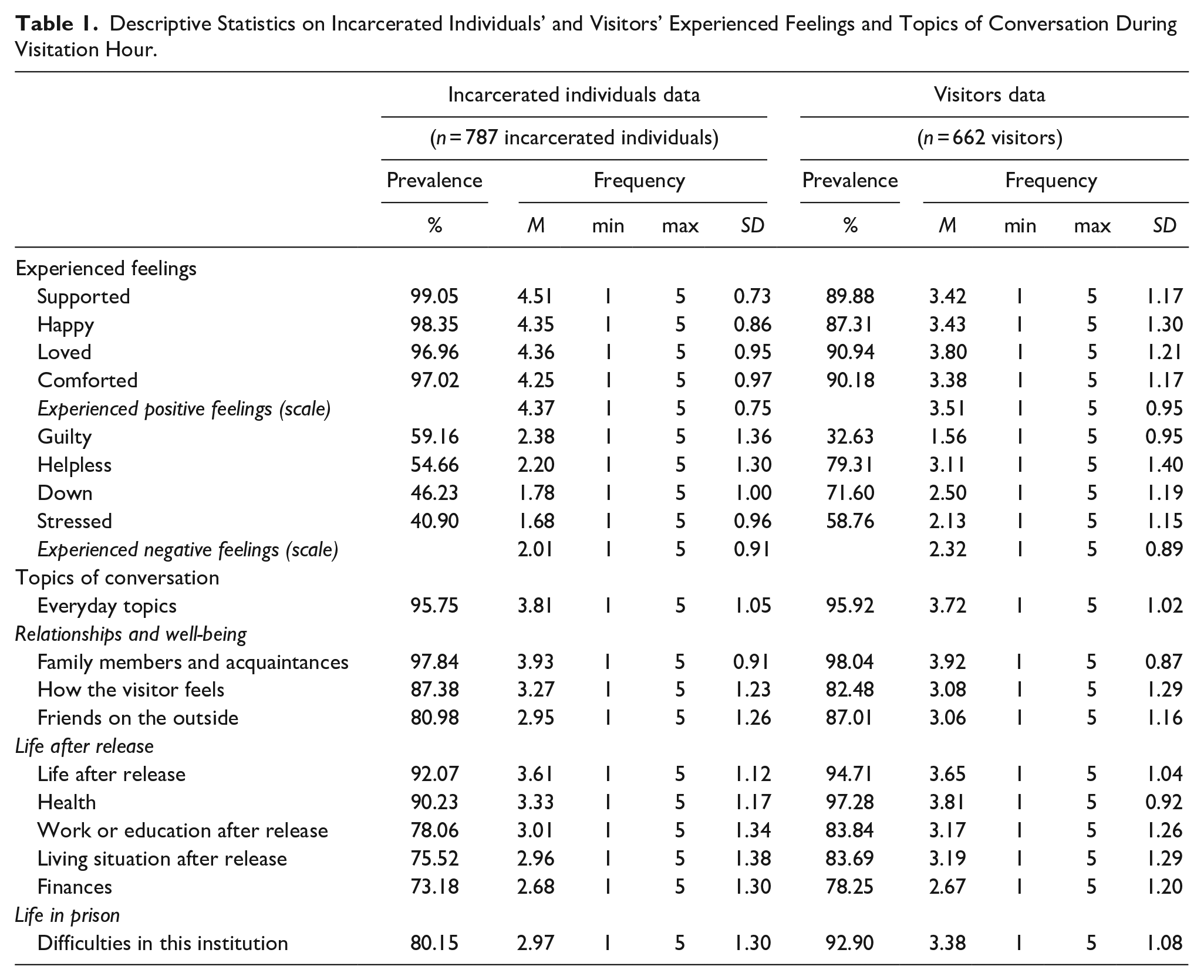
To examine our research questions, we collected data among incarcerated individuals and visitors on experienced feelings, topics of conversation, other visit characteristics, and background variables. Descriptive statistics all variables are presented in Tables 1 and 2.
Descriptive Statistics on Incarcerated Individuals’ and Visitors’ Experienced Feelings and Topics of Conversation During Visitation Hour.
Visitation and Background Characteristics of Incarcerated Individuals (n = 787; Reporting About n = 1,577 Visitors) and Visitors (n = 662).
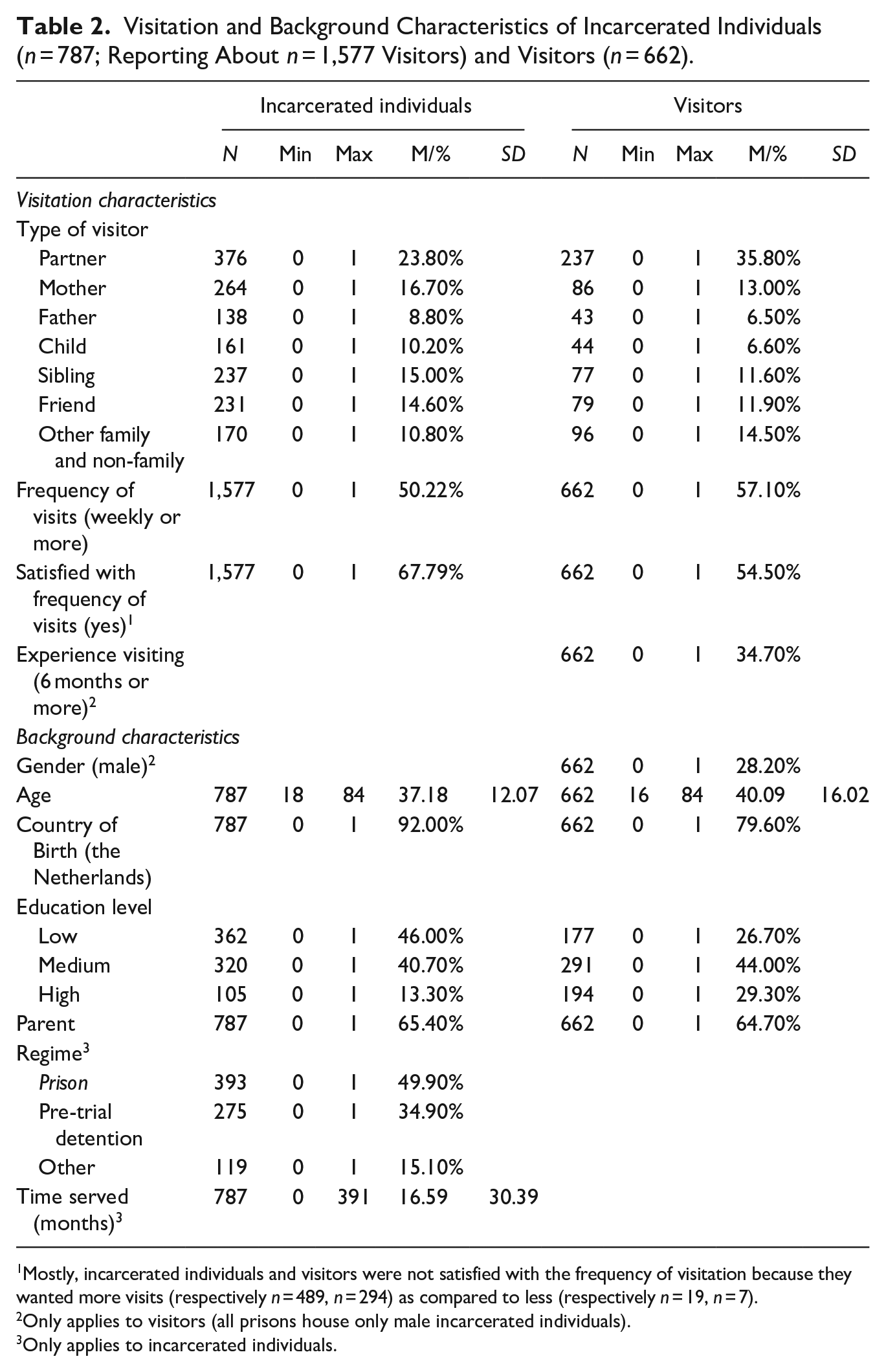
Mostly, incarcerated individuals and visitors were not satisfied with the frequency of visitation because they wanted more visits (respectively n = 489, n = 294) as compared to less (respectively n = 19, n = 7).
Only applies to visitors (all prisons house only male incarcerated individuals).
Only applies to incarcerated individuals.
Feelings
Incarcerated individuals and visitors reported “how often, during visits with this person in general, they felt. . . supported/happy/loved/ comforted / guilty / helpless / down / stressed,” on a Likert scale ranging from 1 (“never”) to 5 (“almost always”). Incarcerated individuals reported on their three most frequent visitors, visitors on the they were visiting. In addition to separate scores for each feeling, scale variables were constructed to measure positive feelings (feeling supported, happy, loved, and comforted) and negative feelings (feeling guilty, helpless, down, and stressed), resulting in two scales with good internal reliability for the data on incarcerated individuals (α positive feelings = .87; α negative feelings = .78), and for the visitor data (α positive feelings = .79; α negative feelings = 0.75).
Topics of conversation
Incarcerated individuals and visitors also reported “how often, during visits with this person in general, they talked about. . . everyday topics/family members and acquaintances/how the visitor feels/friends on the outside/life after release/health/work or education after release/living situation after release/finances/and problems/difficulties in the prison, on a Likert scale ranging from 1 (“never”) to 5 (“almost always”). Again, incarcerated individuals reported on their three most frequent visitors, and visitors about the incarcerated individual they were visiting.
Other visit characteristics
First, the type of visitor was measured by distinguishing partner, mother, father, child, sibling, friend, and other family and non-family visitors. Incarcerated individuals reported to be visited mostly by partners (24%), followed by mothers (17%), siblings (15%), friends (15%), other family members (11%), children (10%) and fathers (9%). Of all visitors that participated in our study, the majority was a partner (36%), followed by other family member (15%), mother (13%), friend (12%), sibling (12%), child (7%, and father (7%). Second, frequency of visitation indicates whether incarcerated individuals and visitors see each other on a weekly basis (1) or less often (0). Third, satisfaction with frequency of contact measures whether incarcerated individuals and visitors are satisfied with how often they were visited, or visited. Fourth, visiting experience indicates whether visitors have been coming for visits for longer than 6 months (1) or are less experienced (0). About half of the incarcerated individuals (50%) and a little over half of the visitors (57%) reported to be visited or to visit weekly or more frequent, and 68% of the incarcerated individuals and 55% of the visitors were satisfied with that frequency of visitation. About one-third of the visitors (35%) could be characterized as “experienced visitors” as they had been visiting the prison for more than 6 months.
Background characteristics
Several background characteristics of incarcerated individuals and visitors were included as control variables: we measured incarcerated individuals’ and visitors’ age (mean age 37.2 and 40.1 years, respectively), country of birth (1 = The Netherlands; 0 = other), education level (low, medium, high), and parenthood (1 = has children; 0 = has no children). The vast majority (93%) of incarcerated individuals was born in The Netherlands, about half of them (46%) was low educated, and over half (65%) was a parent. Of the visitors, 80% was born in the Netherlands, 27% was low educated, and 65% was a parent. For incarcerated individuals, we also measured detention length (in months), and regime (prison, pretrial detention and other regime, including minimum security, extra care, persistent offenders, and police detainees. On average, incarcerated individuals stayed 17 months incarcerated, most stayed in prison regime (50%), followed by pre-trial detention (35%) and other regimes (15%).
Results
Feelings During Visitation Hour
To answer the first research question, we measured to what extent incarcerated individuals and visitors report to experience positive and negative feelings frequently (often and almost always) during visitation (see Figure 1a). Results show that, for both incarcerated individuals and visitors, positive and negative feelings are reported. In terms of positive feelings, incarcerated individuals most often experience being supported (92% experiences these feelings often or almost always), followed by feelings of happiness (86%) and being loved (86%), and comforted (82%). Visitors most often experience being loved (67% of the visitors report to experience these feelings often or almost always), followed by feelings of happiness (53%), feeling supported (52%), and comforted (49%).
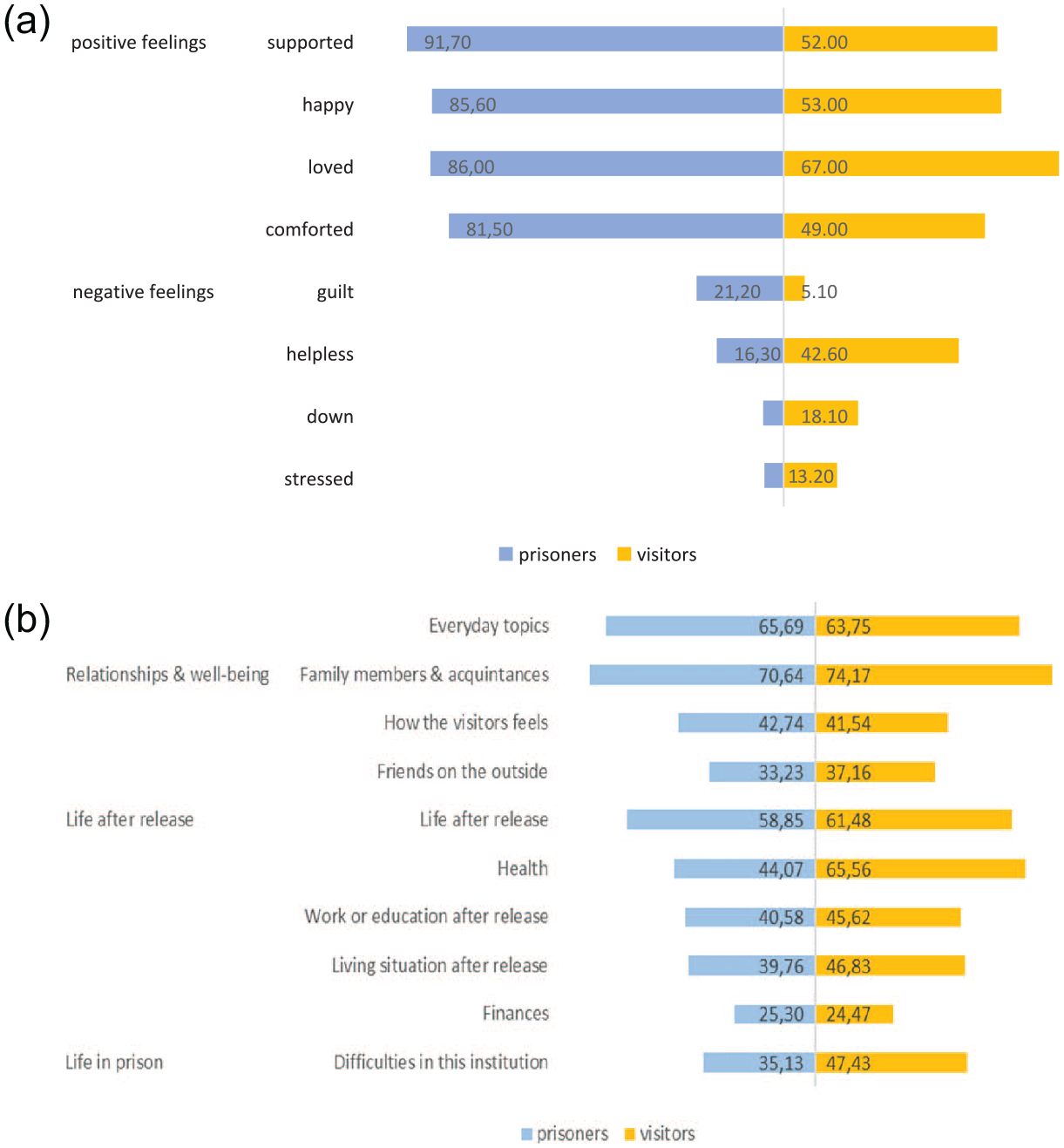
(a) Feelings frequently experienced during visiting hour by incarcerated individuals and visitors. (b) Topics frequently discussed during visits.
In terms of negative feelings, incarcerated individuals most often experience feelings of guilt (21% experiences these feelings often or almost always), followed by feeling helpless (16%), and feeling down (5%) and stressed (5%). Visitors most often experience feeling helpless (43% of the visitors report to experience these feelings often or almost always), followed by feeling down (18%), feeling stressed (13%), and guilty (5%).
Results thus show that, during visiting hour, positive feelings are experienced more frequently than negative feelings, for both incarcerated individuals and visitors. Incarcerated individuals report to experience positive feelings more often that visitors. In addition, visitors experience negative feelings, such as feeling helpless, down and stressed more often than incarcerated individuals, whereas incarcerated individuals more often experience feelings of guilt.
Topics of Conversation During Visitation Hour
For the second research question, descriptive statistics are presented about the extent to which all measured topics of conversation are reported frequently (often and almost always) by incarcerated individuals and visitors (see Figure 1b). Results show that both incarcerated individuals and visitors report to talk about each topic of study during prison visits. Incarcerated individuals report to talk frequently about family and acquaintances (71%), everyday topics (66%) and life after release (59%), whereas they talk least often about finances (25%), friends on the outside (33%) and life in prison (35%). Visitors also report to frequently talk about family and acquaintances (74%), everyday topics (64%) and life after release (61%), and in addition also report to speak frequently about health issues (66%), whereas they talk least often about finances (24%).
The Association Between Topics of Conversation and Feelings During Visitation Hour
To answer the third research question, we ran two sets of two linear regression models (with positive and negative feelings as the dependent variables, respectively, for incarcerated individuals and visitors separately) to examine the association between the topics of conversation and experienced feelings during visiting hour. Since incarcerated individuals could report about multiple visitors, multilevel linear regression models were estimated to account for the nested data. Besides the topics of conversation, other visit characteristics and characteristics of incarcerated individuals and visitors were included as control variables in all models.
Incarcerated individuals
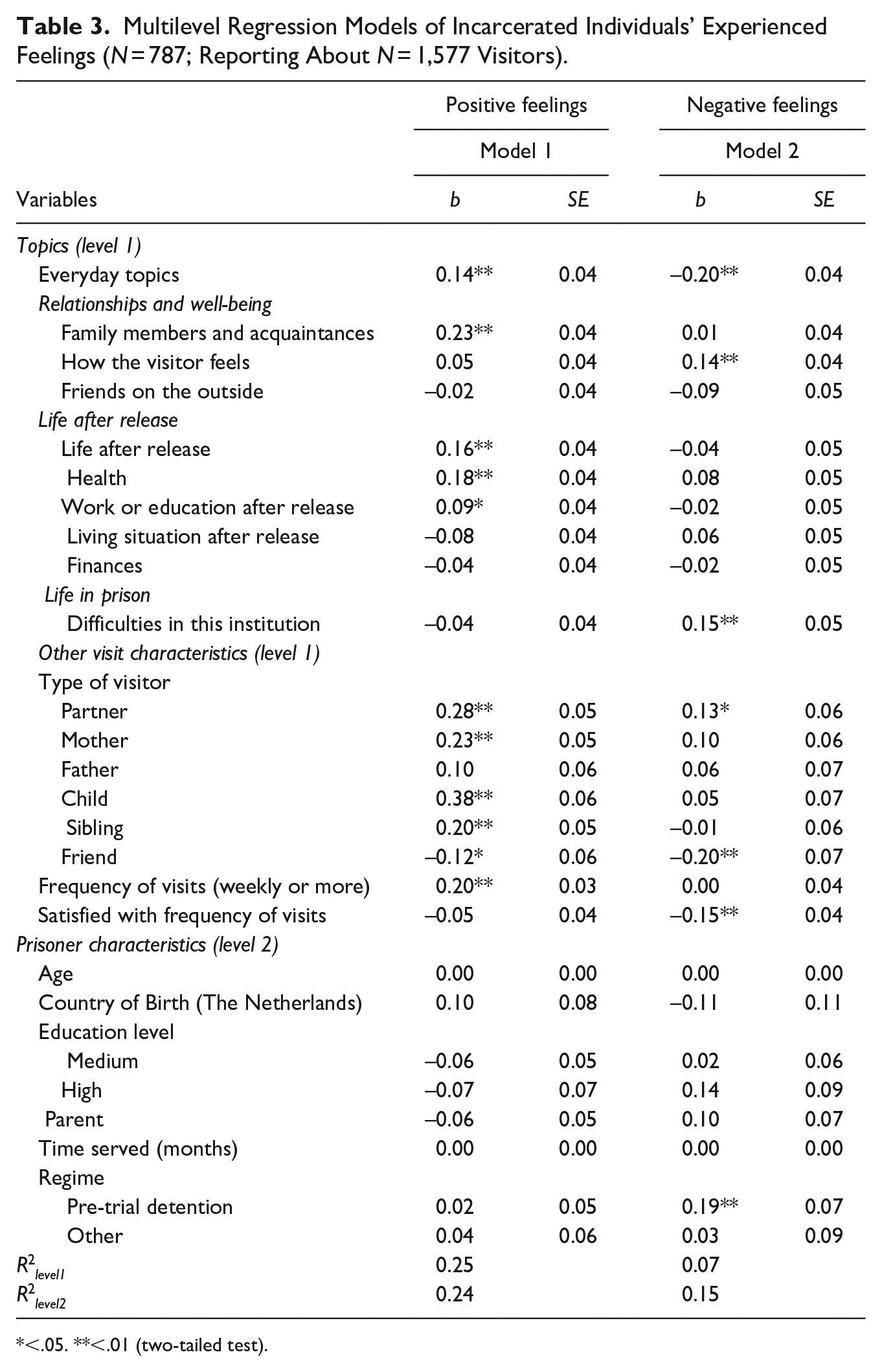
Table 3 shows the results of multilevel regression models examining the association between topics of conversation and experienced feelings for incarcerated individuals. Multilevel models were conducted with random intercepts and fixed slopes, successively adding topics of conversation (level 1), visit characteristics (level 1), and characteristics of incarcerated individuals (level 2). This approach revealed that topics of conversations during visiting hour explained a substantial part of the variance in incarcerated individuals’ feelings; for positive feelings R2level1 = .11 and R2level2 = .19 (total R2level1 = .25 and R2level2 = .24), and for negative feelings R2level1 = .02 and R2level2 = .10 (total R2level1 = .07 and R2level2 = .15). Hence, a first key finding is that, for incarcerated individuals, what is talked about during visitation is significantly related to experienced feelings.
Multilevel Regression Models of Incarcerated Individuals’ Experienced Feelings (N = 787; Reporting About N = 1,577 Visitors).
<.05. **<.01 (two-tailed test).
Table 3 further shows that positive feelings were more often experienced during visits when incarcerated individuals talk about family members and acquaintances (b = 0.23; p < .001), life after release (b = 0.16; p < .001), health (b = 0.18; p < .001), and work or education after release (b = 0.09; p ≤ .05). Talking about everyday topics during visits was also more likely to result in more positive feelings for incarcerated individuals (b = 0.14; p < .001), as well as in less negative feelings (b = −0.20; p < .001). On the contrary, talking about the feelings of the visitor (b = 0.14; p < .01) and about problems and difficulties in prison (b = 0.15; p < .01) were more likely to result in negative feelings.
In terms of control variables, characteristics of the visits, and most meaningfully the type of visitors, were related to experienced feelings. Visits from family members were related to stronger positive and negative emotions. Incarcerated individuals experienced more positive emotions during visits from their partner (b = 0.28; p < .001), mother (b = 0.23; p < .001), children (b = 0.38; p < .001) and siblings (b = 0.20; p < .001). Negative emotions were experienced more during visits from partners (b = 0.13; p < .05). Visits from friends seem to be unique as they were linked to less positive and less negative experiences (respectively b = −0.12; p < .05; b = −0.20; p < .01). Furthermore, frequent visits were linked to more positive feelings (b = 0.20; p < .001) and satisfaction with the frequency of visits to experiencing less negative emotions (b = −0.15; p < .001).
Lastly, characteristics of incarcerated individuals (age, county of birth, education level, parenthood, and time in prison) were not related to experienced feelings during visiting hour. Being incarcerated in a pre-trial detention regime, compared to prison regime, was linked to more negative feelings (b = 0.19; p < .01).
Visitors
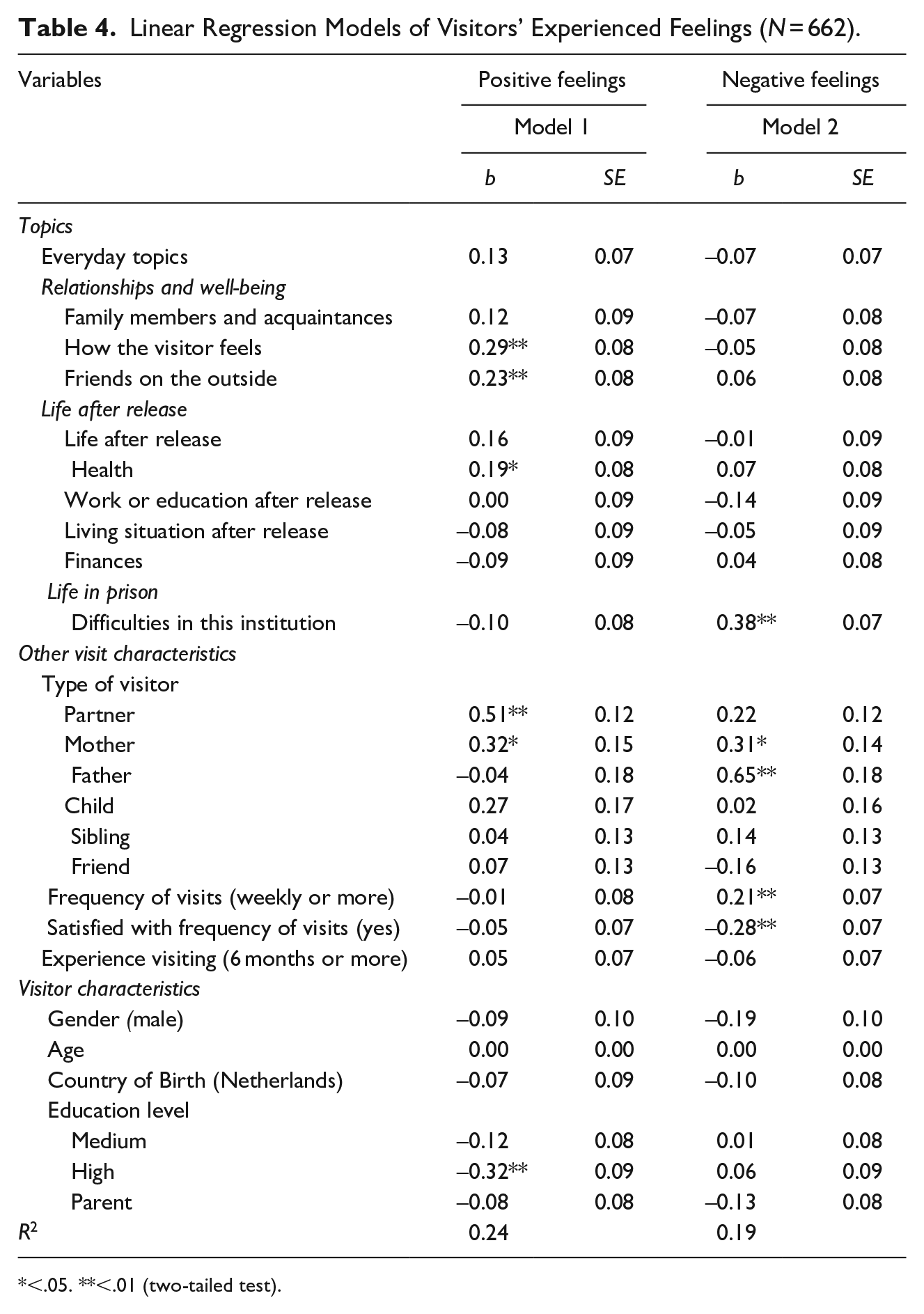
Table 4 shows the relationship between topics discusses and experienced feelings for visitors. We performed linear regression models, successively adding topics of conversation, visit characteristics, and visitor characteristics to explore how topics of conversation are related to experiences feelings for visitors. Results show that, also for visitors, conversational topics seem important for explaining experienced feelings during visitation hour. The models that only include topics as predictors explain 14% of the variance in positive feelings (R2total = .24) and 7% of the negative feelings (R2total = .19).
Linear Regression Models of Visitors’ Experienced Feelings (N = 662).
<.05. **<.01 (two-tailed test).
More specifically, results show that visitors have a more positive visitation experience, when talking about how they feel (b = 0.29; p < .001), friends on the outside (b = 0.23; p < .01), and health (b = 0.19; p < .05), whereas they have a more negative experience when talking about problems and difficulties in the institution (b = 0.38; p < .001).
In terms of control variables, results showed that partners and mothers experience more positive feelings (respectively b = 0.51; p < .001 and b = 0.32; p < .05), and fathers and mothers experience more negative feelings (b = 0.31; p < .05 and b = 0.65; p < .001). Furthermore, frequent visitation seems to pose a risk for more negative feelings for visitors (b = 0.21; p < .01), while satisfaction with the frequency of visits is related to less negative feelings (b = −0.28; p < .001). Lastly, findings suggest that in particular for higher educated visitors visitation elicits less positive feelings, compared to low or medium educated visitors. (b = −0.32; p < .001).
Discussion
This paper expands previous research by further unraveling the heterogeneity of the prison visitation experience. Previous studies on the heterogeneity of prison visitation examined the role of different type of visitors, frequency, timing and patterns of visitation (e.g., Atkin-Plunk & Armstrong, 2018; Berghuis et al., 2021; Brunton-Smith & McCarthy, 2017; Casey-Acevedo et al., 2004; Cochran et al., 2020; Duwe & Clark, 2013), but paid little attention to the nature of visits. We examined the topics of conversation and feelings that arise during visitation hour. Uniquely, we focused not only on the perspective of incarcerated individuals, but also investigated how visitors experience the visiting hour. Gaining knowledge on these questions advances research on prison visitation because it increases insight into the black box of visitation, and helps understand under what circumstances visits might impact well-being and behavior in a positive or negative way.
The first conclusion of this study is that the nature of visits can vary greatly as we find reports of a wide range of negative and positive feelings among incarcerated individuals and their visitors. We found a somewhat lower rate of frequent negative feelings for incarcerated individuals (4%–20%) compared to the Arizona Prison Visitation Study (Turanovic & Tasca, 2017) (19%–33%). Their measurement was quite similar to ours, which suggest alternative explanations such as shorter prison spells or a better prison- or visitation climate could have resulted in less negative feelings among incarcerated individuals in the Netherlands. Our findings on visitors’ experience of the visitation hour also seems to portray a somewhat more positive picture than prior work (e.g., Arditti, 2003; Fishman, 1990). Apart from the just mentioned explanations, extending the focus from partners and children to include potentially weaker ties, such as parents, siblings and friends, could explain this finding.
The second conclusion is that the experience of the visiting hour is substantively different for incarcerated individuals and visitors. Although both reported to experience more positive feelings than negative feelings, visitors clearly experienced less positive feelings and more negative feelings when compared to incarcerated individuals (see also, Dixey & Woodall, 2012). With feelings of guilt as the exception, visitors experience negative feelings, such as feeling helpless, down and stressed more often than incarcerated individuals. Positive feelings such as feeling supported and loved are reported less often by visitors.
Third, this first systematic account of conversation topics during the visiting hour confirms earlier observations that a wide variety in topics is discussed (see, Fishman, 1990; Kotarba, 1979; Tasca, Mulvey et al., 2016) and results in a topic hierarchy. Social relationships were discussed most whereas finances were discussed least during visits. Although reports of both incarcerated individuals and visitors resulted in a quite similar hierarchy, fewer incarcerated individuals than visitors reported that they discuss reintegration topics (especially health) and difficulties in the institution. While some caution is advised in interpreting these differences because they are not based on a matched comparison, they seem to suggest that visitors attach greater importance to discussing serious topics such as reintegration. Prior studies found that discussing intentions about change after release, is important for visitors in order to “remain committed” (Fishman, 1990, p. 169) and is linked to “an air of optimism” (Tasca, Mulvey et al., 2016, p. 471).
Fourth, topics of conversation substantially explain differences in incarcerated individuals’ and visitors’ experience of positive and negative feelings. In line with social support theory (Cullen, 1994; Lin, 1986), our results confirm that visitation has the potential to contribute to expressive as well as instrumental support. For incarcerated individuals, sources of positive social support stem from conversations about everyday topics, family members and acquaintances, and reintegration topics, such as life after release, health and work or education. For visitors, talking about how they feel, and talking about friends on the outside, and talking about health, was related to positive feelings. These findings may reflect the relevance of talking about the life of the visitor during visitation hour (as opposed to talking about the incarcerated individual’s life in and after release). However, talking about how the visitor feels was related to more negative feelings among incarcerated individuals, possibly reflecting that this topic represents the “airing of visitors’ grievances” (Tasca, Mulvey et al., 2016), or enlarge feelings of guilt, which were reported quite frequently by incarcerated individuals in our study. Talking about life in prison was associated with more negative feelings for both visitors and incarcerated individuals, which is in line with earlier work (Fishman, 1990; Kotarba, 1979). Interestingly, the discussion of reintegration topics was never related to negative feelings among visitors or incarcerated individuals. Discussing the health of the incarcerated individuals was associated with positive feelings for both parties.
Directions for Future Research and Policy Relevance of Findings
Given that this study uncovered a great heterogeneity in the experience of the visitation hour, and that what is talked about during visiting hour was associated with positive and negative feelings, we can extract three important suggestions for future research and prison policy. First, in addition to the more frequently studied sources of heterogeneity, such as distinguishing between type of visitors, or the frequency, patterns or timing of visitation, future research should consider including topics of conversations or experienced feelings in their studies as new sources of heterogeneity. This would further increase our ability to understand why some studies find beneficial effects of prison visits, whereas others do not. Secondly, an important next step for research would be to examine whether variations in conversational topics and relatedly experienced feelings could explain variations in, for instance, well-being, behavior or motivation to work on re-integration goals. For instance, would talking about life after release with your loved ones increase motivation to change? If such relationships exist, this knowledge is of particular relevance for practice. Positive visits could work as a catalysator for motivation, and provide a momentum for making progress with incarcerated individuals’ personal goals and reintegration plans. Hopeful in this respect is that talking about reintegration topics was never related to negative feelings (for either incarcerated individuals or visitors). In addition, more knowledge of the nature of visits and their possible impact, would provide opportunities for customization of prison visits, such as increasing the length of the visiting hour, increasing privacy, or offering to provide professional mediators, when important or emotional subjects are discussed. Lastly, as our findings show visitors have a less positive visit experience, providing support to them seems particularly important to stimulate the continuation of visits.
Study Limitations
A first limitation of this study is the cross-sectional nature of our data, which prevents us from drawing to firm conclusions about the causality of the association between topics of conversations and experienced feelings. In order to address this concern as much as possible with our study design, our models do control for many potential confounding factors. Second, our findings are based on a large dataset, but may not be generalizable to all incarcerated individuals and visitors. For instance, we only included males. Even though Turanovic and Tasca (2017) found no gender differences in incarcerated individuals’ experienced feelings during visits, we cannot be sure this is the case for our data. Furthermore, visitor response rates are relatively low (38%) and may not be representative for all visitors, even though we have no reason to assume that visitation experience influenced participation in the study. Lastly, although we are the first to offer a systematic overview of topics of conversation during visits, and these topics were carefully derived from previous research and prison practice, some topics are quite general, leaving what is discussed open for interpretation. Future research could zoom in further on different topics that appeared strongly linked to the visitation experience in our study.
Conclusion
By providing a first systematic account of the nature of prison visits, our study gives insight into incarcerated individuals’ and visitors’ visit experiences, which is a next step in understanding under what circumstances visits may be associated with positive outcomes. We conclude that topics of conversation and experienced feelings are both promising new sources of visitation heterogeneity to consider in future research and potentially address in practice. Also, attention to visitors is warranted, given the fact that they have more negative visitation experiences than incarcerated individuals—possibly leading to less visits, and subsequently the weakening of social ties.
Footnotes
Acknowledgements
The authors wish to thank the DJI for their support with the administration of the survey.
Declaration of Conflicting Interests
The author(s) declared no potential conflicts of interest with respect to the research, authorship, and/or publication of this article.
Funding
The author(s) disclosed receipt of the following financial support for the research, authorship, and/or publication of this article: The Life in Custody study was funded by the Dutch Custodial Institutions Agency (DJI) and Leiden University. The opinions, findings, and conclusions expressed in this article are those of the authors and do not necessarily reflect those of the DJI.
