




Abstract
This study followed the current scholarly interest in seeking possible links between social and cultural factors and homicide by offering comparative nation-based observations on femicide. To this end, the study analyzed femicide events across social groups in Israel (veteran Jews, Jewish immigrants from the former USSR, Ethiopian immigrant Jews, Arabs, Christians, Druze, Muslims, and Bedouin) and foreigners (asylum seekers and foreign workers) during a 6-year period (2010–2015). Data from 162 cases were collected and coded based on 25 sociodemographic and criminological variables. Empirical observations suggest sociocultural diversity in the femicide phenomenon across social groups. Femicide’s frequency and sociodemographic characteristics seem to be related to cultural dimensions pertaining to individualistic versus collectivistic cultures, with social factors such as level of education, socioeconomic status, and immigration possible overriding the effects of cultural dimensions on femicide. Highlighting sociocultural criminal diversity, the article’s observations may be of great relevance to societies facing the challenge of assimilating diverse sociocultural groups.
Femicide refers to the act of killing a woman or girl because of her gender (Russell & Redford, 1992, p. 3). It is the major cause of unnatural death of women and the seventh leading cause of premature death for women globally (Campbell et al., 2003; Weil, 2016, p. 7). Scholars agree that the sociocriminological features of femicide are distinct from other forms of homicide and deserve a gender-specific framework of analysis (Landau & Hattis Rolef, 1998; Taylor & Jasinski, 2011). Feminist scholars’ exploration of the femicide phenomenon amid a patriarchal social structure and oppression (e.g., Hunnicutt, 2009; Russell & Radford, 1992; Taylor & Jasinski, 2011) requires contextual fine tuning, because although it transcends geographic locations, cultures, and groups of women (Alvazzi del Frate & Nowak, 2013), femicide’s manifestations—just as any other criminal phenomenon (Landau, 1984; Landau & Hattis Rolef, 1998, p. 82)—are diverse based on the particular sociocultural context in which it occurs. Indeed, research findings on crime have highlighted geographical, community, and crime control differences across place (Gallup-Black, 2005) and varying femicide rates across regions (Corradi & Stöckl, 2014), suggesting the plausibility of diversity in the femicide phenomenon based on contextual sociocultural aspects.
For example, contextualized research on femicide in Arab cultures has noted its indigenous characteristics, resulting in femicide victims being much younger than their Western counterparts and perpetrators coming from the victims’ extended family, rather than their intimate partner (Chesler, 2010). Similarly, research on femicide in India has highlighted its indigenous form related to sociocultural customs of dowry and correlated aspects like targeting relatively newly wedded wives and killing them by burning through a staged kitchen accident (Mohanty et al., 2004). A unique femicide form was noted in Ghana, with killings linked to beliefs and accusations of witchcraft resulting in the killing of older women, supposedly witches, who were lynched, stoned, and bludgeoned by an irate mob (Adinkrah, 2004). These criminal manifestations differ from reported findings on femicide in Western societies (which account for the vast majority of femicide research), which have reported such killings as usually perpetrated by the women’s current or former intimate partner, predominantly linked to the end of their intimate relationship, and often featuring a firearm (Campbell et al., 2003, 2007). This suggests that femicide’s heterogenic and complex nature is demonstrated through its wide array of various forms.
This study followed the scholarly quest seeking possible links between social, cultural, and ethnic characteristics and homicidal patterns and characteristics. It focused on the killing of women by offering empirical, comparative, nation-based observations. With this goal in mind, in addition to corroborating empirical criminological observations about femicide as a phenomenon, this study explored possible links between sociocultural, ethnic, and religious factors and femicide rates and modes. Israel suits the scholarly quest to explore sociocultural aspects of femicide because its multicultural population, representing diverse social and cultural groups, offers a quasi-laboratory experimental structure to examine possible differences in femicide characteristic across diverse sociocultural groups. Using Israel as a case study for comparative analysis, the study analyzed femicide events across various social, cultural, and ethnic groups in Israel (veteran Jews, Jewish immigrants from the former USSR, Ethiopian immigrant Jews, Arabs, Christians, Druze, Muslims, and Bedouin) and foreigners (asylum seekers and foreign workers).
A literature review contextualizing femicide’s sociocultural aspects is followed by a presentation of the research population. After this review of the literature and Israel’s sociocultural fabric, the paper presents the research methodology and an analysis of findings. The paper concludes with a discussion of the findings and proposed paths for future studies.
Contextualizing Femicide: Sociocultural Aspects of Femicide in Israel
Cultural and social factors contribute to different rates and modes of violence that account for the higher prevalence of crime in some sectors of the population compared to others (Landau, 1984). Femicide, therefore, is no exception (Landau & Hattis Rolef, 1998, p. 82; Sela-Shayovitz, 2010, p. 1425). Indeed, the fact that femicide rates vary across regions and that cross-national variations have been reported widely (Corradi & Stöckl, 2014) suggest plausible links between femicide and sociocultural aspects. However, few studies have focused on possible links between cultural, ethnic, and social backgrounds and the killing of women (Weil, 2016, p. 7). The absence of studies on these possible links is not unique to studies conducted in Israel. In fact, most existing research on femicide lacks sensitivity to racial, cultural, and ethnic aspects (Taylor & Jasinski, 2011, p. 347). Studies on femicide in Western societies have noted that these killings are usually perpetrated by the women’s current or former intimate partner, predominantly linked to the end of their intimate relationship and often featuring a firearm (Campbell et al., 2003, 2007). However, it’s questionable that these characteristics are generalizable to non-Western societies. As a result, we are still far from a full understanding of the various sociocultural aspects at play in femicide among non-Western societies.
In the literature on sociocultural aspects of femicide, the term “honor killing” usually refers to femicide in an Arab society and has received considerable attention lately. This is a particular form of honor violence against women, wherein the killing of a woman is perpetrated by a member or members of her family who do not approve of her social behavior in general and her sexual behavior in particular (Abu-Rabia, 2011; Shalhoub-Kevorkian, 1999, 2002). However, a comparative exploration of female honor killings found that this arguably cultural phenomenon differs across Arab social groups, implying that sociodemographic factors, rather than cultural ones, might be possible risk factors (Dayan, 2021b). Indeed, sociodemographics as possible risk factors contributing to higher rates of femicide were reported regarding immigration and minority groups, poverty, religion, economic and health crises, and age. Immigration has been linked to higher rates of femicide, linking social strain theories to the tendency of immigrants to resort to femicide when facing social constraints regarding assimilation in society and employment (Dayan, 2021a; Landau & Hattis Rolef, 1998; Sela-Shayovitz, 2010; Wallace, 1986). Likewise, variations in the rates of femicide were noted across various ethnic minority groups: For example, substantial higher rates of femicide were found among African Americans across the United States (Campbell et al., 2003; Della Giustina, 2010), Arabs in Israel (Landau & Hattis Rolef, 1998; Sela-Shayovitz, 2010), and Arabs of Bedouin background in Arab social groups in Israel (Dayan, 2021b). In addition, scholars pointed to poverty (Dayan, 2021b; Della Giustina, 2010, pp. 125–126), Islamic religion (Chesler, 2010), and economic or health crises such as the COVID-19 pandemic (Boxall et al., 2020) as possible risk factors.
Despite notable observations on possible sociocultural diversity, a review of femicide studies in Israel revealed that comprehensive and comparative research on femicide across sociocultural, ethnic, and religious groups in Israel (in both the Jewish and Arab populations) is still direly needed. Previous studies conducted with the entire population in Israel 1 concentrated on intimate partner femicide (Landau & Hattis Rolef, 1998; Sela-Shayovitz, 2010), excluding femicide occurring in nonintimate relationships (e.g., honor killings) and the killing of women who are not in an intimate relationship (e.g., single women, older widowed women, and foreign workers). Studies that included all women killings in Israel were carried out only in the Arab population, such as Kressel (1981), Shalhoub-Kevorkian (1999), Touma-Sliman (2005), and Edelstein (2011), and did not offer a comparative analysis of the possible links among sociocultural, ethnic, and religious aspects of femicide. Furthermore, such studies treated the Arab population homogenously and lacked a heterogenic framework of analysis on femicide among the various Arab subgroups in Israel (Christians, Bedouin, Muslims, and Druze). Furthermore, and because a comparative analysis between the two main ethnic groups in Israel, Jews and Arabs, was carried out only regarding a particular subtype of femicide—intimate partner femicide (Landau & Hattis Rolef, 1998; Sela-Shayovitz, 2010)—comprehensive and comparative research on all types of femicide across sociocultural, ethnic, and religious groups in Israel (in both the Jewish and Arab populations) is still needed. Given the multifaceted sociocultural fabric of Israel, a nation-based comparative empirical study may deepen our current knowledge on the sociocultural aspects of femicide.
This study thus followed the scholarly quest to delve into the sociocultural and ethnic variations and criminological manifestations of femicide based on a population-based analysis, using Israel as a case study. With this goal in mind, in addition to substantiating empirical criminological observations on the phenomenon of femicide, this study explored possible links between sociocultural, ethnic, and religious factors and femicide rates and modus operandi. Specifically, the research analyzed possible sociodemographic and criminological differences among various social groups in Israel. We aimed to analyze the following homicide characteristics among various groups: Do weapons of choice differ? What is the most common victim–perpetrator relationship? What are the typical murder scenes? What are the most common motives? What is the typical personal status of the victim? Are there any significant differences in the victim’s age? Are there any significant differences in the rates of femicide?
Research Population: Social Groups in Israel
The population of Israel (excluding the West Bank, Gaza, and East Jerusalem) at the end of 2013 totaled 8.135 million people (Israel Central Bureau of Statistics [CBS], 2014). The main social division in Israel is between the Jewish majority (80% of the total population; CBS, 2014) and the non-Jewish minority, mostly Arab Muslims (20% of the total population; CBS, 2014). From the 1990s onward, the Israeli Jewish population has featured three main social groups: veteran (native-born) Israeli Jews and two groups of immigrants that arrived in Israel in two major immigration waves in the 1990s—immigrants from the former Soviet Union (comprising about 10% of the total population) and immigrants from Ethiopia (representing about 2% of the total population).Two trends, of high level education and the growth of the Israeli high-tech industry, have led to the positioning of veteran Jews in the mid-upper sociodemographic stratum of Israeli society (CBS, 2014; Israel Ministry of Foreign Affairs, 2013).
Upon arrival, many former USSR immigrants, including highly educated and skilled professionals, took menial and semiskilled jobs and lived in poverty. However, equipped with skills and high-level education, they bounced back and adjusted relatively well to the new environment (Landau & Hattis-Rolef, 1998). The adjustment of Ethiopian Jews who immigrated to Israel from the 1990s onward, on the other hand, was much more challenging. Their sociocultural adjustment was fraught with difficulties owing to their lower levels of formal education and occupations that were no longer relevant in a modern economy (Edelstein, 2011; Geiger, 2013; Landau & Hattis-Rolef, 1998). These circumstances culminated in soaring unemployment rates among male Ethiopian immigrants, leading to the loss of the patriarchal higher social status of men and the group’s overall downward social mobility (Geiger, 2013).
In addition to the Jewish population, about 1.3 million persons are of Arab descent (CBS, 2014). The Arab population in Israel is composed of (a) 81% Muslims, made up of two main subgroups—Bedouins (21% of the total Arab population in Israel) and non-Bedouin Muslims (60%); (b) Christians (10%); and (c) Druze (9%; CBS, 2016). Several cultural characteristics are common to all four Arab social groups: family and clan as the central unit of society, a collective identity, a patriarchal and patrilineal social structure, and notions of family honor and female-related honor (Landau, 1993, 2016). According to Al-Haj (2012), Arab society in Israel, including the Muslim subgroup, has undergone significant changes in different areas, of which the level of education is probably the most salient. The illiteracy rate among Arabs decreased rapidly, along with a steady increase in tertiary education, yet the education level of Israeli Arabs remains lower than that of the Jewish population (Al-Haj, 2012). The livelihood of Muslim Arabs underwent a radical change from agriculture to predominantly wage labor, yet the Arab worker is still often situated at the bottom of the labor force ladder, mainly employed in the service and construction sectors in addition to manual jobs in industry (Al-Haj, 2012). Thus, despite the relative upward mobility of Muslim Arabs in the Israeli labor market, the gap between them and the Jewish population remains stable (Al-Haj, 2012; Landau, 2016), with Arabs in Israel being overrepresented in poverty and concentrated in the lowest socioeconomic echelons with soaring rates of unemployment (Sa’ar & Yahia-Youhnis, 2008, p. 309).
Particularly notable is the low socioeconomic status of the Bedouin Arab subgroup, with its unique social fabric and nomadic structure disintegrating following the Israeli government’s decision to relocate its members to planned urban settings, leading to their loss of land, herds, and agricultural fields (Abu-Rabia, 2011; Abu-Rabia-Queder, 2006; Al-Haj, 1989; Al-Krenawi & Graham, 1999; Sa’ar & Yahia-Youhnis, 2008). The Bedouin Arab social subgroup is thus characterized by high rates of unemployment, poverty, illiteracy, drug addiction, crime, and violence (Elbedour et al., 2006, p. 217). In contrast to the Bedouins, the Christian Arab subgroup in Israel is characterized by high education levels, employment rates, and social advancement (Hlihel, 2008, p. 307). Among the Arab subgroups in Israel, the Christians are economically strong owing to their better education, prominence in liberal professions, and relative wealth (Al-Haj, 2012; Landau, 1993). On a continuum with Bedouin Arabs at one end, in the lowest social strata with the lowest economic status among Arab population in Israel, Christian Arabs are located at the opposite end, already modernized and members of the highest social strata with a relatively high economic status compared with the other Arab subgroups in Israel. In between these two extremes are the (non-Bedouin) Muslims and the Druze, members of the middle social strata in terms of economic status (Dayan, 2021b). Indeed, despite the fact that the percentage of Druze youth earning a high school matriculation certificate has increased (Nisan, 2010, p. 592), their socioeconomic level remains significantly lower than that of Christian Arabs, particularly with respect to the education level of Druze women (Nisan, 2010, pp. 587–588).
Another ethnic group in Israel consists of foreign workers and illegal immigrants (asylum seekers), mainly from Africa. About 150,000 residents are foreign nationals: An estimated 100,000 foreign workers work mainly in agriculture and construction, of whom about 50,000 are women working in caregiving (OECD, 2017, p. 31). In addition to foreign workers, this social group consists of an estimated 40,000 asylum seekers (ASSAF, 2016, p. 5), originating mainly from Sudan, Eritrea, and other sub-Saharan countries (Yakobi, 2011, pp. 51–54), who arrived in Israel from 2006 onward (Yaron et al., 2013). This social group is stricken with extreme high rates of unemployment, poverty, health problems, and crime, and women in this social group are particularly vulnerable (ASSAF, 2016, pp. 5–6; Drori-Avraham, 2016, p. 3).
Femicide rates in Israel seem to coincide with the various socioeconomic statuses of different ethnic and social groups. Prior studies on femicide in Israel confirmed the socioeconomic status of various social groups, in the sense of the underrepresentation of veteran Jews, a slight overrepresentation of immigrants from the former USSR, and the significant overrepresentation of Jewish immigrants from Ethiopia (Dayan, 2021a; Edelstein, 2011; Landau & Hatiss-Rolef, 1998; Sela-Shayovitz, 2010). In a similar trend, prior studies in Israel indicated that femicide among Arabs, whose socioeconomic level remains significantly lower than that of the veteran Jewish group, are overrepresented among women killed in Israel. Although their total share in the population is about 20%, they constitute 30% to 40% of the women killed each year in Israel (Edelstein, 2011; Landau & Rolef, 1998; Sela-Shayovitz, 2010).
Method
This study explored possible sociocultural aspects of femicide. In doing so, it sought to identify differences in femicide rates and modus operandi among various sociocultural, ethnic, and religious groups in Israel. Specifically, we attempted to identify differences in the sociodemographic characteristics of victims and perpetrators and the criminological characteristics of these gendered killings. The various social groups of interest were the eight main social groups in Israel: veteran Jews, Ethiopian immigrant Jews, former USSR immigrant Jews, Muslim Arabs, Christian Arabs, Druze, Bedouin, and foreigners.
The research group was the entire population of women in Israel. The study analyzed national empirical findings of femicide in Israel from 2010 to 2015. The large geographic area of the research (national scope) and the relatively long timespan (6 years) were dictated by the need for a sufficiently large database. The study focused on women aged 15 or older (Corradi et al., 2016, p. 7). The study defined femicide as the homicide of an adult woman and excluded all female homicides due to war, terror, or medical negligence. A case was eligible for inclusion if the homicide took place in Israel from January 2010 to December 2015.
Due to unavailability of official data on femicide in Israel, cases and their various relevant factors were collected using media surveillance methodology (Adinkrah, 2014; Warren-Gordon et al., 2010). In victimology research, the study of femicide using this technique has been accepted as a valid methodology due to the scarcity or unavailability of official data about the phenomenon (Adinkrah, 2014, p. 372; Warren-Gordon et al., 2010, p. 1594). Additional sociodemographic and criminological variables were collected by extracting missing data from official government publications such as police records when obtainable, legal databases, and the internet.
Data from 162 cases were collected. Every case file, which was the unit of analysis, was reviewed and coded by the researchers using data abstraction Excel tables. Variables defined in advance were extracted and coded for every case for analysis by the researchers. Data not present in pathology reports were explored through court files, media files, and files from nongovernmental organizations that combat femicide.
Eleven variables were extracted and coded regarding the event profile: event date, murder scene, weapon, number of fatal wounds (stabbing or shooting), additional crimes committed by the perpetrator against the victim during the event, dehumanizing or humiliating methods of killing, substance abuse during the event, whether the perpetrator committed suicide following the killing, number of children injured or killed during the event, motive for killing, and number of other people injured or killed during the event. Eight variables were extracted and coded regarding the victim’s profile: place of residence, ethnicity, age, marital status, religion, prior domestic violence complaints, number of children, and pregnancy status. Six variables were extracted and coded regarding the perpetrator profile: gender, number of perpetrators, relationship between the victim and perpetrator(s), ethnicity, age, and religion. Altogether, 25 variables describing the victim, perpetrator, and event characteristics were extracted from the raw data. Both victims and perpetrators reported in the case files were classified into eight social groups: veteran Jews, Ethiopian immigrant Jews, former USSR immigrant Jews, Muslim Arabs, Druze, Christian Arabs, Bedouins, and foreigners.
Findings
We sought to answer the question: Are there any significant differences in the rates of femicide across various social groups? We compared the relative share (proportion) of femicide in each social group to its share in the total population using chi-square tests for comparison of proportions between the sample and population. In epidemiological terms, the findings reveal that femicide frequencies differed among the various social groups in Israel. As seen in Table 1, femicide is largely overrepresented among minority groups of both ethnic social backgrounds—Jewish and Arab. In the Jewish population, immigrant Jews both from Ethiopia and the former USSR were overrepresented in femicide cases, with femicide among Ethiopian Jews five times higher than its proportion in the total population. A similar observation occurred regarding the share of Arab femicide, accounting for about twice that of the total population. However, a closer look at the distribution of the phenomenon among Arab social groups implies that the highest frequency of femicide was observed among Bedouin Arabs, accounting for three times their share in the total population. On the other hand, Christian Arabs were significantly underrepresented in the phenomenon, accounting for about a third of their share in the total population. An additional notable observation involves the proportion of foreign workers and asylum seekers involved in femicide. This group ranked second in femicide among all social groups in Israel, three times its proportion in the total population.
Femicide Frequency by Social Groups (n = 158).
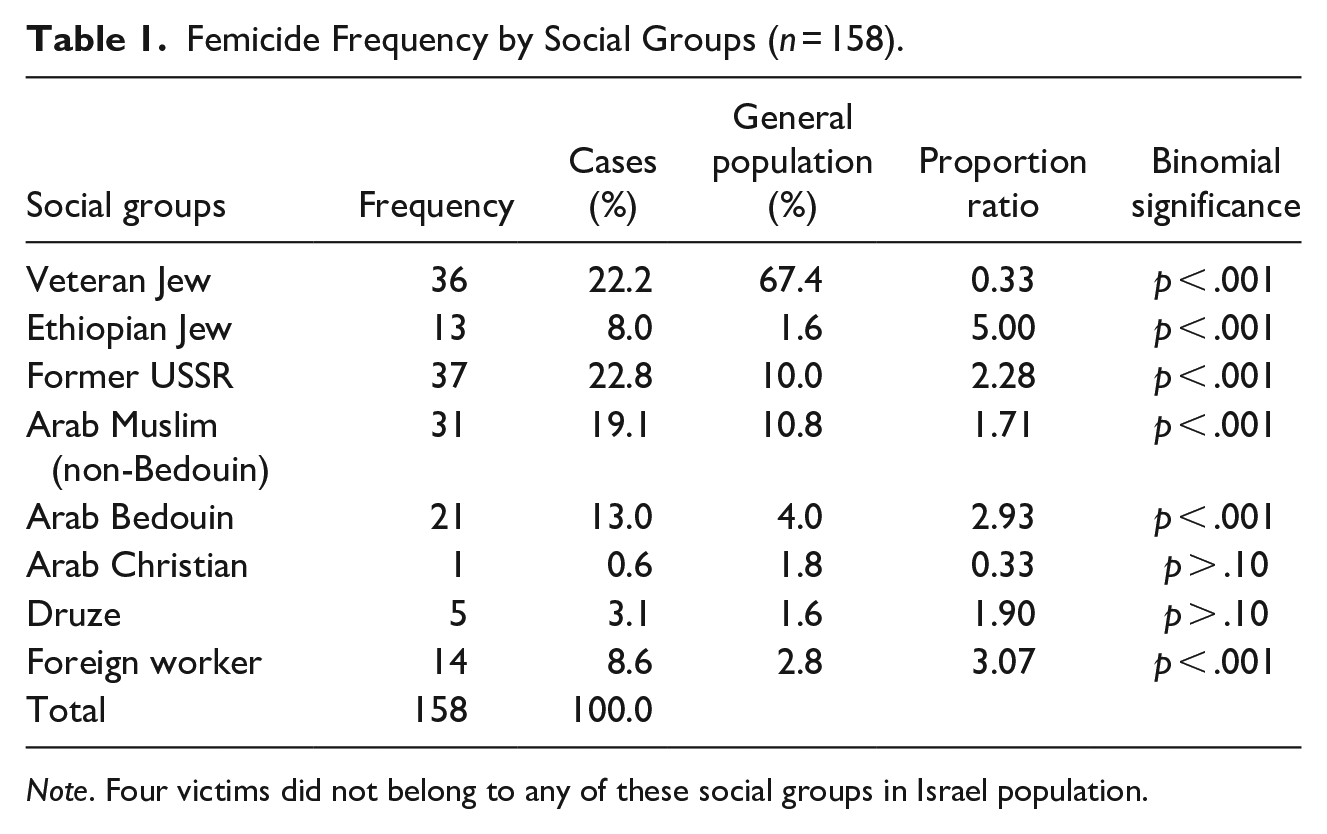
Note. Four victims did not belong to any of these social groups in Israel population.
As seen in Table 2, sociodemographic characteristics of the phenomenon across social groups reveal that the victim’s age differed among social groups, with foreign worker victims being the youngest with an average age of about 30, followed by Ethiopian Jews and Arab victims with an average age of early 30s. Jewish femicide victims, especially former USSR and veteran Jews, were notably older, generally aged 50 or older. This pattern might be linked to the nature of the cultural background of those social groups. When comparing the victims’ mean age across collectivist cultures (Ethiopian Jews and Arab groups, n = 65, Mage = 34.7, SD = 13.4) versus more individualist cultures (veteran Jews and former USSR Jews, n = 72, Mage = 51.9, SD = 16.3), the difference was statistically significant (t[135] = 6.69, p < .001).
Victim’s Age by Social Group (n = 156).
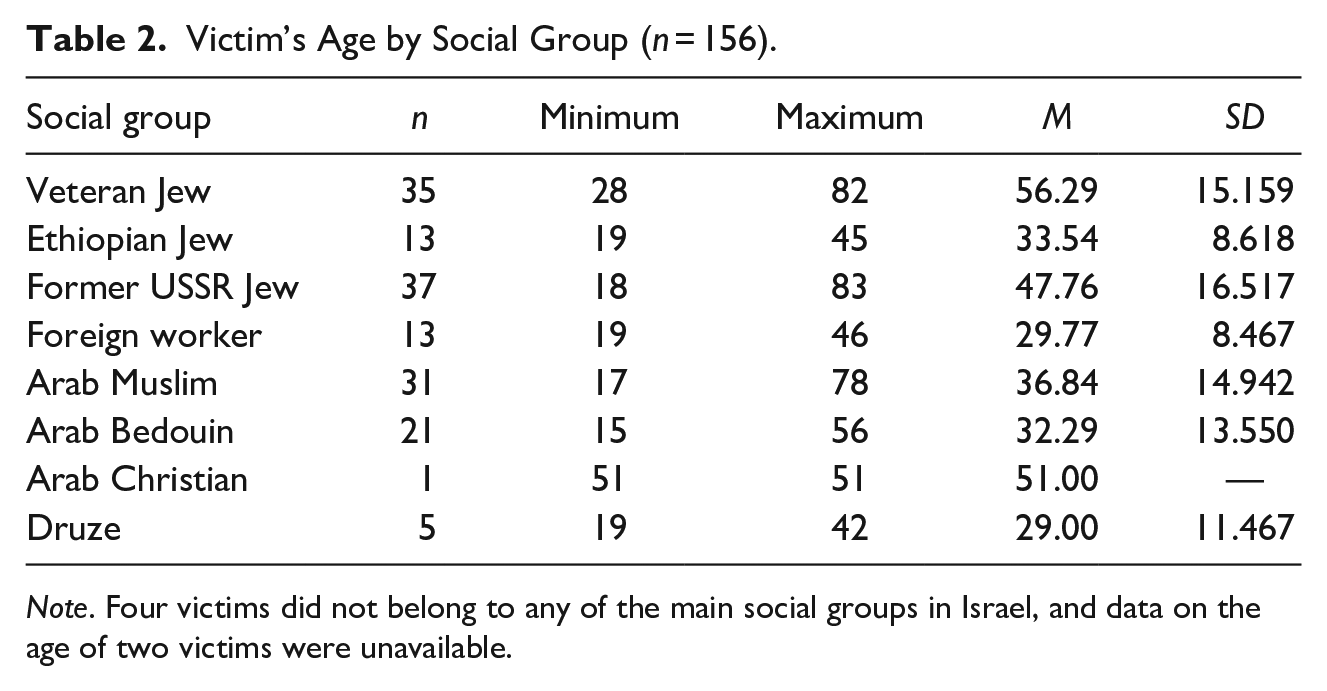
Note. Four victims did not belong to any of the main social groups in Israel, and data on the age of two victims were unavailable.
In terms of criminological characteristics, Table 3 presents the cross-tabulation of the relationships between the victim and perpetrator across social groups. Overall, differences in victim’s social background manifested through the victim–perpetrator relationships. Whereas the most common victim–perpetrator relationship among Jewish social groups was current or ex-partner, most notably among Ethiopian Jews, the pattern was reversed among Arab social groups. Among Arab social groups, most victim–perpetrator relationships involved the victim’s extended family, particularly among Arabs of Bedouin social background. Due to the extremely low number of Druze and Christian Arabs among the social groups, they were excluded from the statistical analysis. Therefore, observations in Table 3 refer to Muslim and Bedouin Arabs.
Victim–Perpetrator Relations by Social Group (n = 152).
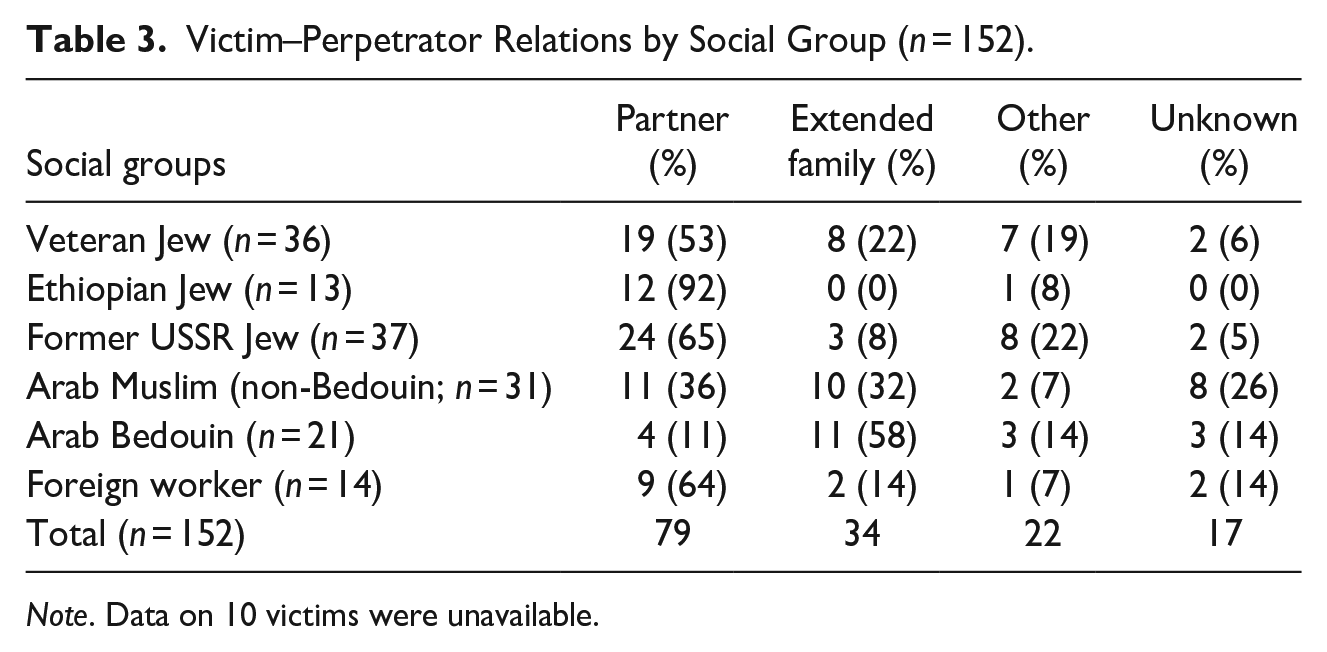
Note. Data on 10 victims were unavailable.
When comparing the distribution of femicide motives across social groups, findings indicate that various motives characterized the different social groups. As seen in Table 4, among immigrant groups (Jewish and non-Jewish: Ethiopian Jews, former USSR Jews, and foreign workers and asylum seekers), the most common motive related to femicide was the victim’s decision to terminate an intimate relationship with the perpetrator. Among the Arab groups (Muslims and Bedouin), the most common motive for femicide related to notions of family honor. This analysis excluded the Druze and Christian groups due to their small number of cases. In addition, reporting of financial or familial crises as a femicide motive was most notable among foreign workers and asylum seekers and less prevalent among other social groups. A chi-square analysis of the differences in motives across social groups indicated that these differences were significant (χ2[35] = 69.8, p < .001).
Femicide Motives by Social Group (n = 121).
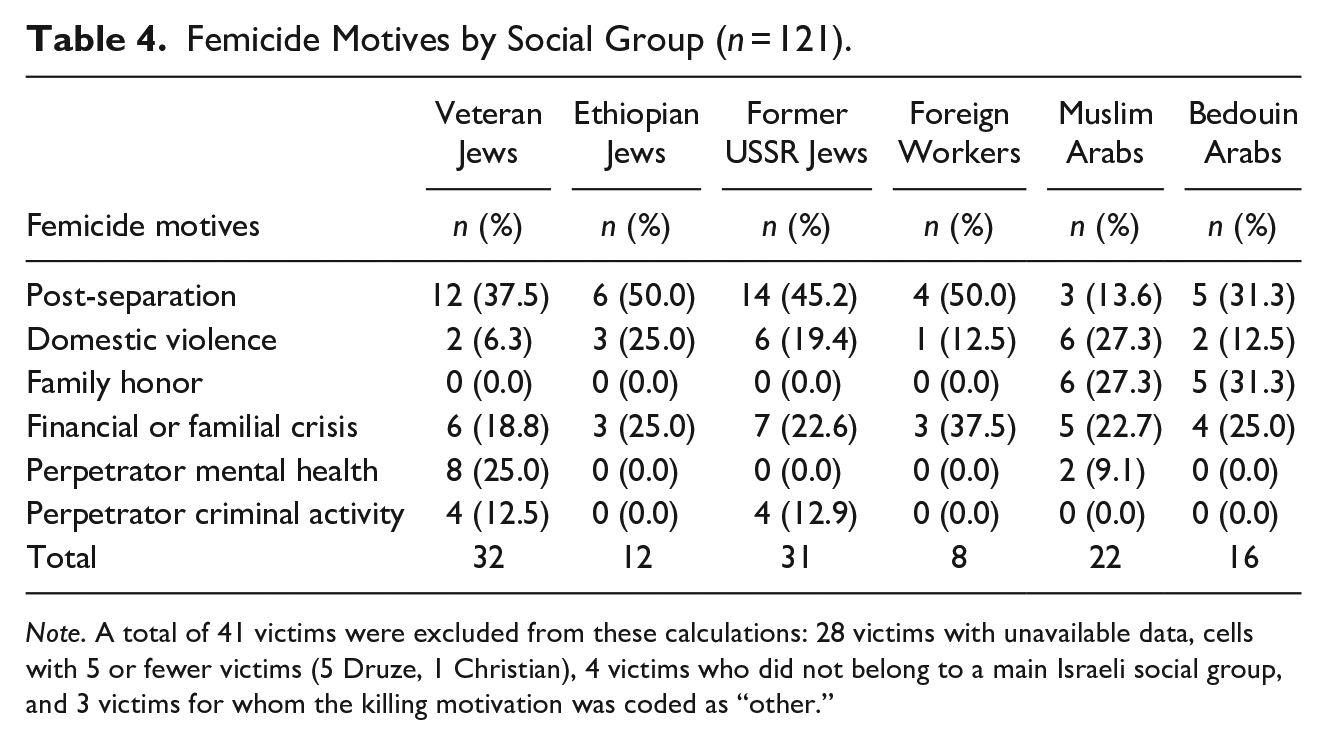
Note. A total of 41 victims were excluded from these calculations: 28 victims with unavailable data, cells with 5 or fewer victims (5 Druze, 1 Christian), 4 victims who did not belong to a main Israeli social group, and 3 victims for whom the killing motivation was coded as “other.”
Discussion
This research’s findings echo prior studies on intimate partner femicide in Israel, noting the underrepresentation of veteran Jews, a slight overrepresentation of immigrants from the former USSR, an overrepresentation of Arabs (Edelstein, 2011), and a significant overrepresentation of Jewish immigrants from Ethiopia (Edelstein, 2011; Landau & Hattis-Rolef, 1998; Sela-Shayovitz, 2010). Prior research in Israel did not report femicide rates among foreigners (African foreign workers and asylum seekers), nor did it compare various social subgroups in Israel. Aiming to shed light on femicide’s diversity, we endorse Catalana-Minana et al.’s (2014) note regarding the fact that cultural factors interact with personality and that this interaction influences cognitions, attitudes, and behaviors related to personal and individual styles of resolving conflicts (p. 2654). In this cultural framework of femicide analysis, we suggest interpreting our findings along Hofstede’s (1980, 2011) typology over individual versus collective dimension of cultures. According to Hofstede (1980, 2011), the conceptual dimensions of cultural classification relating individualism versus collectivism do not relate to individual characteristics, but rather the integration of individuals into primary groups (p. 8). Along such a typology, ties between individuals in individualistic cultures are loose, with each member of society expected to look after the self and nuclear family. In collectivistic cultures, on the other hand, members of society are integrated into strong, cohesive in-groups—often extended families that protect group members in exchange for unquestioning loyalty (Hofstede, 2011, p. 11).
Contrary to collectivistic cultures, people in individualistic cultures are classified as individuals and feel they have a right to privacy. In collectivistic cultures, on the other hand, the emphasis is not on an individual’s privacy but rather the sense of belonging to the group. The emphasis on a person’s group belongingness stems from collectivistic cultures’ emphasis on group harmony, interdependence, obligation to the group, obedience, and harmony (Ashbourne & Baobaid, 2019). In such collectivistic groups, not the individual but rather their social status, age, and gender determine the authority to drive social interactions (Fulu & Miedema, 2015). Concomitantly, an individual’s reputation or behavior in collectivistic cultures affects the status of the family and collective (Haj-Yahia & Sadan, 2008). Scholars agree that this typology is an ideal type that in social reality manifests along an individualistic–collectivistic spectrum, with developed and Western countries tending to be higher in individualism and Asian and African countries tending to be more collectivistic cultures (e.g., Bond & Smith, 1996; Mallory et al., 2016).
Using Hofstede’s (2011) classification of individual versus collectivist cultural dimensions, our findings imply that most groups with an overrepresentation of femicide seem to be classified as collectivistic cultures: Ethiopian Jews and foreigners, including foreign workers and asylum seekers from Africa, and Arab cultures (Mallory et al., 2016). In the same line, our findings suggest that femicide is underrepresented among social groups classified as more individualistic: veteran Jewish Israelis (Jurcik et al., 2013) and former USSR Jews. It is noteworthy that although USSR Jews were previously classified as a collectivistic culture (Mamontov et al., 2014), some regions were more individualistic, like Ukraine (Mallory et al., 2016), with many more Jews classified as individualistic after the dissolution of the Soviet Union in 1991 (Velichkovsky et al., 2019), especially among immigrating former USSR Jews (Jurcik et al., 2013; Leipzig, 2006; Realo & Jüri, 1999; Triandis et al., 1988). These empirical observations seem to validate prior arguments linking higher rates of femicide to more collectivistic cultures (e.g., Catalana-Minana et al., 2014; Negy et al., 2013; Triandis, 1995).
As previously noted, femicide among Christian Arabs, who are classified as a more collective culture, demonstrates a contrary pattern with femicide underrepresentation. This pattern may indicate that religion moderates patterns of lethal violence, a hypothesis that requires further study. It is also possible that this seemingly contrary finding aligns with our suggested individualistic–collectivistic cultural interpretation regarding femicide’s frequency. This is because their underrepresentation in femicide could be related to prior findings of possible moderation of the individualistic–collectivistic cultural dimension along national wealth (Hofstede, 2011). Thus, the underrepresentation of Christian Arabs in femicide seems to be in line with Hofstede’s (2011) suggestion that national wealth is significantly correlated with a more individualistic cultural dimension and may be considered a more parsimonious explanation of phenomena than differences in cultural dimensions (p. 8). Such pattern was observed also by Velichkovsky et al. (2019), who noted that increased urbanization, wealth, and formal education correlate with a transition from collectivistic to individualistic values. Thus, regarding femicide, it is possible that the collectivistic cultural dimension of social groups—in this case, Christian Arabs—is moderated by high levels of education and socioeconomic status, to the point of being closer to individualistic cultural classifications, and their correlated lesser frequency of femicide.
The possible overriding effect of wealth (or poverty) on collectivistic cultural tendencies is demonstrated in our findings not only regarding femicide rates among high socioeconomic status groups such as Christian Arabs, but also pertaining to low socioeconomic status groups as in femicide among Bedouin Arabs. Christian Arabs’ economic strength owing to their better education, prominence in liberal professions, and relative wealth (Al-Haj, 2012; Hlihel, 2008, p. 307; Landau, 1993) may explain the low rates of femicide in this subgroup, despite their initial collectivistic cultural classification. In the same line, the low socioeconomic status and education of Bedouin Arabs, culturally classified as collectivistic, may have affected and exacerbated the overrepresentation of femicide among Bedouin Arabs.
The possible link between low social status and femicide rates in collectivistic cultures may be related to honor notions. In this regard, scholars’ findings on interpersonal violence in honor cultures are noteworthy, demonstrating that social class inferiority may influence the frequency of honor killing as a mode of reparation for loss of honor (Cooney, 2014, p. 416; Henry, 2009, pp. 451–454). Alongside such observations, it is possible that social status, rather than socioeconomic status, explains the tendency to resort to lethal violence. Alternatively, it is possible that social status and socioeconomic status are interrelated factors that moderate each other.
An additional noteworthy observation suggests that violence as mode of reparation for lost honor may differ among individuals. Accordingly, individuals in honor cultures with low social status may protect their sense of social worth in the social hierarchy by engaging in violent behavior (Henry, 2009). As such, honor-related killings as an extreme violent mode of honor protection may be more prevalent among lower-status families (Cooney, 2014, pp. 411–416) in collectivistic groups. Thus, it is possible that femicide rates among Bedouin Arabs do not depend solely on the collectivistic cultural nature of the group, but also on the particular social or economic status of each family. This line of argumentation implies that the lower the status of a particular woman’s family in a collectivistic group, the greater the chances that the family will choose to kill her due to alleged breach of family honor (Baker et al., 1999, p. 179; Henry, 2009, pp. 451–454).
These indications require further study and validation. However, our findings imply that collectivistic groups like Bedouin Arabs with low socioeconomic status and high rates of unemployment, poverty, and illiteracy (Abu-Rabia, 2011; Abu-Rabia-Queder, 2006; Al-Haj, 1989; Al-Krenawi & Graham, 1999; Elbedour et al., 2006, p. 217; Sa’ar & Yahia-Youhnis, 2008) may have higher femicide rates compared to other collectivistic cultural groups.
Thus, femicide rates observed in our study seem to correlate with the diverse socioeconomic and educational levels in similar culturally collectivistic groups, suggesting the possible overriding effect of certain socioeconomic characteristics on cultural collectivism. Femicide, thus, may be underrepresented in collectivistic groups with high levels of education and socioeconomic status and exacerbated among collectivistic groups with low levels of education and socioeconomic status.
An additional interpretation of our findings along the individualistic–collectivistic cultural dimension relates to the femicide victim’s age. As noted, African foreign workers and asylum seekers victims were the youngest, with an average age of about 30, followed by Ethiopian Jewish immigrants and Arab victims, with an average age of early 30s. On the other hand, former USSR Jews and veteran Jews were notably older, generally aged 50 or older. This diversity in the victim’s age also might be linked to the individualistic–collectivistic cultural dimension of the sociocultural groups. This is because the matrimony age seems to differ, with individualistic cultures promoting prolonged periods of childhood (Arnett & Tanner, 2016) and collectivistic cultures tending to set the age for matrimony much younger (Hlihel, 2008). This diverse cultural pattern seems to coincide with femicide, given the gendered nature of femicide motives and the perpetrator’s identity more often involving an intimate partnership with the victim. Thus, our findings suggest that individualistic–collectivistic cultural differences between groups regarding women’s age of puberty and adulthood influence the average age of the femicide victims in each culturally classified group. Indeed, when comparing the victims’ mean age across collectivistic groups (Ethiopian Jews and Arab groups: n = 65, Mage = 34.7, SD = 13.4) versus more individualistic groups (veteran Jews and former USSR Jews: n = 72, Mage = 51.9, SD = 16.3), the difference was statistically significant (t[135] = 6.69, p < .001). Thus, we can conclude that in addition to femicide’s frequency, sociodemographic characteristics in terms of the victim’s age are related and can be interpreted along the individualistic–collectivistic cultural dimension of the victim’s group.
An interesting observation can be noted regarding the individualistic–collectivistic cultural classification of femicide’s motive. When comparing the distribution of femicide motives across sociocultural groups, a more collective type of femicide motive (often in the form of alleged breach of family honor) was noted among the more collectivistic sociocultural groups of Arabs. A seeming contrary motive seemed to prevail among the more individualistic groups (such as former USSR Jews and veteran Jews), with the women’s wish to separate from the killer as the most common femicide’s motive. Although at first glance, these motives may seem to differ, a closer look may offer an alternative interpretation. The alternative interpretation would not differ between individualistic and collectivistic cultures, and in both cases, the main motive relates to honor, which is merely interpreted differently based on cultural dimensions.
The main difference of femicide motive could lie in the culturally different perceptions of honor. Whereas collectivistic cultures may interpret the honor for which the victim is killed in a collective manner (family honor), individualistic cultures may interpret the honor for which the victim is killed as personally and individually related to the killer’s masculinity, whose honor is allegedly tarnished by the woman’s wish to separate. Thus, and in line with previous scholars’ findings, although at first glance, femicide motives seem to differ between individualistic and collectivistic classified cultures, a second look at femicide’s motive may reveal its similarity, cutting across both individualistic and collectivistic cultures and merely differing in its interpretation (Caffaro et al., 2014; Cross et al., 2004; Korteweg & Yurdakul, 2010; Shalhoub-Kevorkian, 2002).
In this overall pattern of honor interpretation, of note is the fact that two groups seem to run counter to their groups’ cultural interpretation of honor: African foreigner workers and asylum seekers and Ethiopian Jews. In these two groups, despite their collectivistic classification, their interpretation of honor seems similar to that of individualistic groups. Thus, femicide’s motive in these two collective groups coincides with more individualistic groups, where victims tend to be killed for wanting to separate from their killer. This odd finding may corroborate Ashbourne and Baobaid’s (2019) notes on the importance of the social factor of immigration in moderating collectivistic cultural behavior. In our case, findings suggest that immigrating collectivistic cultures that assimilate in individualistic groups may alter killers’ interpretation of honor, from family honor to masculine, personal honor.
However, it is still possible that this notably odd cultural difference in the pattern of femicide motives is merely ingrained in technical matters relating to immigration and visa approval policies, which result in the loss of the collective group to which they belonged prior to immigration and according to which they would have interpreted honor. It is also possible that immigration is a powerful social factor that like education and poverty seems to override alternative cultural explanations. Either way, future research is required to validate this observation on differences in femicide motives among collectivistic immigrant groups.
Conclusion
Although this research’s observations should be generalized cautiously, overall, this study seems to substantiate the argument regarding sociocultural diversity in the phenomenon of femicide. This research’s findings suggest underrepresentation of femicide frequency in sociocultural groups that are more individualistic, with a relatively higher age of the victim, and an overrepresentation of femicide frequency in sociocultural groups that are more collective, with a relatively lower age of the victim.
Thus, overall, this research’s findings suggest that the cultural positioning of collectivism could be seen as a femicide risk factor. Together with this observation, we would like to stress our findings on the seeming moderating effect of certain social factors on femicide rates among more collectivistic groups: education and socioeconomic status. Our findings suggest that the higher the education and socioeconomic status of the collectivistic group, the lower the femicide rate. In such cases, these social factors seem to override femicide’s rates along the group’s cultural dimension. The effect of these social factors on the femicide rate is noted also in the opposite direction—that is, the lower the education and socioeconomic status of a collectivistic group, the higher the femicide rate.
In addition, this research suggests that immigration may be closely related to femicide rate and motive. Because the femicide rates among collective immigrant groups are notably higher, immigration and its correlation with femicide should be further studied. Future studies should be conducted to validate this research’s findings and explore additional sociocultural diversity in femicide.
This study has limitations, among them the relatively small number of cases; the limited national dataset, which might have excluded unsuspected femicide cases; lack of relevant information in legal databases (e.g., because of the demise of both the perpetrator and victim); possibly biased data (media coverage); and missing data in cases without witnesses. Shortcomings relating to data collection involve the fact that legal and media databases are not compiled for academic research (Chan et al., 2010, p. 404) and therefore, information considered peripheral to media coverage or legal criminal procedures is not necessarily included. In addition, methodological reliance on the secondary sources used in this study (electronic legal databases and media coverage) is, by nature, inherently biased and lacking in detail. The nature of the data collected, therefore, impedes the reliability and validity of the study findings, and extrapolated observations should be treated with caution.
Footnotes
Declaration of Conflicting Interests
The author(s) declared no potential conflicts of interest with respect to the research, authorship, and/or publication of this article.
Funding
The author(s) received no financial support for the research, authorship, and/or publication of this article.
