




Abstract
Many crime victims do not report their victimization and rates of reporting are disparate across crime types. While research has established victims are least likely to report sexual assault, less known is whether the crime discounting process affects reporting rates and whether this process differs by crime type. This paper thus examines reporting for robbery, sexual assault, and physical assault incidents, particularly exploring victims who indicated their incident was “not a crime.” Using the National Crime Victimization Survey (n = 15,012) and a series of logistic regressions, this study found that, holding a number of incident-level correlates constant, crime type was the most salient predictor of reporting to police and nonreporting because the incident was “not a crime.”
Introduction
Despite efforts to increase reporting among victims, violent crimes remain largely underreported—fewer than 50% of violent crimes were reported in 2019 (Morgan & Truman, 2020). To understand the decision to report, decades of research have been conducted on the individual and situational characteristics of victimization that predict reporting behavior. These factors operate independently, but also contribute collectively to victims’ perceptions of the incident as a criminal offense. If a victimization experience does not match the definitions of crime, a victim may discount their experience which influences the decision to report. As such, victims likely define victimization experiences differently based on expectations of crime including whether the experience matches pervasive definitions of the crime and the stereotypical individual-level characteristics of the incident.
Currently, much of the research that examines the decision to officially report crime is concerned with crime as a whole or narrowly focuses on one particular type of victimization. This research has often examined gender-based crime, such as sexual assault and intimate partner violence, to the exclusion of other crime types. There has been a large, and needed, emphasis placed on examining gender-based crime, as legal definitions of this type of crime have changed over time and are reflective of larger cultural norms. For example, the FBI’s definition of rape has changed drastically in the last decade as it used to only include the forcible rape of women and is now expanded to include non-forcible rape as well as male victims (Department of Justice, 2012). These legal changes have led to shifts at the societal level resulting in an evolution of both the perceptions and legality of broader categories of rape and sexual assault. Despite the more inclusive legal definitions of crime, the literature on sexual assault has highlighted the narratives of “real rape,” wherein situational and demographic factors play a role in defining what is and is not a sexual assault, outside of the actual crime itself. Further, this narrative of “real rape” is suggested to influence reporting behavior, victim disclosure, and jury decision-making (DuMont et al., 2003).
Conversely, legal definitions of other crimes (e.g., robbery and physical assault) have largely remained unchanged and the validity of these experiences as crimes has not been subject to the same scrutiny or debate. As such, many of the nuances identified in the narratives surrounding sexual assault and victim credibility and labeling, such as whether a weapon was present or force was used, have not been examined for other crime types. However, it is unclear whether these factors are truly unique to sexual violence, as suggested by the research on gender-based violence, or whether they might be used to understand how people define violent victimization as crime more generally.
The lack of research examining these distinctions across crime types highlights the assumption within research that beliefs about crime are stable and in line with legal definitions. However, recent research has highlighted similarities between sexual assault and other violent crime, specifically robbery, in terms of reporting, demonstrating that characteristics indicative of a traditional rape scenario are also consistent with that of robbery (Muniz & Powers, 2021). This finding highlights the potential for labeling of victimization to also play a crucial role in reporting for not only robbery, but other types of crime.
Building on prior research that has examined perceptions of police response as reasons for nonreporting, this study focuses on crime discounting—a process that precedes contemplation of police response—for robbery, sexual assault, and physical assault. Using a large nationally representative survey and a wide range of individual and situational correlates, this study first examines the role of crime type on victims’ decision to report to law enforcement. Second, this study examines victims’ non-reporting decisions that were attributed to their beliefs that the incident was not a crime. This paper will first present the extant research on victim reporting behavior in the context of the self-labeling or discounting process. The literature review will discuss the more expansive sexual assault reporting literature before discussing the general violent crime reporting literature.
Literature Review
Seminal work by Ruback et al. (1984; Greenberg & Ruback, 1992) on the process by which victims define their experiences as victimization and report to the police outlines a three-stage model for victim decision-making—labeling the incident as a crime, assessing the seriousness of the incident, and deciding the appropriate course of action. At each of these stages, Ruback et al. (1984) suggested that victims are likely to be influenced, at least in part, by feedback they receive from others after informally disclosing victimization. However, victims’ cognitive appraisal of the incidents and the advice given to victims by others is dependent on crime reporting scripts, or the definitions of what crime is and how similar the incident is to that definition (Ruback et al., 1984). The authors found that perceived seriousness of an offense was the best predictor of labeling an experience a crime and perceptions regarding whether police should be involved (Greenberg & Ruback, 1992). These assessments of whether a victimization is a crime and whether it warrants police involvement is also informed by situational dynamics of the incident, in that incidents with more ambiguity are less likely to be labeled a crime. Ambiguity can arise as a function of a number of factors such as the location of the incident, the relationship between the victim and offender, or the crime type itself. Ruback et al. (1984) provided the example of sexual assault, where incidents in the context of dating relationships may be more ambiguous due to the preexisting relationship between the offender and victim, particularly if the assault did not feature physical force and physical victim resistance.
Relatedly, Weiss (2011) introduced a theoretical framework for understanding victim interpretation of sexual assault incidents that also highlights these normative factors whereby victims may cognitively reevaluate their victimization or refrain from labeling their experience as a crime. Using victim narratives collected in the NCVS, there were four types of non-reporting accounts suggested by Weiss (2011) including denying criminal intent, denying serious injury, denying victim innocence, and rejecting victim identity. Generally, these neutralizations work to take culpability away from offenders or justify offenders’ actions. Further, these neutralizations allow for normalcy to remain in the relationships between victims and offenders, as many sexual assaults are committed by those known to the victim. First, denying criminal intent highlights that the behavior enacted by the offender was unintended or out of character, which relieves the offender of culpability and leads to the victim to define their experience of violence as something other than victimization. Denying serious injury allows victims to normalize situations in which incidents which led to no or minimal harm or were “less than” expectations of traditional sexual assault scenarios (Weiss, 2011). Attributions regarding the severity of the incident, including the harm caused, is also a key point in Ruback et al. (1984) model of victim decision-making. Denying victim innocence occurs when victims internalize blame for the victimization and attribute the offender’s behavior to victim precipitation (Weiss, 2011). Finally, rejecting victim identity highlights the potential deleterious nature of resiliency, whereby victims suggest that they are not a victim because they were able to handle the situation themselves, through resistance or “fighting back” (Weiss, 2011). Notably, these neutralizations are often reliant on traditional misconceptions of sexual assault that are not consistent with legal definitions. Weiss (2011) research and Ruback et al. (1984) theoretical and empirical work emphasizes situational factors and crime reporting scripts in shaping perceptions of crime severity and the decision to label victimization as a crime.
Most research on the interpretation of violent victimization as crime is focused on gender-based violence, in particular, sexual assault. Victims of sexual assault often do not consider their experiences a crime. For example, Layman et al. (1996) found that only 27% of victims were “acknowledged” victims, or victims who had labeled their victimization as sexual assault. In line with the theoretical frameworks provided by Ruback et al. (1984) and Weiss (2011), situational and contextual factors have consistently been associated with the labeling process in gender-based victimization. The use of physical force and severity of an incident, including whether a weapon was present or an injury sustained are significant situational predictors of an incident being labeled sexual assault or rape (Bondurant, 2001; Fisher et al., 2003; Kahn et al., 2003). Further, relational factors, such as the victim-offender relationship, have also been found to play a role in the likelihood of a victim to label an incident as sexual assault, with victims who know their assailant less likely to label or report the incident (Kahn et al., 2003; Ruback, 1993) as have factors such as geographical location of an incident and engagement in other risky behaviors such as alcohol use (Kahn et al., 2003; Ruback & Ménard, 2001). These factors, when considered together, reflect the “classic rape scenario” (LeMaire et al., 2016). These traditional narratives suggest that a “real rape” occurs when a weapon is present, an offender used force that the victim resisted, an injury is present, and the offender is a stranger (Kahn et al., 2003). Often, victims of sexual assault have experiences that depart from “real rape” and thus do not interpret their victimization experience as a crime (Orchowski et al., 2013). For example, many women in Orchowski et al. (2013) study labeled their experiences as “serious miscommunication,” despite having behavioral indicators that would meet the legal definition of a sexual assault/battery.
In congruence with the labeling literature, the reporting literature has found situational and contextual factors important in the decision to report sexual assault to the police (DuMont et al., 2003). For example, Pinciotti and Seligowski (2021) found that women who physically resisted their assailant during sexual assaults, compared to women who “froze,” were more likely to report to police. This finding is in line with the misconception of sexual assault, which used to be codified in U.S. laws, that victims who do not physically fight back did not do enough to thwart the attack and therefore are not victims. A victim’s acquaintance with an offender also impacts official reporting, with women who know their offenders being less likely to report (Pinciotti & Seligowski, 2021). Research also highlights that non-acknowledgment among victims, feelings of shame or guilt, as well as concerns about the criminal justice system response are barriers to reporting (Cohn et al., 2013). Similar to labeling, however, these factors are largely tied to the traditional narrative and, albeit unfounded, understanding of “real rape.” In addition to factors relevant to this stereotypical narrative, gender of the assailant, geographical location, race, and age are associated with the decision to report (Hullenaar & Ruback, 2021; Moore & Baker, 2018; Ruback & Ménard, 2001; Wolitzky-Taylor et al., 2011).
Many of these demographic and situational correlates are associated with violent crime reporting generally and reporting of specific forms of violent crime. Crime severity is one of the most salient factors for reporting; the absence of harm to one’s self or property results in lower official reporting (Hardy, 2019). This is consistent with the findings of gender-based violence wherein severity of the incident plays a key role in the victim’s decision to report (Kahn et al., 2003). Demographics, particularly race, age, and gender, also play a role in the likelihood of violent crime reporting, such that women, Black victims, and adult-age victims are more likely to report violent victimization (Hart & Rennison, 2003). Additionally, research suggests that the victim-offender relationship plays a role in the likelihood to report violent crimes more generally, with violent crimes having a greater likelihood of being reported when the offender was a stranger (Hart & Rennison, 2003).
Less often has research considered the labeling process of victimization, or correlates to labeling, among other crime types outside of gender-based violence. Drawing on Ruback et al. (1984) conceptual and empirical work, Brennan (2016a) acknowledges the role of the environment in which victimization occurs in labeling an offense as a crime. Brennan (2016a) examined whether violent incidents which occurred within a barroom, either having induced physical or emotional harm or had a weapon used, were regarded as crimes by respondents. Brennan (2016a) highlighted that in certain environments victims may have reduced expectations of safety and therefore may be more likely to neutralize the offense as a crime, or discount the crime. Individuals in more social environments may be more likely to discount victimization based on social and personal understandings about crime. Brennan (2016b) further highlighted the role of victim perceptions of an incident through his examination of crime discounting. Brennan (2016b) suggested that decisions about crime, specifically that of labeling an incident a crime, are influenced by personal and contextual factors, thus certain instances of violent crime may be normalized are seen as not serious regardless of structural definitions of crime. More specifically, Brennan (2016b) found that the impact of a violent incident, in terms of harm, perceived injustice, and a victim’s feelings of vulnerability, all influence a victim’s perceptions of the seriousness of a crime.
Outside of the work of Brennan (2016a, 2016b), few studies have acknowledged factors that influence crime labeling in crimes that are not categorized as gender-based victimization. Åkerström (2002) found that nursing home staff were less likely to consider aggressive acts by elderly patients as violent, even though many of the acts were intentional or left injuries. Further, the discounting of crime or reluctance to label incidents as crimes has been found in certain communities, despite high rates of crime. Anderson (1999) and Ellickson (1991) note that informal social norms often allow for neighbors to neutralize incidents rather than seek legal help. Additionally, research has noted that exposure to crime lends itself to desensitization to or normalization of crime, which may result in a lower likelihood of labeling crimes (Young, 1988). Taken together, this research highlights that individuals may define or discount violent incidents as a crime based on their expectations of behavior within specific settings, or based on the perceived impact of an incident.
Current Study
Examinations of the research on crime labeling and reporting suggest that comparisons between crime are largely missing from the literature. As no crime has an exhaustive reporting rate, it is crucial for research to examine barriers to reporting across all crimes. Notably, reporting frequencies vary dramatically between crimes. Sexual assaults have the lowest reporting rates while other violent crimes, such as robbery, are reported more often (Morgan & Truman, 2020). Low rates of reporting sexual assault may be due to the changing perceptions and definitions of this crime over time that lead victims to discount their experience. Conversely, there may be substantial overlap between non-reporting of sexual assault and other forms of victimization which has not been established because prior research has largely been siloed. Researchers often assume that sexual assault is unique, and while still an important and needed area of inquiry, some research suggests that there is substantial overlap with other forms of crimes. For example, Muniz and Powers (2021) highlighted commonalities between sexual assault and robbery in terms of situational dynamics, such as use of weapon, presence of injury, and acquaintance with the offender. That is to say that factors traditionally associated with nonreporting among sexual assault victims via the “real rape” scenario are also barriers to reporting for victims of robbery, though this study focused on perceptions of police (e.g., police would be biased) as reasons for nonreporting which would occur after the victim labeling process. The present study seeks to extend the research comparing reporting behavior by crime to explore another crime type: physical assault.
Similarly, many researchers have operated under the assumption that all crime victims perceive their incident as a crime and reporting decisions are based on individual characteristics of the crime. However, as Brennan (2016a) and Black (1979) note, victims must identify an incident as a crime before they can make the decision to report to police and before they contemplate police response to reporting. Therefore, to better understand the differences in reporting rates—particularly among differentially perceived crimes—learning more about the self-labeling and crime discounting process is necessary. Thus, this paper highlights the need for further research to compare factors that influence formal reporting across types of crime and to determine barriers and crime discounting that may be consistent across crime. As such, this study aims to answer two main research questions:
Do reporting rates differ for robbery, sexual assault, and physical assault when holding relevant incident-level correlates constant?
Do victims of different types of crime label or discount their experience similarly?
Methods
The current study used the concatenated, incident-level National Crime Victimization Survey (NCVS) data from 2000 through 2019 to examine the relationship between sexual assault, physical assault, and robbery victimizations and situational barriers to non-reporting (n = 15,212). This dataset is available through the Inter-university Consortium for Political and Social Research. The survey’s sampling design, as well as the inclusion of a wide range of crime correlates, makes it an ideal data set for examining self-reported victimization. The NCVS is considered to be nationally representative of victimization across the United States, as it uses a stratified, multi-stage clustered sampling design (Rennison & Rand, 2006). The NCVS was initiated in 1973, but underwent revisions in 1992 to encompass additional factors related to crime victimization (Rand, 2009). The NCVS is an interviewer-led survey in which members of households 12 years or older are asked about prior victimization experiences in the previous 6 months. The NCVS includes questions about the situational dynamics of victimizations reported, such as whether a weapon was used, as well as victim and offender characteristics, making it highly applicable to the research questions identified above. Further, the NCVS asks respondents questions about official reporting in regard to their victimization, including reasons for reporting or non-reporting.
Dependent Variables
The first dependent variable, victim reporting, indicates whether a victim chose to formally report sexual assault, robbery, or physical assault victimization to the police (56.6% reported to police). Instances where victimizations were reported to police by a third party were coded as nonreporting. 1 Sensitivity analyses found that when third-party reported incidents were removed (rather than coded as 0) there were no substantive differences.
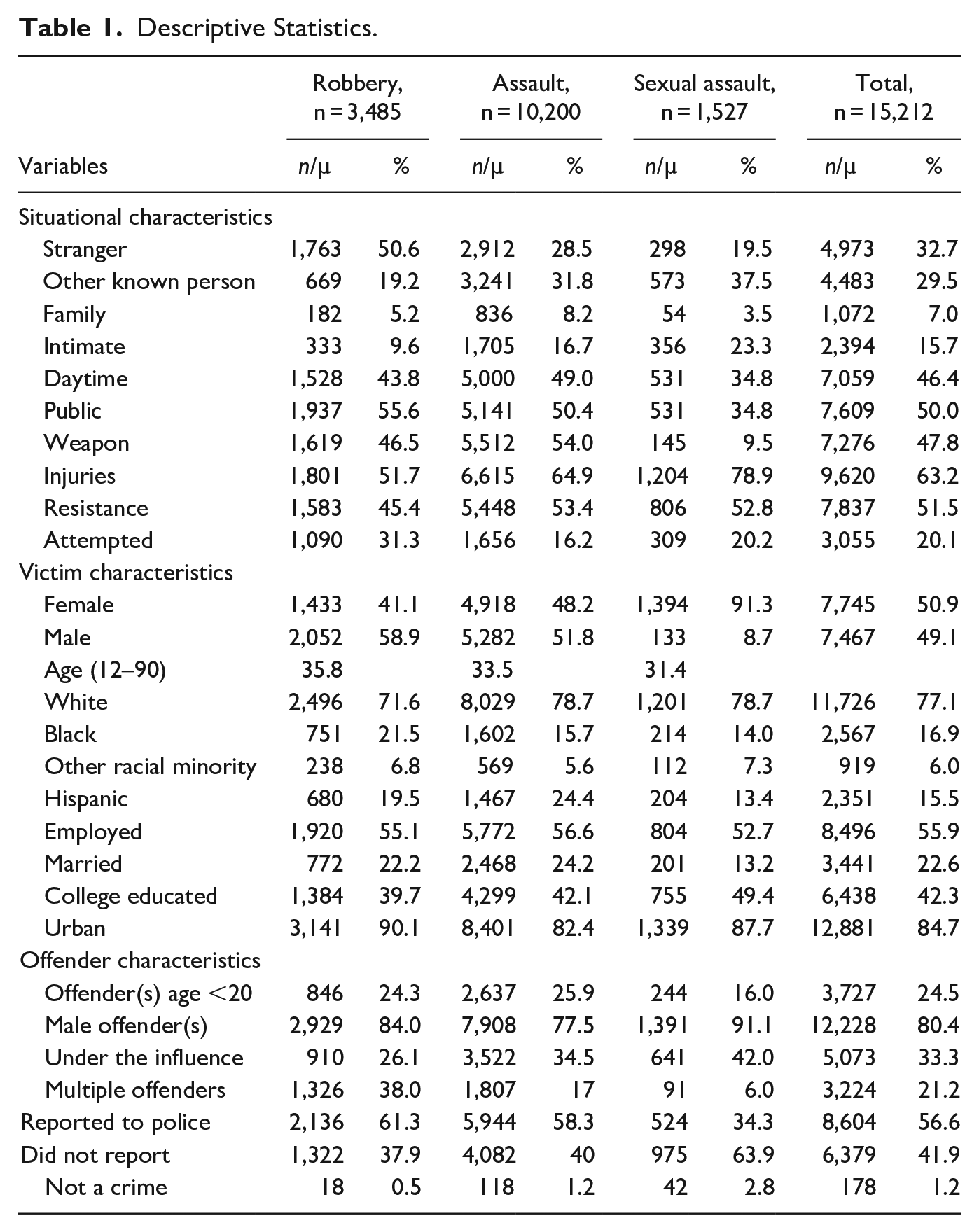
The second dependent variable, nonreporting because it was not a crime (henceforth not a crime), measures whether a victim chose not to report as a result of being unsure if an act was a crime or that harm was intended (n = 178). NCVS respondents are presented with a list of reasons for nonreporting (e.g., police would be biased, offender was a kid, handled another way, etc.), those who selected not a crime are coded as 1 while those who did not select this reason are coded as 0. Sensitivity analyses were conducted to determine if there were substantive differences between those who selected not a crime as a reason for nonreporting generally, and those who selected not a crime as the most important reason for nonreporting (n = 118). Results were not substantively different, so all respondents who selected not a crime were included in analyses (Table 1).
Descriptive Statistics.
Independent Variables
Crime type indicates which of three types of crime, robbery (n = 3,485), physical assault (n = 10,200), and sexual assault (n = 1,527), were experienced by the respondent. Both attempted and completed robberies, physical assaults, and sexual assaults were included (20.1% of incidents were attempted), while verbal threats were excluded. Robbery serves as the reference category in the analyses.
Several situational characteristics were used to examine reporting decisions, as previous research has identified factors such as the time of day at which the incident occurred and crime severity to be important factors in the decision to report a crime or label an incident as a crime. The time of the incident was dichotomized as either daytime (between 6 am and 6 pm) or nighttime (between 6 pm and 6 am), with nighttime incidents occurring slightly more frequently (53.6%) than daytime (46.4%). Crime severity was measured through three dichotomous indicators, including whether a weapon was present at the time of the victimization (47.8%), whether the victim sustained injuries (63.2%), and whether the victim resisted the assailant (51.5%). Location of the incident was dichotomized as either occurring in a public location (50%), or occurring near the respondent’s or respondent’s friend’s place of residence. Finally, the victim-offender relationship was measured using dichotomous indicators to identify whether the offender was a current or ex-partner (15.7%), family member (7.0%), other known person (29.5%), or a stranger (32.7%).
Various victim characteristics, including individual-level measures of demographic, geographic, and socioeconomic factors, were included. Demographic variables include race ([White 77.1%]; Black [16.9%]; or Other [6.0%]), ethnicity (15.5% Hispanic), gender (50.9% female), age (M = 32.5, SD = 15.7), and marital status (22.6% married). Urbanicity (84.7% urban), was included as a geographic indicator to control for potential differences based on geographic characteristics. Socioeconomic status was measured through two variables, educational attainment and employment, with about 43.2% of respondents completing at least some college and 55.9% indicating being employed during the time of the incident.
Offender characteristics, such as the offender’s perceived age, gender, and drug/alcohol use at the time of the incident and the number of offenders, are included as indicators as prior research has found these characteristics influence the decision to report (e.g., Goudriaan et al., 2004; Lizotte, 1985). For incidents involving multiple offenders, the demographic characteristics, except for age, were coded for the majority of the group. Offender age is a dichotomous indicator, with the offender’s age coded as either 20 years and younger (24.5%) or 21 years and older. In incidents with multiple offenders, the age of the oldest offender was used. Offender gender was dichotomized as either female/mostly female (19.6%), or male/mostly male/equal number of male and female (80.4%). Drug or alcohol use by offender was measured through a dichotomous indicator, with about 33% of victims indicating the offender(s) was under the influence at the time of the incident.
Survey design measures were included in analyses to control for the way in which the surveys were conducted, either in person or on the phone, as well as the decade in which the interview occurred (Addington, 2005; Xie et al., 2006 ).
Analytic Strategy
Logistic regression was used to examine victim reporting on crime type, situational characteristics, victim characteristics, and offender characteristics. Due to the complexity of the NCVS sampling design, Taylor Series Linearization was used to address the underestimation of standard errors (Levy & Lemeshow, 2013). The second analysis used logistic regression to regress not a crime on crime type, situational characteristics, victim characteristics, and offender characteristics. For both analyses, missing data were addressed using listwise deletion. Firth logistic regression was then used to account for not a crime being unequally distributed, as the choice to not report due to this reasoning was rare (King & Zeng, 2001).
Results
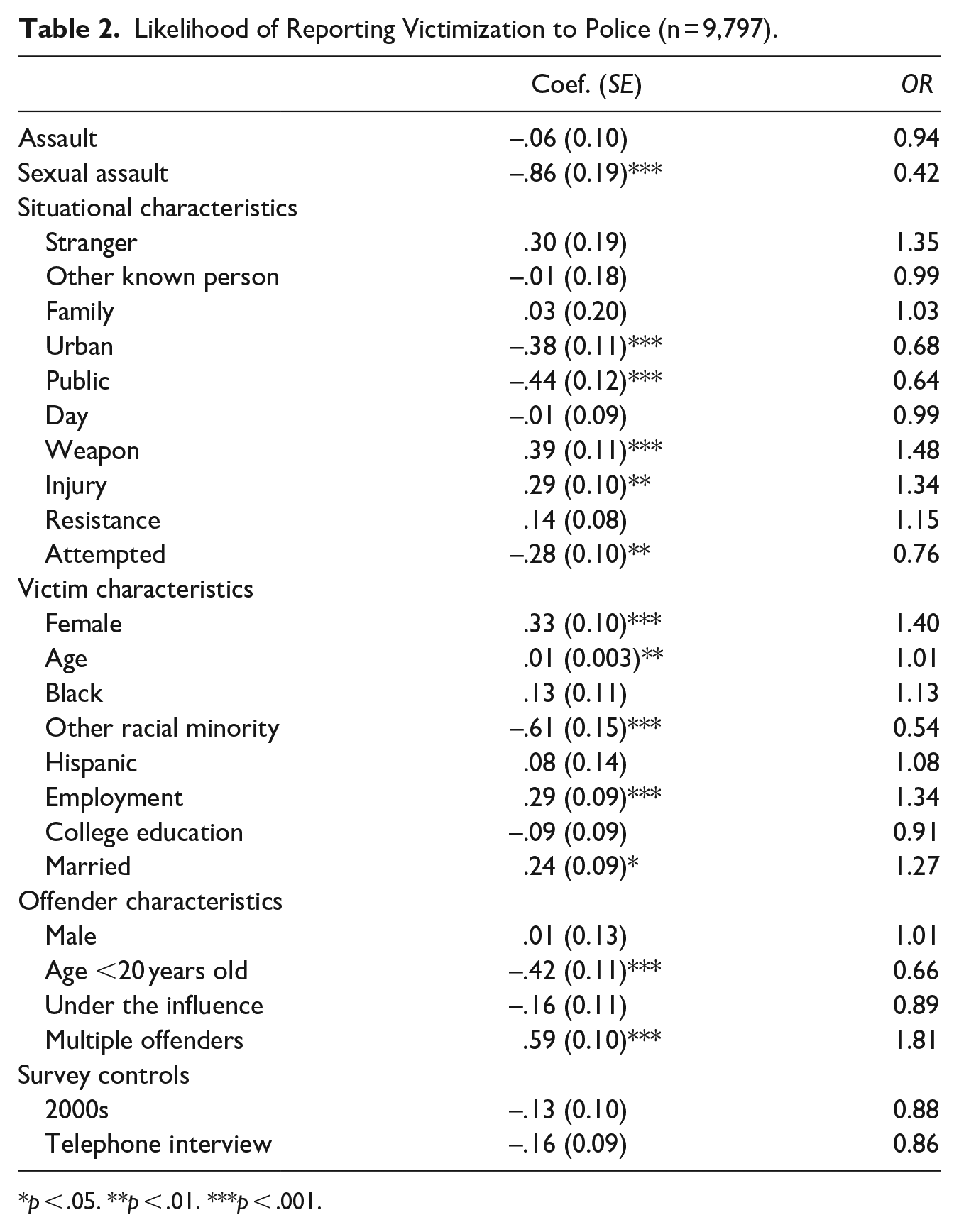
The first model examined the impact of incident characteristics on victim reporting. Results indicated that the most important predictors of reporting to the police were crime type and gender of the victim. The odds of sexual assault victimizations being officially reported were 58% (OR = 0.42, p < .001) lower than for robbery, as shown in Table 2. However, results for assault compared to robbery were non-significant.
Likelihood of Reporting Victimization to Police (n = 9,797).
p < .05. **p < .01. ***p < .001.
In terms of situational characteristics, urbanicity and crime severity were significant predictors in the decision to officially report. Victimizations that occurred in public or in urban locations were associated with a decrease in odds of being reported compared to their counterparts (OR = 0.68, p < .001; OR = 0.64; p < .001 respectively). Further, victimizations including injuries or a weapon were associated with an increase in odds of being reported while attempted, rather than completed, incidents were associated with a decrease in odds of being reported (OR = 1.34, p = .004; OR = 1.48, p < .001; OR = 0.76; p = .007 respectively).
When examining victim characteristics, gender played a significant role, with women having increased odds of officially reporting compared to men (OR = 1.40, p < .001). In terms of race, respondents who identified as a racial minority (i.e., did not identify as White or Black) were associated with a decrease in odds of officially reporting compared to White respondents (OR = 0.54; p < .001). Respondents who were employed or married were associated with an increase in odds of reporting compared to their counterparts (OR = 1.34, p < .001; OR = 1.27; p = .014 respectively).
For offender characteristics, age and multiple offenders were significant predictors of victim reporting. Victimizations involving an offender who was under 20 years old were associated with a decrease in odds of reporting (OR = 0.66, p < .001) while victimizations including multiple offenders were associated with an 81% increase in the odds of reporting (OR = 1.81, p < .001).
The predicted probabilities for reporting by crime type are shown in Figure 1. The predicted probability of victim reporting was higher for assault and robbery victims when compared to victims of sexual assault. The predicted probability for robbery was .20 more when compared to sexual assault (.58 and .38 respectively). However, the difference between robbery and physical assault was only .02 (.58 compared to .56). A Wald’s test was used to determine the significance of explanatory variables. The Wald’s test suggested that there were no significant differences between the marginal effects of physical assault and robbery; however, the test indicated that there were significant differences between sexual assault and robbery (F = 20.47, p < .001) and sexual assault and physical assault (F = 18.28, p < .001) (Mize, 2019).
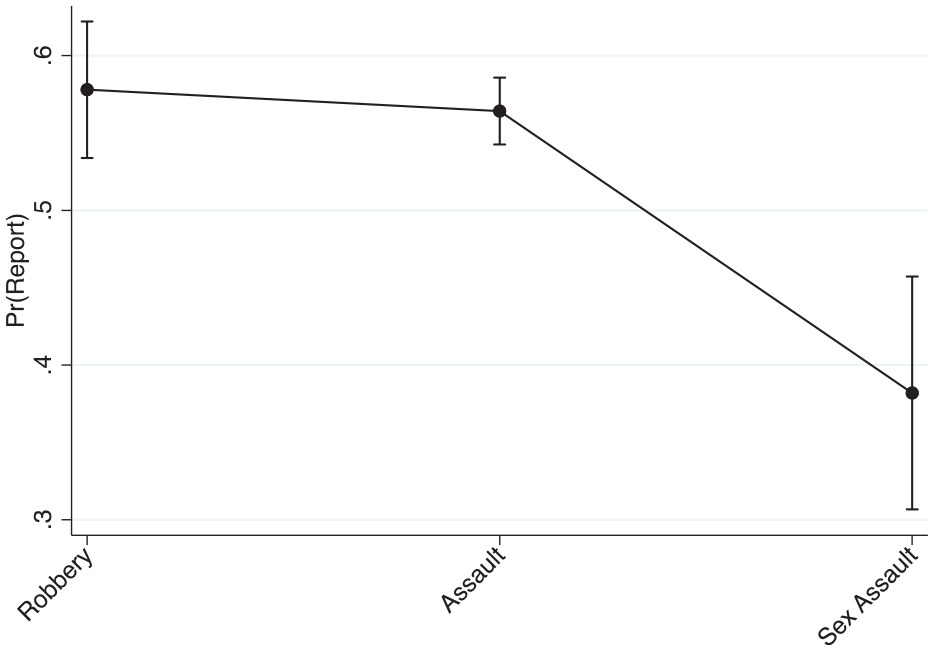
Predicted probabilities of reporting to police by crime type.
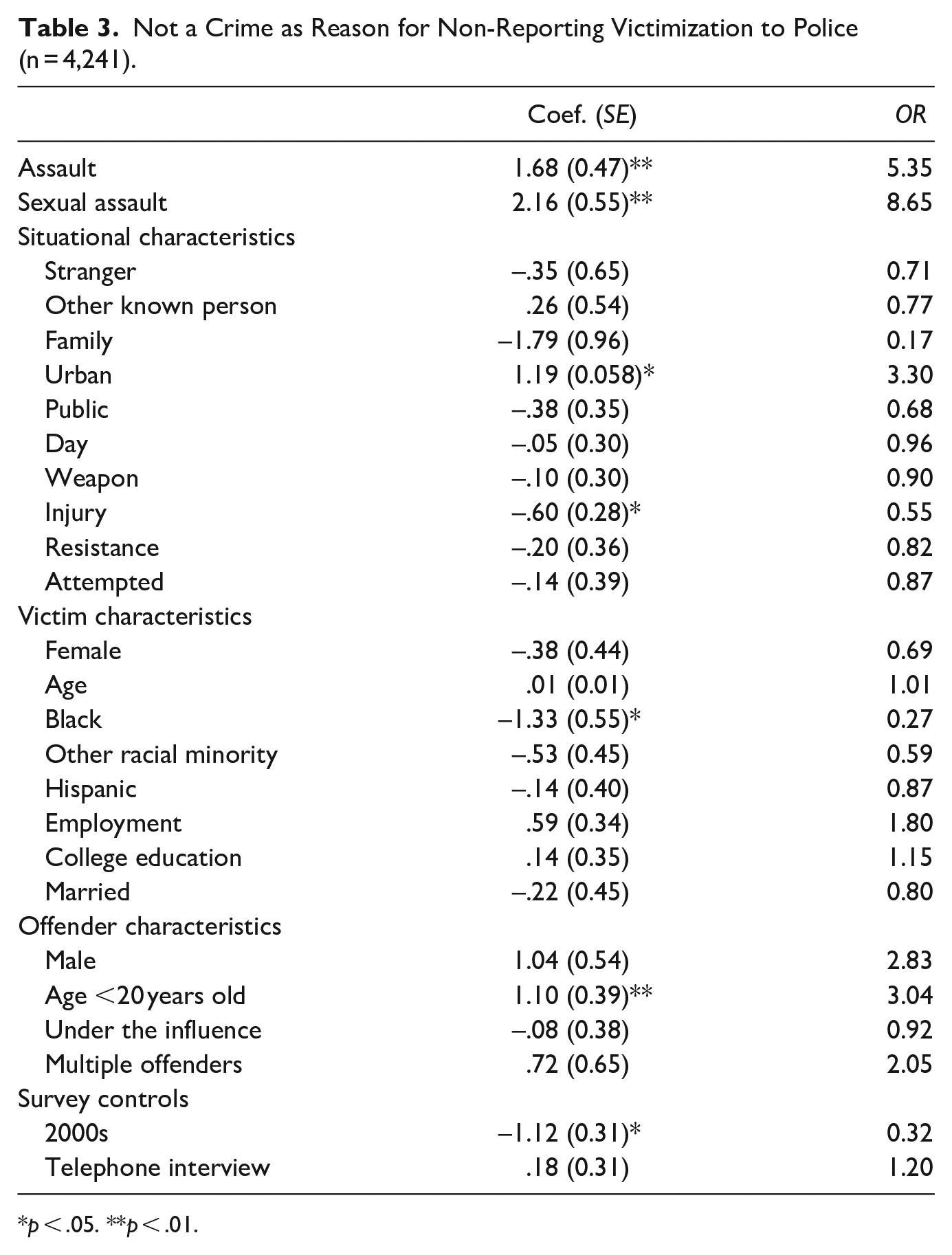
The second model examined the effect of incident characteristics on not a crime, the most salient of which was crime type. Both physical assault and sexual assault were associated with greater odds of choosing not to report based on not a crime in comparison to robbery; physical assaults were associated with a 435% and sexual assaults were associated with a 765% increase in odds of choosing this reason (OR = 5.35, p < .001; OR = 8.65, p < .001). Few situational, victim, or offender characteristics were significant predictors of non-reporting due to not a crime. Urbanicity was associated with a 230% increase in odds (OR = 3.30. p = .04). When injuries were sustained during an incident, respondents were less likely to choose not a crime (OR = 0.55, p = .031). Further, while victimizations involving Black victims were associated with a 73% decrease in odds, younger offenders were associated with a 204% increase in odds of selecting not a crime (OR = 0.27, p = .017; OR = 3.04, p = .005 respectively). Respondents whose victimizations occurred between 2000 and 2009 were less likely to report not a crime, compared to victimizations occurring from 2010 to 2019 (OR = 0.32, p = .002) (Table 3).
Not a Crime as Reason for Non-Reporting Victimization to Police (n = 4,241).
p < .05. **p < .01.
Predicted probabilities for non-reporting due to not a crime by crime type are shown in Figure 2. Predicted probabilities for not a crime were higher for physical assault and sexual assault compared to robbery. The predicted probability for choosing not a crime was .02 more for assault when compared to robbery (.01 and .03 respectively), and .02 when compared to sexual assault (.03 and .05 respectively). A Wald’s test suggested that there were no significant differences between physical assault and sexual assault; however, there were significant differences between sexual assault and robbery (F = 15.29, p < .001) and physical assault and robbery (F = 12.65, p < .001) (Mize, 2019).
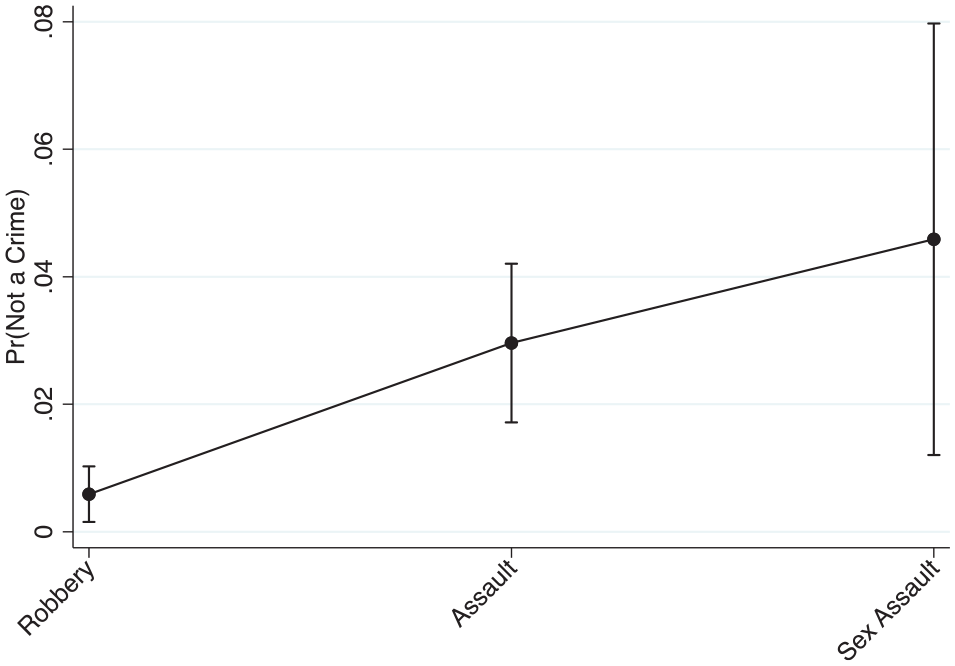
Predicted probabilities of selecting not a crime as reason for nonreporting by crime type.
The Firth logistic regression analysis used for not a crime showed that race of victim, urbanicity, and crime severity lost significance; however, age of offender and decade surveyed remained significant. Further, crime type remained the strongest predictor of choosing not a crime. In this analysis, physical assault was associated with a 147% increase in the odds while sexual assault was associated with a 344% increase in odds of choosing not a crime (OR = 2.47, p = .011; OR = 4.44, p < .001).
Discussion
The extant reporting literature, with which the results here largely aligned, has mostly focused on offender, victim, and situational characteristics in explaining the decision to report. Likewise, the majority of these studies have focused on explaining gender-based violence, particularly through the lens of rape myths, the classic rape scenario, and other frameworks that rely on the importance of situational and case characteristics in defining victimization. However, the results of the present study indicate that, more than any of these characteristics, type of crime itself is the main driver of reporting. Despite the inclusion of more than 20 other variables that, taken together, largely comprise the universe of factors included in prior studies, crime type remains significant and a stronger predictor than all other factors.
Among the incident-level correlates examined in regard to the decision to report, employed, married, and female victims were more likely to report. Women have been consistently found to report at higher rates than men—likely as a function of stereotypes about masculinity and needing help (Zavala, 2010). Married victims may have more social support and more positive responses to informal disclosure that facilitates reporting to police (e.g., Mackenzie et al., 2006; Youstin & Siddique, 2019) and employed victims may be more likely to report as they need to take time off work to deal with the crime (e.g., Sherbourne et al., 2001), may be more likely to have insurance through which they can file a claim (particularly for robbery), or health insurance to go to the doctor for injuries. Moreover, incidents occurring in public or urban locations were associated with decreased reporting while incidents involving a weapon, sustained injury, or multiple offenders were associated with increased reporting. Muniz and Powers (2021) also found that public locations decreased reporting for robbery and sexual assault incidents, perhaps indicating that victims whose incidents occur in public may be associated with “asking for it” or that the victim is somewhat at fault for being in the position to be victimized. This may also be true for assaults: victims of assault may be less inclined to report if their victimization occurred in public because of perceptions of victim precipitation or blameworthiness. Urbanicity may affect the decision to report due to more negative perceptions of the police and calling the police, though prior research has asserted that urban residents rely on formal support more than their counterparts (Goudriaan, 2005). Likewise, in line with theoretical expectations, more serious crimes—incidents involving injuries, weapons, or multiple offenders—were associated with increased reporting. Finally, older offenders were associated with increased reporting. This may be due to perceptions that younger offenders did not mean to do it, are less culpable, or that the crime should be dealt with in a different manner.
Many correlates for perception of the event as criminal driving the decision to not report aligned with those of the decision to report: urban incidents were more likely to be perceived as not a crime as well as crimes perpetrated by younger offenders and incidents with sustained injuries. It is likely that the reasoning here mirrors the reasoning for non-reporting discussed above. Interestingly, Black victims and victims whose incidents occurred from 2000 to 2009 were less likely to select that they did not report because it was not a crime indicating that Black victims are more likely to acknowledge their experiences as a crime compared to their counterparts. Furthermore, the time period of victimization surprisingly indicated that crimes occurring after 2010 were associated with more ambiguity—despite more inclusive legal definitions of crime, campaigns to acknowledge victimization, and programs directed at victimization awareness. Future research should explore temporal variation in crime discounting and variance in those trends for different groups. Perhaps educational campaigns have not been successful in overcoming cultural norms around victimization and instead have increased ambiguity in perceptions of crime because cultural norms are at odds with educational messages around victimization. Also, many situational characteristics thought to be tied to perceptions of crime and crime discounting were not predictive of selecting not a crime as a reason for nonreporting. Again, while some crime characteristics were significant predictors of reporting and not a crime, the largest effect sizes for both analyses were for crime type.
The implication of the crime type finding is that there are unmeasured factors, inherently tied to the type of crime, that impact the likelihood of reporting to the police and the perception of the offense as criminal victimization. There are a number of interactions and processes that occur before, during, and after a victimization experience that likely shape the decision to report and self-labeling victimization experiences that are unrelated to case characteristics. Some of these processes may be related to shame, blame, guilt, cultural expectations for behavior, and fear of retaliation or revictimization by the criminal justice system. Many of these processes relate to stigma which is the main justification for the focus of the literature on sexual assault. That body of research has suggested that sexual assaults that conform to “real rapes” are perceived, reported, and treated differently than incidents with other dynamics. However, this study controlled for those situational factors thought to represent stereotypical and accepted definitions of sexual assault and yet crime type remained a salient and strong factor. This suggests that there are other qualitative differences between these types of victimization that drive these perceptions and the decision to report.
Ruback et al. (1984) discussed in detail the role of third parties in the reporting decision. The process of informal disclosure is directly related to the decision to formally disclose crime and self-labeling victimization (Feldman-Summers & Ashworth, 1981). Informal disclosure mostly occurs when the victim desires emotional support and compassion that may not be obtained from formal authorities (Frazier & Burnett, 1994; Ullman & Filipas, 2001). The reaction a victim receives from their informal support system can impact the decision to report to law enforcement or seek treatment. Victims who receive a positive, compassionate, and supportive response are more likely to believe they will receive a positive reaction if they report formally (Feldman-Summers & Ashworth, 1981). Furthermore, research has shown that victims experience negative reactions from informal support providers, such as family or friends, which can include unintentionally negative reactions, such as encouraging secrecy (Dunkel-Schetter et al., 1992; Sudderth, 1998) or blaming the victim (Davis et al., 1991; Ullman, 2000).
The consideration of the informal disclosure process raises the question of whether the missing factor is the role of informal support in the decision to report and whether this informal support is related to crime type more than case characteristics. Ruback et al. (1984) asserted that there are several forms of social influence that influence reporting behavior. Among these are “scripts” and “norms” as means of social influence and how this social influence affects reporting through the informal disclosure process. These authors indicated that victims are influenced through the signaling of “scripts” which are the expectations people have about stereotyped events. Thus, via social influence, those to whom a victim discloses their experience may influence a victim’s decision to report a crime by cuing victims to a social script. This reliance on scripts may be especially salient when comparing responses by crime type—those to whom a victim informally discloses may rely on certain stereotypes about crime, and these stereotypes differ by crime, when advising victims to follow social scripts (Ruback et al., 1984). Ostensibly, these scripts may be associated with the same factors that influence reporting and crime discounting. However, given the results of this study, there may be other factors that influence these scripts and thus informal support.
Furthermore, societal norms specify situational beliefs, attitudes, and actions and prescribe punishment for norm violation, such as rejection or loss of social status. Ruback et al. (1984) assertion that third party normative influence can be used on crime victims to apply pressure to adhere to social norms or by reminding the victim of the norms of a group to which the victim belongs and that violating these norms would result in a negative reaction from that group (Ruback et al., 1984). Regarding norms by crime type, perhaps there are more norms surrounding responses to sexual assault. Victims’ friends and confidants may be scared that the criminal justice system will be adversarial for the victim rather than supportive. Similarly, because many sexual assaults occur between friends or acquaintances, there is a chance the confidant knows the offender and does not want the offender to be stigmatized (see Pickett et al., 2013 for a discussion on public opinions of sex offenders). In sum, the stakes are high for sexual assault victims which likely dissuades people from encouraging reporting due to the high bar of credibility and the potential legal and societal consequences for the offender.
Through norms and scripts, Ruback et al. (1984) found that women who had been advised to call the police were more likely to pursue their case through the criminal justice system. Results suggested that women who received positive reactions from a greater number of people after the crime and women who did not receive pressure from others to drop the case were more likely to have cases that went further in the criminal justice process. Relatedly, these authors found that hypothetical theft victims who were advised “not to do anything” about the crime were significantly less likely to call the police than were individuals who received no advice. When people make important decisions, they are likely to seek advice from others. Because victims are likely to be distressed and confused, they are especially susceptible to the advice they receive (Ruback et al., 1984) and the advice received is often based on norms and scripts in society. Qualitative research should work to disentangle advice given to victims upon informal disclosure and compare the role of informal support across crime type to examine whether it may account for the differences observed in this study as well as examine more thoroughly the factors that influence informal support. More specifically, this avenue of research should explore the norms and scripts used to advise victims, how people respond to informal disclosure, what information they use in determining advice given, and whether their advice has differed in instances of multiple disclosures (i.e., they have given advice in multiple situations).
The key takeaway from this, and the research on informal disclosure as a whole, seems to be that informal disclosure matters immensely and predicts formal disclosure. Thus, we are left wondering whether victims of sexual assault specifically are advised not to do anything more often than victims of other types of crime (due to damage to reputation of victim and offender, issues of believability, etc.) and how social influence—via norms and scripts—affects the advice given to crime victims. While crime characteristics may matter for perceptions of the crime via social influence, perhaps it is through the mechanism of informal disclosure that reporting behavior is altered. While prior research has suggested that the crime characteristics included in this study also shape the reception of informal disclosure, perhaps there are other factors that are not included in this study, or it is the combination or interaction of factors that matter rather than any independent effects. The current study was unable to thoroughly explore interactions due to low cell sizes, however, future research should examine if specific combinations of factors shape informal disclosure and in turn the labeling of an offense as a crime. Conjunctive analysis may be aptly suited for these purposes given a large enough sample (Miethe et al., 2008).
Taken together, future research needs to hone in on the differential experiences crime victims face using comparative analyses and more qualitative efforts to determine the nuances in victimization experiences. Methodologically, qualitative studies exploring victims’ decision-making need to focus on those who do not report and the internal rationale for non-reporting, self-labeling, and how third-party advice affects this process. While qualitative research has explored these processes for sexual violence, it is unknown whether these narratives are unique to gender-based violence or reflect themes that transcend crime type.
Conclusion
This study provided a comparative analysis of reporting and labeling offenses as crimes across crime type. By including a wide range of demographic and situational correlates, this study aimed to examine whether the type of victimization was associated with the decision to report victimization and the perception of the offense as a crime. Crime type was the strongest predictor of both reporting and crime labeling. Specifically, sexual assault, compared to robbery was less likely to be reported and the reason for non-reporting was more likely to be attributed to the perception that it was not a crime. This points to the uniqueness of sexual assault, but also the importance of comparing across crime type to further disentangle the processes of disclosure and crime discounting.
Footnotes
Declaration of Conflicting Interests
The author(s) declared no potential conflicts of interest with respect to the research, authorship, and/or publication of this article.
Funding
The author(s) received no financial support for the research, authorship, and/or publication of this article.
