



Abstract
This study examined the effectiveness of Students Talking it Over with Police (STOP) to improve youth’s perceptions of the police, perceptions of procedural justice, willingness to cooperate with police, willingness to file a police report, and knowledge about how to file a police report. An experimental design was employed in Racine, WI and St. Louis, MO and found that STOP was effective in improving perceptions of the police, perceptions of procedural justice, and willingness to cooperate with police in both locations; limited evidence was found in youth’s willingness to file and knowledge about how to file a police report. Analyses in St. Louis found that race/ethnicity and grade level were associated with knowledge about how to file a police report.
Relationships between police and youth, particularly in urban areas, have often been strained (Brown & Benedict, 2002; Hurst, 2007; Ren et al., 2005; Taylor et al., 2001). Youth living in low-income areas are more likely to have contact with and be stopped and frisked by the police, contributing to an increased negative perception of law enforcement (Brown & Benedict, 2002; Hurst, 2007; Leiber et al., 1998; Ren et al., 2005; Snyder & Sickmund, 1996; Taylor et al., 2001). Further, these negative interactions (e.g., racial profiling, disrespectful treatment, etc.) and public distrust of the police often draws concerns about law enforcement’s ability to effectively address crime and ensure public safety (Fagan & Tyler, 2005; Freidman et al., 2004; Worden & McLean, 2017). Police are typically the first, and sometimes only, point of contact with the criminal justice system for youth. That contact can influence youths’ perceptions and future interactions with the system (Winfree & Griffiths, 1977) such as distrust for authorities and resistance to social regulation (Tyler & Fagan, 2008). However, individuals who hold more positive views of the police and who believe that police treat people fairly are more likely to obey the law and to cooperate with policing efforts (Fagan & Tyler, 2005; Hurst & Frank, 2000; Piquero et al., 2005; Sunshine & Tyler, 2003; Tyler, 1990, 2006).
Despite longstanding issues between police and youth, few programs have been identified that successfully develop prosocial relationships between police and youth and improve youths’ perceptions of the police (International Association of Chiefs of Policing, 2018). Even more so, few programs utilize a theoretical framework that emphasizes the roles of police and youth as equals in an effort to improve attitudes of youth. To address this issue, Students Talking it Over with Police (STOP) was developed in Milwaukee, WI as an in-school program to increase transparency and improve relations between police and youth (Milwaukee Police Department, 2010). Results of an initial evaluation revealed significantly improved perceptions of the police, perceptions of procedural justice, and willingness to cooperate with the police (Freiburger, 2019). These findings prompted police departments and school systems in Racine, WI and St. Louis, MO to also implement the STOP program. The current study provides an evaluation of the STOP program in these two cities to determine whether similar results from Milwaukee were replicated. Additionally, it examines whether certain variables found to be relevant to attitudes of the police (e.g., age, race/ethnicity, gender, prior police contact) might impact program effectiveness.
Theoretical Framework
Intergroup contact theory (ICT) proposes that positive contacts between members of different groups can reduce the likelihood of prejudice and intergroup conflict, as well as improve social relations when four key conditions are met: (1) groups share an equal status, (2) groups work toward a common goal, (3) groups cooperate with one another, and (4) relevant social and institutional support is present (Allport, 1954). Importantly, these positive contact experiences operate through cognitive (e.g., learning about the other group), behavioral (e.g., changing behaviors to open oneself to positive contact), and affective (e.g., generating ties and friendships and reduce negative emotions) attitudes (Pettigrew, 1998). Indeed, scholars have determined that positive contact experiences can significantly reduce intergroup conflict (Hodson, 2011; Pettigrew & Tropp, 2006, 2008), particularly toward racial and ethnic groups (Crystal et al., 2008; Lemmer & Wagner, 2015; Works, 1961), the elderly (Caspi, 1984; Tam et al., 2006), the LGBTQ community (Vonofako et al., 2007), and individuals with disabilities (Byrd & Zhang, 2020; Yuker & Hurley, 1987). Gavin (2009) applied ICT to a program in two Midwestern high schools that sought to resolve intergroup conflicts between the two schools related to race, ethnicity, gender, culture, class, and sexual orientation, among others. The evaluation revealed a significant reduction in prejudiced attitudes and stereotypes, as well as new friendships and an increased knowledge of the other school (Gavin, 2009).
Only one study was located that examined the effectiveness of a program based on ICT that was aimed at improving youth’s perceptions of the police. The Baltimore Outward Bound Police Insight Program was a one-day program that offered team building activities between law enforcement and middle-school students. The two groups engaged in fun activities and open discussions of stereotypes under conditions like sharing equal status in a neutral environment, working toward a common goal in each activity, cooperating, and the presence of support from authority figures. The results revealed significantly improved relations between law enforcement and youth through a reduction in stereotypical attitudes of the outgroup and an increased willingness for future positive interactions (Broaddus et al., 2013).
Review of the Literature
Youth Perceptions
Prior literature has frequently revealed that citizen contact with police can influence general attitudes toward law enforcement (Brown & Benedict, 2002; Weitzer & Tuch, 2004). Much of this research has focused on adult perceptions of the police, yet an emerging body of research has examined youths’ perceptions of the police. Youths’ attitudes are especially important because perceptions developed during childhood and adolescence can impact how youth view and interact with law enforcement into adulthood (Fine, Padilla et al., 2020; McLean et al., 2019; Murphy, 2015). Literature that examines the relationship of youth development in guiding perceptions of authority figures has recognized that children, early in life, have strong authority-oriented views and typically see authorities as individuals who must be respected and obeyed (Laupa et al., 1995). However, as children advance from childhood to adolescence, they begin to develop their own perspectives of legal authorities through interactions and experiences (direct and vicarious) with law enforcement (Cohn & White, 2012; Cohn et al., 2010, 2012; Tyler & Trinkner, 2018). Thus, early interactions with police, particularly negative ones, may be more impactful for youth than for adults (Reed et al., 2014), as these negative experiences can continue into adulthood.
Scholars who have examined youths’ perceptions of the police have revealed several differences among various groups including race/ethnicity, gender, and age (i.e., childhood to adolescence). Studies have indicated that Black youth are more likely to hold negative perceptions of the police when compared to White youth (Fine, Donley et al., 2020; Fine, Padilla et al., 2020; McLean et al., 2019; Nolan, 2011; Peck, 2015), and that the presence of School Resource Officers (SRO) decreased feelings of safety for Black students but increased feelings of safety for White students (Theriot & Orme, 2016). While Brown and Benedict (2005) found that Hispanic students generally had a favorable view of school police and security officers, the literature overall has typically found that Hispanic youth hold more positive views of the police than Black youth but less positive views than White youth (Fine, Donley et al., 2020; Peck, 2015). As it relates to gender, some studies have found that male adolescents experience less improvement over time in their orientations of police legitimacy; yet another study by Fine, Donley et al. (2020) determined no gender differences on perceptions of the police. When examining age, Fagan and Tyler (2005) determined that perceptions of police legitimacy declined sharply from age 10 through age 14. Schuck (2013) also found in an evaluation of the DARE program, that attitudes toward the police were more positive at younger ages (i.e., 10–12 years) and then declined into adolescence.
Evaluation Findings of Police-Youth Programing
While healthy relationships between youth and police can facilitate positive youth development and improve general perceptions of law enforcement (Fine, Padilla et al., 2020; International Association of Chiefs of Policing, 2018), few studies have evaluated programs aimed at building these relationships. Recently, however, Fine, Padilla et al. (2020) conducted a randomized trial of four schools (4th grade–7th grade; ages 7–14 years) in Compton, CA to evaluate the effect of the Team Kids Challenge (TKC) on perceptions of police legitimacy. TKC was a 5-week, in-school program that involved repeated pro-social exposure to police in a non-enforcement capacity through the implementation of “school-wide challenges” to address current issues in the community. Results of the evaluation determined that students in the two treatment groups had significantly improved perceptions of police legitimacy compared to students in the two control groups (Fine, Padilla et al., 2020).
A growing interest in School Resource Officer (SRO) Programs has also sparked several evaluations on their effectiveness. Finn and McDevitt (2005) provided a national assessment of SRO programs, revealing that respondents felt that SRO programs increased their trust and attitudes toward the police and improved their sense of security in the school. In another study, Theriot (2016) examined the interactions between school resource officers (SROs) and middle- and high school students to determine their impact on both student attitudes toward SROs and school connectedness. Results of the evaluation determined that increased interactions between students and SROs were associated with significantly more positive attitudes toward the officers. It appears the interactions led to students’ belief that SROs were fair, helpful, and competent to stop violence and improve safety at school. However, results also revealed that increased interactions between students and SROs were associated with decreased school connectedness. The authors suggest that the presence/interaction with SROs may draw attention to school crime and other related issues, thus generating more worry or fear within the school and less connectedness to that school (Theriot, 2016).
Goodrich et al. (2014) evaluated the Police and Youth Interaction Program in 2011 to 2012 that aimed to improve relations and increase comfortability with police through community activities. The evaluation determined that, following participation in the program, youth reported significant improvements in both relations and comfortability with the police. Although not statistically significant, officers also reported an increased respect toward youth in the program (Goodrich et al., 2014). Another study by Hopkins et al. (1992) evaluated a Police-School Liaison (PSL) program, which was developed to improve youth’s views and understanding of the police in a school setting. PSL also sought to indirectly improve perceptions of the police by allowing students to hear about the officer’s engagements through other students. The evaluation determined that youth in schools with PSLs did not hold significantly different attitudes of the police than those schools without PSLs (Hopkins et al., 1992). The mixed findings between these two evaluations could be explained when considering the dynamics of each program. Intergroup contact theory states that groups need to interact and cooperate in order to effectively improve relations (Allport, 1954). Considering the PSL program did not involve direct interaction with the police for most youth, this could explain the lack of significant improvement in police perceptions. Given the various programs that have already been implemented and the mixed findings that have resulted, it remains important to implement and rigorously evaluate additional programs intended to improve police-youth relationships.
Students Talking it Over with Police (STOP)
Students Talking it Over with Police (STOP) was developed in 2010 by the Milwaukee Police Department (MPD) as an in-school program that took place for 1 hour a week for 7 weeks. Using intergroup contact theory (ICT) as a framework to construct the program curriculum, the goal of the program was to improve relationships between adolescents and law enforcement through positive contact experiences, as well as increased transparency of the police. The program specifically targeted youth who lived in the inner city and were considered “leaders” in their community (i.e., have an influence over their peers). STOP encompassed a standardized curriculum designed to be facilitated by two officers and taught to a group of about 10 to 12 youth (for a more detailed description of the program see Milwaukee Police Department, 2010).
The STOP program was designed around the four basic tenets of ICT (i.e., groups share an equal status, groups work toward a common goal, groups cooperate with one another, and relevant social and institutional support is present (Allport, 1954)). First, the program was designed to allow the police and youth to share a similar status. Although police were in uniform during the program, they allowed the youths to try on and handle some of their equipment (e.g., bullet resistant vests, handcuffs, and badges). Youth also were encouraged to interject with questions or comments at any time during the program. Second, the program established a common goal by introducing objectives for each lesson so that both groups were working toward a known common goal. The third component, intergroup cooperation, was modeled through role playing activities, in which youth were given the opportunity to play the role of an officer approaching a citizen. Lastly, school and police leaders demonstrated support by attending at least one lesson for each STOP group. In each city, the chief of police also provided an introduction to the program, and each school hosted a celebratory event at the end of the program. Throughout the 7 weeks, the program also encouraged positive contact experiences through interactive discussions, scenarios, and games in an overall effort to learn about police practices and to improve youth’s perceptions of the police and procedural fairness (Milwaukee Police Department, 2010).
After the initial implementation of STOP in Milwaukee, WI an evaluation was conducted during the 2014 to 2015 school year in 36 Milwaukee public schools. An experimental design was employed with a pre- and posttest survey to measure the following outcomes: (1) general perceptions of the police, (2) perceptions of police procedural justice, and (3) willingness to cooperate with the police. Findings of the evaluation indicated that the STOP group had significantly more positive perceptions of the police, perceptions of procedural justice, and willingness to cooperate with the police compared to the control group (Freiburger, 2019).
Current Study
Following the successful implementation and evaluation in Milwaukee, WI, police departments and school systems in Racine, WI and St. Louis, MO collaborated with MPD to implement the STOP curriculum. The current study evaluated the impacts of STOP in these locations, employing an experimental design to determine whether the STOP program was effective at improving general perceptions of the police, perceptions of procedural justice, willingness to cooperate with the police, willingness to file a police report, and knowledge about how to file a police report.
Methodology
Study Locations
Racine, Wisconsin: The city of Racine is located between Milwaukee, WI and Chicago, IL with a population of about 76,000 to 78,000 residents over the last decade (U.S. Census Bureau, 2019a, July 1). According to the U.S. Census Bureau, the percentage of persons under the age of 18 is roughly 27%, and the population is comprised of 64.2% non-Hispanic White, 22.8% non-Hispanic Black or African American, and 23.1% Hispanic or Latino (U.S. Census Bureau, 2019a, July 1). The Racine Police Department serves the city of Racine in Southeastern Wisconsin and, in 2018, had a police force of roughly 189 officers (Racine Police Department, n.d,).
St. Louis, Missouri: According to the U.S. Census Bureau (2019b, July 1), the city’s population has ranged from 300,000 to 319,000 over the past decade. Almost 20% of St. Louis’s population consists of persons under the age of 18 years. A little over 43% of the population is non-Hispanic White, 46.9% is non-Hispanic Black or African American, and 4% is Hispanic or Latino (U.S. Census Bureau, 2019b, July 1). The St. Louis Police Department is comprised of over 1,300 officers that are located within six police districts around the city (Metropolitan Police Department, 2011a, 2011b) 1 .
The officers involved in the STOP program were both municipal and school resource officers. All officers had some experience with community engagement prior to their involvement with the STOP program. Officers from both police departments (Racine and St. Louis) were trained at the MPD’s Training Academy over the course of 5 days. Officers were taught how to facilitate the STOP program by reviewing the curriculum and learning how to instruct youth and engage in role-playing activities. The Racine sample had a total of three public schools (two high schools, one middle school) that participated. Across the three schools, a total of seven STOP sessions were implemented. In the St. Louis sample, a total of five schools (three public schools, two charter schools) participated in the evaluation, all of which were middle schools. 2 A total of nine STOP sessions were implemented across these five schools. 3
Procedure
In both Racine and St. Louis, the schools determined which students to invite for participation in STOP. While the program was intended to focus on youth identified as “leaders” among their peers, 4 the schools often chose to invite students based on convenience, such as all students in a certain class, homeroom, or study hall. After students from each school were chosen to participate and parental consent was obtained, researchers administered a pretest survey to all students. Following the pretest, the researchers randomly assigned the students into either the STOP group or the control group for each participating school. Once the groups were assigned, students in the treatment group received the STOP program over the course of 7 weeks during school hours. Students in the control group did not receive the STOP program; instead, they participated in their regular school schedule. When the STOP sessions concluded, all students were then administered the posttest survey. The posttest surveys were typically administered a few days after the last STOP session. The pre- and the posttest surveys were identical in measuring the intended outcomes of the study, including perceptions of the police, perceptions of procedural justice, willingness to cooperate with the police, willingness to file a police report, and knowledge about how to file a police report. The posttest survey included several additional questions for the treatment group that gaged their experiences in STOP and whether they would recommend it to their friends and family.
In the Racine sample, a total of 255 youths completed the pretest. There were 30 students who did not complete the posttest, indicating that 90.2% of the sample were retained. This left a final sample of 225 study participants, with 111 youth in the treatment group and 114 in the control group. In the St. Louis sample, a total of 255 youths completed the pretest. There were 64 students who did not complete the posttest, indicating that 74.9% 5 of the sample were retained. 6 Thus, there was a final sample of 191 study participants, with 89 youth in the treatment group and 102 youth in the control group.
Program Fidelity
In addition to an outcome evaluation, a process evaluation was conducted to assess program fidelity. Prior to beginning the evaluation and conducting observations, all research assistants watched videos of the STOP lessons being conducted by the officers who had initially developed the program in Milwaukee; assistants also were trained on completing the coding sheet. To ensure consistency in coding, the research team met every 2 weeks to discuss coding decisions, specific factors that influenced each member’s coding decisions, and questions that arose during observations. Additionally, 10% of sessions were sampled and coded by two research assistants and compared to ensure interrater reliability; reliability in coding ranged from 94% to 100%. Once the evaluation began, student research assistants observed the Racine, WI STOP lessons in-person and the St. Louis STOP lessons via videotape and completed the detailed coding sheets. Observers then assessed whether the activities in each of the seven STOP lessons were completed and whether the purpose of the topic was “fully,” “somewhat,” or “not” communicated to participants.
Results of the process evaluation for Racine indicated that officers received moderate-to-high ratings for the quality of the delivery of information, with few lessons receiving low ratings. Specifically, 82.2% of the program topics were fully communicated to participants, 15.3% were “somewhat” communicated, and only 2.5% were not communicated. The greatest issues with fidelity occurred with activities on crime mapping and in explaining police stops, citizen’s rights, and the complaint process. In St. Louis, results of the process evaluation indicated that STOP was also delivered with fidelity, with 91.4% of the program topics fully communicated to participants, 6.8% were “somewhat” communicated, and only 1.8% were not communicated well. The greatest issues with fidelity occurred with lessons on police stops and citizen’s rights and conflict management. While there were some minor issues presented with fidelity, the results of the process evaluations determined that STOP was successfully delivered in both Racine and St. Louis.
Measures
The current study examined five dependent variables: (1) general perceptions of the police, (2) perceptions of police procedural justice, (3) willingness to cooperate with the police, (4) willingness to file a police report, and (5) knowledge about how to file a police report. General perceptions of the police utilized a 10-item scale adapted from Hurst et al. (2005). Question items included statements such as “In general, I trust the police” and “In general, I am satisfied with the police in my neighborhood.” The Cronbach alphas of .903 on the pretest and .919 on the posttest provide evidence to indicate that the scale was highly reliable. Perceptions of procedural justice utilized a 6-item scale adapted from Sunshine and Tyler (2003); and included items such as “The police should have the right to stop and question people on the street” and “People should do what the police tell them even when they do not understand the reasons for police officers’ decisions.” The Cronback alphas of .879 on the pretest and .904 on the posttest also indicated that this scale was highly reliable. Willingness to cooperate with the police used a 10-item scale similar to the one developed by Tyler and Fagan (2008). This scale included items such as “I would call the police to report a crime occurring in my neighborhood” and “I would help the police find someone suspected of committing a crime.” The Cronbach alphas of .926 on the pretest and .928 on the posttest also provide evidence to indicate that the scale was highly reliable. All of these scales were the same as those used in the evaluation of STOP in Milwaukee, WI to allow for the comparison of outcomes across sites.
Willingness to file a police report was assessed through three questions: (1) “If I was stopped by the police and the officer violated my rights, I would file a complaint against the officer,” (2) “If I was stopped by the police and the officer used unnecessary force, I would file a complaint against the officer,” and (3) “If I saw a police officer use unnecessary force against another person, I would report it.” The Cronbach alphas of .85 on the pretest and .825 on the posttest provide evidence to indicate that the scale was reliable. Finally, knowledge about how to file a police report was comprised of two items: (1) “If I needed to file a report against a police officer, I would know how to do that” and (2) “If a police officer did something bad to a friend of mine, I would be able to explain to them how to file a complaint against that officer.” The Cronback alphas of .687 on the pretest and .807 on the posttest also indicated that this scale was reliable. These two outcome measures were added into the current study based on feedback from the evaluation in Milwaukee, WI and the addition of a lesson that addressed police accountability. All five dependent variables were measured via a four-point Likert scale ranging from 1 = “Strongly Disagree” to 4 = “Strongly Agree.” For each scale, an average of all items was calculated for the pretest and posttest.
Participants also self-reported (in the pretest) several demographic variables including gender, age, grade level, race/ethnicity, police contact and satisfaction with that contact, and how often parents/classmates/friends talked badly about the police. Gender was measured dichotomously (0 = Female, 1 = Male); and age and grade level were both measured continuously. Race/ethnicity was measured categorically with White (=1) as the reference category for Black (=1), Multiracial (=1), and Other (=1) (due to a small sample size of Native American and Hispanic students, these categories were collapsed within Other for both locations). Variables for police contact and satisfaction with that contact also were measured categorically, with “no police contact” as the reference category for “contact and satisfied” and “contact but not satisfied.” Finally, how often parents/classmates/friends talked badly about the police was measured ordinally (0 = Never, 1 = Sometimes, 2 = Often) for each group.
Analytic Plan
Data were analyzed in a series of stages. First, descriptive statistics were analyzed for each location and significance tests were conducted to determine whether the STOP and control groups were equivalent. Next, unconditional models were analyzed for each dependent variable in the two sites to determine whether significant clustering was present. For dependent variables in which clustering was present, multilevel models were employed to control for variance due to clustering in schools/sessions. For dependent variables in which significant clustering was not present, ordinal least squares models were analyzed. All models contained a control for pretest score as well as membership in the STOP (coded as 1) or control group (coded as 0). Multivariate analyses have been utilized in previous studies with experimental designs (e.g., Groff et al., 2015; Sorg et al., 2016) and are more appropriate than change models as they account for measurement error and participants’ pretest scores (Bryk & Raudenbush, 1987; Raudenbush & Bryk, 2002). Lastly, youth characteristics (e.g., demographics, police contact, etc.) were added to the multivariate models to determine whether these variables impacted posttest scores when pretest scores and participation in STOP were controlled.
Results
Descriptive statistics for the Racine (N = 225) and St. Louis (N = 191) samples are provided in Table 1. Racine participants identified primarily as White (41.3%), and St. Louis participants identifying primarily as Black (77%). A slight majority of the Racine sample was female (56.9%); about half of the St. Louis sample (49.7%) was female. In the Racine sample, students were an average of 16 years old and were typically in either 11th or 12th grade. The St. Louis mean age was 13, with most being in 7th grade. Approximately 44% of participants in the Racine sample had prior police contact, of which, 69.7% were satisfied with that contact. In St. Louis, 35.1% of participants had prior police contact, with 61.2% of those participants being satisfied with that contact. In the Racine and St. Louis samples, a higher percentage of students’ classmates (59% and 29% respectively), followed by their friends (34% and 28% respectively) and parents (9% and 15% respectively) often talked badly about the police.
Descriptive Statistics for Racine and St. Louis.
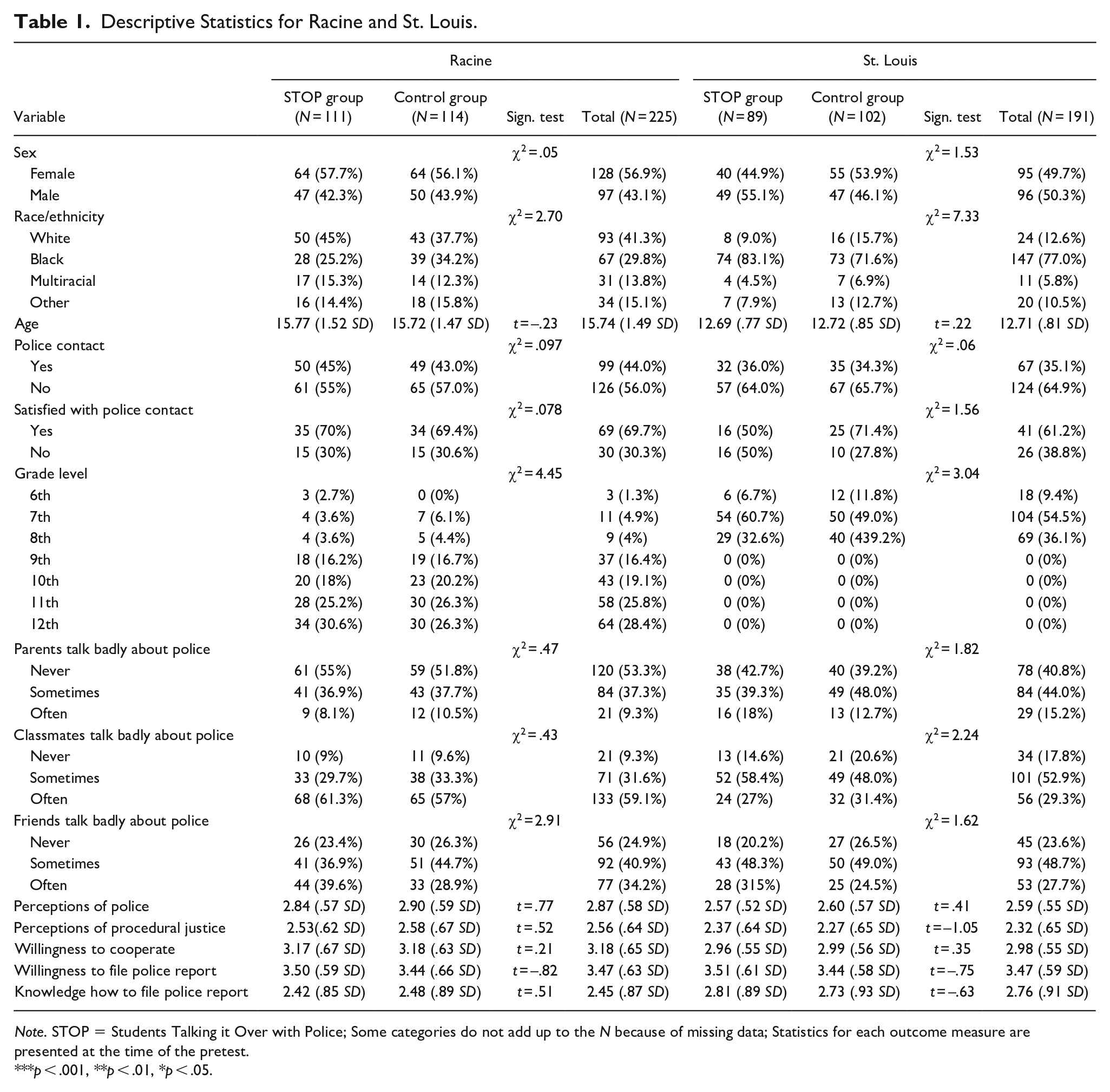
Note. STOP = Students Talking it Over with Police; Some categories do not add up to the N because of missing data; Statistics for each outcome measure are presented at the time of the pretest.
p < .001, **p < .01, *p < .05.
Also displayed in Table 1, significance tests were conducted to determine whether the STOP and control groups were equivalent for both the Racine and St. Louis samples. As expected with random assignment, the analysis indicated there were no significant differences between the STOP and control groups for any of the youth characteristics. Analyses also found no significant differences in the pretest scores of the five scales (perceptions of the police, perceptions of procedural justice, willingness to cooperate with the police, willingness to file a police report, and knowledge about how to file a police report) for the STOP and control groups. 7
Next, unconditional models for the Racine sample indicated that significant clustering was found for perceptions of the police, perceptions of procedural justice, and willingness to cooperate with the police. In the St. Louis sample, significant clustering was found for knowledge about how to file a police report. As such, two-level HLM were employed for these measures. Dependent variables without significant clustering were analyzed using ordinal least squares (OLS) regression.
Table 2 presents the multilevel regression results for the dependent variables in which significant clustering was found. In Racine, participating in the STOP group resulted in significantly increased perceptions of the police (t = 4.37 p = .005), perceptions of procedural justice (t = 3.19, p = .019 8 ), and willingness to cooperate with police (t = 4.31, p = .005). In the St. Louis sample, participating in the STOP group resulted in a significant increase in knowledge about how to file a police report (t = 3.90, p = .005). Pretest scores were significant across all outcomes in both Racine and St. Louis.
Multilevel Model Results for Outcome Measures.
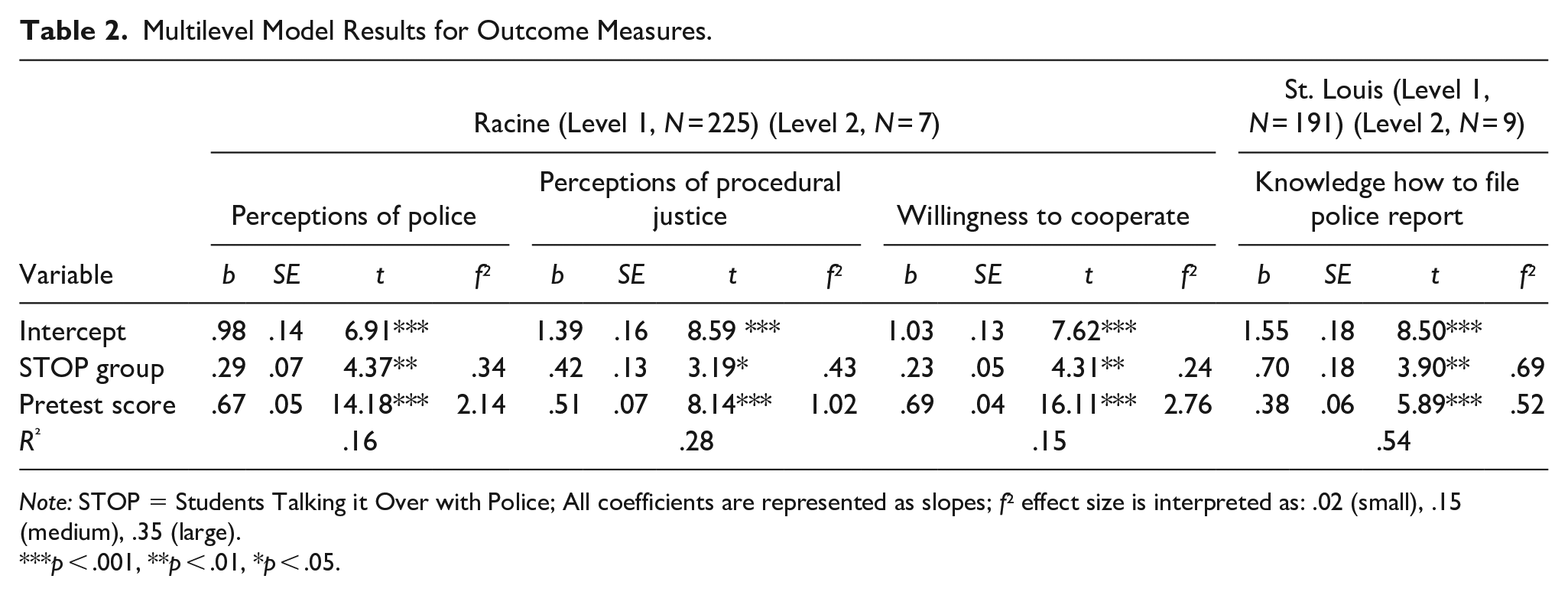
Note: STOP = Students Talking it Over with Police; All coefficients are represented as slopes; f² effect size is interpreted as: .02 (small), .15 (medium), .35 (large).
p < .001, **p < .01, *p < .05.
Table 3 presents the results of the OLS regression analyses for the Racine (willingness to file a police report and knowledge about how to file a police report) and the St. Louis (perceptions of the police, perceptions of procedural justice, willingness to cooperate with the police, and willingness to file a police report) samples. In the Racine sample, participating in the STOP group did not result in a significant increase in willingness to nor in knowledge about how to file a police report. In the St. Louis sample participating in the STOP group resulted in significantly more positive perceptions of police (t = 5.58, p = .000), perceptions of procedural justice (t = 5.25, p = .000), and willingness to cooperate with the police (t = 4.12, p = .000). Similar to the Racine sample, participation in the STOP group was not significantly related to a students’ willingness to file a police report in St. Louis. Controls for pretest score were significant across all outcomes in both Racine and St. Louis.
OLS Regression Results for Outcome Measures.
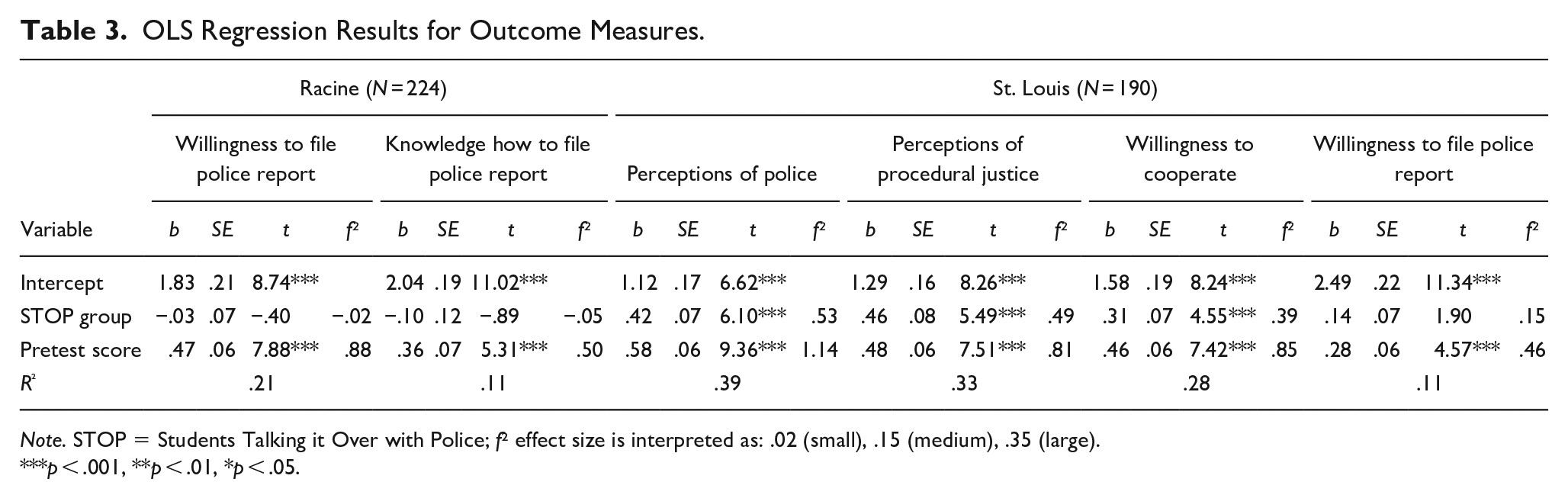
Note. STOP = Students Talking it Over with Police; f² effect size is interpreted as: .02 (small), .15 (medium), .35 (large).
p < .001, **p < .01, *p < .05.
Youth characteristics (e.g., demographics, police contact, and frequency in which parents/friends/classmates talk badly about the police) were then added into the multivariate models to examine their effect on program effectiveness. The results are presented in Tables 4 and 5. In the Racine sample, there were no youth characteristics found to be significantly associated with any of the outcome measures. In the St. Louis sample, Black students had a significantly increased posttest score for knowledge about how to file a police report (t = 3.72, p = .006) when compared to White students. Lastly, as the grade level increased in St. Louis, knowledge about how to file a police report significantly decreased (t = −2.62, p = .031).
OLS Regression for Youth Characteristics.
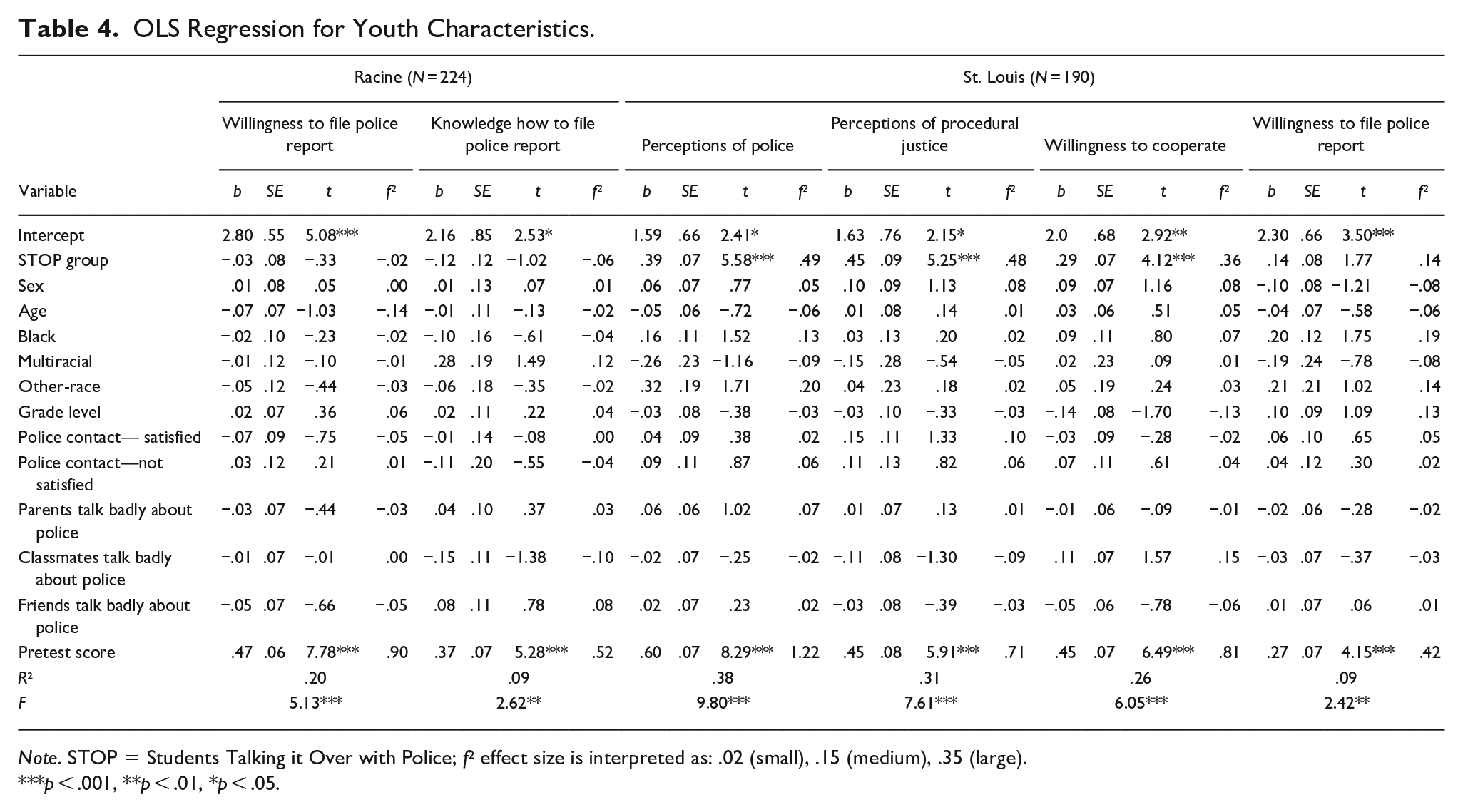
Note. STOP = Students Talking it Over with Police; f² effect size is interpreted as: .02 (small), .15 (medium), .35 (large).
p < .001, **p < .01, *p < .05.
Multilevel Model Effects of Youth Characteristics.
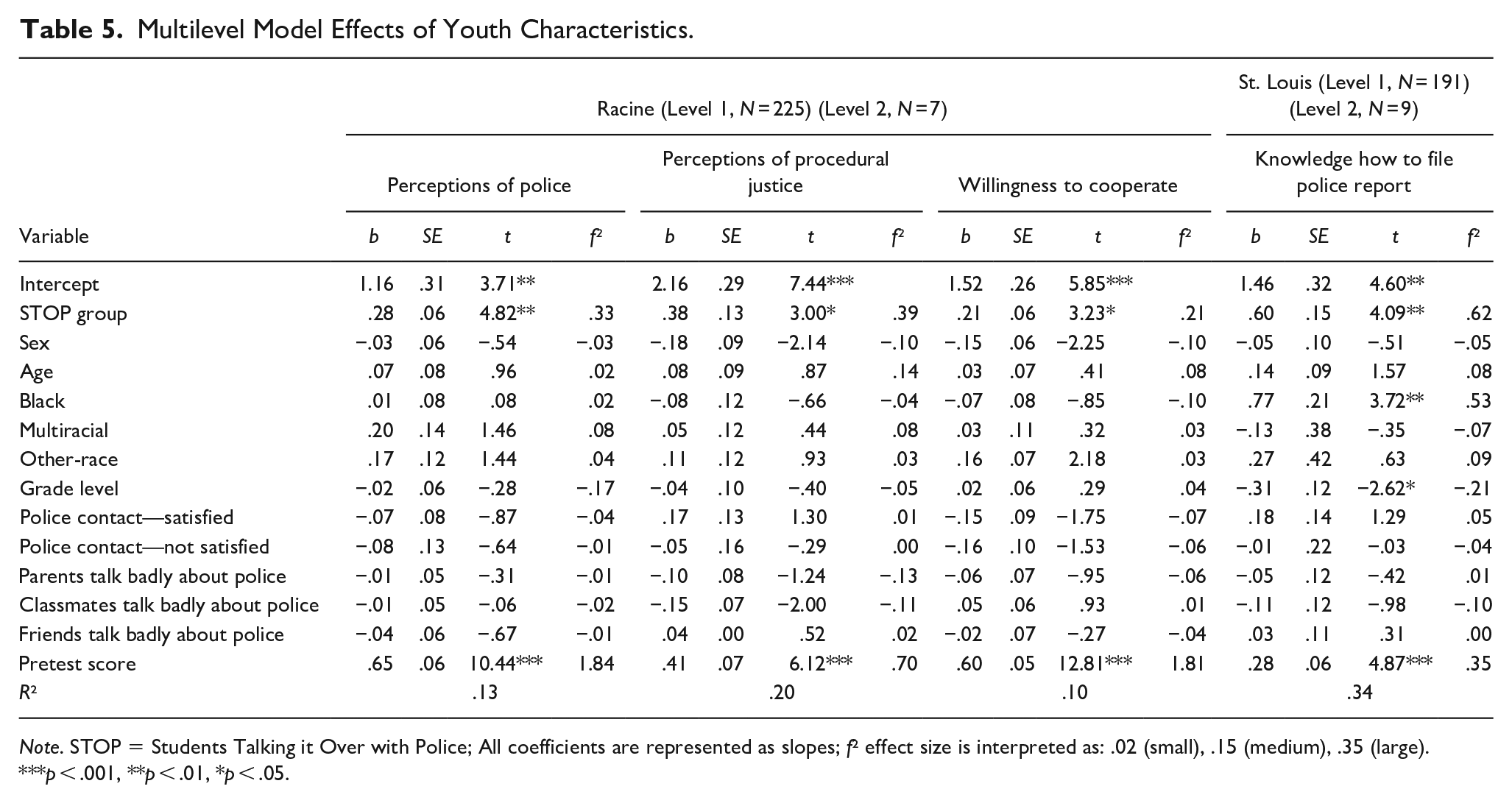
Note. STOP = Students Talking it Over with Police; All coefficients are represented as slopes; f² effect size is interpreted as: .02 (small), .15 (medium), .35 (large).
p < .001, **p < .01, *p < .05.
Students’ Responses to STOP
Participants in the STOP groups were asked a series of questions on the posttest about their experiences in the program. The results indicated overall positive attitudes. The majority of participants indicated that they learned “a lot” (70% in Racine and 86% in St. Louis) or that they had learned “some” (28% in Racine and 14% in St. Louis) from the STOP program. Over 95% of the STOP participants indicated that most of their concerns about the police were addressed, and 96% indicated they felt better about the police after the program. In both locations, most of the participants indicated that they felt better about the police after the program (96% in Racine and 98% in St. Louis), felt that the STOP presentations were easy to understand (98% in Racine and 91% in St. Louis), and felt comfortable during the STOP sessions (94% in Racine and 94% in St. Louis).
Researchers also conducted two focus groups at each location (i.e., two at St. Louis schools and two at Racine schools); the findings from these groups further confirmed the quantitative results. Youth reported they enjoyed participating in the STOP program and had established relationships with the officers who facilitated the sessions. Further, many youths shared that they felt more comfortable with the officers during the STOP sessions, despite feeling some discomfort at the beginning of the program. Participants also enjoyed the activities, role playing, and trying on the officers’ equipment, and many reported that they appreciated the conversations they had with officers throughout the program. However, youth across all schools and both locations voiced concern about police officers who were not STOP instructors. While overall perceptions of police were improved, youth were aware that not all police officers were “good” officers. 9
Discussion
The current study evaluated the STOP program in Racine, WI and St. Louis, MO and determined that it was successful in improving students’ perceptions of the police, perceptions of procedural justice, and willingness to cooperate with the police in both locations. These same findings were similar to those of an earlier evaluation in Milwaukee, WI (Freiburger, 2019). Feedback from students in all three locations indicated overall positive attitudes. Between 96% and 98% of students in all three locations reported that they felt better about the police after engaging in the STOP program. Successful findings in Racine, St. Louis, and Milwaukee ultimately provide evidence that similar results can be replicated in various locations.
The present evaluation included an additional lesson that provided instructions on how to file a complaint against a police officer based on feedback from the Milwaukee evaluation to ultimately improve police accountability in the community. Results of the current evaluation found limited evidence to support these measures. There were no significant differences in either location between the STOP and control groups in their willingness to file a police report. No significant differences were found between the two groups in Racine for knowledge about how to file a police report; however, significant differences were found in St. Louis on this measure. A closer look into program fidelity of each location can offer a possible explanation for these findings. Results of the process evaluation in Racine revealed that several STOP sessions did not communicate the complaint process well, other sessions did not give students the website for processing complaints, and several additional sessions failed to complete this section in its entirety. The process evaluation in St. Louis, though, revealed that all sessions completed the activities related to the complaint process. It is possible that significance could have been found in Racine if the curriculum had been implemented as intended.
The current evaluation also examined whether certain youth characteristics were significantly associated with any of the outcome measures. Findings for the Racine and St. Louis locations indicated that none of the youth characteristics were significantly associated with perceptions of the police, perceptions of procedural justice, and willingness to cooperate with the police. These results differ slightly from the Milwaukee location. Like the findings from Milwaukee, much of prior literature has determined that Black youth tend to hold more negative perceptions of the police than White youth (Fine, Donley et al., 2020; Fine, Padilla et al., 2020; McLean et al., 2019; Peck, 2015). While race was not found to be significant in the posttest analyses, when pretest score and group membership were controlled, significant racial differences were found in the pretest scores related to perceptions of the police, with White youth reporting more positive perceptions of the police than Black youth in both locations. Further, youth who were not satisfied with the police service they received in the Milwaukee evaluation experienced a higher rate of increase in their perceptions of procedural justice than youth who did not have police contact in the previous year (Freiburger, 2019). A closer examination into the data indicate that the Milwaukee sample had a higher percentage of youth who reported prior police contact and dissatisfaction with that contact (48.8%) compared to youth in Racine and St. Louis (30.3% and 38.8% respectively). It is possible these differences between locations are the reason for disparities in the outcome measures of interest.
Findings in the Racine sample indicated that none of the youth characteristics were significantly associated with willingness to file or knowledge about how to file a police report. In St. Louis, no significant differences were found in willingness to file a police report, but a significant relationship was found for knowledge about how to file a police report. First, Black students had a higher rate of increase than White students in their knowledge about how to file a police report in the posttest. While the sample for Racine was predominately White, the majority of students in St. Louis were Black. Prior literature generally finds that Black youth report more negative interactions and experiences with the police, leading to an overall more negative attitude toward law enforcement (Fine, Donley et al., 2020; Peck, 2015). Keeping this in mind, it is possible that the STOP program was able to provide Black youth in St. Louis with knowledge about the police and police practices that they may not have known prior, thus generating a significant relationship. Second, students who were in a lower grade level (e.g., 6th grade) had a significantly higher increase from the pre- to the posttest in their knowledge about filing a police report than those who were in a higher grade level (e.g., 8th grade). It is important to note that the St. Louis sample had a lower average grade level than the Racine sample. It is possible that students in higher grade levels already had knowledge on this topic, while students in lower grade levels were able to learn this information for the first time through the STOP program.
Limitations and Future Directions
One possible limitation of the current study could be related to barriers of entry into the study or selection bias. The participating schools typically chose to invite students based on convenience, such as all students in a certain class, homeroom, or study hall; thus, introducing the possibility of selection bias. Further, the STOP program was conducted during school hours thus creating an allotted period of time for students to be available to participate in the program. It is possible, however, that some students chose not to participate because of the time commitment.
Another potential limitation may relate to carry-over effects between the STOP and control groups. Both the STOP and control group participants attended the same school, and it is possible that the STOP group interacted with the control group and shared information about the program. Pre- and posttest comparisons for the control groups indicated significant differences in Racine for perceptions of procedural justice (t = −2.20, p = .031) and knowledge about how to file a police report (t = −4.68, p = .000); the remaining outcome measures for Racine and all outcome measures for St. Louis were not significant. It is possible that these carry-over effects could have influenced the results of the evaluation and led to an underestimation of the true effect of STOP. Given that the STOP groups remained significantly higher than the control group, this limitation does not change the conclusions derived from the results.
Future evaluations of the STOP program should include follow-ups that provide a long-term impact of the STOP program on police perceptions. Previous evaluations of other programs have found that positive impacts decay over time (see Clayton et al., 1996; Lynam et al., 1999), while others found that the impacts remained as youth age (see Schuck, 2013). This inquiry is as it might indicate a need for continued engagement with youth to maintain positive impacts. Additionally, these follow-ups can assess whether the STOP program had a vicarious impact on other members of the community by asking the STOP participants whether and with whom they shared the STOP information. Finally, while the STOP program has been implemented in several cities (Milwaukee, Racine, St. Louis) there should continue to be replication efforts in other locations. These efforts should include both a process and outcome evaluation to ensure that the program is implemented with fidelity and to determine whether the STOP program is effective in improving police-youth relations. This is important considering the impact that positive experiences can have on police effectiveness and social relations, especially in cities that are experiencing police distrust.
Conclusions
The current study adds to a limited body of research that examines the effectiveness of programs focused on improving police-youth relations. Employing an experimental design, the results of the evaluation revealed significantly improved perceptions of the police, perceptions of procedural justice, and willingness to cooperate with the police in Racine, WI and St. Louis, MO. Relationships between police and youth, particularly in urban areas, have long been strained (Brown & Benedict, 2002; Hurst, 2007; Ren et al., 2005; Taylor et al., 2001), and this has never been truer than in today’s society. Current events related to racial injustices in policing practices and the police response to social movements (e.g., Black Lives Matter) has correlated with historic lows in perceptions of the police (Fine et al., 2019). Current issues with police-community relations are complex and vary across different locations, but it remains important to continue efforts to improve relationships.
While not an end-all-be-all, programs like STOP can open dialog between police and youth in a non-threatening environment and work toward establishing trust and prosocial relationships between police and youth. The STOP program has produced positive and promising results in multiple cities and can serve as a valuable tool in addressing current issues and helping to increase positive interactions and improve youths’ attitudes toward the police. It is important, however, that the ominous task of improving perceptions of police is not placed solely on the public. These programs could additionally work to educate officers on the experiences and needs of youths in their communities. To benefit both youth and police perceptions and understanding of each other, the curricula of these programs should be reevaluated and revised to include learning objectives for the officers as well. Furthermore, while programs such as STOP need to be considered in reducing harmful interactions between police and youth, they do not quash the need for additional policing reforms to address deeper cultural issues in law enforcement.
In addition, critics of such programs argue that they can be harmful to youth and the public by teaching young people to trust police officers and to comply with police instructions. This could reinforce an unequal power structure that disproportionately hurts Black communities and communities of lower social economic status. While the STOP program includes instructions on being critical of the police and of police behaviors, it avoids a broader examination of how the current power structure has contributed to racial disparities and discrimination. If money is devoted to programs like STOP, it might reduce investments of other programs such as teaching officers de-escalation or conflict resolution skills. Additionally, it could deflect from the larger question of whether resources might be better invested directly into communities to reduce crime and end police violence.
Footnotes
Declaration of Conflicting Interests
The author(s) declared no potential conflicts of interest with respect to the research, authorship, and/or publication of this article.
Funding
The author(s) received no financial support for the research, authorship, and/or publication of this article.
