



Abstract
A growing body of research suggests that graduate psychology training programs with a stronger collective social justice identity are likely to provide more support for students’ advocacy engagements than those with discrepant views among members. We conducted response surface analyses (N = 178 PhD students; across 16 counseling psychology programs) to examine whether the degree of congruence and discrepancy in social justice attitudes and perceptions of training program norms (perceived social justice norms among students and faculty) between the individual student and other students in their program would be associated with students’ social justice advocacy intentions and behaviors. Higher congruence in attitudes and perceived norms (among students and faculty) were significantly associated with advocacy intentions. For advocacy behaviors, only congruently higher perceptions of faculty were significantly associated. Discrepant attitudes and perceived norms were not significantly related to students’ advocacy intentions and behaviors. Recommendations for training and research are discussed.
Our findings highlight the important role of collective social justice identity among students and faculty in counseling psychology training programs in helping students develop greater intentions to engage in advocacy. When students collectively observed higher social justice endorsements among the student body and faculty in their programs, students reported significantly more intentions and engagement in advocacy activities. Findings provide empirical evidence to aid graduate psychology programs in promoting a conducive social justice training climate for students to develop a critical social justice lens and commitment to advocacy as future helping professionals.Significance of the Scholarship to the Public
Collective Social Justice Identity and Perceived Norms on Promoting Student Advocacy
Developing students’ critical social justice lens and commitment to advocacy is an imperative goal for training programs in the helping professions (e.g., psychologists and social workers). In particular, scholars have emphasized the importance of social justice and advocacy within the field of counseling psychology (DeBlaere et al., 2019; Fouad & Prince, 2012; Olle, 2018; Ratts et al., 2004; Singh et al., 2020), underscored by the revised counseling psychology model training program (Scheel et al., 2018) and the Counseling Psychology Competencies (Council of Counseling Psychology Training Programs, 2013), which highlight social justice and advocacy as core components of graduate training in counseling psychology. Social justice advocacy is rooted in individual behaviors and collective actions aimed to promote equity and fairness in society, particularly for marginalized groups (Vera & Speight, 2003). Thus, the responsibility and role of counseling psychologists has expanded to incorporate macro-level interventions aimed at dismantling systems of oppression, beyond individual and group counseling (e.g., Goodman et al., 2004; Kozan & Blustein, 2018; Olle, 2018; Prilleltensky & Nelson, 2002; Vera & Speight, 2003).
In order to support students’ and faculty’s social justice endeavors, many scholars have noted the importance of building a program-level culture that emphasizes social justice and supports social justice advocacy (Beer et al., 2012; Caldwell & Vera, 2010; Singh et al., 2010; Torres-Harding et al., 2013). Although most studies have examined the intrapersonal attributes (e.g., spirituality and self-efficacy) linked to the development of social justice advocacy (e.g., Beer et al., 2012), there has been growing empirical attention on group-level factors and dynamics relevant to fostering a promotive social justice climate in training programs (Keum & Miller, 2020). Hence, it is important to empirically examine how shared social justice attitudes and norms (i.e., perceived conformity and program-level support for social justice values) in training programs impact students’ respective development of social justice advocacy. Theoretical literature suggests that a sense of collective identity is crucial in fostering social justice movements and advocacy (Polletta & Jasper, 2001; Tankard & Paluck, 2016). Indeed, research suggests that engagement in advocacy is predicted by a group identity regarding social justice, a shared understanding of the importance of social justice, and a sense of collective support within the group (Duncan, 1999; Simon, 1998; van Zomeren et al., 2008).
In operationalizing a culture of social justice, Keum and Miller (2020) theorized the social justice interdependence model, which suggests that an individual’s likelihood of engaging in social justice advocacy is influenced by the interrelation of other group members’ social justice attitudes and the individual’s perceptions of social justice norms among group members, regardless of the individual’s own social justice attitudes. For a given student in a training program, it is likely that the degree of shared social justice attitudes and values in the training program will influence the student’s advocacy development. Programs with a stronger collective identity concerning social justice (i.e., programs with congruently higher vs. lower social justice norms) are likely to have more benefits for individual students’ advocacy development compared to programs with discrepant identities among the members (i.e., some low, some high). Building upon this model, we explored the role of shared attitudes and norm perceptions in the development of social justice advocacy quantitatively by examining the congruence and discrepancy of social justice attitudes and norms among students in counseling psychology programs and examining their associations with students’ social justice advocacy intentions and behaviors.
Collective Social Justice Identity and Norms in Training Programs
Historically, researchers have focused on the individual- and interpersonal-level factors that contribute to social justice activism and engagement, omitting group-level factors from consideration (Keum & Miller, 2020). However, some scholars have suggested that social justice advocacy is most effective when done collectively and collaboratively (Keum & Miller, 2020; Shin et al., 2017; Thrift & Sugarman, 2019) because this work can be isolating and exhausting without support from one’s group (Singh et al., 2010). Group identity, or collective identity, regarding social justice represents greater agreement among group members on the importance of social justice values as opposed to lower agreement (Keum & Miller, 2020). The formation of a collective social justice identity is an important factor in promoting social justice awareness and advocacy in a group (Polletta & Jasper, 2001; Thrift & Sugarman, 2019).
In a study examining factors promoting engagement in advocacy work among counseling psychology doctoral students, collective social justice identity in the training environment predicted a student’s intentions to engage in advocacy work (Keum & Miller, 2020). The results from this study suggested that student perceptions of the cohesiveness of social justice norms in the program led to greater intentions to engage in social justice activities than individual-level factors. Similarly, another study (Torres-Harding et al., 2015) found that when students felt a psychological sense of community at their university and reported agreement with the university’s social justice mission statement, they were more inclined to report favorable social justice attitudes and intentions to engage in activism. In addition to collective identity, having support from one’s group or community is a critical factor in the development of advocacy because of the sensitive and vulnerable nature of the conversations about social justice that are needed to establish group social justice norms (Thrift & Sugarman, 2019; Vera & Speight, 2003).
Research suggests that the benefits of a collective social justice identity are facilitated by interpersonal relationships among group members (Keum & Miller, 2020). In a mixed-methods study examining commitment to social justice among a sample of counseling psychology graduate trainees, students’ perceptions of their training program’s commitment to social justice predicted personal commitment to social justice (Beer et al., 2012). The qualitative portion of the study demonstrated that for some students, personal commitment to social justice was enhanced when they were in contact with mentors or professors whom they perceived as “social justice role models” (Beer et al., 2012, p. 127). Peer relationships have also been found to be an important factor in the development of social justice advocacy. Students from counseling psychology doctoral programs have indicated that collaborative peer relationships during graduate training were important (Chui et al., 2014), and feeling comfortable enough to share knowledge and discuss social justice issues with their peers (Singh et al., 2010) was critical for their own development. Additionally, Keum and Miller (2020) found that peer relationships moderated the relation between perceived social justice norms and advocacy intentions, such that students with stronger peer relationships reported even stronger advocacy intentions when they perceived their program to have collective social justice norms.
Discrepant Social Justice Identity and Norms in Training Programs
In contrast, a high degree of discrepancy between students’ attitudes and perceptions regarding social justice may constrain their social justice-related intentions and behaviors. There are several mechanisms by which discrepant perceptions of social justice norms could impede students’ advocacy. First, discrepant perceptions of norms among program members suggest that a program-wide social justice culture and identity, which is critical for the development of advocacy, has not been established (Beer et al., 2012; Singh et al., 2010; Torres-Harding et al., 2012). For instance, if a student perceives that others in their program highly value social justice but their peers do not have a similar perception, this may reflect an unsupportive program dynamic that could erode the student’s intention to engage in advocacy. Additionally, students in such programs may have fewer opportunities to receive information, support, and mentorship from peers and faculty members on social justice topics.
Furthermore, in programs with discrepant perceptions of social justice norms, students may be less motivated to participate in social justice advocacy at the expense of other activities, even if they personally value advocacy. The social motivation literature suggests that the desire to affiliate with and be accepted by others, particularly those in positions of authority, is a powerful motivator of behavior (Baumeister, 2011; Castro & Pacherie, 2020; Leary, 2005). In programs with discrepant perceptions of social justice norms, advocacy may be perceived as a less effective means of obtaining peer and mentor approval than behaviors that are universally perceived as valuable (e.g., high-quality research and clinical work). Hence, students may be less likely to devote effort toward developing the self-efficacy necessary to translate their social justice intentions into action due to the lack of group cohesion regarding the value of such endeavors (Pillai & Williams, 2004).
The Present Study
Previous research and theory suggest that congruence and discrepancy related to social justice attitudes and perceptions of norms may play an important role in facilitating or impeding the development of social justice advocacy among counseling psychology trainees; however, these relations have not yet been tested quantitatively. To address this gap in the literature and extend the social justice interdependence model, we examined whether the degree of congruence and discrepancy among students’ social justice attitudes and perceptions of social justice norms in their training programs were associated with students’ social justice advocacy intentions and behaviors. We defined congruence and discrepancy as agreement and disagreement between (a) a student’s own social justice-related attitudes and perceptions of social justice norms within their program, and (b) other students’ attitudes and perceptions of program norms. To quantify this individual student–other students dynamic, we adapted the group actor–partner variable structure (Kenny & Garcia, 2012; see Data Analysis) to create a partner score (a given student’s score subtracted from the aggregate mean score of other students) for each student (denoted as an actor). The actor score refers to a given student’s attitudes and perceptions of the program. The partner score refers to the aggregate scores of all other students in the program on the same variables in relation to the given student. Using these actor–partner scores, we employed a polynomial regression and response surface analysis (PRRSA; Shanock et al., 2010) to test our hypotheses with three predictor variables: social justice attitudes, perceived social justice norms among students, and perceived social justice norms among faculty. Polynomial regression and response surface analysis allow simultaneous modeling of (x) and (y) predictors scored on the same variable (in this case, actor and partner variables) with the outcome variable (z; in this case, advocacy intention and behavior), which overcomes the limitations of difference scores. Polynomial regression and response surface analysis have been commonly used to test the congruence and discrepancy of social psychological constructs (Humberg et al., 2019). The following were our hypotheses:
Hypothesis 1
To contrast perceived group norms from individually held attitudes, we first examined the congruence and discrepancy between actor and partner scores on students’ own social justice attitudes (an intrapersonal variable). Given that intrapersonal social justice attitudes are internal values and not perceptions of norms in the program, we hypothesized that an individual student’s (actor’s) advocacy intentions and behaviors would not be significantly related to congruence (1A) or discrepancy (1B) with other students’ (partner’s) social justice attitudes in the program, regardless of the level (e.g., higher) of congruence or discrepancy. For example, even if there is higher congruence or discrepancy among students’ social justice attitudes, since these are internally held attitudes and not shared perceptions, they would be unlikely to have a direct impact on a student’s own advocacy intentions and behaviors.
Hypothesis 2A
We assessed perceived social justice norms in the program by examining students’ perceptions of social justice norms among other students. We hypothesized that higher congruence (i.e., congruent perceptions of higher social justice norms among students) between actor and partner scores would be associated with higher actor advocacy intentions and behaviors. In other words, a student’s advocacy intentions and behaviors would be higher if other students collectively perceived social justice norms to be higher among students in their program.
Hypothesis 3A
We also assessed perceived social justice norms in the program by examining students’ perceptions of social justice norms among faculty in the program. We hypothesized that higher congruence (i.e., congruent perception of higher social justice norms among faculty) between actor and partner scores would be associated with higher actor advocacy intentions and behaviors. In other words, a student’s advocacy intentions and behaviors would be higher if other students collectively perceived social justice norms to be higher among faculty in their program.
Hypothesis 2B and 3B
Regarding discrepancy in perceived social justice norms among students (2B) and faculty (3B), we expected that higher discrepancy, whether higher actor–lower partner or lower actor–higher partner, would be associated with lower or nonsignificant actor advocacy intentions and behaviors. In other words, discrepant perceptions of social justice norms among students would indicate an unsupportive program dynamic that would stunt students’ engagement in advocacy.
Method
Participants and Procedure
The current sample was a subset of data from a previous study (Keum & Miller, 2020) that was conducted in compliance with the institutional review board. Although we used the same sample, the data was analyzed using a different method and with a new outcome variable (i.e., Student Advocacy Scale). The inclusion criteria were as follows: (a) 18 years old or older and (b) currently enrolled in an APA-accredited doctoral program in counseling psychology (incoming students or alumni were ineligible). Targeted recruitment was conducted by prioritizing programs with large student bodies (determined by surveying program websites) and diverse geographic representation. At the start of data collection, training directors of selected programs were contacted for permission and asked to distribute the recruitment message. A total of 30 programs were contacted throughout the data collection period, and reminder emails were sent as needed. Data were collected via an online survey consisting of informed consent, study variable measures, and demographic items hosted by Qualtrics.
Participants were 178 PhD students enrolled in 16 APA-accredited counseling psychology doctoral programs at the time of data collection (representing approximately 21% of all APA-accredited programs). About 24% of participants were in their third year, 21% in fourth year, 19% in first year, 16% in fifth year, 11% in second year, and 9% in sixth year. The average age of the participants was 27.97 years (SD = 3.31) and ranged from 22 to 51 years. About 45% of the participants self-identified as White, 16% East Asian, 14% Black, 14% Latinx, 3% South Asian, 3% multiracial, 2% Southeast Asian, 2% Middle Eastern, 1% Native, and 1% other. The majority of the sample self-identified as women (74%), followed by 23% men, 1% genderfluid, 1% transmasculine, and 1% other. About 74% were heterosexual, 10% queer, 8% bisexual, 4% gay, 2% lesbian, and 2% questioning. Programs were located in the following regions: 42% (8) Midwest, 16% (3) Northeast, 16% (3) Southeast, 5% (1) Mid Atlantic, 5% (1) Rocky Mountain region, 5% (1) South, 5% (1) Southwest, and 5% (1) West Coast. The number of students who participated from each program ranged from 4 to 26, with an average of 13 students per program. All programs indicated aspiring to multicultural and social justice orientations on their program websites.
Measures
Social justice attitudes, advocacy intentions, and training program norms
We used four subscales from the 24-item Social Justice Scale (SJS; Torres-Harding et al., 2012). Based on the theory of planned behavior (Ajzen, 1991), the SJS measures social justice attitudes, perceived behavioral control, and subjective norms, which inform one’s behavioral intentions for social justice action. For all items, participants report their agreement on a 7-point Likert-type scale ranging from 1 (strongly disagree) to 7 (strongly agree). Scores for the subscales are averaged, with higher scores indicating higher social justice orientation. Cronbach’s alphas for the subscales ranged from .82 to .95 (Torres-Harding et al., 2012). In previous research with university students, Torres-Harding et al. (2012) demonstrated initial convergent and discriminant validity, as SJS subscales were correlated negatively with symbolic racism, neo-sexism, and global belief-in-a-just-world, and positively with a measure of public service motivation. For criterion validity, the Behavioral Intentions subscale predicted engagement in social justice behaviors (Torres-Harding et al., 2012). Measurement invariance was found across gender, age, and race (Torres-Harding et al., 2012).
Individual social justice attitudes
To assess students’ individual social justice attitudes, the 11-item Social Justice Attitude (SJA) subscale was used (Torres-Harding et al., 2012). A sample item reads: “I believe that it is important to respect and appreciate people’s diverse social identities.” For the current sample, Cronbach’s alpha for SJA was .94.
Social justice behavioral intentions
To assess students’ behavioral intentions to engage in social justice related advocacy activities, the 4-item Social Justice Behavioral Intentions (SJBI) subscale was used (Torres-Harding et al., 2012). A sample item reads: “In the future, I intend to engage in activities that will promote social justice.” For the current sample, Cronbach’s alpha for SJBI was .92.
Social justice norms among students and faculty
For perceived social justice norms within training programs, we adapted the 4-item Social Justice Subjective Norms subscale (Torres-Harding et al., 2012) into two versions, for students (SJNS) and faculty (SJFN), and directed participants to answer the items with respect to the student body (SJNS; “Students in my program are aware of issues of social injustices and power inequalities in our society.”), and faculty (SJNF; “Faculty members in my program are aware of issues of social injustices and power inequalities in our society.”). For the current sample, the Cronbach’s alphas for SJNS and SJNF were.94, and .94, respectively.
Student advocacy engagement
Although a number of measures exist related to people’s advocacy orientation and social justice actions, none of them fully capture the advocacy behaviors of psychology graduate students. In addition to activism activities, such as participating in marches and contacting local governments, psychology graduate students may act as advocates for their clients and conduct research on social justice issues. Thus, we developed the Student Advocacy Scale (SAS). A pool of 16 items was developed based on a literature review spanning three domains: activism, professional allyship, and academic advocacy. Each item was rated on a 7-point Likert-type scale ranging from 1 (not at all) to 7 (very much). Higher scores indicated greater engagement in advocacy activities. Participants in the current study completed all 16 items.
The SAS was hypothesized and tested as an oblique three-factor structure, and we also tested the fit of a second-order model for total score utility. Bartlett’s test of sphericity was
The academic advocacy factor contained three items (e.g., “Conducting research related to social justice issues”; α = .90). The therapist as ally factor contained three items (e.g., “Working as an ally to my clients experiencing oppression”; α = .87). The activism factor contained four items (e.g., “Engaging in social media activities to promote social justice”; α = .79). Cronbach’s alpha for the total scale was .85. The total scale score was used for the current study.
Data Analysis
We used a PRRSA (Shanock et al., 2010) to model the three-dimensional representation (e.g., Figure 1) of the congruence of social justice attitudes and norms between a given student (x) and the rest of the students in the program (y) in predicting the given student’s advocacy variables (z): SJBI and SAS. Polynomial regression and response surface analysis was the method of choice because it addresses the limitations of difference scores (i.e., low reliability and loss of unique outcome interpretations when the same variable is rated by two different parties) by retaining and modeling the independent effects of the two predictors simultaneously with the outcome variable (z; Shanock et al., 2010). Response Surfaces Predicting SJBI and SAS as a Function of Congruence and Discrepancy Between SJA and SJA_P.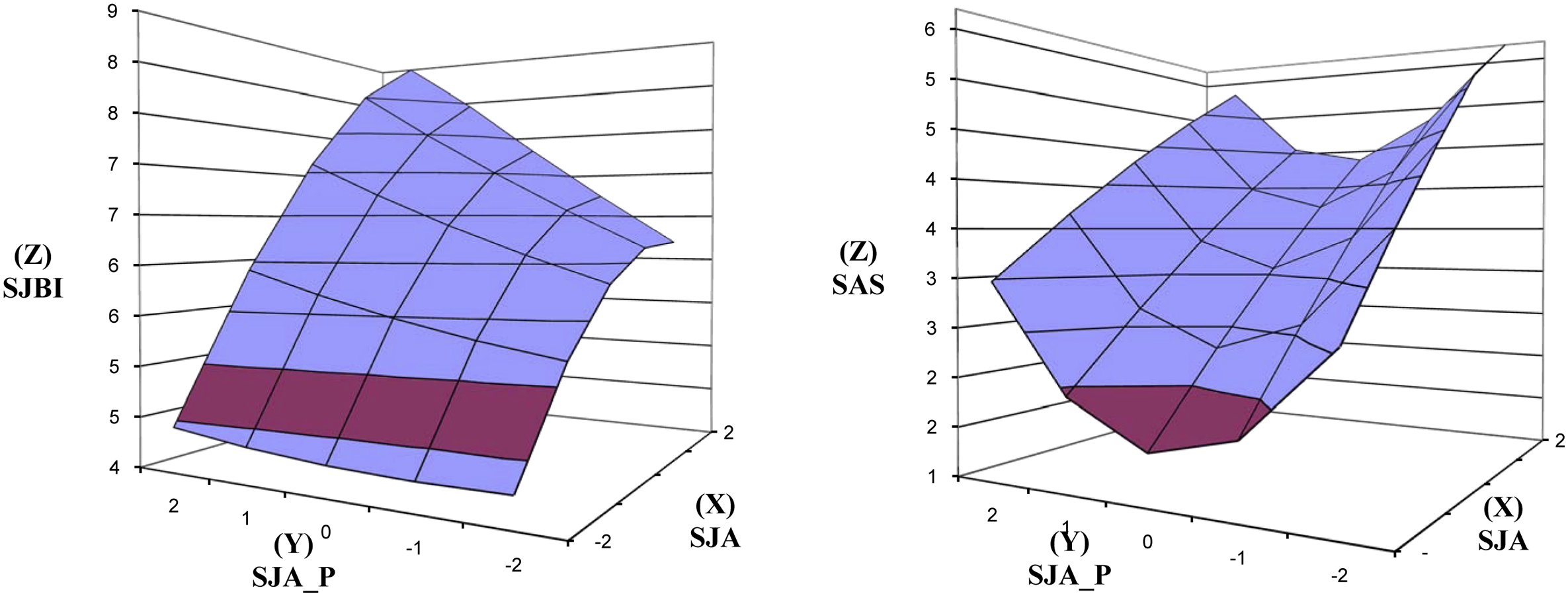
First, we adapted the actor–partner variable structure from the actor–partner interdependence model (Cook & Kenny, 2005; Keum, 2018) to partition the predictor variables into actor (a given student in a program) and partner (the remainder of the students minus the given student) scores. Actor scores are the original scores that each participant reported on the survey. Partner scores (i.e., the remainder of the students in the program) were calculated in SPSS 18.0 for each student (i.e., actor) in their respective programs by summing up all of the scores for each item (e.g., SJA Item 1), subtracting the actor’s score from the sum, and then dividing by the number of students in the program minus the actor (i.e., a total of eight students – 1 = 7). Thus, partner scores (denoted with P) for all of the items for each of the predictor variables were calculated for each participant based on the total number of students who participated from their respective programs. There were three actor variables that served as predictor x: SJA, SJNS, and SJNF. There were three corresponding partner variables that served as predictor y: SJA_P, SJNS_P, and SJNF_P.
Second, following Shanock et al. (2010), we created three new variables for each set of the x and y predictor variables, for example, (a) square of the centered SJA variable, (b) cross-product of the centered SJA and SJA_P variable, and (c) square of the centered SJA_P variable. The three new variables, along with the x (e.g., SJA) and y (e.g., SJA_P) predictor variables were entered into a polynomial regression model to obtain regression (gamma) coefficients and standard errors, which were used to generate the response surfaces (e.g., Figure 1) and coefficients for the slopes and curvatures above the lines of congruence and discrepancy. The equation for the model was

Both number of students per program and year of standing were entered in the model to control for potential group size and cohort effects. The process was repeated for SJS and SJF variables, and the response surfaces were constructed separately for SJBI and SAS outcome variables, resulting in a total of six response surface models.
We tested our hypotheses by examining the significance of congruence and discrepancy (across lines of congruence and discrepancy) between the x and y predictor variables in relation to the outcome variables (z). The degree of congruence was indicated on the line of congruence that extends from congruently low values (−2, −2; e.g., front corner in Figure 1) to congruently high values (2, 2; e.g., back corner in Figure 1). A significant positive slope along the line of congruence (x = y) would confirm the hypotheses that congruently higher x (e.g., SJA) and y (e.g., SJA_P) variables were significantly associated with higher z (advocacy outcomes), whereas a negative slope would indicate a decrease in z. The degree of discrepancy was indicated on the line of discrepancy that extended from the point of lowest x and highest y values (−2, 2; e.g., left corner in Figure 1) to the point of highest x and lowest y values (2, −2; e.g., right corner in Figure 1). Along the line of discrepancy (x = −y), a significant negative slope would confirm the hypotheses that z (advocacy outcomes) was higher when y (e.g., SJA_P) was high and x (e.g., SJA) was low, rather than a discrepancy due to low y (e.g., SJA_P) and high x (e.g., SJA), given that students may be more likely to thrive in their advocacy endeavors when surrounded by students with higher social justice interests than those with less interest. On the other hand, a positive slope would indicate that the reverse is true. Third, although linear associations between the variables were the focus of the study, curvature tests of the response surfaces were provided as part of the PRRSA. A significant curvature along either the line of congruence or the line of discrepancy indicates a nonlinear response surface. A negative curvature indicates a concave surface that is downward curving whereas a positive curvature indicates a convex surface that is upward curving. Both curvatures can be used to infer whether outcomes increase or decrease sharply depending on congruence or discrepancy.
Results
Preliminary Analyses
In total, 200 participants from 19 programs participated in the survey. Ten cases were removed as participants did not respond to any items, seven cases were removed for failing attention check items, and one case was removed for missing close to 90% of the items. Two of the programs had only one participant and one program had only two participants. These four cases from three programs were also removed due to lack of variance. The final sample included 178 participants (89%) across 16 programs (84%) and did not have any missing data.
Descriptive Statistics and Bivariate Correlations of Investigated Variables
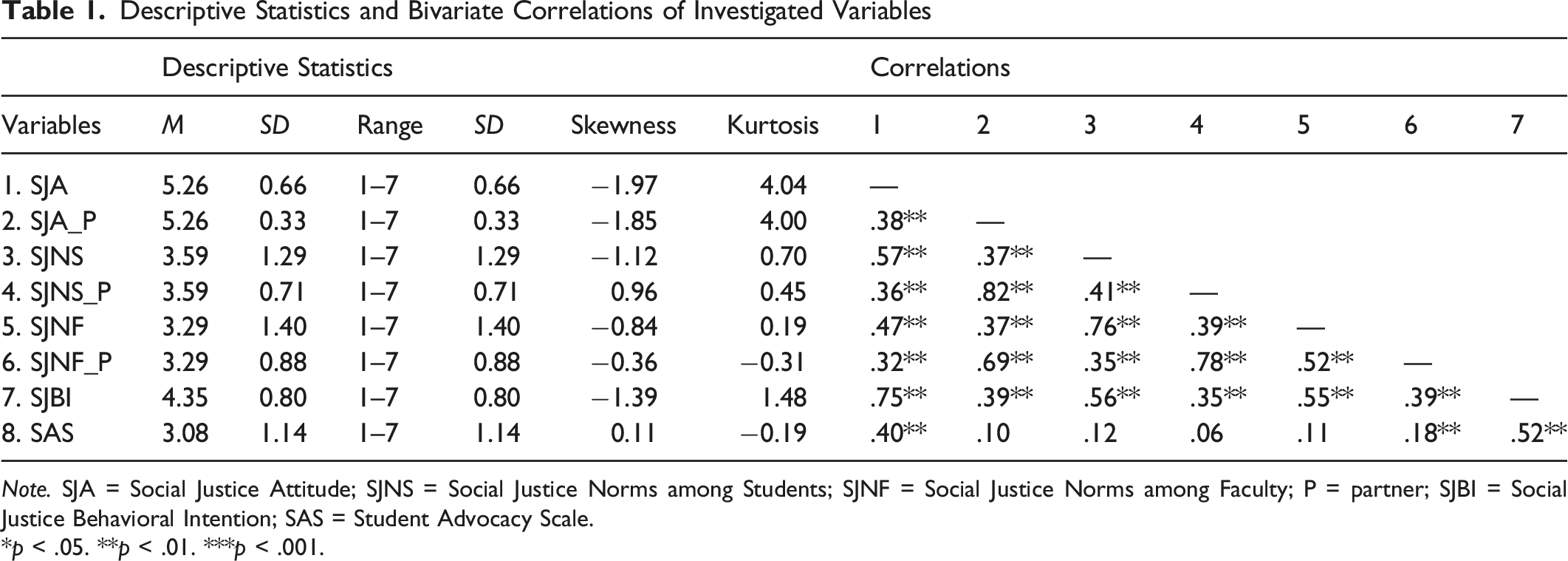
Note. SJA = Social Justice Attitude; SJNS = Social Justice Norms among Students; SJNF = Social Justice Norms among Faculty; P = partner; SJBI = Social Justice Behavioral Intention; SAS = Student Advocacy Scale.
*p < .05. **p < .01. ***p < .001.
Congruence and Discrepancy in Social Justice Attitudes Among Students
As seen in Figure 1 (left panel), above the line of congruence (x = y), the response surface rises upward toward the top back corner of the graph (xy coordinates [2, 2]) where SJA and SJA_P are both high and SJBI (z) is high; at this point, students’ individual social justice attitudes are congruently high with the rest of the students’ collective level of social justice attitudes, and the individual students’ advocacy intentions (z) are highest. Conversely, the surface curves downwards and drops sharply toward the bottom front corner (xy coordinates [−2, −2]), where SJA and SJA_P Are both low and SJBI (z) is low; at this point, students’ individually held social justice attitudes are congruently low with the rest of the students’ collective level of social justice attitudes and the individual students’ advocacy intentions (z) are lowest.
Congruence and Discrepancy Slopes and Curvatures of the Response Surfaces
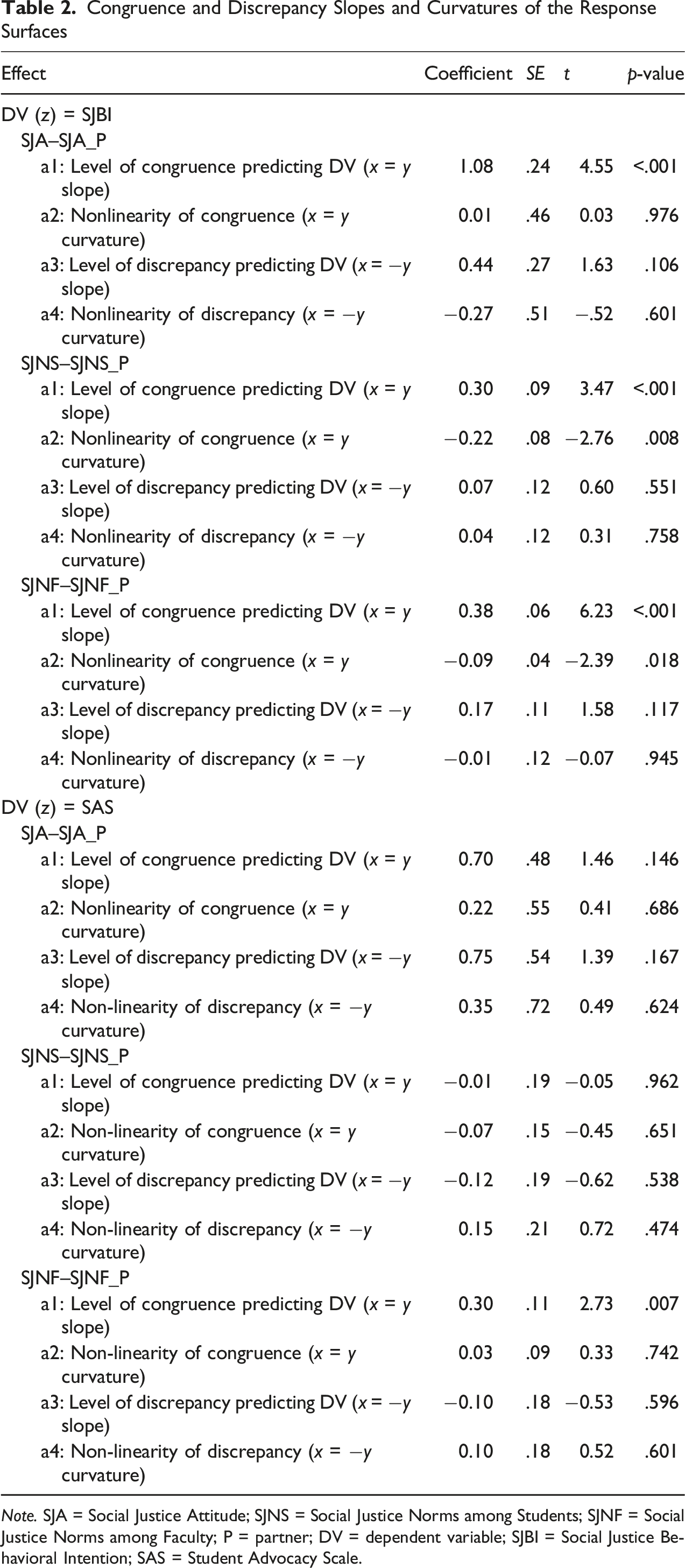
Note. SJA = Social Justice Attitude; SJNS = Social Justice Norms among Students; SJNF = Social Justice Norms among Faculty; P = partner; DV = dependent variable; SJBI = Social Justice Behavioral Intention; SAS = Student Advocacy Scale.
Regarding the discrepancy between SJA and SJA_P, in support of Hypothesis 1B, neither the slope nor the curvature was significant in predicting SJBI (see Table 2). Thus, the degree of SJA–SJA_P discrepancy was not significantly predictive of students’ advocacy intentions. Overall, the model accounted for 16% of the variance in SJBI.
As seen in Figure 1 (right panel), regarding SAS as the outcome, the slope and curvatures were similar to the trends found in relation to SJBI. However, in line with Hypotheses 1A and 1B, none of the slopes or curvatures were significant (see Table 2). Thus, the degree of congruence or discrepancy of students’ social justice attitudes was unrelated to actual advocacy behaviors among students.
Congruence and Discrepancy in Perceived Social Justice Norms Among the Student Body
As seen in Figure 2 (left panel), above the line of congruence (x = y), the response surface rises upward toward the top back corner of the graph (xy coordinates [2, 2]), where SJNS and SJNS_P (partner) are both high and SJBI (z) is high; at this point, individual students’ perception of social justice norms in the student body are congruently high with the rest of the students’ perceptions, and the individual student’s advocacy intentions (z) are highest. Conversely, the surface curves downwards and drops sharply toward the bottom front corner (xy coordinates [−2, −2]), where SJNS and SJNS_P are both lowest and SJBI (z) is lowest; at this point, students’ individual students’ perception of social justice norms in the student body are congruently low with the rest of the students’ perceptions and the individual students’ advocacy intentions (z) are lowest. Response Surfaces Predicting SJBI and SAS as a Function of Congruence and Discrepancy Between SJNS and SJNS_P.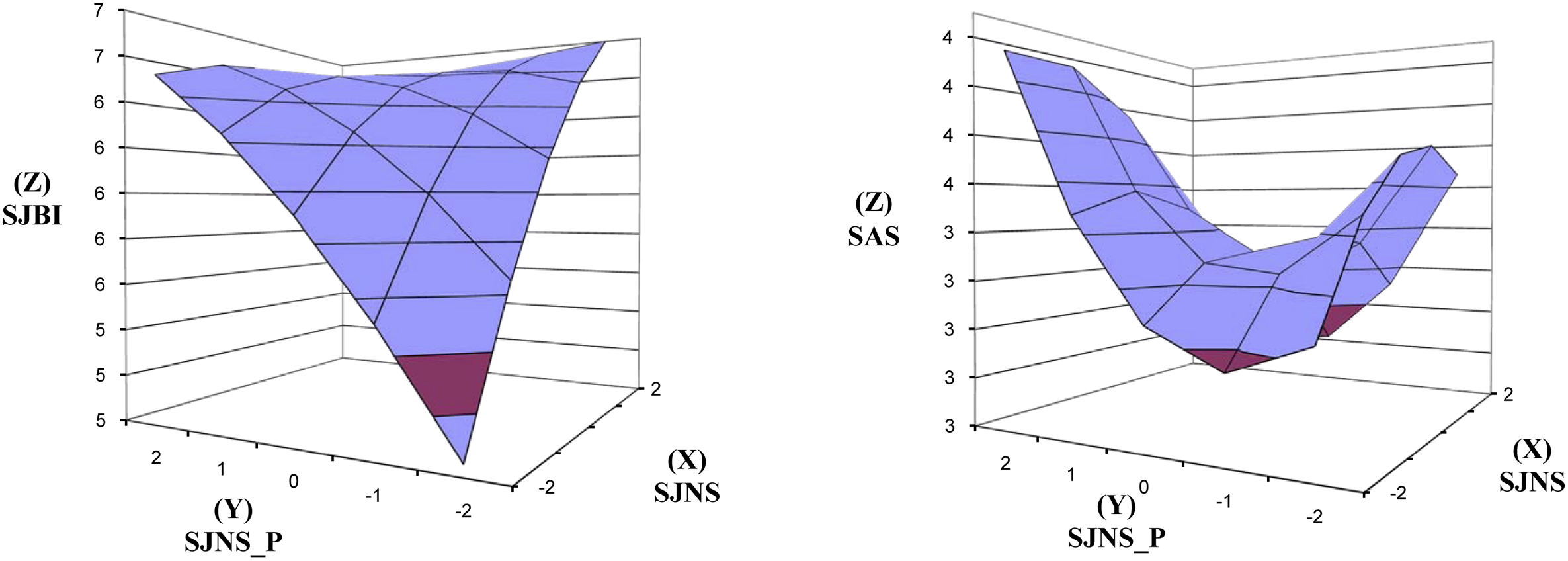
In support of Hypothesis 2A, the increase in SJBI values as congruence between SJNS and SJNS_P increases (from front to back on the line of congruence) was significant (see Table 2), as reflected in the significant positive slope for the response surface above the line of congruence (x = y) = .30, SE = .09, t = 3.469, p = .001. Thus, students’ advocacy intentions were high if students collectively perceived social justice norms to be high among other students in their program. Additionally, the curvature above the line of congruence was negative and significant (x = y) = −.22, SE = .08, t = −2.704, p = .008, indicating a nonlinear and concave (downward curving) association. This was visually evident as the response surface curves downward and drops sharply toward the front bottom corner, although it plateaus as congruence moves toward the top back corner. Thus, on average, students’ SJBI sharply increased as the congruence moved from the lowest to highest point (both SJNS and SJNS_P increase) and stabilized at the top. Conversely, the SJBI sharply decreased as both SJNS and SJNS_P became lower, suggesting that the drop in SJBI decreased exponentially as students congruently perceived the student body to be lower in social justice norms. Contrary to Hypothesis 2B, regarding the discrepancies between SJNS and SJNS_P, neither the slope nor the curvature was significant in predicting SJBI (see Table 2). Overall, the model accounted for 40% of the variance in SJBI.
Contrary to Hypothesis 2A and in support of Hypothesis 2B, as seen in Figure 2 (right panel), regarding SAS as the outcome, none of the slopes or curvatures were significant (see Table 2). Thus, the degree of SJNS–SJNS_P congruence or discrepancy was unrelated to actual advocacy behaviors among students.
Congruence and Discrepancy in Perceived Social Justice Norms Among Faculty
As seen in Figure 3 (left panel), above the line of congruence (x = y), the response surface rises upward toward the top back corner of the graph (xy coordinates [2, 2]), where SJNF and SJNF_P are both high and SJBI (z) is high; at this point, individual students’ perceptions of social justice norms among faculty are congruently high with the rest of the students’ perceptions and the individual students’ advocacy intentions (z) are highest. Conversely, the surface curves downwards and drops sharply toward the bottom front corner (xy coordinates [−2, −2]), where SJNF and SJNF_P are both lowest and SJBI (z) is lowest; at this point, individual students’ perceptions of social justice norms among faculty are congruently at their lowest with the rest of the students’ perceptions and the individual students’ advocacy intentions (z). Response Surfaces Predicting SJBI and SAS as a Function of Congruence and Discrepancy Between SJNF and SJNF_P.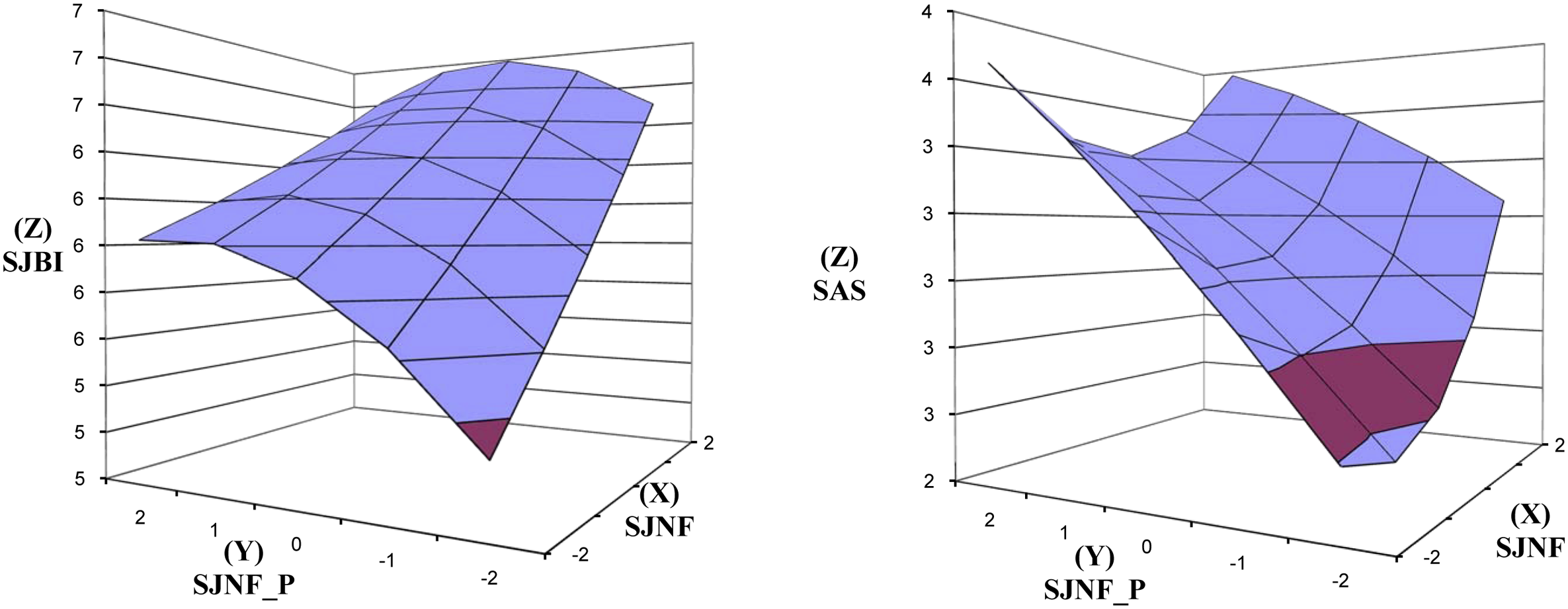
In support of Hypothesis 3A, SJBI values increase as the congruence between SJNF and SJNF_P increases (from front to back on the line of congruence) were significant (see Table 2), as reflected by the significant positive slope for the response surface above the line of congruence (x = y) = .38, SE = .06, t = 6.225, p < .001. Thus, students’ advocacy intentions were high if students collectively perceived social justice norms to be high among faculty in their program. Additionally, the curvature above the line of congruence (x = y) was negative and significant = −.09, SE = .04, t = −2.385, p = .018, indicating a nonlinear and concave association (see Table 2). The nonlinearity was visually evident, as the response surface curves downward and drops sharply toward the front bottom corner and plateaus as the congruence moves toward the top back corner. Thus, on average, students’ SJBI sharply increased as the congruence moved from the lowest to the highest point and stabilized at the top. Conversely, SJBI sharply decreased as both SJNF and SJNF_P became lower, suggesting that the drop in SJBI decreased exponentially as students congruently perceived the faculty to be lower in social justice norms. Contrary to Hypothesis 3B, above the line of discrepancy (x = −y), neither the slope nor the curvature was significant in predicting SJBI (see Table 2). Overall, the model accounted for 33% of the variance in SJBI.
Regarding SAS score as the outcome (see Figure 3; right panel), in contrast to norms among the student body, the slope above the line of congruence (x = y; front to back) was positive and significant in predicting SAS score (z), (x = y) = .30, SE = .11, t = 2.725, p = .007 (see Table 2). Thus, in support of Hypothesis 3A, students’ advocacy behaviors were high if students collectively perceived social justice norms to be high among faculty in their program. The response surface rises upward toward the top back corner of the graph (xy coordinates [2, 2]) where SJNF and SJNF_P are both high and SAS (z) is highest. Conversely, the surface curves downwards and drops sharply toward the bottom front corner (xy coordinates [−2, −2]), where SJNF and SJNF_P are both lowest and SAS (z) is lowest. The curvature above the line of congruence (x = y) was not significant = .03, SE = .09, t = .329, p = .742. In support of Hypothesis 3B, regarding the discrepancy between SNJF and SNJF_P, neither the slope nor the curvature was significant in predicting SAS score (see Table 2). Overall, the model accounted for 6% of the variance in SAS score.
PostHoc Sensitivity Analysis on Major Demographic Differences
Given that social justice advocacy intentions and behaviors are most likely to be endorsed by students with marginalized identities (Curtis-Boles et al., 2020; Singh et al., 2010), we examined whether there were significant differences in SJBI and SAS scores between major demographic identities (i.e., race, gender, sexual orientation). Between White (n = 97) and racial and/or ethnic minority (n = 81) students, there were no differences in SJBI, t(176) = −1.69, p = .092, or SAS, t(176) = −1.97, p = .050, scores. Between heterosexual (n = 132) and non-heterosexual (n = 46) students, there were no differences in SJBI, t(176) = −1.76, p = .080, or SAS, t(176) = −1.443, p = .153, scores. Between women (n = 132) and men (n = 41), women reported significantly higher scores on the SJBI, t(171) = 3.48, p = .001, and the SAS, t(171) = 2.53, p = .012. Given that the sample size for men was not adequate to conduct separate analyses, we entered gender as a control variable and reran the three models. Results indicated that all parameters remained consistent across these sensitivity analyses.
Discussion
We used polynomial response surface analysis to examine congruence and discrepancy among counseling psychology doctoral students (individual vs. other students) on individual social justice attitudes and perceptions of social justice norms (student body and faculty) in counseling psychology training programs, and whether congruence or discrepancy are associated with student advocacy intentions and behaviors. As theorized and conceptualized (Keum & Miller, 2020), the importance of social justice group identity was evident. We found that higher congruence among predictors was significantly associated with greater advocacy intentions, whereas this was not true for discrepancies. Interestingly, only the congruence between the individual student and the other students in the program on perceived social justice norms among faculty was significantly associated with advocacy behaviors. Of note, the variance accounted for in advocacy intentions was larger for models examining social justice norms among students and faculty than those examining individual social justice attitudes, suggesting the greater role of group norm influences (Baumeister, 2011; Keum & Miller, 2020; van Zomeren et al., 2008).
Contrary to our hypothesis, higher congruence between an individual student’s social justice attitudes and the other students’ attitudes was significantly and positively associated with social justice advocacy intentions. It is possible that congruently higher individual attitudes among students reflect a stronger commitment to social justice among the students as individual actors (Beer et al., 2012; Caldwell & Vera, 2010; Johnson et al., 2014; Singh et al., 2010). Students may individually play their part in engaging in social justice endeavors, which may indirectly create a norm that social justice advocacy is valued and practiced in the program. Yet, high congruence was not predictive of advocacy behaviors, suggesting that individual attitudes, even within the context of collectively high attitudes, were not enough to promote action. In fact, the discrepancy response surface figure (see Figure 1) indicates a trend of the intrapersonal pathway, as advocacy intentions were lower if the individual attitude was also lower, even when other students’ collective individual attitudes were higher.
Similarly, higher congruence between an individual student’s perception of social justice norms among students in their program and other program members’ perceptions of norms was significantly and positively associated with the individual student’s intentions to engage in social justice advocacy—but not with their actual advocacy behaviors. This suggests that when students in a program collectively perceive that social justice values are endorsed by students in their program, each student is likely to express a desire to engage in advocacy; yet, it may not suffice to promote actual engagement in advocacy work. Conversely, at congruently low levels of social justice norms (see Figure 2), advocacy intentions appear to be dampened. These results suggest that, although important, a normative culture supporting social justice among students may not necessarily lead to social justice-promoting actions. There may be other barriers to student engagement in advocacy, such as limited opportunities, lack of knowledge or skills, low self-efficacy, sense of isolation, time constraints, competing priorities, and high levels of stress (e.g., El-Ghoroury et al., 2012; Peluso et al., 2011). These types of barriers may be particularly problematic if students are not given support, mentorship, and instruction on how to be effective advocates—factors that past research has shown to be important for facilitating advocacy behavior (e.g., Beer et al., 2012; Chui et al., 2014; Keum & Miller, 2020; Singh et al., 2010). Taken together, the results for student social justice norm variables suggest that individual students’ advocacy behaviors may be influenced (and potentially increased) by being in an environment where their peers collectively perceive advocacy as normative—but even when there is high agreement on the importance of social justice advocacy, this does not appear to be enough to convert intention into action. Given that students have limited power over their use of time in graduate school (Rummell, 2015), a supportive student culture may be important but not sufficient for achieving higher levels of advocacy engagement.
The only factor that was significantly associated with both social justice intentions and behaviors was the congruence between students’ individual and collective perceptions of social justice norms among faculty members. That is, if an individual student and other students in their program collectively perceived the faculty to have high levels of social justice attitudes, the individual student’s intentions to engage in social justice advocacy, as well as their actual participation in advocacy behaviors, were higher. It is significant that the congruence between students’ perceptions of faculty members’ social justice norms was the only factor to predict actual behavioral engagement in social justice advocacy. This finding suggests that perceptions of faculty members’ social justice attitudes have a particularly crucial impact on students’ social justice advocacy compared to other factors (e.g., other students’ attitudes and perceptions of student norms). There are several reasons why faculty attitudes might be so influential. Faculty members likely have greater institutional and interpersonal power than students to influence the group identity and culture of their respective programs. Indeed, in programs characterized by a high degree of congruence related to faculty’s social justice attitudes, it is likely that the faculty as a whole has a collective, explicit, and visible commitment to social justice within their programs, as opposed to individual-level commitments that vary from faculty member to faculty member. Furthermore, faculty members are able to determine whether students receive specific skills training related to social justice advocacy. In programs with a high degree of congruence in faculty norms, faculty members are more likely to be motivated to provide this training to students (e.g., through coursework and practicums) and have experienced enough to do so effectively. Finally, research suggests that the desire to gain the approval of one’s leaders is a particularly potent influence on behavior (Scaduto et al., 2008). Thus, the perception that faculty members collectively value social justice is likely to motivate students to seek their approval by participating in social justice behaviors themselves.
Limitations
Despite these noteworthy findings, there are several important limitations to this study. First, we used a cross-sectional research design, which did not allow us to draw conclusions about causality or directional effects. For example, even if there are discrepancies, students’ attitudes and perceptions may become more aligned with each other over time. Thus, longitudinal studies confirming and extending the findings of the current research could help to better inform implications for practice and training. Second, although we strived to provide initial psychometric evidence and found promising results, the SAS we developed for this study needs to be further validated. Given the limited sample, we were not able to perform cross-validation on a separate sample. Thus, the findings related to advocacy behaviors should be interpreted with caution. Third, it is possible that the social desirability of a social justice orientation in counseling psychology programs may have affected our results. For example, although the means of perceived student and faculty norm variables were moderate with large variances, SJA mean scores among students were high with small variance. The restricted range of individual SJAs may have been due to self-selection bias, in that students with high social justice attitudes may have been attracted to participate in the study. These students may also have rated their program norms lower because they have a more critical and informed perspective on social justice attitudes. Fourth, the present study did not examine how social justice attitudes and values were shared between individual students and other students in their training programs or the relationships between students and faculty. Based on findings from prior qualitative research, it is possible that relational dynamics in programs contribute to such processes (Beer et al., 2012). It is also possible that some programs may have had more faculty engaged in diversity- and social justice-related research that affected the group dynamics. Fifth, the present study did not explore the nuances of the advocacy engagement process, such as facilitators and barriers to action. It is likely that program-level attitudes and norms interact with the advocacy engagement process in important ways. For instance, if a program’s social justice culture is centered around a particular locus of injustice (e.g., gender) that does not align with a student’s personal interests (e.g., class), that student may be less influenced by program attitudes and norms.
Finally, the generalizability of our findings is limited, as our sample did not include all the students from each program or the majority of programs in the field. Although we controlled for the number of students who participated from each program, the congruence and discrepancy around social justice attitudes and norms may be different if all students and programs were included in the analysis. For example, programs may consistently attract certain individuals that constitute their group characteristics, and group dynamics may differ in each program depending on their size. A representative sample would provide a more accurate assessment of the similarities and differences in social justice attitudes and values among the programs, and how these dynamics impact students’ advocacy intentions. Furthermore, our sample included primarily White (45%) and heterosexual (74%) students—both identities that hold considerable privileges in society. As noted in our posthoc analysis, individuals who hold marginalized identities, such as women, may be engaged in more advocacy activities. Thus, future research with larger representative samples should explore these nuanced differences and the power dynamics within an intersectionality framework (Shin et al., 2017).
Implications for Practice, Advocacy, Education, Training, and Research
Our results have important implications for graduate training in counseling psychology. Consistent with past literature (Keum & Miller, 2020), the collective perception of social justice norms in training programs—especially among faculty members—is an important factor to consider when developing a training environment that promotes advocacy among trainees. Graduate programs should prioritize the formation of a cohesive group identity around social justice among faculty and students, for example, through the program mission statement or program-wide dialogues related to social justice. However, it is critical that these efforts are not simply performative in nature (“talking the talk”), but rather, that they lead to real activism on the part of students and faculty members (“walking the walk”). Thus, we believe that program norm-building must be paired with structural changes to the programs themselves, including formal training, mentorship, and opportunities for advocacy. Without these changes, students may not develop the practical skills and self-efficacy needed to transform their intentions into actions. There are numerous empirical examples of incorporating these changes in counseling psychology programs, including Hage et al.’s (2020) description of a social justice practicum, Goodman et al.’s (2004) description of a social justice-related project, and Ertl et al.’s (2021) description of social justice consultation training. Additionally, programs should consider prioritizing advocacy when reviewing student and faculty applications, developing required benchmarks related to advocacy (e.g., as part of comprehensive exams), and providing funding and awards for students engaged in advocacy work, such that advocacy is emphasized equally along with research and clinical work. These initiatives can help promote a sense of community surrounding social justice norms, demonstrate to students that the program is committed to advocacy work, and provide students with concrete advocacy skills and experiences.
In addition, our findings have important implications for advocacy more broadly. In accordance with past research (e.g., Chui et al., 2014), our results demonstrate the influence that authority figures (in this case, faculty members) have on their subordinates’ engagement with advocacy work. Psychologists in positions of authority (e.g., clinical supervisors and late career professionals) can use their roles to model the importance of social justice and provide students and early career professionals with mentorship and guidance related to advocacy. Groups that are interested in promoting advocacy in the field of counseling psychology should also consider developing a formal advocacy mentorship program to take advantage of this effect. In addition, our findings suggest that advocacy intentions are not always accompanied by advocacy behaviors. Individuals and groups who are interested in promoting advocacy among counseling psychologists should investigate the barriers to advocacy among this group (e.g., skills deficits, time or financial constraints) and how to combat them.
Finally, our findings have important implications for future research. Our results demonstrate the benefits of studying how social justice outcomes are affected by interpersonal (not simply intrapersonal) factors, and the PRRSA is a powerful tool for examining these factors. Future research should use the PRSSA or related techniques to examine how attitudes and norms congruence impact social justice advocacy among other groups (e.g., counseling psychology professionals and community activists). In addition, our study highlights the importance of distinguishing between intentions and behaviors when studying social justice advocacy, as well as recognizing the advocacy behaviors that are unique to an individual’s role (e.g., advocating for marginalized clients among therapists). Although it needs further validation, the newly developed SAS may be useful for researchers hoping to examine these factors among psychology trainees in the future. Finally, although we believe that our study provides important information regarding social justice and advocacy among counseling psychology trainees, there is a critical need for ongoing research related to these topics. In particular, we believe that future research should examine the conditions that promote advocacy work throughout the career lifespan (i.e., early, middle, and late career professionals), as well as the benefits, challenges, and barriers to this work. This research will be imperative to realizing the field’s renewed commitment to social justice and advocacy.
Supplemental Material
Supplemental Material - Collective Program Social Justice Identity and Perceived Norms on Promoting Student Advocacy
Supplemental Material for Collective Program Social Justice Identity and Perceived Norms on Promoting Student Advocacy by Brian TaeHyuk Keum, Colleen A. Kase, Rajni Sharma, Stephanie E. Yee, Seini O’Connor, Priya Bansal, and NaYeon Yang in The Counseling Psychologist
Supplemental Material
Supplemental Material - Collective Program Social Justice Identity and Perceived Norms on Promoting Student Advocacy
Supplemental Material for Collective Program Social Justice Identity and Perceived Norms on Promoting Student Advocacy by Brian TaeHyuk Keum, Colleen A. Kase, Rajni Sharma, Stephanie E. Yee, Seini O’Connor, Priya Bansal, and NaYeon Yang in The Counseling Psychologist
Supplemental Material
Supplemental Material - Collective Program Social Justice Identity and Perceived Norms on Promoting Student Advocacy
Supplemental Material for Collective Program Social Justice Identity and Perceived Norms on Promoting Student Advocacy by Brian TaeHyuk Keum, Colleen A. Kase, Rajni Sharma, Stephanie E. Yee, Seini O’Connor, Priya Bansal, and NaYeon Yang in The Counseling Psychologist
Footnotes
Declaration of conflicting interests
The author(s) declared no potential conflicts of interest with respect to the research, authorship, and/or publication of this article.
Funding
The author(s) disclosed receipt of the following financial support for the research, authorship, and/or publication of this article: This study has been supported by the Division 17 Society for Counseling Psychology Grant from the American Psychological Foundation.

Supplemental Material
Supplementary material for this article is available online.
Author Biographies
References
Supplementary Material
Please find the following supplemental material available below.
For Open Access articles published under a Creative Commons License, all supplemental material carries the same license as the article it is associated with.
For non-Open Access articles published, all supplemental material carries a non-exclusive license, and permission requests for re-use of supplemental material or any part of supplemental material shall be sent directly to the copyright owner as specified in the copyright notice associated with the article.
