




Abstract
This article examines the effect of foreign aid for peace on civilian victimisation. The existing literature on the effects of post-conflict foreign aid suggests that aid can have both positive and negative outcomes. For instance, it can promote economic growth and equality, but under certain circumstances, it can also fuel corruption, create dependence and even perpetuate violence. This mixed record indicates the need for a better understanding of how intended and desirable outcomes of foreign aid for peace can be achieved. Therefore, this article examines the impact of EU aid for peace in Colombia from 2002 to 2018 on civilian victimisation. By employing a difference-in-differences model and semi-structured interviews, this study aims to clarify the causal mechanisms linking EU aid for peace to reductions in civilian victimisation. The main finding is that EU aid for peace reduces civilian victimisation by strengthening civilian agency and enhancing the visibility of violence in the municipalities where interventions occurred.
Keywords
Introduction
The role of international interventions in peacebuilding has garnered scholarly attention in recent years. As states emerge from protracted conflicts, the effectiveness of foreign aid in mitigating civilian victimisation has become a critical area of inquiry. Scholars have increasingly recognised that international interventions can provide essential resources and frameworks for peace, but can also lead to unintended consequences. Post-conflict aid has been found to lower violence levels but can also inadvertently contribute to instability if not carefully managed (Campbell and Spilker, 2022; Findley, 2018; Wood and Sullivan, 2015). This complexity challenges us to develop a clearer understanding of how international support for peace interacts with local contexts to shape peace outcomes.
Against this background, this article contributes to the existing literature on the specific role of aid for peace in local peacebuilding by examining the impact of EU peacebuilding interventions in Colombia from 2002 to 2018 on conflict victimisation. Over the past decades, Colombia has faced significant challenges related to rebel and paramilitary violence, with 9,943,287 1 civilian victims of the armed conflict (Unidad para las Víctimas, Gobierno Nacional de Colombia, 2024). In this context, sub-national variation in aid for peace in Colombia lends itself to exploring the differential effects of different peacebuilding efforts. By employing a difference-in-differences model and semi-structured interviews, this study elucidates the causal mechanisms linking EU support to reductions in conflict violence. The main hypothesis is that EU support for peacebuilding activities reduces civilian victimisation by fostering civilian agency and enhancing the international visibility of violence in the municipalities where interventions occurred.
The European Union (EU) has consolidated as a significant actor in peacebuilding, particularly through its emphasis on civilian and civil society engagement. The EU’s Common Foreign and Security Policy (CFSP) prioritises civilian peacebuilding, aligning with its identity as a normative power that seeks to promote human rights and democratic governance (Bargués and Morillas, 2021; Juncos and Blockmans, 2018). However, despite its intentions and substantial investments in peacebuilding initiatives, the specific impact of EU support on civilian victimisation remains underexplored in the literature. Existing studies often highlight the importance of local agency and contextual adaptation (Gray and Burns, 2021; Paananen, 2021), yet they frequently overlook the mechanisms through which foreign aid for peace interventions of the EU translates into tangible reductions in civilian victimisation (Mac Ginty et al., 2019).
This article makes two contributions to the literature on foreign aid for peace and civilian victimisation. First, it explains how a specific type of aid, foreign aid for peace, can more effectively achieve its intended objectives. Second, it offers insights into the causal mechanisms that lead to a reduction in civilian victimisation. The article proceeds as follows. Section ‘Foreign aid for peace and civilian victimisation’ sets the scene by situating the analysis within the context of the literature on foreign aid for peace and civilian victimisation. This section also explains how the article’s theory and hypotheses are derived from prior research. Section ‘Research design’ explains the article’s mixed-methods approach that combines a difference in difference model with semi-structured interviews to study the effects of aid for peace on civilian victimisation. Section ‘Discussion’ discusses the findings, and section ‘Conclusion’ concludes the article.
Foreign aid for peace and civilian victimisation
Foreign aid for peace refers to external assistance provided to support peacebuilding efforts in conflict-affected regions. The scope of such aid is broad, ranging from humanitarian relief and economic development to governance reforms and security sector assistance (Addison, 2000; Ruggeri et al., 2017). Foreign aid for peace is often seen as a critical tool for addressing both the immediate impacts of violence and the underlying socio-political grievances that contribute to recovery from conflict. Its impact can vary depending on different factors such as the conflict stage (onset, ongoing, recurrence) and the intervention aim of each stage: prevention, mitigation or stabilisation (Findley, 2018). However, evidence on preventing conflict recurrence is limited (Hoeffler and Justino, 2024; Nunnenkamp, 2016).
Studies analysing the effects of aid for peace find contradictory evidence (Findley, 2018). Some scholars argue that a well-targeted mix of economic, military and diplomatic external interventions helps to stabilise post-conflict situations and can facilitate peace by addressing the root causes of conflict, such as poverty, inequality and weak governance (Hoeffler and Justino, 2024). For instance, aid that promotes economic development and strengthens governance can reduce conflict recurrence by addressing inequalities and improving the state’s capacity to deliver services and maintain security (Hoeffler, 2014). Peace aid can also reduce the likelihood of conflict recurrence by fostering social cohesion and reconciliation (Cilliers et al., 2016) and support ex-combatants’ reintegration (Kaplan and Nussio, 2018). Countries neglected by international organisations have been found to be prone to experiencing conflict recurrence (Mross et al., 2022).
However, a significant body of literature also emphasises potential drawbacks of foreign aid in conflict zones, which can increase violence (Grady, 2017; Sullivan et al., 2020; Zürcher, 2017). Findley (2018) argues that aid can be co-opted by local elites or armed groups. The effect of this can be to deepen existing inequalities, which in turn can perpetuate cycles of violence. This is especially likely when governance and institutional capacity are weak, with little oversight of aid distribution. In addition, aid can create reliance on external assistance. This is problematic because it can undermine civilian agency and diminish the effectiveness of peacebuilding efforts (Donais, 2012; Kamguia et al., 2022) or even fuel conflict (Nielsen et al., 2011), even when it supports security sector reforms (Sedra, 2016). Moreover, scholars such as Mac Ginty and Richmond (2013), Goetschel and Hagmann (2009), Autesserre (2017) and Chandler (2017) have pointed out how external aid that prioritises top-down approaches, reinforces power imbalances by disregarding local priorities in conflict zones (Ljungkvist and Jarstad, 2021) without understanding local dynamics (García Duque and Casadiego, 2021; Leonardsson and Rudd, 2015).
Overall, while some scholars argue that well-targeted aid can support conflict in different stages to reduce violence, the effectiveness of such interventions remains debated and depends on contextual factors. What many of the existing studies on the topic have in common is that they explore the effects of foreign aid in general, without distinguishing foreign aid for peace from other kinds of aid. Moreover, many studies are insufficiently attuned to the different mechanisms through which aid can be implemented. Thus, while aid is a promising tool in peacebuilding and reducing violence, we lack a deep understanding of how its potentially beneficial effects can be achieved and how pitfalls can be avoided.
EU aid for peace
The EU has developed a distinctive peacebuilding approach, characterised by its commitment to human rights, civilian protection and empowerment. Unlike other donors that often prioritise immediate relief (Honig, 2018), the EU combines short-term humanitarian aid with long-term reforms aimed at strengthening local governance, promoting social cohesion and enabling local populations to participate in peacebuilding processes (Orbie and Del Biondo, 2018; Petrova and Delcour, 2020). This strategy is evident in contexts such as Africa and Northern Ireland, where the EU has invested in local capacities for conflict prevention and civil society engagement (Mac Ginty, 2010; Mustasilta, 2022). For instance, the EU PEACE programme in Northern Ireland shows how funding for civil society groups can facilitate grassroots peacebuilding.
A central aspect of the EU’s (2024) foreign aid strategy is its emphasis on civilian and local ownership in designing and implementing aid programmes (Ejdus and Juncos, 2018). The EU aims to support bottom-up societal reconstruction, essential for long-term stability and resilience (Joseph and Juncos, 2020). However, despite the EU’s peacebuilding objectives, its specific impact on reducing violence remains underexplored. While these interventions are framed within a normative agenda emphasising human rights and local governance, the mechanisms through which they are related to civilian victimisation have not been sufficiently assessed. The potential for these interventions to support peace outcomes is clear, but it remains to be fully evaluated whether they have successfully achieved their intended goals.
Civilian victimisation
Civilian victimisation refers to the physical, psychological and socio-economic harms inflicted on civilians during armed conflict. This victimisation can include physical violence, forced displacement, sexual violence, loss of livelihoods and psychological trauma (Balcells and Justino, 2014; Wood, 2006). It encompasses a diverse range of intentionally inflicted harms against civilians in conflict, frequently employed as a tactic of deterrence, and sometimes strategically aimed at suppressing minority dissent and signalling strength to the majority population (Besaw et al., 2023). These include direct physical violence, psychological trauma and economic losses due to displacement or the destruction of livelihoods (Maekawa & Inata, 2024). Such victimisation can have long-lasting effects, contributing to intergenerational trauma and hindering post-conflict recovery. Civilian victimisation also disrupts social cohesion, weakening community bonds and trust in institutions (Balcells and Justino, 2014).
The cumulative effects of civilian victimisation and the subsequent transgenerational repeated trauma often led to social fragmentation, which poses a significant challenge to post-conflict peacebuilding (Herman, 2015; Schmelzer, 2018). As Kalyvas (2006) notes, the disruption of community structures and the erosion of trust can perpetuate cycles of violence. Addressing civilian victimisation and its effects on the social fabric and institutional trust is, therefore, a prerequisite for achieving sustainable long-term peace.
The long-lasting effects of civilian victimisation on individuals and groups, particularly the erosion of trust and social cohesion, create significant obstacles to rebuilding efforts (Balcells and Justino, 2014; Wood, 2006). Furthermore, the gendered dimensions of victimisation require context-specific interventions that address the diverse needs of different victim groups (Kreft, 2019; Swaine, 2018). Without addressing the physical, psychological and socio-economic harms inflicted on civilians, peacebuilding efforts are likely to falter, as the unhealed wounds of victimisation can perpetuate conflict recurrence.
Connecting aid and victimisation: civilian agency and violence visibility
With these preliminary insights in mind, we can now turn to the mechanism that connects foreign aid and civilian victimisation. In particular, I will emphasise the importance of two factors: civilian agency and visibility of violence, starting with the former. The concept of civilian agency is central to understanding the effects of foreign aid for peace on civilian victimisation dynamics. Civilian agency has gained prominence in conflict studies as scholars have increasingly recognised that civilians are not merely passive victims of violence but active participants in shaping conflict and peace dynamics (Guevara et al., 2023). Civilian agency refers to a set of actions that civilians living in conflict zones take to refuse collaboration with any armed group present in their territories (Masullo, 2012, 2020, 2021), as well as the capacity of individuals and groups to make choices and take actions in the context of violence, ranging from non-cooperation to advocacy and active resistance to armed actors (Krause et al., 2023; Krause and Kamler, 2022). Some studies suggest that foreign aid for peace can empower civilians locally, a key component of successful peacebuilding (Barrera et al., 2022; Leonardsson and Rudd, 2015). Krause et al. (2023) argue that local civilians become more resilient to external threats, such as violence from non-state armed actors, when they can control their governance structures with external support.
Civilian agency is often mediated by social networks, which provide civilians with the resources and solidarity needed to resist violence and organise collective action Arjona (2016). Kaplan and Rhoads (2025; Kaplan, 2013) highlight the importance of civilian agency structures in mitigating violence and enhancing the protection of civilians. According to Krause et al. (2023), areas with stronger civilian agency structures tend to experience lower levels of violence, as they are less susceptible to power vacuums and more visible to the government and the international community. Krause and Kamler (2022) argue that civilians, through their agency, can mitigate violence by organising themselves to resist armed groups and demand better governance.
International peace interventions can help strengthen civilian agency strategies to protect them and enhance the effectiveness of peace activities by building on existing experiences. This is particularly relevant in contexts where aid for peace is directed towards strengthening local governance structures, enabling civilians to hold authorities accountable and advocating for protecting their rights. Moreover, the role of aid in facilitating non-cooperation with armed actors can vary depending on their level of local involvement and contextual factors (Masullo, 2021). By providing resources and support to strengthen civilian agency, foreign aid can help to amplify civilian voices and foster a more inclusive approach to peacebuilding (Berlin et al., 2024). Conversely, overly prescriptive aid or one entirely controlled by external actors can diminish civilian agency, leading to dependency and disempowerment (Honig, 2018).
Having established the importance of civilian agency, we can now turn to the second factor that links foreign aid to civilian victimisation. The visibility of violence in conflict zones is a central factor in influencing how armed groups engage with civilian populations. When violence is visible, armed actors often exercise restraint, conscious of the potential impacts of widely observed actions on their reputation and local standing. As noted by Duncombe (2020), the visibility of violence in conflict plays a powerful role in shaping public narratives, which armed groups recognise as influential to their perceived legitimacy and the support they rely upon in contested areas. This heightened visibility can thus make groups more cautious as they navigate the risks associated with actions that could leave lasting impressions within the affected communities (Amaya-Panche, 2022).
Visibility serves not merely as an observational factor but as a mechanism that impacts the social dynamics within conflict zones (Duncombe, 2020). In settings where acts of violence are easily observable, the consequences of such actions extend beyond immediate impacts, as these acts are remembered and embedded into the local historical context. Armed groups aware of these dynamics are often influenced to maintain a degree of restraint to avoid alienating potential supporters. Visibility, therefore, becomes a moderating force, leading non-state violent groups to consider how violent acts might disrupt their long-term goals (Jo, 2016; Ludvík, 2023; Stanton, 2016).
Ultimately, visibility does more than make acts of violence observable; it actively shapes the strategic environment in which armed groups operate. The lasting presence of visible violence within community memory often outweighs any immediate tactical advantage that unchecked aggression might provide. For armed groups, the potential costs of eroding local support and reputation are significant, particularly in highly visible settings where violence is likely to be recorded, remembered and potentially criticised. Visibility plays a key role in incentivising restraint by armed actors, as it increases the perceived costs of targeting civilians and pressures groups to avoid actions that could harm their support or provoke external backlash (Balcells and Stanton, 2021; Immaculate, 2018; Stanton, 2016).
Before we proceed, it is important to acknowledge that visibility can, at least in principle, also provide an incentive for armed actors to carry out targeted acts of violence that are highly visible. For example, repressive regimes often assassinate prominent dissidents in order to intimidate the public and dissuade potential critics from voicing their complaints. In the context of Colombia, armed actors have a long history of targeting social leaders in order to weaken their movements (Castro et al., 2020; Llanes, 2022). The upshot of this is that violence visibility might not always have a deterrent effect. Having said this, existing research suggests that this potential violence incentivising effect of visibility is not strong enough to counterbalance or even outweigh the deterrent effect of violence visibility through international interventions (Fjelde et al., 2019; Zürcher, 2017).
Summing up, the literature reveals a complex relationship between foreign aid for peace and civilian victimisation, with civilian agency and the visibility of violence emerging as central mechanisms. While foreign aid has the potential to empower civilian agency, strengthening the ability of communities to resist violence and to increase the visibility of violent acts, thus restraining armed groups, it can also produce unintended effects. Misalignment with local dynamics can lead aid to creating dependency, widening inequalities, or even intensifying local conflicts.
The EU’s approach to peacebuilding, which emphasises civilian protection and grassroots support, is especially positioned to address these challenges by fostering civilian agency and leveraging the visibility of violence to potentially reduce harm to civilians. Despite this, the precise mechanisms through which EU interventions affect civilian victimisation remain insufficiently explored. Understanding how these mechanisms operate in conflict-affected areas could clarify the role of EU aid in peacebuilding. Based on these insights, I propose the following hypothesis:
H1. EU aid for peacebuilding efforts reduces the likelihood of civilian victimisation in the municipalities that received interventions.
Data
Civilian victimisation in Colombia
The dependent variable, civilian victimisation, is measured using data from Colombia’s Unique Registration of Victims Unit. In this context, civilian victimisation refers to any harm or rights violations suffered individually or collectively because of armed conflict violence. This includes confinement, crimes against children and the underage population, forced displacement, forced disappearance, homicide, kidnapping, landmines, property loss, physical and personal injuries, sexual violence, spoils of land, terrorist attacks, threats and torture, according to the Colombian Law of Victims (Congreso de la República de Colombia, 2012).
Graph 1 highlights the annual frequency of civilian victimisation in Colombia from 1984 to 2019. Initially, victimisation levels were relatively low until the mid-1990s, when there was a sharp increase due to the intensifying conflict between paramilitary groups, like the United Self-Defences of Colombia (AUC), and guerrilla forces such as the FARC (Revolutionary Armed Forces of Colombia) and ELN (National Liberation Army), as they contested control over strategic areas (Pécaut, 2006). The National Centre for Historical Memory (CNMH, 2013) documented how these groups engaged in widespread violence, including severe human rights violations, as they vied for control of territories and resources.
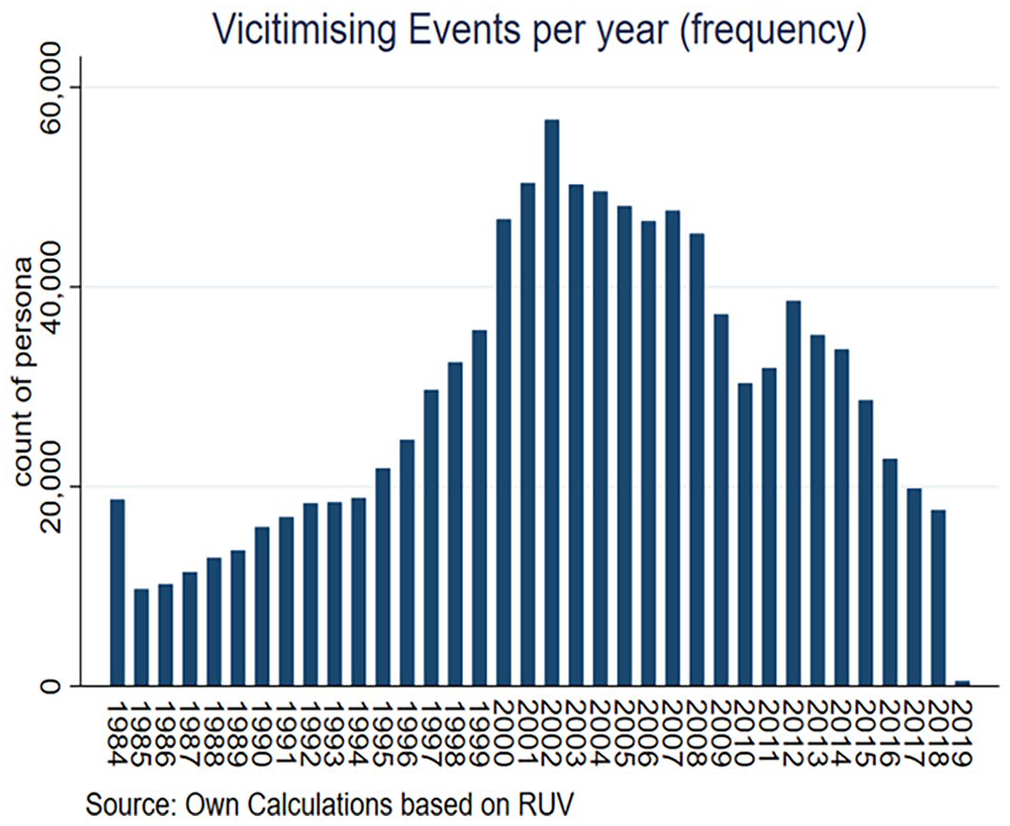
Victimising events in Colombia.
The early 2000s marked the peak of violence, particularly during Álvaro Uribe’s presidency (2002–2010). His ‘Democratic Security Policy’ increased military offensives, resulting in higher civilian victimisation, as civilians were caught in the crossfire between military forces and non-state armed groups (Gutiérrez Sanín, 2008; Iturralde, 2025; Mejia et al., 2024). After 2006, victimisation levels declined due to the demobilisation of paramilitary groups under the Justice and Peace Law of 2005 and the weakening of FARC, though remnants of paramilitary groups formed new criminal bands, perpetuating violence (Goyes and Sandberg, 2023; Restrepo and Muggah, 2009). A significant reduction in victimisation occurred after 2016, following the signing of the peace agreement between the government and the FARC, leading to the demobilisation of rebels. However, despite the peace process, some regions remain unstable due to other armed groups and FARC dissident factions (Quinn, 2023). The fragility of historic achievements has recently been highlighted by uptakes in violence in the regions of Cauca and Catatumbo, among others. To measure civilian victimisation, I used RUV data, incorporating victimisation rates, representing the number of victims per 100 inhabitants. This makes possible to standardise outcomes and account for varying population sizes across municipalities.
EU’s aid for peace in Colombia
The independent variable, foreign aid for peace, is measured using data that includes 490 Colombian municipalities involved in EU peace interventions from 2002 to 2018. I built a dataset: “EUPeaceCol” (Amaya-Panche, 2025) capturing municipalities that received EU aid as part of six programmes to foster peace in Colombia based on EU reports (EEAS, 2020). Each programme targeted different regions and was implemented over various periods, contributing 156,800,000 Euros to peacebuilding. The interventions were conducted under different programmes between 2000 and 2018 (Table 1).
European Union programmes in Colombia 2002–2018.
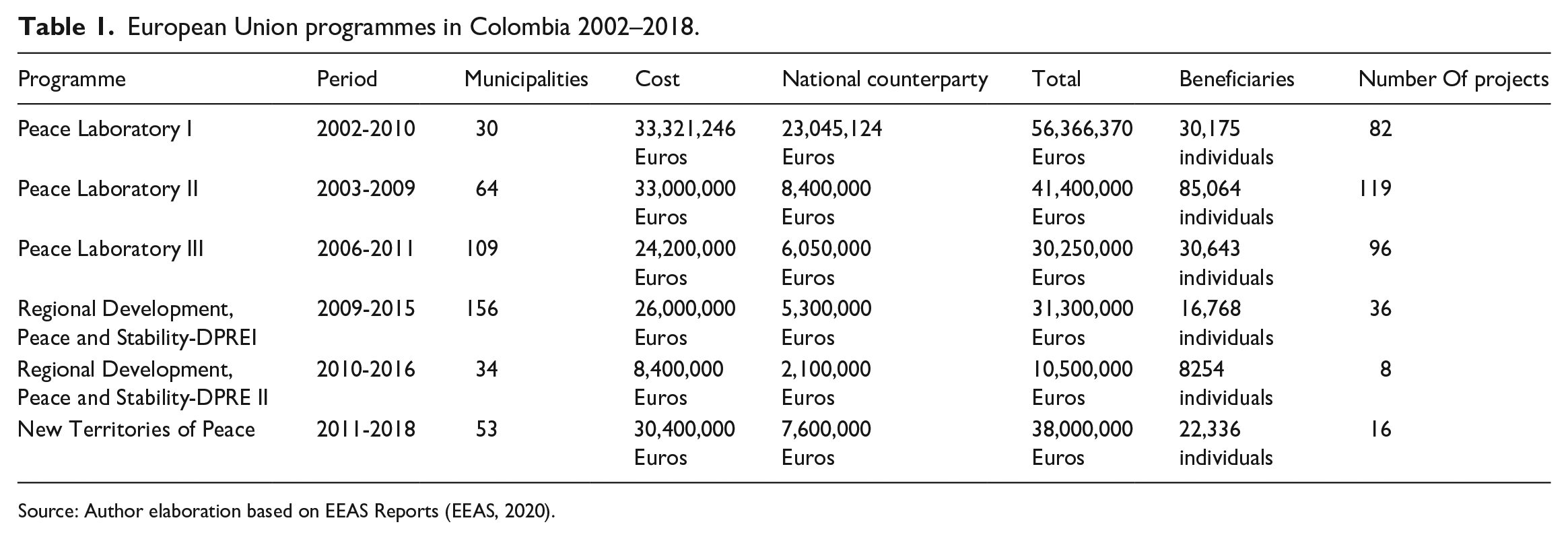
Source: Author elaboration based on EEAS Reports (EEAS, 2020).
To analyse the EU’s impact on civilian victimisation, all 1222 Colombian municipalities were coded as either treated (those that received EU interventions) or control (those that did not receive interventions). Therefore, the dataset includes treated and control municipalities, allowing for comparison.
Research design
This study employs a mixed-methods approach to examine the impact of EU interventions on civilian victimisation, incorporating a difference-in-differences model and semi-structured interviews.
Quantitative analysis
The quantitative component uses a difference-in-differences model to assess changes in victimisation rates. The model evaluates the impact of the EU’s intervention on civilian victimisation rates in Colombia. This approach allows for comparing treated and control municipalities before and after the intervention, thereby isolating the causal impact of the EU’s activities on the outcome variable of interest. The difference in difference (DID) model is specified as follows:

To compare the outcome variable across different groups, especially when the treated and control groups differ in size, I use a standardisation method that represents the rate of victims per 100 inhabitants in municipality i for each year t as Y. The independent variables in the analysis include ‘treated’, a binary variable indicating whether the municipality received the intervention (1 if treated); ‘after’, representing the period after the intervention (1 post-intervention, 0 otherwise); and ‘treated_after’, the interaction term that captures the causal effect of the intervention.
A set of control variables was incorporated into the model to account for confounding factors that could influence victimisation rates independently of the EU intervention. These variables help to isolate the treatment effect and reduce bias caused by external factors. Specifically, ‘act_param’ indicates the presence of paramilitary groups (Gelvez and Johnson, 2024) and ‘act_government’ indicates the presence of government-armed actors involved in violent incidents. This information is sourced from the Violent Presence of Armed Actors in Colombia (ViPAA) version 1.3 dataset (Osorio et al., 2019), which provides data on armed actor presence in Colombia at the municipal level between 1988 and 2019. In addition, ‘h_coca’ refers to the hectares of coca cultivated, from the Conflict and Violence Panel dataset (Centro de Estudios sobre Desarrollo Económico [CEDE], 2022) Finally, the municipalities’ category was determined using the General Accounting Office classification, concerning population size and freely available current income using the Good Governance dataset, reflecting seven categories (1–6 and Special) (CEDE, 2022).
The model was estimated using robust variance estimators with clustering by year and department to account for the lack of independence (MacKinnon et al., 2023). This is because the EU selected treated municipalities based on their higher levels of human rights violations, indicating that these areas likely share similar characteristics and may not be entirely independent. This method improves the accuracy of the standard errors, which helps prevent making inaccurate inferences about the significance of the estimated coefficients. A complementary regional analysis was conducted to explore potential treatment effect heterogeneity. This approach enhances the accuracy and validity of the results and provides valuable insights for regionally tailored analysis.
The DiD model is particularly suitable for this study as it allows to estimate the causal effect of EU interventions by comparing the treated and control municipalities before and after the intervention. This method effectively controls for time-invariant characteristics of municipalities that might affect victimisation rates. The DiD model is a robust technique for policy evaluations where randomisation is not feasible, as it leverages the assumption that, in the absence of the intervention, treated and control municipalities would have followed similar trends in victimisation rates. This model has been validated in the literature as a reliable method for estimating causal impacts in policy evaluations. Angrist and Pischke (2009) emphasise the strength of DiD in non-experimental settings, while Bertrand et al. (2004) further support the method’s ability to account for time-invariant unobserved heterogeneity across treatment and control groups. In this study, DiD allows for the isolation of the EU intervention’s effect while controlling for confounding factors such as historical violence levels or the municipalities’ socio-political characteristics.
While DiD is a powerful tool, alternative methods like propensity score matching (PSM) could be considered. PSM would allow the matching of treated municipalities with similar control municipalities based on observable covariates. However, PSM cannot control for unobserved factors that do not vary over time, such as deep-seated political dynamics or long-standing social structures. DiD is, therefore, preferable in this context, as it addresses these unobserved but important factors by comparing changes over time in both the treatment and control groups (Rosenbaum and Rubin, 1983; Stuart, 2010).
This study leverages the DiD model, a robust and widely accepted technique, to isolate the effect of the EU’s peace interventions on victimisation rates in Colombia. The method is better than other alternatives, like PSM, in controlling for unobserved time-invariant factors and ensures the precision of estimates through robust standard error adjustments.
Qualitative approach
The qualitative component involved semi-structured interviews with six individual beneficiaries from municipalities that received EU interventions. These participants included a local NGO leader, a community health worker, a municipal deputy and three community representatives from areas with high levels of civilian victimisation and low economic conditions, selected to capture a diverse range of perspectives. While not fully representative, these interviews are illustrative of the local dynamics affected by EU aid. A snowball sampling strategy was employed to reach individuals with sensitive, hard-to-access experiences with conflict (Sarker et al., 2022). This approach ensured diversity in terms of ethnicity, age, gender and regional location, enhancing the depth and credibility of the findings (Nasufi and Bruçi, 2021).
The interviews aimed to explore the perceived impact of EU interventions on reducing civilian victimisation, reflecting a growing interest in understanding local perceptions of international peacebuilding efforts (Autesserre, 2014). Thematic analysis was employed to identify key topics, focusing on how local actors viewed the EU’s role in relation to civilian victimisation (Skarlato et al., 2016). These variables served as codes to analyse the interviews. This analysis method is well documented in qualitative research literature, aiming to carry out individual, in-depth interviews to reveal the subtle complexities within conflict areas. Therefore, the interviews were expected to offer rich, detailed accounts focusing on the everyday realities and practices of beneficiaries (Lundqvist and Öjendal, 2018; Mac Ginty, 2019). The anonymity of the interviewees was maintained to protect their identities, a common ethical consideration in qualitative research, particularly in sensitive contexts such as conflict-affected areas (Moss et al., 2019). Furthermore, the thematic analysis conducted in this study aimed to elucidate the causal mechanisms underlying the perceived effectiveness of EU interventions. This analytical approach is useful for understanding the dynamics of aid for peace and the interplay between local contexts and external interventions (Weller and Barnes, 2014).
Results
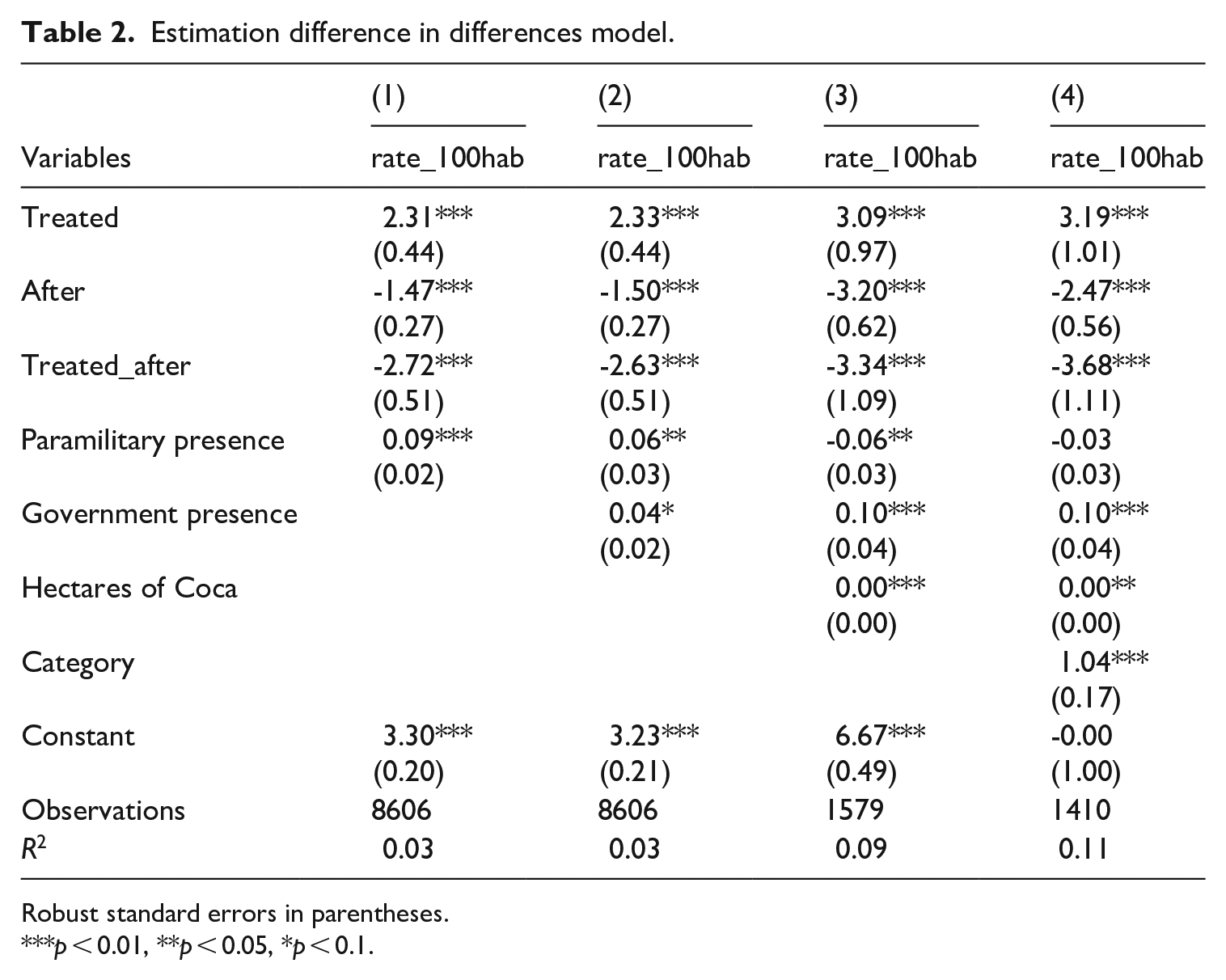
The key result of the analysis, represented by the coefficient for the interaction term (β₃), is negative and statistically significant. This finding indicates that, on average, municipalities that received EU aid for peace experienced a reduction of 3 victims per 100 inhabitants after the intervention, compared to the control group. The estimation results of the DiD model reinforce the hypothesis that the intervention successfully helped to reduce civilian victimisation in the targeted municipalities (Graph 2).
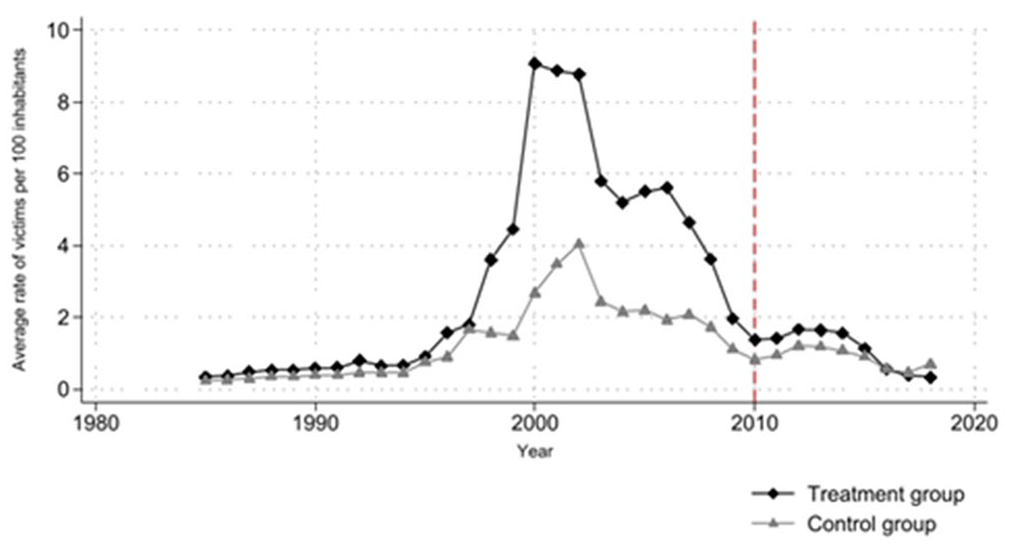
EU interventions and victimisation trend.
The interaction term remains negative and statistically significant across all model specifications, indicating a consistent effect of the EU’s aid on reducing civilian victimisation, as shown in Table 2 and Graph 3.
Estimation difference in differences model.
Robust standard errors in parentheses.
p < 0.01, **p < 0.05, *p < 0.1.
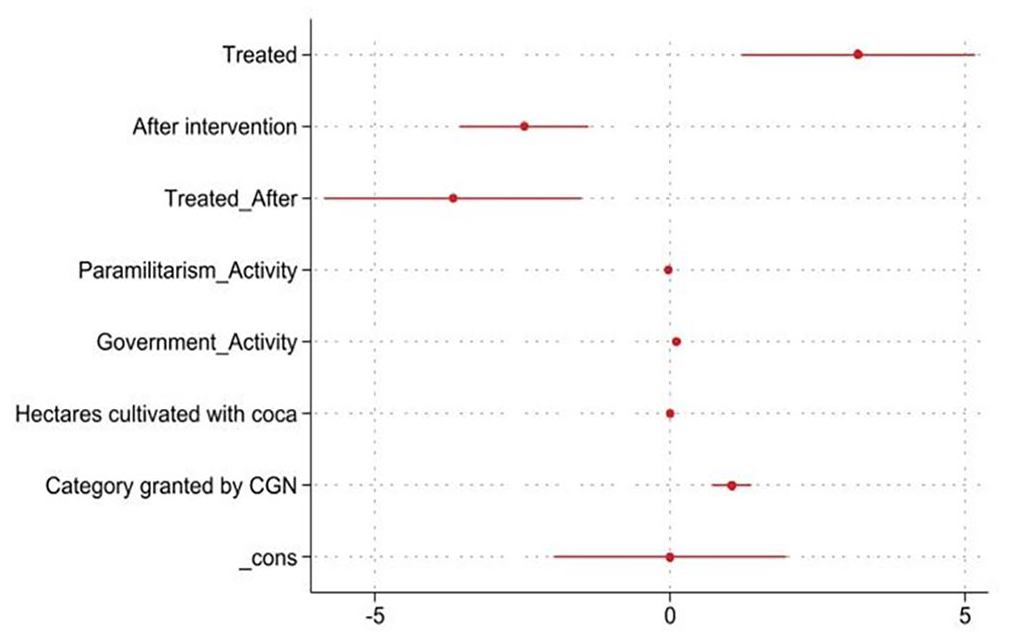
Interaction terms.
Throughout the data series, the trend in the rate of victims per 100 inhabitants is relatively similar between treated and control municipalities. However, the treated municipalities show a higher level of victims between 1998 and 2015. On the other hand, it is observed that from 2010 (the midpoint of the interventions), the difference begins to narrow until it equalises in 2016 as the trend shifts. The negative and significant coefficients in all models indicate that EU aid was associated with a reduction in civilian victimisation in the treated municipalities compared to the control municipalities. This decline can be understood not just as a reduction in the occurrence of violent events but also in their intensity. The outcome variable is constructed as the number of victims per 100 inhabitants, which captures both the prevalence and magnitude of civilian victimisation. The results therefore suggest that EU interventions are associated with a reduction in the intensity of violence following treatment.
Regional analysis
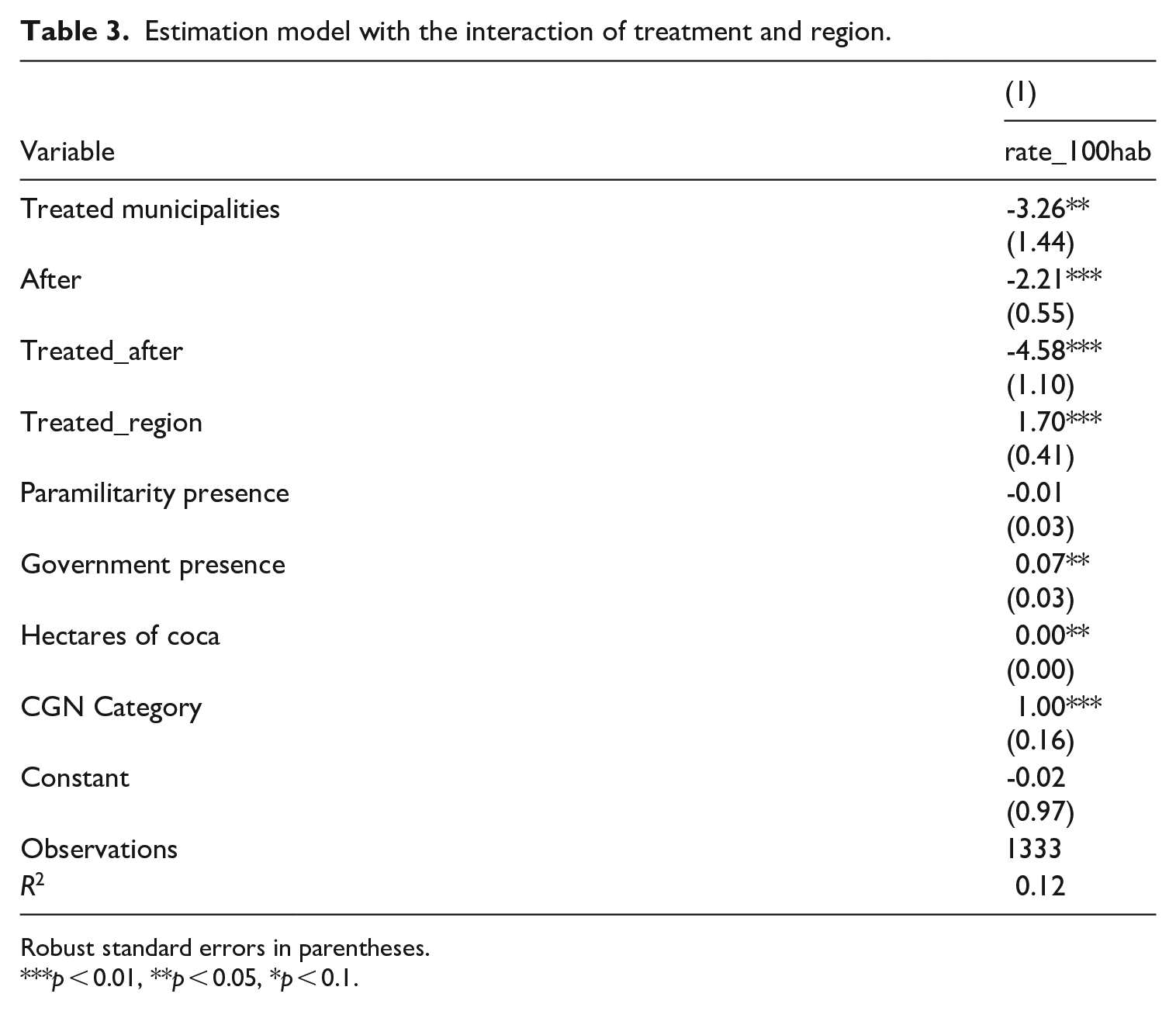
The variable ‘region’ was created based on the geographical distribution by departments and regions, as outlined in Article 45 of Law 2056 of 2020 (Congreso de la República de Colombia, 2020). Three different types of analysis were conducted. The variable ‘region’ interaction with the treatment results in an interesting estimation. When the region variable is included, the effects of the treated and treated_after variables increase (Table 3). In addition, the coefficient for treated_region indicates that the effect of the treatment varies across regions. Specifically, it is associated with an average increase of 1.70% in civilian victimisation compared to regions without treatment. This result is statistically significant at the 1% level, as shown in Table 3.
Estimation model with the interaction of treatment and region.
Robust standard errors in parentheses.
p < 0.01, **p < 0.05, *p < 0.1.
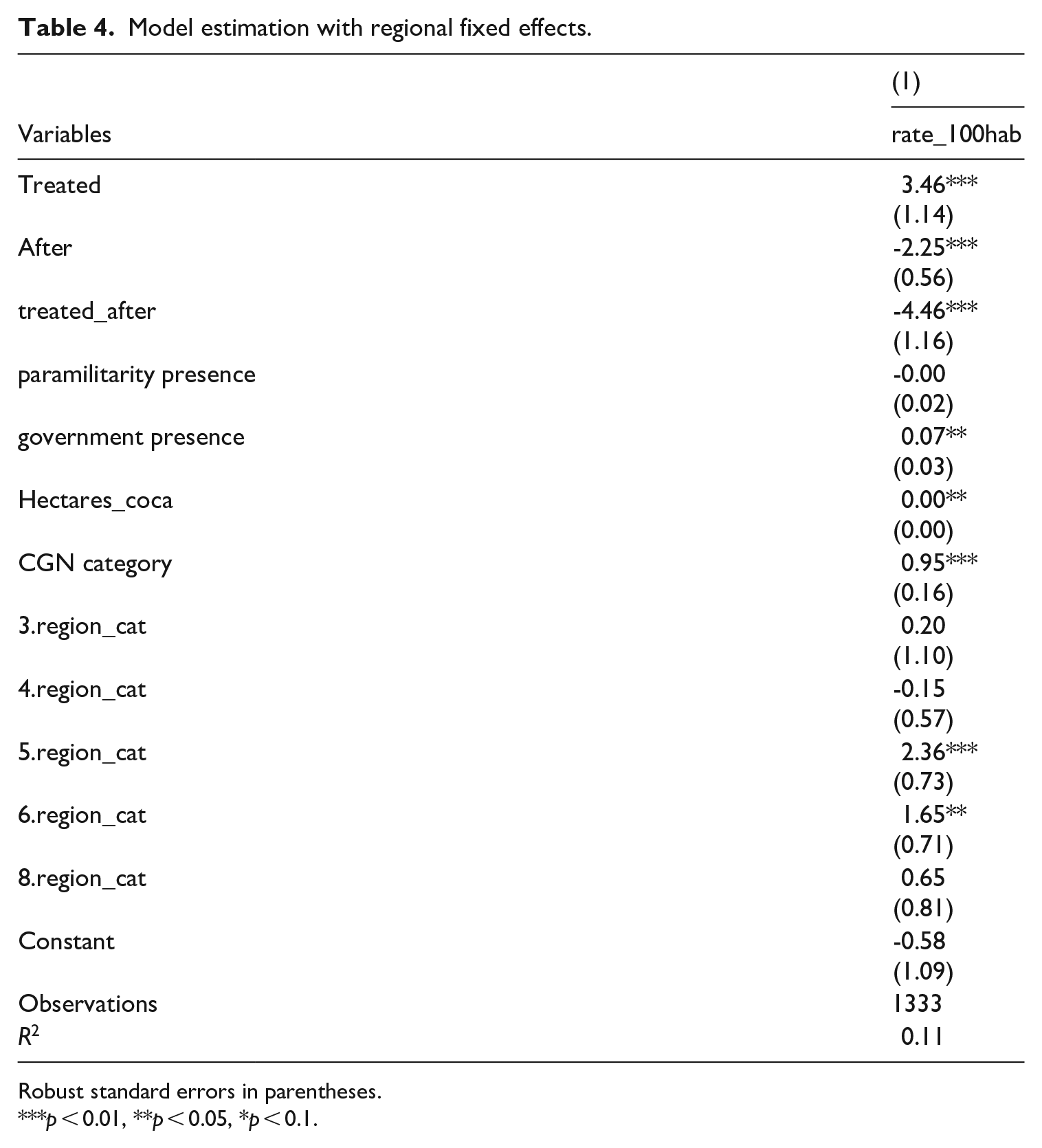
Furthermore, the following results are obtained when including regional fixed effects by adding the categorical variable for the region (Table 4).
Model estimation with regional fixed effects.
Robust standard errors in parentheses.
p < 0.01, **p < 0.05, *p < 0.1.
The coefficient of treated municipalities indicates that, before treatment, treated municipalities had, on average, a victim rate per 100 inhabitants of 3.46 more than untreated municipalities. The coefficient ‘after’ shows that, on average, all municipalities (treated and untreated) experienced a 2.25-unit decrease in the victim rate post-treatment. Regarding the ‘treated_after’ coefficient, treated municipalities had a 4.46-unit lower victim rate post-treatment compared to untreated municipalities, suggesting the treatment significantly reduced victimisation rates.
Meanwhile, the presence of paramilitary forces, meaning counterinsurgency activity, is non-significant, with a coefficient of 0. In addition, the presence of coca crops has a near-zero effect but is significant at the 5% level, while the presence of government has a low effect, significant at 5%. The variable municipality category shows that municipalities in higher categories (with better economic conditions) have a victim rate of 0.95 persons higher than those in lower categories, with high significance at 1%. Only categories 5 and 6 show significant differences in the fixed effects compared to the reference region. In the first case, the victim rate per 100 inhabitants is 2.36 times higher, while in the second case, the value is 1.65 times higher.
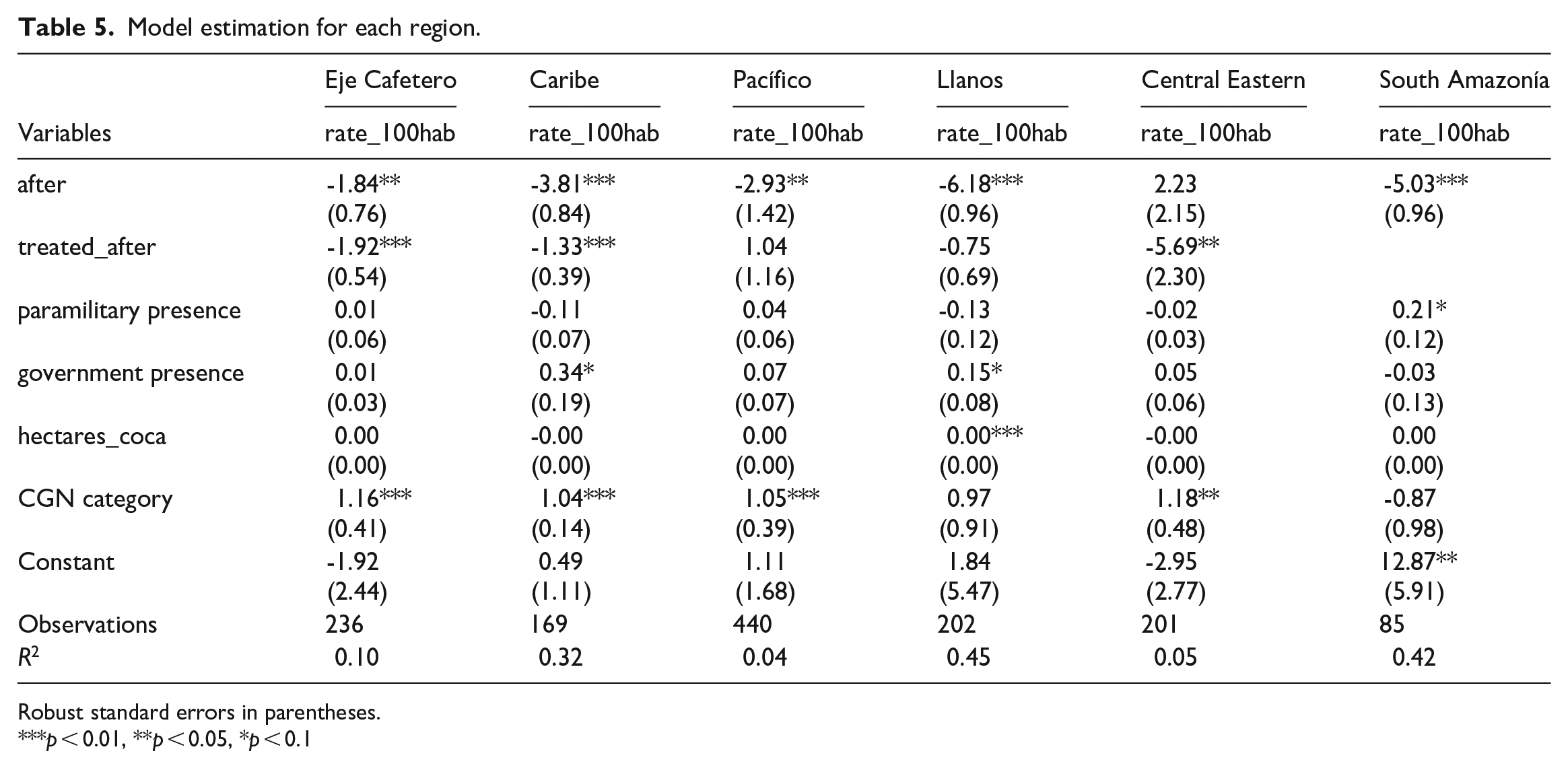
After analysing the data by region, it appears that the treatment has different effects across regions, as indicated by the results of the treated_after variable (Table 5). The treatment seems to reduce the victim rate in the Eje Cafetero, Caribbean and Central Eastern regions. However, it does not seem to negatively affect in the Pacific region. Although the rate decreases after treatment in the Llanos region, the impact on treated municipalities is insignificant. The model shows significant variability among regions, with R-squared values ranging from 0.04 in the Pacific region to 0.45 in the Llanos region and 0.42 in the South Amazonía region, partially due to the number of observations.
Model estimation for each region.
Robust standard errors in parentheses.
p < 0.01, **p < 0.05, *p < 0.1
Table 5 shows that the effectiveness of EU interventions in reducing civilian victimisation varied with government presence across regions. In areas with a higher level of government presence, such as the Central Eastern region, EU interventions achieved more reductions in victimisation. Conversely, the intervention’s effectiveness was more limited in regions like the Pacific, where government presence is lower. These findings suggest that the effectiveness of the treatment varies geographically.
Qualitative findings
The qualitative evidence further clarifies the qualitative findings by shedding light on the causal mechanisms through which EU interventions contribute to reductions in violence against civilians. The interviewees consistently highlighted that the EU’s interventions were impactful in strengthening civilian agency and increasing international visibility. These initiatives allowed communities to manage internal conflicts more autonomously and develop protective strategies against armed actors. As one local leader stated, ‘The EU gave us the tools to manage our community without relying on armed groups, giving us more control over our security’. This aligns with research indicating that empowerment and local agency are critical components of effective peacebuilding in conflict zones (Salmon, 2020).
Interviewees valued the EU’s participative approach, which allowed communities to actively contribute to interventions design. One participant noted, ‘EU peace projects always leave space for the community to propose ways to strengthen the interventions’, underscoring the tailored component of EU support and its responsiveness to community needs. This approach contrasts with more top-down strategies and is consistent with findings from Wanda et al. (2019) and Bau (2016), who found that community involvement enhances peace sustainability and local trust in peace initiatives.
In terms of EU’s impact variation, one interviewee from a municipality with decreased violence described how EU programmes bolstered civilian agency, providing resources and training that strengthened the community’s ability to resist armed groups. Conversely, an interviewee from an area where violence remained relatively high highlighted the challenges posed by limited local resources, which hindered the full potential of EU interventions. These insights further substantiate the quantitative findings, demonstrating that the EU’s peacebuilding efforts supported a reduction victimisation by strengthening civilian agency and making violence against civilians visible to external actors.
The topic of visibility also emerged strongly, with several participants affirming that the presence of international actors created a deterrent effect on violent groups. ‘We felt safer knowing that international organisations were paying attention to what was happening here. The armed groups became more cautious because they knew they were being watched’, an interviewee remarked. As another interviewee described, ‘The parade of vests from international organisations made our situation more visible and helped protect us from armed groups’, highlighting how international presence increased both visibility and deterrence. This perception aligns with Martschukat and Niedermeier’s (2013) as well as Stanton’s (2016) research on the role of visibility in deterring violence, which suggests that external interventions and oversight create accountability, thereby reducing the likelihood of perpetrating violence against civilians.
Furthermore, interviewees emphasised the EU’s focus on building self-reliance rather than dependency. According to one community leader, ‘The EU worked closely with us, not just funding projects but actively strengthening our capacity for self-reliance and peaceful resistance against armed groups’. The EU’s approach promoted a sense of local ownership, enhancing community resilience and enabling sustainable peace efforts—a finding consistent with Mac Ginty (2021) on the importance of localised agency in conflict recovery, as well as the relevance of aligning with local attitudes towards peace and reconciliation (Pino Uribe et al., 2025).
These qualitative insights provide context for the quantitative results, illustrating how the EU’s presence facilitated security through both practical support and the symbolic power of international attention. The interviews reveal that the EU’s strategies of bolstering civilian agency and creating international visibility were vital for reducing violence, reinforcing the conclusion that tailored, context-sensitive interventions can play a central role in protecting civilians and fostering peace in conflict-affected areas.
Discussion
The observed decline in victimisation rates in the treated municipalities fits well with existing research on external interventions in civil conflicts and post-conflict reconstruction. Scholars such as Arjona (2016) and Kalyvas (2006) have demonstrated that violence during civil wars is often deeply intertwined with local governance structures and civilian-level dynamics. In Colombia, regions with limited state presence, where non-state actors like the FARC and paramilitaries effectively governed, were more prone to have high levels of violence. The EU’s intervention, which focused on civilian agency and violence visibility, may have helped mitigate these factors by improving institutional presence and the state’s ability to provide security and services. This aligns with Masullo’s (2021) work on how civilian agency can help reduce conflict and violence by promoting nonviolent responses to conflict situations, especially in areas previously governed by armed actors.
Moreover, the findings are consistent with the broader literature on the role of international actors in peacebuilding. Mac Ginty (2021) has emphasised that external interventions, particularly those aimed at addressing the structural drivers of conflict, can reduce violence and help prevent conflict recurrence when connected with local needs (García Duque and Casadiego, 2021; Hoeffler, 2023). In the case of Colombia, the EU’s efforts to rebuild local institutions and empower communities could be seen as addressing the root causes of violence, such as weak governance and social fragmentation.
The decline in civilian victimisation rates can also be interpreted through Steele’s (2017) work on displacement and violence in Colombia, which highlights how control over populations and territory by armed actors leads to varying patterns of violence. By fostering civilian agency and aiding in establishing state presence, the EU’s intervention likely reduced the strategic incentives for violence used by these groups. Kaplan’s (2017; Kaplan and Rhoads, 2025) and Masullo’s (2021) research on civilian agency in conflict suggests that empowering local communities can help them to develop strategies to protect themselves of violence, which may explain the observed reductions in victimisation.
As suggested by the model, the positive and significant role of state presence in reducing violence aligns with the literature on hybrid forms of governance during conflict. Scholars like Krause (2018) and Masullo (2021) have shown how state and non-state actors’ involvement in civilian agency can stabilise regions. In line with this literature, this study finds that international non-state actors, like the EU, supported civilian agency efforts to reduce violence against civilians (Call, 2008).
The trend observed in this study also fits within the broader discussion of how international peace interventions influence local violence dynamics. García Duque and Casadiego (2021) and Hellmüller (2020) note that one key factor for successful peacebuilding is the coordination between international and civil society actors, ensuring that international interventions do not undermine local efforts but instead support long-term stability. In the case of Colombia, the EU’s partnership with Colombian government agencies likely amplified the impact of its intervention by reinforcing the legitimacy and effectiveness of the peacebuilding process.
Finally, the EU’s approach aligns with research on the interaction between peacebuilding and civilian agency. Arjona’s (2016), Krause et al.’s (2023) work on how civilians navigate conflict and build resilience in the face of armed groups suggests that empowering civilians can create conditions to reduce violence and, therefore, for sustainable peace. The EU’s focus on enhancing civilian agency likely created a more secure environment, reducing immediate violence and the long-term risk of conflict recurrence.
Overall, the findings of this analysis support recent scholarship that emphasises the importance of multi-layered interventions, where international actors like the EU contribute to reducing violence by supporting and addressing both the structural and governance-related causes of conflict. By promoting civilian agency and ownership and reinforcing state capacity, the EU’s intervention in Colombia aligns with previous findings showing that effective international peacebuilding requires addressing the root causes of conflict at the national and local levels (Gleditsch, 2009). This combination of efforts likely led to the observed reduction in victimisation and may provide insights into how similar interventions could be applied in other post-conflict settings.
Conclusion
The findings of this study underscore the role of foreign aid for peace, particularly EU-led interventions in reducing civilian victimisation by fostering civilian agency and increasing the visibility of violence. The reduction in victimisation rates in municipalities receiving EU aid suggests that supporting civilian agency strengthens communities’ capacities for not cooperating with non-state armed to reduce violence. This aligns with the broader peacebuilding literature, emphasising that sustainable peace depends on context-specific strategies that are sensitive to community dynamics and attitudes (Mac Ginty, 2021; Pino Uribe et al., 2025). This insight is particularly significant against the backdrop of recent political decisions to reduce foreign aid budgets or even eliminate them.
The results also contribute to theoretical understandings of visibility in peacebuilding. By making local violence visible to international actors, the EU’s interventions create a framework of accountability, deterring violent actors who are aware of local and international scrutiny. This finding supports existing research indicating that international intervention and visibility are critical components in protecting civilian populations, as it lowers the likelihood of violence by ensuring that actors are observed and accountable (Balcells and Stanton, 2021; Broache and Cronin-Furman, 2021; Martschukat and Niedermeier, 2013).
In addition, this study addresses ongoing theoretical debates about the effectiveness of foreign aid in peacebuilding after armed conflicts. While some scholars express concerns that foreign aid can exacerbate violence or dependency, the findings demonstrate that aid structured around civilian agency and protection can yield positive peace outcomes. This reinforces the theoretical argument that the success of peacebuilding efforts relies not solely on the scale of aid but on its alignment with local civilian dynamics.
While this study focuses on Colombia – a country with publicly and reliable available data from governmental, academic and civil society sources – it is important to note that the use of civilian victimisation as an outcome may be less appropriate in highly authoritarian regimes. In such contexts, violence may take less visible forms or be underreported due to state repression and limited transparency. Future research could explore alternative outcomes or methodological strategies better suited to such political settings.
While this study contributes to advancing our understanding of the relationship between aid for peace and civilian victimisation, it has some limitations. It does not examine the potential unintended effects of EU aid nor adopt a comparative approach – areas that future research could explore for valuable insights. In addition, while the model effectively controls for key factors and provides robust quantitative analysis, it inherently limits the ability to capture the depth of local context. Future research could address these limitations by using more in-depth qualitative analysis, surveys, or survey experiments to explore causal mechanisms and assess whether violence reduction creates conditions for sustainable peace. Studying EU aid in other contexts or comparing it to other types of aid interventions could also yield insights into whether these patterns hold in different environments or with combined aid types. Finally, this study highlights the need for future research to examine whether aid interventions with different stated objectives – such as governance or development – activate similar violence-reducing mechanisms, or whether peace-specific designs are uniquely positioned to foster civilian protection.
Finally, these research findings carry important policy implications. First, they highlight the need for international donors and policymakers to support peace aid interventions that explicitly aim to strengthen civilian agency and enhance the visibility of violence. As shown in this study, such interventions can reduce civilian victimisation by enabling communities to organise protective strategies and by increasing international scrutiny in areas affected by armed conflict. Second, in the current context of declining foreign aid budgets, it is crucial to recognise that reducing or eliminating peace-focused aid may weaken protective mechanisms for civilians in conflict and post-conflict settings, increasing the risk of conflict escalation or relapse. Policymakers must therefore identify alternative strategies for sustaining or adapting these forms of support, particularly in regions where violence remains persistent. Third, the observed regional variation in impact underscores the importance of context-sensitive aid strategies. Policymakers should avoid standardised approaches and instead collaborate with local actors to design interventions that respond to specific local dynamics. Finally, donors should invest in monitoring systems that go beyond aggregate violence indicators and capture more nuanced effects, such as the strengthening of civilian agency, local legitimacy and the deterrent role of international presence.
Footnotes
Acknowledgements
I am particularly thankful to Brian Phillips for his generous guidance and steadfast support during the development of this article. My appreciation also goes to Kristian Gleditsch, Han Dorussen and Roger Mac Ginty for their careful reading and constructive feedback on earlier drafts. I thank Malte Jauch for his support regarding both content and form during the writing process. I would like to express my gratitude to the editorial team of Cooperation & Conflict for their kind support, as well as to the reviewers for their insightful feedback. Finally, I would like to thank Sebastián Pantoja-Barrios, Tatiana Gelvez Rubio, David Rodríguez Guerrero and Paula Ramos for their valuable insights and suggestions on the methodological aspects of this research. I am continually grateful to Saidi Amaya for her unwavering support and encouragement.
Funding
The author(s) disclosed receipt of the following financial support for the research, authorship and/or publication of this article: This research is supported by the Peace and Conflict Resolution Evidence Platform (PeaceRep), funded by UK International Development from the UK government. However, the views expressed are those of the authors and do not necessarily reflect the UK government’s official policies. Any use of this work should acknowledge the authors and the Peace and Conflict Resolution Evidence Platform. The Colfuturo’s credit loan programme of Colombia has also supported this Research.

1
According to UARIV May 2025.