




Abstract
Discussions about the role of heritage sites and practices in provoking conflict – or conversely, as opportunities for building peace – have gained new impetus in recent years. In this context, we discuss a site of contested heritage in the occupied Palestinian territories, the Susya national heritage site. The article first highlights the way this contestation relates to wider conflict over territory (as well as political, economic and cultural resources). Using oral histories gathered by Palestinian youth researchers, it then considers how heritage narratives reinforce or challenge competing claims to ‘belong’ in Susya against a backdrop of protracted conflict. Finally, the article asks whether such contested heritage sites could play a role as resources for peace by adopting a conflict transformational paradigm, and what the barriers are to this approach.
In this article, we discuss a site of contested heritage in the occupied Palestinian territory, Susya, highlighting the way this contestation relates to wider conflict over territory (as well as political, economic and cultural resources). We go on to consider whether such contested sites could play a role as resources for peace, questioning whether this might be possible through a conflict transformational paradigm.
The role of heritage as a flashpoint for conflict has long been acknowledged. As Silverman notes in her comprehensive overview, the idea of ‘contested heritage’ has been a subject of enquiry in numerous fields since the late 1980s, and has been a driving force for much contemporary research (Silverman, 2010). In recent years, discussions about the role of heritage sites and practices in provoking conflict – or conversely, as opportunities for building peace – have gained new impetus. Heritage has been acknowledged as something that is often bound up in conflict dynamics, and in need of protection from the effects of violence. This can be seen from the development of significant funding for conflict-affected heritage sites by the British Council (in the form of its Cultural Protection Fund) and The Aliph Foundation, as well as initiatives by international actors such as the United Nations Educational, Scientific and Cultural Organization (UNESCO) and the International Centre for the Study of the Preservation and Restoration of Cultural Property (ICCROM) and the United Nations (UN) Security Council resolution 2347, which focusses on the protection of heritage in times of conflict and its ‘necessity for peace and security’ (UNSC, 2017). At the same time as attention has focused on the role of heritage in large-scale warfare, social conflicts have repeatedly flared around contested heritage, notably disputes linked to confederate monuments in the United States, the Rhodes Must Fall protests in South Africa or the toppling of a statue of local dignitary and slave trader Edward Colston in the United Kingdom (to name but a few). In these cases, anti-racism protesters who have taken aim at heritage linked to slavery and colonialism have often been met by a backlash from those who argue heritage must be preserved at all costs, laying bare deeper tensions about identity, history and belonging.
This article explores a case of contested heritage and its potential for supporting peace, by discussing how different actors use heritage to reinforce their claims to belonging in Susya (a site of multiple heritage claims in the occupied Palestinian territories), against a backdrop of wider territorial and social conflict. Situated in the southern West Bank, in the South Hebron Hills, Susya can be understood as a site of contested heritage, where Israeli and Palestinian communities both lay claim to narratives of heritage and historic belonging linked to the place. To the Israeli state, Susya is the site of a significant ancient synagogue, and as such has been accorded the status of a national heritage site. However, local Palestinian populations identify Susya as home to valuable intangible cultural heritage that is enmeshed with the way of life of Palestinians across the South Hebron Hills (including those expelled from the national heritage site and now living nearby), particularly agricultural knowledge and practices, ways of life related to cave dwellings, foodstuffs (such as dried yoghurt and grape syrup) and traditional songs.
Thinking about heritage in Susya shows how official Israeli state and local Palestinian community narratives both construct heritage in ways that use resources from the past to give meaning to contemporary territorial claims. Oftentimes, when heritage is used in this way, it is presented as a zero-sum game: the presence of heritage associated with one group negates the claims of the other, by tying it to an ancient past. When some traditions are successfully articulated and heard as received wisdom, it comes at a cost to others (Rodenberg and Wagenaar, 2016). However, in this article, we seek to move past this conception of the relationship between heritage and conflict. Instead, we use the case of Susya to ask whether a conflict transformational approach to heritage might be the key to rethinking this site, and others like it, as a space that acknowledges and makes possible multiple and overlapping pasts, presents and futures.
Drawing on dialogical approaches to heritage, the article considers whether by integrating elements of a conflict transformational approach the ways we approach contested heritage sites could provide the basis for reimagining this site as a space of agonistic engagement and contestation between equals, and for living together differently. This argument exploits the dialogic turn in its key concepts (heritage and conflict) and seeks to exploit the synergies between the two. It understands heritage as produced and negotiated in the present moment, and in the relationships between people and places, and sees conflict as something that is not inherently problematic, but can in fact be a significant opportunity to creatively remake human relationships in more positive terms. The following sections will present these two key ideas in more detail before moving on to discuss how they apply to the specific case of Susya.
Conflict transformation, agonism and dialogic heritage
The arguments advanced in this article are grounded in a commitment to conflict transformational approaches shared by both authors. This aims to move beyond the idea of conflict as a problem to be somehow ‘resolved’ or removed, instead viewing conflict as a natural and often constructive part of human existence. As Lederach (2003) notes, ‘conflict is normal in human relationships and conflict is a motor of change’ (p. xx) – it is therefore neither feasible nor advisable to try and simply resolve it away. In fact, the pursuit of consensus as a way of dealing with conflict or radical disagreement, through peacebuilding mechanisms that seek to resolve or end conflicts, can be understood as having potentially negative effects. For example, Aggestam et al (2015) argue that ‘the suppression of antagonism in various peacebuilding efforts through consensus-making may trigger counterproductive results, such as escalation of violence, as the possibility for expressing difference and deviation is circumscribed in these consensus-making efforts’ (p. 1736). Exponents of a conflict transformational approach instead focus on the challenge of transforming violent expressions of conflict into nonviolent forms of disagreement and engagement (Buckley-Zistel, 2008; Dayton and Kriesberg, 2009; Ramsbotham, 2010). That is to say, replacing antagonistic relations with agonistic ones (Strömbom and Bramsen, 2022). These nonviolent forms can range from the highly institutionalized, such as formal democratic procedures or law courts, to popular protest and nonviolent resistance.
Crucially, such a transformation cannot occur simply by acting at elite levels of society (e.g. through high-level negotiations or international interventions), but require the engagement of all levels of society in order to bring about lasting structural and relational change (Buckley-Zistel, 2008; Lederach, 2003). Theorists and practitioners working in the field of conflict transformation have proposed a variety of strategies to bring about this change (see, for example, Miall, 2004 or Francis, 2002). However, two important principles stand out, particularly in the context of this investigation – the need to address power asymmetry in conflicts, and the value of dialogic or agonistic approaches. In his useful overview of conflict transformation, Miall (2004) reminds us that ‘asymmetric conflicts cannot be transformed, for instance, without changing the unbalanced and contested relationships that lie at their roots’ (p. 9). The task of addressing such asymmetry may involve such processes as conscientization, awareness raising and overt confrontation (Francis, 2004), which may seem counter-intuitive when compared to consensus seeking models of conflict management or resolution. However, this is understood as a necessary step in reformulating more just or equitable power relations that can sustain the deep and long-term transformation envisaged by this approach (Buckley-Zistel, 2008). It is through problematizing marginalization that this can be recognized and eventually remade along more equitable, and ultimately peaceful lines (Shinko, 2008).
Conflict transformation has also highlighted the role of dialogue as both an important tool and significant outcome of moving from violent expressions of conflict to nonviolent, and potentially constructive ones (Maddison, 2015; Ramsbotham, 2010). Dialogue is distinguished from the kinds of problem-solving focused exchanges often associated with conflict resolution practices, such as negotiation. Rather, it reflects Sennett’s (2012) conception of the dialogic as ‘a discussion which does not resolve itself through finding a common ground’ (p. 19) in which the process of exchange between people allows people to understand themselves and others better, even if they still disagree. Dialogic approaches to conflict transformation are process oriented, rather than focused on achieving consensus or resolution, aimed at increasing awareness and respect of the variety of narratives and positions ‘among and not between the conflict parties’ which can, in time, create the space for new ways of relating to each other (Aggestam et al., 2015: 1741). Opening up new relationships through dialogue can also provoke reflections on identity constructions, and the role that memory and the past plays in this (Strömbom, 2020), making it particularly pertinent to the field of heritage. The idea that agonistic dialogue (as advanced by Mouffe, 2000, 2007) can contribute to a public realm that values diversity and contestation, speaks to the heart of many of the ideas discussed in conflict transformation. Writers such as Strömbom (2019), Maddison (2015), Aggestam et al (2015), Pullan and Baillie (2013) and Cante (2020) have all integrated Mouffe’s insights on agonistic pluralism into their work on peacebuilding, particularly with regard to the public sphere. More recently, Standish’s (2021) work on encounter theory represents another useful way of exploring relational and agonistic approaches to engaging with difference in a nonviolent way. Others have started to explore the notion of agonism in relation to heritage, for example, in formalized spaces of heritage such as museums (see, for example, Cento Bull et al., 2019 on Van Oost, 2022).
Perhaps most significant in the context of this investigation, has been the development of a dialogic approach to the realm of critical heritage studies. This way of understanding heritage, proposed by Harrison and Rose (2010) and further developed by Harrison (2012), sees the ‘meaningfulness’ of heritage as arising out of ‘encounter and dialogue among multiple subjects, some of whom are human’ (Harrison and Rose, 2010: 264–265). That is to say, heritage is created through the interaction of people, practices, things and places, and can be understood as an expression of the tensions and meetings of these diverse forces. In its focus on the constructive potential of the dialogue between different actors and commitment to understanding and investigating these narratives in their full variety and diversity, a dialogic approach to heritage shares some important principles with the ideas of conflict transformation and agonistic peacebuilding discussed earlier.
This is significant, since discussions of how heritage can contribute to peacebuilding have previously often revolved around the idea that heritage can be used to build peaceful shared identities in places affected by violent conflict and division, and to bring about reconciliation between formerly warring groups (see, for example, Lostal and Cunliffe’s (2016) discussion of heritage and transitional justice in Syria, or Matthews et al. (2020) on heritage and cultural healing in Iraq, and the useful overview by (Walters et al., 2017). This has been echoed within the field of heritage through the promotion of ‘shared’ or ‘mutual’ heritage discourses as responses to conflictual relations between colonizer and formerly colonized, criticized by some as masking of important power asymmetries and relationships of exploitation (Winter, 2015) and therefore characterized by ‘false promise’ (Vanhee, 2016). An agonistic or dialogic approach to peace and heritage (and particularly the role that heritage might play in building peace) avoids the temptation to try and build a consensus or shared vision of the past, but rather acknowledges and makes room for dissensus (see, for example, McEvoy’s, 2011, discussion of heritage in post-conflict Northern Ireland). In this space, problematic power asymmetries can be addressed and made visible, and conflicting narratives expressed – and heard – in nonviolent ways. Recent scholarship (see Mesa-Vélez, 2019 and Rodríguez and Inturias, 2018) has underlined the potential contribution that conflict transformational and dialogic approaches could make to decolonial critiques of peace initiatives also, particularly relevant in a settler colonial context such as the occupied Palestinian territory. These approaches focus on questions of power, insisting on the agency of often marginalized actors, and highlighting the importance of process rather than aiming to institute a particular vision of what a peaceful society might look like. This represents a move away from the dominant liberal peace paradigm, increasingly critiqued for its coloniality (Richmond, 2014).
Methodology
Since 2017, a team of researchers based at Coventry University has been partnering with Palestinian organizations in a project named On Our Land, to document and preserve the intangible cultural heritage of Palestinians living in the South Hebron Hills, in the Israeli occupied Palestinian territory. At the heart of the first two phases of the On Our Land project was the training of 20 young people aged 18–25 (hereafter referred to as ‘youth researchers’) in the practice of recording video histories of the older generation to record the intangible cultural heritage of these communities (Darweish and Sulin, 2021). Interviewers and interviewees come from the same community, and in some cases, the youth researcher will have been known all their lives to the interviewee. More than 60 hours of interviews have so far been gathered from 33 Palestinian villages and hamlets in South Hebron Hills, and now archived with the Palestine Museum. The video interviews have been transcribed in Arabic and translated into English. Of these, 11 interviews were recorded with Palestinians now living in ‘New’ Susya, leading to the youth researchers’ decision in 2018 to visit ‘Old Susya’, record their visit and conduct an interview on site with one of the Palestinians who had been displaced as a child from ‘Old’ Susya. In addition to the oral histories drawn on for this article, one author made a separate research visit to ‘Old’ Susya to record observations of the way Jewish Israeli heritage is presented there. It is these two visits to the site that form the basis of this article, together with the context from the wider oral histories recorded in ‘New’ Susya and a review of secondary literature related to Susya, particularly those Israeli websites and news articles promoting visits to the area as a significant heritage site.
The video recordings reflect an ethical intention to emphasize the production and ownership of knowledge between generations within the community, rather than a more extractive research practice. This reflects the research team’s commitment to what Johnston and Marwood (2017) have termed an ‘action heritage’ approach. That is to say, working with local communities to explore the connections between work to preserve heritage and work to promote social action, ‘specifically directing that action towards social justice’ (Johnston and Marwood, 2017: 818). There has been extensive consultation with local Palestinian communities to set up the project in an inclusive and participatory way, and to complement other community actions they are engaged in, for example, by supporting the development of transferable skills such as public speaking and video editing, which have served as a stepping-stone into higher education. The strength of this practice could be seen in the way Palestinian participants continually challenged the UK-based team to renegotiate consent. While the project was subject to the University’s usual ethical requirements governing informed participation in research, in reality, this blossomed into a much fuller process of ongoing dialogue and engagement around the purpose and nature of the work. This was conducted through meetings and WhatsApp conversations with the three mayors, the chair of the women’s committee, existing youth organizations and the extended families of the interviewers and interviewees, with frequent interruptions from participants asking questions about the research, shifting their participation, withdrawing entirely or confirming their desire to continue on their own terms. Chazan and Baldwin (2020) have described this as a process of upturning power. Power has also been diffused. After the planned number of interviews had been made, the young people took their own decision to record more stories and continue their active engagement with heritage as a form of social action in their communities.
The choice to use oral history in this project was based on an understanding that oral history is well placed both as a way of making space for historical narratives and voices that have previously struggled to be heard, and a tool for preserving this valuable heritage. The important contribution made by oral history methodologies to recording intangible cultural heritage has been well documented (see studies as diverse as Bonn et al., 2016 or Halamy and Kibat, 2017, on intangible cultural heritage in Malaysia, or Riley and Harvey, 2007 on agricultural heritage in England). Intangible heritage, defined by UNESCO (2003) as ‘the practices, representations, expressions, knowledge, skills – as well as the instruments, objects, artefacts and cultural spaces associated therewith – that communities, groups and, in some cases, individuals recognize as part of their cultural heritage’ can be difficult to capture. Oral history techniques, particularly as audiovisual technologies, have become more accessible and better quality, offer one response to the challenge of accurately capturing practices, songs, stories and other forms of intangible cultural heritage as they are expressed by communities. What is more, the process of carrying out oral history interviews can play a vital role in remaking or strengthening relationships between generations (Thompson, 1988), in itself an important aim of the work being carried out with these communities. In this way, storytelling is also an activist endeavour because it is an opportunity to remake the world and imagine what might have been (Fox et al., 2008; Senehi, 2009). As a methodology, oral history was also appropriate to the project due to its history of focussing on previously marginalized voices, bringing them to the forefront of state-authorized historical accounts. This focus on writing history from below and engaging with previously unheard voices has been termed the ‘most distinctive contribution’ (Thompson, 1988: ix) of the oral history method, making it an obvious choice for working with the Palestinian communities of the South Hebron Hills, who have been, and are being, systematically excluded from the dominant heritage discourse.
Understanding heritage construction in Susya
The idea of heritage – who it represents, who gets to define it, how it shifts and is contested over time – is of crucial importance in Susya. Susya, the archaeological site, has been defined formally as a heritage site by the Israeli government since 1986. Palestinians have also used a language of heritage to promote their claims to access and belonging in the site. These represent just a small fraction of the possible heritage discourses that could be brought to life from the many layers of life and history that relate to Susya as an inhabited place. As we shall see, the way in which the histories (both ancient and more recent) of the place are so intricately bound up in the needs and politics of contemporary communities amply reflects definitions of heritage as ‘the contemporary use of the past’ of which ‘people in the present are creators’ (Graham et al. 2000: 2), a vision of the past ‘tailored to present day purposes’ (Lowenthal, 1998: x). While such understandings of heritage do not seek to deny the materiality of many heritage sites, nor their deep significance to the communities with whom they resonate, they point to the importance of understanding heritage as something whose meaning is produced in the present, drawing on the resources of the past. As Harrison (2012) notes, ‘the production of heritage emerges from the relationship between people, “things” and their environments as part of a dialogue or collaborative process of keeping the past alive in the present’ (p. 216). This is as true of intangible as it is of material or tangible heritage both of which, as we shall see, are greatly significant in Susya.
The site (or sites) also reflect the tension between those narratives of heritage sanctioned by a state or dominant social or political group, often supported by a legal framework or state-sanctioned set of definitions, and the heritage brought to life by other, sometimes marginalized, groups. This dominant narrative has been characterized by Laurajane Smith (2006) as the ‘authorised heritage discourse’. This discourse is underpinned by ‘the power/ knowledge claims of technical and aesthetic experts, and institutionalized in state cultural agencies and amenity societies’ (Smith, 2006: 11), marrying national identity and the exigencies of nation building (or expansion) with particular forms of technical knowledge and expertise. This results in the construction of a powerful discourse of heritage which ‘legitimizes and defines the identities of a range of social actors and mediates the social relations between them, while also defining and legitimizing values that underpin those relations’ (Smith, 2006: 43), while at the same time excluding subaltern or ‘other’ forms of heritage, and therefore identities. There is no one simple way to define the relationship between the authorized heritage discourse and the heritage asserted by more marginalized groups – they can be complementary or dissenting, and this relationship often shifts over time. Indeed, some places or practices may represent both state-sanctioned and unauthorized heritage at the same time, representing different things to different groups with different levels of power (Smith, 2006). As we shall see, in Susya as elsewhere heritage is used as a ‘medium of communication of prevailing myths and counter-claims’ (Graham et al., 2000: 55) with heritage playing a role in reproducing, constructing and negotiating collective memory and identity (Sather-Wagstaff, 2015).
Some writers have noted, this process can be all the more acute in settler-colonial contexts such as Israel, where heritage is pressed into service naturalizing the presence and history of the settler community, often by erasing the presence of other, often indigenous, narratives of heritage ( Byrne, 1996; Harrison, 2012, 2008). Harrison (2012) describes this process succinctly, arguing ‘heritage management in settler societies must work to metaphorically and/or physically erase the traces of prior indigenous occupation as a way of emphasizing the roots of contemporary nationhood in colonial settlement’ (p. 22). In recent years, critical approaches to heritage have further developed this space of interrogation, exploring the ways that critical engagements with heritage can complement post-colonial and decolonial critiques (Giblin, 2015), and demonstrating how heritage research could in turn be enriched through this engagement (Winter, 2013).
Susya also highlights the way that heritage can be deployed as a resource for power. Identifying certain sites within the occupied Palestinian territory as Jewish heritage sites, and regulating access to them, consolidates and normalizes the state of Israel’s territorial control by situating it in a continuous spatial and temporal narrative (Abu El-Haj, 2001; Shulman, 2018). This process of ‘heritagization’, in which one version of the past is consecrated as Heritage, is bound up with power (Åse and Wendt, 2021: 288). As we shall see, certain types of heritage, knowledge and expertise (the tangible, archaeological remains with a Jewish religious association) are privileged over others (intangible heritage such as oral histories, or the material remains of Palestinian homes and wells) to ensure the coherence of this narrative of identity, belonging and territorial control. Of course, this process of heritage construction is nothing new – it predates and will outlast the current conflict between Israel and the Palestinians. For example, British archaeologists highlighted links with the tangible heritage of the Judaeo–Christian era, asserting their technical superiority to justify their role as colonial custodians of this past.
Context
Susya is at least three places – the archaeological site of Susya, designated by military order, called ‘Old’ Susya by Palestinians living in the area; the illegal Jewish-only settlement of Susya, established in 1983 by Israeli Jewish settlers against international law; and the village Palestinians refer to as ‘New’ Susya established on its current site between the settlement and the archaeological site after its residents were expelled from the ‘Old’ Susya in 1986. All three places are on land which according to Ottoman records was listed as belonging to the Palestinian inhabitants of ‘Old’ Susya.
For the purposes of this article, we are focusing on the archaeological site, although this obviously exists in tension with the two other Susyas, and gains meaning from the sometimes confrontational, sometimes nostalgic relationships between the three places.
Susya is located in the hills south of Hebron which fold down towards the Negev desert. The land supports different kinds of pasture and agriculture and within living memory has been home to both Palestinian peasant farmers and bedouin, and more recently, Israelis living in the illegal Jewish-only settlement. Going much deeper into the past, there is evidence at the archaeological site of ‘Old’ Susya of a synagogue dating from around the fifth century. The building was used for worship in more than one historical period, and is also mentioned as a Byzantine church and at a later date incorporated a mosque: the niche of the Qibla can still be seen (Magness, 2003). The site fell under the jurisdiction of the Romans (an olive press, water wells and burial tombs date back to this period), the Ottomans (residential houses were rebuilt and added to the cave dwellings), and then the British Mandate (1917–1948). British Royal Air Force aerial photography shows bedouin tents, irrigated fields, stone dwellings and wells. The 1949 Green Line drawn following the Armistice between the Arab and Israeli forces, created a border around what had been the borderless slopes of the range of hills. On the Israeli side of the Green Line, the homes of Palestinians who had been living in Al Qaryateen were bull-dozered by Israeli tanks in 1948, and their occupants took refuge in the hills, moving into cave dwellings in Susya: youth researchers interviewed survivors from the original inhabitants of Al Qaryateen. From 1948 to 1967, the South Hebron Hills, along with the rest of the West Bank, was under Jordanian jurisdiction. Since the 1967 war, the area has been under Israeli occupation. During the course of the research, interviewees pointed out landmarks which had been successively British, Jordanian and Israeli military posts. With the creation by the Israeli occupying forces of buffer-zones near the Green Line Palestinians again were displaced and interviewees record more movement into ‘Old’ Susya (Lagerquist, 2008). In the 1970s, an ‘Active Firing Zone’ was declared between the Green Line and Susya’s land. Within this ‘Active Firing Zone’, Palestinian inhabitants are under constant threat that their homes will be demolished and they will be displaced (B’Tselem, 2017). Since the Oslo Accords of 1993–1994, the South Hebron Hills have been in Area C with full Israeli control over security, planning and construction.
Following the Israeli occupation of the West Bank, the archaeological site of Susya, like others in the occupied Palestinian territory, attracted Israeli attention. Between 1967 and 1987, the synagogue and surrounding buildings and caves were excavated on at least four occasions. In 1986, when this was designated a protected archaeological site by the Israeli authorities, Palestinian inhabitants were expelled and some community members made new homes a few 100 yards away (Bratchford, 2018). As we shall see in this article, oral histories collected by youth researchers record the existence of another narrative of heritage rooted in the same place – in this case, the heritage of the largely Palestinian communities living in and around Susya.
These events take place within a wider context of state formation and colonization in which heritage and tourism are used to disseminate national narratives (Abu El-Haj, 2001). This practice is associated with formation and consolidation of nation state identities the world over, as well as in other sites in Israel and the occupied Palestinian territory (see Mannergren Selimovic and Strömbom’s (2015) discussion of contested heritage in the East Jerusalem neighbourhood of Silwan, for example). A heritage ‘site’ is by definition a place singled out from the wider landscape, for its symbolic importance: ‘Old’ Susya was the location of a temple which was used by Jews and then fell into disuse, and its privileging as an archaeological site reinforces a Jewish narrative of return, connection to Eretz Israel, 1 and creates a means of promoting this narrative through tourism. In the case of Israel and its occupation of Palestinian territory, the Israeli heritage narrative both justifies and reflects the expansion of its territorial claims. Susya offers a striking example of the way in which heritage can be seen as a zero-sum game where claims to preserve the heritage of one group mean excluding or denying the other.
All the while, interactions with Susya’s contested heritages are taking place in a context of extreme power asymmetry between the Israeli occupying forces and the Palestinian inhabitants living under occupation, with Israeli state heritage strategies serving to push these communities’ futures further apart. But Susya also provides a glimpse of another way of dealing with the presence of multiple and seemingly competing narratives of heritage in one site. Palestinians construct a narrative of continued habitation and agricultural practice in and around ‘Old’ Susya. They connect this to the wider framework of intangible heritage in the South Hebron Hills. However, Palestinian heritage narratives in Susya do not deny the Jewish heritage there. They acknowledge the presence of other heritages in and around Susya, while insisting on the presence of their own heritage. This approach opens the possibility of using this heritage as a way of acknowledging the multiple histories and narratives of belonging tied to the site, and therefore, problematizing exclusionary and antagonistic relationships being reproduced there.
In the next sections, we will reflect on two narratives of heritage from the site – the dominant Israeli state sponsored narrative (or authorized heritage discourse, to return to Smith’s (2006) terminology), which centres on the fourth- to ninth-century archaeological remains, and a second narrative recorded by our youth researchers, which describes Palestinian heritage at the site.
The authorized heritage discourse
Drawing from the presentation of the archaeological site of Susya in websites, leaflets, informational materials provided on site and public statements, it is possible to chart the authorized heritage discourse supported by the Israeli state. This narrative focuses on Susya as the site of an ancient Jewish town that was inhabited by about 3000 residents from the fourth to ninth centuries CE. Emphasis is placed on the presence of the synagogue at the heart of the site. The synagogue is particularly distinguished by the remains of ‘Magnificent mosaics’ on the basis of which ‘no-one can doubt the Jewishness of Susya’ (Har Hevron Regional Council, 2022). Around the synagogue can be found ‘the remains of buildings, ritual baths, burial caves, inscriptions, an escape tunnel that can be crawled, Jewish decorations and symbols in stone and mosaic’ (Go Yatir, 2022). Caves on the site are acknowledged, and described as places where a variety of activities took place, including residential spaces or ‘makers caves’, with re-enactments of activities such as candle making, urn making and musical performances (Atar Susya, 2022). Visitors to the site have the chance to take part in archaeological exercises, and can hold celebrations such as weddings or Bar Mitzvahs there. Numerous concerts and cultural events have taken place in the site. At the time of the research visit a secondary school group of students was taking part in a dig supervised by a French–Israeli archaeologist.
In 2010, Susya was one of a number of heritage sites located in the occupied Palestinian territory (and more across Israel) to be included in the National Heritage Sites project, aimed at making sites of Jewish heritage more accessible, better preserved and more widely known, particularly to a domestic audience. As then Prime Minister Netanyahu put it, introducing the plan in 2010, a focus on these heritage sites could ‘get a much broader group of young people interested in our Zionist heritage and continually encourage them to identify with the people of Israel and the Land of Israel’ (Netanyahu, 2010).
A few things about the official Israeli narrative of Susya are notable, and interconnected; the timelines involved (in which the site is situated firmly in a distant past), the way it draws its significance by tying this past to the territorial and security concerns of the present, and the absence of any other (whether Christian or Muslim, Arab, Palestinian and/or Bedouin) communities in this narrative.
The state supported narrative of the site sets the boundaries of the history contained in the site from the fourth to ninth centuries BC, and draws a direct line between this period and the present day, using the site as proof of the historical presence of a Jewish community in all parts of Israel and the occupied Palestinian territory. Setting a timeframe in this way also enables this narrative to exclude other parts of the site’s history. For example, following the decline of the Jewish village in the ninth century, a mosque was built on the site of the synagogue in the 10th century, as the area became home to a non-Jewish community. This is largely absent from the presentation of the site to visitors. Indeed, the only reference from an Israeli government body we have found to the non-Jewish history of the site that followed immediately after the Jewish period, directly links this to the rhetoric of current security concerns: the local regional council (which manages Susya) ends its description of the heritage site with this speculation on the disappearance of the Jewish community in Susya in the ninth century: In the 9th century, a glorious chapter in Jewish life ends in the South Hebron Hills. All the large communities of the Mishnah and the Talmud are disappearing and to this day there is no clear answer to where the Jews of the South disappeared in this period. The place of the synagogue is occupied by mosques and with a new population – the Muslims, perhaps the Jews of the south are fleeing Islam because of fear or perhaps because of the undermining of security with the entry of Islam. (Har Hevron Regional Council, 2022)
The exclusion of non-Jewish histories from the site does not only take place in its temporal framing in the past, but also in the present, where the presence of Palestinian communities living in the archaeological site is denied. This assertion is echoed by the Head of the local council (Har Hevron) who told one journalist ‘But here in Susiya, in both ancient and modern times there was not a single Palestinian. The claims to the contrary are simply lies’ (Miskin, 2013).
As one Israeli non-governmental organization (NGO), Emek Shaveh, has noted, the archaeological techniques employed to preserve and make accessible the site have contributed to creating ‘strategic silences’ (Tripp, 2013: 221). They note that ‘In fact, the archaeological excavations at the site have erased its “last layer,” the same one that contains information on the lifestyle that evolved at the site over the last five hundred years’ (Mizrahi et al., 2016: 5). Researchers have noted a similar approach to the ‘layers’ of history in other contested heritage sites such as Silwan in East Jerusalem (Mannergren Selimovic and Strömbom, 2015). An archaeologist leading a school party at the site in 2018 explained to one of this article’s authors that the students were getting an experience of feeling the earth and the heat of the sun, that there was nothing to find in the layer laid down in the last 50 years.
The Jewish nature and ownership of the site is reinforced by signboards in Hebrew and English that often include Talmudic excerpts related to the subject being described (e.g. an olive press, burial cave or courtyard). Descriptions of the material structures are juxtaposed with citations from the third tractate of the Talmud which deals with a person’s responsibilities and rights as the owner of property. For example, This courtyard represents how people lived in Susya. It was surrounded by a number of dwelling units whose opening faced onto the communal courtyard. This kind of courtyard can be identified with the ‘courtyard of the partners’ as described in the Jewish sources, with legal ramifications concerning the relationship between neighbors. The entire courtyard complex -found in number of locations in Susya – contains dwelling caves, a cistern and a ritual bath. “He who sells the courtyard, sold houses, cisterns, pits and caves, but not the movable goods. At the time it was said to him: ‘It and all that is in it – everything is sold’ (Mishna Baba Batra 4:4)”
A Palestinian narrative
Through the On Our Land project, the youth researchers collected narratives of a different type of heritage at the site. In this account, Susya is the site of significant Palestinian intangible heritage tied to ways of living in the South Hebron Hills. In total, the youth researchers carried our 11 interviews with community members who had previously lived in Old Susya before being displaced when it became a national heritage site (eight in phase 1 of the project, and three in phase 2). One of these interviews took place over the course of an extended visit to the site in the company of a former resident of Old Susya, here referred to as ‘Emad’ (Figure 1). All names used are pseudonyms.
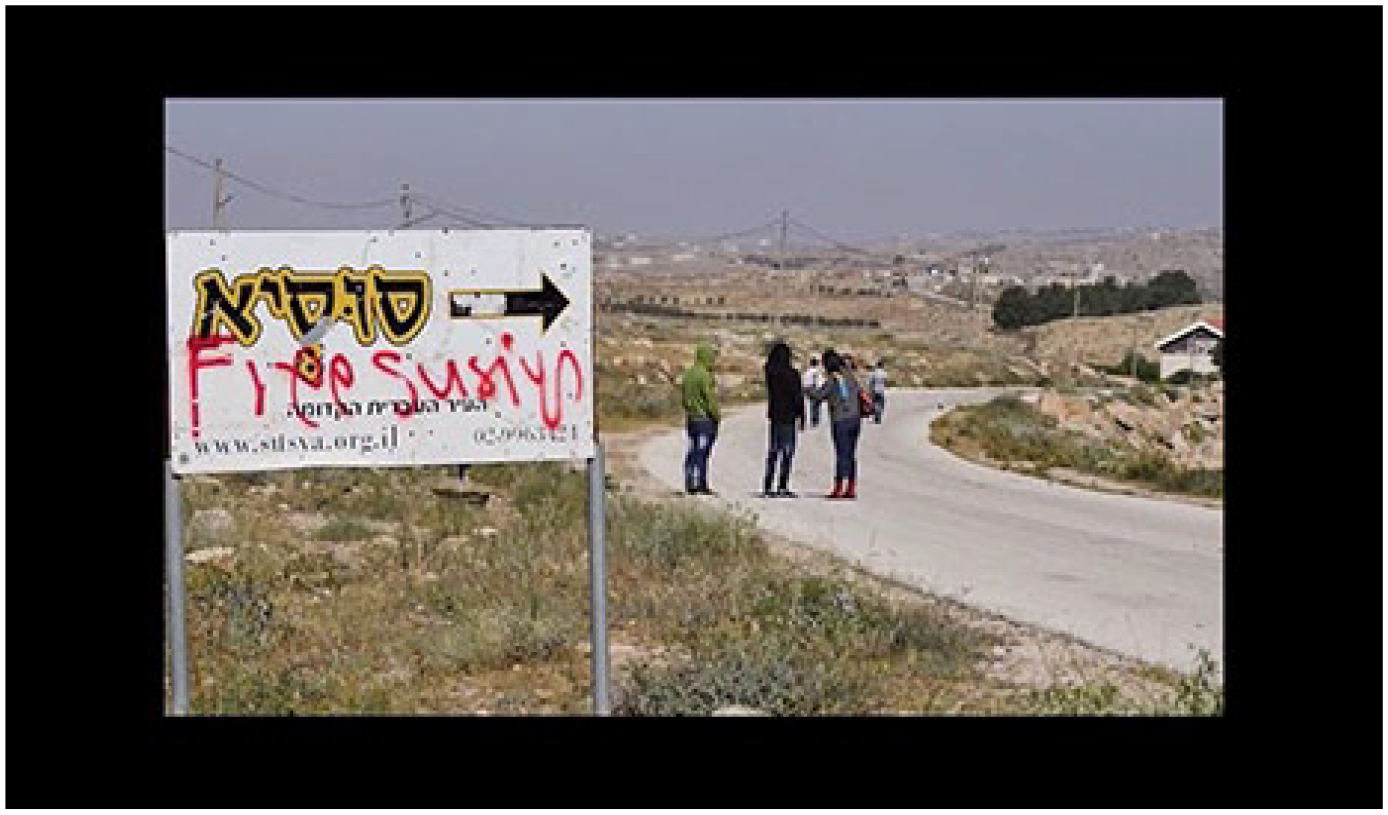
The road leading to the Susya heritage site – the sign bears graffiti reading ‘Free Susiya’ (still from recording made by youth researchers).
Taken together, the testimonies of these former Susya residents paint a picture of Palestinian intangible heritage in Susya which centres on knowledge of the land, agriculture and cultivation. For example, Abdel, 55, is a former resident of Susya now living in another nearby village having been displaced after the establishment of the heritage site and settlement in 1986. Abdel used to cultivate the land near Susya, recalling that he planted wheat, barley and beans using rain-fed agriculture techniques he had learned from ‘his father, his grandfather’. A font of agricultural knowledge, Abdel recounted traditional techniques for planting, preserving and storing seeds for the next season to the youth researchers, explaining how these varied between sites and varieties of plants. He shared recipes for cooking stuffed squash and sun dried tomatoes. Having lost access to lands at Susya, Abdel now uses the same rain-fed techniques to plant almonds, figs, olives, cucumber, squash, melon and tomatoes in the nearby village where he now lives. While he is still able to use and transmit the agricultural knowledge and practices passed on to him, Abdel noted that other farmers whose land in Susya had been confiscated were now ‘working in construction or have commercial shops’, breaking the chain of transmission for this knowledge. Abdel himself was adamant he would continue to work the land, noting rainfed agriculture is an important part [of our heritage] because it is a source of income in the summer in remote areas like this far from communities and cities and villages, where they are no ways to connect with people.
Accompanying the youth researchers on a visit to the heritage site of Susya another interviewee, Emad, pointed out the agricultural heritage he saw around them, linking it to the stories his parents had told him about life in ‘Old’ Susya. Emad was born there, and was just 3.5 years old when in 1986, his family were forced to move from ‘Old’ Susya. They took refuge just 300 m away within sight of their former home: their make-shift homes eventually became known as New Susya. Walking through ‘Old’ Susya with the youth researchers, a disused shepherd’s trough prompted a discussion of the shepherd’s custom to leave the trough full of water, so that the next shepherd would come and find it full and ready for his flock to drink from. Several interviewees spoke about the herbs they picked in Susya, and their use in cooking or traditional medicine. Emad picked up this theme in his interview. Standing on an outcrop of rock just outside his former home and without moving more than a couple of metres, Emad picked up 10 different kinds of plants, named them, and explained their uses for the treatment of animal and human ailments. The young people spread out around him to find the plants they too knew. Further along, he pointed out madbaseh: a rock basin that was used to make grape syrup from the grapes harvested by residents.
Emad was not the only interviewee to remember the madbaseh. Another former resident of ‘Old’ Susya, Fatima (75), recalled the different varieties of grapes she used to plant and how to cultivate them so they would grow so straight you ‘could roll the sieve on the tree and it would roll on it’. She explained how the grapes would be processed to make jam, raisins and (using the madbaseh) grape syrup, and how she would sing folk songs while stirring the syrup as it boiled: We used to sing the ‘Hajeeni’
2
and we used to sing it for the syrup as we were cooking it at night [. . .] I used to cook the grape jam by myself while my husband was asleep. The IDF troop used to pass by while I was singing [Hajeeni]. Nowadays, I am aware of what I say and what I do.
Another resident of ‘New’ Susya, Amira, remembered the songs that the Shepherds would sing and play on wooden pipes as they took the goats out from the village for the day to graze in Masafer Yatta (now in large part a military firing zone).
In the eyes of the Palestinian former residents of ‘Old’ Susya interviewed by the youth researchers, the place is clearly identified with a rich intangible heritage related to the land, the knowledge and practices passed between generations that have supported people to live and thrive in this place. Interviewees also reflected on their experiences of the ‘heritagization’ of ‘Old’ Susya, that is, its enclosure as a bounded and official heritage site under the control of the Israeli state. To many residents, this was experienced as a kind of violence. The Palestinian residents of ‘Old’ Susya were always cognizant that this was a place overlaid with multiple heritages – Emad remembered playing in the courtyard of the ancient synagogue as a child, while Amira recalled tourists coming to visit it, although she noted, ‘they did not stay at that time, like now’. In talking about their heritage, almost every former resident discussed about their expulsion from ‘Old’ Susya in 1986 as a pivotal moment in their histories, describing the abrupt transformation of Susya from a place where they lived and used their heritage among the tangible traces of other pasts, to one from which they were not only physically excluded but their heritage erased.
In their visit to the site, the youth researchers witnessed the alienation this has produced firsthand, when Emad took them to his former home, a cave which has now been turned into an education centre for visitors to the site (Figure 2). The cave was big enough to accommodate ranks of benches to seat 20 visitors. On the far wall was a cinema screen where a film was projected showing a docufiction about the excavation of the site. Visitors could choose to hear the commentary in Hebrew, English or Russian. Curious, the youth researchers switched it on. Images of a young Israeli archaeology student flickered on the cave wall in the background and the Hebrew commentary competed with the voice of Emad who was remembering the first time that he visited the house where he was born with his father: There are no words that I can use to explain what it is like to come back to a village that is yours, that you have heard about and seen as a child, you have seen the walls and you know it is behind them, and you cannot go in.
This recollection of the caves in ‘Old’ Susya as residential homes for Palestinian families is another way the heritage there is tied into the broader narrative of the unique Palestinian heritage of the South Hebron Hills. Cave dwelling emerged as one of the most distinctive heritage features recorded by the youth researchers, not only in Susya but in other villages such as Al Mufaqara, Jinba and Al Qaryateen. Although less attractive to younger generations, older people interviewed by the youth researchers underlined cave dwelling as an important part of their heritage and one that, in the words of one elderly woman, had ‘enabled us to maintain life’ in the face of the sometimes harsh landscape and impacts of the Israeli occupation. As the group left the site, Emad expressed his regret that they had not been able to visit all the former Palestinian homes. Some places were closed off to visitors. Most of all he found it ironic that ‘I am a property owner and have papers to show it, but I still have to buy a ticket to see my house where I was born’. Seen from this perspective, the idea that heritage is a zero-sum game can seem persuasive.
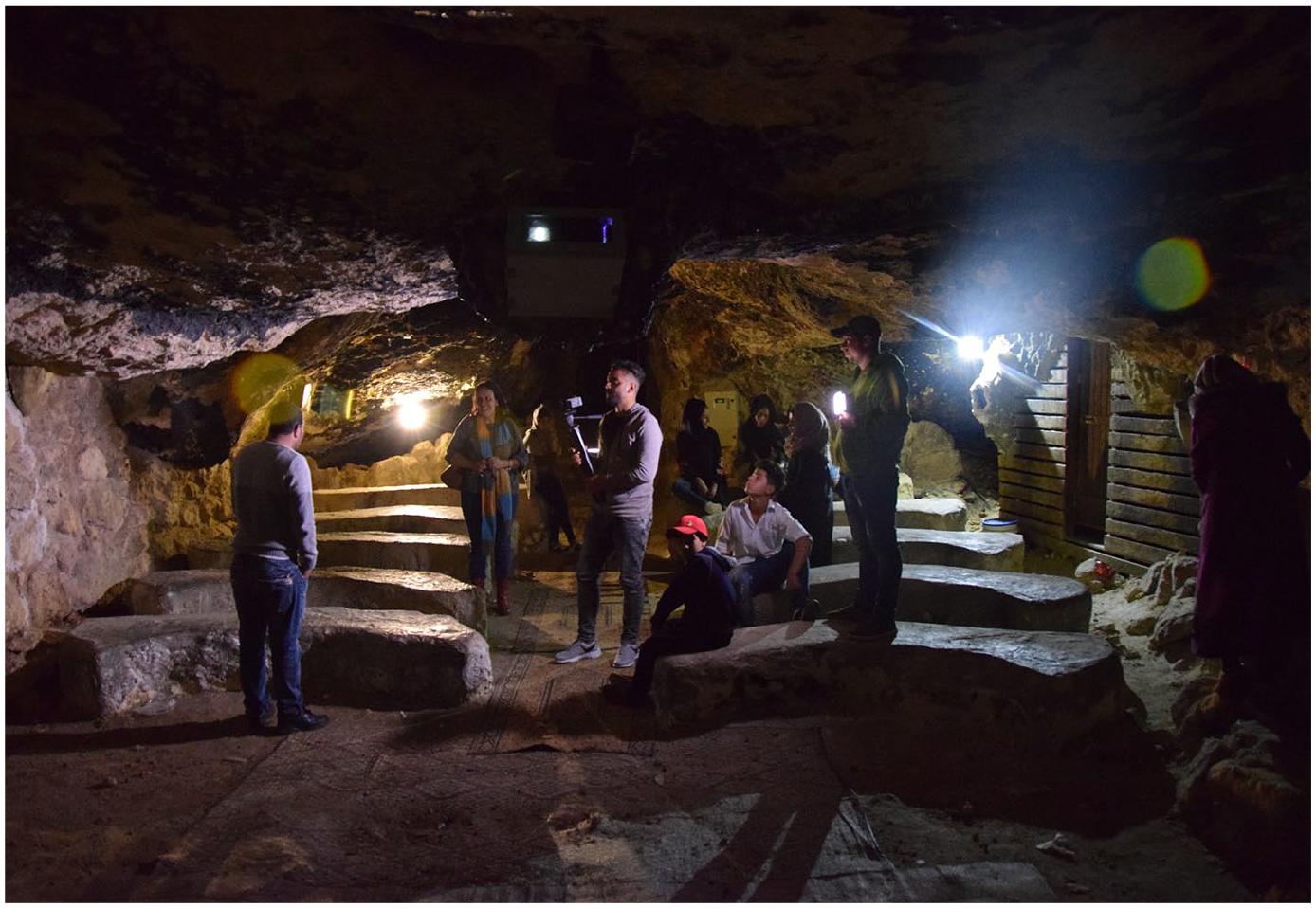
A former resident of ‘Old’ Susya speaks to the youth researchers inside one of Susya’s caves, now used as a screening room.
Faced with this sense of exclusion, Palestinian interviewees not only insisted on the presence of their heritage in ‘Old’ Susya, but situated it as part of the broader tapestry of intangible heritage in the South Hebron Hills. Oftentimes, in their discussions of heritage with the youth researchers, the same knowledge or practices were described both in reference to Susya and to their current place of residence. In some ways, this is a function of intangible heritage, which lives through its use and transmission by the people who are heritage bearers, and cannot be bordered in the same way as a tangible heritage site. However, there is also a striking similarity in the way this mirrors the way the Israeli–Jewish heritage narrative is also presented in Susya. In both cases, the heritage presented is closely woven with the territorial preoccupations of the communities to whom it matters, seeking to prove a historically grounded link between Susya and its Palestinian or Israeli–Jewish hinterland.
Applying a conflict transformational approach to heritage in Susya
The long history of Susya presents many opportunities to construct narratives of heritage. While we have focused on only two in this article, Susya is equally home to heritage from its Ottoman, British and Jordanian pasts. Indeed, Palestinian interviewees in the On Our Land project frequently made reference to Ottoman era property titles, or pointed out the sites of former British and Jordanian military posts. These multiple layers of history still loom large in daily life in the South Hebron Hills. To different communities at different times, these may also provide compelling resources with which to construct heritage narratives. However, given the restrictions of length of this article, and the focus of the youth researchers who led this project, our present focus has been on just two of the kinds of heritage present in Susya. One is the ‘authorised heritage discourse’ of the Israeli state, which draws on archaeological remains and knowledge, academic expertise and state support, to produce a specifically Jewish–Israeli heritage that is situated in a particular space and time, denying heritage that exists outside this space-time. The other, as described in the oral histories of former Susya residents, does not represent a hegemonic narrative, and does not deny the presence of a Jewish community in the past, but clearly contrasts significantly to the Israeli heritage discourse at Susya by asserting the presence of Palestinian heritage as a form of resistance against displacement and reaffirming its position within the broader constellation of Palestinian heritage in the South Hebron Hills. This demonstrates quite clearly another case where the ‘same’ heritage site supports a multitude of heritage meanings (Figures 3 and 4). These multiple heritages are in communication with each other in ways that can be conflictual, ambivalent, complementary or shifting.
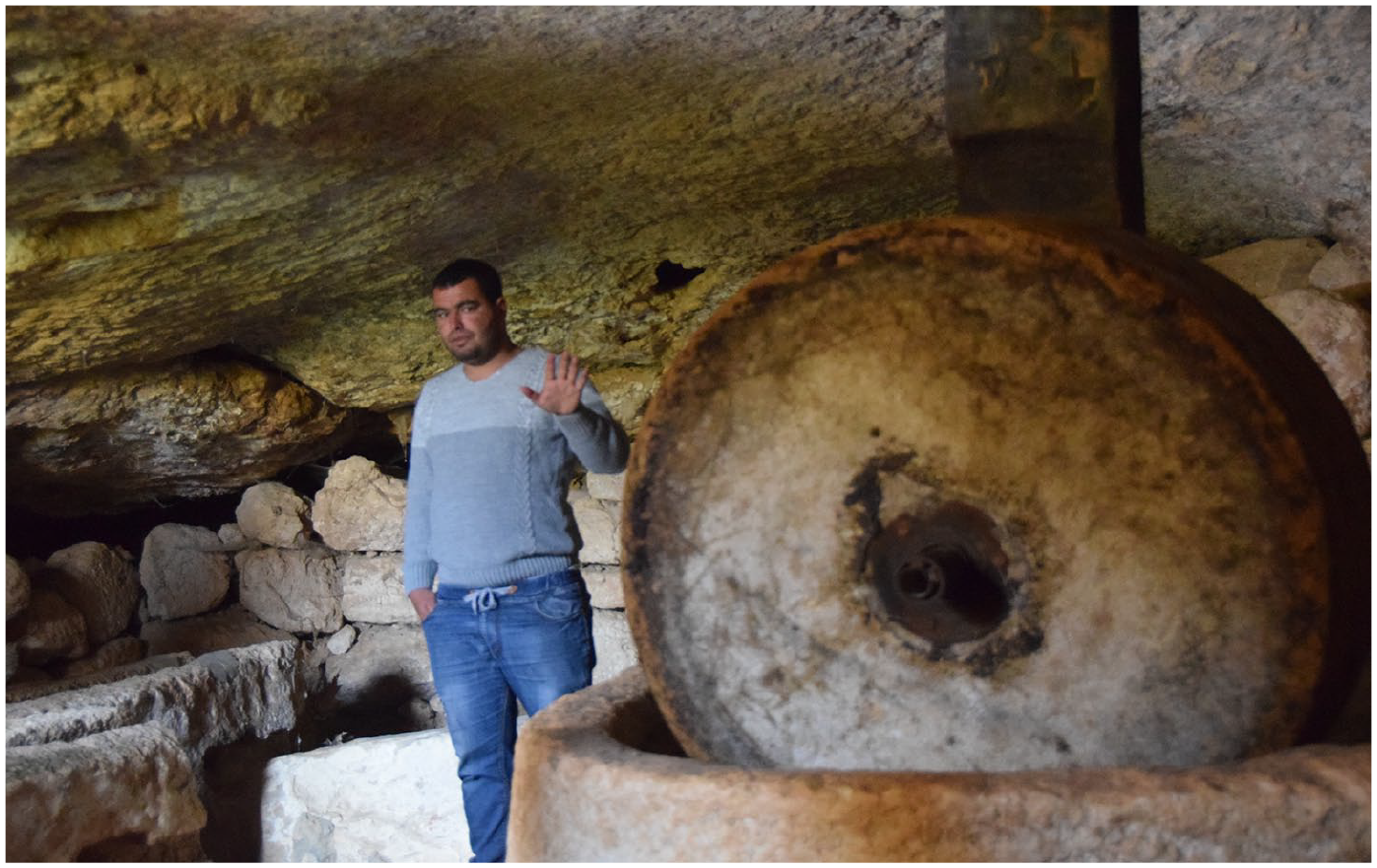
A former resident of ‘Old’ Susya speaks to the youth researchers about an olive press situated in one of the caves in Susya, and the role of olive cultivation in Palestinian culture.
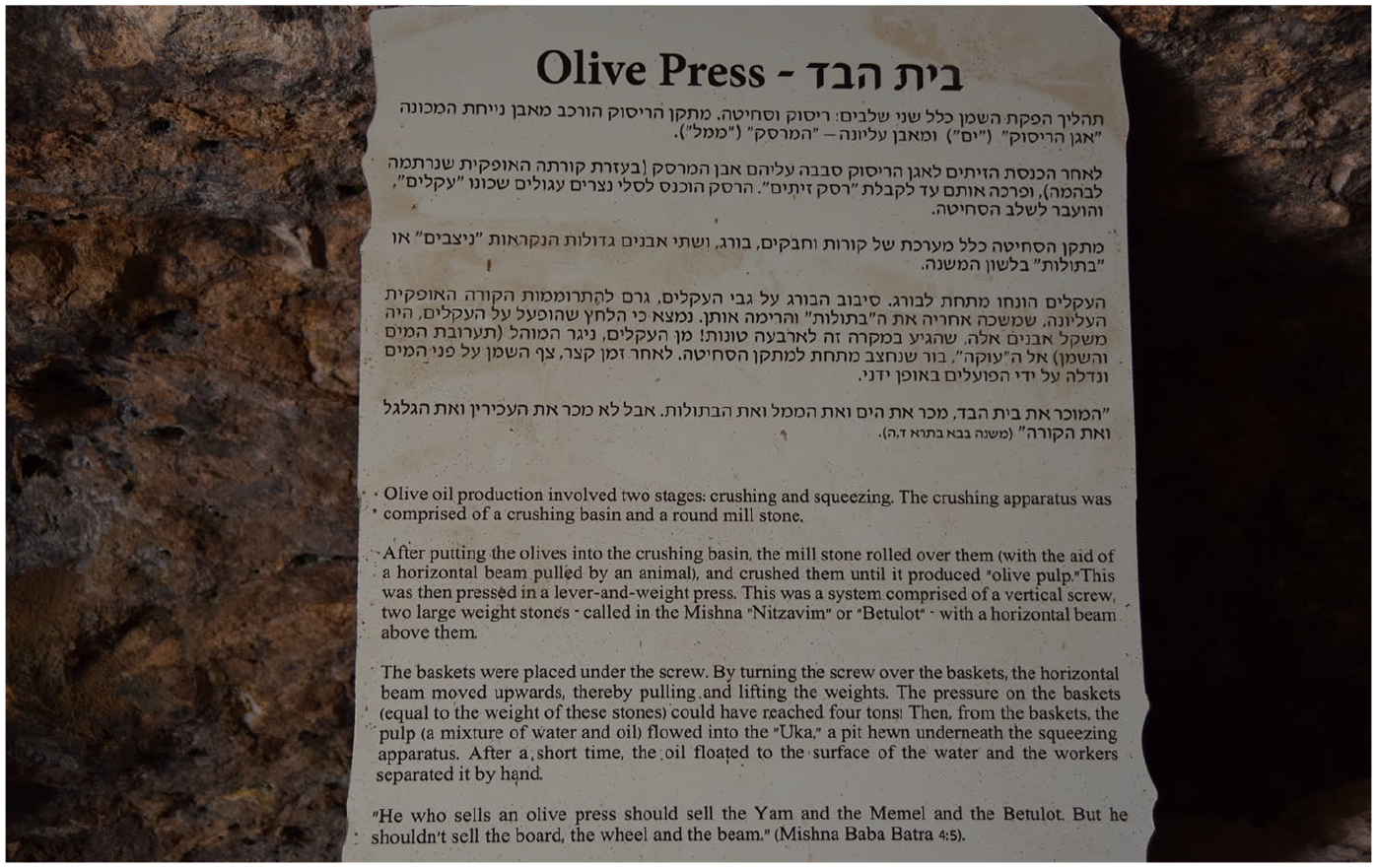
An information panel sited next to the same olive press, part of the official Susya Heritage site.
What is more, these two heritage narratives amply demonstrate the way that heritage is used to support the needs or politics of today with resources from the past. This heritage plays an important role in supporting the needs of the Israeli state and local Palestinian communities today – to underline a historic belonging, to reinforce or contest control of the territory, and to pass this knowledge, and identity, on to new generations. As others have noted, this process is all the more powerful because of the embodied experiences of visiting such a heritage site – what Smith (2008) refers to as the ‘corporeal reinforcements of a sense of belonging and sense of place’ (p. 159) offered by participation in material and intangible heritage performances. Of course, in these two cases, the power that is ranged behind each interpretation of heritage is quite different.
The case of Susya highlights radical disagreement over heritage at the site – particularly around claims to legitimate ownership of Susya’s heritage (and by extension, Susya’s land). The questions raised here – how can the multiple heritages at the site be defined, who has the power to do this, and what does this mean for the rights of people to access, use the site – reflect a conflict that is being played out across Israel and occupied Palestinian territory.
This kind of radical disagreement around heritage has often led to two responses among researchers and practitioners. On one hand, it can be seen to lead to a zero-sum approach to heritage, where only one heritage (and therefore, one community) can take primacy and disproves the heritage claims of the other (Rodenberg and Wagenaar, 2016). On the other hand, it can be tempting, given the overlaying nature of traces of the past there, to look for evidence of a shared heritage to address this conflict. To find proof of coexistence, shared cultural values and practices, points of confluence that could bring people together. Certainly, this has been a favoured approach in recent years in a number of contexts where conflict around heritages has grown up or there has been an attempt to put heritage in the service of peace (Winter, 2015). However, this has been subject to criticism from scholars who point out that narratives of shared heritage do not exist free from often highly asymmetrical power relations (Winter, 2015), and that shared ‘things’ do not necessarily equal shared values or a pathway to building peace (Giblin, 2014; Vanhee, 2016).
Rather than reaching for shared or mutual heritage, particularly in contexts of extreme power asymmetry such as Susya, or accepting the inevitability of a zero-sum outcome, could the interplay between heritage claims at Susya hint that a conflict transformational approach to contested heritage may prove more fruitful? This would move away from either a zero-sum or shared heritage approach to the site, to one that places heritage in agonistic contestation – resisting asymmetry, and provoking engagement and listening to each other, without the precondition of finding common ground. Instead of saying Palestinian heritage claims invalidate others attached to the site, that the Israeli–Jewish heritage is more authentic or valuable than Palestinian recollections, or trying to weave the two into a unitary narrative, an agonistic approach would make space for both visions of Susya’s heritage and more besides.
In Susya, we would argue that some steps towards enabling a conflict transformational approach to heritage are already in play, and others could be envisaged, particularly at the local level. Nevertheless, the case of Susya also serves to highlight some of the significant barriers that can impinge on the potential of heritage to ‘destabilize antagonistic relations and rigid boundaries between groups’ (Strömbom and Bramsen, 2022: 80) and thus support the development of the ‘less perfect peace’ envisaged within agonistic praxis (Strömbom and Bramsen, 2022: 80). At present, a rigid boundary is enforced through the presentation of the national heritage site. What is inside the ticketed, fenced site is presented as exclusively Israeli–Jewish heritage, with an overwhelming focus on material heritage. This physically and discursively excludes other heritages (Palestinian or otherwise). The very work of the youth researchers, and their presence in the site starts to destabilize this. By recording testimonies of Susya’s intangible Palestinian heritage, they are safeguarding heritage which was at real risk of dying out as chains of transmission between generations have been stretched and broken by the impacts of conflict and displacement. Safeguarding this heritage is the first step in enabling a dialogue with the authorized heritage discourse at the site and contesting the monolithic narrative it expounds, particularly since the narratives collected by the youth researchers do not deny the presence of other heritage in Susya, and thus contain a potential for agonistic encounter that could be nurtured. What is more, the oral histories of intangible heritage collected by the youth researchers problematize the physical and temporal boundaries erected around the ‘official’ heritage site at Susya. Situating Palestinian heritage in Susya as part of the tapestry of lived heritage being practised across the South Hebron Hills, such as knowledge related to the land, disrupts the authorized heritage discourse of Susya, which builds its claims around the material heritage of the site and specific time period deemed to be significant (fourth to ninth centuries BC).
In the wake of this destabilization, there could be opportunities to further develop a conflict transformational approach to heritage at Susya. The attention paid to Susya by Israeli human rights organizations such as BtSelem, Tayyush, Rabbis for Human Rights, Zochrot and Emek Shaveh suggest that support for thinking differently about heritage in Susya does exist, albeit as a minority view. That this network of civil society organizations resist with Palestinians the construction of a zero-sum heritage by the Israeli state is an indication of the possibility of constructing heritage(s) which escapes the ethno-nationalist model associated with state formation and colonization. In practical terms, this could include broadening the scope of heritage interpretation within the site to include Palestinian narratives and information provided in Arabic, to make the site more welcoming to a broader audience. Moving beyond an antagonistic presentation of two heritage claims could be further supported by including information about other elements of Susya’s overlapping pasts, for example, from the British Mandate or Ottoman eras. Dual or multiple narrative tours or events could be organized within ‘Old’ Susya (and perhaps to ‘New’ Susya also) to further support the exploration of multiple heritage narratives at the site (see Strömbom, 2019 for a broader investigation of the potential of dual narrative tourism in facilitating agonistic exchange). Of course such initiatives largely rely on the consent of those governing the heritage site to occur, which may be unlikely in the highly contested context in which Susya exists. Without such consent, one pathway to using heritage to create a space for critical encounter and nonviolent disagreement might be to provide alternative, inclusive local spaces for heritage exploration near Susya. The youth researchers have, to some extent, begun to do this by producing alternative heritage guides and trails to the South Hebron Hills to showcase Palestinian intangible heritage. However, at the time of writing, these initiatives have tended to reproduce a heritage narrative that underlines Palestinian belonging rather than the presence of multiple pasts.
However, while there is potential to develop a conflict transformational approach to heritage here, there remain significant barriers that impinge on the realization of such an approach. These barriers largely relate to the ongoing problem of power asymmetry and the challenge of extending the impact of a conflict transformational approach to heritage beyond the hyper-local sphere of Susya. Attending to heritage using a conflict transformational lens can certainly highlight asymmetries in power between heritage discourses and demonstrate how these link to and reflect patterns of power at the national level. And yet, these same power asymmetries prevent the introduction of a more transformational approach within ‘Old’ Susya. Consent for any formal changes to heritage interpretation there is in the sole purview of the Israeli government who, at the time of writing, have shown little appetite to move away from an ethno-nationalist interpretation of heritage in the service of a narrative of continued and exclusive national belonging. While this does not preclude other actions to develop a conflict transformational approach in relation to Susya – as discussed earlier – it does restrict them quite significantly.
Conclusion
A close reading of heritages in Susya and their potential to integrate a conflict transformational approach raises another more far-reaching problem, however. If power asymmetries within the microcosm of ‘Old’ Susya are proving stubbornly problematic, what hope is there to use heritage to address broader inequities in the South Hebron Hills and Israel/Palestine more widely? Indeed, is there a potential in this approach to address other seemingly intractable conflicts? This question has become all the more pertinent during the period of writing this article. Several of the youth researchers engaged in the On Our Land project come from communities in the part of Masafer Yatta that has been designated an Israeli military live firing zone (918), just to the east of Susya. This designation was upheld in a ruling by the Israeli Supreme Court in May 2022, and states that residents of 12 villages within the firing zone have no right to live there (Broeckerhoff and Soliman, 2022). The youth researchers have collected numerous oral histories of heritage within Masafer Yatta and Firing Zone 918, including traditional cave dwellings, agricultural practices, and songs (Broeckerhoff and Soliman, 2022). This has become an important means to argue against the characterization of the area as devoid of human life that underpinned its designation as a firing zone, and to insist upon Palestinian communities’ presence and distinct way of life there. Through their engagement with this intangible heritage, the youth researchers have been able to advocate for their community in new ways. And yet, this has not been sufficient to stop the violent displacement of Palestinian inhabitants and destruction of schools and infrastructure that has been taking place amid the overwhelming imbalance of power that characterizes life in Masafer Yatta. Heritage in this case has not been enough.
As in Susya, perhaps it is most appropriate, then, to understand this heritage work as a first step towards conflict transformation. Collecting these narratives has supported the destabilization of exclusionary narratives of heritage in the area, such as that advanced in the authorized heritage discourse of Susya, and could provide the basis for more inclusive – but not shared – narratives in the future. These actions have also safeguarded at-risk intangible heritage for future generations, so the potential remains for these to be established in a relation of agonistic dialogue with other heritages that matter to people in Susya and beyond. The project has engaged young people in nonviolent ways of advocating for their communities, and finding pride in the place they come from in the most trying of circumstances. While even the construction of a ‘less perfect peace’ may seem far away at the moment, these are seeds that can be nurtured so that the rich heritages of Susya might 1 day fulfil their peace potential.
Footnotes
Acknowledgements
First and foremost, the authors would like to thank the On Our Land youth researchers for their unwavering commitment and energy in recording and celebrating the heritage of their communities, which has been a constant source of inspiration. They would also like to thank all the community members who shared the memories and stories that make up the heart of this project. They acknowledge the hard work and dedication of the On Our Land team members in the United Kingdom and Palestine, and in particular, thank Dr Marwan Darweish for his helpful comments on early drafts of this paper. Finally, they would like to thank the anonymous reviewers for their insightful comments on the paper, which were a model of constructive and rigorous engagement.
Funding
The author(s) disclosed receipt of the following financial support for the research, authorship, and/or publication of this article: The On Our Land project was funded as part of the British Council Cultural Protection Fund. The Cultural Protection Fund is a fund that supports efforts to protect cultural heritage at risk, in partnership with the Department for Digital, Culture, Media and Sport (UK).
