




Abstract
International Relations scholars and practitioners commonly agree that relationships in world politics are managed impersonally. Personal connections between agents of states are perceived as having only little impact on foreign policy of states. The current article challenges this impersonal ethos, suggesting that personal relationships play an important role in conducting, and thus understanding, interstate relations. Interviews conducted with 21 senior Israeli officials concerning mundane professional practices reveal three elements that are essential for successful statecraft: acknowledging the power of interpersonal relations; substantive knowledge of counterparts; and the excellent communicative competencies needed to realize the potential of personal connections. We argue that statespersons’ behavior can be located on an impersonal-interpersonal continuum. Furthermore, we suggest explanations for deviations from the impersonal ethos and discuss the role of interpersonal practices in managing interstate relations. At the very least, the personal aspect should be taken into consideration when examining foreign policy. However, personal relations may have a highly significant impact on interstate interactions, thus requiring a revision of the current paradigm in IR, which marginalizes the personal aspect.
Introduction
In January 2020, news headlines around the world reported the personal birthday greeting that U.S. President Donald Trump sent to his North Korean counterpart, Kim Jong-un. This was part of a series of personal gestures that followed a long period of silence between the two states’ leaders, in particular with regard to North Korea’s nuclear program. After his election, Trump initiated a new type of diplomacy. Abandoning the established foreign policy track, the American president began to practice personal diplomacy, tweeting a series of targeted messages to which the North Korean president responded in kind. 1 The personal relationship further developed following the first summit meeting between the two leaders in June 2018. Trump made several public announcements praising Jong-un, describing the North Korean leader as ‘smart’, boasting about their ‘good relationship’, and even going so far as to say that they had ‘fallen in love’. 2 Although the two leaders continued to cultivate their friendly relations via personal correspondence, the talks concerning the denuclearization of North Korea quickly reached a crisis point. Trying personal diplomacy once more, Trump sent a personal birthday greeting to Jong-un. This time, however, the North Korean president reminded Trump of the accepted diplomatic ethos. According to reports, North Korea sought to return relations to the impersonal track, stating that: ‘Although Chairman Kim Jong-un has good personal feelings about President Trump, they are, in the true sense of the word, “personal”. . .[the North Korean president] would not discuss the state affairs on the basis of such personal feelings’. 3
The ups and downs in this relationship shed light on two possible guidelines to statespersons’ behavior in world politics. The first guideline, represented by the North Korean president’s words, is built upon the normative, well-established impersonal ethos of diplomacy. According to this ethos, the individual statesperson, even if they are operating within a non-democratic regime, is committed to act exclusively on behalf of the state’s interests (Wendt, 2004). The impersonal ethos places states center-stage in international politics, perceiving personal state agents’ connections with one another as irrelevant to and inadvisable for interstate relations. This ethos translated into the formal conventions and protocols that guide relations in international settings. The second guideline, as reflected in Donald Trump’s approach, is considered a deviation from this impersonal ethos and its formal protocols. It entails informal modes of communication between statespersons, foregrounding their personal relationships as important for conducting, and thus also understanding, foreign policy. The personal guideline positions the relationships between state agents at the center of world politics, diminishing the importance of the structure in which they operate and the country they serve.
Diplomatic protocols dictate that statespersons should follow the impersonal guideline, affecting how they understand their relationships with their counterparts (Leki, 2007). This allows state actors from different cultural backgrounds who are pursuing conflicting interests to communicate respectfully, according to a more or less universal code of diplomacy (Cohen, 1987; Jönsson and Hall, 2005). The impersonal ethos demands the agent’s exclusive loyalty to the state. Personal beliefs about the importance of interpersonal relationships, and the knowledge and competencies that are needed to cultivate such relations, are considered marginal, while adherence to the codes of formality constitute the guidelines directing professional conduct in diplomacy.
Although, theoretically, the impersonal ethos reigns supreme, in practice, as Trump’s example of personal diplomacy illustrates, interpersonal relationships between politicians and officials from different states blossom. In recent years, scholarship concerning the role of emotions in negotiations (Wong, 2016, 2019; Hall and Yarhi-Milo, 2012; Holmes, 2018; Holmes and Yarhi-Milo, 2016; Yarhi-Milo, 2013), practices in diplomacy (Kuus, 2015; Pouliot and Cornut, 2015), and the effects of leaders’ friendships on state interests (van Hoef, 2014, 2019; Wheeler, 2018), has endeavored to assess the significance of interpersonal connections in the making of world politics. In this article, we wish to expand upon the growing interest in the personal aspect of international relations. Moving beyond personal emotions and the potential consequences of relationships between statespersons, the present study seeks to identify what types of expertise are needed to implement personal practices in interstate relations. By focusing on the personal practices that statespersons utilize, we wish to answer the following questions: (1) What personal beliefs, knowledge, and competencies are necessary to conduct statecraft in contemporary world politics? (2) How do these three factors challenge the impersonal ethos prevalent in IR?
The ontology of this study is embedded in practice theory (Bueger, 2014; McCourt 2016; Pouliot, 2008), which we apply to investigate the mundane routines of diplomats as a meaningful aspect of international politics (e.g., Neumann, 2012; Pouliot and Cornut, 2015). By examining how intersubjective knowledge enables state agents to cultivate interpersonal relations, it adds to the scholarship emphasizing the dispositions and competencies necessary to perform diplomatic practices (e.g., Pouliot, 2008). For example, Kuus (2015) argues that symbolic resources, such as charm, are key to diplomats’ successful professional performance, and he furthermore highlights the components of such resources and the knowledge necessary to acquire them. The current article expands upon practice scholarship, identifying several layers of knowledge relevant for implementing interpersonal practices in diplomacy.
For this purpose, we employed the accepted method of practice theory (Adler-Nissen, 2016). In interviews conducted with 21 senior Israeli statespersons, we explored the professional experience they acquired during their service in order to identify how statespersons perceive the significance and impact of interpersonal relations in statecraft. All the statespersons interviewed are members of a professional community of practice, and, as such, they are expected to follow the impersonal ethos of statecraft. Each interview lasted between 60 and 180 minutes, enabling us to discuss all relevant issues, and in some cases we were able to request further clarifications. The list of interviewees includes one former prime minister; one former minister of foreign affairs; senior foreign affairs advisors who served under three Israeli prime ministers; director generals of the Israeli Ministry of Foreign Affairs (MFA); ambassadors (who served in dozens of states, including the United States, Mexico, Peru, Argentina, France, Belgium, Ireland, Romania, Egypt, Jordan, Turkey, China, Nepal, and South Africa); a former spokesperson for the MFA; and negotiators who participated in peace talks. While some of the interviewees served in decision-making positions, others assisted such figures, witnessing how statecraft expertise is applied. We discussed with each interviewee the practices deployed by statespersons in private interactions and the expertise required to utilize them effectively.
The methodological decision to focus on practitioners’ understanding of personal practices is based on two main premises: first, the social world is constructed from mundane and formal practices and interactions, via which it can be scrutinized; second, state agents apply their intersubjective knowledge when performing, managing, and understanding actions, processes, and their outcomes (Adler and Pouliot, 2011; Pouliot, 2008; Pouliot and Cornut, 2015). Based on these premises, we assume that the knowledge statespersons manifest concerning the management of interpersonal relations can inform the prominence they accord to these relations in performing their professional roles. According to this methodological logic, we clustered all recurrent patterns of knowledge regarding the interpersonal practices mentioned in the interviews. The examples we present in the findings section, selected on the basis of representativeness and clarity, demonstrate these recurrent patterns.
In the following section, we survey the development of the impersonal ethos that marginalizes the role of the interpersonal aspect in statecraft. We then present evidence indicating the relevance of personal practices in managing interstate relations. On the basis of the interviewees’ implicit and explicit acknowledgments of interpersonal relationships, we demonstrate and discuss the beliefs, knowledge, and skills statespersons require in contemporary world politics. We conclude by arguing that statespersons’ conduct can be located on an impersonal-interpersonal continuum, suggest explanations for deviation from the impersonal ethos, and discuss the role of interpersonal practices in managing interstate relations.
The impersonal ethos of IR
In 1762, Frederick the Great of Prussia was miraculously spared a decisive defeat when Russian Empress Elizabeth Petrovna died and was succeeded by her son Peter III, a great supporter of the Prussian monarch. Peter commanded his troops, who had reached the gates of Berlin, to withdraw, enabling Frederick to reorganize his army and defeat the forces of Austria and France. In this case, the Russian emperor’s personal admiration for another leader dramatically affected foreign policy. Although today this decision may appear strange, this was not the case at the time. Kings such as England’s Henry VIII and France’s Louis XIV identified themselves as the state, making it only fitting to phrase foreign policy according to their personal desires. Ironically, although he benefitted from the involvement of personal considerations in decision-making, Frederick the Great pioneered the separation between the personal and the international. An exemplary representative of the Enlightenment, the Prussian monarch considered a king the servant of his public. He believed that a ruler should advance the interests of his state and that acting according to personal motivations constituted a violation of duty (Bogdan, 2002). He once threatened his generals with execution if they would dare to empty the state treasury to redeem him from enemy captivity. One of Frederick’s enemies, Austria, shortly afterwards adopted the ethos that he helped to develop. When Austrian Emperor Leopold II was asked why he did not declare war on the new French regime that sentenced his sister, Marie-Antoinette, to death, he replied: ‘. . .the Holy Empire has no sister and Austria even less. I can only act to protect the interest of my people, not of my family’ (Bogdan, 2002).
In the nineteenth century, a new norm took root: the only obligation of an individual serving as an agent of a state was to advance that state’s interests. This entailed a clear division between the personal and individual on the one hand and the state and the collective on the other. The meaning of the new norm on the role of interpersonal relations in world politics was tremendous: if statespersons are exclusively loyal to their states, calculating their actions only according to raison d’état, then the importance of cultivating good relations with counterparts significantly drops. Heads of state and diplomats were socialized to adopt this new ethos (Constantinou, 2013): personal relations with their counterparts should no longer affect professional decisions. The principle of ‘national interest’, the roots of which lay in the eighteenth century, and which became widespread in the nineteenth century, demonstrates the extent to which the impersonal ethos was embraced and how powerful it became. According to this principle, the state is a homogenous actor with selfish interests. Consequently, the sole task of an agent acting on behalf of the nation is to advance these interests. Their personal needs and preferences should not influence their work in any way (Kratochwil, 1982; Weldes, 1996).
The impact of the impersonal ethos is evident in conceptual metaphors that instruct theoretical thinking in IR, diplomatic protocols that guide practitioners’ conduct, and in diplomats’ own accounts of their profession. Indeed, almost all the IR approaches that flourished in the past century adopt the impersonal paradigm, either explicitly or implicitly, as is reflected in three well-known metaphors (Hudson, 2005). The first is the image of the state as a black box: understanding a state’s contents (i.e., its domestic characteristics) is not fundamental to comprehending its behavior in the international arena. The second metaphor is of a billiard ball, made of homogenous material, with a hard shell, completely impenetrable, hitting other, similar billiard balls (other states) in order to divert their path (their foreign policy) (Marks, 2011). The third and most central theoretical metaphor in the discipline, which relates to the state as a person, also assumes exclusive identification with the state in foreign policy (Chilton and Lakoff, 2005). Accordingly, states are commonly depicted as entities with desires, needs, feelings, and intentions (Wendt, 2004), as well as exhibiting personal traits, such as a tendency to bullying, stubbornness, or madness (Luoma-Aho, 2009).
The existence of the impersonal ethos is also reflected in conventions and protocols. Such formal documents embody the core principles of the impersonal ethos, according to which personal nuances and interpersonal friendships may threaten a statesperson’s absolute commitment to the state interest. Conventions and protocols are intended to reduce cultural differences and to minimize the personal dimension of statecraft (Leki, 2007), translating the abstract ethos into a practical framework for the diplomatic profession (Penavic-Marshall, 2020). Yet, paradoxically, these conventions and protocols attest to the presence of the interpersonal dimension in every diplomatic encounter. Specifically, they seek to ensure that state interests will be served regardless of personal or cultural differences between the interacting agents. Through conventions and protocols, state agents are socialized to separate completely between the individual and the personal on the one hand and the state and the public on the other (Wendt, 2004), prioritizing the latter over the former.
In many ways, the Vienna Convention on Diplomatic Relations (1961) reflects the professional knowledge and practices shared by individuals serving as state agents. The third paragraph of the treaty defines the role of a diplomatic representation in another state:
The functions of a diplomatic mission consist, inter alia, in:
(a) Representing the sending State in the receiving State;
(b) Protecting in the receiving State the interests of the sending State and of its nationals, within the limits permitted by international law;
(c) Negotiating with the Government of the receiving State;
(d) Ascertaining by all lawful means conditions and developments in the receiving State, and reporting thereon to the Government of the sending State;
(e) Promoting friendly relations between the sending State and the receiving State, and developing their economic, cultural, and scientific relations. 4
Accordingly, the tasks to be performed by diplomatic missions are of a clearly functional character. The person responsible for these tasks requires technical skills characteristic of professionals such as businessman, lawyers, and analysts in intelligence agencies. Protecting interests, conducting negotiations, gathering information—all these are drawn from the world of strategic interactions. They do not (at least ostensibly) require special skills in managing personal relationships. Point (e) above is exceptional: it concerns matters far deeper and broader than the fulfillment of concrete functions. It requires the diplomat to cultivate friendly relations with the host country. However, even here the treaty does not refer to what we know as ‘friendship’ in our daily lives. It regards friendship as the development of economic, cultural, and scientific ties between two countries. This arrangement has a solely utilitarian basis and lacks any emotional element. Success depends on what the diplomat’s state has to offer, not on the personal relationships the diplomat develops with colleagues in the host state.
Moreover, Article 41 of the Convention designates with which bodies the diplomatic mission should conduct its relations. The Article explicitly states that ‘all official business with the receiving State entrusted to the mission by the sending State shall be conducted with or through the Ministry for Foreign Affairs of the receiving State or such other ministry as may be agreed’. The Convention therefore endeavors to guarantee that the relations maintained by the diplomat will be the auspices of the government offices of the host country, first and foremost the MFA. Although not explicitly prohibiting personal contacts with other parties, the Convention seeks to reduce such ties.
The ethos of impersonality can be also discerned in statespersons’ own accounts of their profession. Many of our interviewees explicitly highlighted their adherence to the impersonal ethos when responding to a general question about the importance of interpersonal relationships in IR:
In the end, when it [personal relations] clashes with the interests of the state, it won’t help. If it clashes with the ideological issues, it stops there. (Foreign minister) I am a limited believer in the impact of personal relationships on policy-making. . .in the end, it’s only interests. (Peace negotiator)
This marginalization of the role played by good interpersonal relations is based on two assumptions. First, all state agents are exclusively committed to advancing their countries’ interests; no feelings of personal affection can convince them to make a decision that deviates from these interests. Second, even if they do wish to acquiesce to a personal request, the structure within which they operate limits the possibility of doing so. Statespersons’ actions are monitored and restricted by their superiors and colleagues. Therefore, a decision made on a non-substantive basis, that is, one that does not align with the state’s interest, will not be implemented.
Interpersonal knowledge in IR
While many of our interviewees explicitly espoused the ethos of impersonality, an analysis of their responses in everyday situations reveals a different picture, one in which interpersonal relations constitute an essential part of a statesperson’s professional role. The knowledge statespersons manifested during the interviews may be perceived as an oral tradition, namely unwritten and informal knowledge that accords weight to interpersonal relationships. Statespersons’ recognition of how the personal aspect affects statecraft was sometimes implicit and, on occasion, explicit. According to a former director general of the MFA, the impersonal ethos is in fact a myth. Despite what scholars think, statecraft is to a great degree based on interpersonal connections.
For those who have been in these worlds, it is quite clear that interpersonal relationships have a big impact. There is sometimes a tendency in academia to understand political behavior using tools of rational decision-making. It is more elegant and also allows predictions. Of course, it’s bullshit. The world doesn’t work that way.
While some of the interviewees explicitly referred to the impact of interpersonal relationships, others expressed the same stance implicitly. Our analysis uncovered their belief in the power of personal connections in their discussions of mundane professional practices and the stories they told about their own professional achievements. Through these accounts, we were able to identify practitioners’ perceptions that challenge the impersonal ethos. Importantly, although they may be seen as contradictory, interpersonal knowledge and the impersonal ethos are two points on the professional diplomatic continuum. As we will discuss at length below, several factors affect an official’s decision to deviate from the explicit guidelines of the diplomatic protocol and to integrate interpersonal practices, and this choice affects their location on the continuum.
The interviewees foregrounded three interpersonal elements that are essential in enabling statespersons to perform their tasks successfully: acknowledging the power of interpersonal relations; substantive knowledge about counterparts; and excellent communicative competencies that realize the inherent power of personal connections.
Acknowledgment: recognizing the power of personal connections
Acknowledgment is defined as the belief that something is true or right.
5
In order to enjoy the benefits of an interpersonal relationship, one must acknowledge the possibility of changing the position of a counterpart (Schwitzgebel, 2011). Recognizing the power of personal connections demands a flexible approach to the impersonal ethos and its assumptions that counterparts are exclusively committed to the advancement of their states’ interests and that agents can affect policy. If one does not trust the power of personal affection, it is impossible to enjoy its potential gains. The following observation regarding a total adoption of the impersonal ethos was made by a political advisor to former Israeli PM Ehud Barak:
Barak had a cold, mathematical, very serious way of considering things. . .he called them [personal gestures] “gimmicks and mimics.” Everything we talk about, it’s all gimmicky and mimicry. They don’t matter. “If I met Arafat alone at Camp David, so what? Would he give up the Temple Mount? If I were to make some sort of gesture. . .would it change attitudes? It’s just ‘gimmicks and mimics.’”
Barak applied the impersonal ethos during the second Camp David Peace Summit with the Palestinians in 2000. He refused to talk privately with Arafat, and in one session even ostentatiously ignored him. Due to Barak’s ‘cold, mathematical behavior’ at the negotiations, Arafat felt that he was being tricked and treated disrespectfully. The lack of empathy between the two leaders led to the failure of the negotiations, even though both sides were willing to make far-reaching compromises (Holmes and Yarhi-Milo, 2017).
By contrast, a more flexible attitude toward the impersonal ethos allows a statesperson to reap the benefits of interpersonal relations. According to a former diplomat, developing affective bonds with counterparts is important in achieving the statesperson’s goals:
You first want to create the human connection because then, the professional relationship becomes much more significant. I do not believe that in today’s world political relations can and should be conducted entirely on the business level. It means emotions, connection, feelings. It should not be the central element in your decision-making but it should be an important element in the dialogue, to better understand the interlocutor. So that he understands you. . .and then there is an interpersonal understanding. I think it’s a very critical element.
The importance of acknowledging the potential power of personal relationships was also highlighted by a former Israeli prime minister. When discussing niceties, he highlighted relational strategies that should be reflexively and artfully employed in the initial moments of an interaction between statespersons:
When I was prime minister and hosted the prime minister of Ecuador or Slovakia or the Czech republic. . .at the very beginning of the meeting I would thank him for coming and [say] how important his visit is for our states’ relations and how we look with wonder at the progress he’s made, the improvement in quality of life in his country. I told him how envious we are. “How do you do that? I hope you will give me the chance to learn from you, from what you do, from your success. . .” You tell him that and he is very pleased. This immediately creates an atmosphere of goodwill and willingness to listen.
The PM’s story indicates that he recognizes the power of personal connections. By adopting a positive stance toward interpersonal relationships and applying a variety of relational strategies (expressing gratitude, appreciation, and praise), the PM was able to create a pleasant atmosphere, which at a later stage could be used to advance state interests.
Knowledge: who and what to know
While it is vital that the power of interpersonal relations be acknowledged, this is not the only condition that must be met in order to enjoy their benefits. The interviewees highlighted that proficiency in various areas of knowledge is necessary to realize the power of interpersonal relations. The first two kinds of knowledge are epistemic in nature: 6 knowing in whom to invest communicative efforts and possessing concrete personal and cultural knowledge about one’s counterpart (Fantl, 2008).
‘Knowing who’ falls under the philosophical category referred to as ‘knowing that’—possessing factual knowledge about the world (Fantl, 2008). The interviewees repeatedly emphasized the importance of drawing an accurate map of the target state’s human resources. Identifying the most important figures and their relationships with one another allows a statesperson to glean important information and to reach out to influential decision-makers. According to two former directors general of the MFA:
You have to understand the human map that leads to a decision. In this human map there is almost never just one decision-maker. There are other actors who influence [the decision-maker]. . . If you understand the map, you understand the internal dynamics, who’s against whom. The first thing is to identify the important actors. . . When you get into the job, you can spend your time on people who are neither policy makers nor influential. You need to focus your efforts on those you identify as influential.
The drawing of a human map has become an institutional practice in the Israeli MFA. According to another former director general:
You have a list, everyone prepares one. . .A list that is usually [made by] those leaving the job. The final report [includes] the people at the Ministry of Foreign Affairs, government. . .with comments—friendly, unfriendly, reticent.
This institutionalization of personal knowledge in the form of lists and maps suggests awareness that, in practice, decisions are not reached solely based on rational, impersonal factors. As can be learned from the characterization of each person on the list, personal preferences also play a role in decision-making. Reaching out to a friendly person in power can tilt a decision one way or another.
A second kind of knowledge that contributes to reaping the benefits of personal relationships is ‘knowing what’—acquiring targeted knowledge about the interlocutor’s personal preferences and cultural background. Such knowledge serves as a resource in predicting how specific people will react, behave, or make a decision under specific circumstances. As such, it may be seen as equivalent to the category of knowledge entitled ‘knowing why’—having knowledge about the reasons for specific behavior or a certain decision (Garud, 1997). More than one interviewee mentioned the phrase ‘what makes him tick’, referring to the importance of understanding how to pave a path to the heart of a counterpart. As two former diplomats related:
Understand what motivates him, what makes him tick, what things are most important to him. . . It’s a data collection process. And then, with this knowledge, you can approach the other side. You gather information before you go to people. You want to know everything about the person: what he likes, what he does not like. You know his personal history. I know if he likes motorcycles, if he likes sports. You use this information to get close to someone.
When preparing for a meeting, statespersons collect targeted personal information about the hobbies, tastes, and preferences of their future interlocutor. After gathering this information, they can use it to influence the decision-making process. A political advisor to former Israeli PM Ariel Sharon related how he strategically used personal knowledge in preparing for a critical meeting with the head of the UN’s nuclear agency:
El-Baradei was the chair of the International Atomic Energy Agency and he was an Egyptian. We knew he doesn’t like Israel. And he came to Israel, and we knew that he likes jazz. So we gave him an album by a very famous Israeli jazz musician. . . And the one-hour meeting became a 20-minute chat about jazz and hobbies. Someone who is Egyptian, anti-Israeli, and in the end. . .we needed something that would really soften him.
Gathering information in advance about the personal tastes of El-Baradei allowed Sharon to transform a potential dispute into a friendly conversation. The personal knowledge served as a resource for softening the International Atomic Energy Agency chief’s attitude.
Lastly, the interviewees emphasized the importance of cultural knowledge. Both IR literature (Cohen, 2002; Jönsson and Hall, 2005) and diplomatic protocols acknowledge the importance of cultural knowledge in preventing misunderstandings. For example, the Protocol for the Modern Diplomat, published by the U.S. Department of State, instructs statespersons in culturally appropriate behaviour. The safest way to show respect to others is by employing ‘the timeless formality of international diplomatic culture’, which is most visible ‘through spoken courtesies’ (Leki, 2007). The statespersons we interviewed revealed varying levels of adherence to the protocol. They likewise underlined the power of cultural knowledge in arousing sympathy: this signals to counterparts that they have made an effort to acquire knowledge about the other culture. According to a former diplomat, fluency in the native language and the cultural nuances of the host state is a way to gain trust:
Sensitivity to the other side’s cultural profile is critical, dramatic, and important. I start with Arabic. If you can communicate with a partner. . .in his language, you show some kind of respect. (Director General of the MFA)
Statespersons’ knowledge thus consists of far more than information about the history and political structure of other states. It also includes targeted knowledge about who the key figures are and their likes/dislikes. In the final section, we demonstrate that statespersons must also know how to communicate their personal and cultural knowledge in a trustworthy way in order to reap the benefits of interpersonal relations.
Competencies: knowing how to nurture personal relations
Having acknowledged the importance of personal connections and gained targeted and cultural knowledge about an interlocutor, a third type of knowledge is activated—‘knowing how’ to operate the personal practices in efficient and trustworthy ways (Fantl, 2008). 7 Personal characteristics, including charisma, wittiness and tact, can be perceived as preconditions for cultivating relationships. Nevertheless, in order to activate the personal practices efficiently, statespersons must develop excellent communicative competencies.
The interviewees repeatedly employed metaphors involving actors and the stage: such metaphors are at the core of the main theory explaining impression management in interpersonal interactions (dramaturgy theory) (Goffman, 1956) and indicate the interviewees’ awareness that they are judged by their everyday performance. Accordingly, when dispatched to another state, statespersons must be aware that they are performing center-stage, as the words of a former director general of the MFA indicate:
When you’re abroad, you’re on stage, this stage means you have to. . .be dressed nicely or according to the rules of the place, and you have to be kind and attentive. . .you’re an actor, yes, you’re looked at and judged and people gossip about you.
Furthermore, knowing how to perform efficiently in statecraft is a mixture of personal traits and communicative skills. Several interviewees listed personal and social traits such as attentiveness, initiative, independence, creativity, and emotional intelligence, all of which are important in cultivating good relationships. According to a diplomat:
Your job is to be a bit independent, a bit creative, and not to behave like a parrot. . . In the end, it’s not very different from relationships between people. That is to say, the emotional intelligence needed in interpersonal relationships is also a condition for good management of relationships between states and governments. . . The ability to generate empathy on the other side, get a positive response, is linked to your ability to be attentive to the other side. This is a diplomatic trait, that’s the key.
In addition to specific personal and social traits, statespersons must exhibit excellent communicative competencies (Hymes, 1972). Defined as the ability to make context-sensitive, strategic, and targeted use of interactional practices, communicative competence is crucial in conducting smooth and friendly conversations with counterparts. Such competencies enable a statesperson to proficiently operate a gamut of practices for cultivating good interpersonal relations. A former director general of the MFA admitted that communicative competencies are probably a statesperson’s most important assets. Relating to the competencies contemporary diplomats require, he foregrounded the role of interpersonal skills in the current era of digital media:
Today the diplomat does not have to tell me in the Foreign Ministry what is happening in the world. . .because sometimes I even read it before him. . . So what remains for him is the personal component, the component of personal relationships is more dramatic and more important. . . He [the diplomat] should possess. . .the ability to create a direct connection with people and try to reach what is beyond everything that is broadcast, beyond everything in the social media. . . Without this ability to communicate with people, to create the right atmosphere, it is hard for me to see how it is possible to function at all.
This description of a statesperson’s communicative skills neatly falls into the categorization of interactional expertise (Collins and Evans, 2008). Similar to journalists, who are also interactional experts, statespersons gain their knowledge by spending considerable periods in foreign environments and participating in various types of conversations, and they are responsible for mediating their knowledge efficiently to a specific audience (Collins and Evans, 2008; Reich, 2012).
The interviewees underlined the importance of creating affective bonds via communicative practices such as telling jokes and participating in small talk. The development of affective bonds is conditional for the development of personal relations (Rawlins, 1992). They increase the willingness of both sides to listen attentively to the other’s concerns, act in the other’s interest (Wispé, 1986), boost the ability to identify with the other (Holmes and Yarhi-Milo, 2016; Rothman, 1992), and build trust (Mercer, 2010; Yarhi-Milo, 2013). The competency to create an affective bond is evident in the example of the Israeli PM, discussed above, who utilized a gamut of conversational strategies—expressing gratitude, appreciation, and praise—in order to create an initial personal connection with foreign leaders. According to this PM, the efficiency of his strategic communication was apparent: it generated ‘goodwill and willingness to listen’.
A second competency for developing good personal relations is knowing how to adhere to the norm of reciprocity (Gouldner, 1960). Reciprocal relations entail an exchange of information and commodities such as dinner invitations, presents, and visits (Haas and Deseran, 1981). The absence of reciprocity in a relationship indicates that one of the actors does not want to or does not know how to be engaged in a meaningful relationship (Goffman, 1971). In contrast, willingness to reciprocate, for example, by sharing behind-the-scenes information with colleagues, can signal interpersonal commitment. A former diplomat told us about an arrangement he had with his counterparts in the EU. In return for the inside information they provided, the diplomat shared his own valuable knowledge:
Because they also represent their countries, they too have their own interests, they have a European President, they need up-to-date information, and I provided them with up-to-date information, I took care of them.
A third competency foregrounded by the interviewees is knowing how to create an appearance of trustworthiness. According to Blau, trust differentiates personal relations from economic, utilitarian connections based on written contracts (Blau, 1968). Excellent communicative competency allows statespersons to activate factual knowledge during both formal and informal interactions in a way that the interlocutor perceives as trustworthy. Time and again interviewees emphasized the crucial role of personal trust in statecraft:
You have to give the interlocutor the impression that he has. . .a trustworthy companion, I repeat this word, sorry, but it is important. (Director General of the MFA)
Trustworthiness is achieved via specific practices such as keeping secrets and sharing sensitive and accurate information, all of which are indicators of reliability. As a senior advisor of Ariel Sharon told us, the PM endeavored to acquire a reputation for credibility in the eyes of American President George W. Bush and his secretary of state, Condoleezza Rice:
[Sharon’s] reports to the Americans were so precise that it sometimes drove them crazy, exceeding the bounds of normality.
Knowing how to initiate and cultivate a good relationship is thus an important asset in statecraft. The examples analyzed demonstrate statespersons’ awareness regarding the central role of this asset in advancing professional goals.
The interpersonal-impersonal continuum
The previous section presented the three layers of knowledge that are required for the successful implementation of interpersonal practices in diplomacy. However, some statespersons may be reluctant to adopt them, preferring to walk the secure path of the impersonal ethos. This is explained in part by structural factors. Indeed, the impersonal ethos is based on clear characteristics of international politics. First, it is a product of the business-like setting in which groups manage their contacts. Individuals serving as agents of collective bodies and managing strategic interactions in order to realize selfish interests will probably experience some sense of alienation vis-à-vis their counterparts. In such an environment, friendly gestures may arouse suspicions of manipulation; expressions of sympathy may appear insincere; and trust-building steps may be viewed as strategic moves. Second, the state of anarchy in the international system makes agents of states highly suspicious of the other side. The fact that few regulatory mechanisms and enforcement bodies oversee international relations makes trust difficult to achieve. Third, because the state constitutes the supreme entity with which these individuals identify, there are few moral limitations on unethical behavior toward the other side. Identifying with the state and feeling obliged to advance its interests may justify trickery, fraud, and breaches of faith. Unsurprisingly, all these factors increase mutual suspicion between statespersons and pose an obstacle to gaining trust, one of the most important foundations in developing interpersonal relations (Kydd, 2000).
However, we must not exaggerate the power of these elements and their ramifications for statecraft. The interpersonal element is such a basic part of human experience that it can break down the walls of international politics. Statespersons are agents of their countries, yet they remain private individuals (Kelman, 1970), even when they put on their ties and their smart shoes. Their human interactions with their counterparts do not differ fundamentally from their experiences in their private lives. The fact that they are acting in an official capacity does not make their emotional system immune to external stimuli (Bleiker and Hutchison, 2008; Mercer, 2006). They can still feel affection or disgust toward the representative of a foreign country, enjoy compliments, feel anger when criticized, laugh at funny jokes, or feel boredom when pestered. The professional ethic instructs them to suppress these feelings toward the other side, or at least to try to ignore them, yet they remain present. The impersonal ethos, as strong and influential as it may be, can never erect walls high enough to prevent this.
Therefore, we can view interpersonal knowledge and the impersonal ethos as two poles of the professional diplomatic continuum. As illustrated in Figure 1, statespersons can be located at various points on this continuum:
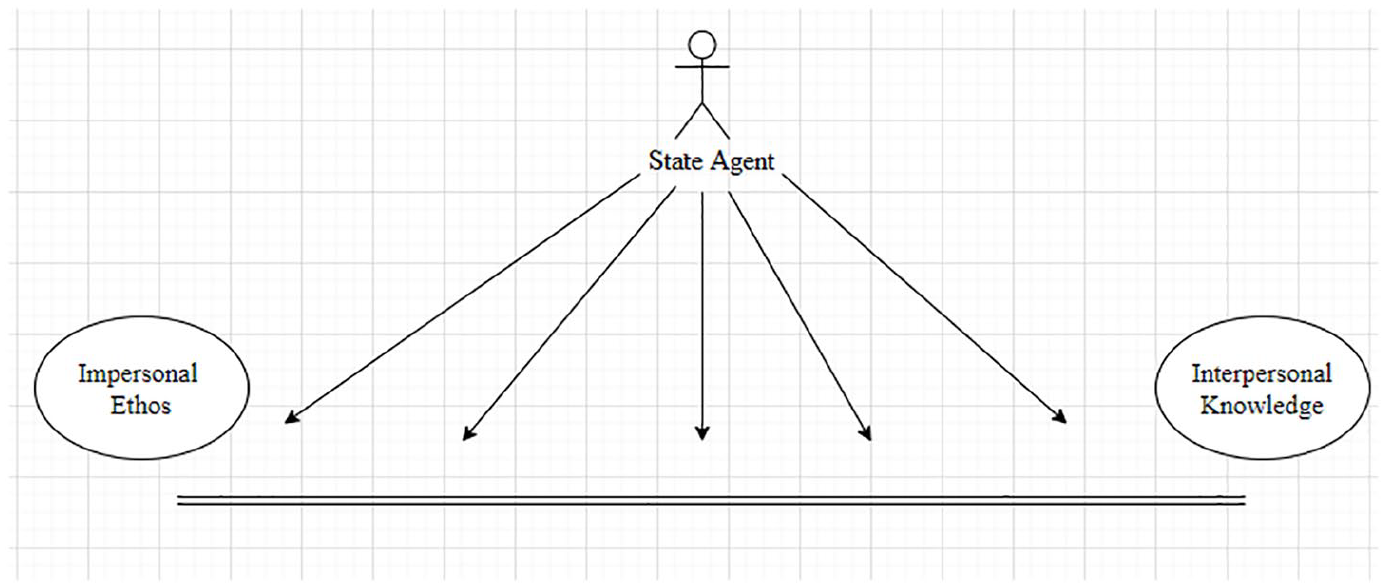
The knowledge continuum of professional diplomacy.
What causes statespersons to prefer one type of knowledge over the other? At least three factors may explain statespersons’ dispositions. First, varying levels of exposure to the impersonal ethos. Professional diplomats are socialized from an early stage of their career to embrace this ethos. Despite garnering practical interpersonal knowledge during their various missions, this is constrained by formal procedures, conventions, and protocols that limit their freedom to employ interpersonal practices. Politicians, by contrast, are far less versed in diplomatic protocols and thus more prone to deviate from them. Donald Trump’s diplomatic behavior is a clear (and perhaps extreme) example of deviance from the impersonal ethos.
A second factor that may affect a statesperson’s position on the continuum relates to personal characteristics. Not all statespersons excel at engaging in interpersonal relations. They may be timid or withdrawn, lacking the competencies necessary for the successful execution of interpersonal practices. We may hypothesize that statespersons without such competencies will be less open to acknowledging the importance of interpersonal practices and to executing them. Indeed, this may explain the scorn that Ehud Barak expressed in this regard, when he described such competencies as ‘gimmicks and mimics’.
A third reason affecting the position on the continuum relates to the place of a specific state within the hierarchy of world politics. Personal relations can be viewed as an element of the soft power that states exercise in order to gain influence (Nye, 2004). Agents from states with greater economic or coercive power rely less on personal charm than those representing states that are unable to utilize economic sanctions or military threats. In the latter case, personal connections constitute an important asset in advancing state interests, as another former director general of the MFA commented:
Personal connections are significant, even for technical things, like opening a door, picking up a phone, and getting others to listen to you. These things are sometimes priceless in this world [of statecraft], especially when a small country needs the attention of superpowers that have on their table a million things more important than your concerns.
According to this interviewee, interpersonal relations are the (soft) power of the weak. They allow a state to gain others’ attention without expending material means.
Conclusion
This article challenges the reigning ethos of impersonality in world politics. We have demonstrated that, despite apparently adhering to this ethos, statespersons explicitly and implicitly recognize the important role of interpersonal relationships in advancing state interests. In order to enjoy the benefits of personal relations, statespersons must acknowledge this power, acquire various types of knowledge, and possess communicative competencies. First, they need to recognize the power of personal connections to bring about a change in other states’ foreign policies. Adopting such a stance further demands specific knowledge, traits, and competencies that are not necessarily part of the training process statespersons undergo. The interviewees highlighted the kinds of knowledge needed in order to practice personal relationships efficiently. This includes identifying key figures in a target state and collecting personal and cultural information about counterparts. Having equipped themselves with the necessary stance and sufficient knowledge, statespersons require excellent communicative competencies in order to execute the personal practices efficiently. They must cultivate personal traits such as attentiveness, creativity, and independence. Likewise, they must competently signal personal affection, reciprocate with individual gestures, and create an appearance of trustworthiness.
One of the questions raised by the findings presented here concerns the extent to which interpersonal relations indeed help agents to advance their professional interests. The fact that statespersons invest time and energy in cultivating such relationships—collecting information about their counterparts, learning cultural nuances, devoting thought to small gestures, using their personal charm—serves as firm proof that many of them believe in the power of these relations. The cynics, among them many scholars of IR, may doubt the effectiveness of these efforts. Yet many of the interviewees are well versed in the rules of their professional world, the heirs of a long tradition of diplomat experience passed from generation to generation. Thus, when they acknowledge the power of personal relations, this presumably has a firm foundation. It reflects obvious practical knowledge, the efficiency of which has been repeatedly reaffirmed, shared by those who engage in statecraft on a daily basis. Such a belief does not accord with the impersonal ethos in IR, although this should not cast doubt on its validity. Cadets leaving the gates of the MFA for their first posting find themselves in a similar position to a young doctor arriving at a hospital ward for the first time. They quickly learn that what they read in their textbooks does not accurately reflect the complex clinical reality. There is a significant disparity between theoretical knowledge, basic assumptions, and guiding principles, on the one hand, and usable knowledge and practical manners of action, on the other.
If there is some truth in this, then the impersonal paradigm in the study of IR, adopted by various different theoretical approaches, is dogmatic and should be re-examined. To what extent? At the very least, the interpersonal element is important and valuable in relations between states. Thus, for example, the personal factor carries weight in determining the outcome of negotiations (Holmes and Yarhi-Milo, 2017), together with the impersonal factors identified by scholarly literature, among them the assets held by the two sides, their bargaining positions, the strategies they adopt, and so forth. The personal factor is also useful in attaining aid from another country, even if the central consideration in granting aid is the selfish interest of the supporting state. However, it should not be considered impossible that personal relations can wield much greater power. They can constitute an important and unique contribution, and they can even be crucial in determining the results of interstate interactions. Some of the interviewees claimed that different behavior toward Yasser Arafat on the part of Ehud Barak would have prevented the alienation that developed between the Israelis and Palestinians at Camp David and consequently the outbreak of the Second Intifada. It is possible that the special relations between François Mitterrand and Helmut Kohl were a deciding factor in France’s willingness to agree to the reunification of Germany (van Hoef, 2014). Far-reaching ramifications such as these imply that personal relations can divert the commitment of individuals working as state agents, creating a new obligation: to a colleague. If this is indeed true, it is necessary to update the existing paradigm for understanding IR and to accord the interpersonal element a fitting place.
Footnotes
Funding
The author(s) disclosed receipt of the following financial support for the research, authorship, and/or publication of this article: This research was supported by the ISRAEL SCIENCE FOUNDATION (grant No. 2023/19).
