



Abstract
Do social influencers affect election outcomes? Social influencers can reach millions of people through social media platforms such as Facebook, YouTube, TikTok and Instagram. However, research on social influencers is scarce and it is unclear whether they can affect elections. I argue that social influencers can influence elections through their role as digital opinion leaders and their power to shape the public agenda. Empirically, this study leverages an event that occurred during the 2019 European election campaign. Eight days before the 2019 EP election, the social influencer Rezo published a video in which he severely attacks the christian democratic CDU/CSU which was watched by over 11.5 million users until the election. Based on a differences-in-differences design, it is shown that the video had a sizeable effect on the election resulting in considerable vote losses for the CDU/CSU. The results are important for the debate on electoral competition and social media.
Keywords
Introduction
Charli D’Amelio was an ordinary teenager in Norwalk, Connecticut. 1 However, her life dramatically changed in late 2019 when the 15-year old started posting dancing videos on TikTok. Her videos quickly went viral on the internet. Today, she has more than 150 million followers on TikTok turning her into one of the most important social influencers around the world. 2 Social influencers share moments of their daily lives, offer advice on day-to-day issues such as beauty, food or fashion and frequently also endorse certain goods and services in their posts. Through social media platforms such as Facebook, Twitter, YouTube, TikTok and Instagram, social influencers can reach millions of people turning them into important opinion leaders in their respective societies. In recent years, social influencers have publicly voiced their positions on political issues as diverse as climate change, gender issues or the COVID pandemic (Allgaier, 2020; Harff et al., 2022; Newman et al., 2021; Riedl et al., 2021). However, even though there is an increased interest in social influencers and their role in politics in recent years (Campus, 2012; Dubois & Gaffney, 2014; Mangold & Bachl, 2018; Park, 2013; Strömbäck et al., 2023; Weeks et al., 2017), it remains an open question to what extent they can affect election outcomes. Given that social influencers can reach millions of voters and have repeatedly taken political stances, it is crucial to shed light on whether they affect elections. This is even more important since many of these social influencers have commercial ties that are not properly disclosed which may influence their political activities (Goanta & Ranchordás, 2020; Riedl et al., 2021).
This study therefore addresses this question by investigating the effect of social media influencers on electoral outcomes. Social influencers are defined as “everyday, ordinary Internet users who accumulate a relatively large following on blogs and social media through the textual and visual narration of their personal lives and lifestyles, engage with their following in digital and physical spaces, and monetize their following by integrating ‘advertorials’ into their blog or social media posts” (Abidin, 2015, p. 1). While marketing research has quickly realized the potential of social influencers for commercial advertising (e.g. Enke & Borchers, 2019; Lou & Yuan, 2019; Sundermann & Raabe, 2019), the political impact of social influencers is largely unknown. There are a handful of recent case studies that provide descriptive evidence on social influencers in the political sphere (Abdulmajeed & El-Ibiary, 2020; Acharoui et al., 2020; Soares et al., 2018) and conceptualize social influencers (Riedl et al., 2021). Recent studies moreover show that social influencers can fuel political cynicism, raise political interest and also increase (online) participation and political efficacy (Dekoninck & Schmuck, 2022; Harff & Schmuck, 2023; Naderer, 2023; Schmuck et al., 2022). But so far, we have no empirical evidence on whether social influencers can affect voting behaviour and ultimately election outcomes.
In the political arena, on the other hand, the concept of the opinion leader has long played a central role (Lazarsfeld et al., 1968). Political opinion leadership (Jungnickel, 2018; Katz, 1957) in particular has been helpful to understand the role of influencers in the process of political opinion formation. More recently, researchers have turned to the question who can act as a political opinion leader within a changing media system (Dubois & Gaffney, 2014; Mangold & Bachl, 2018). Most of this work is concerned with the traits and behavior of political opinion leaders themselves (e.g. Campus, 2012; Park, 2013; Strömbäck et al., 2023; Weeks et al., 2017). Furthermore, scholars address the question of how prominent the contributions of political opinion leaders are in social networks as well as the dynamics and mechanisms of their distribution in online networks (e.g. Karlsen, 2015; Matuszewski & Szabó, 2023; Monaci & Persico, 2022). However, more research is needed in order to understand to what extent social influencers as new political opinion leaders may influence individual vote choices. This article therefore contributes to the growing body of research on social influencers by studying the effect of social influencers on electoral outcomes.
Theoretically, it is argued that social influencers can influence electoral outcomes through their role as digital opinion leaders and their power to shape the media agenda. More specifically, it is argued that social influencers act as opinion leaders who can influence their followers based on the trustworthy relationship they have developed with their supporters. They can use the close ties they have established with their followers to not only promote products, but to also influence the voting behaviour of their followers. Their political messages not only reach their immediate followers, but also their families, friends and colleagues through online and offline sharing in personal networks. In addition, given their direct access to millions of followers, social influencers can exploit their extensive social media network to obtain media coverage in order to spread their political message to the general public.
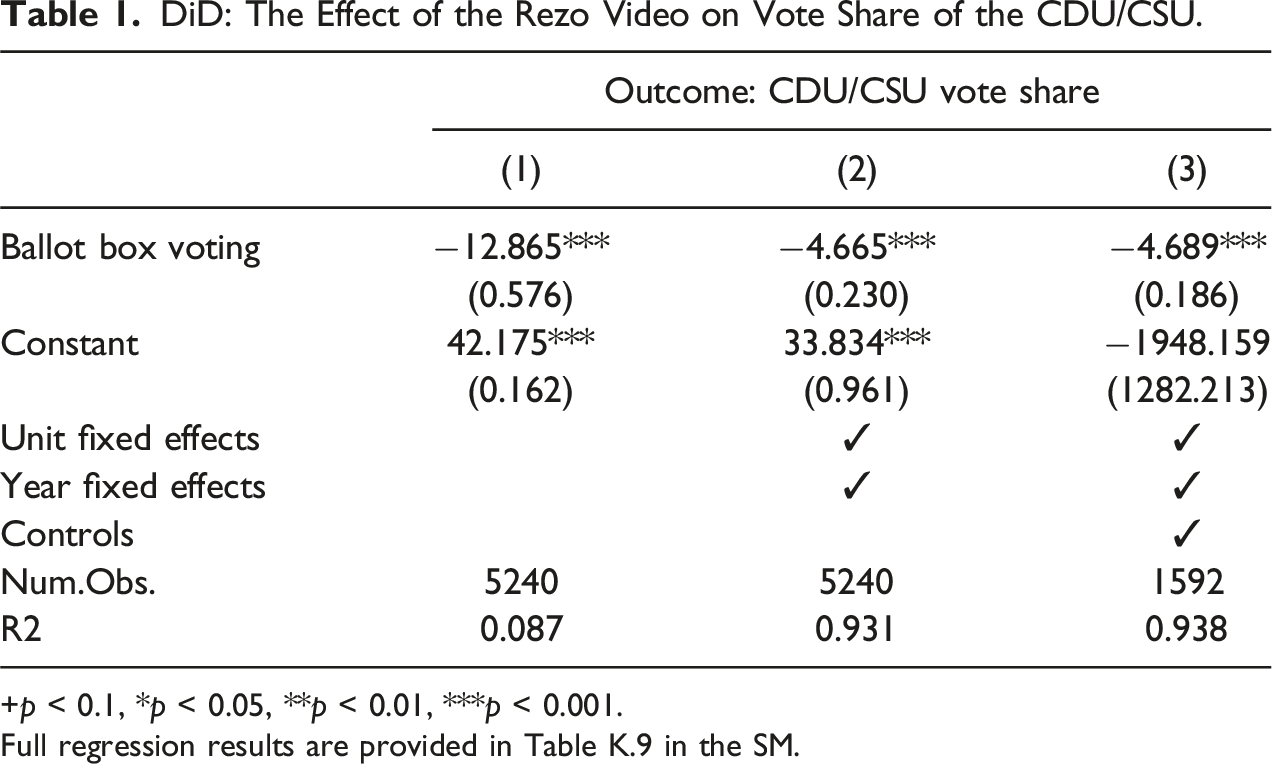
Empirically, this study leverages an event that occurred during the 2019 European election campaign. Eight days before the 2019 EP election, the German social influencer Rezo published a video in which he severely attacks the Christian Democratic Union (CDU) and its sister party the Christian Social Union (CSU) which was watched by over 11.5 million users until election day. 3 Drawing on a differences-in-differences design, the effect of the video on the election outcome is identified by comparing the vote share for the CDU/CSU among postal votes that are typically cast a number of days before the election (control group) with in-person votes (treatment group) since only the latter have been exposed to the video. This study shows that the Rezo video had a sizeable effect on the outcome of the election resulting in considerable vote losses for the CDU/CSU. More specifically, the vote share of the CDU/CSU among ballot-vox voters exposed to the video is 4.7 percentage points smaller than the vote share of the CDU/CSU among postal voters.
This article contributes to a number of ongoing debates. First, the study adds to the broad literature on media effects. Media effect studies have shown that exposure to newspapers, radio and television can affect political attitudes and to some extent also electoral behavior (e.g. Foos & Bischof, 2022; Gattermann & de Vreese, 2020; Gerber et al., 2009; Ladd & Lenz, 2009; Schmitt-Beck, 2003). However, one important drawback is that they usually can only rely on self-reported attitudes and voting behavior from surveys. This study contributes to the literature by (1) shedding light on the impact of social influencers and (2) by examining the effect on observed voting behaviour rather than self-reported vote choice.
Second, this study contributes to the debate about the effect of online campaigning on voters. Except for Hager (2019), most studies found that online campaigning does neither have an average effect on turnout (Aggarwal et al., 2023) nor on vote choice (Coppock et al., 2022), voter registration (Unan et al., 2024) or political attitudes (Foos et al., 2021). This study contributes to this debate by showing that the messenger matters. Social influencers in their role as digital opinion leaders can influence their followers based on the trustworthy relationship they have developed with their supporters and their immediate and unfiltered access to millions of followers. Third, this study sheds light on the role of social media for political representation. Recently, more and more scholars question to what extent social media platforms undermine traditional channels of political representation and grant social influencers who often have undisclosed commercial ties political influence (Goanta & Ranchordás, 2020; Karlsson & Åström, 2016). Third, there is a big public debate about how to regulate social media. Several countries around the world are considering regulating social media to constrain the power of social media platforms and to identify and counteract the spread of fake news and hate speech (Guess et al., 2020; Vidgen & Yasseri, 2020). This study adds to this debate by shedding light on the impact that social influencers can have on electoral outcomes in our societies.
Theoretical Background
Social influencers are defined as “everyday, ordinary Internet users who accumulate a relatively large following on blogs and social media through the textual and visual narration of their personal lives and lifestyles, engage with their following in digital and physical spaces, and monetize their following by integrating ‘advertorials’ into their blog or social media posts” (Abidin, 2015, p. 1). Social influencers share big parts of their personal lives online, they are usually seen as accessible, credible, trustworthy and authentic (Chapple & Cownie, 2017; Djafarova & Rushworth, 2017; Gräve, 2017; Schouten et al., 2020). This often leads to so-called “para-social relationships” (see e.g. Balaban et al., 2022; Labrecque, 2014; Rubin et al., 1985): users have the illusion of a face-to-face relationship with the media performer that they identify with (Lee & Watkins, 2016; Schouten et al., 2020). They perceive the relationship as a friendship (Lee & Watkins, 2016; Perse & Rubin, 1989) that they can seek advice from (Lee & Watkins, 2016). This makes them much more susceptible to the influencer’s opinions and behaviors (Agnihotri & Bhattacharya, 2020; Knoll & Matthes, 2017; Lee & Watkins, 2016; Sokolova & Kefi, 2020).
The concept of homophily is helpful to understand the impact of social influencers and why they are different from traditional celebrities. Homophily describes the perceived similarity between the information source and the message receiver - especially with regards to values and attitudes (McCroskey et al., 1975; Turner, 1993; Xiao et al., 2018). A high level of homophily increases the chances for para-social interactions (Turner, 1993), but also for the perception of the source credibility (Xiao et al., 2018). Unlike celebrities such as famous musicians or movie actors, social influencers are by definition ordinary internet users, often teenagers or young adults, who just have become famous through their online activities, not because of their offline public prominence in e.g. the show business. Thus, while it is a clearly vertical relationship between celebrities and their fans, the relationship between social influencers and their followers is - at least in the perception of their followers - a horizontal relationship as social influencers are considered as “one of us” by their followers. Accordingly, there have been several studies comparing the effect of traditional celebrities and social media influencers, showing that the effect of social influencers on consumers is higher than that of celebrities (Agnihotri & Bhattacharya, 2020; Djafarova & Rushworth, 2017; Schouten et al., 2020).
To understand the impact that social influencers can have on their followers, the concept of opinion leadership is furthermore instructive (see also Wood & Herbst, 2007). The idea of opinion leadership can be traced back to Lazarsfeld et al. (1948) and the Columbia School of voting behaviour. Lazarsfeld et al. (1948) argued that opinion leaders play a key role for political campaigning as they filter and distribute political messages to their network. Due to a multitude of social contacts, opinion leaders connect different networks in a society and therefore importantly spread political information (Huckfeldt et al., 1995). Even though the original conceptualization of opinion leaders differs from what we nowadays understand as social influencers in some aspects (e.g. opinion leaders as non-professional spokespersons from citizens’ peer networks rather than people that essentially earn their living through their social media activities), researchers have recently started to apply the concept of political opinion leaders to influencers on social media (Dubois & Gaffney, 2014; Mangold & Bachl, 2018) and investigated what type of people turn into social influencers (e.g. Campus, 2012; Park, 2013; Strömbäck et al., 2023; Weeks et al., 2017) and how the distribution of their messages works in online networks (e.g. Karlsen, 2015; Matuszewski & Szabó, 2023; Monaci & Persico, 2022). Given the extensive social media network typically consisting of millions of followers to whom they have unfiltered, direct access, social influencers are in a unique position to deliberately distribute political messages to millions of potential voters. Prior business research has accordingly conceptualized social influencers as “digitial opinion leaders” (Casaló et al., 2020; De Veirman et al., 2017) and quickly realized their potential for product promotion.
Relatedly, social psychologists have developed the concept of social identity leadership according to which “leadership is a recursive, multi-dimensional process that centers on leaders’ capacities to represent, advance, create, and embed a shared sense of social identity for group members” (Steffens et al., 2014, p. 1002). It has been argued that leaders are seen as representative or prototypical of the group in the sense that they embody attributes that characterize a particular in-group and that distinguish the in-group from other groups in society (Steffens et al., 2014, p. 1002). This argument is based on the idea that individuals can exert influence over other group members by being particularly representative of shared group interests (Turner, 1991). Given that social influencers are typically young people, often teenagers who interact with their followers by sharing big parts of their personal lives, they are prime examples of social identity influencers who can yield influence over their followers precisely because they (seemingly are) representative of their group.
Finally, social influencers can yield considerable political influence over their followers due to the sociodemographic composition of the group of followers. Most followers of social influencers are young people (Ziewiecki & Schwemmer, 2019). In a recent survey conducted among US consumers in 2022, 75% of respondents aged between 18 and 24 said they followed at least one social media influencer, while only 26% of consumers aged 55 and older reported to do so. 4 Similarly, the German YouTube social influencer Rezo communicated that most of his followers are between 20 and 30. 5 Research on political participation has argued that young people are often less informed and less interested in politics and that they participate less in elections or political parties (e.g. Fieldhouse et al., 2007; Hooghe et al., 2004). Decades of research have moreover shown that citizens are most susceptible to outside influences during their adolescence (“formative years”) in which their political views form (Campbell et al., 1960; Dinas, 2013; Dinas et al., 2024; Jennings & Niemi, 1974).
The political messages of social influencers are often very personal and seamlessly woven into their daily lives (Abidin, 2016). Political issues typically do not play a major role in the activities of social influencers who generally post about day-to-day issues such as fashion, food or music. Political messages are relatively complex from the perspective of many young people who are typically the vast majority of influencer followers. For many young citizens following social influencers, politics are very distant and remote from their daily lives. The potential for political influence may be especially strong as young citizens may primarily follow social influencers based on shared interests in other areas such as fashion or music (Croes & Bartels, 2021). If social influencers communicate about politics, their engagement may be understood as driven by genuine and sincere conviction rather than by instrumental political motives which young people often associate with politicians (Manning et al., 2017). As a result, young citizens may be particularly responsive to the political messages of social influencers whom they follow (Harff & Schmuck, 2023).
Building on these different lines of research, it is argued that social influencers can have a direct effect on their followers and their immediate environment. Social media influencers function as digital opinion and social identity leaders who can influence attitudes and the behaviour of their followers based on the trustworthy relationship they have established with them. They can use the close ties they have formed with their followers to not only promote commercial products, but to also influence their political attitudes and their voting behaviour. Given that most of the followers are young people who often have not yet developed a strong partisanship, they are particularly susceptible to political messages by social influencers whom they consider to be “one of them” (Wood & Herbst, 2007). As we moreover know from previous research, voters’ political views and their voting behaviour can be affected by exchanging political views in personal networks (Huckfeldt et al., 1995; Huckfeldt & Sprague, 1987). Followers of social influencers frequently like or share their messages on social media platforms such as YouTube, Facebook or WhatsApp in their personal networks. Thus, the effect of social influencers’ political messages can furthermore diffuse to friends, family members or colleagues of followers through online and offline network effects.
Finally, it is reasonable to expect that the direct communication with their followers and the diffusion through their personal networks are not the only channels through which social influencers can influence election outcomes. Social influencers can also affect voting behaviour of other citizens not directly following them by influencing the media agenda. Social influencers have by definition accumulated millions of followers on social media platforms such as Facebook, Tik Tok, Twitter or Instagram. A political message posted by a social influencer is immediatedly seen by millions of followers who frequently like or share the message on social media platforms. Thus, a post by a social influencer can directly attract an enormous attention on social media platforms that has the potential to be picked up by traditional media outlets. Since we know from decades of research on media effects, voter attitudes and behaviour are importantly influenced by media coverage (see e.g. Foos & Bischof, 2022; Iyengar et al., 1982), so that social influencers may also indirectly affect the attitudes and voting behaviour of the broader electorate by placing their political message on the media agenda.
Data and Empirical Strategy
The Rezo Video
The YouTube Influencer Rezo published a video entitled “The destruction of the CDU” on 18 May 2019 only eight days before the 2019 EP election. 6 In this video, he criticizes the CDU/CSU as well as to a lesser extent the social democratic SPD (junior coalition partner of the CDU/CSU at the time) and the right-wing populist AfD. The video is composed of three blocks. In the first part, he talks about poverty and education and blames the CDU/CSU for not investing enough to allow the upward mobility of underpriviledged children. The second part is devoted to climate change. Rezo argues that the CDU/CSU relies on an outdated energy policy and ignores the recommendations of scientists. He demands that the CDU/CSU should finally implement the measures recommended by scientists to fight climate change and to entirely convert to renewable energies. In the third part, Rezo criticizes the government for supporting US-lead drone attacks. He concludes with a request not to vote the CDU/CSU, not to vote the SPD and not to vote the AfD.
Rezo is a YouTuber who has predominantly published comedy and entertainment videos and has about 3.6 million followers on his three YouTube Channels. The video attacking the CDU/CSU quickly went viral on the internet and was viewed nearly 11.5 million times until the evening of the EP election day.
7
Figure 1 shows the number of viewers the video had attracted after its release on 18 May up until the EP election on 26 May.
8
The video quickly gained an enormous attention with the starkest increases in the number of views between 23 and 26 May when each day another 2 million people watched the video. Interestingly, the attention quickly decreased after the EP election when the number of additional views slowed down significantly. Views of the Rezo video up until the EP election.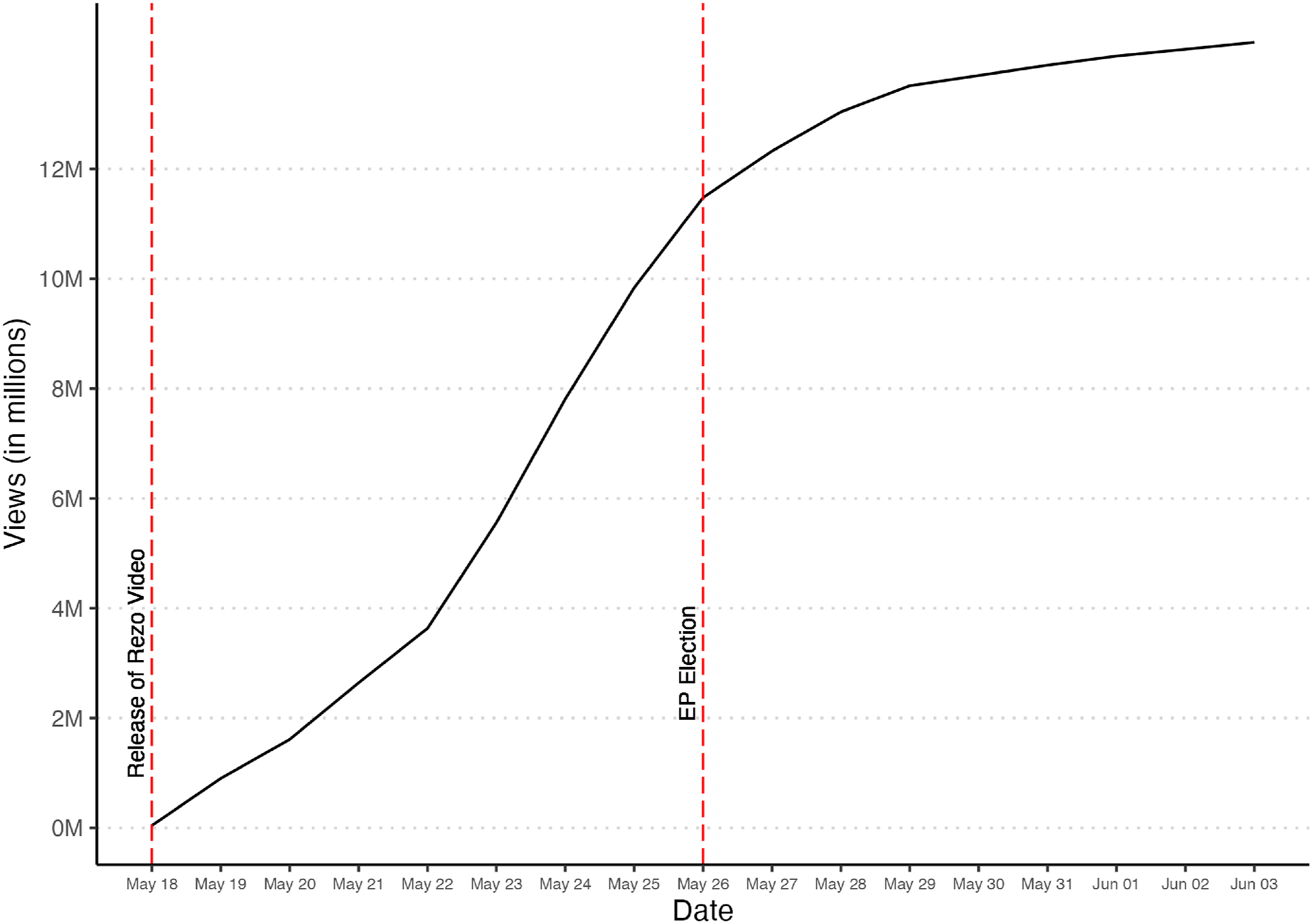
Identification Strategy
In order to identify the effect of the Rezo video on the election outcome, a differences-in-differences estimation strategy is employed (see also Montalvo, 2011). The majority of voters cast their vote at the ballot box at the day of the election (26 May 2019). However, 28.4% of German voters cast their vote by mail before the actual election day. According to German law, mail votes are only counted if they are received by the responsible authority until 6pm on the election day. Given that elections are always held on a Sunday (which is not a working day so mail is not delivered in Germany), voters need to effectively send their mail votes a few days before the election to make sure that the vote is counted. Accordingly, the Federal Returning Officer states on its official website: “If sent by mail, the postal ballot letter should be posted in Germany not later than on the third working day before election to make sure it is received in time.” 9
The time difference between when ballot box and mail voters effectively cast their votes allows for identifying the effect of the Rezo video. Ballot box voters cast their vote on 26 May 2019, eight days after Rezo has released his video. Ballot box voters therefore constitute the treatment group as they had been exposed to the video. The majority of mail voters however cast their votes to a large extent before the video was released or at least before the video has gained nationwide attention. As a result, many mail voters had not been exposed to the Rezo video and postal voters therefore serve as the control group. The fact that some postal votes were cast by citizens who were exposed to the video only constitutes a more conservative test of the impact of the Rezo video. If we find a systematic difference between mail and ballot-box votes, the effect would most likely even be larger if the control group would consist only of voters who were not exposed to the video.
Election Outcomes
In order to measure the electoral impact of the Rezo video, the vote share of the CDU/CSU at the European Parliament election in 2019 serves as the outcome variable. A dataset was compiled that includes the election outcomes at the county level across all 414 German counties. 10 For each of these counties, the election results are listed separately for voters who cast their votes at the ballot box (personal votes) and for voters who cast their vote by mail (mail votes).
Figure 2 shows how the vote share of the CDU/CSU in EP elections has developed over time since 1994. The blue line indicates the vote share among the personal votes while the red line indicates the vote share among the postal votes. Overall, the vote share of the CDU/CSU among the postal votes is constantly higher than the vote share among the ballot box votes over time. This difference has been remarkably stable. It is only in 2019 that a deviation from the trend occurred. In the 2019 EP election, the vote share of the CDU/CSU among the ballot box votes considerably decreased. Hence, the graphical illustration of the vote share of the CDU/CSU over time shows that the parallel trends assumption holds over time and that the vote share of the CDU/CSU in the 2019 election considerably declines as expected. Vote share of CDU/CSU over time.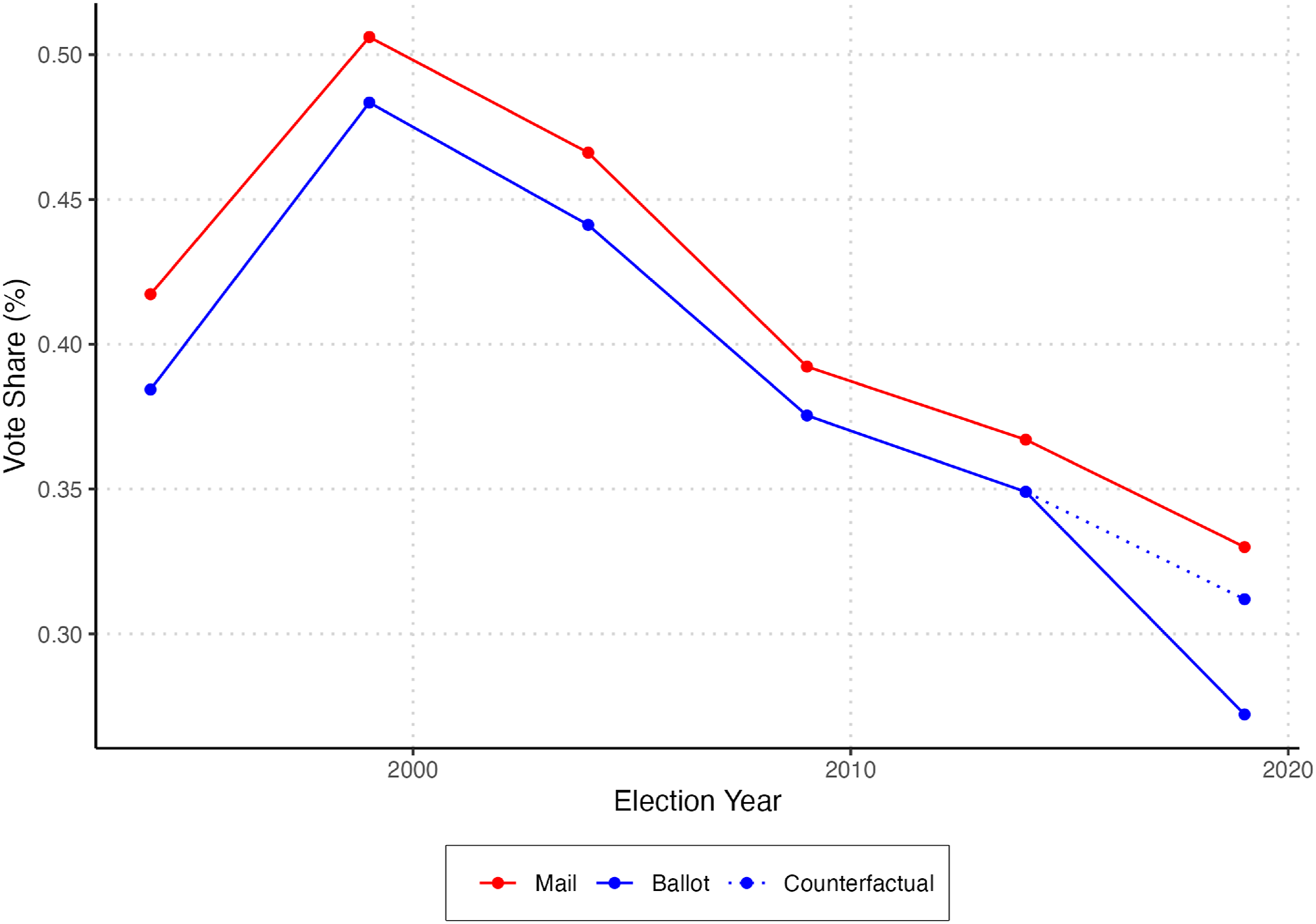
Estimation
In order to estimate the effect of the Rezo video on the vote share of the CDU/CSU at the EP election in 2019, a differences-in-differences modeling strategy is employed. The treatment group consists of all ballot-box districts while the control group is composed of the postal vote districts. A two-way fixed effects specification is employed which allows for adjusting for any time constant differences across districts.

Findings
DiD: The Effect of the Rezo Video on Vote Share of the CDU/CSU.
+p < 0.1, *p < 0.05, **p < 0.01, ***p < 0.001.
Full regression results are provided in Table K.9 in the SM.
To investigate the short-term dynamics underlying these results, Figure 3 displays the standing of the parties in the polls prior to the EP election (for more information about the data, see section F in the Supplementary Materials (SM)). Public opinion polls are regularly collected by different polling companies in Germany (e.g. Forschungsgruppe Wahlen, YouGov, Forsa and Infratest dimap), though the quality and density of the polls varies greatly between the respective polling institutes. All these polls were scraped from several webpages that collect and publish the opinion polls of all these institutes (e.g. wahlrecht.de and Wikipedia) and compiled as a dataset. This results in over 3000 individual data points from 232 individual polls for 2019. Standing of the major parties in the polls.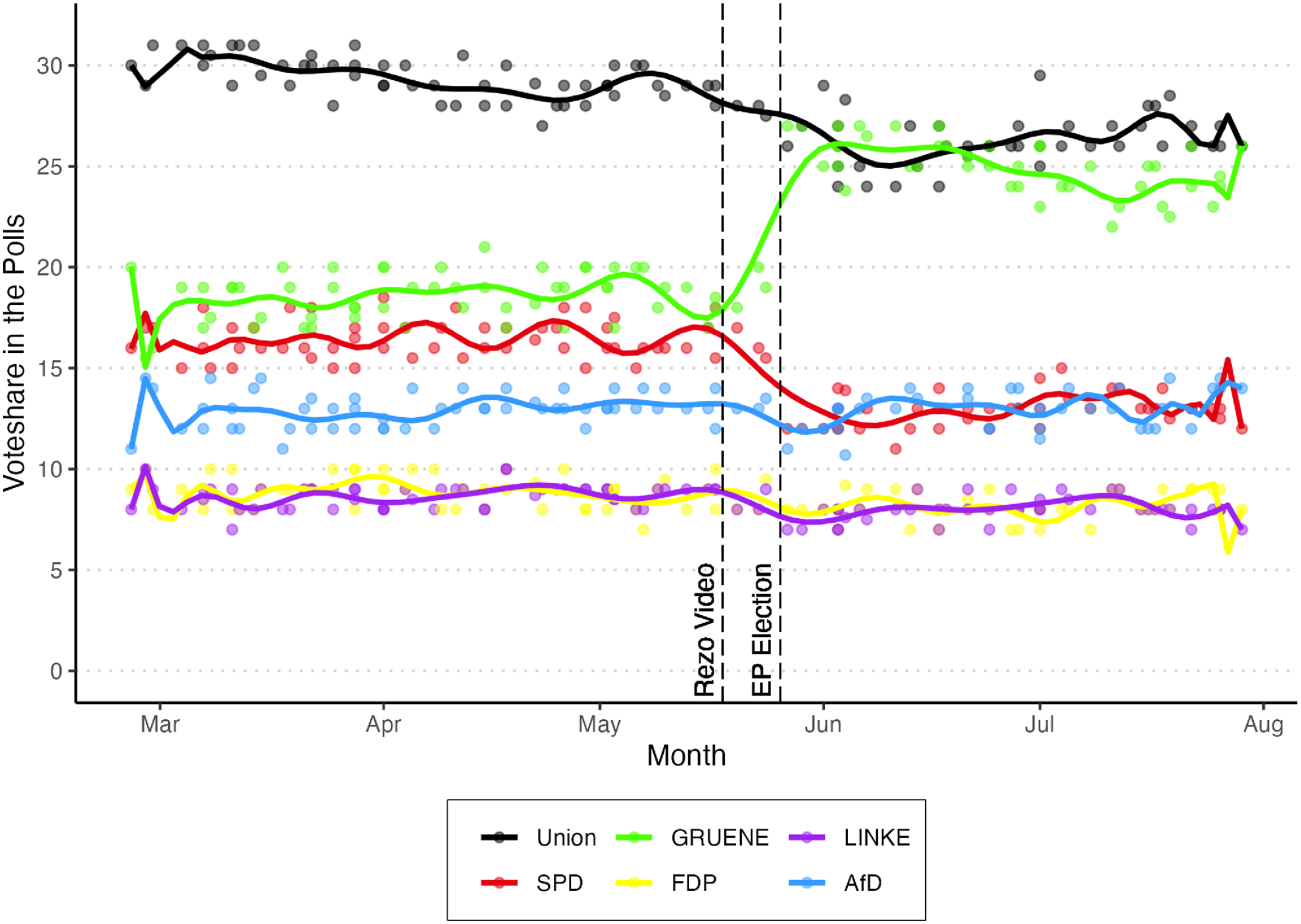
Figure 3 shows that there was a dramatic shift in vote intentions just around the EP election. While the standing of the major parties in the polls was remarkably stable in the months before the EP election, the CDU/CSU and SPD suffered considerable losses after the release of the Rezo video while the Greens experienced an immense upward shift in the polls. By contrast, there are no sizable differences in the performance of the liberal FDP, the right-wing populist AfD and the socialist Left party in the polls in the run-up to the EP election. The polling data therefore suggests that the Rezo video most importantly affected the two governing parties as well as the Green party. While the CDU/CSU and SPD lost in the polls after Rezo has published his video, the Green party could dramatically increase its support in the polls. The polling data moreover demonstrates that this has not been a long-term trend that evolved during the electoral cycle or even in the heat of the election campaign, but that these shifts were sudden and only took place after the release of the Rezo video.
Who Watched the Video?
To shed light on how the Rezo video could have influenced the outcome of the EP election, it is first of all instructive to shed light on who actually watched the video. Data from YouTube Analytics obtained from Rezo shows that the vast majority of viewers of the Rezo video were young voters between 18 and 24 (41%) and 25 and 34 (24%) (see Figure 4). As research on political participation has shown that citizens are most susceptible to outside influences during their adolescence (“formative years”) in which their political views form (Campbell et al., 1960; Dinas, 2013; Jennings & Niemi, 1974), the age structure of the video viewers suggests that the Rezo video was seen by a comparatively receptive demographic group of voters (see also Harff & Schmuck, 2023). The age structure of video viewers.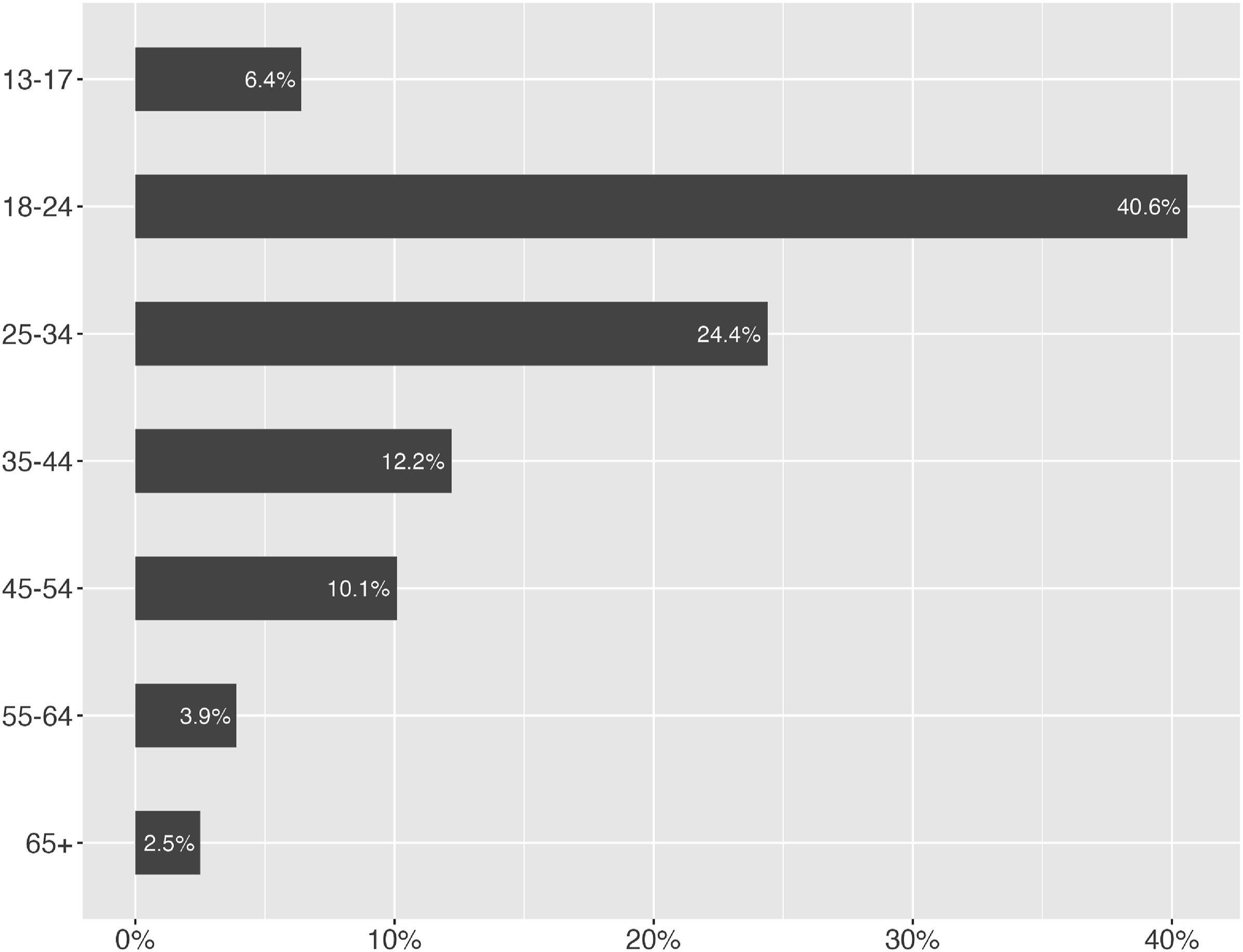
There are different channels through which the Rezo video could have affected the electoral outcome at the 2019 EP election. First, the video could have had a direct effect on Rezo followers on YouTube. Second, the video could have also influenced the immediate environment of Rezo’s followers through online and offline communication in personal networks. Third, the video could have also had an impact on the election outcome through media coverage as traditional media outlets might have reported about the Rezo video.
First, to examine to what extent the Rezo video could have a direct effect on followers and their immediate environment, data from YouTube Analytics is instructive.Figures B.2 and B.3 in the SM show how the viewers came across the Rezo video. 6.1% of the views occurred on Rezo’s YouTube channel and 13.5% of views were based on video recommendations through YouTube. These viewers are the core followers of Rezo as they directly follow his YouTube channel or since they obtained a YouTube recommendation to the video presumably as a result of having watched Rezo videos before (Goodrow, 2021). Interestingly, the video was also heavily shared on social media. 15.4% of all video views occurred through sharing the video via WhatsApp, 10.2% through Facebook and 3.5% through Twitter. This suggests that there was an important network effect as the video was shared in personal networks by circulating the video on social media platforms. Thus, the YouTube Analytics data provides suggestive evidence that the video was viewed to a large extent by Rezo’s core followers and that the video was also widely spread through social online networks.
To shed light on whether the Rezo video could have also affected the election outcome through traditional media outlets, a media analysis of traditional newspapers was conducted. The number of articles that reported on “Rezo” between the publication of the video on 18 May and the EP election on 26 May was obtained by a key term search for the term “Rezo” on online archives of major print newspapers. Three newspapers were selected, namely the biggest tabloid newspaper “Bild” as well as two nationwide mainstream newspapers, the left-leaning “Süddeutsche Zeitung” and the conservative “Die Welt”. Figure J.9 in the SM shows that all three newspapers reported about the Rezo video before the EP election. The largest number of articles was found in the “Süddeutsche Zeitung” followed by the “Bild” and “Die Welt”. In connection with the large share of views through active searches on YouTube (36.7%) (see Figure B.2 in the SM), this suggests that the Rezo video also had a sizable reach beyond its core followers. Similarly, Figure 5 presents Google Trends data for the frequency of the search term “Rezo” to illustrate the general public attention that the video received over the course of the week preceding the European Parliament election. Here, we can see that the video not only received media attention, but that also the general public actively searched for the video on Google with the starkest increase in search volume between 22 and 24 May. Google Trends for the search term “Rezo” shortly prior and after the publication of the Rezo video. Note: The y-axis represents the interest in the search term relative to the highest point on the graph (in the respective region and time frame). A value of 100 indicates the highest popularity of the term, while a value of 50 means that the term is half as popular.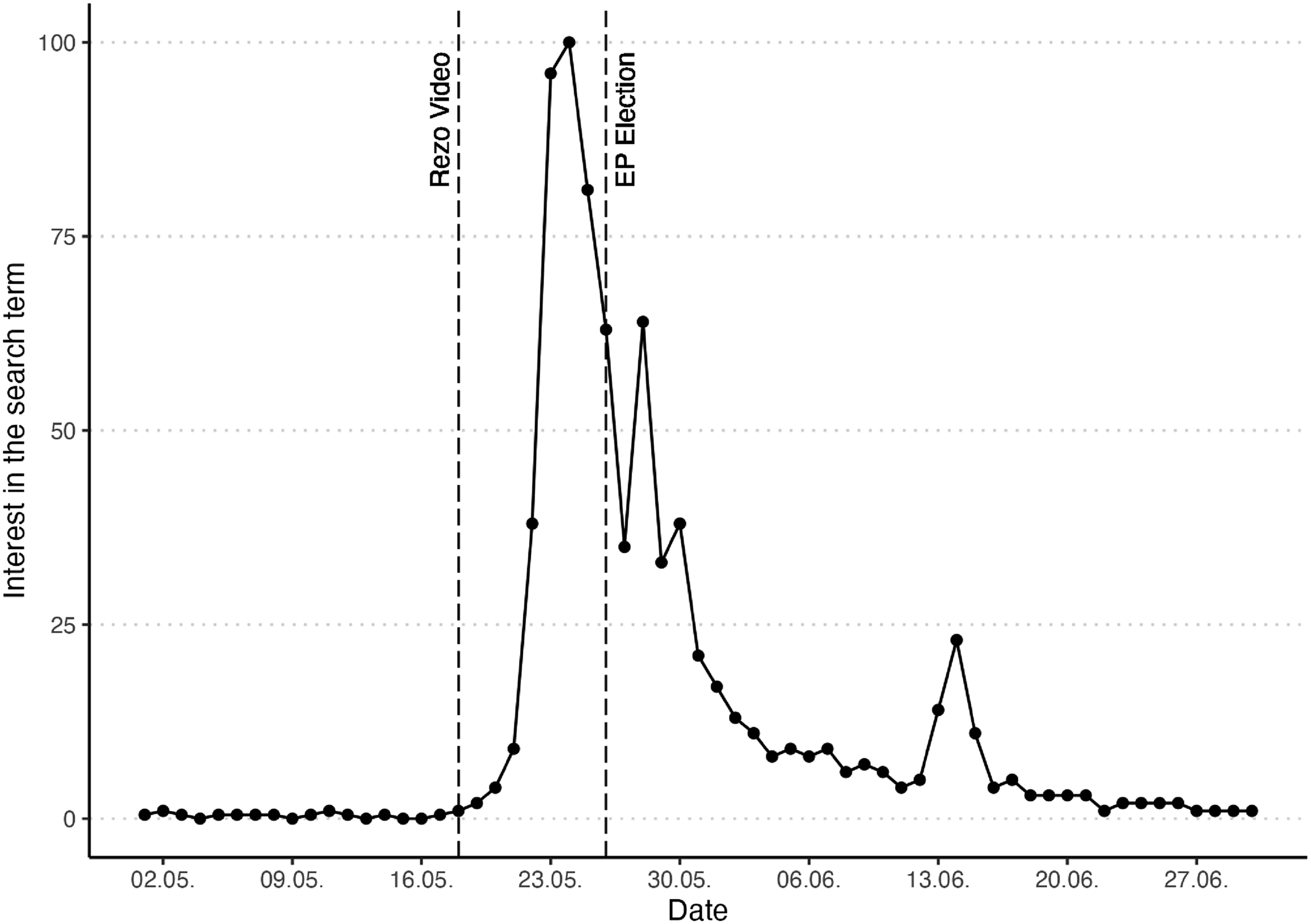
Electoral Patterns
Difference-In-Differences Analysis of Turnout.
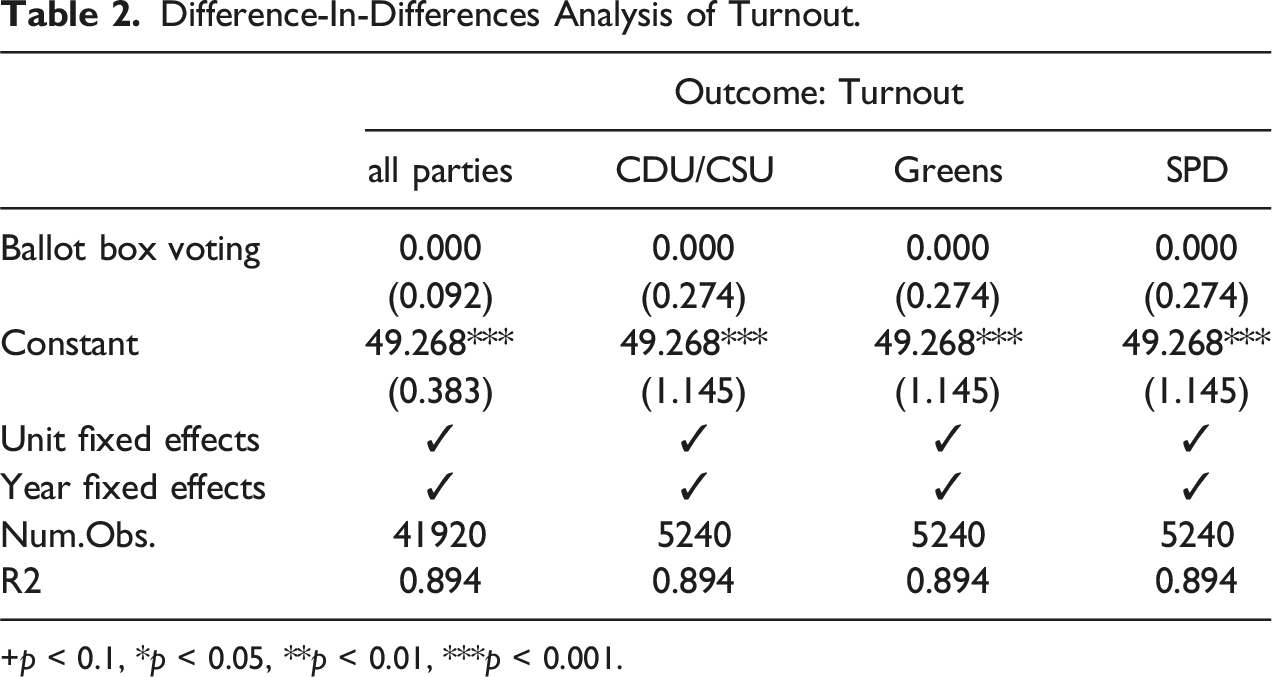
+p < 0.1, *p < 0.05, **p < 0.01, ***p < 0.001.
Since turnout is not the major driver of the Rezo effect on the election outcome, vote switching must have played a major role. In order to shed light on the underlying voter movements in the aftermath of the video release, individual level panel data provided by the German Internet Panel (GIP) was analyzed (for details, see section E in the SM). The GIP is a representative online panel among more than 4000 German citizens that was first fielded in 2012 and has since been conducted online every other month. Based on the GIP waves conducted in March and July 2019, Figure 6 displays how individual voters have moved between political parties. The initial vote intention is based on the reported vote intention in the March wave while the actual vote was obtained from a question in which the respondents were asked to report their vote choice in the EP election in the July wave. Figure 6 shows that the biggest voter movements occurred between the CDU/CSU, the SPD and the Greens. The CDU/CSU and the SPD lost most votes to the Greens while the Green party also gained most votes from these two parties. The number of voters supporting the Greens in the EP election who formerly indicated not to vote is by contrast comparatively small while there was also a sizable demobilization of CDU/CSU voters who eventually did not cast their vote. The analysis of the GIP data provide suggestive evidence that the effect on the aggregate level is primarily driven by vote switching and to a lesser extent by demobilization rather than by the mobilization of new voters. Voter transitions.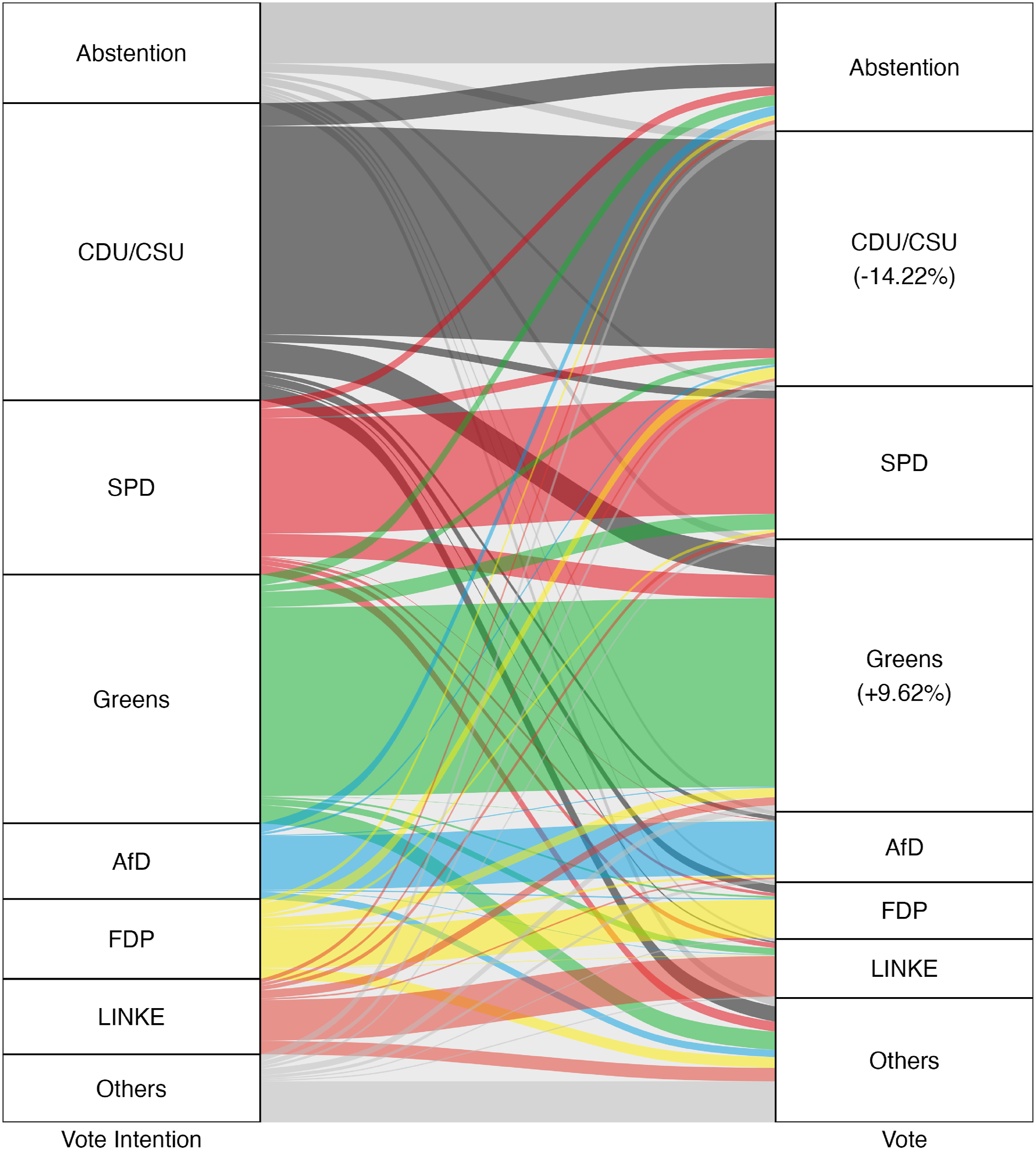
Logistic Regressions Explaining Vote Switching Between March and July 2019 (Odds Ratios).
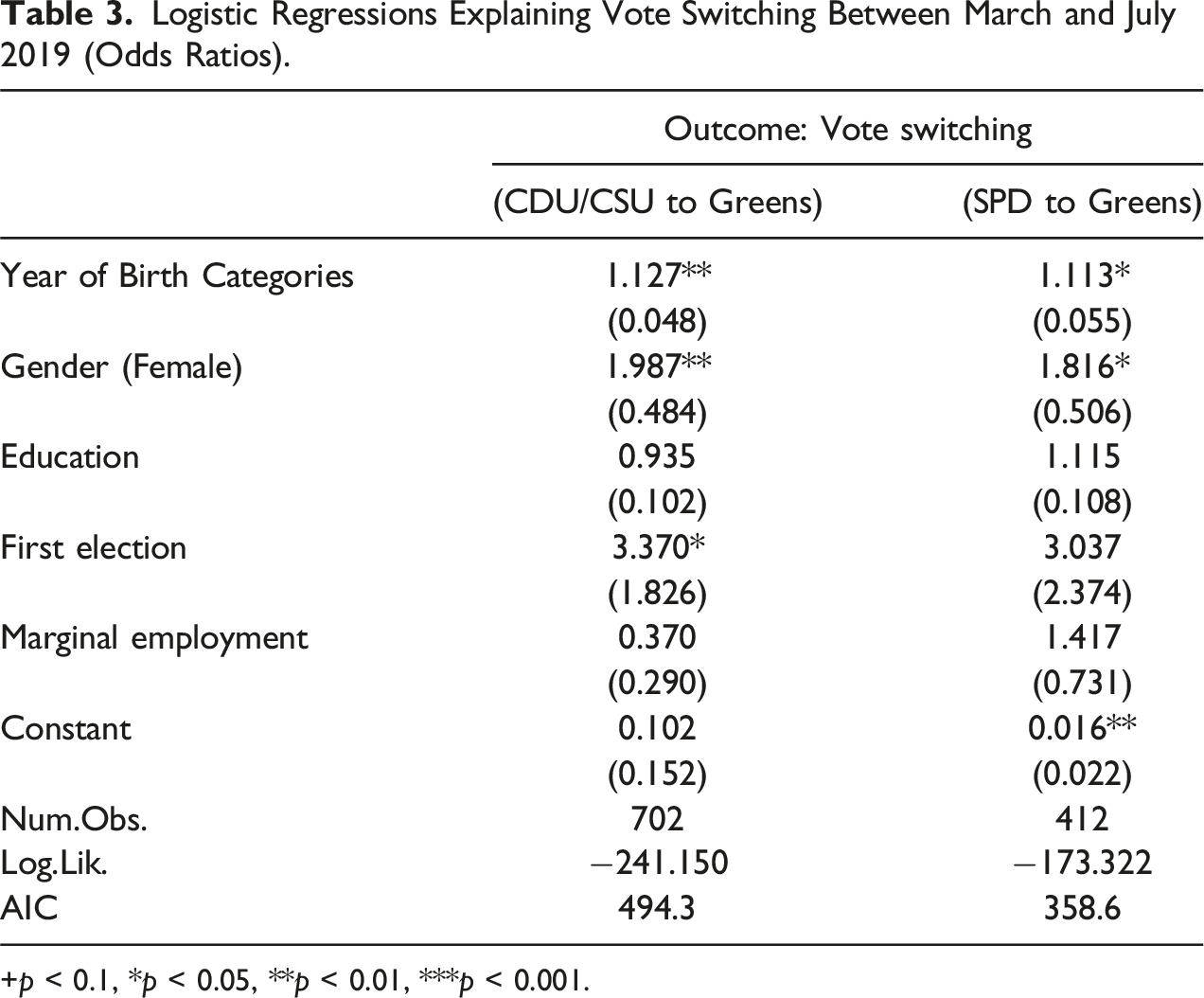
+p < 0.1, *p < 0.05, **p < 0.01, ***p < 0.001.
Alternative Explanations
To check whether the vote losses of the CDU/CSU and the SPD and the vote gains of the Greens shortly before the EP election can be attributed to the Rezo video, we need to make sure that the Rezo video did not coincide with any other significant event or phenomenon of similar importance that could account for the detected effects (excludability). One potential alternative explanation is Fridays for Future and its environmental protests. An inspection of Google search terms during the time period between the release of the Rezo video and the EP election reported in Table G.4 in the SM does not suggest any other major political events that could account for the detected effects. However, polling data presented in section G of the SM suggests that even though FFF may have been one reason for the long-term increase of the Green party in the polls in late 2018 and early 2019, it cannot account for the puzzling stark increase just before the EP election.
Conclusion
Even though social influencers on social media platforms such as YouTube, TikTok or Instagram become ever more important actors in the public sphere attracting millions of followers around the world, we have hardly any knowledge about their political impact. In this article, it was proposed that social influencers can influence electoral outcomes through their role as digital opinion leaders and their power to shape the media agenda. The argument was empirically tested by leveraging an event that occurred during the 2019 election campaign of the European Parliament. More specifically, the effect of a video released by the YouTube social influencer Rezo on the outcome of the EP election was identified by comparing the vote share for the CDU/CSU among postal votes that are typically cast a number of days before the election (control group) and in-person votes (treatment group) since only the latter have been exposed to the video. The CDU/CSU which was primarily attacked in the Rezo video suffered electoral losses that were as high as 4.7 percentage points resulting in a historically low CDU/CSU vote share of 28.9% in the EP election. The SPD also suffered vote losses albeit to a smaller extent while the Green party was the major winner.
The findings of this study have major implications for the debate on the impact of social media on electoral competition and political representation. It was shown that a social influencer had a sizeable effect on the outcome of a democratic election. Even though social influencers typically engage with their followers on day-to-day issues such as fashion and music, the impact of the Rezo video shows that they can also turn into important political opinion leaders significantly affecting the outcome of elections. They challenge and to some extent undermine established patterns of electoral competition. Three features make them particularly powerful: They have a comprehensive network often involving millions of followers, they have direct communication channels with their followers and they can act fast as any post instantly reaches their followers. Rezo has exploited these advantages and staged his attack well. The CDU/CSU was blindsided by the video and was entirely unprepared to effectively respond to Rezo’s critique. Thus, social media influencers are increasingly important societal actors that can have an important impact on electoral outcomes.
The results are important as social influencers have repeatedly commented on political issues in recent years. Even though social influencers typically post on day-to-day issues such as fashion or music, they have increasingly voiced their opinion on issues such as the COVID pandemic, climate change or gender. Given that they primarily address young people in their formative years, they have a particularly receptive target group. Since many social influencers have commercial ties that are not properly disclosed (Goanta & Ranchordás, 2020), the political impact of social influencers raises important normative concerns. Future research is needed to further understand when and why they send political messages and how their political messages are related to their commercial partners to inform the ongoing debate on social media regulation.
This study makes an important contribution by showing that social influencers can yield a significant impact on electoral outcomes. However, to what extent are the results generalizable? External validity beyond this particular case is difficult to assess. Germany shares many similarities with other political systems. First, the EP elections all over Europe are conducted on the basis of a proportional electoral system and political parties play a key role in German politics just like in many other Western democracies. Second, the social media platforms and the media landscape in Germany are comparable to many other Western democracies. Third, Rezo is a typical social influencer who shares many similarities with other influencers, e.g. he is young, usually posts on non-political issues and has more than 3.6 million followers. Thus, there is no reason to believe that Rezo systematically differs from other influencers. Given the similarity of the political system, the social media platforms as well as the traditional media landscape and the resemblance of Rezo to other social influencers it is not readily apparent why we would expect dramatically different results for other social influencers in other Western countries. However, external validity is best achieved by carrying out comparable studies in different countries and I therefore hope to stimulate comparative research on the influence of social influencers in other elections and political systems.
Supplemental Material
Supplemental Material - Social Influencers and Election Outcomes
Supplemental Material for Social Influencers and Election Outcomes by Heike Klüver in Comparative Political Studies
Footnotes
Declaration of Conflicting Interests
The author(s) declared no potential conflicts of interest with respect to the research, authorship, and/or publication of this article.
Funding
The author(s) received no financial support for the research, authorship, and/or publication of this article.

Supplemental Material
Supplemental material for this article is available online.
Notes
Author Biography
References
Supplementary Material
Please find the following supplemental material available below.
For Open Access articles published under a Creative Commons License, all supplemental material carries the same license as the article it is associated with.
For non-Open Access articles published, all supplemental material carries a non-exclusive license, and permission requests for re-use of supplemental material or any part of supplemental material shall be sent directly to the copyright owner as specified in the copyright notice associated with the article.
