




Abstract
Transnational European identities influence public debates and electoral dynamics across Europe, with sociodemographic factors strongly associated with these identities. Meanwhile, little attention has been paid to how people’s perceptions of a political group’s sociodemographic profile relate to their identification with Europe. I argue that such perceptions, in combination with social identities, are significantly associated with the strength of individuals’ identification with political groups. An individual is more likely to have a robust European identity if they perceive that social groups they like share the same pro-European opinion. In contrast, if they perceive that groups they like align with the anti-European camp, they are likely to have a weaker European identity. By employing novel survey data from Italy and Austria, I find empirical support for my argument. This paper contributes to the debate on the mechanisms that connect social and political identities and explains how cleavages emerge in the mass public.
Introduction
The transnational–nationalist divide in the Western European public is shaping global and national politics alike. People who identify with a transnational territorial unit such as Europe tend to vote more for left-libertarian parties, favor more open borders, and support transnational institutions such as the European Union (De Vries & Van Kersbergen, 2007; Hooghe & Marks, 2009; Karstens, 2020). In contrast, those who exclusively identify with their nation-state are more supportive of radical-right parties, hold more negative attitudes toward immigrants, and even favor the exit from transnational institutions such as the EU (Curtis, 2014; Hobolt, 2016; Hooghe & Marks, 2009, 2018). This raises questions about the factors that drive the adoption of identities in emerging cleavages such as the transnational–nationalist divide.
Research has identified a socially clustered picture of who adopts a European identity alongside their national identity across Western Europe. Highly educated individuals, white-collar workers, urbanites, and young people are more likely to adopt a European identity and cosmopolitan attitudes than their counterparts (Bornschier et al., 2021; Fligstein, 2009; Maxwell, 2019). Researchers have put forward two main explanations for why some social groups tend to belong to the transnational camp and others to the national camp. The utilitarian approach focuses on how the redistributive consequences of European integration determine whether a person will adopt a European identity (Gabel, 1998). On the other hand, seminal work from the cleavage literature (Bartolini & Mair, 2007; Kriesi et al., 2006, 2008) highlights the importance of individual values, which are shaped by socio-structural factors such as education and are then mobilized by parties. Education is argued to play an especially critical role in equipping individuals with progressive values (Kriesi et al., 2006).
I offer a third, complementary theoretical account of how social groups are connected to political identities, emphasizing the role of social sorting next to social identities in the formation of transnational identities. My view differs from the others in that I do not assume that social structuring is only driven by differences in values and material interests that are inherent to specific social groups. Rather, the sorting of socio-structural groups into identity camps serves as information in itself and as a crucial moderator between social and political identities. Research has shown that social group cues and social sorting play a critical role in who adopts a political identity or position and how strongly they do so (Huber, 2021; Kane et al., 2020; Mason & Wronski, 2018; Thau, 2019). In the social sorting explanation of the transnational–national cleavage, a person’s feeling of European identity is connected to whether that person perceives that sociodemographic groups they like or dislike mainly support the pro- or the anti-EU camp, for example, whether a person thinks that mainly university graduates are cosmopolitans or not. In this study, I find initial empirical support for the connection among social sorting perceptions, social identities, and European identities. However, I do not find any indication that social sorting perceptions are similarly connected to national identities.
This paper makes a theoretical contribution to the study of the development of social cleavages, adding a mechanism that focuses more on social groups and perceptions of them than on the role of parties in understanding how the transnational–national cleavage manifests in society. In recent years, party identification has declined, and unelected representatives, such as social media influencers, protestors, and even opinion leaders from a person’s private networks, have begun to play a larger role in shaping the perception of politics (Katz & Mair, 2018; Kayser & Wlezien, 2011; Klüver, 2022). Theories are needed that focus on the role of such social groups in the formation of political identities. Thus, my argument examines what is perceived to be the “typical” Europeans or “typical” nationalists and how this is connected to a person’s own European identity. In addition, this paper also contributes a new measure, the Group Closeness Score, to the methodology in this field. This measurement instrument captures, on one scale, the sorting perceptions of individuals and their identification with these multiple sorted social groups. Overall, this paper takes another step in explaining how constructing and talking about the “typical” cosmopolitan European can be a self-reinforcing dynamic, attracting or repelling people based on how much they identify with the perceived “typical” European. Ultimately, this paper explores how political identities can spread and become contagious, even without high degrees of political sophistication or existing or perceived partisan cues.
The Development of Political Identities in the Socio-Structural Context
Building on classical works in social psychology, I define social identities as a feeling of belonging to a primary social group and subscribing to its (imagined) norms and values (Tajfel & Turner, 1979). According to this definition, it is not only important whether a person objectively belongs to a social group—for instance by having a specific sex or degree—but also whether this person sees themselves as a member of the social group (Bornschier et al., 2021; Huddy, 2013). Based on such identities, a person knows to which group they want to belong—the ingroup—and from which one they want to be distinguished—the outgroup (Brewer, 2003). Even though nearly all social identities can become political in certain contexts, I define a political identity as an identity primarily attached to the political world, that is, an identity as a supporter of a specific political party or an issue discussed in the political arena (Hobolt et al., 2021; Huddy, 2013).
Social and political identities are often seen as stable and hard to change. However, important political and personal events have the capacity to reshape identities. For example, the Brexit vote has led to the emergence of new political issue identities (Hobolt et al., 2021). Both Remainers and Leavers show a great amount of outgroup dislike that far exceeds the outgroup dislike based on partisanship. Additionally, other research has shown that people switch the reporting of their sociodemographics to better align with their political identities (Egan, 2020). Thus, even though identities are mostly stable, certain contextual factors can recalibrate social and political identities.
Social identities are one of the driving forces of the transnational–national cleavage. The transnational cleavage divides supporters of an open, cosmopolitan society from supporters of a traditional lifestyle firmly rooted within the boundaries of the nation-state (Ford & Jennings, 2020; Hooghe & Marks, 2009; Kriesi et al., 2006). In determining whether a person belongs to the transnational or national camp, it is not the degree of national identity that is most decisive but rather whether they identify exclusively with the nation-state or include a feeling of belonging to Europe (Carl et al., 2019; Hooghe & Marks, 2009).
Holding a transnational identity, such as the European identity, in addition to a national identity, has a strong connection to political attitudes and behaviors, forming the basis of the emerging transnational cleavage (Carl et al., 2019; Hooghe & Marks, 2009, 2018). Individuals who hold a European identity alongside their national identity have more positive views of the European Union (De Vries and Van Kersbergen, 2007), exhibit more positive attitudes toward immigrants (Curtis, 2014), demonstrate higher levels of tolerance toward disliked outgroups (Curtis, 2014; Stoeckel & Ceka, 2023), and are more in favor of open borders and redistribution across borders (Karstens, 2020; Nicoli et al., 2020) than their counterparts who exclusively hold national identities. The European identity is not only connected to the institution of the EU but also tends to reflect open, cosmopolitan values in general (Pichler, 2009; Stoeckel & Ceka, 2023). 1 Those who identify with Europe and those who do not often differ in their socio-economic profile. Individuals with higher incomes and higher education levels are disproportionately more likely to adopt a European identity, in contrast to those with vocational training, other educational degrees, and lower incomes (Fligstein, 2009; Ford & Jennings, 2020; Hooghe & Marks, 2009). So, how can the sorting of social groups into identities be explained?
There has been ongoing debate regarding the mechanisms through which social structure becomes connected to transnational and national identities (Bornschier et al., 2021; Hooghe & Marks, 2009, 2018; Kriesi et al., 2008; Lipset & Rokkan, 1967). Some scholars adopt a utilitarian approach, emphasizing the redistributive consequences of European integration on the formation of attitudes (Brinegar & Jolly, 2005; Gabel, 1998; Gabel & Palmer, 1995). Utilitarian explanations underscore an individual’s perception of how much they economically benefit from European integration. If a person believes that European integration leads to economic losses for individuals like them, they tend to oppose transnational integration. Conversely, if they perceive European integration as increasing their welfare, they are more likely to hold favorable views. According to this theory, socio-structural sorting occurs as winners of European integration identify with Europe, while losers of globalization cling to their national identity.
In contrast, cultural approaches emphasize the role of values rather than material interests in shaping European and national identities (Hooghe & Marks, 2018; Inglehart, 1970; Kriesi et al., 2008). These scholars highlight the critical role of education in forming transnational and national identities and values, highlighting that education induces a general shift of political value orientations toward cultural liberalism, cosmopolitanism, and universalism (Kriesi et al., 2008, p. 17). The transnational and nationalist divide regarding transnational integration and demarcation tends to depend on an individual’s level of education, which explains the pattern of sorting between European and national identities. Education equips citizens with progressive values on the one hand, while also providing them with higher status and better employment opportunities in the knowledge economy (Häusermann & Kriesi, 2015; Kriesi et al., 2008; Norris & Inglehart, 2019).
While the utilitarian and cultural theories have been able to address many empirical puzzles and explain important political phenomena, there are certain puzzles that these approaches struggle to explain. Utilitarian approaches assume that individuals possess extensive political knowledge and pay attention to political and economic developments within the European Union. However, the general public’s knowledge levels and interest in the EU remain relatively low across European countries, even during highly significant political events (Clark, 2014; Sczepanski, 2022).
Furthermore, even populist parties face limitations in their ability to mobilize support solely based on economic grievances or opposition to European integration (Neuner & Wratil, 2020; Yordanova et al., 2020). Overall, the utilitarian approach encounters difficulties in explaining the proliferation of pro- and anti-European identities among a less informed public. Regarding the liberalizing effect of education, recent research has indicated that parental socialization, rather than education alone, plays a significant role in shaping attitudes toward the EU (Kuhn et al., 2021). It is the social environment that influences educational attainment, which subsequently fosters pro-European attitudes and identities. This finding does not negate the potential of education to cultivate liberal attitudes on its own. However, for education to serve as a solid foundation for the transnational–national cleavage, social interaction with trusted individuals, such as parents, may represent an important additional component in transforming interests and values into a firm identity.
Not only cognitive experiences but also social interactions, including engagements with symbols and interactions with different social groups, play a crucial role in the development of political identities. Deutsch (1957) argued that transnational contacts and interactions contribute to the adoption of European identities, and subsequent research has shown that experiences such as participating in Erasmus programs and residing in diverse neighborhoods foster the growth of European identity (Kuhn, 2011; Schraff & Sczepanski, 2022; Stoeckel, 2016, but see Kuhn, 2012). Moreover, symbols representing the European Union and pro-European actions have been demonstrated to be related to the adoption of a European identity (Nicoli et al., 2020; Sczepanski, 2023a). The notable success of socialization approaches is unsurprising, as the fundamental functions of identities are social in nature, creating a sense of belonging. Engaging in activities with others and sharing experiences are key to the functioning and maintenance of identities.
Recent studies on partisanship have uncovered another pathway through which social processes influence the formation of identities: social sorting. Social sorting occurs when individuals perceive certain social groups as associated with particular political affiliations (Kane et al., 2020; Mason & Wronski, 2018). This research has demonstrated that individuals in the US context pay attention to which social groups support which party and policy positions (Elder & O'Brian, 2022; Mason & Wronski, 2018). Consequently, these perceptions of social sorting influence the degree of affective partisan polarization and shape individuals’ positions on policy issues (Mason & Wronski, 2018). For instance, a person may identify less with a party if she dislikes social groups, such as Catholics, who also support the same party (Kane et al., 2020). The US studies primarily focused on religious groups with robust ideological cores or racial groups in the US.
Given recent research suggesting that social sorting perceptions influence the adoption of partisan identities, a new question arises: Do social sorting perceptions also connect to issue-based identities, such as those centered around a specific issue or position, like Europe? Additionally, do the findings from these US studies generalize beyond the US context, and do sorting perceptions of social groups unrelated to ethnicity and religion also influence political identities?
Social Sorting as Moderating Link Between Social and Political Identities
I propose that people’s perceptions of social sorting play a crucial role in moderating the relationship between social group and political identities. My theoretical perspective provides an explanation for why individuals identify with political issues and hold strong convictions, even if they lack the knowledge or motivation to engage with them on a daily basis. On the other hand, social sorting may offer a missing piece of the puzzle, providing theoretical grounds for understanding why individuals may turn away from specific social groups if they oppose their political views. Therefore, social sorting offers a valuable perspective for comprehending the sources of political and social conflicts.
My argument suggests that social identities and political ones mutually influence each other through social sorting. This approach is more dynamic than the cultural or socio-structural approach and provides a mechanism for understanding why and for whom identities change during political or social events. If a significant political or personal event occurs that changes sorting perceptions, the theoretical account I provide will predict that identities would gradually change. Rather than solely examining the direct link between social and political identities based on socio-structural interests, values, or early socialization, I argue that the perceived behavior of social groups also plays a crucial role in determining what social group identity “goes with” what political identity.
This approach is founded on a theoretical concept of social identities, which encompasses the content of norms, behaviors, and feelings, but also the identity prototypes, which refer to different types of people with distinct characteristics (Tajfel, 2001; Tajfel & Turner, 1979). While the norms and behaviors of a group, the identity content, have been significantly researched in political science, the study of identity prototypes has only resurfaced recently. People pay attention not only to the values and norms that define a group but also to the types of people that are part of it (Hogg, 2016; Zollinger, 2022). For example, when individuals think of what it means to be European, they associate cosmopolitan values with sociodemographic characteristics such as education and wealth (see Appendix for voters’ descriptions of a typical European in this study).
Social group identities and political identities are closely intertwined and are anchored in social structures, but the link between them can change. Previous research has shown that different social identities often correspond with political conflicts based on the nationalists–transnationalists divide (Bornschier et al., 2021). The development of social group identities is closely linked to an individual’s socio-structural attributes, and self-identification with a group is crucial in this process (Huddy, 2013). For example, individuals often have a strong sense of class identity based on their socio-structural background (Evans & Tilley, 2017). Social democratic parties typically appeal to people with a strong sense of class identity, but recently working-class identities have been linked to Conservative or far-right parties (Bornschier et al., 2021). This shift highlights how the connection between social groups and political identities may change during processes of realignment (Fieldhouse et al., 2021). Similarly, the meaning of what cosmopolitanism mean has changed throughout history (Calhoun, 2002). So the linkage of what social group identity goes with what political identity can change.
I argue that social sorting perceptions play a vital role in moderating the alignment and re-alignment processes between social and political identities, such as a European identity (Bourdieu, 1987; Kane et al., 2020). These perceptions can either strengthen or weaken the links between specific social group and political identities. People do not only possess political identities, but they also hold perceptions about which social groups are likely to support different political identities, whether partisan or issue-based (Mason & Wronski, 2018; Titelman & Lauderdale, 2021). For instance, in the context of Brexit, working-class and lower educated individuals may be perceived as typical Leave voters (Titelman & Lauderdale, 2021). Thus, political identities and social sorting perceptions are intertwined.
The perceptions of social sorting can increase the attractiveness of a political identity if individuals from a social group with whom one identifies are highly visible in a specific political camp (Bicchieri, 2016). Conversely, it can decrease the attractiveness of a political camp if individuals whom one dislikes identify with it. For example, if someone dislikes university graduates and believes that this social group predominantly supports Europe, they might be less inclined to do the same. This mechanism explains how political identity can stem from social sorting perceptions combined with identification with different social groups. 2 This social group identification can drive the adoption of a European identity. Particularly for an issue that a person feels ambiguous about or an issue that is used to signal distinctiveness toward other groups (Prieur & Savage, 2013), how their social peer group positions itself on the issue can influence their identification.
Let me add that political identities can also inform social group identities depending on the perceived sorting of a group. When an individual holds a specific political identity that is important to them, their identification with a social group may be influenced by the perceived sorting of that group. If they learn that a social group predominantly supports an opposing political camp, they may identify less with that group. Empirical evidence has shown that individuals may even reclassify themselves from belonging to one social group to another to align better with their politics (Egan, 2020). However, for reclassification to occur, social sorting perceptions are essential to determine the “correct” classification of social identities based on political ones. Therefore, social sorting still moderates the relationship between political and social identities.
People’s expectations of how social groups sort, behave, and think often shape the relationship between sociodemographics and political identities, which do not need to reflect the factual reality on a specific aggregate level (Mastroianni & Dana, 2022; Titelman & Lauderdale, 2021). Such expectations can arise from personal experiences, such as media consumption, local context, and social networks. When people sort social groups according to specific attitudes or behaviors, these sorting perceptions can become heuristics that guide their own actions and feelings, even if these perceptions do not align with factual reality.
As people often identify with multiple social groups to varying degrees, social sorting perceptions may sometimes point in different directions (Brewer, 2003; Brewer & Pierce, 2005; Mason, 2016, 2018; Mason & Wronski, 2018). When a person’s strongly identified social groups sort into one political camp and those they do not identify with sort into the opposing camp, the person is more likely to identify with their peer groups’ political camp due to the clear push factor provided by social sorting. However, when multiple social groups a person identifies with sort into different political camps, deciding which position to adopt and identify with becomes more challenging (Brewer & Pierce, 2005; Curtis, 2014; Mason, 2016). For instance, if a person strongly identifies with two groups that support opposing political camps, it becomes less easy to identify with either camp (Brewer & Pierce, 2005; Mason, 2016). Therefore, determining whether social group identities and social sorting only point toward one side or are torn between the two political camps is a crucial factor that may strengthen or weaken the link between social and political identities.
In summary, people use the perceived social sorting of multiple groups into identities as an important cue for deciding which social or political group to identify with. This process can be particularly significant if people believe that one social group is disproportionately connected to a specific political issue, such as being pro-European, and the identification with that social group spills over toward the issue identity or vice versa. Therefore, the strength of a person’s identification with the “typical” pro-European, in contrast to the typical nationalist, is directly related to how European the person feels. As a result, strong or weak sorting of people with certain social identities into political camps is not only a function of diverging links between social group and political identities but may also be a self-reinforcing dynamic. Perceived sorting of groups may create or realign social group and political identities.
If a person perceives social groups she identifies with to disproportionately support the EU, she has a stronger European identity.
If a person perceives social groups she identifies with to disproportionately oppose the EU, she has a stronger national identity.
Empirical strategy
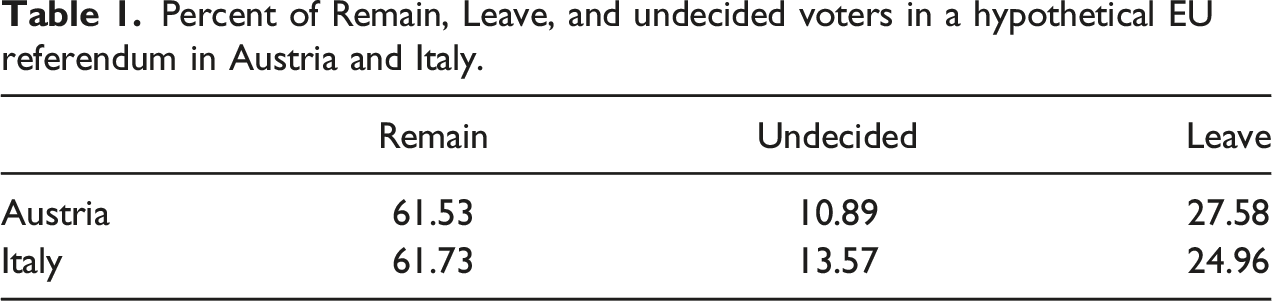
Percent of Remain, Leave, and undecided voters in a hypothetical EU referendum in Austria and Italy.
The dependent variables in my study are European and national identity, which were measured independently of each other. This separate measurement is based on research indicating that these two identities do not necessarily trade off against each other (Schraff & Sczepanski, 2022) (see Appendix for differences in national identities and European identities among Remain, Leave, and undecided voters). To capture the nuances of European and national identity, I employed four different items based on the work of Huddy and Khatib (2007). One of the questions, for example, asked respondents whether they perceive themselves as a typical European for the European identity and as a typical Austrian/Italian for the national identity. This measurement approach by Huddy and Khatib (2007) has been shown to encompass the full spectrum of national identities rather than specific sub-forms such as patriotism or ethnocentrism, or civic nationalism. Territorial identities, like other issue identities, pertain to a particular opinion or place, and values need to be associated with these identities. To measure group identities for these political identities, it is preferable to use a measure that captures the group aspect rather than imposing pre-selected identity content based on assumed “imagined” group values, which some individuals may not subscribe to. These new measures strongly correlate with established measures of European and national identities (see Appendix for correlation results and question wordings). To aggregate the individual items into a European and national identity measure, I summed the scores from the four questions.
The independent variable consists of the combined group identification with groups who sort into political camps, the Group Closeness Score. In order to operationalize this variable, I have asked respondents in a first step how close they feel to certain social groups, which approximates a person’s identification with a specific social group (Bornschier et al., 2021) (Question text: Some people feel close to some social groups but do not feel close to other social groups. Please indicate how close you feel to the following groups.). Respondents should indicate on a scale of 0 (not close) to 10 (very close) how close they feel to the following groups: young people, older people, urban people, rural people, men, women, university graduates, and non-university graduates. These groups were chosen as they are often discussed as the socio-structural sources of new cleavages, such as highly skilled versus low-skilled, left-behind rural regions versus booming urban centers, and the young progressive generation versus older, more traditionalist generations (Bornschier et al., 2021; Inglehart, 2015; Kriesi et al., 2006; Schäfer, 2022). Thus, the identities driving multiple cleavages in Western societies were incorporated into the study. Therefore, this study differs from other studies conducted in the US that focus on religious and ethnic groups (Kane et al., 2020; Mason & Wronski, 2018).
In the second step, to measure social sorting perceptions, I have asked respondents to guess for all of the aforementioned social groups whether the respondent thinks that the social group would mainly vote to remain in the EU, leave the EU, or be evenly split between both options. This measure is similar to other studies which include social sorting perceptions in their explanations (Kane et al., 2020; Mason & Wronski, 2018). In the third step, I calculated the respondent’s average group closeness to the social groups she has sorted to either pole—mainly supporting Remain or supporting Leave.
In the last step, to receive the group closeness score, I have subtracted the average group closeness to the social groups a person thinks would mainly vote Leave from the average group closeness toward the social groups a person perceives to vote to Remain mainly. As a result, I have one measure that captures how social sorting perceptions pull or push a person. A positive score indicates that the person feels—on average—closer to the social groups sorted into the Remain camp. A negative score implies that a person feels closer to the groups sorted to the Leave side. The values of this score range from minus 10—that is, the person identifies completely with all the social groups that in their perception mainly vote leave and does not identify with any social group perceived that vote remain—to plus ten. 4
While in most previous studies, researchers have often built on objective sorting—how the group on average behaves—to decide which group is sorted to each party. For example, some research has used the objective sorting of blacks and liberals to the Democratic Party in the US (Mason, 2018). In contrast, I have opted to incorporate each respondent’s own sorting perception into my measure (Mason & Wronski, 2018). As sorting perceptions can be based on personal experiences and networks, my sorting measure can incorporate persons who do not follow the majority perception that, for example, university graduates are mostly Remainers. Therefore, the Group Closeness Score is an individualized approach, specifically focusing on the respondent’s perceptions, to measure social sorting combined with social identities.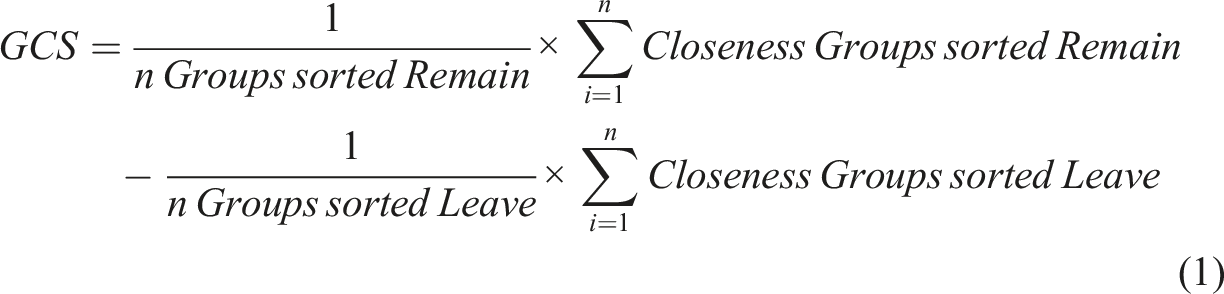
To test the theoretical argument, I employed Ordinary Least Squares (OLS) regression models. These models included several control variables that have been shown to predict the likelihood of holding a European identity alongside the national identity. The control variables included age, employment status, immigration background, education, urban or rural residency, gender, and partisanship. By including these variables, I can compare the explanatory power of my theoretical argument with other theories.
To delve deeper into the potential behavioral implications of my argument, I conducted additional tests to examine whether identifying with the typical European, as opposed to the typical nationalist, influences voting choices in an EU exit referendum. These referenda serve as the ultimate test of an individual’s support for a transnational institution, providing additional insights into the significance of social sorting for political stability. I used two logistic regression models to predict voting outcomes separately for those in favor of remaining and those in favor of leaving, with undecided voters and voters supporting the opposing option serving as the respective baselines.
Results
In this section, I will take five steps to demonstrate the relationship among social sorting perceptions, social identities, and European and national identities. Firstly, I will present the distribution of Austrian and Italian respondents who are in favor of the EU, against the EU, or undecided. Secondly, I will establish the link between objective group membership and social identities, emphasizing that social group identities provide more valuable information about the dominant conflict in society. Thirdly, I will illustrate how pro-Europeans and anti-Europeans identify with specific social groups differently. Fourthly, I will identify the prototype of a typical cosmopolitan European and a more nationalist individual in Austria and Italy. Lastly, I will examine the connection among social sorting perceptions, social identities, European identity and national identity strength, and potential voting choices in a referendum.
Before delving into the analysis, I will explore how the survey respondents in my sample would have voted in a hypothetical EU referendum (see Table 1). An important observation is that the voting preferences of the general public in both Austria and Italy are similarly distributed. A majority of people in both countries would vote to remain in the European Union. However, approximately one-quarter of citizens in both countries express a desire for their country to leave the European Union, while another ten to thirteen percent remain undecided on the matter. Although no referendum is currently scheduled in these countries, these figures indicate a behavioral divide among the population regarding EU membership, with a significant portion advocating for national sovereignty over transnationalism.
Figure 1 illustrates how objective group memberships, such as being an urban or rural resident, are reflected in subjective identities, specifically the degree of identification as an urban or rural resident. This figure provides further evidence supporting the argument that subjective social identities, rather than solely objective social demographics, hold significance. In general, objective group membership leads to a higher level of identification with the ingroup and, consequently, a stronger subjective identification with the objective ingroup compared to the outgroup. For instance, university graduates exhibit a stronger identification with fellow university graduates than with non-university graduates. However, there are noteworthy exceptions to this pattern. Older individuals, for example, identify more with young people than young people identify with themselves. How objective group membership, having a specific socio-structural attribute, translates into average identification with the sociodemographic in- and outgroup. For age, people were divided by median age. Younger people are those below median age, and older people are those who are above median age.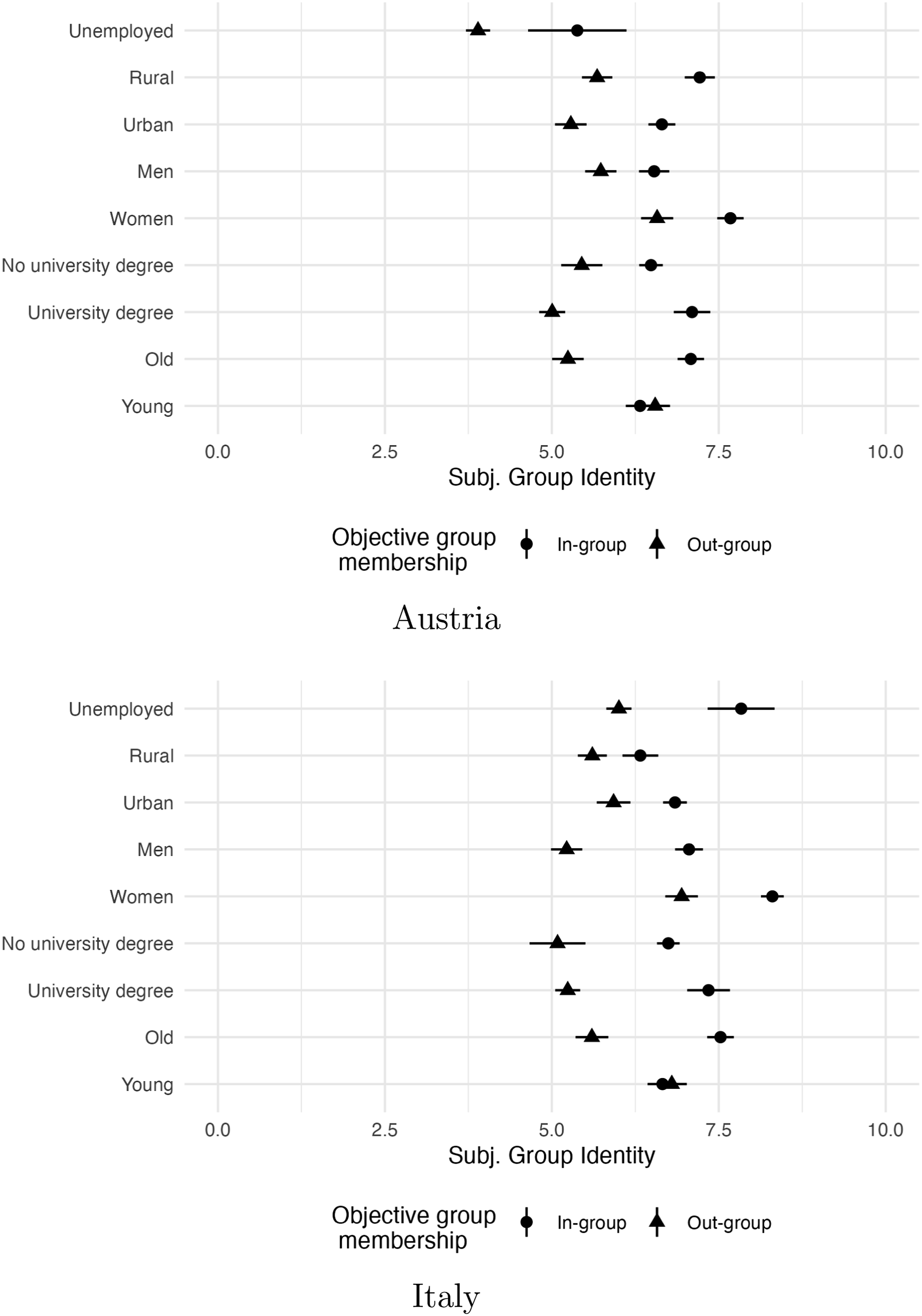
Furthermore, Figure 1 reveals that not every objective group membership results in the same level of ingroup and outgroup identification. There are variations in the size of ingroup–outgroup divides, and these divides are not always symmetrical. Analyzing self-identification with groups possessing specific socio-structural attributes provides insights into the most prominent social divides for different individuals and how these divides influence their political behavior (Bornschier et al., 2021). In both Austria and Italy, the educational divide stands out as one of the most pronounced. In Italy, the gender conflict is particularly divisive for women, while in Austria, the overall gender conflict is less pronounced. Therefore, to fully comprehend the extent of societal conflicts within a particular country and understand how these conflicts translate to other geographical and cultural contexts, self-identification plays a crucial role.
Figure 2 examines the subjective identification of voters in Austria and Italy who are classified as Remain, Leave, or undecided, with different social groups. The results reveal both similarities and differences between Austria and Italy regarding how these political groups identify with various social groups. In both countries, significant differences exist between Remain and Leave voters in terms of their closeness to university graduates. Particularly in Austria, there is a substantial disparity between Leave and Remain voters in their identification with urban residents. However, there is no significant difference in the level of identification between Remainers and Leavers with people residing in rural areas. Conversely, in Italy, Remainers and Leavers do not exhibit differences in their identification with urbanites, but they significantly differ in their identification with rural people. These descriptive findings provide initial evidence suggesting the alignment of political fault lines with social identities. Remainers and Leavers differ in their identification with specific social groups, which aligns with existing research linking new left and radical right voting patterns with social identities (Bornschier et al., 2021). Average identification of voter groups in a hypothetical EU referendum with different social groups in Austria and Italy.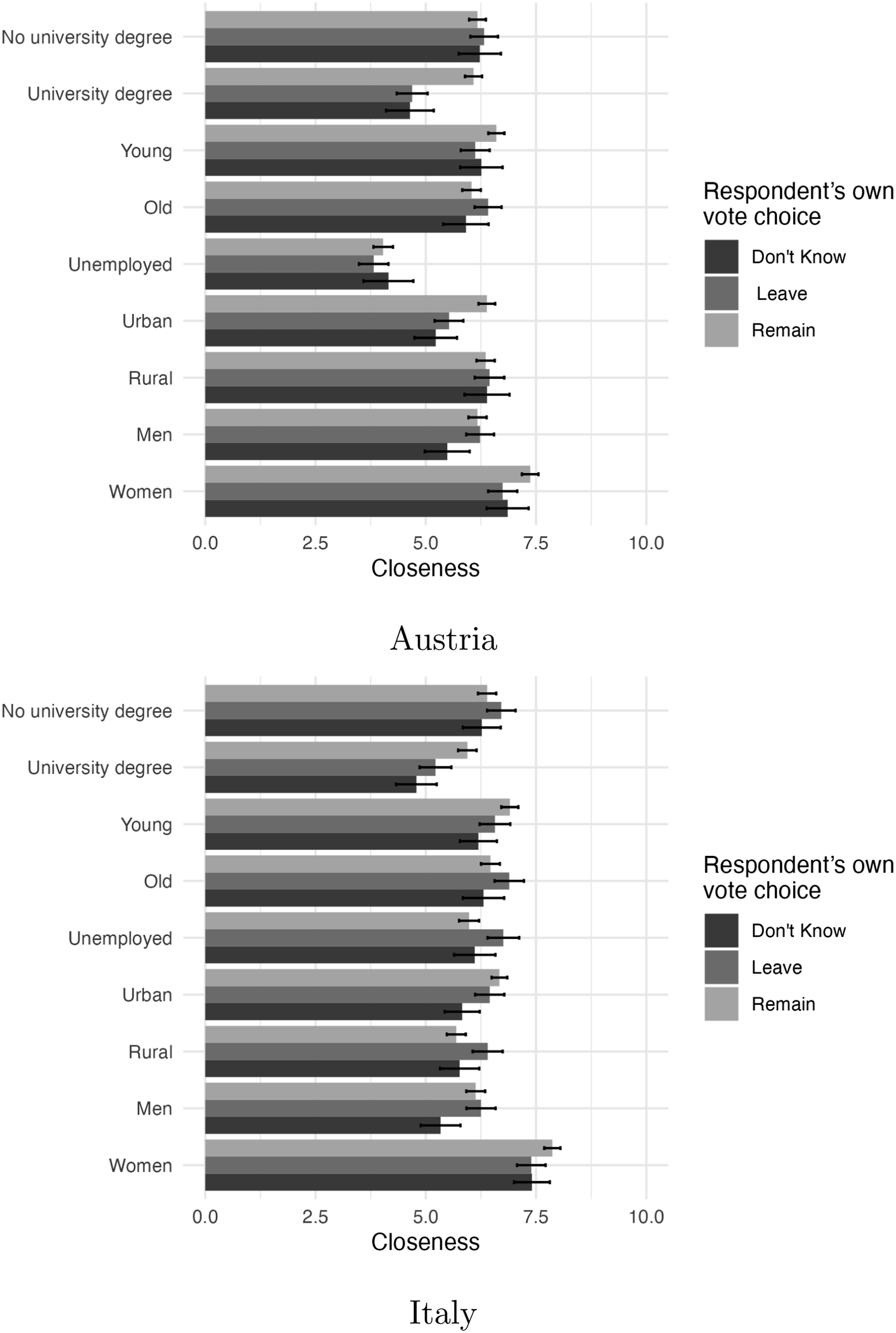
Figure 3 offers the first insights into who is the “typical” European for Austrian and Italian respondents. The figure depicts the share of respondents who said that these social groups would mainly vote to Remain or to Leave the EU. In Austria, most people (64 percent) expect university graduates would mainly vote to Remain in the European Union, and they also associate this position with the young, urbanites, and women. In contrast, the unemployed, rural residents, people without a university degree, and older people are seen in Austria as more typically attached to national identities, and these groups are more associated with the Leave side than the Remain side. Italian residents mostly share the sorting perceptions of the Austrians: university graduates, urbanites, and women are the typical Europeans, while non-university graduates, ruralites, and the unemployed are more typically associated with the Leave pole. However, age in Italy has the opposite association, as younger people are associated with leaving the transnational community while older people are perceived in support of remaining. This reverse relationship already shows that the national context matters in shaping the political group prototype of the typical European and the typical nationalist (Bartolini, 2000; Bartolini & Mair, 2007). The personal context matters as well—although majority trends are visible, many people are still not able to sort groups into camps or do not share the majority opinion on who is a typical European or a typical nationalist. Share of Austrian and Italian respondents who answered that a social group would mainly vote to remain in the EU or to leave the EU. The equally split condition is not shown.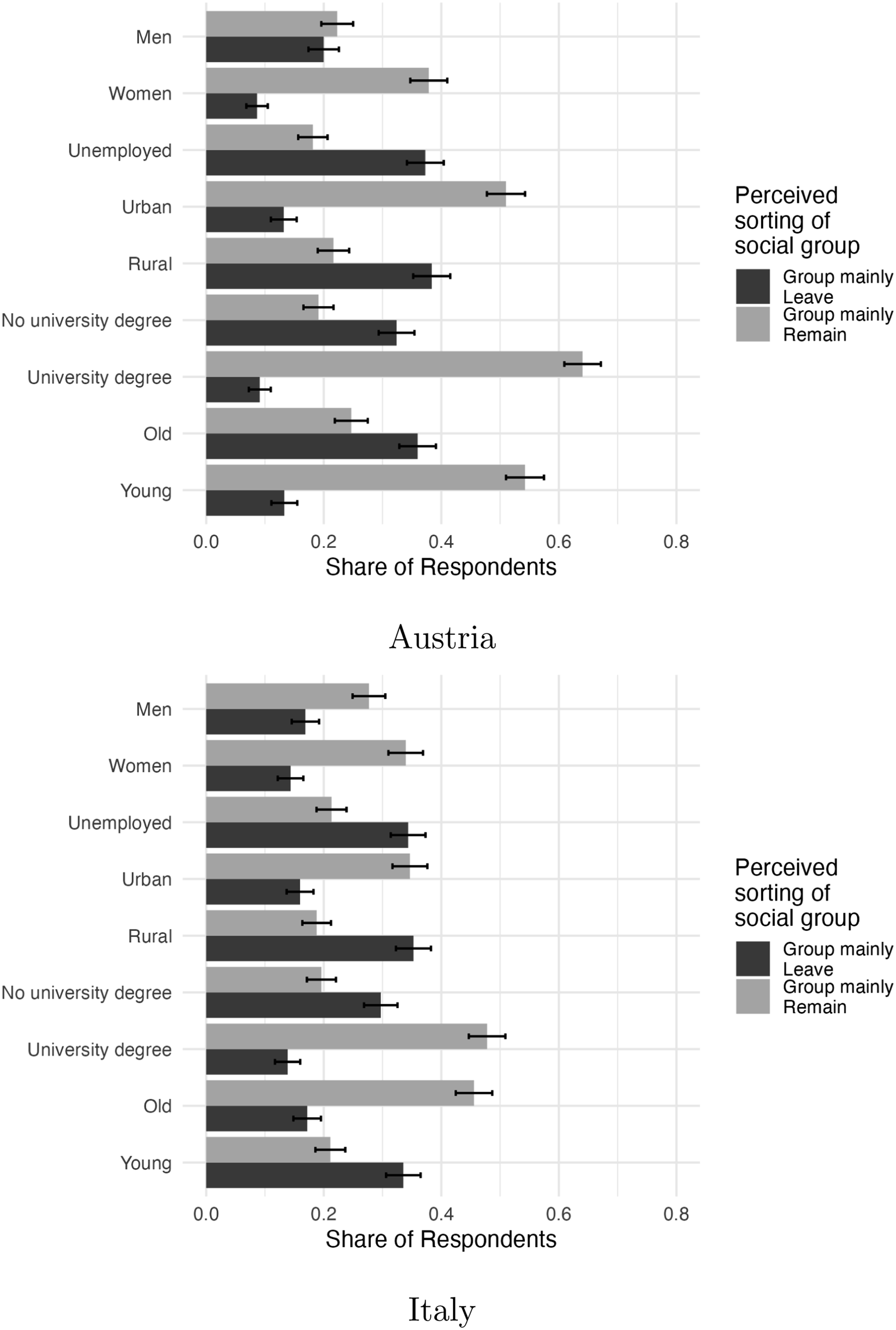
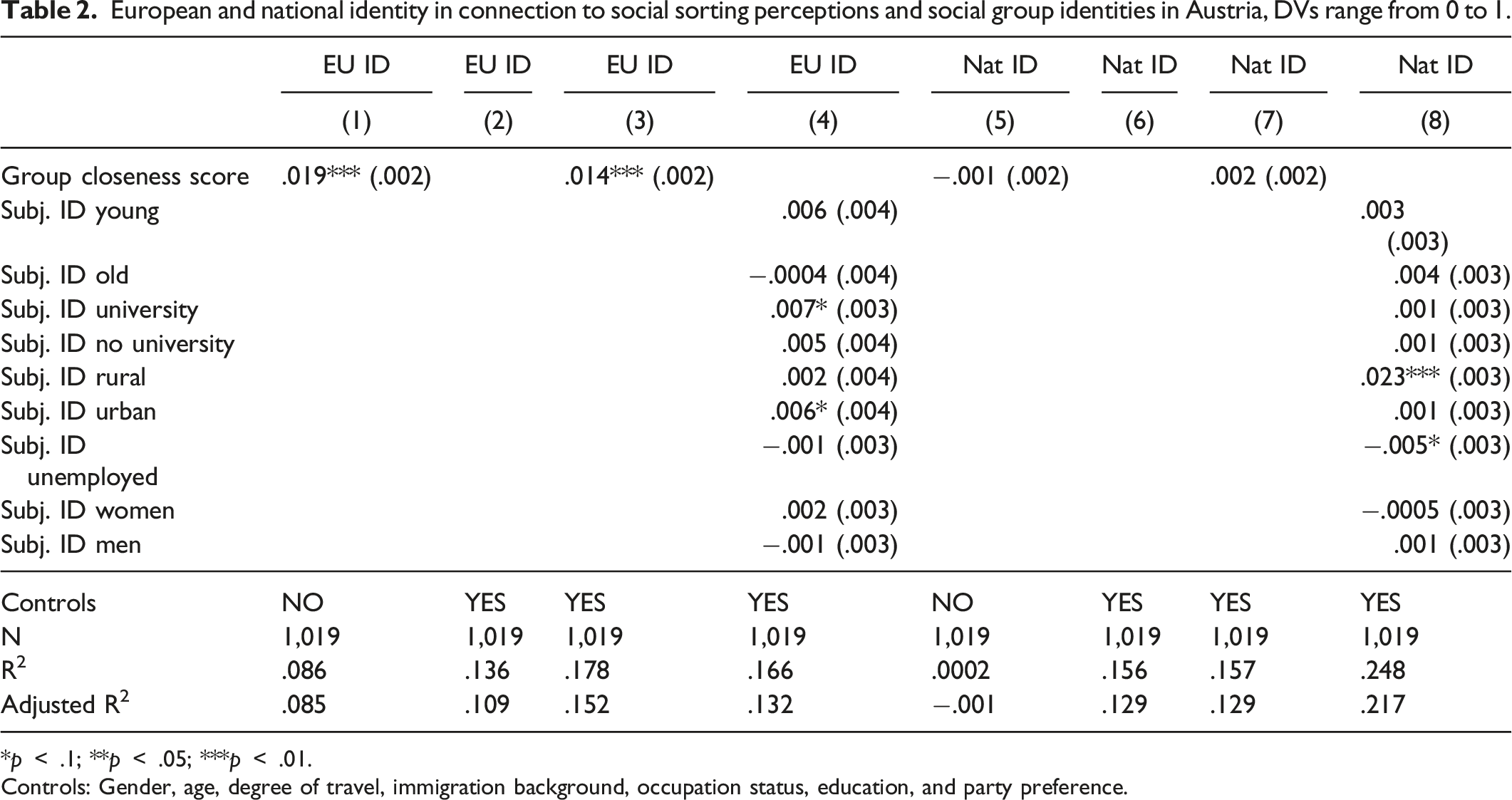
European and national identity in connection to social sorting perceptions and social group identities in Austria, DVs range from 0 to 1.
*p
Controls: Gender, age, degree of travel, immigration background, occupation status, education, and party preference.
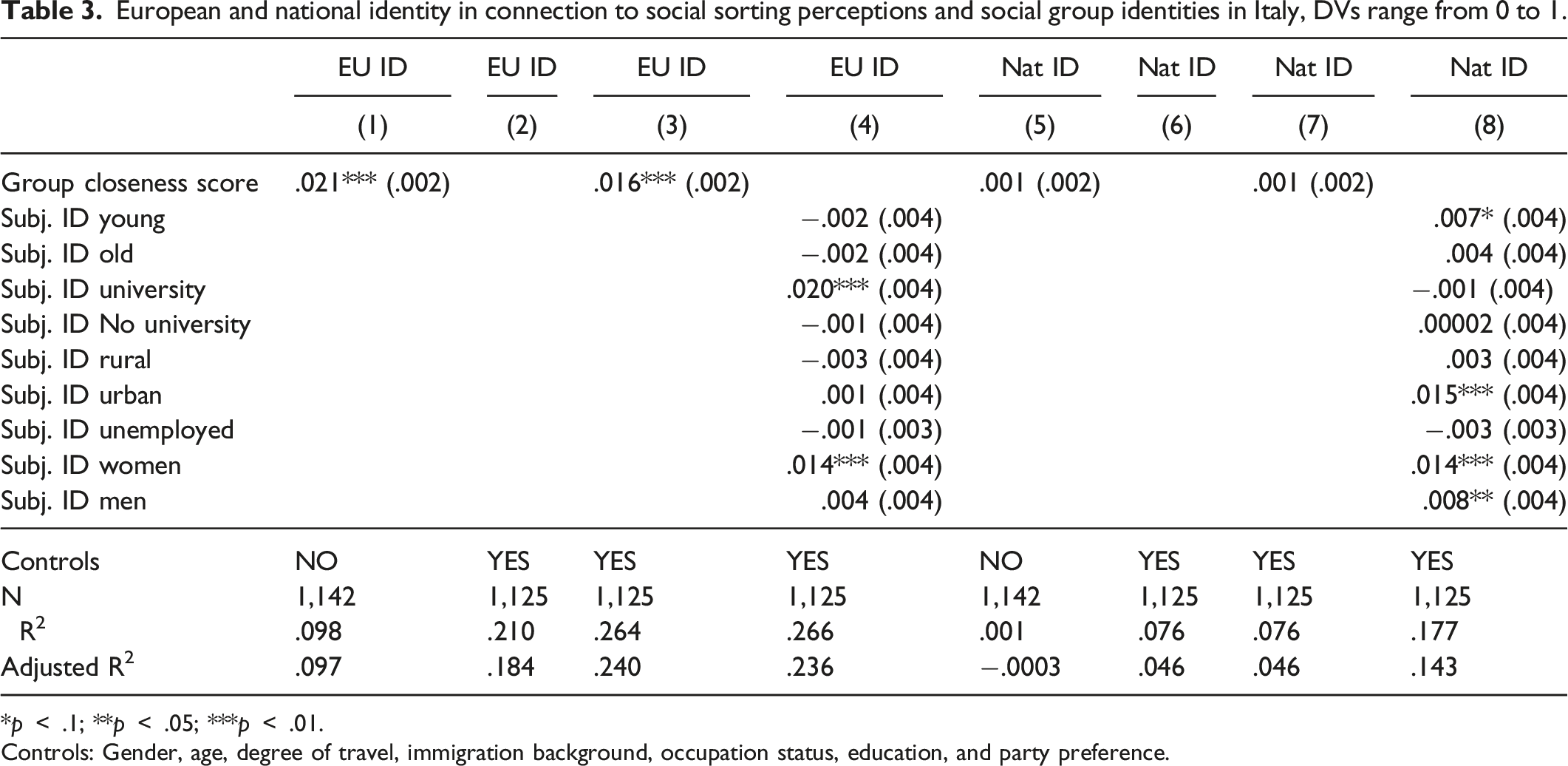
European and national identity in connection to social sorting perceptions and social group identities in Italy, DVs range from 0 to 1.
*p
Controls: Gender, age, degree of travel, immigration background, occupation status, education, and party preference.
In contrast, national identities are not influenced by identification with social groups supporting or opposing the EU. In fact, the average identification with social groups perceived to be on the Remain side has a slightly positive, albeit statistically insignificant, relate to national identity. This suggests that people do not automatically associate the Leave side with national identities. The lack of a significant link among social identities, sorting perceptions, and national identities aligns with previous research that argues the divisive line in the EU conflict lies between those who have a European identity and those who do not (Carl et al., 2019; Hooghe & Marks, 2009).
The models that focus on the identification with individual social groups without considering social sorting perceptions (models 4 and 8, respectively) provide insights into the associations between social group identities and European identities. They shed light on which social groups’ norms and values are primarily linked to European and national identities. In Austria, self-identification as an urban resident and self-identification as a university graduate are connected to European identity. The stronger a person’s identification with university graduates, the higher their European identity tends to be. In Italy, self-identification as a university graduate and identification with women are also positively associated with a higher European identity. Similarly, specific social identities are linked to Austrian and Italian national identities. In Austria, identifying as a rural resident is positively predictive of a stronger national identity. Conversely, the more a person identifies with the unemployed, the weaker their identification with the nation. In Italy, on the other hand, the urban identity, rather than the rural identity, is associated with a stronger national identity. Additionally, identifying with young people, as well as with women and men, is positively related to European identity in Italy (refer to the Appendix for detailed information on how social sorting perceptions and social identities for individual groups are associated with European identity).
To further explore the association between social sorting perceptions and European identities, I utilize a marginal effects plot (see Figure 4). This plot illustrates the conditional mean of European identities across various values of social sorting perceptions, while considering all control variables. The plot effectively demonstrates the crucial relationship between social closeness perceptions and European identity. Notably, in both countries, greater proximity to groups aligned with the pro- or anti-European stance exhibits a stronger association with European identity, accounting for a significant portion of the value range on the European identity scale. This analysis provides additional correlational evidence, reinforcing the significant link among social sorting perceptions, social group identities, and European identities. Marginal effects of the group closeness score on European identity adoption.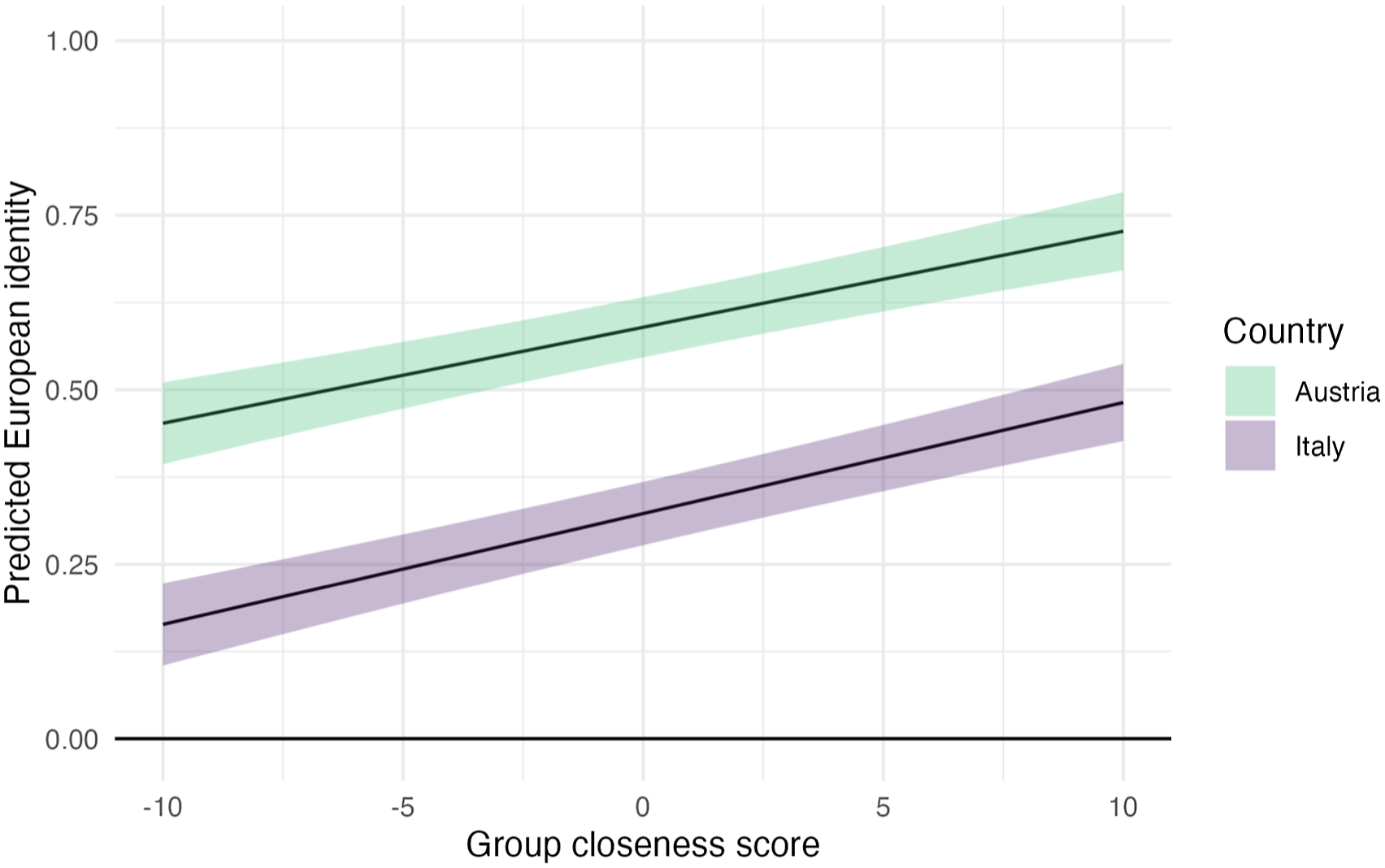
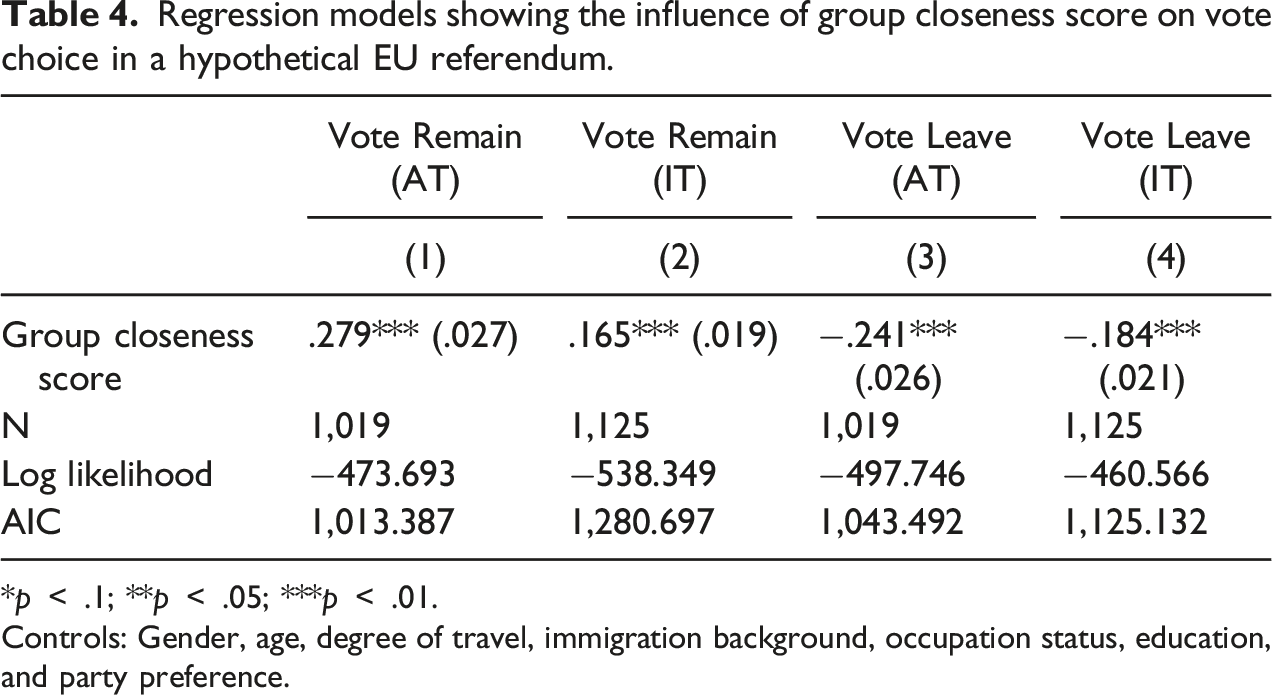
The final step of the analysis focuses on the crucial behavioral outcomes of social identities combined with social sorting perceptions: voting decisions in a hypothetical EU referendum. Figure 5 and Table 4 demonstrate that voting preferences for Remain or Leave are significantly connected to the average identification with social groups associated with each side. The extent to which individuals identify with social groups perceived to support Remain positively correlates with the likelihood of voting Remain. Similarly, a stronger sense of closeness toward social groups perceived to support Leave increases the probability of voting to Leave the EU. It is important to note that the connection between the identification with social groups and sorting perceptions is more pronounced in favor of voting Remain than voting Leave.
6
This effect of social sorting perceptions and social group identities on referendum vote choice holds true for both countries. Therefore, social sorting perceptions not only matter for shaping identities but are also intricately linked to critical political behavior. Marginal effects of the group closeness score on voting to remain or to leave the EU. Regression models showing the influence of group closeness score on vote choice in a hypothetical EU referendum. *p Controls: Gender, age, degree of travel, immigration background, occupation status, education, and party preference.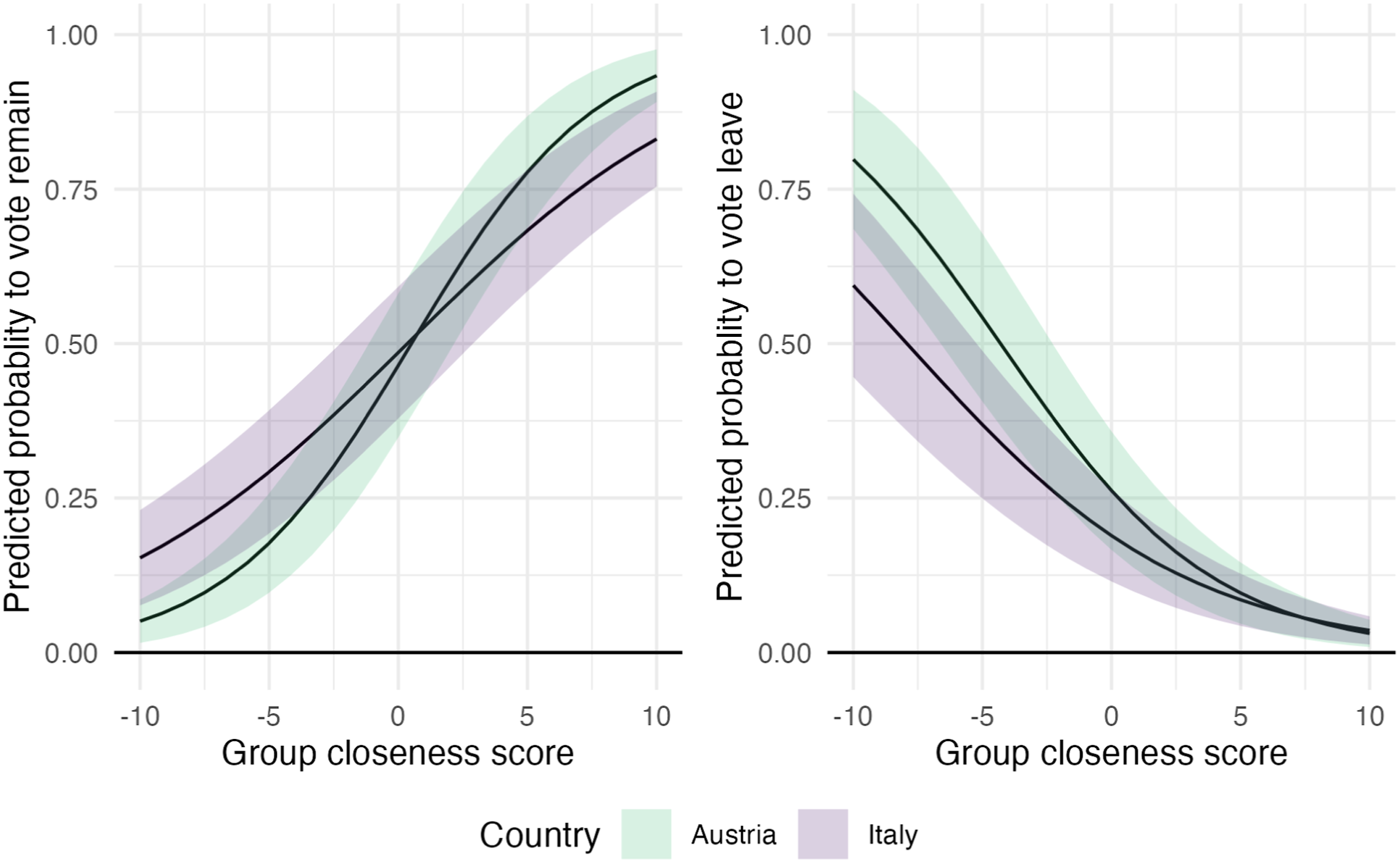
Discussion and Conclusion
In this paper, I have demonstrated the moderating role of perceived social sorting in the relationship between social group identities and European identity. I began by acknowledging that issue identities, such as those pertaining to a territory, are not solely determined by social group identities alone. However, many social groups align themselves with either the transnational European camp or the nationalist camp. Thus, I argue that political identities, such as transnationalism and nationalism, are particularly susceptible to being perceived through a group lens, as individuals pay attention to which social groups are associated with a given issue.
I have posited that European identity is influenced by the extent to which individuals identify with the European prototype—the social groups they perceive as representing the typical cosmopolitan European. People form impressions of how social groups align with certain political positions through exposure to news, interactions with friends and family, and other factors. For instance, individuals may associate university graduates with cosmopolitanism and link non-university graduates to more traditionalist stances. The degree of self-identification with these prototypical groups, in turn, is associated with the strength of an individual’s European identity. This study contributes to existing literature on the formation of the transnational cleavage by examining the horizontal influence between groups. Rather than focusing on individual values or material interests, I argue that the emergence of such cleavages is also influenced by individuals’ perceptions of and identification with specific groups.
Empirically, I find correlational support for the theoretical association between social sorting perceptions and European identities, but not for the link to national identities. Identifying with social groups perceived to support remaining in the EU is associated with a stronger European identity. Conversely, identifying with social groups perceived to support leaving the EU is associated with a decrease in European identity. However, the same correlational relationship is not observed between social sorting, social group identification, and national identity. Therefore, this paper highlights that European identities are more closely tied to social sorting than national identities. While those in the Remain and Leave camps exhibit similar levels of national identity, their European identities significantly differ. Investigating the potential reasons behind the stronger association between European identity and social sorting represents an important avenue for future research.
In this paper, I have presented the argument that social sorting plays a moderating role in the relationship between social identity and political identity. However, the empirical evidence, being correlational in nature, leaves the directionality of this mechanism as an open question. In certain circumstances, it is plausible that political identities, combined with social sorting perceptions, can influence social group identities. For example, if an individual perceives that a social group predominantly supports the opposing political camp on an issue they deeply care about, it is likely that their identification with that social group will diminish. Highly identifying cosmopolitans, whose identity is based on their individual values, may be inclined to identify less with social groups they perceive as being more traditionalist. Thus, social group identities may not only shape political identities, but political identities may also shape social group identities, depending on how social groups position themselves within political divides.
Furthermore, strongly developed social group and political identities can lead to biased information processing and a projection effect. An individual may have a strong affinity for certain social groups and consequently project their own political identities onto these groups. Unraveling these different mechanisms is challenging through correlational analysis alone. To examine the mediating effect of these arguments, future research could consider informing individuals about the sorting of groups within an experimental setup.
This study presents several avenues for future research. Firstly, regarding the missing link between social sorting perceptions and national identity, several questions remain unanswered. Is there truly no relationship between voting to Leave and national identity, or is it possible that individuals’ national identity is already so deeply ingrained that it remains unaffected by the actions of others? Secondly, does the strength of European identity influence social identities, or is it the other way around? There are arguments in support of the theoretical account that Europe may not be a salient and essential issue for the respondents in these two countries (see Appendix).
Additionally, further research should specifically focus on the role of education in the development of European identity. Similar to previous findings on the association between social and political identities (Bornschier et al., 2021), this study reveals that in Austria and Italy, subjective identification with university-educated individuals is linked to a stronger European identity. However, this approach raises the question of whether, for individuals, the connection between educational identities and cosmopolitan identities exists solely due to the structural conditions of the knowledge economy, or if the perceived cosmopolitan actions of individuals with a university degree motivate other university-educated individuals to adopt a more cosmopolitan identity. Future research should investigate whether one or both of these mechanisms are at play.
Furthermore, future research should delve into the motivations behind individuals adopting a political identity within their ingroup. There are multiple reasons why people may embrace stronger social or political identities. One possible motivation is the desire for a favorable reputation or to avoid potential backlash from their social group. Additionally, individuals may experience a greater sense of belonging when they perceive themselves as a typical supporter of a particular group, rather than an outsider (Hogg, 2016). These extrinsic and intrinsic motivational factors contribute to our understanding of why social sorting perceptions have such a significant connection to the interplay between social and political identities. Exploring these factors can provide valuable insights into the complex dynamics shaping these relationships.
In sum, this paper contributes to our understanding of polarization by highlighting the interplay and perceived social sorting, social group, and political identities beyond partisan affiliations. It offers a theoretical mechanism that sheds light on the divergence between transnationalists and nationalists in terms of their perceptions of what groups do and with which social identities they identify with, despite the European Union not being a highly salient institution for many individuals. Moreover, this research provides valuable insights into potential strategies for mitigating polarization. By fostering and showcasing a diverse support base for issues such as the European Union, it might be possible to alleviate animosity and resentment toward the EU, ultimately working toward reducing polarization. These findings offer important indications for promoting more constructive and inclusive discourses on key issues.
Supplemental Material
Supplemental Material - Who are the Cosmopolitans? How Perceived Social Sorting and Social Identities Relate to European and National Identities
Supplemental Material for Who are the Cosmopolitans? How Perceived Social Sorting and Social Identities Relate to European and National Identities by Ronja Sczepanski in Comparative Political Studies
Footnotes
Declaration of Conflicting Interests
The author(s) declared no potential conflicts of interest with respect to the research, authorship, and/or publication of this article.
Funding
The author(s) received no financial support for the research, authorship, and/or publication of this article.

Supplemental Material
Supplemental material for this article is available online.
Notes
Author Biography
References
Supplementary Material
Please find the following supplemental material available below.
For Open Access articles published under a Creative Commons License, all supplemental material carries the same license as the article it is associated with.
For non-Open Access articles published, all supplemental material carries a non-exclusive license, and permission requests for re-use of supplemental material or any part of supplemental material shall be sent directly to the copyright owner as specified in the copyright notice associated with the article.
