




Abstract
Scholars commonly link citizens’ broader ideological views to their preferences for two opposing approaches to fighting crime: conservatives are believed to support punitive approaches, while progressives support preventative solutions. Yet, other studies indicate that citizens across the ideological spectrum support punitive approaches, often due to instrumental factors such as experiences with and perceptions of crime. This study examines how instrumental factors interact with ideology and determines under what circumstances progressives support punitive candidates. The results of a conjoint experiment fielded in Argentina and Brazil demonstrate that among progressives, the effect of ideology on preferences for punitive candidates is moderated by three instrumental factors: perceptions regarding 1) insecurity, 2) the ineffectiveness of social policy, and 3) gang-driven crime; there are null results regarding the role of victimization. The findings also provide evidence that conservatives prefer punitive candidates regardless of instrumental explanations. The results are validated through an analysis of AmericasBarometer data.
Introduction
In 2014, voters in the state of Bahia, Brazil, elected Rui Costa as governor with over 50% of the vote in the first round. In 2018, he was re-elected with over 75% of the vote. Costa was a candidate from the Workers’ Party (the PT), known for programmatic leftist positions, including massive public assistance programs, a focus on diminishing inequality, and progressive social rights (Hunter, 2014; Mainwaring et al., 2018). Given that Bahia is a PT stronghold, these wins may not seem surprising. The state of about 15 million residents is majority left-wing, with over 72% of the voters choosing the PT candidate Fernando Haddad over right-wing Jair Bolsonaro in 2018. 1 But, Costa’s popularity among voters is not so straightforward. Although he was a standard left-wing candidate in many ways, his campaign featured strong tough-on-crime, punitive proposals, 2 such as increased investment in arms and strengthening the police to combat homicide and drug trafficking. 3 He even achieved close to a 60% approval rating soon after the state police killed 12 Black adolescents in an effort to combat organized crime, which he applauded. 4
According to some scholars, Costa’s popularity may be expected, even in light of his seemingly contradictory policy approach that combined traditional left-wing platforms with tough-on-crime policies. Particularly given President Bolsonaro’s popularity among many Brazilians, including his defense of ideas such as “a good criminal is a dead criminal,” 5 Costa’s success may be attributed to a broader tendency among citizens to support repressive politicians. However, work on the attitudes and behavior of progressive voters would not lead us to expect such strong support for a candidate like Costa; indeed, these proposals should be mostly popular among conservative, authoritarian voters (Cohen & Smith, 2016). Progressives, instead, should support those who are more aligned with their policy preferences (e.g., Downs, 1957; Tomz & Van Houweling, 2008) and punish those who deviate from them (Lewis-Beck & Ratto, 2013).
Importantly, Costa’s popularity is not an anomaly. There is evidence of progressive citizens voting for similar tough-on-crime candidates across the Western Hemisphere. For example, in Argentina, voters in 2019 chose Omar Perotti, part of the left-wing Frente de Todos Coalition who campaigned on bringing order to the province, stating “criminals should be in jail and decent and hardworking people should live in peace.” 6 Such examples show us that progressive voters are choosing candidates who are “conservative” on crime. But, we do not fully understand why. In this article, I ask: what explains the success of candidates like Rui Costa, including in places like Argentina (Bonner, 2018) and Mexico? 7 Do ideological progressives truly support candidates who are “conservative” on public security? If so, what explains this seemingly puzzling support?
I argue that to understand this behavior, we must reconsider the way in which ideology and preferences for punitive crime policy interact. I put two conclusions from existing research into conversation. First, ideologically motivated research argues that conservatives overall prefer punitiveness, implying that progressives do not (Cohen & Smith, 2016; Gerber, 2021; Gerber & Jackson, 2016, 2017). In turn, other research argues that there are shifts toward greater acceptance of punitiveness across the general population in response to certain perceptions, beliefs, and experiences (Altamirano & Ley, 2020; Cafferata et al., 2022; García-Ponce et al., 2022; Visconti, 2020). I focus in particular on three of these: 1) victimization and perceptions of insecurity, 2) the belief that illicit groups (e.g., gangs) constitute the main source of crime, and 3) the perceived ineffectiveness of social policy, a common progressive alternative to punitive approaches to fighting crime. In line with past work, I refer to these three factors as instrumental explanations for crime policy preferences (Tyler & Weber, 1982), which originate from citizens’ desire to lower the crime rate.
In accordance with the literature, I expect these instrumental factors to explain support for punitive candidates generally speaking. But, deviating from past studies, I pay close attention to ideological subgroups, in particular progressives who have often been ignored in studies of punitiveness. I argue that instrumental factors can mediate the effect of ideology on preferences for punitive candidates among progressives. To make this argument, I build on work regarding how such factors can trigger moral outrage, anger, and fear and can lead citizens to consider the efficacy of proposed policies. In light of these factors, progressives—who otherwise should not support punitive candidates—should be more likely to elect such candidates. My evidence supports this theory.
Beyond progressives, my data allows me to explore these patterns among ideological conservatives. Some studies suggest an overall high level of punitiveness among conservatives, regardless of circumstance, while other research indicates that the explored instrumental factors should be influential. Given contrasting findings, I did not have strong prior expectations as to their behavior within my framework and did not formally pre-register this analysis. Rather, I provide an exploratory analysis of whether or not these factors lead right-wing voters to become more conservative on this issue, or if they are steadfast in these preferences. This serves as a comparison point for progressive respondents and a departure for future research.
I test these relationships mainly via a conjoint experiment in Argentina and Brazil. 8 I focus on a simulated gubernatorial election, as this office has primary responsibility for day-to-day public security policy in both countries. Respondents were presented with hypothetical candidates with randomized attributes across a variety of policy areas, including public security. Results from the experiment support the majority of my hypothesized relationships, demonstrating that instrumental factors moderate the influence of ideology among progressives. In fact, I show that the high level of support for punitive candidates is clearly associated with the majority of instrumental factors impacting otherwise ideological progressives. These results indicate that the popularity of punitive politicians among citizens is not due to an increase in conservatism broadly. There is one exception, the possible reasons for which I discuss in the Results section: While those who perceive their neighborhoods as insecure prefer punitive candidates, there is no significant shift toward punitive candidates among ideological progressives who are victims of crime. When examining ideological conservatives, I find they more consistently prefer punitive candidates and that instrumental factors are associated with small, or no, shifts in the preferences. Following the analysis of the experimental results, I validate my results using observational data from the AmericasBarometer survey.
In the following sections, I proceed as follows: I first discuss relevant literature and my hypothesized relationships. I then present my data collection strategy, discussing the fielded survey and conjoint experiment. Finally, I present my results, elaborate on implications of this work, and conclude.
Understanding Public Security Policy
In considering support for public security policy, there is a wide menu of options available to voters (Figure 1).
9
Scholars of public security typically discuss related policies as either bottom-up, prevention-based strategies or top-down, repressive and punitive policies. On the punitive side of the spectrum, the terms “mano dura” or “iron fist” are commonly used to describe a range of policies. In particular, preferences for and the use of the most extreme repressive and authoritarian measures have been widely studied,
10
especially with endorsements from prominent authoritarian leaders such as Bolsonaro (Brazil), Duque (Colombia), and Bukele (El Salvador). Theoretical spectrum of public security policy with illustrative examples.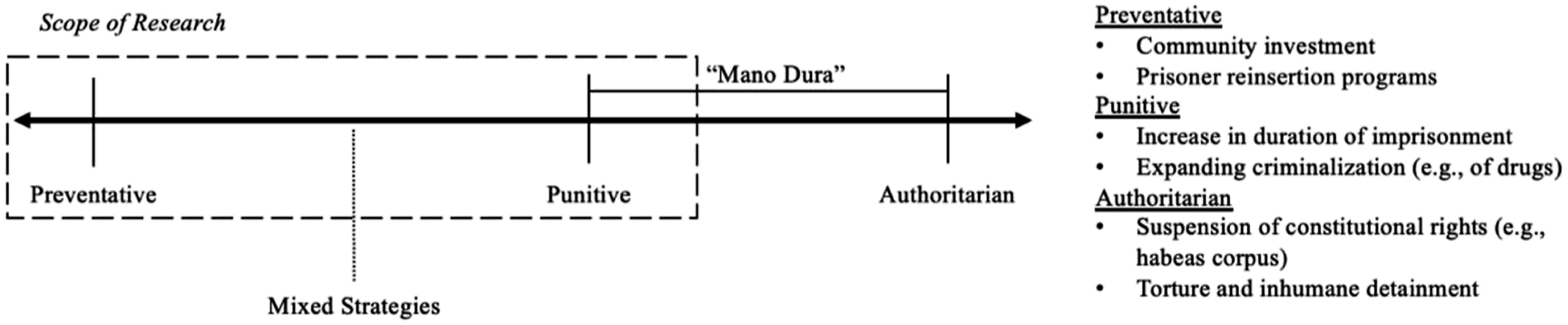
Just as prevalent as authoritarian, repressive policies are punitive solutions to crime. These are often short of authoritarian measures in terms of outright human rights violations but typically increase prison sentences, increase the deployment of security forces, condemn criminals to harsher sentences, and provide police with greater discretion and authority (Bonner, 2019; Holland, 2013; Muggah et al., 2018). Some previous conceptualizations have pointed to a simple trade-off between extreme iron fist approaches and prevention (e.g., Muggah et al., 2018). In this article, I engage in a more precise assessment of public security policy and limit my focus to punitive policies on one hand, which are both used and supported across the region particularly in post-dictatorship contexts (Bonner, 2019), and prevention-based measures on the other. I restrict this focus, as punitive policies can represent a more programmatic approach to solving crime than iron fist policies, which are often poorly defined, characterized by a complete disregard for human rights, and often proposed by authoritarian, populist, and personalist leaders (Holland, 2013; Hunter & Power, 2019; Krause, 2014). 11
Generally speaking, existing research on citizen preferences for different policy approaches to crime falls into two broad categories. One group of work focuses on factors which lead to increased support for punitiveness among voters broadly. This work engages with what I will refer to here as instrumental explanations. 12 For instance, research finds that certain experiences and perceptions shape citizen preferences for crime policy, such as community context and recent experiences with crime (e.g., victimization) (Altamirano & Ley, 2020; Visconti, 2020). This work largely does not consider ideological divisions, nor the possibility of heterogenous effects across the population based on these divisions. A second group of researchers advocate for a more ideological perspective and generally only pay attention to these ideological divisions. This group argues that conservatives overall prefer punitiveness (Cohen & Smith, 2016; Gerber, 2021; Gerber & Jackson, 2016, 2017), implying that progressives do not. For example, Gerber and Jackson (2017) demonstrate that preferences for punitive policies are tied to right-wing or authoritarian ideals, particularly preferences for a proper moral and social order. It is unclear if researchers in this group expect voters’ preferences to be steadfast and immovable or if voters within each ideological subgroup may change their policy preferences in light of instrumental factors.
In this article, I show that instrumental explanations can override ideological stances. I examine how factors explored by the instrumental camp can influence ideological subgroups in different ways. In particular, I focus on progressives, as ideological explanations suggest they are the least likely to prefer punitive candidates, but, as discussed, evidence suggests these candidates have received significant support among progressive citizens. In the following section, I first explore key ideas within the instrumental literature and develop hypotheses derived from this work in order to explicitly test them in the domain of electoral choice. I propose hypotheses first for a generalized, pooled sample of voters. Following this, I then bring in the ideological perspective and explore how we may expect hypotheses derived from instrumental explanations to affect ideological subgroups, namely, progressives.
Instrumental Explanations
Instrumental explanations regarding support for public security policies suggest that preferences are influenced by citizen concerns regarding crime. In particular, these preferences originate from “the desire to lower the rate of crime” (Tyler & Weber, 1982), which is detached from one’s ideology. Instrumental explanations center on perceptions and experiences which influence citizens to see certain solutions as more or less appropriate to achieve this end. I focus on three main factors which research has shown, or has strongly suggested, influence individuals to see punitive policy as the most appropriate solution. I provide hypotheses regarding the effect these factors should have on voter preferences for punitive candidates. These hypotheses were pre-registered (Appendix 18).
First, substantial research shows that victimization and insecurity affect policy preferences. These factors lead to an increased desire for iron fist polices and extralegal violence (Bateson, 2012; Cruz & Kloppe-Santamaría, 2019; García-Ponce et al., 2022; Krause, 2014; Visconti, 2020). In particular, research suggests that such direct exposure to crime can result in increased tolerance for strategies that erode citizens’ rights in the name of solving the criminal issue (Visconti, 2020). Apart from iron fist policies, some work in Latin America has considered support for traditionally punitive policies, such as increasing the punishment of criminals rather than the use of preventative crime measures. This research finds that fear of crime strongly influences the desire for increased punishment (Singer et al., 2020). Work outside of the region reiterates these findings, suggesting fear of crime influences preferences for punitive strategies (Dowler, 2003; Langworthy & Whitehead, 1986). Based on this research, we should expect that:
Those who have been victims of crime or see their communities as insecure will prefer candidates who offer punitive solutions to crime. Beyond this, we may also expect the perceived source of crime to be influential in citizens’ preferences for punitive versus social-assistance-oriented candidates. Notably, perceptions do not always reflect reality and can be affected by exogenous sources, such as the media (Bonner, 2018; Krause, 2014). Regardless, perceptions can influence which policies are seen as most appropriate to address crime, and subsequently which policy proposals respondents prefer among candidates. In contexts where crime is seen as non-economic, such as driven by criminal groups, respondents tend to prefer more punitive solutions (Bonner, 2018; Martinez Barahona & Linares Lejarraga, 2011).
13
Indeed, in contexts where the media influences public opinion to see crime as driven by criminal groups and paints the police favorably, punitive populist candidates tend to see more support (Bonner, 2018). For example, in Argentina, organizations such as the Network of Mothers and Family Members of Drug Victims (la Red de Madres y Familiares de Víctimas de las Drogas) serve as journalistic sources, often discussing the presence of criminals and gangs as a main source of crime. To be sure, the increased popularity of mano dura policy is often attributed to the rise in prominence of illicit criminal organizations, and it is seen as a policy solution employed by states in attempts to eradicate this challenge to their authority (Rodgers, 2009). Research in areas where crime is largely perceived as economically motivated also substantiates this idea. Rueda and Stegmueller (2016) argue for such a relationship in the context of Western Europe, where they see crime to be primarily driven by inequality and economic motivations rather than illicit organizations. There, when fear of crime rises, preferences for increased redistribution rise as well. This suggests that punitive policies are typically supported in contexts where violence is seen as driven by gangs or criminal groups, while social-policy-oriented solutions tend to be preferred in areas where crime is seen as economically motivated. We can thus hypothesize the following:
Those who see the main source of crime as gang-related will prefer candidates who offer punitive solutions to crime. Finally, research suggests that perceived policy efficacy should also influence citizen preferences for punitive candidates. Indeed, Cafferata et al. (2022) demonstrate that beliefs about the relative effectiveness of different types of crime policies affect these preferences. Similarly, Holland (2018) shows that, against conventional expectations, the poor in many Latin American countries often do not support redistributive policy. This is true in areas where they benefit less from social expenditures, leading these individuals to doubt that they will benefit from social assistance programs moving forward. This logic can also be applied to consider preventative crime policies, which often rely on redistribution and social programs. Altamirano and Ley (2020) make this connection by arguing that citizens’ low expectations regarding the success of social policy to reduce inequality, and therefore crime, result in the perception that these policies are ineffective solutions to insecurity. In sum, if individuals do not see social-policy-oriented, preventative approaches as effective, they should be less likely to elect individuals who propose such policies to combat crime. This suggests that:
Those who see social-policy-oriented, redistributive policies as ineffective will prefer candidates who offer punitive solutions to crime.
Considering Ideological Divisions
Much work that has explored, or suggested, instrumental explanations for punitive preferences has largely done so without considering the role that citizen ideology may play in this relationship. This is surprising, given that a great deal of research strongly advocates for this ideological explanation—that preferences for different public security policies, and politicians that endorse them, are driven by citizen ideology. Indeed, scholars suggest that it is ideological conservatives who overall prefer punitiveness, while progressives do not (Cohen & Smith, 2016; Gerber, 2021; Gerber & Jackson, 2016, 2017). Even in the Latin American context, where data suggests that crime is salient and more voters generally speaking may support iron fist crime policy (Wiesehomeier & Doyle, 2014), research suggests ideological divisions exist and are relevant. For example, Cohen and Smith (2016) demonstrate that individuals with right-wing values—both authoritarian and non-authoritarians—are more likely to support iron fist candidates.
Bringing these two literatures into conversation, we can examine certain key questions: Can instrumental factors moderate the relationship between ideology and views on crime policy? Should instrumental explanations apply to ideological progressives, even though some literature suggests that punitiveness is against their core values? And, assuming instrumental factors are relevant, should there be a homogenous or heterogenous treatment effect across ideological subgroups?
I argue that instrumental considerations can moderate the effect of ideology among progressives, leading to higher levels of support for punitive candidates. I suggest that the three different instrumental arguments explored—1) victimization and insecurity, 2) perceptions of the source of crime, and 3) perceived policy efficacy—should affect progressives such that they will become more likely to vote for punitive candidates. I also provide an exploratory analysis of conservative preferences in light of these instrumental explanations.
First, research demonstrates that victimization and insecurity (H1) can overcome one’s ideological or moral convictions. Traumatic events—first or secondhand—have strong effects on citizen behavior and attitudes (Balcells, 2012; Bateson, 2012; Marsh, 2022). With regard to victimization specifically, victims often experience a change in feelings and a variety of reactions which can lead to fundamental shifts in their attitudes (Balcells, 2012). Feelings triggered by victimization and insecurity—such as moral outrage and anger—can lead to support for the most extreme types of violence, even beyond legality (García-Ponce et al., 2022). As to fundamental ideological points of view, such experiences can affect one’s most basic world views (Canetti, 2017; Canetti-Nisim et al., 2009). As Balcells (2012) states, victimization and insecurity can lead to “… the development of new political identities, or to the redefinition of previous political identities.”
Second, the perception that crime is driven by gangs (H2) can combat progressives’ predisposition to believe that crime is caused by “external, sociocultural, and macroeconomic forces” (Skitka & Tetlock, 1993). Although issues of inequality and gangs are often linked, the argument that gang-driven violence is solely driven by economic factors is an incomplete story (Cramer, 2011). Organized crime is present across socioeconomic spheres and countries with varying levels of economic development (Feldmann & Luna, 2022). In Latin America, crime that is gang-driven can be particularly resistant to a variety of public security measures (Barnes, 2017; Jütersonke et al., 2009) and can be quite violent. Furthermore, gangs can be incredibly powerful—even rivaling the state in terms of control of territory—moving beyond explanations of inequality or individual-level economic need in terms of crime motivation (Lessing, 2021; Magaloni et al., 2020). Thus, similar to the logic of violence and insecurity, this perception can be tied to moral outrage, anger, and fear which can affect citizens’ points of view. This may lead progressive citizens to support punitive measures. Further, progressives may see gangs as resistant to preventative policies, in which case punitiveness may be perceived as their only option.
Finally, perceptions of policy efficacy (H3) shape individuals’ policy preferences, regardless of their moral or ideological commitments related to the issue (Cafferata et al., 2022; Gingerich & Scartascini, 2022; Holland, 2018). Work regarding preferences for redistribution underpins the idea that individuals often support a policy which may be counterintuitive given their other policy preferences or ideological convictions (Holland, 2018; Hoy & Mager, 2021). As Holland (2018) suggests, when individuals do not expect a policy to act in the way they desire, they are less likely to support it. Following this logic, even if progressive citizens have a strong baseline support for preventative, social policies a priori, their perceptions of the efficacy of such policies should affect whether or not they will support them to combat crime. Thus, progressives who do not see such policies as effective should be less likely to support social-policy-oriented candidates, and more likely to support punitive candidates.
In light of these circumstances, I present the following pre-registered hypothesis: 14
Those with progressive ideology will elect punitive candidates in light of the circumstances presented in H1 (if they have been victims of crime or see their communities as insecure), H2 (if the see the main source of crime as gang-related), and H3 (if they see social-policy-oriented, redistributive policies as ineffective). This discussion then begs the question: what about conservatives? As research suggests that conservatives widely tend to prefer punitive policy, it is unclear how their preferences may differ in light of instrumental factors. Because of this, I do not present strong prior expectations regarding possible differences in their support for punitive candidates. Do conservatives become increasingly punitive in response to instrumental factors, or are they steadfast in their preferences? Ultimately, it is unclear if factors such as victimization and insecurity would lead to developments of “new political identities” Balcells (2012), as literature shows that conservatives are already strongly punitive. Further, as conservatism is positively associated with the belief in ideas of individual causes of crime and the controllability of one’s behavior, and is negatively associated with perceptions of societal causes of crime (Zucker & Weiner, 1993), it is unclear if the perception that crime is driven by gangs would affect their assessments. Finally, as conservatives generally support social assistance less than progressives (Holland, 2018; Wiesehomeier & Doyle, 2014)—and do not believe that related policies make sense to lower crime rates (Ren et al., 2008)—we do not know if these perceptions will be associated with differences in their candidate preferences.
15
As existing research does not outline a clear expectation in this regard, I do not have strong prior expectations nor pose a hypothesis. However, I do analyze the preferences of conservatives to demonstrate a comparison with their progressive counterparts and investigate possible differences between these subgroups.
The Cases of Argentina and Brazil
I test my hypotheses in the contexts of Argentina and Brazil. Building on Seawright and Gerring’s (2008) work regarding case selection, these countries maintain some characteristics of typical cases of Latin America, including factors such as party system characteristics, a history of military dictatorship and repression, and the polarization of various issues (e.g., the economy) (Martínez-Gallardo et al., 2022) while also providing a sense of diversity in the region with regard to the nature of crime. Differences in the nature of crime allow for generalization of the findings to other cases, such as Colombia or Mexico—which may be characterized as more similar to Brazil in terms of security—or Chile—which may be characterized as more similar to Argentina.
In both countries, citizen security is relevant, but the extremity of the issue varies. In 2018, over 9% of respondents in Argentina and 18% of respondents in Brazil stated that security was their country’s most important problem (AmericasBarometer). As to more “objective” security measures, Argentina reported a homicide rate of 5 per 100,000 residents in 2020, while Brazil reported a homicide rate of 22 per 100,000 residents. While public security is important in both cases, 16 the countries vary in terms of the nature of related issues. In Brazil, there is a significant presence of organized crime, dominated by gangs which often grew out of prisons (Lessing, 2017) but have expanded to have strong, transnational networks (Stahlberg, 2022). In Argentina, organized crime is present, but fragmented, and drug-related violence is uneven across the country (Flom, 2019).
In both countries, the most relevant public office in terms of public security is the governor, 17 who is in charge of the majority of day-to-day policing and other relevant public security policy areas (e.g., social policy, state prisons). Indeed, states in both nations have high levels of regional authority (Niedzwiecki et al., 2021), including with respect to public security matters. These topics are heavily debated among candidates for this office and, when elected, governors are center stage regarding day-to-day security matters. They are often called upon for information and action by national authorities and form part of (and lead) national commissions on public security. 18 Accordingly, gubernatorial candidates are the most realistic option for citizens to evaluate with respect to this issue.
In each country, both punitive policies and social-policy-oriented solutions to crime have been pursued by political authorities. For example, beyond this article’s introductory discussion of Rui Costa in Brazil, Valadares Filho, a progressive gubernatorial candidate (Brazilian Socialist Party, PSB) 19 in the state of Sergipe, offered a similarly complex series of policies during the 2018 election. In addition to investment in social programs, Filho proposed to strengthen police, conduct frequent police operations to combat organized crime, and increase the amount of police on the streets generally speaking. 20 Costa was elected while Filho made it to the run-off election, indicating support for their proposed punitiveness.
In Argentina, determining the ideology of candidates can be complicated with the strong presence of personalism, but evidence still exists. For example, the largely Peronist Frente de Todos (Everyone’s Front) coalition, a more progressive alliance of parties, fielded multiple candidates in the 2019 election with a platform that emphasized not only human rights but also a crackdown on narcotrafficking. 21 This includes the example of Omar Perotti, discussed earlier, the winning gubernatorial candidate in the Santa Fe province. Similarly, when the Frente de Todos governor of Buenos Aires province, Axel Kicillof, announced he would seek re-election in the 2023 elections, he promised to increase the amount of police officers in the street by 40,000 (a personnel increase of about 40%) in response to increasing violence in his region. 22 For more examples of candidate platform statements regarding public security, see Appendix 3.
Data and Analysis
To test these hypotheses, I utilize an original survey fielded simultaneously in both countries (n = 1512 in Brazil, n = 1521 in Argentina) of respondents age 18 years or older. The survey was fielded via an online panel collected using convenience sampling in March 2021. It included a conjoint experiment to evaluate citizen preferences for policies proposed by gubernatorial candidates. The experimental manipulation of interest was a punitive or a social-assistance-oriented crime platform proposed by a candidate and was fully randomized. The full conjoint experiment is presented in the following sections. All hypothesized relationships were pre-registered.
The survey samples were designed to reflect the countries’ populations in terms of gender, age, socioeconomic status, and region. Although the sample is over-representative of certain socioeconomic status groups (see Appendix 5), convenience samples are still useful research tools and can be confidently used for causal inference (Druckman & Kam, 2011; Mullinix et al., 2015). In particular, convenience samples do not pose inference issues if the treatment effect depends on a characteristic which exhibits variance (Druckman & Kam, 2011). Statistics in Appendix 6 confirm variance exists in the sample across all four dependent characteristics (victimization, insecurity, crime perceptions, and policy perceptions). To address remaining concerns about representativity and validity, I replicate the analysis using available observational data on a nationally representative sample of respondents collected in a face-to-face survey, the AmericasBarometer. The analysis is presented in subsequent sections and supports the findings from the conjoint experiment.
Measuring Relevant Subgroups
Ideological Measurement Questions.
The response nature (agree vs. disagree) to the following questions does not directly correspond to conservative versus progressive preferences. Responses were recoded, so lower values correspond to agreement with conservative ideas and higher values to progressive ideas (see Appendix 9 for recoding procedures).
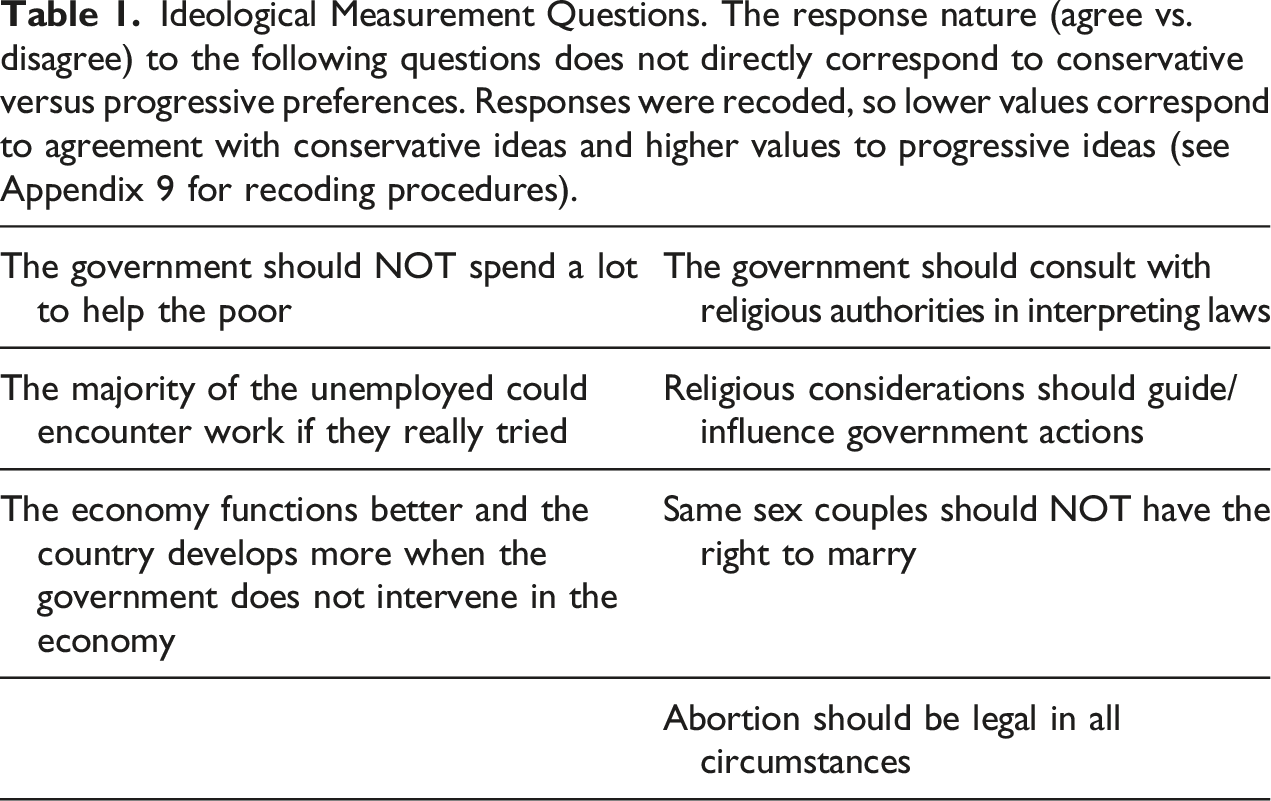
In defining this ideological dimension, I draw on conceptions of both the economic and sociocultural divide building on work by Rosas (2010), Bobbio (1996), and Wiesehomeier and Doyle (2012). To account for concerns regarding unidimensional measures of ideology, I also create a two-dimensional measure of ideology, separating respondents along both sociocultural and economic dimensions, and replicate all analyses. Results are consistent and are presented in Appendix 9.
With this ideological index, I divide respondents into progressive and conservative groups. Respondents with scores greater than 0 are coded as progressive along this dimension and below 0 are conservative (n = 1265 progressives, n = 1131 conservatives). I use these subsets of data to test my hypotheses regarding preferences for punitive candidates among ideological segments of the sample.
The survey also included questions which are used to divide respondents by instrumental factors of interest. Respondents were divided by their experience with crime victimization, perceived insecurity in their neighborhoods, perceived source of crime, and beliefs about the effectiveness of social assistance. These questions are included in Appendix 2.
Experimental Design
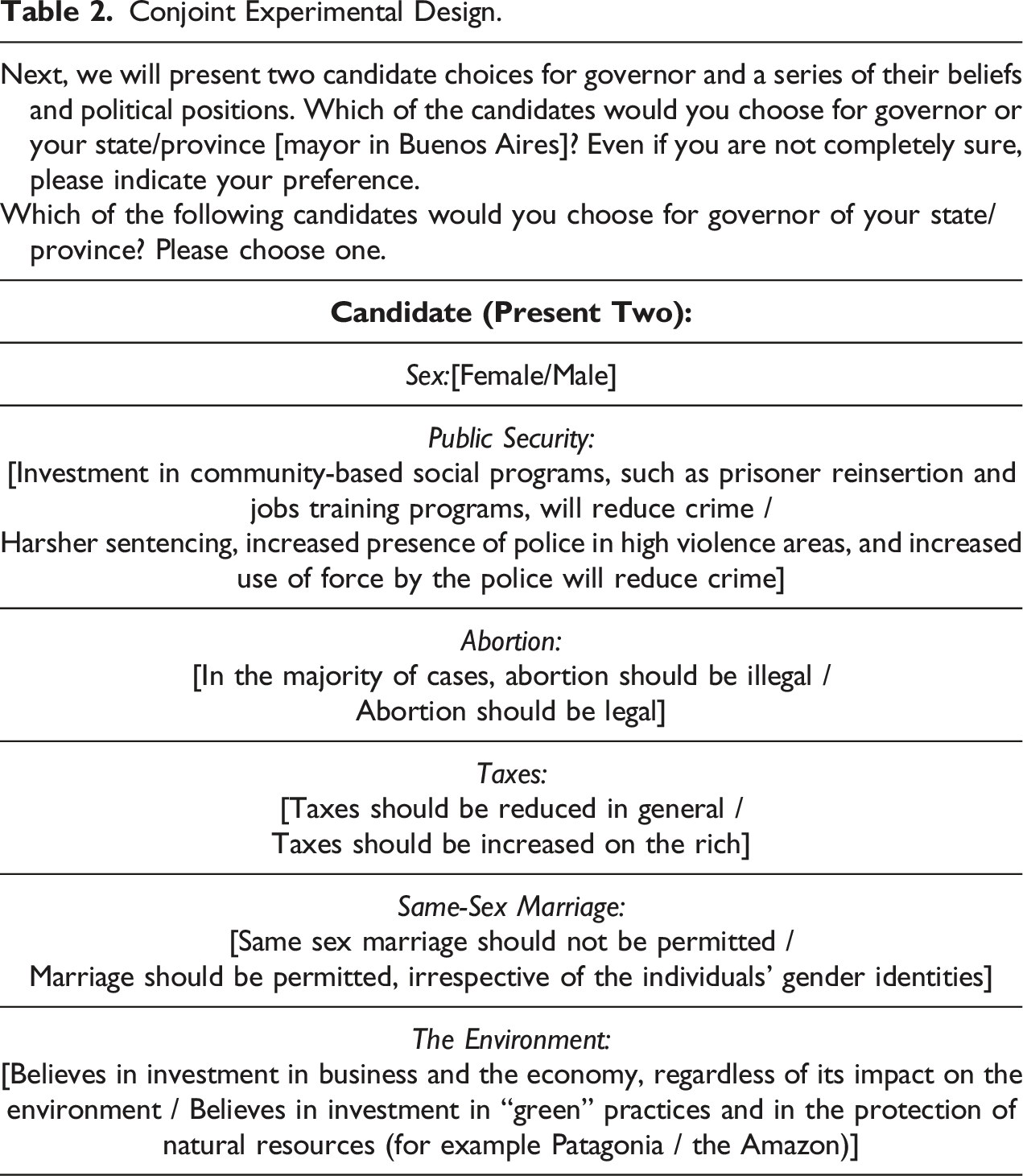
To measure citizen preferences for candidates who propose punitive versus social-assistance-oriented crime policies, respondents were presented with a conjoint forced choice experiment. Respondents were asked to make a choice between two candidates for governor, as explained above, with each choice task presenting five varying political beliefs and policy propositions for each candidate. Candidates also varied by gender. The main political belief of interest is the proposed public security platform.
In alignment with the work of other scholars (e.g., Horiuchi et al., 2018; Mares & Visconti, 2020), no party label was provided. At best, these labels are uninformative—due to factors such as high party volatility and factionalization (Gervasoni, 2018)—and are irrelevant as the analytical goal is to isolate specific policy preferences rather than feelings of attachment from non-policy sources (Horiuchi et al., 2018). At worst, a party label may trigger respondents to choose a candidate based on non-policy relevant opinions. Factors such as partisanship and anti-partisanship are highly influential in each case (Calvo & Murillo, 2012; Samuels & Zucco, 2018) and may induce a respondent to exclusively choose (or not choose) a candidate based on this label alone.
All experimental attributes were randomized, and no restrictions were imposed on the possible attribute combinations for each candidate. This is for two reasons. First, evidence from each country suggests that any combination of policy preferences—particularly without a party label included—may occur in reality. 23 At minimum, there is no obvious combination of the attributes which may be seen as “unacceptably unrealistic” (Bansak et al., 2021). Inducing randomization dependencies can create complications in calculating the treatment effect on an attribute and are particularly complex when it is unclear which combinations of attribute levels would make a profile unrealistic to a respondent (Bansak et al., 2021). For these reasons, it is most prudent to utilize full randomization.
Conjoint Experimental Design.
Analysis
I conduct all analyses on the sample of respondents pooled across countries. This is necessary to have a sufficient number of respondents to achieve appropriately powered tests. 25 I estimate the marginal mean for each experimental attribute as the quantity of interest and divide respondents into relevant subgroups (victims vs. non-victims, secure vs. insecure, etc.) (Leeper et al., 2020). In a forced choice experiment with two alternatives, the marginal mean of an attribute can be interpreted as the probability of candidate choice by the respondent given the specified attribute. If a marginal mean is equal to 1, it indicates there is a probability of 1 that respondents will choose the presented candidate with that given attribute. A value which exceeds .5 indicates a candidate feature that increases candidate profile favorability, while a value below .5 indicates the feature decreases favorability.
Although the average marginal component effect (AMCE) is also popularly used in conjoint experiments, researchers have demonstrated shortcomings with this quantity (Abramson et al., 2022; De la Cuesta et al., 2022; Leeper et al., 2020). Particularly when comparing subgroup preferences, marginal means have been determined as more appropriate. Leeper et al. (2020) demonstrate that the AMCE is sensitive to reference categories, which severely affects this quantity when used to examine subgroup differences. Using marginal means, I examine subgroup preferences based on respondent-reported victimization, perceived insecurity, perceived effectiveness of social assistance, and perceived source of crime. These factors are all considered pre-treatment—they are not affected by the survey or conjoint experiment. I examine these subgroups dividing participants by ideology, which is also pre-treatment. 26
Marginal means and difference in means across conjoint attributes are causally identified, as attributes are randomized across respondents. However, the way in which I divide respondents by subgroups are not randomly defined. Thus, the marginal mean does not demonstrate the causal effect of instrumental factors or ideology on preferences. Rather, it demonstrates the causal effect of viewing a punitive platform on the likelihood of choosing a candidate, which I then divide by subgroups (experiences and perceptions; ideology) to determine possible heterogenous or homogenous effects. This approach has been utilized by scholars in the past (e.g., Ballard-Rosa et al., 2016; van der Does & Kantorowicz, 2022). For example, van der Does and Kantorowicz (2022) use a conjoint experiment to determine support for participatory budgeting across non-randomly assigned subgroups, including based on respondent gender, education, and minority status.
Because of this non-random assignment of pre-treatment subgroups, some confounding variables may affect results. For example, there is evidence that one’s racial or ethnic identity, socioeconomic status, and urban versus rural residency (French, 2013; Peffley et al., 2017; Tiscornia & Pérez Bentancur, 2022) may confound certain relationships. However, the nature of the survey sample and additional statistical tests provide strong evidence that there is low risk of this influence. First, with regard to respondents’ race and/or ethnic identity, Argentina and Brazil are distinct in their composition—Argentina is majority white-identifying, while Brazil is quite racially and ethnically heterogenous. Results corresponding to pre-registered hypothesis hold across the sample of pooled respondents across countries, substantiating that this factor should not be a major confounder.
Second, in terms of socioeconomic status, I replicate all analyses leaving out both low- and high-socioeconomic status groups (Appendix 12). Results hold without the inclusion of each of these groups, substantiating that this confounding factor is not a threat to the findings. Finally, as to the urban–rural divide, the sample I assess is majority urban. Therefore, results clearly hold among the urban population. Indeed, it is urban citizens who are most concerned about, and affected by, crime (Moncada, 2016) and are most crucial to the conclusions of this analysis.
Results
Here, I present results from the conjoint experiment, separating each subgroup by specified instrumental factors and ideology. All marginal means and differences in marginal means are presented at the p < .05 level. Results disaggregated by country are presented in Appendix 11 but are underpowered.
Pooled results (Figure 2) demonstrate an aggregate preference for punitive policies among conservatives and progressives. There is no statistically significant difference between these groups. This initial evidence challenges the idea that ideological explanations are the sole determinant of crime policy preferences, and it is unexpected that progressives support punitive candidates. Further, almost identical preferences across ideological subgroups suggest that future differences between these groups are unlikely to be driven by ceiling or floor effects.
27
In the following sections, I demonstrate that instrumental factors typically explain the preference for punitive candidates among progressives, while preferences among conservatives are more steadfast. Preferences for candidate attributes disaggregated by respondent ideology and differences in marginal means.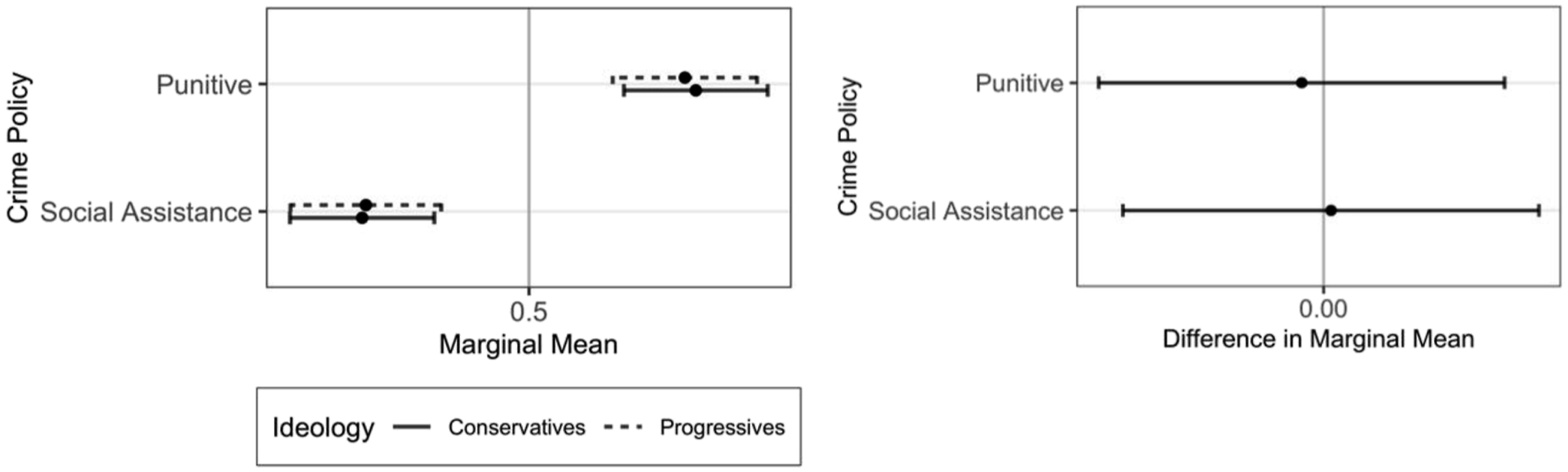
Victimization and Insecurity
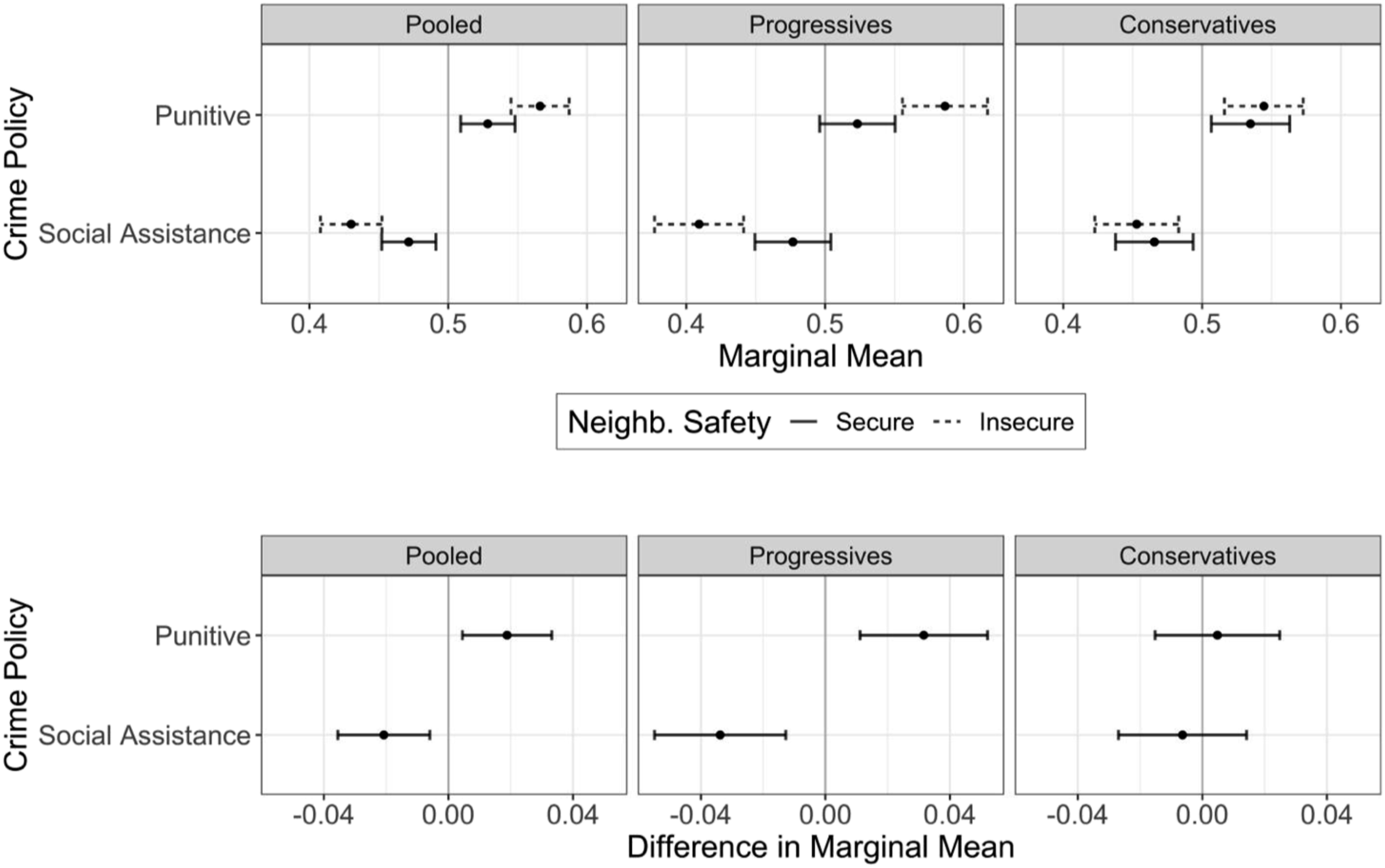
Results from analyses of preferences for punitive candidates among victims/non-victims of crime and those who perceive their communities to be secure/insecure (H1) are presented in Figures 3 and 4. Although I hypothesized that both victimization and perceptions of insecurity should be associated with preferences for punitive candidates, results indicate heterogeneous patterns across these factors. Preferences for candidate attributes disaggregated by respondent victimization and differences in marginal means. Preferences for candidate attributes disaggregated by respondent community safety and differences in marginal means.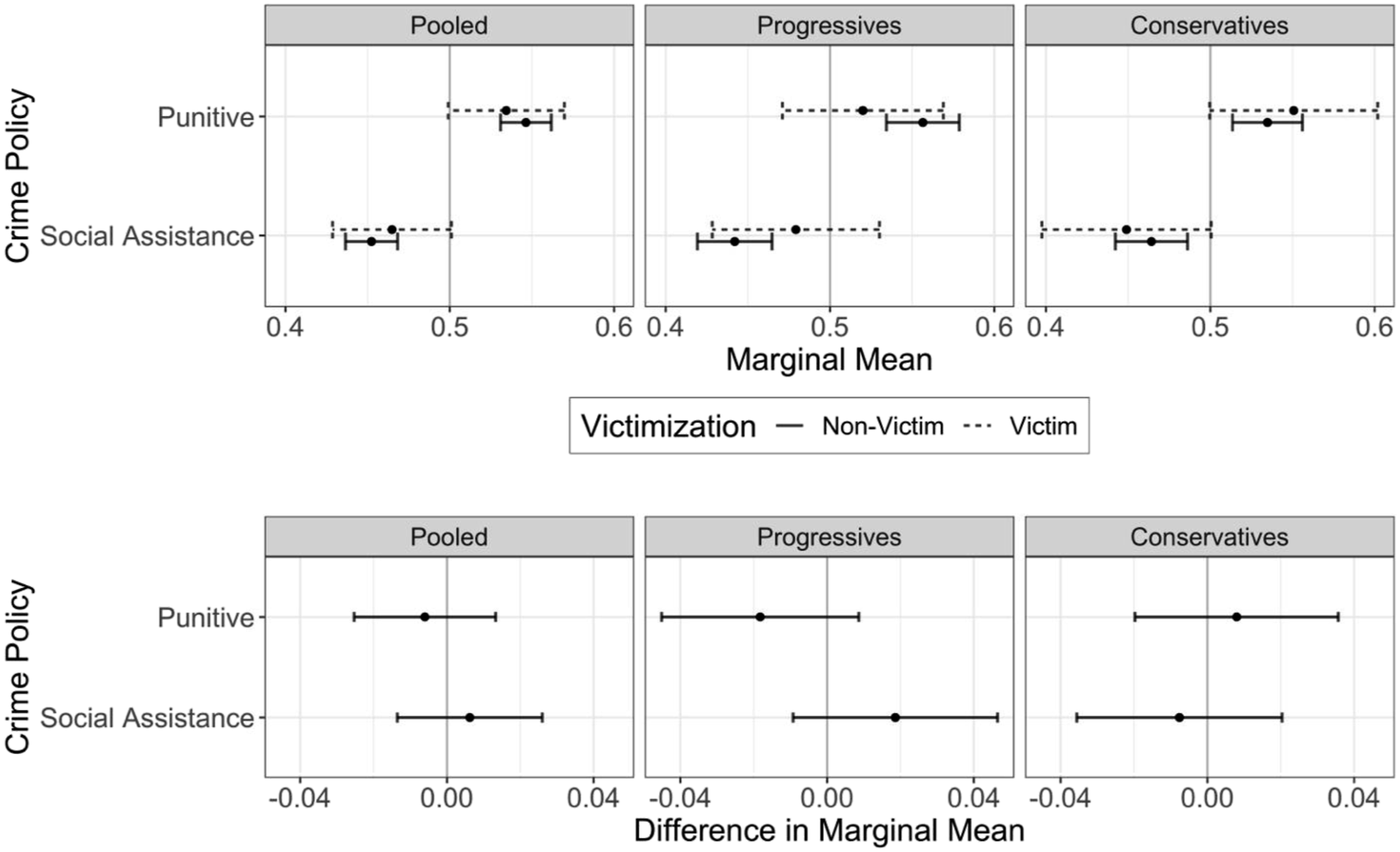
First, both non-victims and victims (ideological groups pooled) prefer candidates who propose punitive policies to combat crime (Figure 3), challenging H1. Importantly, due to the low level of variation in the victimization variable—only 17% of respondents report victimization in the past year—the minimum effective sample size for a traditionally 80% powered test here is higher compared to other tests. Specific strategies to calculate power needed for conjoint experiments (particularly those with subgroup analyses) are only recently gaining more attention. But, according to Schuessler and Frietag’s (2020) proposed formulas, the observed sample for this test has about 70% power at the p < .1 level. To accommodate this issue, in Appendix 16, I also present results dividing respondents based on whether they were victims of crime and/or had close family that were victims of crime in the past year. These tests are better powered, as the percentage of respondents within this category is greater (36%). The differences between victims (self or family) and non-victims are also statistically insignificant across samples (Figure A16.1). However, among the progressive subsample, victims (self and family) are more likely to support punitive candidates compared to non-victims, although this result is only significant at the p < .16 level. Ultimately, future work is necessary to re-test this hypothesis with a larger sample size.
Results regarding perceived neighborhood insecurity support H1 (Figure 4). In the pooled sample, those who rate their neighborhoods as “unsafe” or “very unsafe” are more likely to select punitive candidates compared to those who rate their neighborhoods as “safe” or “very safe.” The difference in marginal means between those who perceive their community to be safe vs. unsafe is statistically significant. When dividing these respondents by ideology, results support H4. Ideological progressives who report living in unsafe neighborhoods prefer punitive candidates, with a marginal mean that is greater than .5 and statistically significant. There is a significant difference between their preferences and the preferences of progressives who live in more secure neighborhoods. This effect is not present among conservatives, who are likely to elect a punitive candidate regardless of their perceived community safety.
These results are noteworthy, as pre-registered expectations anticipated that both of the instrumental variables of interest (victimization and perceived security) would have a similar relationship with preferences for punitive candidates. Empirically, these variables seem to exhibit differing relationships. Although past work has found similar effects with both variables (e.g., Cruz & Kloppe-Santamaría, 2019), my findings are in line with recent work which has found some differences in the way in which victimization and insecurity influence demands from the state (Altamirano et al., 2020, 2022). I consider this further in the discussion and the conclusion.
Social Policy Effectiveness
Results from an examination of perceived social assistance effectiveness support H2 (Figure 5). Among all respondents, when social assistance is perceived as ineffective, the marginal mean for candidates who propose punitive policy is greater than .5 and statistically significant. The marginal mean associated with social-assistance-oriented crime platforms is negative and significant, suggesting candidates who propose such policies are not popular among those who believe social assistance is ineffective. At the p < .05 level, punitive platforms do not have a significant effect on candidate choice among respondents who believe that social assistance is effective, although do at the p < .1 level. Preferences for candidate attributes disaggregated by respondents’ perceived effectiveness of social assistance and differences in marginal means.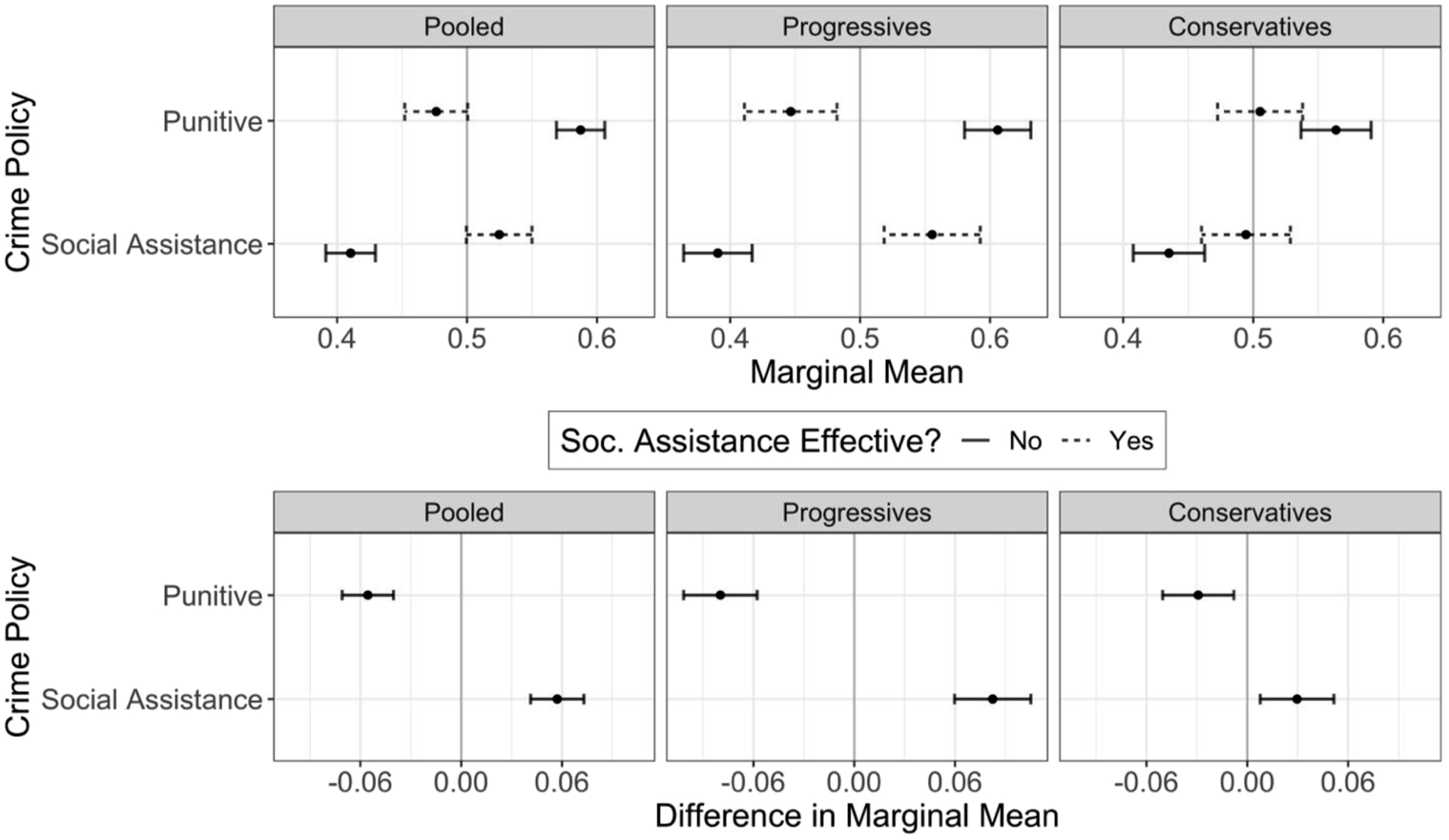
When disaggregating respondents by ideology, we see that progressives who believe social assistance is ineffective are likely (marginal mean > .5) to elect punitive candidates. With regard to conservatives, this effect is present but weaker. Conservatives who see social assistance as effective are indifferent toward punitive candidates but prefer them if they see social assistance as ineffective. The difference in marginal means among these two groups of conservatives is smaller than that among progressives.
Source of Crime
Analyses evaluating the role of perceived source of crime support hypothesis H3 (Figure 6). Among pooled respondents, those who report the main source of crime in their community to be gangs are more likely to choose punitive candidates. Among those who do not perceive gangs as the main source of crime, the marginal mean is greater than .5 but is not statistically significant. The difference between these groups in the pooled sample is significant at the p < .1 level. Preferences for candidate attributes disaggregated by respondents’ perceived source of crime (gangs) and differences in marginal means.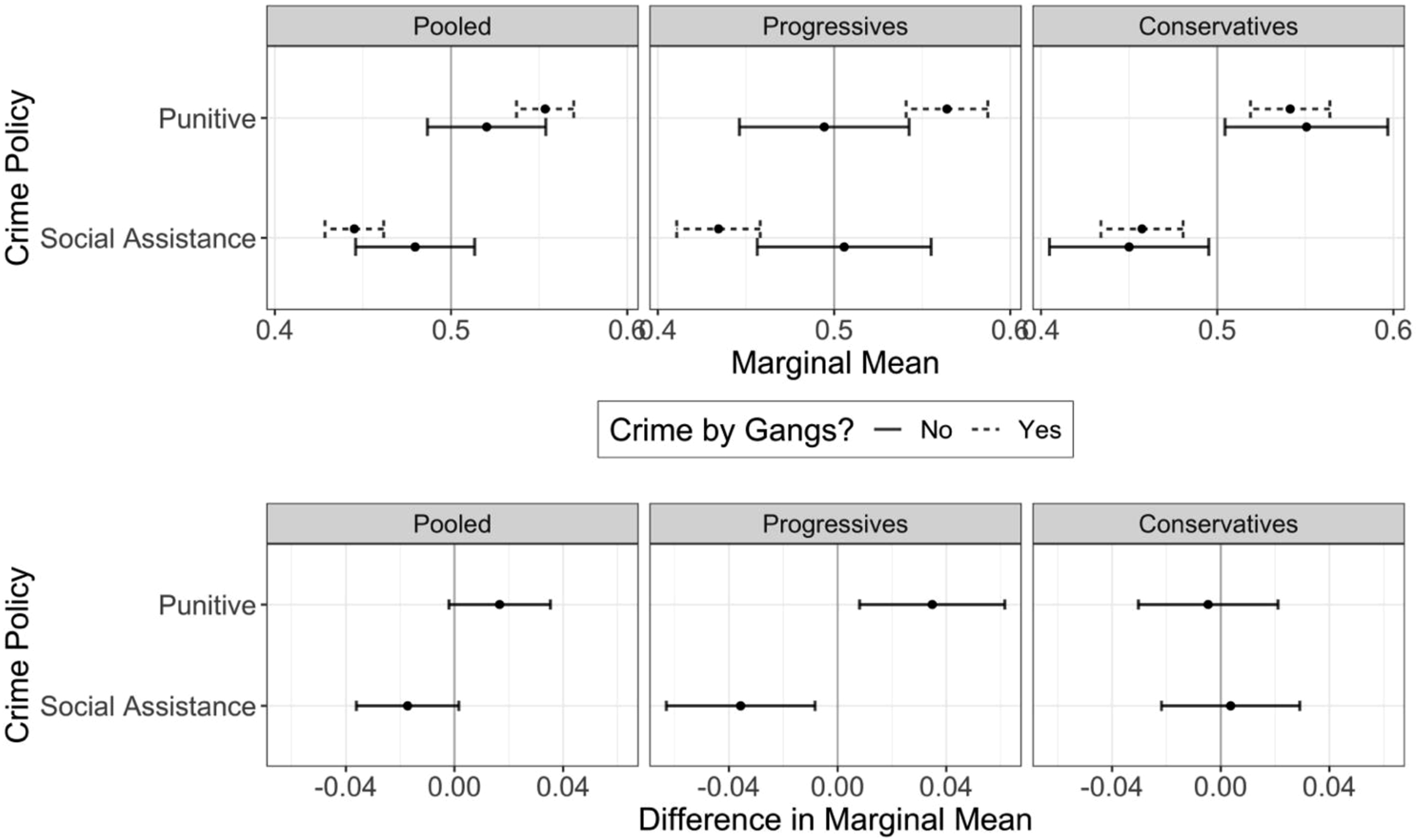
Among progressives, these effects remain, providing support for H4. The difference between those who believe the main source of crime is gang-related, and those who do not, is significantly different. Among progressives who do not believe that the main source of crime to be gangs, there is a negative but insignificant effect on the probability of electing a punitive candidate. Among progressives who believe the main source of crime is gang-related, there is a positive and statistically significant effect on choosing a punitive candidate. There is no statistically significant difference in preferences between conservatives who differ in their perceptions regarding if crime is driven by gangs.
Validation on a Nationally Representative In-Person Survey
Although the above results provide strong evidence in support of the majority of proposed hypotheses, it is worth exploring whether these results are supported by analyses conducted on a more nationally representative sample. To do so, I analyze data from the 2014 AmericasBarometer survey in Argentina and Brazil (n = 1500 cases for each). Within this round of the survey, unlike later rounds, respondents were asked to evaluate their preferences for punitive versus social-policy-oriented solutions to crime (or a combination of both). The survey asks respondents: In your opinion, what should be done to reduce crime in a country like ours: Implement preventative measures or increase punishment of criminals? [Option included for ‘both’]
With this data, I re-establish the patterns observed from the previous analysis by conducting a logistic regression to explain differences in responses to the above question. 28 Responses are coded as a binary response variable where support for punitive policy or “both” is considered punitive, while support for preventative policy alone is considered preventative. I examine the degree to which my hypotheses may explain preferences for punitive versus prevention-based policies, although in this case outside of an electoral scenario. I assess how victimization, perceived community safety, the perception that the current administration is effective at managing the economy, and the degree to which there are gangs present in one’s community affect such preferences. These variables are not perfect matches for those employed in the first part of this study but serve as close proxies.
To factor in ideology, I examine the effect of these variables all while controlling for the ideology of respondents, as measured by self-reporting on a left–right scale. Limited by the survey questions available, this is not a perfect replication of the ideology spectrum employed in the previous analysis but is a close approximation. To validate it, I show that it is highly correlated with respondents’ opinions on issues related to the ideology index used in the main analysis (e.g., opinions on abortion and same-sex marriage), as seen in Appendix 15.
Logistic Regression Models: Support for Punitive Crime Policy.
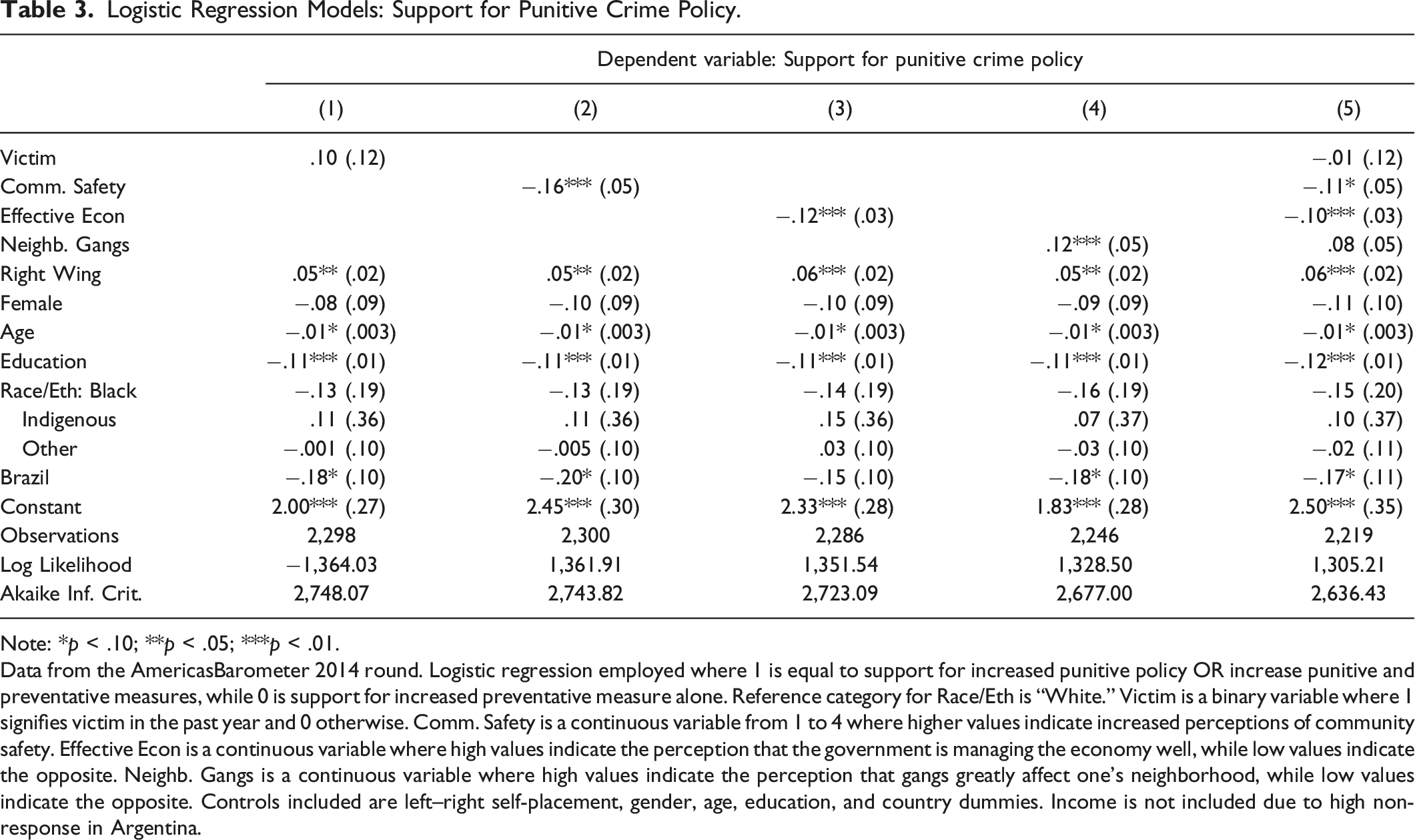
Note: *p < .10; **p < .05; ***p < .01.
Data from the AmericasBarometer 2014 round. Logistic regression employed where 1 is equal to support for increased punitive policy OR increase punitive and preventative measures, while 0 is support for increased preventative measure alone. Reference category for Race/Eth is “White.” Victim is a binary variable where 1 signifies victim in the past year and 0 otherwise. Comm. Safety is a continuous variable from 1 to 4 where higher values indicate increased perceptions of community safety. Effective Econ is a continuous variable where high values indicate the perception that the government is managing the economy well, while low values indicate the opposite. Neighb. Gangs is a continuous variable where high values indicate the perception that gangs greatly affect one’s neighborhood, while low values indicate the opposite. Controls included are left–right self-placement, gender, age, education, and country dummies. Income is not included due to high non-response in Argentina.
Importantly, these results also reinforce heterogenous effects observed among ideological subgroups. As can be seen in the Table A14.1, three factors significantly affect left-wing respondents: perceptions of community safety, administration of the economy, and perceptions of gang-driven crime. Notably, only one of these factors (administration of the economy) affects conservatives, and the magnitude of this effect is much smaller than that experienced by progressives. This reinforces the result that instrumental factors are associated with more punitive preferences among ideologically progressive citizens but do not appear to have a strong association with the views of conservative citizens.
In Appendix 14, additional models are included which separate respondents by country. Pooled results divided by country or ideology are largely consistent with results from Table 3, although significance varies. I also include an analysis dividing respondents by country and ideological subgroups, although the sample size is comparatively small. 30 When divided along these lines, in Brazil, the perception of effective economic management by the government is the only main independent variable which has a statistically significant coefficient among left-wing respondents. Conversely, it is positive (although not significant) among right-wing respondents. Certain controls are also significant predictors of support for punitive policy within the Argentine sample but are not significant within the Brazilian sample. These include respondent gender and age. Results from these analyses are not causal conclusions. But they lend credence to the experimental results and suggest they should be observable in a nationally representative and in-person survey sample.
Discussion and Conclusion
Why do progressive yet punitive candidates receive high levels of support? What is the relationship between progressive citizen ideology and support for punitive policy? Past scholarship has typically focused on either why conservative and authoritarian voters support these policies and actors or what leads citizens generally speaking to do so. In this article, I provide a nuanced assessment of how specific instrumental factors can influence citizens’ support for punitive candidates depending on their ideology. I pay close attention to progressive citizens—a group which much research has not examined directly in assessments of punitiveness.
Ultimately, I argue that among progressives, instrumental factors can moderate the effect of ideology on preferences for punitive candidates. Specifically, I explore three instrumental explanations of support for punitive policy: citizen insecurity, the perception that crime is driven by gangs, and the perception that social assistance is ineffective. I show that the effect of these factors on preferences for punitive candidates is often heterogenous when disaggregating citizens into progressive versus conservative subgroups. In fact, under these circumstances, progressive citizens are significantly more likely to vote for punitive candidates. Conservative citizens, on the other hand, typically support punitive candidates regardless of whether or not these instrumental factors are at play. I thus show that both instrumental and ideological explanations play a role in support for punitive candidates. That is to say, I demonstrate that voters are clearly ideologically sorted on support for punitive candidates when instrumental factors are not at play. However, in light of instrumental factors, progressives become more supportive of punitive candidates while conservatives (in the majority of scenarios) are steadfast in their preferences.
Although the majority of hypothesized relationships were supported, one hypothesis experienced mixed support. Initially, I proposed that both victims and the insecure should support punitive candidates more than non-victims and those who report living in secure communities. However, I only find support for the influence of insecurity and do not find statistically significant differences between victims and non-victims, prompting a deeper discussion of why this might be.
First, it is possible that important information was not considered when developing the hypotheses and relevant tests regarding victimization. Respondents were not asked who victimized them. For ethical reasons, asking this question may be too sensitive but could prove useful to understand the observed effects. In particular, police brutality is common and many are victimized by the state (Ahnen, 2007; French, 2013; Fuentes, 2005). Thus, it is possible that victims do not desire punitive policies as it may lead to more insecurity. Also, victimization is often an ongoing and dynamic engagement between victims, perpetrators, and the state (Moncada, 2020, 2022). Survey items asking whether or not one was victimized in the past year may mask other types of experiences. In recent work, Ventura et al. (2023) propose a network-based approach to measure exposure to victimization, which may help account for measurement issues.
Second, recent research suggests that victimization and insecurity affect public policy demands in distinct ways. Altamirano et al. (2022) find that while insecurity leads citizens to prioritize public expenditure on the police over social spending, victimization does not. This finding reinforces the differences I observe, including the null effect among victims. In an earlier study, Altamirano et al. (2020) argue that insecurity and victimization are separate phenomena with heterogenous attitudinal effects. Their results regarding insecurity support the conclusions of this article. But their findings regarding victimization tell a nuanced tale—victims support increased social policy provision due to their rising need to rely upon such services. Although demands for health services and other social services explored in their analysis are out-of-scope of the present study, it raises important considerations regarding the differences in victims’ experiences and demands. Exploring why victims may not demand more punitiveness—and may experience indifference regarding how crime should be handled—warrants further study.
Conclusions from the present study are relevant to policymakers and practitioners. My results suggest that to decrease the presence of punitive attitudes among a citizenry, political actors may wish to focus their attention on progressives. While improving certain objective realities in the short term is difficult, my results suggest that increasing knowledge about the positive effects of social assistance could drum up support for this policy area. Improving perceptions about insecurity and gang-driven crime may be more difficult, but some simpler solutions exist. For example, providing brighter street lighting (Kaplan & Chalfin, 2021) can improve perceived security. However, the influence of media and objective insecurity are persistent and difficult problems, a sobering reality which suggests that changing such attitudes is difficult.
Results raise potentially interesting differences between Argentina and Brazil. However, the validity of these differences is highly suspect, given the small number of respondents across country-specific subgroups resulting in low powered tests. The patterns observed are particularly strong in Argentina—a context where crime is not as severe nor as salient among voters. This is counterintuitive, as one might expect the salience of the issue to be associated with more punitiveness. This factor poses an interesting avenue for further research.
The present study does not deeply consider other important interactions with ideology beyond instrumental factors—such as respondent race and ethnicity, gender, or place of residence. A fruitful area to consider for future research is if progressives are more or less steadfast in their preferences for social policy-oriented solutions based on these intersectional identities. For example, do progressives who are Black, white, indigenous, or belong to other racial or ethnic groups react differently to such factors?
Furthermore, this work does not consider how sticky the preferences of punitive progressives may be. Are there certain circumstances which may shift punitive progressives to become less supportive of punitive candidates? It is also worth analyzing how citizen demand interacts with supply of punitive candidates and policies. Can progressive politicians strategically combine punitive policies with progressive policies in other issue domains to win elections? Does such an approach sustain coalitions? Future work may consider these questions.
Finally, this work is relevant to countries across the globe. Progressive politicians who run on punitive policies can be found in diverse contexts, such as Mexico and the United States. Work by Enns (2014) shows that punitive attitudes in the United States have increased substantially over time. My research provides a possible key as to why. Moreover, the present study could be extended to examine particular types of punitive policies to determine if there are specific policies which are more, or less, palatable to progressives. This work could also examine if certain perceptions or experiences lead ideological conservatives to prefer more progressive solutions.
Supplemental Material
Supplemental Material - Progressive Ideology and Support for Punitive Crime Policy: Evidence from Argentina and Brazil
Supplemental Material for Progressive Ideology and Support for Punitive Crime Policy: Evidence from Argentina and Brazil by Isabel G. Laterzo in Comparative Political Studies
Footnotes
Acknowledgments
Thank you to Jonathan Hartlyn, Evelyne Huber, Cecilia Martínez-Gallardo, Omar García-Ponce, Sandra Ley, Lucy Martin, Lucía Tiscornia, Connor Huff, Nicolás de la Cerda, Herbert Kitschelt and attendees of Duke University’s Latin American Politics and Party Competition Workshop, APSA’s Justice and Injustice Mini Conference, and the meeting of the Southeastern Council of Latin American Studies for comments on prior versions of this paper. I am also grateful for the comments of the three anonymous reviewers and the editors of Comparative Political Studies. This project was made possible by the financial support of the University of North Carolina-Chapel Hill’s Institute for the Study of the Americas and the UNC Political Science Department’s Uhlman Fellowship. This project was deemed exempt from full review by UNC-Chapel Hill’s IRB (#20-3095). The pre-analysis plan is registered with As Predicted via the Wharton Credibility Lab at the University of Pennsylvania: 
Declaration of Conflicting Interests
The author(s) declared no potential conflicts of interest with respect to the research, authorship, and/or publication of this article.
Funding
The author(s) disclosed receipt of the following financial support for the research, authorship, and/or publication of this article: This work was supported by the UNC Chapel Hill Department of Political Science, UNC Institute for the Study of the Americas, Pre-Dissertation Grant.
Supplemental Material
Supplemental material for this article is available online.
Notes
Author Biography
References
Supplementary Material
Please find the following supplemental material available below.
For Open Access articles published under a Creative Commons License, all supplemental material carries the same license as the article it is associated with.
For non-Open Access articles published, all supplemental material carries a non-exclusive license, and permission requests for re-use of supplemental material or any part of supplemental material shall be sent directly to the copyright owner as specified in the copyright notice associated with the article.
