




Abstract
Violence against women (VAW) is widespread in East Africa, with almost half of married women experiencing physical abuse. Those seeking to address this issue confront two challenges: some forms of domestic violence are widely condoned and it is the norm for witnesses to not report incidents. Building on a growing literature showing that education-entertainment can change norms and behaviors, we present experimental evidence from a media campaign attended by more than 10,000 Ugandans in 112 rural villages. In randomly assigned villages, video dramatizations discouraged VAW and encouraged reporting. Results from interviews conducted several months after the intervention show no change in attitudes condoning VAW yet a substantial increase in willingness to report to authorities, especially among women, and a decline in the share of women who experienced violence. The theoretical implication is that interventions that affect disclosure norms may reduce socially harmful behavior even if they do not reduce its acceptability.
Introduction
Thirty-five percent of women worldwide have experienced physical or sexual violence by an intimate partner or nonpartner sexual violence (World Health Organization [WHO] 2013). Permissive attitudes toward such violence are widespread in many contexts, among both women and men. As with other socially harmful behaviors, prominent attempts to counter violence against women (VAW) aim at changing people’s views on whether it is acceptable to engage in such behavior. 1
Social psychologists, however, have long suggested that value judgments are deeply rooted (Staats, 1967) and slow to change (Doob, 1947). Indeed, recent evidence suggests that shifting attitudes around social issues can be difficult. Scacco and Warren (2018), for example, find that an intervention designed to foster positive social contact between Christians and Muslims in Nigeria did not reduce prejudicial attitudes. Similarly, Paluck (2009) and Paluck and Green (2009) find that an ethnic reconciliation soap opera in Rwanda had little effects on intergroup attitudes. And although there is some evidence that NGO-led campaigns that involve extensive on-the-ground mobilization efforts may succeed in reducing the acceptance of VAW (e.g., Abramsky et al., 2014, 2016), such multifaceted campaigns are prohibitively expensive to bring to scale in developing regions. In a pilot study (Green et al., 2016), we found no evidence that a lighter touch intervention in the form of education-entertainment videos that portrayed VAW as unacceptable altered viewers’ attitudes toward such violence.
Socially harmful behaviors arise as a result of a combination of factors that may include permissive attitudes but also strategic considerations. As a consequence, changing attitudes may be neither a necessary nor a sufficient condition for changing behavior. Some of the interventions mentioned above, for example, were successful at curbing socially harmful behaviors, despite their failure to change attitudes. We distinguish between attitudes, which are rooted in moral value judgments, on one hand, and perceptions of norms, in the form of expectations about the behavior of others, on the other hand. The conviction that it is morally unacceptable to beat one’s wife, for example, is distinct from the expectation that the victim will not report the violence to the authorities.
In this article, we focus on expectations around disclosure as an alternative lever to prevent socially harmful behavior. Many harmful practices are observable only for the individuals directly involved and, possibly, a small number of bystanders. This problem is especially severe for VAW, which typically happens in the home. Even in a context where communities and authorities see violence as unacceptable and would sanction perpetrators or otherwise intervene, they will be incapable of doing so if victims and bystanders do not come forward. Ethnographic and survey evidence suggests that women in East Africa and beyond are reluctant to report experiences of violence (McCleary-Sills et al., 2016). We show that such reluctance may be linked to the expectation of ostracism by a community that, though opposed to certain forms of violence, tends to be skeptical of witnesses’ motivation for coming forward. One alternative pathway to violence reduction, therefore, is to reduce expectations about whether victims and bystanders will face social sanctions for coming forward, so as to encourage disclosure of violent incidents.
To understand whether expectations around disclosure are amenable to change through interventions that can be scaled easily, we designed an experiment in rural Uganda. In light of recent randomized trials on the topics of corruption (Blair et al., 2019), HIV (Banerjee et al., 2019b), and ethnic conflict (Paluck & Green, 2009), mass media dramatizations of social problems, or “education-entertainment,” are believed to be a promising and scalable way to bring about normative and behavioral change. We present new experimental evidence illustrating mass media’s potential as well as its limitations. Ugandan villagers were exposed to a placebo-controlled education-entertainment campaign designed to convince audiences that VAW is deplorable and to encourage viewers to speak out if they see it. The campaign comprised 670 film screenings in 112 villages, attended by more than 10,000 adults. We measure outcomes through seemingly unrelated surveys conducted 2 and 8 months after the conclusion of the media campaign.
Our video intervention had no statistically significant effect on general attitudes about VAW, such as whether husbands ever have legitimate grounds for hitting their wives. At the same time, we do find substantial changes in expectations around disclosure and respondents’ willingness to report VAW to formal or informal authorities. In the control group, almost two thirds of women believed they would face social sanctions for reporting incidents of VAW; our campaign reduced this belief by 18%. Women became substantially more willing to report incidents of VAW to local authorities and agents of the state, as well as to family members. Moreover, men and women became more likely to believe that their fellow community members would intervene to stop VAW. In the communities where we screened our anti-VAW campaign, this apparent erosion of a norm against speaking out coincided with a decrease in violence: We estimate the probability that women in a household experienced violence over a 6-month period following our films decreased by five percentage points, effectively preventing violence in hundreds of households. The theoretical implication is that it is possible to bring about a meaningful change in outcomes by changing expectations around disclosure to local authorities, without bringing about a broad change in core attitudes.
Studying violence prevention in Uganda has the potential to advance our understanding of how to curb socially harmful behaviors in important ways. Sub-Saharan Africa is the region with the highest reported prevalence of intimate partner violence (WHO, 2013). Almost one third of rural Ugandan women in the 2011 Demographic and Health Survey (DHS) report that they had been punched with a fist, kicked or dragged, strangled or burnt, or threatened with a knife or other weapons. 2 According to the 2018 Human Development Report, around 50% of Ugandan women aged 15 years and older have experienced violence by an intimate partner (United Nations Development Programme [UNDP], 2018). This places Uganda in the top tercile of the worldwide distribution of countries in terms of the prevalence of VAW. Understanding how to prevent VAW in this set of countries is of particular policy relevance. Ugandans tend to hold conservative views about gender roles (Tsai et al., 2017), and Uganda ranks 126th on the UNDP’s 2017 global ranking of countries on gender equality. 3 Furthermore, as depicted in Figure 1, permissive attitudes toward VAW are widespread among women in Uganda, even in comparison with other countries in Sub-Saharan Africa. Our finding that violence prevention strategies can succeed by changing norms without changing attitudes, even in a context where barriers to prevention appear so high, suggests disclosure-centric approaches may be effective in other contexts where VAW is widespread.
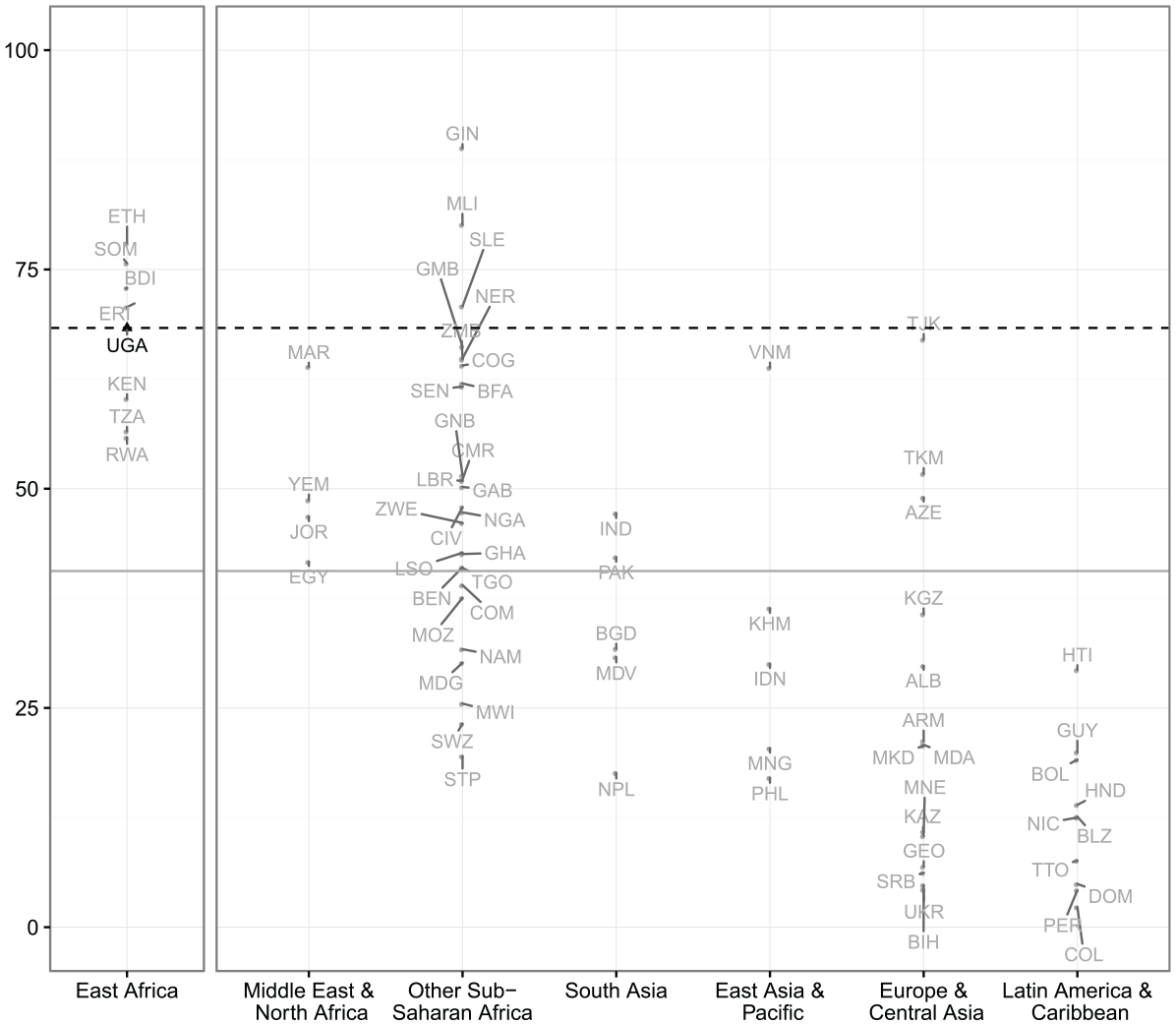
Average percentage of women who state that it is acceptable for a man to hit his wife in at least one of the five scenarios, by country.
The rest of this article is organized as follows. In section “Reducing Harm Through Changes in Attitudes and Norms,” we summarize theoretical perspectives on how to address socially harmful behavior including VAW. In section “VAW and Norms of Nondisclosure,” we discuss ways in which norms of nondisclosure may contribute to the prevalence of VAW in Uganda and beyond. Section “A Mass Media Campaign to Counter VAW” describes our messaging campaign, and section “Research Design” presents the experimental research design. Section “Results” summarizes our key results: no apparent changes in core attitudes about VAW or gender hierarchy more broadly; statistically significant shifts in perceived norms, especially those having to do with whether allegations of VAW are likely to be taken seriously; significant increases in willingness to report to authorities, especially among women; and a decline in intrahousehold violence. We address alternative explanations, such as social desirability bias, and present a series of robustness checks in the Online Appendix. We conclude by discussing how the results obtained here might generalize to other domains of behavior and inform our theoretical understanding of the conditions under which media interventions are able to change perceptions of social norms around disclosure.
Reducing Harm Through Changes in Attitudes and Norms
A common approach to countering socially harmful behavior is to target value judgments that are hypothesized to enable that behavior. Campaigns to reduce discrimination, for example, seek to undermine prejudicial attitudes toward outgroups (Gronholm et al., 2017; Thornicroft et al., 2016), and governments attempt to discourage female genital cutting by convincing citizens that such behavior is morally unacceptable (Berg & Denison, 2012; Freymeyer & Johnson, 2007). Similarly, prominent approaches to reducing VAW are premised on the idea that substantial and enduring change requires a shift in views on the legitimacy of VAW in particular and in opinions about gender equality more generally (Abramsky et al., 2014, 2016; Wagman et al., 2015).
Yet, to the extent that attitudes toward socially harmful practices are rooted in deep-seated values developed during formative childhood years (Brooks & Bolzendahl, 2004), changing them may require intensive interventions. Those attempts that have shown success in reducing the social acceptability of VAW, for example, tend to consist of intensive community-wide campaigns. The SASA! campaign (Abramsky et al., 2014, 2016) in Uganda, for example, brought community members and leaders together to reduce acceptance of power abuses within the home and was successful in reducing both the social acceptability of VAW and its incidence. Wagman et al. (2015) present similar success in an intensive outreach campaign directed at men and boys. Putting aside questions about the precision with which these studies have isolated effects, 4 such intensive interventions are difficult to scale beyond the neighborhoods where they have been attempted.
Findings on whether comparatively less resource-intensive approaches such as media campaigns can change the acceptability of VAW are mixed. Jensen and Oster (2009) provide evidence that the introduction of cable television reduced the acceptability of VAW in India. Evidence from communally deployed education-entertainment campaigns in Mexico (Arias, 2019) and Nigeria (Banerjee et al., 2019a) suggests that such campaigns have the capacity to reshape attitudes among certain subgroups. Yet, in a pilot study conducted in 2015, we found that an education-entertainment campaign that sought to convey that VAW is both illegal and morally unacceptable did not significantly alter views on gender equality and the legitimacy of such violence when participants were interviewed 2 months later and in an ostensibly unrelated survey (Green et al., 2016).
Permissive attitudes, however, are only one potential obstacle and changing them may be neither a necessary nor a sufficient condition for the prevention of socially harmful behaviors. Psychologists have long argued that attitudinal change does not necessarily result in behavioral change (Festinger, 1964). In a 1969 review of the social psychology literature on attitude–behavior consistency, Wicker concluded that “it is considerably more likely that attitudes will be unrelated or only slightly related to overt behaviors than that attitudes will be closely related to actions” (p. 65, cited in Regan & Fazio, 1977). In line with this assessment, work on corruption suggests, for example, that there can be stark disparities between attitudes toward and willingness to engage in socially harmful behavior (Miller, 2006). This literature also finds that a strong predictor of the willingness to pay bribes is the expectation that many others will also do so (Corbacho et al., 2016; Dong et al., 2012).
A large body of work in psychology suggests that such perceptions of social norms—expectations about the behavior of others—can influence behavior, irrespective of the private attitudes that individuals hold. The notion that individuals consider how they will be affected by the behavior of others when choosing how to act is also central to political economy approaches that treat observed outcomes as the result of strategic interactions among utility maximizing individuals (Greif et al., 1994; Olson, 2009; Young, 2001). Results from work on costly punishment demonstrate that expectations of social sanctions play a key role in preventing socially harmful behaviors such as insufficient contributions to public goods (Fehr & Gachter, 2000).
When it comes to socially harmful behavior that is difficult to observe, expectations about disclosure become especially important. Communities as well as state actors will find it difficult to take action against harmful practices that occur in the private sphere, such as VAW in the home, unless victims or witnesses who happen to overhear an incident disclose what they know. In places where witnesses are reluctant to come forward, even socially harmful behavior that is widely condemned may persist. Where potential perpetrators expect witnesses to stay quiet, they may come to believe that they can act with impunity. Moreover, as we argue below, the willingness of victims and witnesses to disclose may also arise from expectations about how communities will react to disclosure.
Contrary to attitudes, such expectations about the behavior of others may not be rooted in deep-seated value judgments but rather in beliefs about the world. Such beliefs may be updated in the face of new information. Corbacho et al. (2016) find, for example, that a flyer that presented Costa Ricans with the information that paying bribes was increasingly common doubled the rate at which individuals expressed willingness to engage in corruption. Beliefs may be especially malleable if people are uncertain about how others would behave in a situation with which they have little prior experience. Someone may, for example, have never reported a case of VAW before, which leaves open the possibility that she or he may be wrong about whether others would be sympathetic to disclosure. In short, to the extent that beliefs are more amenable to change than deep-seated value judgments, it may be easier to reduce socially harmful behaviors by targeting perceptions of norms rather than attitudes.
VAW and Norms of Nondisclosure
The UN definition of VAW comprises a wide range of physical and emotional abuse that can occur within the private or public spheres (United Nations General Assembly, 1994). This article focuses primarily on physical violence inflicted by intimate partners within the home. The literature on this kind of violence draws from a wide array of disciplines (e.g., health, gender studies, psychology, criminology, sociology, political science, anthropology, law) and has identified various factors that may contribute to its prevalence.
Heise (1998) groups these into four levels. First, there is a body of work that focuses on individual-level factors such as childhood experiences, social dominance orientations, and beliefs about gender hierarchy that impel men to commit assault or rape (Babcock et al., 2005, 2000; Claes & Rosenthal, 1990; Gottman et al., 1995; Hotaling & Sugarman, 1986). Second, individual predispositions of this kind are embedded within the social environment defined by the daily interactions of the victim and perpetrator. Heise (1998, p. 265) dubs this environment a “microsystem.” In the context of East Africa, this environment often features male control of wealth and autocratic authority over family decisions; it may also feature economic pressures or substance abuse, especially alcohol abuse (Kantor & Straus, 1987). This microenvironment is, in turn, embedded within a broader ecology of social structures that is termed “exosystem” by Heise. The exosystem includes neighborhood networks and broader community structures in which women may be socially isolated (Baumgartner, 1993), especially from others who could assist them if they were assaulted, whereas men may be surrounded by peers who encourage or model VAW (Miedzian, 2002). Finally, these contributing factors operate within a broader cultural sphere, what Heise (1998) calls the macrosystem, with defined gender roles in which masculinity is tied to aggression and dominance, while women are viewed as subordinate and subject to physical chastisement. One countervailing aspect of the macrosystem is a legal system that may allow for divorce or proscribe domestic violence. These rules, when they are enforced, potentially change a perpetrator’s calculus of the risks involved in violence.
Here, we focus on factors at the intersection of Heise’s microsystem and exosystem—expectations of perpetrators, victims, and others in the community about whether and why witnesses disclose what they know about incidents of VAW and about what happens to those who come forward. In Uganda, as in many places, people are reluctant to disclose information about violence in the home (on nondisclosure of violence elsewhere, see Felson et al., 1999; Felson & Paré, 2005; Nero, 1990; Sable et al., 2006; Tuerkheimer, 2017). When asked what they would do if they learned that their cousin had been severely beaten, almost three quarters of the respondents in our 2016 midline survey said they would prefer to merely express sympathy to her rather than alert the Local Council 1 (LC1) chairperson. Fewer than one in five respondents would be willing to report this type of incident to the police.
To some degree, such reluctance to disclose may be linked to views on the legitimacy of VAW: Witnesses who see VAW as acceptable may simply see no reason to report it. Yet, even in a context as conservative as Uganda, certain forms of violence are perceived as unacceptable. Tsai et al. (2017), for example, find that VAW is perceived as justified by a majority of Ugandan respondents when the woman is framed as having intentionally contravened gendered standards of behavior, but only by a small minority when her behavior is described as unintentional. This affirms our qualitative fieldwork that suggests violence is condoned only when it is seen as serving some “pedagogical” end. Furthermore, in surveys we conducted in 2016 among rural Ugandans, 31% of respondents said that a husband is justified in beating his wife when she “disobeys.” When asked whether they meant that she should be slapped or beaten with more force than that, only 5% of those who initially said that beating was justified endorsed more severe violence. The overwhelming majority of our respondents do not condone violence more forceful than slapping, and it appears likely that most would be in favor of intervention to limit such violence. In fact, 86% of respondents in the control group of this study stated that people should intervene to stop violence if they learn of a husband beating his wife every evening.
Reluctance to disclose may also be linked to macrolevel factors, such as the absence of authorities who can help those who come forward. Disclosure may seem futile if law enforcement and judicial systems are difficult to access or so low in capacity that successful intervention seems unlikely. Police posts are sparsely distributed in rural Uganda. Our 2017 survey found that 75% of rural respondents see police on patrol in their village less often than once per week, and more than 40% see them less than once per month.
Rural areas, however, are not completely without authorities that villagers could turn to in order to address violence in their community. Each village in Uganda is headed by an LC1 chairperson. Formally, the LC1 chairperson presides over the Local Council, which sets and implements policy for the village, and leads the Local Council Court, which has jurisdiction over civil law matters including cases of domestic violence. LC1 chairpersons regulate village life in ways that seem more similar to “informal social control” (Schwartz & DeKeseredy, 2008, p. 183) than to formal acts of law enforcement. For instance, an LC1 chairperson may levy sanctions against violent offenders or intervene on behalf of women at risk. Although Ugandan village leaders are often characterized as socially conservative, our survey data suggest that LC1 chairpersons (N = 41) are in fact significantly more opposed to VAW than the general population (18% of LC1 chairpersons and 31% of all villagers endorse the view that a husband has a legitimate reason to beat his wife if she “disobeys”). A similar role is played by Nabakyalas, or representatives of women in the village, who in our surveys almost never endorse VAW. Victims of or bystanders to violence may thus seek help from village leaders, even where access to police is limited or police are distrusted.
An important reason why even witnesses who condemn violence and who have access to sympathetic authorities may be reluctant to come forward about violence, we believe, is that they expect to be socially sanctioned for doing so. In what might be thought of as a norm of nondisclosure, both women and men in our sample expect to be branded a “gossip” and scolded by their communities if they come forward about violence. Women expect especially high reputational and physical costs for disclosing information that may incriminate men: 62% of women in the control group indicate that they would be labeled a gossip were they to disclose that a neighbor beats his wife. The fear of being accused of spreading rumors and subsequent ostracism featured prominently in the open-ended comments that respondents in our survey in Uganda volunteered when explaining their reluctance to share information with their community about a hypothetical violent incident. Being labeled a “gossip” may even result in physical harm. When asked whether various kinds of behavior make it justifiable for a man to beat his wife, respondents in our 2015 survey were most acceptant of VAW in response to “gossiping.” Even compared with infidelity, a greater proportion of people consider “gossiping” admissable justification for VAW.
What may be the origin of such a norm against disclosure? One underlying factor may be that reports of VAW are difficult to verify. Where community members underestimate the prevalence of VAW, this leaves scope for doubt about the motivations of those who come forward. In our survey, community members indeed do not appear well informed about the prevalence of VAW in their village (exluding their own household). 5 In line with this idea, our survey evidence suggests that respondents are more willing to report hypothetical incidents of VAW if they are primed to think that the incident has also been observed by others who may be able to confirm the report (see section F.1 of the Online Appendix for details and Cooper et al., 2020).
Uganda, in sum, appears to be a promising context in which to explore the potential for a mass media campaign to reduce violence. While such a campaign may change attitudes, it does not need to. Even though permissive attitudes toward VAW are widespread in Uganda, certain forms of violence are seen as wrong, and people believe one should come forward about it. Nonetheless, they are reluctant to do so for fear of being labeled a “gossip.” The belief that false accusations are common is widespread outside Uganda as well, especially when it comes to sexual violence (Ferguson & Malouff, 2016; Wheatcroft & Walklate, 2014). Because such beliefs are difficult to verify through direct experience, they may be amenable to change through a campaign that portrays those who report as speaking the truth. Ultimately, such a campaign may reduce VAW by altering perpetrators’ expectations about whether they can act with impunity.
A Mass Media Campaign to Counter VAW
Our anti-VAW media campaign consists of three short video vignettes screened during the intermission at film festivals held in video halls (bibanda) across a broad swath of rural Uganda (see Figure 2 for a map). Each vignette is between 4.5- and 8-min long. While an overarching narrative runs through the three vignettes, each can also be understood as a self-contained story in isolation from the other two. The narrative of the videos is outlined in section E.3 of the Online Appendix, and they can be viewed at this address: http://tiny.cc/Uganda_VAW_media_campaign. The film festival comprised six films shown one per week over consecutive weekends, from July 30 to September 4, 2016, in each of the 112 communities where the study took place (see Figure 3 for a timeline).
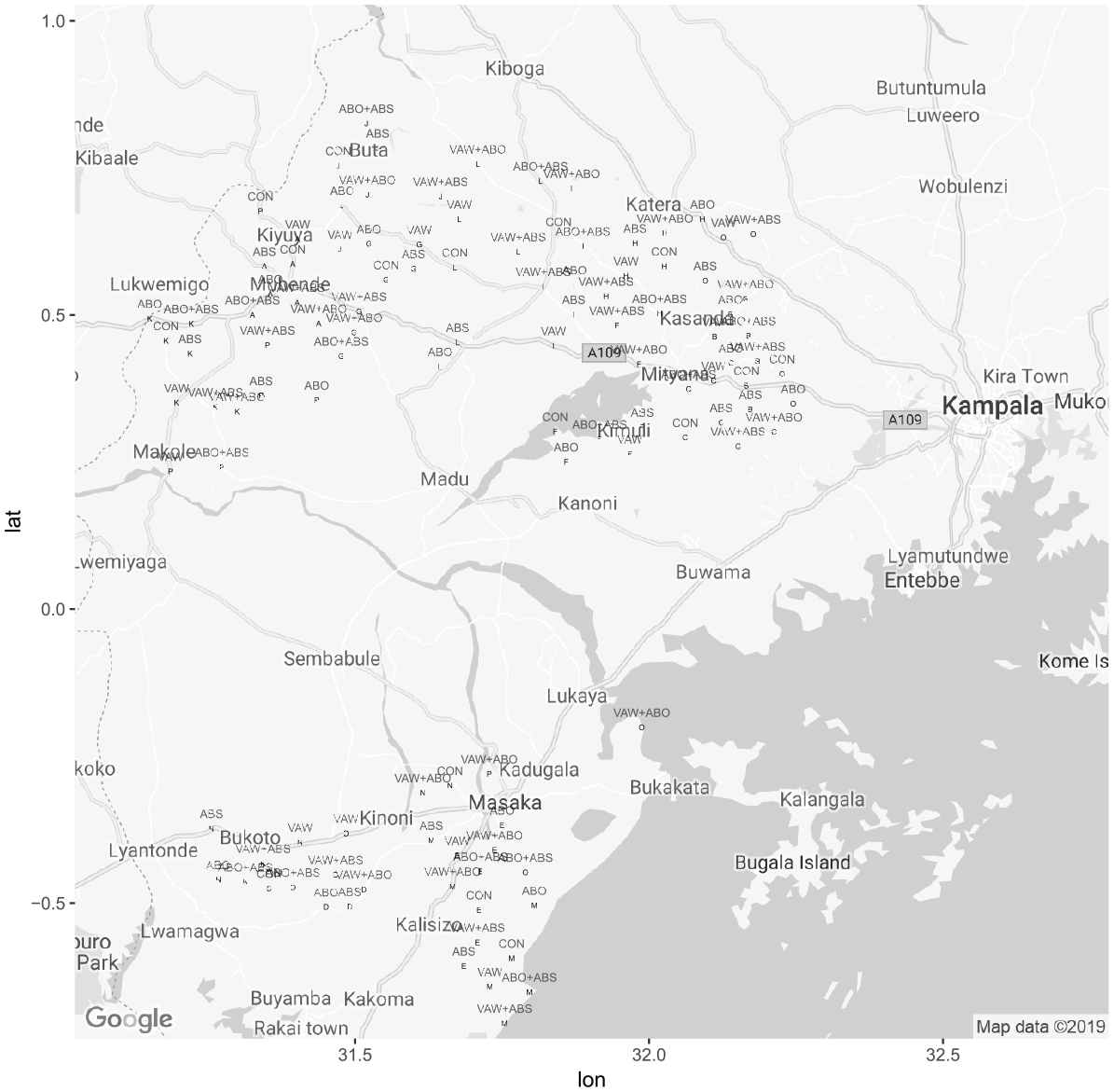
Clusters included in the study.
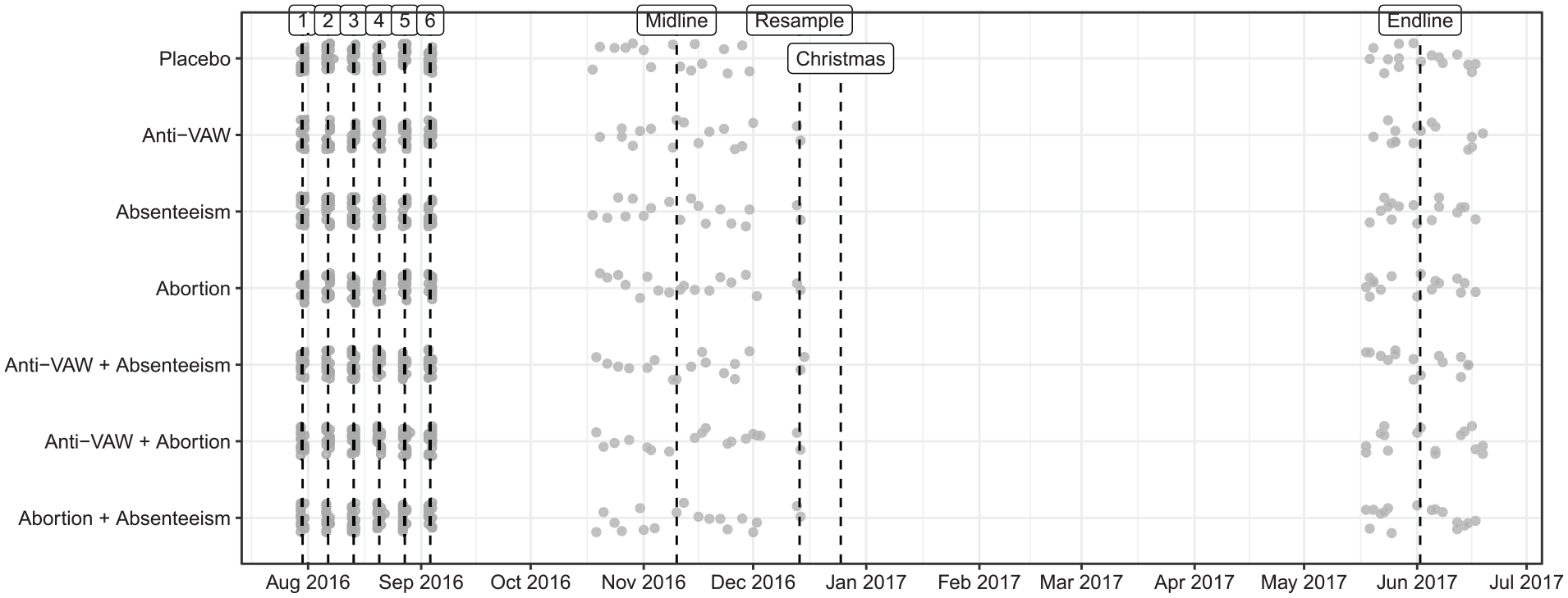
Timeline of media campaign, midline and endline surveys.
A key psychological principle underlying education-entertainment is the concept of “vicarious learning” (Bandura, 2004). According to this theory, people acquire new ways of responding to social situations not only through direct experience but also by making inferences based upon the observation of others’ behavior. Bandura points out that such learning need not take place through the observation of actual behavior; people may also acquire new ways of acting based on behavior modeled in fictional dramatizations.
Our campaign uses education-entertainment to convey what Bandura terms a “differential modeling” narrative:
Characters representing relevant segments of the viewing population are shown adopting the beneficial attitudes and behavior patterns. [ . . . ] Other characters personify negative models exhibiting detrimental views and lifestyles. Transitional models are shown transforming their lives by moving from uncertainty or discarding adverse styles of behavior in favor of beneficial ones. Differential modeling contrasts the personal and social effects of different lifestyles. Viewers are especially prone to draw inspiration from, and identify with, transforming models by seeing them surmount similar adverse life circumstances. (Bandura, 2004, p. 83)
Our videos follow this Tale of Two Cities motif. The first vignette begins in a village where there is reluctance to report VAW. The protagonist is a sympathetic and personable woman whose husband beats her severely, despite her sincere efforts to appease him. As depicted in the first panel of Figure 4 in section E.3 of the Online Appendix, the protagonist’s neighbor overhears her screams but decides not to speak out. In the second vignette, which begins with the protagonist’s hospitalization and ends with her funeral, we learn that not only her neighbor but also her daughter and parents knew about the violence. They express regret for failing to speak out sooner. In the third vignette, we move to the “disclosure” village. The focal woman in the story is also beaten by her husband, but unlike the woman in the preceding vignette, she decides to disclose this information to her parents. Rather than scold, her parents intervene to help mediate. Moreover, the parents share the information with the local women’s counselor (Nabakyala), who visits the household to provide guidance. The vignette closes with the couple in visibly better relations with each other. A voiceover confirms that the situation has improved and implores viewers to speak out before it is too late when they learn of violence in their community.
This dramatization is designed to facilitate vicarious learning through a vivid and realistic depiction of the audiences’ context and experience. It is rare for media with a high production value to be filmed on site and in the local language (Luganda). The video dramas, which were composed by local screenwriters, depict situations that would be very familiar to the participants in our study. And indeed the relevance of the films was apparent in a separate survey experiment we conducted wherein villagers directly watched our video material on hand-held tablets prior to answering survey questions. 6 The vast majority (84%) of respondents said that the stories could have happened in their village. That viewers found the stories relevant to their own lives is also reflected in what they said when invited to comment on the videos, for instance, “The video is so real” or “What I have seen in the video can also happen in my home.”
Vicarious learning is important theoretically insofar as it enables audiences to update their beliefs about both the prevalence of violence in their community and the motivations of those who claim that violence has occurred. The films present a strong case against the idea that allegations stem from baseless gossip. The videos not only depict people reporting an actual incident but also show these reports being believed by those who receive the secondhand accounts. Another source of vicarious learning is common knowledge (Schelling, 1960). In our case, the experience of viewing the videos in a communal setting enables audiences to update about how others in their community may be updating in light of their shared viewing experience (Arias, 2019).
Ethical Considerations
We took a number of steps to ensure the appropriateness of our media campaign for the setting in which we work to make sure that it was protective of participants’ rights and well-being. We also took steps to ensure that our survey measurement of intrahousehold violence minimized risk of retaliation by men. As these require a fuller description than constraints allow for here, we include a description of the measures taken in section E.1 of the Online Appendix.
Research Design
Aside from the messages on VAW that are the focus of this article, our field experiment was designed to test the effects of two other sets of video vignettes. These concern the stigma surrounding abortions and the problem of teacher absenteeism, respectively. We assigned villages to receive one set of vignettes (e.g., anti-VAW only), a combination of two sets (e.g., abortion stigma and anti-VAW), or a placebo (just the Hollywood movie with no vignettes). In total, this creates seven experimental conditions. Prior to random assignment, villages were organized into 16 blocks of seven to minimize within-block variance in latitude and longitude (see Figure 2). The analyses in this article will compare respondents from clusters (villages) that were exposed to the messages on VAW (anti-VAW, abortion and anti-VAW, and anti-VAW and absenteeism) to the respondents in clusters assigned to all other conditions (collectively referred to as the control group). We discuss the identifying assumptions behind this design in section A.1 of the Online Appendix and show that our results are robust when these assumptions are relaxed in sections B.1 and B.2.
Almost all sites complied with the treatment assignment insofar as we were able to correctly screen the assigned films and messages. 7 We measure individual-level compliance based on responses to questions about attendance of the screenings posed at the end of our surveys conducted months later. 8
In most analyses, we focus on compliers, respondents who indicated they attended at least one of the screenings. (Section A.1 of the Online Appendix provides a fuller definition of compliers and describes their attributes.) By comparing compliers in the treatment group to compliers in the control group (i.e., those who saw films but not the VAW messages), we obtain unbiased estimates of the complier average causal effect. 9 As Figure 4 shows, attendance rates were similar across experimental conditions. In sections A.2 and A.3 of the Online Appendix, we provide evidence that the treatment is not statistically significantly related to the rate at which people attended screenings or to the attributes of those who attended.
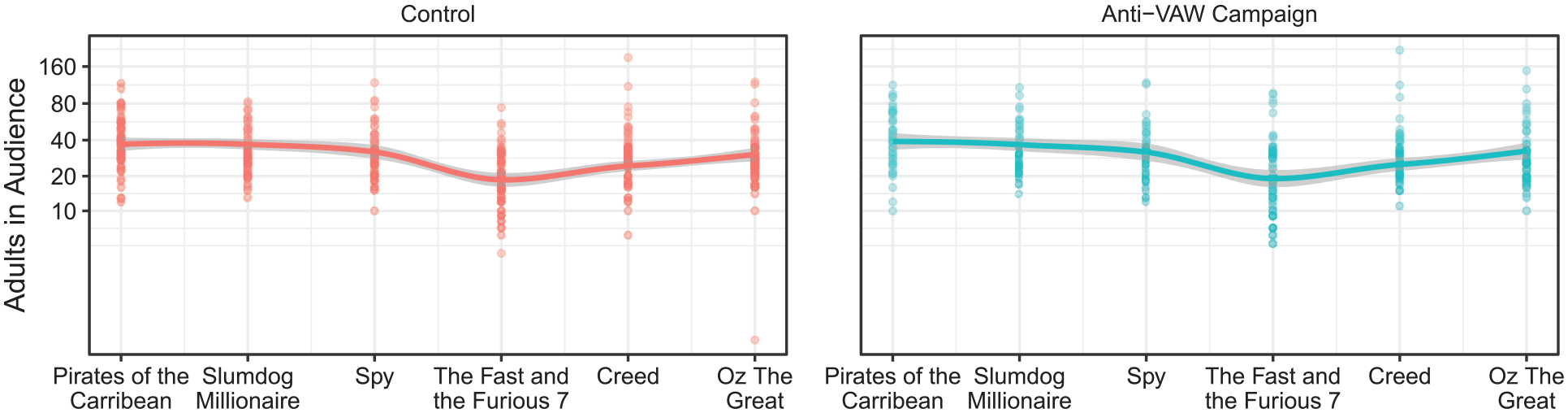
Adult attendance of screenings by treatment status.
Compared with the rest of the sample, compliers are more likely to be men, young, and consume news media, and they are less likely to own a television (see Table 1 in section A.1 of the Online Appendix). The overrepresentation of men is related to the image of video halls in Uganda. Visiting a video hall tends to be seen as more appropriate for men than for women, as the video content presented typically consists of soccer matches and action movies. To counter this perception, our film festival was explicitly marketed as an event open to both women and men. As a result, our sample of compliers encompasses a sizable share of women (31%).
Measurement of outcomes took place in two waves, illustrated in Figure 3. In our midline survey in late October 2016, we interviewed respondents from randomly selected households. Sampling was not conditional on attendance of the screenings, and the survey, which was conducted weeks after the film festival, was billed as an unrelated public opinion poll to avoid Hawthorne effects. We successfully interviewed 5,534 women and men in 110 of our 112 villages. The response rate was 96%, 10 with most of the nonresponse coming from two villages where we were not able to conduct the survey due to resistance from local residents. As explained in the appendix, our inability to work in these locations does not appear to be related to the treatment status of the villages. Our main analysis, therefore, excludes villages in which we could not survey. Section B.4 of the Online Appendix shows the robustness of our main results to agnostic methods of imputing missing values.
In our endline survey in late May of the following year, we returned to the 110 villages in which we successfully conducted the midline survey to reinterview those who had reported attending at least one screening (compliers). Of the 1,156 midline compliers, we were able to reinterview 1,041, a follow-up rate of 90%.
In the following two sections, we discuss the main results of this study. To ensure comparability across analyses, almost all results are reported among the group of compliers who were interviewed in both the midline and the endline survey. As Tables 20 to 23 in section B3 of the Online Appendix show, the results remain unchanged when we include all compliers who were interviewed in the midline survey or all compliers interviewed in the endline survey. We report separate analyses for men and women, which is in line with our preanalysis plan that anticipates treatment effect heterogeneity by gender (p. 18). When it comes to the effect of our treatment on respondents’ experience of VAW, we report results among all women as well as the subset of female compliers interviewed at the endline. One of the three outcome measures for which we report results (“Any Violence”) was not described in our preanalysis plan. Presenting results for all women allows for the possibility that the media campaign reduces victimization not only of potential victims who see our videos but also of potential victims in other households who are now more willing to report what they see and hear.
Results
Attitudes Toward VAW and Gender Equality
Even though our mass media campaign was designed to encourage reporting, it may have affected views on the legitimacy of VAW and gender hierarchy more broadly. The dramatization of a sympathetic wife who is beaten while trying to accommodate her husband’s impossible demands might encourage empathy with victims of violence. The remorse expressed by the husband when his wife is hospitalized could similarly encourage men to regard domestic violence as behavior that can have tragic consequences. Our experimental results, however, provide little support for these hypotheses. We find no apparent change in responses to the question, “In your opinion, does a man have good reason to hit his wife if she disobeys him?” or other scenarios, such as “she spends a lot of time chatting with friends in the market” or “she does not complete her household work to his satisfaction” (see the outcome VAW Not Acceptable in Figure 5). The same null results hold for both men and women, regardless of whether we focus on outcomes measured during the midline or endline surveys. By the same token, we find no treatment effects on whether victims of VAW are perceived to experience great suffering, on whether respondents believe that initial acts of VAW can easily escalate to more severe forms of violence, or on support for gender equality, gauged by questions such as “Do you agree that it is more important that a boy goes to school than a girl?” or “Do you agree that the father, not the mother, should have the final say in the household?” 11
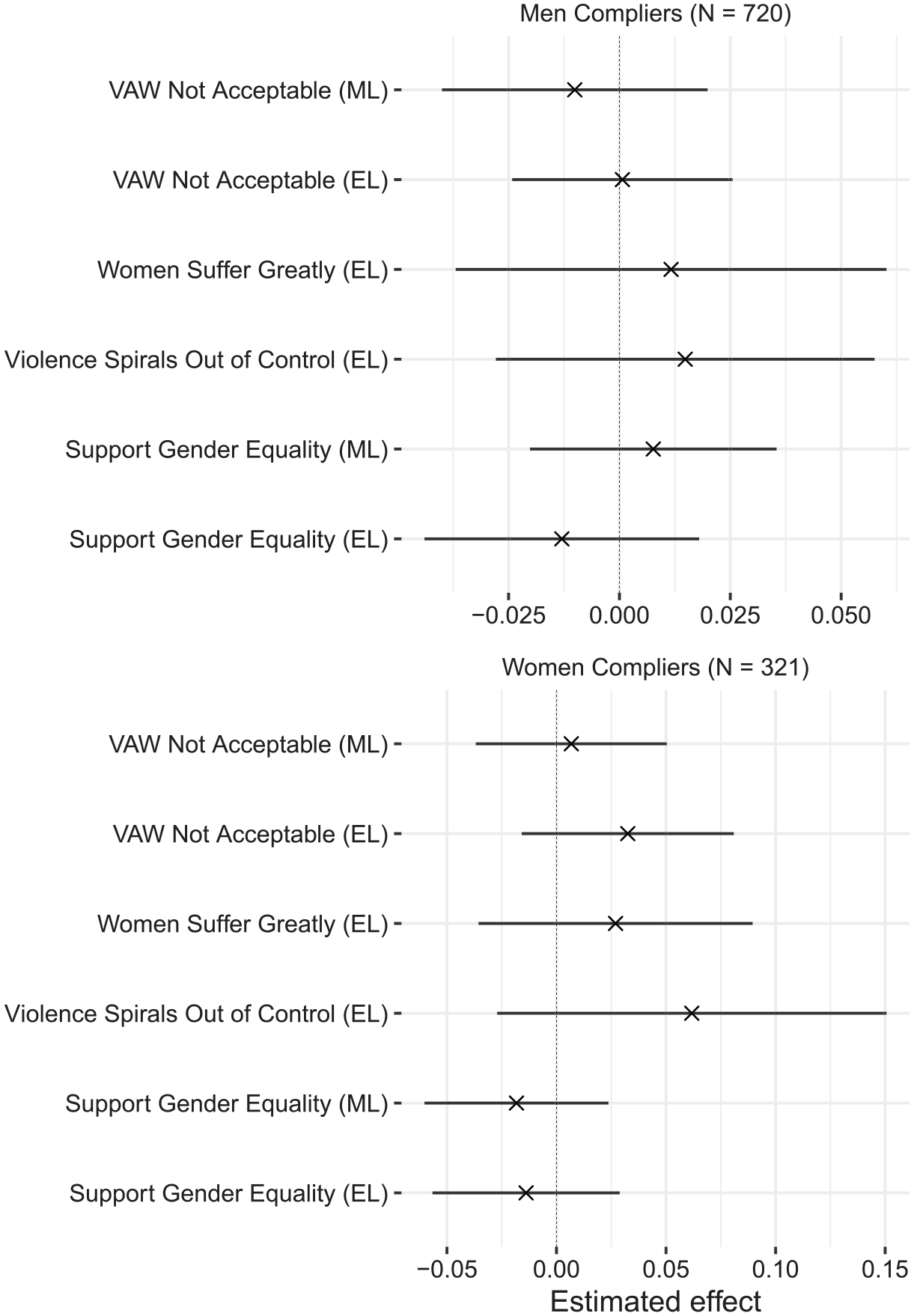
Attitudes on VAW and gender equality largely unaffected by treatment.
Willingness to Report VAW
The second set of outcome measures concerns respondents’ inclination to take certain actions—what Fishbein and Ajzen (1975) call conative attitudes. Here, we are interested in whether, as theories of vicarious learning would suggest, exposure to the treatment videos changed viewers’ willingness to help victims report incidents to local authorities. Tables 1 and 2 show those who attended screenings became significantly more inclined to report violence. The outcomes in Columns 1 to 8 are based on questions that ask respondents to imagine discovering that their cousin has been severely beaten by her husband and offer respondents a choice between two actions, coding the outcome 1 if the respondent chooses the reporting option and 0 if they choose an option that implies inaction. These items measure the respondent’s willingness to report the incident to the victim’s parents, the women’s representative in the village (Nabakyala), the LC1 chairperson, and the police. The outcome variable used in the last two columns takes the average of these items. Even though our intervention aimed to encourage reporting among both victims and bystanders, we did not ask respondents about scenarios that involve themselves being a victim to minimize the risk of retraumatization.
The Effect Among Women Compliers of Anti-VAW Mass Media on Attitudes Toward Sharing Information About VAW.
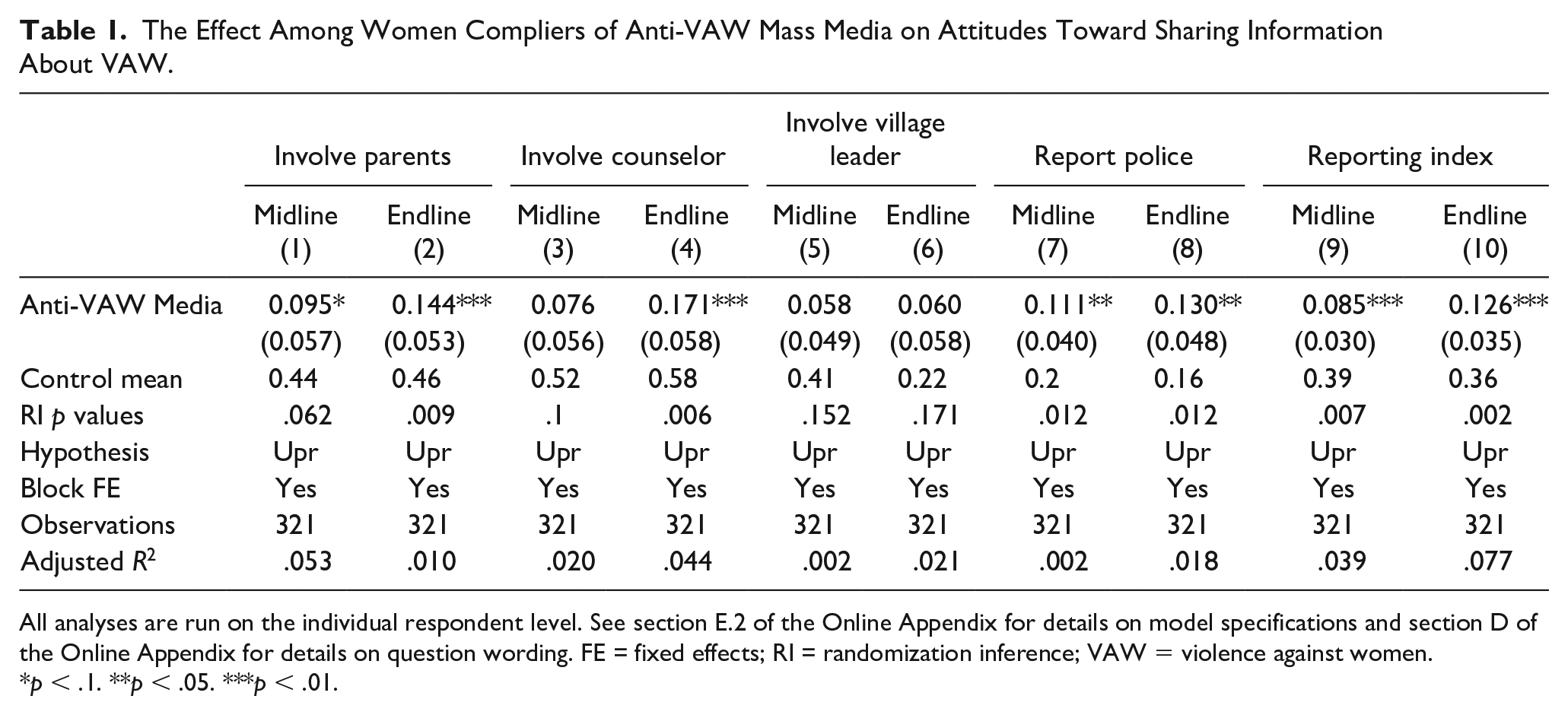
All analyses are run on the individual respondent level. See section E.2 of the Online Appendix for details on model specifications and section D of the Online Appendix for details on question wording. FE = fixed effects; RI = randomization inference; VAW = violence against women.
p < .1. **p < .05. ***p < .01.
The Effect Among Men Compliers of Anti-VAW Mass Media on Attitudes Toward Sharing Information About VAW.
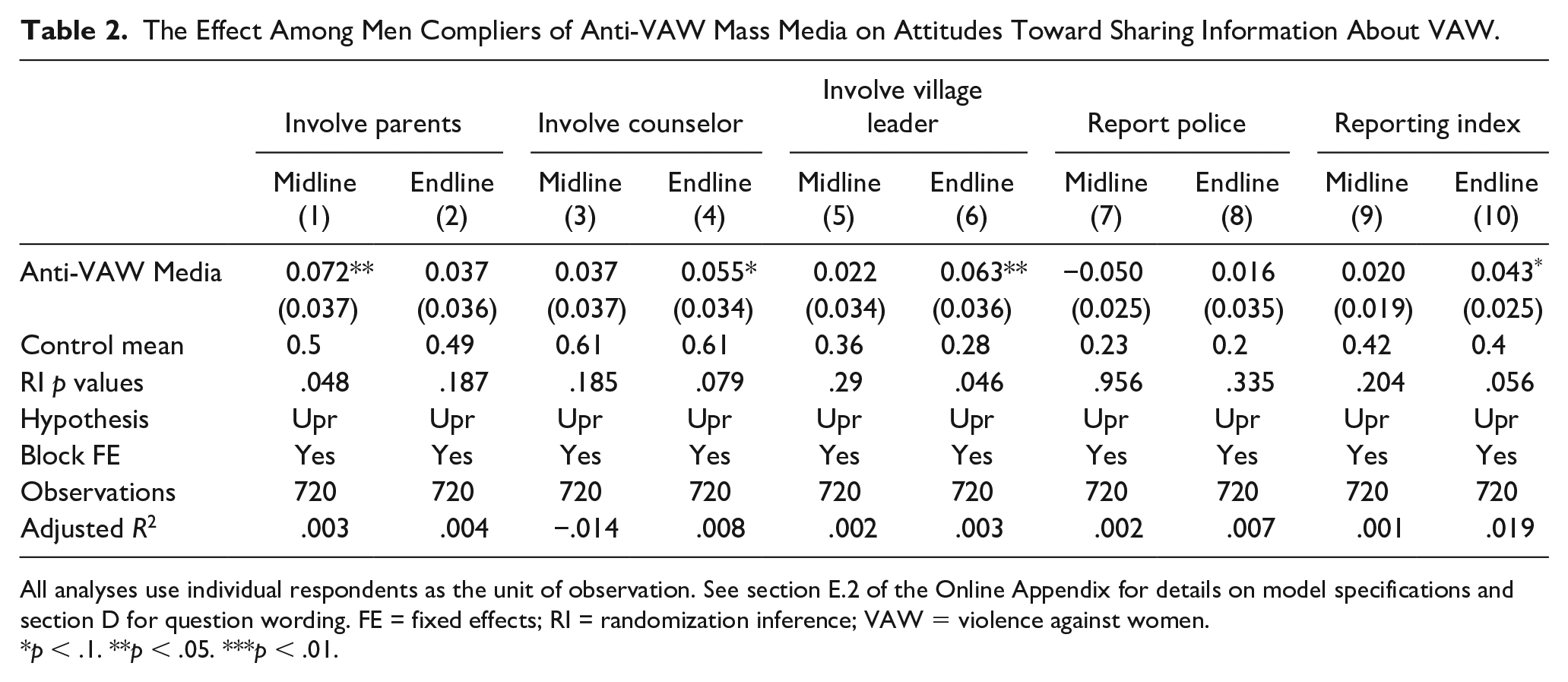
All analyses use individual respondents as the unit of observation. See section E.2 of the Online Appendix for details on model specifications and section D for question wording. FE = fixed effects; RI = randomization inference; VAW = violence against women.
p < .1. **p < .05. ***p < .01.
Table 1 shows substantial and lasting effects on women’s willingness to report violence: As Columns 9 to 10 show, women who attended screenings with antiviolence messaging are nine to thirteen percentage points more likely to say they would report to others
In our preanalysis plan, we had hypothesized that viewers would be particularly likely to report to actors featured in the treatment videos (the victim’s parents and the village counselor for women). This expectation receives only mixed support in the data. Women compliers, for example, are eleven to thirteen percentage points more likely to say that they would report to the police, even though the police were not depicted in our video messages. The results are thus consistent with a more general increase in the proclivity to report that goes beyond the specific actions modeled in the treatment videos.
One might wonder whether this increase is attributable to a greater sense that reporting prevents future violence. It turns out that this sense tends to be widespread in the villages we studied, with more than 70% of women and more than 80% of men in control villages describing intervention as an effective way to prevent future violence. We do not find that our campaign changed perceptions of efficacy among men or women compliers. Evidently, the videos made viewers more inclined to act in a context in which they were already convinced that community action would be effective.
Perceptions of the Community’s Response to Reports of VAW
If the videos did not increase the belief that reporting is effective, why was there an apparent increase in willingness to report? Table 3 suggests that many people perceived strong sanctions against reporting and that the treatment alleviates such concerns. Column 2 indicates that exposure to the media campaign sharply reduces the probability that women expect to be scolded for gossiping (coded 1), rather than encouraged for doing the right thing (coded 0), if they were to report a hypothetical incident. The eleven percentage point reduction
The Effect Among Compliers of Anti-VAW Mass Media on Perceptions of the Social Sanctions Associated With Reporting.
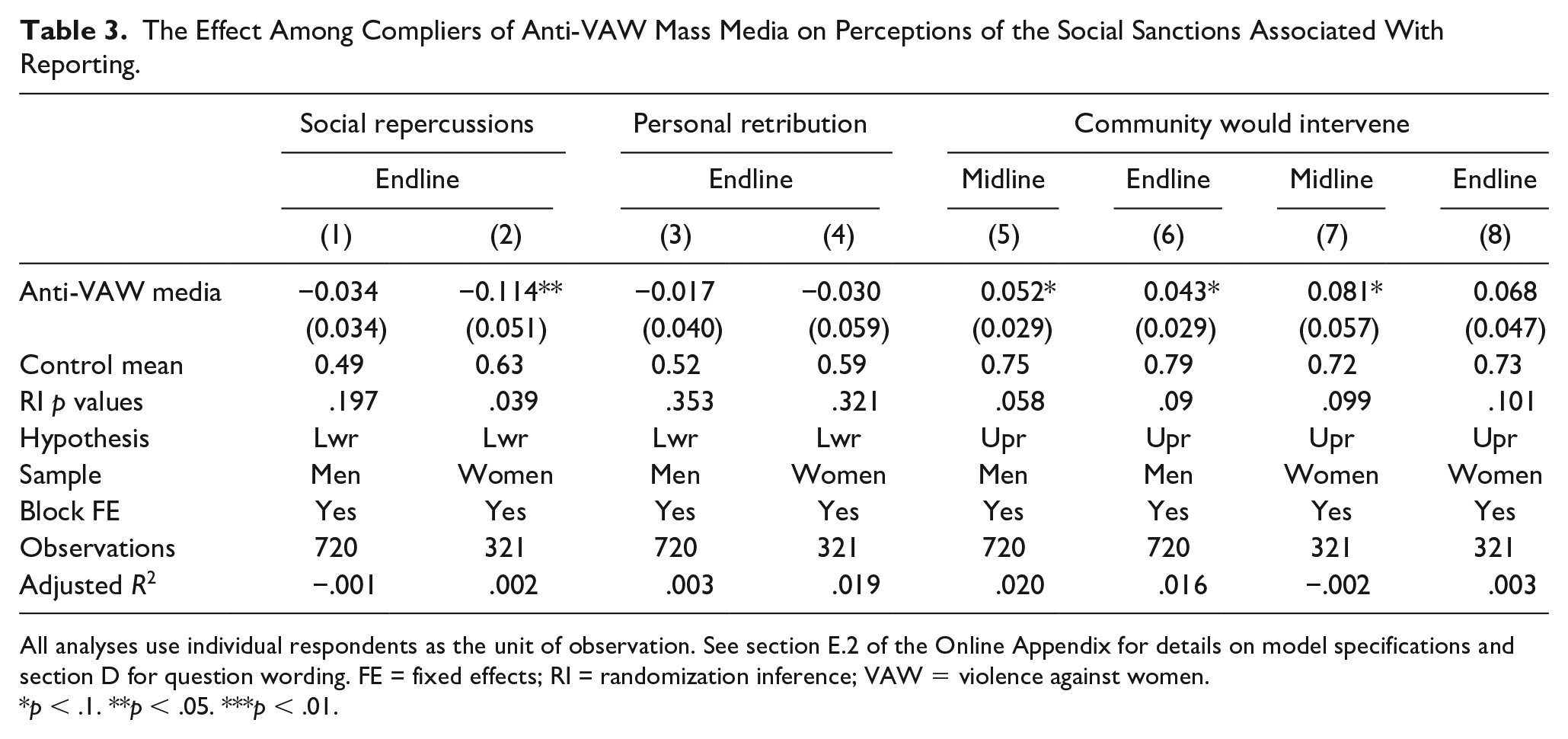
All analyses use individual respondents as the unit of observation. See section E.2 of the Online Appendix for details on model specifications and section D for question wording. FE = fixed effects; RI = randomization inference; VAW = violence against women.
p < .1. **p < .05. ***p < .01.
Accompanying the change we see in perceptions about whether reports of VAW would be well received is an increased expectation that members of the community would intervene in an incident of violence. Columns 5 to 6 show that men became four to five percentage points more likely to state that, if people in their community were to find out about a man beating his partner, those same people would intervene personally or mobilize others (coded 1) rather than minding their own business (coded 0). It is particularly important that this belief increases among men because they are the principal perpetrators of VAW. In Columns 7 to 8, we see that this shift in beliefs is mirrored to some extent among women.
Reports of Violent Incidents
Measurement presents a serious challenge to all studies of VAW. Here, we measure violence using direct self-reports of victimization by survey participants, participants’ indirect estimates of how much VAW occurs in their communities, and administrative encounters described by village health workers. Our ability to assess treatment effects using victimization data collected through a survey seemingly unrelated to the intervention presents an advantage over studies that rely purely on administrative data collected by police or other state authorities. Violence is only recorded in administrative data sets when individuals make post-treatment decisions to report to authorities. By contrast, we are able to measure incidents of violence revealed by respondents, even if those incidents were never reported to authorities. For this reason, we see self-reported victimization measures as the best measure of VAW.
Our primary measure of violence asks women respondents in the endline survey to count the number of times that they can recall a woman in their household, including themselves, experiencing violence over the 6-month period preceding the survey. To ensure that respondents in treatment and control have the same definition of violence in mind, we remind respondents of the many forms assault can take: “Assault can take many forms such as pushing, punching, bashing and hurting someone with a weapon. When a person forces another person to perform sexual acts that they don’t want to do, this is also assault.”
Conscious of the potentially traumatic nature of these questions, we paired female respondents with women interviewers, who were instructed to reassure respondents that they may answer these questions only if they were comfortable doing so and never asked to know the identities of the women or men involved. 12
Table 4 presents the effect of the treatment on this self-reported measure under the column heading “Number of incidents.” Columns under the “Any incidents” heading report effects on a binary measure coded 1 if the number of incidents was greater than 0, and 0 otherwise. As noted above, we did not describe this measure in our preanalysis plan. 13 Rather than asking the respondent how many times VAW occurred, the “Violence frequency” measure asked those who reported more than 0 incidents whether violence occurred almost every day (coded 4), around once a week (coded 3), about once a month (coded 2), less than once a month (coded 1), or almost never (coded 0). Those who report 0 incidents are coded 0 on this measure.
The Effect of Anti-VAW Mass Media on Incidents of VAW Over the Preceding 6-Month Period (Endline).
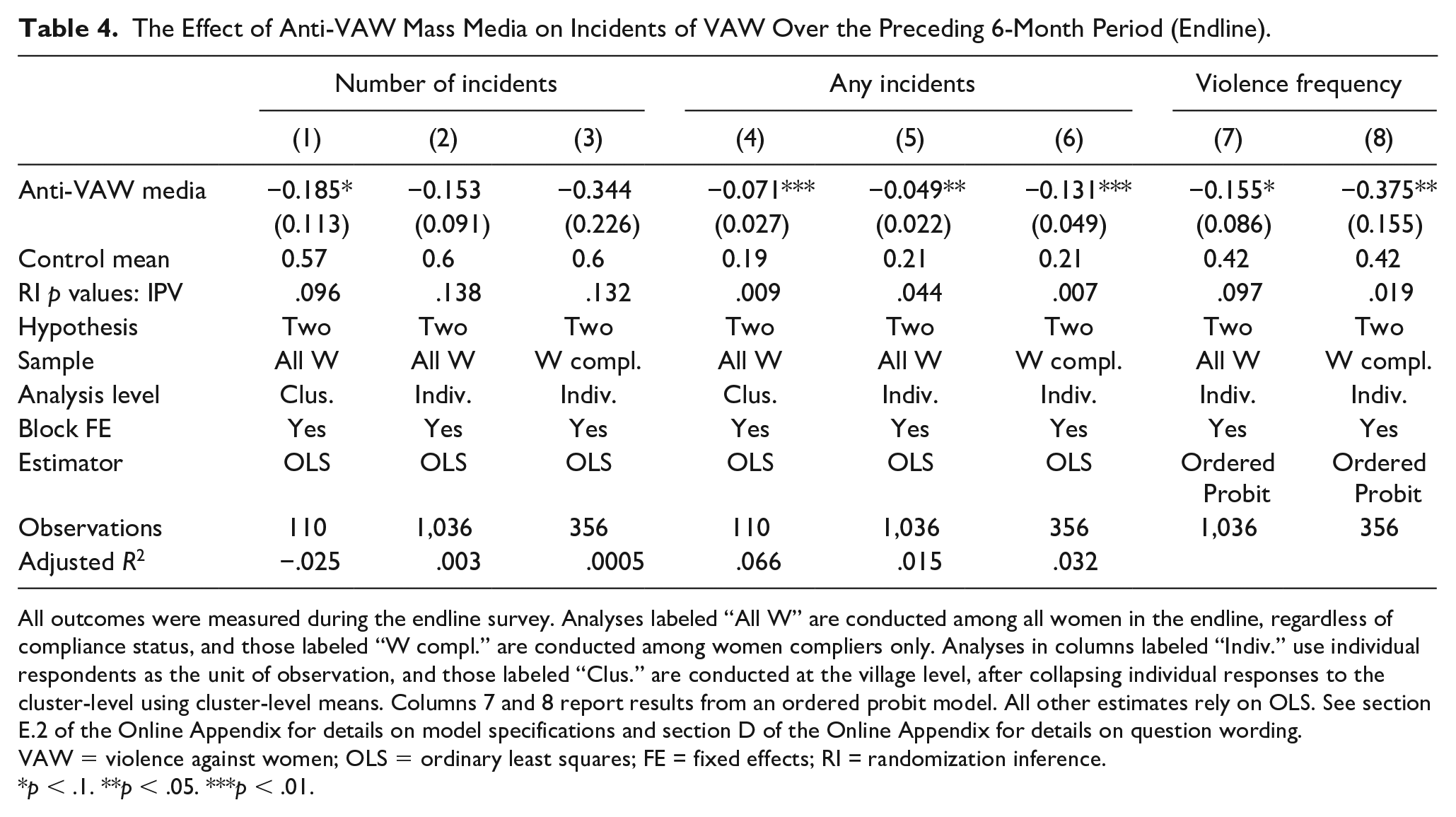
All outcomes were measured during the endline survey. Analyses labeled “All W” are conducted among all women in the endline, regardless of compliance status, and those labeled “W compl.” are conducted among women compliers only. Analyses in columns labeled “Indiv.” use individual respondents as the unit of observation, and those labeled “Clus.” are conducted at the village level, after collapsing individual responses to the cluster-level using cluster-level means. Columns 7 and 8 report results from an ordered probit model. All other estimates rely on OLS. See section E.2 of the Online Appendix for details on model specifications and section D of the Online Appendix for details on question wording. VAW = violence against women; OLS = ordinary least squares; FE = fixed effects; RI = randomization inference.
p < .1. **p < .05. ***p < .01.
Effects in Columns 1, 2, 4, 5, and 7 are estimated among all women respondents in the endline survey
Columns 1 to 3 suggest that the screenings reduced the average rate at which women in treatment communities experienced violence by roughly .15 to .34 of an incident, from a baseline of just over half an incident on average. In our preanalysis plan, we hypothesized that the campaign might either sensitize people to the issue of VAW without deterring violence (thus increasing this measure) or deter violence (thus decreasing this measure). Accordingly, we preregistered a two-tailed hypothesis test, and our estimates fall short of significance.
On the other hand, Columns 4 to 6 show the campaign lowered the probability that a household experienced any incidents of VAW during this period. Column 4 shows that the campaign reduces the village-level proportion of women respondents who report any violence in their household by seven percentage points. The probability of observing effects of such magnitude due to sampling variability if there were no true effect is less than 1%. Column 5 reports a similar estimate, this time estimating the effect using individual data as opposed to village-level aggregates. Here anti-VAW messaging reduces the probability that women in a household experienced violence over the prior 6 months by five percentage points from a baseline of 21%, effectively reducing the probability of victimization by one quarter in relative terms. Column 6 suggests that effects of the intervention are especially strong among women who actually attended the films, although further analysis of the interaction between treatment and attendance shows it to be of borderline statistical significance. Again, we present these findings with the caveat that we did not describe this measure in our preanalysis plan.
Columns 7 and 8 report the effects of the anti-VAW media on the frequency-based measure of victimization. Given the ordinal outcome measure, we fit an ordered probit model. The estimates indicate a five percentage point reduction in the predicted probability of a household experiencing violence “less than once a month,” “about once a month,” “about once a week,” or “almost every day” as opposed to “almost never.” Again, the estimated effects are especially strong and statistically significant among compliers.
We employ a weighted bootstrap method to estimate the total number of households that were prevented from experiencing any VAW by the campaign (see section F.4 of the Online Appendix). We estimate that VAW was prevented in a total of 302 households, with a 95% confidence interval ranging between reductions of 534 to 52 households. Our VAW treatment was implemented in 48 villages: expressed in per-village terms; we thus estimate we prevented VAW in six households per village in which our campaign took place.
Because VAW is so difficult to measure, any experiment that purports to show a reduction in incidence must immediately address the critique that the purported treatment effect is a measurement artifact. While such an interpretation cannot be ruled out conclusively, three facts militate against it.
First, the overall pattern of treatment effects that we observe among women respondents is at odds with the notion that the apparent reduction in violence is due to eagerness on the part of the treatment group to please researchers by reporting fewer incidents. As we have discussed above, we find negligible effects on many outcomes that were closely connected to the topic of our treatment videos, such as whether husbands have legitimate cause to beat their wives. The effects we observe are largely confined to willingness to report VAW, not core attitudes about the legitimacy of husbands being violent toward their wives.
Second, the hypothesis that women in the treatment group were offering socially desirable responses is undercut by the relatively weak interitem correlations across different outcome measures, such as self-reported violence in the household, perceptions of views held by the community, and the respondent’s own willingness to report incidents of violence (see Table 36 in section F.6 of the Online Appendix). If women in the treatment group were trying to paint a rosy picture about household relationships in their community, they were not doing so with much verve or consistency. 14
Third, we designed the study so that there was little apparent connection between the film festival and the surveys that measured outcomes months later. To avoid priming respondents, the question used to measure household VAW refers to incidents that occurred “since last Christmas,” months after the film festival concluded. One may worry that respondents in the endline perceive a connection between the film festival and the surveys because they were asked whether they had attended the film festival during the midline. However, as can be seen in Table 35 in section F.5 of the Online Appendix, we do not find any evidence that our main results are driven by the responses of compliers who had already been interviewed in the midline. If anything, treatment effects on victimization are more negative among those compliers taking our survey for the first time.
In an effort to assess the reliability of alternative measurement approaches, we attempted to gather endline information about village-level incidence of VAW by interviewing the village health teams (VHTs) in each site. VHTs are unpaid volunteers from the community who give health and counseling advice. Although VHTs were cooperative and response rates were high, we found their reported rates of violence for the village to be weakly correlated with the aforementioned village-level estimates we obtained from our interviews with women villagers. Across the 110 sites for which we have outcome data, the correlation between the number of incidents reported by villagers and the average number of incidents reported by VHTs is less than .01 (see Table 32 in Section F.3 of the Online Appendix). We also attempted to corroborate the female villagers’ reports at the village level with a battery of survey questions asked of all villagers about the incidence of violence in their community, with follow-up questions about the incidence of violence specifically against women. Again we find that, at the village level, average reports about VAW in the community at large are weakly correlated with female villagers’ reports about violence within the household (r = .14). We do not find treatment effects on any of these alternative measures (see table 31 in the appendix). This pattern of results is subject to multiple interpretations. One is that only the female villagers have reliable information about incidents that occur within the household, which is why the treatment effects are apparent only for this outcome measure. Another is that the treatment prevented violent incidents but increased the rate at which such incidents are reported to VHTs or others in the village. We cannot rule out the further possibility that our results are a statistical fluke that occurred by chance in one outcome measure but not the others. Replication of the current study is needed to sort out these competing hypotheses.
Discussion
Crucial to the theoretical interpretation of our results is a recognition that exposure changes certain outcomes but not others. Although education-entertainment is often said to have special persuasive influence because audiences come to identify with the main characters and let down their guard when encountering new viewpoints (Slater & Rouner, 2002), it should be stressed that we see very little evidence of attitude change on the acceptability of VAW and no indication whatsoever that the treatment causes viewers to rethink their position about gender hierarchy more broadly. Nonetheless, we observe a newfound willingness among viewers in treated locations to report incidents to police, village leaders, and victims’ families. This change is especially pronounced among women, for whom reporting ordinarily carries elevated costs, given widespread disdain for “gossips.” 15 Women who watched the antiviolence videos, which dramatized a community being supportive of a victim who speaks out about domestic violence, months later expressed substantially more willingness to take complaints to the police and became more sanguine that their allegations will be believed rather than denounced. For their part, responses by male viewers in treated sites bear evidence of this shift in perceptions of norms: They became more likely to indicate 8 months later that their community would intervene in response to incidents of domestic abuse. In line with these changes, we also observe a substantial reduction in the proportion of households reporting VAW in the 8-month endline survey.
Overall, the results suggest that a change in norms around reporting and, ultimately, reductions in violence can be achieved without a change in core attitudes. Stepping back, VAW in Uganda has much in common with stubborn problems in other domains and regions. The key ingredients consist of a negative social behavior that governments seek to regulate coupled with the lack of information to do so. In this case, Ugandan law prohibits domestic violence, but the state and its informal agents have little ability to detect and address violations unless victims or bystanders come forward. Petty corruption by bureaucrats (De Graaf, 2010), endemic theft of local utilities (Smith, 2004), and illegal logging (Tacconi, 2012) present analogous governance problems due to an inability to monitor and punish violations.
Solutions to problems of this type come in many forms. New institutions may be created to realign incentives, as in the case of community organizations that distribute resources in return for environmental management (Brandt et al., 2016). New technologies may make it easier to detect and prosecute corruption or theft (Smith, 2004). The state may forcefully bring unruly sectors to heel, sometimes razing entire neighborhoods in the process (Scott, 1998), or a softer approach may be taken to change attitudes and behaviors through public outreach campaigns. In the case of VAW, the latter approach has predominated.
Mass media campaigns provide a potentially cost-effective alternative that can be deployed on a vast scale. The question is, to what extent and under what conditions do media campaigns generate policy-relevant changes in attitudes and behavior? Few media campaigns have been evaluated rigorously, and most randomized trials have focused on health-related messaging. Nevertheless, the literature has begun to offer theoretically informative insights concerning the conditions under which media messages shape attitudes and behavior. Studies have repeatedly found weak effects from information campaigns whose messages are not conveyed through dramatization. For example, radio campaigns in Africa designed to encourage handwashing (Galiani et al., 2012) and communication with public officials (Grossman et al., 2014, 704) generated little apparent change in listener behavior. Education-entertainment programs have been more successful in changing behaviors. Blair et al. (2019) found that embedding an encouragement to report corruption in a feature-length film induced Nigerian viewers to report hundreds of instances of corruption. Exposure to a yearlong radio soap opera reduced Rwandan listeners’ deference to authority (Paluck & Green, 2009). The few direct experimental tests of the relative effectiveness of information-only videos and education-entertainment videos in public health suggest that education-entertainment tends to have stronger behavioral effects (Beach et al., 2016; Murphy et al., 2015).
Skeptics of media-induced effects have long contended that “propaganda” rarely succeeds in changing attitudes (Hovland et al., 1949). In some ways, our inability to change core attitudes is in line with this conclusion. At the same time, our study calls attention to a theoretically important pathway by which eduction-entertainment campaigns may affect behavior. It appears that witnesses tend be reluctant to report what they know for fear of social sanctions, perhaps because the dominant perception is that violence is rare and that false accusations are common. Especially when it comes to sexual violence, the view that women tend to fabricate accusations is widely held in many contexts (Tuerkheimer, 2017). Those who can act with impunity as long as antidisclosure norms prevail have incentives to sustain such beliefs. Just as defenders of gender hierarchy benefit from dismissing women’s allegations of abuse as malevolent gossip, so too do corrupt politicians by subjecting whistle-blowers to a campaign of intimidation, defamation, or outright violence (Friebel & Raith, 2004; Ting, 2008).
An important question concerns the conditions under which education-entertainment can encourage reporting. In a concurrent study conducted in a nearby rural region, we found that willingness to report VAW to police or community leaders was unaffected by our videos when they were shown to viewers individually in the context of a laboratory-like experiment, despite the close attention that respondents were paying to the treatment videos and short time that elapsed between exposure and outcome measurement. Communal exposure to antiviolence messages appears to be crucial for the change in perceived descriptive norms that we observe. In addition to the cinematic display of a sympathetic community, it may thus also have been the observations of and interactions with other audience members that led potential witnesses of VAW to change their expectations about how they would be treated should they come forward. A second scope condition for education-entertainment to encourage victims and bystanders to speak out through the channels discussed above is that community members and local authorities are indeed willing to take action to stop the behavior in question were they to believe that it actually occurred. This condition implies that changes in local leadership can have important effects on reporting and, by extension, the prevalence of VAW, a potentially fruitful line of future research.
Supplemental Material
Countering_VAW_replication – Supplemental material for Countering Violence Against Women by Encouraging Disclosure: A Mass Media Experiment in Rural Uganda
Supplemental material, Countering_VAW_replication for Countering Violence Against Women by Encouraging Disclosure: A Mass Media Experiment in Rural Uganda by Donald P. Green, Anna M. Wilke and Jasper Cooper in Comparative Political Studies
Supplemental Material
Green_Wilke_Cooper_CPS_Final_Appendix – Supplemental material for Countering Violence Against Women by Encouraging Disclosure: A Mass Media Experiment in Rural Uganda
Supplemental material, Green_Wilke_Cooper_CPS_Final_Appendix for Countering Violence Against Women by Encouraging Disclosure: A Mass Media Experiment in Rural Uganda by Donald P. Green, Anna M. Wilke and Jasper Cooper in Comparative Political Studies
Footnotes
Acknowledgements
We are grateful to Paul Falzone and Gosia Lukomska from Peripheral Vision International (PVI), who produced the video vignettes, and to Innovations for Poverty Action (IPA), Uganda, which oversaw implementation of the campaign and surveys. We also wish to express our deep sense of gratitude to Cristina Clerici, the project manager, and to Jackline Namubiru and Anthony Kamwesigye, the field managers. Sincere thanks go to Susanne Baltes for her contribution to the design of survey instruments, media intervention, and pre analysis plans and to Winston Lin for his help in designing the randomization scheme and for comments on the pre analysis plans. Special thanks to Robert Fleischmann for help with the implementation of the sample selection algorithm and to Rebecca Littman, Sarah Khan, Chris Blattman, Georgiy Syunyaev, and Tinghua Yu for valuable comments on earlier versions of this article. We also would like to thank Kennan Mcclung and Ilana Solomon for editorial assistance and Yi Yin, who helped create the replication archive. This project received institutional review board (IRB) approval from Columbia University (protocol AAAP6500), the Mildmay Uganda Research Ethics Committee (MUREC), and the Uganda National Council for Science and Technology (UNCST). The preanalysis plans for the midline and endline phases of this study may be found at: http://egap.org/registration/2207 and  .
.
Declaration of Conflicting Interests
The authors declared no potential conflicts of interest with respect to the research, authorship, and/or publication of this article.
Funding
The authors disclosed receipt of the following financial support for the research, authorship, and/or publication of this article: This study was made possible by a grant from Wellspring Philanthropic Fund.
Supplemental Material
Supplemental material for this article is available online at the CPS website http://journals.sagepub.com/doi/suppl/10.1177/0010414020912275. Replication data are available at Dataverse:
Notes
Author Biographies
References
Supplementary Material
Please find the following supplemental material available below.
For Open Access articles published under a Creative Commons License, all supplemental material carries the same license as the article it is associated with.
For non-Open Access articles published, all supplemental material carries a non-exclusive license, and permission requests for re-use of supplemental material or any part of supplemental material shall be sent directly to the copyright owner as specified in the copyright notice associated with the article.
