While the Chinese monk Xuanzang’s travels in South Asia are well known, the reason why he decided to make Nālandā his main destination has not been previously examined in detail. This article focuses on the early history of the Nālandā University, the South Asian monks from Nālandā who were active in China during the sixth and seventh centuries, and how Xuanzang may have come to know about the renowned educational institution in India through the works of these South Asian monks and their disciples. The article also tries to clarify the possible date of Xuanzang’s departure for India.
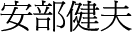
Abe Takeo . 1955. Nishi Uiguru kokushi no kenkyū [Research on the History of the Kingdom of Western Uighur]. Kyoto: Nakamura insatsu.
2.
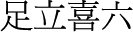
Adachi Kiroku . 1940. Hokkenden [Biography of Faxian]. Tokyo: Hōzōkan.
3.
SamuelBeal, tr. 1884. Siyuki. Buddhist Records of the Western World. London: Kegan Paul, Trench, Trübner and Co.
4.
SamuelBeal, tr. 1911. The Life of Hiuen-tsiang by the Sharman Hwui Li with an Introduction Containing an Account of the Works of I-Tsing. London: Kegan Paul, Trench, Trübner and Co.
5.
ChattopadhyayaDebiprasad, ed. 1970. Tāranātha’s History of Buddhism in India. Simla: Indian Institute of Advanced Study.
6.
ChavannesÉdouard, tr. 1894. Mémoire composé à l’époque de la grande dynastie T’ang sur les religieux éminents qui allèrent chercher La loi dans les Pays d’Occident. Par I-Ching. Paris: Leroux.
7.
ChavannesÉdouard, tr. 1903. Documents sur les Tou-kiue (Turcs) Occidentaux. St Petersburg: Imp. Acad. Sci.
8.
ChavannesÉdouard. 1905. ‘Lis pays d’occident d’aprè le Wei Lio’, T’oung Pao6, 519–71.
9.
CunninghamAlexander. 1871. The Ancient Geography of India: The Buddhist Period, Including the Campaigns of Alexander, and the Travels of Hwen-Thsang. London: Trübner.
10.
DevahutiD.1970. Harsha, a Political Study. Oxford: Clarendon Press.
11.
DuttSukumar. 1962. Buddhist Monks and Monasteries of India: Their History and Contribution to Indian Culture. London: George Allen and Unwin.
12.
GhoshA.1971. Nalanda. New Delhi: Archaeological Survey of India.
13.
Haneda Toru . 1930. ‘To Kokei gannen shosha Sashu-Ishu chishi zankan nit suite ()’ [An Examination of the Fragments of the Manuscripts on the Geographics of Shazhou and Yizhou Transcribed during the First Year of Guanggi Period], in Ogawa hakase kanreki kinen shigaku chirigaku ronso () [Studies in History and Geography in Commemoration of the Occasion of the Sixtieth Birthday of Professor Dr. Ogawa]. Kyoto: Kobundo, 585–605.
14.
JägerFritz. 1920–22. ‘Leben und Werk, des P’er Kü’, Ostasiatische Zeitschrift, Vol. 9, 81–115, 216–31.
15.
JulienStanislas, tr. 1853. Histoire de la vie de Hiouen-Thsang et de ses voyages dans l’Inde, depuis l’an 629 jusqu’en 645 par Hoeï-Li et Yen-Thsong, suivie de documents et d’éclaircissements géographiques tirés de la relation originale de Hiouen-Thsang. Paris: Impr. Nationale.
16.
KuwayamaShōshin. 1975. ‘Khair Khaneh and its Chinese Evidences’, Orient: Reports of the Society for Near Eastern Studies in Japan, Vol. 11, No. 11, 93–107.
17.
KuwayamaShōshin. 1987. ‘Literary Evidence for Dating the Colossi in Bamiyan’, in GherardoGnoliLanciottiLionello (eds), Orientalia Iosephi Tucci Memoriae Dicata. Serie Orientale Roma, No. 56.2. Roma: Istituto italiano per il Medio ed Estremo Oriente, 703–27.
18.
LeggeJames. 1886. A Record of Buddhistic Kingdoms. Being an Account by the Chinese Monk Fa-hien of his Travels in India and Ceylon (A.D. 399–414), in Search of the Buddhist Books of Discipline. Oxford: Clarendon Press.
19.
MajumdarR.C.1954. ‘The Expansion and Consolidation of the Empire’, in MamjudarR.C. (ed.), The History and Culture of the Indian People, Vol. 3. Bombay: Bharatiya Vidya Bhavan, 17–28.
20.
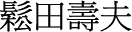
Matsuda Hisao . 1970. ‘To no Teishu no ryoken o ronzu’ [Discussion on the Main Counties of Ting Prefecture during the Tang Period], in Zohoban kodai Tenzan no rekishi chirigaku teki kenkyu [The Geo-historical Studies on the Ancient Tianshan Region]. Tokyo: Waseda Daigaku shuppanbu, 292–323.
21.
NöldekeTheodor. 1879. Geschichte der Perser und Araber zur Zeit der Sasaniden. Leyden: Brill.
22.
SankaliaH.D.1972. The University of Nalanda. Delhi: Oriental Publishers.
23.
Shimazaki Akira . 1977. Zui Tō jidai no Higashi Turukisutan kenkyū [Research on Eastern Turkestan during the Sui and Tang Periods]. Tokyo: University of Tokyo Press.
24.
SteinMarc Aurel. 1921. Serindia. Detailed Report of Explorations in Central Asia and Westermost China, 5 Vols. Oxford: Clarendon Press.
25.
WattersThomas. 1905. On Yuan Chwang’s Travels in India 629–645 A.D (Vol. II). London: Royal Asiatic Society.
26.
WrightArthur F.1978. The Sui Dynasty. The Unification of China, A.D. 581–617. New York: Alfred A. Knopf.




 [
[
 [
[
 )’ [An Examination of the Fragments of the Manuscripts on the Geographics of Shazhou and Yizhou Transcribed during the First Year of Guanggi Period]
 ) [
) [
 [Discussion on the Main Counties of Ting Prefecture during the Tang Period]
 [
[
 [
[