



Abstract
Introduction
Racism is widely prevalent in Canadian health care systems, contributing to health injustices and inequities for Black, Indigenous, and people of colour (BIPOC). This includes interpersonal racism, where there is “prejudgment, bias or discrimination by a White individual toward a person of colour” (Race and Social Justice Initiative, 2021) as well as institutional racism, where systems advantage White people, and harm BIPOC people, through their culture, policies, and practices (Race and Social Justice Initiative, 2021). Both BIPOC healthcare users and providers are impacted negatively by racism in the healthcare system. Negative impacts on users includes minimization of their symptoms and concerns, feeling dismissed and devalued, and delays in receiving health care, all of which result in poorer health outcomes (Hamed et al., 2022; Vazir et al., 2019). BIPOC healthcare providers experience racism from healthcare users and other healthcare providers that affects their mental and physical health, advancement opportunities, and retention in the workforce (Elias & Paradies, 2021; Hamed et al., 2022; Serafini et al., 2020). It is in this environment that occupational therapy students receive a large proportion of their education.
We know that health professional students, including occupational therapy students, are subject to racism as an everyday experience in their fieldwork education (Aldridge et al., 2023; Beagan et al., 2022; Fnais et al., 2014). BIPOC medical learners are perceived as less competent (Isik et al., 2021; Morrison et al., 2023) and are stereotyped based on physical appearance (Anderson, 2015; Morrison et al., 2023) by physicians, nurses, patients and their families, and other students, with some patients refusing to be treated by them (Anderson, 2015; Findley & Harris, 2020; Serafini et al., 2020). Not only do BIPOC students have racism directed toward them but they are also more attuned to noticing and thus witnessing racism directed toward patients by healthcare clinicians (Anderson, 2015). Furthermore, the presence of interpersonal racism is denied in these settings, leaving the student feeling isolated and out of place during their fieldwork education (Anderson, 2015; Flateland et al., 2019; Hughes, 2021; Kristoffersson et al., 2021; Morrison et al., 2023; Mpalirwa et al., 2020; White & Fulton, 2015). BIPOC students are aware of the power imbalance between themselves and their fieldwork educators and do not want to risk fracturing that relationship since the fieldwork educator has power over the advancement of the student (Aldridge et al., 2023; Gerhards, 2023; White & Fulton, 2015). Since BIPOC students are not safe to address instances of racism directly, they just “move on”, try to change themselves to fit in, or laugh it off (Gerhards, 2023; Isik et al., 2021; Mpalirwa et al., 2020). We know less about White students witnessing racism during fieldwork; however, these students may also experience similar power dynamics in that they may feel unsafe pointing out racist behaviours because their fieldwork supervisor holds evaluative power over them.
Recommendations of how to mitigate or address racism have been developed from qualitative and survey studies of student experiences. The most common recommendation is to improve student supports such as BIPOC peer mentoring, BIPOC fieldwork supervisors, cultural supports, and safe reporting structures (Anderson, 2015; Flateland et al., 2019; Gair & Hartery, 2001; Hughes, 2021; Isik et al., 2021; Morrison et al., 2023; Mpalirwa et al., 2020; White & Fulton, 2015). Some recommendations are at the level of the student, suggesting that students should be taught communication skills to be more assertive and feel empowered (Findley & Harris, 2020; Isik et al., 2021). Many authors also call for structural changes that include ending the denial of racism in healthcare, and shifting the culture to an anti-racist stance through anti-racism education and curriculum (Gerhards, 2023; Hughes, 2021; Morrison et al., 2023; Mpalirwa et al., 2020; White & Fulton, 2015).
The fieldwork educator influences the student's sense of safety in the learning environment, and shapes how the student develops their clinical reasoning, relationship-building skills, cultural safety, and professional identity (Oermann & Shellenbarger, 2023). Fieldwork educators can have a profound impact on the experience of students witnessing and/or experiencing racism, and the development of their attitudes, beliefs, and behaviours related to racism in the fieldwork environment. To date, the literature has pointed out that White health professional educators are not prepared to teach about race, racism, and anti-racism (Aldridge et al., 2023; Holland, 2014) and can cause harm in the fieldwork educator role (Findley & Harris, 2020; Gair et al., 2014; Scammell & Olumide, 2012). However, the literature from the perspective of fieldwork educators specific to their role in supporting students in relation to racism is scant (Scammell & Olumide, 2012). This is particularly true for the profession of occupational therapy, with most literature studies to date focusing on the experiences that BIPOC therapists had as students on fieldwork (Aldridge et al., 2023; Beagan et al., 2022b; Ramugondo, 2000). One exception is Demers et al. (2021) that describes how an Indigenous fieldwork educator supported two White students to develop culturally safer practices on a fieldwork placement in an Indigenous community. As a White dominated profession rooted in White supremacy ideologies (Grenier, 2020), we need to look closely at the preparedness of occupational therapy clinicians to support students in the fieldwork learning environment. In this project, we explored the experience of fieldwork educators with supporting students on fieldwork education placements in relation to racism, in order to learn more about how to support fieldwork educators in this area.
Methods
We used a qualitative interpretive description research design (Hunt, 2009) and focus group methods to generate descriptive data while acknowledging that the generation and interpretation of the data is influenced by our perspectives (Lysack, 2006). A focus group approach with a group of people with a collective goal and shared collective experiences can help participants explore and clarify their points of view through interaction (Liamputtong, 2011).
Positionality and Anti-Racist Lens
This project started as a student research project in a Master of Occupational Therapy (MOT) program, where students were in assigned groups to complete their projects. CB, the project lead, is a White settler woman teacher and researcher with over 15 years of experience as a fieldwork educator. The initial student team consisted of SM and TB, White settler women, and GB, a White-passing Métis woman who are now all occupational therapy clinicians. The MOT program in which this study was initiated had a student advocacy group composed of Black, Indigenous and people of colour who chose the term BIPOC to refer to themselves. This is why we chose the term BIPOC to refer to people who are systemically racially marginalized in this project. The MOT student team and project lead regularly discussed their positionality, and the limitations of our White-presenting team make-up throughout the project. While we could not eliminate all the limitations inherent to our team make-up and how it would influence the findings, we worked to counteract White supremacy biases by engaging in regular discussions to make our perspectives explicit and consider how to create safer spaces for the participants. We decided to focus the project on fieldwork educator perspectives, as we felt this would have fewer (although not absent) issues related to power differentials between the research team and the research participants. The work of the project within the course included data collection and preliminary analysis. CB then sought out additional research team members to support completion of the project. She intentionally invited BIPOC research students for their lens as BIPOC researchers. LM is a second-generation immigrant woman and an occupational therapist. HA is a Black International research Master's student from Ghana with an undergraduate degree in disability studies. They contributed to the analysis of the data, including engaging in discussion of their own views of the data with CB. A potential limitation to deconstructing power differentials was that all the team members were under CB's supervision as students at various points of time during the project. During the revision process for publication, a reviewer challenged our team to attend to what was not said in our focus group data. This prompted the project lead to reflect on how her white fragility had caused her to protect the participants and her educational institution, and how this had influenced the findings. Following this reflection, she reread the raw transcripts and revised the Findings and Discussion, with the support of the author team, to address silences.
Our perspective on racism and anti-racist practice is reflected in the Coin Model of Privilege and Critical Allyship developed by Nixon (2019). The Coin Model, based on writings by Black and Indigenous scholars, describes how social systems uphold inequality. It was developed as a call to action for those working in healthcare, making it a good match for our project goals that are pragmatically oriented to address real-life healthcare challenges. The Coin Model emphasizes the intersectional aspect of humans—we all have intersecting identities such as race, gender, and class that influence the amount of unearned privilege, or disadvantage we have in various social settings and structures. Nixon encourages critical allyship by those with unearned privilege, which requires developing an understanding of one's own unearned privilege, partnering with those who are systematically marginalized, and working with them in partnership, centring their needs to dismantle inequitable structures (Nixon, 2019).
Recruitment and Data Collection
We used multimodal recruitment to purposively recruit occupational therapy fieldwork educators from the University of Manitoba. Recruitment strategies included: (1) email to the Master of OT fieldwork contacts maintained by the Department of OT Fieldwork Coordinator, (2) recruitment poster distributed on social media (i.e., Facebook, Instagram, Twitter), (3) the Manitoba Society of Occupational Therapists. Occupational therapists were eligible to participate if they had a minimum of two years of experience as an occupational therapist, were practicing in Manitoba or Saskatchewan at the time of the study, and had supervised at least one fieldwork placement. We were hoping to recruit 12 to 16 participants to ensure the gathering of a range of perspectives but were unable to achieve this goal in our study timeframe. However, we recruited a diverse group of therapists who provided us with data from a variety of perspectives. Written informed consent was obtained from all participants prior to the focus groups, and the study was approved by the University of Manitoba Human Research Ethics Board. We felt that due to the sensitivity of the topic, this recruitment plan ensured that we recruited educators prepared to discuss this topic.
We collected data using a semi-structured interview guide that was developed based on existing literature and the research objectives. At the beginning of the focus group, we shared the objective as “learning how to support rehabilitation fieldwork educators so that they could create an anti-racist environment for students in health education settings”. There were three primary questions with prompts:
How does racism influence occupational therapy student fieldwork education? How do occupational therapy fieldwork educators support, and would like to support, students in relation to witnessing or experiencing racism in the fieldwork setting? What resources or supports do occupational therapy fieldwork educators need to continue to support students witnessing or experiencing racism in the fieldwork setting?
There were two online focus groups and one interview (participant was unavailable during the focus group times) in April 2022, facilitated by GB, SM and TB. Each session was approximately 90 min in length and recorded and transcribed using Microsoft Teams. Online synchronous data collection has been found to result in a smaller quantity of data, but that is similar in quality to in-person data collection (Dubé et al., 2023). Online data collection can result in more distractions for participants and reduce their relational satisfaction with the experience. However, it increases accessibility for those with disabilities and from different geographical areas, and can provide comfort and privacy as people do not need to leave their home to attend (Dubé et al., 2023).
One focus group included White participants, one was mixed with White and BIPOC participants, and the interview was with a White participant. The assignment to focus groups was based on availability. We did not assign focus groups according to race as the primary objective was to open up dialogue about the help educators needed for supporting students, rather than the educators’ personal experiences. At the beginning of each focus group, the facilitators tried to create an environment conducive to open discussion. They started with a land acknowledgment, and then shared their positionality, which included a personal statement of complicity in racism and commitments to moving forward. Despite working to create a sense of safety, the facilitators felt there were times in the mixed-race focus group that the BIPOC participants had more to share but stayed silent. However, the BIPOC participants also demonstrated vulnerability in the information they did share that provides insights into their personal experiences. Transcriptions were cleaned by the research team. All researchers involved in data collection wrote reflexive field notes before and after each focus group/interview, and the research team discussed their impressions between each focus group/interview.
Data Analysis
We used NVivo (version 12) to store, organize, and code the transcripts. Analysis was iterative and layered, using a manifest content analysis approach (Bengtsson, 2016). Preliminary analysis was conducted by SM, TB, and GB under the supervision of CB. Transcripts were read in full to become immersed in the data. Then, preliminary codes based on the interview questions were developed and applied to the transcripts. The team discussed the codes and mapped them visually to determine how to collapse and/or modify the codes so that they represented the data. This resulted in three themes: Racism in the Fieldwork Setting; Strategies for an Anti-Racist Approach in Fieldwork Education; What We Need. When HA and LM were added to the team, HA, LM, and CB conducted additional coding. The goals of this coding were to verify the findings from the first stage of analysis, examine the data more closely for nuance, and explore if there were differences in ideas brought forward by the White and BIPOC participants. We added codes for racism using the Seattle Race and Social Justice Initiative racism definitions (Race and Social Justice Initiative, 2021) of interpersonal, institutional, and structural racism, to better understand the data describing racism in the fieldwork setting. There was almost a 100% overlap in the institutional and structural racism codes since the participants are working within interrelated institutional and structural systems. Thus, we collapsed the structural and institutional coded data, and we refer to this data as structural racism in this paper since this is the broader level. We used the cross tabs feature in NVivo to compare the data collected from BIPOC and White participants; the only difference found was that the BIPOC participants provided more examples of interpersonal racism from their personal experience. Our deeper exploration of the racism reported by participants was incorporated into the “Racism in the Fieldwork Setting” theme which was renamed “Racism is All Around Us” to better represent the core ideas in this theme. We also changed the names of the second and third themes to better represent their content. Demographic data were summarized using descriptive statistics and are reported in aggregate form.
Findings
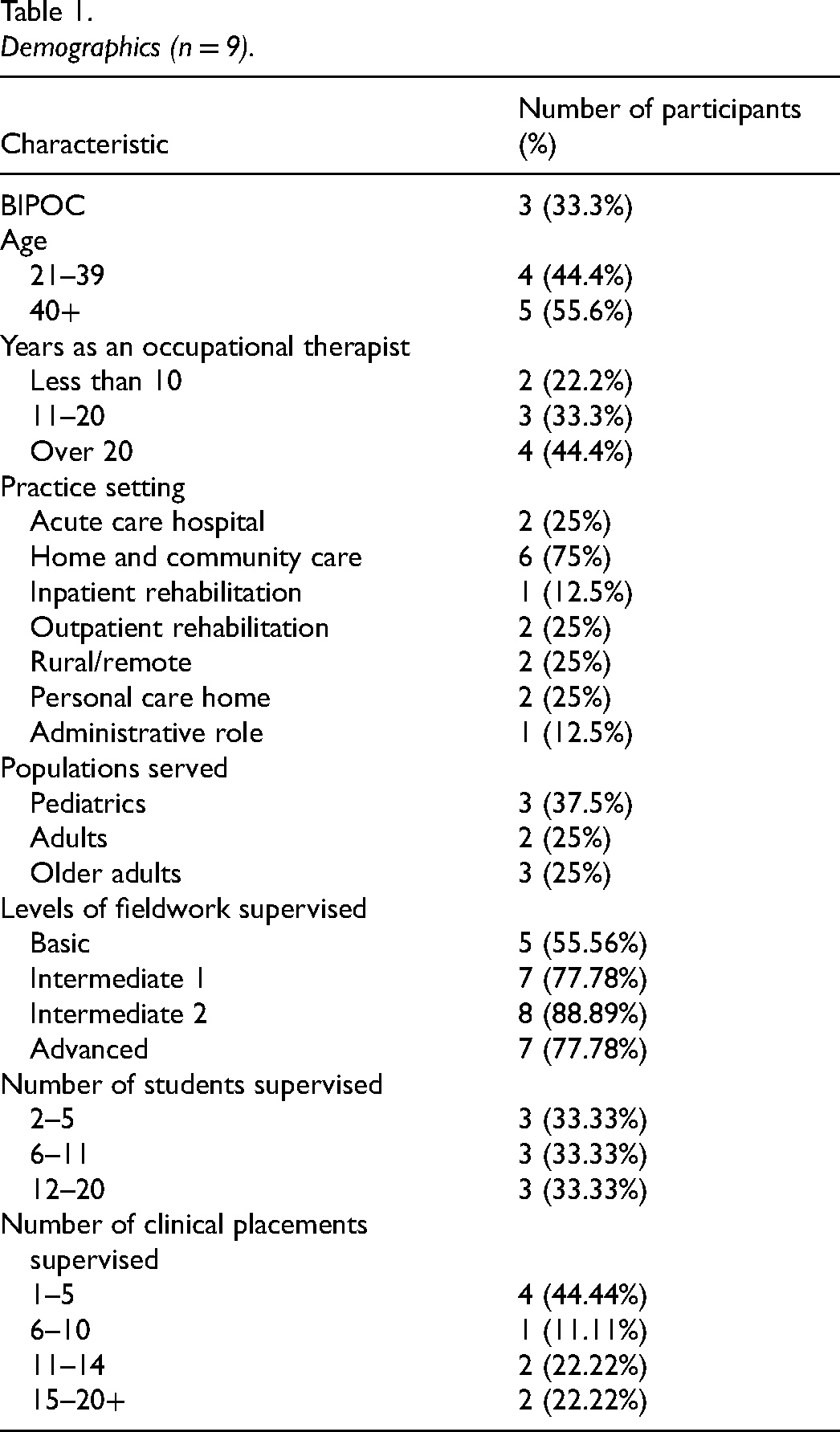
There were nine participants, all from Manitoba. Their self-reported demographic information can be found in Table 1. Eight participants were female and one was male; three of the participants identified as BIPOC. There was diversity in age, years working as an occupational therapist, practice setting, and the number of students they had supervised. Three main interrelated themes represent the findings: Racism is All Around Us, The Teaching Learner, and Who Will Help Us? The participants described the racist context of their workplaces that student learners enter, both in relation to interpersonal and structural racism, and how this environment, where Racism is All Around Us, impacts students, and the dynamics between students, the occupational therapy fieldwork educators, interprofessional team members, and service users. There was consistency among the clinicians in how they were supporting student learning about racism, despite them all reporting that they had little formal education on this topic. The educators felt they were Teaching Learners because while they all felt they had worked to educate themselves on the topic, they recognized the need for continued education and learning on the topic to be anti-racist educators and practitioners. Finally, Who Will Help Us? describes how the clinicians were looking for help in advancing anti-racist practice in their settings and how to best support student learning but were not sure where this help could come from. We will now describe the findings in each theme in detail.
Demographics (n = 9).
Racism is all Around us
Most of the participants identified both interpersonal and structural racism that occurs in their workplace, except for one group with only White participants where interpersonal racism was less directly discussed. All the participants discussed the negative impact of racism on service users and students.
Interpersonal Racism
Interpersonal racism was reported to be present in three different types of relationships: service user toward healthcare provider (and vice versa), service user toward student, and healthcare provider toward student. Each of these situations has different power dynamics that influenced how racism was, or was not, acknowledged and/or responded to in the learning environment. Four participants (mix of BIPOC and White) did not think that the BIPOC students they had supervised had experienced “blatant” interpersonal racism in fieldwork. However, one of these participants identified many ways that structural racism may have been harmful, such as a lack of representation of BIPOC people in clinical care educational materials, and the others described how the BIPOC students had witnessed racism toward service users. There was little discussion of how the educators themselves may have enacted interpersonal racism, except for one participant who learned from a BIPOC student that they were being excluded from the interprofessional team in a way that a White student who was in the same fieldwork setting at the same time as the BOPC student, was not.
Participants noted that personally mediated racism from service users toward healthcare workers/healthcare students is treated differently from racism in other types of relationships because of the duty to provide healthcare. Participants acknowledged the harm that this causes for students. Mindy, a White educator, observed service users exhibiting nonverbal communication toward a Black male occupational therapy student that indicated discomfort when the student was physically proximal to the service user, such as tensing up or leaning away. She believed that the intersectionality of being Black and male in a setting where the caregivers are typically White and female influenced the reaction of the service users. She noted that the student primarily used humor to ease tension in these cases and admitted that she looked to the student to help her determine how to manage these situations. A male BIPOC participant noted their own experience with the intersectionality of being a male BIPOC student. A male OT, also a person of color. I was that basically that same student (referred to by Mindy) 10 years ago as well where you know? I guess just in in speaking for that student as well, you know, we know who we are, we know. What kind of approach - we probably have to take a little bit more of a careful sensitive approach. Uh, just being a male presence with a lot of sensitive assessments and interactions, but also, you know, recognizing the population or the demographics we work with and some of the general generational stigmas that we have to work with as well. It's a very careful approach and sometimes you have to. Uh, I guess. Swallow a lot of those feelings that you're feeling right in the moment. (John, BIPOC)
Occupational therapy students reported witnessing racist comments (overt and subtle) and jokes by healthcare providers while discussing service users during rounds, meetings, or informal discussions in the hallways. A specific example included a White participant's (Rita) student witnessing security staff at a hospital denying a man, who appeared to be First Nations, access to the hospital despite having an appointment. Finally, participants talked about noticing microaggressions from healthcare providers directed at BIPOC presenting students. Blair captures the sentiments of several participants when he describes this phenomenon, The clients might be more vocal (in expressing racism), but I do think that the subtleties of systemic racism has become apparent when I have a student who identifies as BIPOC. Then I can see those subtleties within the staff. (Blair, White)
The participants were aware that there may be other instances where BIPOC students experience racism but did not share their experiences because of power differentials. This issue of power was emphasized by one BIPOC participant who said that they probably would not have sought support when experiencing racism on fieldwork as a student unless the support was highly accessible and well-established.
Structural Racism
Participants recognized that all students are exposed to racism on a continual and daily basis because all health and social care is embedded in a context of structural racism. One of the main issues discussed in relation to structural racism was a lack of services, resources and supports for First Nations people due to provincial/national jurisdictional issues. Students witnessed issues such as First Nations people needing to travel away from their communities to receive care, and resource and equipment access issues in rural and remote communities. Betty, a White participant, speaks about how these inequities are difficult to explain to students. People will have to come to <city > for treatment of their wounds. And so yeah, that takes them away from their community. We have not built capacity, there has not been any capacity building that way at all…. (in communities)—that's a hard one to explain to students, for sure. Yeah. Lack of, lack of equity and that kind of thing. (Betty, White)
The Learning Teacher
All the participants thought that directly acknowledging the presence of racism and advancing student learning about racism was a very important part of their role as fieldwork educators. Many talked about the importance of addressing racism when interpersonal racism was evident (which also meant modelling this for students), while also acknowledging the complexities of responding based on who was involved (e.g., ensuring that a response was in line with student preferences; difficulties with responding to racism from service users when the social norm is to centre the service user's needs). Most participants talked about the importance of discussing the complexities of working within healthcare structures with racist policies that cannot always be directly addressed in day-to-day clinical work (e.g., federal-provincial jurisdictional issues), and how they talked with students about actions they could take to try to counter-act structural racism, such as trust-building strategies, use of cultural humility, and critically considering requests for standardized assessments (and refusing to conduct them if necessary).
While there were varying levels of comfort in teaching about racism, all the participants were working to actively engage students in learning about racism and were using similar strategies. The primary tool in their toolkit was I do teach my students like, it's important to say, is this the standard that you as a clinician choose to uphold or feed into? And if not, what are you gonna do about it? Because I also burnt out pretty good in acute care because of all of the systemic racism that was constantly every day like this. The patterning was just really frustrating, you know. (Mindy, White) You know, the discussions also around your own racism, right. And to give, like you said in the beginning, you acknowledge we all have biases. We all have preconceived notions. I try to talk about that with students, like it's important, right? And I catch myself, you know. It's to go in with an open mind and to check those biases, to acknowledge that they exist. And so pointing that out to students as well, that it's important to do that. (Rex, White). [We] debrief after every day just to talk about what they saw. And I made a point of asking about those things, like what was something that you questioned today, what was something that just didn't make sense to you. And then from there we would just talk it out. And maybe sometimes I didn't have the answers and we both left with like, I don't know, but at least we talked about it rather than just leaving it. (Luisa, White)
The BIPOC participants acknowledged that the ability to talk about racism with students will depend on several factors, including the readiness of the student to discuss racism, whether or not the student is the same race as the educator or not, the amount of trust that is built between the educator and the student and the educator's level of experience. Chris said, I think it's also individual to the student, right, in terms of how comfortable they are talking about racism and how comfortable they are. With their particular educator, with their own race, with their own comfort level amongst whoever happens to be around, whether it's the group of therapists or health professionals in the hospital, you know that you're sitting with or, you know, in our office or. You know, I think just thinking back to my own student experience, right? Like there is [sic] just some educators, you don't really trust, you know, or you don't, you don't feel comfortable with. And then there's some educators where you're like, yeah, I can totally talk to this person about that. (Chris, BIPOC)
There were two instances cited where open dialogue was used with BIPOC students who brought up experiencing racism (e.g., feeling excluded from the team) or were observed by the educator seen to be experiencing racism (e.g., nonverbal communication from service users). In these instances, the educators listened to the student to determine how to support them. When asked about what other supports BIPOC students need, or supports they need to support the BIPOC student, one participant thought that reporting structures would be helpful to identify and address racism, and another identified that supports from the university (e.g., student BIPOC collective) were helpful supports that have been instituted recently. Another BIPOC participant identified that they had recently started a group focused on racism in their workplace, and that they hoped this could be a space students would perceive as safe for getting support during their fieldwork. Open dialogue was talked about as the most important thing they could do to support all students, and for non-BIPOC students, participants did not talk about any other needed personal supports “And to be honest, I've never even thought about offering any other support other than open dialogue.” (Rita, White)
Participants emphasized the importance of setting time aside for these discussions and identified a lack of time as a potential barrier to supporting student learning. Participants who had a lot of downtime with students, such as driving to home visits or rural communities, felt that this time was particularly valuable for deeper discussion that promoted learning.
The participants expected that students would develop their ability to identify racism and its impacts, but they did not expect that students would directly address racism during fieldwork, due to power differentials. Mindy spoke about how her expectations are limited to students becoming more aware of racism during fieldwork. And, but I mean, we can't also set students up to fight battles. They're not prepared to fight. That's more my job to help guide them, but I certainly don't shy away from pointing it out when we come across it because I'm not doing them any favors by just kind of being like, ohh yeah, same old whatever you know. (Mindy, White)
Who Will Help Us?
Despite having some tools that they felt were effective, participants were looking for more support. They felt that racism was not being adequately addressed at the institutional level, and wanted racism to be more openly acknowledged, discussed, and addressed. They felt that most of what they knew about racism, they had taught themselves and were interested in further advancing their knowledge and skills. A list of who and what they thought would help them is in Figure 1.
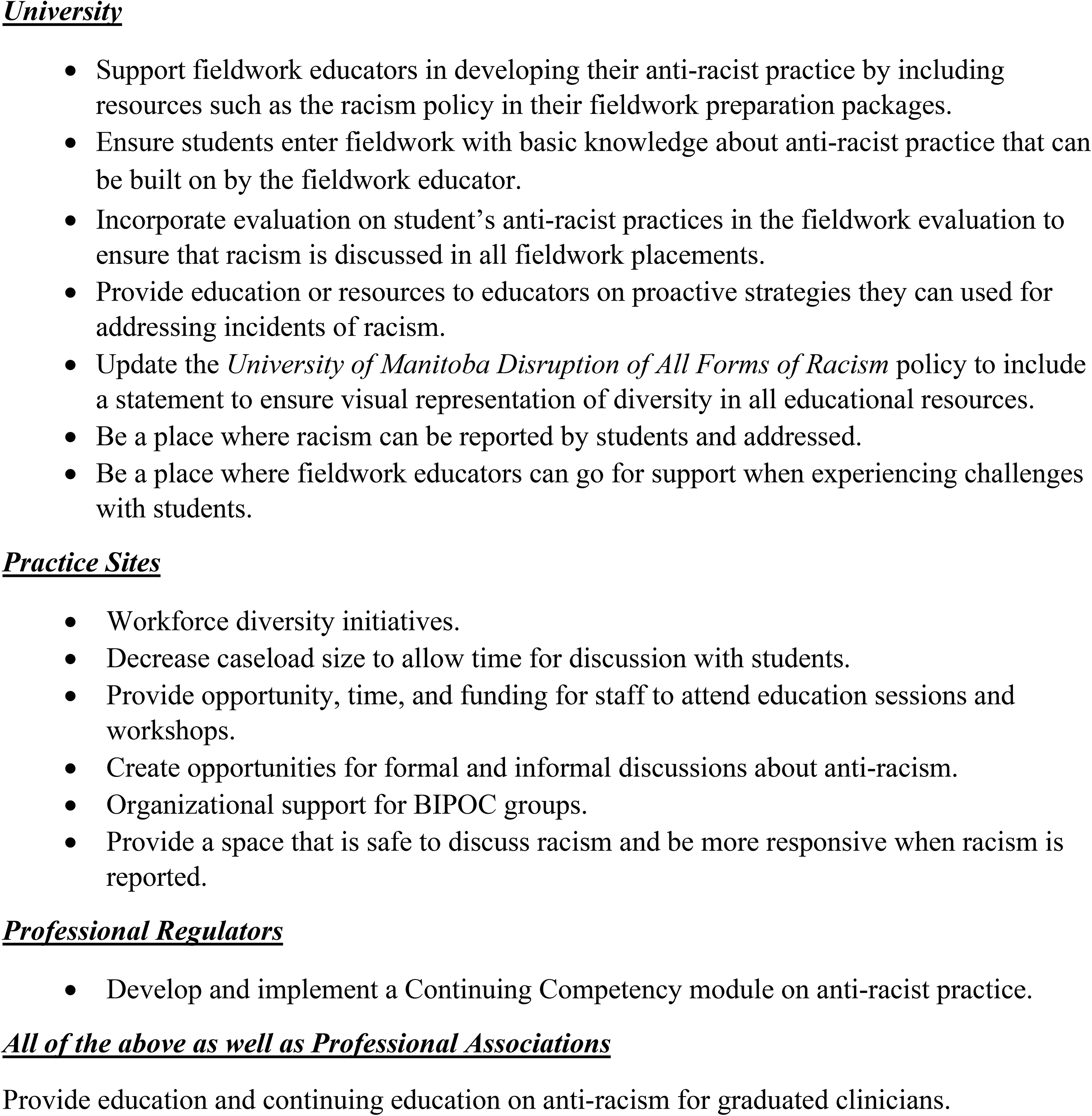
Recommendations from participants on who and how to support fieldwork educators for their work in student fieldwork education in relation to racism.
Sherry talks about how learning about racism is having a positive impact on her ability to work with students. Recently I took the Indigenous cultural sensitivity course through that (hospital) is offering and I think other (health regions) are, and I found for me just learning more about myself is huge. And I think being able to reflect that to your students is huge - is to look at what are your biases . . . I felt that's gonna help me be better with my students as well, because (of) just the education I received . . . It's about you figuring out yourself. (Sherry, White)
Participants were keen to share resources that they found helpful with each other during the focus groups. Some participants had started a community of practice within their own organization to advance anti-racism. A common frustration was the lack of commitment and support from the administration for continuing education on racism. Participants felt that they were discouraged from taking time away from their clinical practice to take workshops to further their learning on anti-racist practice. Participants also said that they felt uncomfortable talking about racism with colleagues and managers in their workplace, and so appreciated this opportunity to talk to and learn from colleagues in the focus group.
The participants were seeking support from various institutions to advance their skills in being an anti-racist practitioner, so they in turn could support student learning about racism. This included their own employer, their professional regulator and professional organization, and the university. Participants thought that including racism as an evaluation indicator in the fieldwork evaluation would ensure that discussions about racism were an expectation during fieldwork placements. They also thought that a student reading package that students get from the university prior to fieldwork would be a helpful way to ensure that racism is being discussed in fieldwork. Since developing into an anti-racist practitioner was personally important to these participants, they were accessing resources on their own time. Participants worried that not all fieldwork educators would have the same motivation to do this learning and action toward anti-racism.
When asked, participants said they were not sure where to get support for students in instances where the student has experienced racism. Mindy expressed the importance of external support to mitigate the responsibility and onus of the student to educate or inform the fieldwork educators related to support. A participant provided an example of what would be helpful in these circumstances: Maybe that's part of the work you're doing, but that community of even being able to report abuse. And if we could, as educators, be aware or informed of all of those resources when we take on students, that would certainly at least flag like this as an issue for educators to address. Because I think a lot of educators would be afraid- or maybe not even, and I hate to say this but, not have the time to open that up and really dig into it … (Blair, White)
Discussion
The aim of this study was to understand occupational therapy fieldwork educators’ experiences in supporting students in relation to racism during fieldwork, in order to understand how to support them better. The fieldwork educators who participated in this study saw the importance of, and were committed to, teaching students about racism as a part of their fieldwork education. These educators were dedicated to improving their knowledge and skills regarding anti-racist practice both personally and as a fieldwork educator. The educators identified many issues of racism in their practice contexts, both interpersonal and structural, as well as how they intersect. While several participants had sought out continuing education on racism, they had not received specific education on supporting students in fieldwork in relation to racism. Therefore, they relied on other skills that they used as therapists and fieldwork educators to support students, such as reflection. Many of them also were working to support the use of reflexivity, an important component of anti-racism development identified in both the broader and occupational therapy literature (Sterman et al., 2022).
Our findings reinforce previous literature that has documented overt interpersonal and structural racism in our health and social care environments that have a negative impact on occupational therapy students (Aldridge et al., 2023; Beagan et al., 2022; Ramugondo, 2000). Our study extends this discussion from documenting the issues of racism in the learning environment, to how fieldwork educators are working to support occupational therapy students in relation to racism and provides insight into where our profession should focus future efforts in this area. One critical direction is ensuring that BIPOC students who are experiencing racism are getting adequate support from their fieldwork educators and their universities, which ensures that, first, we are acknowledging it. In our findings, there was a disconnect between the responses of some of the of the participants in our study, both White and BIPOC, who said that their students had not experienced racism in their placement, and the wide body of literature that indicates that racism is an everyday event for health professional students (Aldridge et al., 2023; Beagan et al., 2022; Fnais et al., 2014). Furthermore, most of the participants were not aware of resources available to students experiencing racial harm aside from the support they could provide as fieldwork educators. Denying the experience of racism of BIPOC students carries harm, as was highlighted by our participant who explained he had to “swallow his emotions” as a BIPOC student, and by two participants who spoke of the “subtle changes in staff” they noticed when they had a BIPOC student.
In all three of the examples from our data where students were known to experience racism in the fieldwork setting, the racism was directed to the student by a service user. Interestingly, racism from service users toward providers has received little attention in the literature to date. In a scoping review of racism in healthcare, only four of 213 relevant articles discussed racism directed toward healthcare providers from healthcare users (Hamed et al., 2022). Cottingham and colleagues have outlined the extent of harm that being complicit in racism from service users to providers can have (Cottingham et al., 2018). Their analysis of the emotional work being done by BIPOC and White nurses revealed that BIPOC nurses are undertaking a vast amount of unrecognized emotional work in navigating interpersonal racism from patients and colleagues in their everyday nursing work. Specific to the profession of occupational therapy, Beagan and colleagues (2022a) critically analyzed the expectation of systemically marginalized individuals to enact client-centred practice when the service user expresses hostility and disrespect to the therapist. They point out that these occupational therapists are left to figure out how to enact client-centred practice, which our profession describes as engaging with service users with our authentic selves, and with unconditional positive regard toward the service user when they are exhibiting hostility toward them. Not only is this emotional toll unacceptable at a personal level, it also increases the chances of driving much-needed BIPOC providers out of our profession (Beagan et al., 2022b; Serafini et al., 2020).
Our profession needs to respond to the racism experienced by BIPOC students and providers to work toward abolishing racism. Fieldwork educators can develop skills in supporting students when interpersonal racism occurs by referring to a bystander microaggression intervention guide developed by Bullock and colleagues (Bullock et al., 2021). This algorithm guides the fieldwork educator through responding to a witnessed racist incident and emphasizes the need for a pre-brief, to start discussion before any incident has occurred, and to learn the student's preferences for the fieldwork educator's response (Bullock et al., 2021). However, supporting BIPOC students on fieldwork goes beyond the responsibility of each fieldwork educator. Ramugondo (2000), in her master's thesis, centres the theme of space, pointing out that black students are constantly working to find space for themselves, and that because of White supremacy, they find that their opinion is frequently not valued and try to “play it safe”. This reinforces that it is the responsibility of universities to create space for supporting students who are on fieldwork witnessing and/or experiencing racism. At the time of data collection for this study, there were few resources at our institution for students to turn to for support, resulting in a lack of processes to deal with injustices on fieldwork (Aldridge et al., 2023). Since then, our university has grown in having reporting systems and a wide variety of individuals and offices where students and fieldwork educators can seek support. However, we are not done developing these supports until there are feedback loops between the university and our health and social clinical education environments to support learning and improvement.
Another area where fieldwork educators need support is in helping students move from reflection to action. Our study participants felt that it was part of their role to model how to address racism but did not have this expectation of students. They were engaged in the important work of helping students develop reflexivity, which is recognized as being the first step in becoming an anti-racist clinician in a framework developed by Horrill and colleagues (2021). This cultural safety and trauma- and violence-informed care framework for redressing inequities in healthcare access then identifies the next steps as building relationships and encouraging collaboration with service users, and finally considering the context and impact of the environment, including structural inequities. The participants in our study expected students to learn about structural racism and its impact, and start to engage reflexive skills to consider the service user experience as related to the context, but stopped short at expecting students to take action. They had strong reasons for this expectation, acknowledging that students are not in a position of power, and dependent on their fieldwork educators for advancement. However, Emery Whittington (2024) calls on occupational therapists to engage in an action, reflection, action cycle, since “getting and staying stuck, accepting delay and waiting for ‘staff development and training’ have been effective in maintaining racist structures and processes”. The Horill framework provides guiding questions that fieldwork educators and students can consider to help them move from this first step of reflexivity into actions (Horrill et al., 2021). Occupational therapists can also refer to Demers et al. (2020) who, in their article on socially accountable occupational therapy fieldwork with Indigenous peoples, provide a vignette illustration of how supporting White students to engage with an Indigenous community in fieldwork has been enacted by an Indigenous fieldwork educator in Canada. How to support students to learn about how to respond to racism that they may encounter in the fieldwork setting is an area for further study. The limited literature on this topic has been classroom-oriented to date (Giannitsopoulou et al., 2023; Newcomb et al., 2021), and thus does not account for how to maintain student safety in the fieldwork setting.
The fieldwork educators in this study were looking around them for help. They identified many different organizations from which they would like to get help to support their own learning and efforts as fieldwork educators. While racism is now more openly acknowledged and understood to be pervasively harmful in our society, resulting in higher rates of morbidity and mortality (Williams et al., 2022), there is no one institution or structure with primary responsibility for teaching and implementing anti-racist practices. This seems to have resulted in a diffusion of responsibility, with clinicians not feeling supported by any one institution, or any combination of the institutions they work within and alongside. Supporting fieldwork educators to develop their anti-racism skills is a shared responsibility of employers, educational institutions, and professional associations. A systematic review confirmed our participants’ laments that there are few opportunities for post-licensure training on racism (Ricks et al., 2022). Since the anti-racism curriculum is fairly new in occupational therapy education programs, continuing education and/or competency programs need to support fieldwork educators as they work to learn, teach, and apply the competency of “culture, equity and justice” (Canadian Association of Occupational Therapists, 2021). Even for those who have had little anti-racism exposure, evidence suggests that anti-racist training has a positive impact on increasing an individual's confidence and comfort in discussing racism, and those who have received some training are more likely to be open to further anti-racist training (Hassen et al., 2021). The literature also validates our participants’ critique that the healthcare settings they work in do not acknowledge the presence of racism (Dent, 2021; Serafini et al., 2020), and need to bring this dialogue into the open (Serafini et al., 2020). An intervention that is very clinically grounded, rather than staying at a theoretical level, that could be implemented by employers, is racism rounds, where cases where racism may have played a role are discussed and critiqued for learning (Capers et al., 2020).
Limitations of this research should be considered when interpreting these findings. As with all qualitative research, the reader will need to determine the transferability of these findings to their own settings, considering the sample, the narrow geographical scope, and the timing of data collection which was Spring 2022. The participants voluntarily put themselves in the position of discussing racism in this study, and thus they may not represent the typical fieldwork educator in relation to how they address racism with students. We did not seek to evaluate the participants’ skills and knowledge of anti-racist practice as we were interested simply in their perspectives; we do not know the extent to which their own bias may or may not have influenced the findings. The participants spoke more about educating White students about racism than about supporting BIPOC students experiencing racism, and we did not explore with the participants why this occurred. While we work to address this in our Discussion, this silence needs to be addressed in future research as the denial of racism can result in its reproduction (Nestel, 2012). We also do not know how the race of the focus group facilitators (White and White-presenting) and the participants (2/3 White) influenced the findings. We also need to acknowledge that the social structures and experience of racism are not the same for all races. For example, the history of the relations between Indigenous Peoples and settlers in Canada that includes social policies of genocide and exclusion of Indigenous peoples on their own homeland, has a direct effect on Indigenous and non-Indigenous relations today. Consideration of the different experiences and needs of different groups is important for future research. Despite these limitations, this research identifies issues, and actions that we can do as a profession to address the issues.
Conclusion
Occupational therapy fieldwork educators play a critical role in shaping the professional development of occupational therapy students who are experiencing and witnessing racism in our health and social systems. Our findings show these fieldwork educators are dedicated to advancing student development in becoming anti-racist practitioners and have implemented teaching tools that are supported by evidence. However, they are looking for help, recognizing their personal knowledge limitations, as well as the limitations of individual efforts. Disruption of racism will require the development of individual skills and collective structures that allow us to move from reflection to action. For fieldwork educators and student safety, this requires health organizations and universities to work in an integrated way to prioritize anti-racism education for all students and occupational therapists, and to develop multipronged systems for the disclosure and addressing of racism.
Key Messages
Racism in the fieldwork education environment is present and complex due to the intersectionality of race, education and health system power hierarchies. Fieldwork educators play a key role in supporting students to acknowledge, examine, negotiate, and address both personal and structural racism in their professional development.
Occupational therapy fieldwork educator skills in reflexivity, critical thinking, and relationship-building can be leveraged to support student skill development in being an anti-racist practitioner. However, open dialogue and responsiveness in relation to racism by employers is needed to advance anti-racism.
The development, implementation and evaluation of post-licensure anti-racism education is needed so that all occupational therapists can address and provide fieldwork education on the Canadian occupational therapy competency C of culture, justice and equity.
Footnotes
Funding
The authors received no financial support for the research, authorship, and/or publication of this article.
