



Abstract
Introduction
Cerebral Palsy (CP) is an umbrella diagnosis of permanent motor and posture disorders, caused by irregularities of the prenatal or infant brain development and differs by severity (Sadowska et al., 2020). The National Institute for Health and Care Excellence (NICE) published guidelines for adults with CP to support participation and independent living (Bromham et al., 2019). However, transitioning from assisted to independent living can be challenging for adults with CP (Liptak, 2008). Only 55% of adults with any severity of CP live independently (Pettersson & Rodby-Bousquet, 2021). In Israel, there is an effort to promote independent living among all adults with disabilities, though not specifically with CP (Kanter, 2012).
There is limited information about adults with severe CP (Manikandan et al., 2022) and a need for collaboration of rehabilitation professionals (Freeman et al., 2018). We found no articles that studied programs to prepare for the move to independent living specifically for adults with severe CP. In order to bridge the gaps and enable more adults with severe CP to live independently, there is a need for careful planning of relevant interventions (Callaway et al., 2015).
The Greenhouse for Autonomy and Independence is an intervention that was created through an inclusive study together with the participants (Rosenberg et al., 2024) aiming to help adults with severe CP prepare for the transition from assisted to independent living. The intervention combines weekly individual sessions with weekly group sessions.
The individual sessions adhered to the Pathways and Resources for Engagement and Participation (PREP) protocol. PREP is a client-centred and skill-based intervention that aims to empower and encourage participation through coaching and reduction of barriers (Law et al., 2016). Implementation of the PREP intervention for youth with physical disabilities including CP, has been shown to be effective and to improve their participation in personal goals (Anaby et al., 2018; Hoehne et al., 2020; Law et al., 2015). As such it appears to be appropriate to enable independent living, but has not yet been studied in adults or specifically for people with severe CP. Each participant chose three functional goals relating to their move to independent living with a caregiver, and filled in PREP planning and intervention forms including discussion of “participation teams” to support the goals and analysis of barriers to create a plan. During individual sessions, in accordance with the PREP protocol, coaching was used to eliminate or circumvent barriers to promote participation in personal goals (Law et al., 2016).
Group sessions organized by an occupational therapist (second author) and a social worker, revolved around issues the participants raised as concerns about moving from assisted to independent living (Rosenberg et al., 2024): (1) house management (finances, meals, maintenance and housework), (2) interactions and boundaries (with a caregiver, family, friends and romantic partners), (3) schedule (work, leisure and volunteering, education and health management) and (4) “my way” (autonomy, independence and self-advocacy, emotions and group power). They encouraged peer learning, discussion, practice and exploring solutions for issues they had in common. The group sessions revolved around relevant issues that the participants chose, just as the individual sessions focussed on personal functional goals that the participants chose. The Greenhouse intervention, both individual and group sessions, lasted 20 weeks despite the standard PREP format of 12 weeks, as participants who co-created the intervention felt they needed more time.
The current study aims to evaluate the potential effectiveness of the Greenhouse intervention. Specific objectives were: (1) to assess attainment of personal goals; (2) to examine change during and following the intervention on outcome measures of functional independence, confidence in powered wheelchair use, and impact on autonomy and participation; and (3), to explore participants’ satisfaction with the program.
Method
Study Design
An Interrupted Time Series (ITS) design was used to compare the primary outcome measure over time, along with a quasi-experimental design to compare pre-post on secondary outcome measures. Multiple baseline scores of the functional goals were compared with scores across the intervention to detect change, as done in other PREP studies (Anaby et al., 2014, 2018; Law et al., 2015). Though bi-weekly administration of the primary outcome measure could pose threats to internal validity, this design is used to measure efficacy for PREP in most studies when a control of no-treatment is not possible, and is acceptable in other healthcare studies where a control is not feasible (Hudson et al., 2019). In addition, feedback from personal interviews was collected to evaluate the program. The study was approved by the ethics committees of the Hebrew University Institutional Review Board (license no. 4032022) and from the Israel Ministry of Welfare and Social Affairs. All participants, and where applicable guardians as well, received a full explanation of the intervention and could opt out of the study at any time without it affecting their participation in the intervention; they all signed informed consent forms.
Participants
Participants all lived in a residential home for adults with severe physical disabilities in Jerusalem, Israel (Beit Finger) that tends to all the needs of its residents including healthcare, food, hygiene, eating etcetera and provides assistance according to each resident's abilities. They were recruited through convenience sampling by the staff of the home. Inclusion criteria were: (1) Severe CP, GMFCS IV-V and Manual Ability Classification System (MACS) II-V; (2) age 21 and over; (3) living in Beit Finger; (4) expressing interest in the project; and (5) giving their consent to take part in this research, and if needed, their guardian's. Exclusion criteria: psychiatric and behavioral issues that would interfere with independent living, as defined by their personal files.
Data Collection
Tools
Demographics and clinical characteristics
Demographics and clinical characteristics including age, gender, diagnosis, GMFCS, education, and information about impairments were documented, taken from the residents’ files and confirmed by the residence.
Primary outcome measures
Activity performance was measured by the Canadian Occupational Performance Measure (COPM) (Law et al., 2014). This measure is a widely used semi-structured interview where participants identify activities that are important to them and create personal, functional goals accordingly. They then rate their performance on a scale of 1–10 (a higher number represents better performance). An increase of two points or more is considered minimum clinically important difference (MCID). The COPM has high reliability and adequate validity as well as adequate responsiveness to detect clinically significant change for children with CP (Sakzewski et al., 2007). It has significant divergent, convergent, construct and discriminant validity, with high reliability (Law et al., 2014). The COPM is considered to have high sensitivity to change, and is used in PREP to detect changes in performance (Anaby et al., 2018, 2020; Law et al., 2015).
Secondary outcome measures
Function was measured by the Functional Independence Measure (FIMTM): The FIMTM is a widely used clinician-reported scale to detect change in the level of assistance needed by patients in rehabilitation (Maritz et al., 2019). It has 18 items, rated between 1 (“total assistance”) to 7 (“total independence”), with a higher score showing higher independence. The FIMTM was formerly validated and checked for reliability with various populations with disabilities, though not specifically CP (Maritz et al., 2019).
Powered mobility confidence was measured by the Wheelchair Use Confidence Scale for Power Wheelchair Users (Wheelcon-P, version 2.0) (Rushton et al., 2011). WheelCon is a 59-item self-reported questionnaire that assesses a powered wheelchair user's confidence in indoor and outdoor mobility. The response scale ranges from 0 (“not confident at all”) to 100 (“completely confident”); the total score was calculated (Rushton et al., 2011). All participants used powered wheelchairs, and many participation goals required mobility, making this assessment particularly relevant. The WheelCon-P was found to have high internal consistency, strong retest reliability and evidence supporting its validity (Rushton et al., 2011).
Autonomy was measured by the Impact on Participations and Autonomy (IPA) (Cardol et al., 1999). The IPA is a self-reported questionnaire that assesses perceived participation and autonomy of people with disabilities through 31 items. Each item has a score with a range of 0–4, with a lower score showing higher participation and autonomy, though some items having the option “not applicable”; total score is the sum of all items. It has been shown to reflect in-person improvement over time, has good homogeneity and construct validity (Cardol et al., 2002).
Semi-structured interviews
To explore the participants’ experience, participants were interviewed four weeks after the end of the Greenhouse intervention (Bearman et al., 2019). A semi-structured interview guide with open-ended questions was created by the researchers to encourage participants to express both positive and negative aspects of the program (see Supplementary Material). In order to reduce bias, interviews were conducted by an occupational therapist not involved in the project.
Procedures
The research lasted a total of 28 weeks (March – August 2022). All participants completed the entire study. Four weeks before the Greenhouse intervention (T1) all participants completed primary and secondary outcome measures to provide the baseline. The COPM score was assessed bi-weekly for 24 weeks (20 weeks of the Greenhouse intervention plus 4 weeks baseline), in total 47 time points (details to follow). At the start of the intervention (T2) PREP forms were filled out to guide the intervention. Participants completed the secondary outcome measures a second time 12 weeks into the intervention (T3) and a third time at the end of the intervention (T4). Four weeks after the end the intervention (T5) participants took part in an interview with an OT not involved in the project (see Figure 1). Due to a holiday after the 17th measure, one data collection point is missing and therefore measures 17 and 18 are a week apart and not half a week like the others. For this reason, there are 47 measures of COPM and not 48 as there should be for a bi-weekly measure done over 24 weeks (baseline plus intervention). On days that a participant was sick or on vacation and could not complete the COPM, the score he or she gave the week before was used.
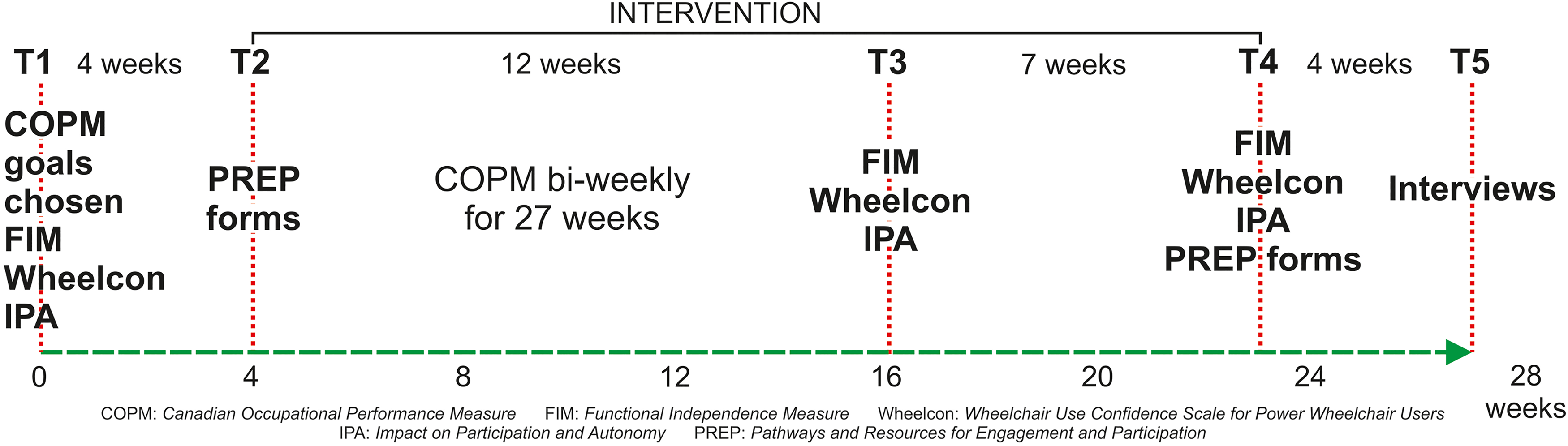
Flowchart of procedures.
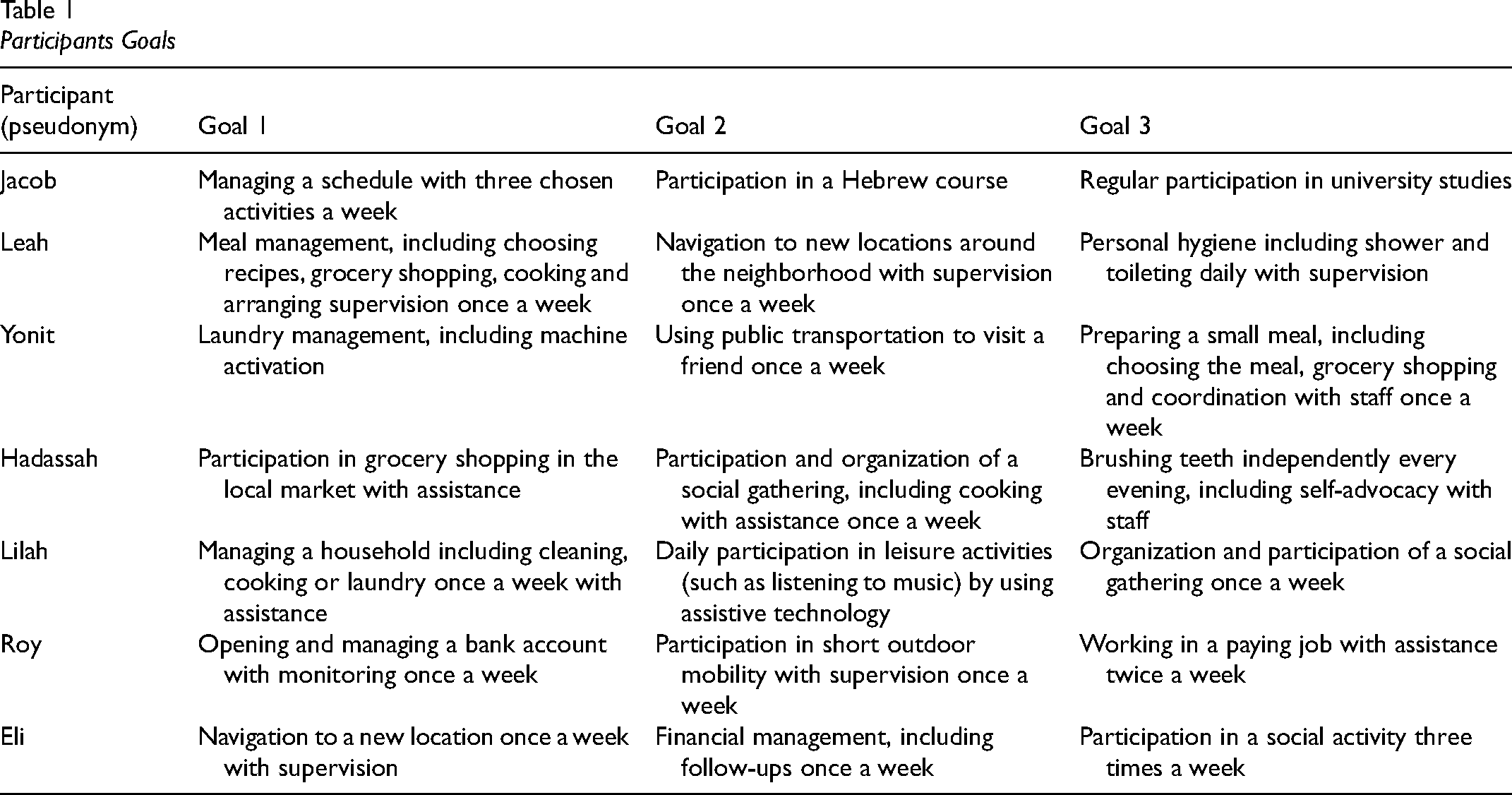
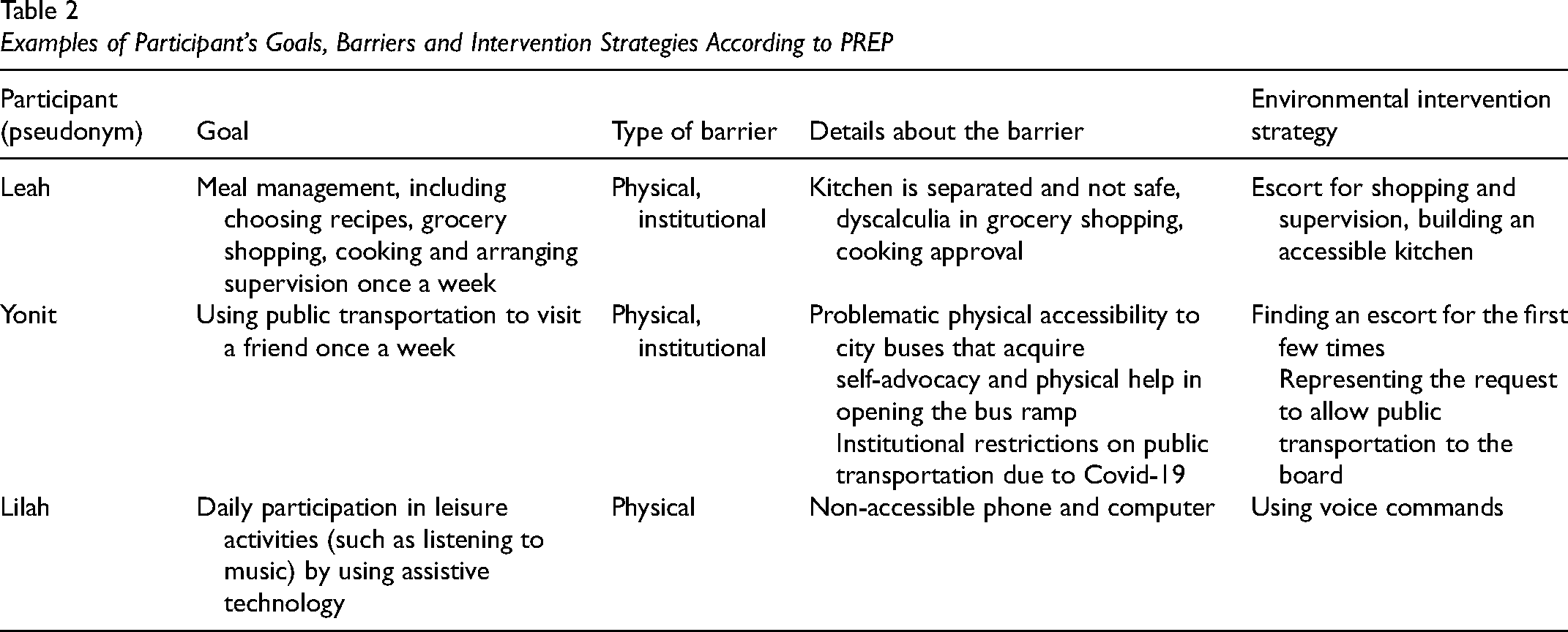
The Greenhouse intervention, described in the introduction, included a weekly group as well as individual occupational therapy sessions, all of which were face to face at the assisted living residential home. Goals chosen by the participants can be seen in Table 1 and examples of barriers and intervention strategies can be seen in Table 2.
Participants Goals
Examples of Participant's Goals, Barriers and Intervention Strategies According to PREP
Data Analysis
Data points from multiple COPM measures were plotted for each goal, and visual analysis of these graphs provided information about the change over time. This method allows analysis of within-participant variation (Odom et al., 2018). In addition, the average of all three goals for each participant was compared using Wilcoxon signed rank test. For the secondary measures, the Friedman test was conducted to evaluate differences across three time points (baseline (T1) versus mid (T3) and post (T4) intervention) on secondary outcome measures, due to the small sample. Post-hoc analysis with Bonferroni correction for multiple tests was used for pairwise comparison to identify specific differences between the time points with an adjusted p. The data associated with this paper is not publicly available, but is available from the corresponding author on reasonable request.
Findings or Results
Participants
The participants of this study were seven residents of Beit Finger (a residential home in Jerusalem, Israel) with severe CP (Gross Motor Function Classification System (GMFCS) IV), ages 23–45 years (mean 35; SD 10), of whom 4 were females. All seven completed the study. Eight residents who fit the criteria were invited to take part in the project, but one declined, leaving the study size at seven. All used powered wheelchairs, but their functional abilities varied from requiring only slight assistance in daily activities to needing assistance in all basic activities of daily living all day long. Three participants had dysarthria but were understood by people who knew them, three had dyscalculia, and two had a cortical visual impairment (see Table 3).
Description of the Participants’ Characteristics
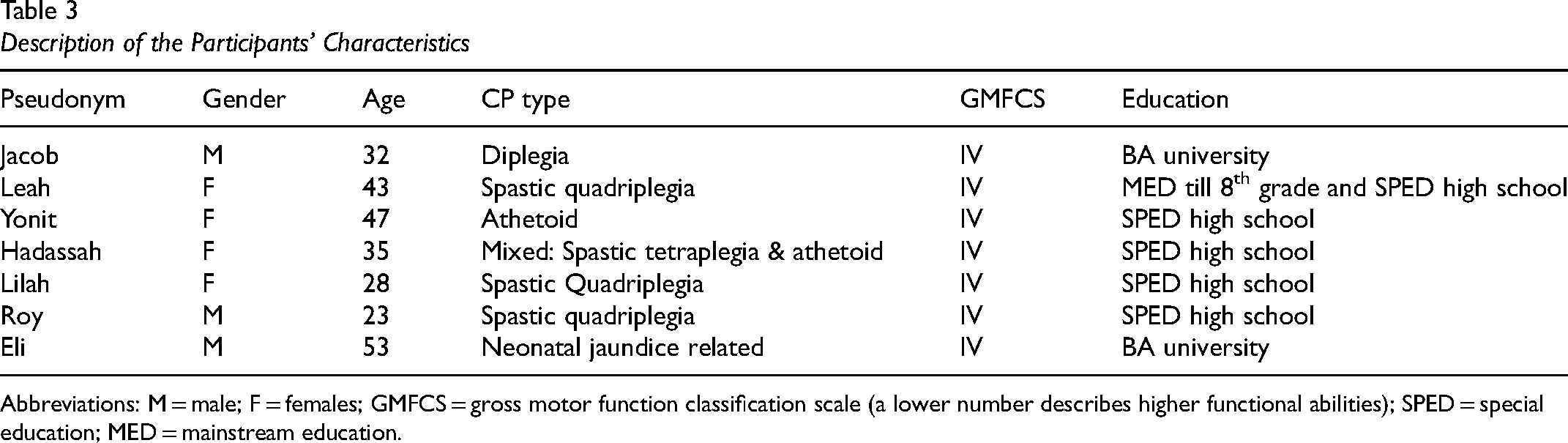
Abbreviations: M = male; F = females; GMFCS = gross motor function classification scale (a lower number describes higher functional abilities); SPED = special education; MED = mainstream education.
Primary Outcome Measure
The bi-weekly performance COPM goals ratings, assessed 47 times, are shown in Figure 2 and show the change in activity performance over time. Visual analysis of the graphs shows each participant achieved their goals (except one of Eli's goals), though the rate and consistency varied. Note that Jacob and Eli started to change prior to intervention, after setting their goals. Lilah, on the other hand, took longer to start to achieve goals and all three goals fell into place simultaneously, towards the end of the intervention.
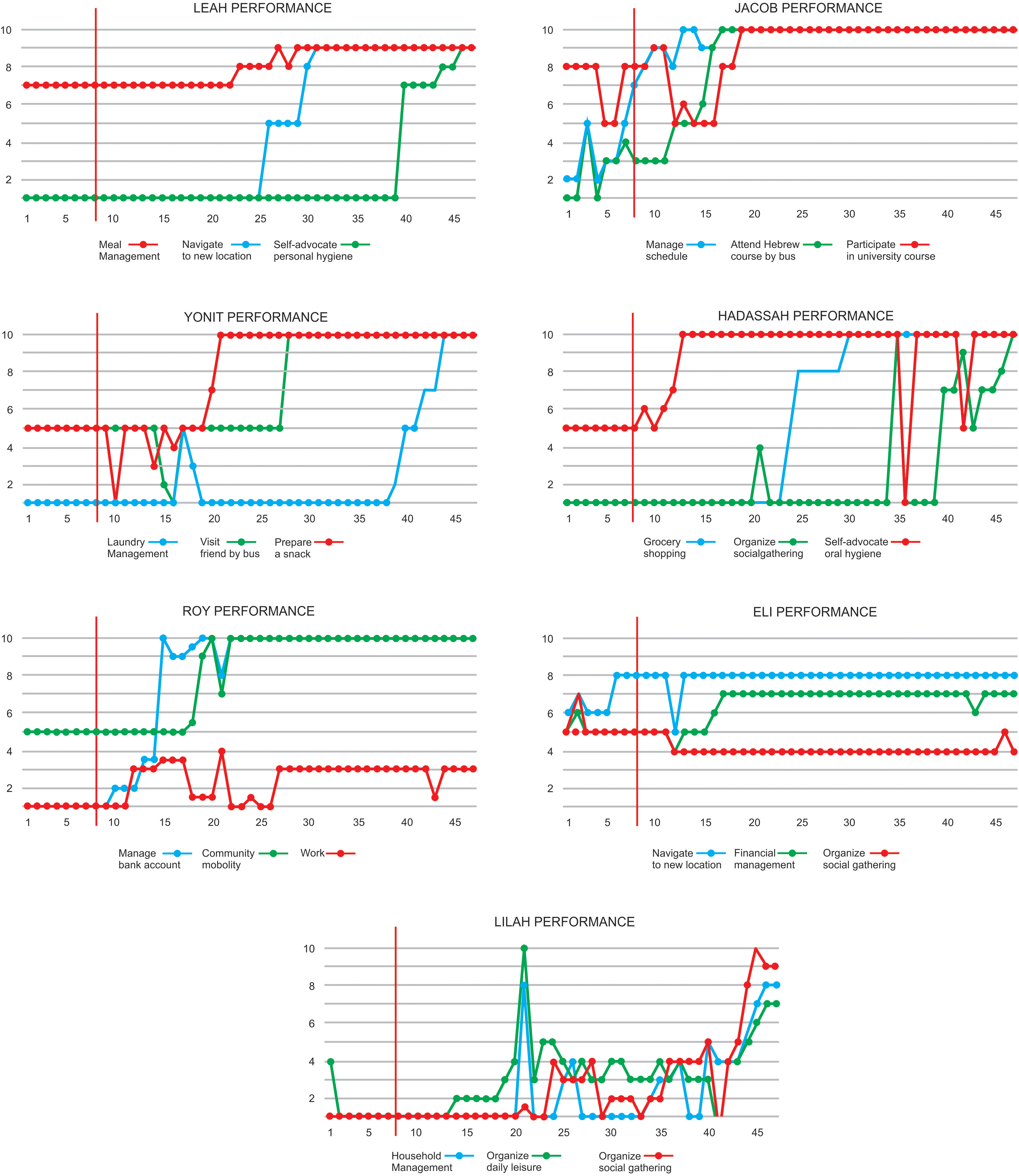
Bi-weekly COPM (Canadian Occupational Performance Measure) performance scores over time per participants.
All participants showed significant clinical improvement in activity performance through their COPM goals, at least two-points, in all goals, except Eli's goal of planning a social gathering (95% attainment, 20/21 goals). The average COPM performance score of all goals before intervention was 3.2 (SD = 2.4), and after the Greenhouse intervention it improved to 8.7 (SD = 2.0), showing an improvement of 5.5 (SD = 3.2), well beyond the MCID. To analyze significant change, the average of all three goals for each participant was used, because the goals of each participant are related. A significant improvement (Z = −2.4, p = .02) was seen using Wilcoxon signed rank test when comparing participants’ average performance score between T1 (M = 3.2, SD = 1.1) and T4 (M = 7.7, SD = 2.0).
Secondary Outcome Measures
Results from the secondary measures using a Friedman test, point to improvement in two of the three measures across the three time points (See Table 4). Functional independence measured with the FIM TM showed a significant improvement (χ2 = 8.07, p = .018) and post-hoc pairwise comparison using Bonferroni correction with adjusted significance indicated improvement between T1 and T3, with no significant change after. Powered mobility confidence, measured by the WheelCon, also showed a significant improvement (χ2 = 7.18, p = .028), where the significant change was seen between T1 and T4 according to the pairwise comparison. Autonomy, measured by the IPA, showed a trend of improvement over time, however no significant change was found over the period (χ2 = 3.92, p = .141).
Comparison of Average Score on FIM, WheelCon and IPA before (T1), Mid (T3) and Post (T4) Intervention, Including Friedman Test and Effect Size (Kendall's W), N = 7
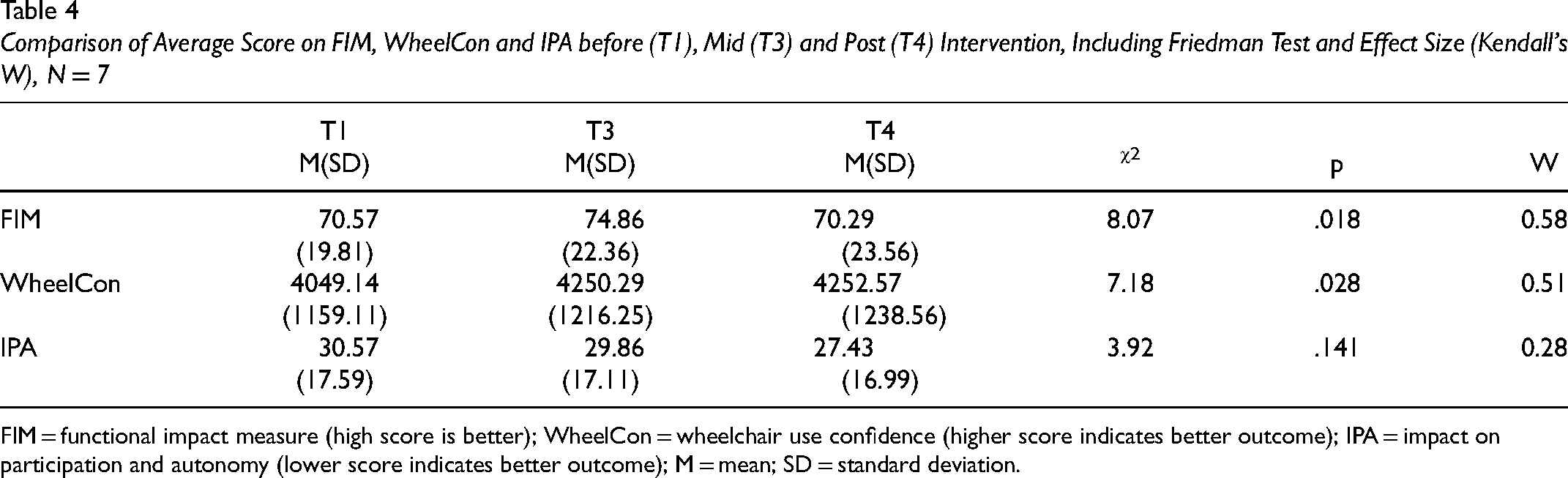
FIM = functional impact measure (high score is better); WheelCon = wheelchair use confidence (higher score indicates better outcome); IPA = impact on participation and autonomy (lower score indicates better outcome); M = mean; SD = standard deviation.
Semi-Structured Interviews
During interviews about their experience, participants expressed that they achieved a great deal, that it was a positive experience and that they were much more prepared for the transition to independent living, but also, that they still have more to learn. “Well, I feel I would give it about an 8 (out of 10), because some of the goals we haven’t finished achieving yet, so that's why it's an 8” (Leah). “There was change in all the areas, but there is more work to do in them all” (Roy)
Three of the participants reported that they felt ready to start the transition, and others reported that the intervention raised awareness of the process and helped them understand they are not prepared yet for this change.
Leah, Lilah and Yonit reported that the combination of individual and group sessions gave them support that answered various needs. “Both the group and private sessions were very good for me, because I felt the two types of meetings really completed each other and at each type we worked on different things” (Lilah). “This has been a very useful program, very very helpful” (Jacob)
Discussion
The current pilot study aims to explore the effects of the Greenhouse for Autonomy and Independence intervention for adults with severe CP who plan to move from assisted to independent living. The Greenhouse intervention was created through an inclusive study, and all issues of the group sessions as well as personal goals in the individual sessions, revolved around the participants’ concerns. Results show improvement across time in almost all participation goals, as seen in other PREP studies, as well as in function and wheelchair mobility confidence though not in autonomy. The participants felt the intervention, particularly the integration of group and individual meetings, helped them prepare to live in the community but they were aware that they had more to learn.
Almost all participants reached their personal goals through the PREP protocol. This is remarkable, as the population is adults with chronic, severe limitations. The finding is in line with research done with school age children and adolescents with CP, where a significant improvement is seen in COPM scores after PREP interventions (Anaby et al., 2018; Law et al., 2015; Waisman-Nitzan et al., 2022). Only one goal wasn’t reached. This 95% success rate is in line with a study by Law et al. (2015) where 94% of the activities improved.
One of the interesting findings is the varying pace of improvement amongst participants. Jacob and Eli started to improve before intervention started; perhaps defining the goal elicits the clients’ motivation to start to find solutions (Koestner, 2008). Jacob achieved all goals by 5 weeks from the start of intervention (mark 18 time point on the graph) whereas Lilah reached a clinical improvement after approximately 9 weeks, and then she suddenly excelled at the end. Leah, Yonit and Hadassah took longer to achieve their last goal, and didn’t achieve one goal after another, as typically seen in PREP interventions (Law et al., 2015). These examples strengthen the PREP manual's advice of tailoring the length of the intervention to individual needs (Law et al., 2016). In a study by Schwellnus et al. (2020) using a solution-focused coaching intervention to achieve participation goals for children with CP, a wide variation of the length of intervention was also seen, between four to 32 weeks. Similar findings were also found in another study about participation for youth with disabilities (Golos et al., 2023). The current study shows that most participants needed longer than the typical 12 weeks of the PREP protocol, perhaps because they had severe CP or because they were adults. The participants did reach significant clinical improvement of two points or more on 95% of the goals, similar to other PREP studies, but it took them longer to do so.
The secondary outcome measures should be viewed with caution, due to the small sample size. They show significant improvement in function as well as power mobility confidence, but not in autonomy, although a trend of improvement was seen in autonomy too.
The change in the FIM™ measurements fits other PREP studies which found improvements in body function despite that the intervention focuses on participation (Anaby et al., 2023; Hsieh et al., 2023). The pairwise comparison highlights that the change was seen between baseline to mid-term, and after the function did not significantly change. Significant change in Wheelcon shows the effect of the Greenhouse intervention on confidence in powered mobility, needed for community mobility and participation. Here the change was seen between the baseline measure to the end measure. It is in line with other studies using the PREP that found the participants had significant improvement in community participation (Hoehne et al., 2020) and outdoor activities (Anaby et al., 2020).
IPA shows that there was no significant improvement in autonomy and participation, despite this being the emphasis of the intervention. There was an improvement in the score over time, though it was not significant. A possible explanation may be the low level of autonomy of people with severe CP. Schmidt et al. (2020) found that young adults and adolescents with severe CP reported lower autonomy in participation compared with their peers with better function abilities. Another possible explanation is that the participants needed more time to practice due to their age and existing habits, as other PREP studies were on younger people who often had less severe CP, though this was not validated in other studies.
The participants’ interviews reflect that the intervention improved participation, but it also raised awareness of the demands needed for the transition from assisted to independent living. A group intervention for adults with Attention Deficit Hyperactivity Disorder showed similar findings: an increase in awareness of impairments and difficulties after the intervention (Galili-Simhon & Maeir, 2023). Despite this heightened awareness of difficulties, participants agreed that the experience was positive, strengthening the acceptability of the intervention.
Limitations
The study had several limitations. First, this study was conducted with a small sample of participants from a single residential setting, with a single diagnosis. Future studies should be conducted with a larger sample of participants from multiple settings and different cultures to increase the generalizability of the findings and increase the range of diagnoses. Another limitation is that biweekly administration of the COPM may threaten internal validity. The ITS design, with multiple measures over time, poses this problem, but it has been shown to be appropriate for use in healthcare where random control trials are not possible, and used in previous PREP studies that also administered the COPM biweekly (Anaby et al., 2014, 2018; Hudson et al., 2019; Law et al., 2016), future studies should be conducted with a larger sample of participants from multiple settings and different cultures to increase the generalizability of the findings and increase the range of diagnoses. Though in this study a waiting list control study was not possible, future research could use this method to allow for a more controlled study.
Conclusion
This study provides promising evidence that the Greenhouse for Autonomy and Independence intervention, which combines individual PREP sessions and group meetings addressing issues that concern the participants, has the potential to be effective. The intervention appears to help adults with severe CP reach participation goals related to the transition from assisted to independent living, and increase function as well as confidence in powered mobility. Results should be viewed with caution as there were only seven participants from one residential home, but it seems that despite the chronic nature and severity of their disabilities, the participants significantly improved over the 20-week intervention co-created with them which was tailored to their needs.
Key Messages
The Greenhouse intervention, co-created with adults with severe cerebral palsy, can be used by occupational therapists to assist in the transition to independent living. Pathways and Resources for Engagement and Participation helped participants attain personal goals, showing the intervention's relevance for adults with severe cerebral palsy. Function and wheelchair-mobility confidence seem to improve following the Pathways and Resources for Engagement and Participation intervention and group meeting, despite not being targeted in personal goals.
Supplemental Material
sj-xlsx-1-cjo-10.1177_00084174241274743 - Supplemental material for Preparing Adults with Cerebral Palsy to Move from Assisted to Independent Living
Supplemental material, sj-xlsx-1-cjo-10.1177_00084174241274743 for Preparing Adults with Cerebral Palsy to Move from Assisted to Independent Living by Lori Rosenberg, Shira Zecharia, Yafit Gilboa and Anat Golos in Canadian Journal of Occupational Therapy
Supplemental Material
sj-docx-2-cjo-10.1177_00084174241274743 - Supplemental material for Preparing Adults with Cerebral Palsy to Move from Assisted to Independent Living
Supplemental material, sj-docx-2-cjo-10.1177_00084174241274743 for Preparing Adults with Cerebral Palsy to Move from Assisted to Independent Living by Lori Rosenberg, Shira Zecharia, Yafit Gilboa and Anat Golos in Canadian Journal of Occupational Therapy
Footnotes

References
Supplementary Material
Please find the following supplemental material available below.
For Open Access articles published under a Creative Commons License, all supplemental material carries the same license as the article it is associated with.
For non-Open Access articles published, all supplemental material carries a non-exclusive license, and permission requests for re-use of supplemental material or any part of supplemental material shall be sent directly to the copyright owner as specified in the copyright notice associated with the article.
