



Abstract
Introduction
For over two decades, global migration of healthcare professionals has substantially increased (Safari et al., 2022; Toyin-Thomas et al., 2023). Relocation is mainly observed from developing to developed nations due to multiple factors including higher wages or standard of living, and greater professional development and advancement opportunities in the destination country (Bludau, 2021). However, these potential benefits may come with significant challenges. To practice within their full scope, international healthcare workers must meet the healthcare education and practice standards of the host country. This includes navigating new licensure processes and adapting to changes in healthcare delivery and cultural differences (Foo et al., 2016; Newton et al., 2012). While there is a large body of literature on migration of nurses and physicians, there is less information regarding the relocation of physiotherapists (PTs) and occupational therapists (OTs) to Canada (Bond et al., 2020; Chen et al., 2010; Dhillon et al., 2019). Previous studies on internationally educated physiotherapists (IEPTs) and occupational therapists (IEOTs) in Canada pertained to bridging programs for IEPTs (Kalu et al., 2019, 2021; Tambosso et al., 2018) or exploring the integration of IEOTs into the Canadian workforce (Dhillon et al., 2019; Mulholland et al., 2013; Zweck et al., 2007). These studies did not explore the experiences of IEPTs and IEOTs working as therapy assistants. Many internationally educated physiotherapists (IEPTs) and occupational therapists (IEOTs) work as therapy assistants while fulfilling the Canadian licensure requirements. This experience provides a valuable opportunity for acculturation within the Canadian healthcare system (Dhillon et al., 2019) while gaining experience in a related field. Working as an assistant may leverage their knowledge about rehabilitation; however, their previous experience may also expose them to new ethical tensions around lack of delineation of the assistant role and therapist supervision/accountability (Penner et al., 2020). Further, there is a paucity of literature exploring how working as an assistant could strengthen or threaten internationally educated therapists’ professional identity and perceptions of professional competence. Moreover, since the onset of the COVID-19 pandemic, obtaining a license to practice in Canada has become increasingly challenging due to lengthy wait times for credentialing, rising expenses, and modifications to the examination procedure to align with pandemic restrictions (CAPR [Internet], 2023a, 2023b). Such delays may have prolonged the time IEPTs and IEOTs spend working in alternative roles, such as OTA/PTA, while pursuing licensure.
The purpose of this study was to explore the challenges and opportunities encountered by IEPTs and IEOTs working as OTA/PTA in Canada and understand how the professional identities of IEPTs and IEOTs are influenced by the transition. We sought to frame these research aims using the constructs of barriers and facilitators. Barriers can include the obstacles or challenges potentially preventing individuals from achieving their professional goals (Dhillon et al., 2019). These barriers can be multi-factorial, including lack of access to resources or support, cultural or language differences, lack of recognition of prior education or work experience, and discrimination (Zikic & Richardson, 2016). Facilitators refer to the resources, support systems, or other factors helping individuals achieve their professional goals including access to training, mentorship, networking opportunities, and supportive colleagues or supervisors (Zikic & Richardson, 2016). Further, we drew on the theory of professional identity, which refers to the principle of how individuals develop and maintain a sense of self in relation to their chosen profession (Ellis & Hogard, 2021). It includes a) developing the meaning of one's chosen profession, and how this relates to personal identity (Cruess et al., 2019), b) beliefs, values, attitudes, and behaviors defining professional role and purpose, and c) how the role is perceived by others (Ellis & Hogard, 2021; Trede et al., 2012). Professional identity is dynamic and can change over time with experiences and reflection (Hotho, 2008).
Therefore, our research questions are a) What are the barriers and facilitators experienced by IEPTs and IEOTs working as OTA/PTA while pursuing licensing in Canada? and b) How might their professional identity change during this transition period?
Methods
Study Design
In this cross-sectional study, we implemented reflexive thematic analysis (TA) (Braun & Clarke, 2019) of data generated from focus groups and survey responses. This method of analysis was chosen due to its relative flexibility, appropriate for novice qualitative researchers (ZK, AL, MS, AT) (Braun & Clarke, 2013). Ethics approval was provided by Hamilton Integrated Research Ethics board (Project #15726).
Participant Recruitment
Purposeful sampling targeted individuals that were likely to meet our eligibility criteria for recruitment (Patton, 1990): IEPT/IEOTs who had migrated from their home country, were currently or formerly working as OTA/PTAs in Canada, planned to work or were already working as licensed PTs and OTs in Canada, and were comfortable sharing their experiences in the English language. Our exclusion criteria were: IEPT/IEOTs who had not immigrated to Canada, did not work as OTA/PTAs in Canada, did not plan on becoming licensed PTs and OTs in Canada, and could not communicate in English. We posted study recruitment materials (supplementary material) on social media sites, specifically targeting relevant networks for PTs and OTs. We shared virtual recruitment notices through the national associations’ (i.e., Canadian Physiotherapy Association (CPA) and Canadian Association of Occupational Therapists (CAOT)) members email lists. Additionally, we emailed program coordinators for relevant postsecondary programs across Canada, such as OTA/PTA, fitness and health promotion, bridging programs, and rehabilitation science requesting that they share our study advertisement to their class lists and relevant groups, as skilled professions are known to migrate to Canada through educational routes (She & Wotherspoon, 2013). Finally, we also shared the study in our professional networks, including McMaster University's School of Rehabilitation Sciences’ newsletters and social media accounts.
Once deemed eligible, written informed consent was obtained via email, following which participants were enrolled in the study.
Data Generation and Management
Data collection took place between March- July 2023 through a demographic information questionnaire; focus groups; and survey. The questionnaire was completed online by each participant and included gender identity, age, educational level, duration of licensing, and experience in country of origin as a therapist, duration of experience in Canada as a therapy assistant, duration of experience in Canada as a licensed therapist (if any), and if any dependents migrated with the participant. Focus groups were conducted using methods described by Kitzinger (1995) and were held using the Zoom platform. Three focus groups were held with 3–5 participants grouped as they were recruited. Questions to guide group discussions were developed using the theory of professional identity (Cruess et al., 2019; Ellis & Hogard, 2021; Trede et al., 2012) and the constructs of barriers and facilitators (Zikic & Richardson, 2016) (see supplementary material). Discussions lasted ∼90 min and were guided by a facilitator and co-facilitator; two other members of the research team were present as observers, taking field notes of non-verbal observations such as body language, gestures, and tone of voice. To maintain confidentiality, all participants were instructed to change their Zoom display name to a chosen pseudonym prior to the start of the recording. The discussions were recorded (both video and audio files) and transcribed verbatim by the Zoom software. The transcripts were then verified by at least two members of the research team while listening to the audio file, with the non-verbal observations inserted into the transcript. The recordings were deleted after the creation of a final cleaned copy of the transcripts. The rigor of this study was enhanced by allowing the freedom to speak, ensuring the participant's perspectives were well-represented, and accurate transcription took place by re-listening to the audio file (Milne & Oberle, 2005). However, due to scheduling difficulties, participants who could not attend focus groups but wanted to participate were sent the list of focus group questions via email as a survey of open-ended questions in a Microsoft Word document. Participants were asked to complete and return the survey within two weeks.
Data Analysis
Descriptive statistics were calculated for participant demographic data on Stata version 17 software (StataCorp). Focus group transcripts and survey responses were organized in MS Word documents for reflexive TA (Braun & Clarke, 2006) while employing targeted strategies for trustworthiness (Daniel, 2019; Nowell et al., 2017). Transcripts and survey responses were first read by 2–4 members of the research team individually to engage both insider (IEPT with experience as OTA/PTA) and outsider (Canadian trained OT) perspectives, incorporating information from field notes along with memo making to record initial thematic impressions (Braun & Clarke, 2013). Each transcript was then reviewed at a team meeting to generate potential codes, followed by granular coding of the individual data segments by a single coder and highlighting of potential representative quotes, with review by a second member to enrich insights and support trustworthiness (Darwin Holmes, 2020). The coded segments were reviewed as a team a second time, with diagramming of potential thematic relationships, crystallization of the final thematic structure, and selection of representative quotes.
Findings
The total sample of 14 participants were diverse in demographics, with 12 contributed to three focus groups (n = 3–5 participants); and two participants returned the completed online survey (Table 1).
Demographic Information (N = 14)
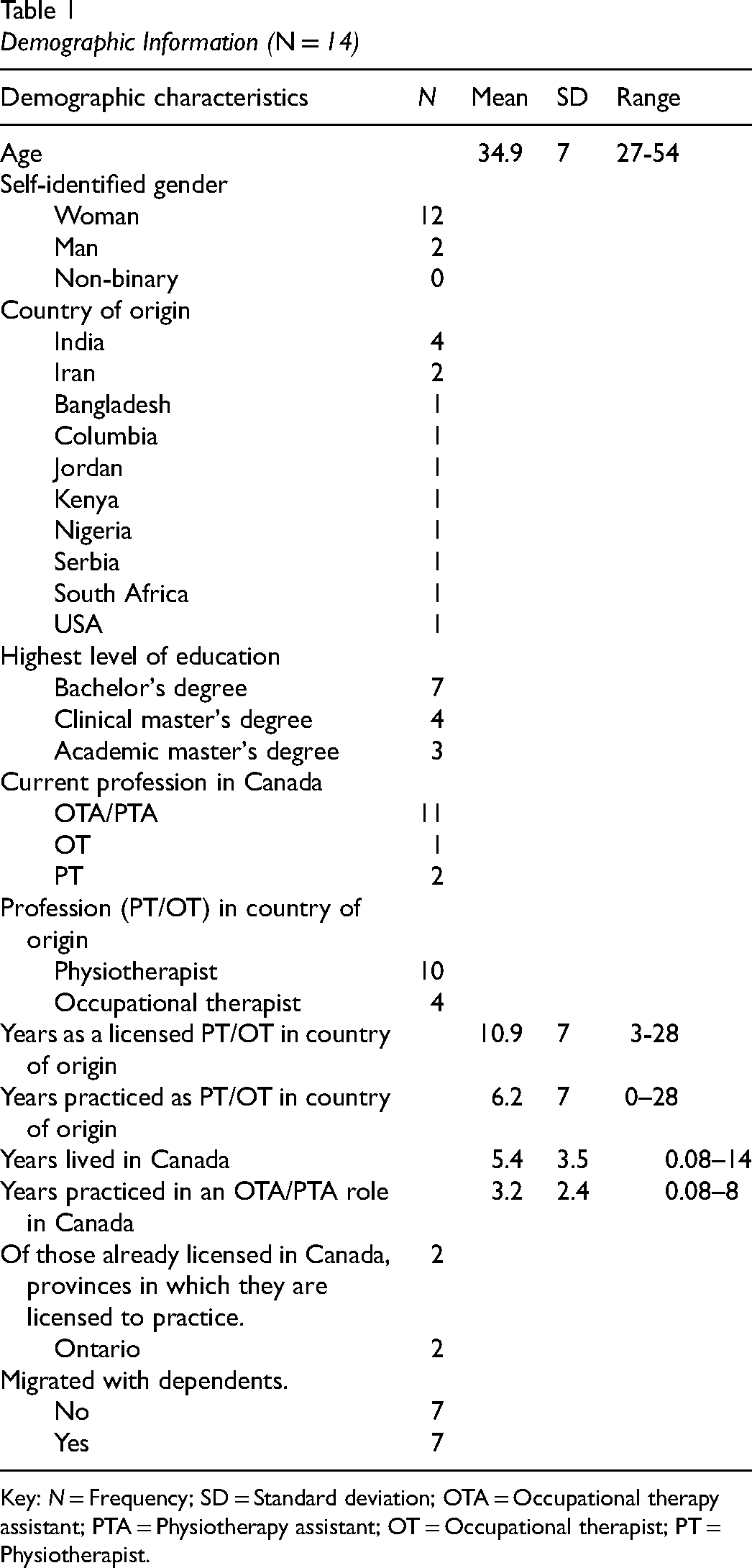
Key: N = Frequency; SD = Standard deviation; OTA = Occupational therapy assistant; PTA = Physiotherapy assistant; OT = Occupational therapist; PT = Physiotherapist.
The analysis of data constructed four key themes: a) Interwoven strains of migration; b) Emerging positives during turbulent times; c) “On the other side”: shifting identities; and d) Recommendations from lived experiences. Researcher-assigned pseudonyms have been used for all illustrative quotes.
Interwoven Strains of Migration
Interwoven strains capture the intricate intertwining of personal and professional barriers to IEPTs and IEOTs pursing licensure to practice as PTs or OTs in Canada while working in OTA/PTA roles. In some cases, these barriers negatively impacted their experiences while working in transition roles as OTA/PTAs. These interwoven strains manifested through three distinct subthemes of financial burden, process to obtain licensure, and discrimination and exploitation.
Financial Burden and Exploitation
A common observation was the financial implications brought by preparing and paying for the licensing examination coupled with working low-paying jobs as OTA/PTAs. We come here and work for minimum wages and we are raising money for the exam and the additional courses that we must take and the coaching that we have to go through, it's financially very challenging. Participant A
Several participants disclosed they were not adequately compensated for their work, receiving unequal wages because they lacked Canadian work experience. Moreover, some were initially unaware of laws such as entitlement to statutory holiday pay, which further exacerbated their financial challenges and job (dis)satisfaction. In 2016, the basic pay [was] around $13.15. As a new immigrant, I did not know that I should get $13.15 from the employers. But the employer paid only $11.15 which is quite unreasonable and unfair … I have eight years of experience. But they said, “you have no experience [in Canada], this is what it is. If you want a job, you can continue or otherwise you can leave.” Participant B
Participants also discussed financial pressures associated with caring for their families as immigrants. In my situation when I came here, my kids were very small, so I didn't have any help. I was not able to send them to daycare because I don't have money to pay for daycare. … Where can I leave my kids? Participant B
Overall, this section underscores the profound financial difficulties IEPTs and IEOTs encountered on their immigration journey, emphasizing the intricate interplay between financial constraints, career aspirations, and personal responsibilities.
Process to Obtain Licensure
Participants highlighted the tremendous pressure they experienced due to the stringent limitations on the number of permitted attempts to pass the licensing examination. If I cannot pass the written exam in 3 tries my career in physical therapy is done. So, whatever I'm doing for like 4 or 5 years, all the expenses, all the sufferings, everything is like gone. Participant C I've spent I don't know how many thousands of dollars just on getting that process done, and … then you only get 3 shots… And so, it really does have a big influence on your own self-confidence and self-esteem even though you've been working as an OT for a very long time. Participant D
Anxiety was further exacerbated due to the perceived lack of endorsed examination preparatory materials. This was coupled with participants finding the structure of the Canadian licensing exams different from what they were accustomed to in the countries where they trained. If you compare NPTE [National Physical Therapy Examination] from the US, they have officially 2–3 books released every year updated, and we don't even have one. And the structure of these exams here is, I would say, very different from what we have done in our home country. Most immigrant students are not used to the structure of the exams and that's why they find it really difficult to crack these exams. Participant E
Participants noted the lack of information and experience often meant their first attempt at the exam was more knowledge gathering of type and format of exam on their part, rather than a true evaluation of their knowledge.
Discrimination
Some participants shared distressing experiences of discrimination while working as OTA/PTAs, revealing racism and biases in multiple forms. An IEPT from Southeast Asia recounted instances of microaggression targeting their religious background causing not only emotional distress but also affecting their work dynamics.
When I went for submitting my resume, I kind of noticed that there is a lack of trust, and they are not comfortable with my religious beliefs. Sometimes it was [directly stated] that “you cannot cover your hair here” … Sometimes from the patients or attendant of the patients, they'd be curious, “Are you forced to do this?” or “do you like covering your head?” or “are you comfortable while doing this kind of treatment?” … sometimes they have wrong beliefs or wrong thoughts about me…. Someone doesn't like me, and they asked the PT, “I don't like her, if you have any replacement, please, replace her.”
Racial microaggressions were another distressing aspect reported by participants, with one African IEPT recounting their experience,
Sometimes [there] can be like the initial bias. Like when they see me, like, “oh, she's a person of color” and then they may have the unspoken bias and maybe react like, they don't want this person, or they are concerned. They expressed their concerns to my boss… I know I have to work two times harder to be able to gain their trust and you know, to be as friendly as possible… so that they can know that “OK she's competent.”
In summary, this theme Interwoven Strains of Migration illuminates the multiple challenges faced by internationally trained therapists working as OTA/PTAs within the Canadian healthcare system.
Emerging Positives During Turbulent Times
Participants also noted benefits available to them by taking on an OTA/PTA role. Primarily, these facilitators presented themselves in the form of social support, acculturation, as well as career opportunities.
Social Support
Participants noted they often enjoyed their work environment and felt supported in their acculturation and licensure by colleagues with and without personal immigration experiences. However, they also acknowledged that supportive colleagues and work environments may not be a uniform experience. The physio I worked with was also an international graduate, so he was very helpful to help me with the licensing process…You know there are some supportive people, some are not that supportive… me and my other assistant, we both were working on the license exam, so she kind of helped me to like, understand what to expect for the exam, where to study from, what books to refer from, getting to know about some study groups; whereas if I was in a totally different field, I do not get this type of [support, or] meet these people who are working on the same goal. Participant J
Acculturation
Participants reported that working in the assistant role itself presented them with opportunities to become better familiarized and acculturated with the Canadian healthcare system and Canadian culture. I feel like working as a PTA some of the positives that it has brought to me … it has really helped me to kind of understand the Canadian system and culture up until, by the time I finally get licensed, I believe, of course I would be like a better physiotherapist. Participant F
By working in the assistant role, one participant described a deeper appreciation of the value OTA/PTAs offer within the Canadian healthcare system, which in turn has helped them better understand how Canadian PTs or OTs supervise OTA/PTAs. Now I know that the physiotherapy assistant is a very important part in Canadian health system. It's not a small role … I recently got registered … So now I am taking the help of PTA's and now I know how helpful they are. Participant A
Experience in the OTA/PTA role was found to be helpful in developing communication skills to navigate the healthcare system norms. The health care system is different… I improved my language skills and communication… You get to do some documentation. You understand the Canadian record keeping standards. … Again, there's a big cultural difference. When you come to another country the way you'd speak… there's few things might be appropriate in your country if you say that, but [It] can be very inappropriate if you talk that way in in Canada. Participant J
Participants also mentioned that immigrant settlement services were beneficial to their migration experience, supporting familiarization with the Canadian job application process and becoming better candidates for the Canadian workforce.
Career Opportunities
A few participants noted that their previous education presented them with learning opportunities upon landing in Canada. Beyond working as an assistant, one participant shared their experience of concurrently enrolling in a disability management certification course. This decision ultimately led to them working as a disability management associate, and subsequently securing a specialist position within six months. Another participant worked as a rehabilitation support worker after being exposed to this opportunity in their professional network while working as a OTA/PTA. These additional career pathways may have been initially unforeseen. Taken together, these experiences illustrate how IEPTs and IEOTs were able to build their skills in a Canadian context. Working as an assistant or in alternative health care roles were facilitators or alternatives to licensure.
“On the Other Side”: Shifting Identities
Shifting identities, encompassing passion for healthcare, accepting identity, and reclaiming identity, describes participants’ shared perspectives regarding how their identity was influenced upon migrating to Canada and taking on the OTA/PTA role.
Passion for Healthcare
Most noted that their identity was tied to working in a healthcare setting, and they would experience a loss of identity if they were to work in other sectors. What are the next options? All I want to be in the health care. Health care is my passion. It's in my blood. I want to be somewhere I should help the patients. Participant B
Some participants shared that they would go to any length to stay in the healthcare sector and were considering pursuing a master's or doctorate in related fields. Two participants shared how they had shifted to complimentary professions such as disability management and rehabilitation support work, in order to stay in the healthcare field.
Accepting Identity: “You are not the Person you Thought you Were Before”
Although there was a preference for remaining in the healthcare field, participants also spoke of experiencing challenges relating to being limited in their practice in the assistant role. My professional identity has changed from my home country being PT and then I transitioned here, it was into healthcare administration and now I am a rehab assistant. And so, if I compare all these identities, back home I was able to diagnose conditions with whatever knowledge I had, I was able to make rehab programs for them. I unfortunately cannot do that anymore; I can only follow instructions from either the physio or the occupational therapist. So yes, my professional identity has changed a lot here. Participant E
Another participant stated their acceptance of a shifting identity and adjusting to not solely defining their identity based on their profession as an occupational therapist. I feel usually any OT is very attached to the profession, so now I identify myself as someone who will just work in rehab. That's it, which is unfortunate because I used to be very active in OT. I used to be very productive, even my life was OT oriented… now not being able to work in in the field again, it changed even my perspective about the profession… OT is not everything in my life… I had to find my occupational balance… I just identify myself as someone who is a professional who is still working in the rehab field. I do things relevant to OT, things relevant to PT … I found I have multiple skills, multiple abilities to do different things. Participant Y
These quotes illustrate a bittersweet experience of leaving behind their profession and moving on to a new or renewed recognition of skills and identities shaped by new experiences. It affects your mental health. You know you are a physio[therapist], you have lots of skills. But when you work as an assistant, you have to have a different mindset. Then you're studying for the exam as a physio[therapist]. In the short term, you're okay. But if you're doing that long term, then it, it really changes your professional identity. Participant J
Participants discussed internal challenges related to their professional identity shift from being therapists to assistants. Despite their capabilities, they faced barriers that left them feeling helpless. This transition impacted their self-confidence and self-esteem. They struggled to reconcile their previous therapist roles with their current assistant positions. This internal conflict affected their mental health, as they navigated between their past and present professional identities.
Reclaiming Identity
Some participants spoke about the feelings associated with reclaiming their identities as therapists, and how that positively impacted not only their professional identity, but their overall wellbeing as well. They felt they had regained their original identity. It's like I was a fish, which was taken out of water for the past seven years and now I'm back in the water … Oh I made it [as a PT]. Participant A
Recommendations From Lived Experiences
The participants of this study noted specific actionable steps that can be taken to address the challenges they experienced. The participants advocated that IEPTs and IEOTs should be allotted more than three attempts to write the exam or have an alternate process in place to allow them to bridge their knowledge gaps regarding practices in Canada.
Their experience with written examinations was based on content knowledge during their academic preparation in their home country, and not the clinical application types of questions they encountered on the Canadian exams. However, given the lack of sufficient official preparatory material or practice exams available, taking the exam was their first exposure to this form of assessment.
Participants also voiced that mandatory bridging programs from regulatory bodies would be welcomed, as it would allow for a transparent and standardized transition into their roles as therapists in Canada. Specifically, this would ensure that all participants are receiving equal exposure and resources for licensing.
Furthermore, they noted the lack of a clear pathway led to confusion and compounded financial challenges, as they did not know what courses or preparatory materials would support their success, and therefore often purchased multiple resources.
Discussion
The purpose of this study was to explore the barriers and facilitators encountered by IEPTs and IEOTs working as OTA/PTAs while pursuing licensure in Canada and understand how the professional identities of IEPTs and IEOTs are influenced by the transition. Four key themes emerged from the focus group discussions a) Interwoven strains of migration; b) Emerging positives during turbulent times; c) “On the other side”: shifting identities; and d) Recommendations from lived experiences. A previous study (Mulholland et al., 2013) that explored the experiences of IEOTs, OTs, and managers involved in the integration of IEOTs in the British Columbia workforce, found similar subcategories of barriers (“stumbling blocks”) and facilitators (“ingredients for success”) to our study. However, our study included the broader workforce of IEPTs and IEOTs already working as OTA/PTAs in Canada while pursuing licensure.
Participants encountered intersecting challenges, such as high costs associated with obtaining licensure, limited attempts, lack of standardized preparatory materials, unfamiliar exam format, and low-paying therapy assistant jobs, all of which compounded the financial and mental stress associated with adjusting to a new country. This finding extends previous reports noting that many newcomers experience financial strain after immigration to Canada due to a lack of income attributed to underemployment or unemployment (Dean & Wilson, 2009) which may have subsequent impacts on both the mental and physical wellbeing of skilled immigrants who migrate to Canada (Subedi & Rosenberg, 2016). While we recognize that the PT and OT examination bodies, Canadian Association of Physiotherapy Regulators (CAPR) (CAPR, n.d.-b, 2023) and CAOT (CAOT, 2022c), respectively, have created inclusive examinations with plain language and removal of heavy Canadian culture, as well as provided preparatory content resources, these may be insufficient for IEPTs and IEOTs who are not proficient with the examination format and expectations.
Additionally, some of the IEPTs and IEOTs in this study experienced challenges which they reported as exploitive from employers. This resulted in perceptions of powerlessness with no choice but to accept these injustices in order to gain healthcare-related experience in Canada while supporting themselves and their families in a new country. Previous research findings have also highlighted this exploitation of skilled immigrants by Canadian employers, who seek below-minimum wage labor in exchange for offering new immigrants Canadian employment experience and references (Landry et al., 2021; Raihan et al., 2023).
Participants also reported opportunities that came along in their transition roles as OTA/PTAs. They found social support from colleagues, which was important in terms of creating connections, familiarizing themselves with the role of a therapist in a Canadian context, and learning more about the Canadian healthcare system and culture. Findings from a scoping review (Covell et al., 2016) on the integration of internationally educated health professionals (IEHPs) similarly foreground the importance of social support in the workplace for facilitating a positive work experience for IEHPs and positively highlighted how case management may be utilized to support IEHPs in navigating the licensure process in Canada, concordant with the needs outlined by the participants in this study. CAOT provides a mentorship program called Find an Occupational Therapy Mentor through which OTs and OTAs, who are members of CAOT, can share their experiences to foster further career development (CAOT, 2022b). Similarly, the Ontario Physiotherapy Association (OPA) provides resources under New to Practice (N2P) for new graduates and individuals new to practice in Canada who have a current membership with CPA or OPA (OPA, 2022). However, the cost of membership to the national and provincial associations granting access to support services may be prohibitive to new migrants. There exist many online mentorship companies, informal mentorship directories and online communities of support within social media platforms; however, their accessibility and credibility may pose challenges for migrants.
Regarding professional identity, we found multiple influences on identity in the form of participants’ passion for remaining in the healthcare field, accepting their new identities as therapy assistants, and reclaiming their former identity of a OT or PT. Findings from a 2015 study reporting the experiences of IEHPs (Neiterman & Bourgeault, 2015) suggest that individuals who held higher ranking positions before migration are particularly vulnerable to experiencing challenges with the loss of their professional identity. In our study, we found that individuals in assistant roles experienced changes in their professional identity when they could no longer work as OTs or PTs. Loss of identity also may have consequences for health and well-being: skilled immigrant workers may experience negative impacts given that many were permitted to migrate to Canada based on their international qualifications and abilities as professionals (Dean & Wilson, 2009). Our study extends these findings to highlight loss of autonomy while working in the assistant role contributed to decreased feelings of self-esteem, self-confidence, and overall mental wellbeing, affecting their sense of self in relation to their chosen profession (Ellis & Hogard, 2021). Furthermore, along with their loss of professional identity as a therapist, IEPTs and IEOTs, who were licensed to practice in their home country may lose a sense of membership in their new country. The national associations of PT and OT in Canada- CPA and CAOT, respectively have membership options for IEPTs and IEOTs (CAOT, 2022a; CPA, 2023). However, these membership costs can add to the financial burdens they already face. Additionally, the cost-benefit ratio may be unclear and may not provide significant contributions to their careers and professional growth during this interim transition period.
Recommendations
Although not directly answering our research questions, the transition and integration experiences of the participants provide guidance for enacting more supportive and equitable environments for IEPTs and IEOTs as it was found to be linked to working as a therapy assistant while pursuing licensure. The recommendations based on lived experience offered by participants present potential strategies for addressing challenges. Examination bodies (CAPR and CAOT) have capped examination attempts for all candidates, domestic and international, with sound reasoning concerning exam learning and limited question banks. However, extending the number of exams attempts for internationally educated therapists could improve accessibility and be a crucial step toward equity, as we found that the initial attempts are used to get familiar with the exam process and format. This will recognize the valuable professional experience IEPTs and IEOTs bring along with acknowledging their unique cultural and familial transitions that are not typically experienced by recent Canadian graduates. However, the financial and emotional costs faced by candidates may be significant with increasing examination attempts. The examination regulatory bodies may also consider publishing more preparatory resources to address the examination format differences. A mandatory bridging program addressing the knowledge gaps using a tailored approach, rather than a one-size-fits-all approach, can support IEPTs and IEOTs migrating from across the world (Dhillon et al., 2019). For example, international pharmacy graduates (IPGs) must undergo a bridging program after their credentialling and examination, which is a mandatory requirement for licensure in Alberta, British Columbia, Ontario and Quebec. This allows IPGs to acquire skills and knowledge to meet Canadian practice standards (Pharmacists’ Gateway Canada, 2024). While we recognize existing bridging programs for IEPTs offered by the University of Toronto, University of Alberta, University of British Columbia, and McGill University (CAPR, n.d.-a), these may be both time and cost prohibitive. One potential solution to make bridging programs financially accessible is provision of national and provincial support to meet this need. Further, regulation of OTA/PTA roles by provincial colleges of PT and OT, which may influence uniformity for compensation at the province level. Professional associations may also undertake the inclusion of externship opportunities for IEPTs and IEOTs at publicly funded hospitals, similar to those already established in nursing and other fields (Internationally educated Nurse (IEN) Pathway at Sunnybrook, n.d.; Remle et al., 2014).
Implication, Limitations, Future Directions
Overall, our findings emphasize the need for systemic changes and support mechanisms to ensure equitable opportunities and a positive transition. As Canada's population continues to age (Statistics Canada, 2022b) and becomes increasingly diverse (Statistics Canada, 2022c), the unique perspectives, skills, and experiences of IEPTs and IEOTs can contribute to more holistic and culturally sensitive care and address the urgent need for workforce renewal (Harun & Walton-Roberts, 2022).
A limitation of this study is that participants were not asked about specific demographic information such as the setting they worked in, clinical areas of practice of work, and whether they completed an OTA/PTA diploma program or any other program in Canada. This may limit our complete understanding of the barriers, facilitators, and impact on professional identity of our participants. The study is based on a small sample size of participants (n = 14) with unequal representation amongst countries of origin of the participants. However, this may be reflective of current migration patterns (Statistics Canada, 2022a). There may also be a sample bias, as persons who experienced an overall positive transition may not have been as compelled to share their experiences, and since COVID-19, there exist options for online credentialling and licensing which makes our sample a unique subgroup in the current landscape. There is also a lack of data on the prevalence of IEPTs and IEOTs working as therapy assistants while fulfilling the Canadian licensure requirements. Collectively, these factors pose challenges in terms of ensuring the participants adequately represent the diversity and breadth of perspectives within the target population.
Although the study employed the use of a cross-sectional study design, a longitudinal study design may be worth exploring especially when considering the rapidly changing requirements for licensure amongst IEPTs and IEOTs in Canada. These findings can generate hypotheses for further investigation with larger samples, determining whether practicing as an OTA/PTA in Canada is a contributing factor in re-qualification as licensed therapists. Finally, further research is needed to understand the extent of acquiring policies of larger healthcare organizations and hospitals in Canada i.e., hiring requirements for hospital-based positions for assistants which often specify training in an accredited Canadian OTA/PTA program. An unintended consequence of these policies is that it may be perpetuating marginalization by excluding IEPTs and IEOTs to work in larger support systems.
Conclusion
The findings of this study shed light on the barriers and facilitations faced by IEOTs and IEPTs in their journey toward Canadian licensure including reshaping their professional identities while working in OTA/PTA roles. Our findings highlight the need for strategic supports for IEPTs and IEOTs as they transition into their roles as licensed therapists in Canada: increased awareness amongst Canadian OTs and PTs about the challenges and injustices experienced by their IEOT and IEPT colleagues is an important first step. Continued accountability from examining bodies to further improve accessibility and support in terms of resources to prepare for exams is needed. Greater advocacy from national and provincial associations on behalf of IEPTs and IEOTs is also needed to address factors such as bridging gaps, accessibility, equity, support, and employment opportunities. In doing so, we can better support our IEOT and IEPT colleagues, who offer valuable insights, experience, and contribution potential to our Canadian healthcare workforce.
Key Messages
This study aimed to illuminate the personal and professional challenges faced by internationally educated occupational therapists (IEOTs) and physiotherapists (IEPTs) working as therapy assistants in Canada.
IEOTs and IEPTs faced barriers and facilitators in their journey toward Canadian licensure including reshaping their professional identities.
Increased advocacy from individual therapists and organizations to improve the transition experiences of IEOTs and IEPTs pursuing licensure can foster a more inclusive and supportive healthcare environment.
Supplemental Material
sj-docx-1-cjo-10.1177_00084174241255467 - Supplemental material for Therapists to Therapy Assistants: Experiences of Internationally Educated Physiotherapists and Occupational Therapists
Supplemental material, sj-docx-1-cjo-10.1177_00084174241255467 for Therapists to Therapy Assistants: Experiences of Internationally Educated Physiotherapists and Occupational Therapists by Zeal Kadakia, Ana Lopez, Maheen Shahid, Ashley Theoret, Ronessa Dass, Shaminder Dhillon, Jasdeep Dhir and Tara Packham in Canadian Journal of Occupational Therapy
Footnotes
Acknowledgment
We are deeply appreciative of the clinicians who chose to provide us with insights into their lived experiences.
Funding
The author(s) disclosed receipt of the following financial support for the research, authorship, and/or publication of this article: This study was not funded by a granting organization: honorariums for participants were provided from speaker fees received by the senior author (TP).
Declaration of Conflicts of Interest
The author(s) declared no potential conflicts of interest with respect to the research, authorship, and/or publication of this article.

Supplemental Material
Supplemental material for this article is available online.
Author Biographies
References
Supplementary Material
Please find the following supplemental material available below.
For Open Access articles published under a Creative Commons License, all supplemental material carries the same license as the article it is associated with.
For non-Open Access articles published, all supplemental material carries a non-exclusive license, and permission requests for re-use of supplemental material or any part of supplemental material shall be sent directly to the copyright owner as specified in the copyright notice associated with the article.
