




Abstract
Introduction
Over the last 23 years, a new period coined as the twenty-first century “psychedelic renaissance” has emerged (George et al., 2022). Psychedelics have made a comeback into mental health therapy after a psychedelic research hiatus lasting from the early 1970s until the early 2000s (Sessa, 2015). Psychedelics went from being studied by esteemed universities and used openly during the 1970s counterculture movement to being criminalized and thus, pushed underground (Richert, 2020). There, a network of illicit psychedelic facilitators emerged alongside black markets catering to underground music scenes of the 1990s and 2000s (Sessa, 2015). The timeline of psychedelic use, however, extends thousands of years back to depictions of psychedelic use in Algerian cave paintings, speculated to date as far back as around 5,000 BCE (Lajoux et al., 1964). Since then, many different cultures globally have been known to use various psychedelics in ceremonial settings, for ritual and spiritual purposes, as well as to heal a variety of physical, emotional, and spiritual maladies (George et al., 2019). The hallucinogenic cactus, peyote, for example, often referred to by Indigenous Americans as “the sacred medicine,” has been used ceremonially for physical and spiritual healing of ailments such as toothaches, rheumatism, diabetes, asthma, blindness, and the misuse of alcohol (George et al., 2019; Lu et al., 2009).
Psychedelics, also known as hallucinogens or entheogens, are a class of psychoactive substances in which consumers experience a range of changes in perception, mood, cognition, and biological processes (Nichols, 2004). Some of the better-known classes of psychedelics are classic or serotonergic psychedelics (i.e., psilocybin, lysergic acid diethylamide [LSD], mescaline, and dimethyltryptamine [DMT], and the psychoactive component of ayahuasca), entactogens (i.e., 3,4-methyenedioxymethamphetamine [MDMA], commonly known as ecstasy), dissociative anesthetics (i.e., ketamine), and the atypical psychedelic ibogaine (Nichols, 2016). Altered states of consciousness are often reported with the consumption of these substances that, alongside various psychological, cognitive, emotional, and biological effects, may have beneficial overall health outcomes (Kangaslampi, 2023; Preller et al., 2019).
Despite historical accounts about the positive impacts of psychedelics on physical and emotional health across a variety of cultural contexts, psychedelics have been largely absent from modern, Western approaches to mental health. Within Western approaches to “health,” an occupational perspective may be advantageous for understanding the wider contexts of psychedelic use and how they might contribute to improved mental health. Notably, an occupational approach to health in contrast to a biomedical model, is still a Western perspective. Thus we differentiate between Western “therapeutic” uses of psychedelics for mental health therapy and “ceremonial” uses of psychedelics for mental, emotional, and spiritual well-being in other cultural settings. With an occupational perspective of health, we are able to look more broadly at how occupations are used to impact health, such as in the varying and distinct contexts of ceremonial psychedelic settings and modern, clinical approaches to psychedelic use. However, we take caution to avoid conflating ceremonial and modern contexts of use, as these practices are distinctly embedded within their respective cultures, communities, and understandings.
Within the so-called “psychedelic renaissance,” research over the last quarter century has validated a number of the benefits of psychedelic use for mental or emotional health purposes that Indigenous cultures have been reporting for Millennia (George et al., 2019). In relation to Western conceptualizations of mental health conditions specifically, there seem to be certain psychedelics that offer better therapeutic outcomes than other psychedelics for specific diagnoses. For instance, quick and lasting reductions in symptoms have been seen for treatment-resistant depression, with the use of psilocybin (Carhart-Harris et al., 2017); for alcohol use disorder, with the use of LSD (Fuentes et al., 2020); and for eating disorders, with the use of ceremonial ayahuasca journeys (Lafrance et al., 2021). A study examining intra- and interpersonal change in autistic adults undergoing MDMA-assisted therapy has found rapid and lasting improvement in social anxiety symptoms, with social anxiety diagnoses ranging from marked to very severe (Danforth et al., 2018). There are also studies examining the effects of psychedelics in reducing symptoms of racial trauma for Black, Indigenous, and People of Color (BIPOC), a population that has been underrepresented in psychedelic studies thus far (Williams et al., 2021).
The stigma surrounding psychedelic use, however, remains a barrier to their benefit. With majority credit to the counterculture movement of the 1960s to 1970s and the consequent “War on Drugs,” psychedelics became largely associated with terms such as insanity, self-harm, and insubordination (Siff, 2015). With the United States Drug Enforcement Agency's classification of psychedelics as “Schedule 1” substances, they soon fell under the vast hypernym of “drugs,” and stigma ensued (Sessa, 2018). Despite epidemiological data indicating serotonergic psychedelics as the least harmful (to users and others) of all substances, rampant fear and stigmatization remain (Nutt et al., 2010). For example, alcohol has been deemed the most harmful substance, yet is socially more accepted by the public than most other substances (Nutt et al., 2010).
However, recent research has begun addressing the stigma surrounding substance use (see Atayde et al., 2021; Fuehrlein et al., 2021). Occupational scientists Kiepek and Beagan (2018) demonstrated the inherent advantages of conceptualizing substance use as distinct from substance abuse by exploring the use of psychoactive substances among professionals and students in professional Canadian programs. For example, one health sciences student noted that the study helped him to articulate that as a caffeine drinker, he is also considered a substance user, blurring the lines between the occupations of his clients and his own. Only one student felt comfortable speaking about their psychedelic use, noting their intentionality to set aside “time to explore creativity and almost in a sense spirituality” (Kiepek & Beagan, 2018, p. 52).
Historically, there has been a lack of knowledge amongst the public and health practitioners alike on the therapeutic potential of psychedelics, as well as their likelihood of harm. Today, however, there is more psychedelic research occurring than ever before, with major universities, research hospitals, and medical practices across the globe studying their mechanisms of action, safety, and efficacy, as well as what psychedelic use for mental health support looks like in contemporary, clinical contexts (Doblin et al., 2019). Besides important contraindications for individuals experiencing psychosis spectrum disorders and mania (Dos Santos et al., 2017; Leptourgos et al., 2020), survey studies have failed to find significant associations between the use of classic psychedelics and rates of poor mental health outcomes (Krebs & Johansen, 2013). Contrary to urban myths, studies have found promise in the prevention of suicide (Hendricks et al., 2015) as well as reduced chances of antisocial criminal behaviour (Hendricks et al., 2018). It is important to note that the context in which one experiences psychedelics, whether that be psychological (i.e., set) or environmental (i.e., setting), has been found to greatly affect psychedelic experiences and may even determine if experiences are deemed as therapeutic or harmful (Carhart-Harris et al., 2018). Practicing harm reduction and ensuring adequate psychological and environmental conditions for use, commonly known as “set” and “setting,” have been found to be invaluable strategies for enhancing the positive effects of psychedelics, whether used recreationally or in the context of therapy (Palmer & Maynard, 2022).
When “set” and “setting” are ideal, Teixeira et al. (2021) indicated minimal evidence of overall negative life experiences caused by psychedelics and rather, that evidence points towards more positive lifestyle changes conducive to common understandings of health. The authors speak to how the development of intrinsic motivational mechanisms and self-determination associated with psychedelics might be influential in promoting lifestyle change (Teixeira et al., 2021). According to a study by Garcia-Romeu et al. (2020), out of 444 participants who reported having stopped or reduced cannabis, opioid, or stimulant overuse following a psychedelic experience, a great majority also attributed improvements to everyday diet and exercise to their psychedelic experience.
These instances of positive lifestyle change brought on by psychedelics could be interpreted as restoring functional activities of daily living and participation in everyday life, a core tenant of an occupational perspective on health and thus, a primary domain of concern in occupational therapy and science. These fields aim to explore and enhance people's participation in everyday life (i.e., through their occupations; Egan & Restall, 2022). However, besides this recent article by Teixeira et al. (2021), which was written outside of the fields of occupational therapy and science, there is little known about how psychedelic use impacts people's everyday lives and occupations. As discussed, an occupational perspective considers humans as occupational beings, who perform and participate in occupations that impact their health within the context of their life (Kielhofner, 2009). This article aims to employ an occupational perspective in the review of existing literature about psychedelic use within mental health contexts.
One way of taking an occupational perspective on psychedelic use and psychedelic therapy is to apply Ann Wilcock's Occupational Perspective of Health (OPH; see Wilcock, 1998, 2006). Wilcock's OPH examines the relationship between occupation and health while addressing four core concepts of occupation—doing, being, becoming, and belonging (Wilcock, 2006). These core concepts describe ways in which health can be understood in relation to people's evolving relationships with themselves, their occupations, their environments, and their communities. Wilcock's OPH presents a simple yet powerful framework from which to understand psychedelic use as an occupation and an occupation that may improve mental health. This scoping review uses Wilcock's OPH to explore the qualitative experiences of psychedelics used for the purpose of mental health therapy. Within our analysis, we expand upon each concept of doing, being, becoming, and belonging and incorporate Hitch et al.'s (2014) discussion of these four concepts in their critical analysis of Wilcock's OPH.
This article contends that an occupational perspective of health is a useful lens through which to understand, study, and de-stigmatize psychedelic use and to consider psychedelics as tools that could enhance participation in everyday life and contribute to health; however, the focus of this article remains within the context of mental health, where most research and interest in psychedelics is developing.
Methods
This scoping review identified and reviewed the literature using Arksey and O'Malley's (2005) approach which outlines an extensive framework for completing an exploratory review.
Research Question and Selection Criteria
The research question most relevant to current gaps in psychedelic mental health literature and occupational therapy was: How do qualitative experiences of psychedelic use in the context of mental health practices fit within an occupational perspective? Inclusion criteria included mental health-focused studies, psychedelic experiences in therapeutic or ceremonial settings (described below), qualitative research design, and articles in the English language. Exclusion criteria included subjective accounts measured by scales or questionnaires, as well as substances not typically known as psychedelics, such as cannabis and 4-HO-MET (a chemical compound similar to psilocybin).
Due to the limited attention given to psychedelic use as a tool in mental health treatment in occupational therapy and science, this scoping review sought out experiential accounts within both “therapeutic” and ceremonial contexts. We refer to therapeutic contexts as environments in which a health practitioner, often working from a biopsychosocial frame of reference, has large control over the “setting” of an individual's psychedelic experience and provides one-on-one therapeutic support. Ceremonial contexts were described as settings in which psychedelics are the focus of a group experience, laden with ritual and led by individuals who have traditional knowledge related to the culture they identify with. Including both ceremonial and therapeutic contexts provided opportunities to explore the different ways in which individuals engage in psychedelic use for the purpose of improved mental health, with the acknowledgment that “mental health” is conceptualized differently across cultures.
All authors of this review are of European settler descent, cis-gendered (three women and one man), and three of the authors (Hogan, Wagner, and Barlott) are occupational therapists in Canada; we thus recognize that this literature review is from a certain perspective of health, occupation, and psychedelics. We add to the call for more BIPOC voices to lead and be included in future research (Thrul & Garcia-Romeu, 2021), and for ceremonial practices to be sustained and supported within the cultures they have been held in for Millennia (Devenot et al., 2022).
Search Strategy and Study Selection
A scoping review search was conducted in January 2022. The authors used Pubmed, CINAHL, and Ovid databases to systematically search for qualitative literature without time limitations, using combinations of index terms and free text terms. Our team made selections based on literature that described the subjective psychedelic experiences of patients in therapeutic or ceremonial settings relating to mental health. The first search category included a broad definition of psychedelics with search terms including psilocybin, MDMA, ayahuasca, ketamine, lysergic acid diethylamide (LSD), and hallucinogens. The second category focused on an individual's experience and used search terms including views, perceptions, experiences, and attitudes. The third category elicited psychedelic experiences in relation to mental health and included the terms mental health, mental health therapy, depression, and mental health services. The three search categories that described psychedelics, subjective experiences, and mental health gathered 71, 57, and 123 studies from CINAHL, PubMed, and Ovid, respectively. The majority of psychedelic research in relation to mental health captured “patient experience” with quantitative assessments, scales, and questionnaires, all of which we excluded from our scoping review. The choice to focus on qualitative, subjective accounts greatly influenced the number of articles eligible for inclusion. The selection process was conducted according to the eligibility criteria as presented in the PRISMA flow diagram in Figure 1. Following this process, nine articles were selected for inclusion. Although this search process constrained source selection to a narrow aspect of otherwise broad and diverse psychedelic experiences, it provided the authors with a distinct snapshot of individuals’ subjective psychedelic experiences in relation to mental health.
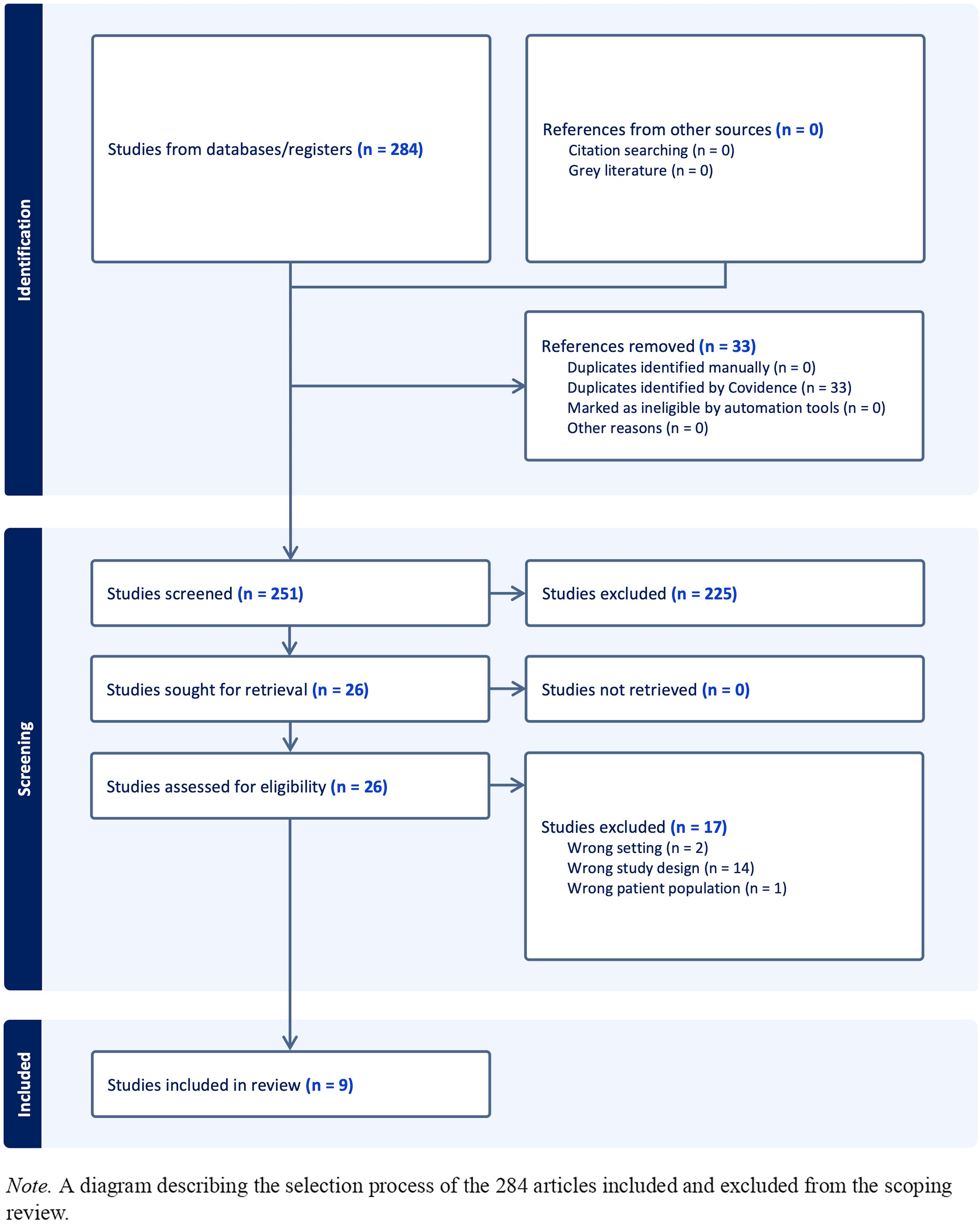
Preferred reporting items for systematic reviews and meta-analyses (PRISMA) flow diagram.
Data Analysis and Synthesis
Thematic analysis was used to guide our analysis of the literature (see Clarke et al., 2015), using a combination of inductive and deductive strategies. The first step was familiarization, during which the first two authors (Hogan and Wagner) read the articles in depth, took notes of initial analytic observations, and met weekly to discuss the data set. An inductive approach was used in the first stage, as researchers completed the first and second readings without an existing theory in mind. After the first stage of thematic analysis, the research team identified patterns within the nine articles where Wilcock's (2006) OPH was relevant to the accounts of psychedelic experiences; at this point, a deductive approach was used to implement Wilcock's framework as an interpretive lens to analyze the data for the remaining stages of analysis.
To code the data, the first two authors identified and labeled features of the subjective psychedelic accounts in relation to the OPH. This step involved grouping together patterns of similar data segments within Hitch et al.'s (2014) categories of doing, being, becoming, and belonging, which we describe in the findings. Authors held these categorical elements of the OPH lightly, welcoming alternative themes and sub-themes within the OPH to manifest. The two authors then created a plausible mapping of key patterns in the data and clustered together codes.
After the two authors re-read all nine articles, the code map was reviewed to ensure the themes accurately portrayed participant experiences and that each theme had a clear, distinct, or central organizing concept. Adjustments at this stage included solidifying research members' understandings and communications of doing, being, becoming, and belonging using Hitch et al.'s (2014) analysis of Wilcock's OPH. Due to the nuanced nature of these understandings, codes under the themes of being and becoming were questioned and shifted during this review period. Understandings of the analytic concepts were triangulated with the last author (Barlott) when coming to an agreement on code and theme generation. The next step of the thematic analysis was to define the generated themes. The two researchers who conducted the initial coding then established theme definitions to guide the final discussion of the data. Within the themes of doing, being, becoming, and belonging, patterns emerged from individual experiences that were subsequently identified as subthemes.
The sixth step of the scoping review included consulting a clinical ethicist and a mental health occupational therapist from the University of Alberta for insight into psychedelic use in modern therapy practices and occupational therapy. Their input reassured and acknowledged the gap within our evidence-based profession regarding psychedelic use in the context of mental health therapy and the need for further exploration of psychedelics from an occupational perspective. Finally, three of the authors (Hogan, Wagner, and Barlott) weaved together the analytic narrative and compelling data extracts to produce the final analysis and manuscript. Throughout the analysis, Hogan, Wagner, and Barlott met bi-weekly to discuss observations, themes, and next steps. The third author (Tichenor) joined the research team during final reporting and contributed to further refining of our themes and manuscript.
Results
Study Characteristics and Critical Appraisal
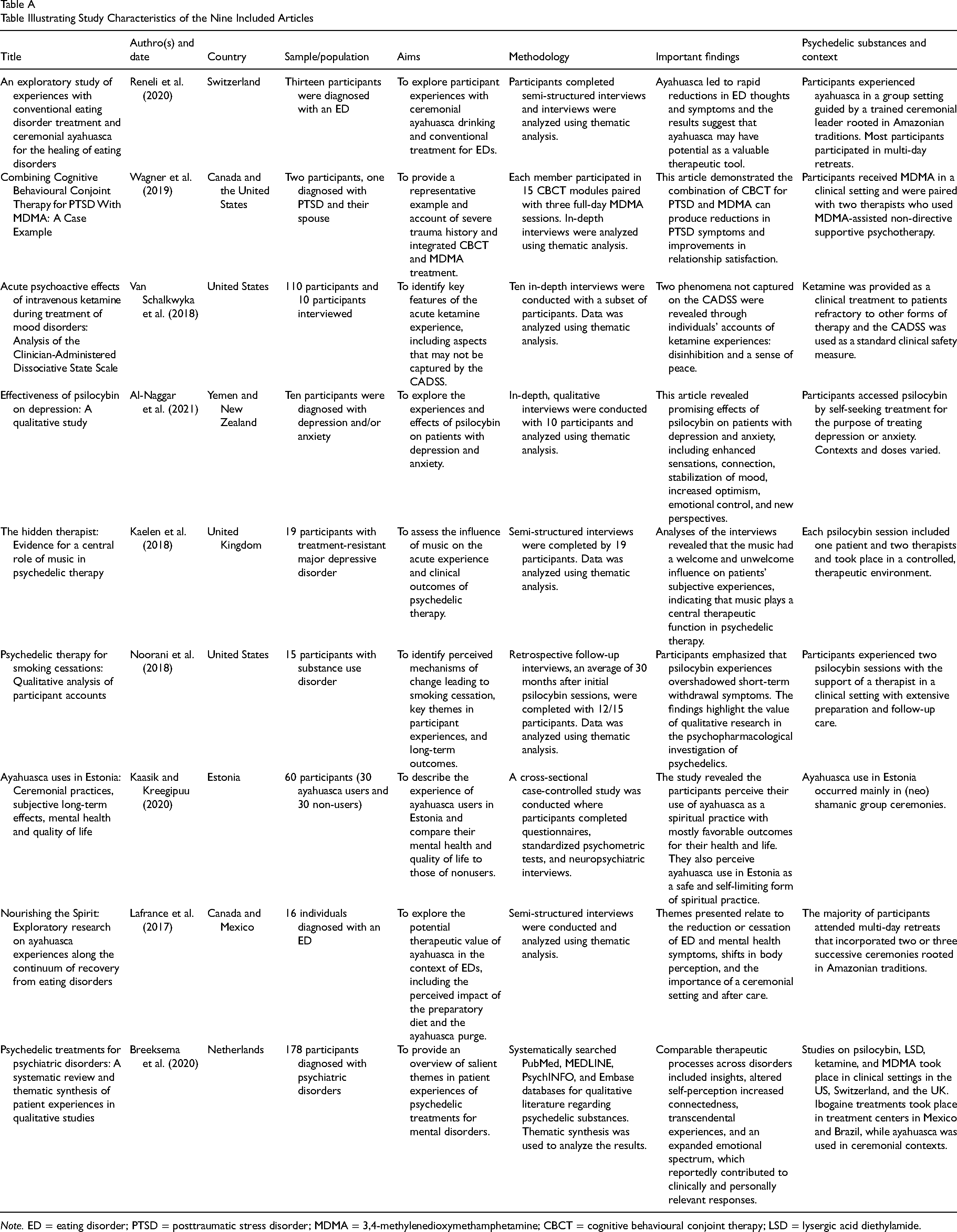
We included nine peer-reviewed articles in our scoping review (see Appendix A for a summary of the study characteristics). In three of the articles (Kaasik & Kreegipuu, 2020; Lafrance et al., 2017; Renelli et al., 2020), individuals who experienced eating disorders participated in ayahuasca ceremonies; in one of these articles (Kaasik & Kreegipuu, 2020) participants in Estonia experienced ayahuasca in a ceremony held in neo-shamanic traditions and in the other two (Lafrance et al., 2017; Renelli et al., 2020), participants experienced ayahuasca in a group setting guided by a trained ceremonial leader (shaman or curandero vegetalista). Most individuals in the above studies participated in multi-day retreats and all ceremonies were rooted in Amazonian traditions (Shipibo or Ashaninka). The other six articles included participants who accessed ketamine, LSD, MDMA, ibogaine, and psilocybin in clinical settings throughout Switzerland, Canada, the United States, New Zealand, Yemen Mexico, Brazil, and the Netherlands (Al-Naggar et al., 2021; Breeksema et al., 2020; Kaelen et al., 2018; Noorani et al.; van Schalkwyka et al., 2018; Wagner et al., 2019). Participants in these studies had a range of mental health experiences, which were described in Western diagnostic language as eating disorders, treatment-resistant major depressive disorder, anxiety, depression, posttraumatic stress disorder (PTSD), and substance use disorder. Using a variety of interview methods, all studies portrayed participants’ subjective accounts of their psychedelic experience(s). Interview methods included semi-structured interviews, neuropsychiatric interviews, retrospective interviews, and qualitative interviews. The reported ages of participants ranged from 21 to 67 within the studies.
Based upon the Critical Appraisal Skills Program (CASP) checklist for qualitative research, the quality of the studies varied (Long et al., 2020). One study was considered as low quality (Al-Naggar et al., 2021) due to limited information on methods of participant selection, the ways in which participants experienced psychedelics (i.e., self-administration, with a therapist, or in ceremony), and the variability of discussion points. Two articles were considered as medium quality due to overvalued positive results and limitations in the writing (Kaasik & Kreegipuu, 2020; Kaelen et al., 2018). The remaining six articles were considered as high quality, exhibiting thorough explanations, critical processes, and meaningful discussion (Breeksema et al., 2020; Lafrance et al., 2017; Noorani et al., 2018; Renelli et al., 2020; van Schalkwyka et al., 2018; Wagner et al., 2019).
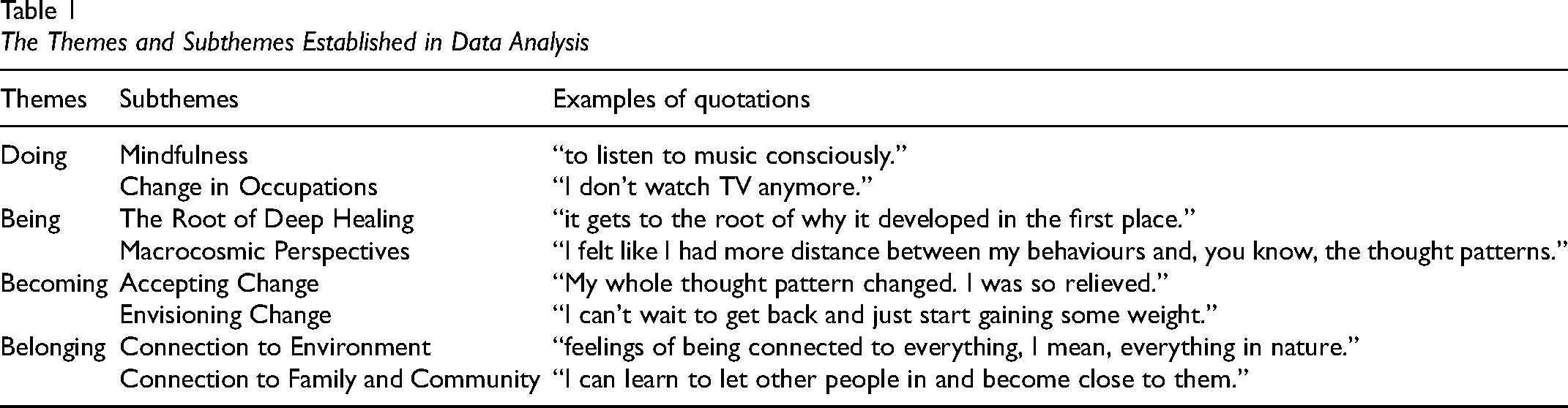
Below are our findings and an occupational perspective on the qualitative experiences of psychedelic use within the context of mental health practices. See Table 1 for a summary of the themes, subthemes, and sample quotations.
The Themes and Subthemes Established in Data Analysis
Doing
In their expansion of Wilcock's OPH, Hitch et al. (2014) defined doing as participation in self-care, productivity, and leisure activities that can be extended beyond physical activity to include mental or spiritual engagement. Six of the nine articles explicitly addressed the theme of doing. Throughout their psychedelic experiences, participants’ doing shifted; mindfulness became more clearly incorporated and shifts were experienced within their occupations. The following sub-themes outline aspects of doing in our analysis.
Mindfulness
Participants described doing as more meaningful following psychedelic use due to a pronounced state of mindfulness they experienced moving forward in day-to-day activities. One participant described taking “time to listen to music, to listen to music consciously” (Breeksema et al., 2020, p. 938). This quote demonstrates the intentionality of doing the participant was able to engage in after their psychedelic experience. A participant involved in a smoking cessation psilocybin trial communicated their experience by saying that “prior to psilocybin [they] probably would never have noticed [an amazing sky]. But [now, they are] always on the lookout for those kinds of things” (Noorani et al., 2018, p. 766). This experience of mindfully doing impacted how this participant approached wide-ranging elements of doing in their life after their psychedelic experience (Noorani et al., 2018). Their ability to be present and notice how they were doing throughout the day impacted their perspectives of meaning within these activities.
Change in occupations
Participants experienced increases in life-enriching occupations and decreases in life-diminishing occupations. An example of increasing meaningful occupations included sentiments from participants such as “always making time in my day to just go for a walk” or taking an extra “second to hold the door” (Noorani et al., 2018, pp. 764–765). Participants also experienced decreases in life-diminishing occupations. For example, one participant said, “I don’t watch TV anymore. I like to pick and choose what I put in my head” (Noorani et al., 2018, p. 765).
Several articles mentioned decreases in mental illness symptoms like getting “rid of suicidal thoughts, self-injuring and bouts of heavy depression” (Kaasik & Kreegipuu, 2020, p. 765). The following quote from Noorani et al. (2018) highlights how participants felt a greater sense of autonomy over instances of doing after psilocybin-supported therapy. I've been involved with the local literacy council all the time now … And […] I've become very involved with this environmental group as well … instead of sitting around and just watching television and smoking and doing nothing, I'm putting all this extra time I have to good use. Cos that was one thing about smoking, was the amount of time you wasted! (Noorani et al., 2018, p. 763)
Through their psychedelic experiences and gained autonomy, many participants developed a relationship with doing in a meaningful way.
Being
In Hitch et al.'s (2014) critical analysis of Wilcock's OPH, being is described as essence, as entity, and as existence. Being includes the experience of an individual relating to their authenticity, and their core sense of self (Hitch et al., 2014). All studies included participant accounts that addressed the theme of being. In all articles, the subjective experiences of psychedelic-supported healing portrayed a renewed sense of and deeper understanding of self. The psychedelic experiences helped participants gain a renewed sense of self through understanding how to heal the root causes of their challenges (including experiences of ill-health) or utilizing macrocosmic perspectives of their being.
The root of deep healing
Renewed insights of an individual's core self were described in relation to understanding the root of their traumas or illnesses (Kaasik & Kreegipuu, 2020; Lafrance et al., 2017; Renelli et al., 2020). One participant described understanding the root of healing as “stuff that [they] couldn’t get to … that [they couldn’t] touch with other methods” (Renelli et al., 2020, p. 440). Another participant described an embodied understanding of the root of deep healing when they noted, “I was never relaxed like that before. I want to say it was my soul getting to know me after years of neglect” (Al-Naggar et al., 2021, p. 3). Another participant from Al-Naggar et al.'s (2021) article, which explored the effects of psilocybin among patients with depression, came to an understanding of what was holding them back. I began to feel emotionally “dilated.” […] The shower dial turned into “the eye,” […] I asked the eye “What is that?” And the eye said “You know who that is … that is grief. And you don't need to be afraid of it. Embrace it and make friends with it. Allow it the attention it needs…” so I cried […] and I realized one of the things that were holding me in depression was the inability to properly grieve. (Al-Naggar et al., 2021, p. 2)
This quote demonstrates a renewed sense of being, or self, brought on by the participant realizing that their inability to grieve was sustaining their depression. They were able to be in that moment and process their grief. This illustration of a seemingly physical manifestation of grief gave the individual the ability to understand themselves and their illness in a new light. The psychedelic experience enabled them to open up emotionally, to understand the source of their depression (i.e., grief), and to provide the space and capacity to process their grief.
Macrocosmic perspectives
Many participants described seeing things from new perspectives, with a wide lens or with what Murphy (2017) describes as a “macrocosmic perspective,” to be able to see the entire constellation of one's life. One participant in a smoking cessation psilocybin study shared this type of macrocosmic lens as the ability to understand her life trajectory more clearly. She recounted the psilocybin experience as “affect[ing her] whole life … who [she] was a long time ago … and who [she’d] become, as a mom” (Noorani et al., 2018, p. 766). Another woman who used ayahuasca ceremonially illustrated a new understanding or macrocosmic perspective considering her eating disorder. I think I saw […] and now see it as my eating disorder developed because I couldn't validate myself and like my own existence, if that makes sense. […] I couldn't look myself in the mirror and validate what I saw, and so I tried to externally validate it by like, engaging in all these, all these eating disorder behaviours. (Lafrance et al., 2017, p. 430)
These understandings enabled the women to step back and view their experiences and illnesses from a broader, more all-encompassing perspective. In turn, this allowed them to let go of focal points that were no longer serving them and regain their sense of self.
Becoming
Becoming, understood as personal change and development, encompasses cycles of growth, envisioning change, and goal-setting (Hitch et al., 2014). To become is to aim for one's highest potential while still holding space for the management or maintenance of symptoms. Seven of the nine articles included participant accounts of becoming, portrayed as a change in the moment, and changed beliefs, which were understood as accepting change. Accounts of becoming were also portrayed as imagining a change in the future and long-term change of behaviours, which we identified as envisioning change. Becoming incorporated goals and goal-setting, often with aims for a person's highest potential.
Accepting change
One participant explained how psychedelic-assisted therapy changed his perception of the experience of sexual assault he had as a child (Wagner et al., 2019). The participant had been attending therapy for several years to address his PTSD before becoming involved in a pilot study of cognitive behavioural conjoint therapy (CBCT) and MDMA. By working through stuck thoughts, he was able to overcome his feelings of shame and guilt over what had happened in his childhood that he had not been able to do prior. He worked through his stuck thought of, “I didn’t do enough to stop what happened. It was my fault” (Wagner et al., 2019, p. 170), and became more accepting and understanding: “It wasn’t my fault, I know that now. I was a little kid and I didn’t have a choice” (Wagner et al., 2019, p. 170). This demonstrates an instance where psychedelic-assisted therapy helped to transmute deeply held beliefs and how individuals can become without the weight of traumatic events.
Envisioning change
Aspects of becoming also extended to envisioning changes in the future, where individuals incorporated newfound hopes and aspirations. The same participant experiencing PTSD from above eloquently stated that following the study, “[he had his] life back and for the first time [he looked] forward to a renewed future … [where he lives his] life now with hope where despair ruled before” (Wagner et al., 2019, p. 171). Another participant with an eating disorder illustrated becoming with this somatic ayahuasca experience. I saw myself as a rotting, decaying skeleton and then I saw myself as this beautiful full-bodied […] woman with this long hair, and […] I wanted to be that full, loving woman that has so much to offer my family and world. […] And then I felt my ribs and […] they were so hollow and […] I was like, I can't wait to get back and just start gaining some weight. (Breeksema et al., 2020, p. 930)
These examples illustrate how psychedelic experiences can be seen to empower individuals by increasing motivation and autonomy, and giving people the space to create meaningful change in the way they understand themselves, their experiences, and how they choose to live their lives.
Belonging
The most recent concept added to doing, being, and becoming by Wilcock in 2006, belonging communicates a sense of connection and community (Hitch et al., 2014). Wilcock (2007) describes belonging as having a prominent place in health, where belonging encompasses people's interpersonal relationships, their community involvement, and their relationship with their environment. Seven of the nine articles conveyed participants experiencing a sense of belonging associated with their psychedelic use. Participants experienced belonging in relation to their environments, nature, family, and community.
Connection to environment
Connection to the environment was described as noticing and paying attention to nature or the universe, expressing gratitude, and feeling like they were a vital part of their environment. One participant using psilocybin in a study for end-of-life anxiety described belonging regarding their environment as such. [It] just opens you up and it connects you … it's not just people, it's animals, it's trees—everything is interwoven, and that's a big relief … I think it does help you accept death because you don't feel alone, you don't feel like you're going to, I don't know, go off into nothingness. That's the number one thing—you're just not alone. (Breeksema et al., 2020 p. 936)
For many, this feeling of connection and belonging with nature motivated people to take care of their environment and develop more pro-environmental attitudes and behaviours. In the smoking cessation study, one participant shared that they no longer pollute the environment with their cigarettes after “re-looking at [their] place in the universe and what [they] were doing to help or hinder it” (Noorani et al., 2018, p. 760). Another participant depicted belonging as coming “to the realization that your entire being is connected with the universe, and that the emptiness [of depression] is ultimately not empty, but filled” (Al-Naggar et al., 2021, p. 2). They concluded that this sense of belonging alone brings them “out of a depressed state for quite a while” (Al-Naggar et al., 2021, p. 2). This quote demonstrates how powerful belonging to something greater can be for people experiencing mental health challenges in feeling supported.
Connection to family and community
Belonging was also experienced as feeling more kinship with one's human community. One participant from the psilocybin smoking cessation study communicated that “it would be healing to humanity for us to open … to our connectedness with everything, and each other in a brotherly, sisterly kinda way” (Noorani et al., 2018, p. 760). From the same study, another participant related belonging as an antidote to their nicotine dependence by saying that “love is a pretty big distraction from addiction and … [that their] attention kept going back to it, that great feeling of love and acceptance” (Noorani et al., 2018, p. 760).
In the same light of relating one's illness to their experiences of belonging or lack thereof, one participant shared how they viewed their eating disorder after ayahuasca. I feel like my roots became important, or my family history and how shame has affected myself and my family […] so I would say that there are patterns of shame that I'm now more attuned to in my family and I don't look at my eating disorder as even my own expression of pain, I look at it as a family expression [of] shame. (Lafrance et al., 2017, p. 430)
These insights into how their family dynamic influenced the development and expression of their eating disorder gave the participant the ability to loosen the reins on self-blame and to understand their illness and their family more deeply. Intergenerational patterns of shame appeared in an account of another participant with an eating disorder (Renelli et al., 2020). They described their ayahuasca ceremony as “starting from basically conception to now, about all the moments that shame [had] entered [their] life. [They] would see it with [their] mother and grandmother and then in that moment, [they] would heal it together” (Renelli et al., 2020, p. 440). Without this awareness and opportunity for healing, these patterns continue down throughout generations and continue to impact health—mentally, physically, emotionally, and spiritually.
Discussion
This scoping review sought to highlight qualitative experiences of psychedelic use in mental health contexts and to bring an occupational perspective to the re-emergence of psychedelic research. Viewing psychedelic use through the lens of Wilcock's OPH broadens the discussion of psychedelics in mental health by viewing psychedelic experiences as potential agents for increasing participation in everyday life, thereby improving health. The experiences of participants included in this review encourage occupational therapists and occupational scientists alike to take a leap into the “unknown waters of concepts and ideas” (Yerxa, 2006, p. 88) and consider the various occupational perspectives circulating within psychedelic experiences.
Psychedelic use, specifically, in the context of mental health therapy has seen limited discussion within occupational therapy or science literature thus far. However, substance use has been discussed through the lenses of “non-sanctioned occupation” (Kiepek, Beagan, et al., 2019; Kiepek, Van de Ven, et al., 2019) and the “dark side of occupation” (Twinley, 2020). Twinley (2020) calls on the profession to include a far-reaching examination of activities and lifestyles, like substance use, that have been marginalized or ignored. With advocacy for an exploration of the “dark side,” she emphasizes that if occupational science claims a unique expertise in human occupation for the purpose of enabling participation, understanding occupations and ways of enriching participation cannot be limited to tradition or “acceptable occupations” (Twinley, 2020). Kiepek, Beagan, et al. (2019) and Kiepek, Van de Ven, et al. (2019) went on to complement these reformist discussions with a literature review highlighting the relation between substance use, broadly including psychedelics among other chemical compounds, and the subsequent enhancement of occupations.
Kiepek, Beagan, et al. (2019) and Kiepek, Van de Ven, et al. (2019) speak to how the socially constructed understanding of illicit substances, within which psychedelics have been categorized, pose an inherent risk for individual and social harm by limiting opportunities to properly understand and employ them for purposes of wellness (see also Walsh, 2016). In the study by Kaasik and Kreegipuu (2020), some participants voiced feeling “oppressed [by the fact that they had] to do something illegal to survive” (p. 260) and that “the ban is unjustified and harmful because it restricts access to a highly effective spiritual and psychotherapeutic tool” (p. 260). We draw from scholars who have shown that the criminalization and stigmatization of substances can lessen their positive impact and increase the potential for harm by substances being pushed underground and not researched or regulated adequately (Bourgois, 2003; Chomsky, 2003; Kohn, 2003). Without delving into the nuances of what potential legalization or decriminalization may look like for psychedelic substances, topics of safety, legality, and accessibility require thoughtful acknowledgement as the “psychedelic renaissance” evolves. By enhancing the understanding of psychedelic use from the perspectives of occupational therapy and science, and as legality potentially changes in some countries, including Canada and the United States (Brandt, 2023), we can work to decrease stigmatized views of psychedelics and better understand occupation's role in overall health.
In answering the calls of Kiepek and Twinley to expand the literature of ignored and socially devalued occupations, our findings shed light on psychedelic use, distinguished from “substance use,” as bound up in occupation, as well as how psychedelics may enrich the occupations of everyday life. After examining the qualitative experiences of psychedelics through Wilcock's framework, psychedelic use can be understood to be a meaningful occupation and one that might achieve greater health, where health is understood as an integrated state of physical, mental, and social well-being and not simply the absence of illness or disease. Wilcock's rich domains of doing, being, becoming, and belonging intersect with one another to support this understanding. Wilcock (2007) also illustrates the interdependence of the four themes in her equation, d + b3 = sh, where “d” is doing, “b3” is being, becoming, and belonging, and “sh” is survival and health. When the OPH is looked at in this way, each dimension is seen to carry equal weight; each is necessary for not only one's health, but one's survival.
Integral to Wilcock's OPH and concepts of doing, being, becoming, and belonging was the notion of self-determination, a motivational basis for effective change within therapy (Ryan & Deci, 2008). Self-determination can be defined as the degree of self-endorsement at the highest order of reflection that guides the natural processes of self-motivation and healthy psychological development (Ryan & Deci, 2000, 2006). Teixeira et al. (2021) proposed that from a motivational viewpoint, psychedelic experiences may increase self-determination, thereby assisting in lifestyle changes. With regard to the voices of the review's participants, the accruement of self-determination and subsequent motivation to change was explicit. For the theme of doing, self-determination manifested itself in participants’ actions, such as the participant who became more involved in local groups and councils and was wanting to put “all this extra time [they had] to good use” (Noorani et al., 2018, p. 763). Self-determination was brought to light in the theme of being as participants’ abilities to sit with and process difficult emotions, such as the accounted conversation with “the eye” and the woman finally “allow[ing grief] the attention it need[ed]” (Al-Naggar et al., 2021, p. 2). With the theme of becoming, autonomous sentiments such as “I can't wait to get back and just start gaining some weight” (Breeksema et al., 2020, p. 930) from a participant with an eating disorder were brimming with self-determination. For the final theme of belonging, self-determination was revealed through participants’ newfound feelings of connectedness to others that assisted with lifestyle change. For example, one participant who was able to quit smoking after psilocybin-assisted therapy stated that one of the main reasons for this was their unearthed insight that “love is a pretty big distraction from addiction” (Noorani et al., 2018, p. 760).
For occupational therapists and scientists, this connection between psychedelic use and self-determination is inherently relevant and valuable, as therapists consistently work to increase motivation and self-determination in clients (Arnsten, 1990). Motivation, commonly noted as a vital factor of effective rehabilitation and recovery, is incorporated in widely used occupational models of practice (i.e., Model of Human Occupation; Park et al., 2019) and has been analyzed based on the impact of factors such as environment, demographics, other goal-setting instruments, and more (Peterson, 2018). Given the importance of motivation and self-determination for increasing engagement in meaningful occupation, future research could explore the potential impact of psychedelic-assisted therapy within the context of occupational therapy. Still, we acknowledge that self-determination cannot be generalized to all instances of psychedelic use, rather we want to draw attention to the ways self-determination was enhanced within the context of supportive psychedelic-assisted therapy.
The implications of this study's findings, that psychedelic use influences and is interconnected with life-enriching occupations, highlight the need for more research in occupational therapy and science. Research in occupational therapy and science has an opportunity to explore psychedelic use and broader conceptualizations of non-sanctioned occupations to holistically understand clients and their occupations. Although this paper discusses psychedelic use in the context of mental health, this proposition may be generalizable to many occupational therapy and research contexts. Primarily, this article highlights the advantage of an occupational perspective in regards to researching and using psychedelics. Adjunct to this point is the consideration of how occupational therapists may be of inherent value to an interdisciplinary team facilitating psychedelic-assisted therapy.
As psychedelic therapy continues to develop, there is potential for occupational therapists to be involved in the preparation and integration of psychedelic experiences, as well as the crafting of therapeutic environments (see Carhart-Harris et al., 2018). Modern improvisations of psychedelic-supported healing have found greater benefits in incorporating non-drug preparatory sessions with a therapist prior to the psychedelic-assisted session(s), followed by further non-drug integrative sessions (Doblin et al., 2019). Occupational therapists draw from several evidence-based practices that Teixeira et al. (2021) have shown to complement psychedelic experiences in the preparatory and integrative phases, such as motivational interviewing, cognitive behavioural therapy, and acceptance and commitment therapy. Occupational therapists are also trained in recommending environmental adaptations for optimizing function (Hawkins & Stewart, 2002) and consider all aspects of their clients (i.e., the person, the environment, and their occupations), demonstrating their suitability for establishing conducive contexts for psychedelic experiences. These specialized skills among occupational therapists may be uniquely valuable within interprofessional teams facilitating psychedelic therapy.
The discussion of psychedelics opens up a myriad of potential future research endeavors for occupational therapists and occupational scientists. As previously mentioned, further research to support how occupational therapists can be involved throughout psychedelic-assisted therapy is one possible direction. With regards to the changes in legalities surrounding psychedelic substances and their use, occupational therapists and scientists may look at how regulation, decriminalization, or legalization of psychedelics may impact individuals’ and communities’ engagements in everyday occupations or how psychedelics outside the realm of mental health contexts may impact occupational participation. Occupational scientists may also be interested in reducing the negative effects that the inevitable medicalization of psychedelics may have on occupational participation. Speaking to a limitation of our research, future studies could focus on BIPOC voices and authors specifically to better contextualize and generalize findings, perhaps by not limiting search terms to Western notions and perspectives.
The growth and development of psychedelic research also have implications for the Indigenous peoples and lands where substances like ayahuasca, peyote, and psilocybin are sourced. If occupational therapy and science begin to understand psychedelic use as an occupation and tool for enhancing well-being, the Indigenous history and expected reciprocity of these practices must be known, acknowledged, and approached with humility. Without reflection, the predominantly White Western field of occupational science and therapy (see Grenier, 2020) is susceptible to perpetuating systemic inequities, cultural appropriation, unsustainable land, and relational practices, limiting the sustainability and access of these novel treatments (Herzberg & Butler, 2019). Celidwen et al. (2023) recently brought forth Indigenous voices and leadership to formulate ethical guidelines concerning traditional Indigenous medicines’ current use in Western psychedelic research and practice. They identified eight ethical principles, including reverence, respect, responsibility, relevance, regulation, reparation, restoration, and reconciliation. For those that conduct further research on the use of psychedelics within occupational therapy or science, or any field for that matter, ongoing reflection surrounding these principles should be seen as imperative to remaining on a path of reconciliation with Indigenous peoples.
Limitations
Several limitations are worth drawing attention to within this scoping review. First, the reviewed studies varied in terms of design, qualitative research methodology, analysis methods, timing of interviews, and research quality. These factors may have influenced results, reduced transferability, as well as comparability (i.e., different levels of therapist support during or after psychedelic use). Second, we included research from a range of mental illnesses, substances, and therapy contexts. The comparison of different substances in this scoping review could be considered as comparing orchard-grown apples with indoor oranges (Breeksema et al., 2020). However, this research is meant as an exploratory study and not as a comparative study due to the overlap of the phenomenology of psychedelics, various mental illnesses, the limited qualitative research available, and the novelty of the field. Finally, favorable reports of psychedelic experiences may have been attributed to self-selection, participants already exposed to psychedelics, expectation bias, or highly educated participants.
The impacts of current trends and media coverage on psychedelic research and practice are worth mentioning. Yaden et al. (2022) applies the metaphor of a “hype bubble,” of which psychedelics are currently floating within. A number of recent articles proclaiming psychedelics to be a “cure” or a “miracle drug” act as obstacles in the practice of stringent science (Yaden et al., 2022). Within this literature review, it is possible that participants’ reports on the positive aspects of treatments may have been overvalued due to this understanding. We would like to emphasize that, despite the positive findings of our literature review, the concluding message is not that psychedelics are for everybody or that they should be approached without caution. Contraindications, legal implications, and adequate guidance are important considerations when approaching the use of psychedelics. It is important to note that research within the field of psychedelic-supported healing is in its early stages of development and there is much to be discovered regarding the effects, intricacies, and contraindications of psychedelics. Despite these noted limitations and considerations, our analysis has highlighted the utility of using an occupational perspective to surface the complexity of psychedelic use in relationship to health.
Conclusions
In conversation with the research and dialogue surrounding psychedelic-supported healing, our scoping review revealed several connected therapeutic experiences across substances and mental health diagnoses that contribute to personally meaningful outcomes. Using Clarke et al.'s (2015) thematic analysis, we explored the qualitative accounts of participants’ psychedelic experiences through the lens of Wilcock's occupational perspective on health: doing, being, becoming, and belonging. Through this snapshot of otherwise diverse psychedelic experiences, we found that an individual's engagement in psychedelic use, through the lens of Wilcock's OPH, can be understood as a meaningful occupation that may contribute to their mental health, and health more broadly. Reflecting on outdated understandings of psychedelic use as being “non-sanctioned” or “hidden,” it is important to critically evaluate our occupational perspective and to reassess the important learnings gleaned from these qualitative accounts of individuals whose doing, being, becoming, and belonging were meaningfully impacted. Psychedelic use enriched autonomy over doing, enabled understanding of participant's core being, motivated participants to become based on their values, and offered a sense of belonging to family, community, and environment. As this review demonstrates, qualitative research of psychedelic use within occupational therapy and science can contribute to destigmatized understandings of psychedelics, the view of psychedelics as a tool to improve mental well-being, and the consideration of psychedelic use as a meaningful occupation.
Key Messages
Individual, qualitative accounts of psychedelic experiences provide a unique lens through which to understand how “non-sanctioned” occupations may contribute to overall health.
Participant accounts revealed comparable results across psychedelic substances, contexts of experiences, and mental health diagnoses that correspond with Wilcock's occupational perspective of health: doing, being, becoming, and belonging.
Increases in self-determination seen across participant accounts highlights the need for more research surrounding psychedelic therapy by occupational therapists and scientists, as motivation is a widely regarded consideration in our fields.
Footnotes
Funding
The author(s) received no financial support for the research, authorship, and/or publication of this article.

Author Biographies
Appendix A. Study Characteristics
Table Illustrating Study Characteristics of the Nine Included Articles
| Title | Authro(s) and date | Country | Sample/population | Aims | Methodology | Important findings | Psychedelic substances and context |
|---|---|---|---|---|---|---|---|
| An exploratory study of experiences with conventional eating disorder treatment and ceremonial ayahuasca for the healing of eating disorders | Reneli et al. (2020) | Switzerland | Thirteen participants were diagnosed with an ED | To explore participant experiences with ceremonial ayahuasca drinking and conventional treatment for EDs. | Participants completed semi-structured interviews and interviews were analyzed using thematic analysis. | Ayahuasca led to rapid reductions in ED thoughts and symptoms and the results suggest that ayahuasca may have potential as a valuable therapeutic tool. | Participants experienced ayahuasca in a group setting guided by a trained ceremonial leader rooted in Amazonian traditions. Most participants participated in multi-day retreats. |
| Combining Cognitive Behavioural Conjoint Therapy for PTSD With MDMA: A Case Example | Wagner et al. (2019) | Canada and the United States | Two participants, one diagnosed with PTSD and their spouse | To provide a representative example and account of severe trauma history and integrated CBCT and MDMA treatment. | Each member participated in 15 CBCT modules paired with three full-day MDMA sessions. In-depth interviews were analyzed using thematic analysis. | This article demonstrated the combination of CBCT for PTSD and MDMA can produce reductions in PTSD symptoms and improvements in relationship satisfaction. | Participants received MDMA in a clinical setting and were paired with two therapists who used MDMA-assisted non-directive supportive psychotherapy. |
| Acute psychoactive effects of intravenous ketamine during treatment of mood disorders: Analysis of the Clinician-Administered Dissociative State Scale | Van Schalkwyka et al. (2018) | United States | 110 participants and 10 participants interviewed | To identify key features of the acute ketamine experience, including aspects that may not be captured by the CADSS. | Ten in-depth interviews were conducted with a subset of participants. Data was analyzed using thematic analysis. | Two phenomena not captured on the CADSS were revealed through individuals’ accounts of ketamine experiences: disinhibition and a sense of peace. | Ketamine was provided as a clinical treatment to patients refractory to other forms of therapy and the CADSS was used as a standard clinical safety measure. |
| Effectiveness of psilocybin on depression: A qualitative study | Al-Naggar et al. (2021) | Yemen and New Zealand | Ten participants were diagnosed with depression and/or anxiety | To explore the experiences and effects of psilocybin on patients with depression and anxiety. | In-depth, qualitative interviews were conducted with 10 participants and analyzed using thematic analysis. | This article revealed promising effects of psilocybin on patients with depression and anxiety, including enhanced sensations, connection, stabilization of mood, increased optimism, emotional control, and new perspectives. | Participants accessed psilocybin by self-seeking treatment for the purpose of treating depression or anxiety. Contexts and doses varied. |
| The hidden therapist: Evidence for a central role of music in psychedelic therapy | Kaelen et al. (2018) | United Kingdom | 19 participants with treatment-resistant major depressive disorder | To assess the influence of music on the acute experience and clinical outcomes of psychedelic therapy. | Semi-structured interviews were completed by 19 participants. Data was analyzed using thematic analysis. | Analyses of the interviews revealed that the music had a welcome and unwelcome influence on patients’ subjective experiences, indicating that music plays a central therapeutic function in psychedelic therapy. | Each psilocybin session included one patient and two therapists and took place in a controlled, therapeutic environment. |
| Psychedelic therapy for smoking cessations: Qualitative analysis of participant accounts | Noorani et al. (2018) | United States | 15 participants with substance use disorder | To identify perceived mechanisms of change leading to smoking cessation, key themes in participant experiences, and long-term outcomes. | Retrospective follow-up interviews, an average of 30 months after initial psilocybin sessions, were completed with 12/15 participants. Data was analyzed using thematic analysis. | Participants emphasized that psilocybin experiences overshadowed short-term withdrawal symptoms. The findings highlight the value of qualitative research in the psychopharmacological investigation of psychedelics. | Participants experienced two psilocybin sessions with the support of a therapist in a clinical setting with extensive preparation and follow-up care. |
| Ayahuasca uses in Estonia: Ceremonial practices, subjective long-term effects, mental health and quality of life | Kaasik and Kreegipuu (2020) | Estonia | 60 participants (30 ayahuasca users and 30 non-users) | To describe the experience of ayahuasca users in Estonia and compare their mental health and quality of life to those of nonusers. | A cross-sectional case-controlled study was conducted where participants completed questionnaires, standardized psychometric tests, and neuropsychiatric interviews. | The study revealed the participants perceive their use of ayahuasca as a spiritual practice with mostly favorable outcomes for their health and life. They also perceive ayahuasca use in Estonia as a safe and self-limiting form of spiritual practice. | Ayahuasca use in Estonia occurred mainly in (neo)shamanic group ceremonies. |
| Nourishing the Spirit: Exploratory research on ayahuasca experiences along the continuum of recovery from eating disorders | Lafrance et al. (2017) | Canada and Mexico | 16 individuals diagnosed with an ED |
To explore the potential therapeutic value of ayahuasca in the context of EDs, including the perceived impact of the preparatory diet and the ayahuasca purge. | Semi-structured interviews were conducted and analyzed using thematic analysis. | Themes presented relate to the reduction or cessation of ED and mental health symptoms, shifts in body perception, and the importance of a ceremonial setting and after care. | The majority of participants attended multi-day retreats that incorporated two or three successive ceremonies rooted in Amazonian traditions. |
| Psychedelic treatments for psychiatric disorders: A systematic review and thematic synthesis of patient experiences in qualitative studies | Breeksema et al. (2020) | Netherlands | 178 participants diagnosed with psychiatric disorders | To provide an overview of salient themes in patient experiences of psychedelic treatments for mental disorders. | Systematically searched PubMed, MEDLINE, PsychINFO, and Embase databases for qualitative literature regarding psychedelic substances. Thematic synthesis was used to analyze the results. | Comparable therapeutic processes across disorders included insights, altered self-perception increased connectedness, transcendental experiences, and an expanded emotional spectrum, which reportedly contributed to clinically and personally relevant responses. | Studies on psilocybin, LSD, ketamine, and MDMA took place in clinical settings in the US, Switzerland, and the UK. Ibogaine treatments took place in treatment centers in Mexico and Brazil, while ayahuasca was used in ceremonial contexts. |
Note. ED = eating disorder; PTSD = posttraumatic stress disorder; MDMA = 3,4-methylenedioxymethamphetamine; CBCT = cognitive behavioural conjoint therapy; LSD = lysergic acid diethylamide.