




Abstract
Introduction
Background
Knowledge in the anatomical sciences is foundational to medicine and allied health professions including occupational therapy (Bergman et al., 2011). Occupational therapists (OTs) use knowledge in the social, behavioral, biological, and occupational sciences to analyze what people want and need to do (Association of Canadian Occupational Therapy Regulatory Organizations et al., 2021). OTs collaborate with clients to choose, engage, and sustain participation in the occupations that they value. An understanding of human anatomy is essential for examining physical factors that promote or prevent fulfillment of such occupational needs and goals. OTs use biomechanics alongside gross, live/surface, and applied anatomy to conduct activity, task, and dynamic performance analyses to break down occupations into component parts (Fisher & Griswold, 2019). Gross anatomy involves understanding the relationship between various systemic structures (e.g., muscles and nerves), while live/surface anatomy focuses on understanding structures that are visible and palpable. Applied anatomy involves application of anatomical knowledge to practice contexts and incorporates clinical reasoning (Agur & Dalley, 2019). Anatomy knowledge is used continually by OTs who use biomechanical and rehabilitative intervention approaches, as well as by those who practice in areas that involve evaluating range of motion, muscle strength, functional mobility, and activities of daily living (Schofield, 2018). OTs with a lack of thorough anatomy knowledge may cause inadvertent harm to their clients (Schofield, 2018). As such, anatomy is a critical component of occupational therapy education.
With the expansion and growth of occupational therapy programs from baccalaureate to entry-level masters and entry-level doctoral level professional programs, anatomy prerequisites among students entering such programs are varied. Some students enter these graduate professional programs with health/life science or kinesiology baccalaureate degrees and have taken at least one postsecondary course in anatomy, while other learners have degrees in arts and/or the humanities and do not have formal anatomy education. To examine the effect of this trend, Giles et al. (2021) evaluated the relationship between anatomy prerequisites and academic performance in student OTs. Although the authors did not find a direct relationship between previous semesters completed in anatomy and student grades on their “Analysis of Human Movement” course, their findings highlight important considerations regarding anatomy in occupational therapy education. Irrespective of the anatomy prerequisite, they found that only half of their students felt prepared to engage in learning that was heavily based upon anatomical knowledge. The concern of recency of anatomy knowledge and the need for a standalone anatomy course in occupational therapy curricula are raised by their study (Giles et al., 2021).
Some occupational therapy programs offer standalone anatomy courses, while others offer integrated gross and applied anatomy education with contextual application to occupational therapy practice (Schofield, 2018). Within these courses, the methods used to teach anatomy are diverse and range from approaches using human cadaveric laboratory-based instruction, live/surface anatomy demonstrations, and computer-assisted instruction using video or three-dimensional (3D) applications (Mathiowetz et al., 2016; Rosario, 2021b; Thomas et al., 2011). Anecdotally, practitioners and educators describe a shift toward computer-assisted instruction and other innovations; however, confirmation of this trend over time and across programs has not been verified. In addition, little is known about the effectiveness of these approaches in occupational therapy education and their effect on clinical practice outcomes (Thomas et al., 2011).
In medical and other allied health literature, students’ acquisition of anatomy knowledge may be optimized with teaching methods that foster 3D visualization (Yammine & Violato, 2015). A comparative understanding of whether this effect is seen with both traditional (e.g., dissection and prosection) and computer-assisted instruction (e.g., apps and videos of dissection) 3D methods of teaching has not been explored in student OTs. In relation to clinical practice outcomes, there is an overall paucity of research on learning needs, academic outcomes, and clinical practice outcome indicators of anatomy education in occupational therapy (Schofield, 2018). Objective indicators of how anatomy knowledge is used and applied during task, activity, and dynamic performance analyses would be insightful to occupational therapy educators. Furthermore, an understanding of the contextual and personal factors that influence anatomy outcomes is also needed. The evidence from studies of medical students demonstrates that a nurturing learning environment and contextualization of course materials to student motivations and practice goals may increase relevance, value, and long-term application of these learning experiences (Dempsey et al., 2021; Yammine & Violato, 2015).
To summarize, the academic programming of OTs has changed over time from baccalaureate to entry-level masters and doctoral curricula. With technological advancements, anatomy teaching approaches have expanded; however, there is an overall uncertainty of what approaches best optimize academic outcomes, clinical practice, and competency in student OTs. Consolidating the literature on anatomy education in occupational therapy is an important first step to synthesizing what is known and identifying knowledge gaps to evaluate and inform curriculum design.
Study Purpose
The purpose of this scoping review is to map the types of musculoskeletal gross and applied anatomy pedagogical approaches used in occupational therapy education. The primary research question is: “What are the pedagogical approaches used to teach foundational skills in musculoskeletal gross and applied anatomy to student OTs?” The review also addresses four secondary questions: (1) What factors are related to pedagogical approaches used in occupational therapy programs? (2) What are the common pedagogical approaches used historically, and what are we moving toward? (3) Why is it important to consider new pedagogical approaches that use computer-assisted instruction (e.g., resources and feasibility)? and (4) What is the effectiveness of the different pedagogical approaches used?
Method
To map the literature and identify knowledge gaps, this scoping review followed Arksey and O’Malley's six-stage framework, with recommendations from O’Brien et al. used to operationalize the detailed methods of each step (Arksey & O'Malley, 2005; O'Brien et al., 2016). The methodology of the scoping review was determined prior to conducting the search strategy. The following is an outline of our methods as the detailed processes are described in our published protocol (Dove et al., 2022).
In consultation with an expert medical librarian, MEDLINE, Embase, CINAHL, AMED, and ERIC databases were searched from inception until November 23, 2022, to capture the trend in all relevant literature over time. Following our a priori inclusion and exclusion criteria, two researchers (KH and AK) independently screened reports at the title and abstract level using Covidence software (Covidence, 2011); all discrepancies were resolved through discussion between the two reviewers. Following, the same two researchers independently reviewed all full text articles and discrepancies were resolved by discussion with the senior author (ESH). Next, data were extracted from the included full text articles by two independent reviewers (KH and AK) and verified by the senior author (ESH) during the process of summarizing, collating, and reporting the results. Lastly, consultation with stakeholders of occupational therapy programs across Canada was conducted via email to obtain information regarding program prerequisite and anatomy curriculum documents. The objective of the consultation exercise (Arksey and O’Malley's sixth stage) was twofold: (a) to determine the anatomy prerequisite course requirements for admission to Canadian entry-level masters programs and (b) to identify the type(s) of anatomy and respective pedagogical approaches used in Canadian occupational therapy programs. Data received from these stakeholders were compiled by the first author (ED) and verified by the senior author (ESH) during the process of reporting the results. The PRISMA extension for scoping review checklist was followed while completing this review (Tricco et al., 2018).
Results
Of the 844 records generated from this search strategy (see published protocol: Dove et al., 2022), 454 titles and abstracts and 44 full-text reports were reviewed. Of these, 28 reports were included. The PRISMA flow of information diagram for this scoping review is found in Figure 1 (Page et al., 2021).
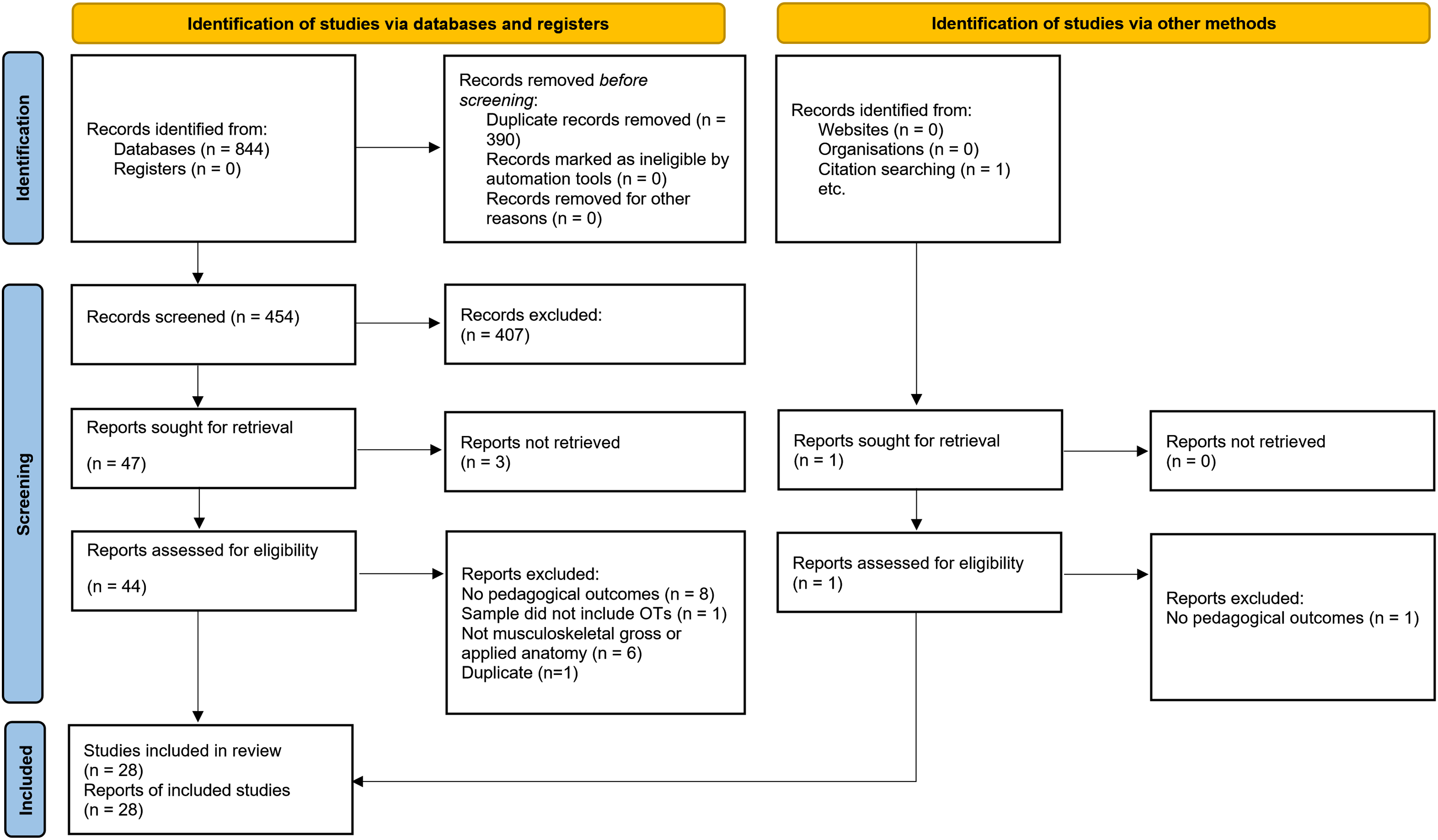
Prisma flow diagram.
Included in the scoping review are seven (25%) quasi-experimental studies, 16 (57%) observational or cross-sectional studies, one (4%) dissertation, and four (14%) review or expert option reports. These reports were published between 1978 and 2021 with the largest representation from the United States (n = 18, 64%), followed by Canada, the United Kingdom, and Spain (n = 2 each) and then Ireland, Brazil, South Africa, and Australia (n = 1 each).
The most common pedagogical approaches used by occupational therapy educators in the 28 articles reviewed include laboratory-based (n = 25, 89%) instruction involving cadaveric specimens (e.g., prosection and dissection) and lecture (n = 18, 64%). Next, the use of visual media (n = 12, 43%) such as two-dimensional (2D) images and videos, virtual- or web-based platforms and apps (n = 12, 43%), and bones and/or models (n = 8, 29%) were reported. Most of the included articles (n = 20, 71%) reported use of two or more teaching methods. Commonly, gross anatomy laboratory-based teaching methods were combined with lecture and other visual media (e.g., anatomical models, 2D images, and web-based 3D applications). The corresponding reference list of studies the used each type of pedagogical approach is provided in the Appendix.
The types of anatomy described or taught in each report were identified and classified as one or a combination of gross anatomy, live/surface anatomy, and/or applied anatomy. The most common type of anatomy studied in the included reports was gross anatomy (n = 25, 89%), followed by applied anatomy (n = 13, 46%) and live/surface anatomy (n = 9, 32%). The frequency of reported use of the respective pedagogies to teach these different types of anatomy was mapped (Figure 2). The corresponding reference list of studies, organized into each type of anatomy and pedagogical approach reported, is provided in the Appendix. Half (n = 14, 50%) of the included reports focused on more than one type of anatomy (e.g., gross and applied anatomy); therefore, the number of data points in Figure 2 exceeds the number of included reports. All pedagogical approaches were used to teach gross, live/surface, and applied anatomy. Laboratory-based methods were the most common teaching approach used for all three types of anatomy. Overall, gross anatomy was the most common type of anatomy reported in the literature, as well as mostly taught using laboratory-based approaches.
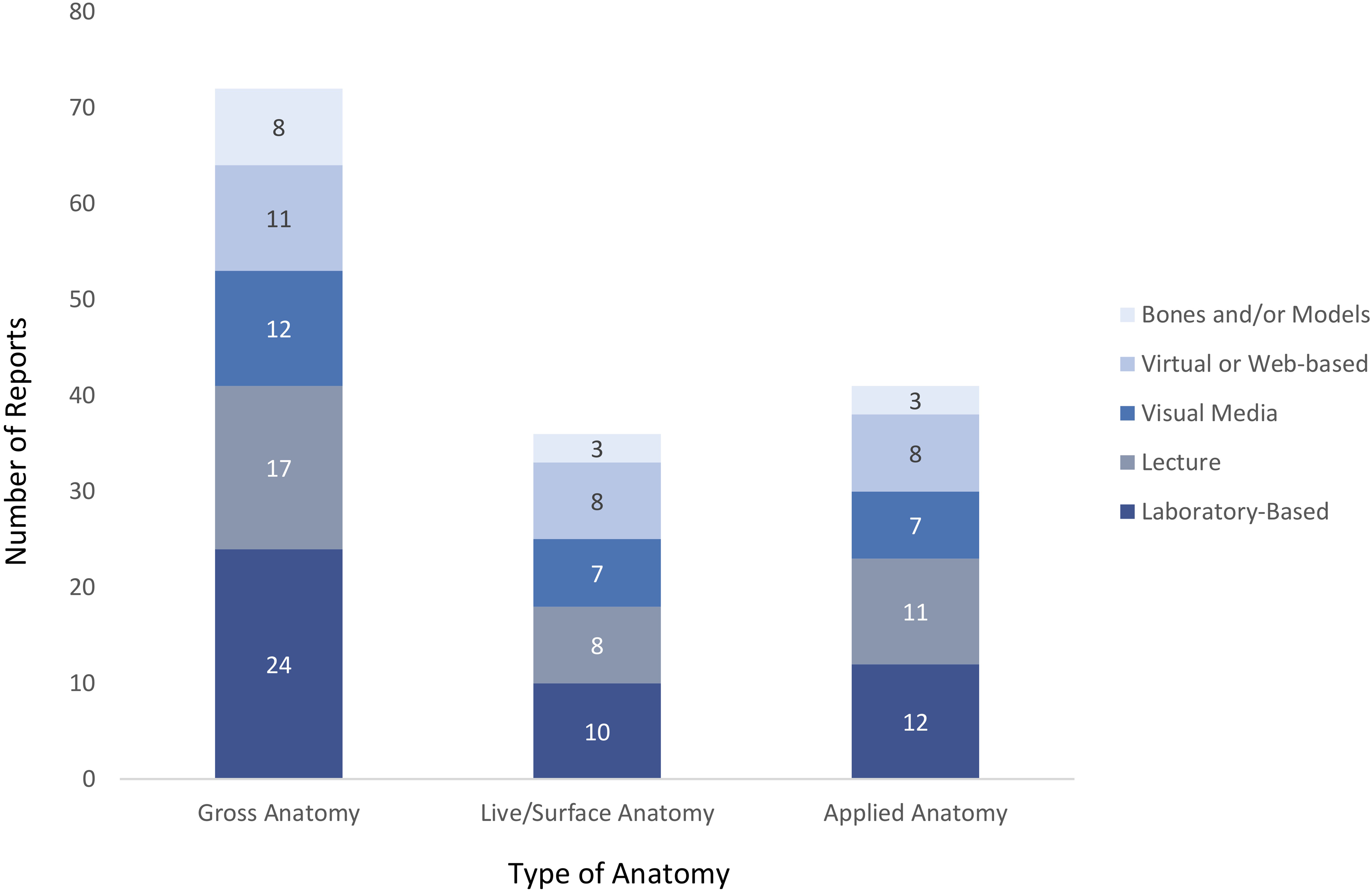
Pedagogical approaches used for different types of anatomy.
Factors Related to Pedagogical Approaches Used in Occupational Therapy Programs
Next, the factors related to the anatomy pedagogical approaches used in occupational therapy were analyzed. The narrative synthesis of the pedagogical approaches, type of anatomy taught, and key findings of included reports (n = 28) led to the identification of five main factors: (a) anatomy competency; (b) teaching method diversity; (c) learner psychological considerations; (d) interprofessional education; and (e) optimal academic outcomes.
Common Pedagogical Approaches Used Historically and What Are We Moving Toward
The reports were next synthesized to evaluate the historical changes in use of pedagogical approaches and the considerations related to the application of computer-assisted instruction and technological innovations. As time progressed between 1978 and 2021, the use of technology-based pedagogies became more common; however, historically used pedagogies (i.e., lectures/presentations and lab-based pedagogies) remain prominent in the present literature (Figure 3). The publication dates for the pedagogical approaches reported are provided in the Appendix. A shift solely toward the use of computer-assisted instruction over time is not seen.
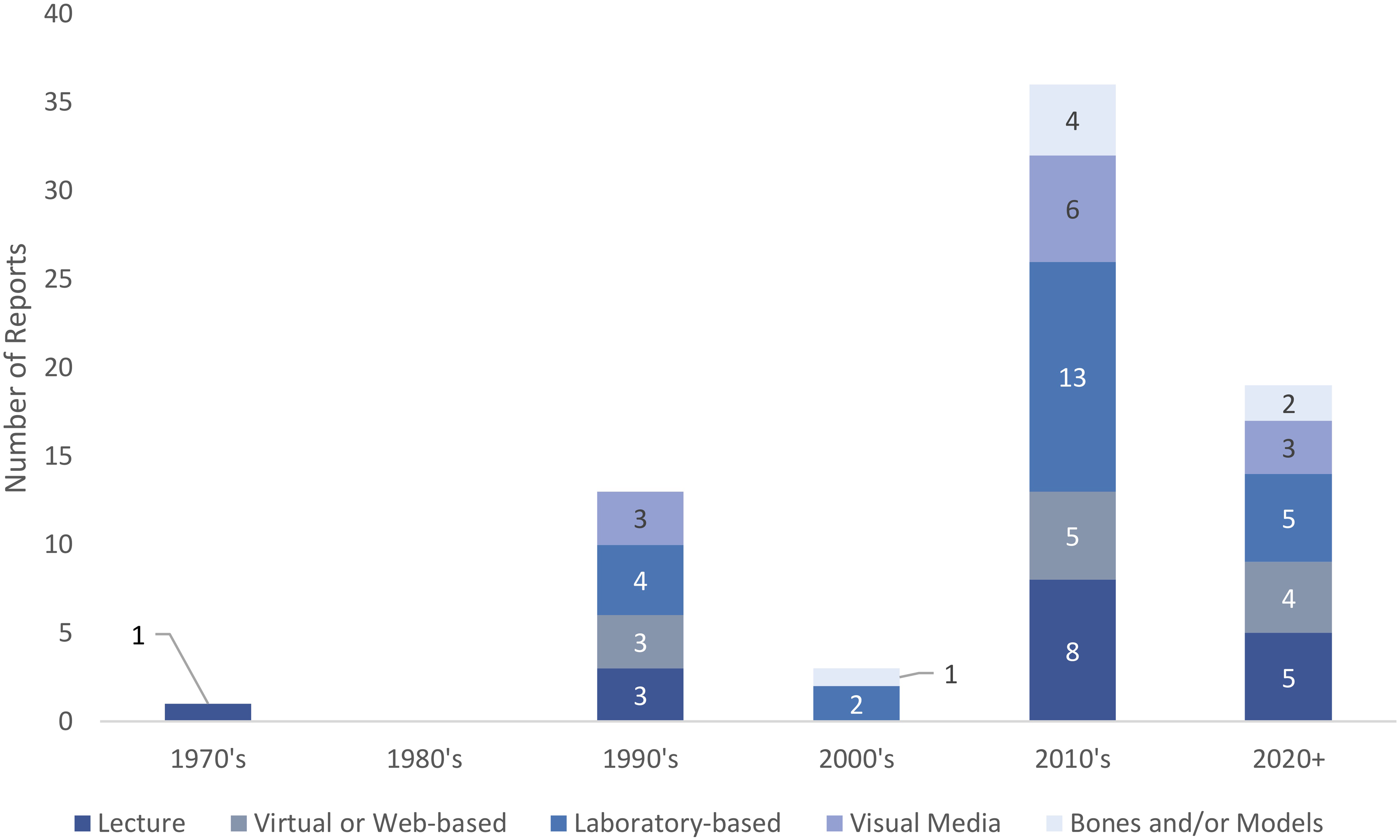
Type of pedagogies used for the decades.
Importance of Considering New Pedagogical Approaches That Use Computer-Assisted Instruction
Of the reports that included computer-assisted instruction (n = 5), computer-based technology was used to teach gross and applied anatomy to student OTs with a combination of both lectures and labs (Dempsey et al., 2021; Mathiowetz et al., 2016; Rosario, 2021a, 2021b; Thomas et al., 2011). That is, technology was not used as a standalone pedagogy. Two studies (Mathiowetz et al., 2016; Rosario, 2021a) demonstrated mixed results regarding the use of an anatomy app to improve final course grades, when compared to non-app use (Rosario, 2021a) or laboratory-based pedagogies (Mathiowetz et al., 2016). Students who were taught using prosection laboratory-based methods had greater perceived learning and satisfaction, as well as improved written and practical grades than learners who used an anatomy app (Mathiowetz et al., 2016). However, there were studies that reported that access to an anatomy app was perceived by learners as “very helpful” or “helpful” (Rosario, 2021a, 2021b) and that learners preferred apps over books, models, atlases, and/or lectures (Rosario, 2021a; Thomas et al., 2011).
Effectiveness of the Different Pedagogical Approaches Used
To evaluate the effectiveness of anatomy pedagogical approaches in occupational therapy, the experimental and observational studies with comparative quantitative analysis or qualitative findings were synthesized (n = 10). Due to the heterogeneity of the populations, outcomes, and methods used in these studies, a narrative synthesis of the findings was conducted. Three experimental studies and seven observational studies were published between 1995 and 2021 that evaluated a diversity of technological innovations to teach gross and applied anatomy. Narrative synthesis of the comparative findings of the 10 included studies resulted in three major categories of outcomes that fostered effective learning: (a) peer and interprofessional education learning; (b) learner psychological preparation and support; and (c) experiential learning (e.g., drawing during dissection). Summative details of the evaluated studies can be found in Table 1. Overall, there is some evidence that peer mediated activities or interprofessional education interventions foster or support psychological preparation of cadaveric pedagogical approaches and that the use of innovative hands-on experiential learning approaches is beneficial to anatomy learners in occupational therapy education.
Comparative Effectiveness of Anatomy Pedagogical Approaches
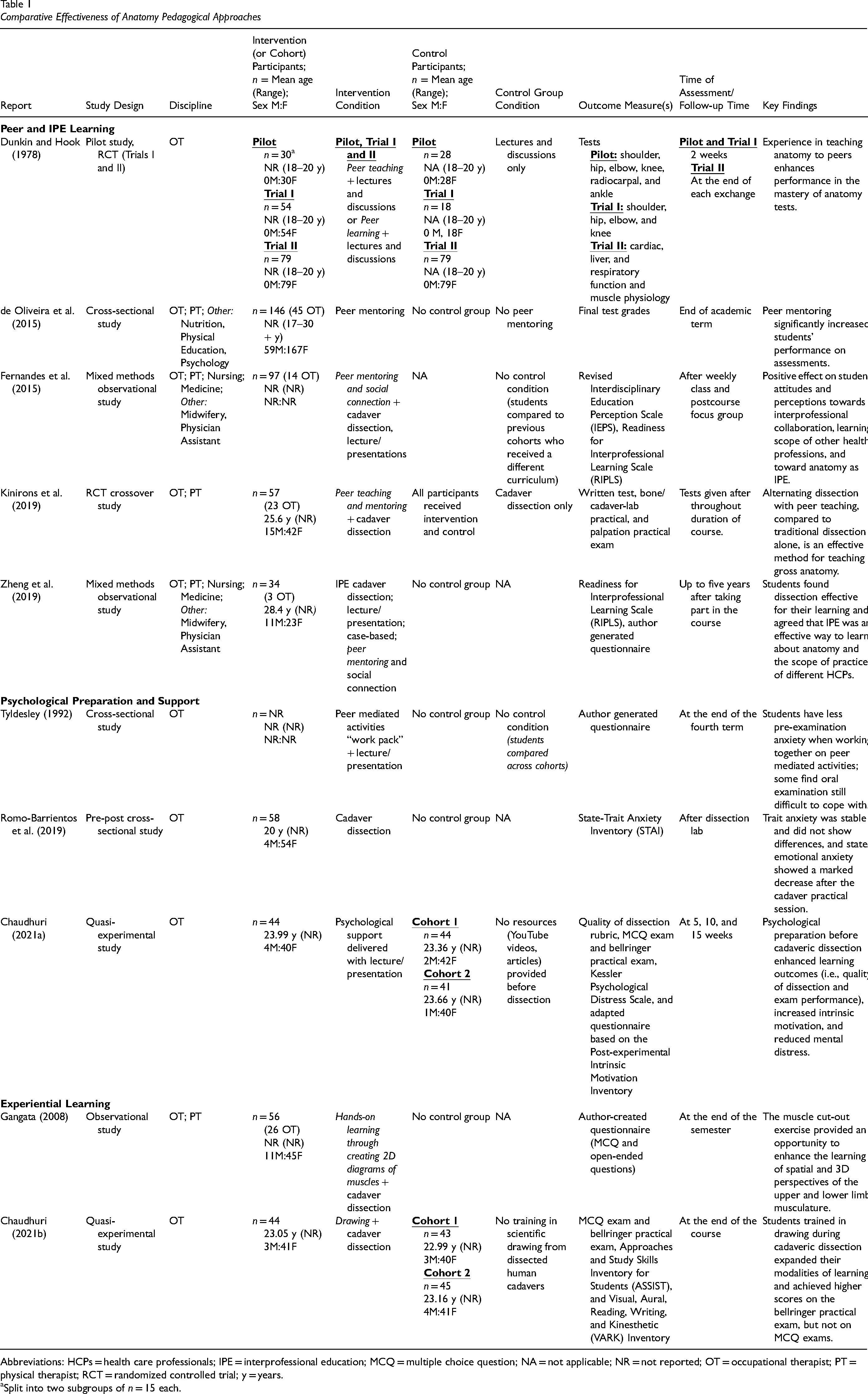
Abbreviations: HCPs = health care professionals; IPE = interprofessional education; MCQ = multiple choice question; NA = not applicable; NR = not reported; OT = occupational therapist; PT = physical therapist; RCT = randomized controlled trial; y = years.
Split into two subgroups of n = 15 each.
Anatomy Curriculum Consultation Exercise
Lastly, a consultation exercise to synthesize anatomy curriculum information from the 14 entry-level masters programs across Canada was conducted. Feedback from instructors from eight (57%) of these programs was received regarding anatomy prerequisites and pedagogies of courses with anatomy-related content. Several respondents indicated that anatomy requirements for their program are up to date on their program website and that details of course materials would be challenging to provide without detailed discussion with the teaching team. As such, the decision was made to extract anatomy requirements from web-based admissions information and identify whether a standalone anatomy course was provided by any of the Canadian programs. Ten (71%) of the 14 programs have anatomy prerequisite course requirements, while four (i.e., McMaster University, Ottawa University, University of Toronto, and Western University) do not. It is noted that the four entry-level masters programs offered in the province of Quebec are part of a baccalaureate degree continuum that offers an anatomy course in the baccalaureate curriculum. A standalone anatomy course is not offered in any of the Canadian entry-level masters programs.
Discussion
In this scoping review, the synthesis of the evidence on anatomy pedagogical approaches used in occupational therapy education demonstrates that a variety of approaches are used to teach gross, live/surface, and applied anatomy. This study found that there is an increased use in computer-assisted instruction in the classroom, but technological innovations are not used in replacement of traditional methods such as cadaveric laboratory-based methods. Importantly, a diversity of teaching methods is chosen in recognition of diverse learner learning needs, effects on and support of learner mental health and well-being, and the need to foster academic outcomes. Lastly, the evidence from this review confirms that anatomy education in occupational therapy curriculum is important to competency in occupational therapy practice.
In this review, the use of one or more pedagogical approaches was commonly used by occupational therapy anatomy educators. The use of lecture-based presentations prevailed in the classroom but was often coupled with computer-assisted instruction targeting visual and spatial learning (Chan, 1999; Langfield et al., 2018; Mathiowetz et al., 2016; Rosario, 2021b) or experiential learning with hands-on activities (Chaudhuri, 2021b; Gangata, 2008). The use of multiple teaching methods to foster learning outcomes aligns with the use of universal design for learning (Connell et al., 1997). More specifically, offering diverse opportunities for the learner to comprehend anatomy material allows them to learn through different means of representation (e.g., visual, auditory, and text-based) (Center for Allied Special Technology [CAST], 2018). This allows learners to access the material through the means that is best for their learning. The use of multiple pedagogies to teach anatomy was well supported by occupational therapy anatomy educators in this review.
However, providing multiple means of representation is only one of three universal designs for learning principles. The other two principles are multiple means of action and expression, and engagement (CAST, 2018). Learners do not only need different ways of encoding information but also benefit from multiple ways of expressing what they know. Evaluation approaches reported in this review were largely traditional formats involving written tests with multiple choice questions, practical exams, and bellringer exams to test cadaver-based information. The use of small group learning and peer mentorship reported by some authors was representative of alternate means of expression and feedback (de Oliveira et al., 2015; Tyldesley, 1992); however, an overall lack of diversity in learner assessment methods was reported in occupational therapy anatomy education literature. Individual and group evaluations that allow students to demonstrate and apply their knowledge through oral, visual, kinesthetic, or written indicators support different avenues of expression and consolidation of learning.
Several studies reported strategies to foster learner engagement such as peer mediated activities, interprofessional education, and coaching to decrease anxiety related to working with cadavers (de Oliveira et al., 2015; Fernandes et al., 2015; Kinirons et al., 2019; Romo-Barrientos et al., 2019). These learning strategies connect with the learner's personal values and beliefs and are thus effective in developing their sense of purpose and motivation. Other strategies to engage learners include offering choice and autonomy during the learning experience (CAST, 2018). Contextualization of anatomy materials by framing and connecting content within practice and career goals may optimize relevance and the value of these learning experiences (Dempsey et al., 2021). Research that provides insights regarding learners’ motivations and learning needs to acquire foundational anatomy knowledge and its outcome on future practice is needed in occupational therapy.
Despite the inclusion of seven quasi-experimental studies in this review, consolidation of the evidence was challenging due to methodological concerns such as mixed sample populations and lack of standardized comparative outcomes reported. As a result, the positive effects of peer learning, interprofessional education, psychological support prior to cadaver labs, and hands-on experiential learning approaches on anatomy learning outcomes should be interpreted with caution. Although these interventions are beneficial, it is unclear whether there is overall value added when resources and translational outcomes are considered. Further, aside from the use of standardized interprofessional education scales and psychological scales, the outcome measures used to evaluate these teaching approaches were largely course examinations, tests, and grades. Course-based evaluations are important considerations; however, translational outcomes including practice context knowledge were not reported. Research to determine what anatomy pedagogical approaches translate best to positive outcomes of student OTs in clinical practice is needed. This review identifies and supports sentiments that there is an overall gap in understanding of how anatomy taught in the classroom translates to anatomy knowledge and application in clinical practice (Schofield, 2018).
Implications for Practice
This review identified that occupational therapy anatomy educators need to foster understanding of anatomy within the context of occupation and clinical sciences (Bagatell & Womack, 2016; Carroll & Lawson, 2014; Schofield, 2018). Integrated learning of anatomy within the context of occupational therapy practice is critical. The challenges of effective integration of science and practice in medical education are a long-standing concern. It requires effort to design coherent, coordinated, and integrated curriculum (Bandiera et al., 2018). For example, clinician and patient partners can play a significant role in supporting integrated learning of anatomical sciences with clinical practice. Clinician partners provide contextualization to curriculum development, classroom, or laboratory facilitation and lectures, as well as model clinical, professional, and social behaviors and expectations to learners (Burgess et al., 2020). Lived experiences shared by patient partners are effective in fostering empathy and strengthening connections between anatomy and its impact on occupation.
Another important consideration is the use of formative assessment methods such as case-based discussions, observation of clinical skills, and objective structured clinical examination (OSCE) to examine application of knowledge (Burgess et al., 2020). These approaches provide a well-rounded evaluation of the learner's abilities through direct observation of skills and application of foundational knowledge, professionalism, and communication. Lastly, vertical integration of anatomy education must take place throughout curriculum (Bergman et al., 2011). With the ever-increasing quantity of material deemed relevant to occupational therapy practice, educators also need to prioritize what is essential to teach and how to best deliver this content. Intentional curriculum design that fosters awareness of and builds connections between anatomy knowledge and excellence in occupational therapy clinical reasoning and practice is needed from the onset of the program until graduation.
Strengths and Limitations
As reported in our published protocol (Dove et al., 2022), this scoping review is the first to consolidate anatomy pedagogical approaches in occupational therapy education; however, the interpretation and application of this synthesized knowledge should be considered with the limitations of an English language review and a consultation exercise undertaken only with Canadian entry-level masters programs. Another limitation was the low response rates from the Canadian programs and the decision to use information from program websites, which was more limited. The scoping review was also intentionally designed with no restrictions on date of publication to map the breadth and depth of the literature. As a result, earlier literature that contains approaches that are not reflective of current evidence-based teaching practices were included in this review. For example, technologies consolidated as computer-assisted instruction in this review varied from the use of Macintosh II computers at the onset of computer-use (Toth-Cohen, 1995) to 3D anatomy apps with virtual dissection options (Rosario, 2021a). However, it was necessary to capture the trend in all relevant literature over time. Lastly, the consolidation of pedagogical approaches reported in this review was reflective of what authors and researchers disclosed in their study. As delivery of content within pedagogical approaches such as lectures and presentations may vary (e.g., they may include experiential learning activities that were not specified), a broad interpretation of the pedagogical approaches reported should be undertaken.
Conclusion
The consolidation of evidence on anatomy pedagogical approaches used in occupational therapy education demonstrates that anatomy knowledge continues to be an important aspect of occupational therapy curriculum. Although technology-based pedagogies became more common with time, historically used pedagogies (e.g., lectures and cadaveric labs) remained prominent. Educators use a diverse combination of traditional and computer-assisted instruction approaches to teach gross, live/surface, and applied anatomy. As such, there is emerging evidence that universal design for learning guidelines is being implemented to teach anatomy in occupational therapy programs; however, more work lies ahead to diversify and implement multiple strategies to teach, evaluate, and motivate anatomy learners with the goal of optimization of learning experiences and outcomes. Lastly, this review highlights a significant gap in research on how pedagogical approaches effectively improve anatomy knowledge that translates to positive practice outcomes. Future research is needed to better understand how to design, develop, and evaluate curriculum that integrates learning of anatomical with clinical sciences in occupational therapy education.
Key Messages
Computer-assisted instruction has not superseded cadaveric-based approaches to anatomy education in occupational therapy.
Occupational therapy educators use a diversity of anatomy teaching approaches to support learners with different academic, psychological, and professional learning needs.
Work to further the scholarship of anatomy teaching and learning in occupational therapy is needed to optimize student learning outcomes that translate to improved clinical practice.
Supplemental Material
sj-docx-1-cjo-10.1177_00084174231197614 - Supplemental material for Gross and Applied Anatomy Pedagogical Approaches in Occupational Therapy Education: A Scoping Review
Supplemental material, sj-docx-1-cjo-10.1177_00084174231197614 for Gross and Applied Anatomy Pedagogical Approaches in Occupational Therapy Education: A Scoping Review by Erica Dove, Kelly Hennessy, Athena Kirou-Mauro, Lorna Aitkens, Andrea Duncan, Anne Agur and Emily S. Ho in Canadian Journal of Occupational Therapy
Footnotes
Author Contributions
Erica Dove: conceptualization, methodology, writing—original draft, and reviewing and editing.
Kelly Hennessy: writing—review and editing.
Athena Kirou-Mauro: writing—review and editing.
Lorna Aitkens: writing—review and editing.
Andrea Duncan: writing—review and editing.
Anne Agur: conceptualization and writing—review and editing.
Emily S. Ho: project administration, conceptualization, methodology, resources, supervision, writing—original draft, and review and editing.
Funding
The authors received no financial support for the research, authorship, and/or publication of this article.

Supplemental Material
Supplemental material for this article is available online.
Author Biographies
References
Supplementary Material
Please find the following supplemental material available below.
For Open Access articles published under a Creative Commons License, all supplemental material carries the same license as the article it is associated with.
For non-Open Access articles published, all supplemental material carries a non-exclusive license, and permission requests for re-use of supplemental material or any part of supplemental material shall be sent directly to the copyright owner as specified in the copyright notice associated with the article.
