




Abstract
Introduction
Globally, the occupational therapy (OT) profession has developed research capacity, outputs, and an evidence base that informs clinical practice (Broome & Gray, 2017; Pighills et al., 2013). Within education programs in occupational science (OS) and/or OT, conducting research is part of the responsibilities expected of most faculty members (Gutman, 2009). White (2003) suggested that identifying research strengths and gaps is a critical step needed to advance the OT profession. A research inventory can allow for more efficient and effective use of resources, avoid repetition, identify underdeveloped areas, catalyze collaborations, and allow for building on existing work. Addressing such gaps can also inform policy and funding opportunities and provide strategic direction for future research in the rehabilitation sciences (MacDermid et al., 2015).
Studies have investigated the productivity of faculty members in OT using faculty websites and different bibliometrics (e.g., h-index, citation years). For instance, MacDermid et al. (2015) investigated Canadian OT and physical therapy faculty members, whereas Broome and Gray (2017) investigated Australian OT faculty. MacDermid et al. (2015) concluded that OT faculty members in Canadian universities are productive researchers. Broome and Gray (2017) used their examination of these metrics to identify ways to enhance research track records of OT academic faculty. However, these studies did not include a direct survey of faculty members to understand the scope and range of research conducted in both OT and OS. By further understanding, the scope of such research, gaps, and future directions for further study can be identified.
A focus of the Association of Canadian Occupational Therapy University Programs (ACOTUP) Research Committee has been to identify and track research undertaken by faculty members. This information can provide strategic direction for studies and build capacity in areas of identified need (MacDermid et al., 2015; White, 2003). Although both OT and OS research can occur in nonacademic settings, the following study is focused on faculty members who conduct research at Canadian universities. The aims of the study were to: 1) establish a baseline of the research activities by OS and/or OT faculty members in Canada; and 2) understand the scope and nature of such activities. More specifically, the following research questions guided this study:
What topics and populations are the foci of research in OS and OT? Which research approaches and methods are used? What funding sources are accessed to conduct such research?
Method
A cross-sectional internet-based survey was distributed (Dillman et al., 2014) between July 1, 2018, and December 31, 2018. The Research Committee Chair of the ACOTUP, the first author sent a letter via email to the department/program chairs of the 14 OT university programs in Canada for the recruitment of participants. The letter outlined the purpose of the study and asked to distribute a flyer with an email attachment to eligible OT faculty members or tenure track faculty with an appointment conducting research. The email attachment provided an overview of the study and links to the online survey. Both English and French versions of the survey were available in separate links. Midway through the data collection period, another email was sent to the department/program chairs asking for their help to remind eligible colleagues to participate in the survey. The invitation was shared with 173 faculty members across Canada.
Data Collection
The online survey was designed using the University of British Columbia Survey Tool, Qualtrics. Qualtrics stores all data in Canada and adheres to Canadian privacy and security standards. Participants were presented with information about the survey and informed consent for participation. Participants were reassured that their participation was entirely voluntary, and they were not required to provide their name or academic affiliations, nor any information that might make them uncomfortable. Participants were informed that by submitting the survey they give their consent to participate in the study. Ethical approval was obtained from the University of British Columbia Behavioural Research Ethics Board.
In addition to demographic information, the questionnaire included 13 questions (with subquestions) organized in the following sections: 1) What and How: Research topics and methods; 2) Who and Where: Populations; and 3) Funding. As part of the first section, we used the Canadian Institutes of Health Research (CIHR) categorization of research methods. For each question, we provided a list of options and asked participants to select one or multiple items that best described their responses. For some questions, participants had open-ended options to input details of the response. The survey took approximately 15 min to complete.
Data Analysis
The first author extracted all the responses provided by participants. If a respondent provided their work title, university, and contact details, only the first author had access to this information. This information was kept confidential and extracted to a digital spreadsheet that was password protected. All remaining data were extracted, as word documents and excel spreadsheets that were analyzed by the authorship team. We used descriptive statistics to analyze the closed-ended questions. Percentages were used to indicate the frequency of response for each question or item. Summative content analysis (Hsieh & Shannon, 2005) was used to examine the open-ended questions. To assure trustworthiness, two of the members independently conducted the content analysis and shared initial results with the first author. Based on these discussions, the analysis was further refined and results finalized.
Findings
A total of 121 researchers from the 14 Canadian OT programs responded to the survey with a nearly 70% response rate (ranging between 43% and 100% for the different programs). Almost a quarter of respondents (24%; n = 29)—completed the French survey, and 76% (n = 92) completed the English survey. At the time of the survey, there were five out of 14 French language programs in Canada. Participants represented all 14 programs with a range of 3–16 respondents from each university, where 26% (n = 31) were at the assistant professor level, 40% (n = 48) at the associate level, 24% (n = 29) full professor level, 2.5% (n = 3) at the instructor/lecturer level, and 2.5% (n = 3) at the senior instructor/lecturer level. The remaining 2.5% (n = 3) participants selected “other.” Most participants were women (n = 100, 83%).
Research Topics
The most commonly reported research area was “participation” (63.6%; n = 77), followed by more specific areas of occupational performance and engagement: “work” (32.2%; n = 39), “self-care” (20.7%; n = 25), and “leisure” (21.5%; n = 26). The area of “education” was identified by a little over a third of survey respondents (31.4%; n = 38). Thirty-five percent (n = 43) reported conducting research in areas other than participation and occupation, such as technology, health services, and policy. A little over half of those surveyed (52%; n = 63), reported their research focused on OT. A third of respondents (33.9%; n = 41) indicated their research included both OT and OS, whereas only 3.3% (n = 4) indicated their research was on OS. However, 10.7% (n = 13) did not respond to this question.
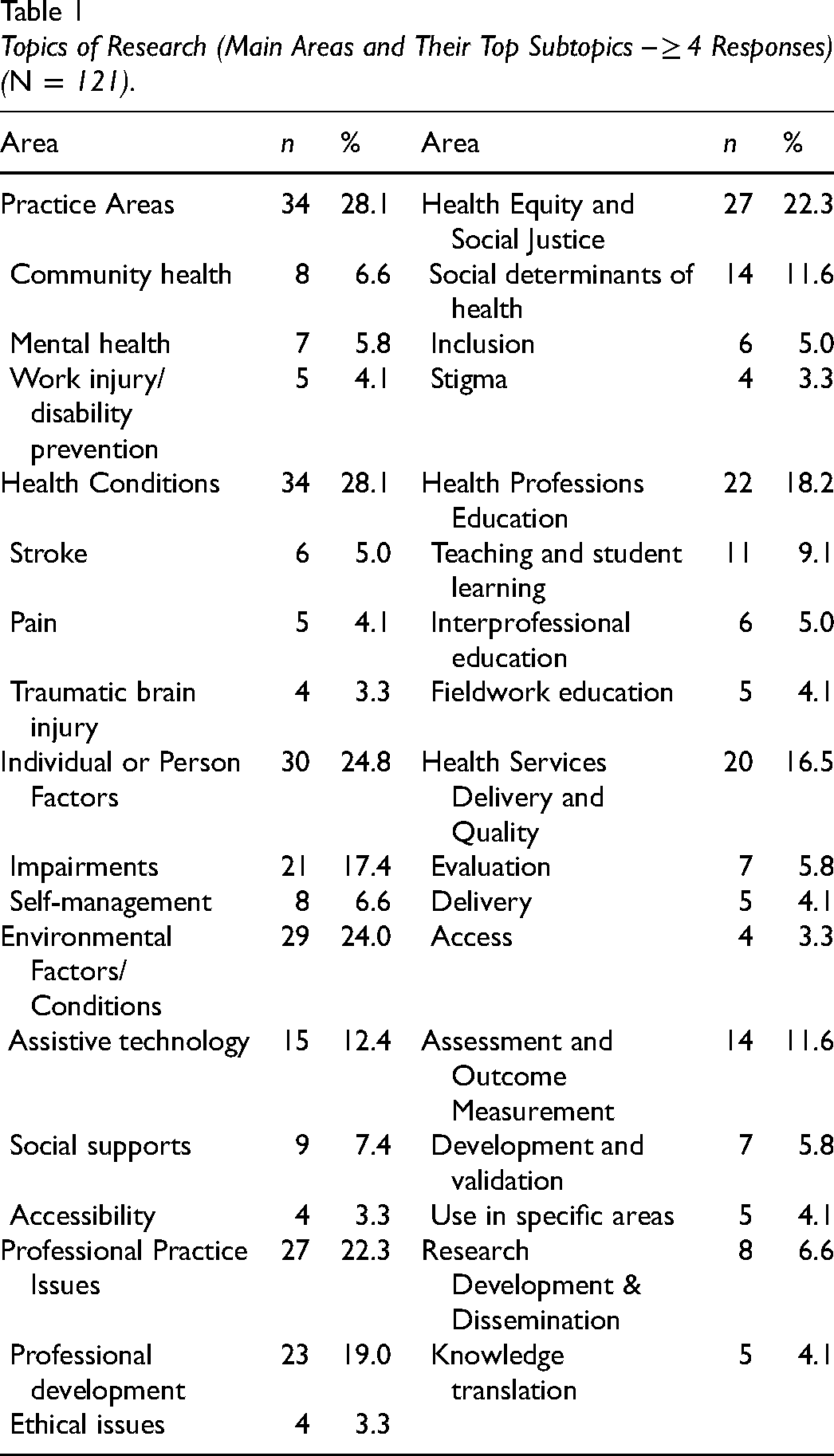
As outlined in Table 1, using an open-ended question, participants were asked to identify the top three topics of their research. Using summative content analysis, 10 categories were identified.
Topics of Research (Main Areas and Their Top Subtopics – ≥ 4 Responses) (N = 121).
Research Designs, Tools, and Fields of Study
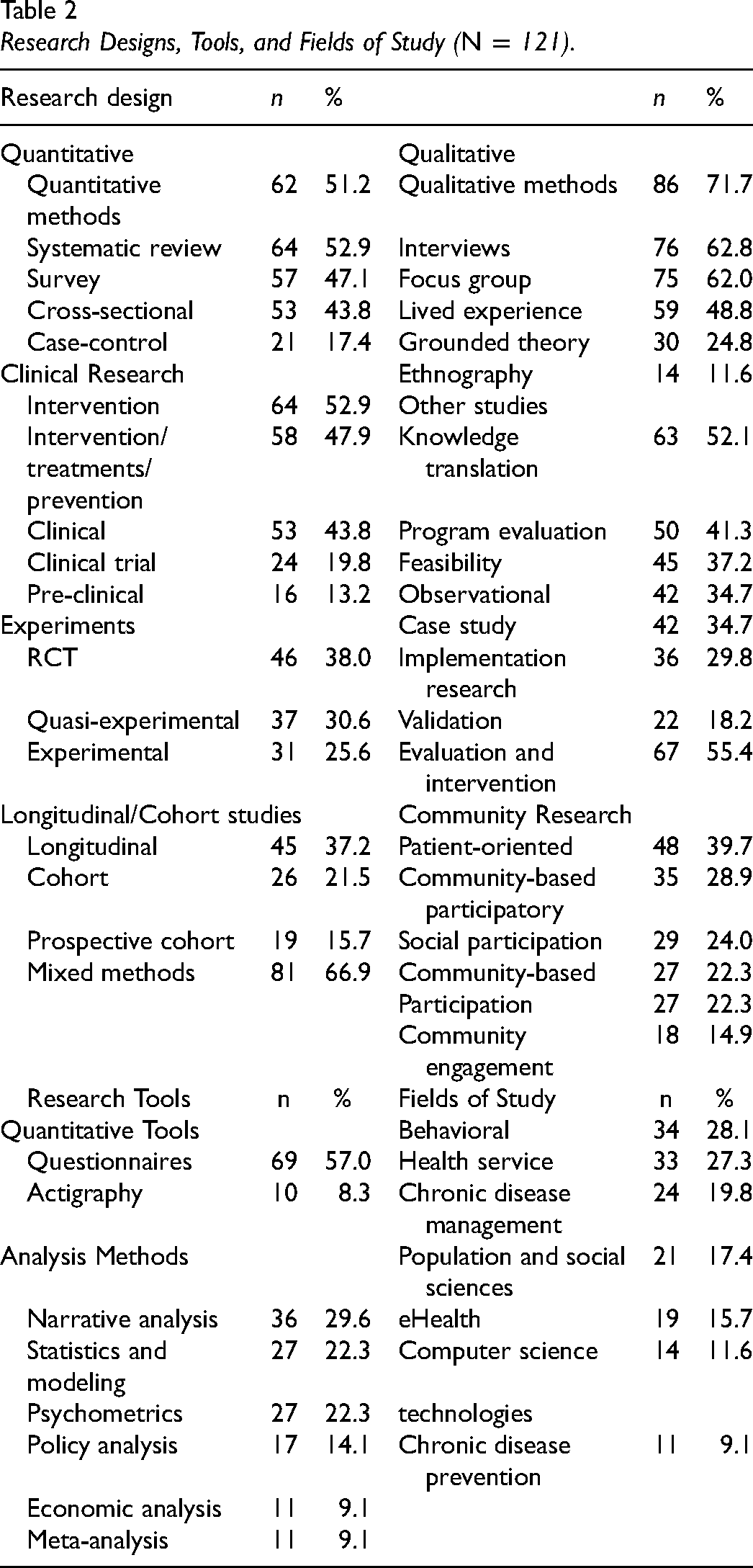
Using the research categories stipulated by CIHR, the responses received by each faculty member were organized according to research design, research tools, and field of study (see Table 2). Responses are not mutually exclusive, as participants could mark multiple items if they applied to their research. Statistics are displayed with frequency counts. Items that had at least 10 responses were included. From the analysis, some trends observed include more respondents are engaged in qualitative research compared to quantitative research. The most common areas respondents focused on included the behavioral field of study, health services, and chronic disease management.
Research Designs, Tools, and Fields of Study (N = 121).
Research Populations
Figure 1 provides an overview of the populations studied by respondents, which included adults (80.2%; n = 97), older adults (54.5%; n = 66), those living in urban (93.4%; n = 113), or suburban (61.2%; n = 74) areas. In terms of areas from which they drew their research participants, the largest groups were health promotion and wellness (38%; n = 46), physical dysfunction (36.4%; n = 44), and neurological/neuromuscular (35.5%; n = 43) with smaller areas including palliative/end of life care (5.8%; n = 7) and digestive/metabolic/endocrine system (4.1%; n = 5). Researchers mostly focused on the general population (41.3%; n = 50) and students (30.6%; n = 37). A smaller number of researchers focused on equity-denied populations, for example, Indigenous Peoples (9.1%; n = 11), immigrants (9.1%; n = 11), homeless people (6.6%; n = 8), LGBTQ+ (5%; n = 6), and post-war victims/survivors (3.3%; n = 4). Interestingly, a larger number or researchers focused on people with low/very low income (22.3%; n = 27).
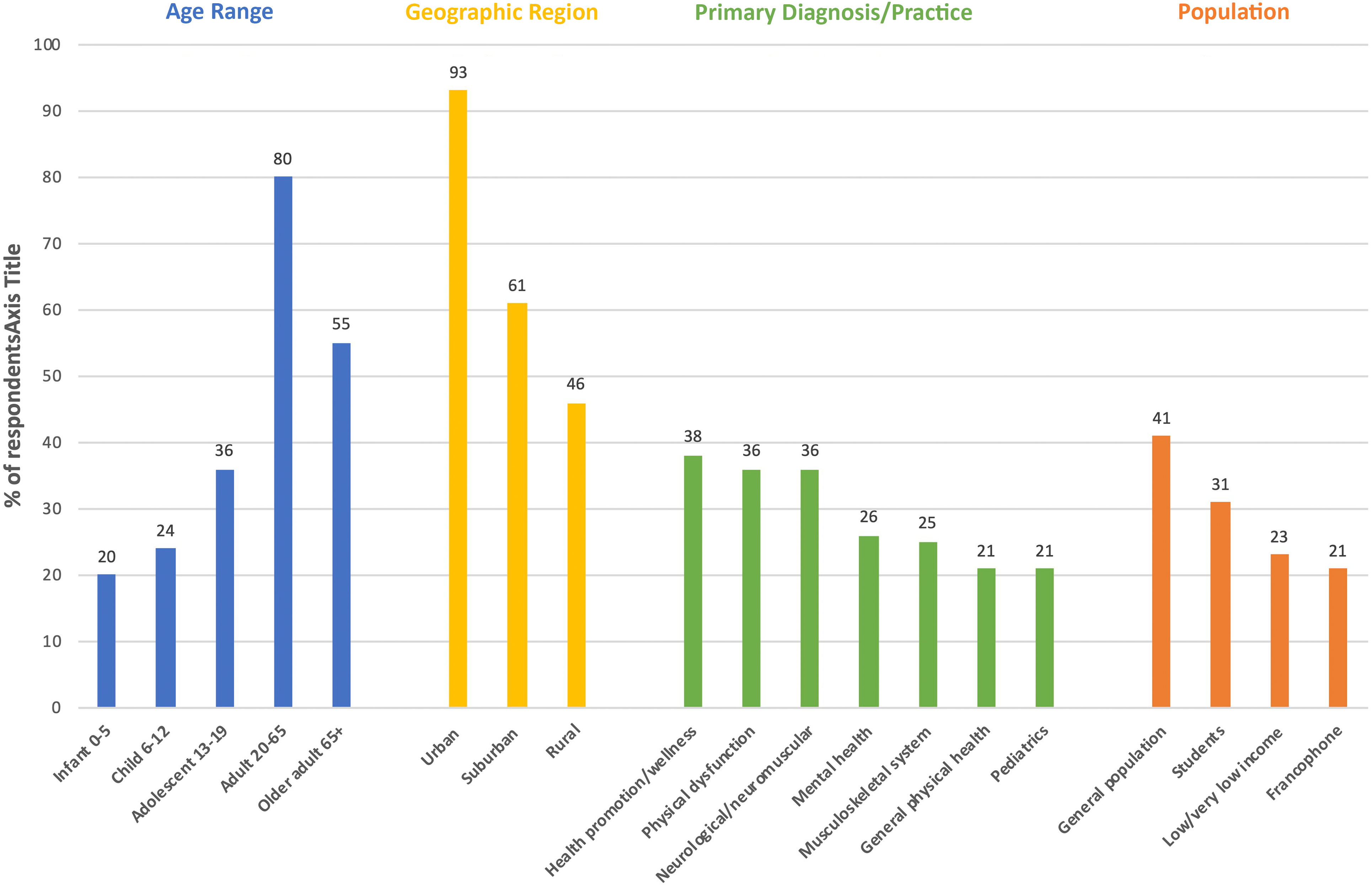
Focus of studies based on age range, geographic region, primary diagnosis/practice and population (N = 121).
Funding Sources
The largest sources of funding accessed by OS and OT researchers in Canada were federal and provincial government grants (i.e., Tri-Council 69%; n = 83, Provincial Government 58%; n = 70), followed by foundations/associations (National foundations/associations 24%; n = 29; Provincial foundations/associations 45%; n = 54), and other nongovernmental sources (42%; n = 51) (see Figure 2). A few researchers reported receiving funding from international organizations (24%; n = 29). Thirty percent of participants (n = 36) secured funding from CIHR, 12% (n = 14) from Social Sciences and Humanities Research Council (SSHRC) and 2.5% (n = 3) from Natural Sciences and Engineering Research Council (NSERC). Thirty participants did not specify the Tri-Council agency from which they received their funding.
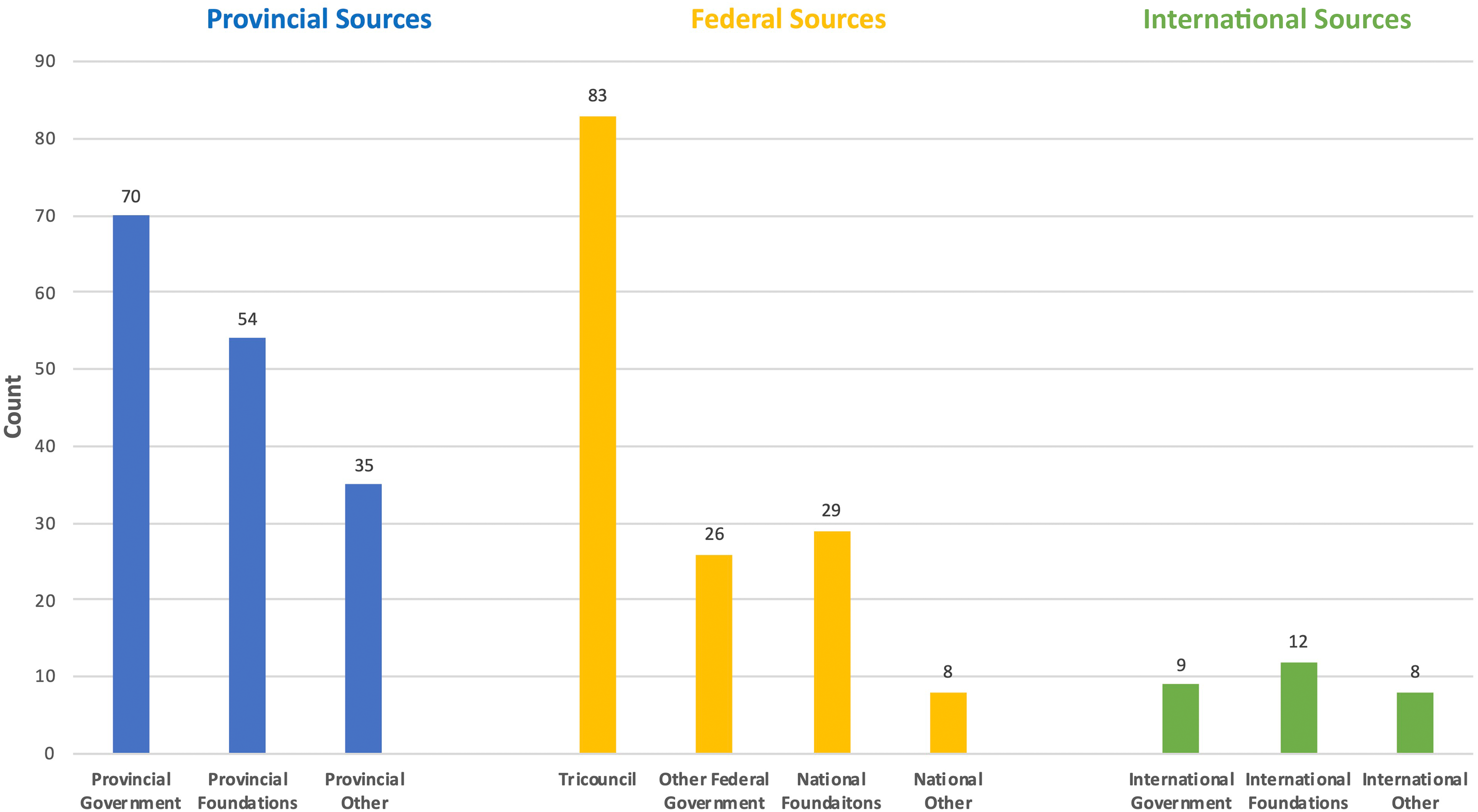
Funding sources accessed to support occupational therapy and occupational science research (N = 121).
Discussion
To our knowledge, this study is the first to describe the research conducted by Canadian OT and OS faculty members. The findings identify the breadth and depth of research expertise and highlight challenges and opportunities to advance research in OT and OS.
Survey Participants
In this study, most respondents were women. Academia parallels practice with OT remaining a predominantly female profession (CIHI, 2021). According to the United Nations Educational‚ Scientific and Cultural Organization (UNESCO), 2019), less than 30% of the world's researchers are women. Faculty in OT and OS programs offers a unique opportunity to examine how females are building and contributing to research capacity in academic institutions worldwide (Sau & Nayak, 2022).
Respondents conducted research in both official languages, French and English. Conducting research in one's first language allows researchers to acquire the language of the discipline, express and access scientific knowledge in their language (Lüdi, 2015), and feel part of research networks (McAlpine & Amundsen, 2011). Researching across languages adds to the diversity of perspectives. It highlights different cultural epistemologies and intellectual traditions, different values and styles, and the various academic cultures that exist (Byram et al., 2019). The use of two official languages, as evidenced in our sample, adds to the richness of the research process and outcomes among Canadian OT and OS faculty members.
Research Foci and Populations
Self-care, productivity, and leisure are widely used taxonomy of occupation in Canadian OT (Law et al., 1990). Based on the study findings, many researchers did not describe their research using this taxonomy. Some academics have argued that this taxonomy can limit the scope and breadth of research and practice (Gerlach et al., 2018; Hammell, 2009; Leclair, 2010). When asked about their area of research, many respondents identified “participation” as their primary area of focus, rather than “occupation” per se. The International Classification of Functioning, Disability (ICF) and Health (World Health Organization, 2001) defines participation as “…involvement in a life situation” (p. 14). Since the introduction of the ICF, participation has become more widely used within OT research and practice (Larsson-Lund & Nyman, 2017). Larsson-Lund and Nyman (2017) found that the distinction between occupation and participation is not always clear and requires greater clarity to advance our understanding of occupation.
Given the broad scope of OT practice (American Occupational Therapy Association, 2021), it was not surprising respondents identified a wide range of research topics. Many established and emerging areas of practice require growth of the evidence base to support practice and advance the profession, such as primary care (Donnelly et al., in press), health promotion (Janssen et al., 2021), and telerehabilitation (Hung & Fong, 2019), to name a few. However, the limited funding and number of OT and OS faculty members conducting research suggest that faculty members, practitioners, and individuals with lived experience need to work together to identify research priorities that are flexible and translatable into more focused research questions within areas of OT practice (Pighills et al., 2013; Watson et al., 2021). For example, when identifying OT research priorities in the United Kingdom, Watson et al. (2021) included broad questions, such as What are the long-term benefits of OT? Given the broad scope of OT practice, long-term benefits could relate to a specific population, age group, or practice area. Findings from our study support the need to consider a similar priority setting exercise for research in OS and OT in Canada to consolidate efforts and come together strategically to focus on particular areas alongside strategic partnerships with groups to address and advance the evidence-based underpinning practice. However, to do so requires coordination and funding.
Watson et al. (2021) highlighted the need to align research with practice; though the data needed to establish research alignment with practice is not always readily available. The Canadian Institute for Health Information (CIHI) collects limited data on OT practice (CIHI, 2021). The lack of national data detailing practice makes a comparison of our study findings with practice difficult. For example, many respondents identified conducting research on adult populations, though we do not have comparative national data detailing OT service users. Efforts to expand CIHI data collection are underway (CIHI, 2022) and need to continue. OT and OS faculty members should consider how this expansion could support development and priorities for OT research.
Less than a quarter of survey respondents identified focusing on research topics related to health equity and social justice. When asked to identify equity-denied groups their research addressed, such as Indigenous Peoples or LGBTQ + , a small proportion indicated focusing their studies on such groups, whereas more respondents identified focusing on low/very low-income populations and the Francophone population. The recent publication of the Competencies for Occupational Therapists in Canada (ACOTRO‚ ACOTUP‚ & CAOT, 2021) highlights the importance of addressing equity and justice within the practice. Ongoing efforts are needed to support the way in which research is being undertaken to ensure issues of equity and justice are considered within research as well as translation of findings to education and practice.
Research Methods
Most survey respondents indicated they conducted qualitative research. The nature and complexity of occupational engagement can make it difficult to reduce measurement to discrete variables that can be measured in controlled environments (Nayar & Stanley, 2015). Research involving the relationship between therapists, clients, and community groups can be complex, and, as such, qualitative methodologies may be appropriate for addressing knowledge gaps (Nayar & Stanley, 2015). There were also respondents who engaged in quantitative research, including undertaking RCTs, systematic reviews, and intervention studies, as well as mixed method designs. Mixed methods recognize the strengths of both quantitative and qualitative methods and support interdisciplinary teams by combining methodologies of a certain phenomenon from multiple perspectives (Creswell & Creswell, 2017). For these reasons, mixed methods research designs are well aligned with OT and science (Mortenson & Oliffe, 2009).
Patient-oriented research and community-based participatory research methods, which survey respondents indicated they used, can address health inequities, explore occupations in everyday life, and conduct studies that engage people in research that matters to them (Aubin et al., 2019; Wallerstein & Duran, 2006). These methods can also address the call to decolonize research approaches (Huff et al., 2022 to guide transformative occupation-based research that generates knowledge centering non-Eurocentric ways of knowing and being. Given the growing importance of explicitly recognizing culture, equity, and justice in OT practice (ACOTRO, ACOTUP, CAOT, 2021), future surveys should gather information on the use of decolonizing methodologies in OT, such as two-eyed seeing (Bartlett et al., 2012), sharing circles (Rothe et al., 2009), or relational research (Cooper, 2019; Wilson, 2001).
Research Funding
Sources of research funding for OT and OS ranged from federal and provincial government sources to local provincial/university sources of funding. The amount of funding received from the various sources was not collected and whether respondents were principal investigators or co-investigators was also not identified. Although OT and OS faculty members are receiving funding from government sources, the extent to which occupational therapists and scientists are contributing to government agendas and priorities remains unknown. Further research in this area could provide greater insights into OT and OS faculty members’ contributions to broader research agendas outside of the profession.
Funding of OT research remains an ongoing issue and concern for the profession (Watson et al., 2021). Currently, only one national foundation, the Canadian Occupational Therapy Foundation (COTF), provides financial support for OT-specific projects. However, the amount of funding limits the scope of research that can be undertaken. Some provincial associations (e.g., Manitoba Society of Occupational Therapists, Ontario Society of Occupational Therapists) offer small research funding grants. More detailed data on the amount and type of funding received for specific topics would be helpful to identify gaps in funding. National OT organizations, such as the COTF, CAOT, and ACOTUP, whose mandates include supporting research have collaborated with tri-council agencies to develop strategic initiatives that provide funding for OT and OS research in Canada (CAOT, 2021). Ongoing efforts to expand and sustain these initiatives are required to support long-term funding for OT research.
Future Directions for OT and OS Research in Canada
Unlike other countries, Canada does not have a research agenda for OT (Case-Smith, 2011; Watson et al., 2021). Gathering the needs of populations that occupational therapists serve, and those not able to access such services can assist in developing the OT research agenda. National research priorities can advance practice in Canada and ensure the limited funds available for OT research are maximized. Mackenzie et al. (2019) highlighted the research priorities identified by the World Federation of Occupational Therapists (e.g., healthy aging; OT and chronic conditions; technology and OT), many of which overlapped with the research topics survey respondents identified. Ongoing identification of the research gaps related to these priorities can promote the strategic development of OT research evidence.
OT and OS programs, departments, and schools need to consider the complement of faculty who engage in research. Opportunities to prioritize research among faculty by supporting ways to apply for funding, such as Canada Research Chairs, can target certain areas of research in the profession. Finally, it is recommended that ACOTUP undertake periodic evaluations of research in Canada to demonstrate the trends and monitor gaps in research among faculty members conducting studies in OT and OS.
Limitations
When designing the survey, CIHR was the only national funding organization with taxonomy of research methods. SSHRC and NSERC did not have a similar taxonomy. The use of the CIHR taxonomy was limiting in particular for OT researchers who engage primarily in qualitative research. The CIHR research methods provide greater details of quantitative than qualitative approaches. Future studies should provide response options that align with OT approaches. The survey was not designed to conduct comparative research. Future studies could focus on comparative analysis across jurisdictions, programs, genders, or areas of research. Some universities sent the survey link to everyone involved in the OT program/department/school while other universities only sent the survey to faculty members holding full-time appointments. The inclusion criteria for the survey could have been clearer in terms of who was eligible to participate. If seeking to gain a better understanding of OS and/or OT research being conducted, the invitation could be extended to clinician scientists and others. Occupational science was not a primary focus of this survey. A survey specifically examining OS research should be undertaken to gain a better understanding of OT faculty members’ involvement in this area.
Conclusion
Based on the results of this survey, faculty members in Canada are conducting research across a range of areas, using a variety of methods with different populations. Although the majority indicated they use qualitative designs, a key focus across respondents was to advance evidence on the effectiveness of interventions that support practice with only a few targeting OS. If the aim is to increase OS research, more attention and emphasis is needed. Research topics were not always proportional to practice. Despite limited grants available for occupation-focused research, many faculty members were accessing international, national, and provincial funding using competitive peer-reviewed processes. Catalyzing collaborations across faculty members, practitioners, and individuals with lived experience are needed to identify strategic areas of research that should be prioritized for OT and OS research in Canada going forward.
Key messages
Canadian faculty in occupational therapy (OT) and occupational science (OS) address a range of topics and populations using different methodologies in their research.
Survey results indicated only a few researchers focused on OS, which warrants more attention and investigation to understand why this might be the case.
OT faculty need to consolidate their research efforts in fewer areas to have greater impact and raise the profile of the profession in the process.
Footnotes
Acknowledgments
The authors would like to acknowledge the Association of Canadian Occupational Therapy University Programs (ACOTUP) who assisted in recruiting participants and for financial support. The authors would like to thank the participants for taking the time to complete the survey.
Funding
The author(s) received no financial support for the research, authorship, and/or publication of this article.

Author Biographies
Tal Jarus is a full professor in Occupational Science and Occupational Therapy. Her area of research is justice, equity, diversity and inclusion in the health professions.
Leanne L. Leclair is an associate professor and head in Occupational Therapy. Her areas of research are integration of occupational therapy in primary care and occupational therapy community development practice.
Setareh Ghahari is an associate professor in School of Rehabilitation Therapy, Occupational Therapy Program. Her area of research is access to health services for marginalized population.
Shu-Ping Chen is an associate professor in Occupational Therapy. Her area of research is mental health focusing on social inclusion, stigma reduction, and recovery.
Ada Leung is an associate professor in Occupational Therapy. Her area of research is cognitive rehabilitation, focusing on the mechanisms of neuroplasticity through the use of behavioural and neuroimaging techniques.
Lynn Shaw is a full professor in Occupational Science and Occupational Therapy. She holds a PhD in Rehabilitation Science. Her area of research is in decent work and work transitions.