



Abstract
Positive energy districts (PEDs) address the energy issues of unsustainable urban development by producing more renewable energy than they consume. However, the transformation of PEDs face challenges that require the application of new technologies. This article focuses on the role of digital twins and generative AI to explore how these technologies can support the development of PEDs in line with circular economic principles. Based on a case study of an EU Horizon R&D project, this article develops a framework for implementing generative AI-assisted digital twins for PEDs and provides decision support for their integration into 9R circular economic strategies.
Positive energy districts (PEDs) offer a promising solution to address the energy challenges posed by unsustainable buildings. A PED is an urban area or group of interconnected buildings “with annual net zero energy import and net zero CO2 emission working towards an annual local surplus production of renewable energy.” 10 In PEDs, renewable energy sources such as solar, wind, bio, or geothermal energy are produced and saved by minimizing energy waste and demand and improving energy efficiency in buildings. 11 Through the surplus production of renewable energy, PEDs can significantly contribute to urban green transformation, lower energy poverty, reduce carbon emissions, and consequently mitigate climate change. Also, PEDs improve the overall quality of life for residents by reducing dependence on fossil fuels and enabling more sustainable living.
Despite the benefits, PED transformation faces challenges including technical and nontechnical scalability requirements, stakeholder engagement, structural readiness in terms of urban governance and institutional architecture, co-creation barriers, collaborative governance processes and functionalities, diverse urban forms and socio-cultural barriers, and regulatory and legislative landscape changes. 12 To tackle these issues, new technologies and methods have been applied to the design and implementation of PEDs. This article focuses on the adoption and diffusion of generative AI-assisted digital twins and how they can be leveraged to stimulate and promote circular economic principles in the context of PEDs.
A digital twin refers to “a virtual representation/model that interacts with the physical system throughout its life cycle” 13 from idea generation, design, prototyping, and testing, to production and commercialization. 14 It includes a physical twin, a virtual twin, and a connectivity layer. The virtual twin is a computer model that mirrors the behavior and performance of the physical counterpart, such as a product or system. The connectivity layer facilitates seamless data exchange between the physical and virtual twins, enabling real-time synchronization, continuous monitoring, two-way communication, and informed decision-making. 15 Although previous research provides valuable insights into digital twins in several contexts, scant attention has been given to energy efficiency and circular economy in urban design and planning, even less to the implications for PEDs, especially with respect to the use of new technologies such as generative AI. In response, we seek to address this gap, making meaningful connections between generative AI-assisted digital twins and PEDs by aligning their implementation with the 9R 16 circular economy strategies.
Recent advances in AI technologies, particularly machine learning algorithms and, more recently, generative AI, have enabled the design and development of many digital tools and applications. 17 Generative AI is a digital technology that can generate various types of new data based on text-based prompts. 18 Particularly in the area of urban design and planning, generative AI has the potential to benefit both citizens and urban service providers. 19 Therefore, by exploring these digital potentials, this article answers how digital twins and generative AI can be leveraged to improve the design and implementation of PEDs in alignment with circular economic principles, particularly the 9R framework. For practical application and relevance of our proposed framework, we report a real-world case study, the EU R&D Horizon project ExPEDite 20 (Enabling PEDs through a Planning and Management Digital Twin), with 19 participants from 10 European countries. A qualitative exploratory case study design is applied, capitalizing on semi-structured interviews and documentary evidence of the ExPEDite project (2023 to 2025) in the form of project proposal, project descriptions, project reports, and other publications. Drawing on results of the literature review and analysis of the data from the project, we develop a framework for designing and implementing a generative AI-assisted digital twin system to help districts transform into PEDs. The following sections present an overview and synthesis of existing research on digital twins, PEDs, and the enabling role of generative AI.
Digital Twins: Overview and Fundamentals of Design and Implementation
A digital twin is a digital replica of a real-world physical asset that is used to create highly accurate 3D virtual models that can be used to simulate the behavior of the system to evaluate, optimize, and predict its success or failure in future scenarios. 21 It has three main elements: (1) Physical elements (the status quo, evolution trajectory, boundaries, and explanatory information about the focused objects), (2) Virtual elements (designed to integrate real-time data for analysis, optimization, simulation, visualization, and decision-making), and (3) Data and information flows (the connectivity layer that connects the physical and virtual elements, enabling real-time synchronization.) 22 The reliability and efficiency of the virtual twin in simulating the physical twin hinges on the data management process, which includes data collection, transmission, storage, integration, processing, cleaning, analysis, and mining (Figure 1). 23
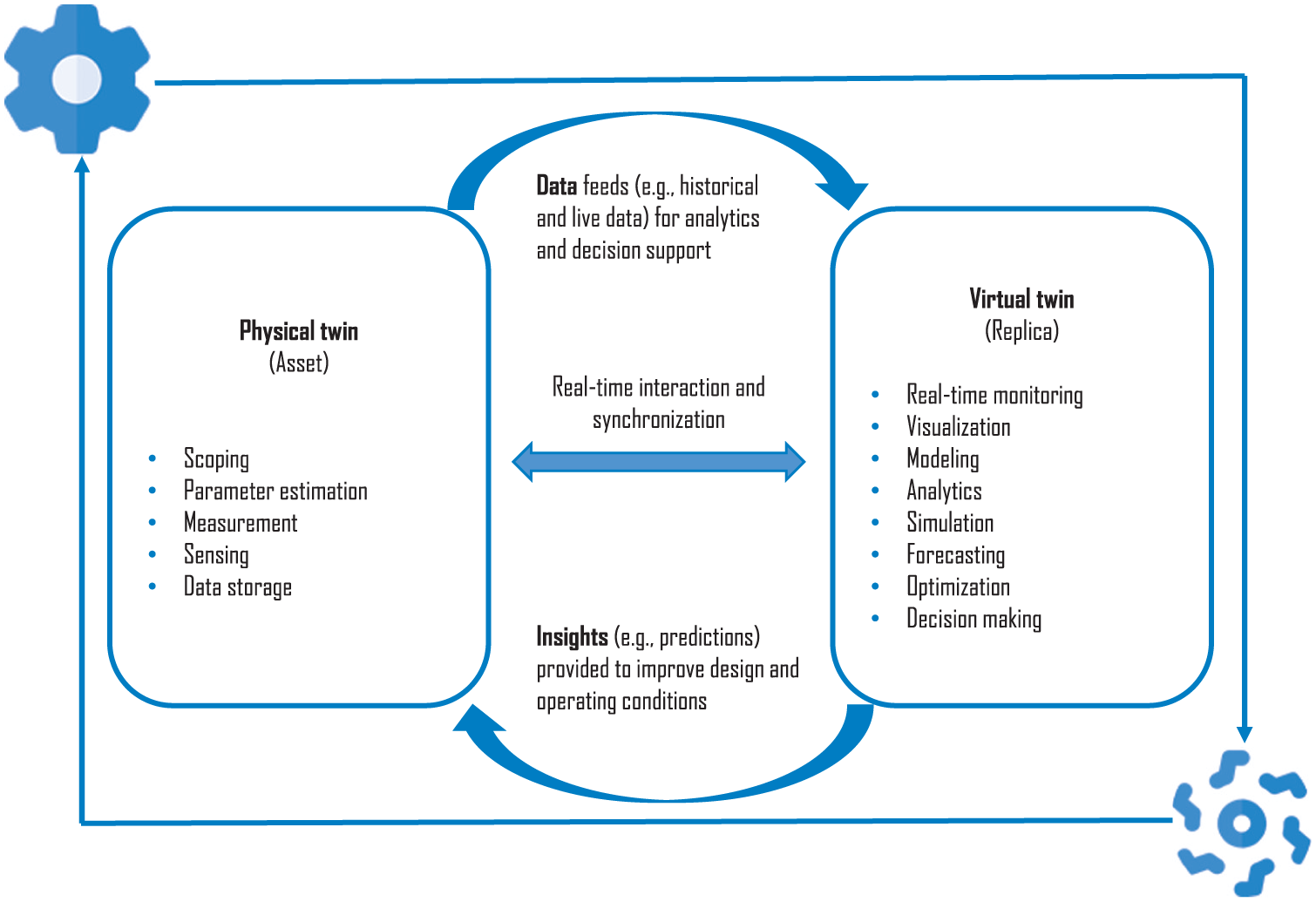
Digital twin and its main elements.
Generative AI and Implications for Digital Twins
“Generative AI is a type of machine learning capable of generating data in a range of formats (including text, image, audio, video, or code) and adapting to new tasks in real time, following simple text-based prompts.” 24 It includes several types of models, each built and trained in a unique way. Variational AutoEncoders (VAEs) use two parts, an encoder and a decoder, and learn by guessing and adapting. Generative Adversarial Networks (GANs) have two models (generator and discriminator) that compete to make more accurate predictions. Diffusion models add noise to the data and then learn to remove it. Transformers, often used in models like ChatGPT, also use an encoder-decoder architecture and learn from examples. Hybrid models mix different types for even more flexibility. 25
What ties together generative AI and digital twins is the application of generative AI as a digital technology for accurate simulation, evaluation, and optimization of the physical twin by learning patterns and relationships from existing data and then using that knowledge to generate new, similar data. 26 One example is stress testing (testing the resilience and stability of a system under extreme events) in energy grid management, where utilities create digital twins of their power grids to predict supply and demand. 27 Generative AI can simulate various what-if scenarios, such as sudden spikes in demand, equipment failures, or weather events, by generating synthetic data (artificially created to mimic real-world conditions). This helps grid operators stress test their systems under conditions for which they may have little real-world data, improving grid reliability and disaster preparedness. The Siemens Electrical Digital Twin, for example, helps utilities by creating a dynamic, real-time digital model of the power grid. It enables utilities to continuously synchronize planning and operational data, reducing inconsistencies and manual intervention, as well as costly failures such as outages and blackouts. 28 Siemens’ recent collaboration with NVIDIA on generative AI for real-time immersive visualization has improved the accuracy and realism of its digital twin simulations, enabling utilities to more effectively visualize, predict, and optimize grid performance. 29
Generative AI helps system designers generate new ideas for optimized designs. It can search through a whole series of design patterns and generate new configurations that digital twins can simulate and evaluate. For example, in urban planning, generative AI can suggest novel room and furniture designs for greater energy efficiency, which the digital twin can next test. In terms of predictive analytics and decision-making, generative AI can generate more advanced predictive analytics by modeling possible future paths or generating more extensive what-if scenarios that help boost decision-making. 30 For example, generative AI-assisted digital twins can analyze an area’s historical and real-time energy consumption data alongside weather data to predict sudden increases in air pollution. This allows urban planners and utilities to anticipate high-risk periods, implement mitigation measures, and optimize energy use to reduce environmental and health impacts. 31
Sustainability in Urban Design and Planning: PEDs in Circular Cities
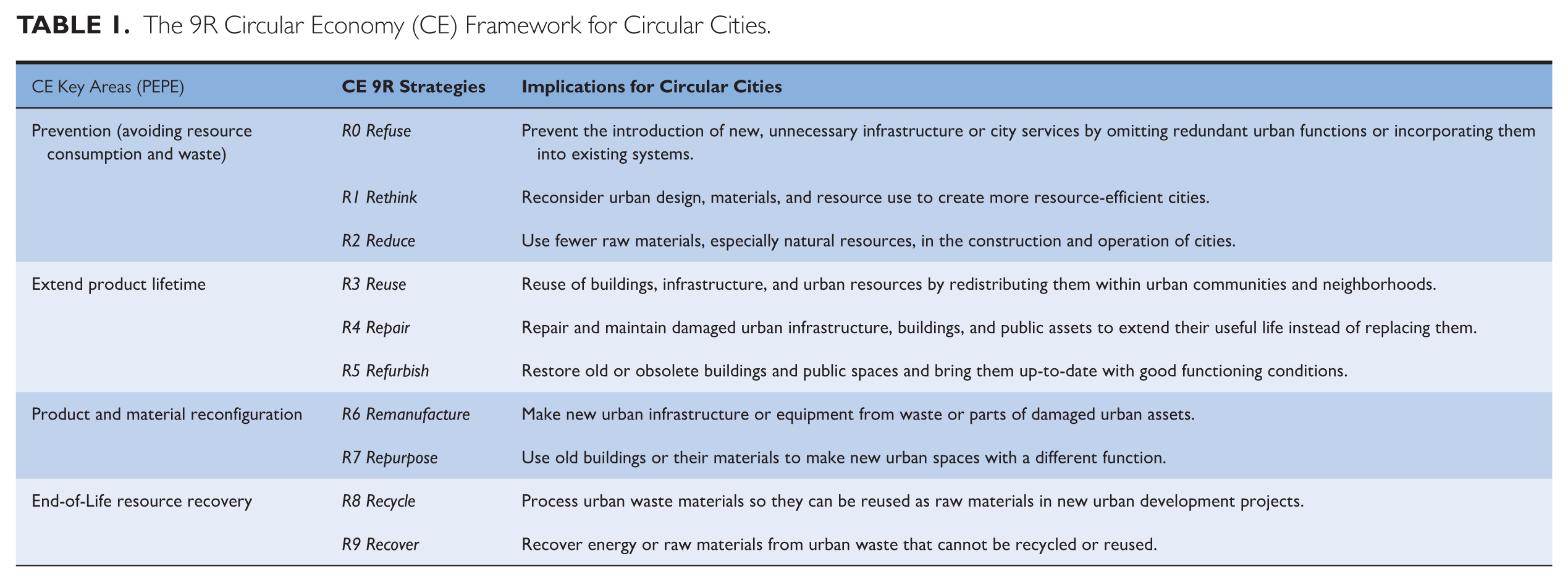
Grand challenges such as climate change have put the restructuring of energy systems toward a circular economy on the agenda, especially in the context of urban ecosystems, leading to innovative initiatives. Smart cities, for example, point to the use of digital technologies to improve resource efficiency and energy management for sustainability and quality of life in urban areas. 32 Also, circular cities are urban areas that apply circular economic principles in a more sustainable and efficient way to different aspects of urban management, such as materials, energy, water, and land. 33 This approach aims to create a better urban living environment and involves a wide range of stakeholders, including citizens, city governments, local authorities, energy providers, utilities, transport authorities, public transport operators, construction companies, infrastructure developers, NGOs, communities, and regulators. 34 Prior research has shed light on various frameworks for the transition to circular cities and a more sustainable and regenerative urban ecosystem. The 9R framework, for example, is one of the most widely used frameworks to explain the implementation of the circular economy in urban environments. 35 As shown in Table 1, the framework highlights the key elements, including Refuse, Rethink, Reduce, Reuse, Repair, Refurbish, Remanufacture, Repurpose, Recycle, and Recover.
The 9R Circular Economy (CE) Framework for Circular Cities.
To optimize energy management in urban spaces, innovative solutions can support the adoption of circular economic principles. The solution of PEDs aims to transform underperforming and degrading urban spaces with unsustainable energy usage into districts that produce more energy than they consume. One of the key concerns of climate change initiatives such as the Green Deal is the transition to circular cities, which can be achieved through PEDs. 36 A PED is an urban space or neighborhood that includes highly energy-efficient buildings, consumes renewable energy that it produces, integrates electric and hybrid cars, and stores surplus energy from its own renewable energy production sources, such as solar panels. 37 An effective PED is capable of producing as much renewable energy as possible in the district to meet the needs of its residents (both district residents and visitors). 38
As shown in Figure 2, PEDs consist of four main components that together capture the main aspects and characteristics; infrastructure for renewable energy generation and storage, building energy efficiency, mobility and transportation, and connectivity and interoperability among district stakeholders. 39 As for energy production, in addition to solar panels, waste incineration and waste heat from manufacturing processes and wastewater can provide renewable energy for district heating systems. Depending on the geography of the district, geothermal energy (heat energy from the earth) or tidal and hydroelectric power (using moving water to turn a turbine) can also be used to generate heat and electricity. With regard to storage, PEDs integrates smart grids to monitor and manage the generation, distribution, and consumption of energy in the district. A smart grid is a digitally enabled, interconnected network of transmission and distribution systems including energy providers, intermediaries, and consumers. Also, PEDs include energy-efficient buildings with sustainable construction materials, regular maintenance and thermal renovation, effective insulation (doors and windows), greener lighting such as LEDs, and compatibility for natural ventilation and daylighting. Regarding mobility and transportation, PEDs prioritizes the use of electric vehicles (EVs), including both light vehicles such as e-bikes and heavy vehicles such as buses, as well as sharing economy practices such as bike or car sharing. Finally, PEDs include interconnected parts and solutions for real-time monitoring and control of energy production, storage, and consumption systems. Internet of Things (IoT) and AI technologies are used to collect and analyze data to train AI models and algorithms for optimized energy solutions. 40
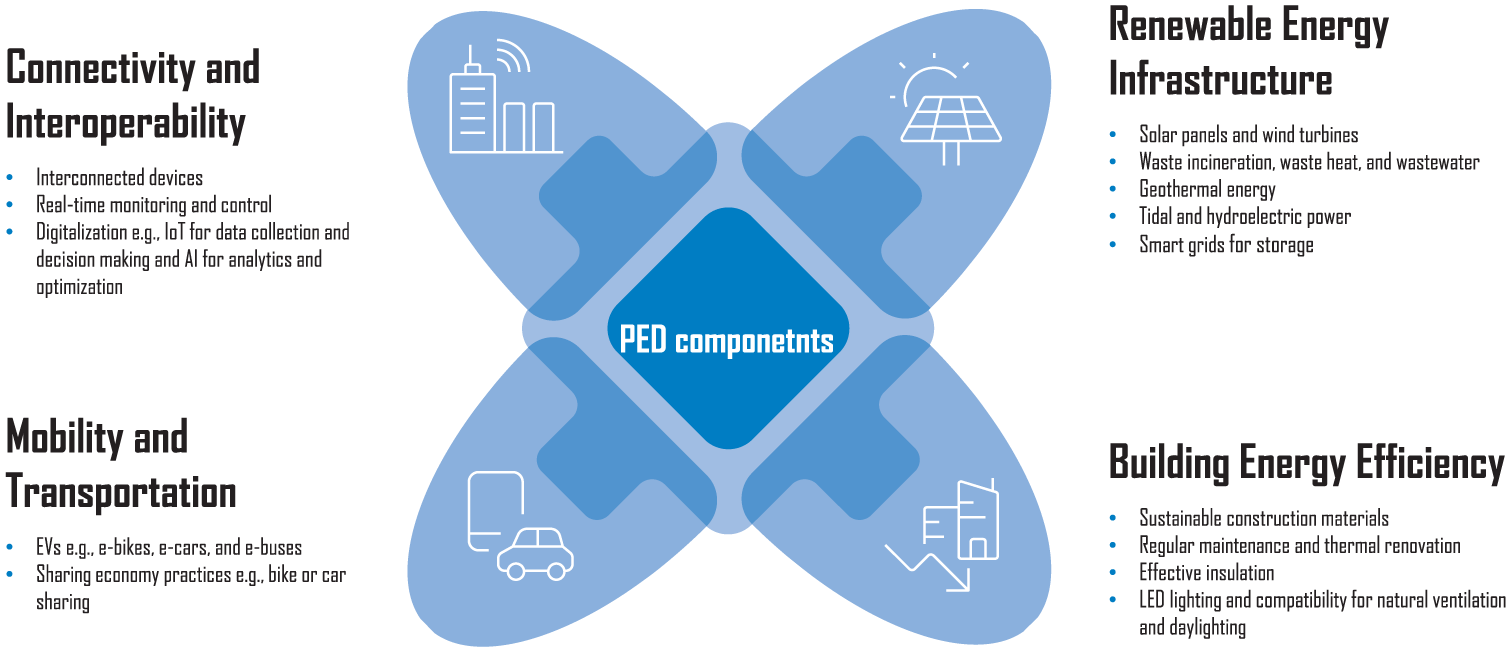
Positive energy district components.
The 9R circular economy (CE) strategies directly support the four components of PEDs. Strategies like refuse and reduce align with building energy efficiency by minimizing consumption. Reuse and repair support renewable energy infrastructure through material and equipment lifespan extension. Refurbish and remanufacture contribute to clean mobility solutions, while repurpose, recycle, and recover enhance stakeholder connectivity through resource management collaboration.
Examples of PEDs include the Hunziker site in Zurich, Switzerland, which follows the principles of the 2000-Watt Society, in which efficiency, smart design, and renewable energy sources ensure that each person consumes no more than 2,000 watts of energy on average throughout the year for housing, transportation, food, goods, and services. 41 Schoonschip, a floating neighborhood in Amsterdam, is an energy-neutral community with a smart interconnected solar panel grid for peer-to-peer energy sharing, underwater heat exchangers, and wastewater treatment to recover energy and nutrients from wastewater. 42 PED Smart Energy Åland, located in the Åland Islands of Finland, aims to create a 100% renewable energy system that utilizes the region’s favorable wind and solar conditions to produce electricity and green hydrogen by integrating offshore wind farms and solar panels. Sustainable mobility, for example, is supported by domestic production of sustainable fuels and high electrification. 43 At Medicon Village in Lund, Sweden, a new integrated solution, called E.ON’s ectogrid system, is applied to achieve PED goals by balancing heating and cooling needs through local energy sharing. Waste heat from one building is reused by another, supported by heat pumps and renewable energy, creating a flexible, efficient, and low-carbon district energy system (Table 2). 44
Overview of the Selected PED Examples.
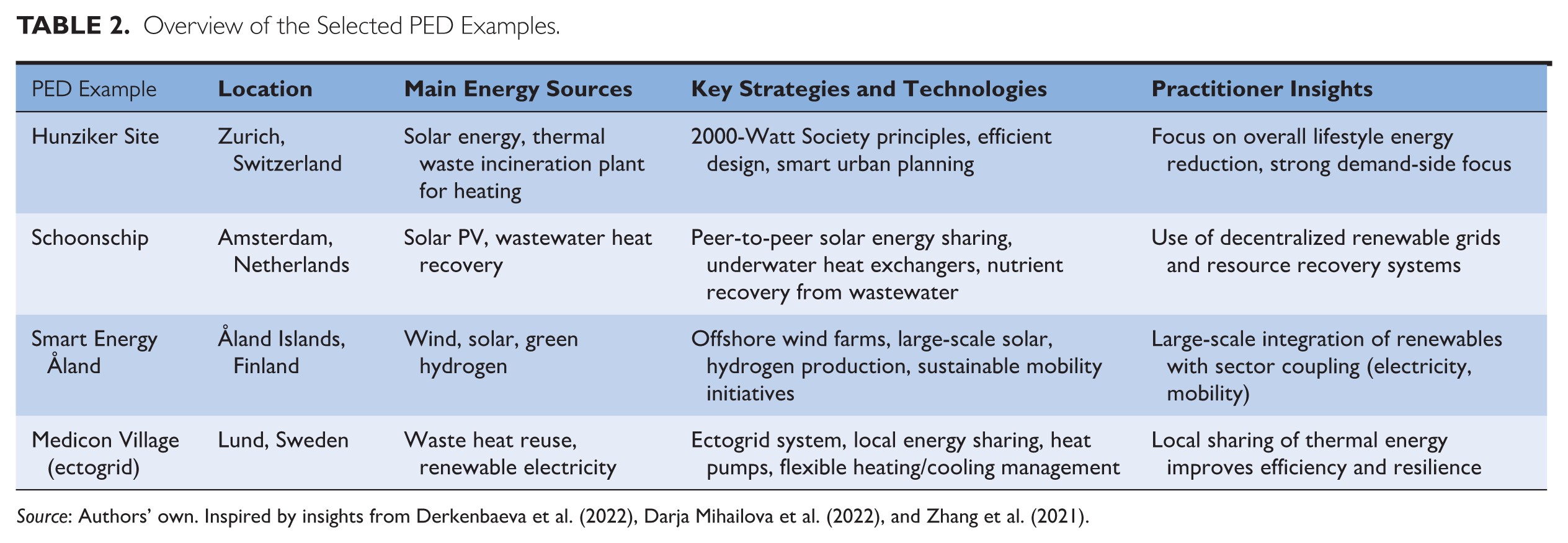
Source: Authors’ own. Inspired by insights from Derkenbaeva et al. (2022), Darja Mihailova et al. (2022), and Zhang et al. (2021).
Our review of previous research suggests that PEDs, particularly those supported by generative AI-assisted digital twins, are closely aligned with 9R circular economic principles. For example, AI-assisted digital twins help monitor and simulate energy flows, material use, and infrastructure performance, supporting strategies such as refuse, reduce, and reuse by minimizing waste and extending the life of assets. 45 They also facilitate repair, refurbish, and remanufacture through data-driven decision-making, 46 while promoting repurpose, recycle, and recover by mapping resource cycles within the district. 47
Synthesis of Research on Generative AI for Digital Twins in PEDs Development
Overall, our synthesis of the literature recognizes generative AI as a key enabler for improving the functionality and responsiveness of digital twin systems, particularly in model creation and updating, generative modeling, predictive analytics, and decision-making. 48 We also find that digital twins can be used for energy modeling (to model how energy is generated, stored, transmitted, and consumed), environmental simulation (e.g., noise, sunlight, tree shadows), energy flexibility strategies (to adjust energy demand and supply in response to changing conditions), and infrastructure asset management (to manage energy-related assets, such as grids, solar panels and wind turbines, and batteries and storage elements), which are key to creating and maintaining PEDs. 49 Furthermore, digital twins are reported to support policy-making processes and collaboration among stakeholders in a co-creation approach. 50 With regard to PED implementation challenges, the modeling and simulation of systems from individual buildings to entire districts helps overcome scalability limitations. For stakeholder engagement, visualizations make complex energy systems understandable to citizens, business leaders, and policymakers. In addition, digital twins enable stakeholders to collaboratively design, simulate, and manage initiatives in real time for solutions that balance socioeconomic needs with environmental sustainability. Finally, when digital twins are updated with the latest regulatory and legislative requirements, they can model compliance scenarios and help stakeholders identify legal and regulatory barriers early. Given the capabilities of generative AI, the technology has the potential to improve these applications, making it more cost-effective and time-efficient.
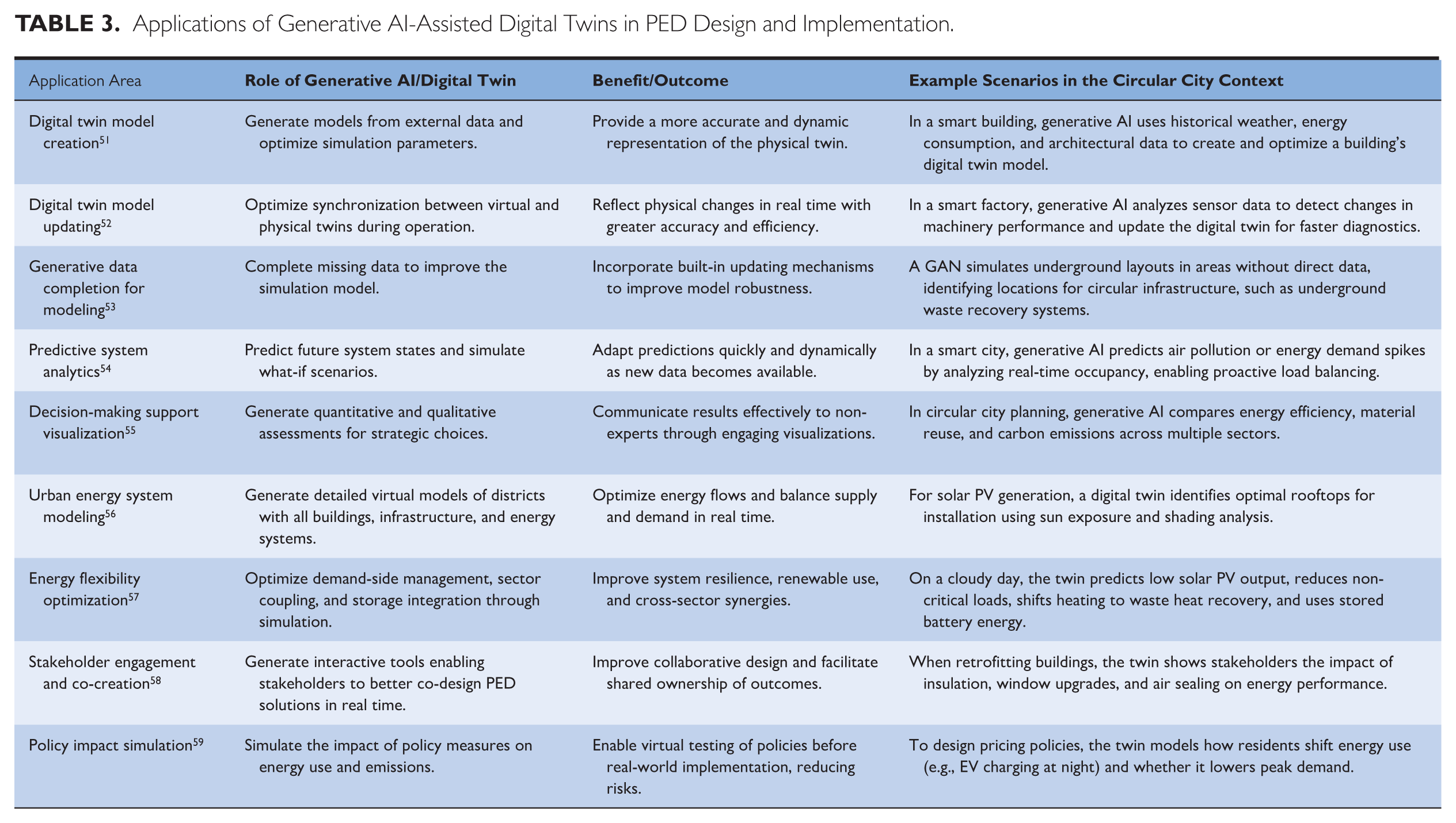
Table 3 provides an overview of how generative AI-assisted digital twins can support various applications in PED design and implementation, highlighting roles, benefits, and example scenarios in the circular city context.
Applications of Generative AI-Assisted Digital Twins in PED Design and Implementation.
Context and Empirical Analysis
We conducted a qualitative exploratory case study 60 of project ExPEDite 61 that aimed to create and deploy a novel digital twin system for real-time monitoring, visualization and management of energy flows in PEDs, including electricity, heating, and mobility and transportation. For conducting the case study, we followed a nine-step case study research process 62 to structure data collection, analysis, and interpretation (Table 4).
Case Study Research Process and Its Application.
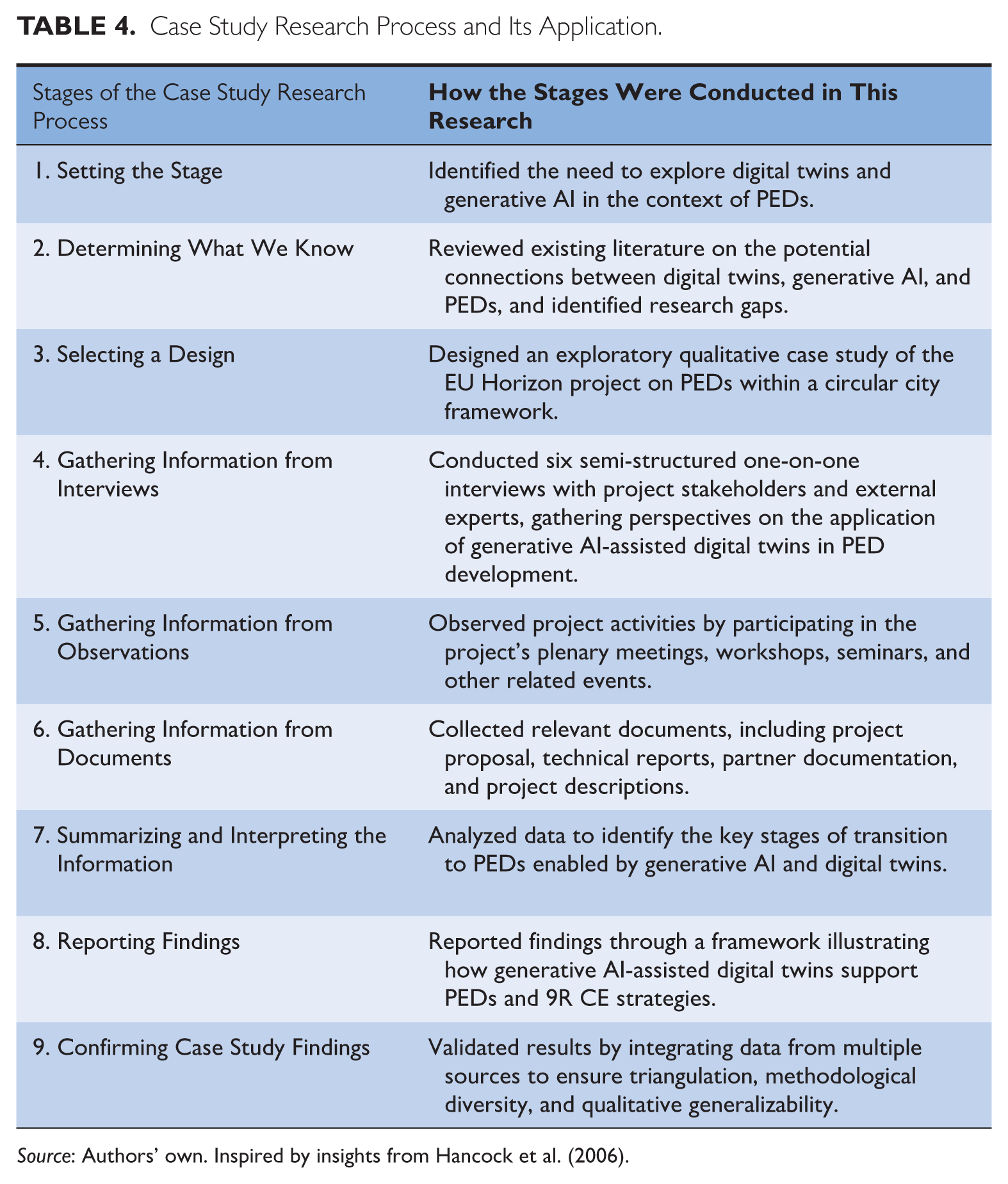
Source: Authors’ own. Inspired by insights from Hancock et al. (2006).
Regarding data collection, we capitalized on the ExPEDite project’s documents related to seven work packages, administrative forms, technical and financial reports, and the content produced by the project coordinator as well as the partners. This was complemented by six in-depth interviews conducted between fall 2024 and spring 2025 with project stakeholders and external experts. The interviews were conducted face-to-face, tape-recorded, and then transcribed. To increase the reliability and validity of the findings, data from the interviews was synthesized with findings from the documentary sources, benefiting from the triangulation of data sources 63 to better understand the case and cross-check key elements of the proposed framework.
Generative AI-Assisted Digital Twin Design and Implementation
Based on our analysis of the data collected from the project, we developed a framework that covers the entire life cycle of the proposed generative AI-powered digital twin framework, incorporating CE principles. Each of the six stages of the framework reflects a critical need identified during the study, from building the foundation in Stage 1, to enabling interaction in Stage 2, to up-to-date accuracy in Stage 3, to uncovering insights of analytics in Stage 4, to testing and validating performance in Stage 5, and to sustaining the digital twin over time in Stage 6. This is also consistent with previous research 64 suggesting that these stages, taken together, reflect both industry practices and the new possibilities enabled by generative AI.
Creating a Virtual Replica of the Physical System
The first step to designing a digital twin for an energy district is to identify the most relevant and up-to-date modeling tools and assess their implications for the creation of a 2D replica that represents the physical twin accurately and in sufficient technical detail (ExPEDite methodology and objectives). This replica serves as a tool for testing, simulation, and analysis of energy production and demand in a given district. Real-time rendering replica creation tools such as Unreal Engine and Cesium can be used to facilitate the simulation and accurate design of the physical district (ExPEDite statement of objectives). The replica integrates carefully chosen worldwide data with the district’s own data to improve the accuracy and consistency of dynamic and realistic simulations. Such a replica is capable of streaming the district’s energy flows with the ability to control access to the data (ExPEDite statement of objectives).
Emerging digital technologies have the potential to create virtual replicas of real-world energy districts. Generative AI can streamline several aspects by generating new ideas for the design and technical features of virtual replicas. For example, generative AI-based simulation models, combined with multi-level big data analytics, are used to automatically determine the type and level of risk that urban areas may face in real time (e.g., flooding, heatwaves, or energy infrastructure failures), enabling the optimization of evacuation routes to safety (descriptions of ExPEDite-related projects). More specifically, generative AI tools can be used to generate new design configurations that are optimized based on resource use and performance. Thus, new design scenarios can be created to minimize resource consumption and maximize performance in a given energy district. Generative AI tools can generate synthetic data, which can be combined with real data from an energy district to suggest designs that are more robust to circular economic strategies. This data can be used to perform multi-scenario design simulations for energy production and consumption analysis. The data can also be used as input to train generative AI models that create what-if scenarios for material/equipment reuse ideas. Therefore, if energy production and consumption takes a different scenario than originally planned, the material and infrastructure can be used for other purposes. For example, broken or damaged solar panels could be integrated into the design of other energy equipment—or batteries (from EVs or other sources) with incomplete capacity could be reused for grid storage systems in PEDs. Finally, generative AI could be used to rethink designs that minimize material waste and energy consumption in the physical twin. For example, CarbonBright, a London-based climate tech startup, offers a generative AI-powered platform for companies to create digital twins of their products’ life cycles. By automating data collection and minimizing errors, the platform enables accurate life cycle assessments. This helps companies identify where the greatest environmental impacts occur (from raw materials to disposal) and how to design products that use fewer resources, generate less waste, and are easier to recycle or reuse.
3D Visualization
The next step is to improve the visualization of the replica by creating a 3D representation, providing a graphical visualization of energy fluxes within the district. One interviewee emphasized the centrality of 3D visualization in the implementation of digital twins: “So, when we talk about digital twins, the first thing that comes to mind is the model, right? The 3D model [. . .] it would help a lot to see what’s there.” Another interviewee said interactive visualizations were crucial for getting different levels of information from different urban areas: “I recently saw the interactive visualization of Singapore digital twin [. . .] you could navigate around the city and get different levels of information, like building consumption or traffic analysis.” Such 3D visualizations help better identify urban spaces where energy efficiency can be improved (ExPEDite statement of objectives). An important factor in developing a real-time, reliable, and robust visualization of the status quo of energy flows within a district is the integration of quality data and the development of interoperable systems and services, which will lead to standardization efforts in the field of local districts (ExPEDite statement of objectives). A variety of tools and techniques can be used to improve the accuracy and reliability of 3D visualizations. Examples include Unity, Autodesk Platform Services (formerly Forge), and IBM Maximo Visual Inspection (ExPEDite statement of ambition). While these tools provide realistic visualizations integrated with various data sources, they have limitations such as scalability and performance, data access and management, interoperability and standardization, and integration and real-life application (ExPEDite meeting minutes). As the size and complexity of a created digital twin increases, the performance and responsiveness of visualization tools decrease, resulting in a slower and less responsive user experience, which can be a significant obstacle for district energy analysts trying to analyze and make decisions based on the energy data presented (ExPEDite statement of ambition).
Generative AI can be used to overcome these limitations and optimize the performance and scalability of visualization tools by enhancing data compression, distributed rendering, and cloud-based processing. This can also lead to improved 9R principles of circularity in an urban district. Generative AI tools can generate detailed representations to rethink the existing design process and therefore improve the realism of 3D visualizations. They can also generate ideas for how the material or infrastructure (e.g., solar panels or electric batteries in EVs) can be used for a function other than their original purposes. Generative AI models can be trained based on energy user input data to generate simulations for reuse ideas. Finally, generative AI-powered video creators can help develop 3D visualizations of eco-friendly designs to encourage urban planners to rethink designs and layouts.
Another limitation is the user interface (UI) and user experience (UX) of 3D visualizations that can be challenging to navigate and understand, especially for nontechnical users unfamiliar with the visualization tools. To overcome these limitations, immersive technologies such as Virtual Reality (VR) and Augmented Reality (AR) can be used to create a more immersive, realistic, and interactive environment and better understand the digital twin (ExPEDite statement of ambition). Moreover, generative AI models can be trained on user preferences, needs, and experience levels to adjust the complexity of visualizations in VR/AR environments for a more engaging and personalized experience. Furthermore, user interaction with VR/AR tools can be enhanced with generative AI natural language processing (NLP) voice commands, or text-based prompts. A case in point is smart building digital twin platforms that give novice users simplified, intuitive 3D visualizations that highlight basic energy usage patterns, while expert facility managers can access detailed simulations to gain insight into areas such as algorithm performance in different scenarios, real-time building operations, equipment performance metrics for predictive maintenance, and seamless data interoperability. 65 For example, Priva’s cloud-based software, ecoBuilding, uses digital twin and generative AI technology to predict the energy needed to achieve an individual’s desired climate conditions. It combines synthetic AI data with data from weather forecasting, thermal inertia and storage, building usage, and sustainable energy patterns to help users save energy and reduce CO2 for improved indoor climate and personal comfort. 66
The 3D visualization of a digital twin system helps to better understand and monitor the behavior and performance of the physical twin. For example, a virtual twin of a shopping mall can monitor the energy supply and demand of various elements such as PV panels, battery storages, EV charging, and the thermal efficiency of the building (ExPEDite-related projects’ reports). Individual users also benefit from generative AI-powered digital twin technology. As an example, Transport for London (TfL) is working with Neo4j, a database and analytics company pioneering the use of generative AI, to build a digital twin system to map and manage London’s complex transportation network. The digital twin analyzes synthetic AI data as well as real-time data from roads, traffic lights, and events to predict and manage disruptions, helping travelers plan better routes, save time, and enjoy more reliable transportation. 67 As a result, people using platforms like TfL Go benefit from quicker updates during incidents, improved traffic flow, and more reliable, stress-free journeys.
Real-time Data Integration from IoT Sensors
The created 3D visualization is supplemented with data from IoT sensors in the physical twin for more relevant and personalized simulations. This starts with data compression, reducing the size of the data collection, and narrowing it down to important information, therefore enabling faster data sharing and processing within the digital twin. Next, the data is refined and cleaned of inaccurate, irrelevant, noisy, incomplete, or biased data from IoT sensors to ensure that only high-quality, reliable information is used in the digital twin, improving the accuracy of simulations and analysis. With open-source security and accountability issues in mind, open source IoT platforms can be used to connect, manage, and analyze data from IoT devices for better interoperability and information flow between the physical and virtual twin (ExPEDite consolidated technical reports). One interviewee said that different types of data are collected to feed the AI models: “So, specific tools would be monitoring the environment, like temperature or air quality, to know exactly what is needed (for simulation).”
The collected and cleaned data is then modified and converted into standard formats that can be read across multiple devices or servers, improving performance and enabling real-time representations of energy flows in the physical twin. Specific data schemas can be developed for each sensor to specify the data type, data format, associated metadata, and granularity (how often the output is generated and stored in the database). For storage, cloud services are used to store large amounts of real-time data on energy production, transmission, and consumption. This data is combined with available data from relevant large datasets provided by IoT sensors to further refine the data by identifying patterns, trends, and anomalies in energy production and consumption, as well as system efficiency for decision-making and optimization. Finally, cloud infrastructure is used to process and analyze the entire collected data for insights to be integrated in the digital twin for monitoring and optimization of energy systems in the physical twin.
Generative AI tools and solutions can accelerate the integration of data into digital twin systems in several ways. First, generative AI models can interpolate missing data to complete the simulation:
You can train the AI model so that they can fill in the gaps effectively. If you’ve got 100 or 200,000 IoT sensors, at some point you get a power failure which causes missing data [. . .] they (AI models) can approximate (the missing data) based on historical data.
They can also help developers generate algorithms for automated data cleaning and preparation. These algorithms eliminate the need for subsequent repair by detecting and removing inaccurate or missing data, which is essential given the ongoing data input requirements as highlighted by an interviewee: “There’s a continuation in the data input requirements, file formats, [. . .] models must stay up to date, and inputs need to be consistent.” Generative AI tools can also automate data formatting and conversion tasks, making it easier to feed diverse and sometimes inconsistent datasets into the digital twin platform so that it operates smoothly and accurately: “Generative AI can help convert from one format to another or automatically adapt input to what’s required from the platform.” They can also help develop more accurate algorithms, such as search, sort, and randomization algorithms, that optimize data storage based on real-time needs, reducing the amount of data stored. These algorithms can quickly identify patterns and relationships in data to better prepare for analysis and also identify opportunities to reuse existing resources. For example, Microsoft Azure digital twins integrated with IoT helped retailers improve customer experience in several ways. By using IoT sensors to track customer movements and interactions, retailers optimized store layouts and product placement to increase engagement. Also, real-time data enables tailored product recommendations and promotions, improving customer satisfaction and loyalty. In addition, real-time inventory visibility and demand forecasting help ensure accurate replenishment, and reduce out-of-stocks and overstocks. 68
Big Data Analytics
The collected, stored, and pre-processed data is analyzed for insights and meanings that can be used to make decisions about the digital twin system. First, descriptive analytics is used to summarize historical energy production, consumption, and environmental performance data from the physical twin to provide insight into past trends and patterns within the district. This helps stakeholders gain a clearer picture of the district’s current and past energy performance. The results are further analyzed through diagnostic analysis to identify and explain energy inefficiencies or bottlenecks that cause problems in energy systems, such as equipment failures or unexpected energy losses. Predictive analytics is added to forecast future energy demand, consumption and production patterns, and potential challenges within the district. This helps anticipate peak and average energy usage over a certain period, renewable energy availability, and environmental impacts, enabling proactive planning and valuation. In addition, prescriptive analytics is used to more accurately recommend specific actions and strategies to optimize district energy efficiency and performance based on the results of previous analytics. This enables better decisions for district energy optimization, such as improving infrastructure design, adjusting energy distribution, and producing and saving renewable energy. The results of all of these analytics are used to create and manage digital representations of infrastructure and constructions, such as buildings, through Building Information Modeling (BIM), which is the process of creating and managing information for a built asset. This involves creating detailed 3D models of the buildings in a district, integrating sensors and spaces, including structural, architectural, and systems data that can be integrated into the digital twin (ExPEDite consolidated technical reports). The results of BIM facilitate the design, planning, and implementation of PEDs that include energy-efficient buildings and infrastructure by providing a data-driven, realistic digital representation for simulation and analysis.
Generative AI can improve data analytics capabilities and performance in several ways, leading to new opportunities for recycling, recovery, and remanufacturing: “AI can help with analyzing a very large dataset [. . .] and identify patterns or even generate another dataset. But it has to be fed with high-quality data.” Another interviewee said, “Anywhere we have a lot of data, we can use machine learning to find patterns that aren’t obvious to humans to improve energy efficiency.” For example, through advanced descriptive analytics, generative AI tools can quickly provide data summaries and analysis of historical data on waste generation, collection, and disposal patterns in a district to identify waste recycling opportunities. They can also help quickly identify data patterns for better diagnostic analytics to determine which material or equipment can be replaced. To improve predictive analytics, generative AI models can be trained on a district’s historical energy consumption data to quickly predict future energy scenarios under different conditions. Finally, for prescriptive analytics, generative AI tools can generate ideas about optimal solutions for energy recovery decisions.
Test and Validation through Simulation
The created digital twin should be tested and validated prior to implementation. This phase involves improving synchronization and interaction between the physical and virtual twins. It also focuses on improving the UI and UX and engaging stakeholders to review validation results. An on-site demonstration of the digital twin enables validation of what-if scenarios, better planning, design by providing feedback, and lessons learned (ExPEDite consolidated technical reports). Digital twin simulations facilitate testing and validation of energy optimization solutions: “Its benefit is that it will allow you to virtually test some pathways [. . .] and see the impact a certain choice would have through simulations before implementing them.” This phase improves synchronization and interaction between the physical and virtual twins. It also focuses on improving the UI and UX and engaging stakeholders to review validation results. In addition, the methods and technologies used to create the digital twin are tested to validate compliance with CE principles (information report of ExPEDite participating organizations).
Generative AI can improve digital twin simulations, creating opportunities for repair, refurbishment, and reduction. The technology makes it easier to start the simulation process: “Generative AI can give you a couple of solutions to start with [. . .] if you define an area, it can suggest how to redesign or improve it based on prompts.” Generative AI tools can generate algorithms to verify the accuracy of data between a physical object and its virtual representation, avoiding repair and replacement costs. These algorithms streamline calculations and reduce computation time, enabling faster simulations without compromising accuracy. The improved simulations allow district planners to more easily test energy flow features and functionality, reducing waste in the real-world implementation of solutions. The simulations also allow early identification of potential weaknesses or failures in the physical twin and suggest repairs. For instance, another interviewee points out the potential of generative AI to personalize simulation tools: “Tailoring simulation tools to my specific needs, not just a generic house [. . .] the model learns and adapts to my use case.”
Deployment and Monitoring
The final phase involves the engagement of the residents of the district and forecasting practices for better management of district energy systems and resource allocation decisions. Effective stakeholder communication is critical at this stage: “Once you start a project for a PED [. . .] ask your client, ‘What do you have in mind?’ That will determine the amount of work, interoperability requirements, and scope.” Municipalities and local actors play an important role in the smooth and effective implementation of digital twins for PEDs. Their active involvement helps to reduce the multiple and complex barriers to PEDs: “If we look at a few blocks in a city [. . .] even if we solve the administrative burden to install PVs, it still may not be enough to achieve a PED.” One of the ways to involve these stakeholders is to develop Integrated Assessment Platforms (IAPs) to facilitate decision-making and support municipalities and local communities in planning and implementing PEDs. When designing such platforms, flexibility and adaptability are important: “In the short term, it’s crucial to build flexibility into the platform [. . .] so when stakeholder requirements change, it can be adapted.” For citizen engagement, gamification and co-creation approaches are employed to enhance public awareness and engagement in energy efficiency of the district. Smartphone applications can be used to promote citizen engagement activities aimed at increasing awareness and improving energy efficiency behaviors through gamification, while providing citizens with options on how to get involved in the district’s energy transition and providing messaging capabilities to collect soft data on their views. Simulations also enable energy production and consumer demand forecasting to address the issue of urban emissions and the application of climate change adaptation and mitigation strategies, while ensuring that PEDs produces a surplus of renewable energy and net-zero greenhouse gas emissions.
Generative AI tools and technologies can improve the implementation and monitoring of digital twins, opening up opportunities for recovery, refurbishment, and reuse. Generative AI-powered interaction systems can personalize communications with district residents based on customized feedback to gather ideas on how to refurbish materials or equipment, such as smart meters, grid equipment, sensors and IoT devices, battery storage systems, and renewable energy infrastructure like solar panels. For example, one interviewee pointed to the use of AI chatbots to suggest energy improvements for buildings: “There could be a chatbot, I give some info, maybe a picture of my apartment, and it shows what can be improved.” As for forecasting capabilities, generative AI models can be trained on physical district data to predict digital twin operations and responses for real-time adjustments and predict the amount and type of waste to prepare for energy recovery from waste management. They can also generate ideas on how to identify old energy equipment in the district for refurbishment rather than replacement. It is worth noting that technical solutions require professional skills and expertise as well as proper assessment and planning: “So, of course, digital tools can assist [. . .] but you will need the proper expertise to do that [. . .] you need to design your solution from the ground up before you even touch a mouse or a keyboard.”
As shown in Figure 3, a key aspect of the proposed framework is the notion that integrating generative AI into digital twin systems enables a continuous feedback loop targeting three key phases. For design and visualization, the system evaluates performance to suggest optimal layouts and feature configurations for improved UI and visualization. For data integration and analysis, it assesses data quality by identifying issues, such as data gaps and inconsistencies to improve future predictive and simulation capabilities. For test and implementation, it provides insights into how users interact with and experience the digital twin system, enabling optimized performance in PED development. This synergy reinforces the deep interconnections between generative AI, digital twins, and PEDs, demonstrating that development benefits from both the predictive and analytical capabilities of generative AI and the dynamic adaptability of digital twin systems.
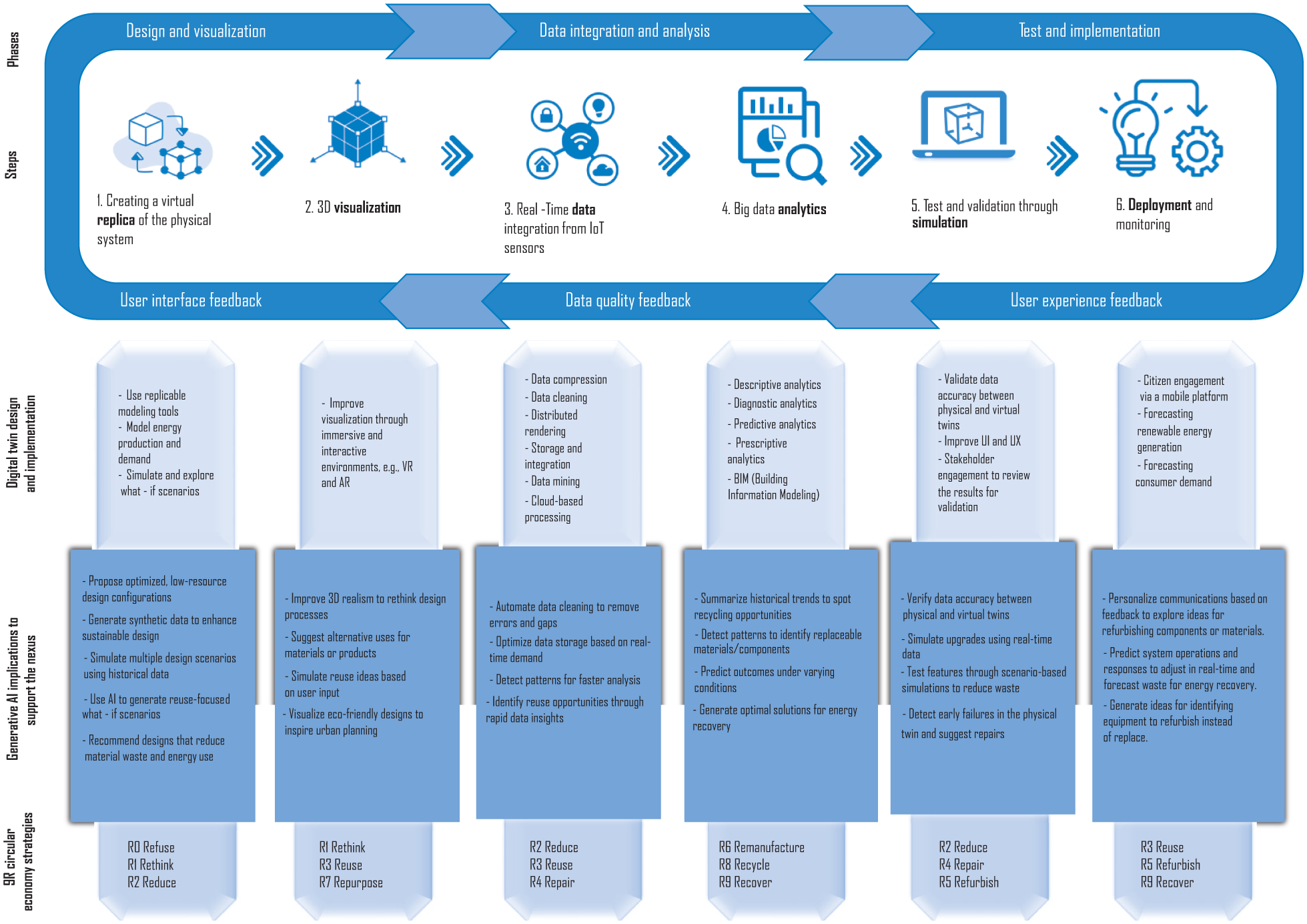
Generative AI-assisted digital twin framework for PEDs.
Equally important to the framework’s effectiveness in PED design and implementation is the role of data in guiding the key decisions. Generative AI can optimize this and improve key decision areas. For example, generative AI technologies can fill in missing data on energy flows and weather, such as future energy demand and weather scenarios. Furthermore, the technology can provide predictive maintenance recommendations and accurately simulate user energy consumption behavior. Also, generative AI helps predict mobility changes, such as traffic flow anomalies, and model future infrastructure needs accordingly. Finally, generative AI can create scenarios for stakeholder engagement and predict potential conflicts and solutions.
Theoretical Implications
Although the digital twin literature has advanced in the context of energy efficiency, e.g., in the “energy transition and decarbonization” school of thought, 69 less attention has generally been paid to PEDs and the enablers of how to achieve such positive districts. The findings of this study suggest that the process of achieving PEDs should not only focus on sufficiency, efficiency, and flexibility, 70 but also on the use of emerging digital transformation technologies 71 and, in particular, the roadmap that this process should follow (See Figure 3). Consistent with previous research that takes a holistic approach to studying PEDs, 72 our research points urban development stakeholders to the main components of PEDs, including infrastructure, buildings, mobility, and connectivity. Our findings complement and extend prior research 73 that explores the technical and architectural potential of digital twins to support sustainable urban energy systems. Our research advances this by providing a conceptual and strategic framework that supports decision-making for PED transformation, grounded in a real-world EU Horizon project context. Our findings also resonate with and extend the findings of previous systematic reviews 74 of AI and digital twin technologies contributing to sustainable cities. In particular, we address a gap highlighted in these reviews (the lack of integration between AI-driven digital twins and CE strategies) by aligning our framework with the 9R principles and validating it in an EU Horizon case study.
As our analysis of the EU Horizon project suggests, generative AI has the potential to facilitate the implications of digital twins for achieving refusing, rethinking, reducing, reusing, repairing, refurbishing, remanufacturing, repurposing, recycling, and recovering practices in PEDs. While the CE perspective has been incorporated into research on various aspects of PEDs, such as studying circular construction methods and practices 75 or identifying trends in urban environmental sustainability, 76 the underlying mechanisms of reaching specific circular economic targets remain underexplored. This study addresses these shortfalls by exploring how generative AI supports the nexus of the digital twin and the 9R strategies throughout the design and implementation phases.
This article contributes to the theoretical discussion by creating an integrated conceptual framework that bridges three previously separated domains; generative AI technologies, digital twin systems, and circular economic principles in urban energy contexts. This integration provides a novel lens for understanding how emerging technologies can be systematically applied to sustainability transitions.
Implications for Practice and Managerial Recommendations
Generative AI-assisted digital twins can help overcome urban energy challenges by supporting the development of PEDs for more accurate energy predictions and operational optimization. In particular, we recommend that urban development and sustainability managers use generative AI tools to suggest optimized redesign configurations of buildings, energy infrastructure (e.g., PV panels or EV charging stations), mobility and transportation networks, waste management systems, smart grids and power plants, energy storage systems, and communication channels for optimized energy management in a given district. Examples of such tools include Midjourney and Adobe Firefly for more general design prototyping and concepts, UrbanistAI and ARCHITEChTURES for detailed and precise design specification of urban space-related items, and Autodesk Generative Design and Openspace.ai for processing and integration of BIM systems. In addition, energy executives can use generative AI tools to help collect (e.g., generation of synthetic data) and analyze data (e.g., generation of algorithms for diagnostic or prescriptive analytics) to feed the digital twin system for more accurate and reliable simulation and modeling of districts. Examples include GPT by OpenAI, Google Cloud AI, Amazon SageMaker, and Microsoft Azure AI. Finally, sourcing the necessary experts to develop custom and pretrained generative AI models (for tailored and innovative solutions) is a critical success factor for managers aiming to integrate these technologies into their operations. Even when solutions are outsourced, ongoing model training and regular maintenance require skilled human resources.
Regarding the implications for strategic management practices, we build on our proposed framework (Figure 3) to suggest a set of managerial strategies in urban transformation, providing managers with fresh perspectives for boardroom discussions. Hedging strategies can be developed to prepare for volatility in renewable energy systems. Using our developed framework, managers can anticipate and respond to volatility and unexpected events more effectively by simulating multiple what-if scenarios, detecting early failures, and suggesting actions to prevent damage. Enabling proactive resilience planning rather than reactive crisis management, this framework prepares managers for disruptions, such as the widespread power outages that occurred in Spain and Portugal in April 2025. Furthermore, developing trust-building strategies for reduced resistance, managers are recommended to look into ways to establish social legitimacy and embed citizen digital rights (e.g., data privacy and security, algorithmic transparency, and control over outcomes) when adopting generative AI, digital twins, or PEDs. Finally, through market transformation strategies, managers are encouraged to discuss how such technologies can be leveraged to design surplus energy services, data-driven business models, and cross-sector collaborations that proactively shape local urban development ecosystems.
In terms of the implications for city stakeholders in PED development, our findings point to their key roles, responsibilities, ownership, and liabilities: Local governments, municipal authorities, and policymakers play a central role in policy alignment and planning, as they are responsible for creating supportive regulatory frameworks and incentives. Technology providers must ensure interoperability and data security while addressing ethical concerns in AI deployment. Energy companies need to adapt business models to accommodate distributed generation and prosumer engagement. Citizens also contribute through behavioral changes, investment in energy-efficient technologies, and participation in community energy initiatives. An example is the PED working group of the Strategic Energy Technology Plan for Europe. 77 Technology providers are responsible for developing open APIs that comply with privacy regulations such as General Data Protection Regulation (GDPR) and the EU AI Act. Residents can contribute by reducing their environmental footprint, participating in community initiatives, and supporting local policies. Examples include cohousing initiatives (a form of community living with private homes and shared spaces for work and leisure) such as the Marmalade Lane cohousing community in Cambridge, UK. 78 In addition to installing solar panels, residents can collaborate with building designers and construction companies and participate in new initiatives such as blue-green roofs in Sponge City design 79 to generate hydroelectric power from rainwater for home energy needs.
While generative AI-powered digital twins offer significant benefits, it is equally important for managers to pay attention to the potential risks, downsides, and unintended consequences. First, the use of generative AI has unintended consequences, including privacy and security risks, potential bias and discrimination, accountability risks, and intellectual property concerns. 80 Some digital twin control and optimization problems (e.g., predictive maintenance scheduling or fault detection) are computationally intensive, requiring significant computing resources and leading to increased energy consumption and carbon emissions. Delays between simulation, decision-making, implementation, and actual system response can cause operational problems and unforeseen failures, such as equipment failures, supply shortages, cyberattacks, or power outages, which can further reduce the predictability and reliability of digital twins. In addition, accurately estimating costs and variations is challenging, potentially leading to unexpected financial burdens. Finally, simplistic optimization models focused solely on profit or efficiency may ignore broader societal or ethical concerns, such as the risk that automating energy management decision-making processes could unintentionally displace workers. 81
Conclusion
Urban administrators face increasing pressure to reduce pollution, manage waste, and transition to more sustainable energy systems. The idea of becoming a PED is promising in many districts, but it poses challenges regarding decision-making processes for design, implementation, infrastructure, investment, and regulatory alignment. Each of these decisions depends on context-specific data, much of which is difficult to obtain or integrate. Generative AI-powered digital twin systems can address these challenges, enabling city decision-makers to simulate their own urban contexts, explore 9R CE strategies, and identify optimal pathways toward PED implementation. Drawing on an EU Horizon R&D project, this framework mapped the stages and drivers for applying such systems, showing how they can overcome existing technical, financial, and regulatory barriers to achieve a smoother, more sustainable PED transition.
Because this article is based on a case study of an EU Horizon project, the generalizability of the findings to other geographical contexts should be made with caution, as they draw on European frameworks, policies, and legal instruments (such as the GDPR and the EU AI Act). Future research could explore how these findings could be adapted to different regulatory contexts, such as the California Consumer Privacy Act (CCPA), to better understand PED implementation beyond the EU framework. To support future applications in different urban areas, we suggest several guiding criteria, including urban scale and complexity, data and digital infrastructure, and policy and regulatory alignment.
To guide future research in investigating the relationships between the main concepts of this study, we present propositions based on key components of PEDs: (1) Applying VAEs during the big data analytics phase of digital twin implementation can improve personalized energy optimization strategies within the mobility and transportation component of PEDs; (2) When integrated into the simulation and validation phase of digital twins, GANs improves the predictive accuracy of recommendations for achieving nearly zero energy buildings; (3) Diffusion models, when applied during the 3D visualization stage of digital twin design, improve the planning and integration of renewable energy infrastructure by producing high-quality visualizations of urban environments; (4) Transformers, when used in the real-time data integration phase, help make more accurate decisions and better plan PED infrastructure maintenance activities.
Managers have significant potential to leverage digital transformation in the development of PEDs. However, many questions and unexplored opportunities remain. We encourage scholars in innovation management and related fields to further explore this dynamic and promising area of research.
Footnotes
Funding
The authors disclosed receipt of the following financial support for the research, authorship, and/or publication of this article: This research was supported by the European Union’s Horizon project: exPEDite (GA ID: 101139527). Funding was provided to the authors in support of their contributions to this work.
Notes
Author Biographies
Arash Rezazadeh is a researcher and lecturer at Católica Lisbon School of Business & Economics. He holds a PhD in Business Administration from the University of Minho, Portugal, and was a postdoctoral fellow at Bosch Car Multimedia Portugal, S.A. His ongoing research, teaching, and involvement in Horizon Europe projects focus on emerging technologies such as generative AI, Web 3.0 decentralized systems, AIoT, and digital twins, and their applications in contexts such as energy efficiency in urban planning and patient monitoring and management in healthcare.
Cláudia Antunes Marante is a lecturer and researcher at Católica Lisbon School of Business and Economics. Her work has been published in leading journals including the Journal of Management Studies and European Journal of Innovation Management. She is Project Manager at the Digital+Sustainable Innovation Lab, where she leads stakeholder engagement and facilitates innovation workshops for organizations including Banco Santander and European municipalities.
René Bohnsack is Full Professor of Strategy and Innovation at Católica Lisbon School of Business & Economics and has been recognized among the world’s most impactful scientists, according to the Stanford University ranking. His current work focuses on generative AI in innovation, competition in digital business ecosystems, and digital sustainability. He founded the Digital+Sustainable Innovation Lab to bridge the gap between research and practice.