




Abstract
Responding to climate change requires rapid changes in corporate practices. This article assesses how Amazon, known for its speed and innovation, has leveraged internal processes to transition toward “Net Zero Carbon” by 2040. It argues that industrial decarbonization has primarily involved “sustaining innovations” and then examines how Amazon’s internal mechanisms have been applied to sustainability—including efficiency improvements, lower-carbon substitutions, longer-term innovation investments, and engagements with their supply chains. Amazon’s experiences are relevant to corporations working to advance decarbonization. It concludes by offering lessons for managers about how to leverage innovation processes to advance climate goals.
Amazon recently reported that the company had delivered over 680 million packages via electric vehicles in 2023. 1 Rivian electric vans—the startup Amazon both invested in and is currently the largest customer for—are now completing “last mile” trips for a redesigned fulfillment network that required 15% fewer miles and 446,000 tons less packaging even as the company continued to expand. 2 While still a small percentage of overall shipments, each Rivian delivery is symbolic of Amazon’s goal of shifting to 100% renewably powered vehicles and buildings on their path to “Net Zero Carbon” by 2040. 3 Less visible than the electric vans, but arguably more important, are new metrics and mechanisms supporting the innovations needed for this decarbonization transition. Amazon’s innovation systems—famous for building the company into the “Everything Store” with near-endless selection, low costs, and shockingly fast delivery times 4 —are now being leveraged to deliver decarbonization behind the scenes.
The imperative for decarbonization of the global economy is clear. The Intergovernmental Panel on Climate Change (IPCC) estimates that corporations will need to reduce greenhouse gas emissions by 43% by 2030 and achieve “net-zero” emissions by 2050 to stay within a carbon budget that would avoid the worst effects of climate change. 5 Achieving these ambitious goals requires innovation up and down the supply chains of virtually every industrial sector. The Greenhouse Gas Protocol divides corporate emissions into three categories: direct emissions from owned or controlled sources (scope 1), indirect emissions from the generation of purchased energy (scope 2), and all other indirect emissions across a company’s value chain from suppliers to customers (scope 3). 6
The International Energy Agency (IEA) has projected that “almost half the reductions [needed to achieve net zero] come from technologies that are currently at the demonstration or prototype phase.” 7 There is thus an urgent need for corporations to innovate to mainstream lower-carbon energy systems, materials, products, manufacturing processes, and supply chains. Unfortunately, most corporations are moving slowly to reduce their carbon emissions, with global absolute emissions continuing to rise. 8
This slow progress is understandable given the substantial technological, economic, and institutional barriers to decarbonization. As Greenacre et al. have observed, 9 the incumbent, carbon-intensive energy system displays “very substantial increasing returns, path dependency, and lock-in.” Existing assets are long-lived and capital-intensive, incumbent fossil-fuel technologies have benefited from decades of development, and the system has co-evolved into interlocking networks of fuels, vehicles, infrastructure, and institutions. These factors create a “formidable barrier to entry for low carbon technologies and substantial disincentives for radical, low carbon innovation.” 10
Clayton Christensen famously argued that successful incumbent firms are often blocked from seeing and acting on coming disruptions. 11 In decarbonization, the main progress we have seen is firms advancing what Christensen called “sustaining innovation” 12 through the growth of renewable energy. This has been achieved through processes of “learning by doing,” whereby firms advance “incremental” innovations that offer lower-carbon substitutes to existing systems at lower costs. As a result, solar photovoltaic costs have fallen by approximately 90% in the last 10 years, wind power by 70%, and batteries by 90%. 13 Some of the most innovative firms in the world are now focusing their internal innovation processes on this type of decarbonization, working to advance learning curves to drive down costs and scale lower-carbon technologies. 14
Methods
Industrial transitions and innovation processes are challenging to study. They represent changes over long periods of time that involve complex interactions and iterations. High variability in greenhouse gas reporting makes it difficult to compare firms, even within the same industry, as Bolay et al. have shown. 15 This article thus looks in depth at one company—Amazon—examining the evolution of its decarbonization goals, measurement systems, metrics, mechanisms, investments, and collaborations with supply chain partners.
This research involved mixed methods, including a review of secondary literature, analysis of company and NGO reports, quantitative assessment of greenhouse gas disclosures, plus “observant participation” through several years working with Amazon. 16 Its quantitative analysis is based on a review of public information on the company’s actions and emissions between 2018 and 2023. Research began by assembling emissions data from CDP reports, voluntary disclosures, and regulatory filings. These data were then cleaned and structured into a database, allowing us to summarize and compare scope 1, scope 2, and scope 3 carbon emissions, as well as carbon intensity trends over time. This case study is part of a larger comparative study analyzing the decarbonization initiatives of firms operating in four industrial sectors (energy, automobiles, technology, and food). 17
Carbon Innovation
To provide context for Amazon’s approach to decarbonization, it is helpful to first outline a simple model of innovation. Innovation is the process of transforming an idea or invention into a marketable product or service that addresses real-world needs. Innovation is often an iterative process that combines new technology development (supply-push) with deep understanding of customer needs (demand-pull). 18 When companies are able to connect emerging technological capabilities with clear customer problems, they are more likely to develop innovative solutions that are adopted. 19
Within this framework, innovation scholars have distinguished between two primary types of innovation: 20
“Incremental” or “sustaining” innovation occurs when a company creates better-performing products or more efficient processes to serve its existing customer base. This strategy is often employed by successful incumbent firms.
“Disruptive” innovation refers to the invention of radically lower-cost or significantly higher-performing offerings that can displace incumbent technologies. Disruptive innovations often emerge from new entrants or smaller players rather than large incumbents. Truly disruptive innovations render an incumbent technology or even a business model obsolete.
Importantly, the decarbonization challenge appears to be dominated by sustaining innovations. 21 As Wilson observed, “low-carbon innovations are overwhelmingly sustaining; they improve on existing product or service attributes” 22 rather than offering novel functionality or value propositions. This is because the primary goal is to substitute lower-emission materials, components, and processes for higher-emission incumbents. Christensen’s narrow definition of disruptive innovation needs to be expanded to include some “innovations from above” whereby “high-tech high-spec products which improve in performance and fall in cost so dramatically that they move mainstream.” 23
While the general principles of corporate innovation provide useful context, decarbonization efforts require some unique considerations. 24 As mentioned, the clearest successes in corporate decarbonization to date have involved reducing scope 2 emissions through the scaling of renewable energy technologies. These efforts have followed a classic “learning curve” dynamic, where initial investments in deployment lead to cost reductions (following Wright’s Law) that spur further adoption in a self-reinforcing cycle. Compared with traditional product or process innovations, carbon-reducing innovations often have a narrower goal—to replace high-emission materials, components, products, and energy sources with lower-emission alternatives—what Wilson and Pettifor call “factor-substituting changes.” 25 Rather than offering novel functionality or improved performance, the distinguishing feature is providing the same basic service or utility, but with reduced greenhouse gas emissions.
As a result, lower-carbon innovations are usually “sustaining” as they improve on existing product attributes rather than being disruptive. They also typically involve higher upfront costs, which can make it challenging to drive widespread adoption among cost-conscious consumers and businesses. 26
Amazon’s Innovation Playbook
Amazon is more complex than most companies. The company is known primarily as an eCommerce retailer. However, Amazon has grown into more of a federation of independent business units, running at the speed of startups. Amazon is a global transportation and logistics business that operates planes, trucks, vans, and drones. It runs a growing network of physical stores (Whole Foods, Amazon Fresh, and Amazon Go). Amazon Web Services (AWS) operates the largest cloud computing business in the world. Amazon Devices produces Echos, Kindles, Fire tablets, home security systems, and wearables. Amazon Private Brands produces food, furniture, apparel, batteries, cables, and more. Amazon runs a movie studio, a video game studio, and an online pharmacy. And most recently, the company announced a satellite division and a healthcare offering. 27
In a way, Amazon is unique in its combination of physical infrastructure and digital businesses. Amazon is also unique in its corporate structure and operation, as it is not coordinated in a traditional top-down fashion. The company has surprisingly few central policies or programs. Instead, Amazon has developed a set of “Leadership Principles” and “mechanisms” that allow small teams to operate largely independently. One of the core capabilities of the company is to move fast, what Amazon calls “Bias for Action.” 28
Amazon is regularly ranked among the world’s most innovative companies, 29 known for its long-term thinking, customer obsession, and ability to drive down costs and increase selection. As the company states, “Our culture is four things: customer obsession instead of competitor obsession; willingness to think long term, with a longer investment horizon than most of our peers; eagerness to invent, which of course goes hand in hand with failure; and then, finally, taking professional pride in operational excellence.” 30 At the heart of Amazon’s innovation processes are several core capabilities that the company has applied to its decarbonization efforts. Chief among these is Amazon’s strength in “learning by doing.” The company has developed a systematic approach to rapidly testing new technologies, scaling those that show promise, and then tuning and optimizing to drive down costs. This experimental mentality has allowed Amazon to advance “sustaining innovations” that offer lower-carbon alternatives to existing products and processes. This willingness to test and learn, even if many experiments fail, stands in contrast to the more risk-averse approach often seen in large, established corporations. 31
Underpinning Amazon’s innovation culture is a deep customer focus. The company systematically monitors customer needs and satisfaction, using feedback to guide its product development and process improvement efforts. Research is embedded in customer-facing business units, where customer feedback (including complaints) is often a main source of information for improving products. Importantly, for decarbonization, Amazon has worked to connect this customer-centric approach with detailed data on carbon emission sources and reduction opportunities.
Amazon has also demonstrated an ability to identify, absorb, and commercialize emerging technologies from external sources. Amazon’s organizational design as a “platform” company positions it well to evaluate other businesses, technologies, and products. 32 One of the company’s corporate venture capital teams, The Climate Pledge Fund, invests in startups developing new lower-carbon technologies. Amazon also engages in open innovation through research collaborations and industry initiatives, allowing it to tap into a broader ecosystem of decarbonization solutions.
Ultimately, Amazon’s innovation playbook is centered on customers, experimentation, and a focus on driving down costs. The company has established a set of processes that align with the demand-pull (from customers) plus supply-push (from new technologies) model of innovation. The company has applied these core capabilities to gradually improve the carbon efficiency of its operations, while also investing in innovations that may reshape carbon-intensive industries over the longer term.
Delivering Decarbonization?
Until 2019, Amazon had not been seen as a leader in sustainability issues. Amazon’s shift toward greater sustainability and decarbonization efforts was driven by a confluence of external and internal pressures. 33 Externally, the company faced mounting investor demands for improved carbon reporting and emissions reductions, as well as threats of potential downgrades from key sustainability indices. Reputational concerns also played a role, with NGOs and a growing segment of environmentally conscious consumers raising concerns about Amazon’s environmental impact. Internally, employee activism, led by the “Amazon Employees for Climate Justice,” added further impetus to address carbon emissions. Recognizing these pressures, CEO Jeff Bezos saw an opportunity to leverage some of the company’s core capabilities by investing in renewable energy, electric vehicles, and other decarbonization initiatives. This strategic approach aligned with Amazon’s culture of customer-centricity, long-term thinking, and cost optimization—allowing the company to position itself as a sustainability leader while also realizing cost savings and competitive advantage.
Amazon’s public reporting and disclosures provide insight into the company’s approach to reducing and avoiding carbon emissions across its operations. As outlined in a recently published “Carbon Measurement and Reporting Playbook,” 34 the foundation of this approach involves a detailed understanding of the organization’s overall emissions profile, identification of specific emissions sources and drivers, and the implementation of targeted strategies to reduce these emissions. Fundamentally, Amazon’s decarbonization strategy relies on embedding sustainability and efficiency within each business unit. Teams are held accountable for setting decarbonization plans that align with the company-wide Net Zero Carbon goal.
Amazon’s Approach Centers on Four Pillars of Action
driving efficiency improvements to reduce and avoid emissions, such as through optimizing transportation routing, increasing asset utilization rates, and deploying energy-efficient technologies in buildings;
transitioning the company’s electricity supply to 100% renewable energy and other carbon-free sources through investments in on-site solar, utility-scale wind and solar projects, and emerging technologies like nuclear power;
selecting lower-carbon alternatives for materials and fuels; and
engaging with suppliers to help reduce emissions across the value chain, including setting decarbonization goals and providing support for emissions reduction initiatives.
The scale and complexity of Amazon’s decarbonization challenge have required the company to build out a substantial sustainability team with scientific and technical capabilities. What began as a small sustainability group in 2014 has evolved into a combination of a large, centralized team and smaller embedded teams across Amazon’s business units, including within Amazon Transportation Services, Devices and Services, Amazon Web Services, and Whole Foods. This distributed model allows the sustainability function to work closely with operational leaders who have direct influence over key emissions sources and reduction opportunities. The central sustainability team provides subject matter expertise, data analytics, and governance, while the business-level teams are responsible for setting goals, developing strategies, and tuning solutions within their respective domains. 35 This close integration has been critical to building a set of mechanisms that move from climate science to measurement, to actionable metrics, to carbon reduction initiatives, to further measurement, learning, and iteration (as shown in Figure 1).
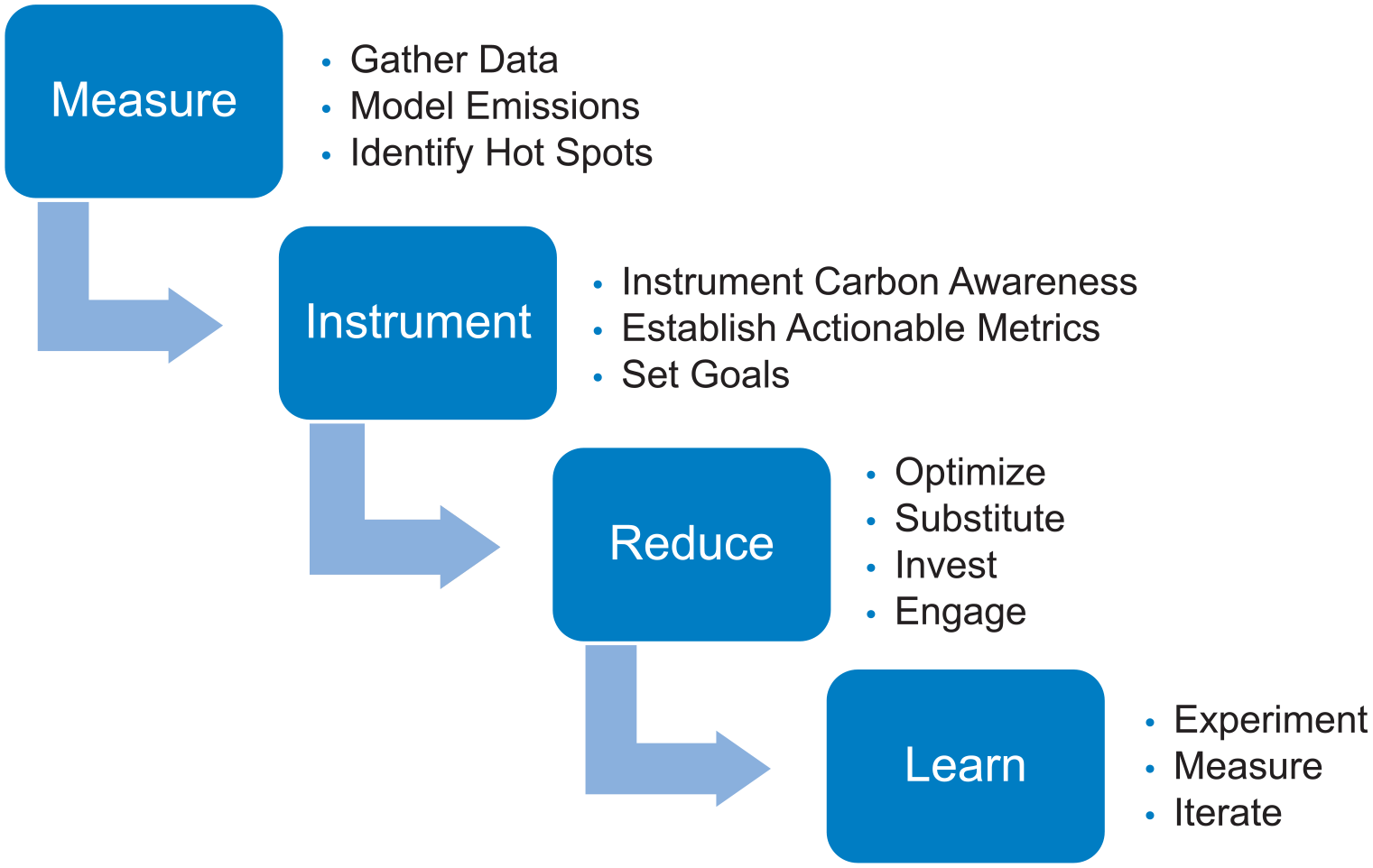
Amazon’s carbon reduction mechanisms.
Measurement and Instrumentation
On Monday mornings, teams across Amazon view a metrics deck that, for some groups, now includes a report on the grams of carbon dioxide emissions released per package shipped, the actions in the previous week that impacted the carbon metric, and whether they are on track to meet their decarbonization goals. These internal reviews are not nearly as exciting as the Rivian vans rolling out across the United States. And the detailed data tracking is not nearly as newsworthy as Amazon’s recent announcement that it was the world’s largest corporate buyer of renewable energy. However, these “Weekly Business Reviews”—showing grams of carbon per unit shipped (gCO2e/unit), kilograms of carbon per Kindle (kg CO2e/device use-year), and similar metrics for other businesses—may actually be the key to Amazon achieving Net Zero Carbon by 2040.
As Amazon explains, “Achieving these ambitious goals requires a comprehensive understanding of an organization’s current emissions profile, the identification of key drivers and emissions sources, and the implementation of strategies to systematically reduce GHG emissions across all aspects of their business.” 36 At the heart of this approach is a robust system for measuring and tracking the company’s carbon emissions. The central sustainability team recognized early on that effective climate action requires a data-driven understanding of emissions sources and drivers across the organization’s diverse business units. Amazon took a science-based approach to carbon accounting, aligning with established standards such as the Greenhouse Gas Protocol and ISO 14064. This involved mapping and modeling the company’s overall carbon footprint using a hybrid life cycle assessment model that combines economic input-output analysis with process-specific operational data.
The sustainability team then developed tailored carbon emission models for transportation, electricity, packaging, and devices to complete the company-wide assessment. 37 Each model includes a life cycle assessment that considers the material, energy, and water inputs to produce, use, maintain, and dispose of a product or process. Amazon chose to use an emissions factor model developed by the U.S. EPA, the U.S. Environmentally-Extended Input-Output (USEEIO) model. This model creates emissions factors per dollar spent (gCO2e per USD-equivalent) for each of the 389 sectors of the U.S. economy defined by the Bureau of Economic Analysis (BEA), which they then adapted for their global operations.
While many companies perform carbon calculations in spreadsheets, Amazon needed to compute its footprint in near real-time across business units operating globally. The complexity of Amazon’s businesses forced the sustainability team to build one of the most sophisticated carbon accounting systems in the world. They had to build a system that can track billions of shipments, in addition to detailed emissions from AWS, Devices, Whole Foods, and so on, and then aggregate this all into a company-wide footprint.
Importantly, this carbon data were then integrated into a central “system of record” that connects financial and operational information. The carbon footprint, while important to investors and other stakeholders, is not actually that useful for driving decarbonization within Amazon. It is more impactful to embed carbon data into core business mechanisms and algorithms. Teams are provided with actionable carbon intensity targets and tasked with developing strategies to systematically reduce those metrics over time. By putting emissions information directly in the hands of operational leaders who can influence them, Amazon has been able to drive measurable reductions.
The integration of carbon data into day-to-day decision-making, rather than relegating it to an annual reporting exercise, has been a key enabler of Amazon’s decarbonization progress. This carbon awareness, embedded across the organization, has allowed the company to focus on the most impactful reduction opportunities and track their performance in near real-time. Teams closest to the carbon source are held accountable for determining how to innovate to decarbonize their business.
As Amazon notes, “Foundationally, our strategy relies on embedding decarbonization initiatives and efficiency improvements across our business.” 38 Essentially, Amazon needed to move from the overall company carbon footprint to detailed carbon metrics for each business. As just one example, they developed a data tracking system and model to analyze the carbon impact of Amazon’s fulfillment operations which span over 100 countries. At this scale, they could not rely on manual data collection to maintain a carbon system of record. This forced them to invest in automated systems to collect, index, and store energy, water, and fuel data. In 2018, they started building a solution that enables them to read utility invoices in multiple languages and use this information to build site-level carbon footprints for their buildings. This allowed them to identify “hotspots”—the central drivers of carbon—for each business across the company. And then to provide each business an actionable metric (such as gCO2e/unit shipped) to set goals and track progress.
The central sustainability team then worked to find business teams willing to test and learn with new technologies, essentially connecting the internal business “customer” for a low-carbon tech/material/product/process to an R&D team developing and tuning the tech. In some cases, this required subsidizing a “green premium” for new materials or technologies until the business team could tune, scale, and drive down the cost. Today, for instance, Amazon’s logistics business continues to “refine their emissions measurement and reduction strategies, exploring new technologies, mode shifting, lowering the length of haul, improving trailer cube utilization, reducing empty miles, and other mitigation opportunities to further drive down the carbon intensity of our middle mile transportation operations.” 39
Having granular models and actionable metrics challenged a number of assumptions and surfaced some important surprises. For example, Amazon reports that their fastest deliveries—what they call “Same Day” and “Sub-Same Day” shipments—are actually their lowest carbon shipment options (measured by gCO2e/unit shipped). 40 While counterintuitive, this makes sense as these products have to be available in a local fulfillment center to meet these speed requirements. Slower shipping, ironically, often leads to packages traveling farther distances.
In another case, central sustainability worked with the sustainability team in Amazon Devices to conduct life cycle assessments of each major device type, identify hot spots, and then create actionable metrics for teams to design. This resulted in “two carbon footprint metrics [that] are considered: 1) the total carbon emissions across all life cycle stages of one device or accessory (in kilograms of carbon dioxide equivalent, or kg CO2e), and 2) the average carbon emissions per year used of the estimated device lifetime, in kg CO2e/use-year.” 41 This second metric is particularly interesting as it creates an incentive for teams to extend the useful lifetime of each device, a key issue for consumer electronics.
Setting Goals
Once Amazon had built its internal carbon tracking capabilities (which took three years) and then convinced leadership that they had the necessary data and instrumentation to act, it was relatively rapid for the company to establish decarbonization goals. Amazon’s system of goal setting is not extensively discussed publicly, but it is a core component of the company’s internal innovation mechanisms. Every business unit sets annual goals, with teams within each unit establishing their own specific targets. These goals typically span traditional areas such as business growth, efficiency improvements, cost reductions, new technology deployment, and feature launches.
However, Amazon had not previously set a long-term, enterprise-wide goal such as the 2040 Net Zero Carbon commitment. To do so, required a collaborative process between the central sustainability team, individual business units, and the “S-Team” (the company’s top leadership group). The sustainability group provided the emissions modeling and science-based guidance, while the business teams determined the specific decarbonization strategies and initiatives they could implement. A key principle within Amazon’s culture is “ownership”—the idea that the teams closest to the work should be empowered to set and achieve their own goals. Applying this to sustainability, the company did not simply announce a top-down edict. Instead, central sustainability worked to establish a target that each business could then translate into tailored decarbonization “glidepaths.”
This collaborative, bottom-up approach to goal setting, combined with the granular carbon measurement systems, has allowed Amazon to cascade accountability for emissions reductions throughout the company. Most business units now have their own decarbonization targets, with the central sustainability team providing technical support, data, and governance.
Efficiency Improvements
A core pillar of Amazon’s decarbonization strategy has been driving improvements in operational efficiency. Over the five years since committing to The Climate Pledge, this focus on incremental optimization has yielded significant carbon efficiency improvements. As Amazon explains, “We focus first on driving efficiency across our operations to reduce and avoid emissions at scale. This includes improving transportation routing, increasing pack and fill rates, improving cloud-computing chip efficiency, adding Low Power Mode to devices, and installing energy-efficient lighting and HVAC solutions in buildings.” 42
Often, these efficiency efforts start with establishing a baseline performance measurement. Teams then commit to getting 5% “better” each year, whether that is in terms of energy usage, material consumption, transportation miles, or another carbon-related metric. This “local optimization” approach has enabled Amazon to decrease emissions per package “through operational efficiencies, such as improving truck fill rates (the percentage of truck volume that is utilized), shipping products in their own packaging without additional Amazon packaging, and using artificial intelligence (AI) to optimize packaging types.” 43
One prominent example is the company’s efforts to reduce the average weight and volume of its packaging. Since 2015, Amazon has decreased the per-shipment packaging weight by 43% and avoided more than 3 million metric tons of packaging materials, including over 446,000 tons in 2023 alone. Globally, the company now ships 12% of their deliveries in the product’s original packaging, without the need for additional Amazon “over-boxes” or filler.
Amazon has also focused on optimizing its transportation and logistics networks to minimize miles traveled and associated emissions. This has included regionalizing the company’s U.S. fulfillment and delivery operations and increasing the percentage of products stored and shipped from facilities closer to end customers. The company explains this involved “reorganizing our national network of fulfillment centers, intermediate sort centers, last mile delivery hubs, and transportation fleet into eight regions. This shift ensures we’re producing, packaging, and shipping from facilities that are closer to the communities we serve—which reduces the complexity of our shipping network and the miles traveled to get to our customers—helping drive down both carbon emissions and shipping costs. This new model optimizes delivery speed, reduces emissions, and provides the breadth of selection that customers expect.” 44 In 2023, this network redesign helped Amazon avoid nearly 16 million miles of transportation. Amazon explains, “today, more than 76% of the orders we fulfill come from within the customer’s region. Items shipped from nearby fulfillment centers or delivery stations help packages get to customers not only faster, but also with fewer emissions.” 45
Amazon also now deploys “advanced machine learning algorithms to better predict which items customers in various parts of the country will want and when they will want them, and we work with our vendors and selling partners to store those products closer to customers. This helps to ensure that we have the right inventory, in the right places, at the right time.” 46 This has resulted in “the distance between our sites and the customer decreased by 15%, with 12% fewer touchpoints within our middle mile network. Improved product placement gets items even closer to customers, making our delivery system more efficient. And our Same-Day Delivery network is not only our fastest way to get products to customers, but also one of our lowest cost ways.” 47
The common thread across these efforts is a focus on doing more with less—generating the same (or greater) business value while consuming fewer carbon-intensive inputs. This “frugal innovation” mindset, combined with Amazon’s capabilities in rapid experimentation and scaling, has been a powerful driver of the company’s carbon efficiency improvements. In the most advanced form, this includes incorporating carbon awareness into existing optimization algorithms such as demand prediction, inventory placement, and route optimization. This increases the likelihood of placing the right products in the right amounts, in the right places, at the right times, and then delivering them in highly utilized zero-emission vehicles.
Lower-Carbon Substitutions
In parallel to efficiency improvements, Amazon has also worked to replace high-carbon materials, components, and energy sources with lower-emission alternatives. This “modular substitution” approach has been a key part of the company’s decarbonization strategy. The company asserts that “We select lower-carbon alternatives, such as lower-carbon concrete and steel in construction, and lower-emission fuels and vehicles in transportation. We use these alternatives where possible, based on a number of factors including cost, emissions reduction potential, and availability.” 48
The most important of these substitutions has been Amazon’s transition from fossil fuels to renewable energy. The company has made significant investments in both utility-scale wind and solar projects, as well as on-site solar installations at its facilities and stores. At the end of 2023, Amazon had a global renewable energy portfolio of 28 gigawatts, making it the world’s largest corporate buyer of renewable electricity for the fourth consecutive year. 49 Amazon has “invested in 513 global renewable energy projects, including 243 utility-scale wind and solar projects, and 270 solar rooftops at our facilities and stores around the world. In 2023 alone, 42 new utility-scale wind and solar projects and 50 new on-site solar energy systems became operational.” 50 Perhaps more surprisingly, Amazon also purchased a nuclear-powered data center in Pennsylvania in 2023.
Beyond the shift to carbon-free power, Amazon has also focused on decarbonizing its transportation operations. This has included deploying over 24,000 electric delivery vehicles globally, including 11,800 Rivian electric vans in the United States. As mentioned, these electric vehicles delivered more than 680 million packages in 2023. Amazon has also experimented with lower-carbon fuels, such as investing in a startup called Infinium to power its middle-mile transportation fleet with low-carbon “electrofuels.”
The company’s sustainability efforts have extended to materials as well. In 2023, Amazon replaced plastic delivery packaging with 100% recyclable paper at one of its major fulfillment centers. The company has also worked to incorporate lower-carbon concrete mixes in the construction of its facilities, achieving a 20% reduction in embodied emissions compared with industry baselines. These “drop-in” substitutions of renewable energy, electric vehicles, alternative fuels, and lower-carbon materials have helped Amazon begin to make progress in decarbonizing several of its most carbon-intensive activities.
Longer-Term Innovations
While efficiency improvements and drop-in substitutions have been central to reducing Amazon’s carbon emissions, there are a number of areas where there are no readily available low- or zero-carbon alternatives. This includes decarbonizing air freight, data center operations, and the production of basic materials like steel and concrete. These innovation gaps cannot be closed through incremental optimizations alone—they will require more fundamental, disruptive advances. The company asserts that they “invest in. . .emerging technologies that can help address emissions from hard-to-abate sectors including aviation, shipping, and building construction. Through direct funding, we aim to advance our own progress toward net-zero carbon emissions and help accelerate the widespread adoption of new technologies by making them more affordable and accessible.” 51
The company is now applying what it calls a “Day 1” mindset to the challenge of decarbonization. Rather than waiting for low-carbon technologies to become cost-competitive, Amazon is investing in experiments and partnerships to drive breakthrough innovations. In the aviation sector, for instance, Amazon teams are working with startups to test sustainable aviation fuels, electric aircraft, and hydrogen-powered planes. The company’s $2 billion Climate Pledge Fund is specifically targeting these “hard-to-abate” industries, with the goal of supporting the development and scaling of transformative technologies. 52 To date, the Climate Pledge Fund has invested in: Rivian, Beta, ZeroAvia, CarbonCure, Brimstone, Electra, Amogy, Electric Hydrogen, Verne, Infinium, Resilient Power, Sunfire, and other climate tech startups.
Other Amazon initiatives are focused on eliminating the need for carbon-intensive modes of transportation altogether. By optimizing demand forecasting, inventory placement, and routing algorithms, teams are working to shift more shipments to lower-emission options like rail and electric vehicles. The shift to rail and sea over long-haul trucking can reduce emissions by nearly 50% per shipment. This systems-level approach aims to fundamentally reshape the company’s logistics footprint.
Underpinning these longer-term innovation efforts is Amazon’s “fail fast” mentality. The company encourages teams to think long term and take risks, but then rapidly iterate on customer-centric ideas. While many of these experiments will inevitably fail, Amazon’s leadership believes that enough will succeed to keep the company moving in the right direction. Ultimately, Amazon recognizes that achieving net-zero emissions will require a portfolio of incremental improvements and more disruptive innovations.
Engaging Supply Chains
Amazon recognizes that it cannot achieve its decarbonization goals through internal efforts alone. A significant portion of the company’s carbon footprint resides in its upstream and downstream supply chains. 53 As a result, mechanisms to incentivize and reward lower-emission practices among business partners have been an important component of Amazon’s climate strategy. As Amazon has stated, “We encourage [suppliers] to set credible decarbonization goals, publicly share progress, and implement carbon reduction strategies throughout their operations and supply chains —and we are providing support to help our supply chain take action.” 54
In a recent announcement, Amazon stated that it will prioritize working with suppliers who have credible plans and demonstrable progress toward reaching net-zero carbon emissions. The company has identified its highest-emitting suppliers, who collectively contribute more than 50% of its scope 3 footprint, and states that it expects them to provide detailed decarbonization roadmaps. The company asserts that it “will prioritize [its] business toward those who provide their plans and results on their path to net-zero-carbon emissions. We are already working with many of these suppliers, and will continue our engagement and share learnings.” 55
To support this effort, Amazon has launched a website, exchange.aboutamazon.com, that provides “previously proprietary information that will help other companies make meaningful progress toward net zero.” This includes carbon measurement tools, emissions factor data, and information on alternative fuels, building materials, and packaging solutions. Amazon has also created The Science Exchange—a platform to collaborate on the development of new decarbonization technologies.
Beyond informational resources, Amazon has also joined several multi-stakeholder initiatives aimed at accelerating climate action across industries. This includes becoming a founding member of the First Movers Coalition, a global “buyer’s club” designed to signal demand and then drive down costs of lower-carbon shipping. The company is also now a member of the Cargo Owners for Zero Emission Vessels (coZEV) and Zero Emission Maritime Buyers Alliance (ZEMBA). The company also co-founded a coalition called the Emissions First Partnership, focused on modernizing greenhouse gas accounting standards, which has been quite controversial. 56
These supply chain engagement efforts reflect Amazon’s recognition that cross-industry collaboration will be essential to driving the changes required for deep decarbonization. By using its market influence to set expectations, share knowledge, and catalyze broader initiatives, the company is working to mobilize its suppliers toward a shared climate agenda.
Outcomes to Date
Amazon’s decarbonization initiatives, while clearly extensive, have yielded modest results in terms of absolute greenhouse gas emissions reductions. In 2023, Amazon reported a 3% reduction in total carbon emissions. However, the company’s sales increased by 12% during this same period. This translates to the company’s carbon intensity—measured as CO2e per dollar of sales—decreasing by 13% in 2023.
As Table 1 shows, Amazon’s scope 1 emissions have grown steadily since announcing The Climate Pledge. In fact, scope 1 emissions grew 7% year-over-year to 14.27 million metric tons CO2e in 2023 and have increased at a compound annual growth rate of almost 20% since 2019, as Amazon has expanded its logistics network and brought more transportation operations inside the company.
2023 Breakdown of Carbon Emissions.
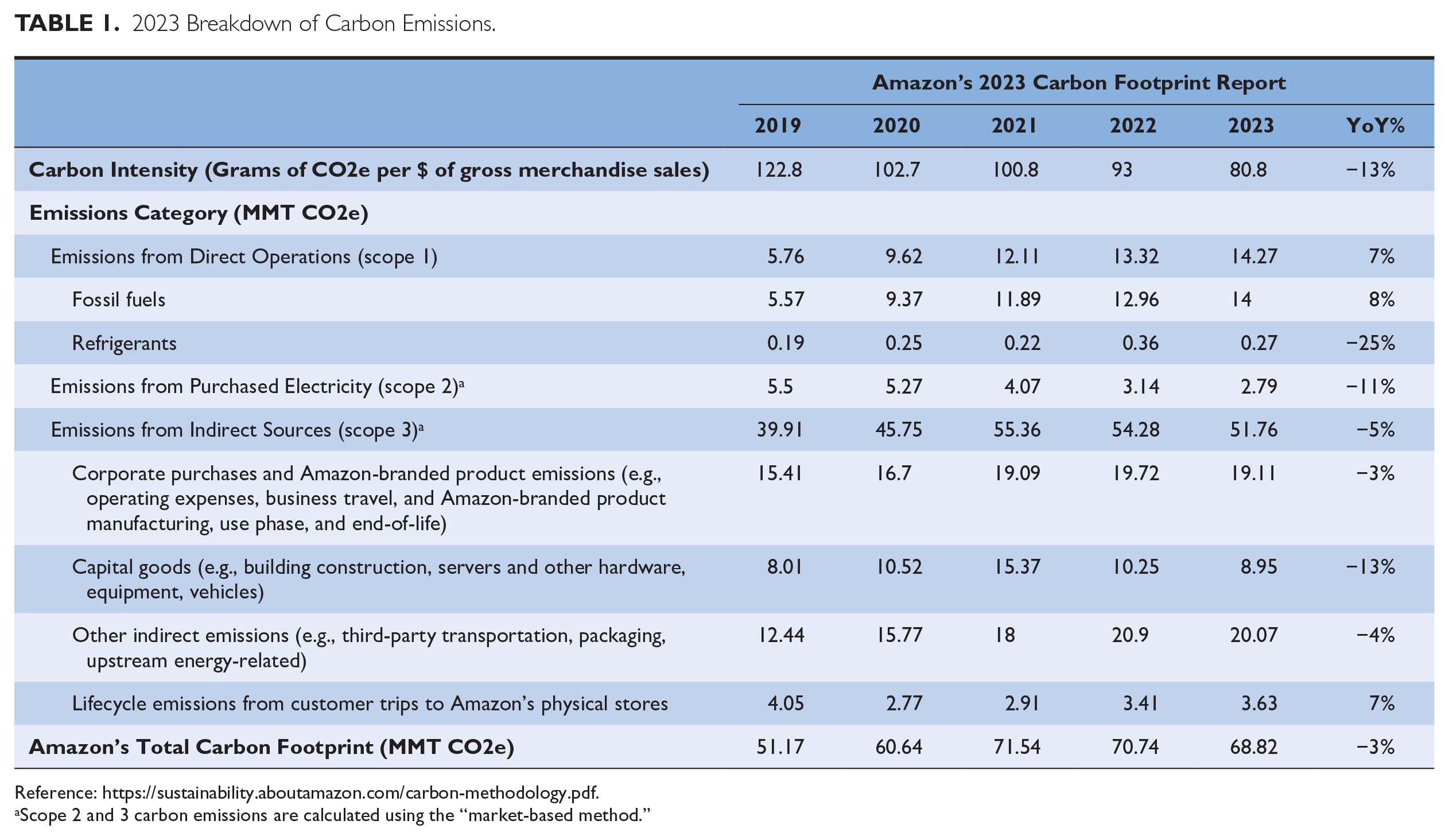
Scope 2 and 3 carbon emissions are calculated using the “market-based method.”
Stand. Earth, a leading NGO, argues that “this latest report provides further evidence that Amazon is going the wrong way on climate.” 57 Amazon counters that this work must be viewed within the context of the company growing more than 40% over the last three years, while keeping emissions essentially flat. Amazon’s main competitors in the tech industry have either increased emissions or similarly held flat. 58 Amazon also notes that a number of their decarbonization investments—such as for renewable energy and electric vehicles—will take several years to come online and begin reducing emissions.
Some of these investments are just now starting to show impact. Amazon’s scope 2 emissions have shown a steady but gradual decline since 2020 as renewable energy installations have begun to outpace the company’s overall energy use. In 2023, the company accounted for nearly one-fifth of all renewable power purchase agreements globally, outpacing the next three largest buyers combined.
During the same period, the company took actions to drive a 4% decline in scope 3 emissions. This is due in part to the shift away from third-party delivery providers (such as FedEx). Amazon’s investments in electric vehicles, alternative fuels, and supply chain engagement also appear to be beginning to have an impact.
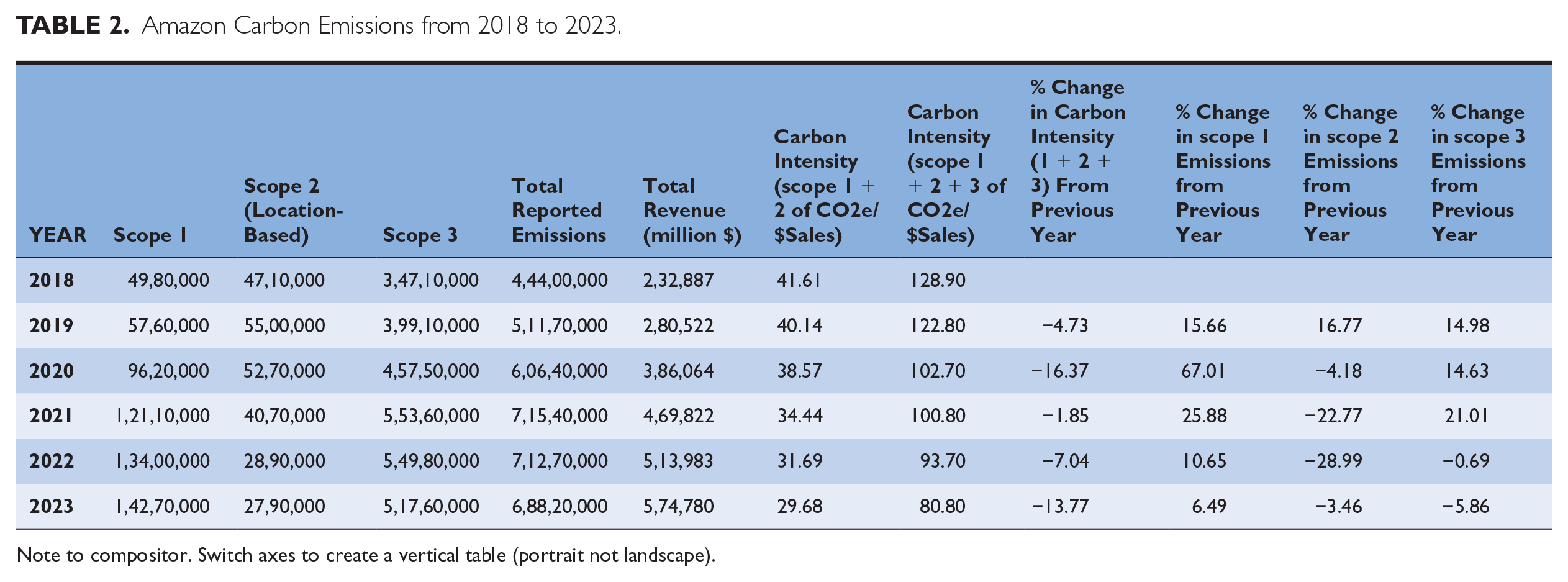
Unfortunately, the annual roll-ups of total emissions don’t really tell us much about what a firm is doing internally to drive decarbonization. 59 Table 2 examines changes in absolute carbon versus carbon intensities across Scopes and years and comes to similar conclusions. The company’s growth in scope 1 emissions can be partially attributed to taking on more of its own deliveries. As the company has expanded its logistics network to meet consumer demand, its direct emissions have risen accordingly. At the same time, the reduction in scope 3 emissions is partly due to reducing the role of third-party delivery partners. The 13% drop in emissions from capital goods is likely due to a slowdown in the construction of new fulfillment centers after roughly doubling their global network between 2020 and 2022. The bottom line is that the company continues to grow, take control over more of its operations, and gradually improve the efficiency of its operations.
Amazon Carbon Emissions from 2018 to 2023.
Note to compositor. Switch axes to create a vertical table (portrait not landscape).
Limitations of Sustaining Innovation
While Amazon’s carbon intensity improvements are noteworthy, the company’s overall decarbonization has been slow (see Figure 2). As one critic has noted, “in spite of its massive investments in wind and solar, the company’s carbon footprint actually rose by 34% since the launch of its Climate Pledge in 2019.” 60
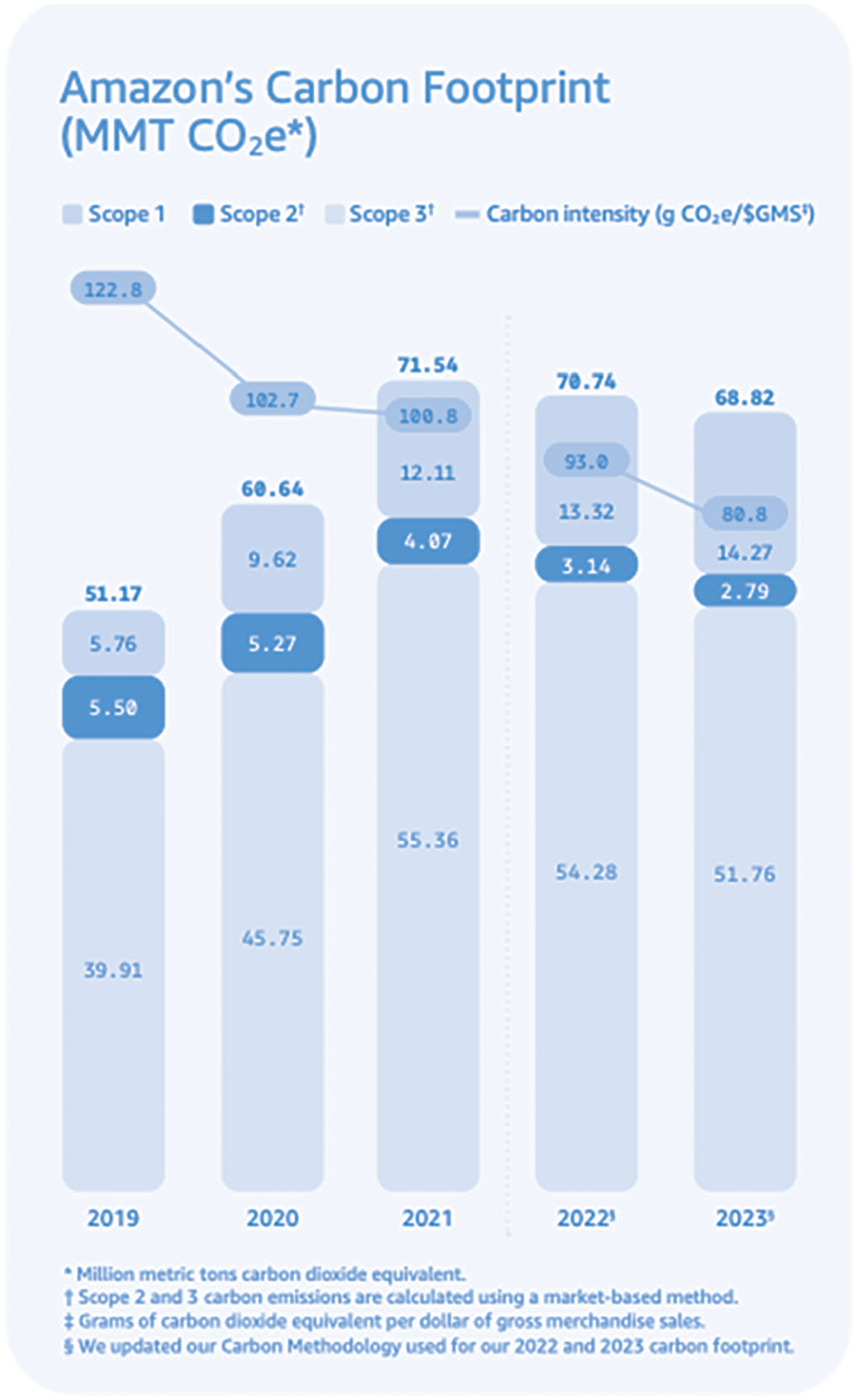
Amazon’s reported carbon footprint.
Critics have also pointed out that Amazon’s focus on renewable energy procurement, while commendable, does not necessarily equate to decarbonizing its businesses. The company has been accused of overstating its progress by relying on renewable energy credits (RECs) rather than driving direct emissions reductions in its operations and value chain. As Temple has argued, “Merely paying for renewable electricity generation that occurred at some point, somewhere in the world, isn’t the same as procuring the amount of electricity that the company consumed in the specific places and times that it did so.” 61 An Amazon spokesperson responded to this critique asserting “It can take several years for the solar and wind projects we invest in to be built and begin generating renewable energy. In the interim, we purchase unbundled Renewable Energy Credits to bridge the gap to the project’s operational date temporarily. This allows us to continue signaling to the market our support for renewables.” 62
The company has also faced criticism over its carbon pledges and reporting. Amazon was recently removed from the Science-Based Targets Initiative’s list of participating companies due to its failure to submit a detailed emissions reduction plan. 63 Amazon also recently received a grade of “B” from the CDP for its carbon reporting. And a number of NGOs have raised concerns that Amazon does not include third-party products (such as Samsung TVs and Levi’s jeans) that it sells in its carbon footprint or its Net Zero Carbon goals. This has raised concerns about the credibility and transparency of the company’s climate commitments. 64
Amazon’s slow progress highlights the challenges inherent in relying primarily on sustaining innovations to drive decarbonization. While Amazon has made important strides in improving efficiencies and carbon intensity of specific business activities, the company’s overall business growth has largely offset these gains. To state the obvious, incremental decarbonization efforts must exceed business growth, or emissions will continue to rise. That is, if Amazon continues to grow 10% per year, decarbonization must be at least 11% per year to result in absolute reductions. Growth in demand for Artificial Intelligence services alone highlights this challenge—as AWS has recently reported growth of 10% to 20% per year—with likely parallel increases in energy demand and carbon emissions.
In his seminal work, Clayton Christensen showed empirically how successful incumbent companies are often disrupted. These firms are not poorly managed or ignorant of emerging technologies. Rather, they are often exemplary at listening to their customers and responding. 65 This is one of Christensen’s most surprising findings: listening to your customers can often lead to a “faster horse,” as Henry Ford quipped, or to faster delivery with less packaging. Amazon’s “customer obsession,” which makes it so good at sustaining innovations, may create blind spots for truly disruptive sustainability innovations. 66
Perhaps even more challenging, Amazon’s efficiency improvements may lead to Jevon’s Paradox whereby consumer purchases and emissions increase. This is a core contradiction for the company and calls out the need to transform current business models. Addressing this contradiction will likely require Amazon to more aggressively pursue disruptive innovations that fundamentally transform carbon-intensive businesses rather than simply optimizing current operations. This might include a shift from physical to digital products, creating fully circular supply chains, and even moving from customers owning products to paying for the utility of product-service systems. The company’s willingness to experiment and invest in breakthrough technologies and alternative business models will be crucial to bridging innovation gaps on the path to net-zero carbon.
Lessons for Managers
The last five years have positioned Amazon at what the company calls “Day 1” of its decarbonization journey. The company’s experiences, which include both important progress and significant challenges, offer valuable lessons for managers working to advance their own sustainability agendas.
First, it is important to connect sustainability science and carbon data into a business’s core innovation mechanisms. Amazon has been most impactful when it has embedded carbon measurement and optimization directly into a business team’s decision-making. This requires that sustainability teams go beyond traditional carbon accounting and reporting. Companies must develop a deep, granular understanding of emissions sources and drivers across the organization, build the necessary measurement and instrumentation systems, and then enable business units to experiment, iterate, and scale solutions.
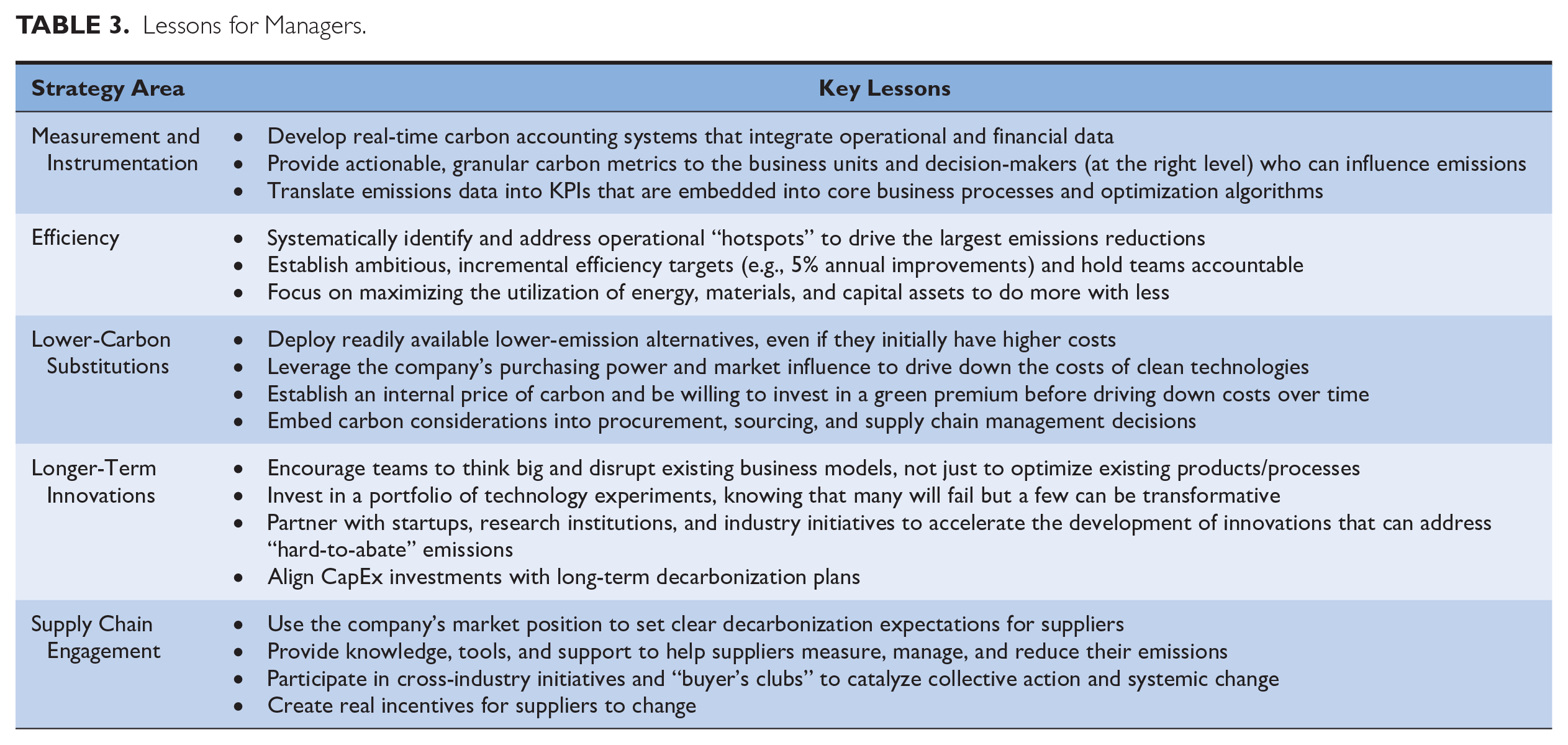
As presented in Table 3, companies must develop innovation mechanisms tailored to decarbonization challenges, including:
connecting detailed information on carbon emission sources to the internal business units and decision-makers who can influence those drivers;
designing processes to rapidly test, iterate, and scale lower-emission alternatives, even if they initially have higher costs;
leveraging the company’s core capabilities, such as a company’s strength in “learning by doing,” to drive down the costs of emerging lower-carbon technologies; and
strategically investing in more disruptive innovations that could fundamentally transform carbon-intensive industries over the long term.
Lessons for Managers.
Managers must also ensure that sustainability teams are tightly integrated with the core operational leaders who can influence emissions, rather than operating in sustainability silos, such as PR, Marketing, Investor Relations, or even Compliance. Providing business teams with actionable, real-time carbon metrics is an essential first step for driving tangible reductions. Companies can also benefit from establishing an internal price on carbon, which Amazon currently lacks. With a pricing mechanism, teams can set decarbonization goals, run experiments, and measure impacts on both costs and carbon. This allows firms to determine the lowest-cost path to achieve decarbonization.
Sustainability leaders must build internal capabilities that allow their firms to leverage both incremental optimizations and more disruptive innovations. Amazon’s experience highlights the role of CEO-level commitment and engagement. Within the company, senior leadership played a crucial part in scrutinizing sustainability data, challenging assumptions, and ultimately increasing the ambition, scale, and speed of the organization’s climate actions.
Companies will need to make significant investments over the next several years to position themselves for achieving their 2030 and 2040 goals. They should not wait for decarbonization technologies to become cheap and widely available. Instead, they will need to invest early in lower-carbon technologies, pay a “green premium,” and then scale and drive down costs.
The magnitude of the climate crisis requires the full force of corporate innovation to be pointed at decarbonization. Companies can no longer afford to relegate sustainability to annual reporting or Environmental, Social, Governance (ESG) disclosure exercises. Carbon awareness must be embedded into core business decision-making and overall strategic imperatives. Ultimately, the lessons from Amazon’s experiences demonstrate that effective climate action is fundamentally a business innovation challenge. By starting with science, measuring what matters, and integrating carbon awareness into existing mechanisms, companies can unlock the innovation needed to deliver decarbonization. The critical question moving forward is whether enough corporations can unlock sustaining innovations on the path toward truly disruptive climate innovation.
Footnotes
Notes
Author Biography
D.O’.R. is an Associate Professor in the Department of Environmental Science, Policy, and Management at UC Berkeley, and the Faculty Director of the Master of Climate Solutions. (email: