




Abstract
In this article, we underscore the importance of stakeholder relationships for research on stakeholder engagement. We do so by integrating a practice-based understanding with the relational view. Based on a revealing case study of a civic engagement process in a large German city, we develop a conceptual framework that explains how relational practices shape stakeholder engagement. We identify three relational practices (i.e., connecting, facilitating, and containing) and their associated outcomes (i.e., implication, solidarization, and distinction), as well as effects on stakeholder heterogeneity. Our findings contribute to the relational view on stakeholder engagement by providing insights into practices that shape relationships between heterogeneous stakeholders, explaining how these relational practices influence stakeholder heterogeneity, and identifying unintended impacts of stakeholder engagement.
Stakeholder theory (Freeman, 2010) explains how organizations can create value for business and society (Parmar et al., 2010; Ramaswamy & Ozcan, 2018) by considering how their activities affect people and entities beyond their organizational boundaries. Building on this definition, stakeholder engagement is understood as involving multiple actors (e.g., individuals, groups, or organizations) in organizational activities that affect them (Greenwood, 2007). To that end, a recent strand of research on stakeholder engagement, the relational view, has focused on the co-creation of solutions by bringing multiple stakeholders together (Loureiro et al., 2020; Ramaswamy & Ozcan, 2018; Shackleton et al., 2019; Whittington et al., 2011). From a relational view, the purpose of interactions between stakeholders and organizations is to create value “based on jointness of interest and cooperation among all stakeholders” (Civera & Freeman, 2019, p. 46), focusing primarily on a moral component of stakeholder engagement (Kujala et al., 2022). Therefore, stakeholder engagement is assumed to have an ethos of equality and partnership, as organizations have “good intentions” and/or stakeholder relationships are “reciprocal and voluntary” (Kujala et al., 2022, p. 1153). The notion of partnership is particularly relevant as societies face extreme uncertainty and complex problems (Ferraro et al., 2015), the solutions to which “require coordinated and sustained effort from multiple and diverse stakeholders” (George et al., 2016, p. 1881).
Central to research within the relational view is how interactions among multiple stakeholders are affected by their interests, hierarchies, and relationships (Castelló et al., 2016; Dawkins, 2015), as well as value congruence and strategic complementarity (Bundy et al., 2018). For example, in cities, stakeholders with different interests—what we term heterogeneous stakeholders—such as citizens, city employees, politicians, and experts, attempt to shape urban strategies based on their own rationalities. However, citizens who have their own interests and stakes in urban strategies that affect their daily lives may play an important role in the ultimate success of such strategies (Arnstein, 1969).
Although it seems self-evident that heterogeneous stakeholders with different backgrounds might have different perspectives of problems, different intentions, and accordingly, different visions, researchers who adopt the relational view have only recently begun to study how relationships are established with and among heterogeneous stakeholders (Kujala et al., 2022). For instance, Civera and Freeman (2019) emphasized the potential for conflict and called for more research to better understand the dynamics of aligning the relationships between these stakeholders. Although Reed et al. (2009) identified facilitation and bringing actors together as practices for creating collaboration, others have argued that addressing potential conflicts within these heterogeneous relationships and dynamically aligning interests to enable collaboration involve more complex practices (Bundy et al., 2018; Civera & Freeman, 2019). Understanding the practices involved in enacting relationships among heterogeneous stakeholders is important, as researchers have emphasized that integrating stakeholders into the strategy development process supports organizational legitimacy (Castelló et al., 2016; Desai, 2018; Löffler & Bovaird, 2018) and performance (Loureiro et al., 2020). Moreover, few scholars have investigated strategy development activities involving multiple heterogeneous stakeholders and how relational practices resolve the resulting complexities and shape the dynamics of stakeholder relationships (Bridoux & Stoelhorst, 2016; Kujala et al., 2022).
To address this important gap, we build on the stakeholder engagement literature and develop a practice-based understanding of the relational view on stakeholder engagement (Kujala et al., 2022). A practice-based understanding (Vaara & Whittington, 2012) goes beyond analyzing relationships between stakeholders and organizations as the unit of analysis, as it focuses on relational practices (i.e., activities that establish stakeholder relationships and shape stakeholder engagement). Based on a case study (Yin, 2018) of a German city’s stakeholder engagement initiative, we analyze how relational practices shape stakeholder engagement. Importantly, we study civic engagement in an institutionalized democracy, where collective decisions, such as those about urban development strategies, are made according to democratic principles.
Our findings show how three relational practices (i.e., connecting, facilitating, and containing) shaped stakeholder engagement by influencing the heterogeneity of stakeholders involved in this initiative (i.e., through implication, solidarization, and distinction). As these dynamics unfolded, citizens became engaged stakeholders in strategy formation and co-created strategic proposals that informed a new urban strategy. Through the practice of connecting, relationships were built among heterogeneous stakeholders; as productive conflict emerged, the practice of facilitating led to co-creation. Building on Putnam (1994), we define productive conflict as the process of aligning interests among stakeholders and with the organization, and finding a compromise between different interests and values. Through the practice of facilitating, however, stakeholders’ perspectives became more homogeneous. Faced with the need to assemble the final strategy and re-include diverse perspectives, the city government refocused on key stakeholders (i.e., urban planners, city employees). This practice of containing led to citizens’ disengagement from the process. Importantly, although the city council had ultimate decision-making authority, the city government integrated key aspects of the citizens’ strategic proposals into the new urban strategy, thereby consolidating the voices of heterogeneous stakeholders and securing their ongoing civic engagement in future projects.
Based on these findings, we develop a conceptual framework that explains how relational practices shape stakeholder engagement. In doing so, we contribute to the stakeholder engagement literature in three ways. First, we respond to calls for further research on the relational aspects of stakeholder engagement practices (Civera et al., 2019; Kujala et al., 2022; Quick & Feldman, 2011) by explicating how three relational practices (i.e., connecting, facilitating, and containing) surface and instigate heterogeneity/homogeneity among stakeholders’ interests. Second, we identify the associated outcomes of implication, solidarization, and distinction, and explain how they shape stakeholder engagement. Our study extends Kujala and colleagues’ (2022, p. 1139) conceptualization by explaining dynamic aspects of the “aims, practices, and outcomes” of stakeholder engagement—that is, the interplay between practices and changes in the relationships between stakeholders. Third, we theorize the role of emergent and planned impacts of the engagement of heterogeneous stakeholders (Arnstein, 1969; Kujala et al., 2022) and how they influence the positions of different stakeholders in the process.
Theoretical Background
In stakeholder theory, stakeholders are defined as actors who are affected by organizational activities (Freeman, 2010). Building on this foundational definition, researchers have increasingly explored stakeholder engagement (i.e., involving stakeholders and integrating stakeholder relationships into organizational activities), including those of businesses and public organizations (e.g., governmental entities) (Kujala & Sachs, 2019). More specifically, stakeholder engagement describes the “aims, practices and impacts of stakeholder relations in a moral, strategic, and/or pragmatic manner” (Kujala et al., 2022, p. 1139) and defines components (moral, strategic and/or pragmatic) and contents (aims, practices, and impacts) of stakeholder relations. In line with the so-called “relational view” (Kujala et al., 2022, p. 1171), (i.e., an approach that integrates stakeholders perspectives with the organizational perspective), scholars have more explicitly focused on stakeholder relationships in recent conceptualizations of stakeholder engagement (Civera et al., 2019; Civera & Freeman, 2019).
Beyond the components of stakeholder relations, researchers have studied activities involving stakeholders and organizations (Kujala et al., 2022) which are aimed at increasing stakeholders’ alignment with an organization’s “values and purpose” (Civera & Freeman, 2019, p. 46). Stakeholder engagement activities can range from being unidirectional, ad hoc, and purely transactional (e.g., informing stakeholders) (Sachs & Kujala, 2021) to intensive two-sided activities (e.g., dialogue or co-creation) in long-standing stakeholder networks (Dobusch et al., 2019; Kornberger & Clegg, 2011; Löffler & Bovaird, 2018). Furthermore, work on stakeholder engagement as a relational practice (Kujala & Sachs, 2019; Maak, 2007) suggests that certain organizational practices and activities can increase stakeholders’ commitment to an organization. For instance, relationship-building activities like moderation and mediation (Kujala et al., 2022) might facilitate collaboration among stakeholders (Reed et al., 2009) and culminate in productive outcomes. Activities aimed at facilitating trust, consensus (Van Buren, 2001), and fairness (Phillips, 1997) in relationships (Greenwood & Van Buren, 2010) create an atmosphere that not only enables stakeholders to express their voices and be heard (Dawkins, 2014), but empowers key and marginalized actors (Civera & Freeman, 2019).
Overall, these activities emphasize the harmonious nature of stakeholder relationships and their role in aligning stakeholders’ homogeneous interests with organizational aims. Moreover, scholars have mostly analyzed situations with a strong fit between stakeholders and organizations characterized by strategic complementarity and value congruence (Bundy et al., 2018). Missing are analyses of practices that align stakeholders’ interests with organizational aims and address potential conflicts among stakeholders (Bundy et al., 2018). Conflicts and conflicting interests among stakeholders and between stakeholders and an organization are only marginal aspects of existing research. This is surprising, as conflicts are part of organizational life. Moreover, conflicts between interests and values can provide opportunities to clarify misunderstandings and promote flexibility, among other beneficial outcomes (Putnam, 1994).
Research on unintended impacts of stakeholder engagement provides a hint regarding the potentially conflictual nature of relationships between stakeholders and organizations (Quick & Feldman, 2011). For example, the intended impact of stakeholder engagement might be to establish commonality (Bridoux & Stoelhorst, 2016), such as by establishing a collective vision or jointly navigating complex and contradictory issues (Civera & Freeman, 2019). However, good intentions do not always result in positive outcomes. For example, Lehtimaki and Kujala (2017) described how a company engaged stakeholders in a dialogue to promote the legitimacy of an investment project which quickly escalated into an international dispute and a crisis of legitimacy. Therefore, relationships with stakeholders are not necessarily harmonious, and engaging stakeholders can lead to conflicts with potentially negative organizational effects.
Another potential problem in stakeholder relationships is the relative importance of individuals or stakeholder groups in organizational processes. The relative strength of an organization’s relationship with an individual stakeholder or group influences the decision-making process in stakeholder engagement (Derry, 2012). Some organizations fail to engage either intentionally or unintentionally marginalized stakeholders; thus, outcomes of stakeholder engagement are contingent on the relative engagement of one group over others (Derry, 2012). For example, Dobusch and colleagues (2019) explored Wikimedia’s strategic planning process based on an open call for stakeholder engagement and found that not all stakeholders were able to contribute equally to these discussions due to, for example, language and socioeconomic barriers. Similarly, Papagiannakis and colleagues (2019) revealed that environmental product innovation processes can differ based on which stakeholder groups firms engage. More generally, relations, resources, and influences between stakeholder groups vary, with repercussions for the stakeholder engagement process and related outcomes.
Furthermore, the potential role of gatekeepers in stakeholder engagement is problematic. For instance, Kornberger and Clegg (2011) argued that some stakeholders were not properly included in developing Sydney, Australia’s strategy for the year 2030. More specifically, strategy experts and consultants controlled which issues were defined as strategic and which issues were discussed in the stakeholder engagement process, thereby excluding acute concerns of city residents and controversial topics. Therefore, a potential problem in stakeholder engagement is the strategic inclusion and exclusion of stakeholder groups as well as their topics by powerful organizational actors who seek to promote their own interests.
Although existing studies have focused on the relationships between stakeholders and organizations, studies on stakeholder engagement have tended to overlook important elements of these relationships. First, although researchers have embraced the relational view, current studies on stakeholder relations remain firmly rooted in the perspective of the focal organization (Sachs & Kujala, 2021) and treat stakeholders mostly as a homogeneous group (Papagiannakis et al., 2019; Schmidthuber & Hilgers, 2018). The few studies drawing on heterogeneous stakeholders focus on collaboration and the complementarity of interests rather than the potential conflictual nature of relationships (Civera & Freeman, 2019). Research focused on individual stakeholders or stakeholder groups and how their interests become aligned with those of the focal organization is necessary to address the heterogeneity of stakeholders and the impacts of different stakeholder groups on stakeholder engagement (Laude, 2020; Sachs & Kujala, 2021). Second, and relatedly, research on stakeholder engagement is relatively silent on the dynamics between different stakeholders and an organization in strategy co-creation activities. Yet, the heterogeneity of aims, values, and priorities of various stakeholder groups might shape the unfolding relationships between stakeholders, and thus the evolution of strategy (Lehtimaki & Kujala, 2017; Quick & Feldman, 2011). Finally, although stakeholder engagement is an intentional activity aimed at linking the interests of different stakeholders with organizational aims, more research on practices that enable co-creation (Shackleton et al., 2019) and collaboration (Goodman et al., 2017) during stakeholder engagement is necessary to fulfill the promises of the relational view of stakeholder engagement (Kujala et al., 2022).
To address shortcomings of the current literature on the relational view and to better understand the relational process of engaging different groups of stakeholders, its complexities, and dynamics, we analyze relational practices in stakeholder engagement (Dmytriyev et al., 2021). In doing so, we integrate a practice-based understanding (Schatzki et al., 2001) with the relational view of stakeholder engagement. A practice-based understanding focuses on actors’ mundane yet skillfully performed activities within a context (Sandberg & Tsoukas, 2015). For instance, relational practices in stakeholder engagement arise from repetitive patterns of activities among multiple actors (e.g., different stakeholders, the focal organization, etc.) that create, maintain, and limit relations between these actors (Feldman & Orlikowski, 2011). Therefore, a practice-based understanding of stakeholder engagement enhances the relational view in multiple ways. Adopting a practice-based lens enables the dynamics of relations between multiple stakeholders to be considered. We analyze how relations between stakeholders unfold through activities, as well as how the intensity of interactions between a focal organization and its stakeholders changes over time. In sum, by focusing on relational practices, we are able to analyze how the interests of different stakeholders are aligned and to identify unfolding dynamics of collaboration and co-creation. Our findings shed light on how relational practices shape the dynamics of stakeholder engagement.
Method
To fulfill this aim, we conducted a case study (Yin, 2018) of a large German city’s stakeholder engagement initiative. The study was driven by our interest in how organizations engage heterogeneous stakeholders in strategy development. Viewing strategy development through a practice lens (Jarzabkowski et al., 2007; Reckwitz, 2002) helped us focus on the everyday activities of various actors, which demanded intense observation and engagement with practitioners (Kaplan & Orlikowski, 2013).
The Case Organization
We studied the municipal government of a large German city that was experimenting with new forms of citizen engagement to co-create solutions to complex and ambiguous social problems by developing a new urban strategy. The existing strategy, which had originally been approved by city council in 1998 and modified several times since, needed to be updated to address emerging grand challenges, such as digitalization, population growth, and increasing pollution. Based on a city council mandate in 2018, urban planners implemented a stakeholder engagement initiative that involved citizens, experts, and consultants in the strategy development process. The case is specifically revealing for analyzing relational practices and how they influence the evolving engagement of heterogeneous stakeholders over time for two main reasons: (a) this was the first attempt by the city government to include citizens with diverse backgrounds as well as traditional stakeholders (e.g., city planners) in the urban strategy development process, and (b) different stakeholders experienced different levels of engagement throughout the process.
The stakeholder engagement initiative comprised several events and engagement formats between February 2019 and January 2022, including a kickoff event with citizens, experts, and politicians; two identical workshops with two groups of citizens; two strategy workstreams, one with the city administration (the admin lab) and one with citizens (the citizen lab); an online survey; and a survey of special interest groups (e.g., clubs, advocacy organizations). A three-hour kickoff event in February 2019 was attended by approximately 300 stakeholders, including city employees, local politicians, urban planning experts, city association representatives, and interested citizens. The two workshops in May 2019 were approximately six hours long and attended by approximately 100 citizens each: about two-thirds of participants had been randomly selected from the resident register, and about one-third had independently expressed interest. The admin lab was conducted from October 2019 to June 2020 and involved approximately 30 city employees from various departments (e.g., health, IT, building) who developed the new strategy over the course of five workshops. In addition to content-related strategy work, they focused on organizational and procedural aspects of the new strategy. Urban planners engaged a foundation dedicated to innovative collaboration and engagement to conduct the citizen lab, which was held from October 2019 to March 2020. Thirty citizens representing stakeholders in civil society, both non-organized and organized (e.g., clubs and associations like Fridays for Future and the LGBT community), elaborated strategic proposals to address social and economic issues during the workshops. Five urban planners were part of this group, playing a dual role as citizens representing the public sector and as clients of the civic engagement process. An online survey and surveys of various interest groups were conducted from September 2021 to January 2022. The final urban strategy was developed through this stakeholder engagement process and approved by the city council in February 2022. Figure 1 shows the timeline of events.
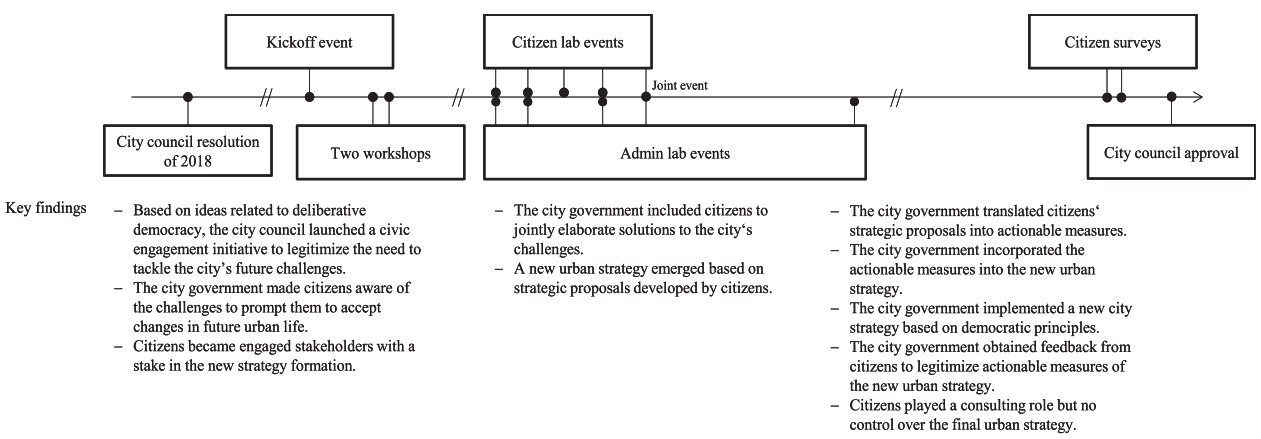
Timeline of Events.
Data Collection
We focused our data collection efforts on stakeholder engagement initiatives with citizens. We collected qualitative data over 35 months, from February 2019 to January 2022 in the form of observations, interviews, and documents (Jarzabkowski, 2008).
To understand relational practices (i.e., activities that establish relationships among stakeholders and shape dynamics of their engagement), we observed several stakeholder events during the strategy process. For instance, one author participated in the kickoff event of the joint strategy process, which was attended by approximately 300 participants (February 2019); two workshops with approximately 100 participants each (May 2019); and two workshop series, each consisting of five events and attended by 30 participants (October 2019–March 2020). All events were three to six long. During these observations, the researcher took notes describing activities, interactions, and their outcomes and wrote them up within 24 hours. She also documented verbatim quotes and audio-recorded group work during the workshop series.
We also carried out 55 semi-structured interviews with 29 informants selected based on theoretical sampling (Corbin & Strauss, 2015). On the one hand, these interviews were used to develop a better understanding of observations during the events and to delve deeper in the underlying interactions. These interviews followed a loose interview guideline depending on the informant’s role in the observed situations, their personal interactions with other stakeholders, and their perceived role in the strategy development process. For example, we asked citizens about their perceptions of discussions, other participants’ reactions, and their inclination to contribute. Interviews lasted an average of 40 minutes and were recorded and transcribed, with detailed notes written up within a day. We conducted interviews with 7 citizens who had attended one of the two workshops in May 2019, and 40 interviews with 21 informants during and after the citizen lab between October 2019 and March 2020. Some informants were interviewed more than once to identify relationship dynamics in the stakeholder engagement process. Interviews also were used to further clarify the goals, sequence, and boundary conditions of the strategy development process. For instance, we interviewed 5 urban planners twice in their dual roles as both citizens and clients of the civic engagement process, one of whom was a facilitator from the foundation. City employees were also asked about the city administration’s internal strategy workstream and their observations. After the admin lab workshop series concluded, we interviewed one urban planner who summarized the stakeholder engagement initiative, its progression, and the final strategy draft. To track progress over time, we also conducted 7 informal interviews with 3 urban planners and 2 facilitators before, between, and after various events and initiatives aimed at promoting stakeholder engagement in the strategy development process. These informal interviews were not recorded, but we took extensive notes, which we wrote up within a day.
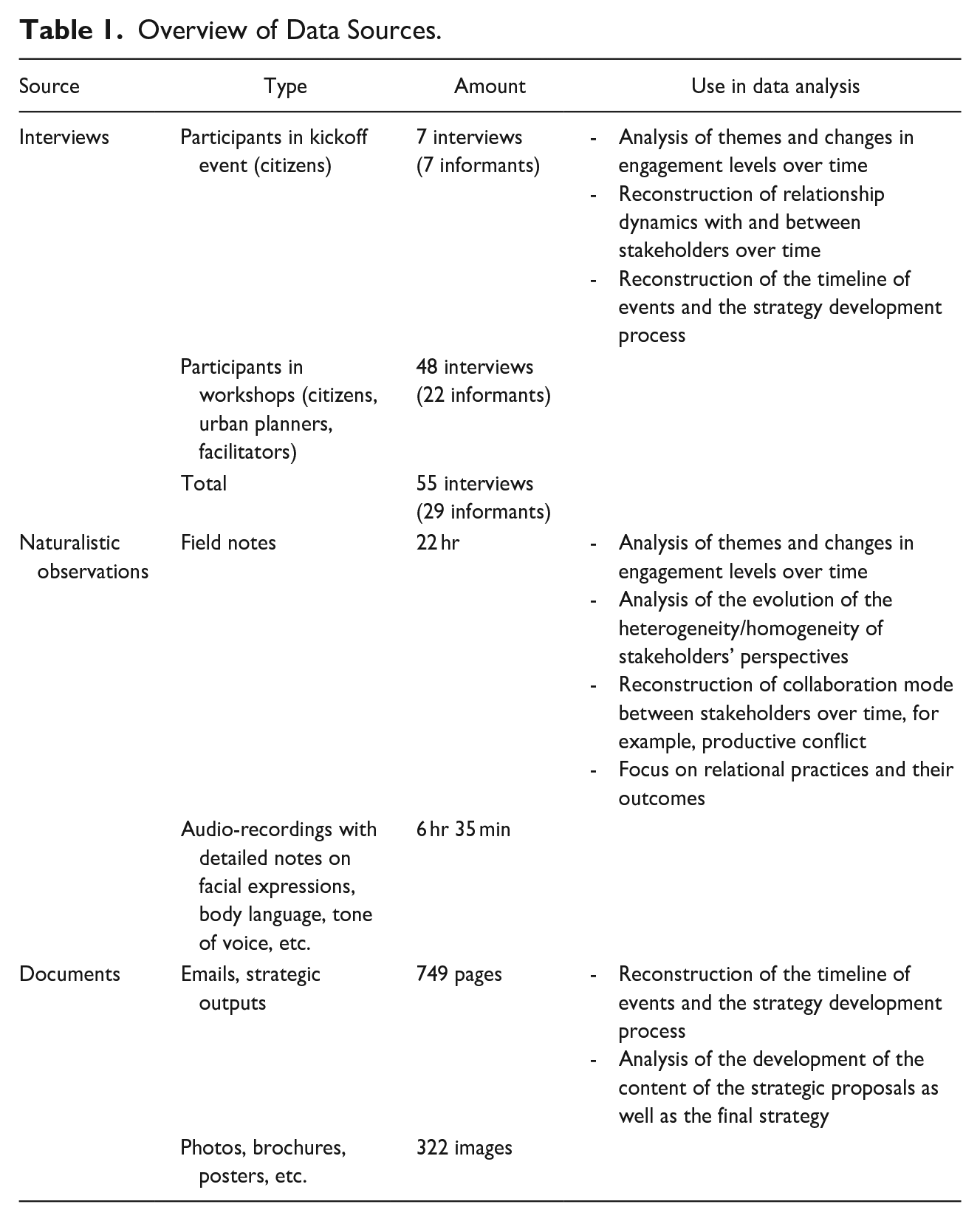
In addition to data from observations and interviews, we analyzed relevant documents throughout the study period, including official brochures, publicly available requests, resolutions of the city council, articles, as well as reports on the city’s official website (with photographs and videos), and communications with participants (e.g., emails and information sheets used in the workshops). We also collected event summaries and artifacts, such as newspaper articles, elaborate posters depicting daily routines of future city inhabitants, and brochures about the city’s future. These data enabled us to triangulate information from interviews and observations. Table 1 gives an overview of our data sources.
Overview of Data Sources.
Data Analysis
Using inductive qualitative techniques (Locke et al., 2022), we conducted data analysis in parallel with data collection (Feldman, 2000). In line with our practice-based lens, our unit of analysis was practices (i.e., patterns of activities performed by actors). Our data collection was initially informed by our general interest in practices for engaging heterogeneous stakeholders in the strategy development process, while remaining open to new ideas that emerged from our empirical data. For instance, when we realized that stakeholders’ heterogeneity varied throughout the strategy development process, we engaged more deeply with the literature on the relational view of stakeholders, which informed additional data collection efforts. As is typical with in-depth qualitative research (Spee & Jarzabkowski, 2011), our analysis proceeded in several stages through which we developed our theoretical categories.
First, based on our observations and interviews, we wrote detailed descriptions of different interaction episodes, activities, and associated outcomes, and created a timeline of key events to trace the evolution of the strategy development process (Dobusch et al., 2019). After clustering our data chronologically, we focused on the ways stakeholders could contribute to the strategy that would shape the city’s future, and how outcomes of the events and initiatives were processed further. We updated our description when we obtained new data, such as new result documents. We iteratively compared the activities of the city government and citizens and observed “certain discontinuities” (Langley, 1999, p. 703) in the level of heterogeneity/homogeneity between stakeholders’ perspectives, and thereby in the dynamics of stakeholder relationships in our empirical material. Based on these discontinuities, we drew figures to visualize the activities and recognized shifts in the extent to which participants were allowed to engage in co-creation activities, the facilitation approaches adopted by workshop moderators, and proposed solutions to be included in the city strategy. In this step, we recognized that the heterogeneity and homogeneity of stakeholder views and stakeholder engagement varied over time and depended on different activities.
Second, we built on this initial observation and delved deeper into these activities. We assigned first-order terms (Saldaña, 2021) to the data collected from interviews, field notes, and documents. Initial codes referred primarily to descriptions of stakeholders’ various activities. For example, the city government focused on raising awareness and fostering acceptance, workshop facilitators focused on encouraging and motivating engagement, and citizens focused on demonstrating expertise, brainstorming, and developing strategies. At this stage, we (re)coded our data several times and then clustered the activities into practices. Iterating with literature (Kujala et al., 2022), we realized the relational aspect of these practices, which formed our second-order themes (Saldaña, 2021). We identified connecting (i.e., creating and maintaining relationships between stakeholders), facilitating (i.e., seeking to find common ground despite heterogeneous interests), and containing (i.e., re-establishing differences between stakeholders) as relational practices influencing stakeholder engagement.
Third, upon realizing that one relational practice was dominant in a certain timeframe, we began analyzing the sequence of practices. Recognizing how the practices emerged and enacted diverse levels of heterogeneity/homogeneity among stakeholders (Jarzabkowski et al., 2016) enabled us to identify the outcomes of practices as additional second-order themes (Saldaña, 2021). Specifically, we identified that connecting led to the implication of heterogeneous stakeholders, which drove collaboration and productive conflict and enabled the practice of facilitating. In turn, facilitating led to solidarization, which drove the need to re-integrate diverse perspectives into the final strategy, and enabled the practice of containing. Ultimately, containing led to distinction.
Fourth, we analyzed how the three practices and associated outcomes shaped the evolution of the strategy’s content. Iterating between our data and the literature, we referred to Kujala and colleagues’ (2022) classification of contents of stakeholder engagement. We also transcribed and analyzed conversations and audio-recorded group work during the workshop series. We looked for links between discourse and strategic outputs (i.e., documents), preliminary outcomes of the city administration’s internal strategy workstream, and the produced strategy. Responding to Kujala and colleagues’ (2022) call to develop a better understanding of the relational view and drawing on a practice-based conceptualization of relationships, we paid particular attention to situations where some individuals or groups of stakeholders became more influential while others were marginalized, and which activities contributed to these changes. As we explored the dynamics of stakeholder (dis)engagement, we began to theorize about the planned and emergent impacts of engaging heterogeneous stakeholders in strategy development.
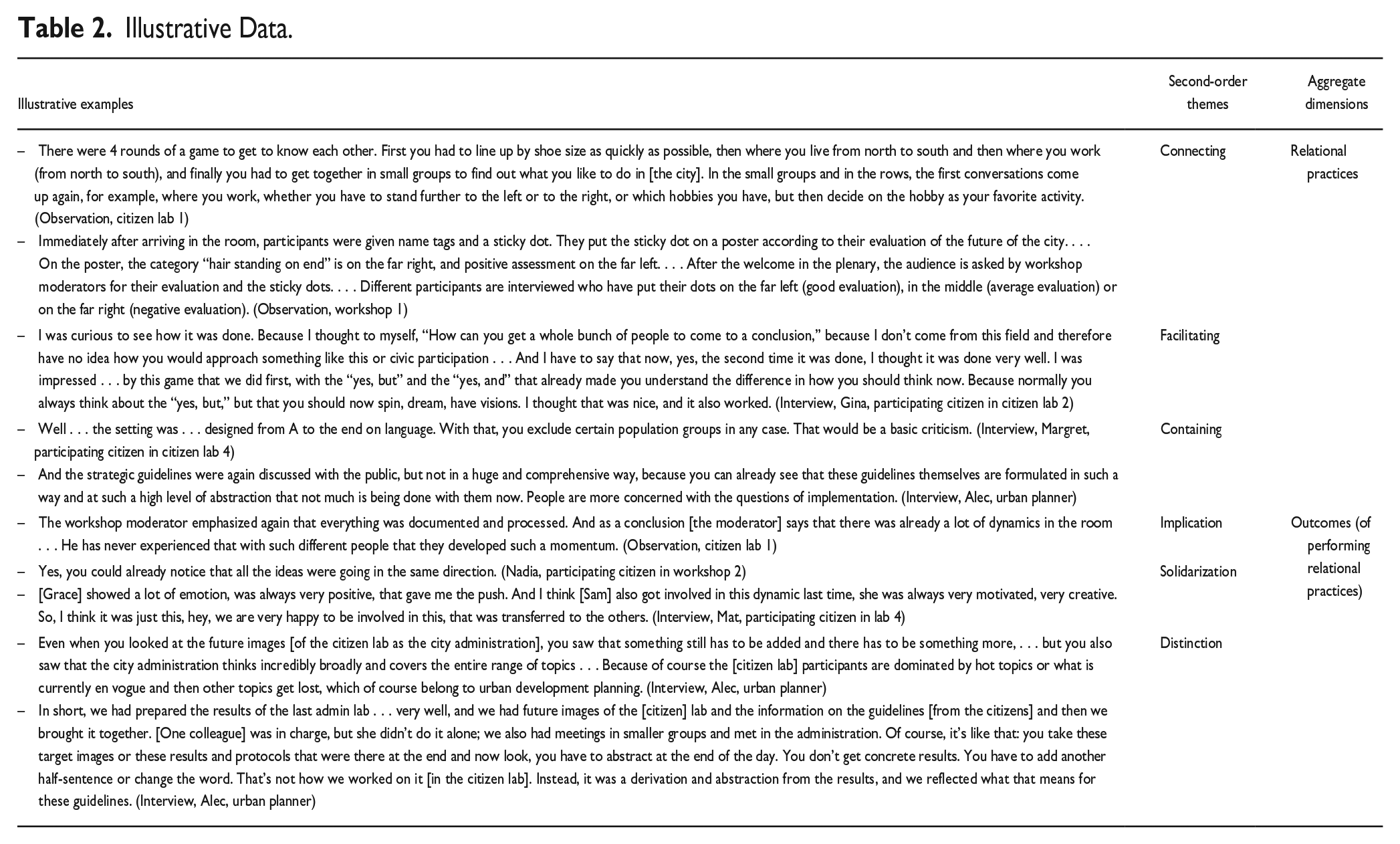
Fifth, we developed a conceptual framework that explains how relational practices shape stakeholder engagement. We linked the identified relational practices and associated outcomes, and illustrated the relationships among these overarching dimensions (Saldaña, 2021), thereby assembling our framework. We present our data structure in Figure 2 and illustrative data in Table 2.
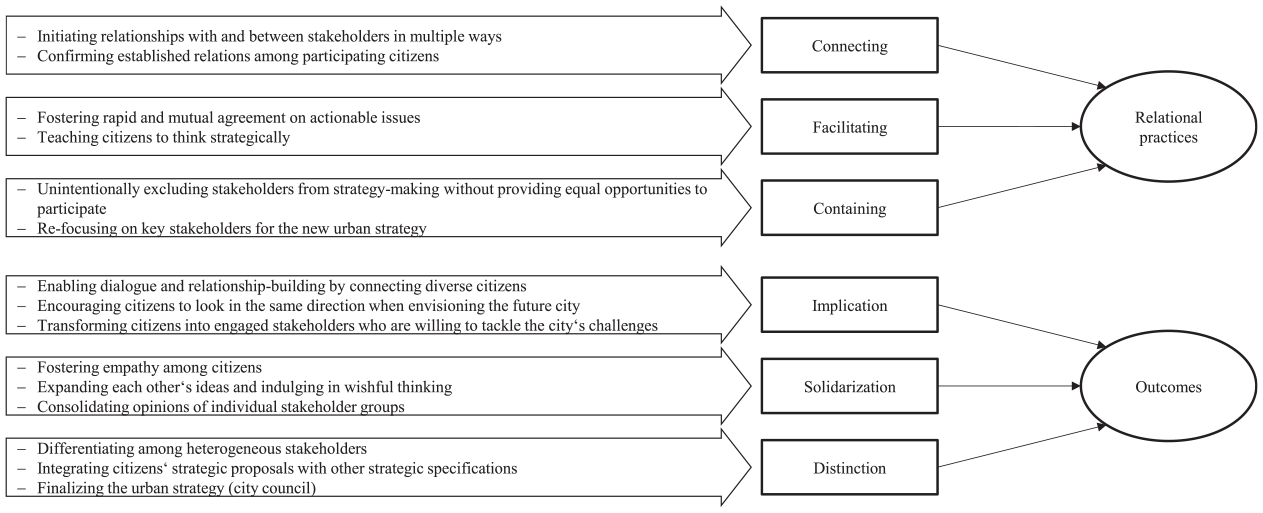
Data Structure.
Illustrative Data.
Findings
This section presents findings from our analysis of how relational practices shape stakeholder engagement. Our data analysis reveals three relational practices influencing the city’s civic engagement process. We describe how the relational practices of connecting, facilitating, and containing played out and led to outcomes of implication, solidarization, and distinction. We also describe enablers that initiated transitions between practices.
Connecting
The city was facing complex problems (e.g., climate change, population growth, an aging society, digitalization), and its existing strategy needed to be updated in order to address them. Because the required amendments to the urban strategy would affect their everyday lives, citizens were invited to participate in developing the urban strategy in accordance with the principles of deliberative democracy.
Performing the Relational Practice of Connecting
At the beginning of the stakeholder engagement process, the city government established relations with and between its stakeholders in multiple ways. First, the city government followed specific criteria to establish relations with a broad range of stakeholders and involve them in the strategy development process. Opening up participation and consciously ensuring stakeholder representation meant that some formerly underrepresented groups were included equally next to groups that had been overrepresented in earlier civic dialogue events (e.g., retired persons). Marvin, a young urban planner, offered a description of a typical member of this formerly overrepresented group: “The old, white, educated man who used to be an architect.” To foster diversity and ensure equal involvement of stakeholder groups, participant selection followed a “multi-stakeholder approach” focused on: the broadest and most intense possible involvement of stakeholders and social groups in urban society. Methodologically, a selection pattern oriented on the stakeholder approach is applied, whereby different areas of society, different fields of competence and social backgrounds of the participants are systematically considered. (Citizen lab report, p. 3)
Moreover, the city government raised awareness of future challenges facing the city and initiated a dialogue with citizens about how these challenges might affect their everyday lives. For example, backyards could be replaced with new housing, and parking lots could be converted into gardens or green spaces. Marvin, an urban planner, explained that citizens were “introduced to the grand challenges” (Field notes). The city government influenced citizens’ willingness to address grand challenges by providing them with information and initiating conversations, thereby transforming citizens into engaged stakeholders. Importantly, when the city informed them about major challenges that lie ahead, citizens perceived that the city government considered them to be equal stakeholders whose opinions were valued. One of these citizens, Iris, explained: [The civic engagement process] really inspired me. I am more interested in [urban development] issues now. . . . It was great to be involved as a citizen and that someone was interested in [our opinions]. . . . There is the feeling that you are being heard and . . . that you can participate. I thought that was great.
The city influenced citizens’ willingness to tackle grand challenges and legitimized the initiative to develop a new urban strategy by establishing relationships between the citizens and other stakeholders, such as experts. For instance, they established links between societal problems and scientific solutions. Experts and politicians informed citizens about the grand challenges facing the city, possible solutions, and consequences for future urban life. Based on this information, citizens worked together to sketch a “big picture” of a desirable future city, which prompted them to accept these consequences.
For example, during the kickoff event, “the dialogue between the city and its residents was opened” (Official city website). Grand challenges such as “mobility in cities and regions,” “digital transformation,” “social cohesion,” and “life quality” were addressed in panel discussions with various experts, such as a professor of urban design, an architect, an IT expert, and a social worker. We observed that the experts tried to influence citizens’ willingness to tackle grand challenges, to allay their fears, and to mobilize them to collaborate on a new urban strategy by issuing constant calls to participate in additional civic engagement events and integrating feedback from various experts into the strategy process via graphic recordings that symbolized the grand challenges and potential pathways toward addressing them. As Aaron, an urban planner, outlined in a video interview on the city’s website, “[The new urban strategy] is an important element [that enables us] to look with people in one direction, to get going in the direction we want to go.”
Connecting also implied strengthening the newly established relations among participating citizens. For instance, workshops included playful elements that emphasized team spirit. William, a participant in the citizen lab, explained how these activities strengthened the group: Because people are doing something together, people just said to each other, “Okay, that fits here; that fits there.” Then I also went to the next table and noticed what they were doing, and leafed through it, and told them that it might fit there, and they took it [my suggestion]. So there was an activity . . . that brought the group a bit closer together.
An important aspect was that citizens with different backgrounds had quickly learned how to assess the other participants. Thereby, productive conflict enhanced the joint development of ideas. A younger participant, Mat, described his own development in relation to an older participant with a different background and opinions: Well, last time I really took a step back. This time, we were already a bit more familiar with each other. I knew a bit what he was like . . . So, of course, I was able to react differently . . . I could say, “Hey, I think this point is important, too.” . . . The last time it was really, “Hey, come on. I don’t think that’s so important right now.” It was an opposing opinion somehow a bit. . . . [This time, I could reframe his comments as:] He finds this important, which doesn’t mean that everything else is irrelevant, but that he simply finds this less important. And then I also said, “Hey, let’s talk about this point.” And that just made it more possible in that situation, I think.
Because they felt heard and appreciated in relaying their personal experiences and backgrounds, a sense of community emerged, and the groups indulged in wishful thinking and agreed on big solutions to the city’s grand challenges, the implementation of which would involve extensive changes to their everyday lives. Citizens discussed their thoughts with others, expressed their opinions about how the future city should look, and began to work toward this future by developing grand visions for tackling the grand challenges. Grace, a participant in this process, explained: I was able to share my thoughts with others, . . . and I really had the feeling, “Yes, you are allowed to say your opinion, . . . you are heard, and you have a forum to express your opinion among people who understand you.”
Another participant, Sarah, expressed similar sentiments: “It was great because one had an idea and the other said, ‘Yes, if you say so, then we can do it like that.’ This turned into a joint creative process.”
Beyond continuing to bring citizens with various backgrounds together, the city government increased the heterogeneity of stakeholders engaged in the strategy development process. Most significantly, they connected citizens with the city employees who were operationalizing the elaborated strategy. Before the citizens were brought into dialogue with city employees, some of them expressed that they lacked insight regarding how the urban strategy would be implemented and specifics of its practical operationalization. Sarah described a sense of relief after being introduced to city employees and beginning to gain an understanding of this new perspective: So in this Gallery Walk, I experienced that differently, because you finally got into this dialogue [with the city employees], which I had missed before in all the events, that you somehow discuss—how shall I say—across the system. And I experienced that as different.
Outcome of the Relational Practice of Connecting: Implication
Connecting citizens with diverse backgrounds enabled dialogue and relationship-building among heterogeneous stakeholders of the city. The city government made citizens aware of the challenges, but also facilitated their understanding of necessary and possible actions, thereby implicating them in both the problems and potential solutions. Encouraging citizens to look in one direction and giving them a voice in the strategy that would shape the future transformed them into engaged stakeholders who were willing to tackle the city’s grand challenges. Despite their differences, the citizens started to collaborate well in a mode of “productive conflict,” enabling the shift from connecting to facilitating.
Facilitating
We identified facilitating as the central relational practice to further involve citizens in jointly elaborating the new urban strategy with the city government.
Performing the Relational Practice of Facilitating
The city government facilitated stakeholders’ abilities to interpret the information provided and fostered rapid and mutual agreement on actionable issues. We observed that the city government started conversations with citizens not only about the city’s challenges, but also about ways to address them. For instance, two workshops were held for stakeholders to elaborate and discuss the city’s advantages and disadvantages, and to propose actions to overcome the challenges. This focus on measures sparked a zeal for action that was necessary to instigate productive conflict.
Our data show that citizens quickly recognized the city’s central challenges of housing and mobility in the face of climate change. During an interview, Iris pointed out: “It became clear very quickly where the problem was in the city. It was incredibly stark to see housing and traffic. . . . Red, red, red!” We observed that this use of the color red in artifacts encouraged citizens to work together to establish a common vision for the city’s future and allay their fears. They had a stake in the new urban strategy and were prompted to prepare for the future by tackling grand challenges and accepting the consequences for their future lives in the city.
We categorized activities during this stage under the practice of facilitating. Most stakeholders lacked the skills to think strategically, so the city government engaged a foundation that was dedicated to innovative collaboration and engagement to facilitate workshops on the civic engagement process. The foundation was instructed to help citizens develop the ability to abstract individual solutions and think in strategic terms. This was most visible in the foundation’s innovative engagement method, a “citizen lab” which fostered co-creation as participants engaged playfully with multiple ways of knowing by first developing solutions at the action level and then abstracting those solutions to the strategy level. In the abstraction process, solutions at the action level were clustered, connected, and placed in larger contexts. In this way, citizens were able to make connections between and among the grand challenges over time, thereby enabling them to think strategically and develop grand visions. Once citizens became accustomed to strategic thinking, they began to address the city’s challenges and developed and assembled big picture solutions. We observed that they were able to make connections between their personal experiences, social challenges, and their wishes for the future through their exchanges.
For instance, citizens developed the ability to identify visionary solutions to social challenges through a two-level approach in which concrete problems and solutions were identified and then further abstracted. Via warm-up games, citizens were introduced to innovative thinking to help them find solutions to housing, mobility, social cohesion, and environmental challenges. Clustering these solutions, describing the future city’s inhabitants, and developing their future daily routines enabled the citizens to abstract individual solutions and tackle grand challenges at the strategy level. Alec, an urban planner, explained: For me, the citizen lab was fascinating. At the beginning, when the elaborated results were on the action level, I thought, “This is classic; citizen [inclusion] usually works when there are concrete actions to discuss, and it is always difficult to bring people to the strategy level.” . . . And then, that worked increasingly well over the lab process. And I thought that was very good.
The foundation made a significant effort to make the citizen lab a success, and this effort enabled the citizens to co-create a future urban strategy. Our data show that the foundation sought to create ideal workshop conditions for formulating the strategy so the participants could engage thoroughly with the grand challenges and the vision for the future city. For example, the foundation’s team members carefully selected the locations for the special events, provided food and drinks, reminded participants of upcoming events via email, prepared a variety of templates, and followed up on the workshops. Ryan, a citizen lab participant, explained: This setting, these venues, . . . how it was catered . . . The foundation created a very positive [environment] for dealing with these [strategic] issues, and that is a real achievement. I think that is great. The communication, . . . that five days before [the event] you get an email, . . . they do that well.
Marvin, an urban planner, added: “The foundation invested its lifeblood in these workshops.”
After the citizen lab, the city government continued to provide channels for citizens to express their opinions on the strategy draft. Because the engagement of citizens as stakeholders was primarily non-dialogical (e.g., the city government seeking feedback from citizens), the quality of facilitation dropped immensely, and previously used engagement methods, such as group work and guided tools to enhance strategic thinking, were neglected. For example, urban planners launched an online survey to obtain feedback on the final draft of the strategy. Citizens were asked to express their opinions on the various strategic issues, including what they liked, what needed improvement, and what was lacking. However, our data show that this civic engagement tactic was met with little response, as it was published as part of another survey. About 30 comments were received (2 to 10 comments per topic). In addition, the quality of the citizens’ comments did not meet the desired level of abstraction for strategy development, and only a few comments referred to strategic issues, such as one that suggested strengthening the sustainability of financial expenditures. Other comments ranged from visions, such as zero traffic fatalities, to concrete suggestions, such as inviting Friday for Future activists to host events and making outdoor pools available for year-round use. Suggested changes to the strategy were not implemented; instead, the survey served only as an indicator of whether the strategic themes of the new strategy addressed people’s individual problems. Alec, an urban planner, explained: This type of civic engagement in terms of feedback can only be used if topics are missing, or to determine whether there is a consensus on the major topics. However, the individual strategy topics are no longer revised editorially based on the comments.
As a result, we found that this feedback did not change the final strategy draft, but was merely consultative to identify whether the citizens’ issues had been included in the new urban strategy.
Outcome of Performing the Relational Practice of Facilitating: Solidarization
We found that the foundation’s workshops helped citizens to think strategically, and we observed them developing empathy for each other, such that a mechanism of solidarization emerged. This solidarization made joint work possible, and as a community, heterogeneous stakeholders elaborated strategic proposals for tackling the city’s challenges by expanding each other’s ideas and indulging in wishful thinking. However, the opinions of some individuals and groups of stakeholders were lost through solidarization. Another emergent outcome was that grand, but also extensively altered visions of life in the future city were developed by the solidarized heterogeneous stakeholders. For instance, despite their heterogeneous backgrounds and preferences, the citizens agreed on a strategic proposal that envisioned a “healthy lifestyle of citizens through yoga and high-quality, balanced or vegan diet” (Daniel, participating citizen). This indicated that citizens’ strategic proposals were aligned with rigorous changes to the current urban lifestyle, including some austerity for themselves as inhabitants. Although solidarization took place and co-creation was well established, the city government needed to assemble the final strategy and to re-include different perspectives, particularly those from actors not directly involved in the lab. This need to assemble the final strategy as well as to re-include diverse perspectives enabled the process to evolve from facilitating to containing.
Containing
In the subsequent sequence of events, we found that the city government predominantly performed activities to contain the relations with and between citizens as well as their strategic elaborations. Therefore, citizens played a less prominent role in the stakeholder engagement process at this stage. Citizens’ involvement was facilitated only at a low level, thereby decreasing the quality of their suggestions.
Performing the Relational Practice of Containing
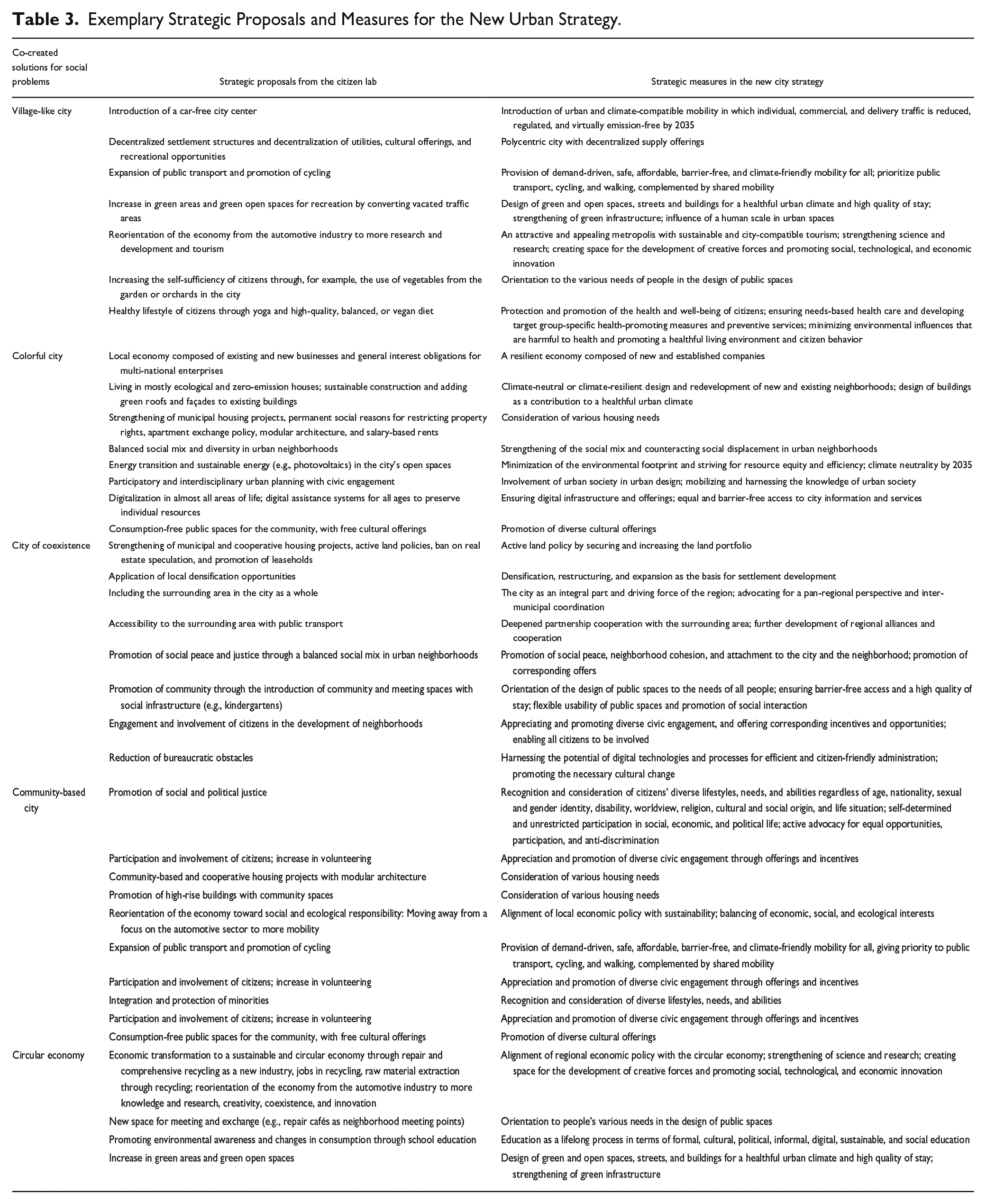
Containing was the central practice visible as the city government refocused on stakeholders that had been considered critically important prior to the engagement process. The city government was responsible for merging previously marginalized or underrepresented stakeholders’ perspectives and strategic proposals with traditional stakeholders’ (i.e., urban planners’ and city employees’) strategic specifications. For instance, the citizens’ strategic proposal for the urban future envisioned a circular economy characterized by recycling and repair. Although major employers in and around the city were car manufacturers, the citizens envisioned a village-like city with a car-free downtown. They also envisioned relocating utilities, cultural offerings, and recreational opportunities from the city center to its outskirts, as well as a colorful city characterized by a focus on the common good, where citizens lived in municipal housing with salary-based rents, and multi-national enterprises were obligated to act in the community’s best interest. Moreover, the citizens envisioned a city of coexistence, where active land policies, densification, and municipal and cooperative housing projects provided sufficient housing. Urban planners merged the strategy content from the citizen lab with specifications from the city council and the internal strategy workstream. For instance, the “car-free city center” proposed by citizen lab participants was integrated into the final strategy draft as “urban and climate-compatible mobility in which individual, commercial and delivery traffic is virtually emission-free by 2035.”
Activities also restricted the further development of productive conflict by unintentionally excluding stakeholders from the strategy development process. For instance, the city government brought city employees into the process, but did not train them beforehand in the methods being used by the citizens. Sarah, a participating citizen, experienced the situation as: strongly dominated by the [citizen] labbers because they knew these settings, because they knew this time management. We were trained in these formats, and of course, through the community that had developed, through the four preliminary events, I think we also unleashed quite a force that perhaps also flattened the admin people a bit, yes. So, that means . . . it was actually a [citizen] lab with people watching.
Beyond this inequality among stakeholders deriving from different training, individual participants were marginalized or even excluded from strategy development. Such situations frequently went unrecognized by the workshop facilitators and other participants. For instance, during an interview, William, a participant who used a wheelchair, explained: The event room was not easily accessible for me. And then I went into the event room and saw that it consisted of two floors and that there was a gallery upstairs, where some people later withdrew [for group work]. That would not have been possible for me, of course.
Our data show that specifications from the city council, such as the requirement to consider the UN’s sustainable development goals and strategy content from various departments of the city’s administration, were supplemented with strategic ideas from the citizen lab’s strategic proposals. Therefore, while attention was paid to the content of the strategies emerging from the citizen lab, the exact wording was negotiated by city employees. Marvin, an urban planner, explained, “[In the admin lab], every word is looked at long and hard when formulating strategy topics.”
Finally, the city government consolidated the strategic proposals elaborated by citizens. Based on democratic principles, the city government transformed the citizens’ strategic proposals into actionable measures, which were incorporated into the urban strategy document, and then legitimized based on citizens’ feedback. However, our data show that the urban planners were in conflict. On the one hand, they were convinced of the value of the citizen lab results and wanted to incorporate them into the new strategy; on the other hand, they needed to develop an urban strategy that could be approved by the city council, which represented the entire population of the city. Therefore, the strategic proposals from the citizen lab served as input to the new urban strategy, but the city’s democratic principles determined how the urban strategy was finalized. According to those principles, the city council had decision-making power and citizens had no control over the final version of the new urban strategy.
Nevertheless, urban planners incorporated the strategic proposals from the citizen lab into the final strategy draft, thereby validating them and merging them with actionable specifications. The responsibility of urban planners is to implement the decisions of the city council and to create a city that considers the realities of inhabitants’ lives. To fulfill their role, urban planners validated the strategy outputs from the citizen lab and used the grand visions as “food for thought.” Urban planners felt that the strategic grand visions from the citizen lab were influenced by today’s zeitgeist, but that various needs of the city’s many population groups were not considered. For example, the citizen participants designed a digitally connected city in which residents produced their food locally and organically on their own balconies, transportation was autonomous, and remote work was prevalent. However, to meet the needs of other population groups in the city (e.g., elderly people and those without balconies), urban planners invalidated these grand visions. Alec, an urban planner, explained: The [citizen lab] participants integrated their personal views and their personal circumstances . . . strongly into the [grand visions]. However, we as a city administration detached ourselves from this personal view . . . and thought of many more groups in the urban society. That is our professional business. When we deal with fundamental social issues, we think about multiple target groups in the urban development.
Outcome of Performing the Relational Practice of Containing: Distinction
When the city government re-specified citizens’ strategic proposals into actionable measures, distinctions between stakeholders’ proposed solutions and their own became evident. The city’s democratic principles required city council to finalize the urban strategy, thus they refocused on the perspectives of key stakeholders (i.e., urban planners, who were considered experts in urban strategy development, and city employees, who were responsible for operationalizing the city’s strategy). At this point, citizens’ feedback collected via surveys merely served as a unidirectional form of voice.
Nevertheless, the strategic proposals from the citizen lab resurfaced in the assembled final strategy, albeit in a refined way. Ideas from the strategic proposals developed by citizen lab participants were condensed into actionable measures and integrated into the new urban strategy document in a less rigorous form. Unexpectedly, strategic ideas from the citizen lab were reflected in all topics of the final urban strategy draft, including preservation of a social mix and the promotion and advancement of civic engagement initiatives. Table 3 presents the citizens’ strategic proposals and the actionable measures.
Exemplary Strategic Proposals and Measures for the New Urban Strategy.
Summary
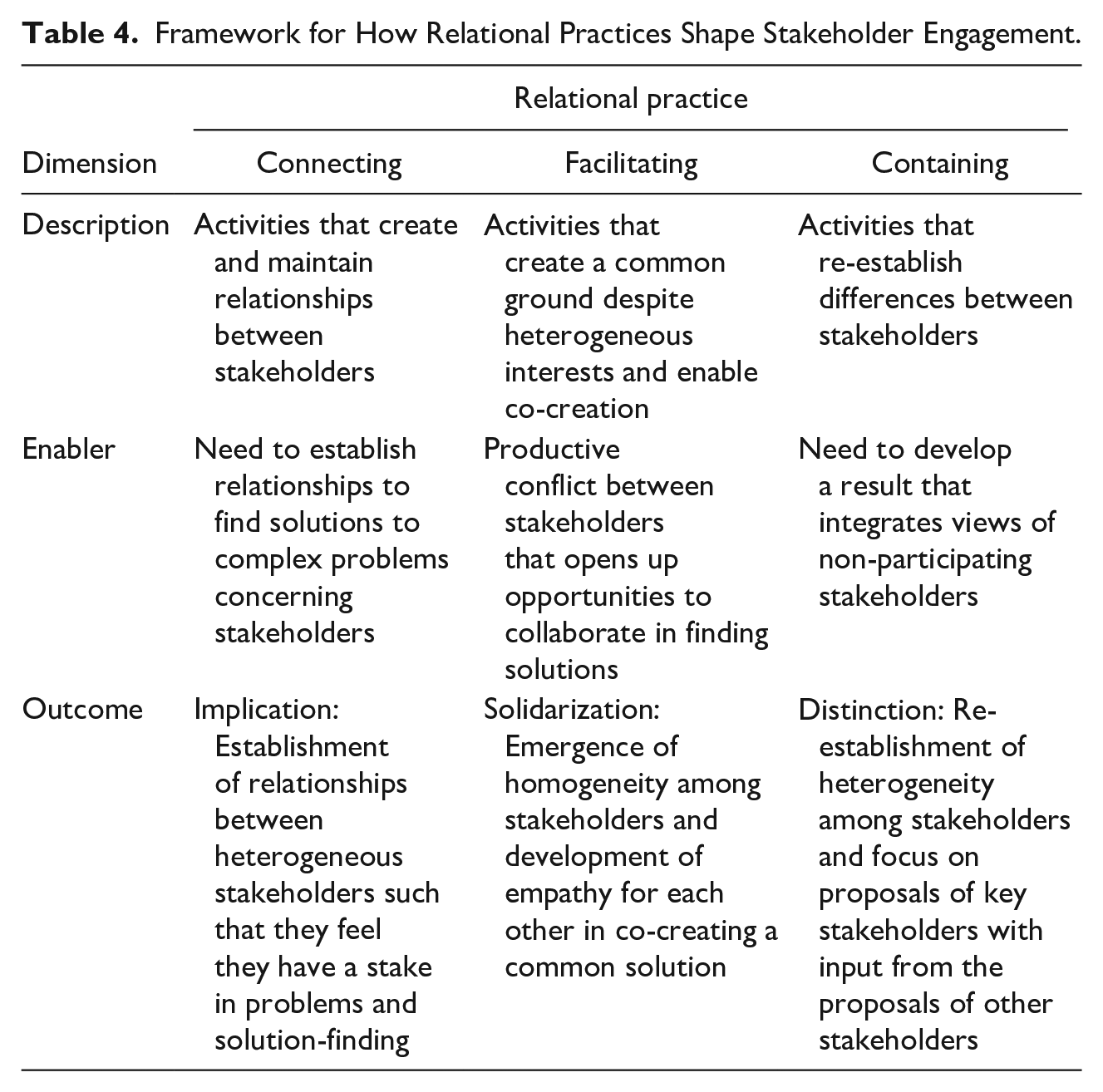
Based on these findings and related theoretical considerations, we have developed a framework that summarizes the relational practices, their enablers, and their outcomes (see Table 4). At the center of our framework are the three relational practices of connecting, facilitating, and containing. Each performance of a relational practice has a specific outcome that affects the heterogeneity of stakeholder perspectives. The degree of heterogeneity enables the shift to the next practice. For instance, the outcome of performing the relational practice of connecting is stakeholder implication, which leads to the establishment of relationships among heterogeneous stakeholders and thus engagement. When relationships reach a stage of constructive conflict among stakeholders with heterogeneous backgrounds and opportunities for collaboration, the next practice emerges. Constructive conflict involves aligning the interests of heterogeneous stakeholders and the organization, and finding a valuable solution based on a compromise between different interests and values. This form of well-functioning collaboration continues in the relational practice of facilitating, which leads to the solidarization of heterogeneous stakeholders, and thus to the emergence of stakeholder homogeneity which fosters co-creation. The need to assemble the final strategy as well as to re-include diverse stakeholder perspectives enables the shift to containing. Containing as a practice leads to distinction among stakeholders as an outcome; the re-establishment of heterogeneity among stakeholders ultimately limits their engagement (i.e., leads to disengagement).
Framework for How Relational Practices Shape Stakeholder Engagement.
Discussion
We studied a civic engagement initiative of a large German city and analyzed the relational practices shaping stakeholder engagement. Integrating a practice-based understanding with the relational view of stakeholder engagement enabled us to identify connecting, facilitating, and containing as relational practices as well as their outcomes during the engagement process. Our findings make three primary contributions to the literature on stakeholder engagement, which we elaborate below. We conclude by discussing some boundary conditions of our study which open potentially fruitful avenues for future research.
Uncovering the Relational Practices of Stakeholder Engagement and Associated Dynamics
First, we have responded to calls to go beyond unidirectional activities “targeting” stakeholders and to study relational practices underlying the dynamics among stakeholders (Civera & Freeman, 2019; Kujala et al., 2022; Quick & Feldman, 2011). Our practice-based analysis of stakeholder engagement extends current literature rooted in the relational view (Kujala et al., 2022) by identifying connecting, facilitating, and containing as relational practices, and analyzing how they shape dynamics of stakeholder engagement over time. Unlike extant research based on the relational view which has identified the bi-directional nature of stakeholder engagement, we have identified practices that shape the dynamics of this bi-directionality. These practices clarify the activities involved in facilitating collaboration among heterogeneous stakeholders and aligning them towards a common goal throughout different episodes of the stakeholder engagement process. Our practice-based understanding of the relational view has enabled us to advance Goodman and colleagues’ (2017) research by analyzing the dynamic aspects of collaboration among stakeholders rather than their static relationships. Likewise, adopting this lens has enabled us to extend Kujala and colleagues’ (2022) description of stakeholder engagement activities by identifying practices that shape relationships between stakeholders and the dynamics of stakeholder engagement.
In earlier studies, scholars assumed that stakeholders have rather homogeneous interests and more or less equal influence over the stakeholder engagement process (Bundy et al., 2018; Derry, 2012; Reed et al., 2009). However, our findings show that this is not always the case. When stakeholders have heterogeneous interests and different levels of influence, co-creation may require more than the activities emphasized in previous research (i.e., facilitation and bringing actors together; Reed et al., 2009). Our findings show that in contexts where stakeholders have heterogeneous interests, values, and aims, the practice of containing is essential to limiting the emergence of individual powerful stakeholders or radical solutions. Containing rebalances the dynamics between stakeholders and refocuses activities to fulfill the aims of stakeholder engagement.
Furthermore, our analysis reveals the dynamics of what we label “productive conflict,” (i.e., the process of aligning interests among stakeholders and between stakeholders and the organization), and finding a compromise between different interests and values. Thereby, we add to prior work that has pointed to the role of conflict with and among stakeholders (Dawkins, 2015), as well as work on the fit between stakeholders and organizations (Bundy et al., 2018). However, unlike research that has focused on the negative consequences of conflict, such as distrust (Weibel et al., 2020) and decreased legitimacy (Lehtimaki & Kujala, 2017), our research highlights the positive impacts of conflict among stakeholders and thereby builds on research on productive conflict in other research areas (Putnam, 1994). Our findings suggest that the relational practices of connecting and facilitating instigate a form of productive conflict among stakeholders when they have heterogeneous aims or values. For instance, citizens learned during the workshops not to dismiss the suggestions of fellow participants, but to build on them by adopting a “yes, and” instead of a “yes, but” approach. Rather than exacerbating differences, the relational practices of connecting and facilitating focused on finding common ground, thereby reducing the conflictual nature of interactions between stakeholders. Our research thus strengthens the claim regarding the potentially conflictual nature of engaging with stakeholders (Civera & Freeman, 2019) and the need to address these potential conflicts to enable collaboration and co-creation. In our case, the relational practices followed a sequence to yield a specific outcome of stakeholder engagement. This goal was important for finding common solutions and resolving emerging conflicts. Our data show how strategic complementarity (Bundy et al., 2018) is created dynamically and thereby improves the fit between heterogeneous stakeholders and the organization. These findings and our conceptualization of productive conflict within stakeholder engagement can provide a foundation for future research on organizational engagement of heterogeneous stakeholders. Overall, our research contributes to the relational view of stakeholder engagement by developing a practice-based understanding of stakeholder engagement, identifying relational practices, and explaining how they unfold.
Identifying Outcomes of Relational Practices Associated With Stakeholder Engagement
Second, we have identified implication, solidarization, and distinction as outcomes of relational practices from which enablers of the next practice emerged, thereby explaining shifts in stakeholder engagement. While prior studies typically have not differentiated between activities and outcomes of stakeholder engagement (Arnstein, 1969; Dobusch et al., 2019), our research explicates how specific practices can produce outcomes that define the extent and nature of stakeholder engagement.
Our first identified mechanism, implication, emerges within the iterative relational practice of connecting. In our study, citizens adopted an approach to urban strategy development based on the principles of deliberative democracy, which included participating in informational events and engaging in conversations with representatives of the city government about complex social issues. Thereby, citizens became aware of the city’s current problems and upcoming challenges that might affect their everyday lives. Citizens also learned about the city government’s willingness to incorporate their views. The evolving sense of implication in societal problems and potential solutions strengthened citizens’ relationships.
Implication is a central issue in the stakeholder literature, as stakeholders are commonly understood as “individuals, groups, or organizations that affect or are affected by organizational activities” (Kujala et al., 2022, p. 1137). Despite the centrality of the idea of implication, however, most scholars have overlooked a potential gap between real effects of organizational activities on stakeholders and the extent to which they perceive being affected by such activities. We identified that perceptions of being affected by organizational activities emerged from the practice of connecting rather than the mere existence of such activities. Therefore, creating the feeling of being affected is what led to articulating the goal of the engagement process (e.g., strategy development) and making it meaningful for actors.
We know from prior research that stakeholders exhibit greater commitment and willingness to participate in co-creation processes to solve problems when they have pre-existing relations with others who are involved in such processes. Such relations can create perceptions of “communal sharing” (Bridoux & Stoelhorst, 2016, p. 230) of public goods. In contrast with previous research, our findings show that representatives of the city government and workshop moderators helped stakeholders develop these perceptions by initiating several activities that facilitated the emergence of a sense of community. We thus identified solidarization among stakeholders as an additional outcome of engagement practices.
Although solidarization enabled the joint development of ideas and strategic proposals aimed at solving complex social problems in the city, the proposed solutions did not reflect the lifestyles of all citizens. This finding is surprising and goes beyond current research, as solidarization not only fostered perceptions of communal sharing and co-creation (Bridoux & Stoelhorst, 2016), but also led to the exclusion of different opinions, including those of city employees. These insights show that solidarization can drive the co-creation of heterogeneous stakeholders, but also can unleash power that can be used to overrule other stakeholders, potentially enabling homogenization among stakeholders to emerge.
Recognizing a need to re-integrate diverse perspectives, the city government shifted from facilitating to containing in an attempt to reclaim the voices of city employees and other stakeholders like city planners and groups of citizens who had not been represented in the workshops. By describing the emerging outcome of distinction, we have extended prior research by showing how organizations manage which stakeholders “really count” (Derry, 2012, p. 253) and are involved in strategy development (Maitlis, 2005). Our findings suggest that such sorting is not only guided by principles of democracy (in this case) and legitimation (Derry, 2012), but also is path-dependent. Such paths are structured by the practices that evolve in interaction with and between heterogeneous stakeholders. These findings confirm the theoretical claim of Lange and colleagues (2022) that stakeholders can see themselves as competitors for the resources of the focal organization. Overall, our research extends the relational view by analyzing dynamics and outcomes of relational practices. We thereby respond to calls to analyze relationships among stakeholders (Laude, 2020; Sachs & Kujala, 2021), the shifting influences of different stakeholders (Papagiannakis et al., 2019) and organizational gatekeeping in the stakeholder engagement process (Kornberger & Clegg, 2011).
Highlighting Emergent Impacts of Stakeholder Engagement
Third, our findings contribute to research that explores how underrepresented stakeholders became marginalized. In our case of civic engagement, the city government had “good intentions” (Kujala et al., 2022, p. 1153) and included different stakeholders, some of whom had been underrepresented in previous forums of civic engagement. However, our work consolidates prior research, suggesting that “good intentions” are not automatically fulfilled (Lehtimaki & Kujala, 2017, p. 515). By uncovering situations where the opinions of certain stakeholders were unintentionally marginalized (i.e., overruled), we have confirmed prior findings of marginalization and closure emerging in practices aimed at opening up strategy development (Hautz et al., 2019; Whittington et al., 2011) or co-production processes (Dobusch et al., 2019). Our findings add to this stream of research by emphasizing the importance of interrelated practices and relations among stakeholders (Kujala et al., 2022), including marginalized stakeholders.
In doing so, our study shines a light on a potential “dark side” (Kujala et al., 2022, p. 1146) of bringing heterogeneous stakeholders together and associated “perceptions of harm” (Harrison & Wicks, 2021, p. 405) that may arise. For instance, the city government invested significant time, effort, and resources in activities aimed at facilitating productive interactions and co-creation among citizens. However, they (unintentionally) failed to provide equal opportunities for all stakeholders (e.g., city employees lacked training in co-creation methods, the physical surroundings did not allow persons with disabilities to navigate co-creation areas). By showing how organizations try but fail to provide equal opportunities, we have explicated what Kujala and colleagues (2022, p. 1165) described as “a blurred zone between unintentionality and intentionality.”
Our research also highlights that engagement practices are relational, path-dependent, and potentially contingent on the produced strategy content. For instance, when the city government transformed citizens’ strategic proposals into actionable measures for tackling grand challenges, they helped secure citizens’ ongoing engagement in the future. Prior research has shown that organizations can involve stakeholders in the co-production of strategies to build legitimacy (Desai, 2011) and foster their acceptance. Our work yields new insights into legitimation in the context of stakeholder engagement by shedding light on how organizations’ legitimation practices can also be directed towards consolidating heterogeneous stakeholders’ engagement. For instance, when the city government refocused on traditional stakeholders in accordance with democratic principles, previous co-creation activities with citizens had visible impacts on subsequent strategy content. Thereby, citizens’ voices were incorporated into the new strategy document. Unexpectedly, the voices of previously marginalized, mis- or under-represented stakeholders were legitimated. This intermingling of collaboration, involvement, and democratic decision-making points to new opportunities for research on stakeholder engagement by showing how dynamics of participation, inclusion, and democracy can unfold simultaneously (Kujala et al., 2022; Löffler & Martin, 2015; Quick & Feldman, 2011).
Boundary Conditions and Avenues for Future Research
Our study is subject to boundary conditions that also present opportunities for future research. First, we conducted our study in the public sector in Germany where the actors involved represented the diverse interests of the city’s citizens. Stakeholder engagement might play out differently when the heterogeneity of stakeholders or issues are different. Future work might zoom in on the dynamics of productive conflict when broader concepts of diversity apply (e.g., international cooperation) or when stakeholders have different relationships to the topic of engagement (e.g., climate change) (Reed et al., 2009). Second, our analysis focused on one city’s civic engagement initiative and citizens’ involvement in co-creating the city’s future strategy. In a representative democracy, elected representatives ultimately select proposals; therefore, stakeholder engagement is limited by democratic principles. Furthermore, the engagement process was structured around a goal; in turn, practices were oriented toward its achievement. In future research, scholars could analyze practices of stakeholder engagement in other contexts where stakeholders are ultimately more influential (e.g., customers, employees, etc.).
We think our findings might be applicable to contexts where organizations engage or experiment with engaging multiple stakeholders to solve concrete problems related to strategy, innovation, or product development. In future research, it might be beneficial to study settings where stakeholder engagement does not have a clear goal, but rather is a process focused on communication and coordination. Notably, the dynamics of stakeholder relationships and engagement could differ in the context of privately-owned companies. In future research, it may be fruitful to uncover the relations among stakeholders of different statuses or interest groups within an organization, including management and employees (Wohlgemuth et al., 2019), and to study the potential role of (micro-)politics and manipulation (Dawkins, 2015) in relational practices among heterogeneous stakeholders.
Footnotes
Acknowledgements
The authors would like to thank the guest editors for the valuable guidance, especially Matthias Wenzel, and three anonymous reviewers for their helpful comments during the review process.
Declaration of Conflicting Interests
The authors declared no potential conflicts of interest with respect to the research, authorship, and/or publication of this article.
Funding
The authors received no financial support for the research, authorship, and/or publication of this article.
