




Abstract
The majority of studies on absorptive capacity (AC) underscore the importance of absorbing technological knowledge from other firms to create economic value. However, to preserve moral legitimacy and create social value, firms must also discern and adapt to (shifts in) societal values. A comparative case study of eight firms in the food industry reveals how organizations prioritize and operationalize the societal value health in product innovation while navigating inter- and intravalue conflicts. The value-sensitive framework induced in this article extends AC by explaining how technically savvy, economic value–creating firms diverge in their receptivity, articulation, and reflexivity of societal values.
Keywords
Food manufacturers have been increasingly pressured to contribute to solutions of the many grand challenges affected by their industry, such as climate change and the epidemic of diet-related noncommunicable diseases (NCDs; e.g., type 2 diabetes, cardiovascular diseases, cancer). The latter challenge is specifically pressing food manufacturers to redesign their products and disseminate health-conscious alternatives (Scott, Hawkins, & Knai, 2017). As with all grand challenges, innovation is seen as one of the main strategies for tackling this grand challenge (Ferraro, Etzion, & Gehman, 2015). Due to their dual role as both the innovator and the diffuser of the innovation, corporate actors are seen as the main catalyzer of innovation (Pinkse & Kolk, 2010; Scott et al., 2017). Theories of innovation, however, have mainly emphasized capabilities for technological progress (Cohen & Levinthal, 1990) and left open the question of whether and which societal values innovators should internalize (Hahn, 2015; Hart, 1995). There are two notable exceptions. Responsible research and innovation (RRI) scholars advocate for societally desirable and ethically acceptable innovation outcomes and processes (Stilgoe, Owen, & Macnaghten, 2013; Von Schomberg, 2013). Corporate social responsibility (CSR) scholars echo this call by indicating that firms need to maintain their moral legitimacy and “meet the conditions of moral agency” by behaving “in a manner consistent with society’s values” (Suchman, 1995; Wartick & Cochran, 1985, p. 759). As the design of an innovation is never value-free, the task of the innovator is thus not merely to advance technical knowledge but also to align such development with societal values and, thus, take robust action toward grand challenges (Ferraro et al., 2015; Van den Hoven, 2013). Although scholars acknowledge that traditional decision-making models do not suffice (Ferraro et al., 2015; Wright & Nyberg, 2017), the question how firms absorb societal values and translate them into socially desirable products and services has not been answered by either RRI or CSR scholars.
To identify and transcend the social limitations of traditional innovation management theory, we focus on absorptive capacity (AC), defined as “a set of organizational routines and processes by which firms acquire, assimilate, transform, and exploit [external] knowledge to produce a dynamic organizational capability” (Zahra & George, 2002, p. 186). The AC concept offers a necessary starting point for theorizing organizational-level differences in corporate social performance (Pinkse, Kuss, & Hoffmann, 2010; Riikkinen, Kauppi, & Salmi, 2017). However, recent studies have begun to challenge its sufficiency, pointing to critical differences between technical and societal ways of knowing (Dignum, Correljé, Cuppen, Pesch, & Taebi, 2015; Hahn, Pinkse, Preuss, & Figge, 2016). Although the number of articles on AC has—since its conception in the late 1980s—grown exponentially, these studies have mainly focused on the absorption of technological knowledge from other firms and research institutes. When the objective is to design socially responsible products and services in response to grand challenges, firms have to absorb a different kind of knowledge—societal values—from a much broader variety to stakeholders. We contribute by asking how firms absorb knowledge about societal values.
To answer this question, this article starts by reviewing the key limitations of the AC framework regarding the absorption of societal values. We then recap the main RRI and CSR attempts to investigate the incorporation of societal values in designing socially responsible innovations. The literature review ends with definitions and descriptions of value conflicts, showing how social value creation can be hindered by both intravalue and intervalue conflicts (Blok & Lemmens, 2015; Manders-Huits, 2011). We then elaborate a value-sensitive absorptive capacity (VAC) framework, by inductively examining the responses of Dutch food firms to the NCD crisis. By analyzing the absorption of the societal value health in the innovation practices of eight firms, three value-sensitive knowledge absorption capabilities were identified. We demonstrate how these VAC capabilities play an important role in how firms recognize competing values and process value conflicts. Our discussion compares this inductively derived VAC framework against the limitations of both RRI and CSR to underscore the role that the value sensitivity of knowledge-related capabilities can play in making commercial innovation contribute to grand challenges.
Literature Review
AC: How Firms Absorb Knowledge
In establishing the concept of AC, Cohen and Levinthal (1990) emphasize its important role in innovation by indicating that AC does not just facilitate the firm in becoming “more efficient at doing what it is already doing,” but that with its AC “a firm may acquire outside knowledge that will permit it to do something quite different” (p. 570). This capacity to acquire knowledge from the external environment and assimilate, transform, and ultimately exploit this knowledge has, therefore, been described by Zahra and George (2002) as one of the main dynamic capabilities (DC). DC are higher level capabilities that enable a firm to reconfigure lower level or operational capabilities, and thus evolve its organization in response to its changing environment and sustain its competitive advantage (Teece, Pisano, & Shuen, 1997; Watson, Wilson, Smart, & Macdonald, 2018; Zahra and George, 2002). The AC framework of Zahra and George (2002) consists of four dimensions: (a) acquisition as “a firm’s capability to identify and acquire externally generated knowledge that is critical to its operations”; (b) assimilation as “the firm’s routines and processes that allow it to analyze, process, interpret, and understand the information obtained from external sources”; (c) transformation as “a firm’s capability to develop and refine the routines that facilitate combining existing knowledge and the newly acquired and assimilated knowledge”; and (d) exploitation as a capability “based on the routines that allow firms to refine, extend, and leverage existing competencies or to create new ones by incorporating acquired and transformed knowledge into its operations” (pp. 189-190).
Because the creation of social value is dependent on the ability of the firm to respond to its environment, scholars have indicated that the AC framework provides a suitable foundation for exploring the capabilities required for social value creation (Pinkse et al., 2010; Riikkinen et al., 2017). However, the conceptualization and positioning of AC limit its use for investigating the creation of social value (for full overview of the AC literature reviewed, please see Supplemental Appendix 1). In their initial introduction of the concept, Cohen and Levinthal (1990) indicate that AC could provide a competitive advantage by allowing firms “to exploit rapidly useful scientific and technological knowledge through their own innovations or to be able to respond quickly—become a fast second—when competitors come up with a major advance” (p. 148). The great emphasis that Cohen and Levinthal put on highly technological knowledge is also reflected by the empirical studies on AC, as evidenced by the use of patent counts as an indicator for AC or its outcomes (Nooteboom, Van Haverbeke, Duysters, Gilsing, & van den Oord, 2007; Patel, Kohtamäki, Parida, & Wincent, 2015; Tortoriello, 2015). However, when aiming to create social value, a firm requires knowledge on what is desired by society, which is not the main subject of technological knowledge. Furthermore, probably due to their focus on technological knowledge, the stakeholders, indicated as valuable sources of knowledge by AC scholars, have been other firms and universities or other research institutes. Although these organizations have knowledge on possible solutions available, a broader selection of stakeholders is needed to indicate whether these solutions address social issues in a societally desirable way.
Although in recent years, several studies have used AC to explain the socially responsible behavior of firms (Busch, 2011; Pinkse et al., 2010; Riikkinen et al., 2017), these studies, only to a limited extent, challenge traditional conceptualization of AC. Investigation of the absorption of other types of knowledge will not only deepen the AC concept (Volberda, Foss, & Lyles, 2010), it might also provide input for reconceptualization AC toward social value creation. In the next section, we indicate how in the fields of RRI and CSR, scholars have shown that societal values are at the foundation of social value creation but at the same time create tensions that are not taken into account in the traditional AC framework.
Societal Values: Ensuring Societal Desirability
To be able to address grand challenges, a firm should make sure that its innovations comply with the dynamic and complex definitions of societal desirability and acceptability, which are defined by the values and norms that exist in society (Suchman, 1995; Von Schomberg, 2013). Scholars who investigate the relationship between business and society use the construct social value or social values in a multitude of applications (Gehman, Treviño, & Garud, 2013; Rohan, 2000). In this article, we distinguish between these applications by referring to (a) social value when indicating the output of business practices that has a beneficial impact on society as a whole and can be directly or indirectly measured (Gehman et al., 2013) and (b) societal values when indicating the input of business practices, as defined by Schwartz and Bilsky (1987): “(a) concepts or beliefs, (b) about desirable end states or behaviors, (c) that transcend specific situations, (d) guide selection or evaluation of behavior and events, and (e) are ordered by relative importance” (p. 551).
Although social value as an output of corporate social behavior has received a lot of attention in the business management field—evidenced by numerous articles on corporate social performance (Wood, 2010)—societal values as representation of stakeholder demands have received considerably less attention. Twenty years ago, Swanson (1999) already acknowledged the importance of these values for CSR and related fields by indicating that “[v]alues operate dynamically across individual, organizational, and societal levels of analysis to influence decision making” (p. 511). Although several scholars have taken up this message, the majority of studies regarding the dynamics of values in business practices have investigated organizations from a cultural perspective (Athanasopoulou & Selsky, 2015), looking at, among others, individual sensemaking processes of managers (Hahn, Preuss, Pinkse, & Figge, 2014) and the influence of the CEO (Plambeck & Weber, 2009) or organizational identity on these processes (Gehman et al., 2013). These studies investigate internal values–work discussing the institutionalization of a societal value within an organization, whereas for investigating socially responsible behavior, the interaction between the firm and external stakeholders is crucial (Hawn & Ioannou, 2016; Watson et al., 2018). In this article, we, therefore, connect internal values–work with external stakeholder engagement to achieve a more comprehensive framework of capabilities for socially responsible behavior.
A combination of multiple theoretical lenses is required to understand the complexity of socially responsible behavior (Athanasopoulou & Selsky, 2015; Wood, 2010). One of these other lenses is provided by RRI scholars, who investigate how societal values can be incorporated in the innovation process and its outcomes to respond to the grand challenges of our global society (Stilgoe et al., 2013; Von Schomberg, 2013). Within this field, a prevalent concept is value-sensitive design (VSD), a three-step framework to integrate values in design to build on insights from engineering ethics (Friedman, Kahn, & Borning, 2002). As a first step, the general values that are relevant for the design need to be discovered, also referred to as conceptual investigation (Cummings, 2006; Friedman et al., 2002). To discover values relevant for their context, RRI scholars emphasize the need for inclusive deliberation through stakeholder engagement and public debate and philosophical reflection (Doorn, 2012; Nissenbaum, 2005; Owen et al., 2013, p. 38). Second, societal values are specified to become more concrete (Nissenbaum, 2005). Each norm is specified to (a set of) design requirements through technical investigation, narrowing the norm in scope of applicability, in the aims strived for, and in the actions required (Friedman et al., 2002; Van de Poel, 2013). Which design requirements are seen as appropriate for a value is context-dependent and, thus, inclusive deliberation is also recommended in this second step of specification (Friedman et al., 2002; Manders-Huits, 2011). The third and final step of VSD is verification, in which the resulting design is assessed on “whether values have been successfully embodied in design” (Nissenbaum, 2005, p. lxix).
Although this VSD framework provides a clear step-by-step approach to value translation, in several cases, scholars have identified tensions between stakeholders when practically implementing the framework (Dignum et al., 2015; Manders-Huits, 2011). In the next section, a deeper analysis of these tensions shows how the ideal of VSD is not easily translated to commercial settings.
Value Conflicts: Why Societal Values Are Difficult to Absorb
The existence of tensions when firms try to create social value is well established by sustainability scholars. Building on the theories of sociotechnical transitions, these scholars have identified tensions on three dimensions: space, scale, and time (Coenen, Benneworth, & Truffer, 2012; Raven, Schot, & Berkhout, 2012; Slawinski & Bansal, 2015). These tensions are often observed at the macro level, but at the mesolevel, they are also present in the shape of regulative, normative, and cognitive rules. In this categorization, values are described as normative rules, which “are internalized through socialization processes” (Geels, 2004, p. 904). Each type of stakeholder has its own rules regime and, therefore, interaction between a variety of stakeholders leads them to challenging each other’s rules. These tensions are, however, required to change rules regimes and create innovation, especially in the case of transitions toward sustainability (Geels, 2011).
In studying the incorporation of societal values into new technologies, VSD scholars observe these tensions between stakeholders’ normative rules and categorized them in two types of value conflicts. The first conflict arises due to “different understanding of how a particular value could best be served,” referred to as intravalue conflict (Dignum et al., 2015, p. 1181). In multistakeholder engagement, the different stakeholders are often observed to agree on the importance of societal values—such as health and safety and environmental friendliness—but tensions arise when discussing how these values should be translated to concrete requirements for the technology and the innovation process (Dignum et al., 2015; Haen, Sneijder, Te Molder, & Swierstra, 2015).
The VSD and other RRI literature does not provide clear guidance on how to solve intravalue conflicts (Haen et al., 2015; Manders-Huits, 2011). Some scholars argue that deliberating the operationalization of values in detail through inclusive stakeholder dialogue would eventually lead to consensus (Dignum et al., 2015; Flanagan, Howe, & Nissenbaum, 2008; Nissenbaum, 2005). Other RRI and CSR scholars point out that this open and inclusive deliberation is not achievable for commercial innovation due to multiple barriers: (a) the efficiency drive of firms creates a lack of time for deliberation (Brand & Blok, 2019); (b) the information asymmetry, required for competitive advantages through innovation, hinders the sharing of knowledge (Blok & Lemmens, 2015); (c) noncommercial stakeholders are unwilling to deliberate with firms because of power imbalances (Blok, 2014; Haen et al., 2015; Manders-Huits, 2011) and distrust toward the firms’ commitment (Burchell & Cook, 2013; den Hond & de Bakker, 2007). In absorbing societal values, firms should, thus, respond to these intravalue conflicts, knowing that the preferred response of inclusive deliberation requires them to overcome these three barriers.
The other type of conflict occurs when two or more societal values are incompatible in one solution (Dignum et al., 2015; Manders-Huits, 2011). In design thinking, incompatibilities between values are often seen when the values are translated to design requirements and then trying to combine these requirements in one design (Flanagan et al., 2008). However, these intervalue conflicts can also appear before operationalization of values. For example, firms can have preconceptions about which values are incompatible—such as enjoyment and health—which could lead to normative myopia (Swanson, 1999). Bundy, Shropshire, and Buchholtz (2013) describe similar conflicts in their framework on issue salience and conflict between a stakeholder issue and the organizational identity. Using their terminology, normative myopia would occur when a firm sticks to its organizational identity no matter how many times stakeholder issues challenge this identity and cause identity conflicts. The problem with the issue salience framework is, however, the use of the term issue. By using this term to frame stakeholder demands, Bundy and colleagues overlook that when issues affect the firm, these issues are often caused by the same firm having neglected—knowingly or unknowingly—a particular societal value. Using the term societal value, thus, enables a deeper analysis of the cause of stakeholder demands and allows a forward-looking perspective to responsiveness, without having to wait for issues to occur.
To resolve these intervalue conflicts, VSD scholars identify three types of responses: (a) continuing to explore the conditions that make them incompatible and redesign the product so that the incompatibility is dissolved, (b) trade off one value against another, and (c) seek a compromise between conflicting values (Flanagan et al., 2008). Referring to the first response, Flanagan et al. (2008) indicate that incompatibilities should be seen as opportunities for continued innovation. Although morally preferred, this response might be problematic in highly competitive markets, as indicated by CSR scholars, especially because it requires the often narrow-minded business decision-making to be broadened to embrace a climate of reflexivity and the complexity of social value creation (Hahn et al., 2016). Therefore, in the case of CSR or sustainability, firms are observed to use the second type of response to intervalue conflicts: trading off societal values that create social value for values that lead to direct economic value (Hahn, Figge, Pinkse, & Preuss, 2010; Slawinski & Bansal, 2015). Even though investing in social value may bring moral legitimacy in the long term (Suchman, 1995), trading off direct economic value for social value and uncertain long-term economic value brings a risk that firms in highly competitive markets are not willing to take. To not completely trade off social value creation, firms often choose to act upon low hanging fruits in which they only minimally adjust the conventional business practices to create direct economic value and a limited level of social value (Crane, Palazzo, Spence, & Matten, 2014; Hahn, Kolk, & Winn, 2010). These actions mark the third response to intervalue conflicts: compromising between values. This response is problematic, because it is very difficult to balance conflicting values in a socially desirable way (Manders-Huits, 2011). In investigating hybrid organizations that “pursue a social mission while engaging in commercial activities that sustain their operations” (Battilana & Lee, 2014, p. 399), business scholars have observed, besides that a compromise is not always possible; it often does not allow firms to gain full support of important stakeholders over the long term and it may lead to internal dissent (Pache & Santos, 2013).
In summary, the intravalue and intervalue conflicts that have been identified by RRI scholars can also be found in the CSR and general management literature. Although some connections have been made with organizational capabilities (Hahn et al., 2016; Watson et al., 2018), further insights are needed on which capabilities firms require to be able to respond to these conflicts in a societally desirable manner. As the traditional AC concept is too limitedly focused on technological knowledge received from firms and research institutes, a reconceptualization of AC might shed new light on how knowledge absorption capabilities can support a firm in creating social value. Therefore, the case study presented in this article investigates the absorption of the societal value of health by eight food manufacturing firms and building on its insights initiate the AC reconceptualization into the concept of VAC.
Materials and Method
Using a comparative case study design, we aim to answer the following question:
We start with foundational concepts from AC, RRI, and CSR literature, and inductively explore how firms manage inter- and intravalue conflicts (Pratt, 2009).
Context and Case Selection
To make sure any variety in our cases is related to between-firm differences, the scope of the case study focuses on one industry, in one country, and one particular grand challenge: the response of the food industry in the Netherlands on the increase in diet-related NCDs. The NCD crisis is one of the main health-related grand challenges targeted by the Sustainable Development Goals (Swinburn et al., 2013; World Health Organization [WHO], 2017). The difficulty of responding to this grand challenge by food firms lies in its complexity, uncertainty, and evaluative nature (Ferraro et al., 2015), which can be exemplified by the database of the NOURISHING framework containing food-related policy effectiveness studies for the NCD crisis (World Cancer Research Fund International, 2013). First, the NOURISHING framework illustrates that the complexity of the NCD crisis lies not just in the intricate physiological relationship between food and health but also in the interlinkages between, for example, psychological mechanisms of eating behavior, socioeconomic determinants of purchase behavior, and the economic dependencies in the agrifood sector. Furthermore, the framework’s call for more multidisciplinary studies shows not only the large level of uncertainty in all of the previously mentioned areas but also the evaluative nature of the NCD crisis, highlighting the multitude of ways to characterize and investigate it.
One of the solutions for this grand challenge foresees a clear role for food firms: the reformulation of food products (Magnusson & Patterson, 2014; Stuckler & Nestle, 2012; Garst, Blok, Jansen, & Omta, 2017). The food industry in the Netherlands is a particularly interesting context for collecting data with a high variety, as the country hosts both a large number of food small to medium enterprises (SMEs) as well as several large multinational enterprises (MNEs; e.g., Unilever, Ahold Delhaize). To ensure that the cases have acted upon healthy product innovation, we selected members of the Dutch Choices Foundation (i.e., Stichting Ik Kies Bewust), which since 2006 has coordinated a voluntary front-of-pack health logo. To be allowed to place the logo on their products, firms have to be a member of the foundation and their products need to comply with a nutrient profile, specified for 22 product categories (bread, processed fruits, etc.; Stichting Ik Kies Bewust, 2015). These criteria were developed in 2006 with regard to the prevention of diet-related NCDs and were revised by an independent scientific committee in 2007, 2010, and 2015, to stimulate product innovation for healthier products (e.g., reductions in energy, salt, and saturated fat levels per product; Roodenburg, Popkin, & Seidell, 2011). Information of all products certified between 2006 and 2016 was collected in a database.
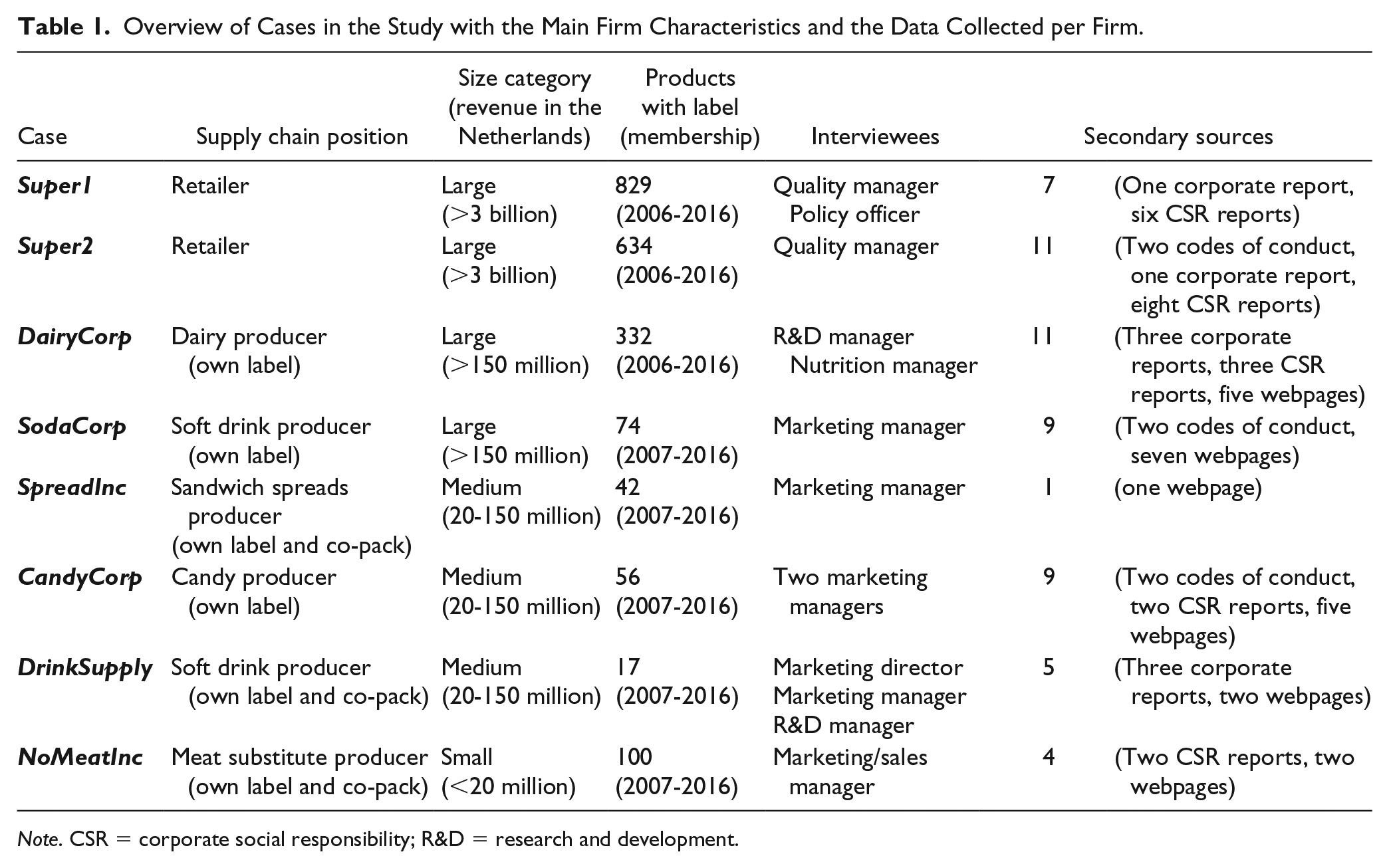
The Choices database was used to purposefully sample firms that complied with two criteria: (a) were members of the Choices Foundation at the time of the interview to allow for a real-time study of innovation processes and (b) had at least one brand marketed directly to the Dutch end consumer to experience direct contact with health-conscious consumers. As our cases are selected from the membership list of a front of pack health logo, all firms had direct experience with responding to the societal value of health through product innovation. Of the 16 firms that were contacted, eight firms were willing to participate in the study: two retailers that developed products for their private label and six food manufacturers. Several manufacturers also developed products for other firms (i.e., co-pack). Reasons for nonresponse were low interest in participating in scientific studies or no time for participation. Table 1 provides an overview of the selected cases.
Overview of Cases in the Study with the Main Firm Characteristics and the Data Collected per Firm.
Note. CSR = corporate social responsibility; R&D = research and development.
Data Collection and Analysis
To triangulate the data and thus strengthen the validity of the research, the data collected in this study were from two kinds of sources (Yin, 2011): (a) interviews with 13 managers who were in charge of coordinating the product development projects in the firm and (b) 57 corporate reports that were publicly available on the website (see Table 1 for overview per case). For several firms, multiple persons were interviewed, as in those firms the coordination responsibilities of product development shifted between departments, depending on the origin of the innovation project (i.e., new market insight vs. new processing technology). In these cases, all persons were interviewed at the same time to investigate both individual and shared mental models, because together they “provide insights into what new knowledge is recognized, how it its transformed and combined, and how it is applied” (Lane, Koka, & Pathak, 2006, p. 857). The interviews lasted 50 to 70 min and were conducted from April to May 2017.
The interview guide contained questions related to how the firm defined health within their organization and how they operationalized this societal value for their product development. The structure of the interview was based upon the AC dimensions defined by Zahra and George (2002): knowledge acquisition, knowledge assimilation, knowledge transformation, knowledge exploitation. In addition, questions were added on learning capabilities, which is missing from the Zahra and George framework according to Todorova and Durisin (2007). To incorporate value-based thinking, for each dimension, questions were asked about whether stakeholders’ views were incorporated and about any internal or external factors that hindered or facilitated acting upon the dimension. To decrease socially desirable answers and, thus, to increase the validity of the data, the interview guide was supplemented with probes to explore possible discrepant evidence of the firms’ behavior (Yin, 2011). These probes consisted of specific examples and trends of the firm’s product innovation behavior derived from the Choices database and other publicly available information, on which the interviewees were asked to comment.
In preparation of the analysis, the interviews were transcribed in verbatim and all sources were uploaded in Atlas.ti (Scientific Software Development, Berlin, Germany). Although our interview guide was based on the AC framework, it quickly became apparent that firms needed other capabilities to absorb value-laden knowledge. Instead, to bring out the value absorption process, first, we used a coding scheme based on the value hierarchy of Van de Poel (2013): The label values indicated excerpts that discuss health at an abstract level, the label norm indicated excerpts about specific aspects of health (e.g., lower energy intake), and the label design requirement emphasized the application of a health aspect to a specific product (e.g., reduce the number of the calories with 10%). Second, once all excerpts associated with these labels had been extracted from each case, we looked for instances of conflict between or within values. Excerpts were divided into intervalue conflict and intravalue conflict. Third, we reanalyzed each case looking for the responses to inter- and intravalue conflicts and compared emerging patterns across cases. After identifying the main activity patterns, descriptions of each pattern in each case were developed, taking into account changes over time in case reports of multiple years. In the end, the descriptions per activity pattern were used for a between-case comparisons, which was used for our final characterization of the firms. An example of the coding can be found in Supplemental Appendix 2. The following section provides a summary of the between-case comparison per activity pattern.
Findings
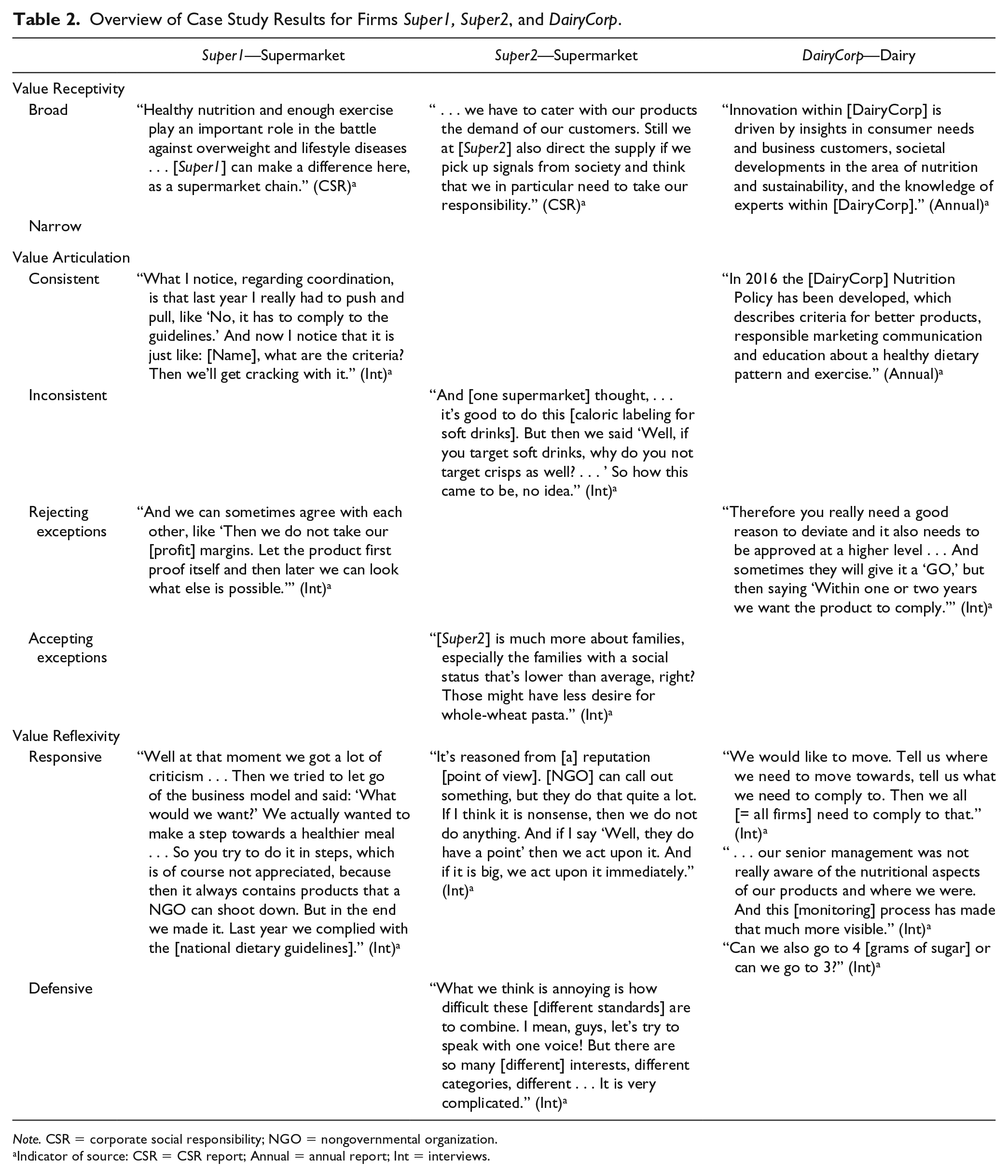
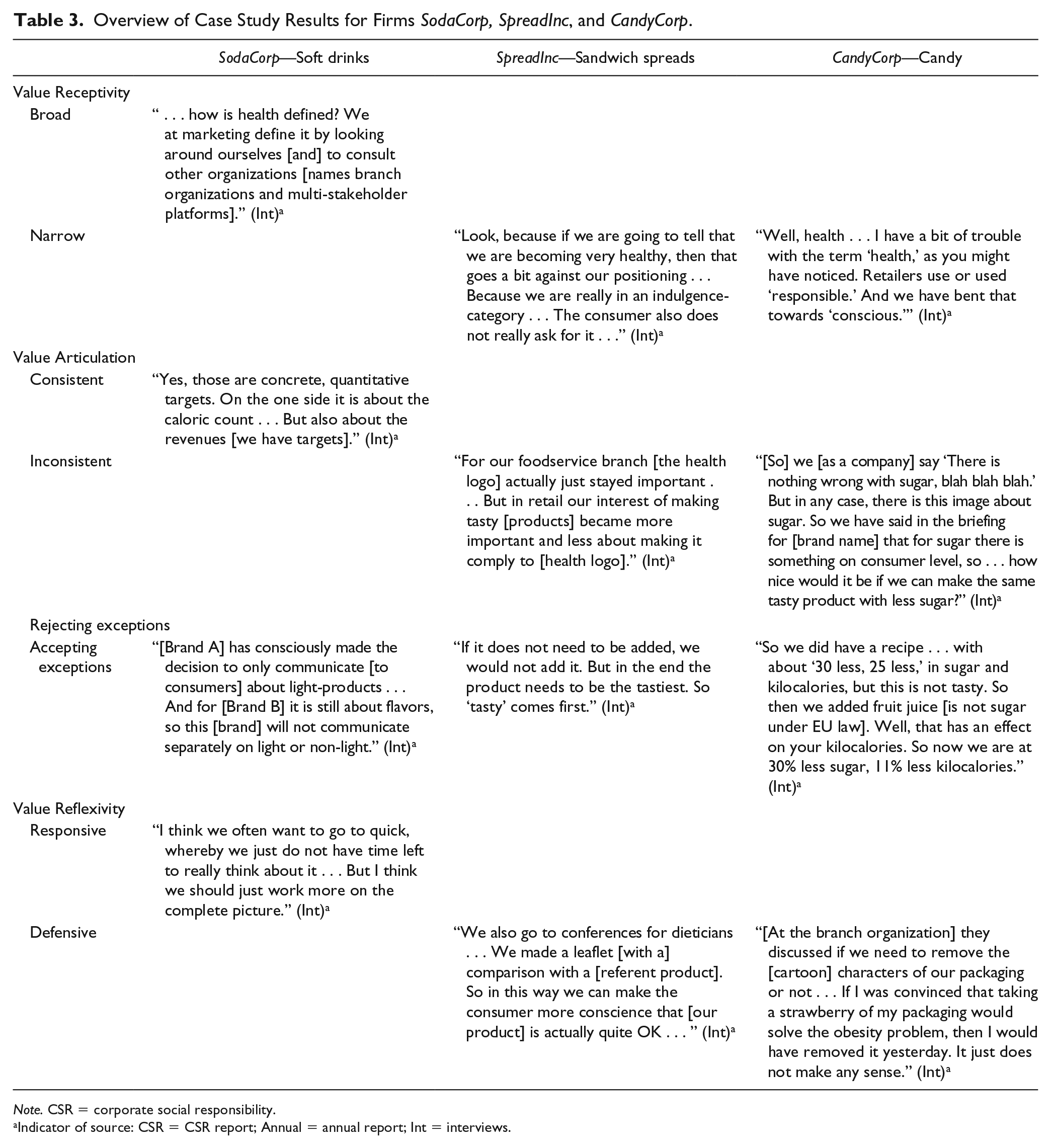
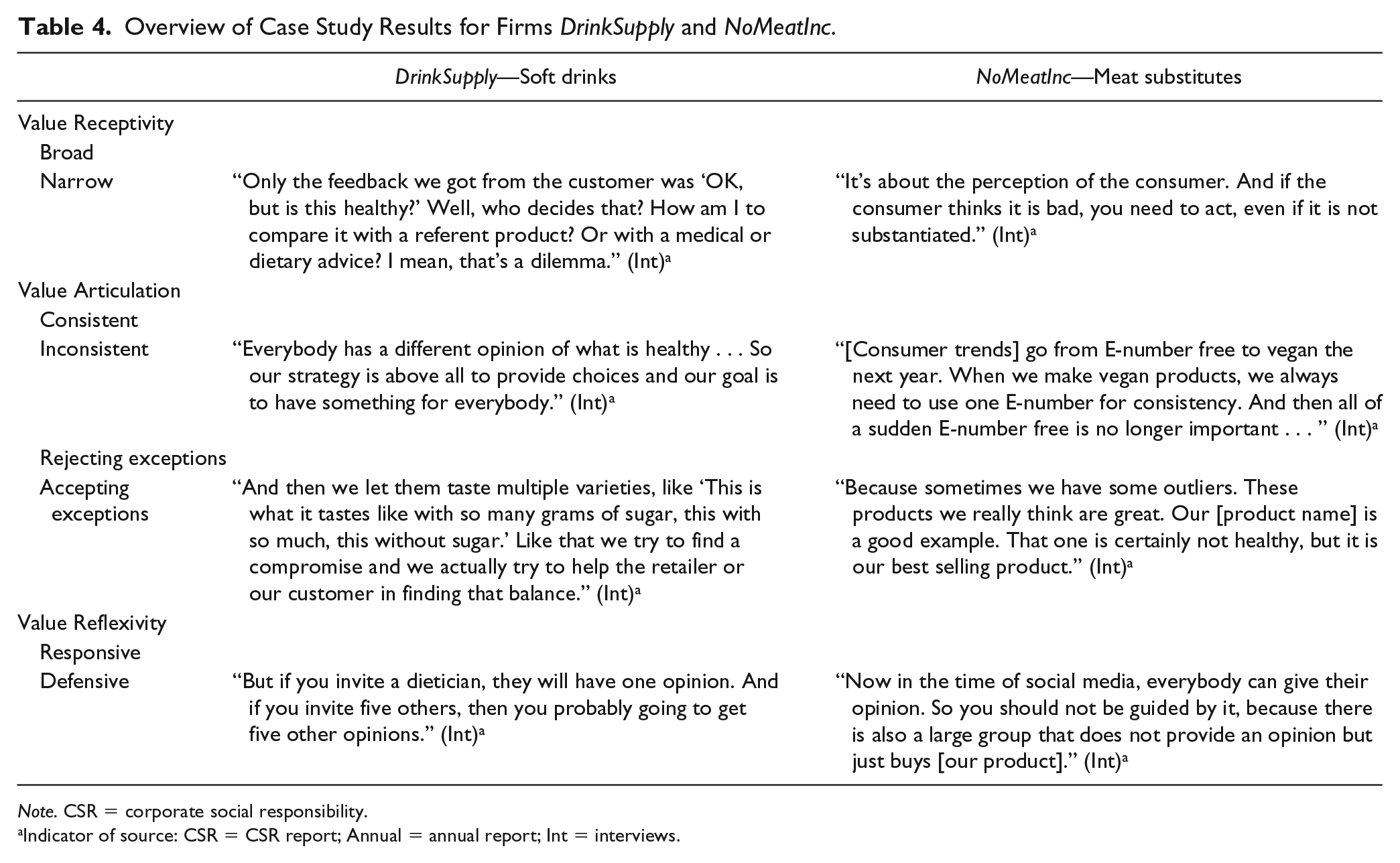
Although each of the firms acknowledged the existence of inter- and intravalue conflicts when handling the value health, their responses to these conflicts differed. By analyzing these responses, three activity patterns were identified that were robustly utilized by all eight firms, which we named (a) Value Receptivity, (b) Value Articulation, and (c) Value Reflexivity. To describe how each of the three activity patterns are represented in the case study, the next sections will compare per pattern three sets of cases: (a) the two supermarkets (Super1 and Super2), (b) the two large firms (DairyCorp and SodaCorp), (c) the four smaller firms (SpreadInc, CandyCorp, DrinkSupply, and NoMeatInc). The results of these comparisons are summarized with illustrative excerpts per case in Tables 2 to 4 (Super1, Super2, and DairyCorp in Table 2; SodaCorp, SpreadInc, and CandyCorp in Table 3; DrinkSupply and NoMeatInc in Table 4).
Overview of Case Study Results for Firms Super1, Super2, and DairyCorp.
Note. CSR = corporate social responsibility; NGO = nongovernmental organization.
Indicator of source: CSR = CSR report; Annual = annual report; Int = interviews.
Overview of Case Study Results for Firms SodaCorp, SpreadInc, and CandyCorp.
Note. CSR = corporate social responsibility.
Indicator of source: CSR = CSR report; Annual = annual report; Int = interviews.
Overview of Case Study Results for Firms DrinkSupply and NoMeatInc.
Note. CSR = corporate social responsibility.
Indicator of source: CSR = CSR report; Annual = annual report; Int = interviews.
Value Receptivity
The first activity pattern was identified by observing that firms highlighted different sources of knowledge and included different aspects in their understanding of the value health. We name this concept Value Receptivity to underscore that firms are not passive recipients of knowledge about values, but that their level of broad-mindedness and observance allows them to actively search for and integrate new value aspects in their own understanding of a value. Understanding of the value health was gained by Super1 through regular contact with both commercial and noncommercial stakeholders. Over time, the reports of Super1 show an increase of the number of health aspects integrated and a broadening of understanding the relationships between aspects and their connection with the value health. All analyzed sources of Super2, however, show that its understanding of health is mainly gained from commercial stakeholders. Its contact with noncommercial actors is ad hoc and not routinized. Evidenced by its reports, this firm focused on four health aspects, and that number of aspects has stayed constant over time. The selection of these aspects was attributed to industry agreements and no further explanation was given on their relation to health.
The differences between the large firms—DairyCorp and SodaCorp—on Value Receptivity are more subtle. As DairyCorp’s portfolio covers multiple product categories and SodaCorp covers only one category, DairyCorp acted upon a larger variety of health aspects than SodaCorp. However, within its one category, SodaCorp still included a large variety of aspects in its understanding of health, confirmed in both interviews and reports. Concerning the sources used to derive these health aspects, both firms use their consumer research capabilities and industry networks extensively, but for noncommercial stakeholders, they agree that direct engagement is difficult. Barriers they indicate are the stakeholders’ fear of harming their legitimacy as independent voices and doubts on the collaboration benefits for these stakeholders. However, DairyCorp is observed to actively look for other noncommercial resources (e.g., UN/WHO reports, scientific publications, dietary guidelines) to overcome these barriers, whereas SodaCorp resorts to its internal knowledge, as indicated by the interviewee: “Look, we really have enough expertise here within our technical team to find out to which [health] conditions [a product] needs to comply” (interviewee, SodaCorp).
Although all firms use knowledge from consumer research and business customers for understanding health, the four smaller firms indicate them as their main sources. CandyCorp and NoMeatInc showed awareness of industry agreements and regulatory developments, whereas SpreadInc and DrinkSupply were not familiar with these initiatives and actually called for a need for a common definition at the industry level. Proactively searching noncommercial stakeholder engagement is not done routinely by the firms, besides ad hoc interactions with nutritional professionals by SpreadInc and CandyCorp. Although DrinkSupply acknowledged their lack of engagement with noncommercial stakeholders, the other three firms indicated that their in-house experts are knowledgeable enough to understand health—like previously discussed SodaCorp. At the same time, all four firms showed difficulties in understanding the health aspects they encounter and their relation to health. In the interviews, the representatives of DrinkSupply and NoMeatInc often could not explain how aspects contributed to health or doubted whether they were not related to other values, such as environmental protection. In CandyCorp and SpreadInc, one interviewee showed understanding of the connection between health aspects and nutritional science behind them, but the other data sources of their firm did not confirm this understanding. Although for some firms, the reports made no distinction between aspects of different values, in reports of other firms, aspects switched over years from health to other values without further explanation. The reports of SpreadInc did not mention any particular health aspects.
Value Articulation
The second activity pattern accentuates the internal communication of the firm about this value, as observations showed how the multiple parts of the firm’s organization talked about operationalizing and prioritizing health, sometimes in a starkly different way. We refer to this activity pattern as Value Articulation to emphasize the effort of a firm to make explicit within its organization the extent to and the way in which a value factors into its practices. In Super1, the articulation of health was quite consistent, explained by the firm’s control over all business practices. Thus, the firm did integrate health aspects not only in its product development strategy but also in product marketing, in-store communication, and store layout. To ensure progress on this integration, the firm had yearly CSR objectives and rules for product development, which were monitored by a designated board member and the firm’s sustainability team. Communication activities are regularly organized to diffuse the health strategy among its employees and its suppliers. These activities are successful as they perceive much less resistance in implementing the health criteria than in the beginning, according to the interviewees: What I notice regarding coordination is that last year I really had to push and pull. Every time [I had to say] “No, it needs to comply to the guidelines.” What I notice now is that [they respond with]: “What are the criteria? Then we will get going with it.” (Interviewee, Super1)
To prevent exceptions to its health strategy in product development, Super1 tries to be flexible on other product requirements, such as taste and price. Although this flexibility has led to failures in the past, the firm accepts these risks as part of its drive for responsible innovation. The focus of Super2 on a limited number of health aspects should make Value Articulation easier, but instead, its action upon health is more inconsistent than Super1. This can be mainly attributed to Super2’s structure as a federation of multiple supermarkets, which have chosen to only collaborate on product development. As other business practices are handled independently, the inconsistent articulation is observed as dissimilarities between reports of several members in the health aspects named. The interviewee acknowledges this inconsistency and, thus, consistency is maintained within product development through rules, such as “new products cannot be the unhealthiest in the category” and “all products that comply with the certification criteria need to be certified.” However, exceptions to the rules did exist, due to either rigid supplier contracts or the need for a majority approval of all members to initiate collective action or oversight within the research and development (R&D) department.
In Value Articulation, both DairyCorp and SodaCorp have tied the value health to their overall business strategy and the interviewees also attribute the success of the firm to their health-related activities. However, as DairyCorp acts upon a larger variety of health aspects than SodaCorp, consistent articulation is more complex for them. Therefore, DairyCorp has developed a detailed set of health criteria for each product category, based upon the criteria from the Dutch Choices Foundation and (inter)national dietary guidelines. To stimulate the uptake of the criteria within its organization, DairyCorp chose to implement stepwise, making them more binding each year. At the time of the interview, the health criteria were mandatory for product development and the interviewees indicated that exceptions required high-level approval, valid for only 1 or 2 years. As in Super1, their sustainability team was responsible for diffusing and monitoring the health criteria, but the operational departments had the final responsibility for implementation. SodaCorp, however, articulated its health aspects through portfolio-level objectives with a clear deadline. Strategies for reaching target not only concerned product composition changes but also included marketing strategies to prioritize products that included health aspects. To ensure full commitment, all brands were investigated for possibilities to reduce calories. However, the reformulation efforts differed per brand and the marketing rules were not applied to all brands. These exceptions were made based on consumer perception of the brand, whereby the interviewee indicated that some brands are stronger connected with enjoyment than with health.
Although similar exceptions were made by the four small firms, their overall articulation was less consistent than the other firms. Two small firms tried to harmonize their understanding of health within their firm through internal guidelines: NoMeatInc’s products were compared with the nutritional compositions of the average referent product, and CandyCorp had targets for health aspects in 2015 and 2016. However, the criteria of NoMeatInc did not concern all health aspects they act upon and were easily traded off for other aspects, whereas the targets of CandyCorp were not implemented globally and were discontinued after not achieving them in 2016. SpreadInc and DrinkSupply have no clear criteria or targets and their articulation differed per product. In all four, trade-offs and compromises on health aspects were common. As long as their consumer research showed that most consumers of a particular product did not care for a particular health aspect, the firms did not act upon this aspect for this product. When a health aspect was indicated as relevant by consumers and an industry agreement existed for this aspect, NoMeatInc and DrinkSupply introduced a step-by-step reformulation strategy. In SpreadInc and CandyCorp, no such strategies existed. In all four firms, when there was a large enough consumer interest in a health aspect but there was no industry pressure, a new product—which included the aspect—was developed and marketed next to their existing products. To reach their consumers, the health aspects needed to be communicated on the packaging, which made them susceptible to the European Union (EU) regulations on health claims for food products, for example, for a reduced sugar claim, the product should contain 30% less sugar than a referent product. This communication requirement thus made the firms hesitant to invest in reformulation. In addition, although the firms set lower sales targets for the health-included products, these products still needed to compete with the existing products on shelf space and their continuance, thus, depended on the retailers’ interest in the particular health aspect. Therefore, in these firms, the health definitions of the retailers were also articulated, leading to more inconsistency. As indicated by NoMeatInc, You cannot say we will make an exception because it sells very well. But maybe you can put [the noncompliant product] under another brand, that is completely fine . . . Because that [health aspect] is for our [main] brand. Look, if a large retailer tells us “I only want [noncompliant] products,” then they are of course welcomed [as customer]. (Interviewee, NoMeatInc)
Value Reflexivity
Third and last, the firms differed in how they assessed their impact on health and responded to divergent views on their impact. We use the label Value Reflexivity to refer to the differential investment firms made to monitor their practices, and the resulting degrees of awareness, about their role and responsibility in grappling a societal value. For Super1, its health objectives and the resources of their sustainability team allowed monitoring of the impact of their practices. As its product portfolio was very large, the interviewees acknowledged that the firm could not monitor the whole portfolio continuously. Therefore, each year, they selected several categories to monitor. Furthermore, their regular meetings with external stakeholders give Super1 the platform to ask feedback on their health strategy and activities. Due to the limitations of Super2’s monitoring system, the federation was not able to have a complete and accurate overview of their product compositions. Internal reflection was, thus, limited and it depended on external monitoring systems, such as certifications. As it had no desire to become the healthiest in the categories, Super2 did not proactively ask for feedback from stakeholders. For both firms, their responsiveness was limited by their supplier contracts and their conditions. If there was external pressure to change the product composition, the firms were forced to break open the contract, which causes friction in their supplier relationship. Super1, however, indicated that this did not happen often as their contracts already incorporated health criteria, whereas for Super2, this was not the case.
Both DairyCorp and SodaCorp were continuously monitoring the progress using their health criteria and targets. The results of the monitoring were shared within the firm, which, according to the interviewees, motivated both employees and management to evaluate whether their actions were enough. For example, when in SodaCorp, the original target was expected to be achieved before the deadline, the management decided to raise the target to make it more ambitious. DairyCorp’s monitoring exposed technical barriers across categories. Subsequently, the firm instated multinational, cross-departmental expert teams, and started long-term research projects with scientific institutes and business partners to overcome these barriers. Such long-term activities were a bridge too far for SodaCorp, as the interviewee indicates that the continuous drive to be the first to market led to a focus on quick solutions instead of long-term strategies and external collaborations. As mentioned, both firms experienced barriers in noncommercial stakeholder engagement. For example, the interviewee of SodaCorp indicates, For our [new product] launched this year, [we have] in a very early stage asked for advice from the Centre of Nutrition . . . But then the door is half-closed [and their response is] “You can read it on our website, good luck.” So you can really want [feedback] and we do, . . . but we are still seen as a commercial party. And this type of organizations, in my experience, wants to maintain their objectivity. (Interviewee, SodaCorp)
This lack of dialogue made the interviewees hesitant to respond to criticisms directly—arguing that the stakeholders’ views were inconsistent over time, uninformed of the constraints of commercial innovation, or ignorant of differences between scientifically backed-up claims and unconfirmed consumer concerns—the criticism still led to internal reflection and often action. For example, both firms felt forced to act upon nonscientific aspects, but in those cases, DairyCorp made sure not to relate nonscientific aspects to health or other health aspects, whereas in SodaCorp’s reports, the distinction between scientific and nonscientific aspects was more ambiguous.
For all small firms, no evidence was found on continuous monitoring routines related to health aspects. CandyCorp did track its progress on some health aspects in 2015 and 2016, but the targets for 2016 were set lower or less ambitious than 2015, and in 2017, the firm decided to stop all monitoring of these targets. For this firm, the interviewees and reports show some reflectivity on their responses, indicating that their abilities to take up health aspects is limited by their business model—such as limited ability to ask a premium price or take less margin—but that these barriers should not be used as excuses to not act, as the interviewee indicated: I think that if we continue to use price as an excuse, then nothing will happen. So we do not do that, . . . we take little steps . . . we would not let it slow us down, but we have to be realistic about what we put in front of the consumer. (Interviewee, CandyCorp)
As a response, they continue to investigate whether healthier alternatives can be created for their top five brands. Also the interviewees in DrinkSupply seem to realize that they need to think more long term when it comes to health and need to take risks now to be able to survive in a future market. This realization is, however, not combined with a clear strategy on how to achieve this long-term health vision. In SpreadInc and NoMeatInc no health-related strategies projecting more than a year were observed. Regarding responses to divergent views, the firms indicate that due to their small size, they are not often directly targeted by critical stakeholders. When discussing critical views, all four firms use defensive arguments, referring to unresponsiveness of business partners, the inherent intervalue conflict between enjoyment and health, the lack of interest for health by their target consumer, and the lack of accountability from other food categories for public health issues. Only when purchase behavior of their consumers or customers might be affected by the criticism, they will respond. CandyCorp and DrinkSupply have proactively tried to gain feedback from noncommercial stakeholders but got limited to no response. In SpreadInc and DrinkSupply, positive feedback of nutrition professionals on their health-included products did initiate dialogue but did not lead to any strategic changes in the firm.
Responding to Value Conflicts
As indicated previously, what makes the absorption of value-laden knowledge difficult is firms having to respond to two types of value conflicts: (a) intervalue conflicts that arise when (the operationalizations of) two values are seen as incompatible in one design and (b) intravalue conflicts that arise when the views of societal actors on how a value should be operationalized differ. Concerning the societal value health, two intervalue conflicts were most commonly mentioned: (a) its conflict with the short-term consumer interest of tastiness and (b) its conflict with the short-term interest of the firm profitability. For intravalue conflicts, the firms most commonly mentioned the conflict on whether high-intensity sweeteners and other food additives are harmful or have no impact on health. In responding to these and other value conflicts, the three previously identified activity patterns are observed to again cause repeated patterns. To demonstrate these patterns, we will describe how three illustrative firms respond to value conflicts: CandyCorp illustrating small firms, DairyCorp illustrating large firms, and Super2 illustrating supermarkets.
In the case of CandyCorp, its narrow understanding of health was justified by the firm through intervalue conflict: As their product is for indulgence and health is perceived by its consumers as incompatible with the value enjoyment, the firm does not need to understand the value health. This narrative was articulated consistently throughout the firm, decreasing the awareness of intravalue conflicts and accepting exceptions on health aspects in the case of intervalue conflicts. However, at the same time, CandyCorp observed that this incompatibility of health and enjoyment increasingly is challenged by society and is influencing consumer purchase of its products. Therefore, health aspects were picked up by its product development teams, leading to inconsistency in Value Articulation of CandyCorp. Due to its defensive Value Reflexivity, CandyCorp, on one hand, resisted these divergent insights by continuing to communicate that any response to this incompatibility is unnecessary. On the other hand, CandyCorp did respond when they perceive that the purchase behavior of its consumers is influenced by health aspects. This responsiveness was evidenced by the growing sugar-free segment in its portfolio. Although this could be perceived as evidence against the existence of an inherent intervalue conflict, CandyCorp indicated these products as exceptions and did not see them as a reason to develop a firm-wide strategy for responding to the value health.
With their broad understanding of health, DairyCorp quickly identified intravalue conflicts. When these conflicts lead to the identification of a new health aspect, DairyCorp’s in-house nutrition experts compared this aspect with existing health aspects in the firm, thereby broadening its understanding. However, the decision to articulate this new health aspect throughout its organization was indicated as challenging for DairyCorp, as due to its rejection of exceptions, articulation would directly need to lead to adjusting its standards. Therefore, DairyCorp only chose articulation if the new health aspect were supported by scientific evidence or national policies. If this were not the case, DairyCorp defended the existing health aspects and resisted the new health aspect in its external communication. However, for some brands, the firm still adjusted its products to the new health aspect to be able to respond to consumer demand. However, these aspects were then articulated as consumer demands that are unrelated to health to prevent inconsistency. For intervalue conflicts, DairyCorp’s rejection of exceptions left its product development team with only one strategy for dealing with intervalue conflicts: Continue exploration of the aspects in conflict and redesign the product to solve its incompatibility. As exceptions on health aspects need high-level approval, DairyCorp’s senior management team was able to monitor which value conflicts were most common and responded with strategic practices to solve these incompatibilities. Such responses included setting up expert panels or starting research projects. For example, when health aspects were continuously seen to conflict with requirements for tastiness, DairyCorp initiated a multistakeholder research project to redesign the taste tests, which lead to more flexible requirements for the value enjoyment.
As the firm was more limited in its nutritional expertise and noncommercial stakeholder engagement, Super2 relied more on the insights gained from its commercial stakeholders to understand intravalue conflict and to decide how to act upon it. This reliance in some cases caused a delay in response compared with DairyCorp. However, its acceptance of exceptions allowed the firm to articulate a new health aspect in one part of its portfolio and not others. Thereby, Super2 could make up its delayed understanding with a quick but inconsistent response, at the risk of being challenged by stakeholders on its inconsistency. For intervalue conflicts, its Value Articulation made Super2 act similarly to CandyCorp: accepting exceptions on health aspects unless consumer demand provides an incentive to overcome the conflict. Due to its lack of monitoring, Super2 had difficulty reflecting upon repeated intervalue conflicts and, thus, in responding strategically to overcome these conflicts. Only within the boundaries of its departments, some repeated intervalue conflicts were perceived, leading to adjusted practices within teams.
Outlining the predominant approach of each firm for each capability results in particular VAC profiles, as shown in Figure 1. The four smaller firms (SpreadInc, CandyCorp, DrinkSupply, NoMeatInc) are observed to have the similar VAC profile and also have similar responses to value conflicts. The two large firms and one supermarket show how the opposite approaches for the three behavior patterns could support the firms to respond to value conflicts. In Value Receptivity, SodaCorp’s lack of engagement with noncommercial stakeholders was compensated as their active involvement in industry-level initiatives included engagement with some noncommercial stakeholders, making their receptivity broader than the smaller firms. Likewise, the accepting of exceptions in Super1 and SodaCorp was compensated with their consistent articulation of health, which allowed their employees to classify any compromises or trade-offs as exceptions to the rule. On the contrary, the inconsistent articulation of the other supermarket, Super2, seemed to make it difficult for employees and suppliers to distinguish exceptions from the rule and likely led to more trade-offs or compromises in the case of intervalue conflicts. Also for Value Reflexivity, Super2 was restricted in its responsiveness by its limited resources for monitoring and the constrained mandate received from its members. Therefore, on one hand, Super2 can be categorized as less value sensitive than the other large firms. On the other hand, due to its active involvement in industry-level initiatives—such as SodaCorp—its Value Receptivity is broader than the smaller firms, leading to a bit higher value sensitivity for the value health.
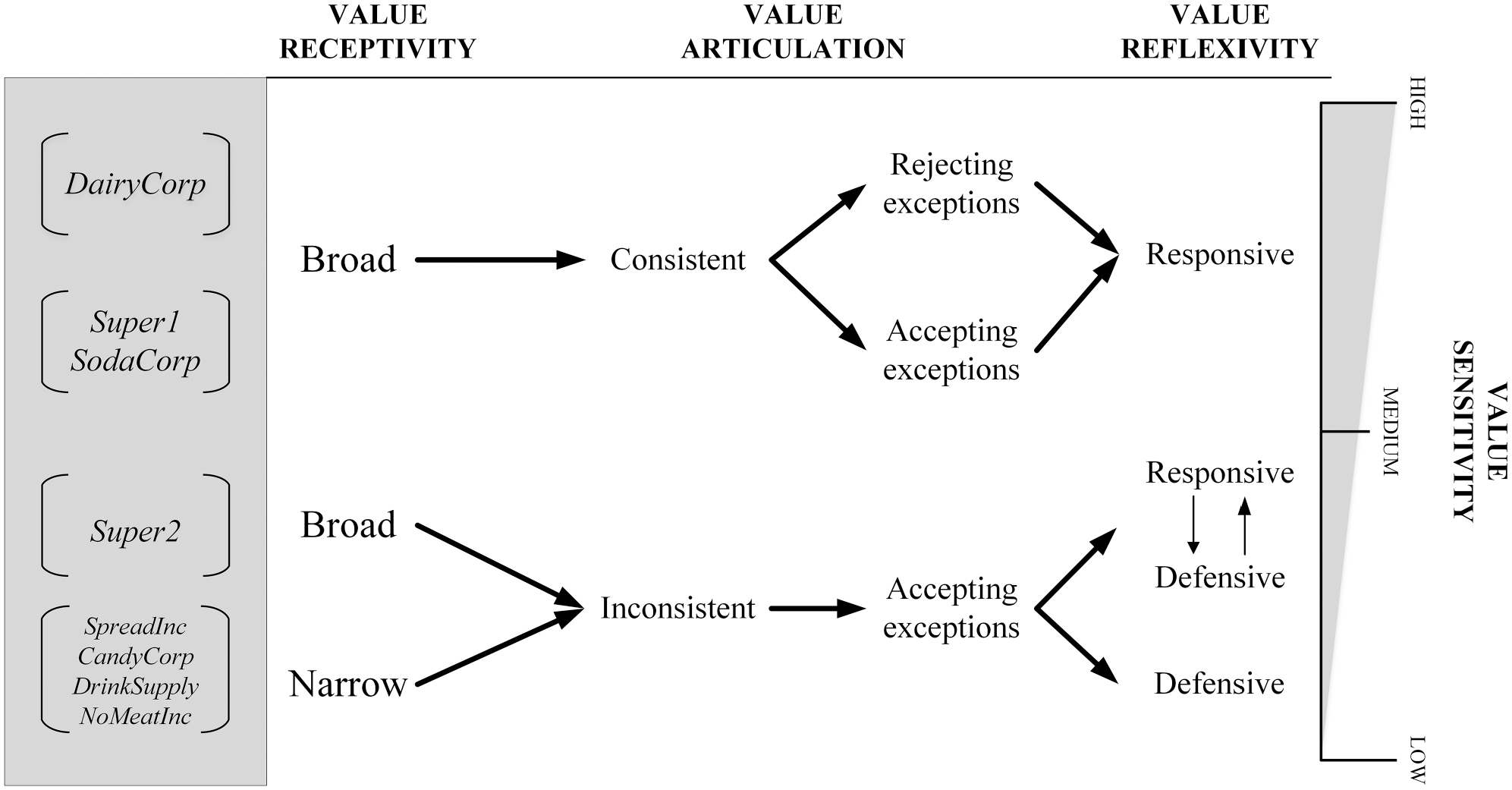
Depiction of the value-sensitive absorptive capacity of the eight investigated firms.
Conclusion and Discussion
The Conceptual Framework of VAC
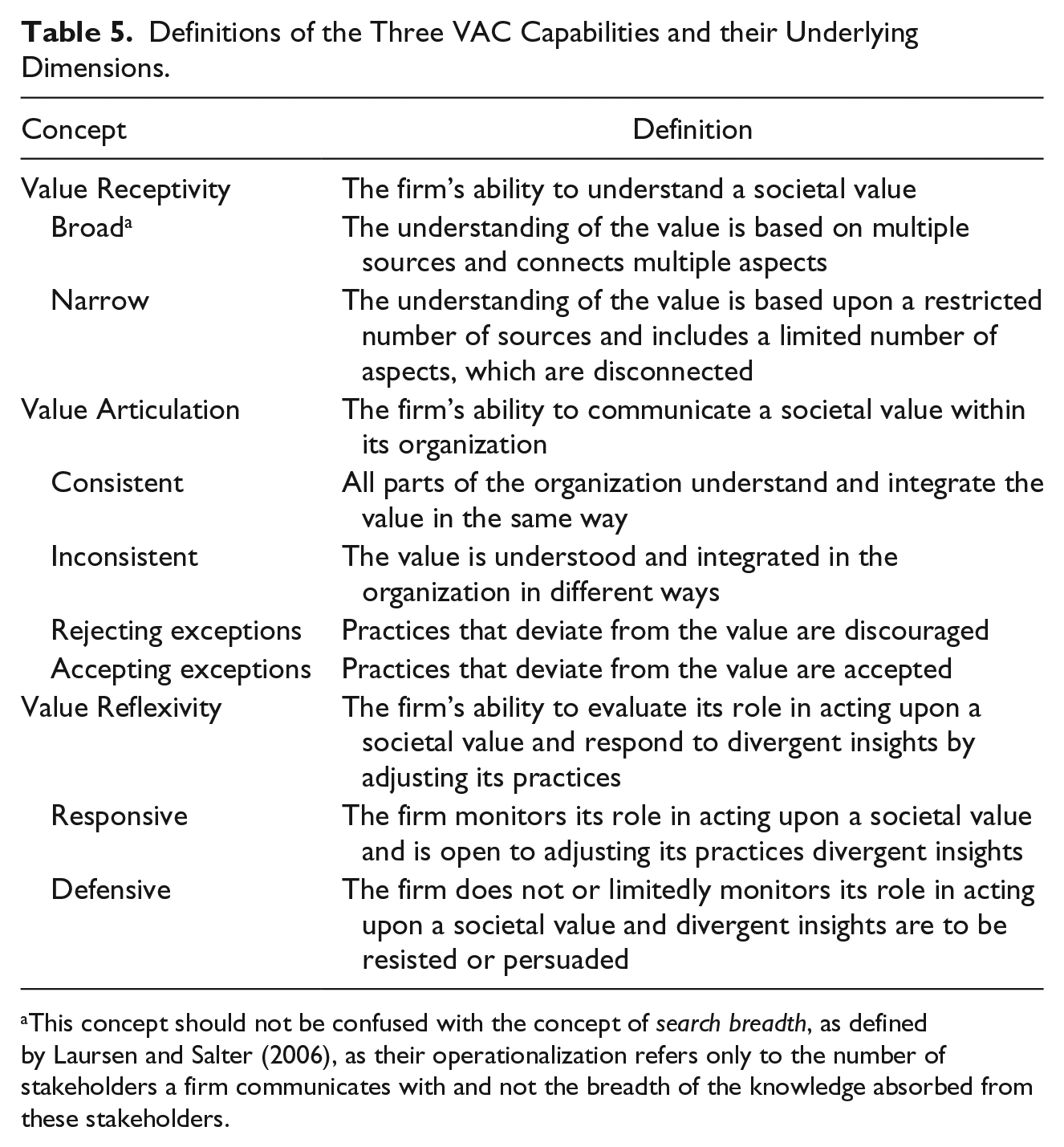
To respond to the grand challenges in society, firms require to produce innovations that comply to the dynamic and complex definition of what is societally desirable and ethically acceptable and, thus, continuously absorb knowledge on societal values from a wide set of stakeholders (Ferraro et al., 2015; Suchman, 1995; Von Schomberg, 2013; Wartick & Cochran, 1985). Although knowledge absorption theories could provide valuable insights into the capabilities required for value absorption, its main literature stream on AC has narrowly focused on absorption of technological knowledge from other firms and research institutes. To answer the following research question—How do firms absorb knowledge about societal values to create social value?—a reconceptualization of the AC framework is in order. Our study shows that absorbing societal values supports a firm in navigating value conflicts between a variety of stakeholders. In this absorption of societal values, we observed three patterns: (a) Value Receptivity, (b) Value Articulation, and (c) Value Reflexivity. As these three patterns complement each other but do not reflect linear processes, we denote them as the three dimensions of VAC framework. In addition, for each dimension, the data showed differences between the firms in their approaches. For Value Receptivity, the firms ranged between a broad and a narrow approach to understanding the value. For Value Articulation, the firms communicated either consistently or inconsistently and rejected or accepted exceptions. For Value Reflexivity, the firms ranged between a responsive and a defensive approach. The definitions of the three VAC dimensions and their approaches—as derived from our data—are shown in Table 5.
Definitions of the Three VAC Capabilities and their Underlying Dimensions.
This concept should not be confused with the concept of search breadth, as defined by Laursen and Salter (2006), as their operationalization refers only to the number of stakeholders a firm communicates with and not the breadth of the knowledge absorbed from these stakeholders.
Furthermore, the results of our data analysis show that differences in VAC approaches between firms also reflect differences in their response to intra- and intervalue conflicts. By describing these conflicts and their responses, we aim to provide sustainability scholars a frame for analyzing system-level tensions related to sustainability at the organizational level. As indicated by Geels (2004), conflicting normative rules are indicators of tensions in the sociotechnical transitions toward sustainable systems, which are observable at the organizational level. By distinguishing between intra- and intervalue conflicts in our analysis, our case study shows which capabilities are required to respond to each type of conflict. Therefore, our article shows that making this distinction between value conflicts is essential when comparing firms in their responses with the tensions in the sustainability transition.
Contributions to the Literature and Suggestions for Future Research
By presenting this VAC framework with its three dimensions, this article aims to progress the scientific discourse in both the RRI (e.g., VSD) field and the CSR field. However, as this study is only a first step in developing a new theory on the absorption of societal values by firms, further research is required to validate our VAC framework. Besides testing and challenging the three dimensions, future studies on VAC could focus on several questions that are unanswered in our article. First, the connection between the dimensions and how that relates to firm processes needs to be further explored. As we have learned from the AC literature, knowledge absorption is not linear but a reiterative process with multiple feedback loops (Lewin, Massini, & Peeters, 2011; Todorova & Durisin, 2007). Although our study captured data sources over multiple years, the data were not rich enough to establish whether and how the VAC dimensions could strengthen each other and lead to socially responsible innovation outcomes. For example, our study results suggest that a more responsive attitude toward stakeholders in Value Reflexivity could lead to more knowledge about the value and its aspects and, thus, broaden a firm’s Value Receptivity. However, the size and specificity of our sample does not allow us to provide an exhaustive list of mechanisms and factors that determine when such new knowledge about a value leads to integration of new value aspects in a firm’s understanding of the value, and eventually an adjustment of the value definition it articulates in its organization. Previously CSR and RRI scholars have identified several of these mechanisms and factors, for example, (a) for Value Receptivity, mechanisms such as environmental scanning and cue sensing (Ortiz-de-Mandojana & Bansal, 2016; Wood, 2010), philosophical deliberations on societal values (Nissenbaum, 2005), prevention of means-end decoupling (Crilly, Zollo, & Hansen, 2012); (b) for Value Articulation, activities such as the promotion of structural embeddedness of societal values (Gehman et al., 2013), the prevention of policy–practice decoupling (Crilly et al., 2012), and the simultaneous pursuit of contradictory values (Hahn et al., 2016); and (c) for Value Reflexivity, practices such as monitoring of standards (Bessant, 2013), midstream modulation interventions (Fisher, Mahajan, & Mitcham, 2006), preventing of overreliance on institutionalized knowledge (Zietsma, Winn, Branzei, & Vertinsky, 2002), ongoing reconfigurations of values practices (Gehman et al., 2013), and organizational adaptability through continuous innovation (Ortiz-de-Mandojana & Bansal, 2016). However, the insights of both fields so far have been disconnected. Our framework provides the structure to build these connections, thus allowing RRI scholars to learn from CSR theories about the drivers and barriers of socially responsible behavior of firms and the CSR scholars to build upon RRI insights about handling uncertainties of innovation and governing the collective responsibility for its process and outcomes.
Second, as VAC is built upon the notion of AC, our framework does not neglect the valuable work done by innovation and knowledge absorption scholars. For example, VAC emphasizes the paradox underlying all innovation theories: the balance between consistency on one side and flexibility and responsiveness on the other side. Our study shows that within a firm, a consistent articulation is required to prevent decoupling or greenwashing, and to ensure that a firm responds to a societal value with all its business practices to have the largest possible contributions to grand challenges. At the same time, the firm operates in a dynamic environment with a plurality of understandings of societal values that evolve over time, and to survive in this environment, a firm needs to be sensitive to this plurality, be flexible in its responses, and be open to reconsider its preconceptions (Gehman et al., 2013). Finding this balance is the cornerstone of the DC literature (Teece et al., 1997) and, thus, its insights are essential for the further development of the VAC framework.
Third, however, our VAC framework also challenges the assumptions of innovation theories and their narrow scope of valuable knowledge and knowledge sources. Our investigation of the firms’ responses to value conflicts between stakeholders shows the normative complexity of absorbing values (Swanson, 1999). By not addressing these conflicts, the traditional AC framework does not provide an answer to barriers raised by this normative complexity. In further investigating this complexity, AC scholars and other scholars should take into account one limitation of our study. In our case study, we focused on one particular societal value, which limits us in drawing conclusions on the extent to which VAC dimensions of a firm can transcend from absorption of one societal value (e.g., health) to another societal value (such as environmental protection). On one hand, as two dimensions are dependent on the firm’s stakeholder engagement in that particular domain, there is reason to assume that the firm’s VAC differs per societal value. On the other hand, the three dimensions all have characteristics that can be inherent to a firm’s organizational culture—such as the openness to divergent views—which would imply the existence of an overall bottom-line VAC within a firm. Although other theories have also been built on cases regarding one particular value or value aspect (Gehman et al., 2013; Hahn et al., 2014), the possible value specificity of VAC should be taken into account in its future development.
Fourth, such investigations in the absorption of multiple societal values should also take into account the normative dilemma of prioritization. Firms are, per definition, limited in their resources for building VAC, how should a firm prioritize the societal values that are relevant for its business? In AC theories, the selection of new knowledge to be absorbed is determined by the expected competitive advantage they bring (Cohen & Levinthal, 1990). However, as observed in our case study and highlighted by other scholars, this criterion is often translated to knowledge absorption strategy that prioritizes knowledge providing short-term and low-risk financial gains and, thus, underrates knowledge on societal values representing long-term but more uncertain social value outcomes (Ortiz-de-Mandojana & Bansal, 2016). As shortsighted and risk-adverse behavior has been a main research topic in their field, this research question could be an interesting challenge for innovation scholars. However, it does bring an additional uncertainty to their theories and models: the conflicting and changing views on what is societally desirable for innovation, both in its outcome and as its process. By developing our VAC framework, we aim to initiate further research on how to sensitize the innovation processes to societal values that are not directly reflected by consumer purchase behavior and, thus, provide short-term financial gains.
Supplemental Material
Appendix – Supplemental material for Toward a Value-Sensitive Absorptive Capacity Framework: Navigating Intervalue and Intravalue Conflicts to Answer the Societal Call for Health
Supplemental material, Appendix for Toward a Value-Sensitive Absorptive Capacity Framework: Navigating Intervalue and Intravalue Conflicts to Answer the Societal Call for Health by Jilde Garst, Vincent Blok, Oana Branzei, Léon Jansen and Onno S. W. F. Omta in Business & Society
Footnotes
Acknowledgements
The authors thank the editor Jonatan Pinkse and the anonymous reviewers for their very constructive feedback. Further thanks goes out to our colleagues of the Business Management and Organization Department at the Wageningen University and the Sustainability Team of the Ivey Business School (London, Canada), headed by Professor Tima Bansal, for support in strengthening our method and sharpening our insights.
Declaration of Conflicting Interests
The authors declared the following potential conflicts of interest with respect to the research, authorship, and/or publication of this article: The Dutch Choices Foundation partially financed this study in kind by hiring Léon Jansen to contribute to this paper. Léon Jansen is secretary of the Dutch Choices Foundation, which is responsible for the Dutch Choices logo. He was not involved in the data collection and primary analysis, but only in the further reflections on the findings. The Dutch Choices Foundation had no influence on the content or outcome of this study. The other four authors declare no potential conflicts of interest with respect to the research, authorship, and/or publication of this article.
Funding
The authors disclosed receipt of the following financial support for the research, authorship, and/or publication of this article: The study in this article was funded by the NWO (The Netherlands Organization for Scientific Research), under grant program Responsible Innovation (MVI; Grant 313-99-302), and the Dutch Choices Foundation. We are grateful for their support.
Supplemental Material
Supplemental material for this article is available online.
Author Biographies
 for more information about his current research.
References
Supplementary Material
Please find the following supplemental material available below.
For Open Access articles published under a Creative Commons License, all supplemental material carries the same license as the article it is associated with.
For non-Open Access articles published, all supplemental material carries a non-exclusive license, and permission requests for re-use of supplemental material or any part of supplemental material shall be sent directly to the copyright owner as specified in the copyright notice associated with the article.
