



Abstract
School disengagement continues to undermine the academic success of marginalised students, yet research rarely centres on their perspectives. To address this gap, this qualitative case study draws on semi-structured interviews with 53 refugee-background African-heritage students in three Australian states. Informed by a socio-ecological perspective, a thematic analysis of the qualitative data reveals four key themes that capture the primary causes of school disengagement: hostile learning environments, negative learning experiences, unrealistic parental expectations, and belonging uncertainty. Within these themes, students reported experiencing racial vilification, biased disciplinary measures, curricular invisibility or misrepresentation, and low teacher expectations, all of which significantly hindered their engagement. Additionally, parental involvement was limited by time constraints, lack of resources, and unfamiliarity with the education system, while students also reported feeling alienated and stereotyped as threats, further eroding their sense of belonging. The findings highlight the need for institutional commitment to addressing racial Othering in schools and engaging migrant parents in career consultation as early as possible.
Introduction
School disengagement has been described as a “hidden crisis” in Australia (Watterston & O’Connell, 2019, p.3), with significant consequences for students’ educational trajectories and long-term life opportunities. Scholarly work published in this journal (AJE) has documented complex and multifaceted factors contributing to chronic absenteeism, declining academic performance, behavioural challenges, and, in severe cases, early school leaving (Dulfer et al., 2017; Molla et al., 2024; Sullivan et al., 2009; Wilson, 2002). While disengagement can affect all students (Dei, 2017; Epstein et al., 2018; McGregor et al., 2017), the problem is particularly pronounced among marginalised groups, including students from African refugee and migrant backgrounds, who often face systemic barriers to meaningful participation in education (Molla, 2021; Schroeter & James, 2015). These barriers include racial discrimination, limited access to culturally responsive teaching, and socioeconomic disadvantage, all of which contribute to unequal educational experiences. Addressing school disengagement requires a deeper understanding of the structural and institutional factors that shape students’ experiences, rather than attributing disengagement solely to individual motivation or behaviour.
Research on school disengagement has predominantly focused on academic underperformance, student behaviour, community contexts, and school policies (Dulfer et al., 2017; Fan & Williams, 2018; Finn & Zimmer, 2012; Roundfield et al., 2018; Wang & Eccles, 2012). However, this article takes a broader perspective by examining disengagement through a socio-ecological lens, which accounts for the interplay between individual, social, and institutional factors. Bronfenbrenner’s (1979, 2005) socio-ecological systems theory provides a valuable framework for understanding the multiple, nested influences on students’ school experiences. Drawing on a social ecology perspective, this study examined students’ own accounts of school disengagement to highlight the key environmental, structural, and relational drivers of their disengagement. The significance of this study lies in its focus on students’ lived experiences, offering insights into disengagement from their perspectives rather than relying solely on institutional or policy narratives. By centring student voices, the research highlights how disengagement is not simply a result of individual disinterest or failure but is shaped by the conditions within schools, families, and society more broadly. The findings call for a shift in how disengagement is understood and addressed – moving beyond individualised interventions towards systemic change that fosters equity, belonging, and academic success for all students.
The remainder of the article is structured as follows. The first section presents the analytical framework, detailing the application of the socio-ecological perspective to school disengagement. The second section outlines the study’s methodology and data sources. The third and central section presents the findings, organised around four key themes: Learning environments, learning experiences, parental expectations, and sense of belonging. The article concludes by summarising key insights and discussing their implications for policy and practice, highlighting the need for systemic interventions to address the root causes of school disengagement.
Analytical Framework
The Social Ecology of School Engagement
School disengagement is a gradual and multidimensional process in which students become increasingly disconnected from learning, often manifesting through declining motivation, irregular attendance, and poor academic outcomes (Fredricks et al., 2004). This disengagement can be behavioural, emotional, or cognitive, with students showing reduced participation in class activities, feelings of alienation from school culture, and a lack of investment in learning (Finn & Zimmer, 2012). Factors contributing to disengagement include negative school climates, unsupportive teacher–student relationships, and a lack of culturally responsive pedagogy, particularly for students from marginalised backgrounds (Munns & Martin, 2013). At the same time, in an empirical study that examined early adolescents’ school engagement, Katsantonis (2025) noted that a positive relational school climate – particularly strong teacher–student relationships and heightened feelings of school belonging – predicted student membership in highly engaged classes. Highly engaged students are likely to demonstrate high academic achievement in numeracy, writing, and spelling by mid-adolescence (Katsantonis, 2025).
Socioeconomic disadvantage also plays a crucial role, as financial instability and home responsibilities may limit a student’s ability to fully engage in education (Teese & Lamb, 2009). Additionally, inflexible schooling structures, such as strict disciplinary measures and standardised curricula, can alienate students who struggle with mainstream academic expectations, further increasing the risk of disengagement (Fredricks et al., 2005). Without targeted interventions that address both individual and systemic barriers, disengagement can lead to long-term consequences, including early school leaving and diminished employment prospects (Rumburger & Rotermund, 2012).
Understanding the dynamics of school disengagement requires an analytical framework that illuminates the multiple, interconnected forces contributing to the problem. In this regard, this paper employs a social ecology perspective to understand the dynamic forces underpinning the problem of school disengagement. In light of Bronfenbrenner’s (1979, 2005) socio-ecological systems theory of human development, the social ecology of school engagement can be defined as the interconnected social, institutional, and environmental factors that influence the degree of students’ involvement, commitment, and sense of belonging in their educational experience. It problematises the interdependent relationships between individuals and their social, cultural, and institutional contexts, highlighting how engagement is shaped by both proximal and distal influences.
Previous studies have employed the social ecology perspective to investigate school achievement gaps (Grogan-Kaylor & Woolley, 2010), bullying (Hong & Espelage, 2012; Hong et al., 2013), school safety (Hong & Eamon, 2012), adolescent interpersonal violence (Riner & Saywell, 2002), resilience (Unger, 2012), and racial inequality (Massey & Brodmann, 2014). Those studies have provided insights into the analytical benefits of the framework. Building on this body of work, this paper applies the social ecology perspective to examine the issue of school disengagement, offering insights into how broader structural and systemic influences shape individual experiences.
The socio-ecological perspective (Bronfenbrenner, 1979, 2005; Massey & Brodmann, 2014; Ungar, 2012) highlights the interplay of nested systems of influence, revealing how social, institutional, and cultural contexts intersect to shape school engagement. At the most immediate level, the microsystem consists of direct, everyday interactions that significantly shape students’ educational experiences (Bronfenbrenner, 2005). For students, microsystemic influences include occurrences at home and school. As a set of microsystems that together form the developmental environment of the individual (Bronfenbrenner, 2005), the mesosystem represents the linkages between key settings such as home and school. When positive connections exist – such as strong communication between teachers and parents or supportive peer relationships – students are more likely to feel a sense of belonging and investment in their education. At another level, exosystems encompass external environments that indirectly influence a child’s development (Bronfenbrenner, 2005; Roundfield et al., 2018; Ungar, 2012). A key example is a parent’ s workplace, where factors such as work shifts, long hours, and job conditions significantly affect their capacity to provide academic support at home or engage with their child’s school. At the macrosystem level, societal narratives, cultural values, and policy frameworks shape school environments and learning experiences as well as family expectations and engagement in their children’s learning. For instance, deficit-based narratives that frame African-heritage students (AHS) as academically ‘at risk’ or ‘loud and threatening’ influence teacher expectations and disciplinary practices, often leading to lower academic support and harsher punishments (Kooc, 2024; Molla, 2025b). Within families, cultural values that prioritise high-status careers are often not matched by the necessary academic support at home, creating a disconnect between parental aspirations and students’ realities. This misalignment contributes to stress, frustration, and disengagement from school. Finally, the chronosystem acknowledges the dimension of time, considering how historical events and personal transitions impact individuals’ development over time (Bronfenbrenner, 2005; Ungar, 2012). Many AHS experience the cumulative impact of racial discrimination. Additionally, family relocations due to financial instability and migration-related disruptions create instability that affects students’ sense of belonging.
Viewed from the socio-ecological perspective, school disengagement is not an outcome of individual deficits. A non-reductionist analysis of school disengagement acknowledges a complex interplay of personal, familial, institutional, and societal factors at play. This is not to imply that students are passive recipients of systemic influences. On the contrary, students often actively navigate and respond to their environments, resisting structures that marginalise them. For instance, when faced with negative stereotype bias, racialised students may draw on their resilience and cultural pride to challenge biases and excel academically. Understanding the interplay between nested systems of influence provides critical insights into how disengagement emerges and persists, ultimately informing more effective responses at multiple levels of influence.
Method
Approach
The study this article reports on applied a multimethod and multistage (Hesse-Biber & Johnson, 2015) qualitative case study design (Yin, 2018), which is suitable for uncovering contextual conditions that mediate meaning and action. In this project, the case is defined by a combination of themes and contexts, including school disengagement, school practices, and refugee background students and parents of African heritage. Student voices are central to understanding school disengagement, as their narrative accounts provide valuable insight into the lived realities that shape their educational experiences. A qualitative case study approach is particularly suited to capturing these narratives, allowing for an in-depth exploration of how students make sense of their schooling through their own perspectives. Given that narratives allow individuals to make sense of their actions in context and construct their identities through biographical narratives (Gabriel et al., 2022), they are invaluable for research aiming to explore the deeper, subjective aspects of phenomena like school disengagement. In the context of school disengagement, students’ narratives would reveal not just the specific incidents or behaviours that led to their disengagement but also the underlying reasons and personal interpretations that led them to withdraw or become disinterested in their education.
Participants
After securing ethics approval from my university (Ref. No: 2023-155) and permission to conduct research in government schools from the three state Departments of Education (Ref. No. State 1: 23-06-038; State 2: 550/27/2766; State 3: D23/1769171), students who racially identified themselves as Black African were invited to participate in the research voluntarily. Those who expressed interest and whose parents signed the Consent Form were interviewed for the project. The refugee-background African-heritage students interviewed in this study represent diverse cultural backgrounds. Their origins span across Eritrea, Sudan, South Sudan, Ethiopia, Somalia, Congo, and Zimbabwe. The migration trajectories of these participants reflect complex journeys of displacement and resettlement. Some families migrated directly from their countries of origin to Australia, while others experienced transitional phases in intermediary countries such as Egypt, Uganda, and Zimbabwe before eventually settling in Australia. For instance, one student from Eritrea shared a journey through Sudan and Egypt, carrying with them memories of each place that influenced their sense of identity and belonging. At home, these students speak a variety of languages, including Dinka, Arabic, Amharic, Tigrigna, Somali, French, Swahili, Lingala, Oromigna, Shana, and English, which highlights the rich cultural heritage they contribute to their schooling environments.
This study employs the term “refugee-background African heritage students” to refer to a cohort united by shared experiences, regardless of whether they were born in Australia or in African countries. While these students differ in birthplace, language use, and socioeconomic status, they commonly reside in multilingual households, come from families with a refugee history, and are frequently racialised within Australian society. Refugee background was verified during interviews through specific questions about migration pathways in the demographic section. It is important to acknowledge, however, that in many school settings there exists a common – and often inaccurate – assumption that all Black African students come from refugee backgrounds. In reality, significant numbers arrive via skilled migration or other pathways. This term is therefore used not to homogenise, but to specifically identify those whose educational trajectories have been shaped by the legacy of forced displacement.
A total of 45 interviews were conducted with 53 participants across three Australian states. The interviews took between 30 and 65 minutes and were audio-recorded and later transcribed for analysis. The interview questions covered demographic details, instances of disengagement, and causes of disengagement as the students view it. In reporting the findings, pseudonyms were used to maintain the confidentiality of participants and the states in which they reside. Following the terms of research permissions granted across the three jurisdictions, I anonymised the participating states as State 1, State 2, and State 3. To further protect privacy and confidentiality, students are identified by the sequence of their interviews, such as Student 1 in State 2 (for the first student interviewed in that state).
Data Analysis
In making sense of the accounts, I followed the thematic analysis procedures (Braun & Clarke, 2021). Although the initial data sense-making coincided with data generation, the formal coding process involved immersion in the personal accounts of each participant. First, each interview was transcribed and de-identified to ensure anonymity.
Then I used NVIVO 15, a computer-based qualitative data analysis tool, to systematically analyse the transcribed and anonymised interview data. After uploading the data into NVIVO, I applied a combination of predefined and emerging themes to code and categorise the narratives. This process enabled a structured and iterative approach to identifying patterns within the data. The thematic coding was guided by both existing conceptual frameworks and insights that emerged organically from participant accounts. Through this approach, I organised the data into four key categories that underpin the findings: hostile learning environments, negative learning experiences, unrealistic parental expectations, and belonging uncertainty. Finally, meaningful segments identified in the coding process were collated to substantiate and explicate the relevant themes (Wertz et al., 2011). I used extensive direct quotes to retell accounts of the students under each theme (driver of disengagement) that emerged from the interview data. The quotes not only substantiate the arguments but also ensure that the participants’ voices are heard.
Positionality
In conducting this research, I acknowledge my positionality. I identify as a person of African heritage, which inevitably informs my perspective and understanding of the experiences under investigation. My multidisciplinary research orientation also means that I approach exploring these experiences with a comprehensive lens, drawing from insights and methodologies across various disciplines such as sociology, social psychology, and education. By integrating diverse perspectives and methodologies, I strive to gain a more nuanced and holistic understanding of school disengagement, ultimately contributing to more informed and impactful research outcomes.
Findings and Discussion
A Summary of the Thematic Analysis Used in the Study
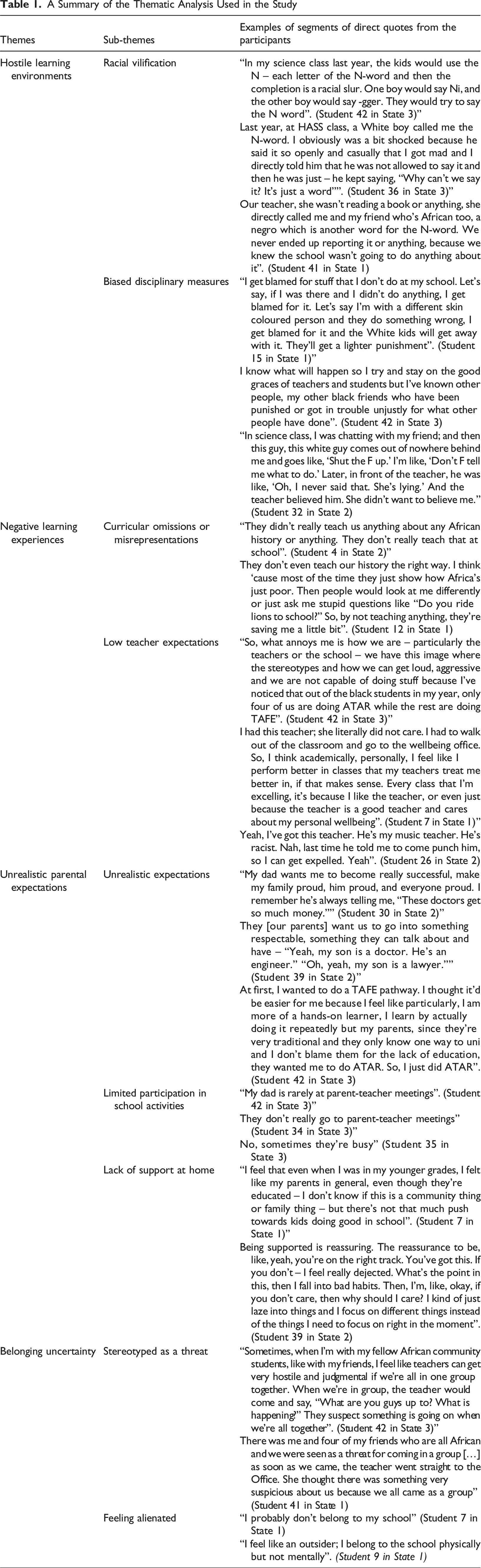
Hostile Learning Environments
When students experience positive relationships with teachers and peers, access culturally responsive pedagogy, and learn in safe, inclusive spaces, they are more likely to engage actively in their education (Epstein et al., 2018; Finn & Zimmer, 2012). Such environments encourage curiosity, resilience, and academic persistence, ultimately enhancing learning outcomes. Conversely, as presented in the students’ accounts, hostile learning environments – marked by racial vilification and biased disciplinary measures – erode school engagement.
In Australian schools, students of African heritage frequently report being unfairly targeted, stereotyped as aggressive, and subjected to increased surveillance. Many students recounted incidents where they were racially vilified. They complain that racial slurs against Black students are a widespread problem. Non-Black students and teachers use the N-word with no concern regarding its implications for them. There’s a lot of racism in school and I don’t feel comfortable being there but then I want to be at school because I like the education, but then the environment in school is very bad. When I say environment, I mean the people at school. She [the teacher] called me and my friend who’s African too, her negro sisters and we were shocked. I never reported it to the principal because the teachers seemed to think like it was our fault. (Student 41 in State 1)
When teachers use racial slurs, they not only inflict harm on targeted students but also legitimise and normalise racism within the school environment. This creates a culture where discriminatory attitudes are reinforced, making racial vilification an accepted part of daily interactions. In such settings, students may feel emboldened to mimic these behaviours, further entrenching systemic racism and deepening divisions among peers. The use of the N-word was not limited to teachers. Many students also reported incidents in which non-Black peers directed the N-word toward them. Racial slurs and discriminatory language in schools make learning environments hostile and have profound negative effects on learning. Empirical research (e.g. Graham et al., 2022; Levy et al., 2016) shows that race-based derogatory language not only undermines students’ sense of belonging but also heightens emotional distress and reduces academic engagement.
Students also emphasised the impact of discriminatory disciplinary measures on their engagement at school. They viewed school disciplinary measures as biased against African-heritage students. One of my participants described how biased disciplinary practices: “I feel like, when you’re Black, if you’re a quiet student, if you’re a loud student, regardless, you’re going to be treated ten times harder than a White student would be. It’s just the facts of it” (Student 7 in State 1). Highlighting the detrimental impact of biased school disciplinary measures on student engagement, one student shared how experiencing unjust punishment led to feelings of injustice, exclusion, and emotional distress, ultimately affecting her wellbeing and school attendance: One of the White girls [in my class] hit me with her phone, and the only thing I did was literally scream back at her and tell her if she wanted to hit me. But that was that, and the teacher had to come through. I explained what just happened. But the teacher ignored my side. Schools take White kids more seriously than Black kids. They will pass over what a Black kid says. Because I defended myself, they put me in detention, not the White girl who hit me first. They punish you for defending yourself. They really do demean you. […] The school really, really took a toll on my mental health, and I barely focused on class. I was barely coming to school. My attendance had gone down to like 60% from 100%. (Student 7 in State 1)
Being unfairly punished for self-defence not only reinforces a sense of powerlessness but also damages trust in teachers and the school system. Across successive studies, Skiba and colleagues contend that racial identity plays a pivotal role in school disciplinary practices, with students from racialised backgrounds disproportionately subjected to exclusionary measures (Skiba et al., 2002, 2014, 2016). When students feel unjustly treated, they are less likely to trust teachers and participate actively in learning, leading to disengagement and negative academic outcomes (Gregory et al., 2017; Skiba et al., 2014). Biased disciplinary measures in schools undermine students’ sense of justice and diminish their engagement by fostering feelings of discrimination, alienation, and mistrust.
Negative Learning Experiences
As recounted by the participants in this study, negative learning experiences have two dimensions: curricular omissions or misrepresentations and low teacher expectations. Representation matters. When students see their cultures, histories, and experiences reflected positively in what they learn, they are more likely to feel valued and connected to their education. Conversely, when students encounter curriculum content that misrepresents or marginalises their identities and histories, it can diminish their sense of belonging and investment in learning (Dei, 2017; Ladson-Billings, 1995; Tatum, 2003). Two students articulated their frustration with the curricular omissions and misrepresentations: I’ve never really felt as if my own experiences are reflected in the content we’re taught at school. It’s always been – I’ve always been on the outside. I’ve always felt like the odd one out. […] In school, it will be, like, “Yeah, we’re multicultural.” But why and how? Unfortunately, I have to figure that out on my own. (Student 39 in State 2) They don’t even teach our history the right way. I think ‘cause most of the time they just show how Africa’s just poor. Then people would look at me differently or just ask me stupid questions like “Do you ride lions to school?” Well, by not teaching anything, they’re saving me a little bit. (Student 12 in State 1)
The dominant curriculum often centres on Eurocentric perspectives, leaving little room for the diverse narratives that reflect Australia’s multicultural society. This lack of representation made these students feel invisible in the classroom, as if their identities and lived experiences were not valued or recognised within the educational system. Curricula that portray racialised groups through deficit narratives, stereotypes, or as peripheral to national history contribute to lower self-esteem and reduced academic participation (Sleeter & Zavala, 2020). Non-representation also means students may not find the learning experiences relevant.
The negative representation of Black people in the curriculum extends to educational texts that use of racial slurs and harmful stereotypes. Many participants pointed to the inclusion of books such as Of Mice and Men and To Kill a Mockingbird in secondary school English units, highlighting how these texts reinforce demeaning portrayals of Black people. While often taught as historical or literary analysis, the uncritical presentation of these narratives can normalise racial stereotypes and create discomfort for Black students, particularly when offensive language is read aloud or discussed insensitively. This not only alienates students but also undermines their sense of belonging and emotional safety in the classroom. Negative representation in the curriculum or pedagogical activities can significantly hinder students’ ability to engage and learn by creating an environment of discomfort, anxiety, and self-consciousness. One Year 11 student expressed her experience as follows: When they’re saying something racial in a book, when they say the N-word or other negative things about Black people, it’s very uncomfortable. It affects my learning abilities and the way I perform, it makes me feel very, very uncomfortable. I feel awkward like I can’t really perform the way I want to. I feel like there’s something holding me back if that makes sense. And I feel like sometimes I just have to act like everything’s okay, or to just not make a scene or something like that, because there’s already stereotypes and labels already put on stuff. (Student 7 in State 1)
The student’s account reveals how encountering racial slurs and harmful portrayals in educational materials disrupts their focus and sense of security in the classroom. Feeling forced to remain silent to avoid reinforcing negative stereotypes further exacerbates emotional distress, limiting participation and diminishing academic confidence. When students feel alienated or misrepresented in learning spaces, their motivation and cognitive capacity are negatively impacted, leading to disengagement and lower academic performance. Addressing these issues through inclusive curricula and sensitive pedagogical approaches is essential in fostering equitable and empowering learning environments.
Similarly, when teachers hold low expectations or provide inadequate support, students may struggle to see themselves as capable learners, leading to disengagement and reduced academic confidence (Tatum, 2003). Many participants of this study reported how low expectations from teachers undermined their motivation and engagement. A Year 11 male student commented: And teachers wonder why Black people might stop coming to school, or why they’re not performing their best. Because even simply asking a teacher a question, they could feel like they’re getting judged. Like the teachers are already putting something up against them before they can even express themselves or the teacher can really get to know the student for the student. And I feel like, if you’re a teacher, your number one main priority is to make sure all the students feel included, regardless of skin colour. Then again, you should definitely be aware of the challenges people face due to their skin colour, if that makes sense. (Student 7 in State 1)
Teacher stereotypes and low expectations can significantly undermine the engagement and learning of racialised students by limiting the recognition and support they receive in academic settings. For example, participants in this study complained that teachers often reinforce the stereotype that Black students excel in sports while overlooking their academic potential. One student expressed frustration at being acknowledged only for athletic ability despite strong academic performance, while another noted that teachers seemed less invested in his learning compared to other students. This persistent stereotyping not only marginalises students academically but also erodes their sense of belonging and motivation, ultimately contributing to school disengagement. One Year 10 students reflected: The biggest challenge I face at school is just the teachers. No one gives me that extra support. I feel like I’m only positively seen when it comes to sports. If I wanted to add in the academic piece, the teachers don’t really tend to care to me as much as they do to other students. Yeah. They don’t really like to recognise me for – because I reckon I do really good in my academics as well, but they don’t like to recognise me for that. Yeah, because there’s that stereotype situation with Africans being seen as better in sports and not really being recognised academically. (Student 2 in State 1)
The compounded effect of these lowered expectations can lead to a self-fulfilling prophecy, where students internalise these beliefs, resulting in decreased academic performance and engagement. When students feel that their abilities are judged through racial stereotypes rather than individual merit, they may become disengaged from learning or lose confidence in their intellectual capabilities.
Unrealistic Parental Expectations
Parental expectations can become unrealistic when they do not align with a student’s aspirations, abilities, or lived experiences. While high expectations can serve as a motivating force, they may also place undue pressure on students if they are perceived as unattainable or disconnected from the student’s individual strengths and interests (Pinquart, 2016). In many cases, particularly within immigrant families, parental expectations are shaped by their own experiences, cultural values, and aspirations for social mobility. Parents may view academic success as the primary pathway to economic stability and societal acceptance, leading them to set exceptionally high academic goals for their children (Suárez-Orozco et al., 2015). However, when these expectations do not take into account the student’s personal interests, choice, and abilities, they can lead to frustration, stress, and disengagement from school. The following quote reflects the inner turmoil students may experience when their academic pursuits seem disconnected from their own desires and aspirations, instead driven by the desires of others: Those [parents’] expectations placed on me, sometimes it gets too heavy to deal with. Going to school and being, “Hey, why am I doing this? Why am I studying so much? Is it really for me? Is it for someone else?” They feel like an identity crisis every year. Or every term. I'm, like, “Do I even want to do this? Who am I doing it for?” Those expectations can be really challenging. (Student 39 in State 2)
On the other hand, some well-educated parents support their children’s academic and career decisions by encouraging open-mindedness while also ensuring they take a strategic approach. This balance allows students to explore their interests freely while considering practical factors like income and personal fulfillment. A Year 8 student whose father holds a PhD described how his parents guide him to make thoughtful choices: My parents do not force me to be a single thing. But they give me suggestions, as in, “do not take this out of the picture”. They make sure that I’m not blindly choosing a job without taking into consideration income and enjoyability, both as in not wanting to be wasting your life away on a job that pays you well but it doesn’t give you any happiness. My parents do tell me about subject choices, as in, if I want to be an engineer, I should probably be taking high-level maths and focusing on science and technology a lot more. (Student 45 in State 1)
Not being forced to be “a single thing” can be liberating. This student is encouraged to follow his passions while making strategic decisions, such as developing strong math and science skills to pursue a career in engineering.
Engaged parents actively support their children’s learning by paying for tutorials and extracurricular activities, following up on homework, and creating a positive learning environment at home (e.g. providing a quiet, well-lit space for studying, limiting distractions, and encouraging a culture of learning at home) (Fan & Williams, 2018; Wang & Eccles, 2012). Engaged parents also foster a growth mindset, instilling the value of education while setting high expectations and celebrating effort. In this respect, parental expectations can also become unrealistic when aspirations for their children’s success are not accompanied by the necessary resources, guidance, and support to help achieve them. In such cases, students may face intense academic or behavioural pressures without the corresponding assistance needed to navigate school challenges. Take, for example, support at home and parental engagement with schools. While few parents hold advanced degrees, most of the parents have limited formal education, with some not having completed high school. Parents with higher education levels are more likely to have the knowledge and resources to assist with schoolwork, provide academic guidance, and navigate the schooling system effectively (García & Weiss, 2019). In contrast, parents with limited schooling may struggle to support their children’s educational needs, not due to a lack of commitment but because of structural constraints such as language barriers, unfamiliarity with local curricula, and demanding work schedules. These disparities can shape students’ access to academic assistance at home. A Year 12 student articulated the gap between parental expectation and support as follows: There’s so much expectation in, do good; do well; be a doctor; be an engineer—those high-end career stuff, but there is no proper support put in place. When I see – even when I hear my parents or other kids’ parents saying, “You need to be a doctor or engineer”, it’s like, “How are you supporting us?” I didn’t get any support. My dad, just telling me, “Get your degree and become a doctor.” I’m like, “What’s the point you’re actually giving me? You’re not buying me a tutor, are you?” I feel like there’s a lot of pressure, but there’s no support, so how does it work? And for me personally, I just want to break through the barriers and be the best that I possibly can. And if I see other people doing it, it inspires me to do it. (Student 7 in State 1)
Relatedly, parents’ active engagement in school activities plays a pivotal role in fostering a collaborative relationship between home and school. This involvement includes attending parent–teacher meetings, volunteering in classrooms or extracurricular events, and supporting fundraising initiatives (Jeynes, 2012). By actively participating in these activities, parents demonstrate their commitment to their children’s education and reinforce the importance of school as a supportive and engaging environment (Epstein et al., 2018). Such involvement not only benefits students academically but also promotes positive social development by fostering a sense of belonging within the school community. Asked if their parents attend teacher/parent meetings, one student replied: “My dad is rarely at parent-teacher meetings” (Student 42 in State 3). Another said: “No, sometimes they’re busy” (Student 36 in State 3) Children are more likely to view education as a priority when they see their parents engaged in their schooling, which leads to a stronger connection between the child’s home and school experiences. This, in turn, contributes to higher levels of academic achievement and greater long-term educational success (Epstein et al., 2018). When parents actively participate in school activities, they not only support their children’s academic growth but also create a positive feedback loop that encourages ongoing student engagement and commitment to learning.
Belonging Uncertainty
Belonging uncertainty refers to the persistent doubt individuals feel about whether they are accepted, valued, or included within a social environment (Cohen, 2022). This uncertainty can have profound emotional, cognitive, and behavioural consequences, particularly for students from racialised backgrounds. In an experimental study, Walton and Cohen (2007) investigated how feelings of uncertainty about belonging can have detrimental effects on motivation and academic achievement for individuals from groups that are often portrayed negatively within academic environments. Their findings show that stigmatised students are likely to be uncertain about their belonging and achieve lower academically. Beyond academic outcomes, belonging uncertainty has adverse effects. In the words of Cohen (2022), When we perceive threats to our sense of belonging, our horizon of possibility shrinks. We tend to interpret ourselves, other people, and the situation in a defensive and self-protective way. We more readily infer that we are incapable or that we aren’t meant to be there, that we will not understand or be understood. We’re less likely to express our views, especially if they differ from those of others. We’re more sensitive to perceived criticism. We’re less inclined to accept challenges that pose a risk of failure. (p.30)
What causes belonging uncertainty? Participants in this study repeatedly noted that being stereotyped as threatening, loud, and disruptive undermined their sense of belonging to their school communities. Many reported being discouraged or even prohibited from gathering in groups larger than two or three, reinforcing a sense of surveillance and control over their movements. Being repeatedly labelled as aggressive or intimidating not only diminishes their sense of belonging but also signals a lack of respect and trust from teachers and school authorities (Molla, 2025b). This persistent stereotyping fosters feelings of alienation and exclusion, making it difficult for these students to fully engage in school life and form positive relationships within the educational community. One student shared their experience of racial bias in school discipline, highlighting the impact of being unfairly targeted: I feel like an outsider; I belong to the school physically but not mentally. It’s just about how I get treated in class and the culture around with two or three other Black girls because if we hang out as a bigger group, we’re known as a threat. And we’ve been called a gang in school. Some people feel intimidated by us. Yeah, we had to be in two or three. People just thought that we were up to something, which we weren’t. (Student 9 in State 1)
This statement highlights how African-heritage students often experience heightened scrutiny in school settings, reinforcing feelings of mistrust and surveillance. The teacher’s response suggests an implicit assumption that African-heritage students in larger groups are engaging in misconduct, which contributes to a hostile and unwelcoming school climate. Being stereotyped as a threat profoundly undermines racialised students’ sense of connection to their school and generates feelings of alienation. In communicating his sense of alienation, a Year 10 male student commented “I probably don’t belong to my school” (Student 7 in State 1). Another added “There’s a lot of racism in school and I don’t feel comfortable being there but then I want to be at school because I like the education there” (Student 41 in State 1). Labelled as dangerous or intimidating, students may feel unwelcome and unfairly judged. Racialised students who are singled out for simply existing in groups receive the message of disrespect and oppression as one participant put it: One time, when we were discussing in a group, a White teacher came and told us that we were making other students uncomfortable with our presence because there was a lot of us in one group and we got really confused because we didn’t know what we did wrong. So, obviously we had to disperse and separate ourselves. I felt like I was being oppressed and disrespected. That’s not how it should be. We should be allowed to be in one group together in peace. If another group, let’s just say White European students gather together, the teachers don’t go up to them or bother them. (Student 42 in State 3)
This account reflects the racialised experiences of students of African heritage within predominantly White school environments, highlighting implicit biases and differential treatment by teachers. The student’s confusion and feelings of oppression align with literature on racial microaggressions in educational settings, where students from minoritised backgrounds often experience unwarranted surveillance and disciplinary actions compared to their White peers (Molla, 2025a; Sue et al., 2007). This incident also underscores the impact of exclusionary school practices on students’ sense of belonging, which has been widely documented as a key factor in school disengagement (Gillborn, 2008; Tatum, 2003). The teacher’s intervention – perceived as an unjust singling out of the group – exemplifies structural inequities that reinforce social hierarchies and limit the collective agency of marginalised students.
Interactive Drivers of Disengagement
In addressing the complex issue of school disengagement among African-heritage students with refugee experiences, the significance of students’ voices cannot be overstated. These voices provide invaluable insights into the lived realities of students who often navigate educational spaces that are shaped by both systemic and institutional forces of exclusion. By centring the students’ perspectives, this study illuminates the nuanced factors that contribute to disengagement, rather than merely attributing it to external labels or assumptions about the students’ capabilities.
Viewed through the social-ecological systems model, understanding drivers of school disengagement requires exploring three distinctive but interactive elements: the individual with their unique characteristics, the various environmental systems in which the individual interacts and is positioned, and institutional practices and the dynamic interactions that occur between the individual and their environment over time (Bronfenbrenner, 2005; Massey & Brodmann, 2014; Ungar, 2012). While intrapersonal factors such as aspirations, self-concept, and life-course trajectories are critical, they cannot be fully understood without considering the nested systems of interactions and connections that influence students and parents. For example, a student experiencing bullying may start avoiding school, leading to chronic absenteeism and decreased participation in class. Similarly, students from low-income backgrounds may disengage due to external pressures such as financial stress or family responsibilities, limiting their ability to focus on their studies (Evans, 2004). In Indigenous and culturally diverse communities, disengagement can stem from curricula that fail to reflect students’ lived experiences, making learning feel irrelevant and alienating (Lowe et al., 2025). Furthermore, rigid disciplinary policies – such as suspensions for minor infractions – can push students further away from education rather than addressing underlying challenges. These examples highlight that disengagement is not solely a personal issue but is shaped by broader social, economic, and institutional factors.
In this respect, a social ecology perspective, as applied in this study, is particularly significant because it recognises that student disengagement is not an isolated issue but a result of interactions between various systems (see Figure 1). At the microsystem level, direct interactions within immediate environments – such as the school and family – play a pivotal role in shaping Black students’ engagement. Accounts of the students suggest that experiences of racial vilification, including the use of racial slurs by their peers and teachers, make the school an unwelcoming space. Within the mesosystem, the evidence presented above also suggests that the interactions between different microsystems – such as home and school – are crucial in shaping students’ educational experiences and can significantly contribute to school disengagement. For example, parents, hindered by language barriers, unfamiliarity with educational processes, and long working hours, may struggle to engage with the school and address the challenges their child faces. At the exosystem level, within the educational environment, schools operating in disadvantaged areas may struggle to provide the resources or infrastructure necessary to support students from diverse backgrounds. For instance, diminishing public funding means that schools struggle to provide targeted support to students with disrupted educational trajectories, such as those with refugee backgrounds. The social ecology of school disengagement (author representation based on Bronfenbrenner, 2005)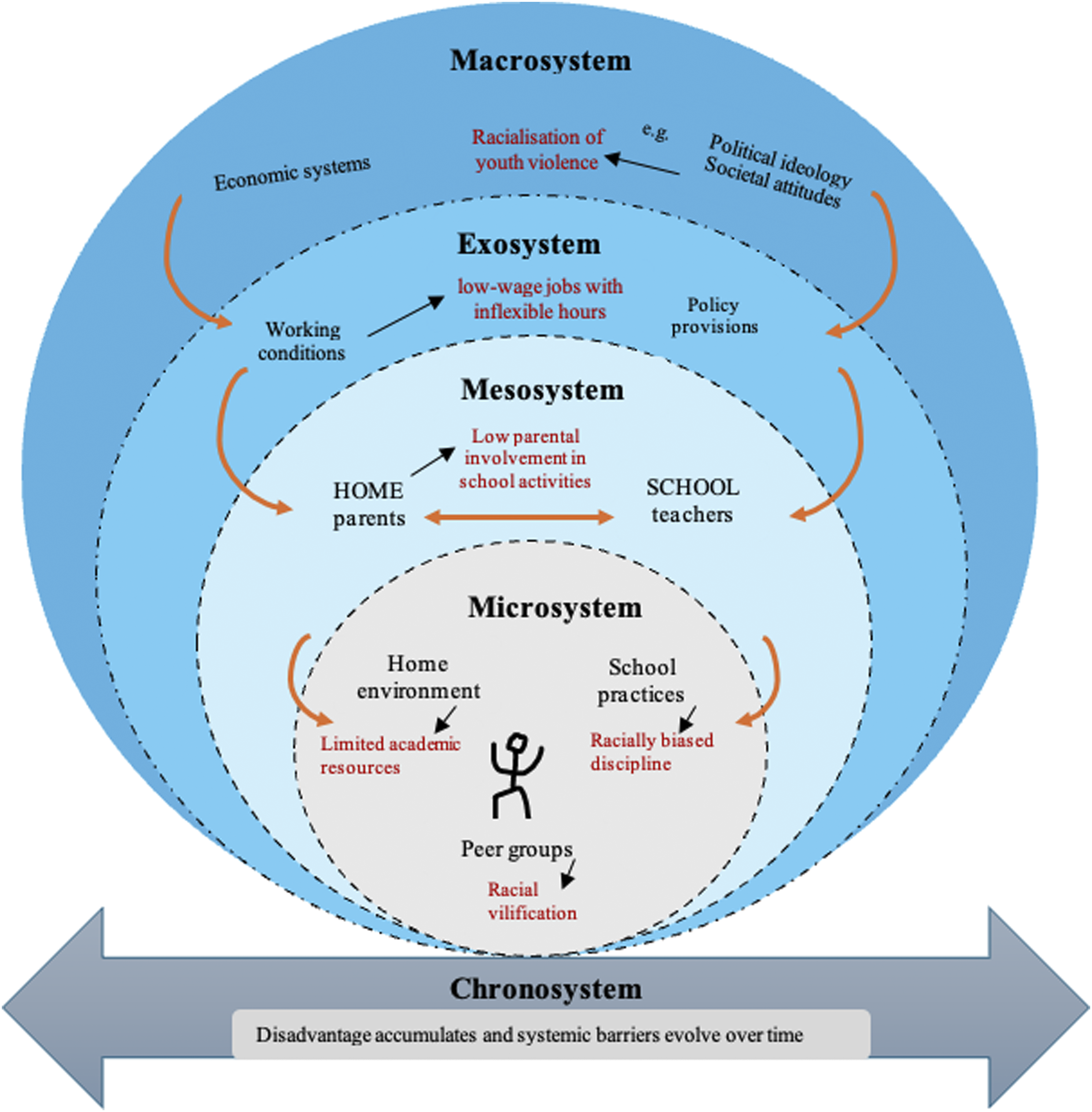
Structural issues such as political ideologies, economic systems, and broader societal attitudes significantly influence both school practices and home dynamics. To illustrate the interaction of the macrosystem and the microsystem, with the prevalence of the “African gang” narrative in the public space, African-heritage students faced increased racial Othering (Molla, 2021, 2024, 2025a, 2025b). During the interviews, many participants noted that they were stereotyped as dangerous and threatening at school, leading to heightened surveillance and disciplinary scrutiny. Concerning the chronosystem, many African-heritage students contend with the enduring effects of racial discrimination, where negative teacher expectations, disproportionate disciplinary actions, and systemic exclusion accumulate over time, deepening their sense of alienation and disengagement. Additionally, personal transitions – such as migration adjustments, school changes due to financial instability, or family separation – further disrupt their sense of belonging and academic continuity.
The nested systems of influence are interactive. For example, the racialisation of youth crime in society (macrosystem) filters down through the microsystem to create hostile school environments. Relatedly, poor interactions between schools and refugee families, a mesosystem issue, can contribute to feelings of alienation and disengagement among students within the microsystem. Parents working in low-wage jobs with inflexible hours, an exosystem context, may struggle to participate in their children’s education, affecting the level of support and oversight students receive at home (a microsystem setting) and their ability to engage meaningfully with schools (a mesosystem issue). For students with refugee backgrounds, significant life events such as displacement and resettlement can have profound and lasting effects on their educational trajectories. Understanding these temporal factors is essential for creating responsive and adaptive educational practices that support the long-term success of refugee students.
Before closing this section, I want to note that an exclusive focus on barriers to school engagement can be a limitation. Although students reported instances of parental support that facilitated engagement, the study did not systematically examine other potential facilitators within the school environment. Focussing empirically on positive drivers of engagement could have provided a more balanced understanding of students’ experiences. Future research could extend these findings by investigating both barriers and enablers, offering a more comprehensive account of the factors that shape school engagement among refugee-background students.
Conclusion
School engagement research often prioritises institutional data and policy frameworks, with limited critical attention given to student voices. This study operates on the premise that students, particularly those from racialised communities, serve as the most direct witnesses to the systemic barriers shaping their educational experiences. Their perspectives are not merely supplementary but fundamental to understanding the complexities of school disengagement. As demonstrated in the analyses above, student narratives examined through a socio-ecological lens reveal the intricate interplay of systemic, institutional, and individual factors, offering a more comprehensive and nuanced understanding of the forces shaping disengagement.
The findings of this study underscore the multifaceted nature of school disengagement among African-heritage students with refugee experiences, shaped by intersecting systemic, institutional, and personal factors. Through thematic analysis, four key themes emerged: hostile learning environments, negative learning experiences, unrealistic parental expectations, and belonging uncertainty. Hostile learning environments, characterised by racial vilification and biased disciplinary measures, create exclusionary school climates that undermine students’ sense of safety and inclusion. Negative learning experiences, including curricular omissions and bias, and low teacher expectations, further contribute to disengagement by reinforcing feelings of marginalisation. Unrealistic parental expectations, encompassing academic pressure, limited participation in school activities, and diminished support at home, add another layer of complexity, often leaving students struggling to reconcile familial aspirations with their lived realities. Finally, belonging uncertainty, shaped by being stereotyped as a threat and experiencing alienation, reinforces a sense of “Otherness” that erodes students’ confidence and motivation.
These insights highlight the urgent need for institutional practices that actively dismantle systemic barriers contributing to school disengagement. Schools must foster inclusive learning environments by addressing racial vilification, ensuring fair and unbiased disciplinary measures, and embedding diverse perspectives within the curriculum. Teacher training should prioritise culturally responsive pedagogies, equipping educators to set high yet supportive expectations for all students. Additionally, stronger school-family partnerships are essential to bridging gaps in parental expectations and home support. Finally, fostering a sense of belonging requires proactive efforts to challenge stereotypes, create safe spaces, and promote meaningful student engagement. A socio-ecological approach underscores that addressing school disengagement necessitates coordinated efforts across multiple levels – policy, school leadership, classroom practices, and community engagement – to create equitable and supportive educational experiences for African-heritage students with refugee backgrounds.
Footnotes

Funding
The author disclosed receipt of the following financial support for the research, authorship, and/or publication of this article: Australian Research Council, FT220100062.
Declaration of Conflicting Interests
The author declared no potential conflicts of interest with respect to the research, authorship, and/or publication of this article.