




Abstract
The staffing and outsourcing of the marginalised curriculum area Health and Physical Education (HPE) has been an area of growing concern, alongside rising concerns for the decline of students’ health due to increased sedentary behaviour and mental health problems, yet there has been little research attention to the staffing and delivery of HPE in Australian schools. This article addresses that gap in understanding with analysis of data from a larger study examining positioning and implementation of HPE in schools. A mixed methods questionnaire was completed by 30% of government schools in New South Wales (n = 556) providing data on staffing, delivery and outsourcing arrangements. Findings suggested that specialist HPE teachers are not in-charge of teaching HPE; and the majority (67%) of schools outsource at least some HPE, with far-reaching impacts on curriculum coverage and student exclusion from lessons evident. Findings also suggested that students experience varied methods of delivery in Physical Education (PE), and Health Education (HE) lessons. Together, these findings raise questions regarding the assurance of quality and equity, with implications for future policy and practice and the health and wellbeing of school children.
Keywords
Study background
Introduction
There is broad acknowledgment that Physical Education (PE) and Health Education (HE) are important aspects of education systems, with many countries combining the areas into one curriculum area – Health and Physical Education (HPE), yet their place in schools is often marginalised (Chorney, 2011; Cruickshank et al., 2021,2023, 2024; Morgan & Hansen, 2008; Siegel, 2006). While the marginalisation of HPE has been examined in various ways, it has not yet been explored in relation to impact upon staffing and delivery of lessons.
Globally, there are broad challenges in school staffing, which have impacted the teaching of Key Learning Areas (KLAs) (curriculum areas) (Gracíia & Weiss, 2019; See et al., 2022; Thompson, 2021), including HPE (Hills et al., 2015). Simultaneously, there has been a rise of outsourcing in HPE to ‘fill the gap’ and provide ‘solutions’ to staffing difficulties (Olmedo, 2013; Picciano & Spring, 2013; Sperka & Enright, 2018). Although there has been increasing monitoring of teachers, their qualifications, professional development, and effectiveness in the classroom through teacher registration and accountability regimes (Ingvarson et al., 2006), there is a noted lack of policy and monitoring of the standards of external HPE providers (Macdonald et al., 2020) and indeed little research documenting staffing, and outsourcing practices in HPE. Outsourcing the role of a qualified teacher to an external private enterprise may have implications for equity and quality assurance (Cruickshank et al., 2023, 2024; Deng et al., 2022). This exploratory study provides empirical evidence of school staffing and outsourcing practices in HPE in New South Wales (NSW) government schools.
Background
A decade ago, the UNESCO Worldwide Survey of School Physical Education (PE) found: deficiencies in teacher supply, particularly of physical education specialists, inadequate preparation of physical education teachers… consequences indicate problematic issues of some concerns articulated in numerous countries (UNESCO, 2013, p. 47)
Globally, in 2013, PE was most frequently taught by generalist teachers in primary schools (79%), whereas specialist teachers most frequently taught PE in secondary school settings (90%) (UNESCO, 2013). In the latest OECD report Making PE Dynamic and Inclusive for 2030, staffing remains a central challenge (Howells, 2019). The report raises concerns about generalist teachers’ teaching of HPE and the hiring of non-teachers to deliver HPE who lack qualifications and knowledge (Howells, 2019).
Recently, researchers have argued that if a teacher has not specialised in PE, they are not ‘suitable to teach physical education’ (Sufri & Chung, 2019, p. 449). There is a dearth of empirical evidence on the staffing of HE, despite a significant body of literature on the staffing of PE (Cruickshank et al., 2021; Gaudreault et al., 2018; McEvilly, 2022; McLennan & Thompson, 2015; Sperka & Enright, 2019; Whipp et al., 2011).
Alongside teacher staffing concerns, there is also a decade-long unease regarding the increasing use of external PE providers: raises concerns about quality and relevance of curriculum delivery and impacts on teacher development as well as student learning… and hence, compromise the quality of student learning (UNESCO, 2013, p. 47)
In response to rising concerns, UNESCO devised guidelines for Quality Physical Education (QPE), suggesting responsible authorities review systems of QPE teacher education as a priority and establish qualification standards and baseline expectations for teachers responsible for teaching PE (McLennan & Thompson, 2015; UNESCO, 2015).
The issue of staffing in HPE sits within broader challenges in school staffing including low esteem for the profession (Thompson, 2021), inadequate professional pay (García & Weiss, 2019), broad teacher shortages (See et al., 2022), and intensification of work and rising workload (Gavin et al., 2021). These challenges feed into specific difficulties in provision and distribution of specialist teachers within Australia and frequent reliance on ‘out-of-field’ teachers (Hobbs et al., 2022). Countries experiencing teacher specialism shortages in different KLAs share concerns regarding repercussions for the success of their educational systems as economic and social engines. For example, teacher supply issues in STEM areas are assumed to heavily impact innovation and economic development. HPE specialist teacher shortages will likely affect population health and knock-on social and economic outcomes (Lawson, 2020). Thus, monitoring and optimising supply of these specialists is essential.
Importance of specialist staffing for HPE
HPE specialist teachers provide superior technical instruction, more opportunities to practise and develop skills, a wider range of content, and more authentic learning than non-specialist teachers (Cruickshank et al., 2024; McEvilly, 2022; Morgan & Hansen, 2008; Whipp et al., 2011). Research shows students are significantly more active in PE when taught by a specialist HPE teacher (Whipp et al., 2011). Additionally, these teachers are more willing to teach challenging health topics, such as sexual health, compared to generalists (Cohen et al., 2011). These research findings have fuelled international (McEvilly, 2022; Sperka & Enright, 2019) and national (Lynch, 2013; Morgan & Hansen, 2008) calls for more specialist HPE teachers, especially in primary schools.
International (DeCorby et al., 2005; Dyson et al., 2016) and Australian (Cruickshank et al., 2023; Dudley et al., 2020; Morgan & Bourke, 2004; Spittle, Spittle, Encel, & Itoh, 2022) research shows that many generalist primary teachers feel unprepared and lack confidence and competence in HPE. They also face barriers when implementing the HPE curriculum, including lack of training and expertise, lower levels of confidence, and competing demands (Cruickshank et al., 2021; Gaudreault et al., 2018). These barriers can have negative consequences for student outcomes and overall physical activity levels.
Australian researchers allude to a correlation between a shortage of specialist HPE teachers and NSW students’ decline in fundamental movement skills (Dudley et al., 2020). Proficiency in fundamental movement skills is crucial for physical activity (Barnett et al., 2009; Hardy et al., 2012). Hardy et al. (2012) estimated that, in NSW, two-thirds of year six students are not sufficiently competent in locomotor skills such as running, jumping, skipping, and hopping. Historic Australian research (Hardy et al., 2012) supports international arguments (McEvilly, 2022) that specialists should teach HPE so students have a solid foundation to lead physically active lives.
Outsourcing in HPE
Outsourcing of HPE is pervasive worldwide (Deng et al., 2022; Sperka & Enright, 2018). It involves engaging an external provider to deliver part of the HPE curriculum, aiming to ‘extend, substitute or replace internal capabilities’ (Sperka, 2020, p. 275). Many problems are associated with outsourcing, including, qualifications of providers, inconsistent delivery, lack of curriculum knowledge, inequity, and how it undermines the HPE teaching profession (Cohen et al., 2011; McEvilly, 2022; Parnell, 2015; Powell, 2015; Williams et al., 2011).
Outsourcing HPE is a regular practice in Australian schools and is so prevalent in NSW that since 2008 the NSW Department of Education has provided guidelines for schools using contracted external providers for PE and school sport in years K–6 (NSW Department of Education and Training, 2008).
A growing body of literature examines the rise of outsourcing in HPE internationally (Macdonald, 2015; Sperka & Enright, 2018) and in Australia (Hogan & Stylianou, 2018; Morgan & Hansen, 2008; Whipp et al., 2011; Williams et al., 2011). Many researchers note how outsourcing is used to ‘fill the gap’ due to a lack of HPE specialist teachers. Barwood et al. (2017) report that HPE is outsourced in Western Australia because of teacher training and qualification inconsistencies.
Cruickshank et al. (2023) suggest that outsourcing can be used as an extension of, not a replacement for, teacher-led HPE. Lynch (2013) supported this, but argued that employing a qualified, enthusiastic HPE specialist would eliminate extra school expenses in the long term, and schools that did not have a HPE specialist were generally lacking resources and advocacy.
In additional to concerns about teaching standards, the opportunity to develop student-teacher relationships in outsourced classes is extremely low. Student-teacher relationships are one of the most influential factors on student behaviour and learning outcomes (Churchill et al., 2011; Hughes & Chen, 2011; Roorda et al., 2011). These relationships foster a sense of belonging and create an environment where students can more actively participate in learning, impacting their learning, outcomes, and achievement (Churchill et al., 2011; Hughes & Chen, 2011; Roorda et al., 2011). Sperka and Enright (2018), when investigating how students experience outsourced lessons, note ‘many students considered it beneficial to know their teachers’ (p. 578). Yet we note that opportunities for students to ‘know their teachers’ are limited with outsourcing, where time frames are often short and staff focus tends to be on program delivery, rather than getting to know students.
The growth of outsourcing is built upon a history of staffing issues in HPE. In 1992 a senate inquiry highlighted the issue of ‘appropriately qualified teachers’ and suggested staffing was a contributing factor to the decline of PE (Senate Standing Committee on Environment, Recreation and the Arts, 1992, p. 8). The inquiry made two crucial recommendations relating to PE staffing. Recommendation 27 urged the various education authorities to ensure all PE programs were conducted by or at least overseen by, a qualified, specialist PE teacher as a matter of priority. Recommendation 31 asked education authorities to ensure every student has regular access to a specialist PE teacher. Both recommendations stressed the importance of specialist teachers at the primary school level. Research has not examined outsourcing practices of the area HE.
Since the establishment of the NSW Public Schools Act of 1866, government schools have worked to provide equitable opportunities for all school-aged children (NSW Department of Education, 2023). Since the 1990s, external providers have emerged in schools, in NSW and many other jurisdictions, with an increase in public/private partnerships as well as education businesses providing ‘solutions’ to policy problems (Hogan, 2016; Olmedo, 2013; Picciano & Spring, 2013). Today outsourcing of HPE is a booming business, raising concerns regarding affordability and educational inequity and potential knock-on effects on health outcomes (Lawson, 2020). The growth in public/private partnerships, education businesses, and outsourcing raises issues regarding student equity. Outsourcing of classes from qualified teachers to unregulated external providers is also problematic. Growth in outsourcing runs counter to recent global developments to lift education quality through registration and accountability frameworks for qualified teachers (Lingard et al., 2017).
Teacher standards and the importance of teacher specialist staffing
In Australia, as in many countries, concerns about HPE staffing have developed alongside significant investment in teacher accreditation, teaching standards, and clarification of the professional work of teachers (Ingvarson et al., 2006). All teachers in Australia must have a minimum of four years of university qualifications, be registered to teach in schools (Senate Employment, Education and Training References Committee, 1998), and maintain teaching standards. The impetus for these developments is the mounting evidence supporting the positive impact of highly qualified and specialised teachers on student learning outcomes. Researchers agree that improving teacher quality and instruction is the most effective way to increase student engagement and outcomes regardless of student background (Adnot et al., 2017; Chetty et al., 2014; Dinham et al., 2008; Goldhaber et al., 2015; Kunter et al., 2013; Wenglinsky, 2002). Nevertheless, while registration requirements are mandated and fully enacted, there frequently remains a mismatch between teacher specialisation and the classes they teach (Hobbs et al., 2022). Specialist teachers have additional specialist learning in initial teacher education and are more common in secondary schools. However, as shown in Figure 1, government reporting shows that only approximately half of secondary teachers in NSW teaching HPE have completed appropriate preparation. There is no equivalent data available for NSW primary teachers. Subject teaching and initial teacher education among NSW secondary teachers (Source: Australian Institute for Teaching and School Leadership, 2021, p. 46).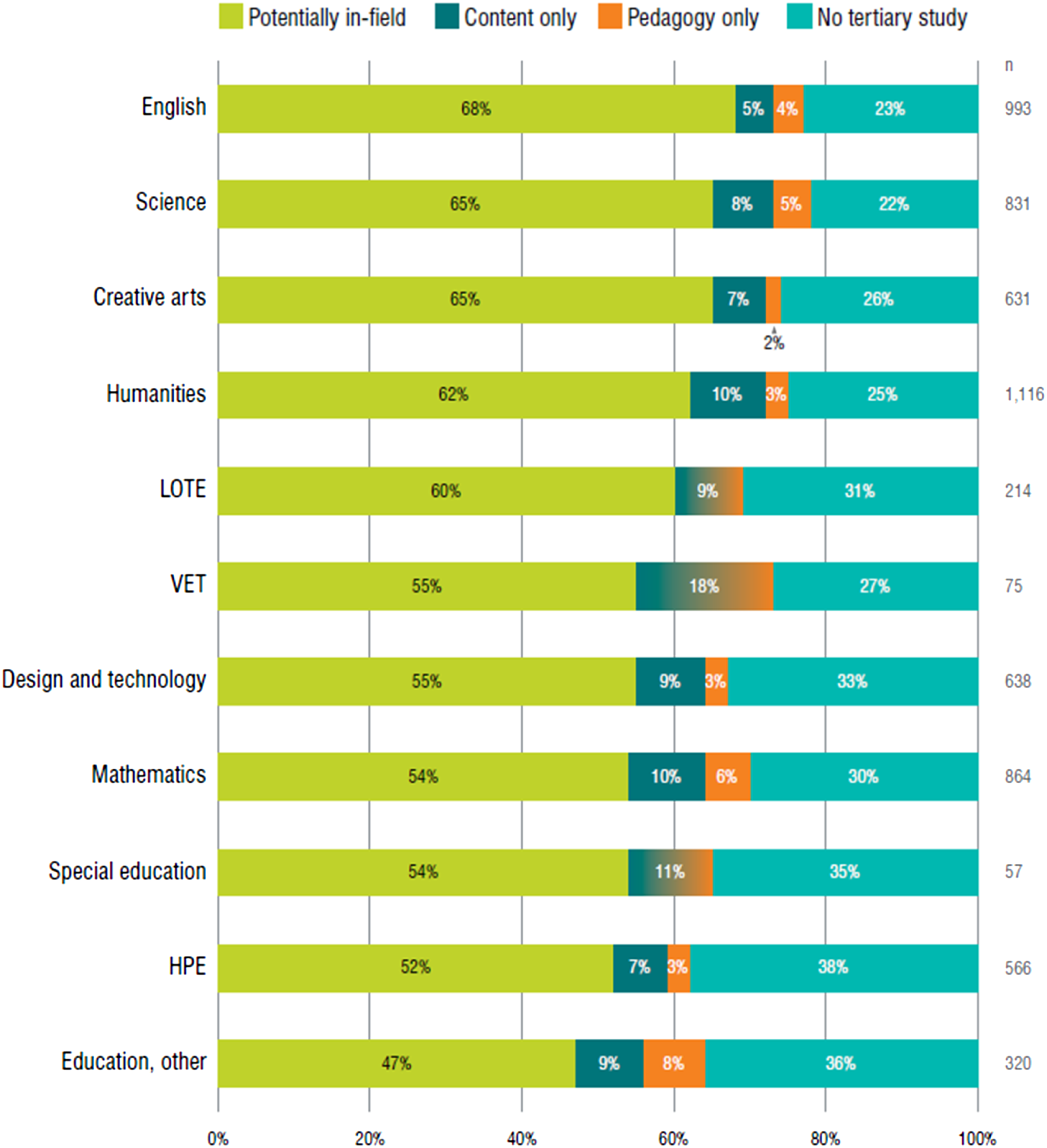
While NSW teachers must provide evidence of their qualifications, registration, effectiveness, and adherence to standards, there are no such requirements for external providers. There is a lack of policy and monitoring of external providers’ qualifications, expectations, and standards (Macdonald et al., 2020). Thus, despite regulation and professional standards, shortages of teacher specialists, high out-of-field teaching and increasing use of external providers mean that the potential for high-quality teaching and learning in HPE is curtailed.
Considering the unaddressed Senate inquiry recommendations made over 25 years ago and studies on the rate of outsourcing in NSW schools, now more than 15 years old, there is an urgent need to obtain empirical data on who is teaching HPE in NSW government schools. This study addresses that gap, providing an overview of the teaching workforce in HPE in NSW, Australia. Given international trends, the study will likely be informative to many other jurisdictions.
Research questions
1. Who is in-charge of HPE in NSW government schools? 2. Who is teaching HPE in NSW government schools? a. If teaching is outsourced, who is paying for it? b. What do students experience in outsourced HPE lessons if payment is required but not provided by their parents or caregivers?
After answering these questions, our discussion explores the implications for policy and practice within schools.
Method
The study
This article reports on a component of a larger study, the NSW HPE Enacted project, which provides empirical evidence to enhance understanding of the position of HPE in NSW government schools by examining three areas (I) the logistics, (II) the process, and (III) the status (Sears, 2021). Ethics approval for the NSW HPE Enacted project was provided by the University of Sydney (HREC2017/631) and NSW State Education Research Applications Process (SERAP20172024).
Methodological approach
This study used Creswell and Plano Clark’s (2018) embedded QUAN (qual) design model. This approach allowed direct quotes from participants to be included alongside quantitative statistics to illustrate participants’ perspectives relevant to the quantitative findings.
The study sample
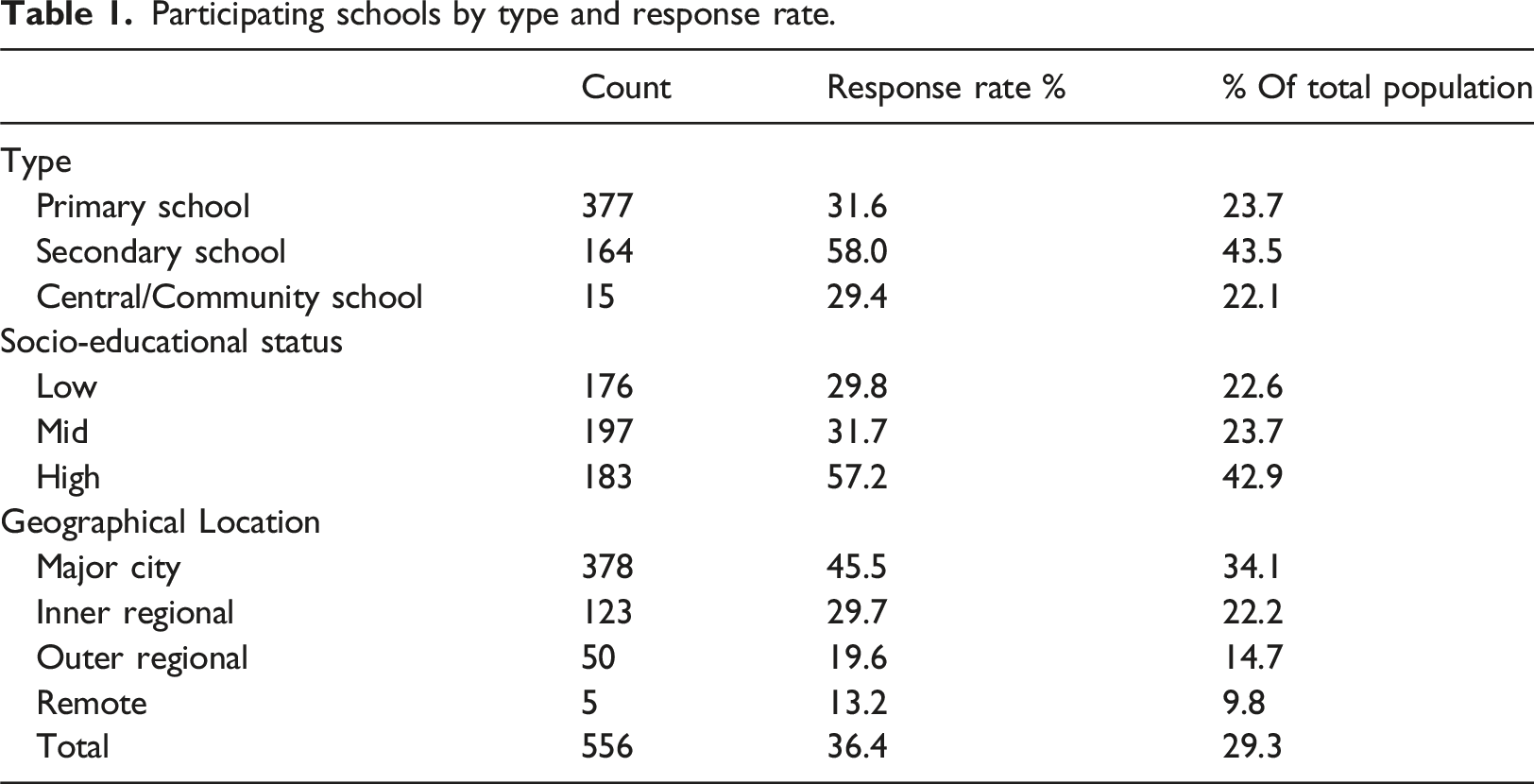
Participating schools by type and response rate.
The questionnaire
An online questionnaire, completed by the teacher-in-charge of HPE, was used to collect both quantitative and qualitative data on staffing and delivery of lessons. Previous large-scale survey studies informed the development of questionnaire design, including TALIS surveys (OECD, 2013), UNESCO WorldWide Survey of Physical Education (UNESCO, 2013), Department of Education United Kingdom PE and Sport Survey 2009/2010 (Quick et al., 2011), and the first national survey of Australian secondary teachers of sexuality education (Smith et al., 2011). The online questionnaire included questions on 1) demographics, 2) who teaches HE and who teaches PE, including external providers 3) outsourcing – payment and student participation. Details of the survey can be found in Sears (2021). The questionnaire was piloted with six teachers – three generalists and three HPE specialists.
Data analysis
Both qualitative and quantitative analysis techniques were utilised in a QUAN (Qual) approach, focussing predominately on quantitative data supplemented by direct quotes from participants to illustrate quantitative findings. As shown in Table 1, the resulting dataset is large and representative of the population of NSW government schools. The quantitative analysis reported here is primarily descriptive. Where appropriate, some tests of association and/or difference were carried out, in SPSS, to confirm the statistical significance of patterns observed in the descriptive analyses. Details of these analyses are available in Sears (2021). More than 433 respondents (77.9%) provided qualitative comments. Some responses were one to three-word answers, while others were paragraphs long, with 4803 qualitative responses collected. There were 13 text boxes for participants to make qualitative responses. Quotes are embedded within the quantitative results to confirm, validate, affirm, and explain in participants' voices the statistical data (Eldh et al., 2020).
Findings and discussion
Demographics of the teacher in-charge of HPE
Demographics of the teacher in charge of HPE at participating schools.
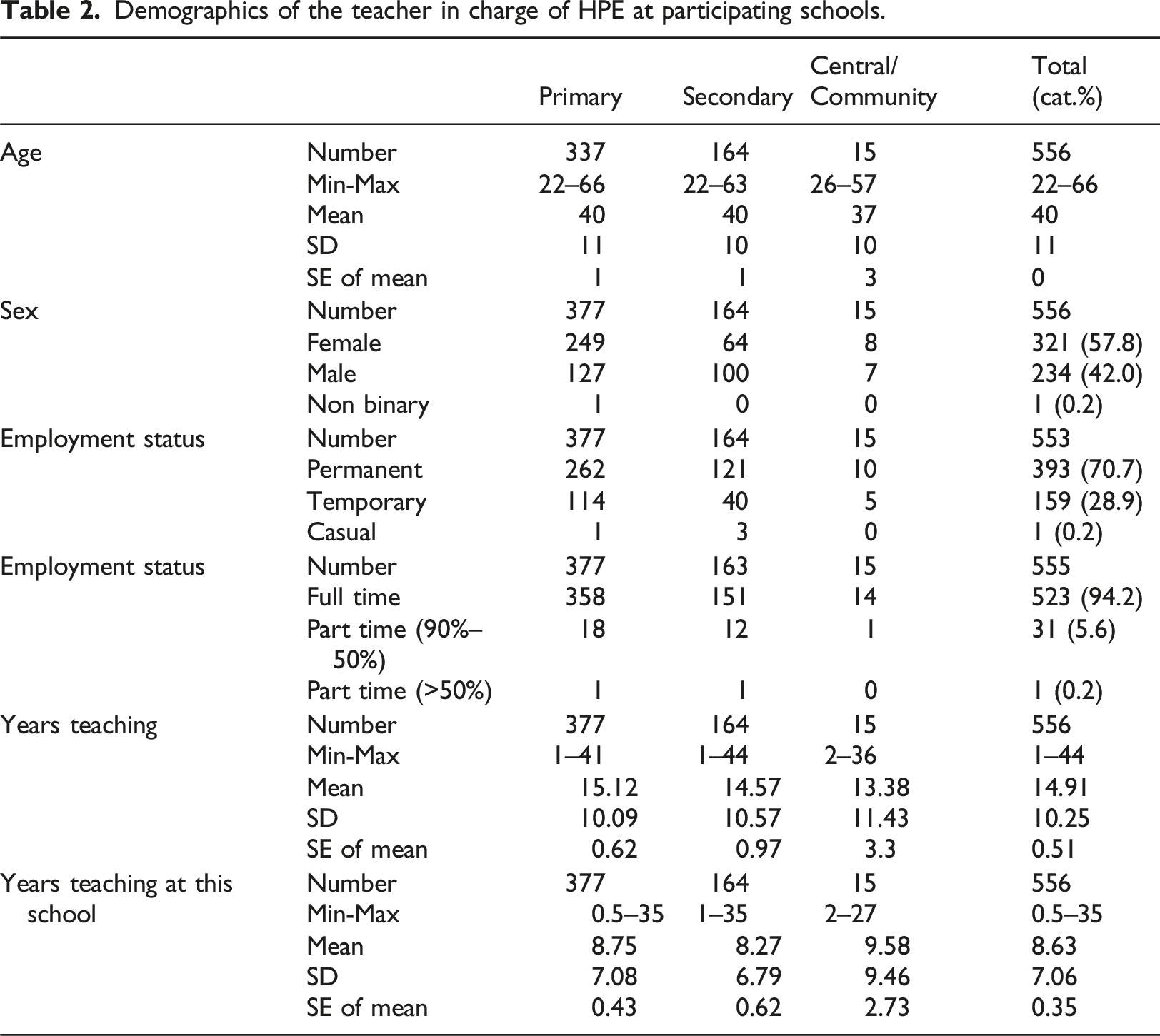
Of the 556 survey participants, 548 reported what the person in-charge of HPE at their school was qualified to teach: 196 were HPE specialists (35.8%), 342 were generalists (62.4%), and ten specialists for another KLA (1.8%). The only statistically significant difference here was school type, secondary schools had a larger percentage of HPE specialists in-charge of HPE (40.8%). In all school types, the majority of teachers-in-charge of HPE were not HPE specialists.
Qualifications of the teacher in charge of HPE at participating schools.
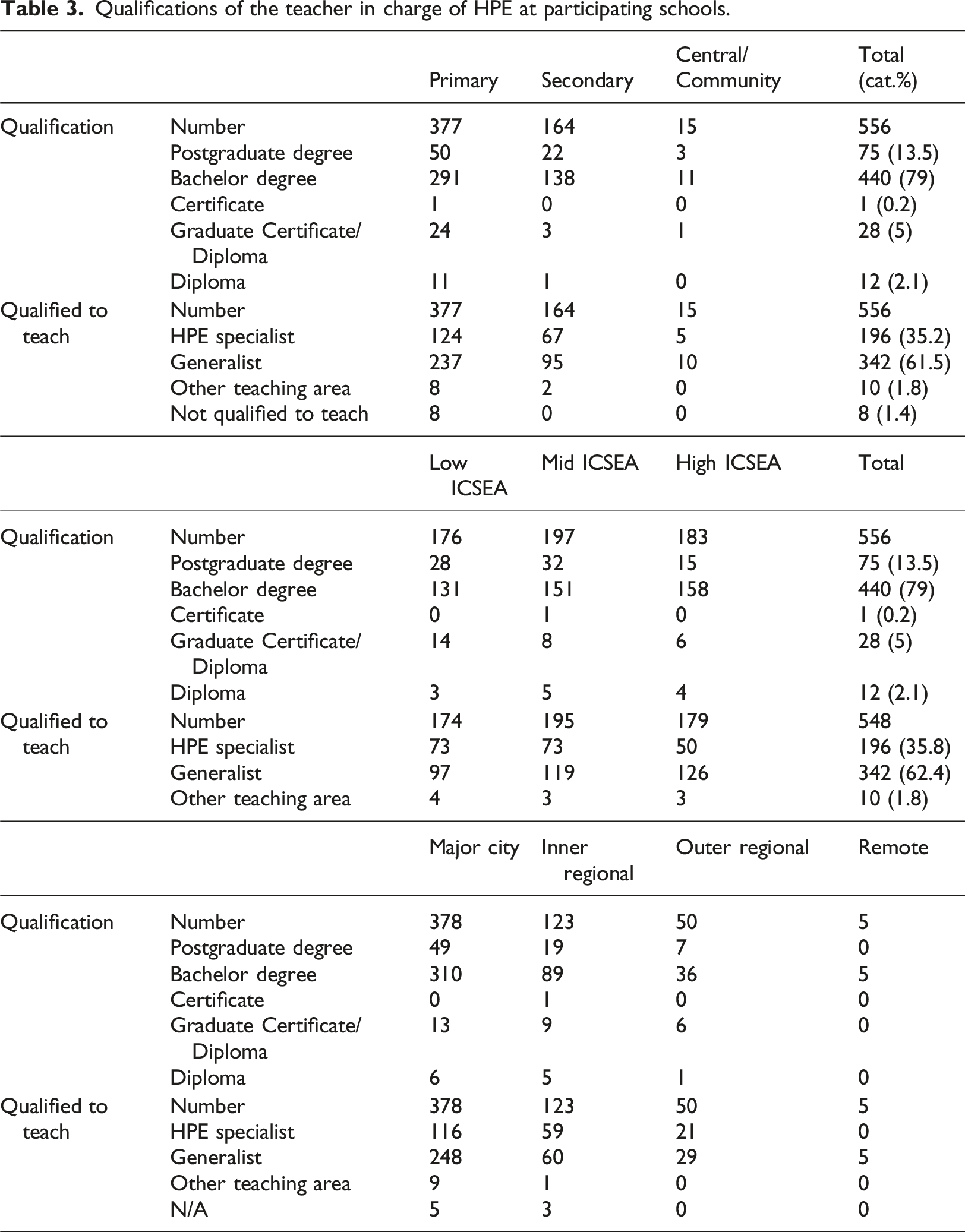
Major-city and high-SEdS schools show a smaller proportion of specialist HPE teachers-in-charge of HPE than schools in inner and outer-regional locations or low-SEdS schools.
Who is teaching and delivering HPE?
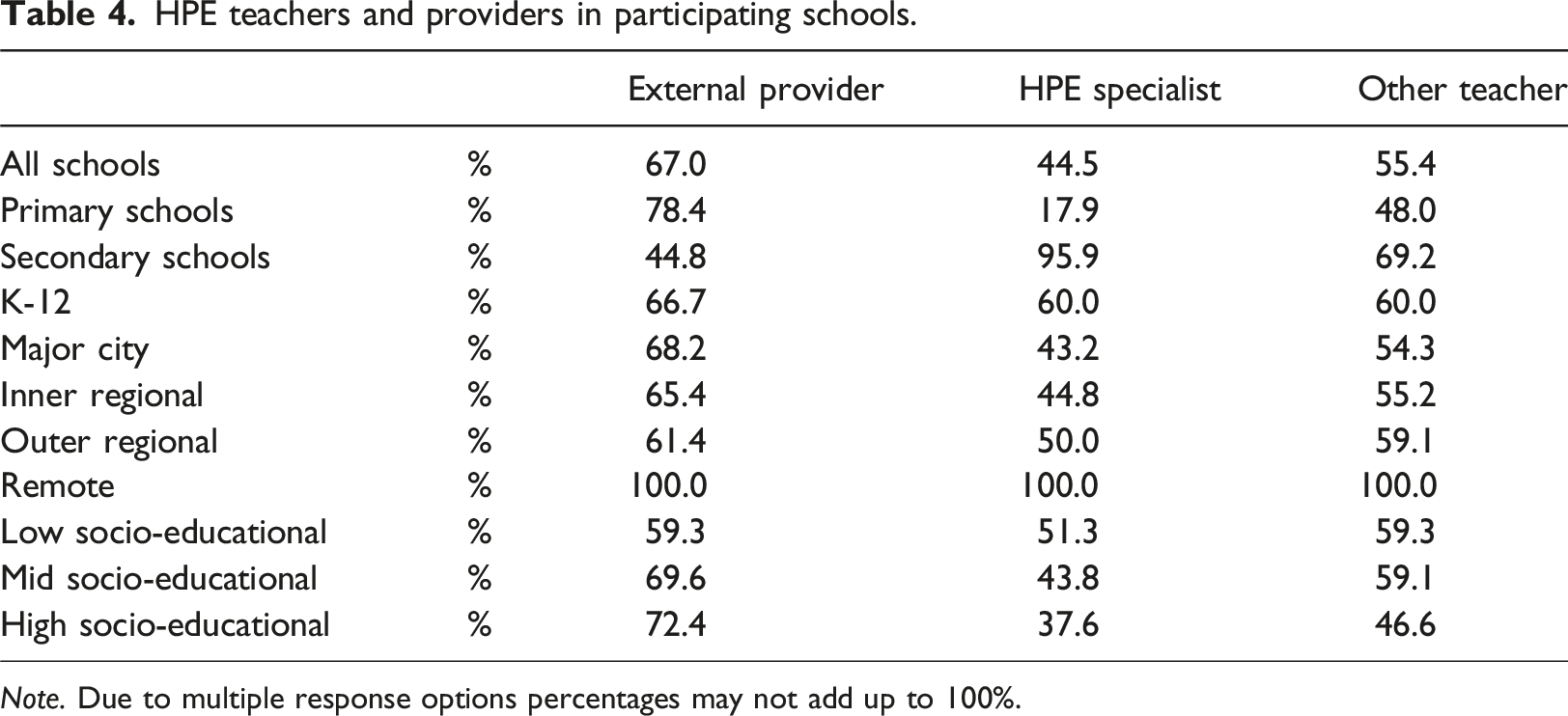
HPE teachers and providers in participating schools.
Note. Due to multiple response options percentages may not add up to 100%.
Previous research has highlighted schools outsourcing of HPE to external providers to ‘fill the gap’ of teachers lacking confidence and competence to provide quality HPE lessons (Cruickshank et al., 2021; Williams et al., 2011). Our data reveal 78.4% of primary schools were employing external providers to deliver HPE. Only 17.9% of primary schools reported that they had access to a HPE specialist teacher, this lack of specialist teachers may contribute to high levels of outsourcing. Although the current exploratory study did not measure frequency of outsourcing, a number of qualitative comments from respondents suggest it may be becoming a frequent practice, with respondents stating, ‘An external provider who comes to school and teaches for roughly an hour period once a week’ (respondent 27435673) and ‘A typical [outsourced] class would have one lesson a week for a term’ (45545567).
Overall, 44.5% of schools employed HPE specialist teachers, with differences between school types. Only 17.9% of primary schools reported employing a HPE specialist teacher, compared to 95.9% of secondary schools. Primary schools with a HPE specialist show less use of external providers, ‘We have internal full-time HPE staff who teach Physical and Health education across K–6’ (respondent 45118929). Many schools (55.4%) reported that ‘other teachers’ (including generalist and non-HPE specialist teachers) were teaching HPE.
Employing a HPE specialist teacher to deliver HPE is more common in low-SEdS schools (Table 4) and lower-SEds schools also have a higher percentage of HPE specialists in-charge of HPE (Table 3). This reflects international best practice, where these most qualified teachers are strategically placed in the most disadvantaged schools (OECD, 2018). There is a slightly higher rate of external providers delivering HPE in high-SEdS schools, possibly related to a greater capacity to cover the related costs.
With increasing remoteness, there proportion of schools employing a HPE specialist teacher to teach HPE increased (see Table 4). This appears to be at odds with previous reports of a lack of specialised teacher availability and reduced retention in regional and remote schools (Guenther et al., 2014). At the same time, no remote school reported having a specialist HPE teacher-in-charge of HPE (see Table 3), which is surprising given the responses indicates that these schools employed a specialist HPE teacher to deliver HPE. It is possible that, as remote schools are often very small, that there is no formal HPE coordination role and responsibility falls to the school principal.
School type, SEdS, and geographical location may all contribute to schools’ decisions to outsource HPE to external providers. These factors often intersect; we calculated, for instance, that 82% of high-SEdS primary schools outsource HPE compared to 43% of low-SEdS secondary schools. Furthermore, High-SEdS primary schools in major-city areas are the most unlikely to employ a HPE specialist (only 6.7%). See Sears (2021) for further detail.
Initial analysis of the data (not reported here, see Sears, 2021) indicated that there were differences in the delivery of the separate curriculum areas of HPE. Therefore, the following sections examine who is teaching HE and PE separately.
Teaching HE lessons
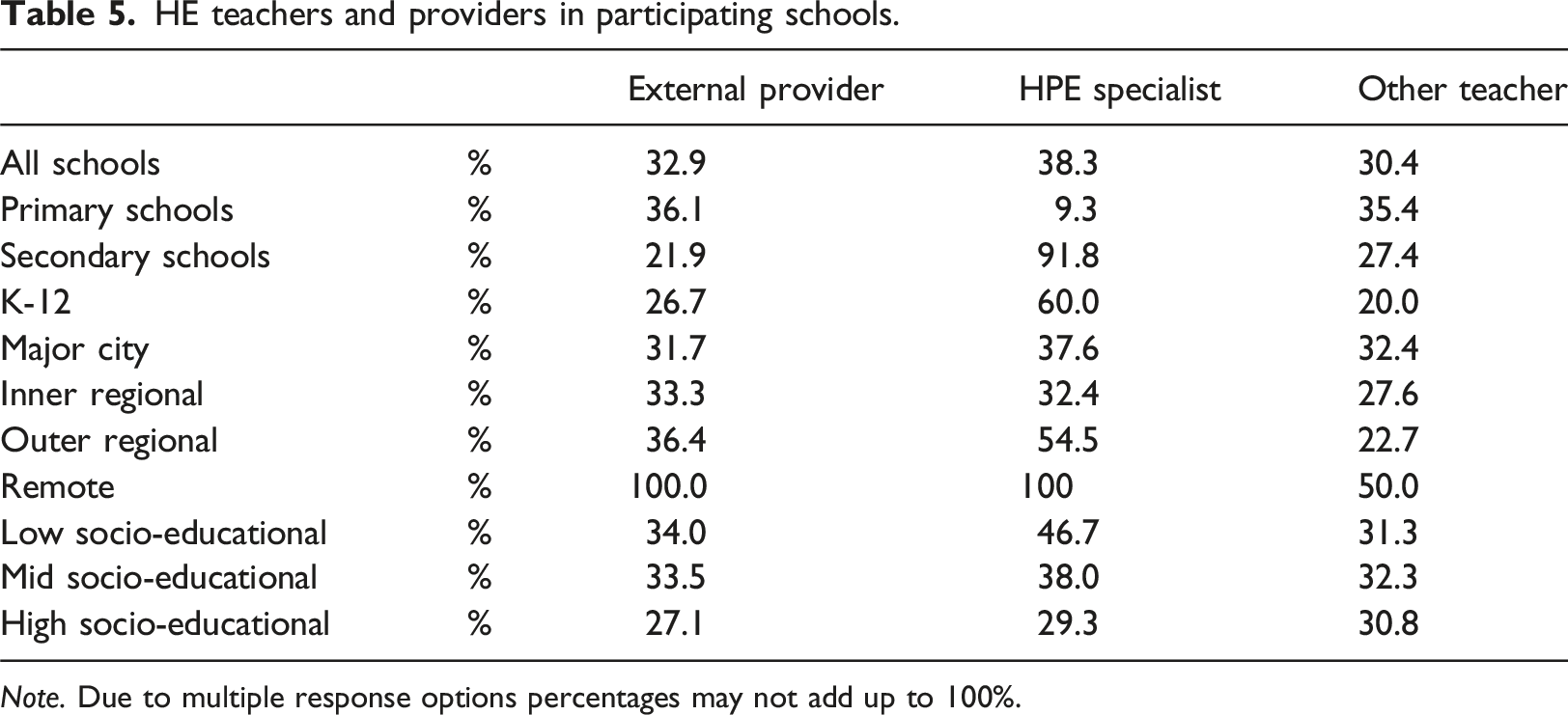
Most noteworthy is the lower proportion of schools reporting outsourcing of HE (33.29%) compared to PE (53.5%). Some qualitative responses highlighted a much lower, or ‘one-off’ nature of outsourcing health in some schools: ‘Health – One session a year’. (respondent 45483275); ‘Health – Healthy Harold, Interrelate, depends on what is being covered’ (respondent 27457654). Others reported outsourcing far more frequently: ‘Health would be 45 minutes once a week for each class generally one provider each term’. (respondent 26138710) and ‘One session a week per class for K–1 teach holistic health’ (respondent 32962809).
HE teachers and providers in participating schools.
Note. Due to multiple response options percentages may not add up to 100%.
It is unclear why there is less specialist teaching of HE than PE. It is also unclear why there is less engagement of external providers for HE. A lack of providers could explain this, or it may also be explained by generalist teachers’ teacher efficacy (Cruickshank et al., 2021), where teachers feel more competent and confident in theoretical HE lessons rather than the practical environment of PE, reducing the need for outsourcing. Further research is needed to explore this further.
Teaching and delivering PE
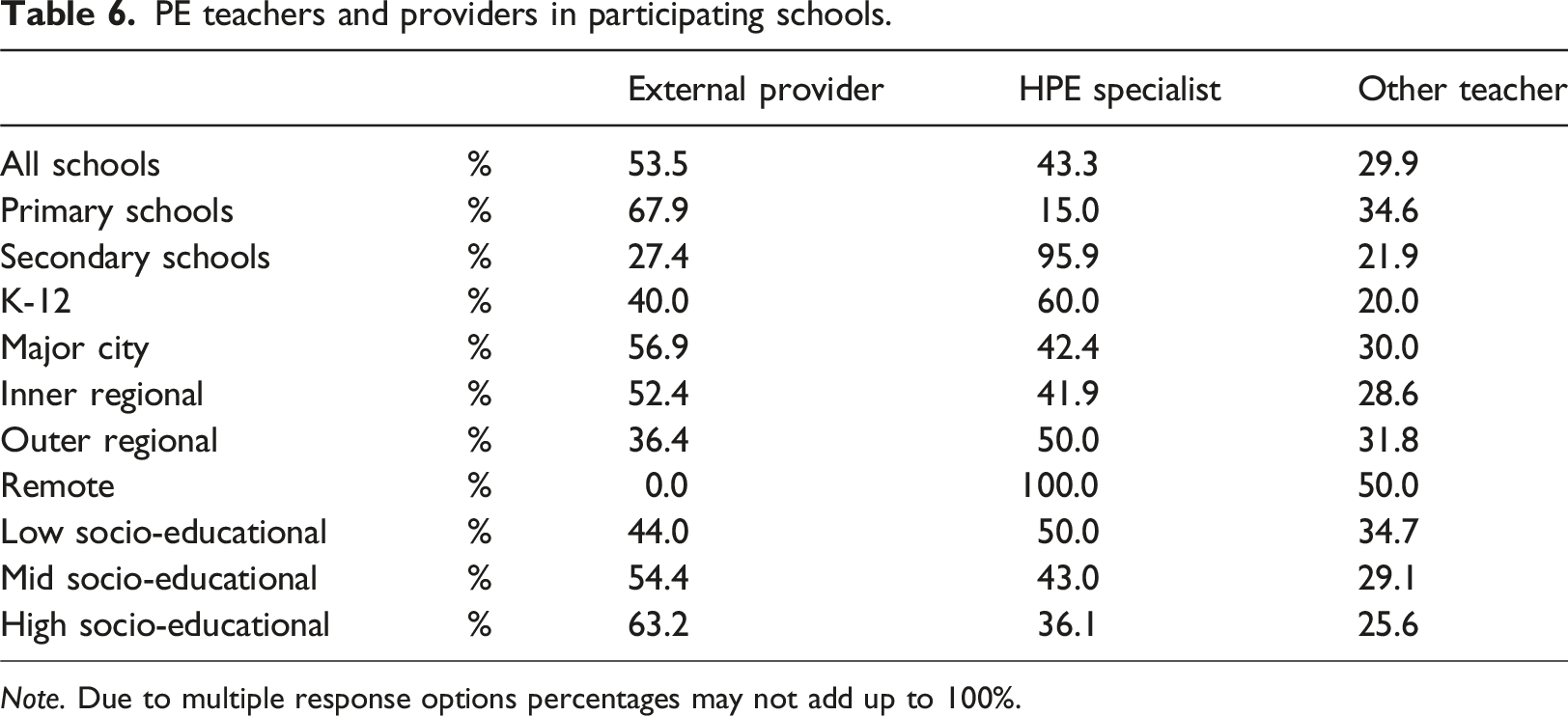
PE teachers and providers in participating schools.
Note. Due to multiple response options percentages may not add up to 100%.
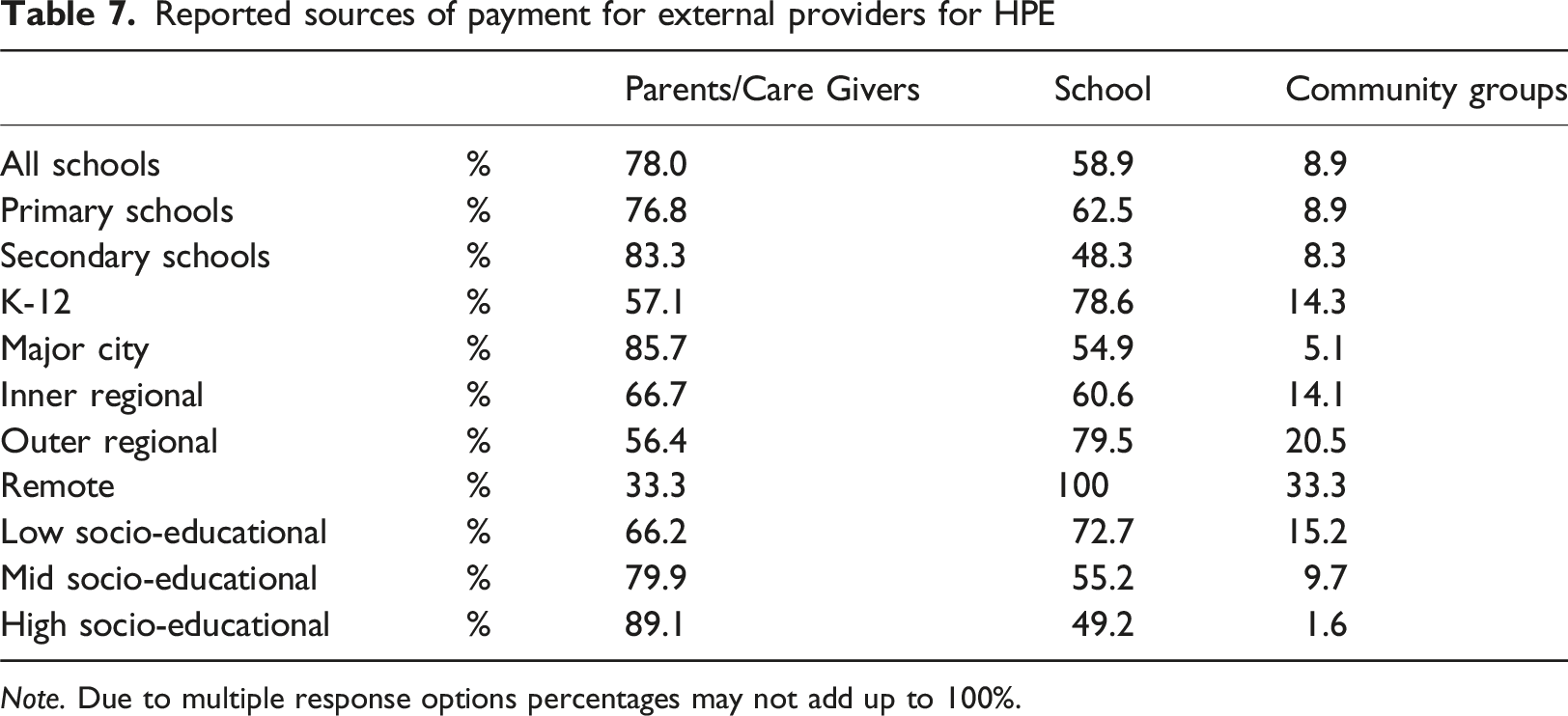
Reported sources of payment for external providers for HPE
Note. Due to multiple response options percentages may not add up to 100%.
Primary teachers described typical engagement of external providers as: ‘One lesson a week for PE. The provider we use runs different programs for different stages. I have to supervise but don’t teach’. (44236701), ‘PE – 1, 40 min lesson per week. Company comes in with equipment and young university students to run different activities. They also assess our students for us’. (respondent 27457654) and ‘PE would be 45 minutes once a week for each class generally one provider each term. This may happen for two terms a year. X company run a number of different PE programs, a different one each term’. (respondent 26138710).
Teacher efficacy could explain this disparity, as secondary schools employ more HPE specialist teachers with specialist training and pedagogical knowledge, which increases teacher efficacy in implementing PE and may result in less need for external providers (Spittle, Spittle, & Itoh, 2022). Primary schools have comparatively fewer HPE specialists and instead have generalist teachers who have reported lacking the necessary confidence and competence to provide quality HPE lessons (Morgan & Hansen, 2008; Williams et al., 2011). Lower teacher efficacy may increase the likelihood of outsourcing of PE to external providers.
With increased remoteness, the proportion of specialised HPE teachers employed to deliver PE increased, and the outsourcing of PE decreased (Table 6). No remote schools outsourced PE; this may be due to a lack of access, as other researchers have reported schools in remote areas lack access to services and resources (Guenther et al., 2014). Low-SEdS schools reported higher employment of specialised HPE teachers to teach PE. In contrast, the proportion of High SEdS schools who reported using external providers for at least some of their PE teaching appeared higher than the proportion of Mid and Low SEds schools who outsourced PE teaching.
Outsourcing: Payment and student participation
Outsourcing HPE incurs costs, and schools typically engaged private or public corporations, not government agencies. This section reports on who is incurring the cost when schools choose to outsource, whether students whose parent/carer were unable to make payment continued to participate in HPE, and whether students experienced differential treatment, or exclusion from lessons.
The Education Act 1990 (NSW) states that core curriculum is to be delivered free of charge in NSW. Since HPE is a compulsory curriculum subject, this means that it should not incur any charge for ‘minimum’ curriculum lessons. Additionally, policy notes that ‘principals will ensure that no student or family suffers any discrimination or embarrassment over failure to make a voluntary or subject contribution. Confidentiality, privacy and dignity must always be maintained concerning contributions’ (NSW Department of Education, 2020; para. 1).
Despite these legislative and policy positions, respondents frequently reported that the outsourcing of HPE did come at a financial cost: ‘We use external providers …This involves liaising with local businesses and/or sporting providers, creation of permission notes and costing, allocation and/or purchasing of equipment, timetabling and supervision of programs’ (respondent 29871120) and ‘Term 1 and Term 4. Cost $45 for one term, $80 for two’ (respondent 30160227).
Source of payment for providers
Among schools who reported outsourcing HPE (373 of the 556 respondents), parents were the most commonly reported source of payment (78%, n = 291 schools), while school finances (59%, n = 220) and community groups (9%, n = 34) were also reported as contributing to payments.
Parents/carers were the most common financial contributor for outsourced HPE in both primary and secondary schools. In contrast, K-12 schools reported the school as the primary financial contributor to external providers, which may be due to their lower SEdS relative to the other schools.
The higher the SEdS of the school, the higher the proportion of schools reporting that parents provided payment, while lower-SEdS schools relied more on schools and community groups providing payment. Despite this, two-thirds of low-SEdS schools still reported that parents provided payment for outsourced HPE. Overall, a large majority of schools required parents/carers to pay for outsourcing to fulfil the minimum requirements of the mandatory curriculum.
In major cities, parents remained the most common source of payment, this decreased with increasing remoteness, dropping from 85.7% for major-city schools to 66.7% in inner-regional schools, 56.4% in outer-regional schools, and even further to 33.3% in remote schools. An opposite trend occurred for reported payments by schools and community groups. The proportions reported tended to be higher for more remote schools, with remote areas reporting the highest payment rate by the school (100%) and community groups (33.3%). Regional and remote schools reported higher engagement of community groups to deliver HE, which may explain the differences seen here.
Student participation
In the current study, 67% (n = 373) of schools reported outsourcing lessons an, 52% (290) of schools reported that parents/caregivers pay for external providers. In such a context, it is important to understand what happens to student participation if parents/caregivers do not pay, particularly as research warns that students who have negative experiences in HPE, such as feeling excluded, are less likely to be physically active adults (Cardinal et al., 2013). Not much is currently known about what lessons or alternatives students are offered if their parents do not pay or do not provide permission for external provision of HPE.
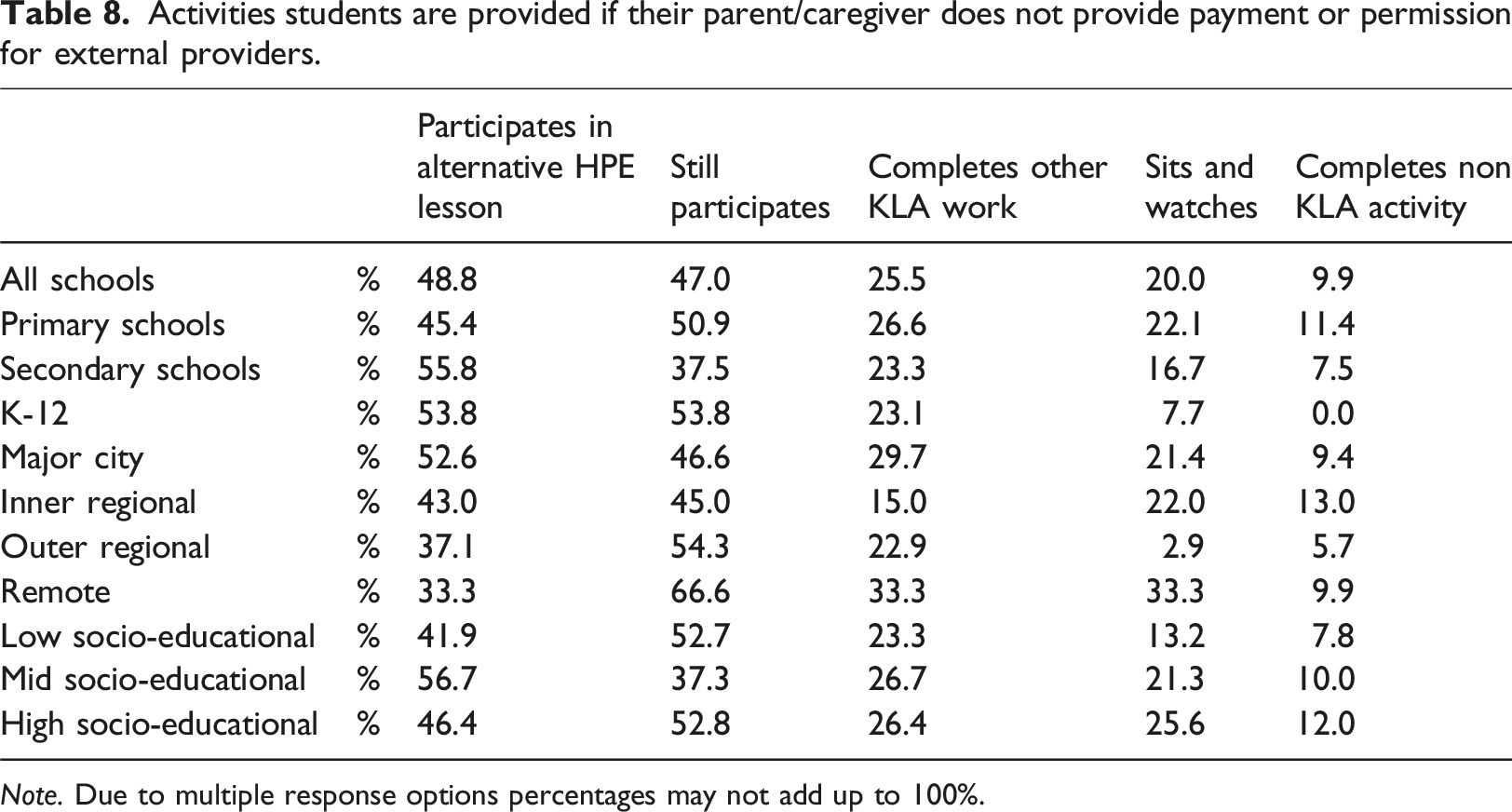
Activities students are provided if their parent/caregiver does not provide payment or permission for external providers.
Note. Due to multiple response options percentages may not add up to 100%.
A quarter (25.5%) of schools also reported that students without payment completed work for another KLA. One in ten schools reported that students completed a non-KLA activity if parents/caregivers did not provide payment or permission. The proportion of High-SEds schools that followed this approach was higher than among other schools.
One in five schools (20%) reported that students ‘sit and watch’ if parents/caregivers did not provide payment or permission for outsourced lessons. Again, the higher the schools SEdS, the higher the proportion of schools that employed a ‘sit and watch’ arrangement. Outer-regional schools reported the lowest levels of arrangements wherein students had to sit and watch an outsourced lesson, with only 2.9% reporting this.
Some schools also reported removing students from lessons due ‘to no payment’ (respondent 45546005) and ‘non-payment by parents’ (respondent 30194812). These findings echo literature on students missing out on full educational participation due to costs that parents and caregivers may not be able to afford, and a large evidence-base highlighting how poverty negatively impacts academic achievement, school, and health outcomes (Bond & Horn, 2009). Students sitting and watching, completing other KLA work, or completing non-KLA work, all have potential detrimental effects on students’ achievement and outcomes and raise serious questions regarding maintaining ‘confidentiality, privacy, and dignity’ for students whose families/carers cannot pay.
Implications and recommendations
The survey data provides insights into how HPE is staffed, taught, and delivered in government schools in NSW, and suggests the existence of some challenges, including prevalent out-of-field teaching and extremely high number of schools reporting outsourcing of at least some core HE and PE curricula. Both these issues raise concerns over standards of teaching, while the outsourcing also raises concerns regarding children’s legislative rights to ‘instruction provided in government schools… free of charge’, for student participation in ‘the minimum requirements of the curriculum’ (NSW Department of Education, 2020) without parents/carers incurring any costs. There should also be avoidance of ‘any discrimination or embarrassment over failure to make a voluntary or subject contribution’ (NSW Department of Education, 2020) for activities beyond the minimum requirements. Our findings suggest that in some schools the core HPE curriculum is being outsourced with practices that directly challenge these policy edicts. Further research is needed to look at this in more detail.
Methodologically, the survey, whilst a representative sample, was limited in relation to the depth of information collected and its reliance on the report of the school informant. In particular, data on outsourcing failed to measure the frequency and hours of outsourced lessons, this is because the study was framed broadly. Future research should provide additional detail on: the quantum of hours outsourced; the providers and nature of outsourced programs, also the background, specialisms and skill base of ‘other teachers’ teaching in HPE; the relevant skills and understanding of generalist teachers teaching HPE. Ideally, national teacher databases would also be able to monitor and provide additional insight into staffing issues in HPE, but scant research and reporting mean the current study provides the most representative and valid data currently available.
This study has provided evidence of how HPE is currently staffed in NSW government schools and we have also highlighted the lack of policy and attention this area has received. Similar observations have been made internationally for more than a decade, with concerns around ‘the lack of specialist or trained teachers’ creating ‘a significant barrier to inclusion’ and ‘persistent gaps between school physical education policies and actual implementation as well as a failure to strictly apply legislation on provision’ (UNESCO, 2015, p.9–10). It is important to monitor and strengthen the staffing and provision of HPE. This can be done in two ways.
Working toward all HPE programs being led and taught by qualified specialist HPE teachers
Employing HPE specialist teachers will improve the quality and equality of HPE across government schools in NSW. This recommendation is consistent with the literature showing that without specialised knowledge, teachers lack confidence, competence, and efficacy (DeCorby et al., 2005). Non-specialists also lack the training to plan and implement quality lessons that effectively use time, differentiate for different types of learners, and manage behaviour in a practical environment (Sears, 2021). This study found that 82.1% of NSW government primary schools do not have a HPE specialist teacher to teach HPE lessons. Research has shown a positive correlation between qualified specialised teachers and students learning experiences and improvement of student outcomes (Dinham et al., 2008; Lawson, 2020). In the short term, policy and resourcing support needs to be provided to generalist teachers-in-charge of HPE to build their capacity, while supply and capacity in specialised HPE teachers is further developed.
Longer-term planning is needed to progress toward all HPE classes being taught by specialists, through coordinated national strategy on teacher recruitment, retention, and distribution, that can address the current geographical and socio-educational trends and develop uniform provision of specialist teachers. There is also urgent need for a national teacher database to monitor and manage the distribution of specialist teachers across Australian schools, with the planned Australian Teacher Workforce Data project (Australian Institute for Teaching and School Leadership, 2022) incomplete and unable to report on teacher specialisms at the time of writing. Once a database is established, clear and transparent scheduled reporting should be used to monitor provision of specialist teachers to different school types and contexts over time. Other countries and jurisdictions may face similar challenges in this regard. The development of teacher specialism data bases would also allow for further research into the impact of specialism and this is worthy of further attention.
Qualifications, registration, and monitoring of external providers
Ensuring all students benefit from qualified and skilled HPE teachers means external providers must also be considered. We found that the majority (67%) of NSW government schools outsource at least some of their teaching of HPE.
The NSW Department of Education does provide information sheets and checklists to assist principals in making decisions on the employment of external providers. However, no explicit policy or standard exists that must be adhered to. Currently, the quality of HPE being delivered by these providers is not monitored, assured, or accredited. The frequency and quantum of hours schools outsource for HPE, and other KLAs, are also not being monitored. While a student in one school may experience external provision once or twice a year, a student in another school may experience this weekly. In addition, some students are currently not being provided HPE if their parent/caregiver does not provide payment. It is essential to ensure this exclusionary practice does not continue in schools.
While this study did not examine the quality of outsourced HPE, this is a concern for educational jurisdictions across Australia and worldwide (Spittle, Spittle, & Itoh, 2022; Williams et al., 2011). One possibility for ensuring quality is to require external provider staff, that frequently provide outsourced HPE to government schools (defined with minimum hours), to qualify and register as teachers. Investment in teacher standards and registration, without similar regulation of external provision, cannot provide complete quality assurance.
Conclusion
Ensuring all students can participate in HPE lessons taught by qualified and accredited teachers who understand the intricacies of HPE pedagogy is essential for educational equity; however, this study highlighted a lack of specialist-qualified teaching, and high-levels of provision by external providers. Such providers have unknown qualifications and are not required to comply with professional standards. In a substantial proportion of schools outsourced lessons involve exclusion of students who were unable to provide signed consent or payment for external provider classes. A long-term strategy is needed to redress this situation, provide universal access to specialised, qualified HPE teachers, and convey the value of, thus lifting its status in schools. Such a strategy would strengthen the HPE field, increasing its potential to prevent and ameliorate a raft of health problems through optimal and equitable education and the development of healthy lifestyle skills and habits.
Footnotes
Declaration of conflicting interests
The author(s) declared no potential conflicts of interest with respect to the research, authorship, and/or publication of this article.
Funding
The author(s) disclosed receipt of the following financial support for the research, authorship, and/or publication of this article: This work was supported by the Commonwealth Government PhD funding.
