



Abstract
This investigation comprised two studies that sought to identify the role of COVID-related disruptions in Australian university students’ academic motivation and engagement. Study 1 involved a dataset of 500 university students and examined the links between COVID-19 pandemic disruptions (remote and hybrid learning modes, lockdown, isolation) and students’ adaptive (e.g., planning and monitoring) and maladaptive (e.g., disengagement) dimensions of the Motivation and Engagement Scale (MES). Study 2 compared the mean motivation and engagement of Study 1 participants with mean levels from four published pre-COVID-19 Australian studies (N = 55, N = 233, N = 420, N = 941 university students) that also used the MES. Study 1 showed that lockdown and isolation (and not remote/hybrid learning) were associated with problematic motivation and engagement—with lockdown and isolation effects particularly noteworthy for maladaptive motivation and engagement. Study 2 showed that relative to the four pre-COVID-19 samples, the COVID-19 pandemic sample experienced difficulties with motivation and engagement, and again particularly so on maladaptive dimensions.
Introduction
Research into the motivational impacts of the COVID-19 pandemic has been somewhat piecemeal and focused on a relatively narrow range of motivation and engagement factors. To more comprehensively examine the role of COVID-related disruptions in university students’ motivation and engagement, the present investigation adopts a multidimensional perspective. Identifying specific aspects of COVID-19-related disruptions that may be associated with specific facets of motivation and engagement provides direction for higher education practice aimed at optimizing university students’ academic development.
Following Liem and Martin (2012), the multidimensional Motivation and Engagement Wheel (Martin, 2009) was the focus of this investigation. As shown in Figure 1, the Wheel comprises 11 factors that are subsumed under four thematic categories: adaptive motivation (self-efficacy, valuing, mastery orientation), adaptive engagement (planning and monitoring, task management, persistence), maladaptive motivation (anxiety, failure avoidance, uncertain control), and maladaptive engagement (self-handicapping, disengagement). The Wheel is aligned with conceptualizing by Pintrich (2003) who identified key areas for an integrative motivational science pertaining to theories of self-efficacy, attributions, valuing, control, self-determination, goal orientation, self-regulation, need achievement, and self-worth. The Wheel is one effort towards addressing the sometimes diffuse, piecemeal, and fragmented nature of motivational theorizing and measurement that has plagued the field (Reschly & Christenson, 2012; Wigfield & Koenka, 2020; Wong & Liem, 2021)—and offers this study a cohesive and comprehensive perspective on COVID-19 pandemic impacts from a motivation and engagement perspective. Supplementary Materials provides more detail on the theoretical foundations and development of the Wheel. Motivation and Engagement Wheel (reproduced with permission from www.lifelongachievement.com).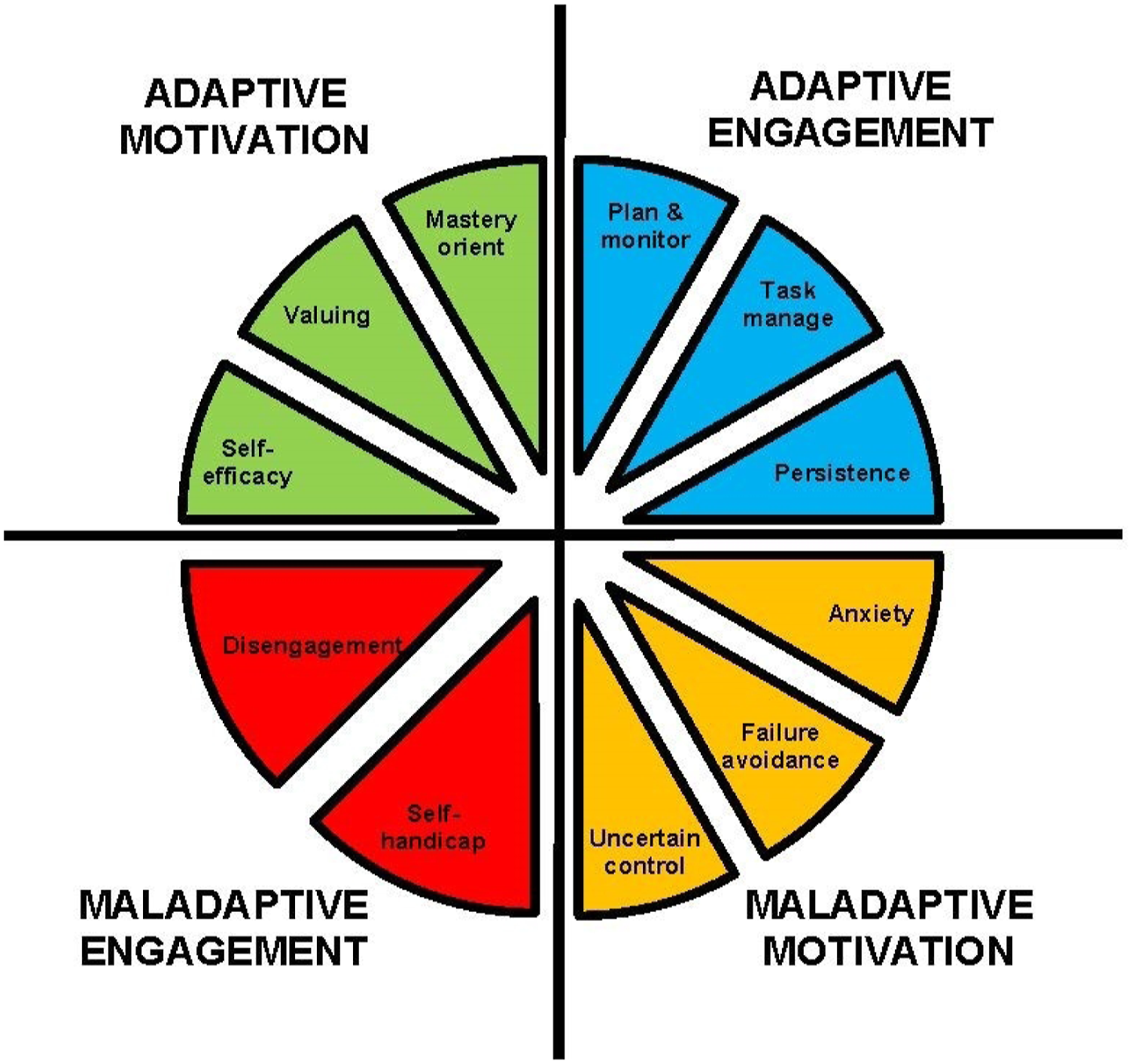
Two studies are conducted in this investigation. Study 1 collected data from 500 university students and investigated the extent to which lockdown, isolation, and remote/hybrid learning were associated with their motivation and engagement. Study 2 compared the Study 1 scores with scores on the same factors from four published pre-COVID-19 studies of university students. Lockdown, isolation, and remote/hybrid learning are obviously related, but they are not mutually exclusive. A student can be in lockdown, but not in isolation; in isolation, but not in lockdown; in lockdown, but not in fully remote learning mode; or experiencing none of these. To gain a sense of the unique role of each of these, it is imperative to apply multivariate approaches where they are all included as correlated predictors of motivation and engagement—as was the focus in this investigation. Approaching the research in this way meant that variance shared between one factor (e.g., lockdown) and other factors (isolation and remote/hybrid learning) was partialled out and the unique role of that factor (lockdown) in motivation and engagement could be better identified.
COVID-Related Disruptions and their Impacts on Students
Lockdown and Isolation
In most countries, university students have experienced some form of lockdown and/or isolation as a result of the COVID-19 pandemic. In fact, “lockdown” was declared the 2020 “word of the year” by the Collins Dictionary. Lockdown refers to “the imposition of stringent restrictions on travel, social interaction, and access to public spaces” (Collins Dictionary, 2020). Lockdown tends to be imposed geographically, such that particular areas (e.g., suburbs, local government areas, and cities.) have mandated restrictions imposed on them. Isolation refers to even more stringent restrictions and typically is containment to a single place of residence (or equivalent) with little or no freedom to leave the premises for any reason or any time. Isolation separates people diagnosed with COVID-19 from people who are not diagnosed with COVID-19, and in the case of quarantine, separates and restricts the movement of people who were exposed to COVID-19 to see if they contract COVID-19 (U.S. Centers for Disease Control and Prevention, 2023).
Among university students, findings suggest negative impacts of lockdown on study habits and difficulties in managing workload (Aristeidou & Cross, 2021). Significant student dissatisfaction with learning during lockdown has been reported and attributed partly to reduced focus when isolated at home (Maqableh & Alia, 2021). Negative effects on perceived competence have also been demonstrated (Alemany-Arrebola et al., 2020; Hilpert et al., 2021). Biswas and Biswas (2021; see also Akpınar, 2021; Commodari et al., 2021) reported that a majority of their university participants experienced anxiety due to lockdown, while Hong et al. (2021) showed that lockdown adversely impacted self-efficacy, and Gaeta et al. (2021) found mixed motivation effects among university students in lockdown. Alongside these academic findings, lockdown, isolation, and related social dislocation are also associated with poor mental health outcomes such as loneliness, depression, and addiction (Catling et al., 2022). Taken together, it may be tentatively hypothesized that lockdown and isolation are associated with lower levels of adaptive motivation and engagement and higher levels of maladaptive motivation and engagement (Hypothesis 1).
Remote and Hybrid Learning
At the same time as university students experience mandated lockdown and isolation, it is also often the case that they have experienced periods of remote learning. Remote learning involves the use of laptops, desktop computers, tablets, mobile phones, personal digital assistants, and more (Sung et al., 2017) that is synchronous (real-time) instruction and/or asynchronous (recorded) instruction (Thalheimer, 2017). It comprises staged programs of instruction, animation, simulations, video instruction, gaming, collaborative resources, chat functions, etc. Instruction through these mediums is often “managed” through content and learning management systems (such as Moodle, Canvas, and Blackboard.).
Alongside remote learning, there has been an upward trend in hybrid (or blended) learning that balances remote and in-person learning modes. Meta-analysis has suggested that hybrid learning is superior to purely remote and in-person approaches (Means et al., 2010; see also Thalheimer, 2017). Others have shown that hybrid learning and in-person learning yield similar educational outcomes, while remote learning is associated with poorer outcomes (e.g., Alpert et al., 2016; Horita et al., 2021; Marzoli et al., 2021; Shin & Hickey, 2021). Escueta et al. (2017) showed that when remote and in-person modes were blended, effect sizes elevated to the same level as in-person modes. In related research, the “flipped classroom” blends online and in-person modes and meta-analysis suggests small positive effects for learning (Cheng et al., 2019); but the flipped classroom is a nascent area of investigation, and more research is needed.
Taken together, it appears that when an instructional mode involves remote (online) dimensions, the inclusion of an in-person component seems to yield educational outcomes that are superior to a fully remote mode. It is therefore hypothesized that remote learning (relative to hybrid and in-person learning) is associated with lower levels of adaptive motivation and engagement and higher levels of maladaptive motivation and engagement (Hypothesis 2). However, as with lockdown and isolation (Hypothesis 1), the evidence is piecemeal, often focused on narrow motivation and engagement measures, not always based on university students, and not controlled for diverse personal and background attributes. Hypothesis 2, then, is also tentative.
Disentangling Pre-COVID-19 Pandemic and COVID-19 Pandemic Motivation and Engagement
An ongoing question is whether there are differences between students’ pre-COVID-19 pandemic and COVID-19 pandemic academic outcomes, including their motivation and engagement. One way to answer this question is to investigate the specific COVID-related disruptions that may impact university students’ motivation and engagement. As detailed above, lockdown, isolation, and remote/hybrid learning are three such factors and Study 1 attends to these factors. It is also possible to infer from Study 1’s Hypotheses one and two to hypothesize that adaptive motivation and engagement will be lower (and maladaptive motivation and engagement will be higher) in COVID-19 pandemic samples when compared to pre-COVID-19 pandemic samples (Hypothesis 3). Study 1 administered an instrument to university students—the Motivation and Engagement Scale (MES; Martin, 2021)—that comprised measures that in Study 2 could be directly compared with published pre-COVID-19 pandemic studies of university students that administered the same MES instrument.
Aims of Studies One and Two
The present investigation comprised two studies that sought to identify the role of COVID-related disruptions in university students’ academic motivation and engagement. Study 1 comprised a dataset of university students and investigated the links between COVID-19 pandemic disruptions (remote and hybrid learning modes, lockdown, isolation) and students’ motivation and engagement. Study 2 compared the mean levels of motivation and engagement from the COVID-19 pandemic sample in Study 1 with the mean levels from four published pre-COVID-19 pandemic studies using the same motivation and engagement instrumentation. Three hypotheses were proposed.
Lockdown and isolation will be associated with lower levels of adaptive motivation and engagement, and higher levels of maladaptive motivation and engagement (Study 1).
Remote learning (relative to hybrid and in-person learning) will be associated with lower levels of adaptive motivation and engagement, and higher levels of maladaptive motivation and engagement (Study 1).
Relative to comparable pre-COVID-19 pandemic samples, the COVID-19 pandemic sample will demonstrate lower levels of adaptive motivation and engagement, and higher levels of maladaptive motivation and engagement (Study 2).
Study 1 Method
Participants
A total of 500 undergraduate students from 41 universities were recruited from all states in Australia (recruitment is described in Procedure below). Three-quarters (76%) were enrolled in urban universities and one-quarter (24%) in regional/rural universities. Areas of study were STEM (25% of students), Business (23%), Health (33%), Arts/Humanities (14%), or Other (5%). Just over half (52%) the students were learning in fully remote/online mode, 13% were learning in fully in-person mode, and 35% were learning in hybrid/blended mode (a mix of remote and in-person). A total of 64% of students reported being in mandated lockdown at the time of the survey. 12 percent were in mandated isolation at the time of the survey either because they were a (possible) close contact of a COVID case or were COVID-positive themselves. Approximately two-thirds (64%) of students were female. Students were in first Year (28%), second Year (29%), third Year (30%), and fourth-sixth Year (13%). The mean age was 20.31 years (SD = 1.55 years). All were “local” students (not overseas students) and all were enrolled full-time (see Procedure for screening rationale). 15 percent of students reported speaking a language other than English at home. The sample was slightly above the national mean for socio-economic status (SES; sample M = 1016, SD = 72; national M = 1000, SD = 100) based on the Australian Bureau of Statistics Index of Relative Socio-Economic Advantage and Disadvantage classification. The average university entrance score (based on students’ Year 12 school achievement) was in the 75th–80th percentile. These data are shared with another study investigating job demands-resources (JD-R) theory during the COVID-19 pandemic and the boosting and buffering roles of adaptability and fluid reasoning in predicting (via self-efficacy) class participation, aspirations, enjoyment, and disengagement (Martin et al., 2023).
Procedure
Students were recruited through Qualtrics and their market research partners and invited to participate in an online survey. These companies curate a database of a broad sample of the Australian population. The students approached for this study had previously formally registered their interest in studies run by Qualtrics and their partners. Indeed, given that this study was about students who were in various stages of lockdown and isolation due to the COVID-19 pandemic, this approach to recruitment was ideal. The sample was recruited with a view to gaining representative Australian undergraduate responses—but ultimately, it must be recognized as a self-selected sample. That said, in considering how representative it is of the Australian undergraduate population, the following are noted: the gender composition is broadly similar (64% female for this study, 59% female for the population; Universities Australia, 2022); the non-urban representation is broadly similar (24% for this study, 19% for the population; Universities Australia, 2022); 41 of Australia’s 43 universities are represented; there are relatively equal proportions of students in each of first to third year with a tapering of enrollments in fourth year and beyond as students complete their degree, in line with the population (Universities Australia, 2022); and the average Year 12 achievement was in the 75th–80th percentile for this study, in line with the 70–80 tertiary entry rank identified as the range for most Australian universities (University Reviews, 2023). Taken together, it is suggested the present sample of undergraduate students is broadly representative of the Australian undergraduate population.
An invitation to participate was distributed via email (or notification by app) to a sampling frame of Australian university students. Students clicked on the survey URL to provide consent and then participate. Screening questions were then asked to ensure students were currently enrolled undergraduates, “local” (not overseas students, as it was unclear how representative the overseas students were after accounting for those who had left the country at that time of the pandemic or could not enter the country due to entry restrictions at the time), and studying full-time. If students did not meet these criteria, they were thanked and withdrawn. If students completed the survey very quickly (less than 1/3 of the median time for completion) or responded identically across many items in a row, they were excluded from the final sample—as these were taken as indications the survey items were read too quickly for adequate consideration (in the case of rapid completion) or not answered genuinely (in the case of identical responses given that some items were positive and some items were negative in valence). IP addresses of students were also cross-referenced with sociodemographic attributes to screen out any duplicate respondents. The survey was completed in a single sitting. The UNSW Human Research Ethics Committee approved the research (#HC210552).
Materials
COVID-related disruption predictors comprised learning mode (remote, hybrid), lockdown status, and isolation status. The outcome factors were all 11 facets of the Motivation and Engagement Wheel (Figure 1). Descriptive statistics for the COVID-related predictors were described above in Participants. Descriptive, reliability, and factor analytic statistics for the motivation and engagement factors are presented in Supplementary Materials Table S1. Also assessed were background covariates, comprising gender, age, language background, socio-economic status, year of candidature, university location, area of study, and prior achievement—all described below.
COVID-Related Predictors
Remote learning (0 = No, 1 = Yes) and hybrid learning (0 = No, 1 = Yes) were dummy coded variables, with in-person learning as the reference category. Lockdown status was a dichotomous item (0 = No, 1 = Yes) indicating whether students were in a mandated lockdown at the time of the survey. Isolation status was a dichotomous item (0 = No, 1 = Yes) indicating whether students were in a mandated quarantine or self-isolation (at home or elsewhere) at the time of the survey due to exposure or possible exposure to COVID-19.
Motivation and engagement were assessed using the Motivation and Engagement Scale—University/College (MES-UC; Martin, 2021), an instrument developed to measure each part of the Motivation and Engagement Wheel (Figure 1). Adaptive motivation was assessed via self-efficacy (e.g., If I try hard, I believe I can do my university work well), mastery orientation (e.g., I feel very pleased with myself when I do well at university by working hard), and valuing (e.g., Learning at university is important). Adaptive engagement was assessed via planning and monitoring (e.g., I try to plan things out before I start working on my assignments), persistence (e.g., If I don’t give up, I believe I can do difficult university work), and task management (e.g., When I study, I usually try to find a place where I can study well). Maladaptive motivation was measured with anxiety (e.g., When exams and assignments are coming up, I worry a lot), failure avoidance (e.g., Often the main reason I work at school is because I don’t want to disappoint others [e.g., lecturers, family, partner]), and uncertain control (e.g., I’m often unsure how I can avoid doing poorly at university). Maladaptive engagement was assessed via disengagement (e.g., Each week I’m trying less and less) and self-handicapping (e.g., I sometimes put assignments and study off until the last moment, so I have an excuse if I don’t do so well). Each factor was operationalized with four items (hence, it is a 44-item instrument) rated on a scale of 1 (Strongly Disagree) to 7 (Strongly Agree). Prior research into the MES-UC has shown a strong factor structure, reliable and normally distributed dimensions, and significant associations with diverse academic outcomes (Liem & Martin, 2012; Martin, 2009).
Background Covariates
There are numerous background and contextual attributes (covariates) that must be included in modeling in order to ascertain the unique role of COVID-related disruptions in students’ motivation and engagement. Supplementary Materials describes these covariates and provides the rationale and evidence for including these factors in the present investigation.
Data Analysis
The main analyses for Study 1 comprised confirmatory factor analysis (CFA) and structural equation modeling (SEM), conducted using Mplus version 8.7 (Muthén & Muthén, 2017). Maximum likelihood robust to non-normality (MLR) was the estimator employed so that parameter estimates with standard errors and a chi-square test statistic were robust to non-normality (Muthén & Muthén, 2017). To assess model fit, the Comparative Fit Index (CFI) and the Root Mean Square Error of Approximation (RMSEA) were inspected, with (respectively) CFI >.90 and RMSEA <.08 indicating acceptable fit (Hu & Bentler, 1999; Kline, 2016). Less than 1% (.05%) of the data were missing and managed using the Mplus default, Full Information Maximum Likelihood (FIML; Arbuckle, 1996). To adjust standard errors for the clustering of students within universities, the Mplus ‘Type = Complex’ option was employed (the university attended by the student was set as the cluster variable).
For the CFA, the four COVID-related predictors, the 11 motivation and engagement factors, and the 10 background covariates were included—thus, a 25-factor CFA. The multi-item motivation and engagement measures were estimated as latent factors. All COVID-related and background measures were single item indicators and thus loadings were set at 1.00 and uniquenesses at 0. This CFA was also the measurement component underlying the hypothesized SEM (Figure 2). In this SEM, the four COVID-related variables and all background attributes were correlated predictors of the 11 latent motivation and engagement factors. This set-up is known as a multiple-indicator-multiple-cause (MIMIC) model. Kaplan (2000) suggested the MIMIC approach, which is similar to a regression model in which latent variables (e.g., multiple dimensions of student motivation and engagement) are “caused” by discrete grouping variables (e.g., lockdown status, etc.) that are represented by a single indicator. For effect sizes, standardized beta coefficients (βs) at or over .05 were deemed to be small, βs at or over .10 were medium, and βs at or over .25 were large (Keith, 2019). Hypothesised model for Study 1.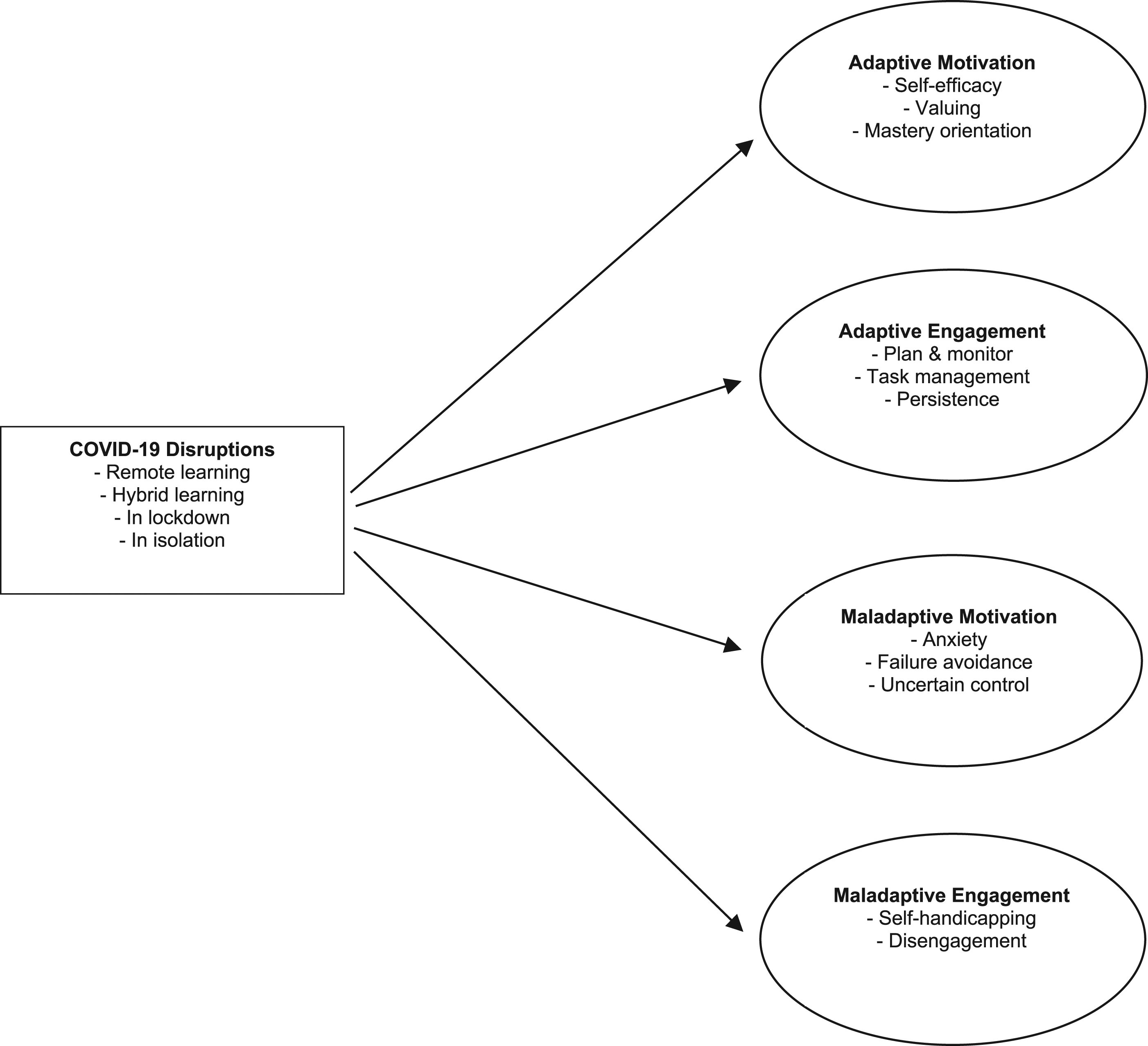
Study 1 Results
Descriptive, Measurement, and Correlation Statistics
Means, standard deviations, skewness, kurtosis, and reliability for each motivation and engagement factor are shown in Supplementary Materials Table S1 (see Participants for covariate descriptives). The CFA yielded an acceptable fit to the data, χ2 = 2248.053, df = 1309, p < .001, CFI = .912, RMSEA = .038. Factor loading means and ranges are also shown in Table S1. The CFA generated bivariate correlations that are shown in Supplementary Materials Table S2. As shown in Table S2, there were numerous bivariate associations in the CFA that were preliminarily supportive of the links hypothesized in Figure 2. Multivariate analyses (via MIMIC modeling under SEM) thus proceeded to test the unique effects of these factors.
Central Hypothesized Model
Standardized Betas from SEM (Study 1).
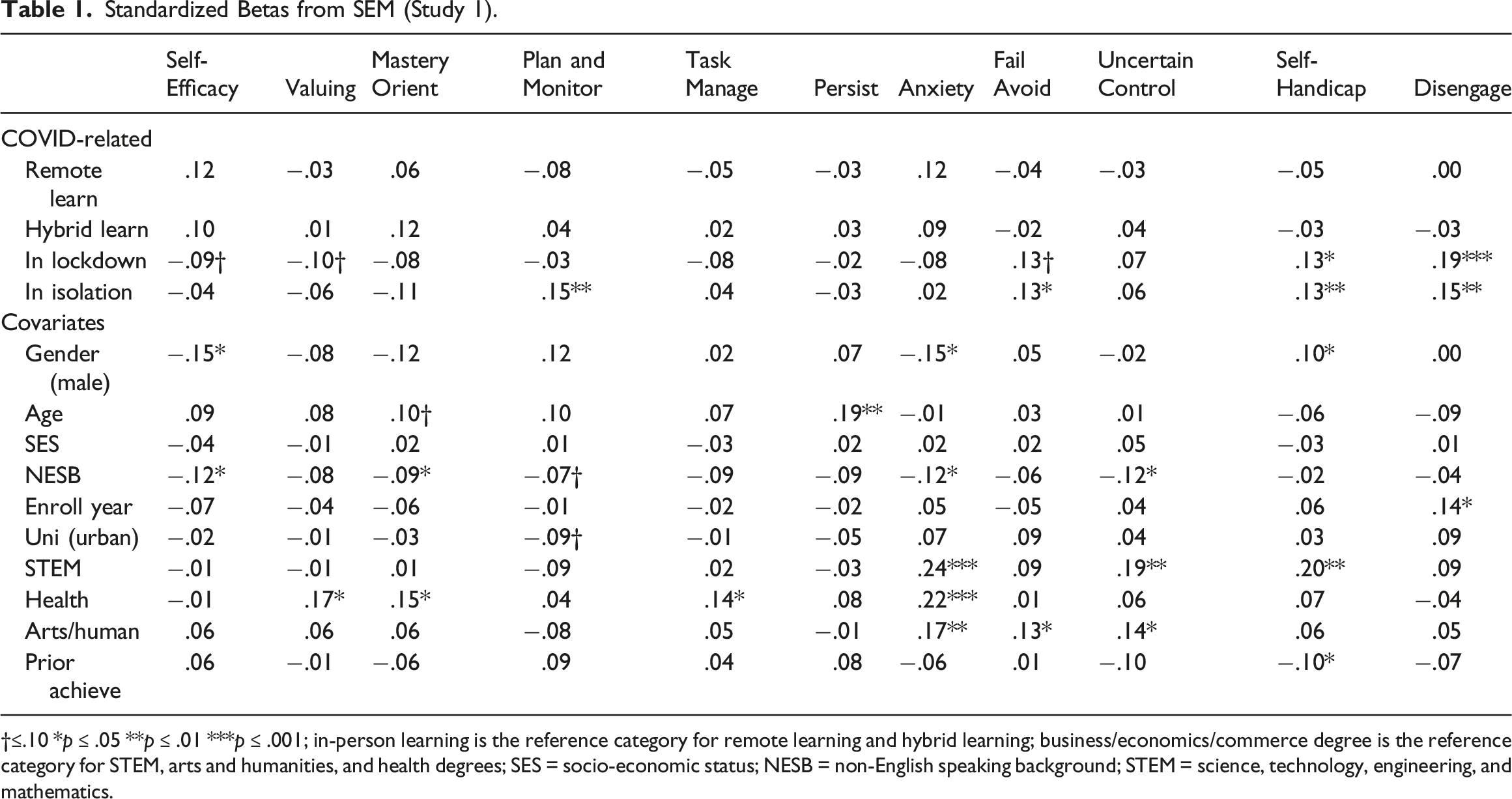
†≤.10 *p ≤ .05 **p ≤ .01 ***p ≤ .001; in-person learning is the reference category for remote learning and hybrid learning; business/economics/commerce degree is the reference category for STEM, arts and humanities, and health degrees; SES = socio-economic status; NESB = non-English speaking background; STEM = science, technology, engineering, and mathematics.
Study 2 Method
Participants and Procedure
Study 2 comprised the same 500 Australian undergraduate students from Study 1 (the COVID-19 pandemic sample) as well as data based on four pre-COVID-19 pandemic Australian samples drawn from previously published studies (Edgar, 2015; Edgar et al., 2019; Elphinstone & Tinker, 2017; Martin, 2009) that also administered the MES-UC. The Martin (2009) study comprised 420 undergraduate students enrolled in diverse subject areas (80% female; M = 21.47 years of age, SD = 6.62). A study by Edgar (2015) comprised 233 undergraduate physiotherapy students (65% female; M = 21.20 years of age, SD = 3.60). In 2017, Elphinstone and Tinker reported on 941 undergraduate students enrolled in diverse subject areas (58% female; M = 26.55 years of age, SD = 8.77). Finally, Edgar et al. (2019) conducted their study with 55 undergraduate students enrolled in physiotherapy (60% female; M = 19.91 years of age, SD = 5.32). It is recognized these samples are qualitatively different from Study 1—especially the health-based samples—but at the same time sufficiently aligned to draw tentative comparable inferences about the role of lockdown, etc. For example, the Study 2 samples are all Australian-based, all involve undergraduates, and all represent key subgroups of males and females, younger and older, etc. Notwithstanding this, Study 2 presents findings in respect to each of the samples separately so the reader may give relatively greater weighting to findings for samples that more closely resemble the Study 1 sample (such as the Martin, 2009 and the Elphinstone & Tinker, 2017 samples). The Procedure for the COVID-19 pandemic sample was described in Study 1. The Procedure for the four pre-COVID-19 pandemic Australian studies is available in the respective publications (Edgar, 2015; Edgar et al., 2019; Elphinstone & Tinker, 2017; Martin, 2009).
Materials and Data Analysis
Comparative Means Across Different Publications (Study 2).
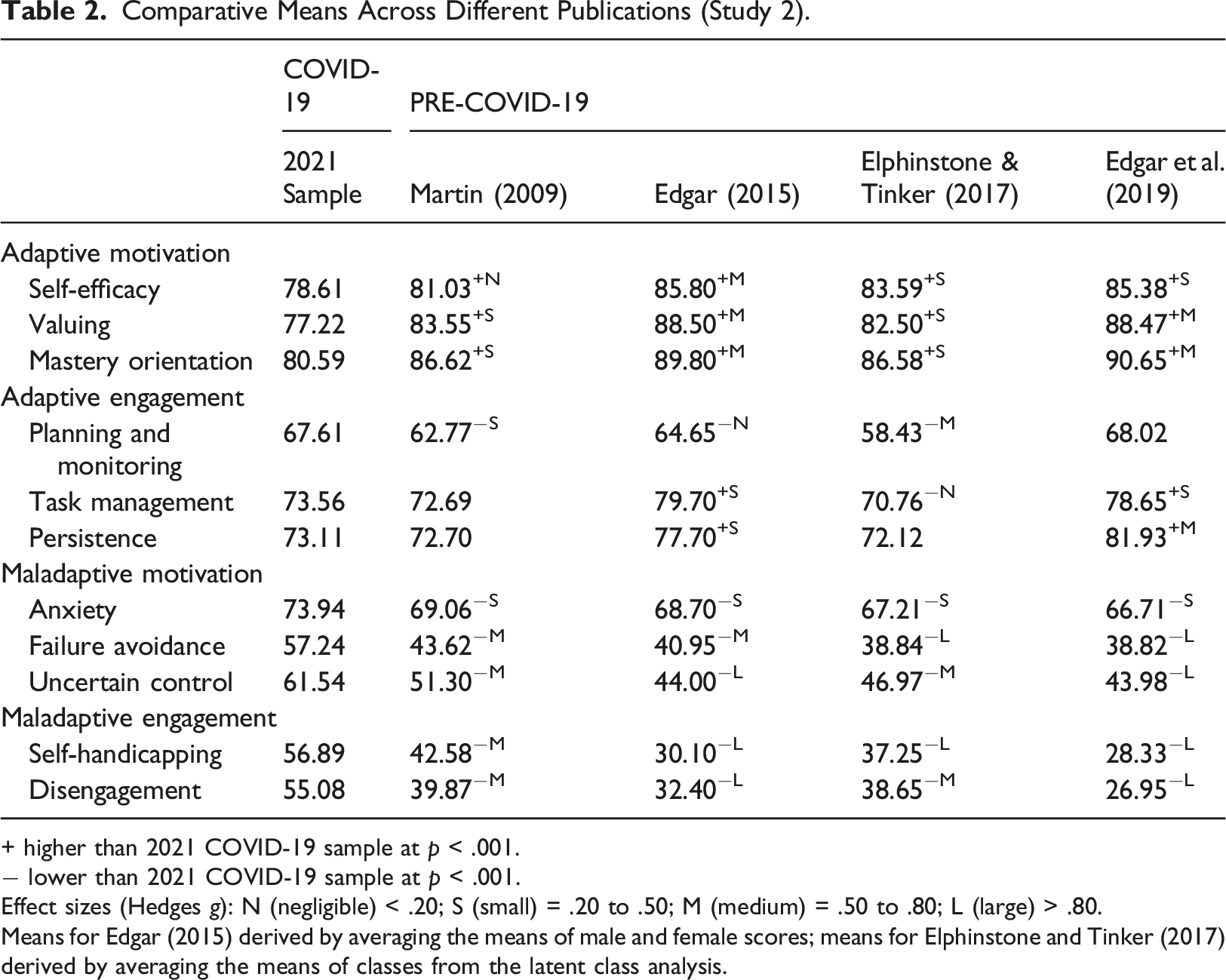
+ higher than 2021 COVID-19 sample at p < .001.
− lower than 2021 COVID-19 sample at p < .001.
Effect sizes (Hedges g): N (negligible) < .20; S (small) = .20 to .50; M (medium) = .50 to .80; L (large) > .80.
Means for Edgar (2015) derived by averaging the means of male and female scores; means for Elphinstone and Tinker (2017) derived by averaging the means of classes from the latent class analysis.
Study 2 Results
Table 2 presents the (Study 1) COVID-19 pandemic Australian sample means and the means available from the four pre-COVID pandemic Australian studies administering the MES-UC. Findings from the t-tests (and associated effect sizes) are also presented in Table 2. The dominant finding was that with few exceptions, the COVID-19 pandemic sample scored significantly lower (p < .001) on the adaptive motivation and engagement factors, and significantly higher (p < .001) on the maladaptive motivation and engagement factors. In alignment with Study 1, the effect sizes were larger for the maladaptive motivation and engagement factors. Interestingly, counter to the direction of overall findings, the COVID-19 pandemic sample scored significantly higher (p < .001) on planning and monitoring than the pre-COVID pandemic samples.
Discussion
In partial support of Hypothesis 1, Study 1 found that lockdown and isolation were associated with higher levels of maladaptive motivation and engagement (but generally null effects for adaptive dimensions). There was no support for Hypothesis 2, with Study 1 results showing no significant association between remote or hybrid learning and students’ motivation and engagement after controlling for the effects of lockdown and isolation. Hypothesis 3 in Study 2 was supported such that the COVID-19 pandemic sample demonstrated lower levels of adaptive motivation and engagement, and higher levels of maladaptive motivation and engagement than comparable pre-COVID-19 pandemic samples. Interestingly, although the bulk of COVID-related disruption effects were associated with higher levels of maladaptive motivation and engagement, across both studies these disruptions were also associated with higher levels of planning and monitoring (an adaptive factor). These findings suggest there are distinct COVID-related disruptions that are implicated in dimensions of university students’ motivation and engagement in different ways. Salient findings are now discussed.
Findings of Note
A major finding in Study 1 was that both lockdown and isolation predicted higher levels of maladaptive motivation and engagement (especially self-handicapping and disengagement). Importantly, because both these factors were modeled as correlated predictors of motivation and engagement, they can be considered unique effects. Thus, beyond the effect of isolation, lockdown was significantly associated with maladaptive motivation and engagement; and, beyond the effect of lockdown, isolation was significantly associated with the same motivation and engagement factors. These findings are in broad alignment with other studies showing links between lockdown and/or isolation and students’ maladaptive motivational or social-emotional factors such as anxiety, dissatisfaction with learning, and negative mood, including depression and loneliness (e.g., Biswas & Biswas, 2021; Catling et al., 2022; Hong et al., 2021; Maqableh & Alia, 2021). The task now is to identify what specific aspects of lockdown and isolation led to their unique effects. Perhaps it is the extended nature of lockdown and the uncertainty of when it will be lifted that is associated with helplessness and higher disengagement (Martin, 2007; Peterson et al., 1993). Perhaps it is the very strict constraints of isolation, the adverse effects of having COVID-19 (if that is the reason for isolation), or the fear of contracting COVID-19 as a declared close contact that are associated with problematic motivation and engagement. It is also possible that the social dislocation of lockdown and isolation adversely impacted mental health (Catling et al., 2022) that has known implications for students’ motivation and engagement (Kotera et al., 2019).
Although it was hypothesized that remote learning (relative to hybrid and in-person learning) would be associated with lower motivation and engagement, Study 1 findings suggested this was not the case. After controlling for lockdown and isolation, there were no significant links between remote (or hybrid) learning and students’ motivation and engagement. This runs counter to some prior research which has found remote learning associated with poorer academic outcomes (Alpert et al., 2016), elevated academic distress (Horita et al., 2021), decreased motivation (Marzoli et al., 2021), and learning loss (Shin & Hickey, 2021). One possible reason for the null findings is that there are many specific factors implicated in how remote learning impacts motivation and engagement (Australian Academy of Science, 2020) and this study’s overarching variable in the form of “remote learning” did not capture sufficiently nuanced variance that may explain motivation and engagement. Some specific factors potentially implicated in remote learning include students’ technological competence, their access to technology, instructional quality, and any additional learning needs (Australian Academy of Science, 2020; Martin, Collie, & Nagy, 2021). A second reason for the null result could be because this study (unlike most others) controlled for variance attributable to lockdown and isolation. Table S2 (Supplementary Materials) shows that there were significant correlations between remote (negative links) learning and students’ motivation and engagement—but when they were included in multivariate modeling alongside lockdown and isolation, only lockdown and isolation were significant predictors of motivation and engagement, not remote learning. A third explanation may lie in Hattie’s (2021) review which concluded there were generally small negative or null COVID-related effects on learning and that these were a testament to the expertise of teachers in skillfully adjusting pedagogy to meet learner needs. Thus, whereas educators cannot remove lockdown or isolation from students’ lives (hence, their negative effects—see above), they can deliver remote instruction in effective ways to level the playing field between remote and in-person learning.
With the exception of planning and monitoring (discussed below), there were no significant links between lockdown and isolation and the adaptive dimensions of motivation and engagement in Study 1. Lockdown and isolation effects were significantly associated with maladaptive dimensions. To explain this, it may be helpful to consider this finding from an inverse perspective: having one’s independence (i.e., not in lockdown or isolation) is a protective factor against maladaptive motivation and engagement that would otherwise be a threat during the COVID-19 pandemic. An expanded application of this interpretation may be brought to Study 2 which showed that the largest effect sizes were for the maladaptive motivation and engagement of the COVID-19 pandemic sample. Thus, when considered in the context of pre-COVID-19 and COVID-19 pandemic samples, pre-pandemic independence seemed to be something of a protective factor against high levels of maladaptive motivation and engagement.
Interestingly, in Study 1 and in Study 2 there was a set of findings that went against the overall pattern of results: in Study 1, isolation significantly predicted higher planning and monitoring scores (not in isolation, M = 67, SD = 17; in isolation, M = 74, SD = 16); in Study 2, the COVID-19 pandemic sample scored significantly higher on planning and monitoring than three of the four pre-COVID-19 pandemic samples. During the COVID-19 pandemic, universities have experienced significant disruptions in typical on-campus routines (Friday, 2021). In pre-pandemic days there was a structured and predictably timetabled routine and rhythm to on-campus academic life as a university student, usually by way of a traditional delivery of on-campus lectures, labs, and tutorials where students’ days were quite explicitly planned for, structured, and shepherded. The pandemic necessitated quite radical shifts in these routines and rhythms and demanded more self-directed planning and monitoring of students in their own time in their own homes as the university terrain shifted. This may be a reason why planning and monitoring is the one factor where isolation yielded a positive effect (Study 1) and the COVID-19 pandemic sample outperformed pre-COVID-19 pandemic samples (Study 2). Although this finding runs counter to reports of struggles with self-regulation among university students in lockdown and isolation (e.g., Boshoff-Knoetze et al., 2022), there is a small body of evidence suggesting some elements of university students’ self-regulation (such as planning) were not adversely affected by lockdown. For example, in a study of music undergraduates, Nusseck and Spahn (2021) found that students made significant efforts to plan a framework for maintaining learning progress during lockdown.
Implications for Researchers and Practitioners
The findings have implications for research, theory, and practice in higher education. As noted above, lockdown and isolation were uniquely associated with motivation and engagement. There is now a need for research to identify exactly what aspects of lockdown and isolation may be yielding distinct motivation and engagement effects. It was speculated above that the extended nature and uncertain end of lockdown may be impediments to students’ motivation and engagement; whereas it may be the strict constraints of isolation and its more proximal links to COVID-19 (e.g., as a COVID sufferer or as a close contact) that are impediments. When research disentangles these elements of lockdown and isolation, practitioners have better direction for targeting educational intervention to boost and sustain students’ motivation and engagement in the face of lockdown and isolation.
In relation to remote and hybrid learning, it was speculated that the null findings are possibly due to the many factors implicated in how remote and hybrid learning impact motivation and engagement (Australian Academy of Science, 2020). Because this study operationalized these constructs in overarching ways (one variable for “remote learning” and one for “hybrid learning”), it did not capture specific elements subsumed under these constructs that may in fact be associated with students’ motivation and engagement. Future research should explore more specifically for the impacts of factors such as students’ technological competence, their access to technology and instructional quality (Australian Academy of Science, 2020; Martin, Collie, & Nagy, 2021).
Study 1 and Study 2 suggested that COVID-related disruptions were consistently associated with particularly problematic dimensions of the Wheel: self-handicapping and disengagement. Unfortunately, of all the maladaptive Wheel factors, these two are associated with the lowest levels of academic enjoyment, aspirations, and participation (Liem & Martin, 2012). Therefore, at the same time as addressing the learning impediments of lockdown and isolation, it will be helpful to also address students’ self-handicapping and disengagement. These two factors have been drawn together under need achievement and self-worth theories and these theories have informed practical intervention (Covington, 2000; Martin & Marsh, 2003). For example, under these two theories, fear of failure is an influential driver of students’ tendency to self-handicap and inclination to disengage. To reduce fear of failure, educators can make it clear to students that mistakes, poor performance, and failure provide useful information on how to improve and do not imply a lack of self-worth (Covington, 2000). Educators might also look to shape students’ perceptions of success so that success is seen more in terms of personal improvement than outperforming others (Martin, Burns, et al., 2021). By instilling more positive constructions of failure and poor performance, and also framing success in more achievable ways, students are less inclined towards problematic failure dynamics in the forms of self-handicapping and disengagement (Martin & Marsh, 2003). Framing poor performance and failure in these constructive ways may also help address “failure to fail” in higher education (i.e., a reluctance to fail students who are under-performing; Mak-van der Vossen, 2019). “Failure to fail” is a complex phenomenon, but to the extent that students’ fear of failure and negative constructions of poor performance and failure are part of it, positive constructions of poor performance may be one fruitful direction for assessment of and feedback to students.
Limitations, Future Research, and Conclusion
There are some limitations to consider when interpreting these findings and that provide direction for future research. First, the present data were self-reported and there is a need for objective measures in future research (e.g., verification of lockdown status, others’ reports of students’ motivation and engagement). Second, the data were cross-sectional, limiting causal claims and also the role of COVID-related disruptions predicting motivation and engagement beyond prior levels of motivation and engagement. Longitudinal data would also enable researchers to monitor levels of motivation and engagement as students move in and out of lockdown, isolation, and remote/hybrid learning. Third, as noted, there is a need to dig deeper into COVID-related disruptions to determine how specific elements of lockdown, isolation, and remote/hybrid learning may be associated with motivation and engagement. For example, as noted earlier, researchers might investigate the role of an extended and uncertain lockdown relative to the strict constraints of isolation (including quarantine). Fourth, the present study adopted a domain-general approach—asking students about their academic motivation and engagement in general. It may be there are differences between subjects/courses (e.g., Green et al., 2007) and future research might explore this. Fifth, the COVID-19 pandemic and responses to it have played out differently from nation to nation and there is a need for research exploring the generalizability of these Australian-based findings across different national contexts. Sixth, as noted in the Methods section, the Study 2 samples are qualitatively different from Study 1—especially the health-based samples—and so the reader may give relatively greater weighting to the findings related to the Study 2 samples that more closely resembled the Study 1 sample. In addition, as more motivation and engagement research is conducted among university samples, the present findings and conclusions can be subjected to further scrutiny. Finally, it will be informative to understand lockdown, isolation, and remote/hybrid learning in real-time. In-situ influences on students’ motivation and engagement are well known (Martin et al., 2020) and in-situ impacts of the COVID-19 pandemic on students’ academic development are no exception. In sum, taking the results, limitations, and future directions together, this investigation has provided further insights into the role of the COVID-19 pandemic and its specific disruptions in diverse aspects of university students’ motivation and engagement.
Supplemental Material
Supplemental Material - University Students’ Motivation and Engagement During the COVID-19 Pandemic: The Roles of Lockdown, Isolation, and Remote and Hybrid Learning
Supplemental Material for University Students’ Motivation and Engagement During the COVID-19 Pandemic: The Roles of Lockdown, Isolation, and Remote and Hybrid Learning by Andrew J Martin in Australian Journal of Education.
Footnotes
Acknowledgments
The author thanks Paul Ginns and Rebecca Collie for input on the broader program of research from which this study draws.
Declaration of Conflicting Interests
The author(s) declared no potential conflicts of interest with respect to the research, authorship, and/or publication of this article.
Funding
The author(s) received no financial support for the research, authorship, and/or publication of this article.
Disclosure
One of the measures (the MES) in the study is a published instrument attracting a fee, part of which is put towards its ongoing development and administration, part of which is received by the author as a royalty, and part of which is donated to UNICEF. However, for this study, there was no fee involved for its use.

Supplemental Material
Supplementary material for this article is available online.
References
Supplementary Material
Please find the following supplemental material available below.
For Open Access articles published under a Creative Commons License, all supplemental material carries the same license as the article it is associated with.
For non-Open Access articles published, all supplemental material carries a non-exclusive license, and permission requests for re-use of supplemental material or any part of supplemental material shall be sent directly to the copyright owner as specified in the copyright notice associated with the article.
