



Abstract
Professional development (PD) provides an opportunity to promote the psychological, social, and physical health tools teachers require to maintain teacher wellbeing. Despite their potential, little is known about PD programs targeting the health and wellbeing of Australian teachers. This study aimed to summarize the characteristics of Australian PD programs targeted at teacher wellbeing, identify gaps in existing PD and make recommendations for future research and practice. Three search strategies, (1) search engine results, (2) a manual search of known Australian education websites, and (3) requests for information from Australian education organizations, were combined to ensure a comprehensive inventory of PD programs was compiled. This study found 63 PD programs promoting health and wellbeing that currently exist for Australian teachers. Of these, only three provided evidence of their evaluation indicating programs are advertised and implemented without evidence of their effectiveness. Future PD should be evaluated with findings of the evaluations reported publicly so evidence-based programs promoting teacher’s health and wellbeing can be recommended and implemented.
Introduction
Wellbeing is a state usually characterized by positive emotions, fulfillment and positive functioning (Dodge et al., 2012). Maintaining a state of wellbeing requires social, psychological and physical resources to overcome the social, psychological and physical challenges faced during life activities (Dodge et al., 2012). Excessive occupational stress is a psychological challenge that can significantly affect the wellbeing of employees, including teachers (Quick & Henderson, 2016; von der Embse & Mankin, 2020). Occupational stress has been widely studied and evidence suggests social support networks (Avanzi et al., 2018; Fiorilli & Albanese, 2017) and psychological tools such as resilience (Mansfield et al., 2014), self-efficacy (Zee & Koomen, 2016) and mindfulness (Hwang et al., 2017) improve teachers’ stress management. In addition, physical health behaviors also reduce stress and improve wellbeing in employees (Abdin et al., 2018). Physical activity participation is associated with reduced stress (Mücke et al., 2018), and there is evidence that physical activity interventions decrease occupational stress among office (Abdin et al., 2018) and health workers (Bischoff et al., 2019). Other healthy lifestyle behaviors such as nutrition (Young et al., 2019) and sleep (Konjarski et al., 2018) are also associated with a persons’ mood and can reduce stress levels. Therefore, a holistic approach promoting social, psychological and physical health behaviors is needed to maintain occupational wellbeing.
Teaching is a demanding profession with high levels of occupational stress (Organisation for Economic Co-operation and Development (OECD), 2020). There has been extensive research into the sources of stress for teachers. A large workload with marking and increasing administrative work, student behavior (such as discipline, physical and verbal abuse, and accountability for student achievement), and managing stakeholders (such as addressing parental concern and changing local/state/federal requirements) are some of the job demands teachers face (OECD, 2020). Factors such as school climate and morale, lack of autonomy, excessive workloads, lack of school support, and teachers’ own personalities are associated with high levels of occupational stress among teachers (Garrick et al., 2014, 2017; Whiteoak, 2020).
High levels of stress among teachers is a major concern. Stress leave taken by Australian teachers is increasing and during 2016–2017, 8% of serious work-related mental health claims were made by teachers (Safe Work Australia, 2020). One proxy measure that may be related to teacher stress – sick or absentee days away from the workforce per year – increased in New South Wales by half a day on average from 2009 to 2016/2017 (NSW Department of Education, 2018). It is estimated between 25% and 40% of Australian teachers leave the profession within the first five years of teaching (Le Cornu, 2013; Weldon, 2018) and more than this proportion consider leaving the profession at some point in their career (Chambers Mack et al., 2019). Due to limited data collection, the true teacher attrition rates are unknown (Weldon, 2018). The stressful nature of teaching may contribute to the high attrition rate (Chambers Mack et al., 2019). The teachers who remain may continue to experience stress, which may in turn influence the quality of teaching (Wong et al., 2017). Therefore, work-related stress in teachers poses challenges for education system stability may cause disruption to student learning (Madigan & Kim, 2021) and may affect the health and wellbeing of teachers themselves.
Professional development (PD) is a requirement for Australian teachers to maintain their accreditation. While the specific requirements vary by state (see NSW Department of Education, 2020; Queensland College of Teachers, 2020; Teacher Registration Board of the Northern Territory, 2020; Teacher Registration Board of Western Australia, 2020; Teachers Registration Board of South Australia, 2020; Teachers Registration Board Tasmania, 2020; Victorian Institute of Teaching, 2020), PD is used by teachers to further educate themselves, reshape work practices, reflect on professional identities and maintain enthusiasm towards teaching (Hökkä & Eteläpelto, 2014; Sharma & Pandher, 2018). Due to the established nature of PD within Australian schools, the opportunity exists for PD to promote the psychological, social, and physical health tools teachers need to manage stress and promote wellbeing.
PD can take a variety of forms and can range from reading to participating in more structured activities or ‘programs’. Earlier research has described a variety of features that make PD successful for teachers to support student learning and development outcomes, including content, duration, active learning, modeling examples and opportunity for feedback (Darling-Hammond et al., 2017). This study, however, focused on whether the identified PD programs have published evidence of the effectiveness of the program to supporting teachers’ health-related behavior change.
Despite the potential role PD programs can play to reduce teacher stress and improve health and wellbeing, little is known about PD programs currently available to Australian teachers. The aims of this study were as follows:
Compile an inventory of Australian PD programs that advertise to reduce stress and/or promote wellbeing among teachers; compare and summarize the characteristics of the PD, including source, delivery mode, target populations, travel requirement, theoretical framework, program duration, topics covered, and evidence of evaluation; and identify gaps in existing PD and make recommendations for future research and practice.
Method
Unlike published literature, which is catalogued in an academic electronic database, PD is generally advertised to teachers and schools through educational organizations (e.g. Association of Independent Schools), teaching unions (e.g. the Independent Education Union), professional teaching associations (e.g. Personal Development, Health and Physical Education Teachers Association), or found through internet searches (e.g. Google). Thus, systematically searching for PD programs presents similar challenges to searching for grey literature. The search strategy used in this review was adapted from those used by Godin et al. (2015).
Information sources and search strategies
Three search strategies were triangulated to ensure a comprehensive list of PD programs. The search strategies involved: (1) search engine results, (2) a manual search of known Australian education organization websites, and (3) requests for information from Australian education organizations.
The first search strategy involved conducting searches using the search engine Google. The search strategy used for resources published on the Internet was adapted from Godin et al. (2015). Searches were conducted between 14 January 2020 and 5 March 2020 using a combination of the following search terms: teacher AND wellbeing OR mental health OR mindfulness OR resilience OR stress OR work life balance OR lifestyle OR nutrition OR diet OR physical activity OR exercise OR sleep AND professional development OR course OR program.
To limit results within Australia, only resources with the ‘.au’ country code were included in the search. The nature of search engine results meant it was impossible to screen all retrieved results. Instead, the algorithms Google uses to determine and rank relevant websites near the top of the search were relied on. The websites on the first ten pages (representing 100 results) of each search were viewed and screened for potential relevance. Ten pages was chosen because it captures many of the relevant results while still being feasible to screen and has been used as a cut off in previous research (Godin et al., 2015).
The second strategy involved browsing websites of professional associations for teachers. Relevant organizations were first identified through the Western Australian Department of Education, which provides a comprehensive list of professional teacher organizations in Australia (Department of Education WA, 2019). If an association was made up of multiple, state-based ‘daughter’ organizations, only contact details from the ‘parent’ organization were sought. A total of 59 relevant websites were identified through this process and were manually searched for relevant resources.
It was recognized that there can be delays in updating PD programs on the websites of educational organizations. Alternatively, some organizations may send out information on resources through newsletters to their members rather than displaying them on their website. To prevent PD programs being missed due to these reasons, the third strategy involved contacting relevant departments at Australian education organizations (e.g. Australian Education Union, The Australian Council for Health, Physical Education and Recreation, etc.). Contact details were sought from the same 59 teacher organizations identified in the second strategy. Contact was made via email, if publicly available, or through a general enquiry form. The email message briefly explained the aims of the project and requested that the recipient send details of any potentially relevant PD and/or forward the message on to any contacts who could provide assistance.
Eligibility criteria
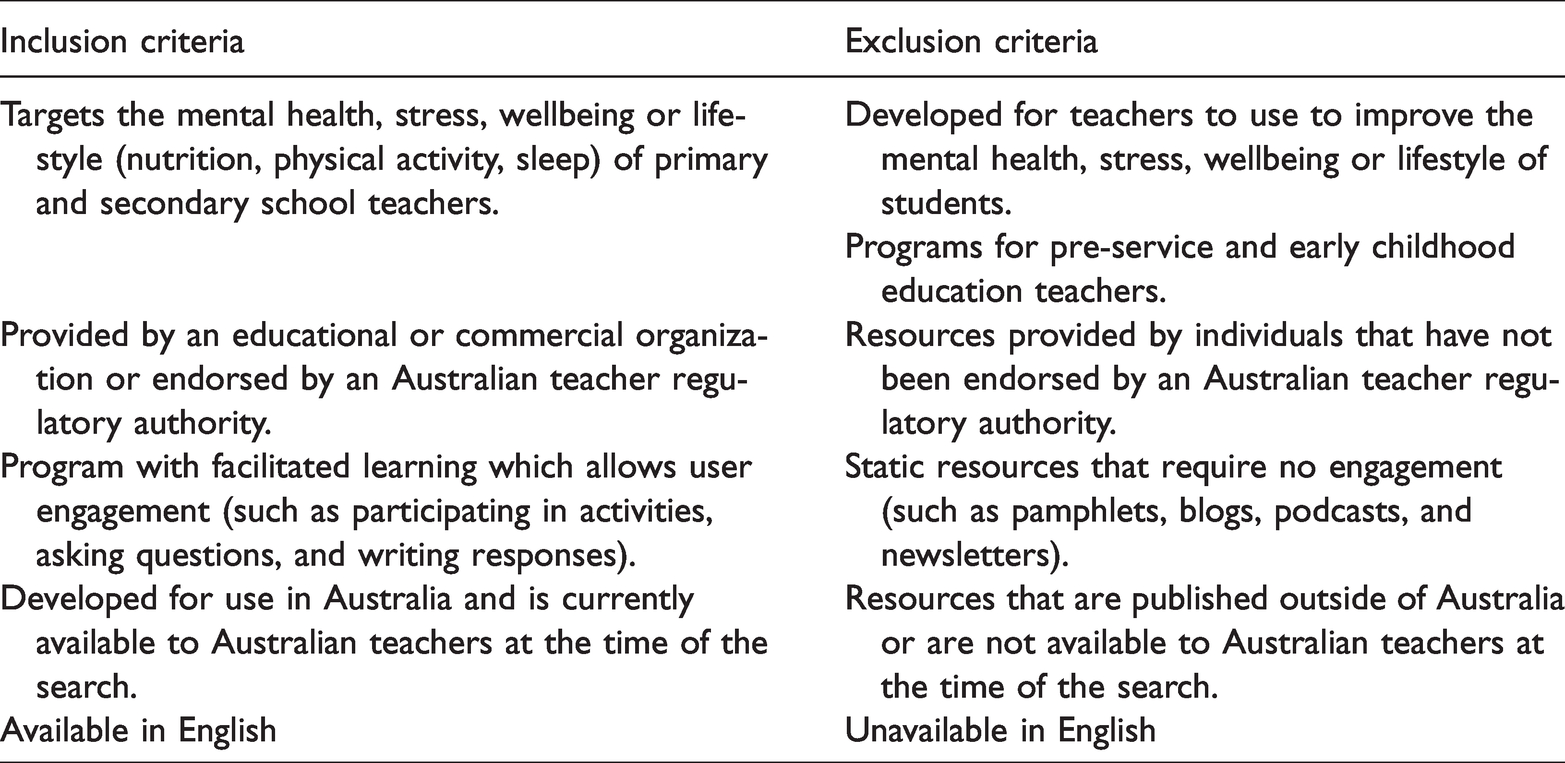
The review’s eligibility criteria were defined in the search plan and are shown in Table 1.
Inclusion and exclusion criteria for resources.
Data extraction
Data were extracted from the publicly available company PD websites and tabulated by one author. The data extracted included the following characteristics of the PD: resource name, author/organization, aim, theoretical framework underpinning the PD, mode of delivery, location(s) offered, target audience, frequency and duration, enrolment options, content covered, and evidence of evaluation. To determine the source of the PD (i.e. whether it was developed by a private business, government organization, professional teaching association), the PD developer’s business name or Australian Business Number, where available, was searched using the Australian Government Australian Business Register.
Results
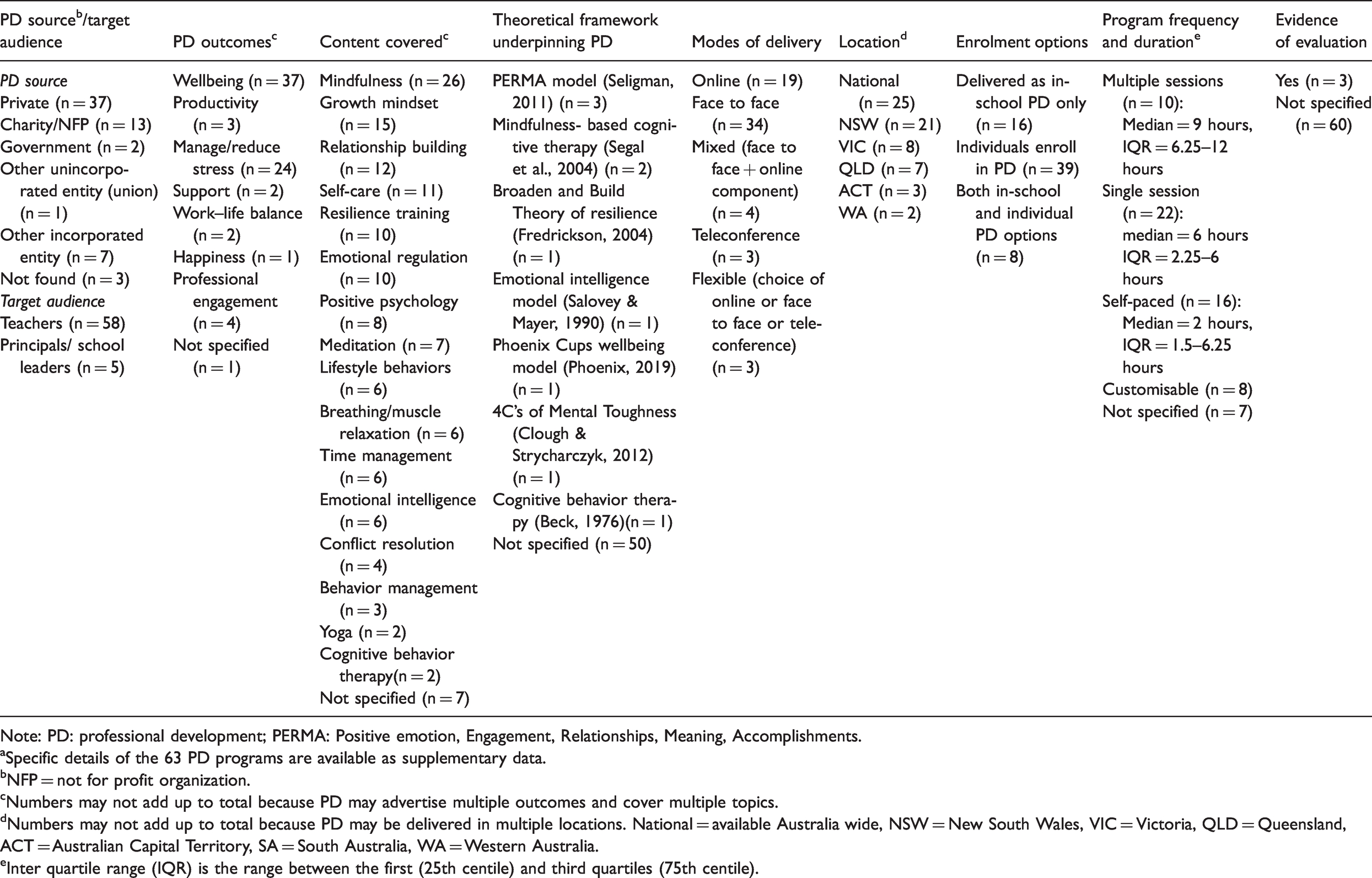
The three search strategies yielded 88 resources for screening (see Figure 1). Following the screening process, 63 resources that met all eligibility criteria were included in this review. Table 2 summarizes the characteristics of the included PD. Further information on each of the programs is available as supplementary material. The majority of PD (n = 37) was developed by a private business rather than a government body (n = 2) or a not-for-profit organization (n = 13). Most PD was delivered face-to-face (n = 39), targeted teachers (n = 58), and was available for individuals to enroll themselves into the program (n = 39). Programs often covered multiple topics (median = 2.5 topics/program, inter quartile range (IQR) = 2–3 topics/program). Mindfulness (n = 26) and developing a growth mindset (n = 15) were the most common topics covered in PD aimed at improving teacher wellbeing and health.
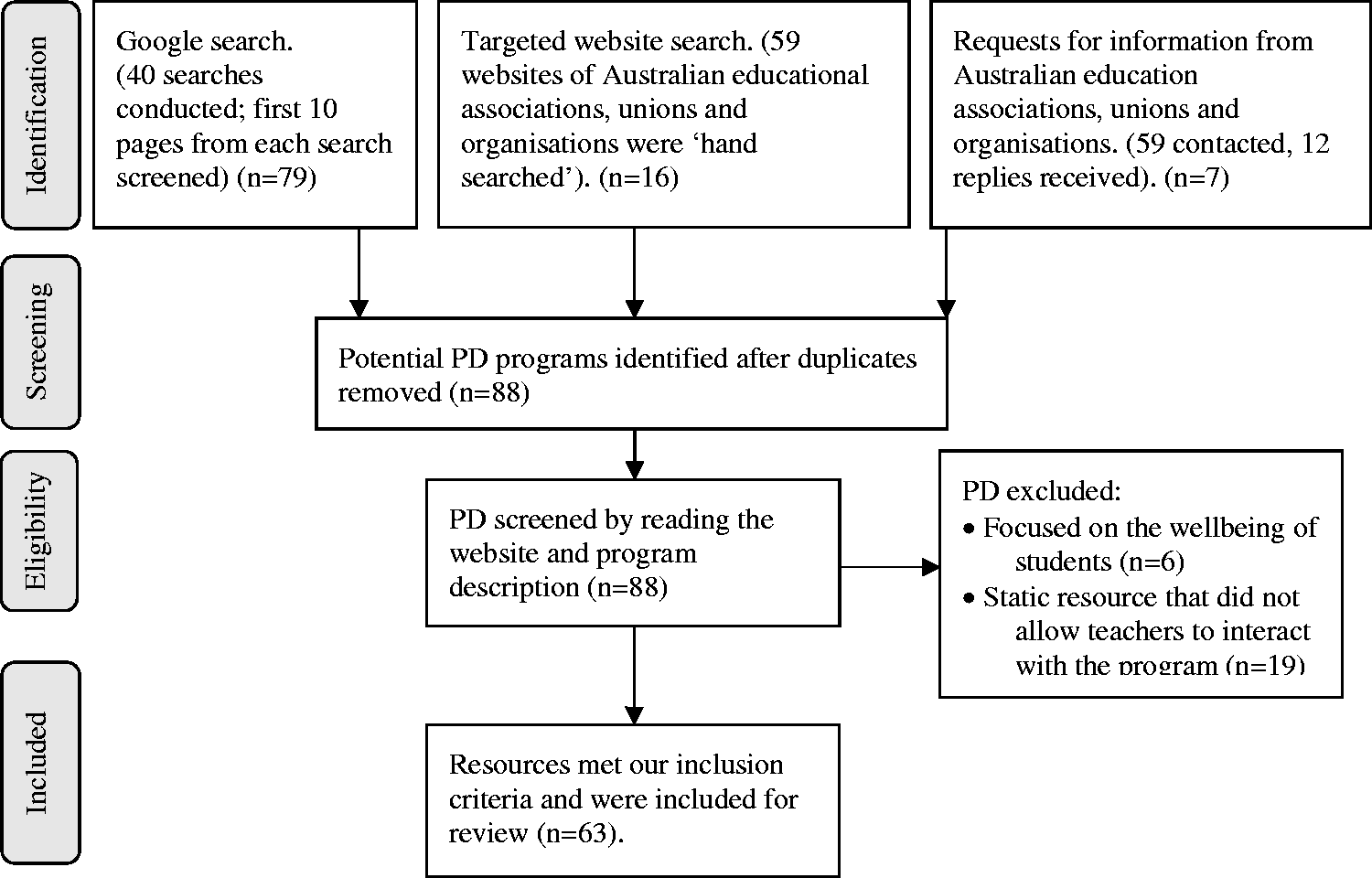
The three search phases of the review, including the number of resources screened and included in the final review. PD: professional development.
Summarized characteristics of 63 teacher PD promoting wellbeing programs.a
Note: PD: professional development; PERMA: Positive emotion, Engagement, Relationships, Meaning, Accomplishments.
aSpecific details of the 63 PD programs are available as supplementary data.
bNFP = not for profit organization.
cNumbers may not add up to total because PD may advertise multiple outcomes and cover multiple topics.
dNumbers may not add up to total because PD may be delivered in multiple locations. National = available Australia wide, NSW = New South Wales, VIC = Victoria, QLD = Queensland, ACT = Australian Capital Territory, SA = South Australia, WA = Western Australia.
eInter quartile range (IQR) is the range between the first (25th centile) and third quartiles (75th centile).
PD tended to be a single session (n = 22) over one day (median = 6 hours, IQR = 2.25–6 hours). Programs that included multiple sessions (n = 10) generally provided more hours (median = 9 hours, IQR = 6.25–12 hours), while self-paced PD (n = 16) were of shorter duration (median = 2 hours, IQR = 1.5–6.25 hours).
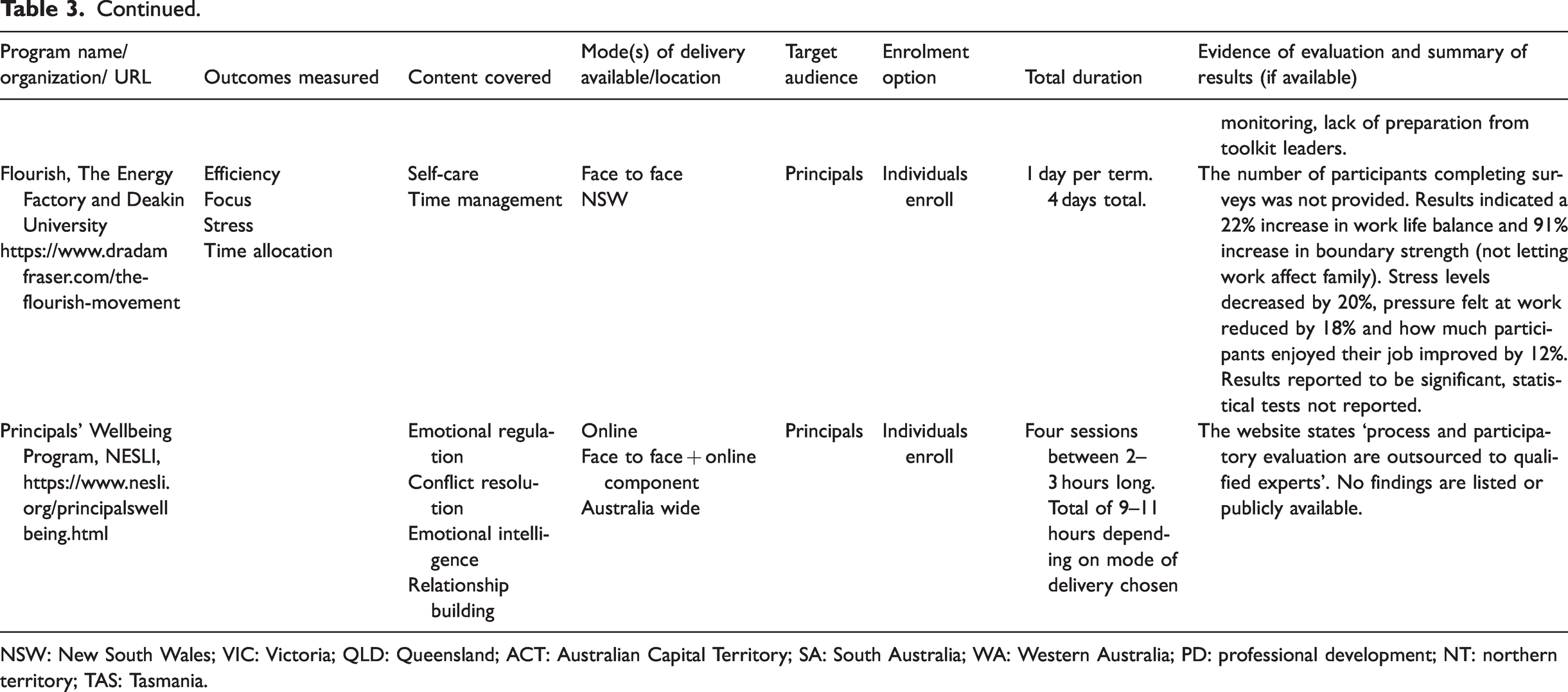
Most (n = 50) PD did not specify the theoretical framework that underpinned the program. Of those who did specify a framework, Seligman's (2011) Positive emotion, Engagement, Relationships, Meaning, Accomplishments (PERMA) model was the most common one cited (n = 3). Only three PD programs provided any evidence of having been evaluated. Two of these three PD programs provided an overview of their evaluation (see Table 2). Both used a pre/post uncontrolled research design and reported descriptive findings with no statistical analysis or comparison. One program also included qualitative methods in its evaluation. Both programs reported a positive impact on wellbeing and stress in participants, although the statistical significance of the results was not reported.
Of the three evaluated programs, only one program targeted teachers and required schools to enroll in the PD (i.e. PD was presented in-house). The other two targeted school principals (Table 3) who chose to enroll as individuals. Two programs are available widely and one is offered only in NSW.
Characteristics of three PD programs promoting teacher wellbeing with evidence of evaluation.
NSW: New South Wales; VIC: Victoria; QLD: Queensland; ACT: Australian Capital Territory; SA: South Australia; WA: Western Australia; PD: professional development; NT: northern territory; TAS: Tasmania.
Discussion
This study found 63 PD programs focused on promoting health and wellbeing and reducing stress for Australian teachers. Twenty-five PD programs are available to teachers Australia-wide, though teachers in NSW have access to an additional 21 courses. Due to the size of Australia, travel to city centers is a barrier to PD participation for teachers in regional and remote areas (Tytler et al., 2011). This study found two programs targeting teacher wellbeing and stress available in physical locations in Northern Territory and Tasmania; however, these are only available in-house. Therefore, unless the school provides this PD, teachers in these states and territories rely on access through online delivery. Nearly one-third of programs used an online-only (n = 16) mode of delivery. However, none of these online programs provided evidence of effectiveness (e.g. by reporting evaluation results). While several international studies have found internet-based training has been successful in reducing stress in teachers (Ebert et al., 2014; Lang et al., 2020), the effectiveness of online programs targeting wellbeing and stress are likely to be influenced by dropout rates, quality of instruction, and engagement (Fish et al., 2016). Online participants are at risk of not completing the course as it was designed (Fish et al., 2016). Without any evaluation, the effectiveness of current online resources cannot be determined, and their usage and reach remain unknown.
Despite the need for a combination of social, psychological, and physical tools to maintain wellbeing (Dodge et al., 2012), most programs covered in this study focused on psychological approaches, such as mindfulness (n = 26) and developing a growth mindset (n = 15). Only six PD programs covered healthy lifestyle behaviors such as physical activity and diet. A further two programs taught gentle movement practices (e.g. yoga). Previous research has found associations between participation in physical activity and reduced stress in teachers (Bogaert et al., 2014; Gillan et al., 2013). Additionally, recent physical activity interventions/programs have successfully reduced stress in teachers (Abós et al., 2019; Kim & Gurvitch, 2020). This evidence should not be overlooked and PD for teachers should incorporate and promote physically active ways to improve wellbeing.
PD with a longer duration, fewer objectives and guided by theory has a higher probability of achieving their objectives (Murimi et al., 2018). However, most PD programs are delivered in a single day session (n = 22) rather than over multiple sessions (n = 10). No single session PD programs provided supporting evaluation evidence, so it is not possible to comment on their effectiveness to improve wellbeing or reduce stress. Additionally, most programs covered multiple topics (median = 2.5 topics/program, IQR = 2–3 topics/program) and the majority (n = 46) did not provide information about any theoretical frameworks underpinning their design. Research shows it is not sufficient for interventions to merely indicate that they are theory-based, instead they need to explicitly describe how theory guided the design, implementation and showed impact on the intent to change participant behavior (Murimi et al., 2018). This is of particular importance since these PD programs are ultimately attempting to change teachers’ behaviors (e.g. encourage practice of mindfulness) so they can cope with challenges and maintain wellbeing. These findings are concerning as it suggests that many of the PD programs currently available to teachers may not be guided by theory or principles of behavior change and thus are less likely to achieve the desired outcome.
Effective PD not only has the opportunity to positively influence teachers’ health and wellbeing but also on a large number of academic and health outcomes for students. Features of effective PD programs that improve student outcomes are well established (Darling-Hammond et al., 2017; Desimone, 2009) and include a focus on content; incorporation of active learning, collaboration, modeling best practice, consistency with teachers’ knowledge and beliefs, use of coaching and expert support, sustained duration, and allow time for feedback and reflection (Darling-Hammond et al., 2017; Desimone, 2009; Van Veen et al., 2011). In the absence of formal evaluations, future research could investigate whether the Darling-Hammond et al. (2017) model for effective PD could be used to make judgments about the likely effectiveness of PD programs that target teachers’ health and wellbeing on student-level outcomes.
A high-quality program evaluation can provide valuable data about the implementation of the resource and the resulting impact on health outcomes (Bauman & Nutbeam, 2014). Evaluation can identify the effectiveness, barriers, and acceptability of a program. This information would allow organizations and professional groups to make evidence-informed decisions about current programs. Only three of the PD programs provided any evidence of evaluation, and the strength of the evidence provided varied. The majority of programs did not provide any supporting evidence in the form of evaluations; hence, their effectiveness is unknown. This is an important finding as it shows more needs to be done by program development and delivery agencies to evaluate their programs. Ideally, these evaluations should be conducted externally to the PD designers and implementers. It is essential that all PD programs for teachers are appropriately evaluated and findings are reported in the future, so that decisions to invest in effective programs can be informed and supported.
Limitations
While a comprehensive, systematic, and replicable approach was taken, the same search methods may not provide results identical to those using standardized search strategies of academic electronic databases. In general, PD programs are developed by commercial organizations, which are influenced by changes in the market. Organizations may release new resources to generate or meet demand, or may cease to exist over time. Additionally, requesting information from educational organizations may lead to non-reproducible results – this method relies on human responses and if the same request was asked at a different time, contextual factors may influence the likelihood of obtaining a response.
Conclusion
Sixty-three PD programs were identified that aim to improve the health and wellbeing of Australian teachers. This study found few of programs have been formally evaluated. The lack of evaluation is a major concern because it means programs are advertised and implemented without formal evidence of effects. Without evaluation, the effect of PD programs on reducing stress or improving wellbeing is unknown, or, at best, uncertain. Future PD programs should be suitably evaluated and findings reported so evidence-informed programs can be recommended and implemented to promote teacher’s health and wellbeing.
Supplemental Material
sj-pdf-1-aed-10.1177_00049441211003429 - Supplemental material for Understanding the characteristics of professional development programs for teachers’ health and wellbeing: Implications for research and practice
Supplemental material, sj-pdf-1-aed-10.1177_00049441211003429 for Understanding the characteristics of professional development programs for teachers’ health and wellbeing: Implications for research and practice by Lucy Corbett, Philayrath Phongsavan, Louisa R Peralta and Adrian Bauman in Australian Journal of Education
Footnotes
Declaration of Conflicting Interests
The author(s) declared no potential conflicts of interest with respect to the research, authorship, and/or publication of this article
Funding
The author(s) disclosed receipt of the following financial support for the research, authorship, and/or publication of this article: This work was supported by the Teacher Health Foundation under Grant 204443.

Supplemental material
Supplementary material for this article is available online.
References
Supplementary Material
Please find the following supplemental material available below.
For Open Access articles published under a Creative Commons License, all supplemental material carries the same license as the article it is associated with.
For non-Open Access articles published, all supplemental material carries a non-exclusive license, and permission requests for re-use of supplemental material or any part of supplemental material shall be sent directly to the copyright owner as specified in the copyright notice associated with the article.
