




Abstract
With an increasing number of students enrolling into Australian universities, developing an understanding of the variables underlying academic success, is growing in importance. In the present study, three first-year cohorts (2013–2015) studying towards five allied health or science degrees (n = 1,676 students) were examined to ascertain the impact of students’ entrance pathways and demographic background on academic performance and retention. Results identified gender and the Australian Tertiary Admissions Rank as significant predictors of academic performance, with female students (p < .05) and students entering with the highest quartile of Australian Tertiary Admissions Rank score (p < .001) performing strongest. Results also revealed that students from government secondary schools performed significantly higher in terms of first year grade point average (p < .05) compared with students from non-government schools and that secondary school tuition fees correlated positively with ATAR score but negatively with first year GPA (p < .05). The findings from this study have implications in the formulation of education policy, particularly highlighting the strength of students from government schools transitioning to university science and allied health degrees.
Keywords
Introduction
With continuously growing numbers of students entering higher education, university educators, administrators and policy makers are faced with a greater focus towards identifying academic achievement, and limiting student attrition. In Australia, courses relating to science and broader aspects of health appear to have been at the forefront of Federal Government policy in recent years. For example successive previous Labour governments made efforts to promote allied health and medical research through significant infrastructure and grant-based investment schemes (Australian Bureau of Statistics, 2015). With this in mind, allied health and medical science-related sectors within Australia have steadily become a popular career path for prospective undergraduate students, with employment in the allied health sector alone projected to rise by 24.9% by 2018 (2014). Therefore, elucidating the demographic, psychological and social variables surrounding success in science education is becoming increasingly important within Australia.
Admission into Australian universities is typically from two distinct and continuously expanding pathways. The direct feeding from secondary education systems, through the completion of year 12 based certificates, is the common path adopted by the majority of undergraduate students. In Western Australia, the secondary education system has undergone multiple curricula transformations throughout the past decade, allowing students a broader choice in the selection of their subjects. Consequently, increased freedom in the choice of Australian Tertiary Admissions Rank (ATAR) subjects has led to a decline in enrolments in secondary science subjects, a phenomenon previously observed at the national level, with declines in biological sciences (10%) and chemistry (5%) over the period from 1992 to 2012 (Kennedy, Lyons, & Quinn, 2014). Likewise, students entering university from a non-direct alternative pathway (mature age or Technical and Further Education (TAFE)) may not have been exposed to any or little previous science curricula/study for a long period of time. For this reason, previous study in related ATAR science subjects have previously been shown as significant predictors for success in first year health science (Anderton, Evans, & Chivers, 2016).
Performance in high school has frequently been used as a benchmark for university performance. Studies throughout the world demonstrate that grade point average (GPA) in secondary education correlates to attrition at university (Battin-Pearson et al., 2000), university grades (Richardson, Abraham, & Bond, 2012), employment performance (Carr, Celenza, Puddey, & Lake, 2014), salary (Roth & Clarke, 1998), and future socio-economic status (Fischbach, Baudson, Preckel, Martin, & Brunner, 2013). However, GPA itself is heavily influenced by a number of factors, including parental education status, which itself can impact on household socio-economic status (SES), and the child’s subsequent educational facility (Crede, Wirthwein, McElvany, & Steinmayr, 2015). One of the frequently discussed pre-entry variables affecting university performance is the type of secondary education which in Australia is broadly classified as government and non-government. Australian non-government schools receive government funding, thereby contributing to the enhanced quality of facilities, resources and programs available to students attending non-government schools (Vickers, 2005). In recent times, non-government schools have become more affordable, attainable and popular, leading to a decline in confidence and enrolments in government schools (Cahill & Gray, 2010). Government schools in Western Australia continue to dominate the student intake from lower socioeconomic areas (Lamb & Teese, 2012), and struggle to compete with non-government school populations, when using median ATAR as a determinant for academic performance (Better Education, 2016).
As allied health and science enrolments at university increase, identifying additional demographic predictors of success and/or attrition will become increasingly important. A gender disparity in Australian schools stills exists, with National Assessment Program – Literacy and Numeracy (NAPLAN) results supporting the common stereotype that numeracy and literacy are male and female dominated domains, respectively (Thomson, De Bortoli, & Buckley, 2013). Other gender disparities exist at the higher education level with evidence indicating that female undergraduate students out-perform their male counterparts in health-related (Anderton et al., 2016; Mills, Heyworth, Rosenwax, Carr, & Rosenberg, 2008) and nursing degrees within Australian and international universities (Wan Chik et al., 2012). SES has also been shown to influence primary and secondary education outcomes in a number of education systems (Sirin, 2005). However, once at university, mixed results around the impact of SES have been reported, with a recent study demonstrating students from lower SES areas and less prestigious schools perform better (Li & Dockery, 2014; Puddey & Mercer, 2014). The lower rates of university participation among young people from lower socio-economic backgrounds have been attributed to several factors, including the cost of undertaking university study, lower educational aspirations, and a lack of awareness of the benefits tertiary education can provide (Bradley et al., 2008).
Therefore, this study sought to identify whether demographic predictors contribute to first year GPA and/or attrition amongst students in allied health and science degrees. Given the importance of allied health and science industries within Australia, elucidating the determinant of academic success or attrition during university education will have significant benefit to the broader sector, and provide a better understanding of how education policy can be adapted. In this study, variables such as gender, university entrance pathway, socio-economic area indexation and academic performance during the first year of university, were all considered. The main outcome of academic performance was measured in the form of GPA at the completion of first year, and used as the standard benchmark for university success. Based on previous literature, it would be hypothesised that students entering from suburbs indexed with lower area socio-economic indexation percentiles, as non-school-leaver, or public secondary high school educated, would perform poorer in their first year of university than those not possessing the aforementioned variables.
Methods
Participants
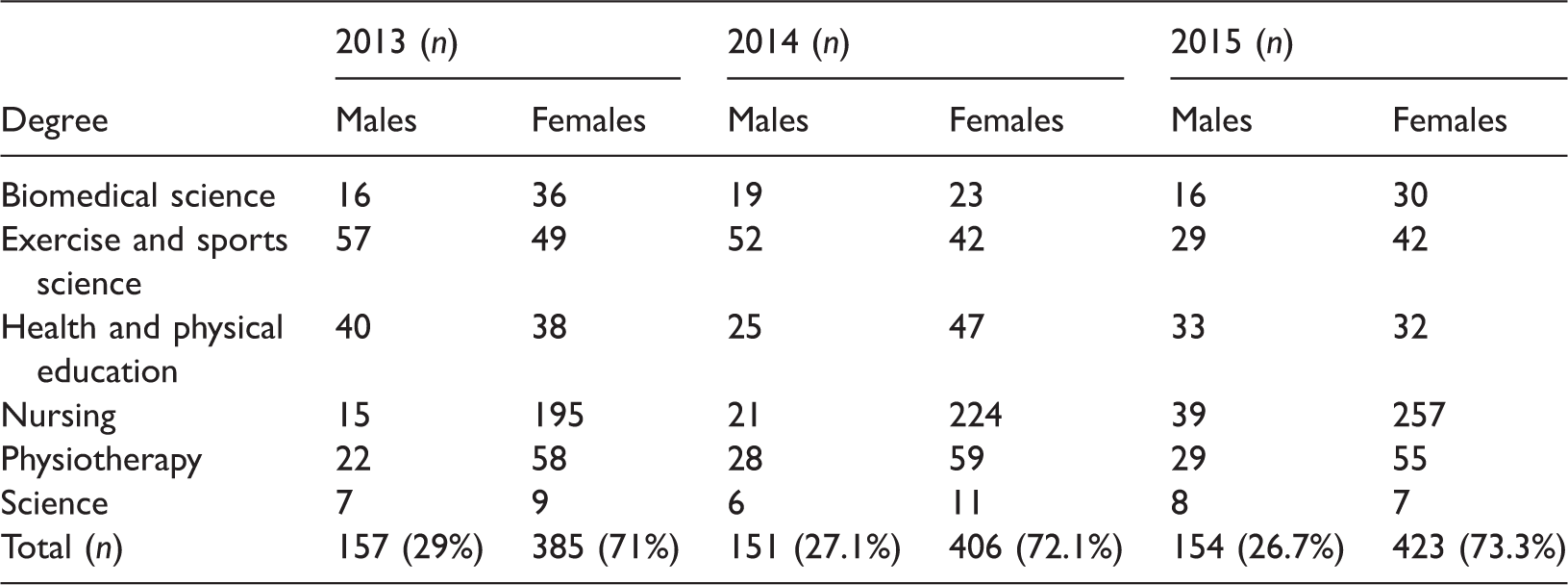
Number of male and female study participants by degree and cohort (2013–2015).
Descriptive statistics on each of the variables used in the analysis.
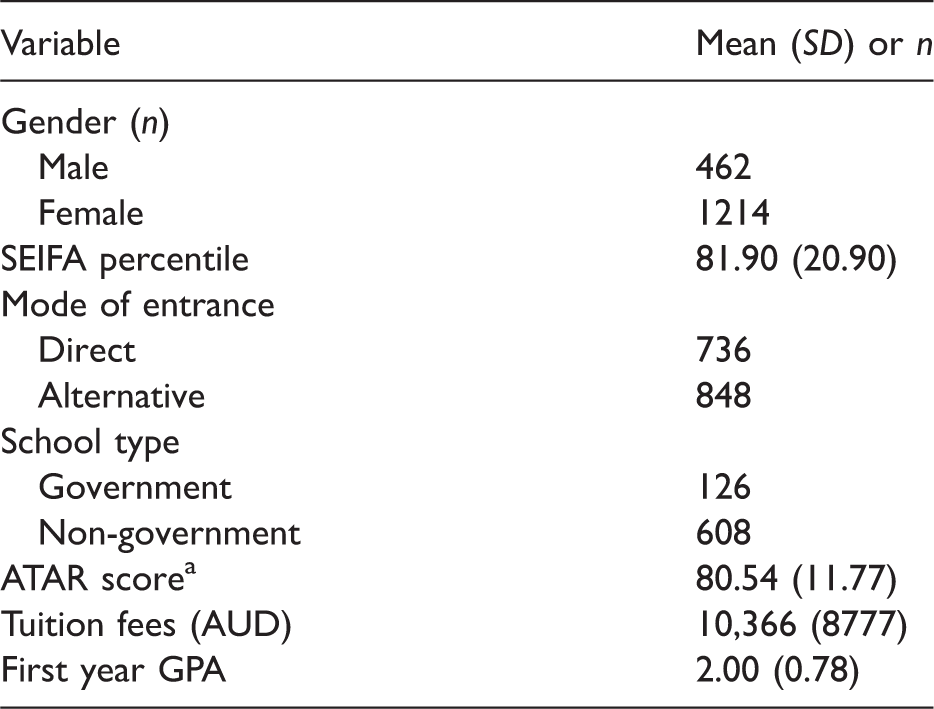
Only students entering directly from secondary school with a valid ATAR score.
Data
Data were obtained for each participant from university records on student gender, age, pre-university admission data and mode of university entrance. Each participant was then classified has having entered university using either of two pathways: Participants who were direct school leavers and participants who were non-direct school leavers – the latter group consisting of alternative entry and mature age students.
Students were classified as school leavers on obtaining entry into university with a valid ATAR score. Students were classified as non-direct school leavers, if they had completed previously a semester at a tertiary institution, held a TAFE certification, and/or had completed a foundation year or tertiary enabling programs. Approval for the study in general and to obtain specific student academic and demographic data, such as pre-entry and residential postcode, was granted by the university human research and ethics committee.
Assessment of SES
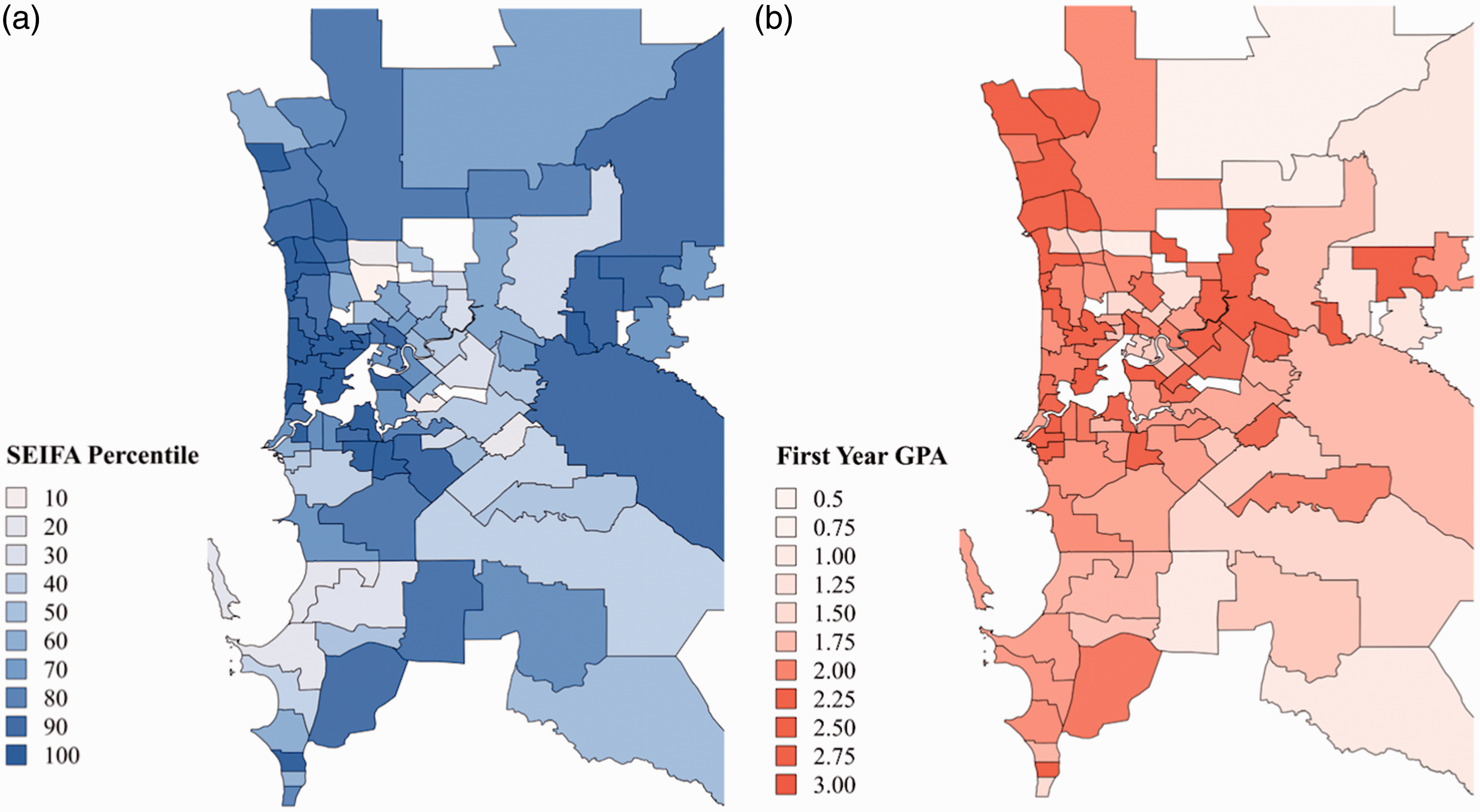
The listed residential postcode of students were categorised according to the 2011 Australian Bureau of Statistics’ socio-economic indexes for areas (Australian Bureau of Statistics, 2013). This study used the index of relative socio-economic disadvantage as an indicator of the prevalence of disadvantaged people within a given geographical region. Postcodes were assigned a value of 1–100 corresponding to the Western Australian Socio-Economic Indexes for Areas (SEIFA) percentile for that postcode. To visualise SEIFA relative to first year GPA, a choropleth map of the Perth metropolitan region was created (see Figure 2). Maps were created using QGIS software (version 2.8.2), a free cross-platform geographic information system.
School fees and ATAR performance
For students entering directly from secondary school (n = 736), pre-university admission data relating to the secondary school (ATAR score) was obtained from university records. Data related to public and private school fees was accessed through the individual school website or by direct communication with the specific school. A variable indicating school fees was used as a proxy for family’s financial situation and parental education which, as shown in the literature review tends to be related to school performance. When used in a general linear model (GLM), tuition fees were displayed as quartiles (low, medium, high, highest).
First year academic performance measures
GPA at the completion of first year was used as an indicator of participants’ academic performance. Full-time students completing a standard enrolment within their degree for the first time (rather than subsequently repeating a unit) were included in mean GPA calculations for each year cohort. A student’s GPA is calculated by awarding for each unit, a “0” for a Fail (i.e. < 50%), a “1” for a Pass, (i.e. 50%–59%), a “2” for a Credit (i.e. 60%–69%), a “3” for a (Distinction (i.e.70%–79%) or a “4” for a High Distinction (i.e.80%–100%).
Student attrition (withdrawal)
Student attrition (withdrawal from university) can be broadly defined as the number of students commencing a university study, minus the number completing the degree. In this study, student attrition was defined as a student commencing/enrolling, completing a semester, but not completing the first year of their chosen university degree.
Data analysis
Data analysis was conducted using SPSS version 22 (IBM corporation). To assess whether pre-entry variables affect university performance (GPA), independent t-tests were used for group comparisons of gender, mode of entrance and the type of school. Pearson correlation coefficients were calculated to examine the relationship between SES and ATAR score, with the university academic performance measure of GPA. Likewise, for non-parametric analysis, Spearman Rho correlation coefficients were used to assess the relationship between school tuition fees and GPA. The effect sizes (ES) of the correlation coefficients were evaluated in line with Cohen (1999) with values of r = 0.10 considered small, 0.30 considered medium and 0.50 regarded as large. A significant nominal p-value of < .05 was employed.
Cohen’s d ES were calculated for the mean differences, with an ES of 0.20 considered small, 0.50 medium and 0.80 large (see Cohen, 1999). A GLM or logistic regression model was used to examine factors predictive of first year academic performance, and first year attrition, respectively, from the 2013–2015 combined cohorts. The pre-entry variables used in the models included gender, SEIFA, school tuition fees, ATAR score and mode of university entrance. Non-significant factors were removed one at a time until the final model was determined.
Results
Female students perform at a higher level than male students in first year GPA
Data from 2013 to 2015 identifies a disproportional number of females to males within each year cohort. As such, female students outnumber male students in all but one of the degrees chosen for this study (Table 1). Overall, female students performed significantly better at the completion of first year allied health and science degrees than male students (Figure 1; p < .001; d = .26), with all but one year cohort reaching statistical significance.
Analysis of gender and as a contributing variable for success in first year university science and health-related degrees. Values are mean ± SE; *p < .05; ***p < .001. A choropleth map representation of (a) Socio-Economic Indexes for Areas (SEIFA) in the Perth metropolitan area compared to (b) mean first year GPA by residential postcode.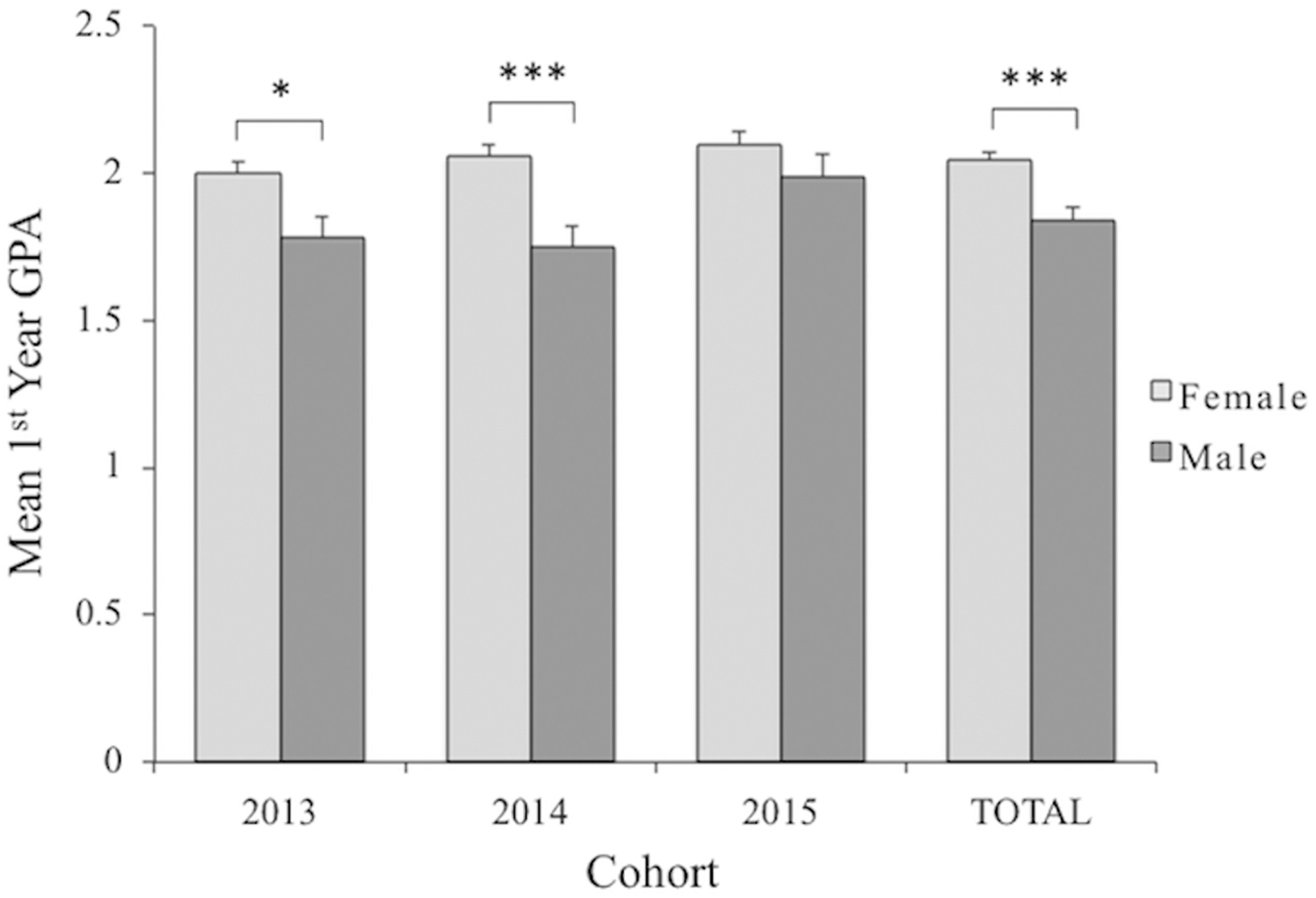
SES weakly correlates with student academic performance
Assessment of correlation between relative SEIFA measures of socio-economic disadvantage and first year GPA.

*p < .05 for all of the tables queried.
To illustrate better the relationship between SES and first year GPA, a choroplethic map of the Perth metropolitan area was created. The map illustrates mean first year GPA of the combined three cohorts used in this study, alongside the Australian Bureau of Statistics measure of socio-economic indexes for areas (Figure 2) which was the SES measure used in the analyses. As can be seen in the choropleth map, mean GPA distribution appears relatively sporadic, with punctate areas of higher GPA performance in more densely populated metropolitan suburbs of Perth (Figure 2(a)). Supporting the analysis in Table 3, when visualising SEIFA data (Figure 2(b)) there were no apparent broad areas of similarity/overlap with higher GPA in Figure 2(a).
Does the mode of university entrance and/or secondary schooling environment affect performance in first year?
While SES did not appear to be strongly related to the overall success of the student cohorts in first year, pre-entry factors such as mode of entrance and/or schooling environment may be important contributors. When determining if mode of university entrance could play a role in first year academic performance, school leavers were compared with students entering from alternative or mature age entry pathways. The overall mean first-year GPA of school leavers (M = 2.04, SD = .69) and alternative entry students (M = 1.95, SD = .84) were similar (p = .066), with mode of entrance not reaching statistical significance in any cohort (Figure 3).
Analysis of the mode of entrance as a contributing variable for success in first year university allied health and science-related degrees. Values are mean ± SE.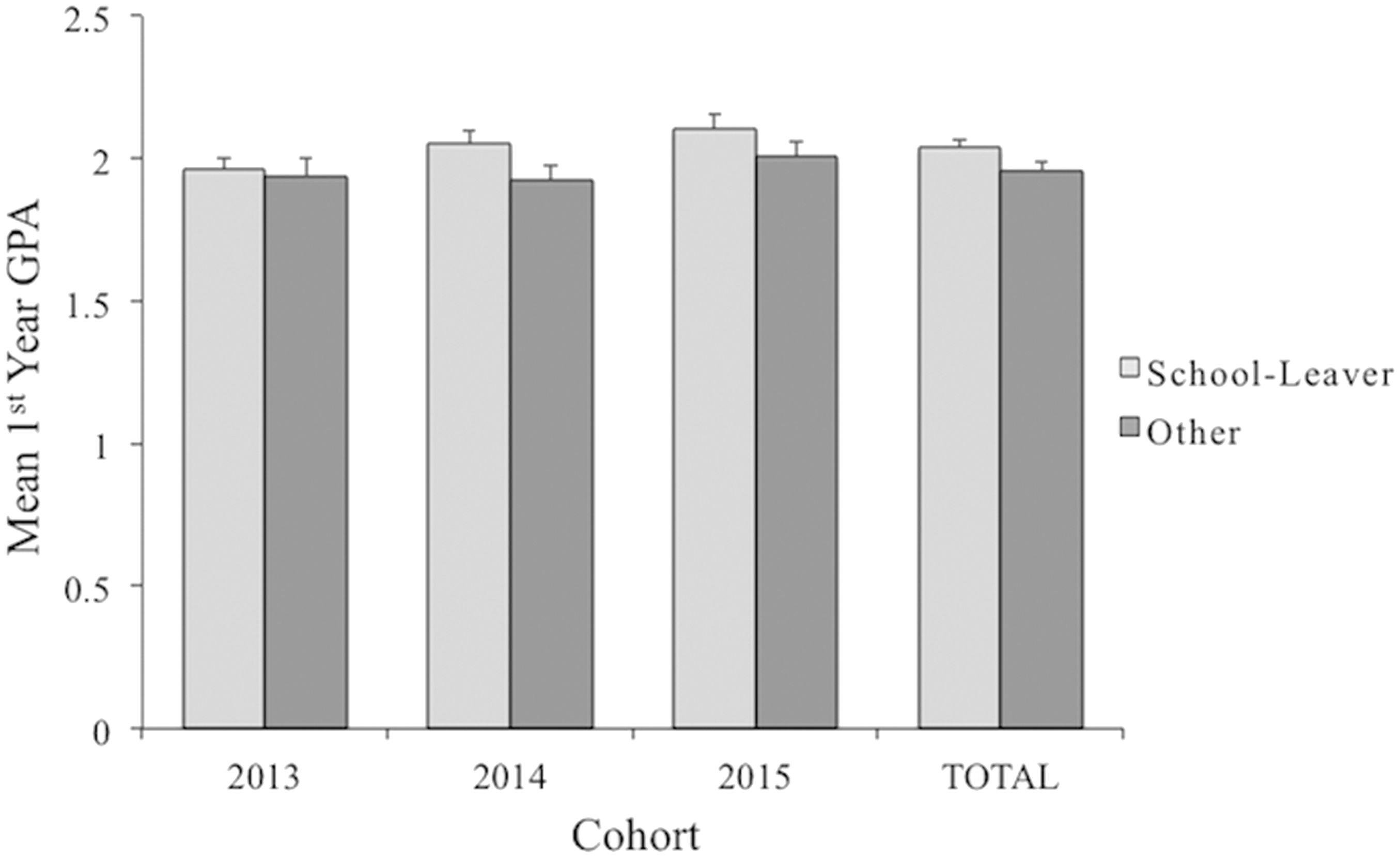
Pearson correlation between ATAR and first year GPA.
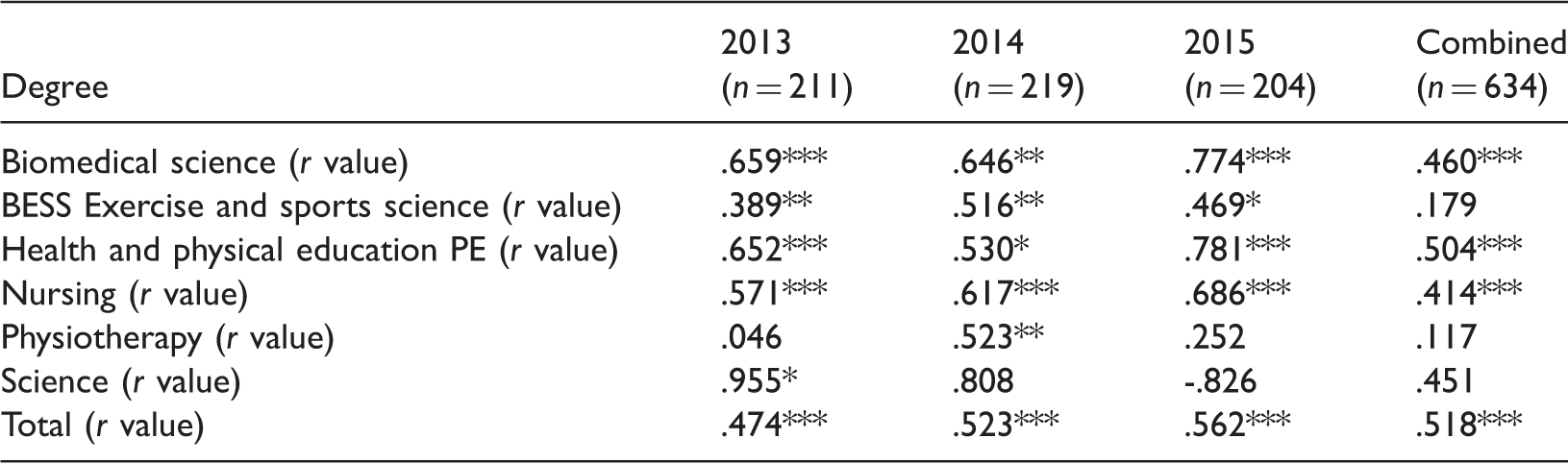
p < .05; **p < .01; ***p < .001.
Does the type of secondary education really matter?
In determining whether public or private schooling environments contribute to first year tertiary performance, the secondary institution was categorised as government or non-government (Catholic and Independent). The University of Notre Dame, a private university, typically has a larger portion of students entering directly from non-government secondary education institutions, when compared to public universities in Western Australia. Students entering university from a government secondary school performed significantly better in 2013 (p = .004; d = .6) and 2014 (p = .047, d = .36) at the completion of first year, when compared to those entering from a non-government secondary school (Figure 4). Overall, school type was a significant contributor, with first-year students entering university from a government secondary school having a mean GPA of 2.28, when compared to 1.99 for students entering from a non-government secondary school (p ≤ .001, d = .44).
The effect of the secondary school type, government or non-government, on first year GPA in university science and allied health degrees. Values are mean ± SE; * p < .05; **p < .01; ***p < .001.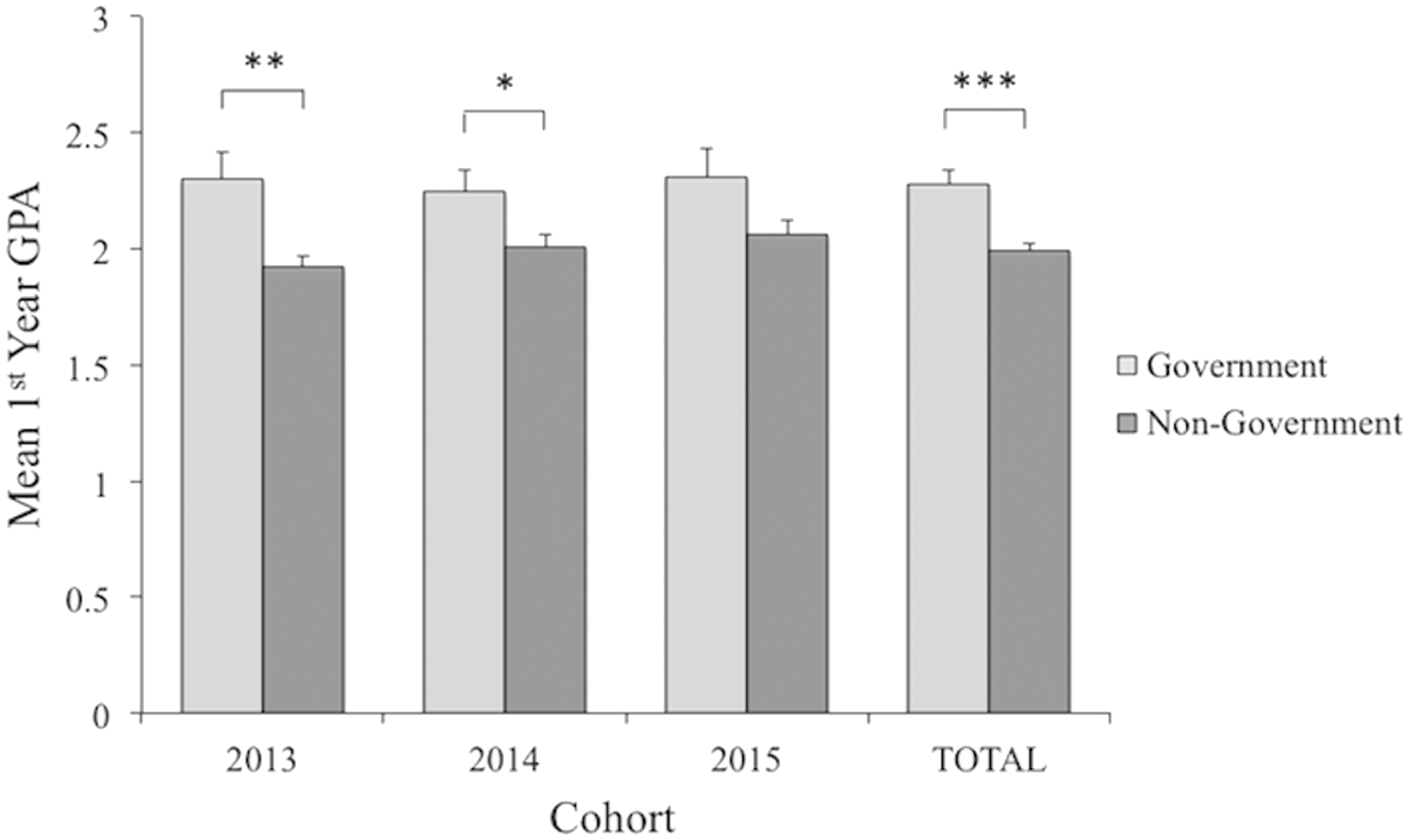
Tuition fees for year 12 education correlate with ATAR and first year university performance
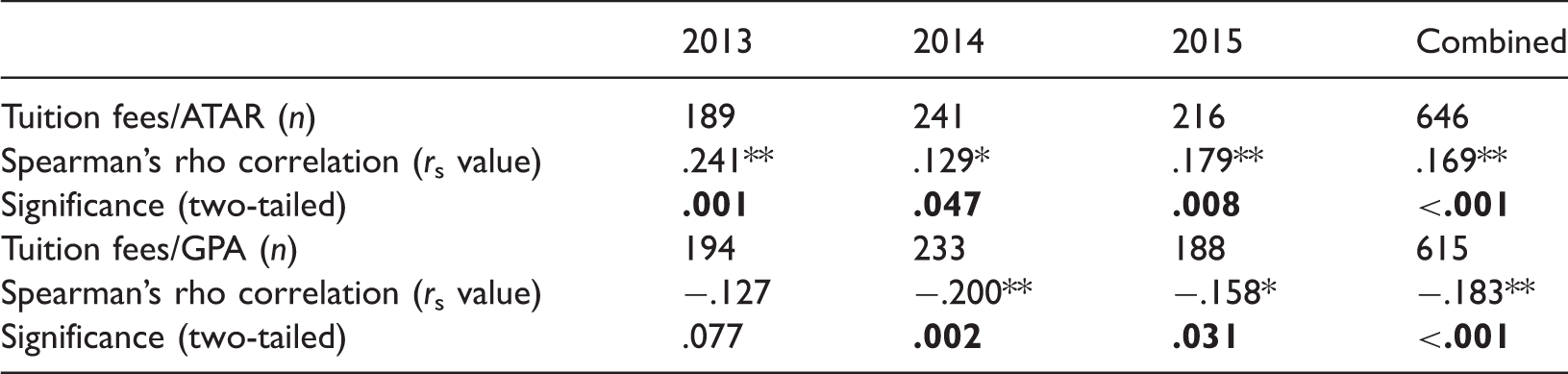
Correlation between school fees and first year GPA.
Can demographic and pre-entry variables predict first year GPA?
Final model parameter estimates: predictors of academic performance (first year GPA).
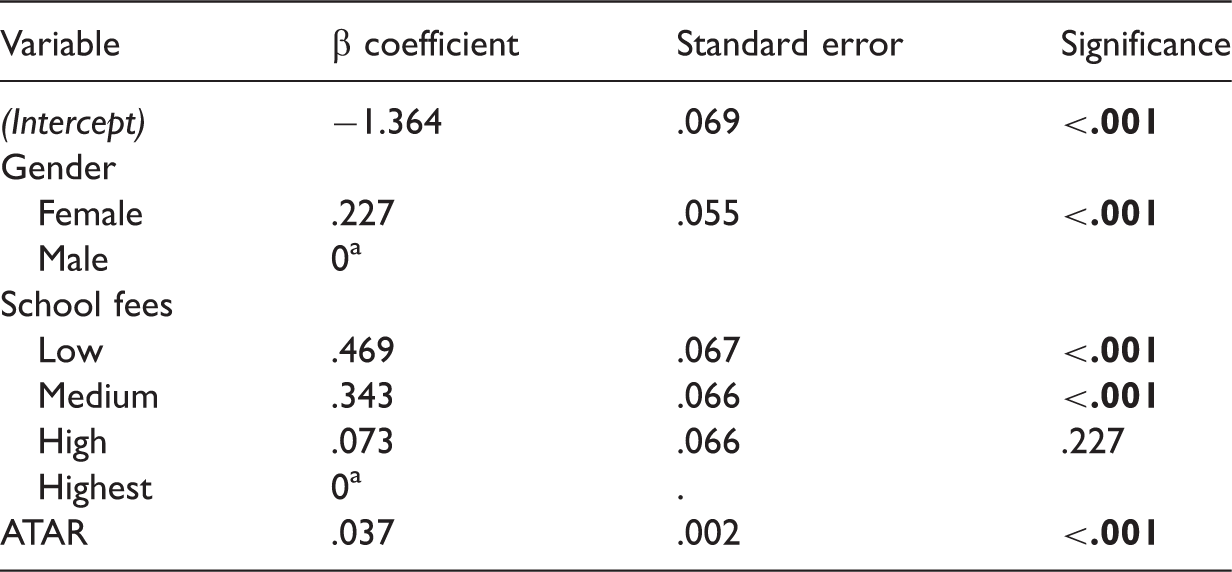
Comparison category set to zero.
Can first year attrition in allied health and science courses be predicted?
Final model predictors of student attrition in first year university using a binary logistic regression analysis.

Reference category is female.
Discussion
Science and allied health degrees represent a broad and growing sector within Australia. Therefore, understanding the demographic factors underpinning success in these tertiary education degrees will become increasingly important. One of the key findings from this study was that female students performed significantly better across all cohorts, and were nearly twice as likely to stay in tertiary education following enrolment, compared to their male counterparts. Previous studies have identified females as stronger performers in first year university, specifically in anatomy and physiology (Anderton et al., 2016), medical (Arulampalam, Naylor, & Smith, 2004) and nursing (Pitt, Powis, Levett-Jones, & Hunter, 2012) undergraduate degrees. However, this correlation has not been observed in post-graduate medicine (Puddey & Mercer, 2014), with males achieving greater average marks in the Australian medical entrance test, the Graduate Medical School Admissions Test (GAMSAT) (Mercer, Crotty, Alldridge, Le, & Vele, 2015). While the present findings may not appear surprising, these are the first to illustrate gender specific attrition patterns in Australian health science tertiary education. This trend follows a well-documented pattern of female academic dominance in all subjects, with males only performing better in formative tests for science and math subjects (Voyer & Voyer, 2014). However, despite these results supporting such a trend, this has failed to translate to increased female representation in senior roles in allied health, science and/or academic sectors (Bell, with assistance from Kate O’Halloran, & Yu, 2009). As such, the present findings need to be viewed with caution, as a plethora of confounding variables may take affect following the completion of first year study.
An important question posed by this study was whether area socio-economic indexation had a significant effect on the performance of first-year university students. Recent findings from a Curtin University study showed the SES of the student’s school was a moderate predictor of academic performance, with students entering from lower SES schools performing better (Li & Dockery, 2014). The cohorts used in the present study were unique, in that a larger proportion of students entering/enrolling in this university were from non-government and more affluent areas. Unlike the aforementioned study, the present results showed no convincing correlation to socio-economic indexation, rather showing a very small positive linear relationship (p = .001; r = .091). As illustrated in Figure 2, these results do not appear to show an overwhelming correlation between SEIFA values and first year GPA. One explanation for this is the unequal distribution of students entering this university, and the very small proportion entering from lower socio-economic/outer metropolitan suburbs.
As the findings relating to suburb socio-economic indexation revealed only a subtle correlation to academic performance in first year, the rational question remaining was whether secondary education institutions were significant determinants of first year GPA. In the Western Australian education system, non-government schools consistently perform stronger in the state’s school ATAR rankings. For example 75% or more of the top 20 ATAR ranking schools were non-government, in the years 2011–2015 (School Curriculum and Standards Authority, 2016). In this study, students entering university from a government high school performed significantly better overall in first year allied health and science degrees, when compared to students entering from a non-government schooling background (p < .001). These results are in line with recent findings, which show that students from more affluent areas and secondary education institutes perform worse at university (Li & Dockery, 2014). One possible explanation for the results given in the present study is that the demographic of government high school students entering this university is not typical, perhaps representing a high proportion of independent and ‘gifted’ entry government schools. However, as an ATAR score is an extremely strong predictor of university entrance and retention (Messinis & Sheehan, 2015; Wright, 2015) and non-government schools, typically located in more affluent areas, consistently perform better in ATAR scores, these results appear to be counterintuitive.
From these findings, we explored the discrepancy between government and non-government education systems, focusing on the monetary value of education, and the observed return on tuition fees. In the Perth metropolitan area, tuition fees from government and non-government schools can vary immensely, with government schools having no tuition fees and small voluntary contribution fees for year 12 students (up to $500), and subject specific costs depending on individual students. In contrast, non-government schools range from approximately $2000–$26,000 per annum. Not surprisingly, a significant positive correlation between tuition fees and year 12 ATAR score were observed, consistent with previous statements regarding non-government school rankings (School Curriculum and Standards Authority, 2016). However, a negative correlation in most year cohorts was observed between tuition cost and first year performance in allied health and science degrees (p < .001, r = .155). This is the first time tuition fees have been investigated in such a way, providing evidence that schooling environment can play a significant role in university success. Such results could be due to a student adjustment to pedagogy, reflective of a lack of a highly structured environment commonly observed in more affluent Australian schools, where an ‘immersion effect’ exists (Birch & Miller, 2007; Win & Miller, 2005). This is coupled with the knowledge that a large proportion of students in Australia are not fully prepared for tertiary education, ultimately affecting their motivation to achieve in their studies (McInnes, James, & Hartley, 2000).
Students leaving university courses prematurely results in considerable costs to the student, and university, in both resources and emotional cost, especially in an environment of limited financial and general resources (Stillman, 2009). A plethora of factors have previously been linked to student retention and/or performance, including student demographics, prior educational achievement, psychosocial factors and institutional factors (McKenzie & Schweitzer, 2001; Rienks & Taylor, 2009). In the present study, first year student attrition was found to be associated with gender, with male students nearly twice as likely to prematurely withdraw from science and allied health degrees.
Similar results have been observed across a range of university degrees (Smith, Therry, & Whale, 2012), with reduced female student attrition likely to be due to their higher academic achievement, which itself strongly correlates to student retention. Interestingly, within science disciplines, male students can perceive other males in their class as more knowledgeable than their female counterparts (Grunspan et al., 2016), despite having a higher probability of dropping out (Chen, 2013). Grunspan and colleagues (2016) suggest that this gender bias can influence student confidence and persistence in the STEM discipline, a long-term concern for high achieving female students. In the context of health sciences, male students that perform poorly in first year are more likely to fail academic writing tasks (Hoyne & McNaught, 2013). Introducing a compulsory support course to combat this poor literacy can successfully reduce the failure rate by 50%, providing one potential strategy for reducing male attrition (Hoyne & McNaught, 2013).
Previous studies have shown that students displaying the highest attrition levels were those who had not completed year 11 or 12 or any other prior tertiary study (Rienks & Taylor, 2009). This corresponds to evidence that high school grades and college admissions test scores consistently predict student retention (Li & Dockery, 2014; Richardson et al., 2012). Similar to previous findings, the present study found that a higher ATAR score would reduce the likelihood of student attrition. However, unlike some of the strong correlations observed in previous studies, the present results relating ATAR to student attrition were not as convincing. The relationship between ATAR achievement and first year retention is most strongly observed at the lower ATAR levels, and even more so in students entering from independent schools (Harvey & Burnheim, 2013). Students entering direct from school in the present study all achieved minimum ATAR scores of 70, equating to a score equal to and/or better than 70% of the students within Western Australia (M = 81.9), possibly explaining why ATAR was not as strongly associated with attrition. These results may also be due to the heavy emphasis on pastoral care and student support programs at this university, which positively influences student retention (Zepke & Leach, 2005).
Students from low socio-economic backgrounds typically face additional hurdles in achieving academic success, including reduced family support and access to resources. Consistent with the findings relating to first year GPA, area socio-economic indexation did not influence student attrition. Previous work has demonstrated that students from more educated and affluent families, who can afford university education, are more likely to persist with their degree (Bean & Metzner, 1985). The present results are therefore not that surprising, as intake into this university is skewed towards students from more affluent areas, with a very small proportion entering from suburbs with a lower socio-economic indexation.
In conclusion, this study has identified the demographic variables for the prediction of first year success and/or attrition in allied health and science university degrees. While presenting novel findings on the influence of tuition fees and academic grades, the encouraging results show that university performance may not be predicted solely by SES and/or prestige of the secondary school attended by students. Given the evolving importance of science and innovation within Australia, identifying predictors of academic performance and/or attrition in these fields will contribute towards an improved education delivery.
Footnotes
Acknowledgements
The author would like to acknowledge Miss Tess Evans, Dr Paola Chivers and the Admissions Office for assistance with data collection and analysis.
Declaration of conflicting interests
The author(s) declared no potential conflicts of interest with respect to the research, authorship, and/or publication of this article.
Funding
The author(s) received no financial support for the research, authorship, and/or publication of this article.