




Abstract
Despite the continual rise in research into school bullying worldwide, comparatively little has been reported on actions that have been taken by schools to counter the problem. This article reports on a small-scale, exploratory study that was designed to provide an account of strategies that were being undertaken in 25 Australian government schools catering for mainstream students. It examines the reported use of both proactive and reactive strategies, and their frequency and perceived effectiveness. It reveals a wide diversity of practices. Strengths and limitations of teacher-directed activities are described, comparisons are made with anti-bullying strategies employed outside Australia, and suggestions are made to enhance the effectiveness of anti-bullying practices.
Keywords
Introduction
Although a great deal of research has been undertaken on bullying in schools over the last 25 years, especially on the causes and consequences of bullying (Smith, 2014), and numerous accounts have been provided of the effectiveness of particular anti-bullying programs (Ttofi & Farrington, 2011), there have been comparatively few accounts of what schools say that they are doing. An exception is a British government report by Thompson and Smith (2011) which drew upon survey results provided by teachers at a sample of schools in England. A similar exploratory survey conducted on a smaller scale in Australia by Rigby and Johnson (2016) involving 25 schools has provided further information about the work of schools in addressing bullying. This article draws principally on that source.
Bullying has been conceived broadly as the systematic abuse of power (Smith & Sharp, 1994). It is seen as occurring in situations in which there is an imbalance of power such that a targeted individual is unable to defend himself or herself adequately. Typically the bullying behaviour is repeated over time. A wide variety of negative behaviours have been identified as potentially constituting bullying. These include direct aggressive acts such as physical and/or verbal abuse and indirect aggressive acts such as spreading malicious rumours and deliberate exclusion or avoidance. More recently the use of cyber communication to hurt or threaten others has been widely conceived as a form of bullying (Baldry, Farrington, & Sorrentino, 2015).
Background to school bullying in Australia
Following the first study on bullying in Australian schools by Rigby and Slee (1991) the Australian House of Representatives Standing Committee on Employment, Education and Training published a well-publicised booklet entitled Sticks and stones: A report on violence in Australian schools. In it, the authors opined: ‘While overt acts of violence causing physical harm and damage may not be the overriding feature of Australian schools, the Committee is concerned at the apparent high levels of violence of bullying behaviours’ (Australian Government, 1994, p. 11). With the growing recognition of the problem came the recognition of the need to take action.
An important milestone on the pathway to action was the publication in Australia of the National Safe Schools Framework (Ministerial Council on Education, Early Childhood Development and Youth Affairs, 2004). This framework was developed under the aegis of the Australian Department of Education, Science and Training through contributions from consultants in the area of bullying and school safety. It included an agreed set of guiding principles for promoting safe school environments and suggestions for strategies that schools might utilise. It was intended as a practical resource for schools in addressing problems associated with bullying and violence.
Since then, various initiatives have been undertaken to promote more effective interventions in schools. These have included the continual development of the government funded Bullying Noway! website (www.bullyingnoway.gov/au) to provide evidence-based information and support for schools and the Friendly Schools anti-bullying program (Cross, Waters, Pearce, & Hamilton, 2012). There is some evidence that the prevalence of bullying has been reducing in many countries including Australia (Rigby & Smith, 2011). However, little is known about what is currently being done in Australian schools to address the problem of bullying and how the strategies to address this issue by schools are evaluated.
Aim of the study
Based upon information provided by teachers, the present article seeks to give an account of actions taken by a sample of Australian schools in 2015 to counter bullying and their perceived effectiveness.
Method
Data for the research reported in this article formed part of a larger government funded study of the prevalence and effectiveness of anti-bullying strategies employed in Australian government schools (Rigby & Johnson, 2016). While that larger study collected data online from teachers, students, parents and educational administrators, the present article focuses specifically on the information provided by teachers of the schools in the survey.
Approval to conduct the research was obtained from the Ethics Committee of the University of South Australia and from each of the six educational jurisdictions in which the research was conducted.
Procedure
Contacting schools in the main study was facilitated by Principals Australia Institute (PAI) through their newsletter which went to all schools in Australia inviting them to participate. It was explained that participation would involve school representatives selected by the school principal, meeting together and answering a questionnaire on behalf of the school. It was left to the judgement of the Principal to select those who could best represent the school in providing information about how the school was addressing bullying at the school. At a group meeting, the representatives discussed the questions and provided an agreed response. To safeguard the anonymity of respondents no questions were asked regarding gender or age, nor were responses to any of the questions made mandatory.
The data
In total 25 schools self-selected to participate in the study, including 16 primary schools, five secondary and four combined schools, the latter catering for both primary and secondary students. These schools were located in the six States or Territories from which permission to undertake the research had been given by the relevant government jurisdiction. No further data were collected about the school such as its student enrolment, numbers of staff or the socio-economic status of the school’s catchment area,
The questionnaire
The questionnaire used in the study was first piloted in six schools in South Australia, namely four metropolitan (a high school, a primary school, and two combined schools) and two country schools (a high school and a combined school). After examining the results and receiving feedback from staff at the schools, minor changes were made to the questionnaire.
Given that the focus of the study was on bullying at school, a description of what was meant by ‘bullying’ was provided as follows: Bullying occurs when a more powerful person or group of persons repeatedly seek to upset, hurt or intimidate somebody. It may take place in the school grounds, in class, on the way to school, on the way home or by electronic means. Remember this is NOT the same thing as occasional quarrelling or fighting between people who are about equally matched. With bullying one person or group is more powerful in some way and the target cannot effectively defend himself or herself.
Data analyses and reporting of results
Analyses undertaken to examine differences in responses from different types of school made use of the Barnard Exact test rather than the more commonly used Chi Square for which expected frequencies were inadequate (Barnard, 1947). Only results for the differences found to be non-trivial (i.e. p < .05) are given. Correlational analyses employed the non-parametric Spearman rank order correlation statistic, given that interval scaling could not be assumed (Hollander & Wolfe, 1973). Related samples’ t-tests were employed to compare the rated effectiveness of different intervention methods in cases of bullying (Rice, 1988). As the number of schools (N = 25) in the survey was relatively low, reported figures describing how schools responded to questions are given as numbers rather than as percentages.
Results
Perceived bullying prevalence
Results indicated that bullying by individual students occurred at all 25 schools at least sometimes with two schools reporting that bullying by groups never occurred. The most commonly occurring form of bullying across all 25 schools was students being ignored or left out, followed by being teased in a hurtful way, having nasty stories told about one, being kicked, made to feel afraid, having cruel things said about the victim online, being racially harassed, being harassed online and being sexually harassed.
Estimates of the number of students being bullied ‘every few weeks or more often’ varied widely between schools, from no students at one school to 50 per cent of students at another. Overall 16 of the 25 schools estimated that less than 10 per cent of their students were bullied every few weeks or more often.
Anti-bullying policy
All 25 schools indicated that they had a written anti-bullying policy. Responses provided by schools regarding their anti-bullying policy are given in Figure 1.
Action reported by school in relation to their anti-bullying policy (N = 25 schools).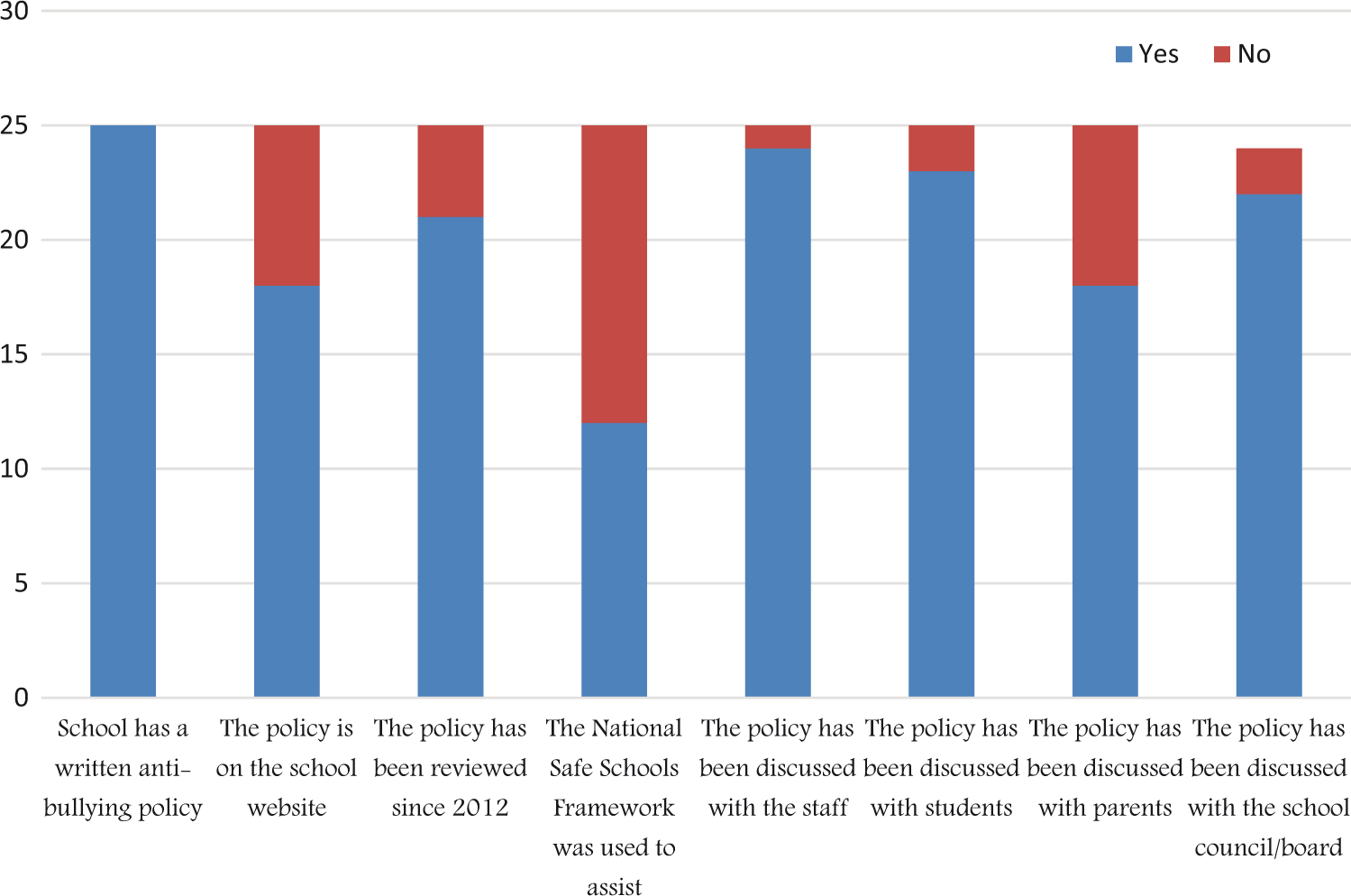
Notably, the schools in the sample were evenly divided as to whether or not the National Safe Schools Framework had been used. With few exceptions, schools indicated that they had discussed the anti-bullying policy with their staff, students and school council/board. However, over one-third of the schools had not discussed the policy with parents or made the policy available on the school website. These results did not differ significantly between primary and secondary/combined schools.
Twelve of the 25 schools had conducted a student survey of bullying. The results of the surveys were shared with staff at eleven schools, with the school council at 10 schools, with students at nine schools and with parents at eight schools. Eighteen of the schools indicated that they had addressed bullying at meetings either at the whole-school or whole-year level. Professional development sessions for staff members were held at 11 schools. In addition, four schools indicated that they had received relevant advice from a non-school education department advisor, a further 10 were unsure and four reported that this had not been the case.
Classroom action addressing bullying
Reported extent of use of classroom anti-bullying activities by type of school (n = 25 schools).
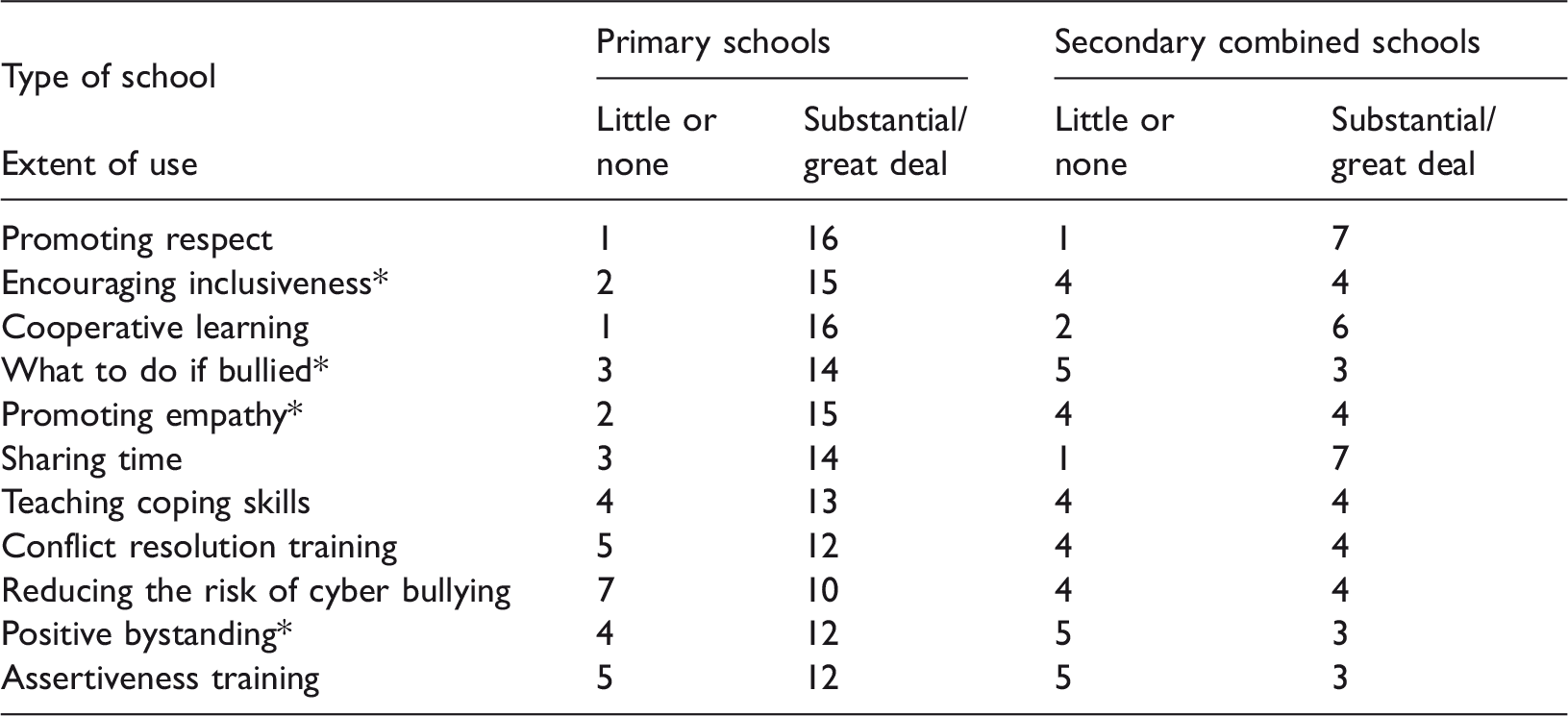
Difference between types of school significant by Barnard’s test, p < .05.
The results in Table 1 indicate that most schools report putting in a substantial effort into reducing bullying through work with students in classrooms with the exception of cyberbullying in primary schools. Here, more than half the schools report doing little or no class work in this area.
The proportion of primary schools which conducted various classroom activities to address bullying was generally greater for primary schools than Secondary or Combined schools. Differences were significant (p < .05) with respect to the promotion of inclusiveness, empathy, positive bystander behaviour and providing instruction on what to do if bullied.
Peer support
Although a majority of schools (60%) indicated that they promoted peer support, the support was provided mainly in primary schools. Thirteen of the 16 primary schools indicated that they did, compared with two of the nine non-primary schools. Barnard’s test: Wald statistic = 2.89, p < .01 indicates that this difference is significant.
Peer mediation training was provided in a minority of the 25 schools, namely five primary and two other schools. Comments from teachers from both primary and secondary schools indicated that in some cases a buddy system was employed whereby younger students were ‘buddied’ with older ones so that support could be provided by the older students.
Evaluations of specific actions to prevent bullying
In each case respondents were asked to indicate whether each of eight actions (listed in Figure 2) undertaken at their school had had a positive effect (decreased bullying), a negative effect (increased bullying) or had nil effect (made no difference). Results were provided by 25 schools. One strategy (peer mediation) was rated by 22 schools only.
Schools (n = 24–25) rating actions to reduce bullying from negative to very positive.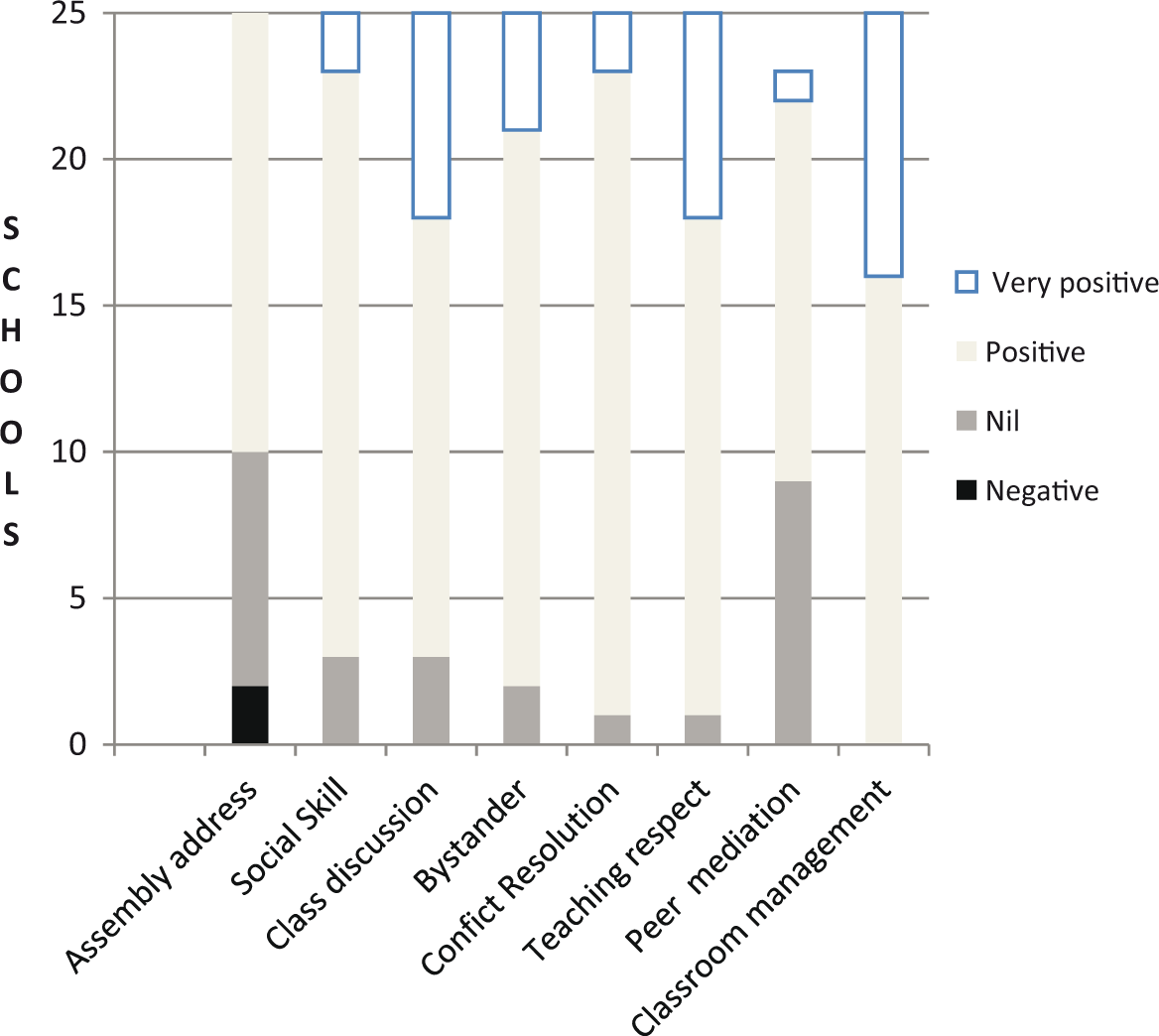
As indicated, the majority of schools rated each action as positive or very positive in stopping bullying. Classroom management was unique in being rated as positive or very positive by all the schools. Overall, addresses given at assemblies and peer mediation were the actions that were the least highly rated.
School policy on reporting bullying
All 25 schools reported that students were instructed to report any incidents of bullying to a teacher or counsellor. At 19 schools, students were advised that they could report an incident without going directly to a school staff member, for instance by sending a message using a ‘bully box’ made available to them.
Asked to say under what circumstances they would take action if the bullying took place outside the school, 19 schools indicated that they would do so if the bullying took place on the way home from school, 16 if it happened between home and school on public transport, and seven if it happened during the weekend or on a school holiday. Twenty-four schools reported that they actively encouraged students to report cases of cyberbullying occurring outside the school and that they would investigate whether the students were also being bullied at school. Twenty of the schools indicated that they had in this way identified the perpetrators.
How cases of bullying are handled
In seeking to identify ways in which schools handled cases of bullying, the questionnaire included the following brief descriptions of six intervention methods, as identified by Rigby (2012):
Direct sanctions involve the use of penalties, punishments or consequences administered in accordance with school rules after bullying has taken place. Strengthening the victim involves helping the victim to acquire and employ social and assertiveness skills in order to cope more effectively, especially with verbal forms of bullying. Mediation involves inviting two persons in conflict to meet with a mediator to resolve any dispute or difference that may underlie or fuel any bullying behaviour. The mediator – a staff member or trained peer mediator – remains neutral and refrains from imposing a solution. Restorative practice involves a meeting which includes the identified ‘offender(s)’ and the victim. The former are required to reflect on the harm that has been done, experience a sense of remorse and act restoratively, for instance to apologise. The Support Group Method is a non-punitive method which involves a meeting first with the victim, then with those identified by the victim as students who are doing the bullying. The meeting includes other students who are expected to be supportive of the victim. The victim is not present. The practitioner shares knowledge of the victim’s distress and requires each person present to state how they will help the person who has been bullied. The situation is then carefully monitored. The Method of Shared Concern is a non-punitive method that begins with one-to-one interviews with students who are suspected of bullying someone. After the practitioner has shared a concern for the victim, each suspected student is asked to indicate how he or she will act to improve the situation. The outcomes are then monitored. Subsequently the suspected bullies are required to meet as a group with the practitioner to determine how the problem is to be resolved. A final meeting is held, this time including the victim, to reach an agreed and sustainable resolution.
Frequency and perceived effectiveness of bullying interventions in cases undertaken in the last 12 months (n = 25 schools).
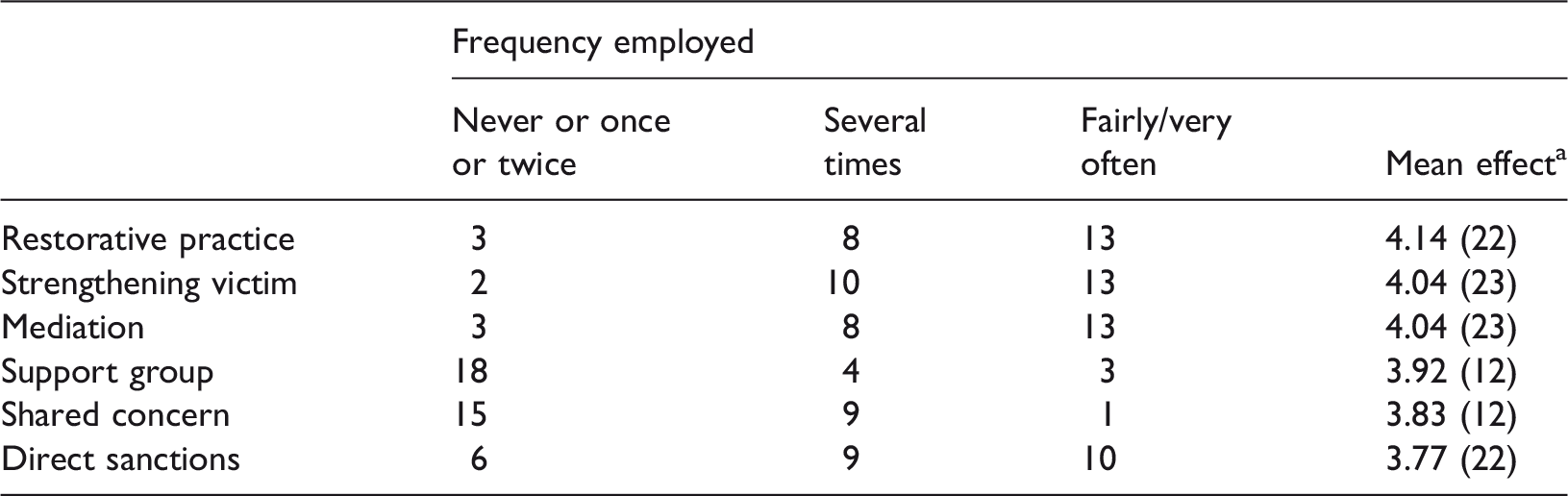
The mean effect was computed from results obtained from school ratings of the effectiveness of the bullying intervention at their school. The scoring was: Very negative effect (increased bullying) = 1; Negative effect = 2; No effect = 3; Positive effect = 4; Very positive effect (decreased bullying) = 5. Numbers for each intervention are given in parentheses.
Results showed marked differences in frequencies with which methods of intervention were used, whereby the Support Group Method and the Method of Shared Concern were used far less often than the other methods. The schools commonly did not rely exclusively on one method.
Spearman correlations between the frequencies of particular methods being employed by schools were in some cases substantial. Thus, the correlation (r) between the Method of Shared Concern and the Support Group Method was 0.77 (p < .001); between Direct Sanctions and Strengthening the Victim, the correlation was 0.50 (p < .01). The correlation between the Method of Shared Concern and the Support Group Method was 0.77 (p < .001), the correlation between Strengthening the Victim and Mediation was 0.71 (p < .001) while the correlation between Direct Sanctions and Strengthening the Victim was a bit lower at 0.50 but still non-trivial (p < .01).
Ratings of the effectiveness of the intervention methods were highest for Restorative Practice and lowest for Direct Sanctions. Mean ratings for the different methods were compared using a related samples t-test. Based on results which were provided by the same schools only one comparison produced significant results whereby Restorative Practice (mean: 4.10, SD = 0.45) was rated significantly more effectively than Direct Sanctions (mean 3.75, SD = 0.64; t value = 2.33, df = 19, p < .05).
No significant differences were found either in terms of use of methods of intervention or ratings of effectiveness between primary schools and secondary/combined schools.
Forms of direct sanctions used by schools in cases of bullying
Figure 3 shows that direct sanctions were reported as being employed in cases of bullying at times by all or most of the schools (N = 24 or 25). The most commonly used sanctions were verbal reprimands, withdrawal of privileges, temporary removal from the classroom and internal detention. ‘Community service’ was less commonly used. Cases of suspension for bullying were relatively rare. However, slightly more than half the schools had reported cases to the police.
Reported use of direct sanctions in cases of bullying in 25 schools.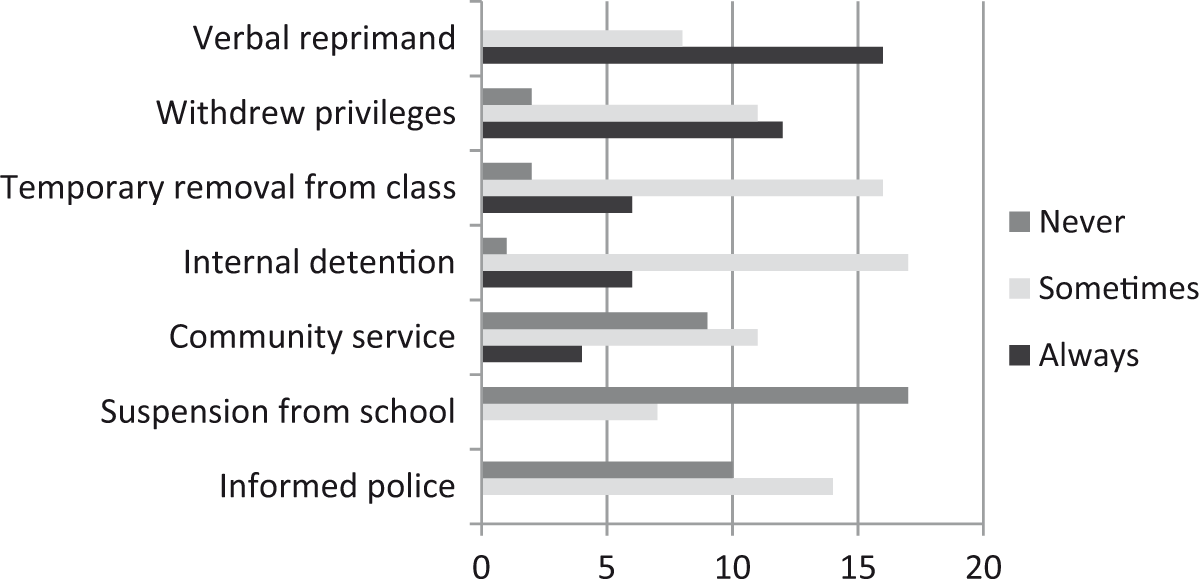
Reported circumstances in which the school used particular intervention methods
Comments made by respondents indicated differences in when the methods were used in different schools, with some specifying particular circumstances for which specific methods were used; some indicating that more than one method was used in addressing some cases; and some stating that only one method was used in all cases.
Direct sanctions
Some reported that direct sanctions were used when bullying was particularly severe and also when other forms of intervention such as counselling and restorative practice had not been successful. Others applied the method more broadly, for instance ‘when incidents are reported, suspected or observed’ and ‘when there is direct evidence of bullying’.
Strengthening the victim
This method was generally used where a pattern had emerged indicating a history of a student being a victim and also when it was apparent that the victimised child lacked the capacity to cope due to a deficit in social skills, especially in ‘low-level forms of bullying’ such as exclusion.
Mediation
The main circumstance identified by teachers was when students involved in one-on-one conflict agreed to the mediation to resolve their interpersonal problems. There were, however, important differences between respondents. Some reported that mediation was used when the bullying was severe, when groups or gangs were involved, and when restorative practice and circle time had been tried and failed. Some specified that it was used when individuals of the same age were involved in low-level bullying incidents. Peer mediation was used by some schools with younger children involving ‘small issues’ and when children might feel intimidated by teacher intervention. Finally, some respondents stated that mediation was used in all cases of bullying.
Restorative practice
Generally, restorative practice was used with more severe and persistent forms of bullying and as a means of restoring damaged relationships. Some reported that it was used in all cases, for example ‘when incidents [of bullying] occur’ and ‘as often as possible’. One school used it after a student has been suspended.
Support group method
This approach was used when groups or gangs of students were involved, and especially with students at a primary level and in cases of relatively low severity. It was seen as particularly relevant when the victim was distressed, the names of the bullies were known and the school wanted to find out more clearly what had happened. One respondent opined that it was used to address deep-seated, entrenched behaviours or family behaviours. Another respondent specified that the support group method was used only when parents and students wished to be involved.
Method of shared concern
Four circumstances were identified as determining its use: when ongoing bullying is happening with a group ‘picking’ on one particular student; when a small group of friends had reported low level malicious or spiteful behaviour; in the case of ‘repeat offenders’; and when a person involved in the bullying is identified and his/her parents are contacted.
Training of teachers in intervention methods
Schools were asked what training or instruction (if any) had been received by staff members in the use of these intervention methods. It was specified that training could include reading about the approach, viewing videos or using interactive modules. Responses were provided by between 22 and 24 of the schools, depending on the intervention method. Training in Restorative Practice was reported by 83.3 per cent of the schools, followed by Mediation (75.0%), Strengthening the Victim (73.9%), Direct Sanctions (68.2%), the Support Group Method (30.4%) and the Method of Shared Concern (30.4%).
How teachers monitored and evaluated interventions?
Monitoring was reported as more likely in very severe cases. Thus, 18 schools reported that they ‘always’ monitored such cases, 10 did so in moderately severe cases and six in non-severe cases. The monitoring was reported as taking place for several weeks by nine schools, around a month by seven schools and for several months by eight schools. All schools indicated that they always or usually ‘kept an eye on things’, most commonly by consulting the relevant teachers (21), followed by interviewing the bullied child (20), questioning bystanders (17), interviewing the parents of the victim (13) and interviewing the parents of the bully (10).
Perceived overall effectiveness of interventions
Perceived effectiveness was assessed by asking schools to estimate whether interventions in cases contributed to a decrease or increase in the bullying. Schools varied greatly in their estimations of outcomes, with decreases ranging from 35 to 100 per cent, increases from zero to 20 per cent and staying the same from zero to 55 per cent. The average percentage of cases reported by the 25 schools in which a decrease in bullying was observed was 77 per cent, with 19 per cent of cases staying the same, and 4 per cent of cases showing an actual increase in the bullying. Asked to look back over the last two years, 15 schools reported a decrease in physical bullying while approximately half indicated that verbal and indirect bullying (12 and 13 respectively) had remained at the same level. Also about half the schools (12) had perceived an increase in cyberbullying.
Education and training in countering bullying
Ratings for training relevant to bullying received by teachers at the schools.
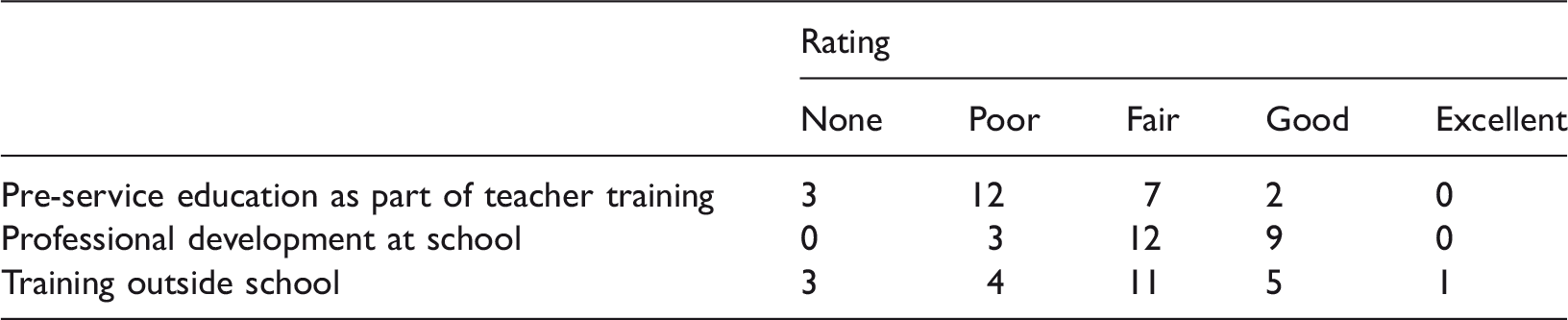
Five areas in which training was thought to be most important (i.e. mean rating above 4 on a five-point scale) were (a) dealing effectively with actual cases (mean = 4.8), (b) classroom management (mean = 4.8), (c) providing emotional support for victimised children (mean = 4.6), (d) working well with parents on bullying issues (mean = 4.6) and (e) helping children to cope with aggressive peers (mean = 4.6).
Discussion
This study has explored a variety of ways in which a self-selected sample of Australian schools sought to counter bullying between students. Given the limitations of the study in terms of sample size and representativeness it does not purport to provide definitive conclusions relating to Australian schools, but rather to describe the kinds of actions that are being taken in Australian government schools, how they are being evaluated by teachers, and also to comment upon what is being done by schools in the light of other reported studies.
First, all schools in the study (n = 25) acknowledged that bullying of different kinds was occurring at their school, although estimates of its prevalence differed widely. This result suggests that school perceptions of bullying frequency are not uniform and in fact not consistent with data obtained from students in Australian schools, which indicate little variation between schools in bullying prevalence (Shaw & Cross, 2012). Average school estimations of 63 per cent of students being bullied at school at least once over the previous year and 19 per cent of students being bullied every few weeks or more suggest that Australian teachers are well aware of the prevalence of bullying at their schools. In fact, their estimates slightly exceed those reported by students (Rigby & Johnson, 2016).
The schools reported having taken numerous proactive or preventive steps to address the problem of bullying, in part in response to directives from their state/territory educational jurisdictions, and in part by selecting and implementing strategies they think would work at their schools. Each of the 25 schools had developed a written anti-bullying policy which was discussed with the majority of stakeholders, namely, teachers or school counsellors at the school, school councils, parents and students. With only two exceptions, the school had required that issues of bullying be discussed with students in class.
A detailed examination of the reported work of schools reveals some notable variations in what schools do. Whilst most schools claim that they discuss their anti-bullying policy with parents, seven of the 25 schools did not do so. Given the importance of teacher–parent cooperation in preventing bullying and effectively addressing cases of bullying, the failure to involve parents at some schools would appear to limit the policy’s effectiveness (Axford et al., 2015). The claim that in almost all of the school students were involved in discussions of the policy implies that schools were actively seeking the collaboration of students in addressing bullying. However, further research in Australian government schools by Rigby and Johnson (2016) with 1,618 students in Years 5 to 10 indicated that 50.8 per cent of them were either unaware that the school had a written policy on bullying or thought that it had not. Among parents (N = 163) the corresponding figure was 34.8 per cent. This suggests that the anti-bullying policy in many schools is not being communicated adequately to stakeholders. Based on research undertaken in England, Woods and Wolke (2003) noted that anti-bullying policies have limited effectiveness in reducing bullying if they are not fully implemented. Optimum implementation entails effective communication and discussion with both students and parents.
It was clear that most schools put considerable emphasis on the development of attitudes and skills that were thought to be helpful in reducing bullying. This is consistent with the current orthodoxy in thinking about how bullying can be prevented, as reflected in the enthusiasm among researchers for employing packages such as Social and Emotional Aspects of Learning (SEAL) internationally (Durlak, Weissberg, Dymniki, Taylor, & Schellinger, 2011; Humphrey, 2013). It is theorised that students can be taught emotional and social skills that can help to keep them and others safe from bullying. Highest priority was assigned to promoting respect for others and including students who could be marginalised or excluded. Some of the attitudes and skills were general in nature such as being empathic, acting cooperatively and coping. Some were specific to bullying such as what to do if bullied and how to act as a bystander of bullying. Given the rising importance of cyberbullying, the relatively low priority given to this type of bullying was surprising with 11 of the 25 schools doing comparatively little to address cyber safety through class work.
Schools differed greatly on some of the things they did. The small subsamples of primary and non-primary schools provided limited scope for comparisons. However, it was notable that, in general, more classroom work on bullying was reported in primary schools, particularly with respect to promoting inclusiveness and empathy, positive bystander behaviour and instruction on what to do if bullied. Although it might be argued that the social development of younger children is of particular concern in primary schools, it is not clear whether work with older students of a similar nature would not be equally justified to address bullying at the secondary level.
Judgements about the value of strategies that were used in schools to address bullying ranged from talks at school assembles – the least positively rated – to effective classroom management, the most positively rated. Strong evidence confirming the effectiveness of such strategies in reducing bullying is generally lacking, although Roland and Galloway (2002) reported strong support for the positive effects of classroom management, and one study provided evidence supporting the use of positive bystander behaviour (Salmivalli, Voeten, & Poskiparta, 2011). Again, there were notable variations between schools on the effectiveness of some strategies, for example three schools believed that class discussions had ‘no effects’ on bullying behaviour and two that the effects in reducing bullying were ‘very positive.’
Strategies for dealing with cases of bullying were examined by asking teachers to consider their use of six different methods. In general, schools employed more than one form of intervention. As in the study conducted in England by Thompson and Smith (2011), the most frequently used methods of intervention were restorative practice, mediation, direct sanctions and strengthening the victim; the least used were the Method of Shared Concern and the Support Group Method. Consistent with their relatively high usage, restorative practice, mediation and strengthening the victim were rated most positively. However, despite comparatively frequent use of a range of direct sanctions, ranging in severity from verbal reprimands to suspension from school, as a method, direct sanctions was rated as the least effective, notably significantly less effective than restorative practice. Similar observations have been made in a study in the USA of 213 school psychologists as reported by Sherer and Nickerson (2010). They observed that ‘Using disciplinary consequences with bullies was one of the most frequently implemented strategies in respondents’ schools despite being perceived as one of the most ineffective strategies’ (2010, p. 225). One possible explanation for this inconsistency is that teachers continue to respond in the traditional way to bullying incidents despite a growing awareness – not yet translated into action – that the use of sanctions is often ineffective in stopping the bullying.
Of particular interest are the judgements of schools regarding when to employ particular methods of intervention. Whilst there was some general agreement that direct sanctions were used in more severe cases of bullying and that the Support Group Method and the Method of Shared Concern could be used for bullying involving groups, there were disagreements with respect to the use of some other methods. This was particularly evident for mediation. It is generally held among researchers that mediation may be usefully employed in cases in which both or all the students involved wish to be assisted over matters in dispute – a relatively rare occurrence in cases of bullying according to Cremin (2007). Nevertheless, some schools saw this approach as relevant to resolving all forms of bullying including cases of extreme severity. Most schools indicated a readiness to use several intervention methods in addressing some cases, for example, both direct sanctions and strengthening the victim. The finding that three quarters (77%) of the 24 schools reported a decrease in the bullying behaviour on the part of the student perpetrator may be compared with findings from a similar study conducted in England by Thompson and Smith (2011). The latter study which was based on reported outcomes from 274 treated incidents indicated a decrease in 87 per cent of cases. While relatively small size of the Australian sample and differences in assessing outcomes in the two studies reduces the comparability of these results, they can be taken as some evidence that schools appear to be aware of the limitations of the effectiveness of their attempts to reduce bullying in a substantial number of cases. Data obtained directly from Australian students (N = 331) who have been bullied at school and sought help from teachers suggest that bullying was reduced in 69 per cent of cases (Rigby & Johnson, 2016). Arguably outcomes reported by students may be somewhat less positive than those reported by schools.
The need for training to address bullying was generally recognised. Training provided through professional development meetings led by staff members was rated as most helpful. Pre-service training on the topic of bullying was seen by a large proportion of teachers as poor and inadequate, a finding consistent with reports from the USA by Bauman and Del Rio (2005) and from England by Nicolaides, Toda, and Smith (2002). The training most highly valued was how to deal effectively with actual cases of bullying.
Limitations
As a survey of what Australian schools are doing about bullying this study has limitations. First, it drew exclusively upon data provided by government jurisdictions and schools in Australia that were interested in taking part. Although it was possible to obtain data from a range of primary, secondary and combined schools in six of the eight government jurisdictions, the sample cannot be considered as representative. The small size of the sample, 25 schools, further limits the generalisability of the findings. It must therefore be regarded as an exploratory study with very preliminary results that provide a basis for a larger, more representative inquiry.
Conclusions
Responses from the 25 government schools involved in the study indicate that a range of anti-bullying strategies – both proactive and reactive in kind – are used, to counter bullying. Results showed a considerable diversity in terms of the specific strategies that were applied and schools gave varied opinions regarding the strategies’ effectiveness.
In no cases were proactive strategies entirely successful in preventing cases of bullying from occurring completely, although schools generally reported a substantial degree of effectiveness. Similarly, reactive strategies were reported as being only partially successful in reducing bullying. Schools indicated a need for more effective training in the uses of anti-bullying methods, especially in tackling cases of actual bullying.
Footnotes
Declaration of conflicting interests
The author(s) declared no potential conflicts of interest with respect to the research, authorship, and/or publication of this article.
Funding
The author(s) disclosed receipt of the following financial support for the research, authorship, and/or publication of this article: The article is based upon data generated through a study funded and supported by the Australian Department of Education and Training and was undertaken under the auspices of the School of Education at the University of South Australia in 2014–2015.