




Abstract
Adolescence is a time of great physical, emotional and social development complicated by a key organisational change in schooling. This study investigated what young people in primary school reported being worried about with their impending move to secondary school, and how their expectations of the transition experience predicted their actual experience. A sample of 2078 students aged 12–13 years enrolled to attend 20 Perth metropolitan Catholic secondary schools was invited to complete two surveys six months apart, the first at the end of Grade 7, followed by Term 1 of Grade 8. The data indicate one half of all Grade 7 students anticipate a positive transition experience, yet almost 70% of students in Grade 8 report the transition was a positive experience for them, with boys reporting a more positive transition experience overall. Moreover, students who expected a positive transition were more than three times more likely to report an actual positive transition experience. These findings and information about what boys and girls are most looking forward to or worried about at secondary school are presented and implications for future interventions explored.
Keywords
Adolescent development rarely occurs in a vacuum. Indeed, much of the developmental literature builds on the early work of Bronfenbrenner (1979) who first described the nested and inter-related structure of contexts and settings which shape human development. A critical context which supports and extends young people’s development is their school. The importance of this setting has been formally recognised in Australia through the Melbourne Declaration on Educational Goals for Young Australians (Ministerial Council on Education, Early Childhood Development and Youth Affairs, 2008). This national policy statement emphasises the critical role of schools – in partnership with families and the broader community – in shaping the academic, social, physical, emotional and moral development of young people.
Schools can have a profound influence on adolescents’ development by providing safe, supportive and developmentally appropriate learning contexts. In recent years, attention in education has focussed on the ‘middle years’ of schooling where learning can be challenged by increasing academic disengagement (Ministerial Council on Education, Early Childhood Development and Youth Affairs, 2008). The Melbourne Declaration therefore recommends that teaching practices in these years should enhance motivation and engagement in learning through highly tailored teaching strategies delivered in developmentally appropriate environments. However, the combination of academic disengagement and other developmental changes (such as the desire for increased autonomy from adults) creates a complex set of social, emotional and learning needs for these early adolescents. The middle school years are thus one of the most challenging times in which to tailor school structure for developmental needs (Brinthaupt, Lipka, & Wallace, 2007). This is further compounded by the transition to secondary school which is often structured differently to primary school and may further affect adolescents’ wellbeing and academic engagement.
Australian educators and researchers have been concerned about the impact of transition on young adolescents for some time. Seminal research reports such as that of Power and Cotterell (1981) highlighted the issue of transition from primary to secondary school in the early 1980s and stressed the need for continuity in the schooling context for young people. Yet, young people continue to experience difficulties during the transition into secondary school. The purpose of this study was to explore the transition from the students’ perspective, considering all aspects of the social, academic and structural changes they were faced with.
In Western Australia, the transition from primary (Grade 7, age 12) to secondary school (Grade 8, age 13) signifies a considerable social and environmental change. The primary school setting is characterised by smaller class sizes and a smaller student cohort, as well as a classroom structure where 25–30 students are taught by one main classroom teacher. Furthermore, young adolescents are often the oldest students in a primary school which typically accommodates children aged from 4 to 12 years of age. In contrast, Australian secondary schools usually have larger student cohorts (range 30–180) and employ specialist teaching staff who teach 25–30 students for between 30 and 80 minutes before they move to their next class. Typically, at some time during the school day, students meet with the same group of 20 peers and one teacher for administrative and pastoral purposes. This teacher is the primary provider of students’ pastoral care for the entire year but sees them for only a limited time each day. These differences in primary and secondary school structures, not unique to Australian schools, require young adolescents to adjust to significant changes in the learning environment.
For most students, the change from primary to secondary school is an exciting time; however, for some students, this transition compounds their academic disengagement (Eccles et al., 1993). Difficulty in adjusting to change in the learning environment can be compounded by concerns relating to their social relationships, academic achievement and becoming familiar with secondary school routines and structures (Akos & Galassi, 2004; Cohen & Smerdon, 2009). Structural issues reported by students include the fear of getting lost or not finding their classroom on time (Rice, Frederickson, & Seymour, 2011; Zeedyk et al., 2003). Academic concerns include the homework load, having unfriendly or ‘hard’ teachers and fear of not being able to keep up with the classroom learning. Socially, young people are concerned about being the youngest in the school, experiencing bullying and meeting new people (Akos & Galassi, 2004; Cohen & Smerdon, 2009; Rice et al., 2011; Zeedyk et al., 2003). Conversely, and often simultaneously, many look forward to the social and structural aspects of a new school including making new friends, having more freedom (including lockers), a bigger and more varied canteen and new sports programmes (Akos & Galassi, 2004; Smith & Lim, 2007).
Much research about the immediate short-term impact of these changes has been conducted. In particular, research suggests that a decline in academic motivation and achievement occurs post-transition to secondary school (Benner & Graham, 2009; Parker & Neuharth-Pritchett, 2009) as well as changes to self-concept and self-esteem (Parker & Neuharth-Pritchett, 2009). Social and emotional challenges during the transition period can lead to frustration and anxiety, causing negative or disruptive behaviours (Cohen & Smerdon, 2009). Students may also feel less connected to their schools (Akos & Galassi, 2004; Isakson & Jarvis, 1999) with problematic peer interactions in primary school limiting students’ transition adaptation. This can facilitate the perception of a more threatening secondary school climate, especially among those who are bullied, who bully others or who are both bullied and bully others (Nansel, Haynie, & Simons-Morton, 2003). Australian students who experience a positive transition to secondary school report lower levels of victimisation, depression, anxiety and loneliness than those who have a difficult transition (Waters, Lester, Wenden, & Cross, 2012).
While many students report their fears and hopes about the transition to secondary school, very little research describes what the actual transition experience is like for these young people, or the impact their expectations have on their ability to transition successfully. Some studies suggest the pre-transition year is characterised by higher levels of anxiety; however, it is often unclear whether this is part of normal adolescent development or is linked to the stressors of impending school transition (Grills-Taquechel, Norton, & Ollendick, 2012). Rice et al. (2011) study of a small sample of UK students found both school-related and generalised anxiety symptoms were highly correlated with concerns about school (including social, structural and academic factors) both before and after the transition to secondary school. This suggests that school factors contribute significantly to young people’s levels of anxiety. Indeed, US national anxiety prevalence rates indicate that anxiety increases most rapidly in early primary school, and then, while it continues to increase, does so at much slower rates during adolescence (Merikangas et al., 2010).
The success of any transition involves the process of coping with change. Resilience research suggests that protective factors (such as supportive relationships, sense of belonging and positive self-esteem) can prevent or mitigate poor developmental outcomes during times of change (Garmezy, 1985). Optimistic thinking styles may also act as a mechanism for coping (Longaretti, 2006). A Melbourne mixed-method study of 141 students found positive thinking, positive self-concept and supportive peer relationships significantly impacted students’ ability to cope during the transition from primary to secondary school (Longaretti, 2006), while a US study found students in primary school who had positive motivation, achievement and self-esteem coped better with transition (Roeser, Eccles, & Freedman-Doan, 1999).
The Person–Environment Fit theory has been used to explain why the change in school context can create concern and negative outcomes for some adolescents (Eccles et al., 1993). Person–Environment Fit theory acknowledges the importance of context in shaping development, while considering the appropriateness of the school setting for best meeting adolescent developmental outcomes. Specifically, the Person–Environment Fit theory posits that school environments should offer students the structures and services required for optimal development as well as ensuring that the environment is sufficiently challenging to encourage further intellectual, social, cognitive and behavioural growth. Eccles et al. (1993) suggested that many secondary school environments are incongruent with the developmental needs of adolescents, such as the need to establish close bonds with adults other than parents and the desire for greater autonomy and decision making. They argued that these developmental needs remain largely unmet in secondary school, as teachers see students for less time each day than in primary school and student involvement in rule and decision making is less common. Furthermore, the greater emphasis on academic performance and standards in secondary schools can affect students’ self-efficacy at a time when they are particularly vulnerable to concerns about peer status and the perils of standing out from the crowd (Eccles et al., 1993).
With a grounding in Person–Environment Fit theory, we hypothesise that the secondary school context is so different to primary school that it generates considerable anxiety and concern. This article therefore explores young peoples’ expectations about the transition to secondary school (while in Grade 7) and compares these expectations to their later transition experience. Specifically, we address four key research questions: (1) What proportion of primary school students anticipate a positive transition experience? (2) Which aspects of the secondary school environment are primary school students most looking forward to or concerned about? (3) What is the relationship between a student’s anticipated transition experience and their reported experience? and (4) How do primary school students’ transition concerns predict their actual transition experience? These questions add a unique contribution to the available literature as they contrast expectations with actual experience, which is helpful for future intervention development.
Method
Study design
The data used in this study were drawn from the Supportive Schools Project (Cross, Hall, Waters, & Hamilton, 2008), a three-year randomised cluster intervention comparison trial (2006–2008), testing the impact of a whole-school intervention, including curriculum, on Western Australian students’ experiences of bullying. In Western Australia, students currently transition from primary school at the end of Grade 7 when they are 12 and commence secondary school in Grade 8, the year they turn 13. In this article, self-administered surveys completed by a cohort of students in their last term of primary school (November, Grade 7) and first term of secondary school (February, Grade 8) from the 10 comparison schools only will be examined to avoid potential intervention effects from the larger study. Approval for the Supportive Schools Project was given by Edith Cowan University’s Human Research Ethics Committee and the Catholic Education Office (CEO) of Western Australia.
Sample selection and recruitment
All Western Australian secondary CEO schools located in the metropolitan area of Perth, Western Australia, were invited to participate in this research. Of the 28 eligible CEO schools, 20 agreed to participate in the Supportive Schools study. After being recruited into the project, schools were stratified according to total population size of the school (above and below the median school size of 811 students) and the school’s socio-economic status (SES) (above and below the ‘SES Index Modified’ median score of 100) and allocated to four strata and randomly assigned to the intervention or comparison condition. This process was used to ensure that there was an equal representation of schools differing in size and SES in the intervention and comparison groups.
Participation
Sample characteristics.
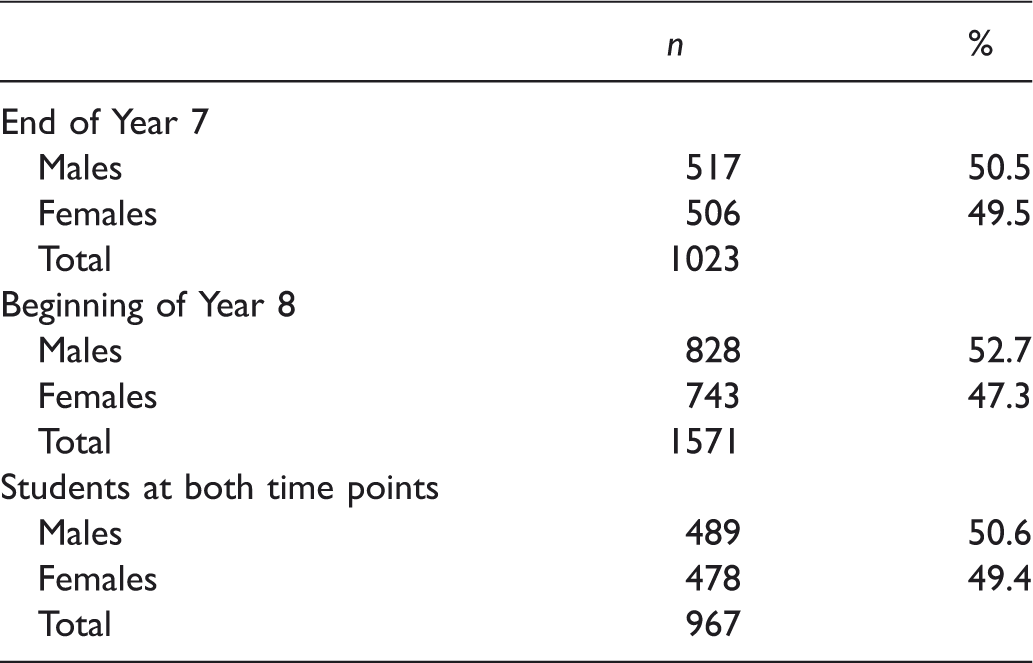
Grade 7 students with parental consent had a questionnaire mailed to them at home to complete in their own time. Parents were encouraged to not assist their child as he/she completed the survey, to limit their influence on their child’s responses and help maintain the child’s confidentiality. All students were provided with a reply-paid envelope to mail their completed survey to the research team.
Grade 8 students with parent consent completed their questionnaires in class with the assistance of trained university staff who used a strict procedural and verbal protocol. Students’ confidentiality was ensured through the use of identification numbers, and teachers were asked not to look at students’ responses. Student questionnaires were collected by the university staff upon completion.
Measures
This study comprised measures relating to students’ pre-transition expectations and their actual transition experience. The dependent variables were expected and actual transition ease or difficulty. Independent variables were those aspects of the secondary school that students were looking forward to and those about which they were concerned.
Transition expectation
Students were asked to rate their expectation of transition ease or difficulty from primary to secondary school through a question adapted from Akos and Martin (2003) ‘How do you think the move from primary to high school will be for you?’ Responses were collected on a five-point scale (1 = difficult, 2 = somewhat difficult, 3 = somewhat easy, 4 = easy, 5 = don’t know).
Transition experience
Students were also asked to rate the ease or difficulty of their transition experience from primary to secondary school through a question adapted from Akos and Martin (2003), ‘How was the move from primary school for you?’ Responses were coded on a five-point scale (1 = difficult, 2 = somewhat difficult, 3 = somewhat easy, 4 = easy, 5 = don’t know).
Aspects of transition that students looked forward to
Students were asked to choose as many items as were appropriate from a list of 14 aspects of secondary schools that students might look forward to in the following year. Items included: being in a larger school; more freedom; more students; being able to choose some classes; changing classes; older students; making new friends; having new teachers; participating in sports, clubs, etc.; having lockers; getting good grades; more school activities; more choices at lunch; and attending more school events (e.g. football games, social events). These items were adapted from a scale developed by Akos and Galassi (2004) for post-transition students. Only the stem of the question was adapted slightly to reflect their concerns before making the transition to secondary school while all response options remained the same. Reliability was measured by calculating a sum of the items students were looking forward to, with a resulting intraclass correlation (ICC) of 0.73 showing good reliability.
Transition concerns
Students were asked to choose as many items as were appropriate from a list of 14 aspects of secondary schools that might concern them. Also adapted from the scale developed by Akos and Galassi (2004), these included: finding my way around or getting lost; getting along with other students; pressure to do well; safety or being hurt by other students; being bullied; fitting in or making friends; new and more students; hard or unfriendly teachers; hard classes; new rules and expectations; how much homework I would have; feeling pressure to do things I don’t want to do; being made fun of; using a locker; riding the bus; getting to class on time; older students and getting good grades. Reliability was measured by calculating a sum of the items students were concerned about with a resulting ICC of 0.71 showing good reliability.
Statistical analysis
We first sought to explore the transition expectation, actual experience and the aspects students looked forward to and were concerned about by gender using Chi-square analyses. The number of aspects students looked forward to, and their number of concerns were summed to create a total positive score and a total concerns score for each student. The non-parametric Kruskall–Wallis test was used to determine differences between the total positive score and total concerns score and students’ transition expectations and experiences. Multi-level regression models with random effects were used to determine whether transition expectation was a predictor of transition experience, controlling for gender and clustering at the school level. All analyses controlled for the potential effect of gender differences, given that previous research has found boys and girls experience the transition differently. In this study, we measured students’ feelings toward the impending transition in Term 4 of Grade 7 and their actual experience in Term 1 of Grade 8.
Results
Research question 1: What proportion of primary school students are anticipating a positive transition experience and how did this compare to reality?
Transition expectation and experience by gender as a percentage of the sample.
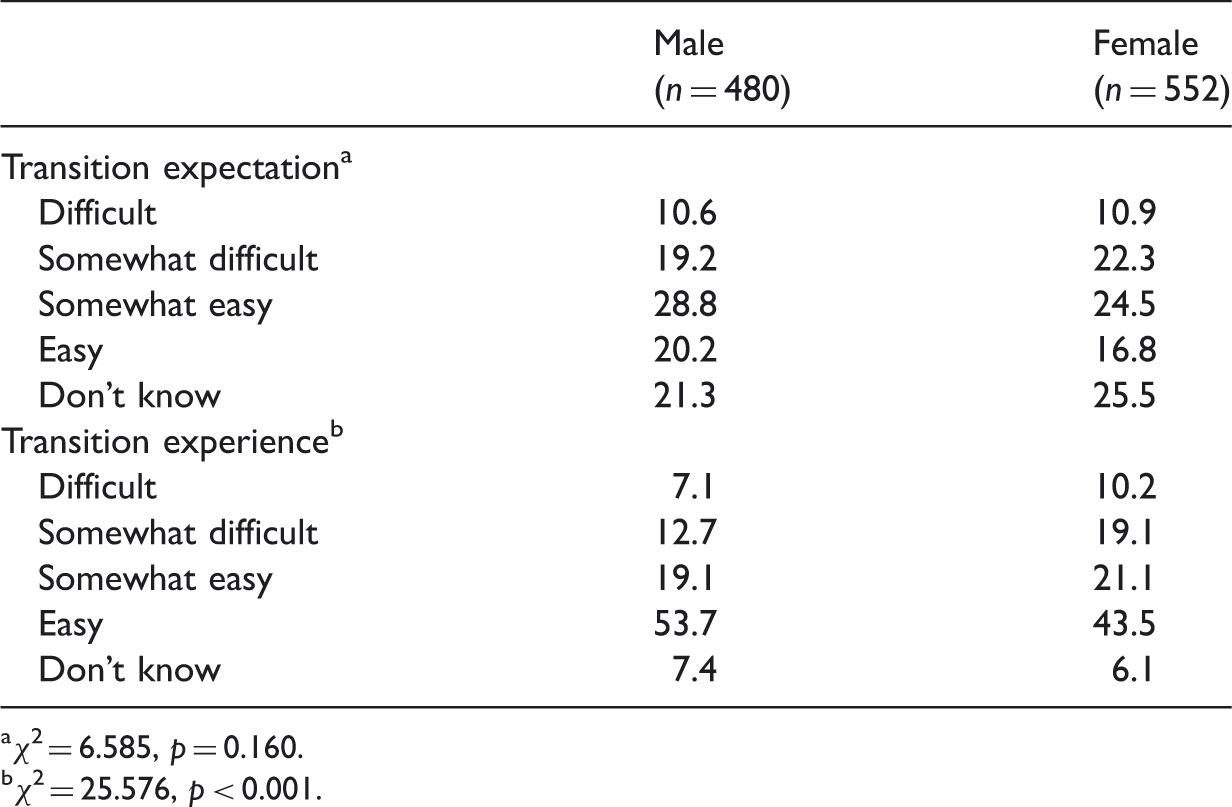
χ2 = 6.585, p = 0.160.
χ2 = 25.576, p < 0.001.
Research question 2: Which aspects of the secondary school environment are primary school students most looking forward to and concerned about?
Characteristics of secondary school that students looked forward to prior to transition by gender as a percentage of the sample.
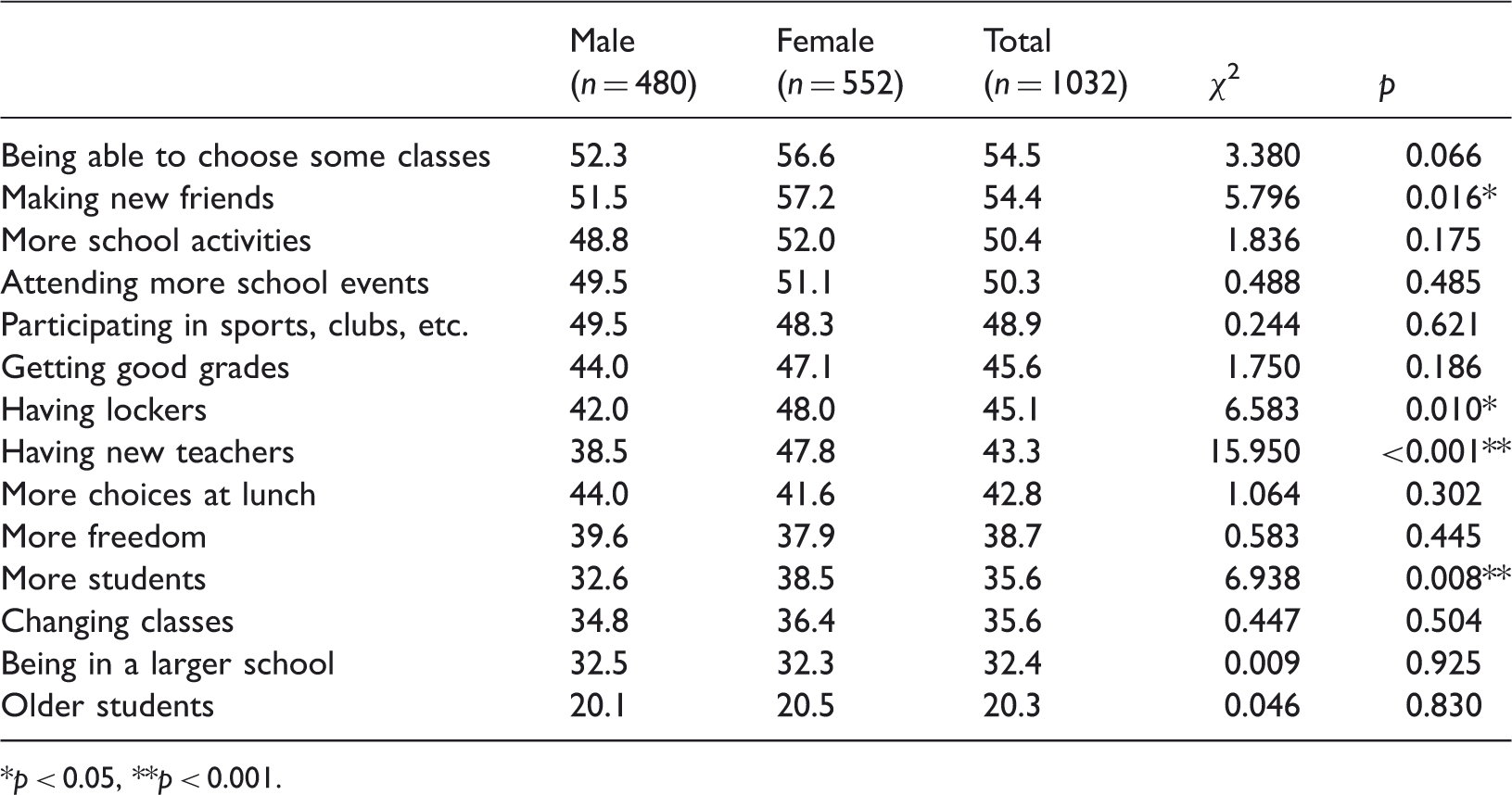
p < 0.05, **p < 0.001.
Characteristics of secondary schools students worried about prior to transition by gender.
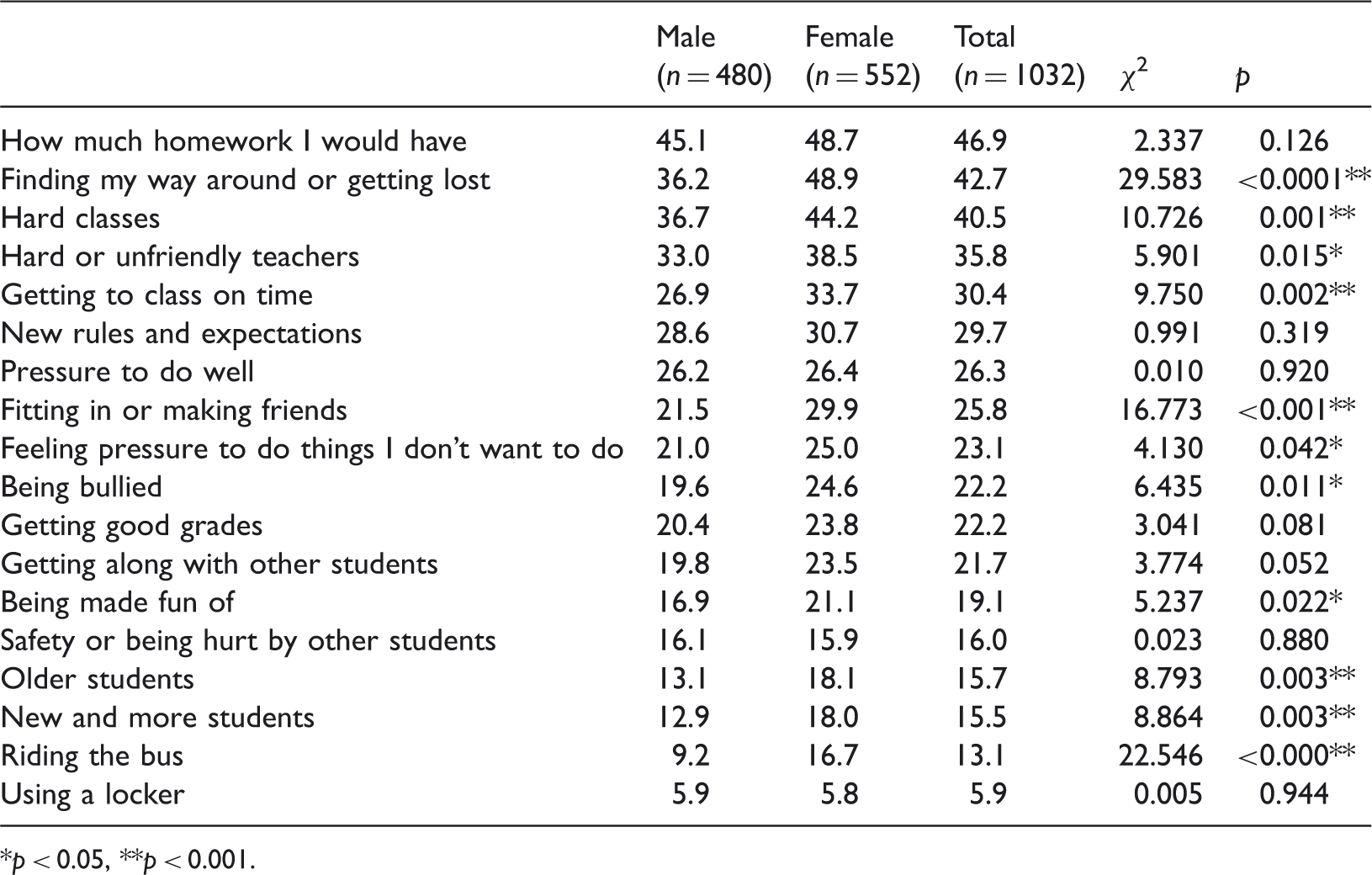
p < 0.05, **p < 0.001.
Research question 3: What is the relationship between a student’s anticipated transition experience and their reported experience?
Frequency of characteristics students worried about by transition expectation and experience.
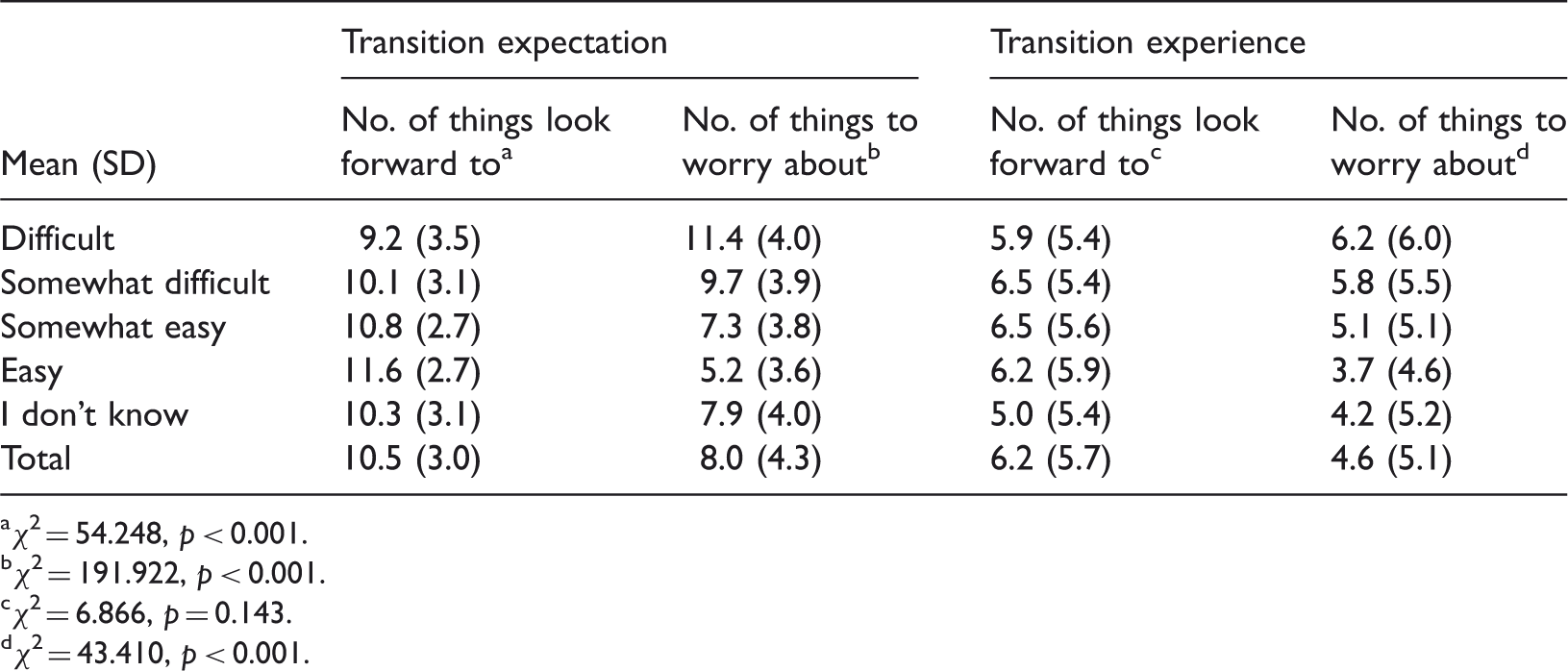
χ2 = 54.248, p < 0.001.
χ2 = 191.922, p < 0.001.
χ2 = 6.866, p = 0.143.
χ2 = 43.410, p < 0.001.
Research question 4: How do primary school students’ transition concerns predict their actual transition experience?
Logistic regression results for transition expectation as a predictor of transition experience.
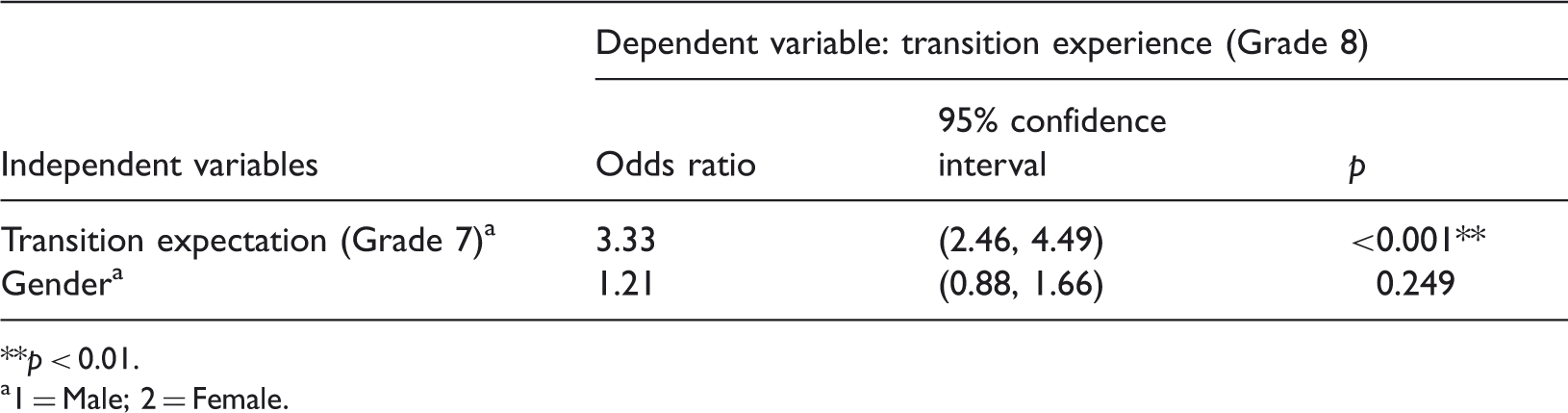
*p < 0.01.
1 = Male; 2 = Female.
Discussion
For the majority of the students in our sample, the experience of transitioning from primary to secondary school was positive. Half of the sample of students anticipated the transition period would be positive for them, but almost 70% of students in Grade 8 reported that the transition was actually easy or very easy. This may indicate some misconceptions among Grade 7 students about the difficulty of their impending transition experience. Indeed, consistent with previous research, this study demonstrates that most students are concerned about some elements of the transition to a new school environment, including academic, social and/or structural changes. However, research suggests that many of these concerns can be overcome after a settling-in period in the new school context (Pereira & Pooley, 2007; Power & Cotterell, 1981; Rice et al., 2011) and this appears to have been the case for most students in the present study.
We hypothesised that the Person–Environment Fit theory would apply to students as they moved from a smaller primary school to a larger, more academically focused secondary school. From our current data, it appears that approximately half of the young people were worried about many of the aspects of secondary school and how they may fit within that structure; however, after the transition, most reported that it was a positive experience for them. While most young people in our sample were able to adjust well to the new school context, one-quarter of all Grade 8 students found the actual transition to be difficult. Future research proposed by this research team will consider the impact of the Person–Environment Fit theory on this sub-sample of at-risk adolescents who have a difficult transition. It will propose and test structural, social and academic strategies to help tailor the new secondary school environment to these at-risk youth to minimise the difficulty of transition and the risk of school disengagement.
Expectations
To better understand why some students experience a difficult transition and not others, we asked students in Grade 7 to identify the social, academic and structural aspects of the secondary school they were looking forward to and the characteristics they were concerned about. These Western Australian data suggest students in Grade 7 were concerned primarily about structural and academic changes such as being in a larger school with older students, having hard classes and more homework and unfriendly teachers. While these concerns may be perceived by students before the transition period, Pereira and Pooley (2007) found the structural and academic changes faced by students were short term and most were overcome in our study sample after an initial settling in period into the new school context. These concerns are also modifiable through targeted and tailored orientation programmes to the secondary school structure and function while students are still in Grade 7.
In general, the girls in our sample reported being more concerned about the move to secondary school than the boys. Yet, more girls than boys reported looking forward to changes in social dynamics (including making new friends), attending more school events and a greater variety of school activities in which to participate. This female emphasis on social relationships is similar to that found by Akos and Galassi (2004) in American student populations and is echoed in the literature relating to transition and friendship and peer support (Crockett, Petersen, Graber, Schulenberg, & Ebata, 1989). Specifically, students who perceive they have made a successful transition attribute this success to the presence of old friends and making new friends (Barton & Rapkin, 1987). While girls often demonstrate higher levels of friendship quality and social skills over the transition period (Hawkins & Weiss, 1985), they also place greater emphasis on their peer networks than boys (Kingery & Erdley, 2007), which places them at greater risk of psychological distress if these friendships are disrupted during transition (Barton & Rapkin, 1987; Kingery & Erdley, 2007). Thus, while the girls in our sample feared some transition changes, they may also have recognised the potential for enhancing their social networks.
Positive thinking (expectation) and experience
In a unique contribution to the current literature, this study found that students who reported that they were expecting an easy or somewhat easy transition into Grade 8 (positive transition) were three times more likely to experience a positive transition than students who had a negative expectation in Grade 7. Furthermore, those students who expected an easy transition reported they had more aspects of transition to look forward to, whereas students who were worried about the transition found more to be of concern. This finding concurs with Rice et al. (2011) scale validation study where students’ ‘school concerns’ both before and after the transition period were associated with higher levels of school and general anxiety symptoms. This is consistent with much of the literature on optimistic thinking, linking the power of positive thoughts to improved health and academic outcomes and vice versa (Reivich, 2010). The broader context of students’ lives, such as their family support, friends’ transitioning and siblings’ previous transition experience will all contribute to students’ expectations and the transition experience, and should be considered when implementing any future strategies, in concert with building positive and optimistic thoughts.
The challenge for future intervention research in this area is to determine how young people’s negative thoughts about transition can be reframed to positive optimistic thinking to reduce the anxiety related to transition. Students’ optimistic thoughts will also be influenced by the strategies both primary and secondary schools implement to help prepare students and allay their transition fears. There thus remains a great need for tailored, evidence-based transition strategies focusing on alleviating the key concerns of young people to create optimistic expectations and identifying positive, proactive strategies to enhance the transition experience.
Limitations
The longitudinal nature of this research design enabled the determination of transition expectation and experience at a time that can be socially and academically challenging for most students. However, the collection of data at home among Grade 7 students was inconsistent with classroom-based data collection procedures used in Grade 8. To reduce the impact of these differences, an explicit and standard protocol (as used in the classroom) was provided to parents for all Grade 7 assessments, but parents still may have indirectly or directly influenced their children’s responses to the questionnaire. Furthermore, the results may not generalise to other student populations of similar age, as the sample included only Catholic primary and secondary schools within the Perth metropolitan area. It is also unclear what transition activities had been implemented by these primary and secondary schools before or after the survey in Grade 7, which may have influenced students’ expectations and/or experiences. In future studies, Grade 7 and 8 transition activities implemented by the study schools should be measured and controlled. In addition, transition expectation and experience were both measured using one-item global Likert scales, with our analyses showing a high correlation between those who expected a positive or negative transition with those identifying significantly more or less (respectively) concerns in Grade 7, suggesting the two constructs are measuring similar features. The estimations of the correlation between the two variables may be inflated due to shared variance as both variables were measured using self-report. Finally, an open-ended question seeking students’ concerns and expectations of the transition may have elicited a more complete list of their anticipated experiences.
Conclusion
Most young people in our sample reported that they coped well with their transition to secondary school; however, many were worried about their impending transition while they were still in Grade 7. Furthermore, those who thought the transition experience would be positive were three times more likely to experience this positive transition. Our findings also provide an important insight into what young people are worried about and looking forward to in their move to secondary school. These data suggest many opportunities to intervene to support students through this challenging time. First, transition programmes need to be tailored to the unique student population in each school to meet their positive and negative expectations. This will involve engaging with students to understand their concerns. Second, the strategies used need to encompass academic, structural and social concerns about the move to secondary school to ensure students are prepared for all aspects of secondary school life. Third, reframing students’ perceptions of their experiences as they move to secondary school appears to be a powerful predictor of their lived experience. Fourth, we suggest school staff include gender-specific strategies, for example to help girls cope with the social concerns of changing friendship groups and most importantly, to support the small cohort of boys who, unlike most of their male counterparts, experience a negative transition period. Finally, the secondary school environment, particularly for Grades 8 and 9 in Western Australian schools could be enhanced to provide more developmentally sensitive structures and teaching styles that gradually migrate students from the primary school structures they are used to, into the new secondary school structures. This would help advance the Melbourne Declaration on Educational Goals for Young Australians’ (2008) commitment to the importance of creating engaging, rewarding and challenging learning environments for young people at a time of great developmental change.
Footnotes
Declaration of conflicting interests
None declared.
Funding
This research received no specific grant from any funding agency in the public, commercial, or not-for-profit sectors.