




Abstract
This article investigates the phenomenon of university deferral and its impact on regional youth in Australia. It seeks to compare and contrast the post-school pathways and experiences of metropolitan and non-metropolitan deferrers over a period of three years following completion of school, with a view to establishing the unique characteristics of the barriers faced by non-metropolitan deferrers in Australia. Our research indicates that regional school completers are twice as likely to defer as school completers from the city. Three years out from school, a little over two-thirds of the regional deferrers in our study ended up at university. However, this still means that about one-third never took up their offer or dropped out soon after doing so. Financial stresses and travel-related factors seem to be the biggest barriers to taking up their place at university, particularly in the first year out of school.
Keywords
Introduction
This article investigates the phenomenon of university deferral and its impact on regional, non-metropolitan youth in Australia. Deferral is a process whereby school completers ‘who receive an offer for … undergraduate courses may apply to defer commencement of their studies’ (The University of Melbourne, 2013). The article draws on data collected in an on-going study of university deferral in the Australian state of Victoria. It updates and extends the findings analysed in Polesel (2009), reporting on a second cohort of university deferrers tracked over a period of three years since they left school. However, the cohort surveyed in this study comprised both metropolitan and non-metropolitan deferrers and allowed a comparison of the pathways of the two groups over the course of the longitudinal study. These data allow us for the first time to compare and contrast the post-school pathways and experiences of the two groups, with a view to establishing the unique characteristics of the barriers faced by non-metropolitan deferrers in Australia. It also draws on findings from an earlier report of the project (Polesel, O’Hanlon, & Clarke, 2011) to suggest solutions in addressing the needs of young university deferrers from regional Australia.
The issue of deferral has received little scholarly attention in recent years, although the concept of the gap year – a break taken by young people between their high school graduation and their entry into higher education – has generated some research. Krause, Hartley, James, and McInnes (2005) define a gap year student as one who starts at university one year after completing high school, while for Jones (2004) it is a period of between 3 and 24 months out of formal education, training and the workforce. Lumsden and Stanwick (2012), who use a slightly different definition of gap year – the commencement of university between one and two years after completing high school – note that the incidence of taking a gap year has risen from 10% to 24% over the period between 2000 and 2010 in Australia. By way of further definitional contrast, Canadian studies consider young people as ‘gappers’ if they delay starting their post-secondary studies for more than four months after graduating from high school (Hango, 2008). In Australia, Curtis, Mlotkowski, and Lumsden (2012) make a distinction between gap-taking and deferral, noting that some students who defer do not end up going to university and so are not in fact taking a ‘gap’ year. For the purposes of this study, deferrers were identified by two questions in the Victorian school completer survey, On Track, which asked school completers if they had received an offer of a place at university and if they had chosen to defer that offer. Unlike the Jones definition, our categorisation does not exclude young people who may be working. Furthermore, as the Curtis et al. distinction between gap-takers and deferrers suggests, the phenomenon of gap-taking can only be accurately identified after the fact – that is, the deferrer becomes a ‘gapper’ only if in fact he or she takes up the university offer.
With respect to the impact of home location on the probability of deferral, various studies support the argument that students from non-metropolitan locations are more likely to defer. Birch and Miller (2007) in a Western Australian study noted deferral rates up to three times higher for school completers whose home location was outside the capital city of Perth. Krause et al. (2005) noted that students from non-metropolitan home locations were more likely to defer and attributed this to the students needing to accumulate savings in order to fund their university studies and the associated living costs. Our previous study (Polesel, 2009), which was based on a survey of deferrers from the 2006 Year 12 cohort in the Australian state of Victoria, also noted persistent differences in the rates of deferral of metropolitan and non-metropolitan school completers, with rates almost twice as high for the latter group. It also noted a trend of rising rates of deferral for both groups. The gap in deferral rates between the two groups of school completers has remained, although the growth in deferral has slowed. The latest available data for the Australian state of Victoria (Klatt & Polesel, 2013) see 16.5% of non-metropolitan school completers and 8.1% of metropolitan school completers deferring in 2012, a little higher than the levels in 2007 (15.7% and 6.4%, respectively).
Our previous study also noted that metropolitan and non-metropolitan deferrers, while having a similar achievement profile, were quite different in terms of socio-economic status (SES) (Polesel, 2009), with the non-metropolitan deferrers from a much poorer background on average, although the latter finding is not surprising, given the higher SES profile of the urban population. Krause et al. (2005) report a similar finding, with students from low SES backgrounds more likely to defer. Birch and Miller (2007) present a more nuanced picture, with students in the lowest quartile of SES most likely to defer (8.43%), followed by those in the highest quartile of SES (6.51%). Their modelling suggests no statistical impact by SES, although it may be that these two groups (highest and lowest SES) may be deferring with very different motivations, the former able to take time off for recreational reasons, while the latter is influenced by the need to build financial resources. This argument is proposed on the basis of the data we will present in this article.
A related issue, which our study also investigates, is the impact of Youth Allowance of deferral and the take-up of university studies. Press coverage (The Australian, 2008) indicates that some analysts view qualifying for Youth Allowance by means of working rather than on the basis of parental income as a means for ‘affluent’ students to receive benefits designed for students in need. The findings of our study cast some doubt on this assertion. We find that non-metropolitan deferrers, who are much more likely to come from lower SES backgrounds, are also much more likely to be Youth Allowance recipients.
Our previous study also found that approximately seven in 10 of the non-metropolitan deferrers (metropolitan deferrers were not included in that study) took up their place at university one year after deferring, that is at the beginning of their second year out of school. Over eight in 10 were in some form of education or training, if vocational education and training and apprenticeships and traineeships were included. Overall, these were good outcomes for the majority of these regional deferrers, although a significant proportion – the remaining two in 10 – did not go on to further study and were located in a range of mainly low-skilled, low-paid and casual and part-time jobs. The study found that financial barriers – namely the costs of travel, the costs of living away from home and the costs of study – were major barriers in preventing them from taking up their university offer.
Methodology and sample
The data in this article were collected from a longitudinal survey of deferrers from the 2009 Year 12 cohort in the Australian state of Victoria, identified in the 2010 On Track study of school completers. Unlike the previous study, it comprised both regional and metropolitan deferrers and followed them up over a period of two years, with surveys conducted in 2011 and 2012. The study was commissioned by the Youth Affairs Council of Victoria and the Local Learning and Employment Networks, and funded by the Victorian Department of Education and Early Childhood Development. It is based on a longitudinal survey of 3253 young people who completed school in 2009 and who self-identified as having a deferred an offer of a university place when contacted during the 2010 On Track survey.
Designed and achieved sample 2009 metropolitan and non-metropolitan deferrers.

Gender, SES and home location of respondents over the course of the study.
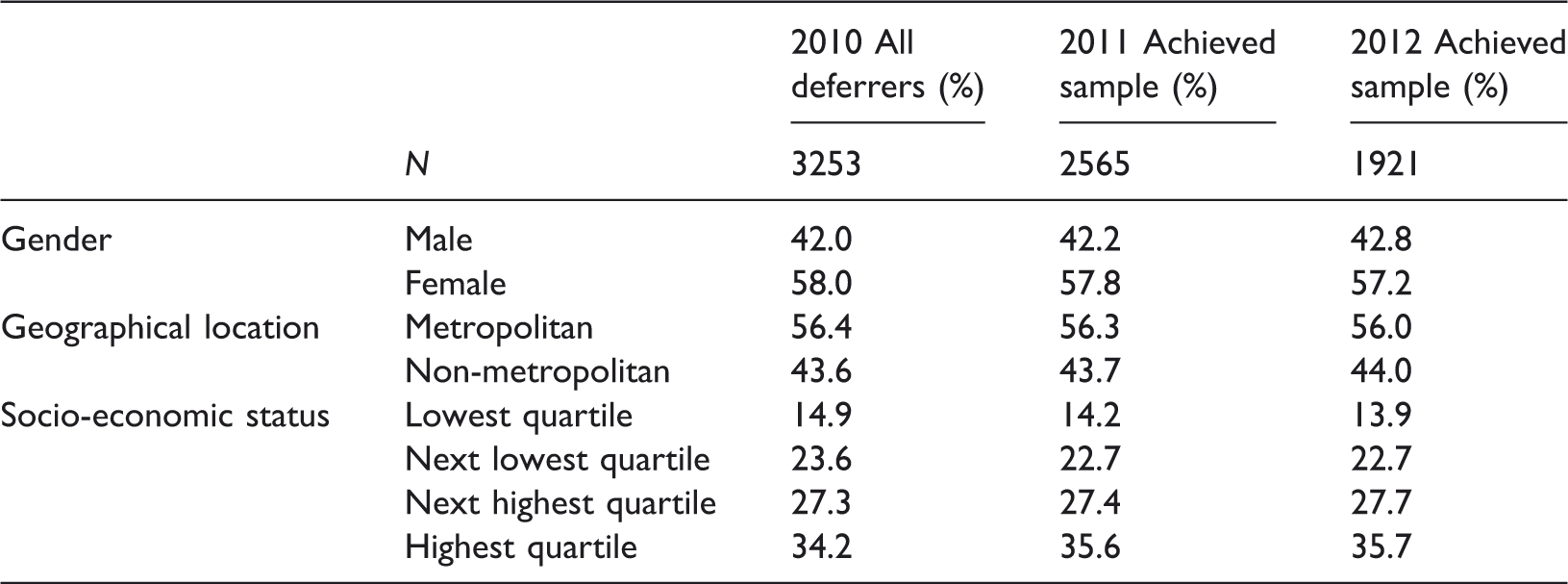
It is also important to note, however, that the proportion of respondents in each SES category differed considerably by home location. Deferrers from the capital city of Melbourne are overwhelmingly in the higher categories of SES – nearly half in the highest quartile and over three-quarters in the two highest quartiles. By comparison, fewer than one in five deferrers from outside Melbourne were in the highest SES quartile. Over half were in the bottom two quartiles, more than twice the rate of the non-metropolitan deferrers. This pattern suggests an interplay of home location and SES, with the higher deferral rates evident amongst non-metropolitan students likely influenced by the impact of SES, particularly as this relates to the costs of living away from home, course fees and costs of travel, as noted in other research (e.g. Birch & Miller, 2007; Krause et al., 2005).
Findings
With respect to the destinations of deferrers, our research study broadly confirms the findings of other studies (e.g. Curtis et al., 2012; Lumsden & Stanwick, 2012) which suggests that a majority of those who defer their university offer subsequently take it up. Having said this, the rates reported in our study suggest a somewhat lower take-up than the roughly three-quarters reported in the previous research.
Main destinations of metropolitan and non-metropolitan deferrers three years after completing school.
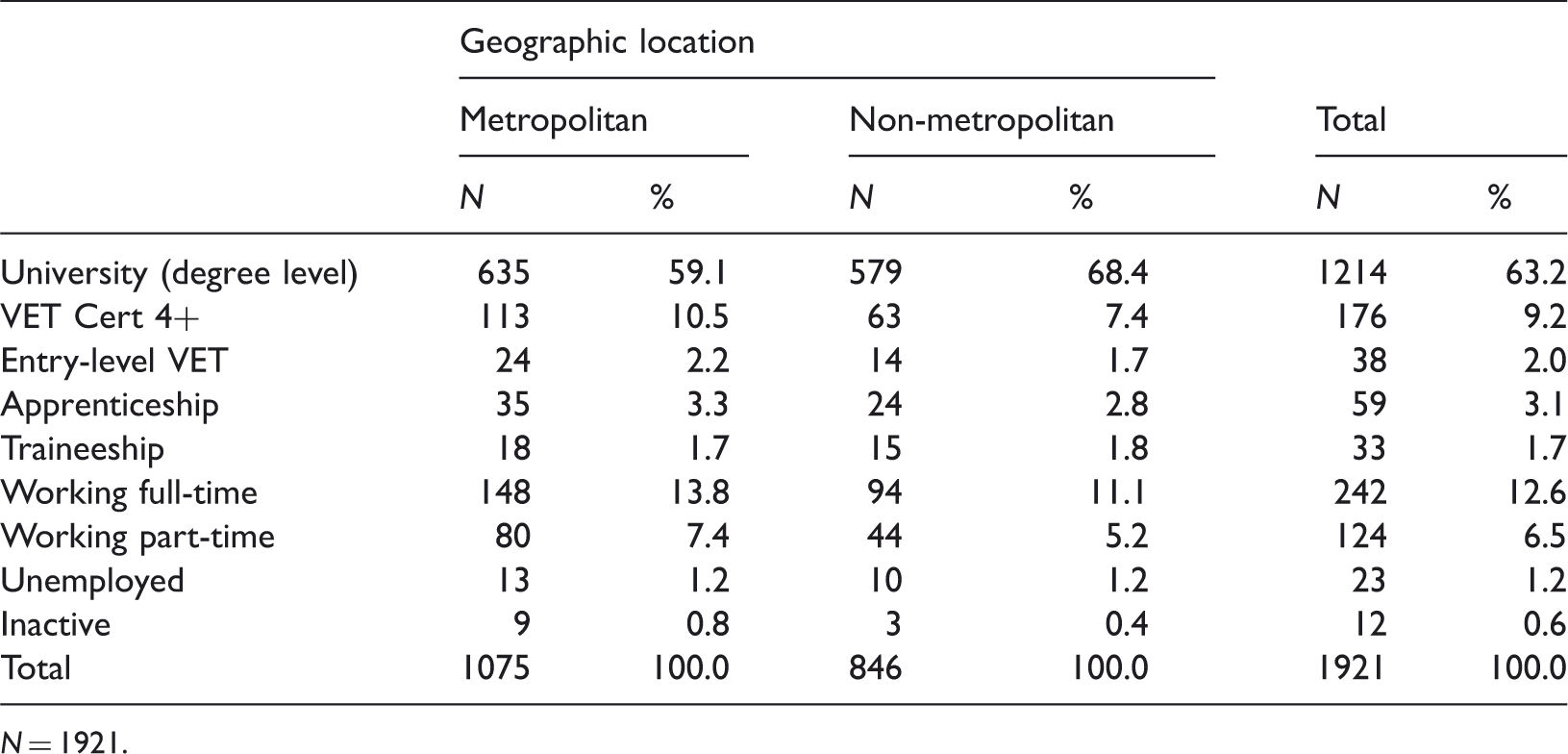
N = 1921.
On the other hand, students from metropolitan Melbourne were somewhat more likely to enter vocational education and training, mostly in Technical and Further Education (TAFE) Institutes, with 12.7% of the 2009 cohort in a VET program, while only 9.1% of the regional deferrers entered vocational courses. With respect to apprenticeships and traineeships, the differences between the two groups were not large. Relatively small proportions of both metropolitan and non-metropolitan respondents entered apprenticeships and traineeships, although the metropolitan respondents were slightly more likely to enter apprenticeships while the non-metropolitan respondents were slightly more likely to enter traineeships. Metropolitan respondents were somewhat more likely to be working full-time and part-time, while both metropolitan and non-metropolitan respondents had a low likelihood of being unemployed or inactive.
Overall, these are positive findings for the non-metropolitan deferrers, as the higher take-up of the deferred place may be seen as a compensation for the initial higher rates of deferral. However, the higher take-up rate does not fully compensate (see Figure 1). As we can see, the overall proportion of regional school completers who deferred and are not in university two years later remains higher than that of school completers from Melbourne (4.8% of all non-metropolitan school completers, compared with 3.2% of all metropolitan school completers). One might add that this differential becomes even larger if we consider the lower rate of school completion for young people in regional Australia (In 2010, young adults were more likely to have attained Year 12 if they lived in Major Cities (81%) compared with Inner or Outer Regional Areas (67%), ABS (2011)).
Metropolitan and non-metropolitan deferrers as a proportion of the total school completer cohort, in university and not in university three years after completing school.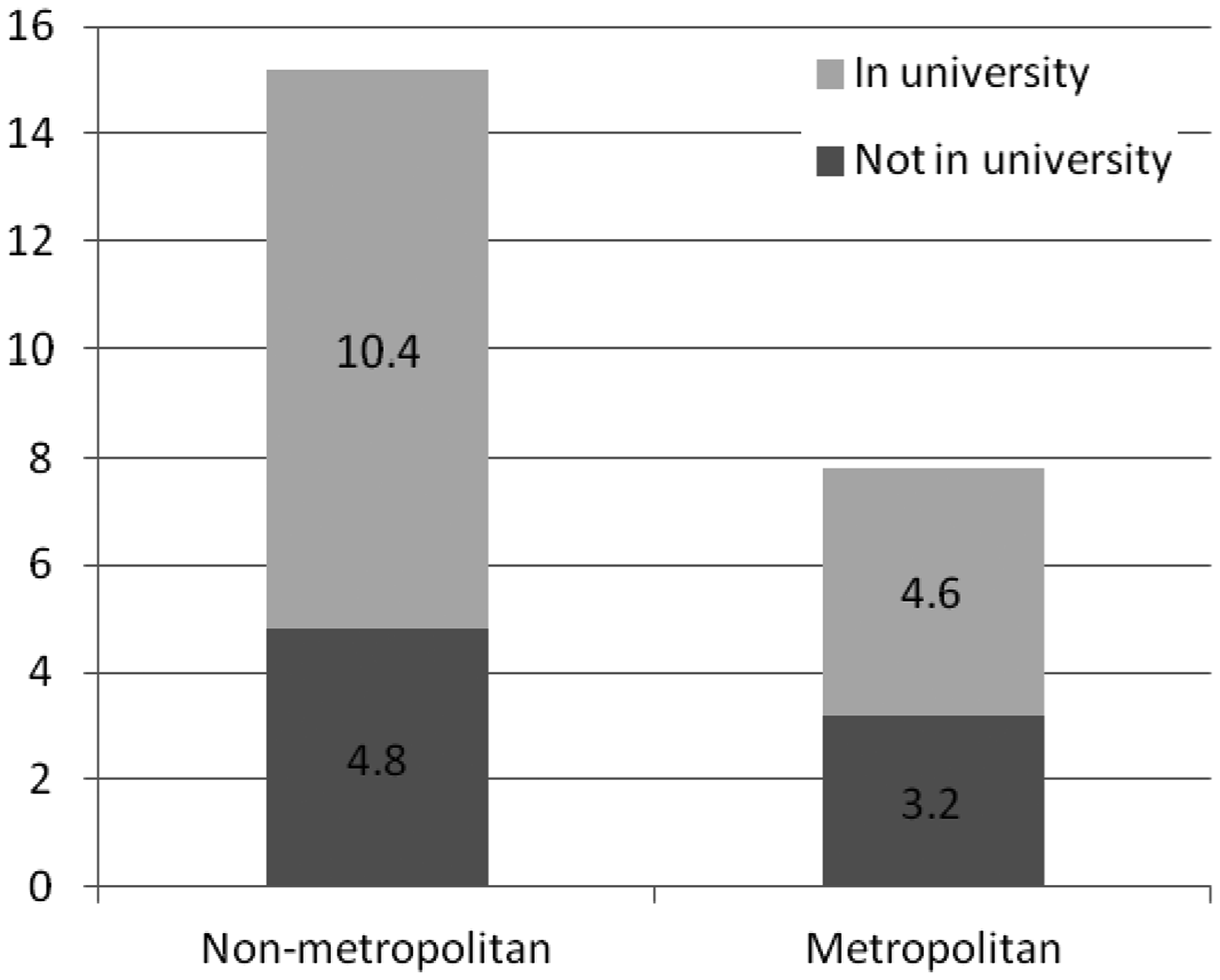
Moreover, metropolitan and non-metropolitan deferrers who took up their place at a university in 2011 also differed in the universities they entered. Nearly half of the deferrers from the non-metropolitan area (almost 40%) took up university places that are located in regional areas. This suggests that factors such as university location, the travel involved and a desire to stay at home are more likely to affect non-metropolitan students. It may also be the case that their study pathways may be partially determined by the location of their preferred study options. Metropolitan VET students were more likely to be attending a metropolitan VET provider, as might be expected. The non-metropolitan students, however, were more likely to be attending a metropolitan VET campus, with approximately four in 10 attending non-metropolitan VET campuses and approximately six in 10 attending metropolitan VET campuses.
Proportions of students who relocated to study – metropolitan and non-metropolitan.
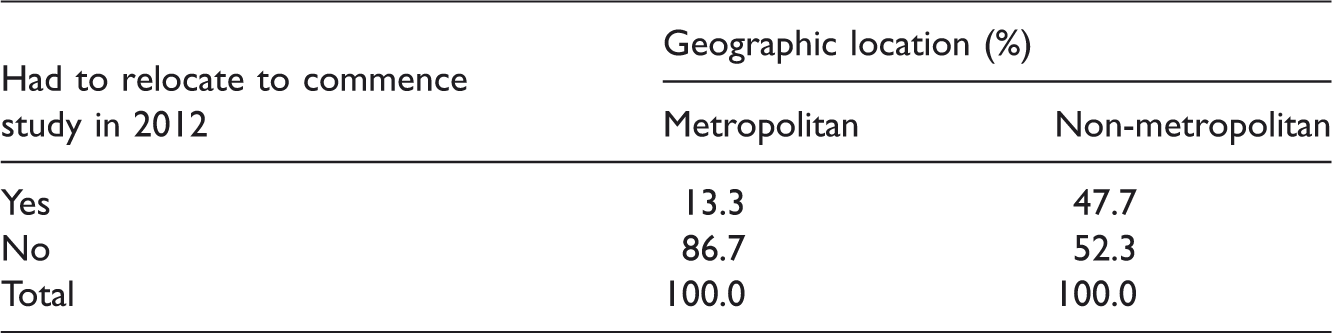
N = 400.
A related issue is the fact that while the majority of university students (62.4%) were working, there were large differences between students from metropolitan and non-metropolitan regions in their likelihood of working and in the number of hours worked. Non-metropolitan students are much more likely not to be working at all – with 48.6% in 2011, compared with 27.9% of metropolitan students – with the result that over seven in 10 metropolitan students are working while at university compared with just over five in 10 non-metropolitan students.
The study also investigated the role of a government support scheme, designed to support students living independently of their families – Youth Allowance. The Australian government provides financial help for young people who are between 16 and 24 years old, and who are studying full-time, undertaking a full-time apprenticeship, training, looking for work or sick. To qualify for Youth Allowance, the participant’s parents’ income is means-tested or the student is required to work at least 18 months full-time in order to be considered independent through employment and qualify for the allowance while studying. While Curtis et al. (2012) suggest that Youth Allowance may not be a strong motivation for deferring in the first place, our study provides an additional perspective, suggesting that it may be an important means for young people to take up their university studies after deferring. Our analysis indicated that students from a non-metropolitan location were four times more likely to report they had not taken up the studies since deferring because they had been waiting to qualify for Youth Allowance.
Youth Allowance recipients – metropolitan and non-metropolitan.
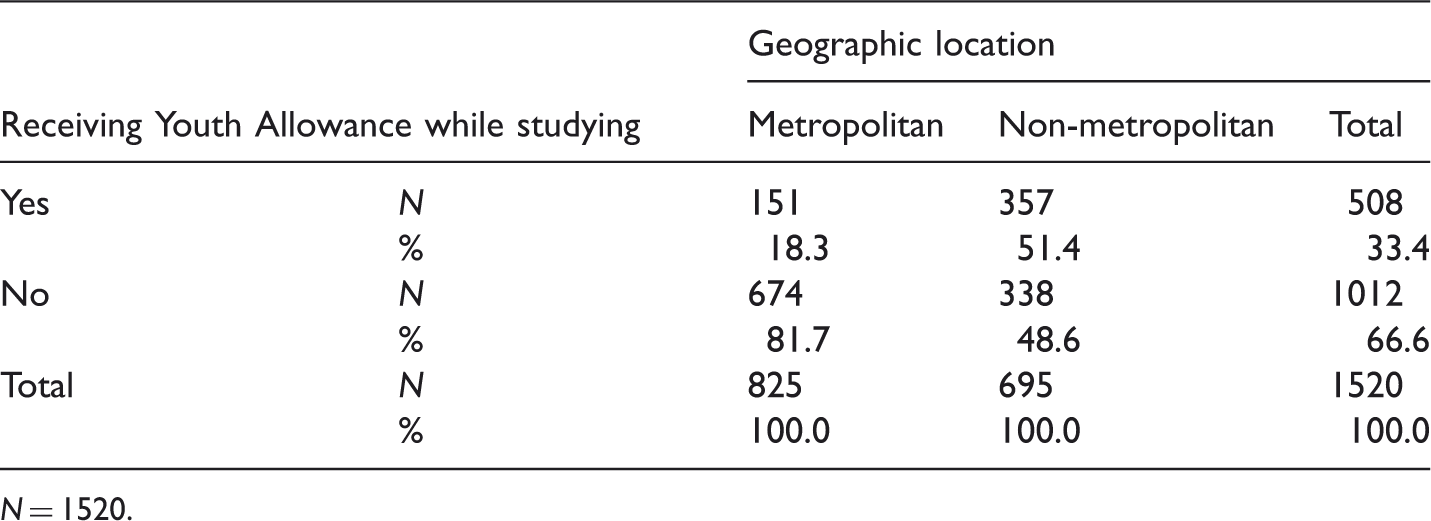
N = 1520.
Youth Allowance recipients by location and destination.
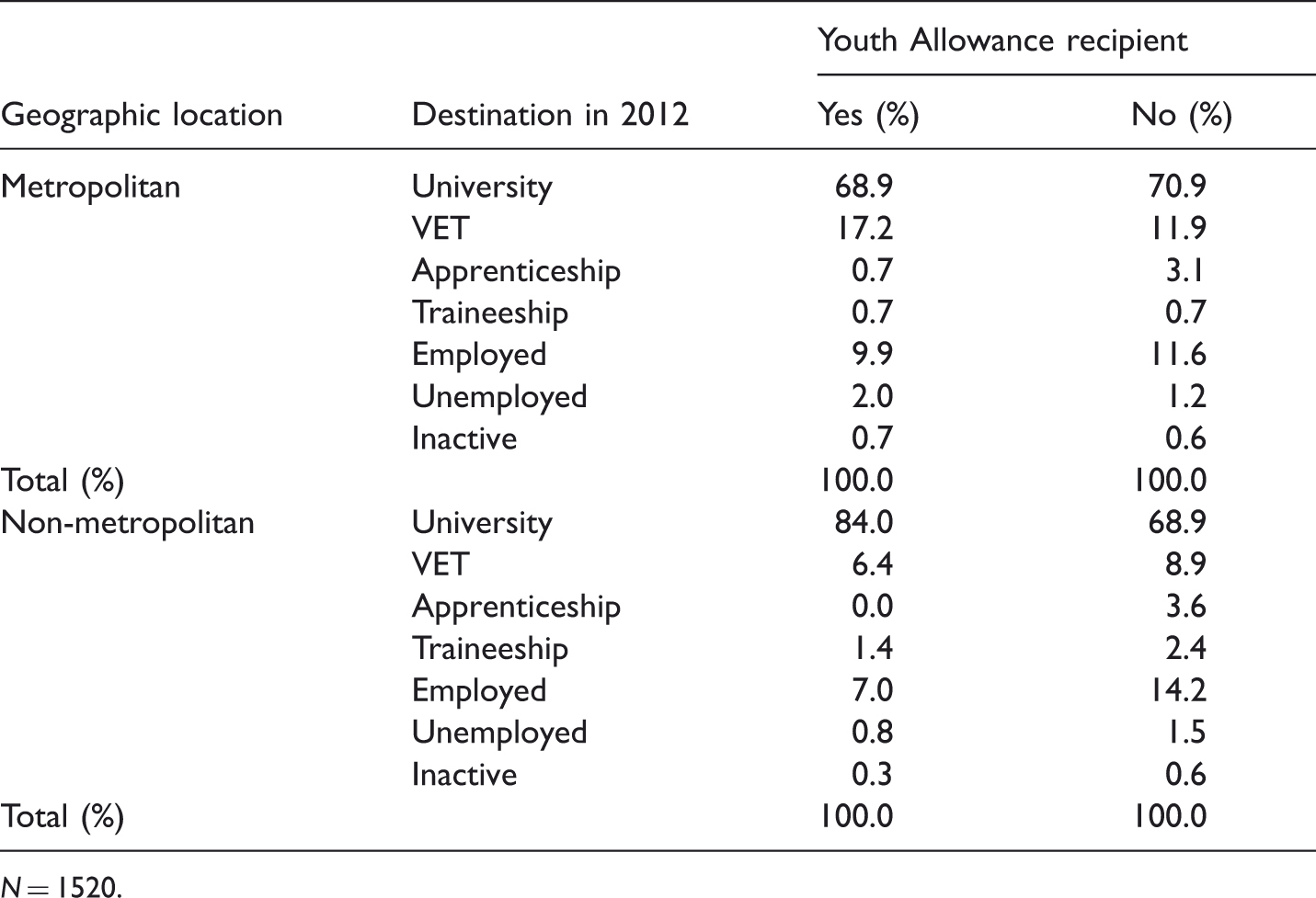
N = 1520.
Perceived barriers to university entry for deferrers
A range of questions included in the destinations surveys administered in the two re-contacts reveal that those metropolitan and non-metropolitan respondents who did not take up their university place gave different reasons for doing so. They also indicate that the reasons change over time. Although the proportion of non-metropolitan deferrers who take up a place at university is higher than for their metropolitan counterparts, it seems that the non-metropolitan respondents have to overcome some difficult obstacles, particularly in their first year out of school.
Reasons given in 2011 for studies not being taken up – by metropolitan and non-metropolitan.
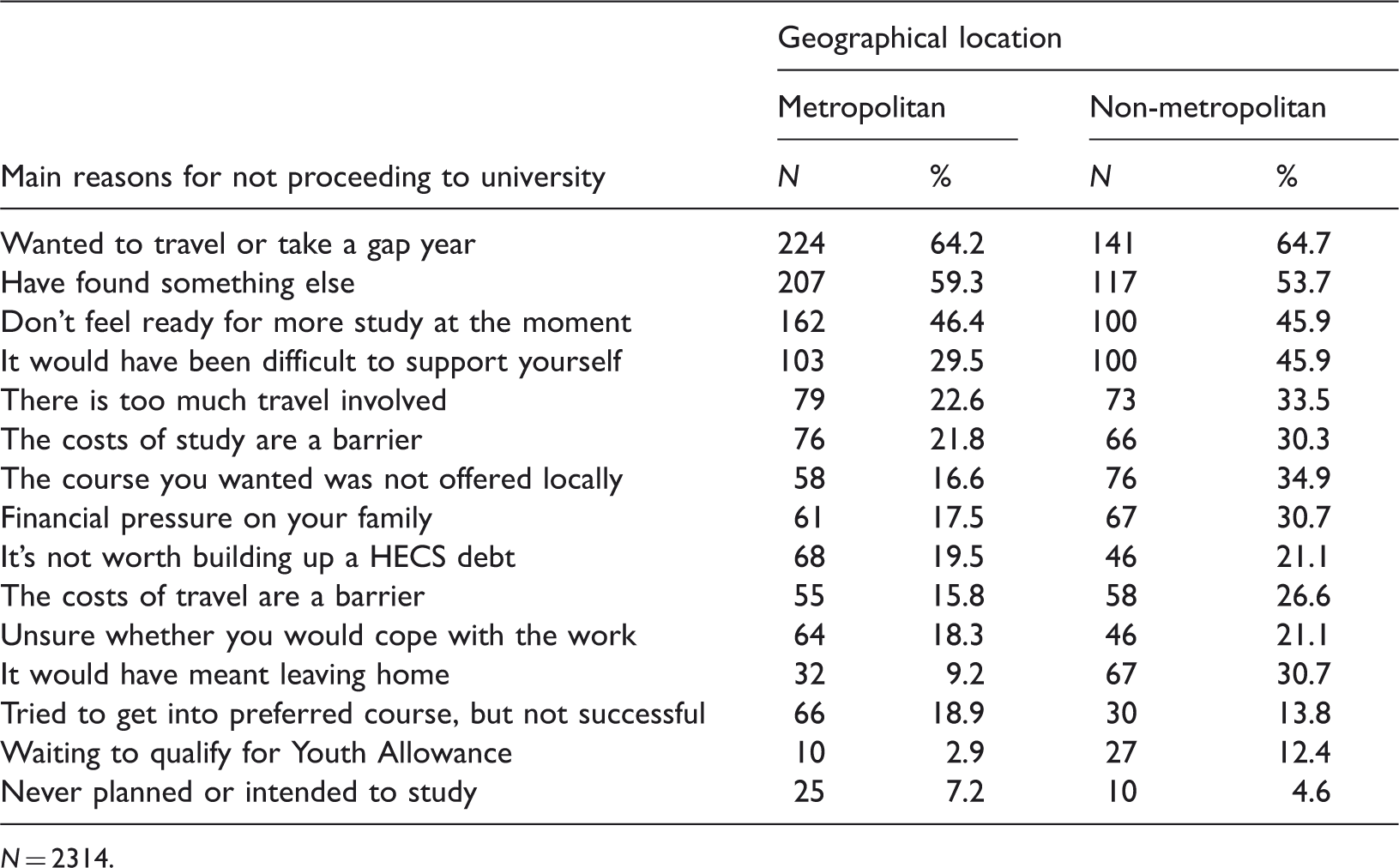
N = 2314.
Similarly, a much higher proportion of respondents from a non-metropolitan location (45.9%) reported that they were not studying because they could not support themselves, compared with those from the city (29.5%). Almost twice as many non-metropolitan respondents (30.7%, compared with 17.5% of city respondents) indicated that financial pressure on their family was a barrier. The cost of travel was also much more likely to be nominated as a problem for young people from non-metropolitan locations (26.6%, compared with 15.8%). In all, 55.2% of our sample of non-metropolitan deferrers who were not in education or training nominated at least one of these financial barriers as a reason for not being in education or training in 2011, compared with 41.0% of the metropolitan deferrers. In addition, non-metropolitan deferrers were twice as likely to nominate the lack of courses in their local area and three times as likely to nominate the burden of leaving home as reasons for not attending university.
Reasons given in 2012 for studies not being taken up – by metropolitan and non-metropolitan deferrers.
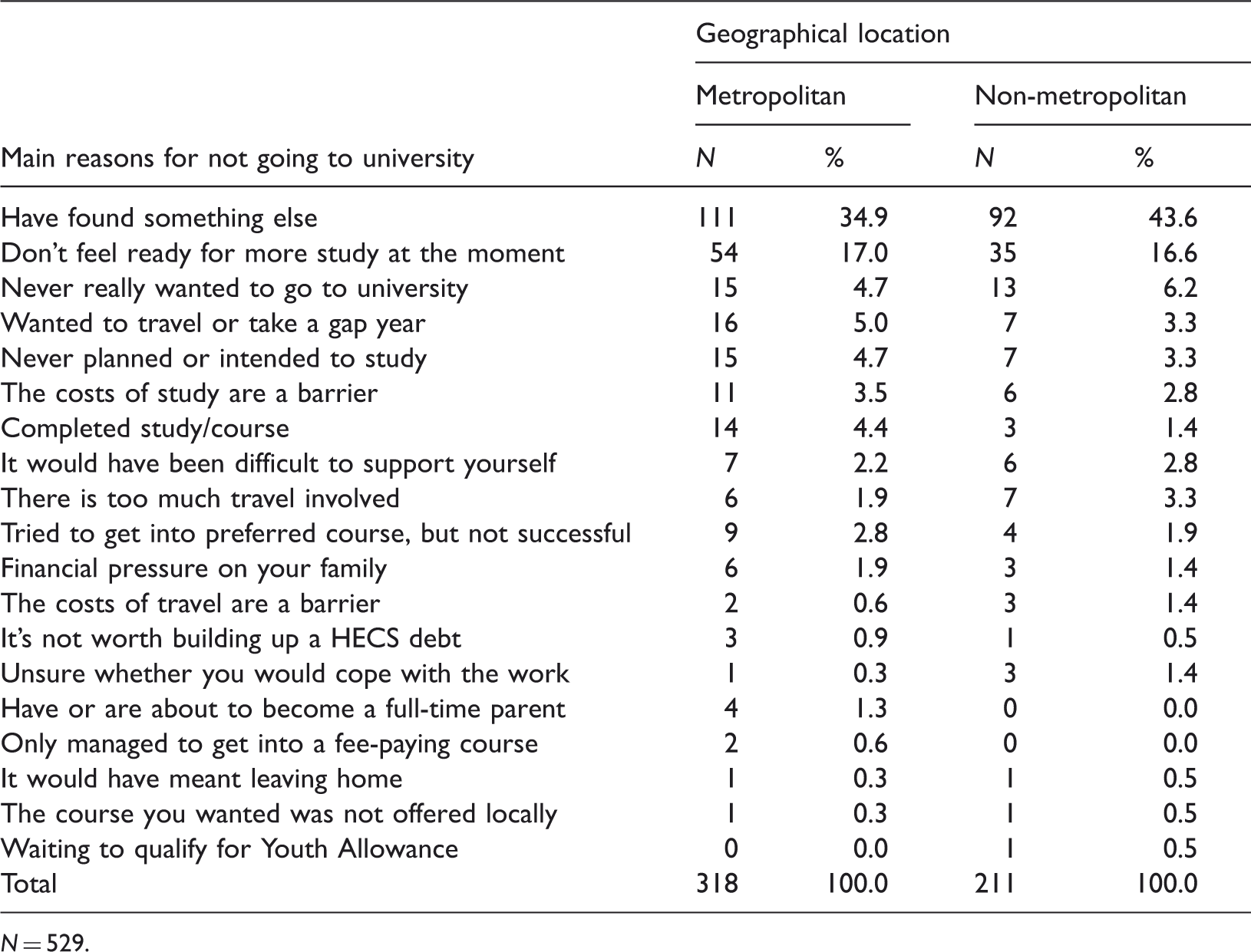
N = 529.
These findings suggest important differences in the impact which financial and travel-related barriers have on metropolitan and non-metropolitan deferrers. They also suggest that by the second year out of school, the impact of costs, financial pressures and distance problems may be diminishing significantly for both groups of young people.
Conclusion
Deferral and the related but distinct phenomenon of the gap year have generated an increasing body of useful research. For example, the sample study conducted by Curtis et al. (2012) reported the growing incidence of gap-taking and its association with non-metropolitan location. This study, which targeted a full cohort of metropolitan and non-metropolitan deferrers over a three-year period, extends our understanding of the behaviours of deferrers, tracking both their actual destinations and their stated reasons for their decisions. Its focus is those young people from regional locations and it is intended to identify barriers for to participation in higher education for that group. The research conducted by the authors on deferral has led to a series of commissioned reports for the Victorian government, the first of which was published in 2008, as well as an article published in this journal (Polesel, 2009). This overall body of research has constructed a unique and detailed picture of what happens to non-metropolitan school completers who gain entry to university and defer their offer. The most recent research has also allowed us to compare the pathways of a cohort of rural and city deferrers and has shown us the different sorts of challenges faced by the two groups. The study points to some important underlying differences between the university study options available to young people living in the city, compared with the options available to regional youth. In examining the situation of young people from metropolitan and non-metropolitan areas three years out of school, it is noted that there is a high proportion in education or training or full-time work, which is a very positive sign. However, there remains a significant number of young people who have qualified upon completion of their schooling for an offer of a university place but have not taken it up.
In Melbourne, there are four major university campuses just a short tram or train ride from the centre of the city – catering for over 130,000 students at major institutions such as the University of Melbourne, RMIT University, Australian Catholic University and Victoria University – and these numbers exclude the (mostly small) city campuses of other universities, including ones from other states. We can add to these numbers almost as many students again at the suburban campuses of La Trobe University, Monash University, Deakin University and Swinburne University. Between them, these institutions cater for approximately one quarter of a million students and offer over 1000 courses, catering for every field of study and for a full range of university students’ academic profiles and curriculum needs. We can also add to these options the courses offered in the publicly funded TAFE Institutes and the range of private vocational providers, which range from basic entry level vocational certificate-level courses right through to undergraduate degrees. For young people who have gone to school in Melbourne, most of those courses are accessible within an hour’s travel or less. There is no pressing need for these young people to move out of home, to find and pay for rental accommodation, or to look for a new job. Many young people studying in the city will carry their part-time job with them from school to university.
It is very different for the young regional deferrers, many of whom identify lack of local provision as a reason for not taking up their university offer. For them, many hours of travel to university or an expensive relocation to the city is the only option if they wish to study in their course of choice. It is not surprising then that regional young people are more than twice as likely as metropolitan school completers to defer their offer of a university place. We also know that regional deferrers are much more likely to come from a much poorer background than their Melbourne counterparts and they are much more likely to be recipients of Youth Allowance.
Our research over the last five years indicates that a little over two-thirds of the regional deferrers in our study have ended up at university. This is a good outcome for this group – and in fact it is a little better than for their metropolitan counterparts. But this still means that about one-third never took up their offer or dropped out soon after doing so. As the academic profile of the regional deferrers is at least as strong as that of their metropolitan peers (Polesel, 2009), we cannot explain this non-participation in terms relating to low achievement. The deferrers from the country are not less clever.
What this research reveals that is also new is that financial stresses are a big factor. And our study suggests that they are most acute in the period just after leaving school. This is when young people tell us they need the greatest support. Our study suggests that nearly half of the regional deferrers in our study had to relocate in order to attend university, with all the costs which that involves, compared with a little over 13% of the city deferrers. We also know that non-metropolitan deferrers are much more likely to take up a place at a regional university. This can be a good thing, giving them the opportunity to study near home, but it may also reflect a more limited range of choices – choices which are constrained by distance and travel.
On a more positive note, we have found that the proportion of country deferrers who do take up their offer a year later is actually higher than for their Melbourne counterparts. We also found a great deal of evidence of resilience in our interviews with these young people. An earlier report from the project (Polesel et al., 2011), focussing only on deferrers from non-metropolitan locations, indicated that many were positive about their experiences since leaving school. Many spoke with excitement and optimism about their journey from school to university and other study and work, as well as from their family home to new living arrangements in the city.
Having said this, the higher proportion of rural deferrers taking up their university offer still does not compensate for the much higher proportion deferring in the first place. Overall, the proportion of young people from non-metropolitan locations getting to university is still lower and many will be a year behind their city peers in starting and completing university.
Based on the findings in this paper, we would suggest some ways in which these problems might be addressed. It would seem that the first year out of school is the most difficult period for young university aspirants from regional Australia. This is why so many defer. It is also likely that this is when the combination of financial pressures and a desire to stay at home combine to make it hardest for them. These barriers seem to diminish somewhat over time. The real question may well be how to help young people in that first year out of school, particularly in terms of accessing safe, affordable and supportive accommodation options during this early phase. Accommodation support of the kind represented by university residential colleges suggests itself. However, university residential colleges are out of reach financially for most of these young people, especially given what we know of their SES profile.
The data gathered from the different stages of the research reported in this article confirm what we know from other sources about the educational disadvantage experienced by youth in regional locations, but the focus here on the educational pathways of non-metropolitan school completers who defer their university offer provides a sharper focus on the challenges and barriers faced by this group in particular. The combination of data on actual destinations and data on the perceptions and aspirations of the young people themselves provide us with a useful starting point in addressing these challenges. The respondents in our studies have indicated that, with time, they can overcome much of the disadvantage arising from their regional location, although not all of it. What our study indicates is that this disadvantage can be overcome with support which is targeted – targeted to those regional young people most in need of financial help and at the point in time when they have just completed school.
Footnotes
Conflict of interest
None declared.
Funding
The study was commissioned by the Youth Affairs Council of Victoria and the Local Learning and Employment Networks, and funded by the Victorian Department of Education and Early Childhood Development.