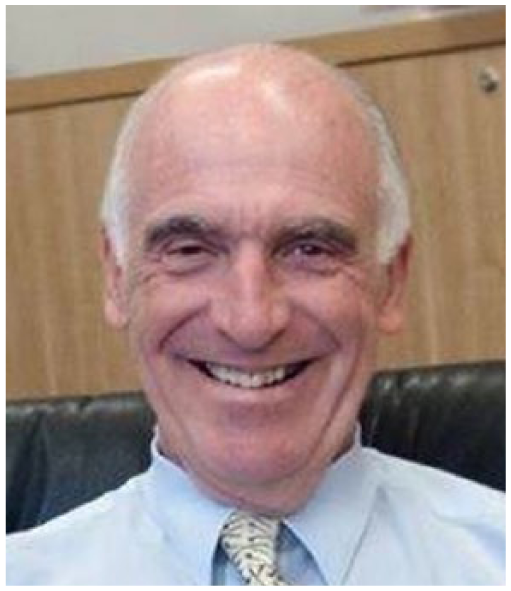
Gordon Parker AO is Scientia Professor of Psychiatry at the University of New South Wales. He has previously been Head of the School of Psychiatry; Director of the Division of Psychiatry at the Prince of Wales/Prince Henry Hospitals; Clinical Director of Mental Health Services, Eastern Sydney Area; part-time Research Director of the Institute of Mental Health in Singapore; Executive Director of the Black Dog Institute; and Editor of the Australian & New Zealand Journal of Psychiatry. In 2004, he received a Citation Laureate as the Australian scientist most highly cited in the field of ‘Psychiatry/Psychology’. Professor Parker has an alternative career trajectory as a creative writer (e.g. The Mavis Bramston Show), cartoonist (The Bulletin, Oz magazine), book reviewer (The Sydney Morning Herald, The Australian), playwright (Personality Games), The ABC Science Show Broadcaster (in Sydney and London), author of 18 books including his 2012 memoir A Piece of My Mind, and novelist with a first novel published in 1966 and a new novel In Two Minds to be published in April 2017.
At our first ever meeting in 1999, having recently arrived from London to take up an academic position under his tutelage, it was a risky attempt at humour to present Gordon with a bottle of ‘Gordon’s London Dry Gin’. Fortunately, Gordon laughed heartily and the merriment set the tone for a marvellous and magnanimous mentorship. In ensuing years, Gordon modelled how to ‘parkour’ through publishing while finding time to prank colleagues and sustain a productive mix of pleasure and provocation propelled by a perpetual pursuit for pansophy.
What drives you? High ergic tension. When positive, this sparks creativity and boosts productivity. When negative … it is less than positive.
What advice would you give your younger self? As there is no ‘prospectoscope’, I would weight identifying strengths and pursuing passions – the ‘reason to … wake feeling good in the morning’ (Connolly, 2008). Put out ‘feelers’ by accepting all invitations and opportunities – but prune immediately if there is a misfit with the environment. Once an ecological niche is found, allow feelers to consolidate into a root structure, recognising that any skill set will require Gladwell’s ten thousand hours (Gladwell, 2008) of effort to consolidate. Then, particularly as Australia is a meritocracy, aspire.On the personal front, choose a partner who – following the infatuation years – will also be your best friend.
Research is fundamental to psychiatry because … to practise otherwise would define the profession as a sect and promote idiosyncratic views. And while research should underpin psychiatry as a science, it should also contribute to the ‘art’ of its practice. Yet, support for research should not be unconditional. Much research is limited by extant models and a want of common sense. For example, ‘major depression’ has the largest treatment database in psychiatry, but cannot answer a fundamental question: what is the optimal treatment for major depression?
And we need to move beyond a ‘let a thousand flowers bloom’ model. Psychiatry clearly has a critical mass of exceptional researchers and facilities, with progress distinguished by its incremental nature. We also need a major paradigm shift in one or more fields to translate into clinical practice. Where is this nascent candidate? Psychopharmacology? Unlikely, with Pharma retreating from neuroscience. And it will not be RDoC. Genetics, epigenetics or an ‘omic’ is probably the most likely field.
The topic in psychiatry I am most passionate about is … Pattern analysis. From early in my training, I was fixated on trying to nail diagnoses and/or formulate problems. My research career has focused on determining whether a theory or construct provides a true ‘model’ – and to challenge if the wrong idol is being worshipped. As a clinician, I seek to determine the most distinctive symptoms and signs (and their Bayesian assembling) that allow a diagnosis to be made with greater accuracy. It has become increasingly evident to me that in the absence of any diagnostic test, a pattern analytic ‘Bayesian brain’ approach is integral to diagnostic acumen in Psychiatry, albeit requiring decades for optimal calibration, and difficult, if not impossible, to teach.
What is the future of psychiatry? I gauge a positive future in Australia. We are ahead of the world in the destigmatisation of many conditions. The community weighs mental health as a high priority and we have some excellent advocates. For psychiatrists, I envisage a mixed picture, with little change for those in private practice. However, those in the public system – especially community psychiatrists – are at risk of having their professional skills marginalised. If the loss of clinician managers and base funding continues apace, psychiatric units will become isolated processing centres, de-skilling staff and undermining therapeutic impact. The integrity of our profession can be protected and further enhanced by observing uncompromising standards and developing more flagship services and facilities.
As a psychiatrist, what have you learnt about the human condition? As much as anyone would by reading the great Russian novels, but with some extra nuances. In my practice, I see the best in people when supposedly they are at their worst, and I am struck by my patients’ openness and their resilience. I might ask a patient about their week and hear, ‘Well my wife left me, the daughter’s got herself pregnant to a drop kick, the dog was run over and … almost forgot … I got retrenched’. Only to be followed by a wry grin and, ‘So, doc, I guess the week’s been a bit ordinary’. I have also increasingly appreciated the Karl Menninger observation – ‘When in doubt, be human’. All appreciated from the privilege of trust granted to clinical psychiatrists where patients allow us into their lives.
Footnotes
Declaration of Conflicting Interests
The author(s) declared no potential conflicts of interest with respect to the research, authorship and/or publication of this article.
Funding
The author(s) received no financial support for the research, authorship and/or publication of this article.