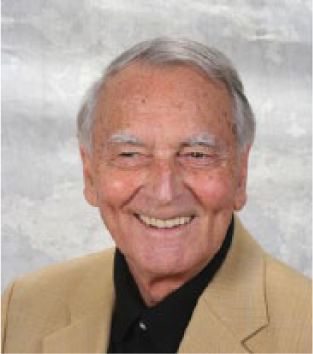
Jules Angst, MD, is Emeritus Professor of Psychiatry at the University of Zurich, Switzerland. Born in 1926 and educated in Zurich, Jules trained under Manfred Bleuler. From 1969 to 1994, he was Professor of Clinical Psychiatry and Head of the Research Department at Zurich University Psychiatric Hospital. Jules has authored 1500 publications and is still active in epidemiological and clinical research.
It is difficult to find a textbook of psychiatry, or indeed a significant paper on the epidemiology of mood disorders, that doesn’t reference Angst; an apt name for a researcher who has concerned himself (and indeed others) with pursuing answers to some of the big questions in psychiatry. It is then all the more delightful to find yourself in a small meeting room, alongside a select group of academics, to listen to the man in person enthusiastically explaining his many exciting ideas. Indeed, meeting Jules Angst is inspiring and anything but anxiogenic, and so perhaps his body of work should be equally associated with his first name (Jules) – given that he is most certainly one of the most prolific units of energy (joules) in the field of psychiatry.
What makes you you? That’s rather for others to judge. However, I’d say systematic scepticism and a tendency to unconventional thinking. The scepticism is in the tradition of my mentor, Manfred Bleuler, from whom I learnt not to believe in anything for good. What we think we know is only the current state of knowledge, has a limited half-life and will be overtaken by future insights. Since I gave up psychoanalysis, because of its inefficacy in patients with schizophrenia, I became a normal clinician and researcher and have always been data-oriented. It was while looking for heterogeneity in depression that I established and validated the distinction between bipolar disorders, depression and schizoaffective disorders on the basis of clinical genetics, course and personality and was able to show the unfavourable long-term course of mood disorders (Angst, 1966, 1973). I went on to work in psychopharmacology (placebos, psychotogenic drugs, antidepressants, atypical neuroleptics, minor tranquillizers and lithium). I was the first to give statistical evidence for the prophylactic effect of lithium, considered by some to be a myth at that time. I also showed that the main antidepressant action occurs in the first 10 days of treatment, disproving the belief in a ‘late onset of action’, and that ‘anti-depressant induced’ hypomania does not exist.
My favourite idea in psychiatry is … The multidimensional model of mood disorders, which corresponds to nature with its continuum from the normal to the pathological, and to our diurnal and unpredictable variations (high/low) of mood, anxiety, energy, activity, tiredness, pain, well-being and so on. The proportional diagnostic spectrum of mood disorders which I have proposed extends from Depression (D) via three bipolar subtypes (Dm, MD, Md) to mania (M), and the severity spectrum from normal mood via minor, major to psychotic (transition to schizo-affective), a third component (traits) is the continuum from affective temperament to personality disorders (Angst, 2013).
What makes you tick? Research. Looking for answers that can help improve the treatment and lives of patients. I started clinical research when I was a young doctor in internal medicine, testing iproniazide in patients with multiple sclerosis, and research is still a daily source of joy more than 20 years into my official retirement. The exchange and collaboration with colleagues worldwide has always been stimulating and enriching – in recent years particularly on screening for hypomania with the hypomania checklist, the overlap between migraine and tension headache, the identification of subthreshold bipolarity and the comorbidity of psychiatric and somatic disorders. Guest professorships, in the United States but especially in Australia and New Zealand in 1976 and South Africa in 1979, provided exceptional opportunities to explore my interest in transcultural psychiatry.
One really important but soluble question in psychiatry is … Combating stigma: all the evidence shows that in the course of our lives every one of us has multiple somatic and psychiatric problems, we are all in the same boat. Understanding that should contribute to eradicating the stigma attaching to people with mental health problems and to those who treat them.
The best careers advice I ever received was … advice I felt ambivalent about at the time, namely to stay in Zurich and to turn down the job I was offered in the United States, where I am now convinced I would have stayed. I felt I was missing a great opportunity, but in the 1950s, jobs in Switzerland were very scarce and there was no guarantee of a position to come back to. In the end Switzerland, with its relatively stable population, allowed me to carry out important long-term clinical follow-up studies on course and outcome (mortality, suicide and dementia). And finally also epidemiological studies, first in Swiss army conscripts, and in recent decades in the general population (the Zurich Study). In this, we investigated psychiatric and somatic syndromes prospectively in a cohort from age 20–50. The results of prospective studies have a longer half-life than cross-sectional findings.
What is the future of psychiatry? To my mind, psychiatry will hugely enrich the field of medicine: it has the means to develop a truly holistic approach, unifying body, brain, emotional and mental life. Current cross-sectional brain research is only part of that enrichment; it needs to encompass emotional and somatic aspects and become longitudinal and lifelong. We are mind-body units, we oscillate daily from morning to evening and change enormously over lifetime. This holistic approach needs also to integrate sophisticated descriptive psychopathology and to give much greater weight to patients’ subjective experiences, systematically measuring, for instance their distress/suffering, which is the factor most closely correlating with treatment seeking.
Footnotes
Declaration of Conflicting Interests
The author(s) declared no potential conflicts of interest with respect to the research, authorship and/or publication of this article.
Funding
The author(s) received no financial support for the research, authorship and/or publication of this article.
References
1.
AngstJ (1966) Zur Ätiologie und Nosologie Endogener Depressiver Psychosen. Springer, Berlin, Heidelberg.
2.
AngstJ (1973) The Etiology and Nosology of Endogenous Depressive Psychoses. A Genetic, Sociological, and Clinical Study – Foreign Psychiatry, vol. 1 (ed AngstJKlineNS). New York: International Arts and Sciences Press, 108 pp.