



Abstract
Dear Editor,
Glycated haemoglobin (HbA1c) was requested on a 53-year-old woman with type 2 diabetes mellitus. It was analysed by capillary electrophoresis using the Sebia Capillarys 3 Tera automated analyser. A 6.6% proportion peak was detected in the haemoglobin F (HbF) retention time window, which was absent on previous HbA1c electrophoretograms from the same patient (Figure 1). Simultaneous full blood count (FBC) showed pancytopaenia (haemoglobin 54 g/L, white cell count 3.3 × 10⁹, platelet count 33 × 109/L). Reticulocyte percentage was 1.03% (reference interval 0.2–2.0%) suggesting that there was no significant elevation in erythropoiesis. The patient had not received blood transfusions. Repeat FBC confirmed pancytopaenia and repeat HbA1c assessment confirmed the new HbF peak. The patient was given a blood transfusion. Subsequent bone marrow studies diagnosed myelodysplastic syndrome with excess blasts type 2 (MDS-EB2) with trisomy 8 on karyotyping. Electrophoretograms of recent sample (a) and sample received 9 months prior (b) for HbA1c analysis by capillary electrophoresis showing significant new onset HbF.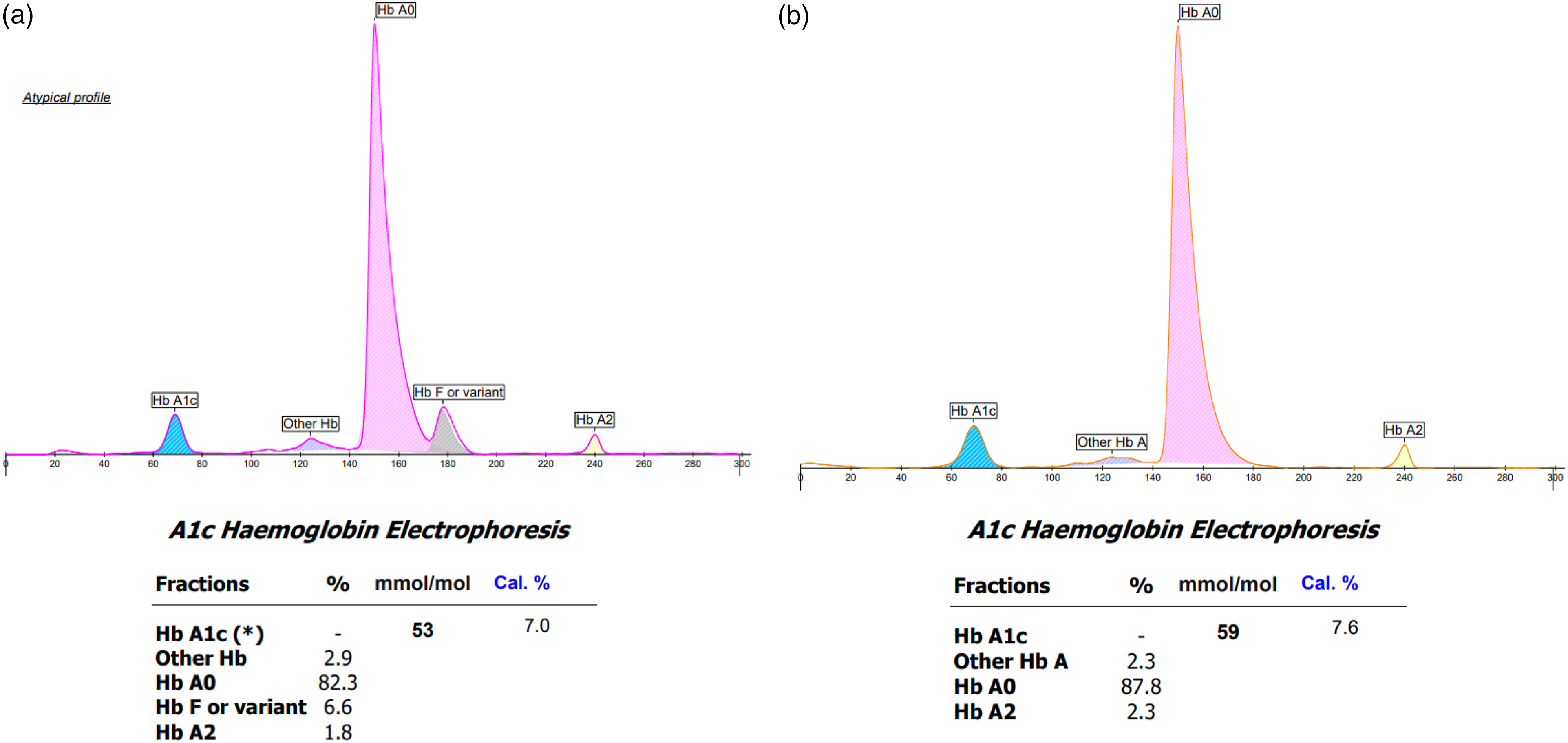
Acquired HbF may be pathological, physiological or therapeutic. It is rare but well-recognised in MDS,1–4 particularly in those with karyotype abnormalities, 1 and is associated with improved clinical outcomes in some studies.5,6 It may also occur with other neoplastic processes of bone marrow, blood, trophoblasts, ovaries and prostate.7–9 Increased erythropoietic rates, such as in recovery from haemolysis or severe anaemia, may increase HbF, 10 but in the absence of reticulocytosis, this was unlikely in our patient. Acquired HbF is physiological in pregnant women due to a combination of increased maternal production and fetal HbF. 11 Acquired HbF is a therapeutic goal in sickle cell disease; hydroxyurea induces HbF production which reduces the polymerisation of sickle haemoglobin. 12
Not all methods of HbA1c measurement allow the detection of haemoglobin variants. If acquired Hb variants are detected, however, laboratory personnel should alert requesting clinicians to investigate further, even if the new onset electrophoretic variants do not alter the interpretation of HbA1c.
Footnotes
Data availability statement
All relevant data are included in the letter.
Declaration of conflicting interests
The author(s) declared no potential conflicts of interest with respect to the research, authorship, and/or publication of this article.
Funding
The author(s) received no financial support for the research, authorship, and/or publication of this article.
Ethical approval
Not applicable.
Guarantor
NL.
Contributorship
NL wrote the first draft of the manuscript. All authors critically reviewed, revised, and approved the final version of the letter.
