




Abstract
Flufenamic acid (FFA), a widely used nonsteroidal anti-inflammatory drug, is primarily recognized for its therapeutic role in pain and inflammation management. Beyond its pharmaceutical relevance, FFA exhibits pronounced pH-dependent variations in its ultraviolet–visible (UV–Vis) absorption and fluorescence spectra, which remain largely unexplored for functional material applications. In this study, the optical behavior of FFA was systematically investigated over a broad pH range (1–14), revealing distinct and reversible spectral changes driven by protonation and deprotonation processes. These pH-responsive optical features were employed to construct molecular logic gates, including implication and an improved “INHIBIT” (IP-INHIBIT) gate, highlighting the potential of FFA as an on–off pH sensor and a promising candidate for organic electronic applications.
This is a visual representation of the abstract.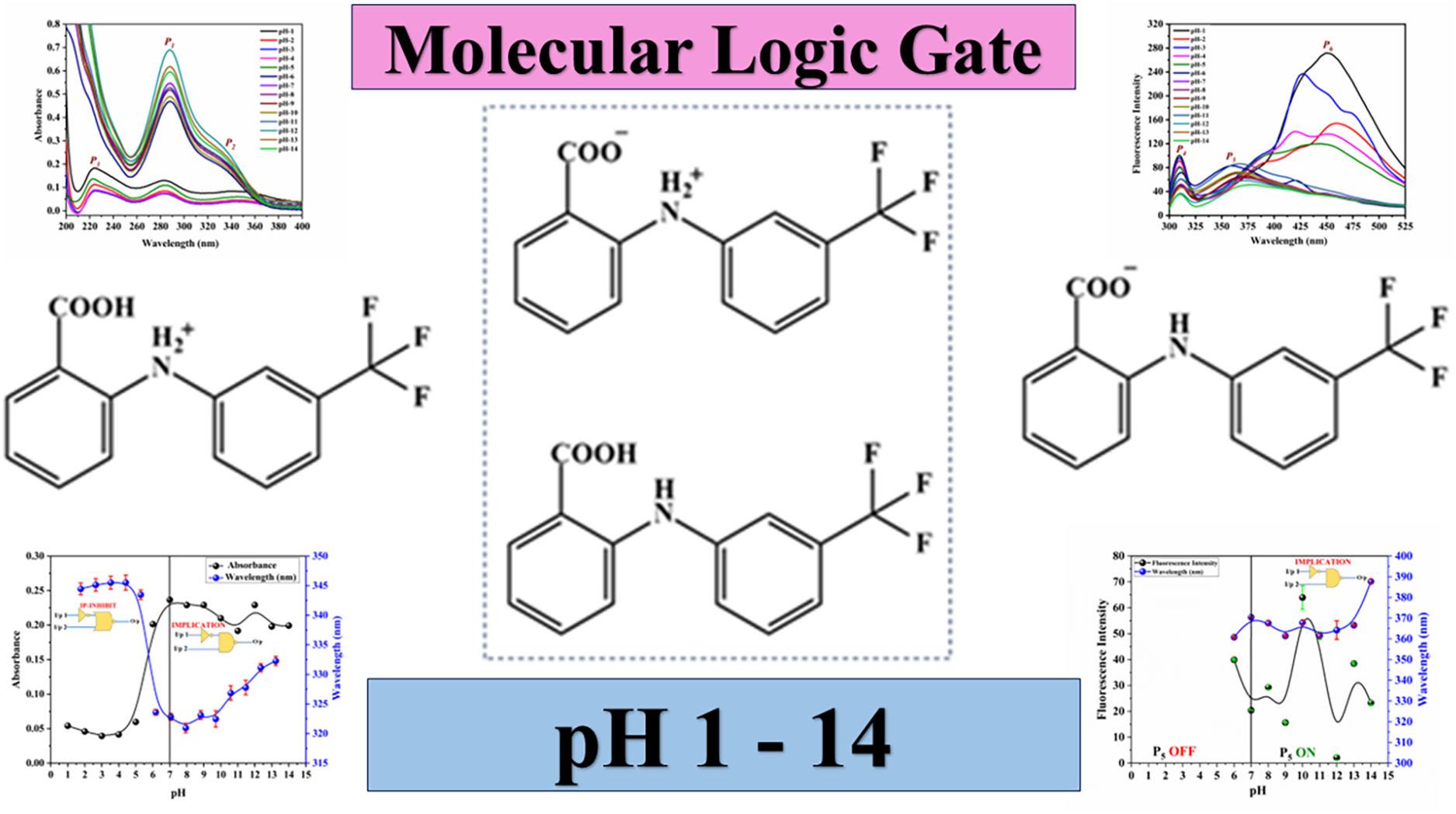
Keywords
Get full access to this article
View all access options for this article.