



Abstract
This study demonstrates the feasibility of determining soil provenance from tree ash composition using elemental analysis and chemometric techniques. To date, no published studies have applied chemometric approaches to classify ash for provenance determination following forest fires. In this work, Pinus ponderosa ash was analyzed to distinguish samples based on soil type and geographic location. Pinus ponderosa, a widely distributed pine species in the western United States where wildfires are prevalent, was selected as a model system. Needles were collected from trees grown in five distinct soil types across northern Arizona and Colorado, then dry-ashed under controlled conditions. Classification was performed using three preprocessing techniques and five machine learning algorithms, including hierarchical modeling structures to optimize separation. Partial least squares discriminant analysis (PLS-DA) following a Box-Cox transformation yielded the highest classification accuracy, achieving a prediction kappa value of 0.98 for soil type identification. However, classification performance decreased when distinguishing both soil type and geographic location, indicating that additional variability may influence predictive accuracy in broader applications. These findings highlight the potential of inductively coupled plasma mass spectrometry (ICP-MS) and machine learning for post-wildfire forensic analysis and environmental monitoring.
This is a visual representation of the abstract.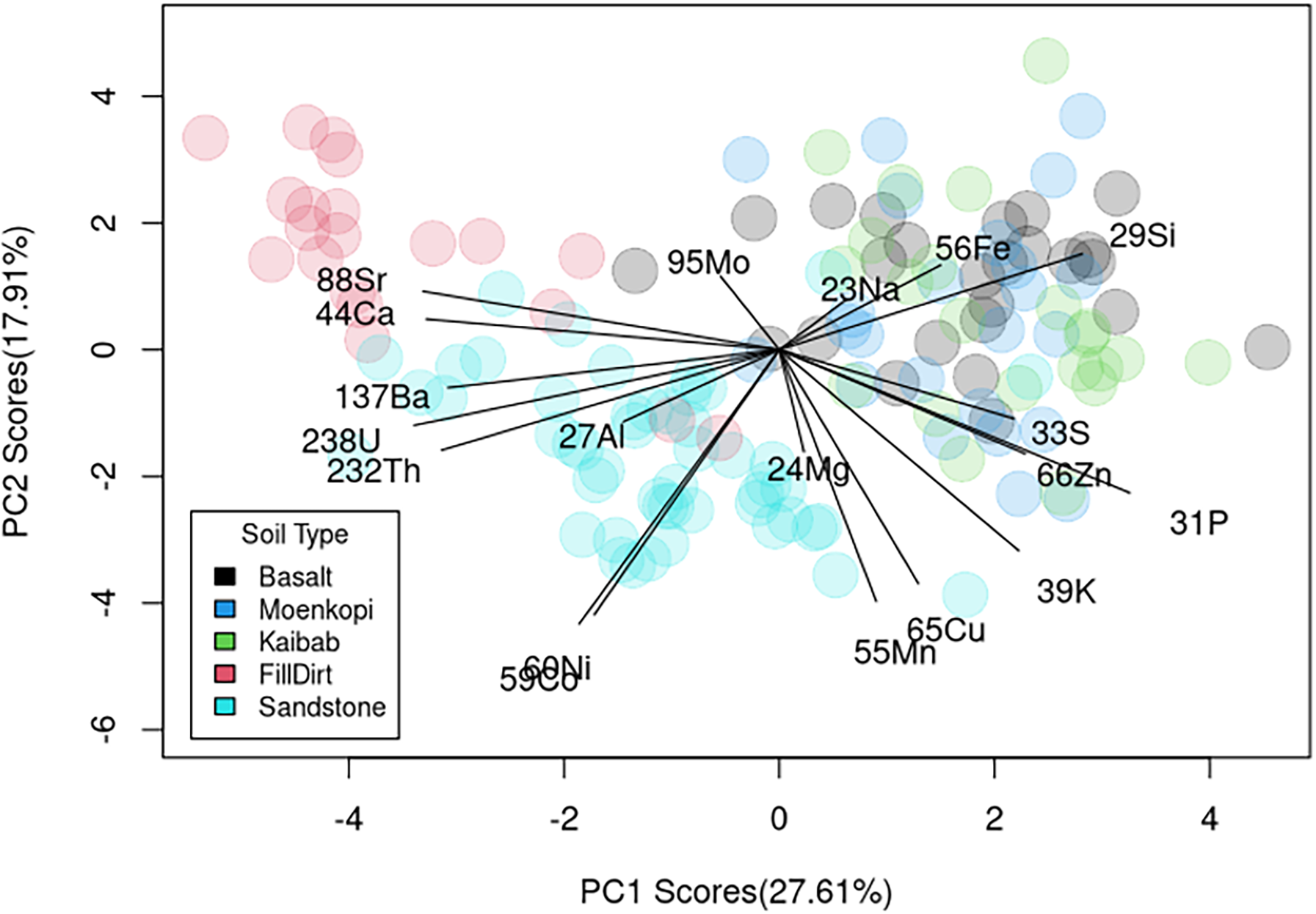
Keywords
Get full access to this article
View all access options for this article.