




Abstract
In a previous paper, we proposed the use of a set of colored LEGO blocks as “standard” samples for the evaluation of fluorescence avoidance and mitigation schemes in Raman spectroscopy, as well as for use to evaluate the instruments’ performance on dark samples. The purpose of this paper is to establish that this set of LEGO blocks does represent a good test case for fluorescence avoidance and mitigation when using handheld Raman spectrometers, and for the ability to record Raman spectra from dark samples. The performance of ten different instruments, operating using different exciting lines (785, 830/852, and 1064 nm), and different data processing schemes, are compared. The combination of a series of colored blocks (white, yellow, red, and blue), and successively darker tone blocks (white, gray, and black) do challenge these instruments, and shed light on the ways that their manufacturers have optimized these instruments in specific areas and for different purposes.
This is a visual representation of the abstract.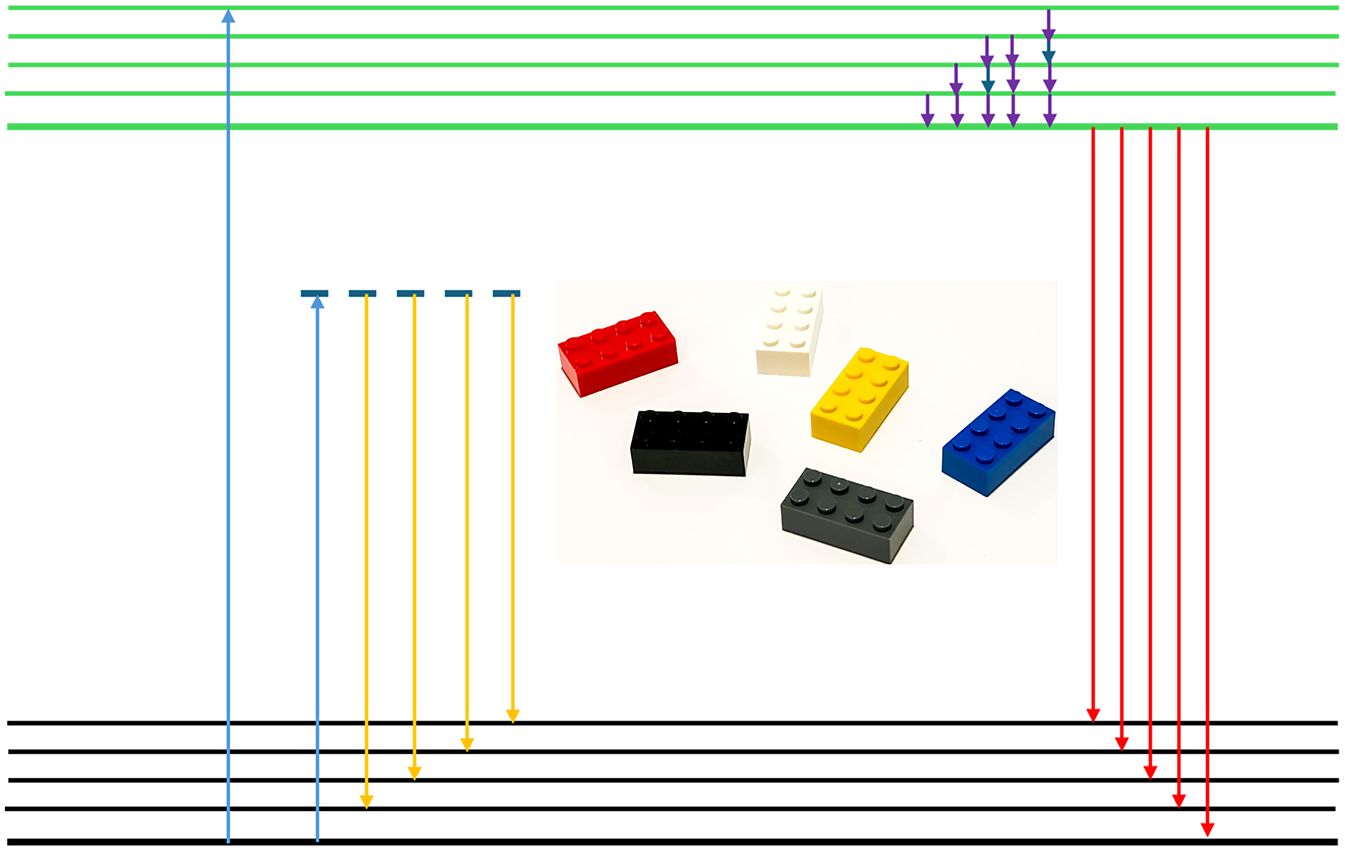
Get full access to this article
View all access options for this article.
References
Supplementary Material
Please find the following supplemental material available below.
For Open Access articles published under a Creative Commons License, all supplemental material carries the same license as the article it is associated with.
For non-Open Access articles published, all supplemental material carries a non-exclusive license, and permission requests for re-use of supplemental material or any part of supplemental material shall be sent directly to the copyright owner as specified in the copyright notice associated with the article.
