




Abstract
Ferroptosis, a regulated form of cell death driven by oxidative stress and lipid peroxidation, has emerged as a pivotal research focus with implications across various cellular contexts. In this study, we employed a multifaceted approach, integrating label-free Raman spectroscopy and microfluidics to study the mechanisms underpinning ferroptosis. Our investigations included the ferroptosis initiation based on the changes in the lipid Raman band at 1436 cm−1 under different cellular states, the generation of reactive oxygen species (ROS), lipid peroxidation, DNA damage/repair, and mitochondrial dysfunction. Importantly, our work highlighted the dynamic role of vital cellular components, such as nicotinamide adenine dinucleotide phosphate hydrogen (NADPH), ferredoxin clusters, and other key factors such as glutathione peroxidase 4 and nuclear factor erythroid 2, which collectively influenced cellular responses to redox imbalance and oxidative stress. Quantum mechanical (QM) and molecular docking simulations (MD) provided further evidence of interactions between the ferredoxin (containing 4Fe–4S clusters), NADPH, and ROS, which led to the production of reactive Fe species in the cells. As such, our approach not only offered a real-time, multidimensional perspective on ferroptosis but also provided valuable methods and insights for therapeutic interventions in diverse biomedical contexts.
This is a visual representation of the abstract.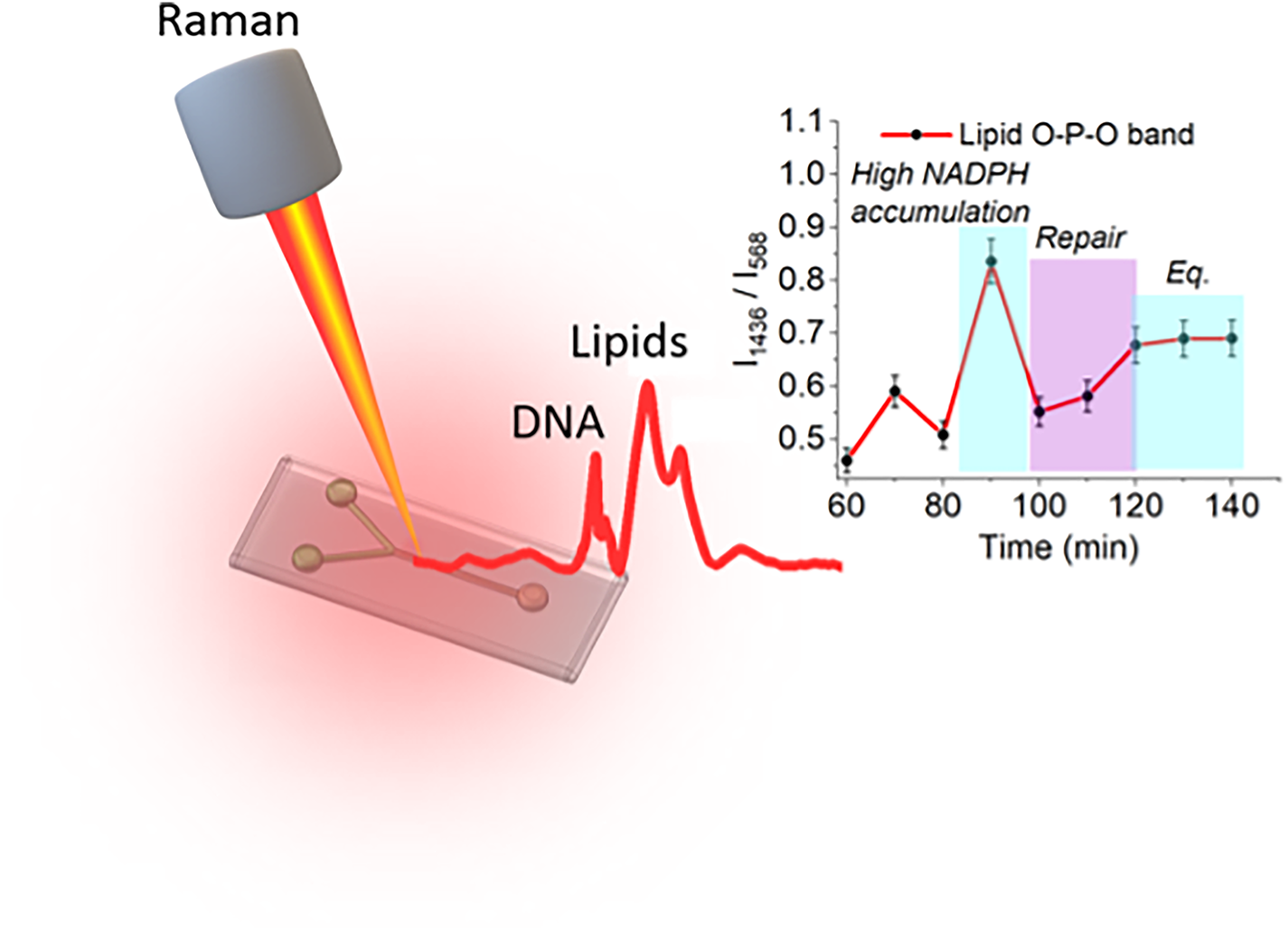
Get full access to this article
View all access options for this article.
References
Supplementary Material
Please find the following supplemental material available below.
For Open Access articles published under a Creative Commons License, all supplemental material carries the same license as the article it is associated with.
For non-Open Access articles published, all supplemental material carries a non-exclusive license, and permission requests for re-use of supplemental material or any part of supplemental material shall be sent directly to the copyright owner as specified in the copyright notice associated with the article.
