




Abstract
Spatially offset Raman spectroscopy (SORS) is typically used to non-invasively investigate stratified samples that possess features on a millimeter scale, whereas micro-SORS usually deals with micrometer-thick layered samples. However, there are many instances where these boundaries are intertwined, sometimes indicating the possibility of using both techniques as well as circumstances that present mutual exclusion to their applicability. The aim of this study is to establish an application protocol that provides better insight into their suitability for deployment in various scenarios. The differences and similarities between the two approaches are investigated highlighting their strengths and limitations considering both theoretical and practical aspects. Diverse available parameters entail prospects and restrictions of both techniques and give rise to specific instrumental effects, namely, the overlap between the collection and excitation areas, the percentage of collected area for a given spatial offset, and the accuracy in the definition of the spatial offset (spread effect). These aspects are studied and exemplified on mockup samples relevant to the field of cultural heritage. The samples are characterized by high compositional complexity comprising features ranging from micrometer to millimeter scales. The conclusions reached are also relevant to other scientific areas such as biomedical, forensic, or energy harvest.
This is a visual representation of the abstract.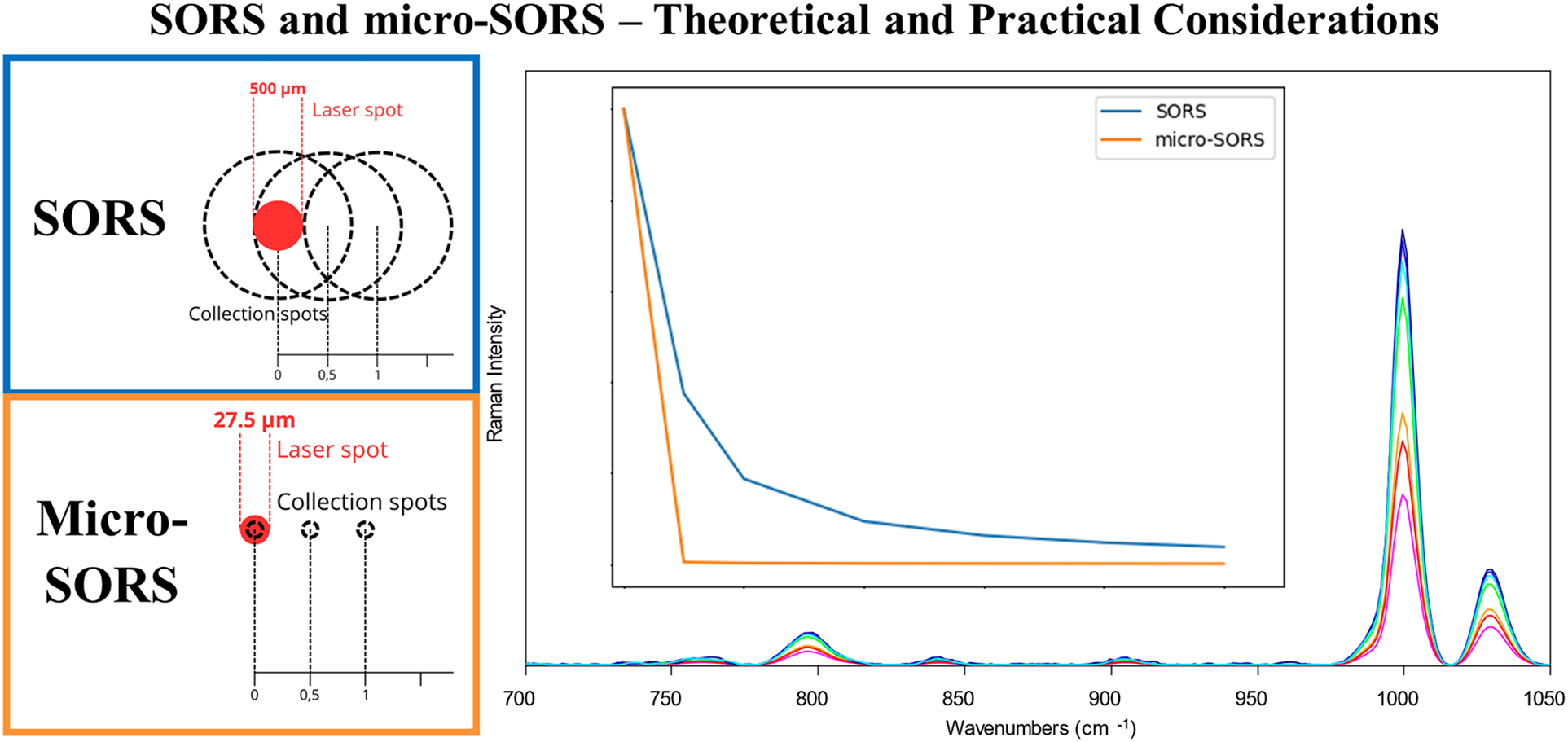
Get full access to this article
View all access options for this article.
References
Supplementary Material
Please find the following supplemental material available below.
For Open Access articles published under a Creative Commons License, all supplemental material carries the same license as the article it is associated with.
For non-Open Access articles published, all supplemental material carries a non-exclusive license, and permission requests for re-use of supplemental material or any part of supplemental material shall be sent directly to the copyright owner as specified in the copyright notice associated with the article.
