




Abstract
Recently, high-throughput quantum cascade laser-based vibrational circular dichroism (QCL-VCD) technology has reduced the measurement time for high-quality vibrational circular dichroism spectra from hours to a few minutes. This study evaluates QCL-VCD for chiral monitoring using flow-through measurement of a changing sample in a circulating loop. A balanced detection QCL-VCD system was applied to the enantiomeric pair R/S-1,1′-bi-2-naphthol in solution. Different mixtures of the two components were used to simulate a racemization process, collecting spectral data at a time resolution of 6 min, and over three concentration levels. The goal of this experimental setup was to evaluate QCL-VCD in terms of both molar and enantiomeric excess (EE) sensitivity at a time resolution relevant to chiral monitoring in chemical processes. Subsequent chemometric evaluation by partial least squares regression revealed a cross-validated prediction accuracy of 2.8% EE with a robust prediction also for the test data set (error = 3.5% EE). In addition, the data set was also treated with the least absolute shrinkage and selection operator (LASSO), which also achieved a robust prediction. Due to the operating principle of LASSO, the obtained coefficients constituted a few discrete spectral frequencies, which represent the most variance. This information can be used in the future for dedicated QCL-based instrument design, gaining a higher time resolution without sacrificing predictive capabilities.
This is a visual representation of the abstract.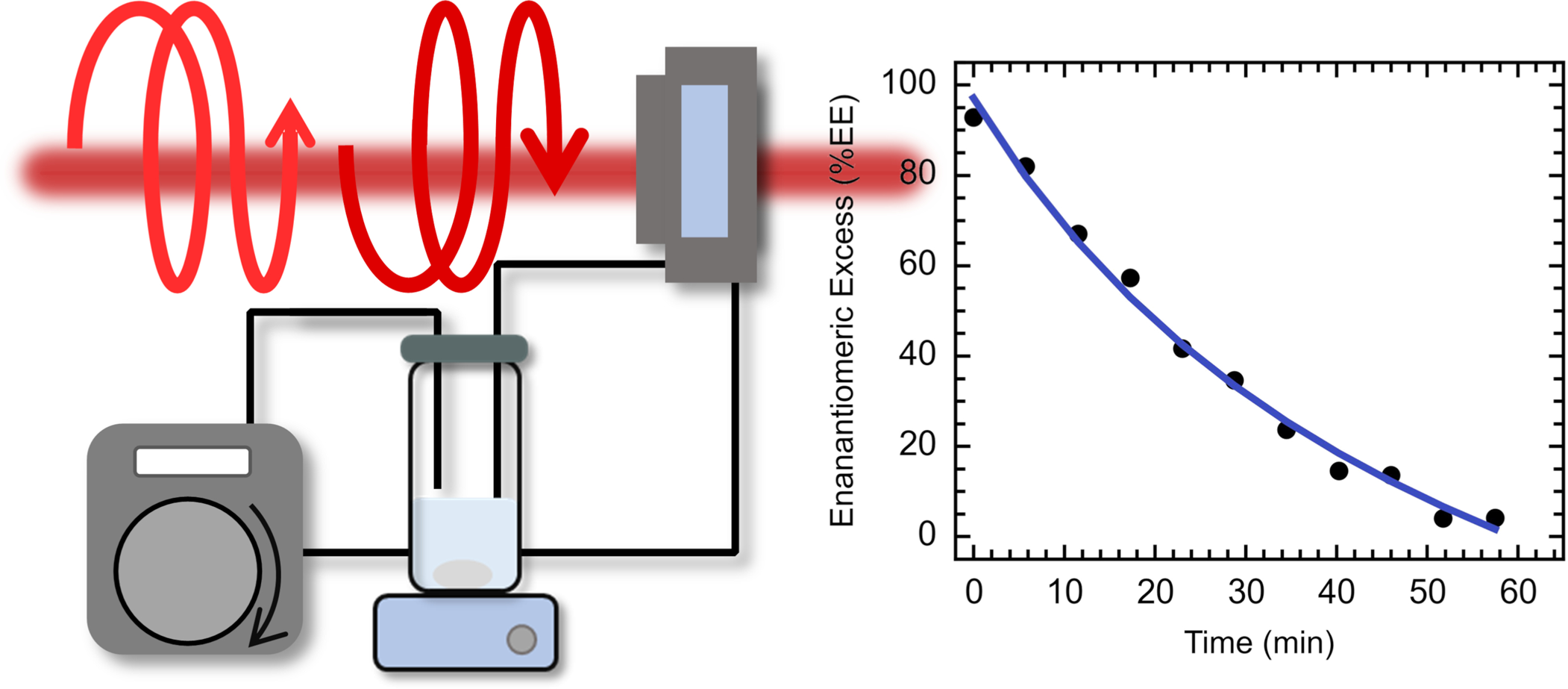
Keywords
Get full access to this article
View all access options for this article.
References
Supplementary Material
Please find the following supplemental material available below.
For Open Access articles published under a Creative Commons License, all supplemental material carries the same license as the article it is associated with.
For non-Open Access articles published, all supplemental material carries a non-exclusive license, and permission requests for re-use of supplemental material or any part of supplemental material shall be sent directly to the copyright owner as specified in the copyright notice associated with the article.
