




Abstract
Degumming is an oil refinement process in which the naturally occurring phospholipids in crude vegetable oils are removed. Enzymatic degumming results in higher oil yield and more cost-efficient processing compared to traditional degumming processes using only water or acid. Phospholipase C hydrolyses phospholipids into diglycerides and phosphate groups during degumming. The diglyceride content can therefore be considered a good indicator of the state of the enzymatic reaction. This study investigates the use of near-infrared (NIR) spectroscopy and chemometrics to monitor the degumming process by quantifying diglycerides in soybean oil in both off-line and on-line settings. Fifteen enzymatic degumming lab scale batches originating from a definitive screening design (with varying water, acid, and enzyme dosages) were investigated with the aim to develop a NIR spectroscopy prediction method. By applying tailored preprocessing and variable selection methods, the diglyceride content can be predicted with a root mean square error of prediction of 0.06% (w/w) for the off-line set-up and 0.07% (w/w) for the on-line set-up. The results show that the diglyceride content is a good indicator of the enzyme performance and that NIR spectroscopy is a suitable analytical technique for robust real-time diglyceride quantification.
This is a visual representation of the abstract.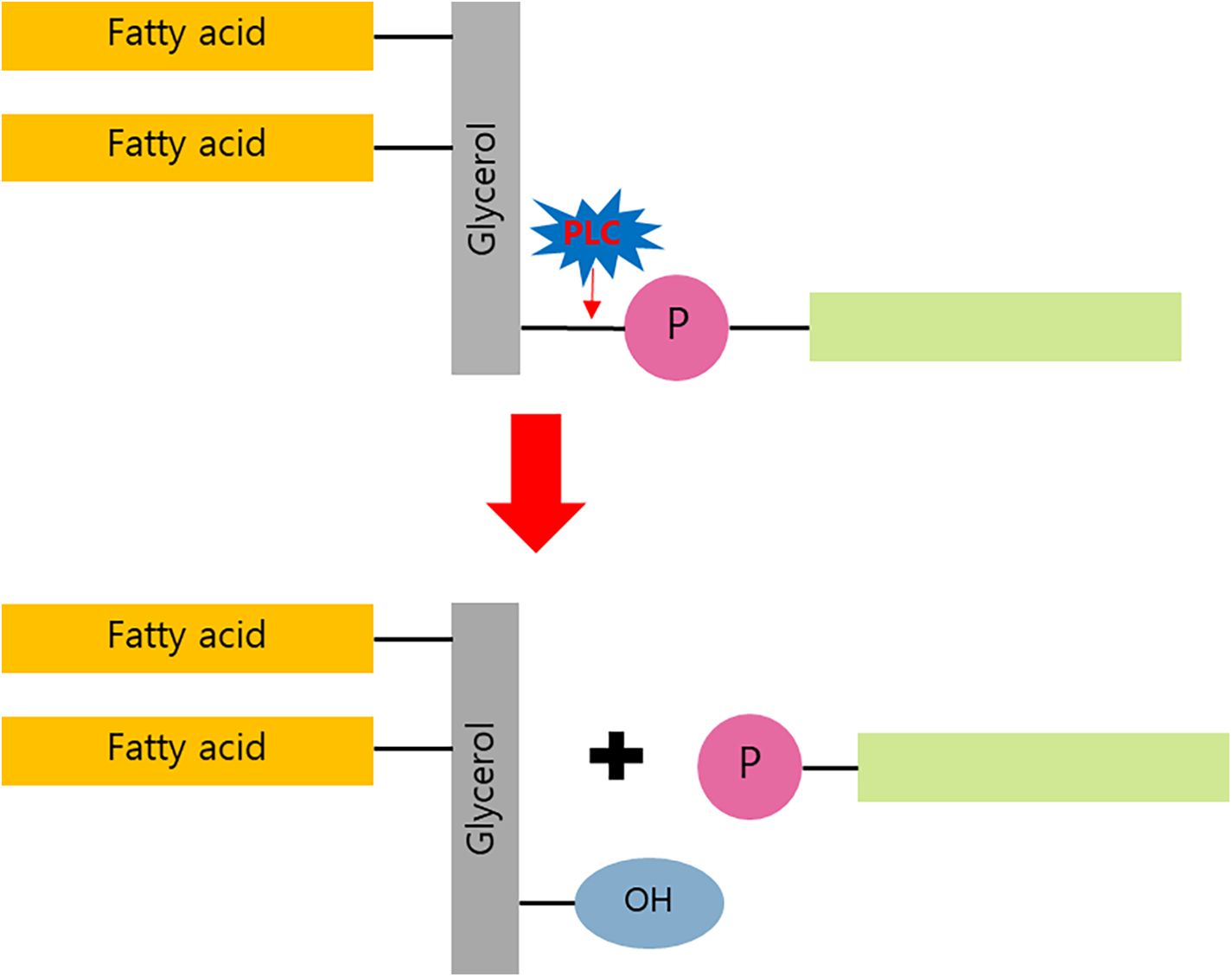
Get full access to this article
View all access options for this article.
References
Supplementary Material
Please find the following supplemental material available below.
For Open Access articles published under a Creative Commons License, all supplemental material carries the same license as the article it is associated with.
For non-Open Access articles published, all supplemental material carries a non-exclusive license, and permission requests for re-use of supplemental material or any part of supplemental material shall be sent directly to the copyright owner as specified in the copyright notice associated with the article.
