




Abstract
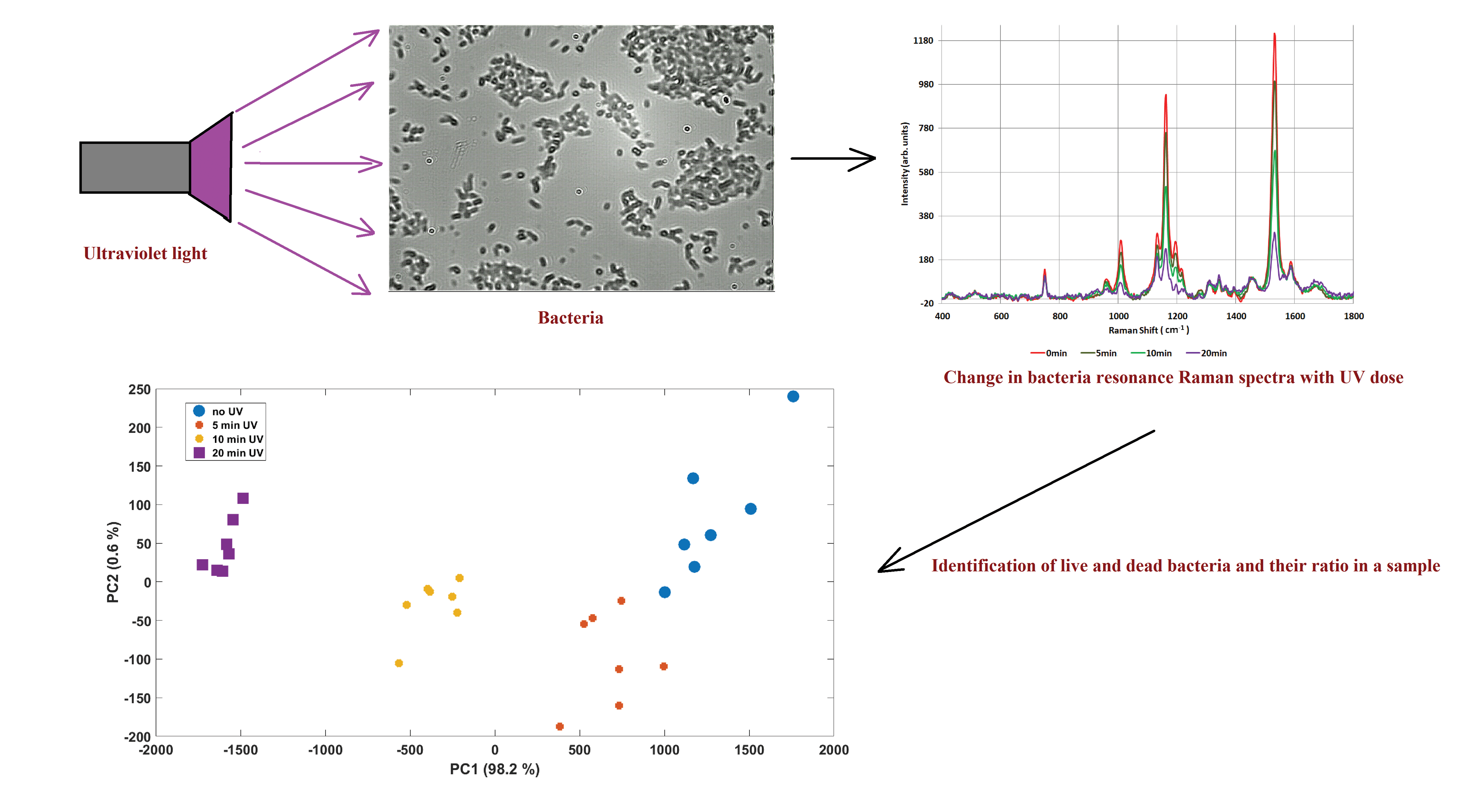
The resonance Raman spectra of bacterial carotenoids have been employed to identify bacterial strains and their intensity changes as a function of ultraviolet (UV) radiation dose have been used to differentiate between live and dead bacteria. In addition, the resonance-enhanced Raman spectra enabled us to detect bacteria in water at much lower concentrations (∼108 cells/mL) than normally detected spectroscopically. A handheld spectrometer capable of recording resonance Raman spectra in situ was designed, constructed, and was used to record the spectra. In addition to bacteria, the method presented in this paper may also be used to identify fungi, viruses, and plants, in situ, and detect infections within a very short period of time.
Keywords
Get full access to this article
View all access options for this article.
References
Supplementary Material
Please find the following supplemental material available below.
For Open Access articles published under a Creative Commons License, all supplemental material carries the same license as the article it is associated with.
For non-Open Access articles published, all supplemental material carries a non-exclusive license, and permission requests for re-use of supplemental material or any part of supplemental material shall be sent directly to the copyright owner as specified in the copyright notice associated with the article.
